Cycling is an outdoor activity that’s easy to enjoy. It’s also attracting attention for its health benefits as a way to get moving.
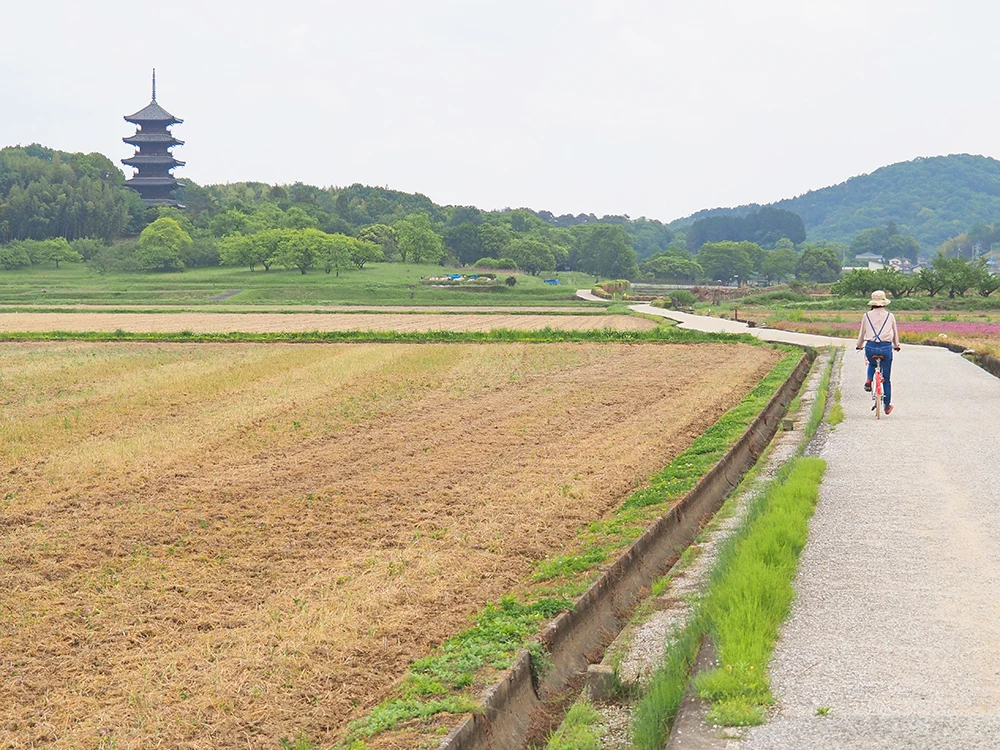
The Kibiji Cycling Road, which runs from Soja City to Okayama City in Okayama Prefecture, is a popular cycling route known for its long stretches of flat, easy-to-ride paths.
Along the approximately 25-kilometer route, you’ll find plenty to see, including cultural properties that form part of the Japan Heritage story “The Town Where the Momotaro Legend Was Born: Okayama—A Tale of Demon-Slaying Inspired by the Heritage of Ancient Kibi” and historic sites such as Bichu Kokubun-ji Temple.
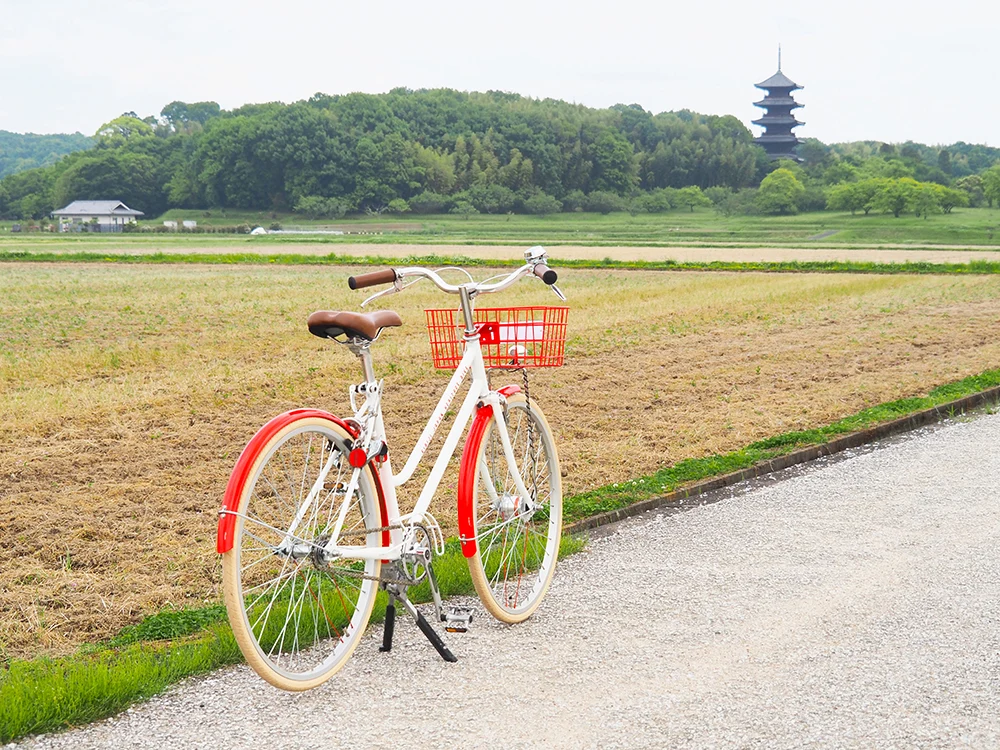
In March 2021, the Kibiji original bicycle “Kibi Chari” was launched, featuring a charming red-and-white two-tone design inspired by the Japan Heritage logo.

We asked for recommendations on places to stop along the way, then set off to enjoy the Kibiji Cycling Road on a Kibi Chari.
The information provided was current when this article was published in February 2026. Please note that it may differ from current information.
About the Kibiji Cycling Road and Kibi Chari
About the Kibiji Cycling Road
The Kibiji Cycling Road connects Okayama Prefectural General Ground in Okayama City with Soja City Sports Center. This route, which follows Okayama Prefectural Route 700, has also been selected as one of the “100 Best Roads in Japan.”
The gently sloping, bicycle-friendly route is dotted with historic Kibi sites, including Bichu Kokubun-ji Temple and Kibitsu Shrine.
Another highlight is the cluster of ancient burial mounds, including Tsukuriyama Kofun and Komorizuka Kofun.
Cultural properties that form part of the Japan Heritage story “The Town Where the Momotaro Legend Was Born: Okayama—A Tale of Demon-Slaying Inspired by the Heritage of Ancient Kibi” can be found throughout the area, making this a route steeped in history and romance.
The Kibiji original bicycle “Kibi Chari”
The Kibiji original bicycle “Kibi Chari” was launched in March 2021.
The original bicycle is based on a model by tokyobike, a brand popular for its stylish city bikes.
Its red-and-white color scheme is inspired by Japan Heritage.
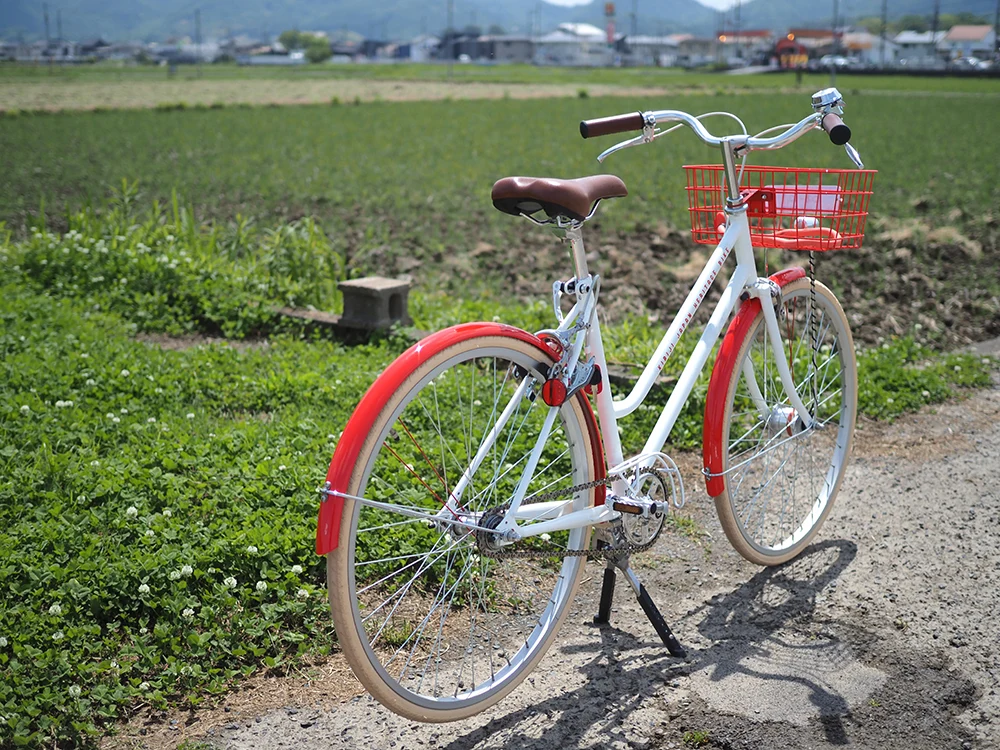
The brown handlebars and saddle create a nostalgic feel.

The LED light by German manufacturer Busch & Müller has a rounded shape that adds to the retro look.

The bell, decorated with a traditional arabesque pattern, is classic and stylish. It’s always in view while you ride, which is sure to lift your spirits.

The Japan Heritage logo is beneath the saddle.

It also bears the words “KIBIJI JAPAN HERITAGE BIKE.”

The double kickstand keeps the bike firmly upright. It was also easy to get on and off when stopping at various places.

My favorite feature is the red front basket. The charming Kibi Chari is practical, too.






What would you like to know about Kurashiki?
Enter a search term to find articles on this site