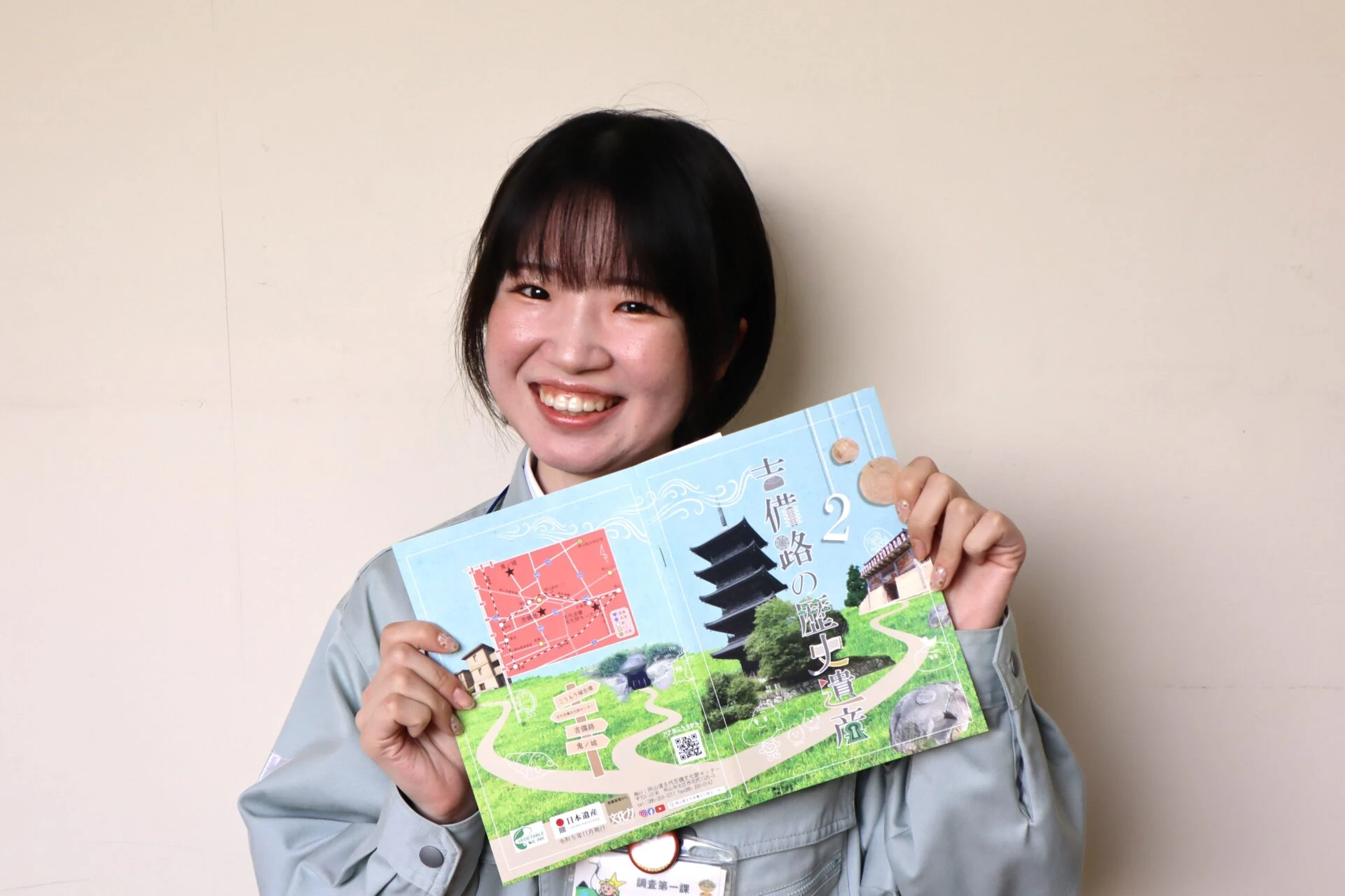
Okayama Prefecture Ancient Kibi Cultural Property Center and others have successfully launched the "Kibiji Historical Heritage" Promotion Project in the fiscal year 2020 (Reiwa 2).
The excavation survey of the Komori-zuka Kofun has already been completed, revealing many new truths. A re-examination of artifacts has also been conducted, gradually uncovering the essential value of the Komori-zuka Kofun.
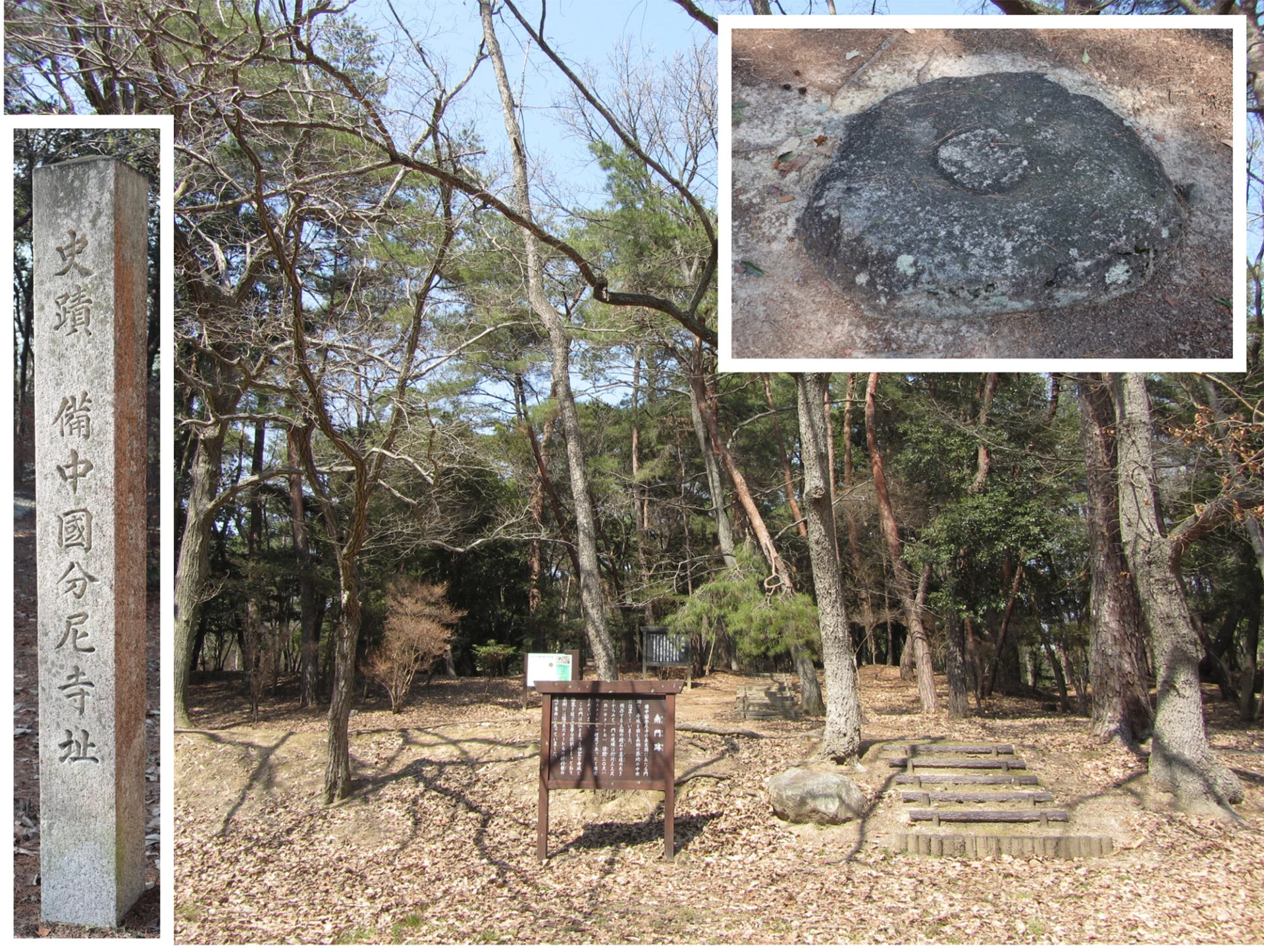
Furthermore, from the fiscal year 2023, the excavation survey of the Bichu Kokubun-ji Temple Ruins has begun. Efforts to promote its appeal have also started.
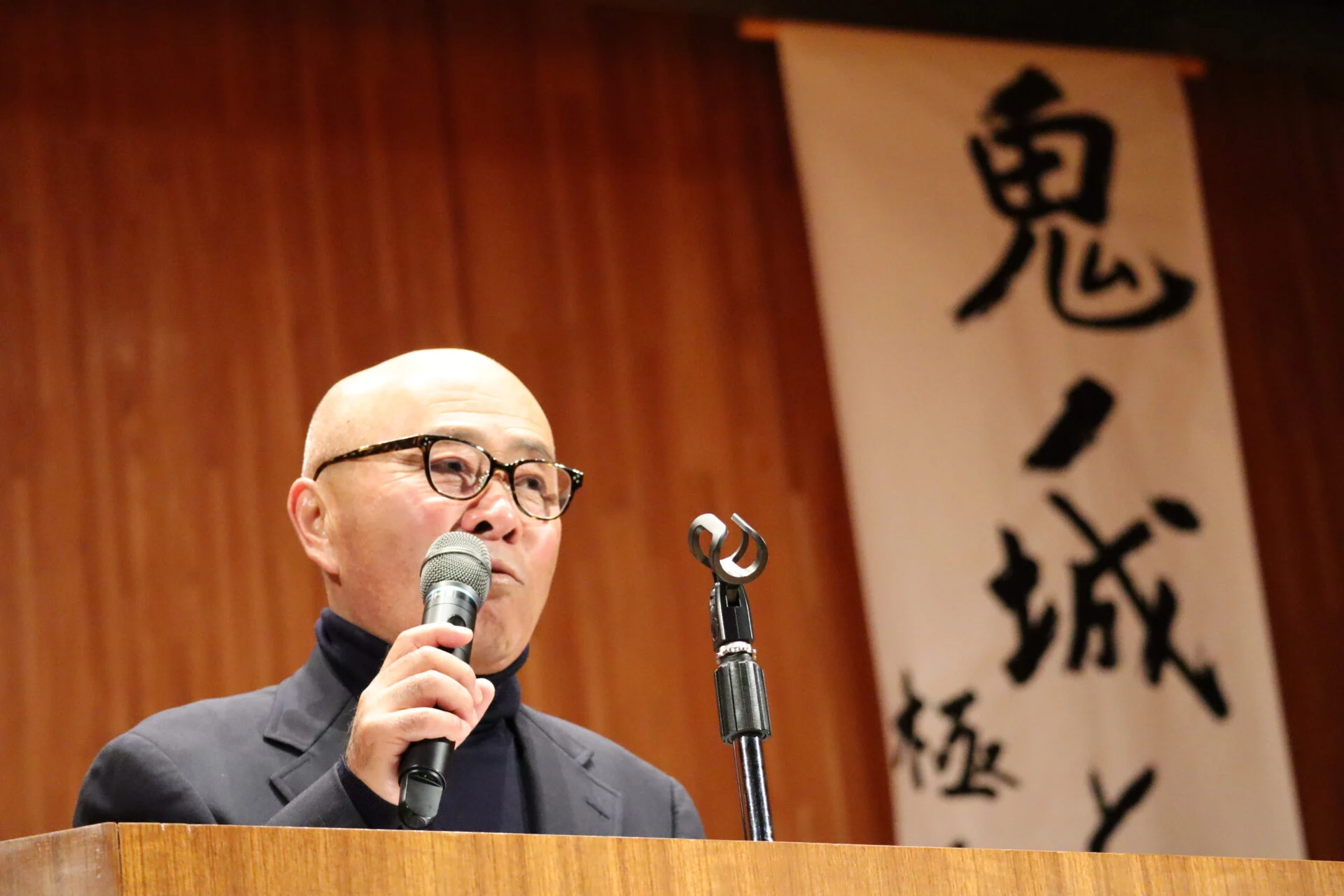
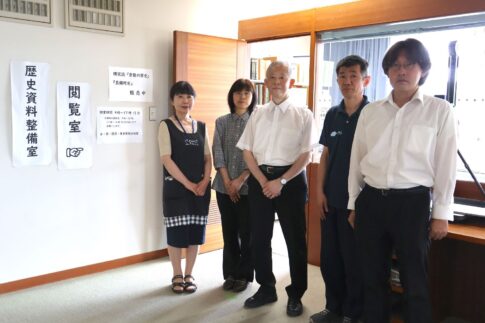
We spoke with Yoshiko Matsuo and Yuu Hirano, who are in charge of the "Kibiji Historical Heritage" Promotion Project, about the achievements over the past four years and future plans.
What is Okayama Prefecture Ancient Kibi Cultural Property Center
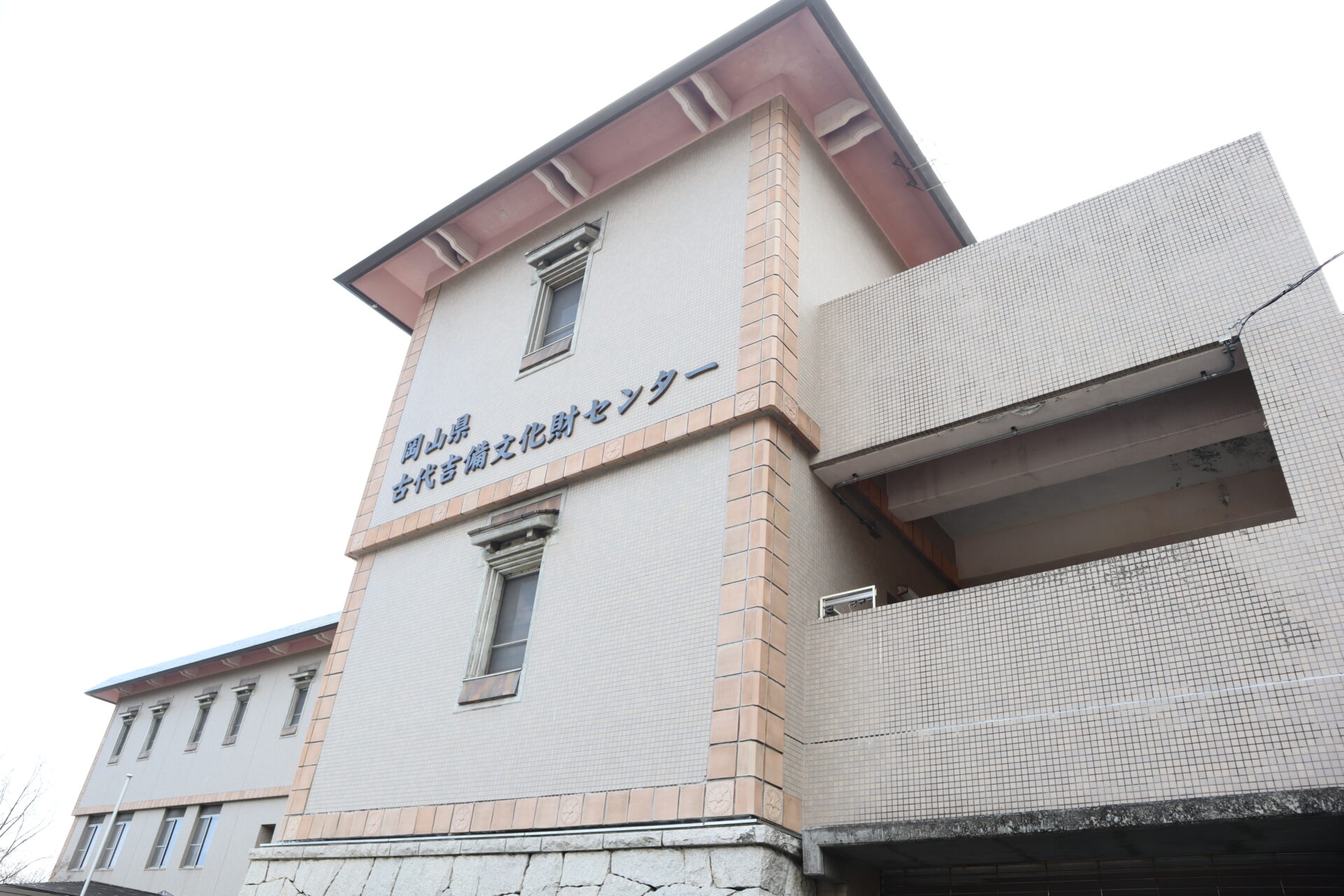
Okayama Prefecture Ancient Kibi Cultural Property Center is located in Nishihanajiri, Kita Ward, Okayama City.
History
In 1981 (Showa 56), the Okayama Prefecture New Comprehensive Welfare Plan proposed the Buried Cultural Property Center Concept.
Within the basic plan of the Okayama Prefecture New Comprehensive Welfare Plan, it was stated that "for buried cultural properties, a Buried Cultural Property Research Center will be established to conduct research, preservation, and exhibition of materials" as one of the important measures under "Culture."
Three years later, in 1984, the Okayama Prefecture Ancient Kibi Cultural Property Center was opened under the Okayama Prefectural Board of Education.
As of April 2024, there are 37 staff members working in the General Affairs Division and Investigation Divisions 1 to 3.
Business Activities
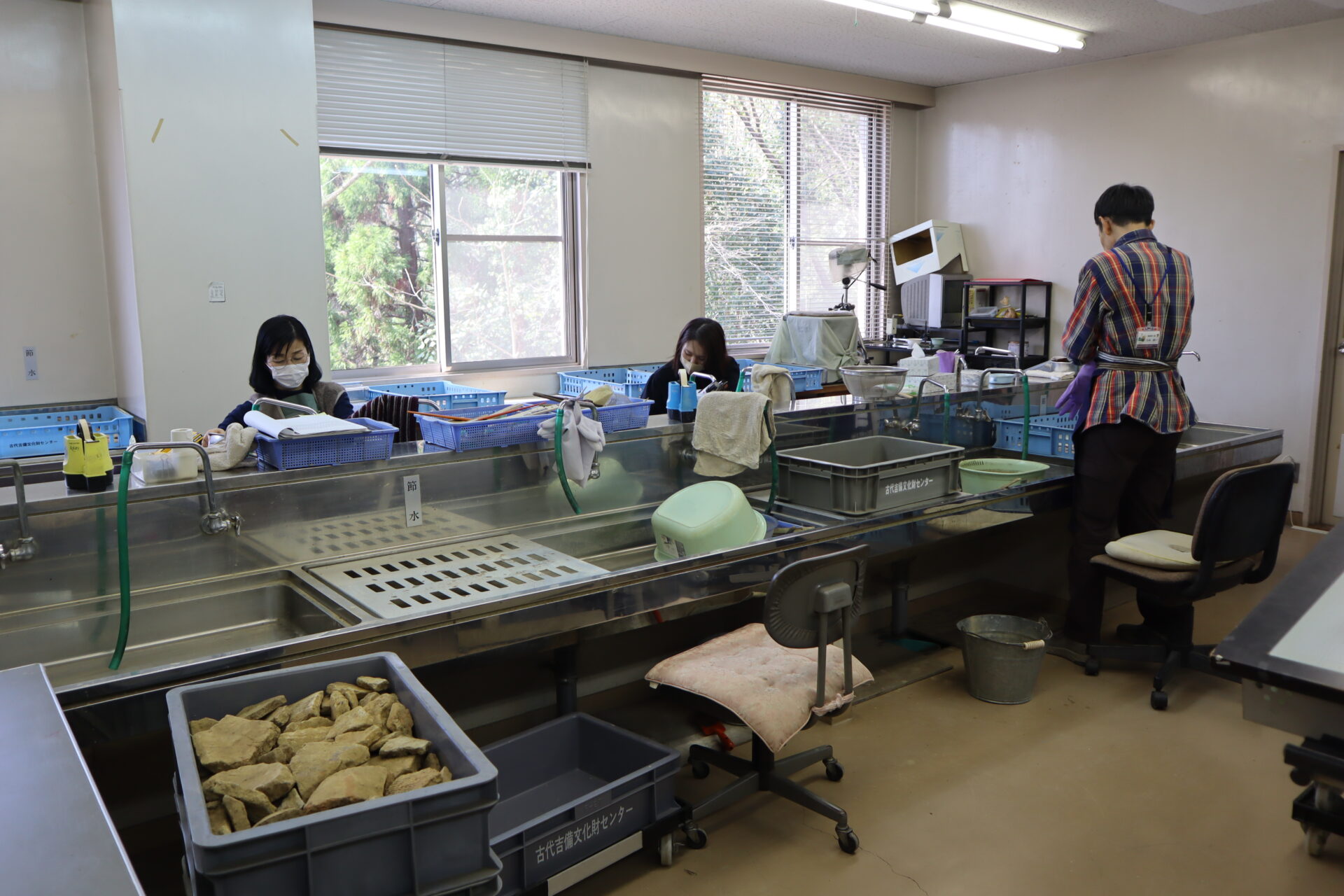
The business activities are as follows:
- Research: Surveys of distribution, confirmation, excavation, restoration of excavated items, publication of reports
- Preservation and Storage: Management of collections, preservation processing
- Public Awareness: Exhibitions, loans, publication of educational materials, website
- Guidance and Support: Training workshops on survey techniques, excavation guidance
Exhibitions
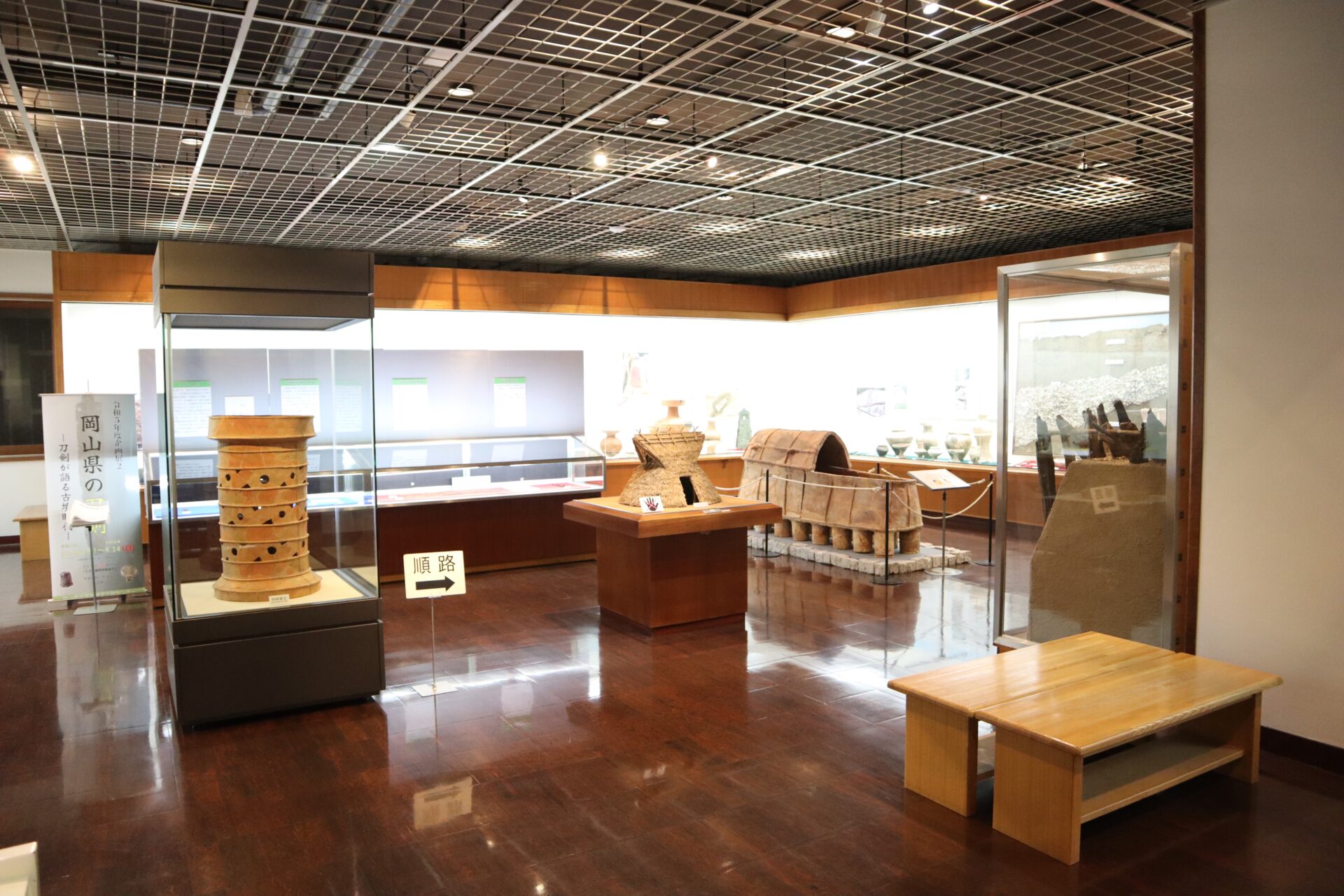
The Okayama Prefecture Ancient Kibi Cultural Property Center in Nishihanajiri has an exhibition space with permanent exhibitions.
In addition, there are thematic exhibitions held twice a year and various special exhibitions as needed.
Events
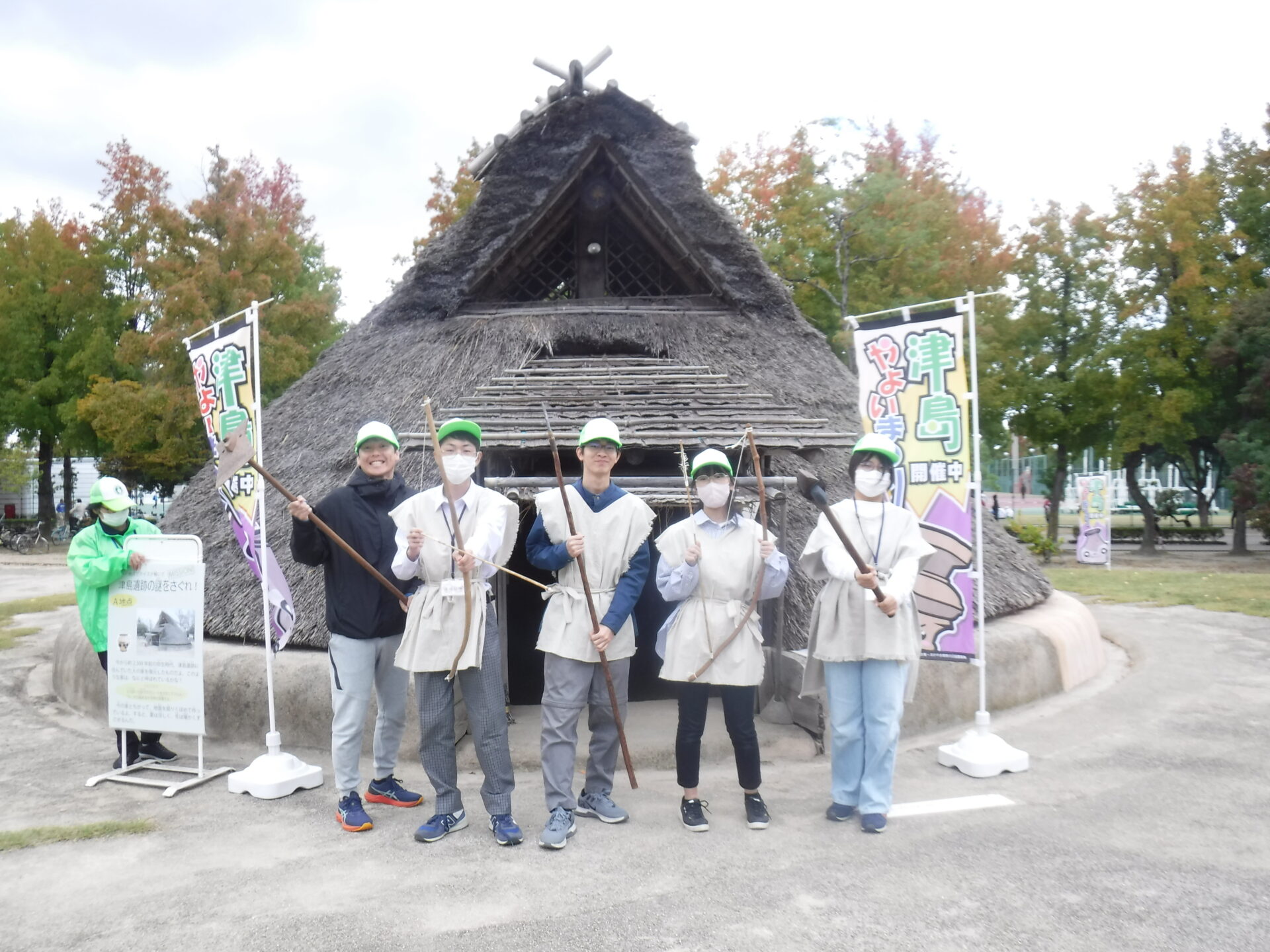
Many events are also held.
- Various lectures, report meetings, and symposiums: Planned throughout the year.
- Tsushima Ruins Yayoi Festival: Now an annual event.
- Summer vacation experiential learning: Popular among children.
Additionally, on-site briefings during excavation surveys are filled with the most up-to-date information.
Digital Library
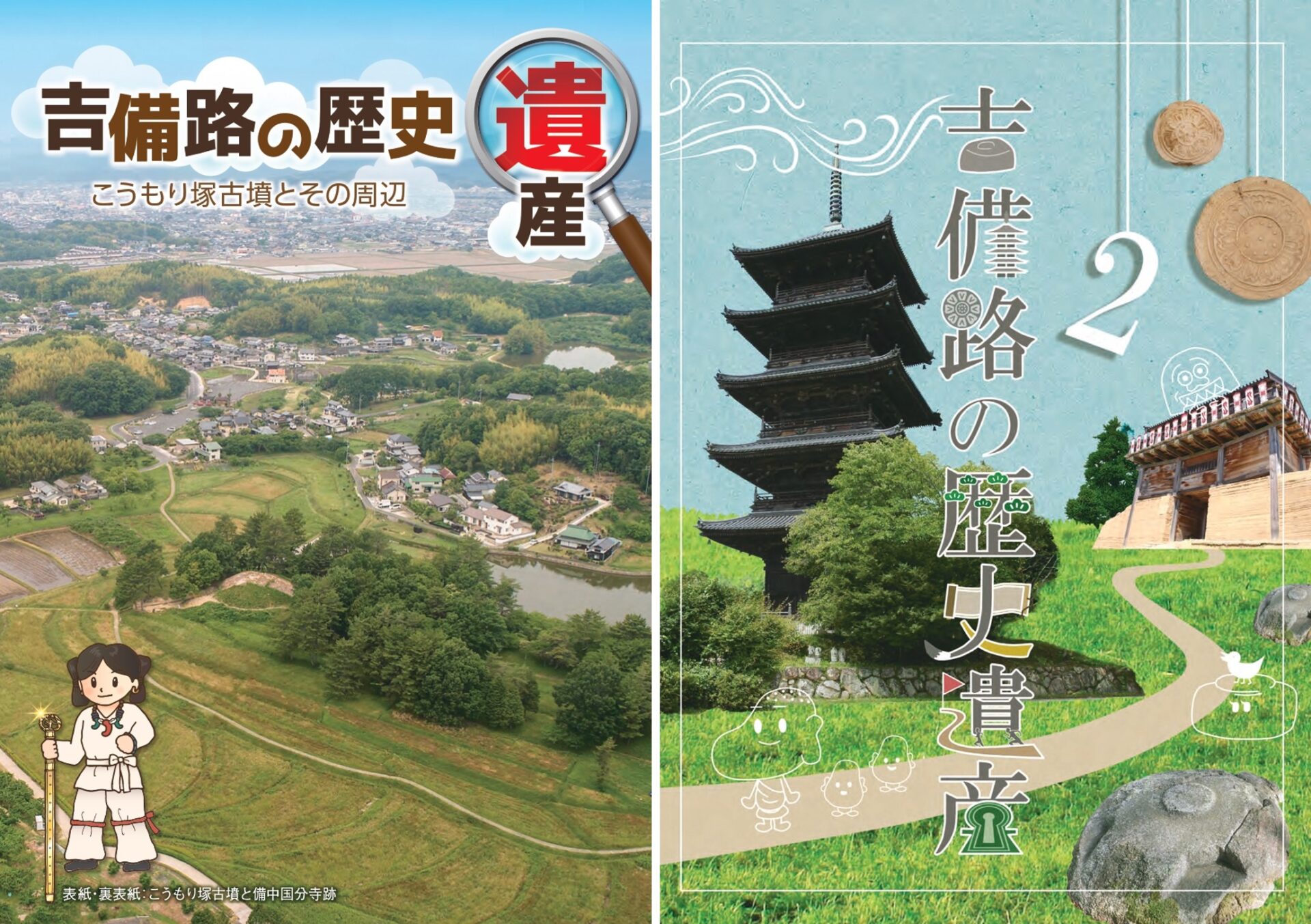
The "Digital Library" on the center's homepage contains numerous excavation survey reports and various pamphlets and educational materials that have been published, all available for free download.
Overview of the "Kibiji Historical Heritage" Promotion Project
Let me introduce the "Kibiji Historical Heritage" Promotion Project, which has been undertaken by the Cultural Properties Division of the Okayama Prefectural Board of Education and the Okayama Prefecture Ancient Kibi Cultural Property Center since 2020.
Okayama Prefecture Cultural Property Preservation and Utilization Outline
In alignment with the New Hareno Kuni Okayama Lively Plan and the Okayama Cultural Promotion Vision, the Okayama Prefecture Cultural Property Preservation and Utilization Outline was established in November 2019. It includes the following expression:
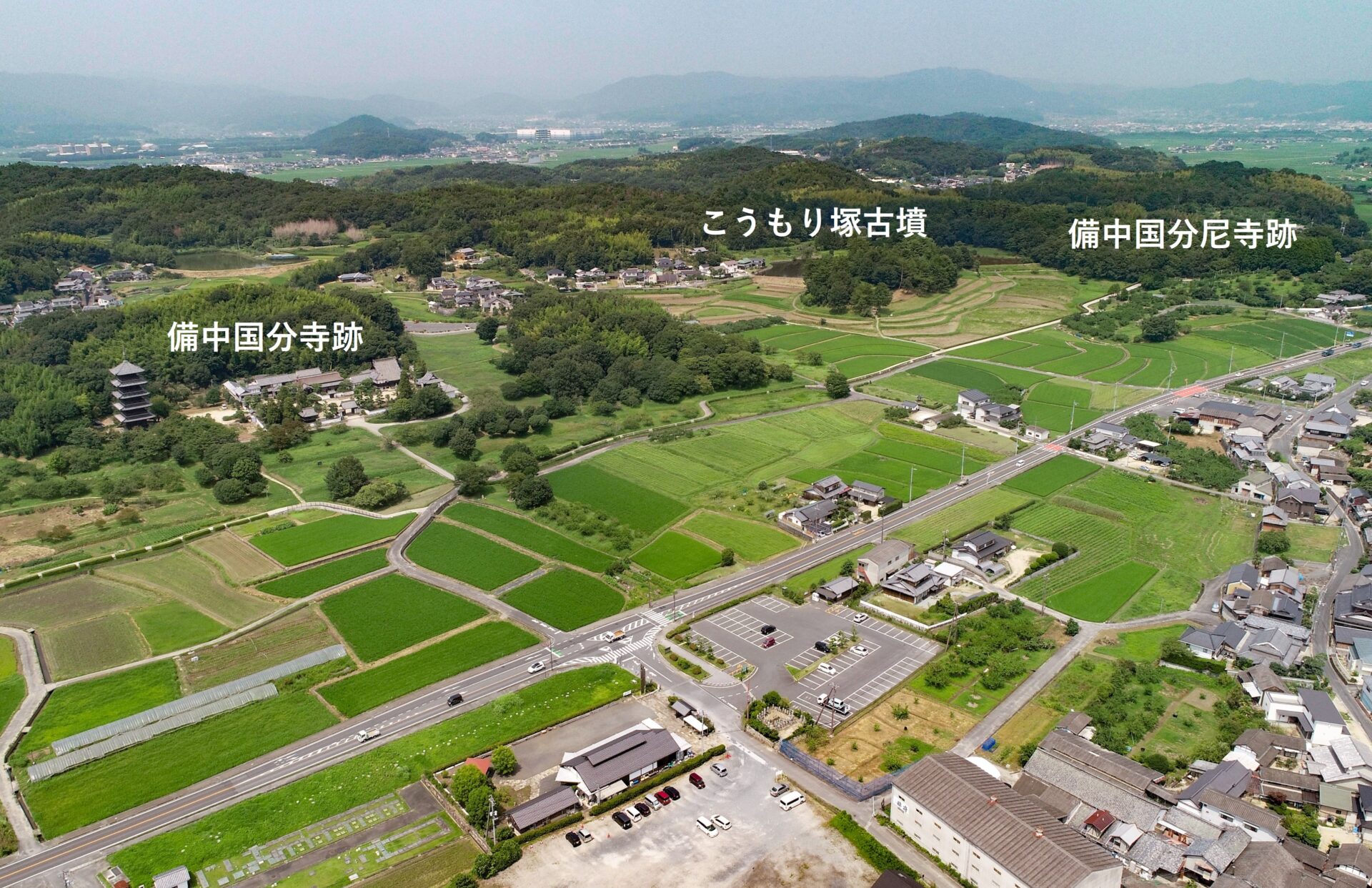
The Komori-zuka Kofun and the Bichu Kokubun-ji Temple Ruins are located within the "Kibiji Fudoki no Oka" and are at the core of the "Kibiji," one of the leading tourist destinations in the prefecture. Therefore, aiming for further enhancement of the overall appeal of Kibiji, including the surrounding large burial mounds, a preservation and utilization plan will be formulated promptly, and investigations, maintenance, and utilization will be advanced in cooperation with related cities, providing a place to experience the rich cultural heritage of ancient Kibi.
Source: Okayama Prefecture Cultural Property Preservation and Utilization Outline
Okayama Prefecture has 47 nationally designated historic sites.
"Among the historic sites owned or managed by the prefecture, the Old Kanta School and Tsushima Ruins have been more thoroughly investigated compared to the Kibiji historic sites," explained Matsuo.
Matsuo continued,
"First, we will conduct survey work over several years to establish basic materials for future utilization. The Komori-zuka Kofun will be prioritized, followed by a mid- to long-term plan for the Bichu Kokubun-ji Temple Ruins."
The promotion project is an important initiative of Okayama Prefecture that began in this way.
Comprehensive Survey for the Preservation and Utilization of the Komori-zuka Kofun
The Komori-zuka Kofun is located in Kanbayashi, Soja City. The area, including the Bichu Kokubun-ji Temple Ruins to the west and the Bichu Kokubun-ji Temple Ruins to the east, can be considered the center of Kibiji.
It is a keyhole-shaped burial mound built in the 6th century, approximately 100 meters long, and is also known as Kurohime-zuka, having been well-known since ancient times.
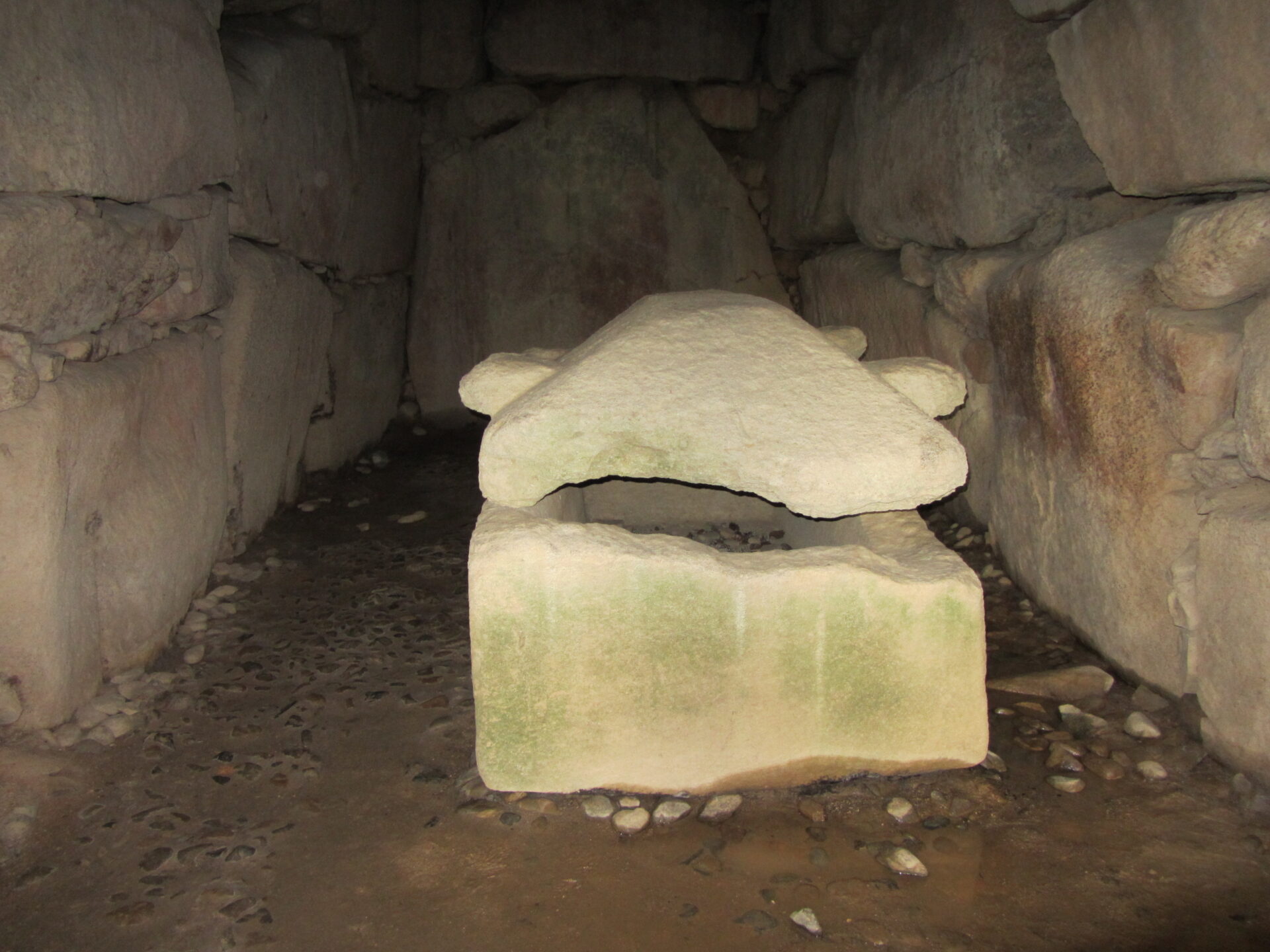
The horizontal stone chamber is open and has been looted early on. Nevertheless, many valuable artifacts were excavated during the excavation surveys inside the stone chamber conducted in 1967 (Showa 42) and 1978 (Showa 53).
However, no surveys of the burial mound itself have been conducted, and the research on the excavated artifacts has also been insufficient.
The promotion project begins with the comprehensive survey of the Komori-zuka Kofun.
In the fiscal year 2020, survey investigations were conducted, followed by excavation surveys from 2021 to 2022, with plans to publish a preservation and utilization plan by the end of fiscal year 2020 and an excavation survey report by the end of fiscal year 2022.
Comprehensive Survey for the Preservation and Utilization of the Bichu Kokubun-ji Temple Ruins and Others
Bichu Kokubun-ji Temple was established as an official temple during the Nara period, along with Bichu Kokubun-ji Temple.
In 1971, excavation surveys were conducted at the Bichu Kokubun-ji Temple Ruins and the Bichu Kokubun-ji Temple Ruins. However, no investigations have been conducted within the temple grounds of the Bichu Kokubun-ji Temple Ruins.
The comprehensive survey of the Bichu Kokubun-ji Temple Ruins is scheduled to begin in the fiscal year 2023, including excavation surveys, reorganization of past survey materials, report preparation, and formulation of preservation and utilization plans.
Progress of the Comprehensive Survey for the Preservation and Utilization of the Komori-zuka Kofun
Here is an update on the progress of the comprehensive survey for the preservation and utilization of the Komori-zuka Kofun.
Investigation of the Kofun
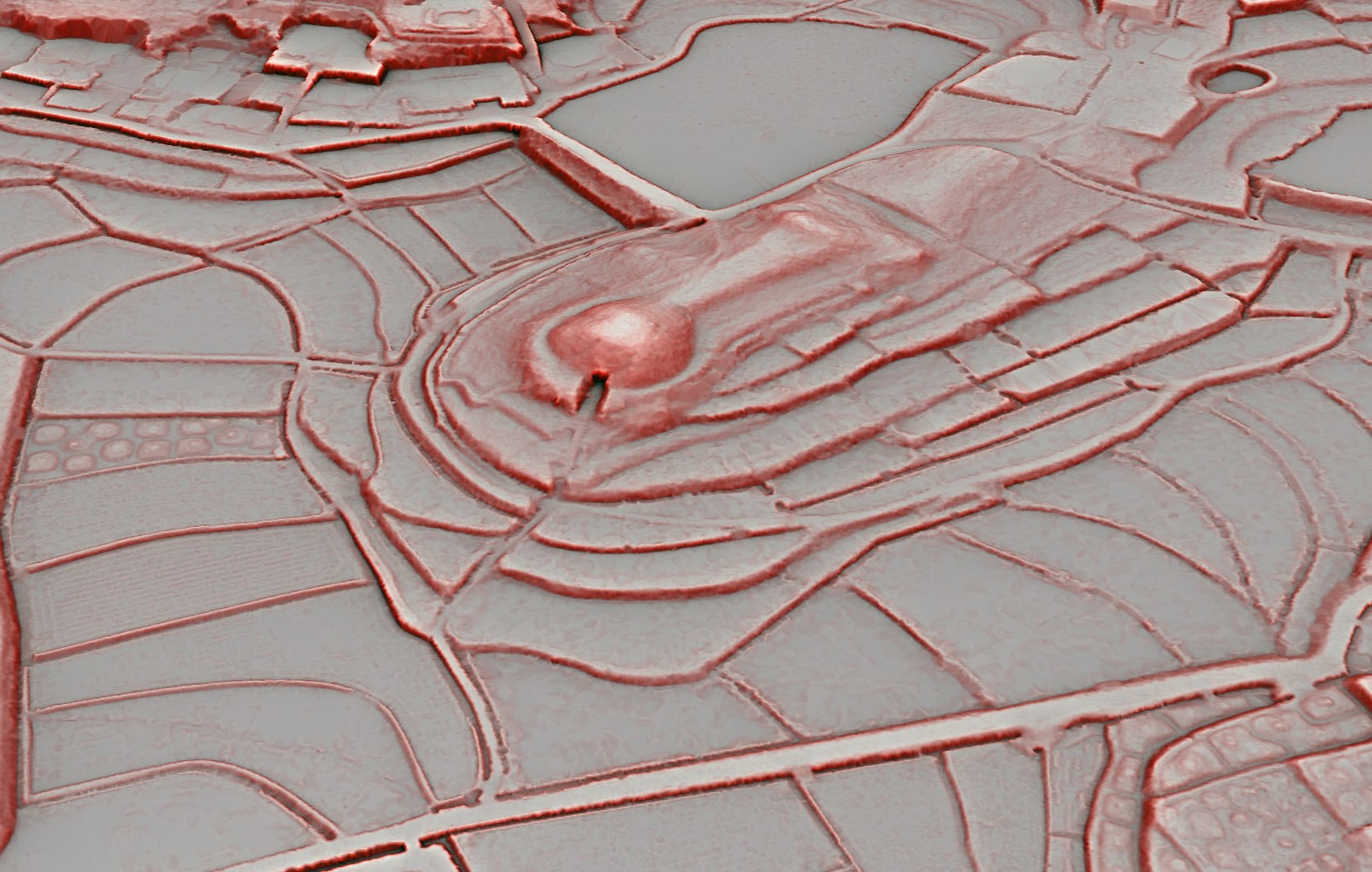
First, survey and excavation.
The survey was conducted using airborne laser over an area of 1.5 km east-west and 2 km north-south, including Kōmori-zuka Tumulus and the ruins of Bichu Kokubun-ji Temple.
The above diagram is a topographic map created based on the survey data, called a 3D map. Steep slopes are represented in red, and flat areas in white, making the undulating shape of Kōmori-zuka Tumulus immediately clear.
Three-dimensional laser measurement inside the stone chamber was also conducted.
Excavation confirmed a remaining length of 96 m for the burial mound. The structure of the mound was also clarified, revealing that it consists of "two tiers, with the lower tier carved from the natural ground and the upper tier made of fill."
Preservation and Utilization Plan
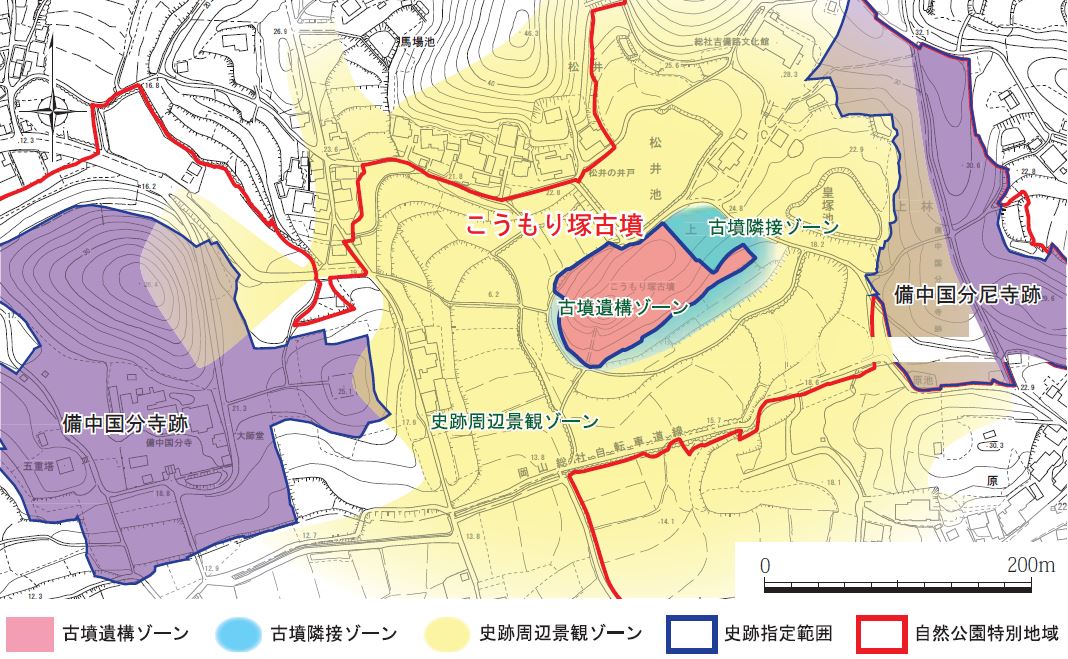
According to the Preservation and Utilization Plan issued as scheduled, the basic philosophy is to "preserve Kōmori-zuka Tumulus and foster affection for the local area by learning its history, thereby passing on the charm of Kibiji to future generations."
The essential value of Kōmori-zuka Tumulus is summarized as "a large keyhole-shaped burial mound with a massive horizontal stone chamber and abundant grave goods, strongly connected to the Yamato regime, and the tomb of a great chieftain active in the 6th century," and its preservation is listed as the first priority in the basic policy.
Matsuo-san states the following.
"Historic sites and ruins are not something that we professionals should protect and preserve. It is better for the local people to maintain them. For that, they need to understand their value. They need to know that it is worth protecting. That’s why we conduct thorough investigations and provide explanations."
On-site Briefing
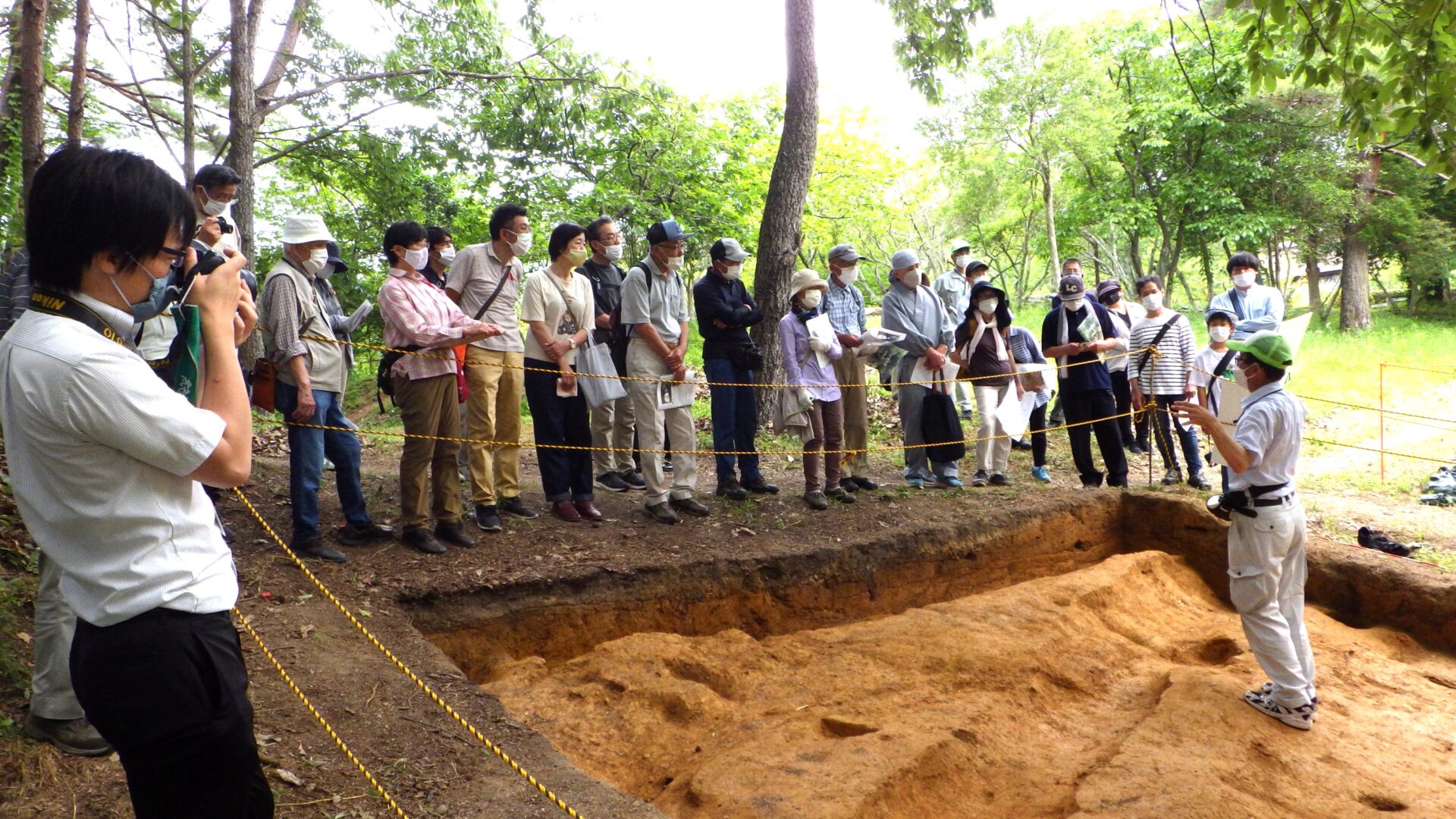
The first opportunity to introduce the results of the investigation is the on-site briefing at the excavation site.
One briefing was held in each of the 2021 and 2022 fiscal years. The number of participants was 120 and 109, respectively, and the narrow stone chamber was reportedly crowded.
Lectures and Symposiums
Lectures and symposiums are also being actively held.
In the 2020 fiscal year, a series of three lectures titled "The Era of Kōmori-zuka Tumulus" on Kibiji archaeology was conducted.
At the end of the final investigation year, the 2022 symposium "The Last Large Keyhole-shaped Burial Mound of Kibiji and Its Era" provided a comprehensive introduction.
Utilization of ICT
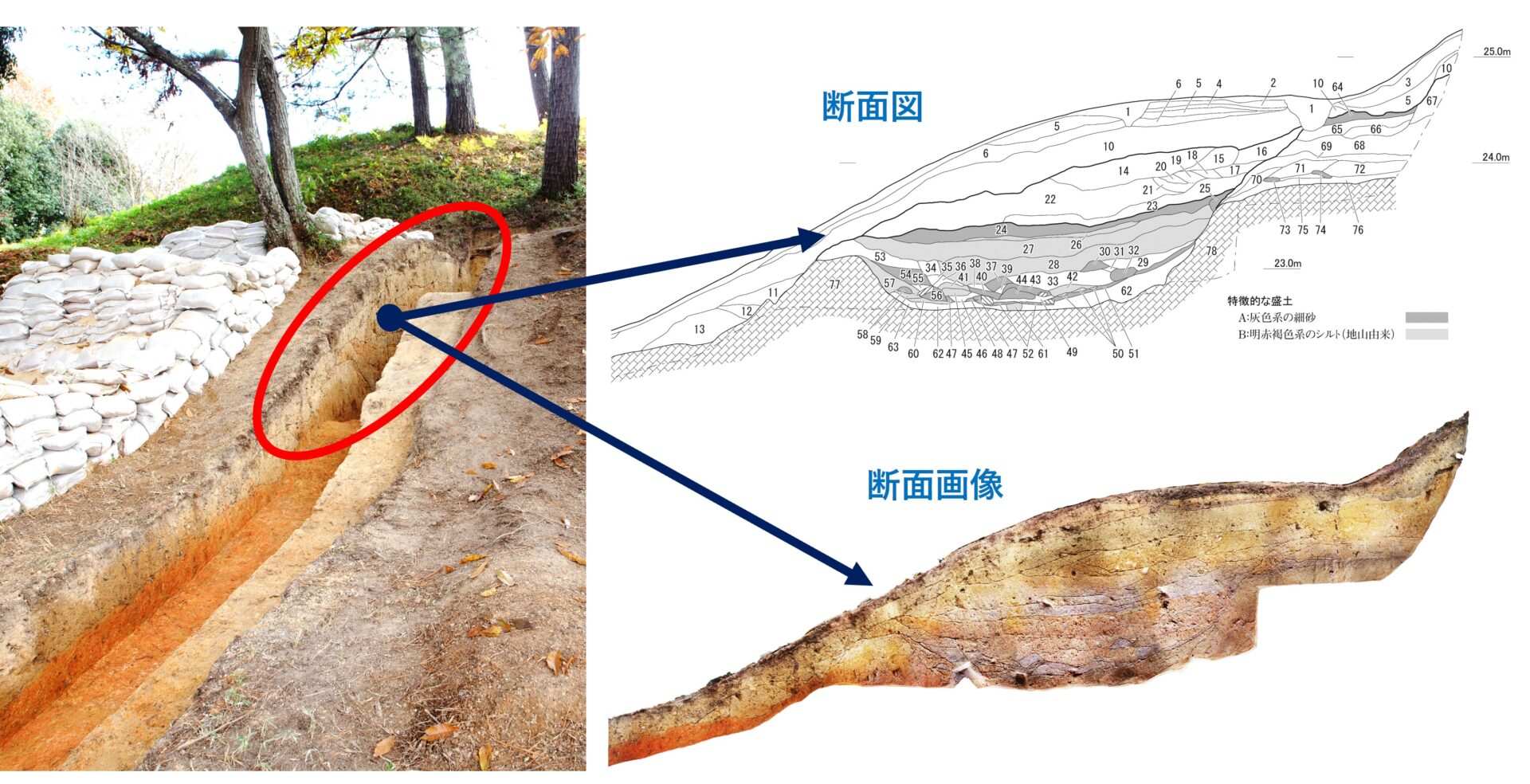
The Preservation and Utilization Plan states, "Consideration of effective information transmission methods utilizing ICT (Information and Communication Technology)".
Let me introduce two or three new technologies besides the 3D map.
The cross-section of the strata observed by digging trenches is recorded by experts, and detailed cross-sectional diagrams are created. Additionally, this time, a cross-sectional orthoimage was created by combining multiple photographs and correcting the distortions unique to camera images.
This can be considered a user-friendly technology that significantly enhances visibility.
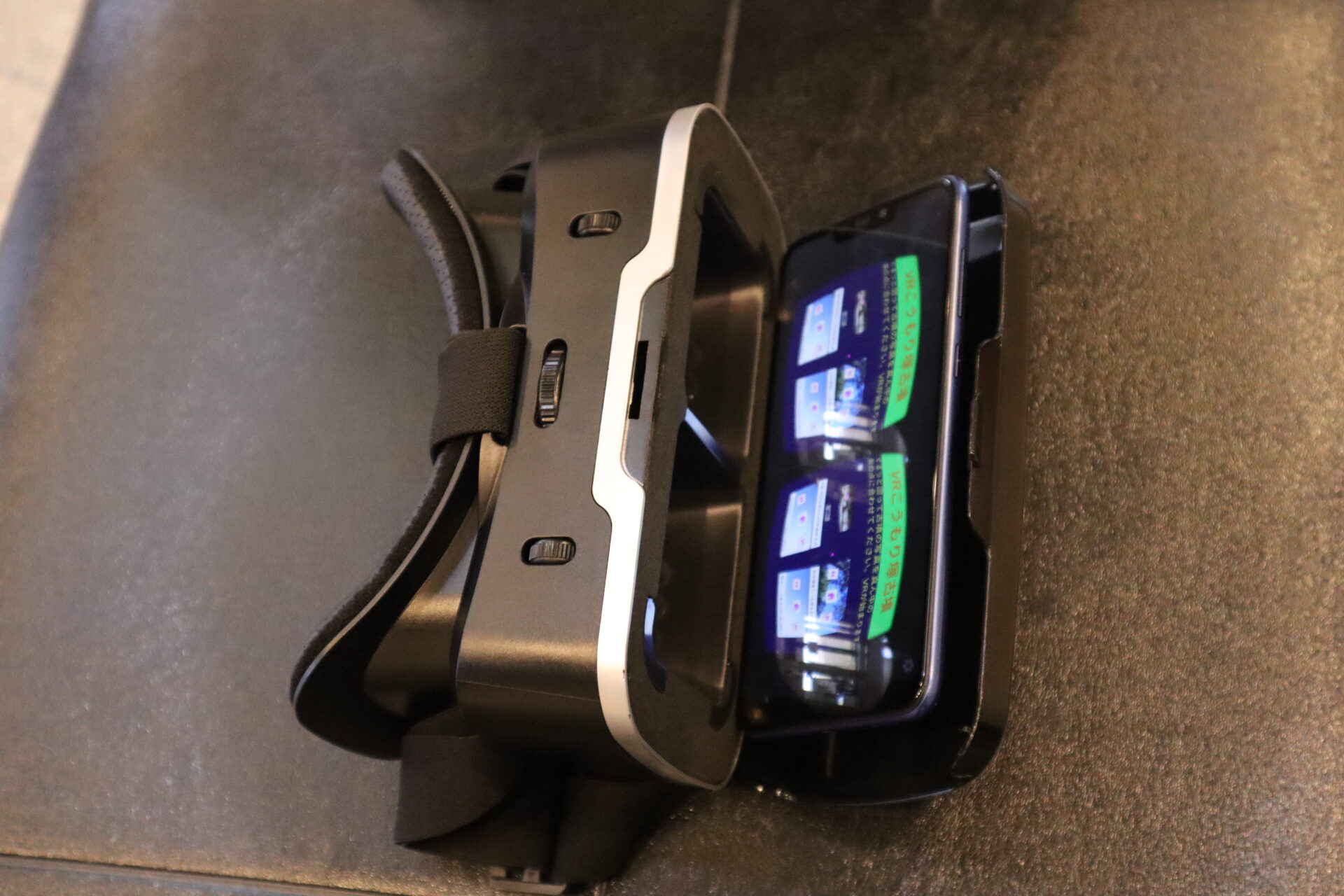
"Since the Okayama Prefectural Ancient Kibiji Cultural Heritage Center is an educational institution, it was very good to collaborate with high schools."
Matsuo-san introduced the VR data of the horizontal stone chamber created in collaboration with Okayama Prefectural Okayama Technical High School.
The images for the left and right eyes displayed on a smartphone are viewed through goggles to create a three-dimensional effect.
Additionally, a 360-degree video introducing Kōmori-zuka Tumulus has been published on YouTube, showcasing the advancement of ICT utilization.
Excavation Report
The excavation report published at the end of the 2022 fiscal year exceeds 200 pages in the main text alone.
Although it contains specialized content, Matsuo-san provided additional context.
"The artifacts discovered so far are stored in various places, whether by the prefecture, the city, or individual collectors. The results of organizing the information on these artifacts and reviewing them from the latest observational perspectives are very valuable."
This will serve as foundational information for future utilization.
I spoke with Yoshiko Matsuo and Yuki Hirano, who are in charge of the comprehensive preservation and utilization survey of the ruins of Bichu Kokubun-ji Temple and others, which started in the 2023 fiscal year, to hear about their progress.
Data from Okayama Prefectural Ancient Kibiji Cultural Heritage Center
| Organization Name | Okayama Prefectural Ancient Kibiji Cultural Heritage Center |
|---|---|
| Industry | Okayama Prefectural Board of Education |
| Representative Name | Okuyama Shuji |
| Year Established | 1984 (Showa 59) |
| Address | 1325-3 Nishihanjiri, Kita-ku, Okayama City |
| Contact | 086-293-3211 |
| Website | Okayama Prefectural Ancient Kibiji Cultural Heritage Center |