The registration of ""Momotaro Legend" - The Town Where It Was Born, Okayama - A Story of Demon-Slaying Invoked by the Ancient Kibi Heritage" as a Japan Heritage has made Ura a well-known figure nationwide. At the same time, there are whispers of the "invader" theory regarding Momotaro.
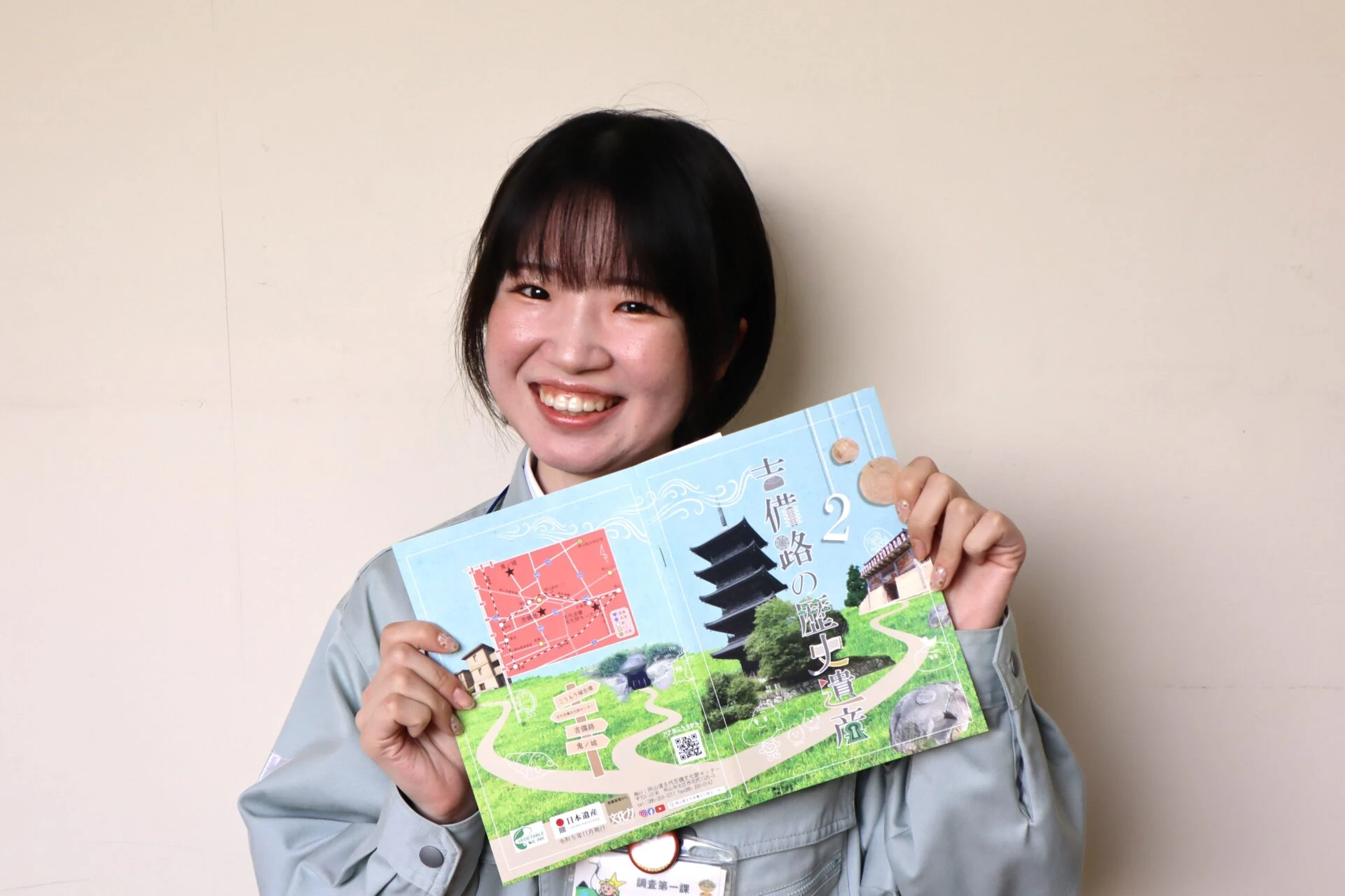
The Japan Heritage "Momotaro Legend" consists of 27 cultural properties. These include Kinojo Castle, Tatetsuki Site, Okama-den of Kibitsu Shrine, and various items such as the Kibitsu Shrine Kanjin-cho where the legend of Ura's defeat is written, and the peach seed.
As part of the "Bichu Kurashiki Studies" lecture series in December of the 5th year of Reiwa, a lecture titled "Kinojo Castle and the Momotaro Legend" was held by Takeda Yasuaki. The subtitle was, "The History of Kibi and the Thoughts of Its People Embedded in the Legend of Ura's Defeat by Kibitsuhiko."
The festival "Uraja," centered around dance, is a summer tradition representing Okayama, where the energy of youth explodes. It may be filled with the history of Kibi and the thoughts of its people. Here, we introduce a story that made us feel that way.
What is Bichu Kurashiki Studies
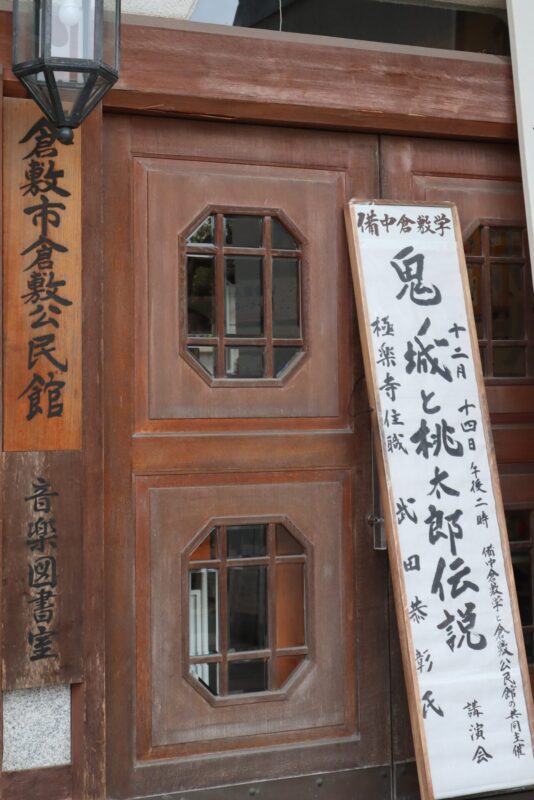
"Bichu Kurashiki Studies" was established by stakeholders around the Important Traditional Buildings Preservation District of Kurashiki to aim for a group that studies local history and culture.
Lectures are held every second Thursday at 2 PM. Anyone can participate for free without prior registration.
There may be occasions when it is not the second Thursday.
From 2005 to 2020, 170 lectures were held. Although it was interrupted due to the COVID-19 pandemic, it resumed in September 2023. This is the fourth lecture since the resumption.
| Number | Date | Title | Lecturer |
|---|---|---|---|
| 171 | September 14, 2023 | 100 Years with the Community | Hideo Tomita, Special Advisor of Kurashiki Central Hospital |
| 172 | October 12, 2023 | Ancient Records of Kurashiki Village from Old Documents | Taro Yamamoto, Advisor of Bichu Kurashiki Studies |
| 173 | November 16, 2023 | The Life and Achievements of Kapeita Okazaki | Ayako Hatsuoka, Curator of Okazaki Kapeita Memorial Museum |
| 174 | December 14, 2023 | Kinojo Castle and the Momotaro Legend | Yasuaki Takeda, Chief Priest of Gokurakuji Temple |
| 175 | January 11, 2024 | The "Iroha" of Shrines | Koji Ota, Head Priest of Tsurusaki Shrine |
| 176 | February 8, 2024 | Captain Motoharu Kajiwara - Learning from the Great Voyage of the Russian Child Transport | Hideko Kanemitsu, Cultural Property Protection Committee Member of Asakuchi City |
| 177 | March 14, 2024 | Tatetsuki Site and Its Era - Why Is the Tatetsuki Site Important? | Aki Fukumoto, Special Professor of Okayama University of Economics |

Venue and Participants of the Lecture
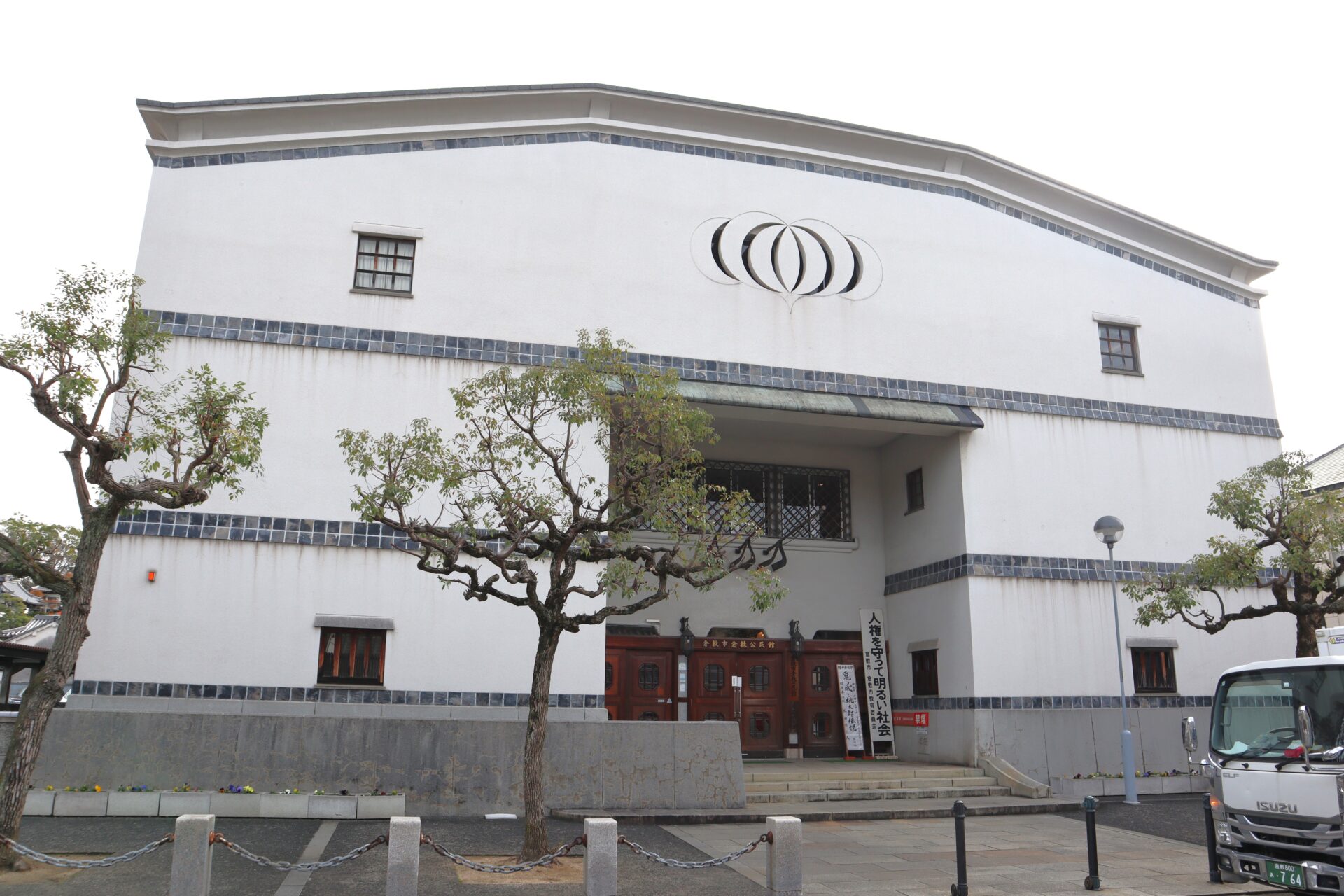
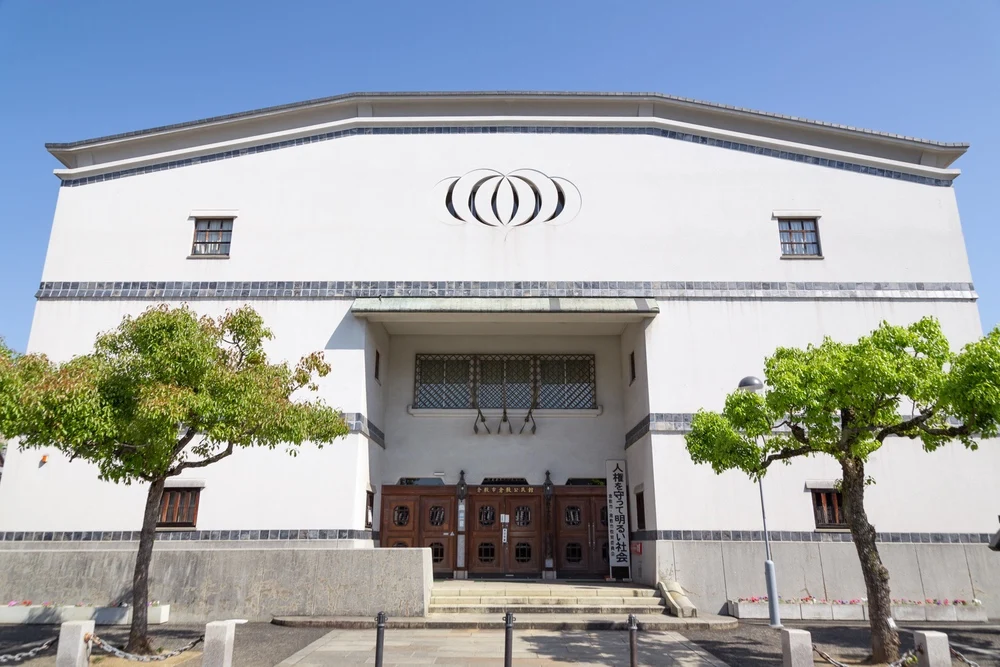
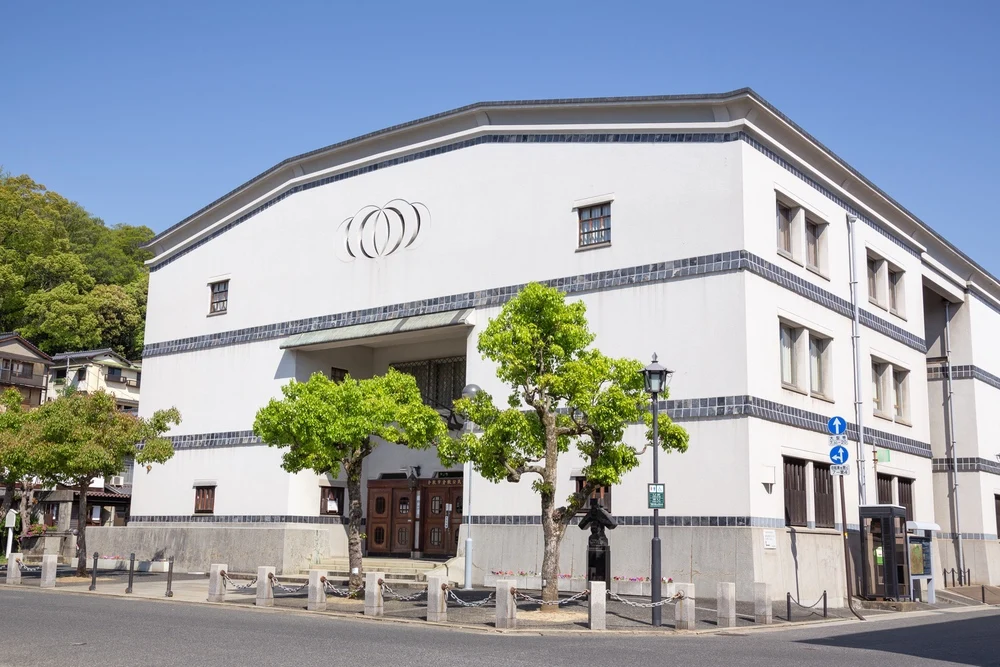
The lectures are held at the Kurashiki Community Center located in the Bikan Historical Area.
The Kurashiki Community Center was designed by Uraibe Shintaro and was built in 1969. Its exterior features white walls, small windows, Kurashiki lattice, and tiled roofs, reflecting the traditional townscape.
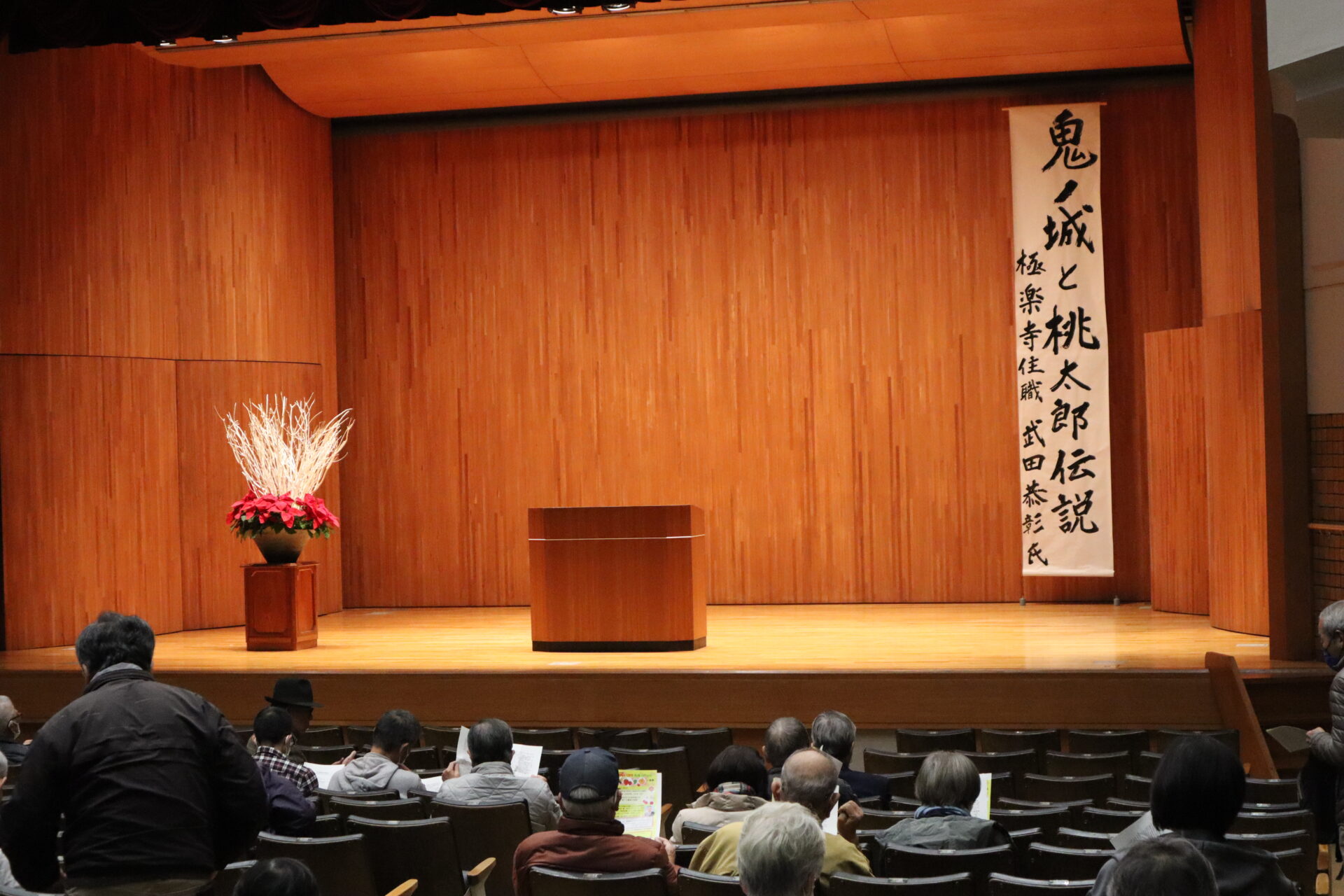
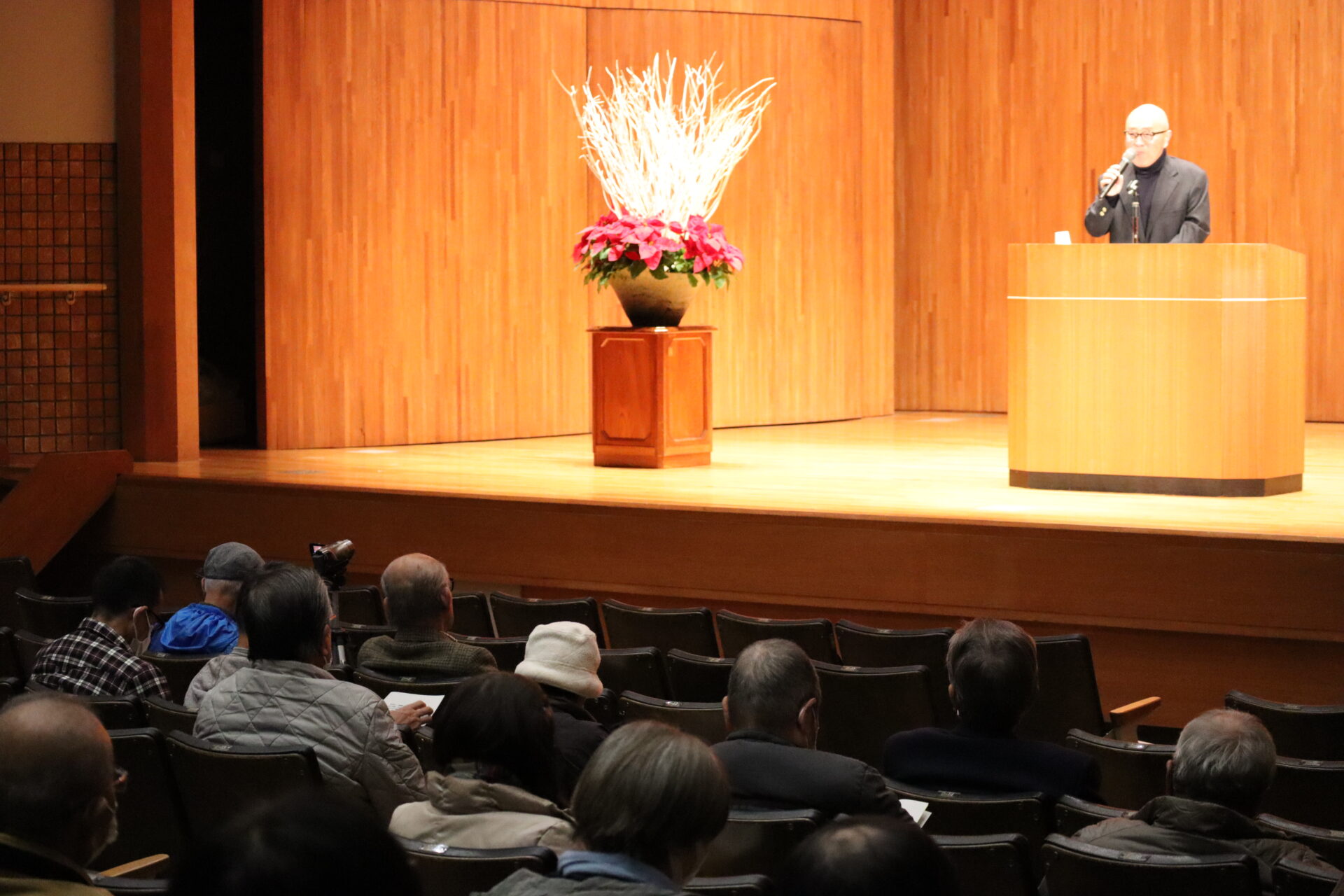
Upon ascending the stairs at the entrance of the Kurashiki Community Center, there is a large hall with 387 fixed seats. Nearly 100 attendees were already waiting for the performance to begin.
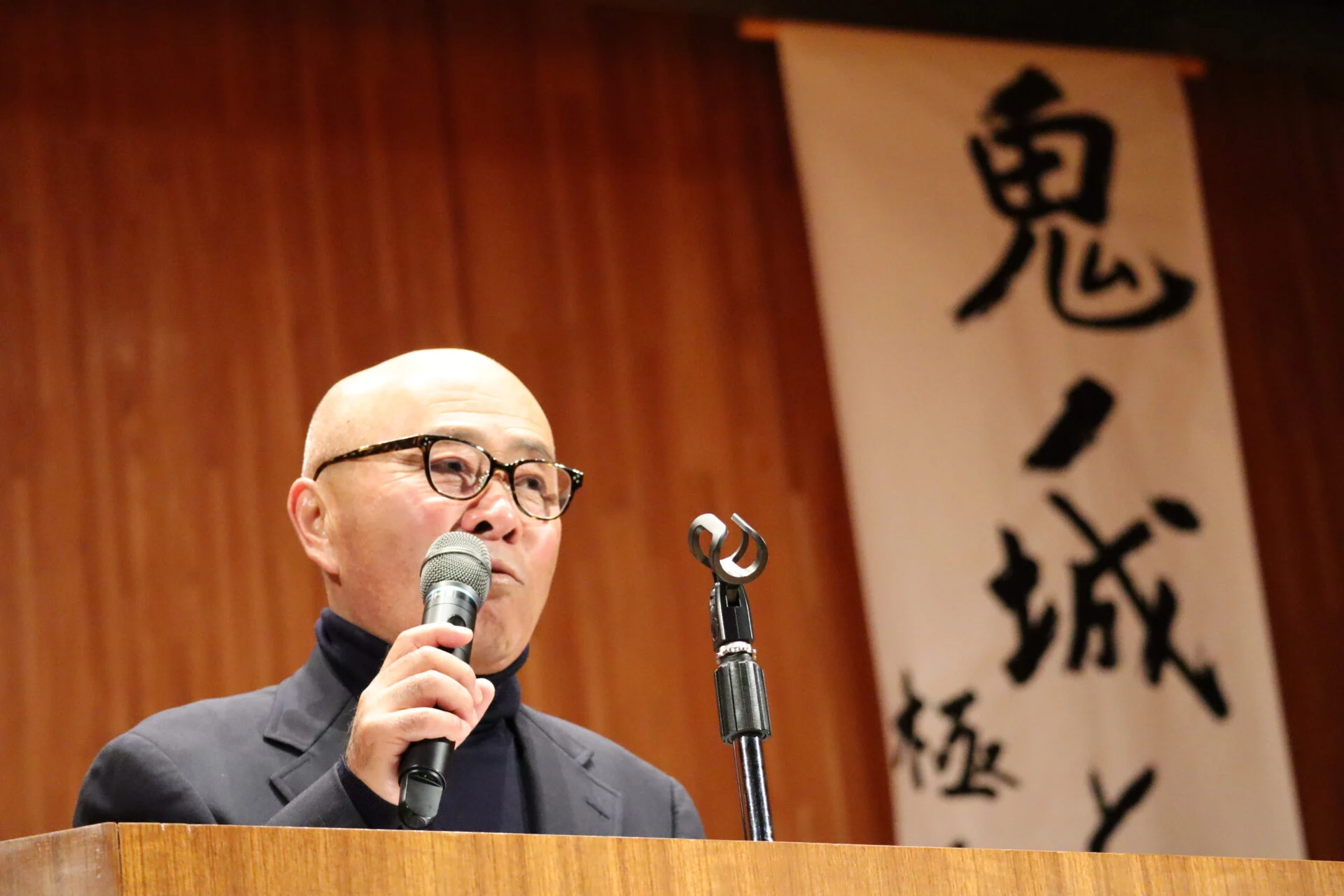
Lecturer Takeda Yasuaki
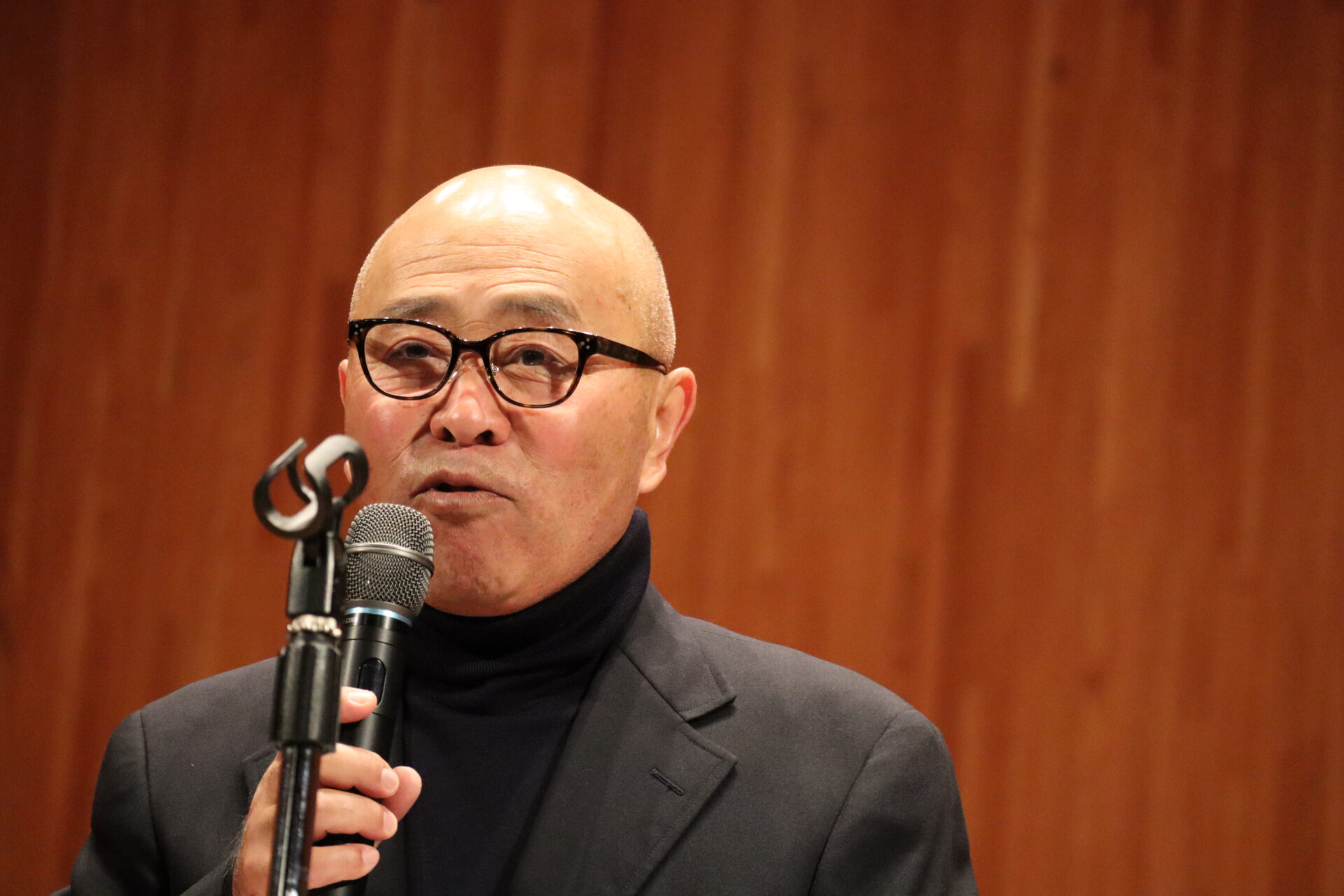
The lecturer, Takeda Yasuaki, is the chief priest of Gokurakuji Temple in Yakage Town. He is also a specialist in archaeology.
He has worked for many years in Okayama City and Soja City, participating in numerous archaeological excavations. Through academic research, he has approached historical facts.
In recent times, when the necessity of cultural property utilization is being loudly advocated, he has also been involved in tourism projects.
Content of the Lecture
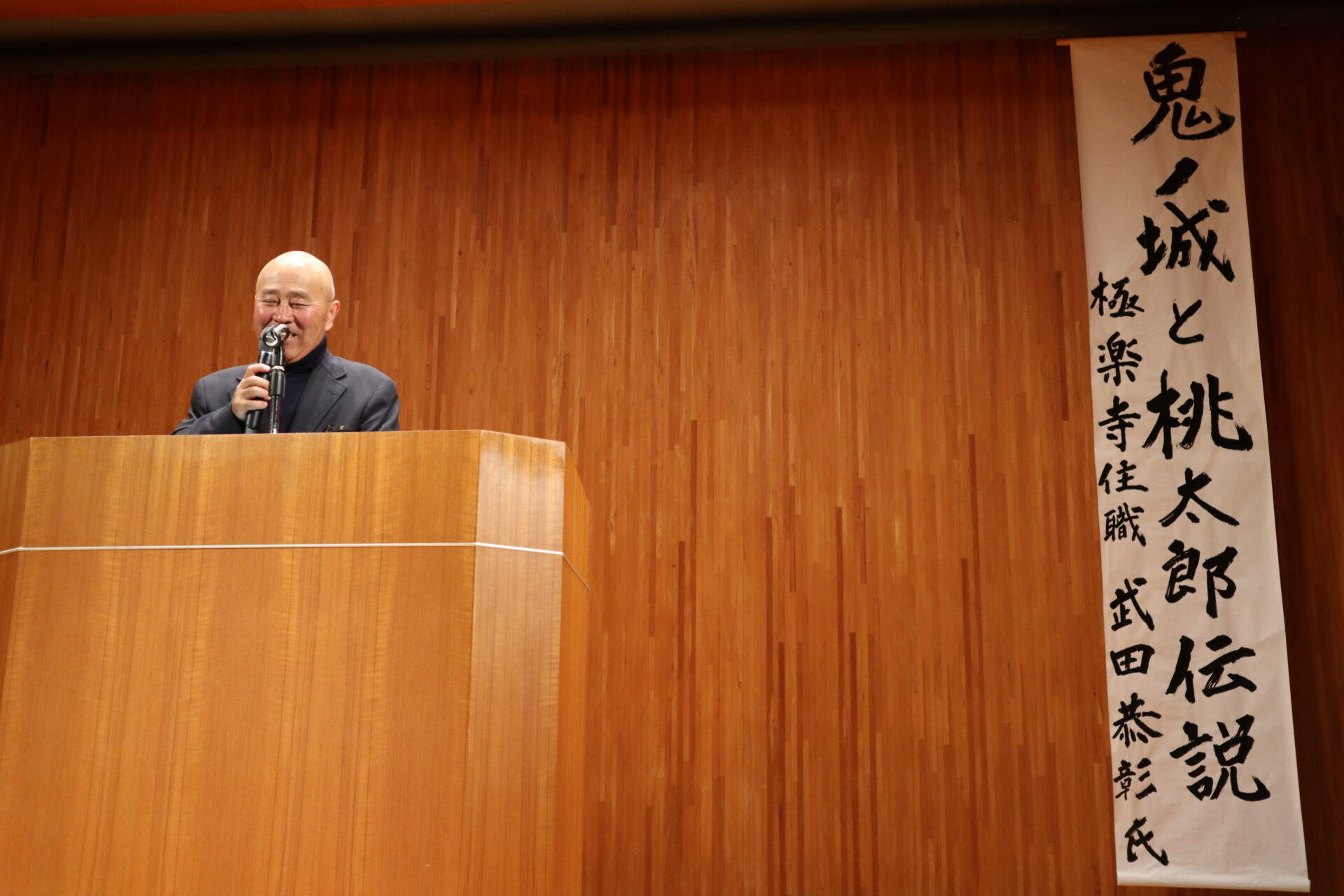
Here is a brief introduction to the content of Mr. Takeda's lecture, who was involved in the registration of the "Momotaro Legend" as a Japan Heritage.
About Momotaro
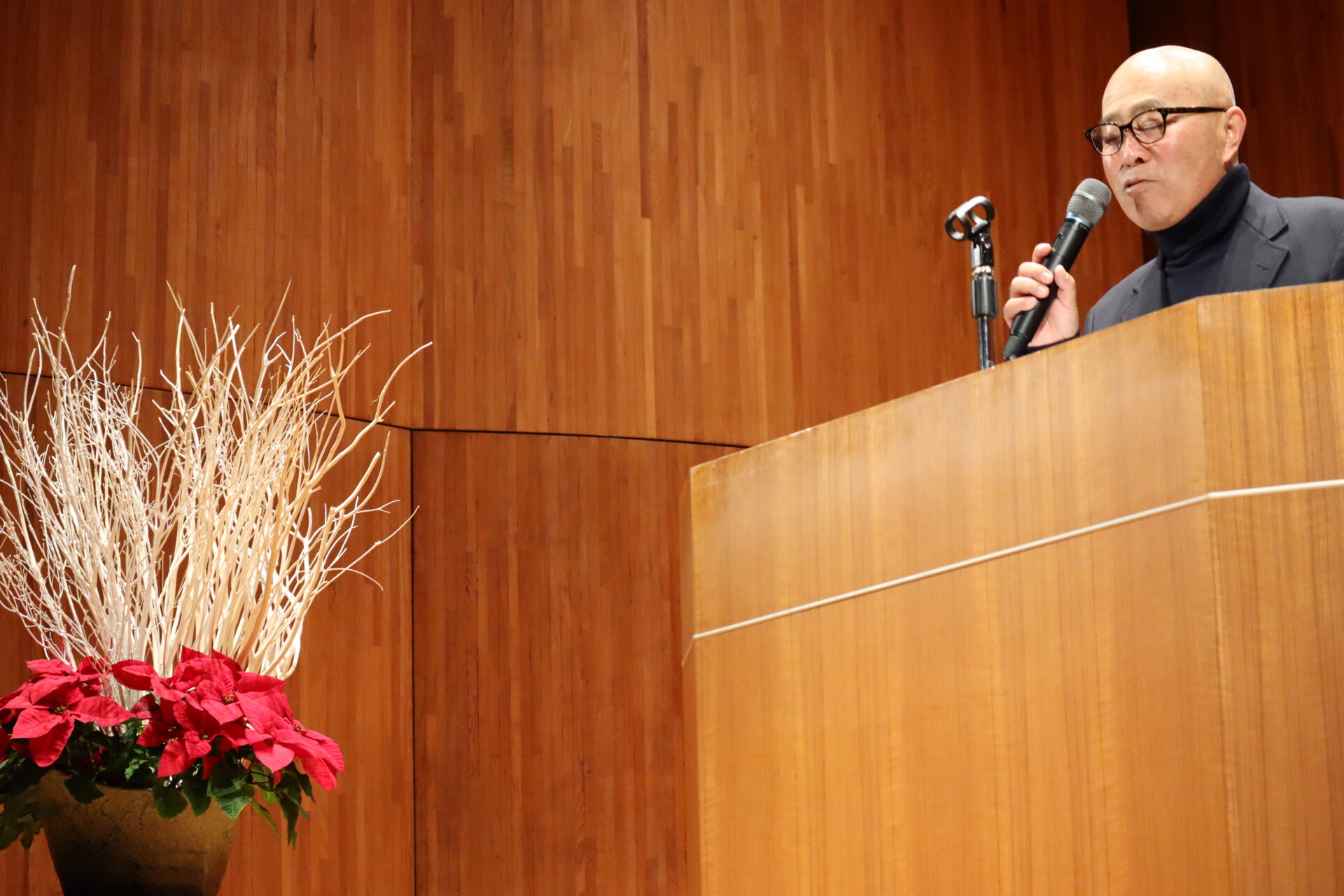
"Momotaro came to Kibi because he wanted iron."
The lecture began with this surprising opening line.
He continued, "At the Senbiki Kanakuro Site in Okuzaka, Soja City, a ironworks was discovered. It was found to be the oldest in Japan.
Old documents record that Kibitsuhiko no Mikoto attacked Kibi on behalf of the Yamato court.
In short, the Yamato court, which desired Kibi's iron, is the true identity of Momotaro."
Mr. Takeda explains the intersection of historical facts and legends. This seems to have become the basis for the "invader" theory of Momotaro.
"The people of Kibi must have had the lingering thought that they were robbed of iron by Yamato."
"And this thought eventually led to the birth of the Momotaro legend."
About Kinojo Castle
"The technique of stone wall construction developed in ancient times but was forgotten until the end of the Sengoku period.
People in the Middle Ages, looking up at the high stone walls built in ancient times, must have felt awe at their strange appearance.
Those who could not understand it thought it was the work of demons and called that mountain "the demon's stronghold."
The explanation continues with the results of academic research and a keen understanding of the Japanese spirit.
About the Ura Legend
"Senoo Kaneyasu was beheaded by Kiso Yoshinaka in the Genpei War. The head of Senoo was excavated, confirming the accuracy of historical documents."
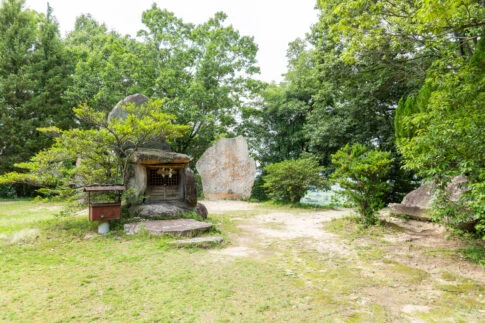
The excavation site is about 300 meters northwest of Okama-den of Kibitsu Shrine.
"Senoo constructed the Tatai River and accomplished the divine work of bringing water to twelve villages. The people's affection for Senoo connects to the Ura's Naru Kame Legend."
He skillfully interwove the historical background of syncretism of Shinto and Buddhism and the trend of creating "auspicious tales" in his explanation.
How to Enjoy History
Mr. Takeda emphasizes that "the way to enjoy history varies for each person," but "it is important to convey the correct facts accurately to future generations."
He also states, "We must distinguish between enjoyable romantic tales and historical facts."
Topics in Familiar Archaeology
The Senzo tumulus in Kita Ward, Okayama City has completed restoration work. Next, restoration work has begun on the adjacent Tukuri-yama tumulus.
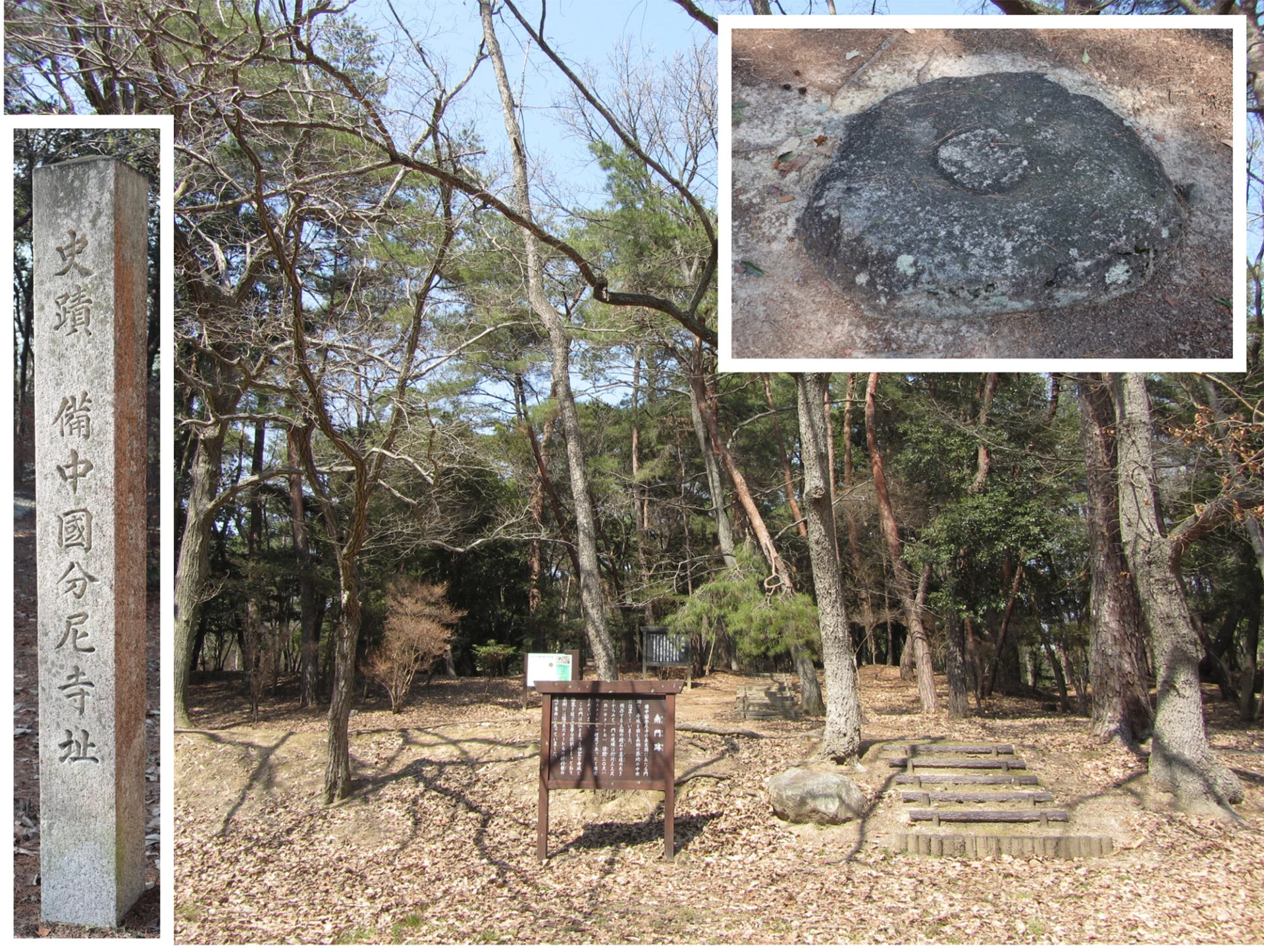
At the site of the Bichu Kokubun-ji Temple ruins in Kamibayashi, Soja City, the "History Heritage of Kibi Road Promotion Project" is underway.
At the Tatetsuki Site in Yabe, Kurashiki City, a policy has been indicated to remove the cooling tower standing in one corner of the site for landscape restoration.
Currently, at the Maido site in Yakage Town, where Mr. Takeda is working, there are ongoing discoveries that could overturn history.
Mr. Takeda states, "History is a fusion of archaeology and historical documents."
We hope to enjoy the romantic legends and the joy of knowing the correct history in a well-balanced manner.
Conclusion
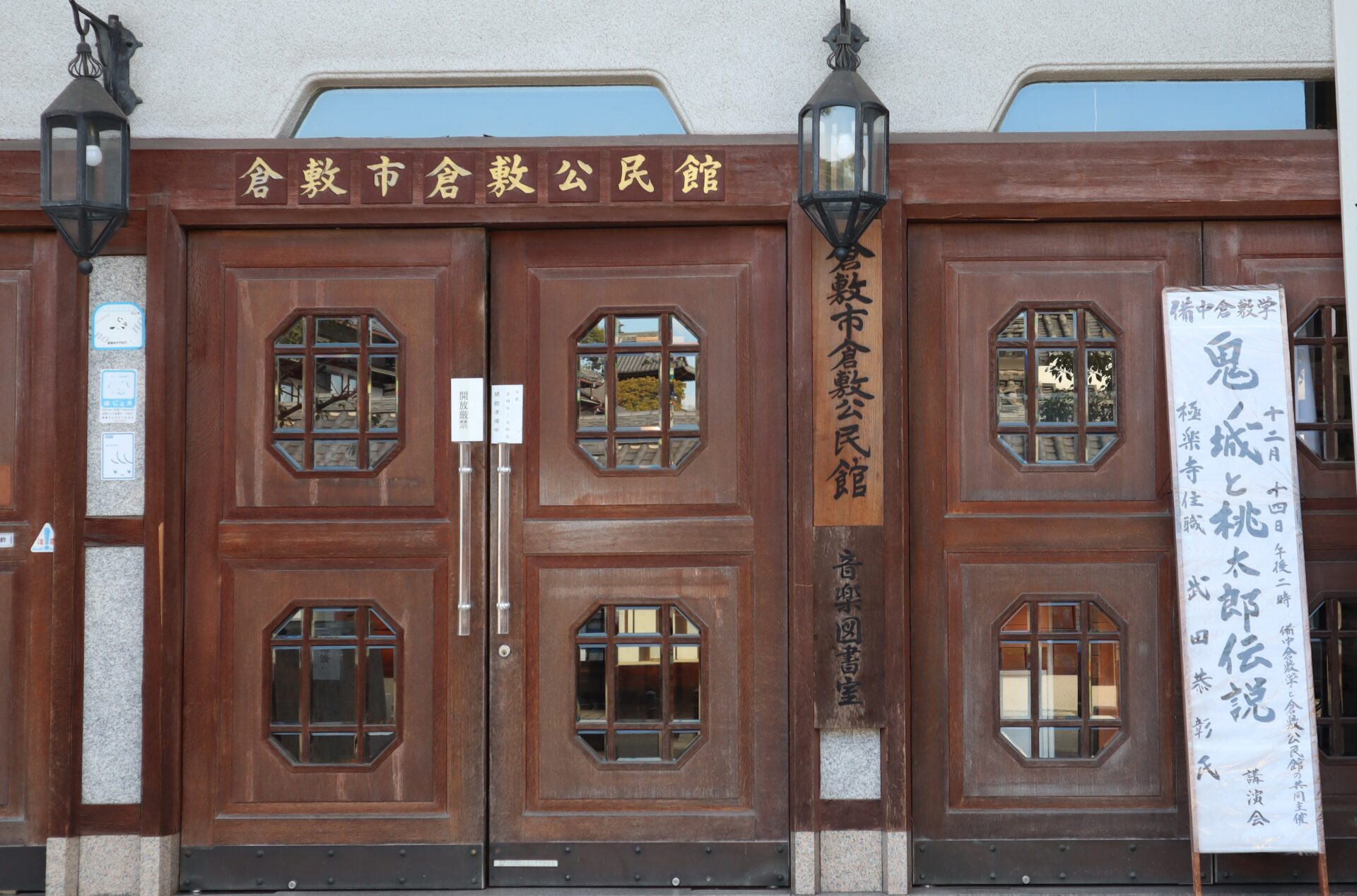
In a modern Community Center that stands out against the traditional townscape, "Bitchu Kurashiki Studies" is held once a month.
The cultural properties that make up the Japan Heritage "Momotaro Legend" total 27. What was mentioned in this story is just a part of them.
Even so, the anecdotes that are passed down make one feel that they are filled with many stories of the history of Kibi and the thoughts of its people.
The next topic for "Bitchu Kurashiki Studies" will be "The Basics of Shrines". You might hear some eye-opening stories.
On January 11, 2024 (Thursday) from 2 PM, there is no charge and no prior registration is required. Why not come and check it out?
Articles Related to Bitchu Kurashiki Studies

Bitchu Kurashiki Studies 174th Session 'Kinojo Castle and the Momotaro Legend' Data
| Name | Bitchu Kurashiki Studies 174th Session 'Kinojo Castle and the Momotaro Legend' |
|---|---|
| Date | December 14, 2023 from 2 PM to 3:30 PM |
| Location | Kurashiki Community Center |
| Participation Fee (including tax) | Free |
| Homepage | Bitchu Kurashiki Studies |