I was born and raised in Kurashiki.
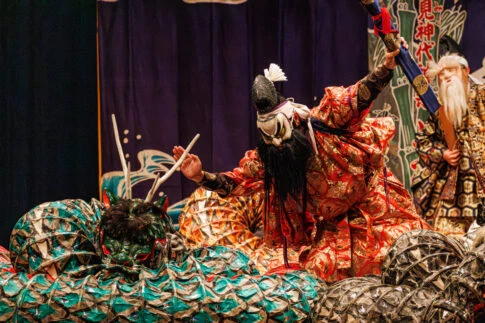
For me, shrines are places where fun events such as festivals, kagura (traditional dance), and hatsumode (first shrine visit of the year) are held according to the seasons, and they are also solemn places where I can feel history and sacredness. Since childhood, shrines have been rooted in my life.
However, perhaps because they are too close, I know very little about the origins of the shrines.
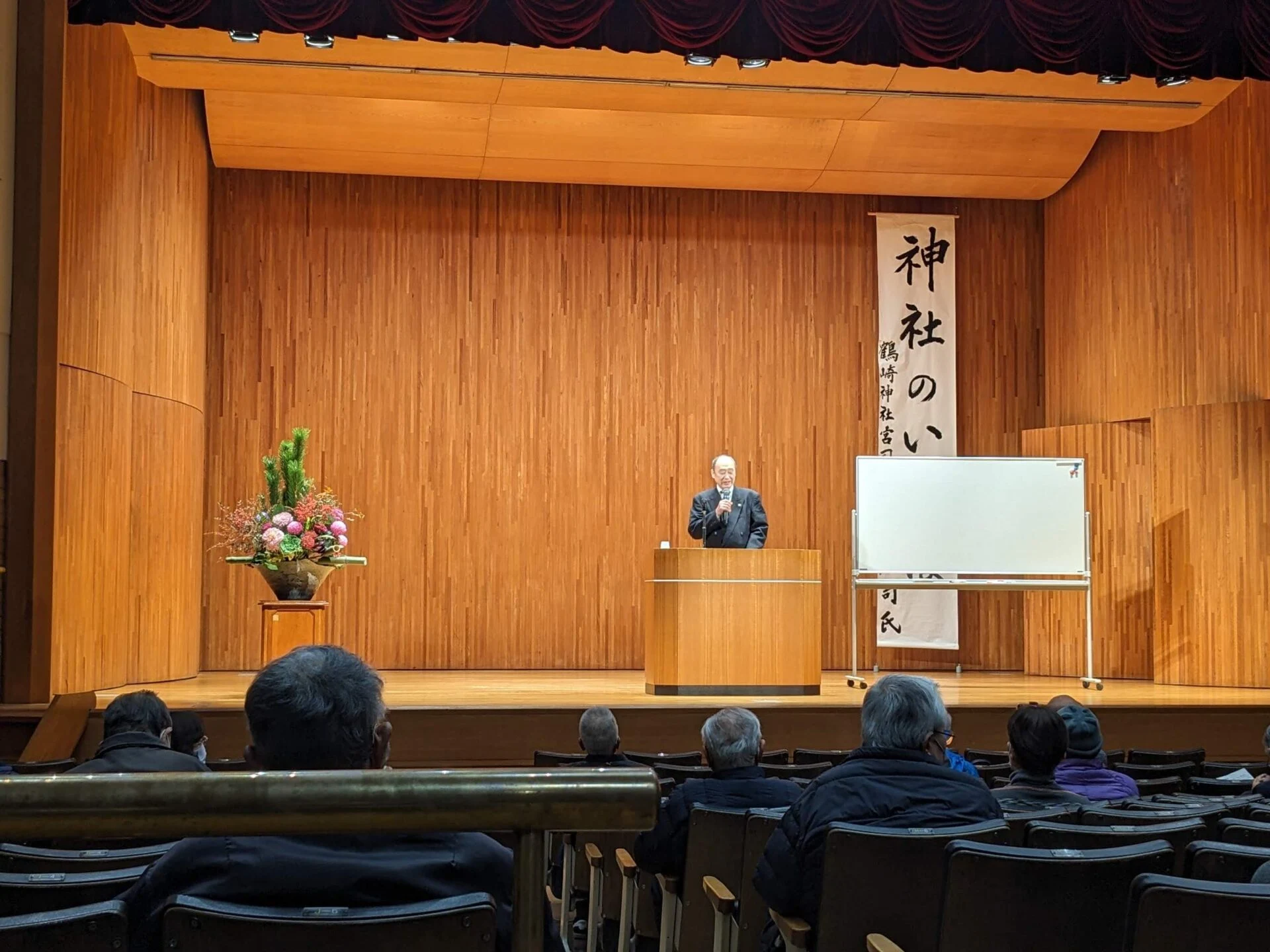
Therefore, on January 11, 2024, at the 175th Bichu Kurashiki Gaku, I learned about the historical changes of shrines, focusing on the theme of "The Basics of Shrines", from Koji Ota, the chief priest of Tsurusaki Shrine.
What is "Bichu Kurashiki Gaku"
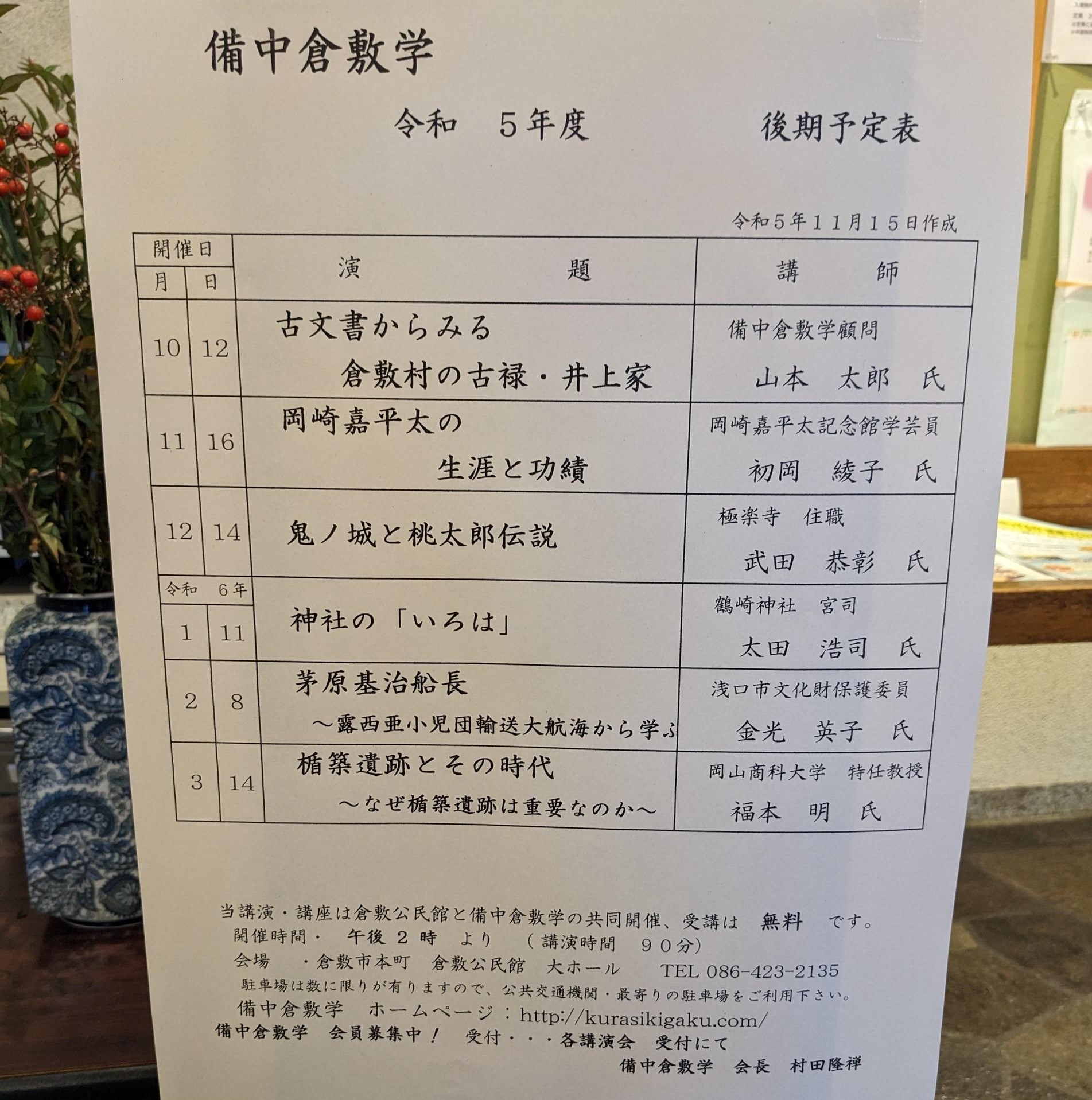
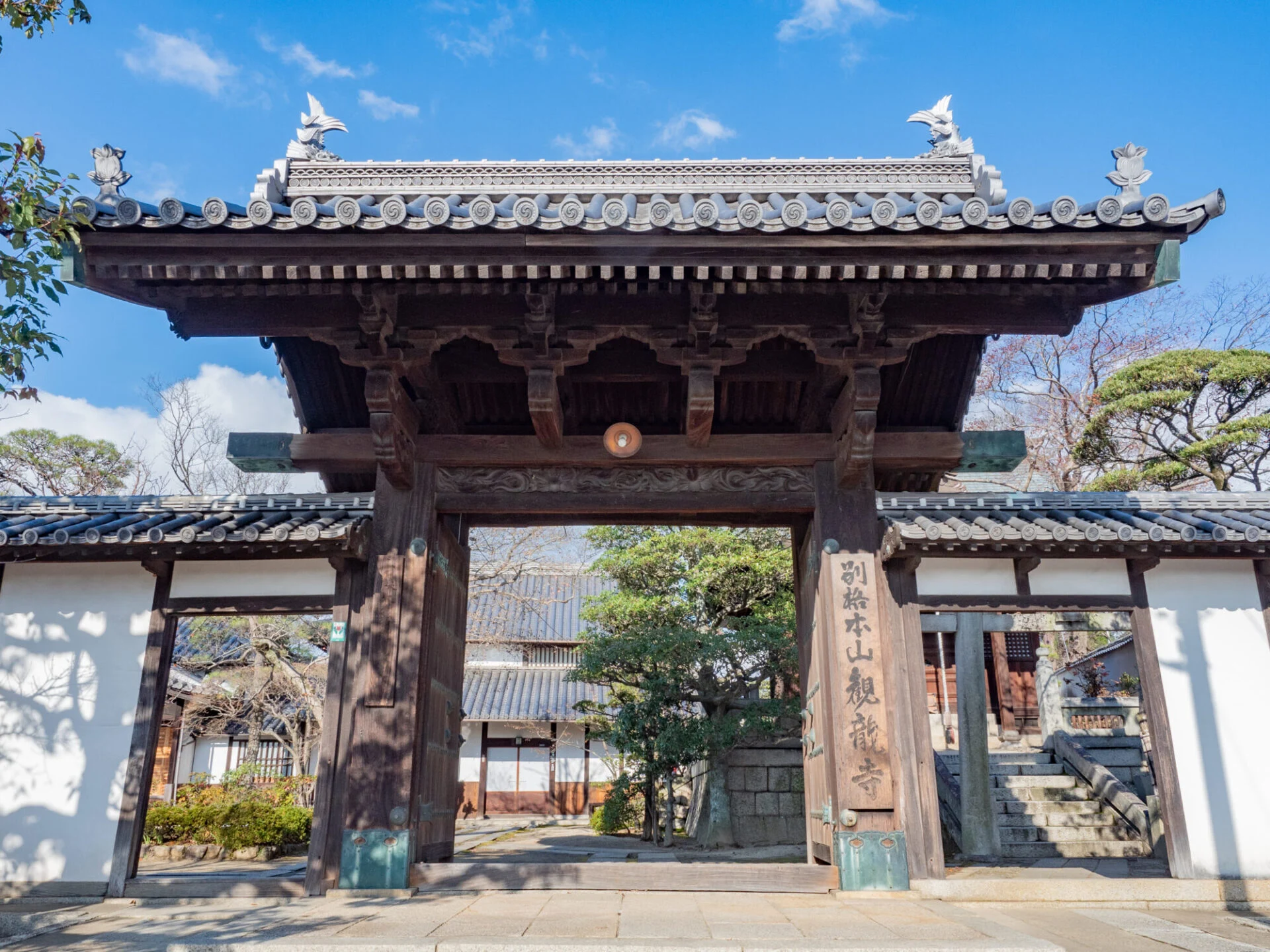
Bichu Kurashiki Gaku was established with the aim of learning about the region's history and culture, centered around Takuzan Murata, the head priest of Kanryuji Temple, and stakeholders around the Important Traditional Buildings Preservation District in Kurashiki.
It was suspended during the COVID-19 pandemic, but resumed in September 2023, holding lectures every second Thursday of the month at 2 PM.
No prior registration is required, and participation is free.
Please check the official website in advance, as there may be times when it is not on the second Thursday.
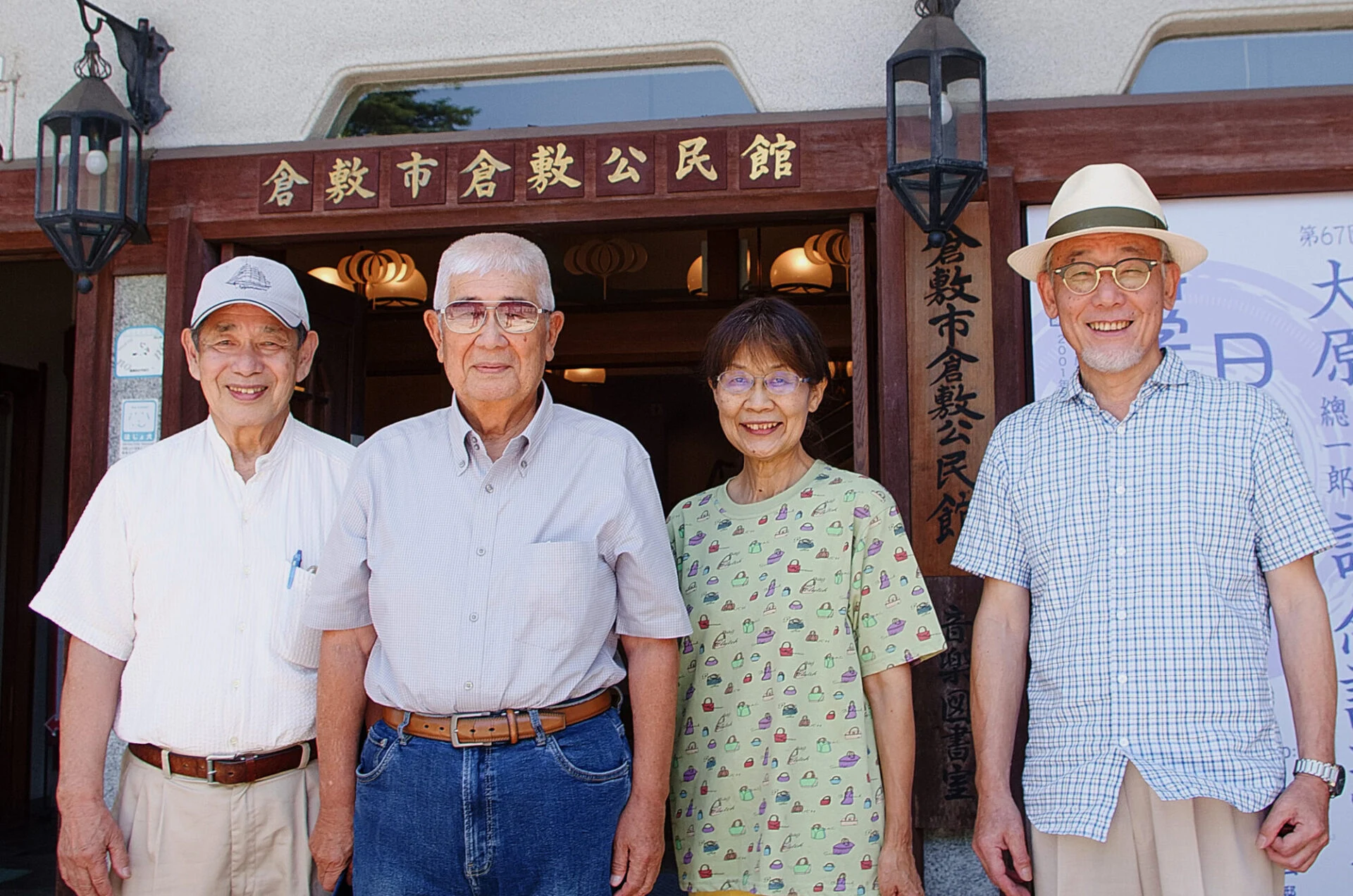
I attended the 175th Bichu Kurashiki Gaku
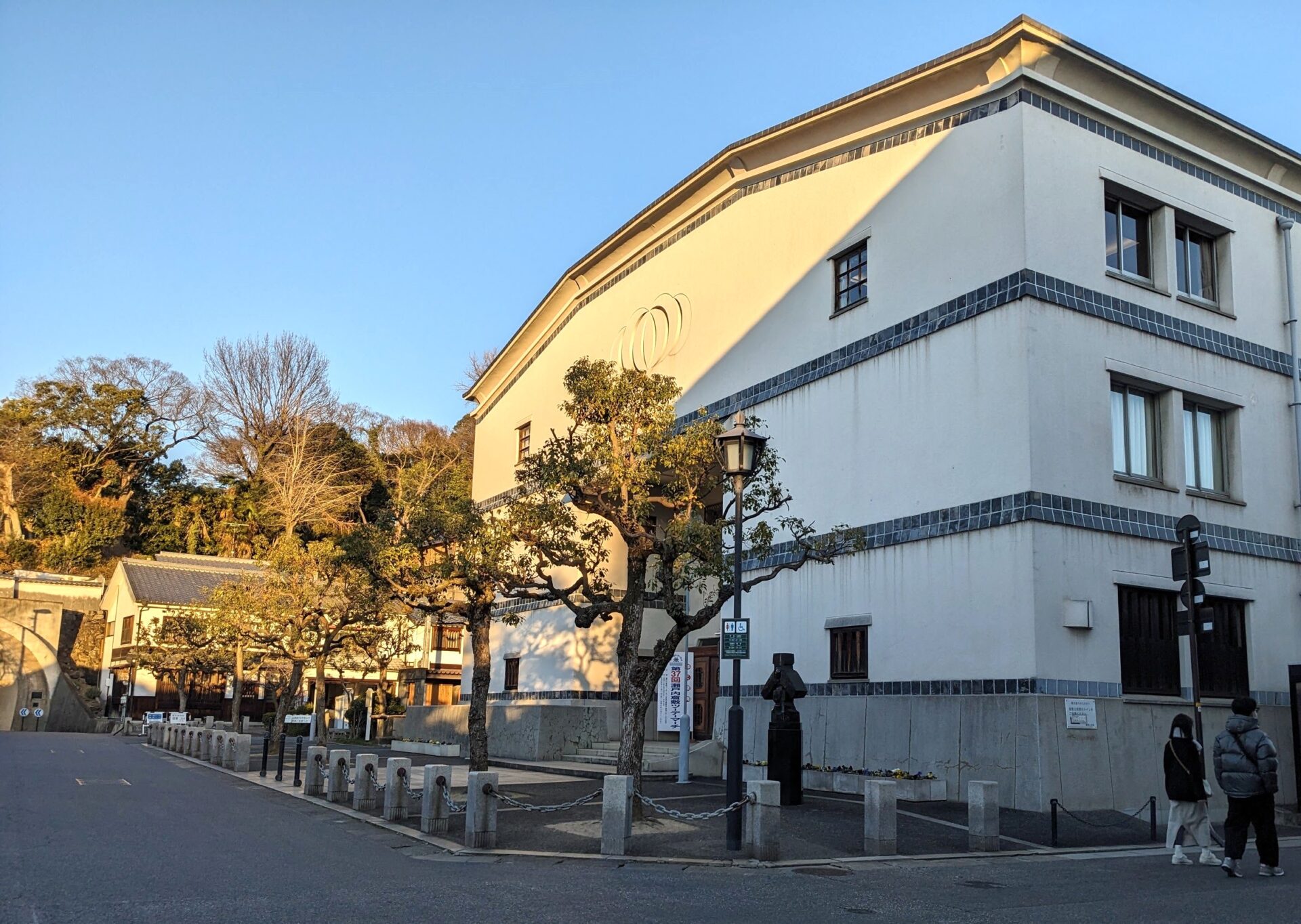
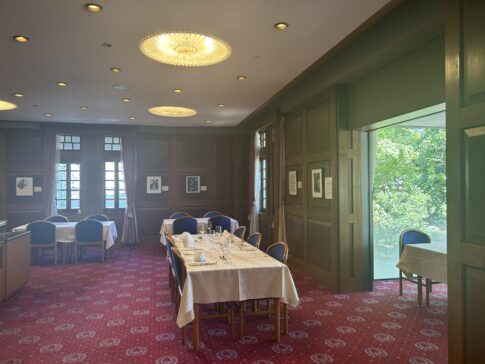
Bichu Kurashiki Gaku is held at the Kurashiki Community Center located in the Bikan Historical Area.
The building, constructed in 1969, is beautifully designed to match the scenery of the Bikan Historical Area. Tourists often stop to take photos.
The venue is the large hall on the second floor. I register at the reception and wait for the start.
The lecturer is Koji Ota, the chief priest of Tsurusaki Shrine
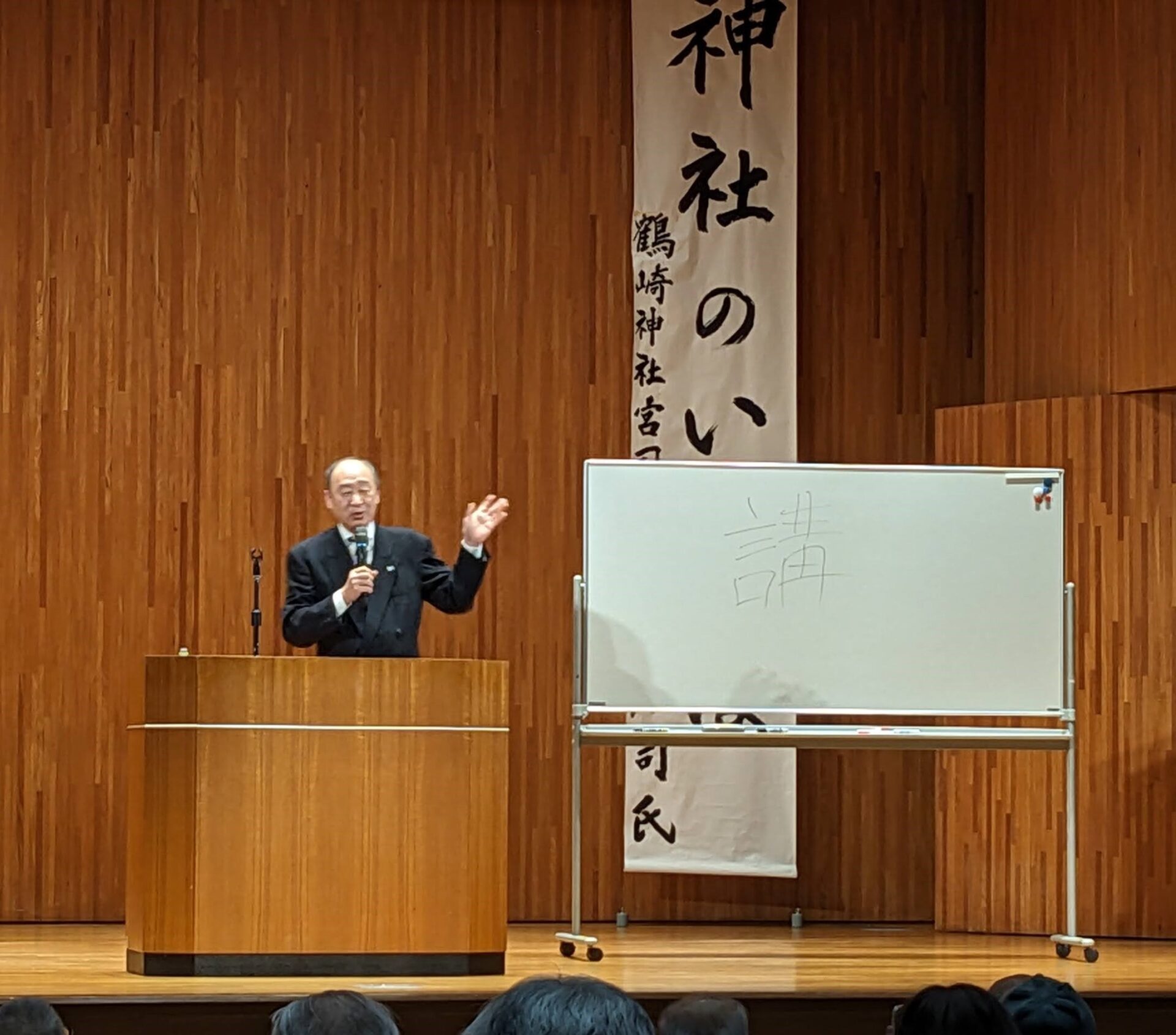
The lecturer, Koji Ota, is the chief priest of Tsurusaki Shrine.
Tsurusaki Shrine, located in Hayashima Town, Tsukubo District, was founded in 1350 (during the Nanboku-cho period) and is a shrine with a long history.
The outline of the lecture is as follows.
- Shrines in Kurashiki Tsukubo
- Origins of the festival grounds and shrine buildings
- History of shrines
- Current shrines and shrine priests
Usually, there are few opportunities to think deeply about the organization of "shrines," but he provided a detailed explanation of the history and positioning of shrines up to the present.
I would like to share one particularly memorable story from the lecture.
About the organization of shrines
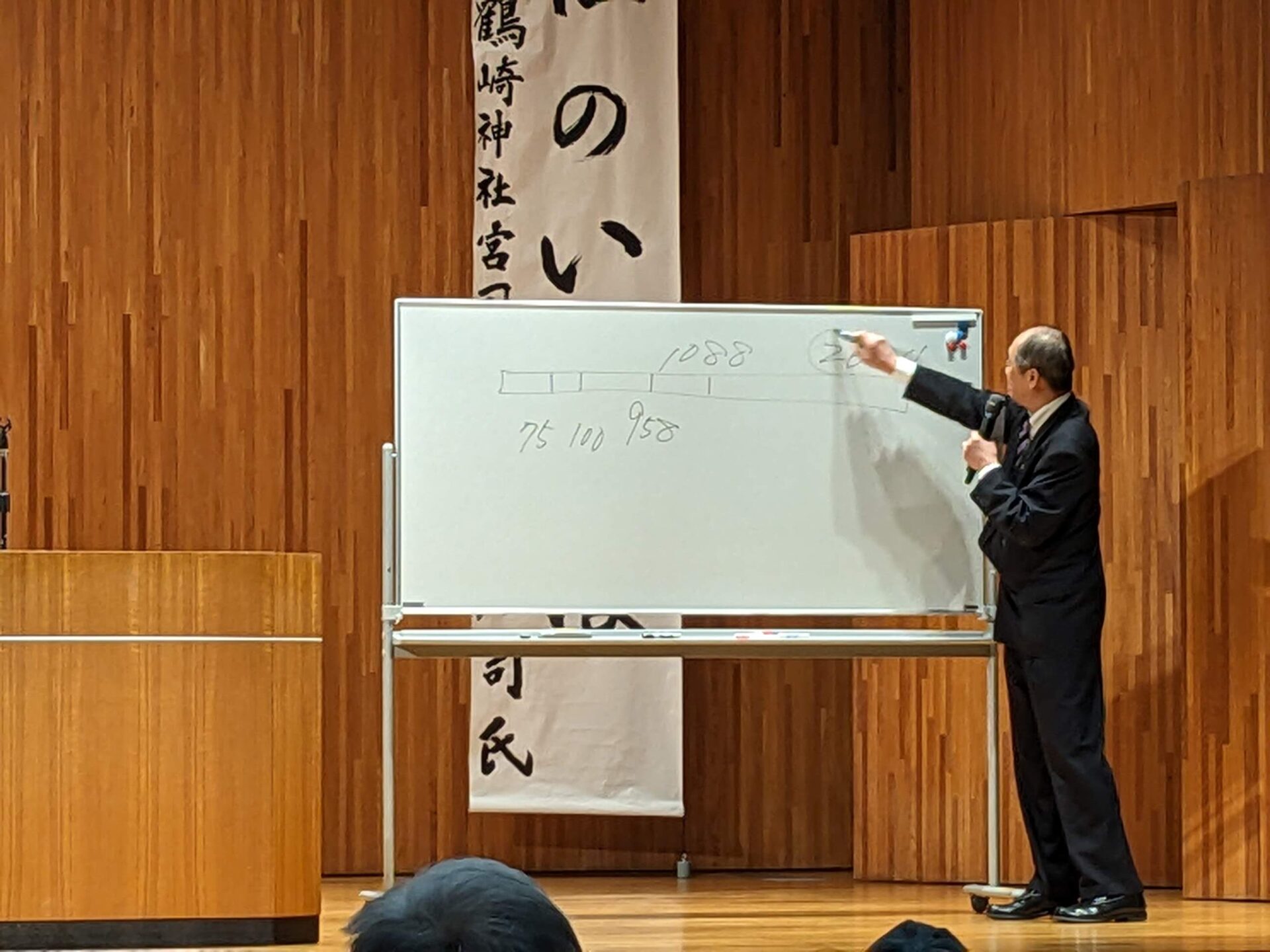
Do you know about the organization of shrines?
I only knew that there were ujiko (shrine parishioners) and sodai (representatives), but I learned for the first time that there is a deeper organization connected to them, with the Association of Shinto Shrines at the top.
- During rituals, shrines across the country are connected under the Association of Shinto Shrines, which collaborates with government agencies.
- Voices from small local shrines are collected and communicated upwards, and the Association of Shinto Shrines collaborates with the Ministry of Education, Culture, Sports, Science and Technology to gather statistics and support activities.
I thought, "Is it because the ujiko listen to the small voices not only from the gods but also supported by the Association of Shinto Shrines?"
Conclusion
After participating in this lecture, I felt that shrines are closer to me.
From now on, I think I can enjoy exploring shrines and temples from a slightly different perspective. I want to take the time to slowly explore the local history.
Bichu Kurashiki Gaku is held every second Thursday of the month at 2 PM at the Kurashiki Community Center.
I also think it is a valuable opportunity for anyone to listen to these lectures. Please consider participating.
Articles related to Bichu Kurashiki Gaku

Bitchu Kurashiki Gaku 175th "The Basics of Shrines" Data
| Name | Bitchu Kurashiki Gaku 175th "The Basics of Shrines" |
|---|---|
| Date | January 11, 2024, 2:00 PM - 3:30 PM |
| Location | Kurashiki Community Center |
| Participation Fee (including tax) | Free |
| Homepage | Bitchu Kurashiki Gaku |