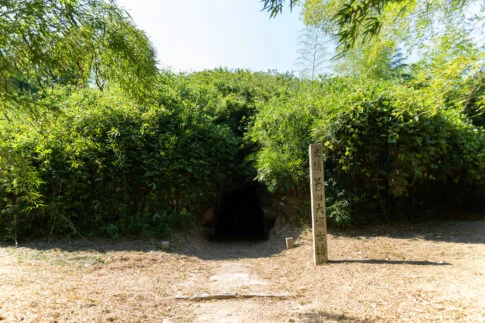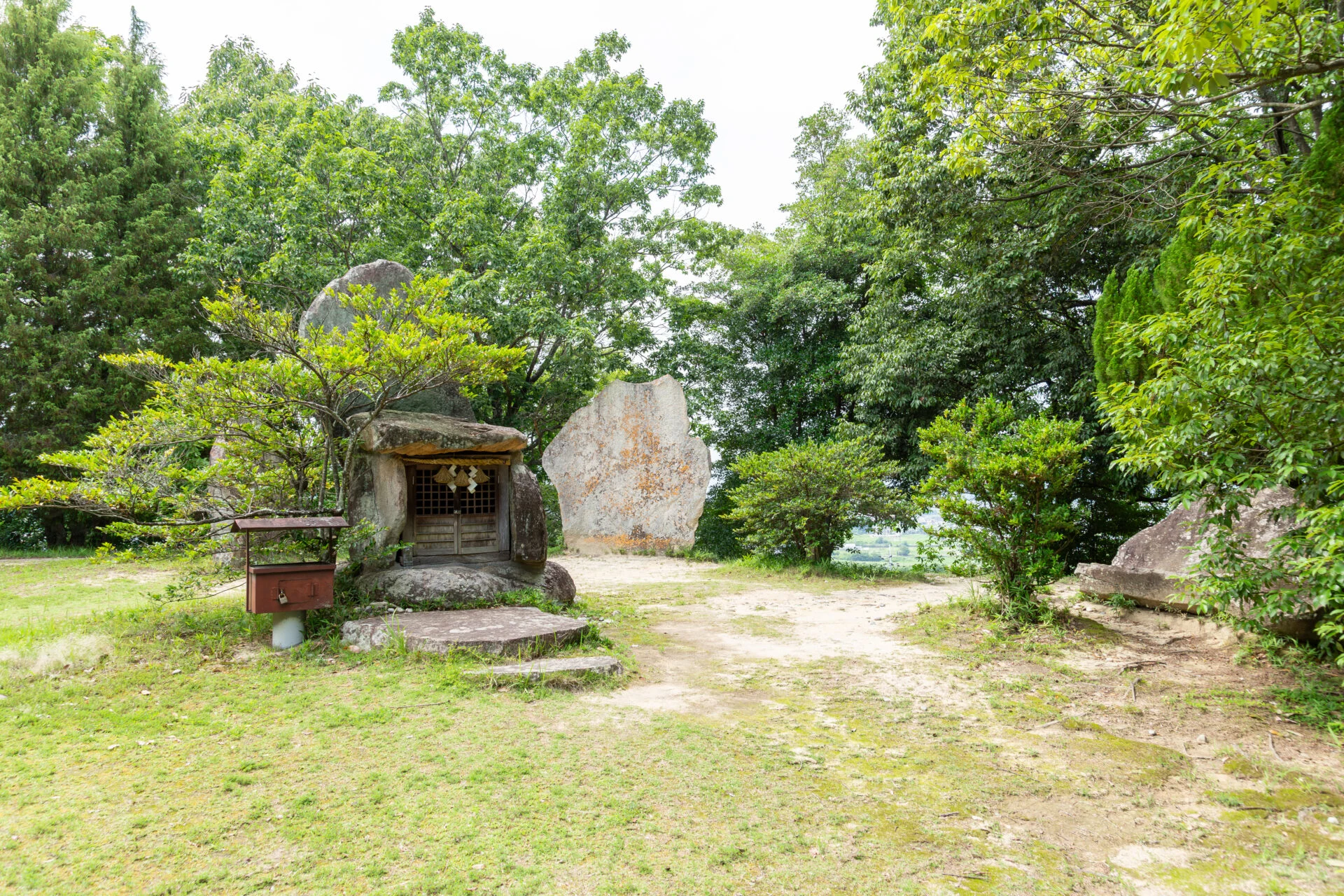
Tatetsuki Site is an archaeological site located on a hill within a residential area in the eastern part of Kurashiki City.
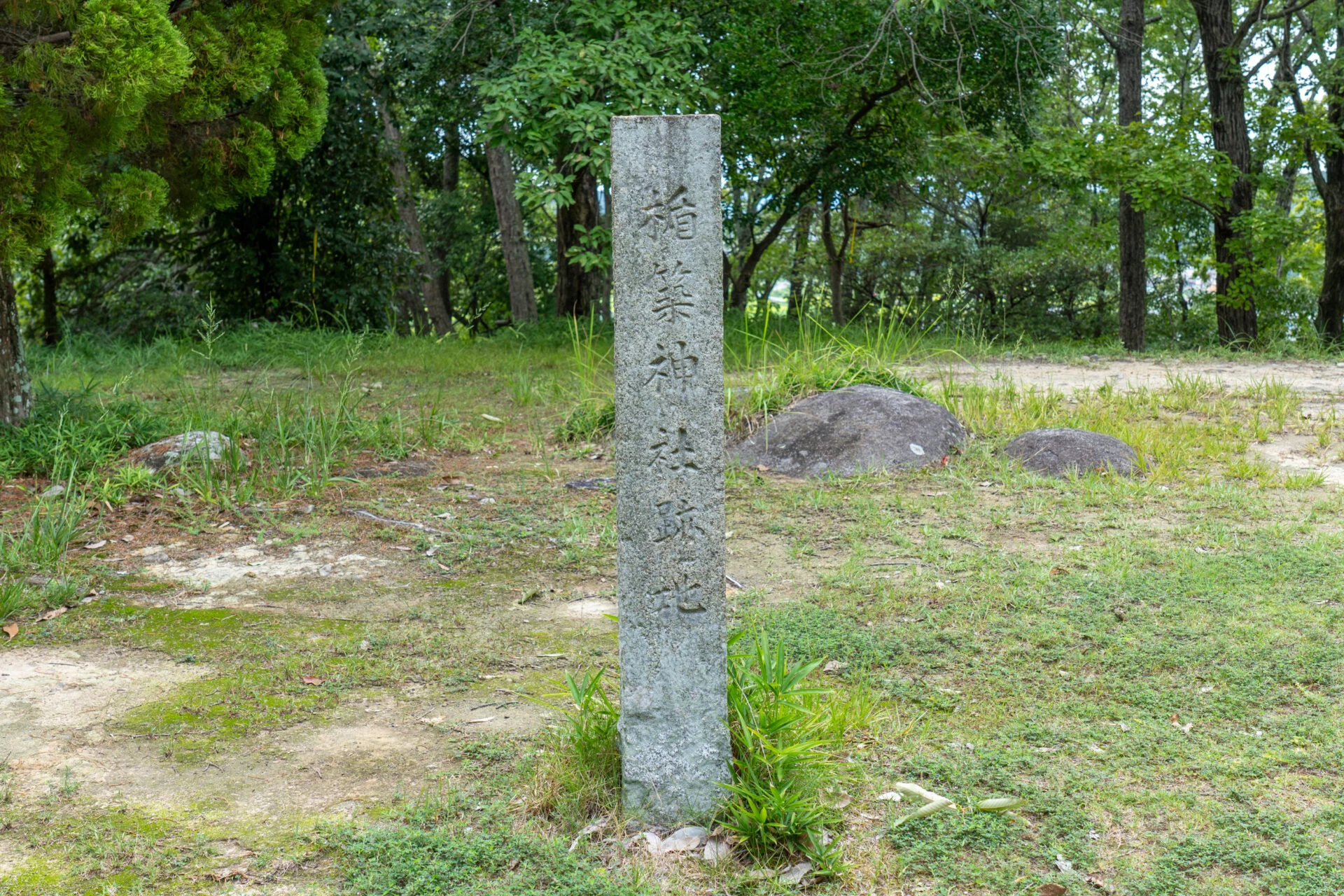
In fact, Tatetsuki Site is a well-known spot that has been featured on popular television programs and attracts history enthusiasts from all over the country. There used to be "Tatetsuki Shrine" in this area, where a mysterious stone with beautiful patterns, known as Sentai Monseki, was enshrined as the sacred object.
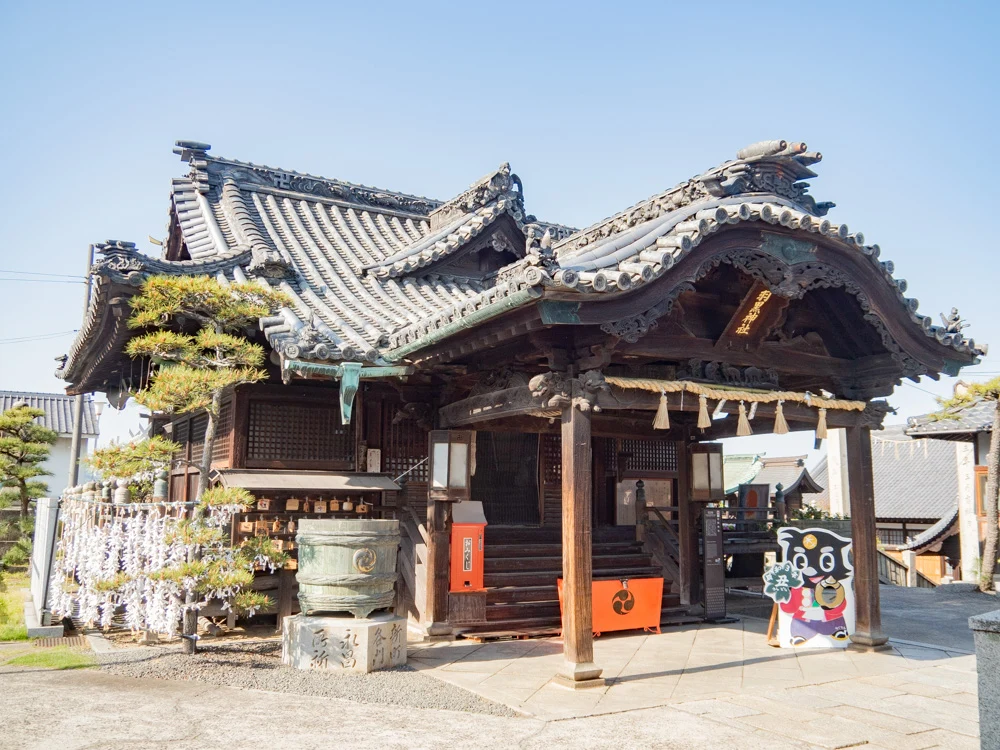
Later, due to the merger of shrines during the Taisho era, the shrine building of Tatetsuki Shrine was dismantled, and there was a period when the sacred object was moved to the nearby Koi Kui Shrine. It is also said that Koi Kui Shrine is connected to the legend of Momotaro.
We will introduce the three elements of Tatetsuki Site, Sentai Monseki, and Koi Kui Shrine, along with a mysterious story that has continued for about 1800 years.
The largest burial mound of the Yayoi period, Tatetsuki Site and the sacred object of Tatetsuki Shrine "Sentai Monseki"
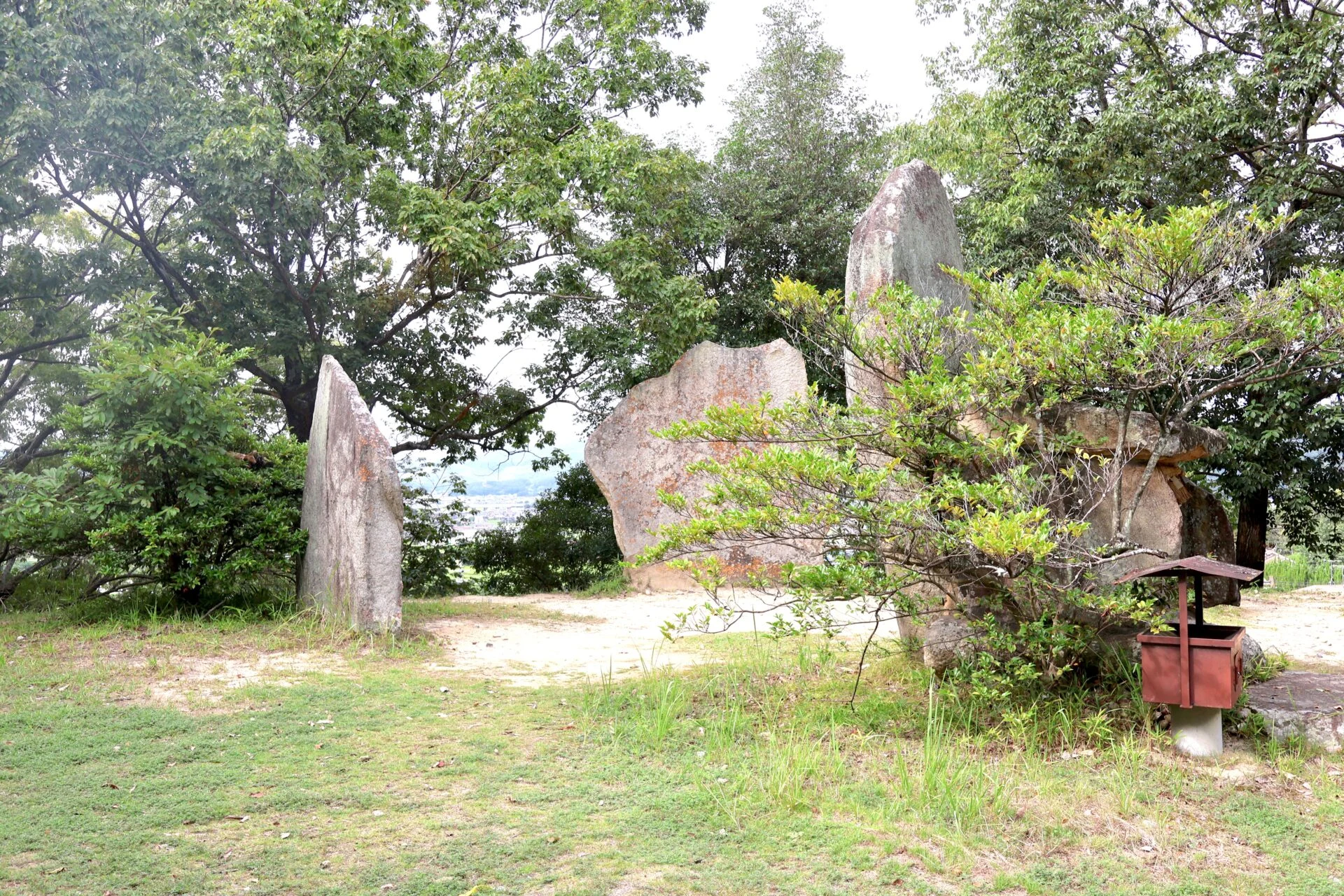
Tatetsuki Site is a burial mound from the late Yayoi period (approximately 1800 to 1900 years ago), and it is one of the largest of its kind from that period.
It is believed that a person equivalent to the king who ruled the Kibi region was buried here. This site is a valuable archaeological site that marks the transition from the Yayoi period to the Kofun period, and it was designated as a national historic site in 1981.
This site has three main features.
- Size is among the largest of the Yayoi period. A uniquely shaped burial mound
- Precious burial goods excavated from the burial mound
- The mystery of "Sentai Monseki"
Size is among the largest of the Yayoi period. A uniquely shaped burial mound
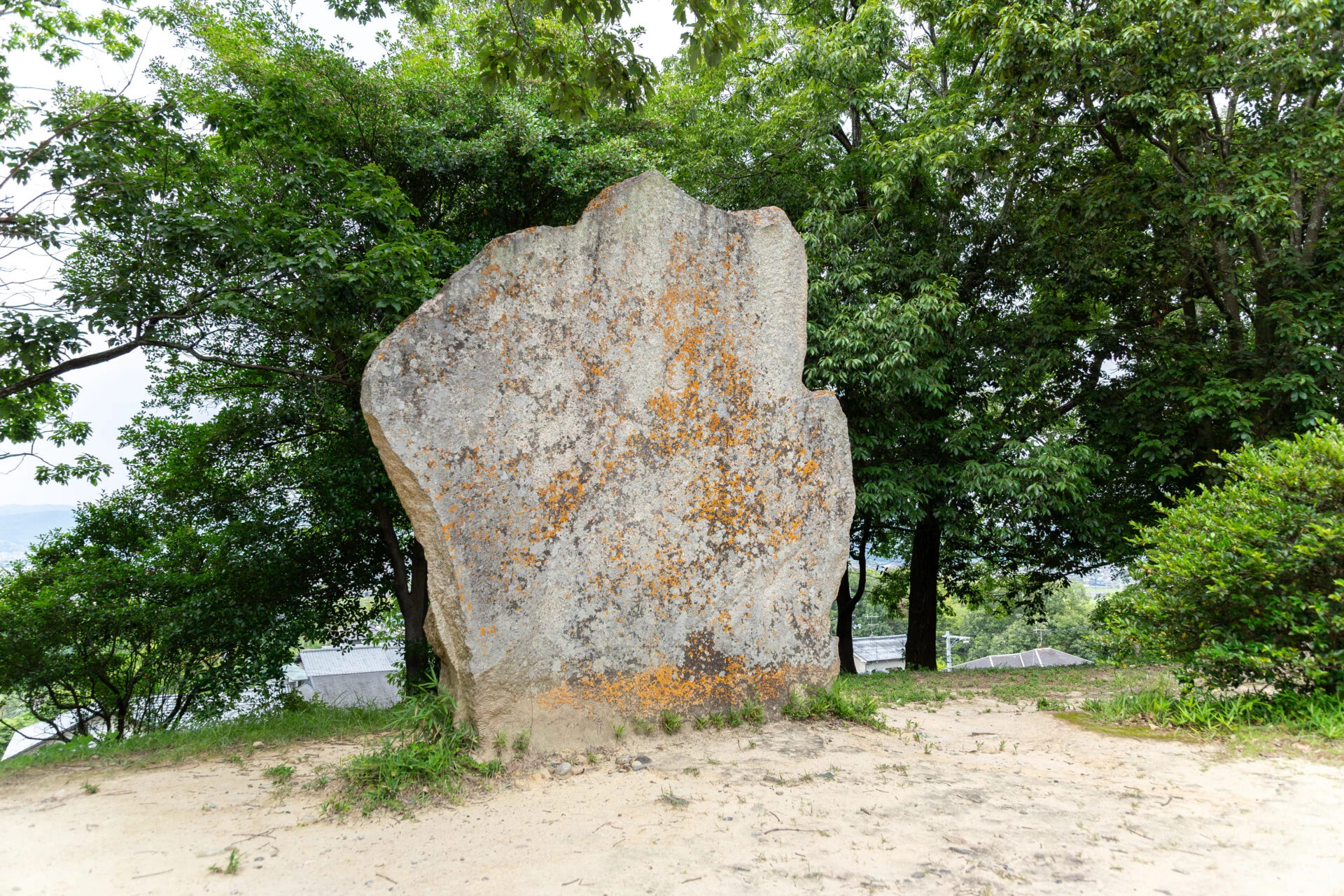
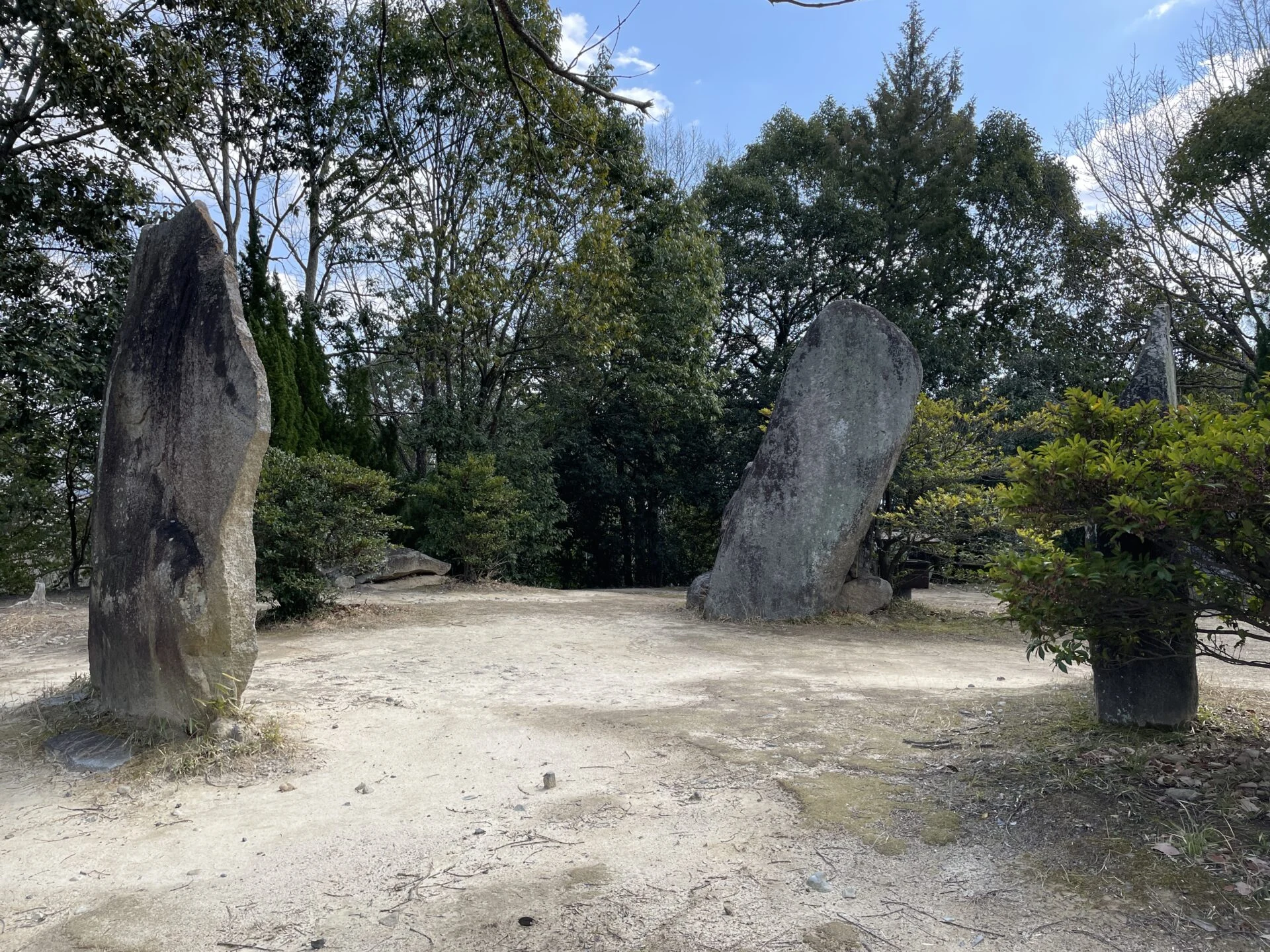
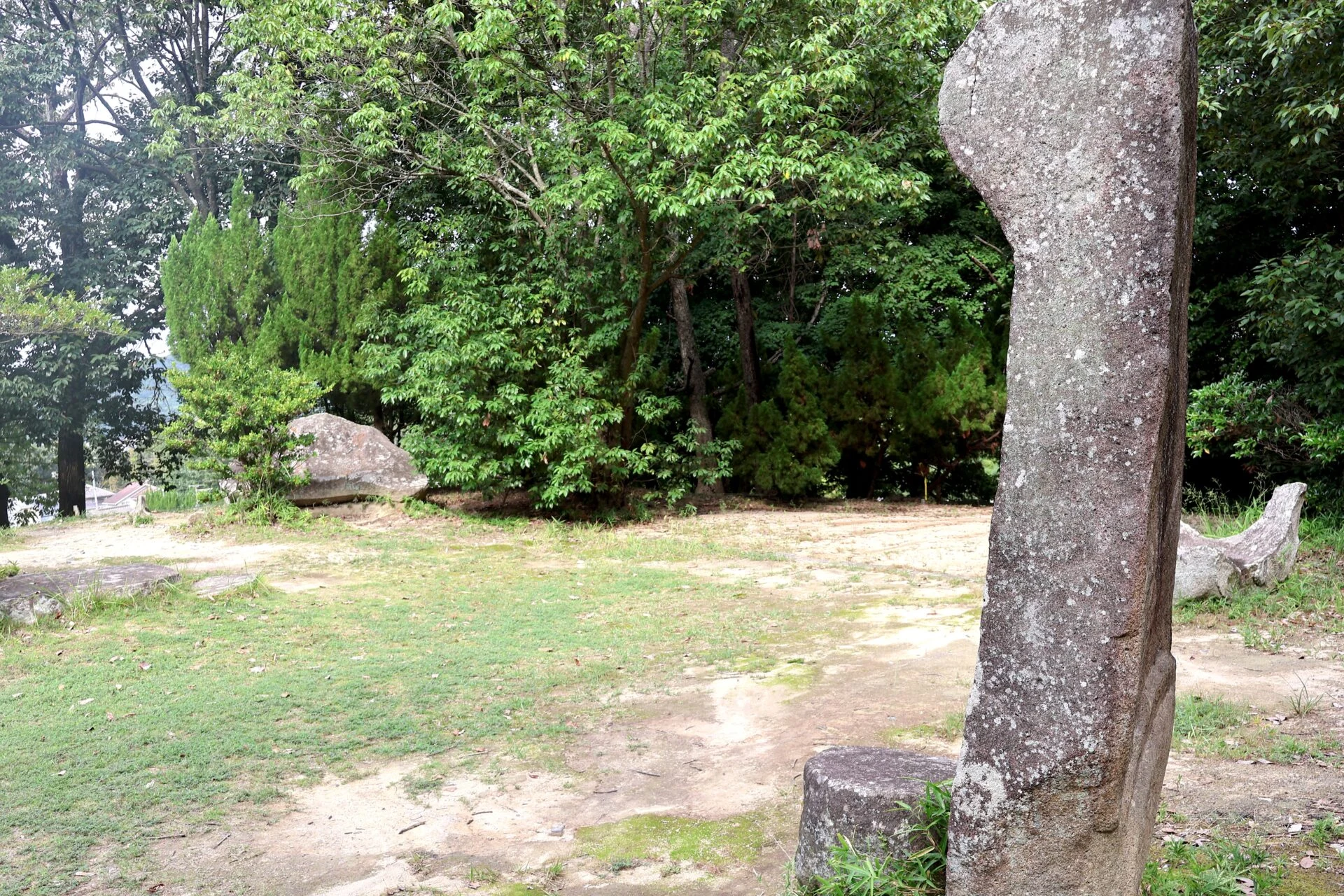
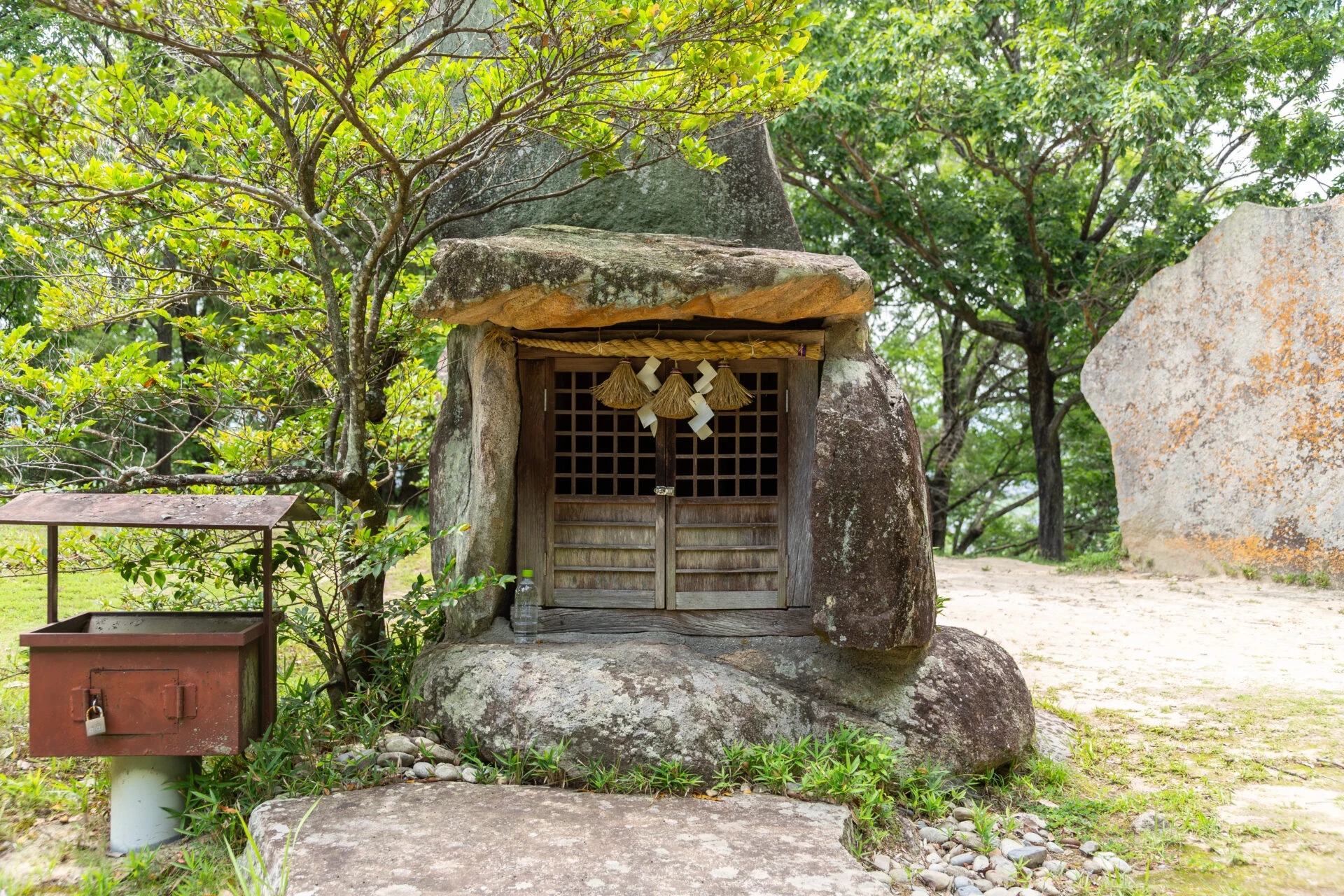
The burial mound is thought to have a unique shape with a "round hill" (circular mound) at its center, with rectangular projections extending to the northeast and southwest. The central circular mound is estimated to have a diameter of about 50 meters, and including the projections, the total length is about 80 meters, making it one of the largest in Japan for the Yayoi period.
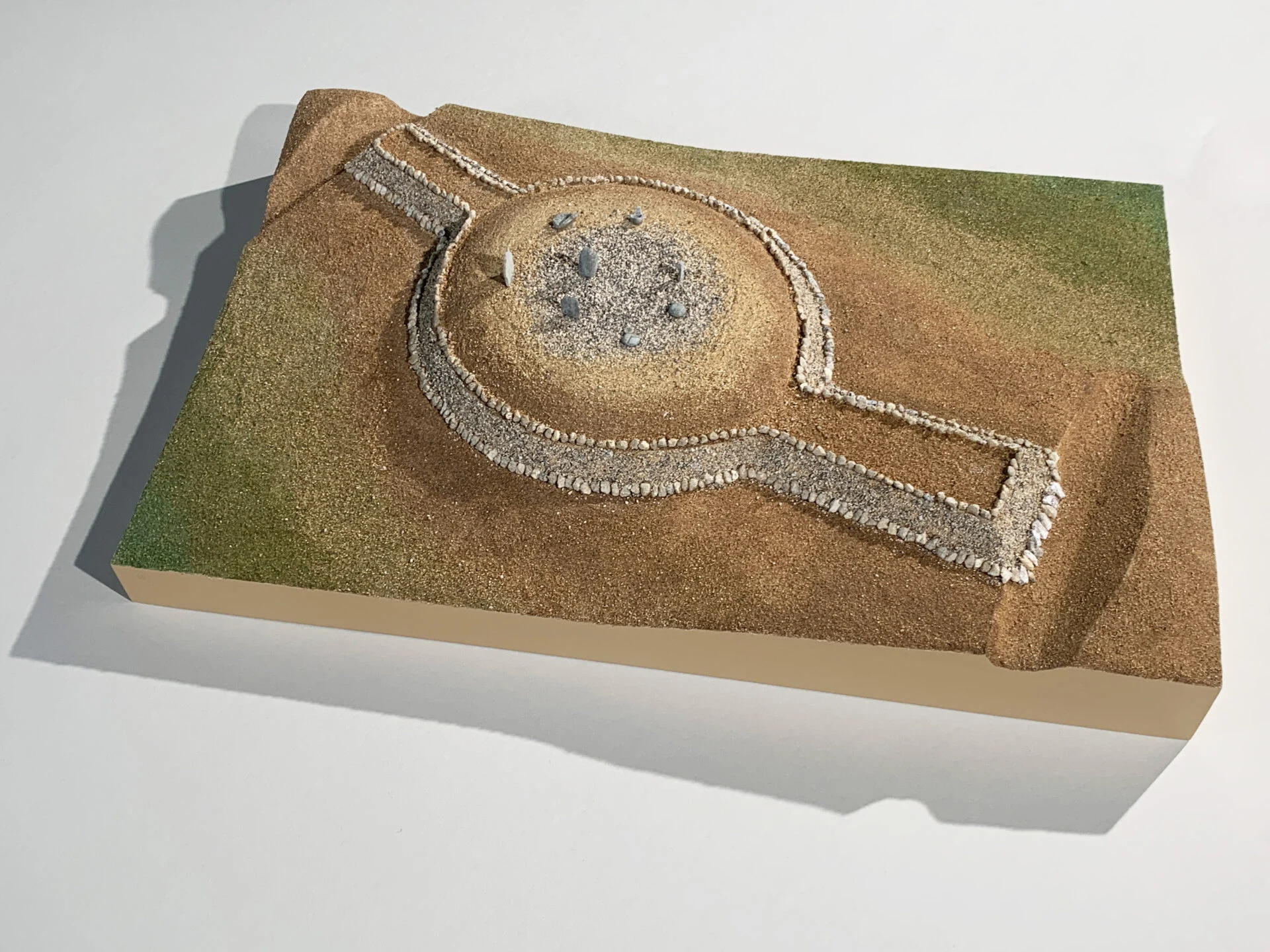
On top of the burial mound, there are five large stones, some of which exceed 3 meters in height.
Additionally, the name "Tatetsuki Site" is said to derive from a legend in which Kibitsuhiko no Mikoto, believed to be the model for Momotaro, built a "shield" to defend against arrows shot by the ogre Ura during their battle.
Precious burial goods excavated from the burial mound
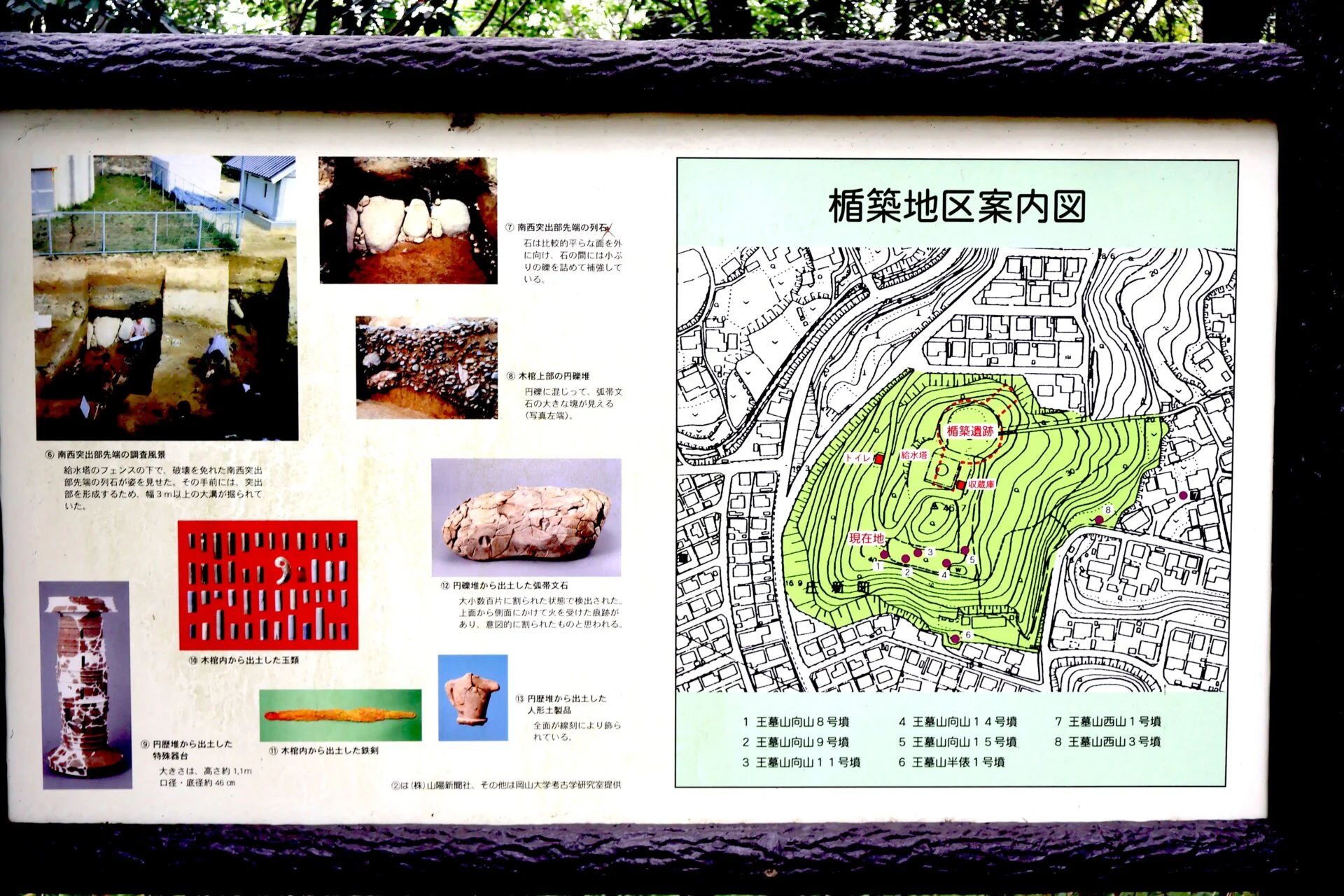
According to excavation surveys conducted by Okayama University starting in 1976, there was a double-structured wooden coffin surrounded by wooden boards at the center of the burial mound, with an estimated total weight of over 32 kg of mercury vermilion spread across the bottom. Mercury, the raw material, was extremely valuable at that time.
In addition, burial goods such as iron swords, magatama (curved beads), cylindrical ornaments known as kudatama, and glass beads were also found.
Moreover, many "special altars" used in rituals were also discovered.
The mystery of "Sentai Monseki"
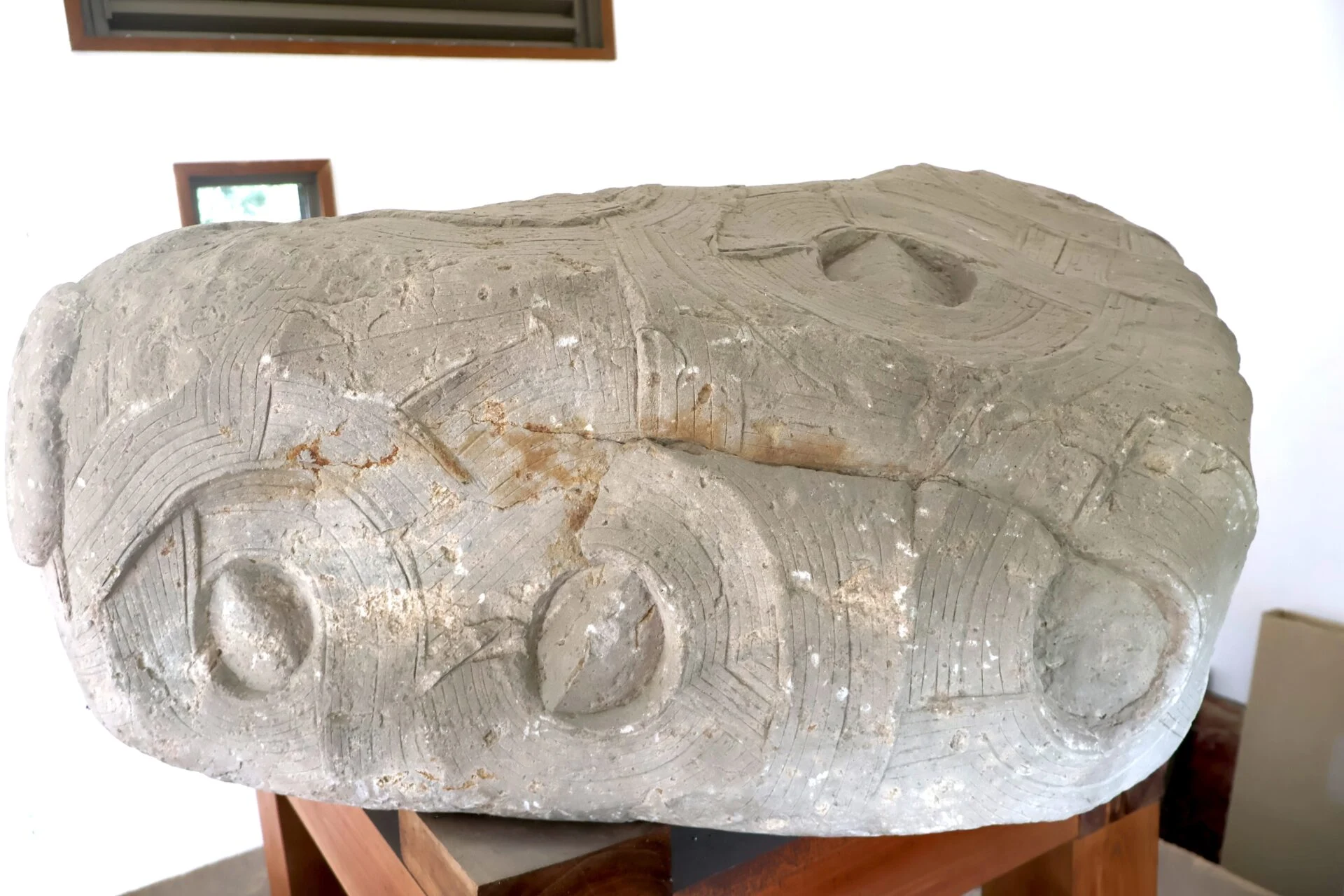
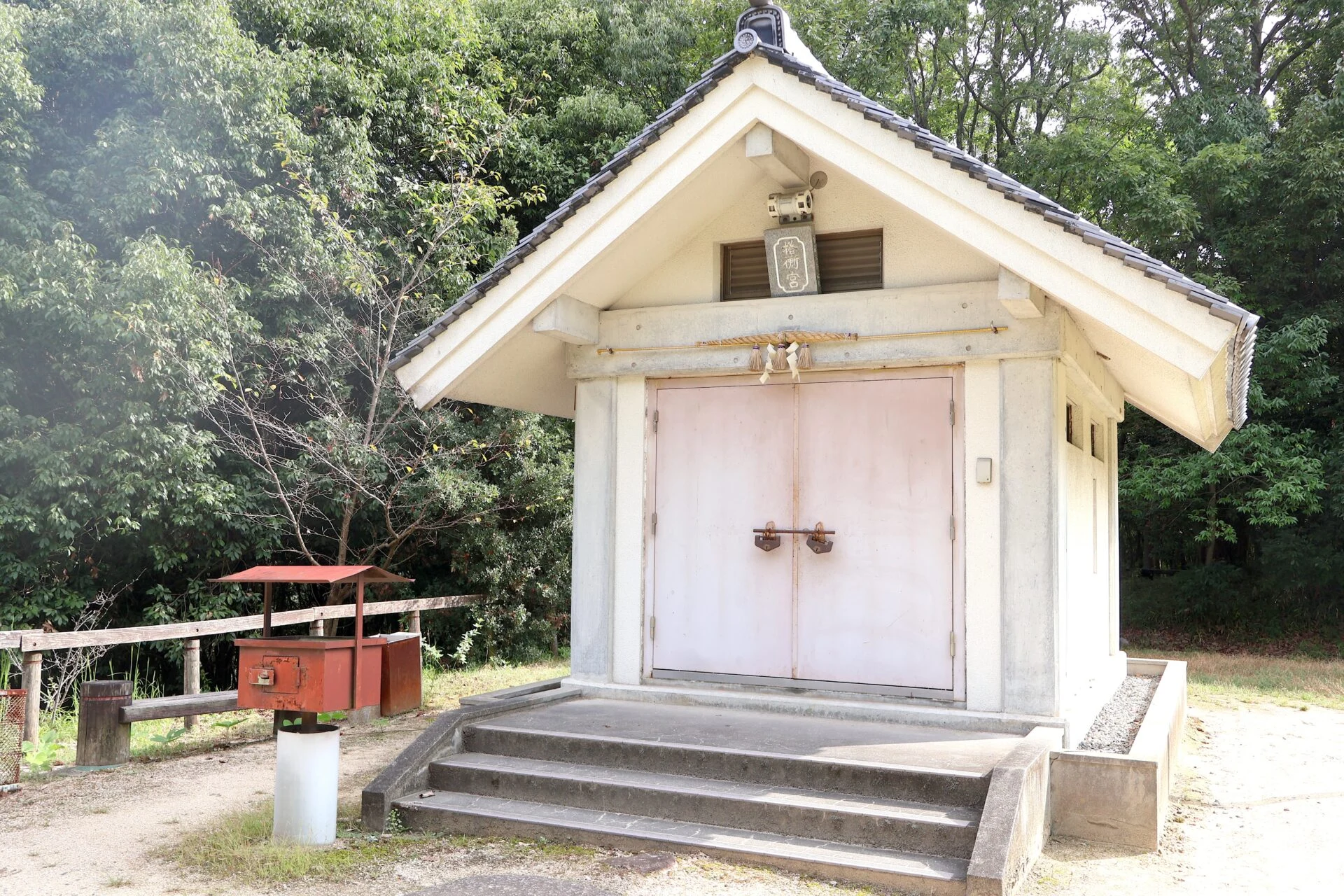
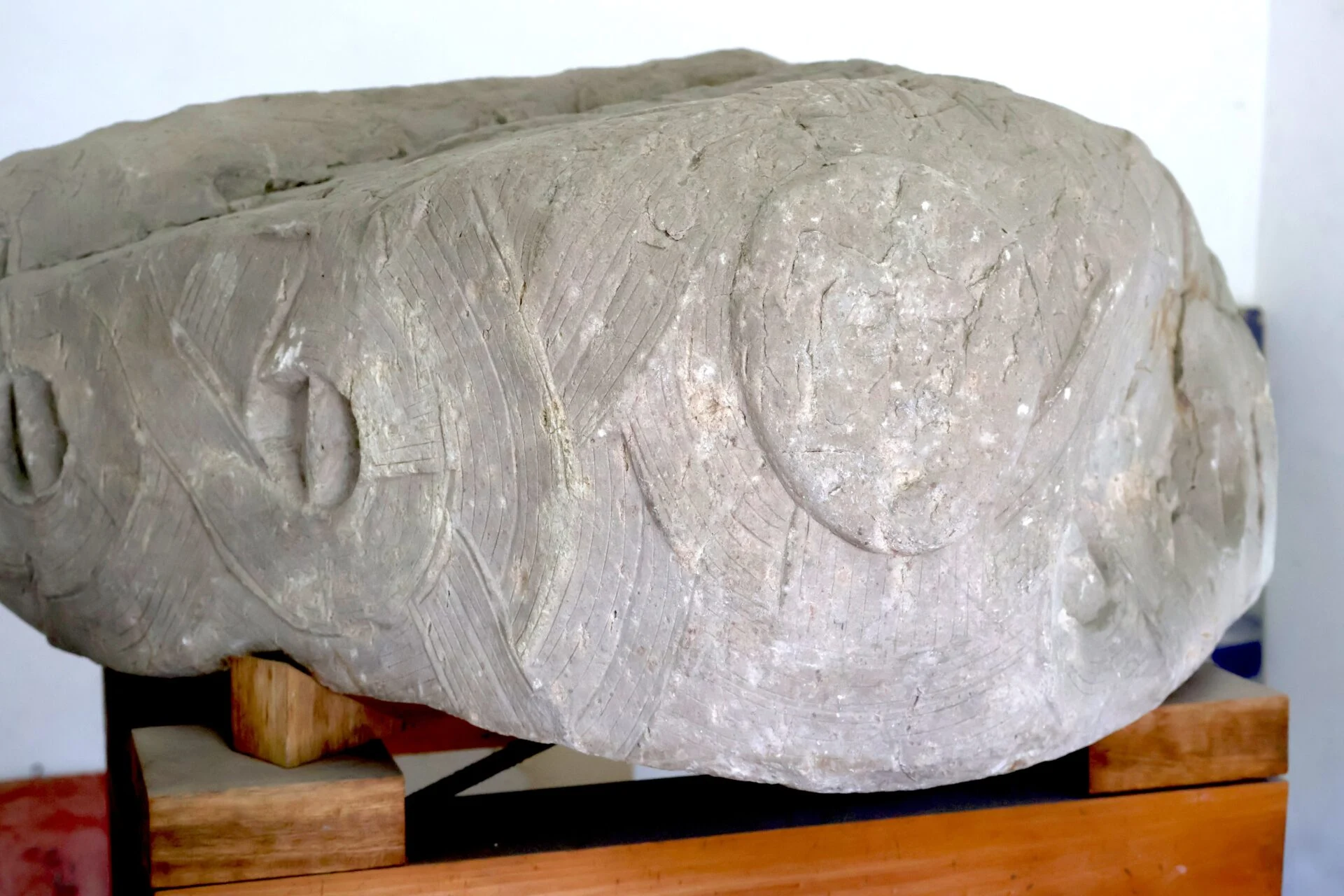
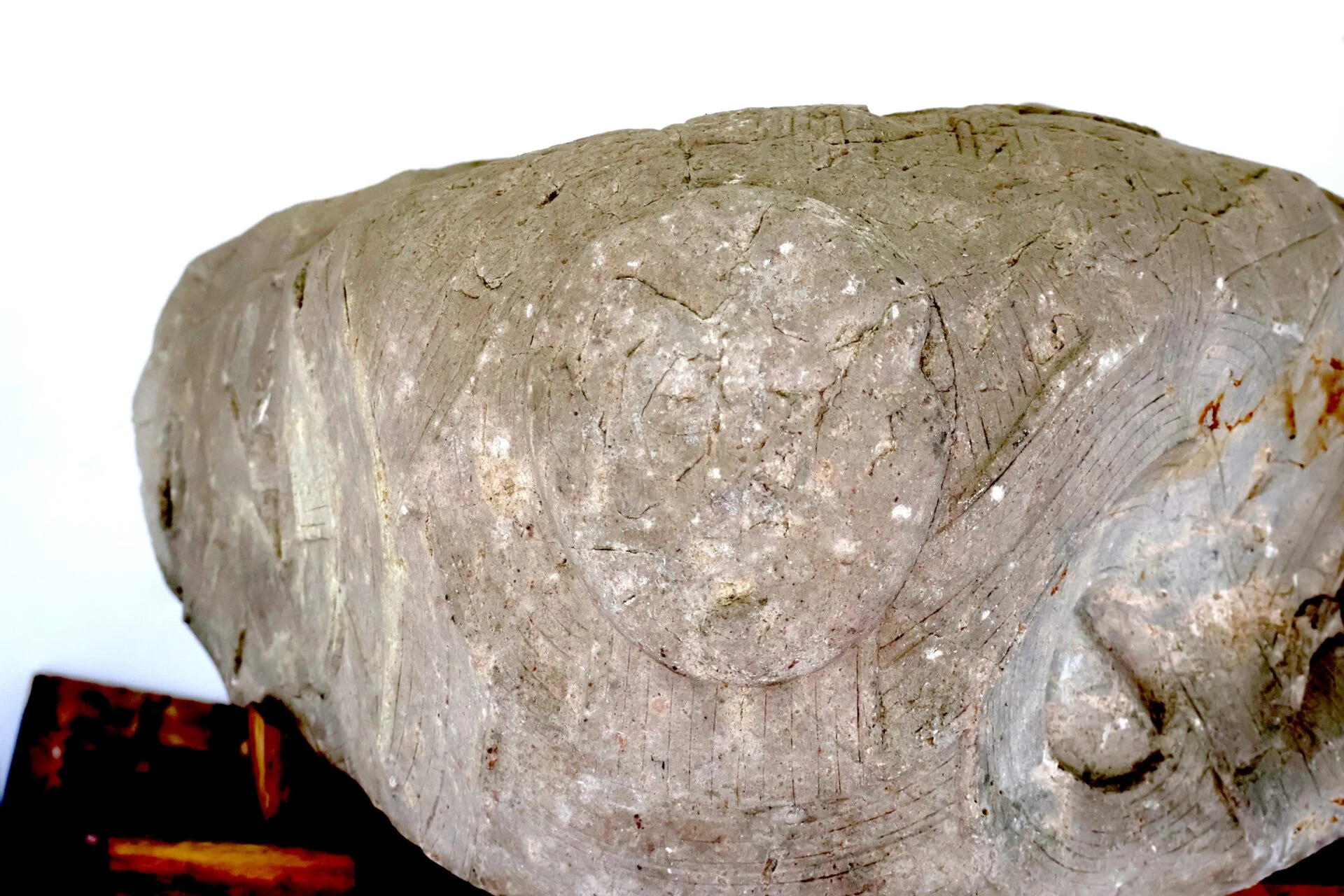
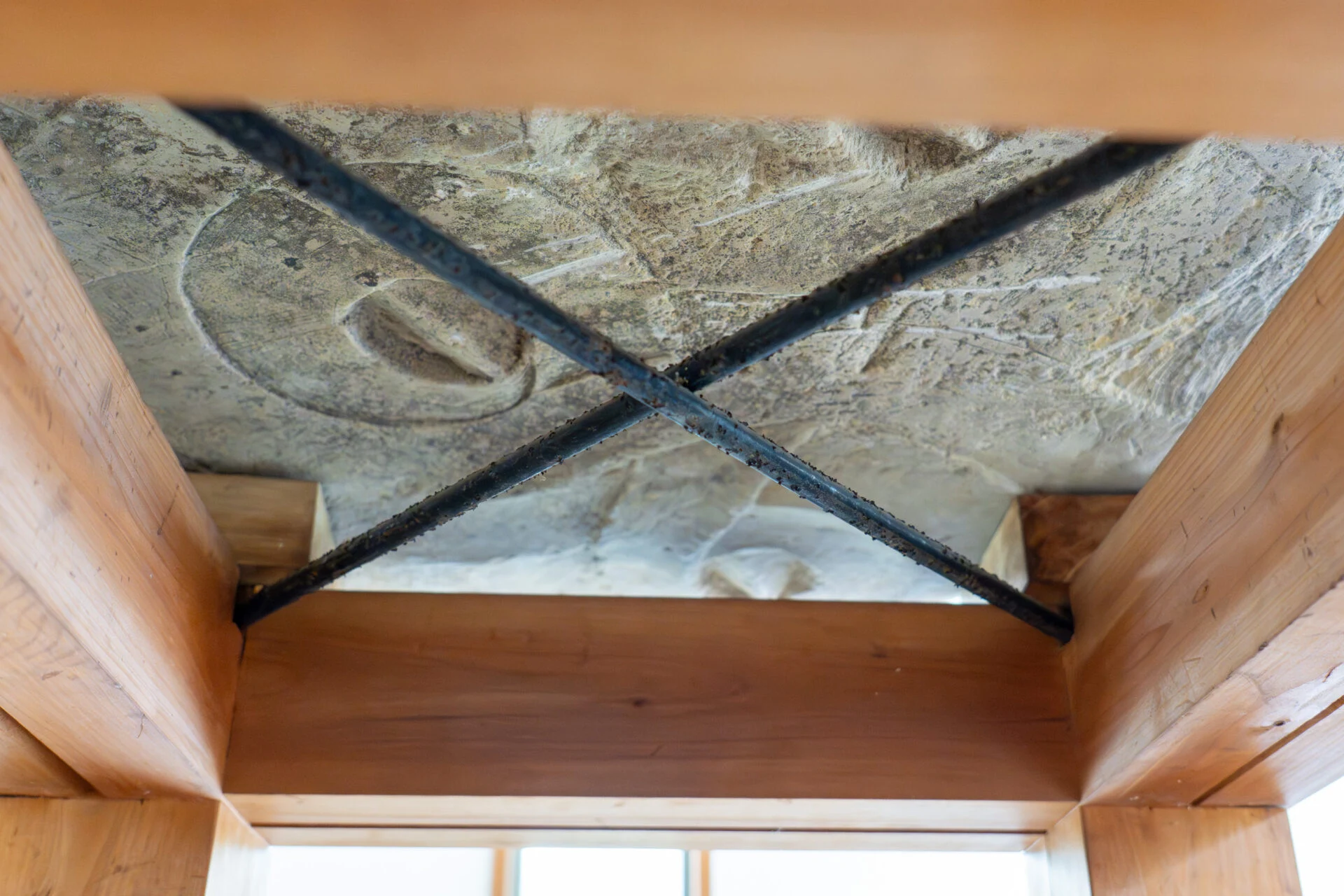
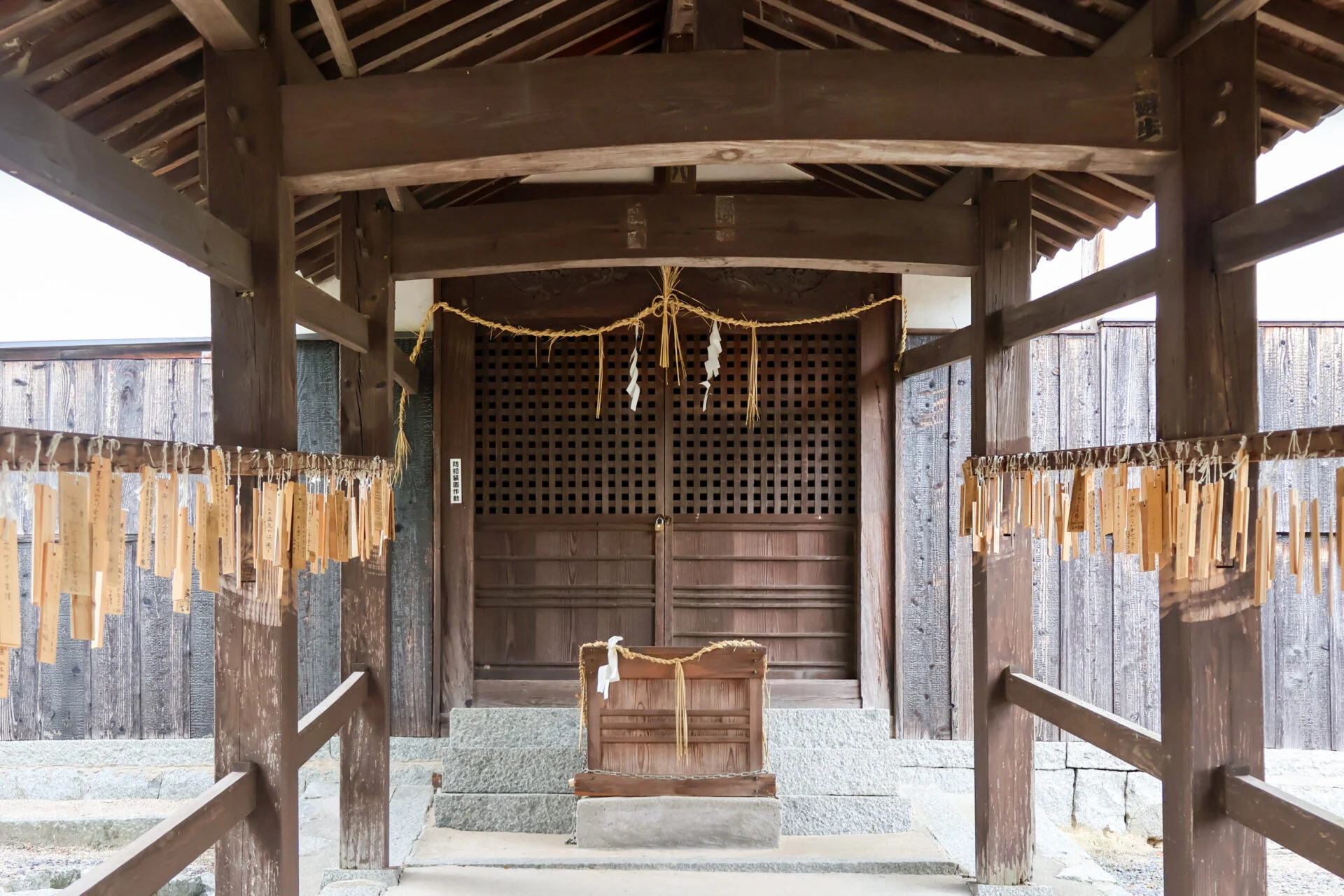
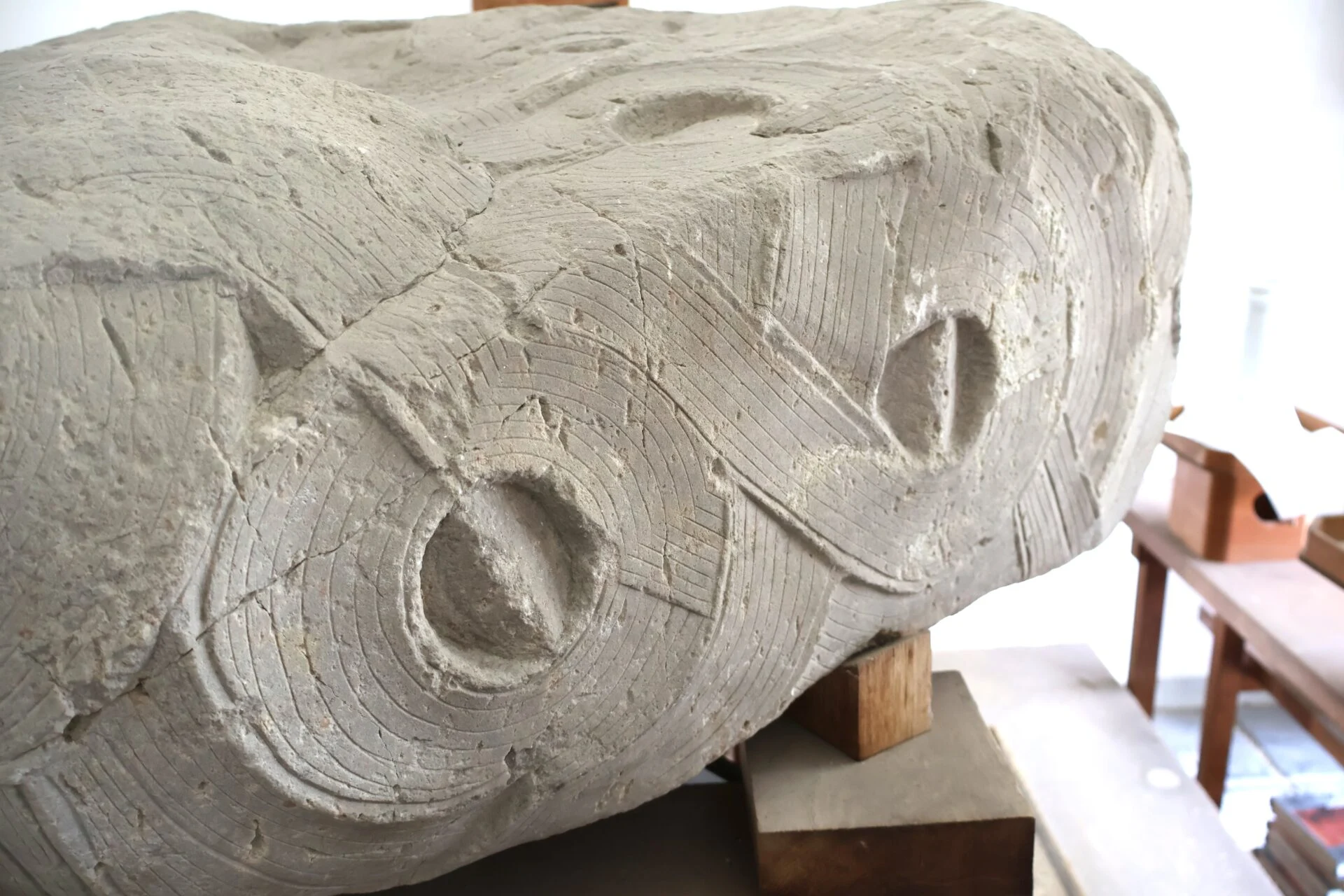
In a storage facility near the circular mound, there is a stone quietly enshrined that has carvings resembling a face. This is the national important cultural property "Sentai Monseki". Due to the shape of its patterns, it is also referred to as "Kotai Monseki."
Sentai Monseki was once enshrined as the sacred object of the "Tatetsuki Shrine" that used to exist in this area.
Due to the merger of shrines during the Taisho era, the sacred object was moved to Koi Kui Shrine, but it was later returned to the Tatetsuki area due to reasons such as the spread of an epidemic.
The stone with beautiful band-like patterns carved into it has long been a mystery regarding when, by whom, and for what purpose it was made. However, the discovery of another Sentai Monseki that had been intentionally broken into pieces has shed some light on this mystery.
Currently, it is believed that Sentai Monseki may be traces of a special ritual conducted when the king who ruled this region passed away.
The central round part has carvings that resemble a face.
Koi Kui Shrine and the legend of Momotaro
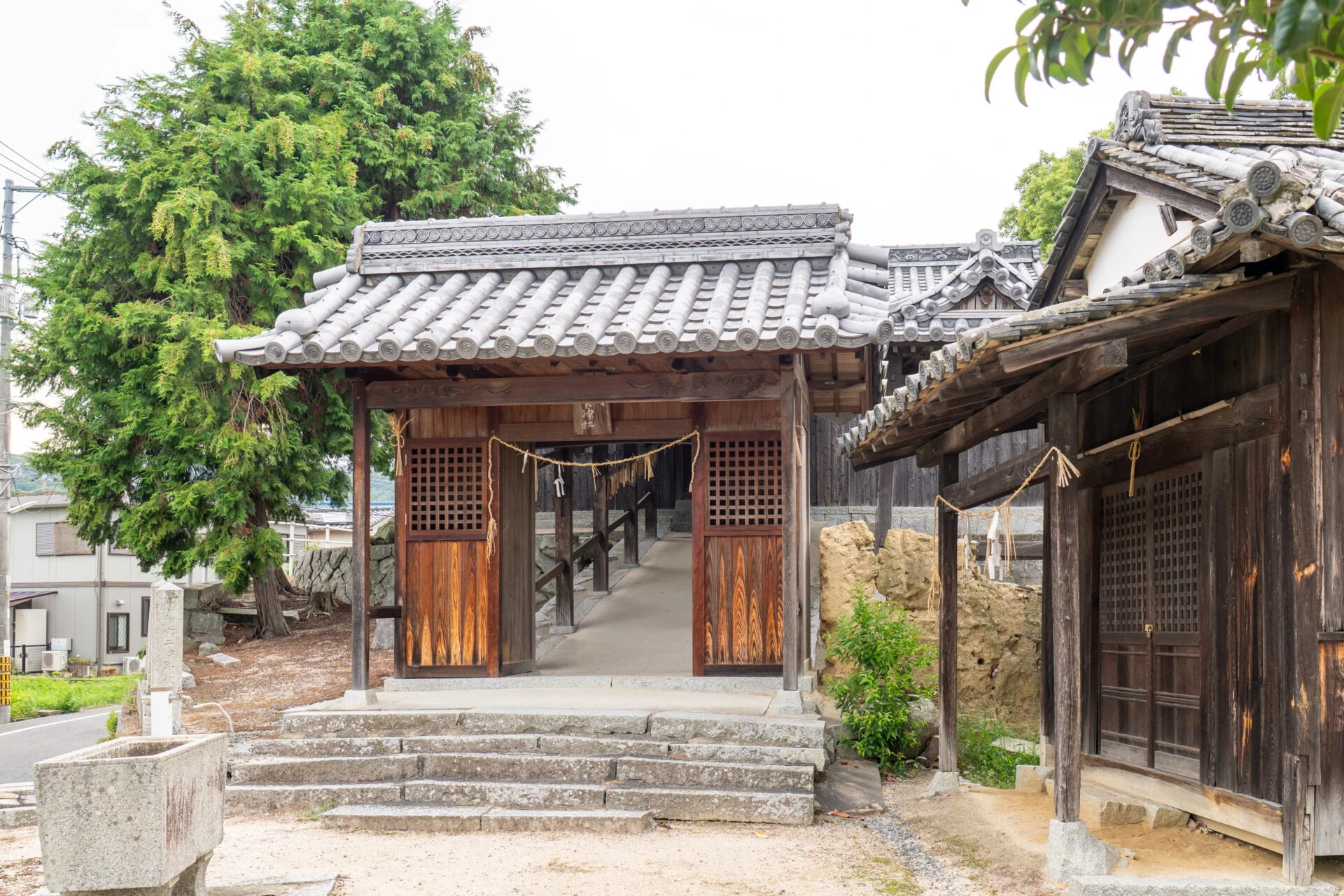
The origin of the somewhat unusual name "Koi Kui Shrine" comes from a scene in a legend that is passed down in this area.
Long ago, Kibitsuhiko no Mikoto engaged in a fierce battle with the ogre Ura.
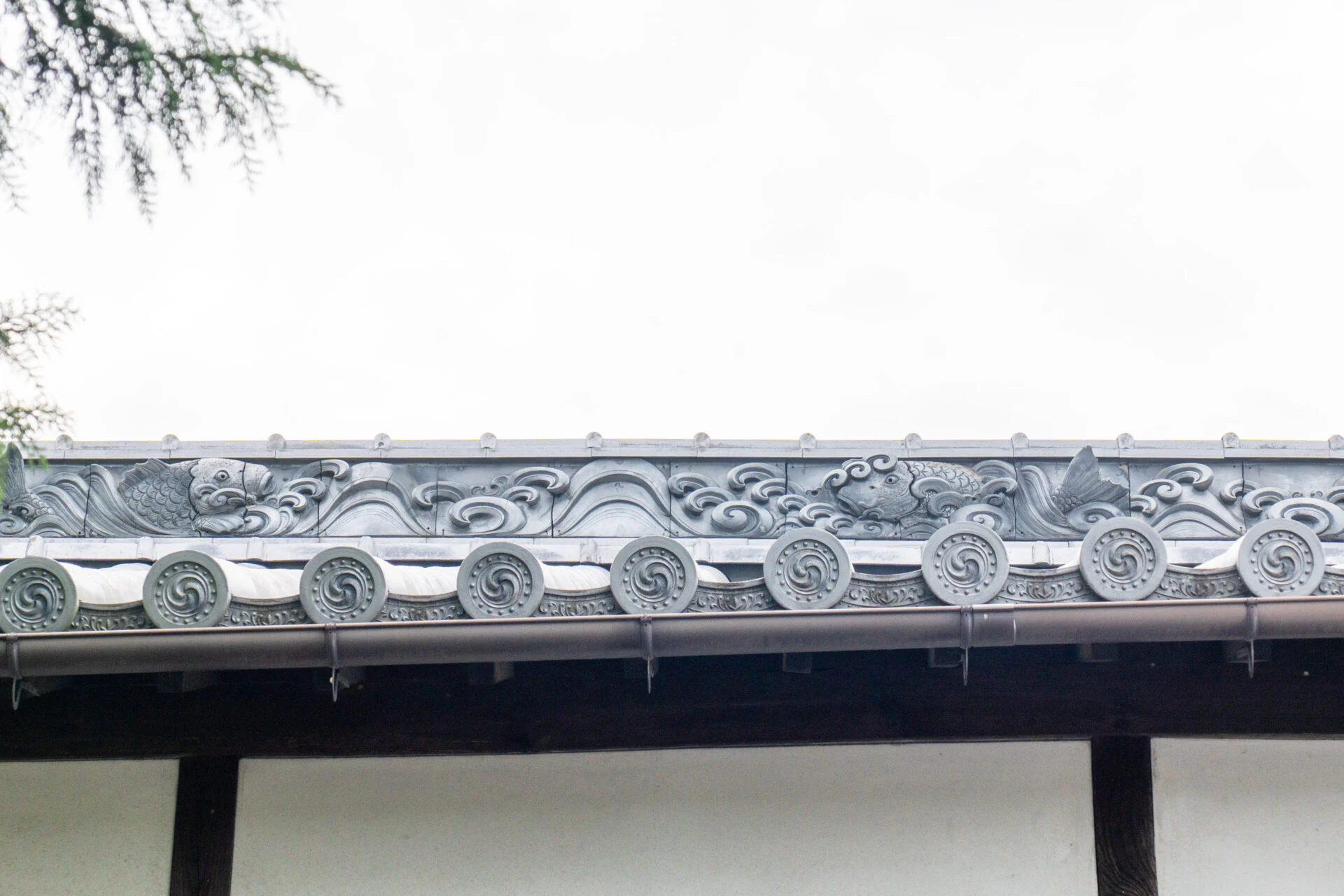
When Ura, cornered, transformed into a "koi" (carp) and fled to the river (Chisukigawa), Kibitsuhiko no Mikoto immediately transformed into a "heron" and is said to have caught and eaten the koi at this location. The villagers built "Koi Kui Shrine" to commemorate this event.
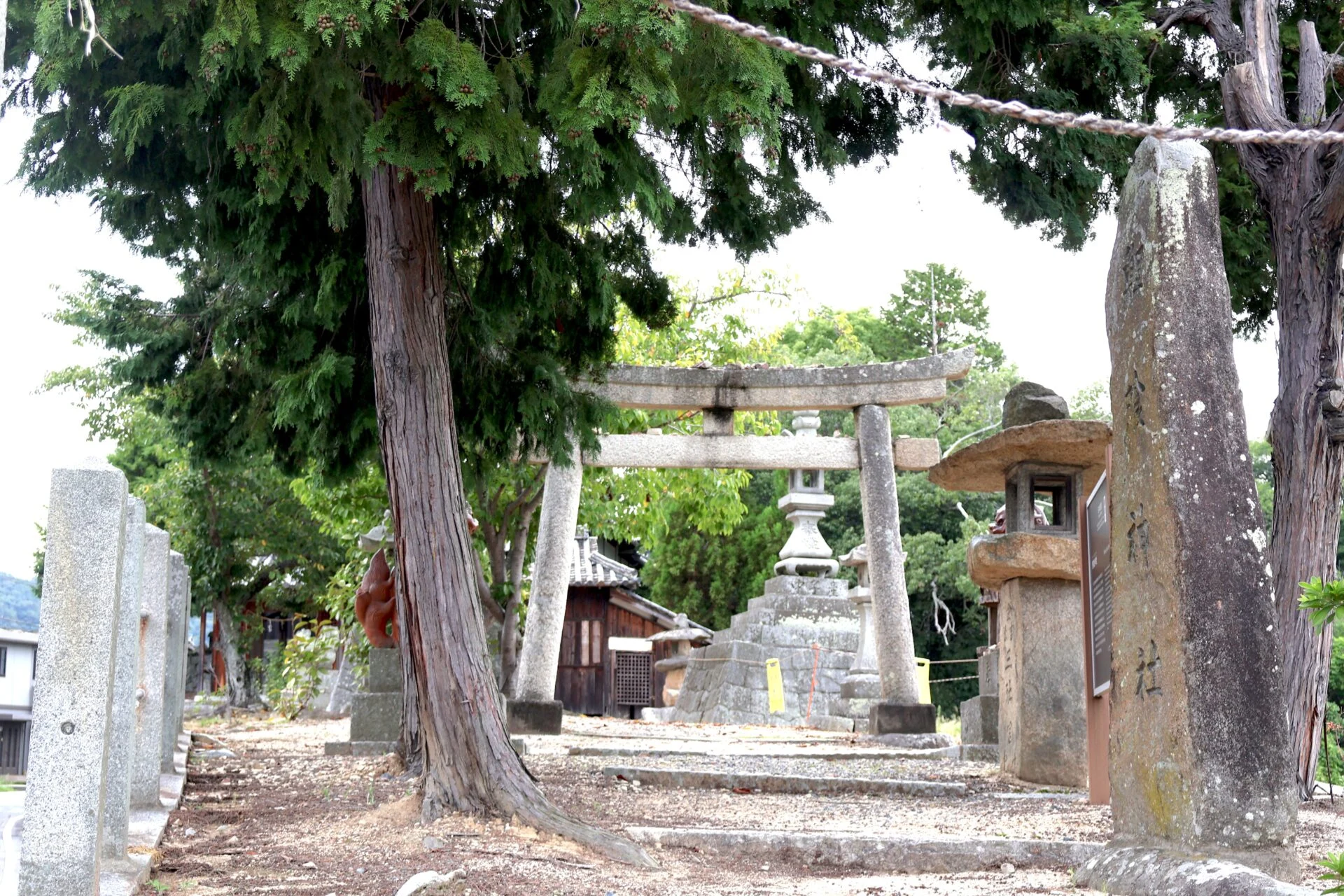
Koi Kui Shrine has a long history, with the current shrine building constructed in the 14th year of the Genroku era (1701) during the Edo period.
Tatetsuki Site and Spiral Pattern Stone, Highlights of Koiikujinja Shrine
We spoke with a representative from the Japan Heritage Promotion Office of Kurashiki City about the Tatetsuki Site, Spiral Pattern Stone, and Koiikujinja Shrine.
Features of the Tatetsuki Site
What kind of era and features does the Tatetsuki Site represent?
Kurashiki City
This site dates back to the end of the Yayoi period, when people began to mound earth to create large tombs (burial mounds) for their kings. It is still in a stage where the shape is not yet defined, unlike the keyhole-shaped tombs of the Kofun period.
What has been discovered through excavations?
Kurashiki City
About 30 special pedestal and special jars have been unearthed. While it cannot be definitively stated what they were used for, they are believed to have been important ritual implements. The special pedestals were simplified and miniaturized into cylindrical haniwa (clay figures) during the Kofun period.
Additionally, about 32 kg of "mercury vermilion" was densely packed at the bottom of a wooden coffin. In some thick areas, it reaches a thickness of 5 cm.
The mercury used was a mix of Chinese and domestic sources, suggesting there was interaction with China.
About Koiikujinja Shrine
What are the highlights of Koiikujinja Shrine?
Kurashiki City
In fact, Koiikujinja Shrine is also a small burial mound from the Yayoi period.
Fragments of stone with spiral patterns have also been found here. It is considered to be a tomb from a generation after the Tatetsuki Site.
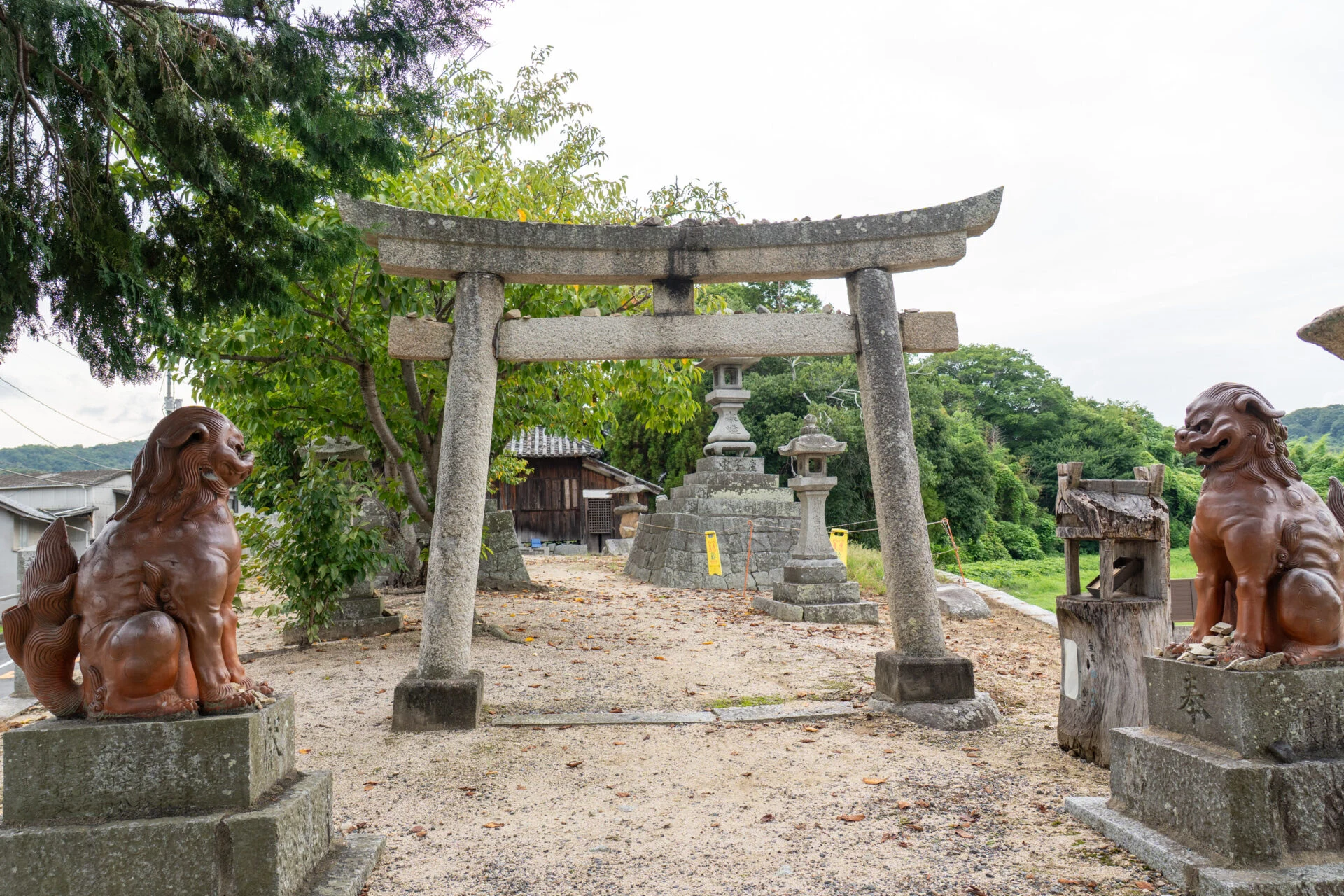
Important Sites and Legendary Shrines in Kurashiki are Places to Feel Power
We explored the mysterious Tatetsuki Site, Spiral Pattern Stone, and Koiikujinja Shrine, where the Momotaro legend lives on.
The "Tatetsuki Site," boasting one of the largest royal tombs of the Yayoi period, features impressive standing stones. Additionally, the "Spiral Pattern Stone" is adorned with mysterious patterns that spark the imagination of those who see it. Normally, the "Spiral Pattern Stone" is kept in a storage facility and is not open to the public, but it can be viewed through a small window next to the storage.
Moreover, Koiikujinja Shrine, said to be associated with Kibi no Takemikazuchi no Mikoto, the model for Momotaro, and the legend of the demon Onra, is a shrine with a calm atmosphere. In fact, Koiikujinja Shrine has magnificent komainu (guardian lion-dogs), and it is said to be a shrine where "lost things come back" because one of the komainu was once stolen and then returned.
Take your time to explore the important sites and legendary shrines in Kurashiki, and feel their charm and energy.
Articles on Japan Heritage in Kurashiki City

Data on Tatetsuki Site
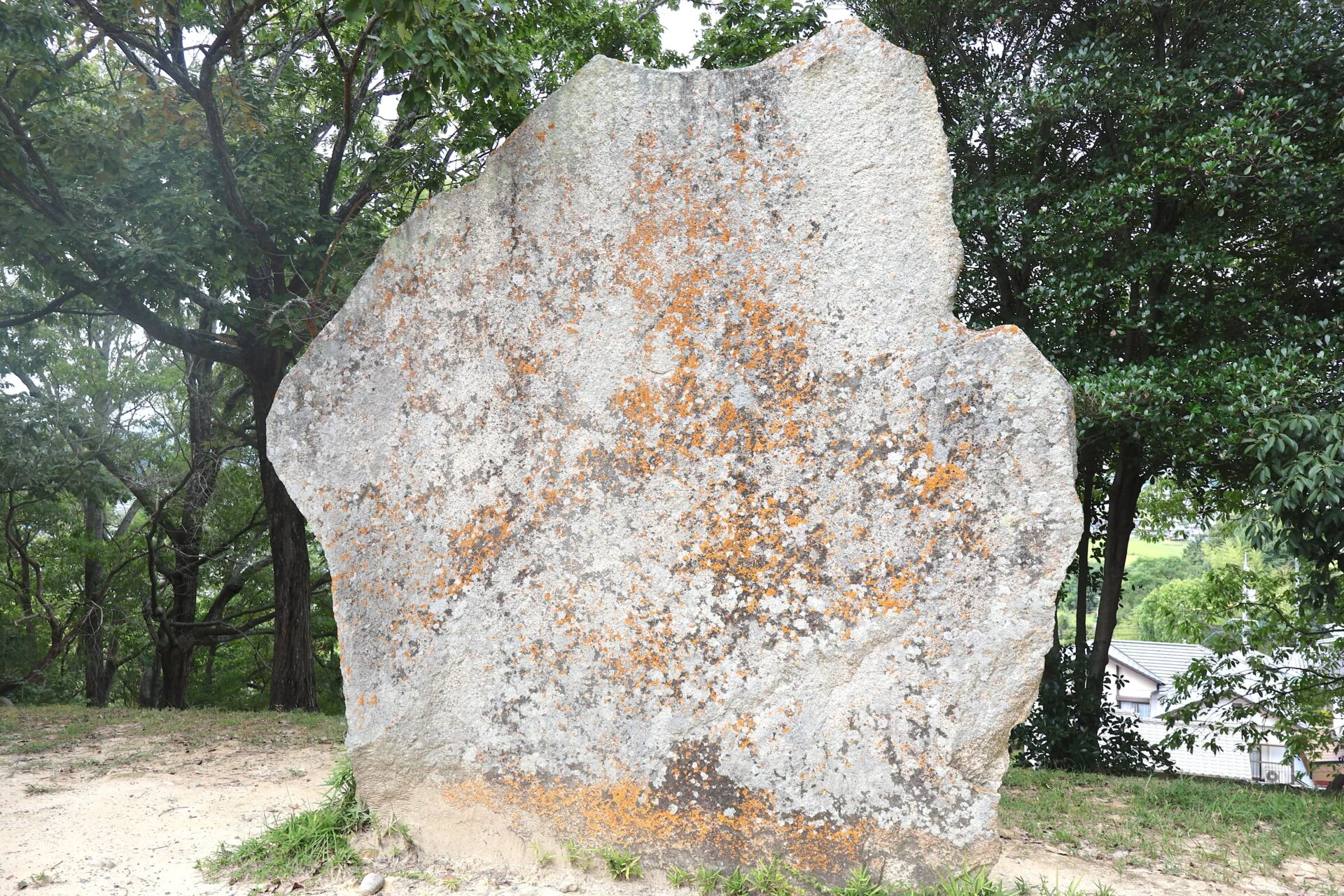
| Name | Tatetsuki Site |
|---|---|
| Address | Yabe, Kurashiki City, Okayama Prefecture |
| Homepage | Tatetsuki Site |