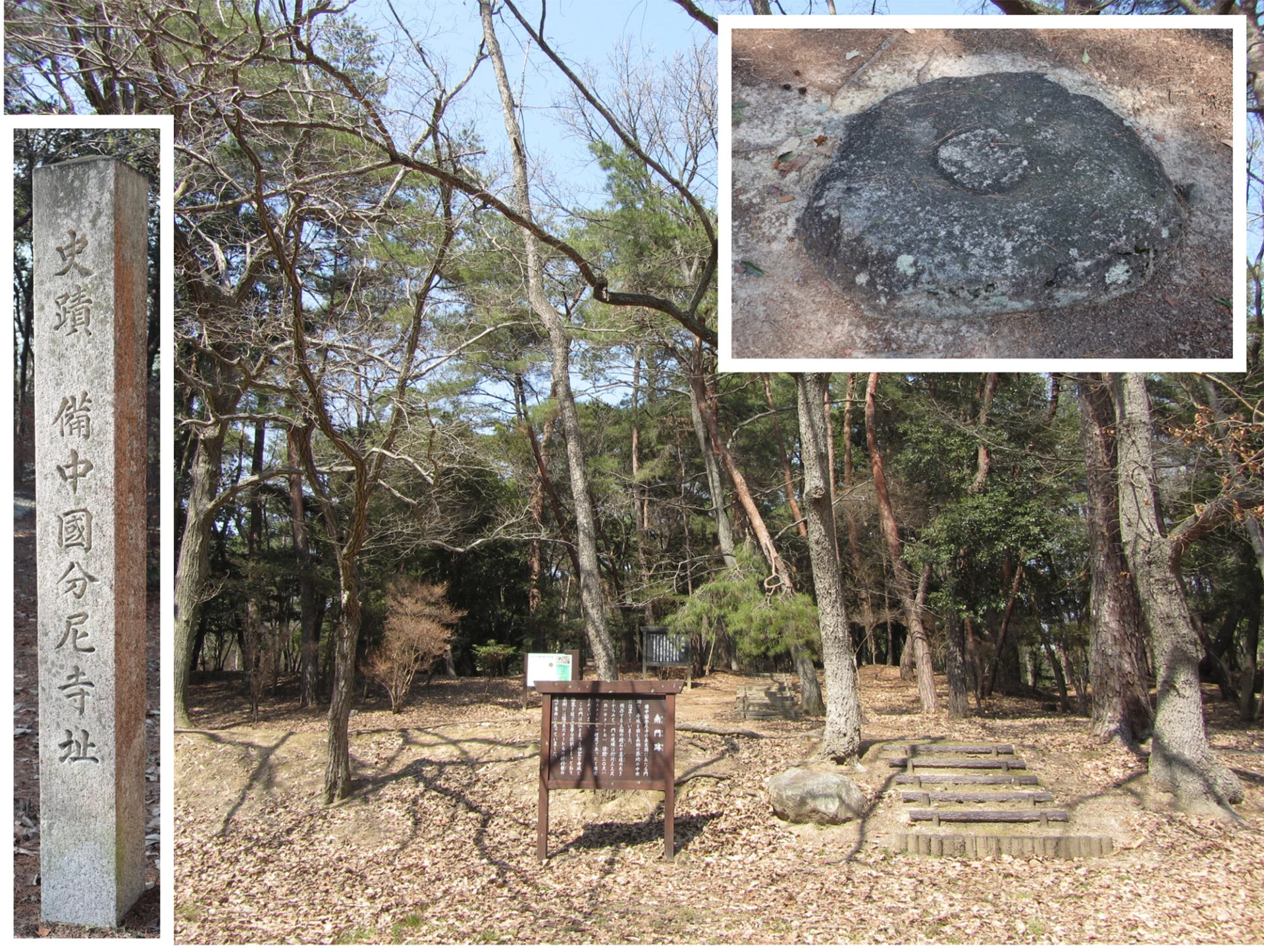
Excavation research is being conducted at the Historical Site of Bichu Kokubun-ji Temple Ruins in Kamibayashi, Soja City.
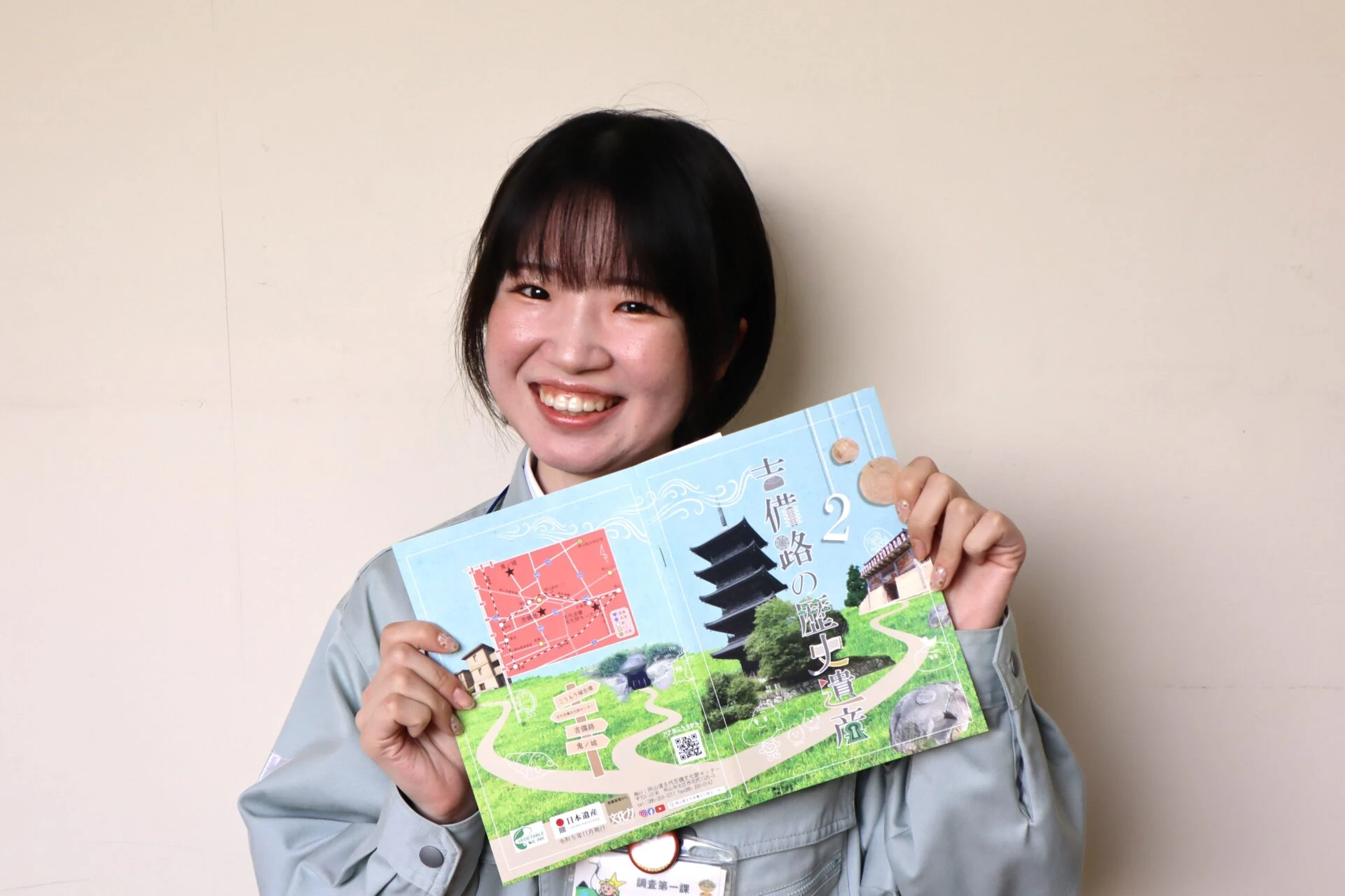
The area from the right bank of the Ashimori River in the northwest of Okayama City to Soja City is called Kibiji. The Bichu Kokubun-ji Temple five-story pagoda is a symbolic presence of Kibiji.
In that area, the ruins of Bichu Kokubun-ji Temple, which is said to have been established in the 8th century, remain. However, its true form has remained shrouded in mystery.
Starting from the fiscal year 2023, Okayama Prefecture Ancient Kibi Cultural Property Center has been conducting excavation research, and a local briefing session was held.
Establishment of Bichu Kokubun-ji Temple
In the early Nara period, during the Tenpyo era, natural disasters such as droughts and earthquakes continued, leading to increased social unrest.
At that time, Emperor Shomu decided to calm the nation through Buddhist law and resolved to create a Great Buddha in Nara.
Under this national protection ideology, a decree was issued for the establishment of kokubun-soji (provincial temples) and kokubun-niji (provincial nun temples). This was in the 13th year of Tenpyo (741).
The decree instructed that over 60 provinces nationwide should establish both a monk temple and a nun temple together.
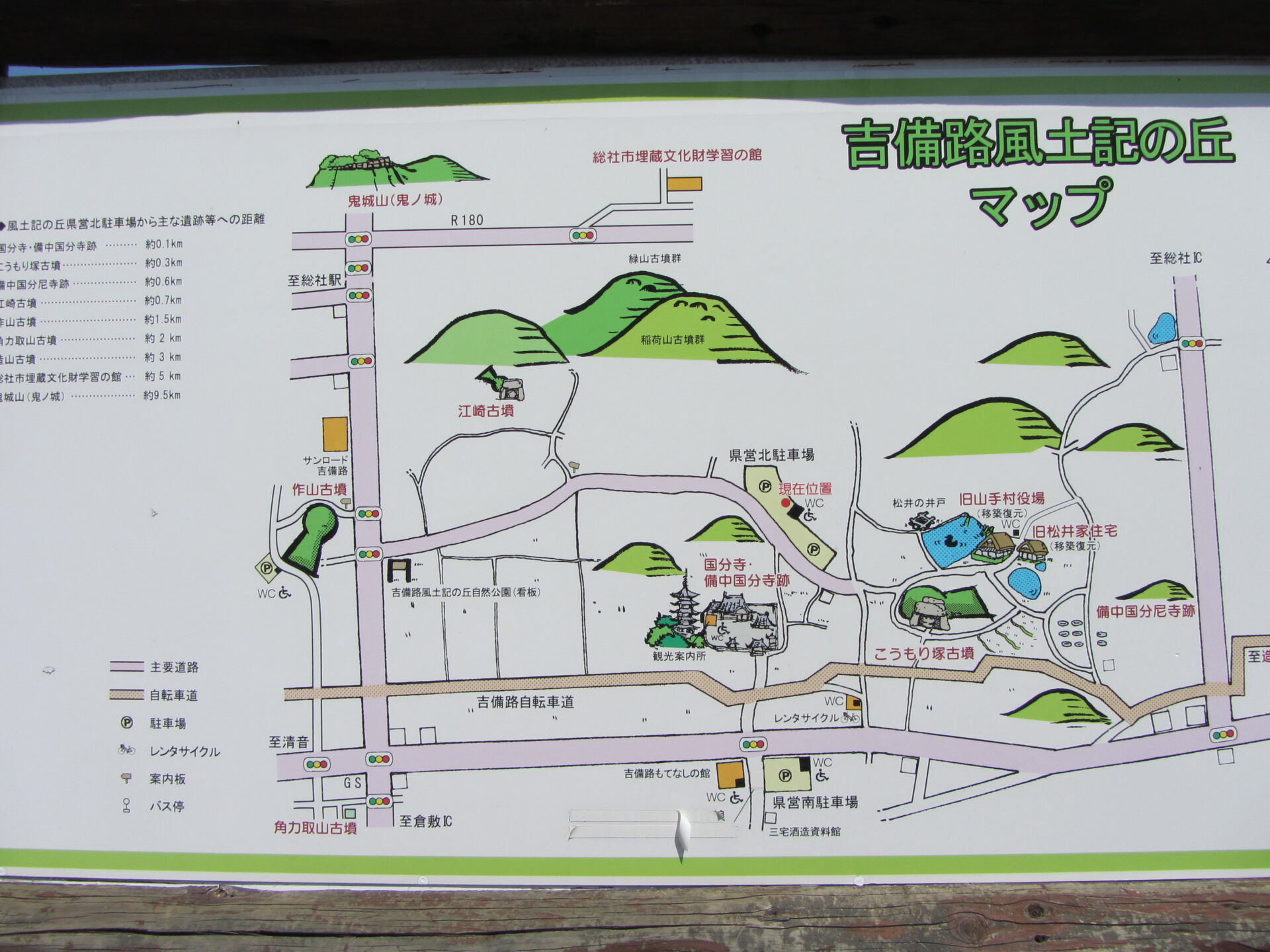
In Bichu Province, it was decided that the Kokubun-soji would be built to the west and the Kokubun-niji to the east, with the Komori-zuka Kofun in between in present-day Kamibayashi, Soja City.
In Japan during the Nara period, there were over 60 provinces, such as Bizen Province and Bichu Province, which correspond to present-day prefectures.
The Komori-zuka Kofun was constructed in the 6th century.
Historical Site of Bichu Kokubun-ji Temple Ruins
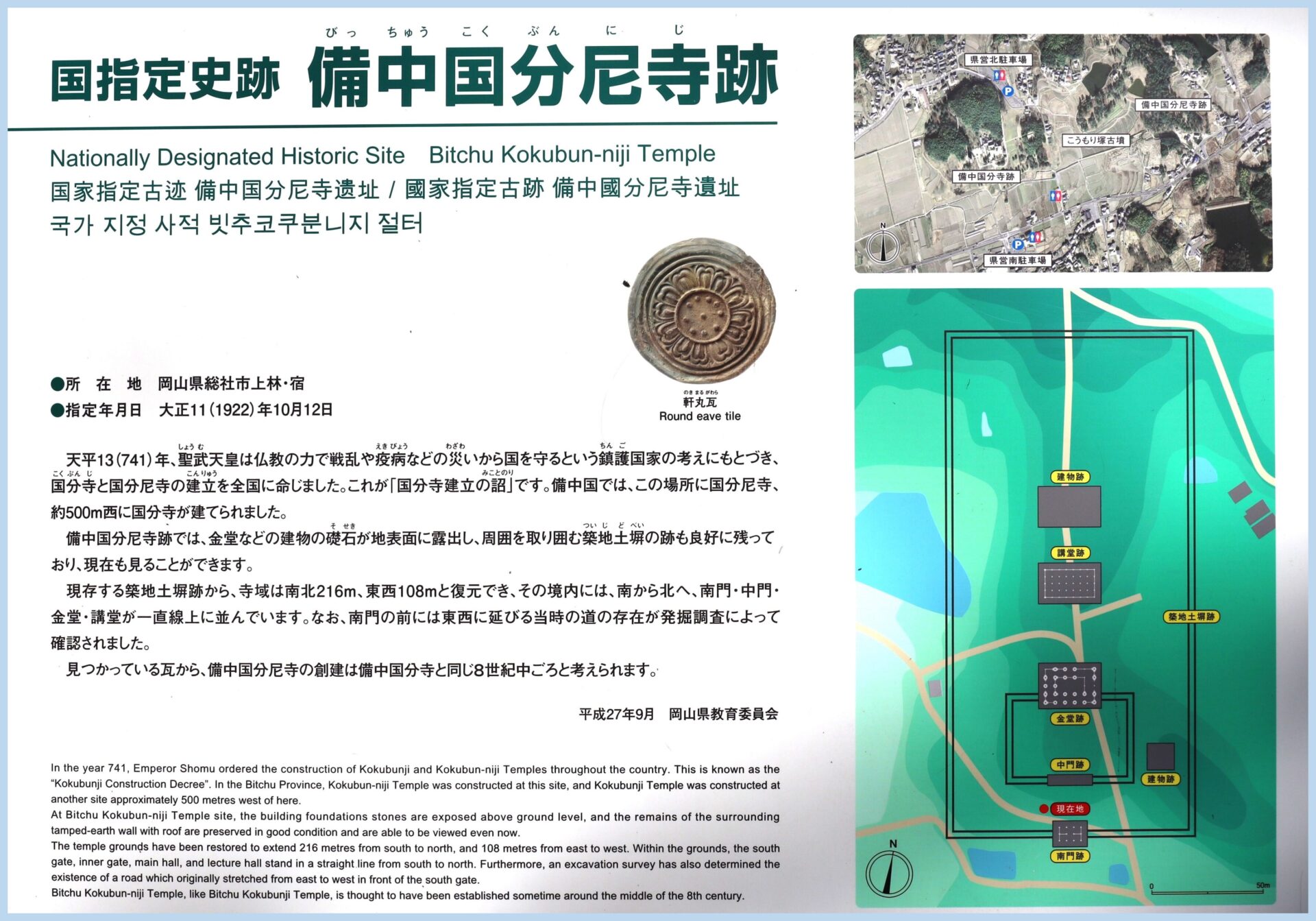
The monk temple and nun temple that were established in this way, however, have unclear histories thereafter.
The current Bichu Kokubun-ji Temple was built on the site of the Kokubun-soji during the Edo period and differs from the one from the Nara period. On the other hand, the subsequent history of Bichu Kokubun-niji Temple is believed to have remained without reuse of the temple ruins until the present day.
The Bichu Kokubun-niji Temple ruins have not been thoroughly investigated until now. The local explanatory board indicates the presumed appearance of Bichu Kokubun-niji Temple based on the exposed foundation stones of the main hall and the remains of the earthen walls called tsuji that surrounded the entire temple.
The east-west dimension surrounded by the earthen walls is 108m, and the north-south dimension is 216m.
Okayama Prefecture Ancient Kibi Cultural Property Center
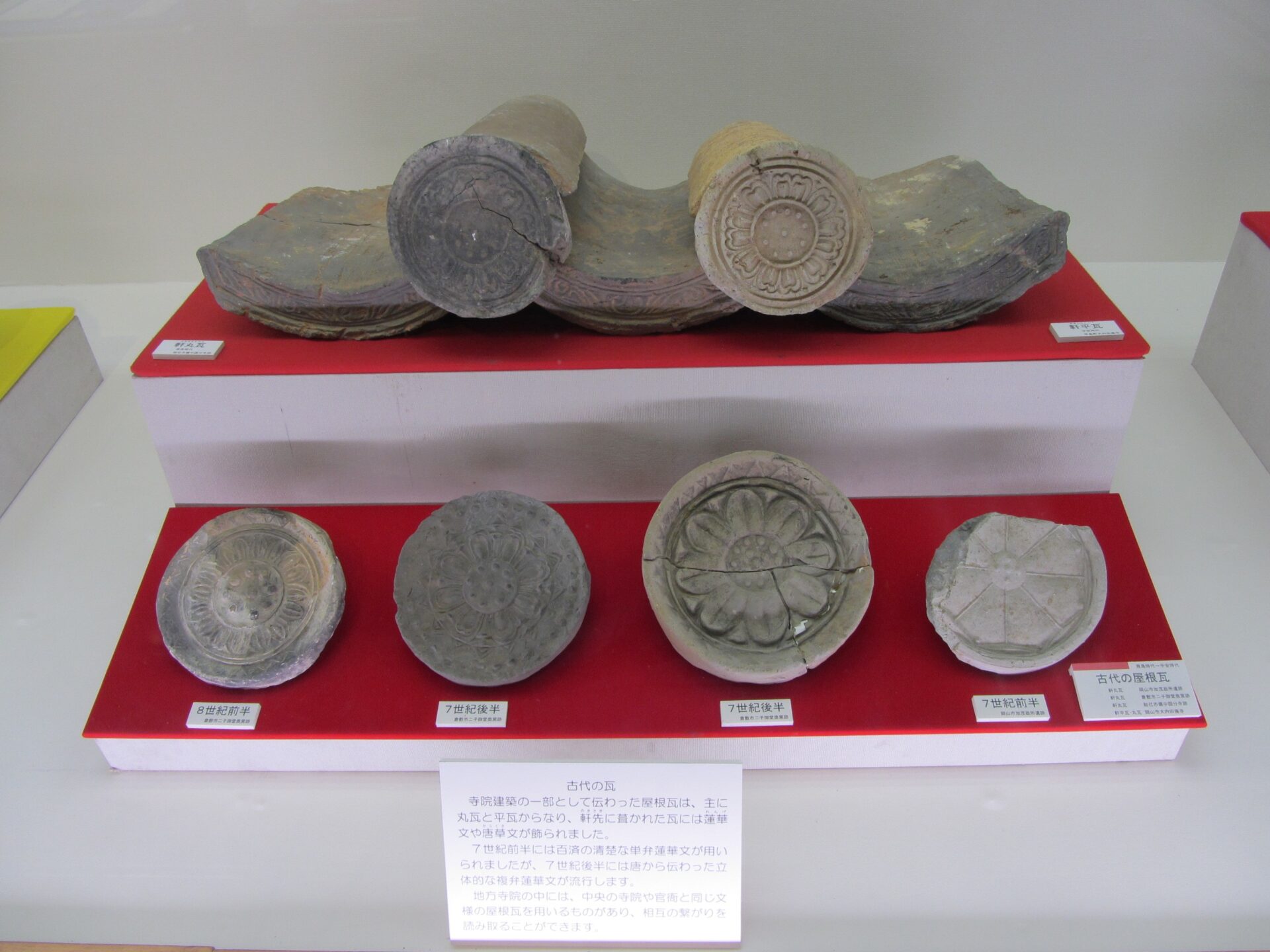
The excavation research is being conducted by the Okayama Prefecture Ancient Kibi Cultural Property Center.
This center is an institution of Okayama Prefecture aimed at investigating, researching, preserving, and utilizing buried cultural properties within Okayama Prefecture.
Since 2020, the "Kibiji Historical Heritage" attraction promotion project has been underway, and the investigation of the Bichu Kokubun-niji Temple ruins is part of this initiative.
I would like to introduce this attraction promotion project on another occasion.
Local Briefing Session Registration
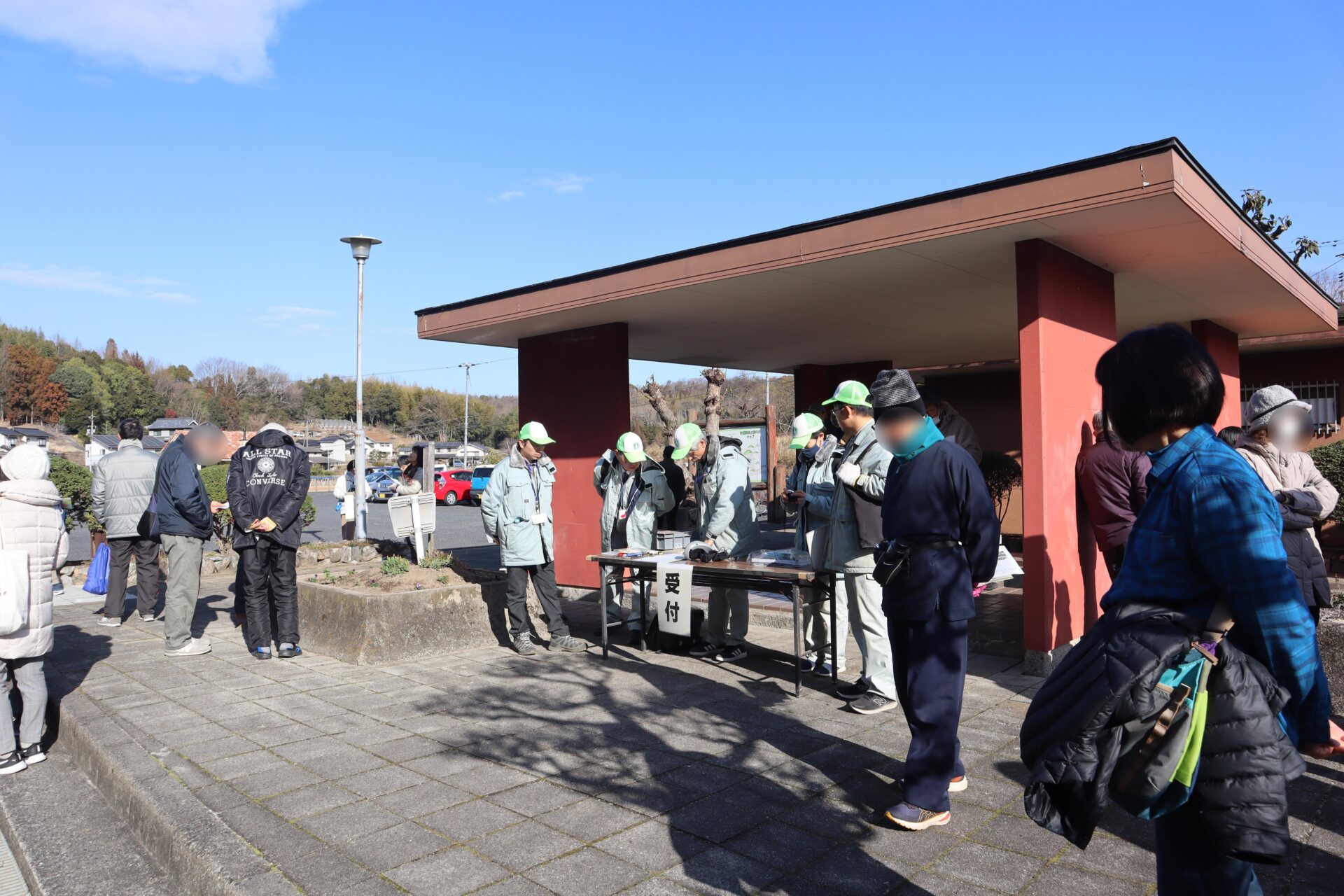
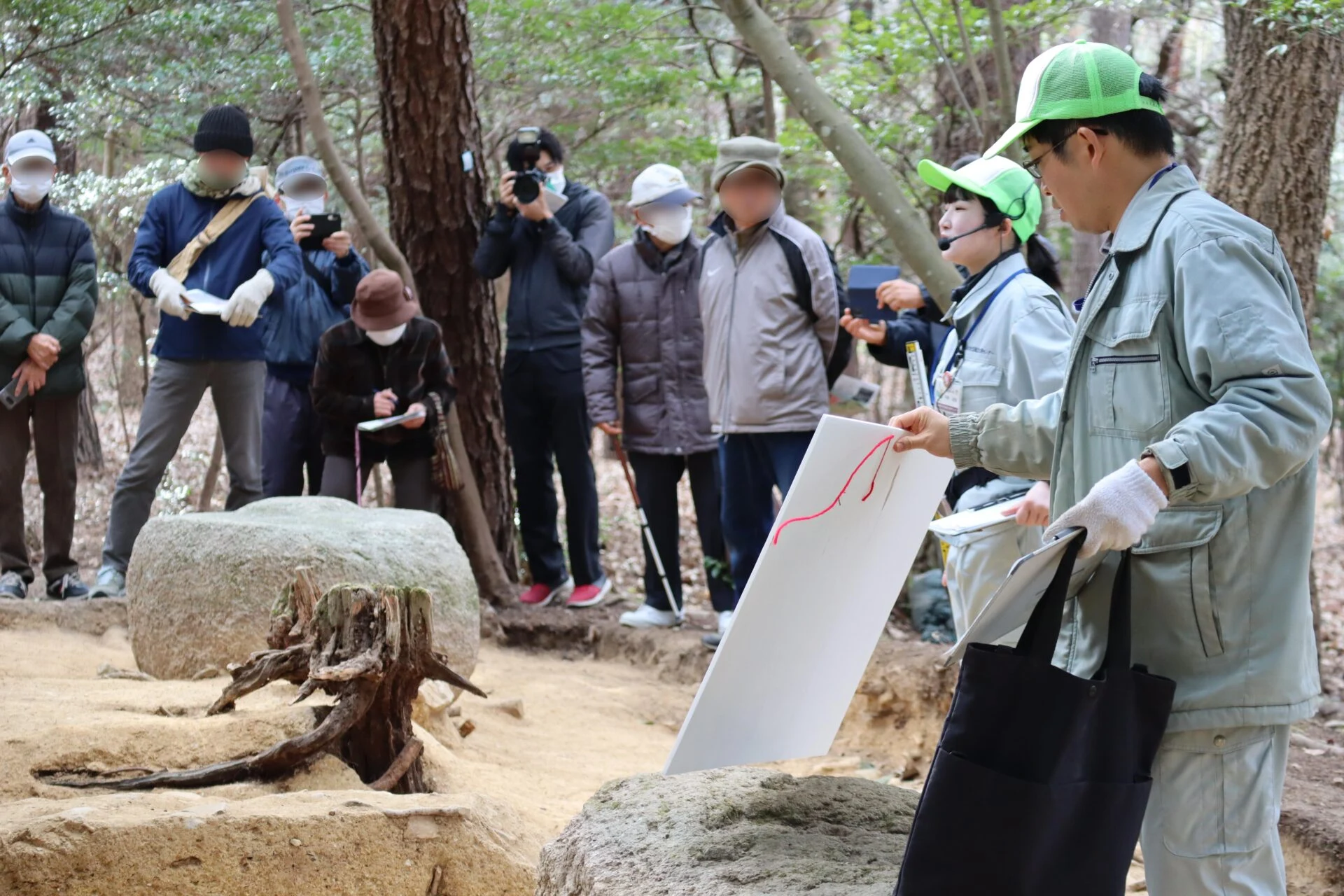
At the Kibiji Fudoki no Oka Prefectural North Parking Lot, the gathering and registration location, many participants gathered.
There were a total of 120 participants across three briefing sessions, indicating a great turnout.
Additionally, the week following the briefing sessions, the site remained open to the public, with over 200 visitors, demonstrating a high level of interest.
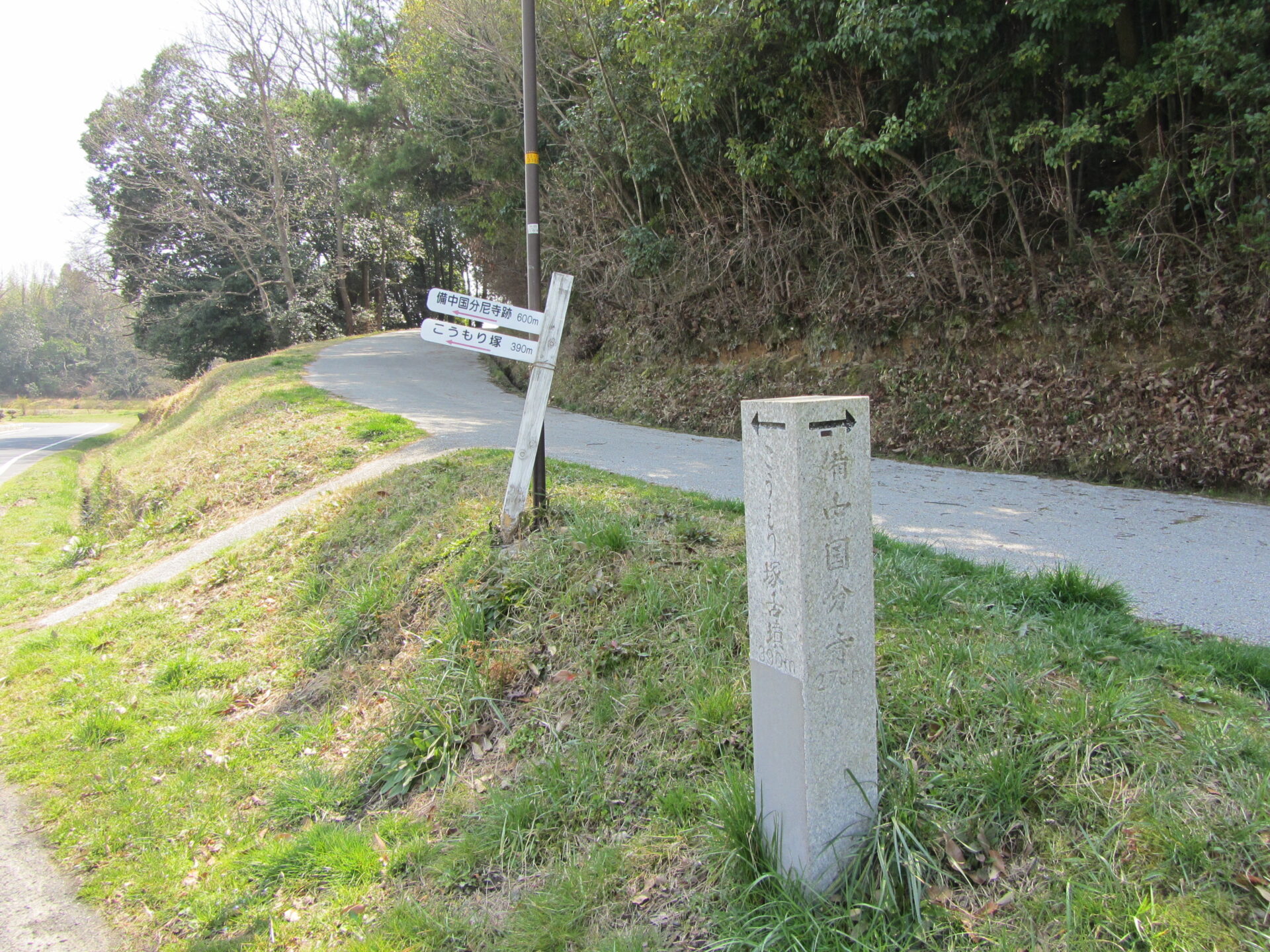
The Bichu Kokubun-niji Temple ruins are located about 500m east of the parking lot. I walked through the area next to Bichu Kokubun-ji Temple and Komori-zuka Kofun, following the signs.
Excavation Research Site
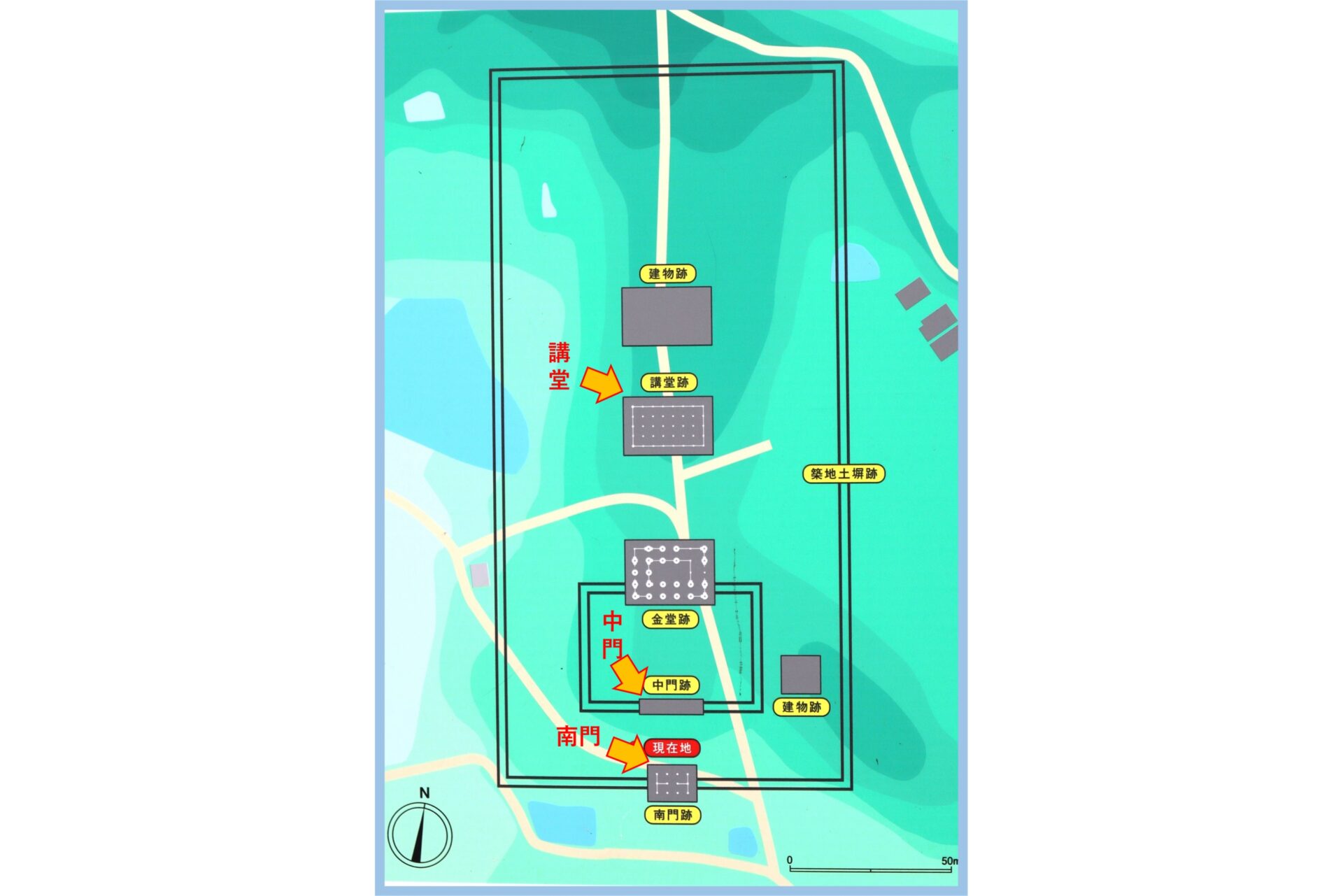
The excavation research for the fiscal year 2023 focused on the South Gate, Middle Gate, and Lecture Hall.
I will introduce the explanations provided at each location.
South Gate
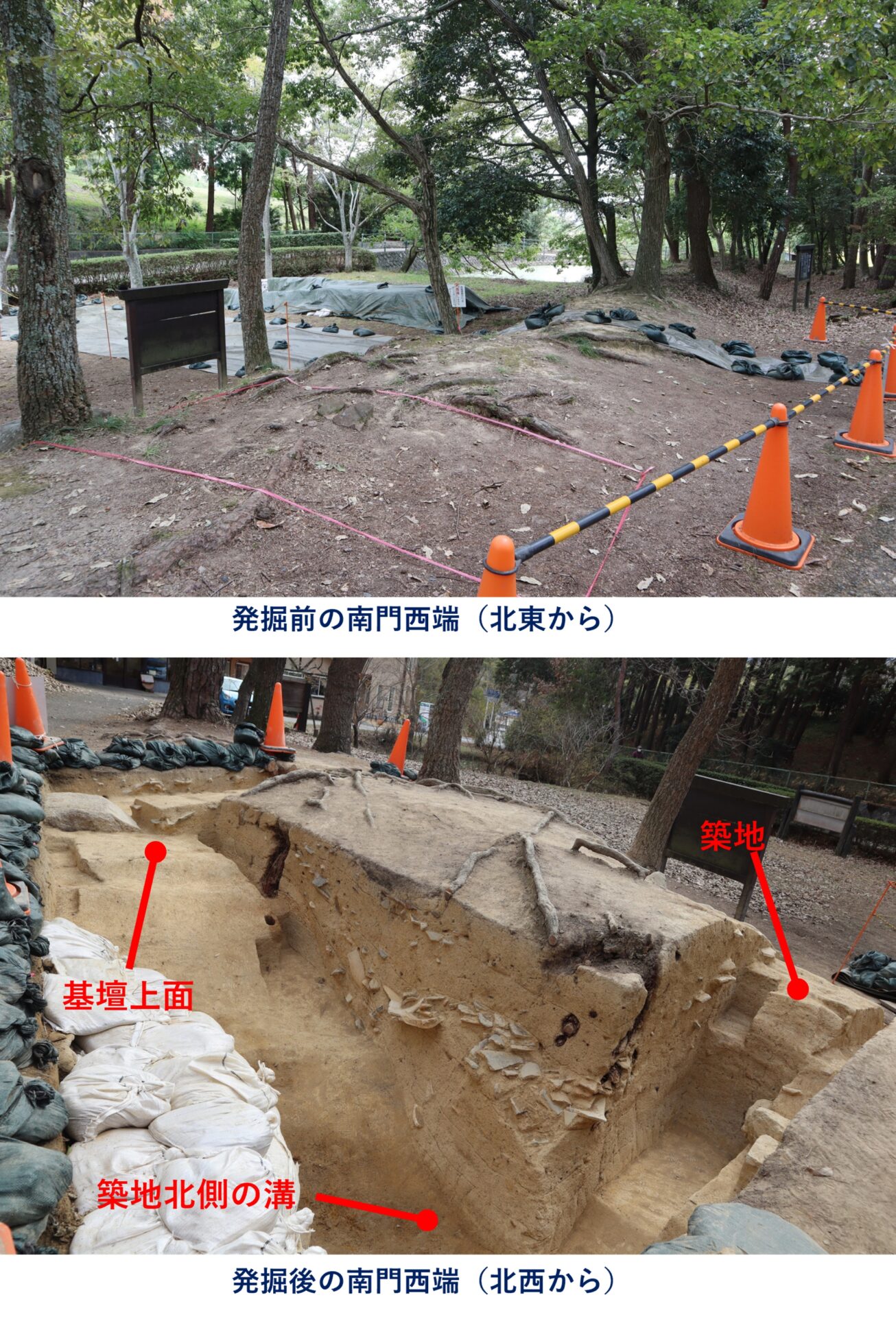
The South Gate is the main entrance of the temple.
It is believed that a raised platform was built using a construction method called hanchiku on a levelled ground, and that the gate posts were erected on laid foundation stones to support a tiled roof.
This investigation confirmed the presence of the platform, ditches, and remains of the earthen walls.
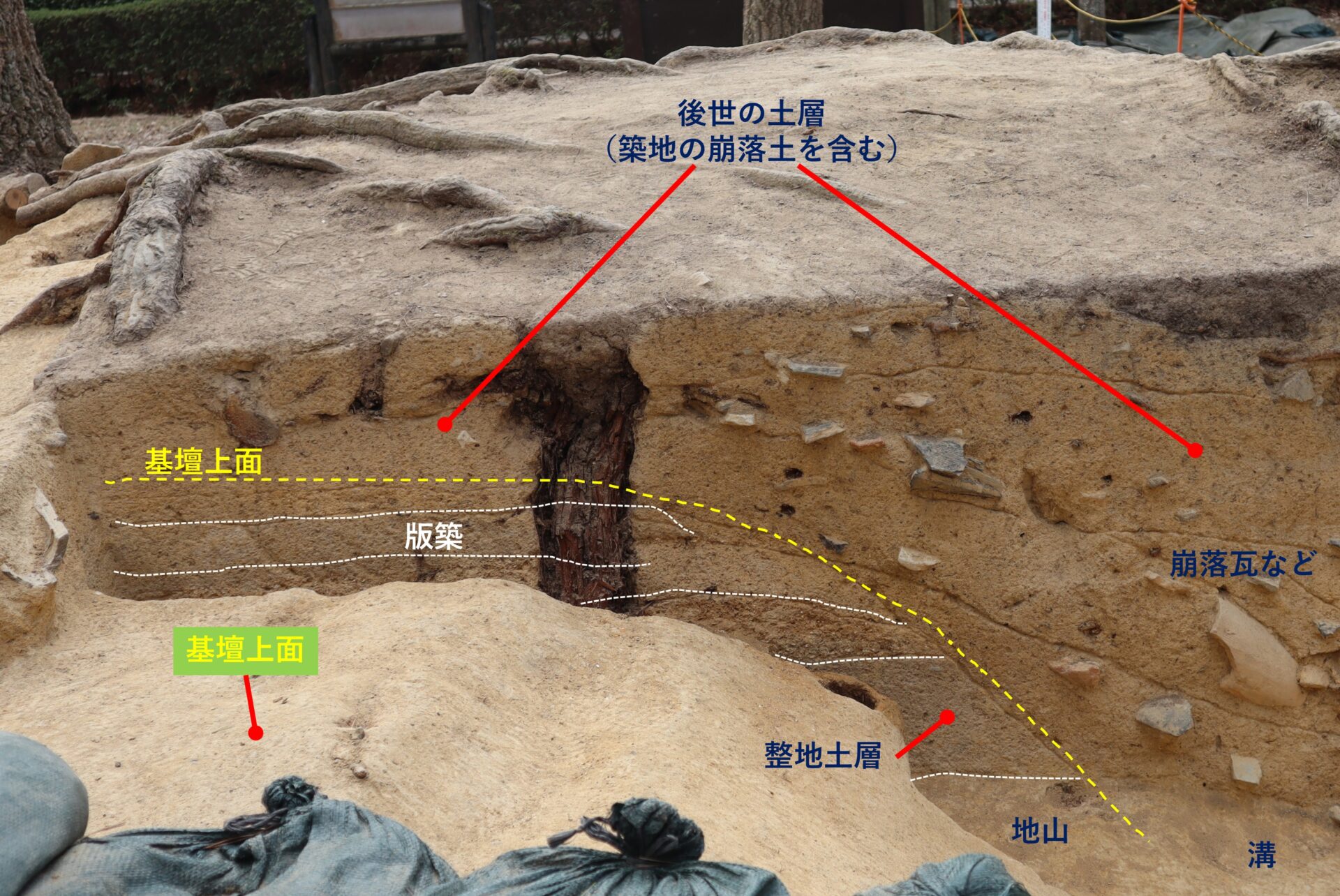
Let's overlay the content of the local explanation with the photos.
The shooting location is where the west end of the platform was identified.
In the foreground on the left is the detected top surface of the platform, and in the back, the cut section can be seen.
On top of the platform, there are layers of soil from later periods, including collapsed earth from the earthen walls. The large excavation on the lower right is believed to be a ditch.
Looking at the cross-section below the platform, it can be seen that the ground was levelled and that a sturdy platform was built using the hanchiku method on top of it.
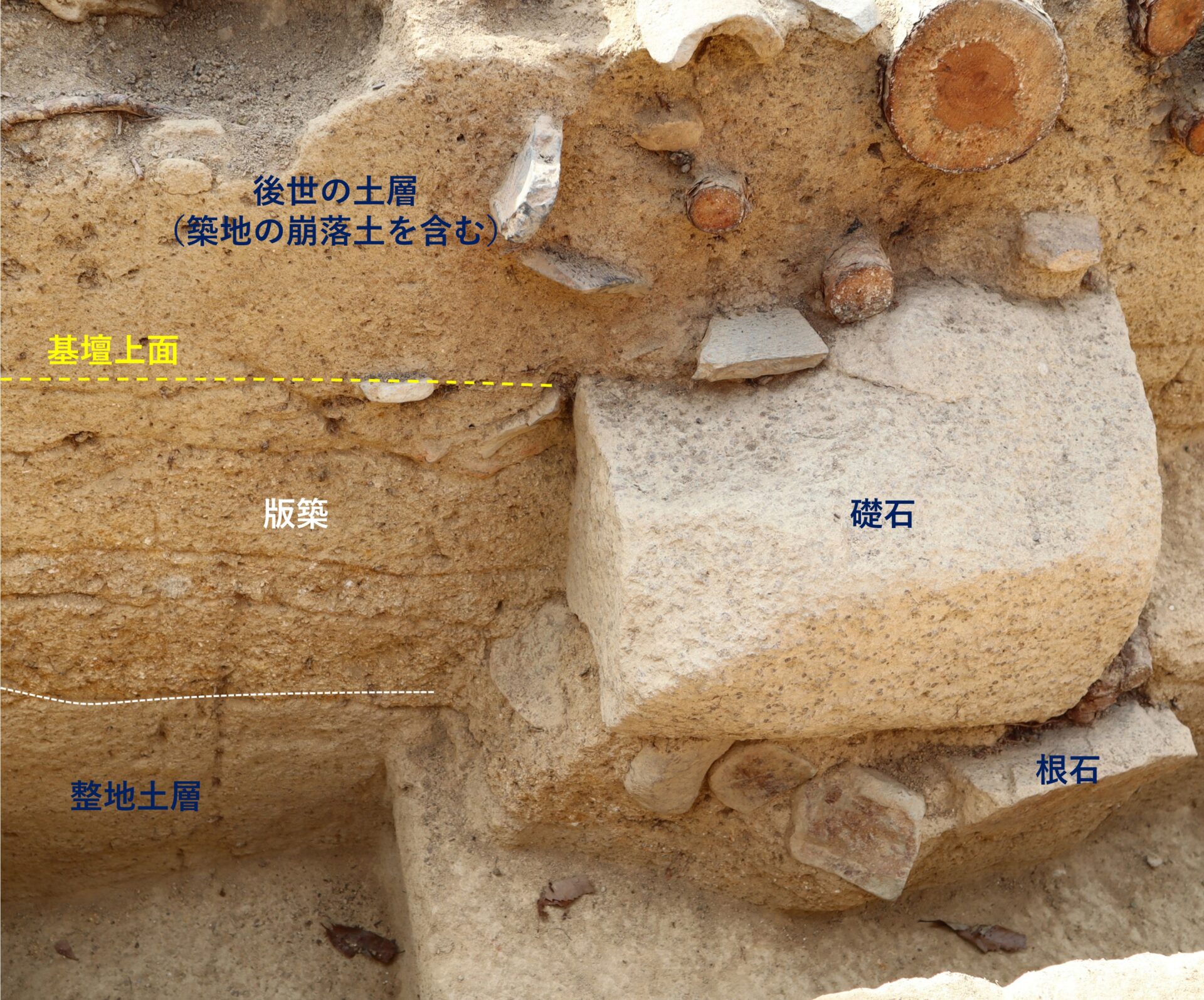
Let's take a look at the foundation stone excavated at the South Gate.
On top of the leveled soil layer, a base stone was placed to stabilize the foundation stone.
The top surface of the foundation stone appears to align with the top surface of the platform built using the hanchiku method.
The scale of the structure of the South Gate has been estimated to be 12m east-west and 9m north-south.
Tsukiji was said to be 3.5m tall.
Chumon
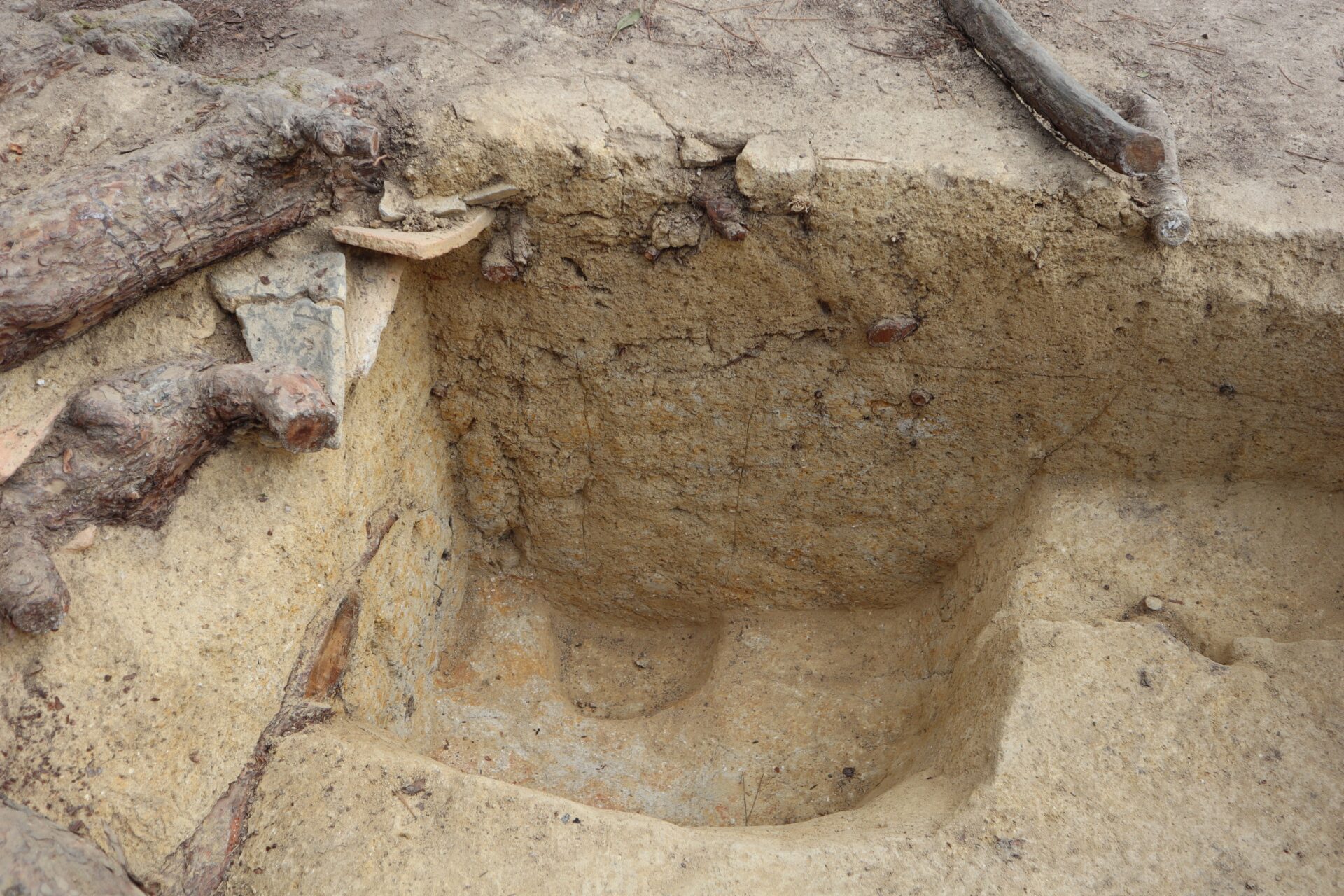
Chumon is the gate for entering and exiting the corridor that leads to the main hall.
Here, the foundation was confirmed. The earthen rampart is also connected, and its dimensions are 20m east-west and 4m north-south.
While the discovery of foundation stones was anticipated, none were found.
Instead, traces believed to be column holes were discovered. Chumon is thought to have been built using the post-in-ground method.
It is a relatively small gate, and perhaps the weight of the roof was not that significant.
Kodo
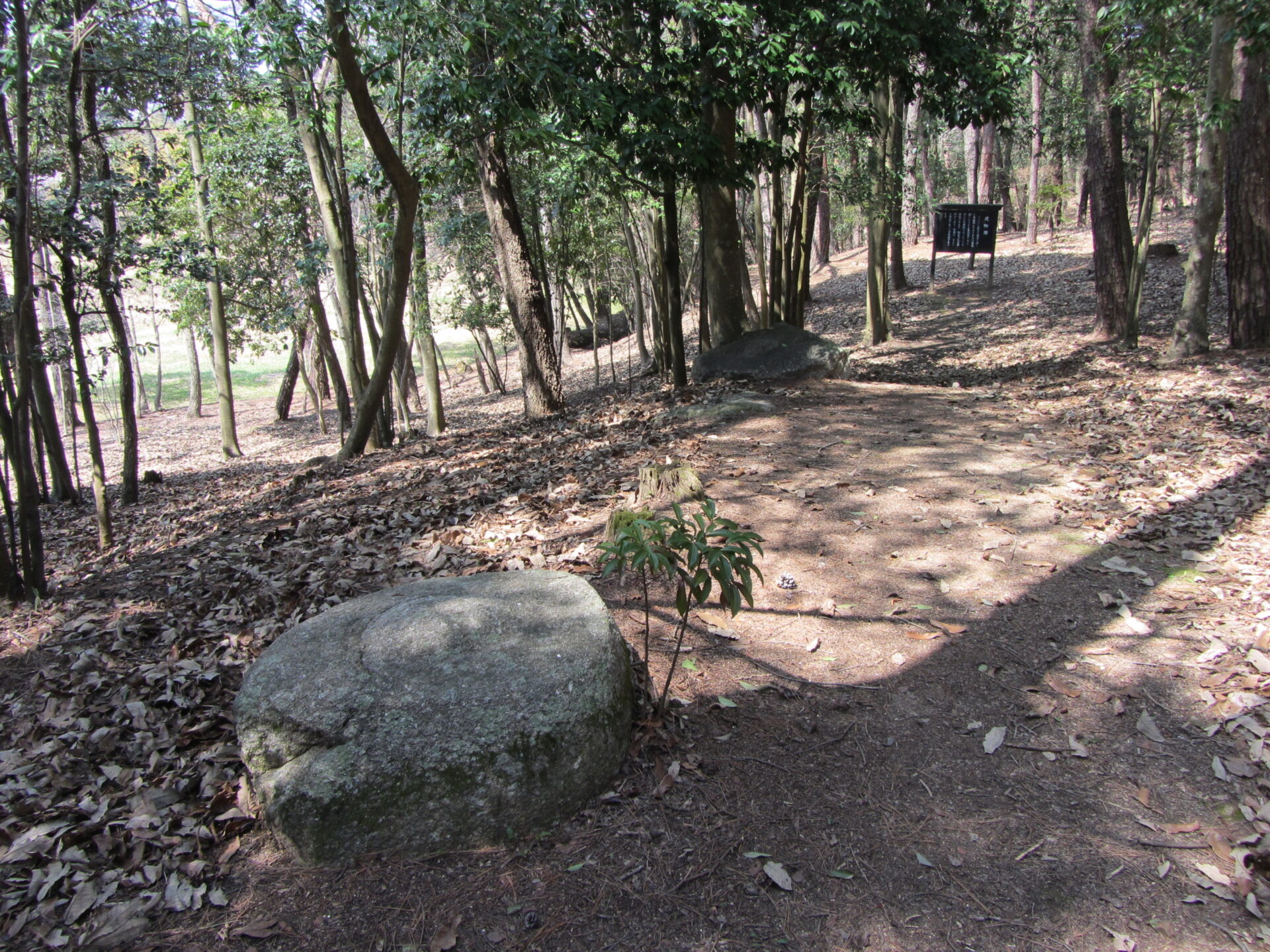
Kodo is a building for nuns to study.
At the west end, two foundation stones are still exposed.
Excavation of Kodo is ongoing. The size of the foundation has just been determined, measuring 28m east-west and 20m north-south.
At the east end, stones that may be foundation stones have also been discovered.
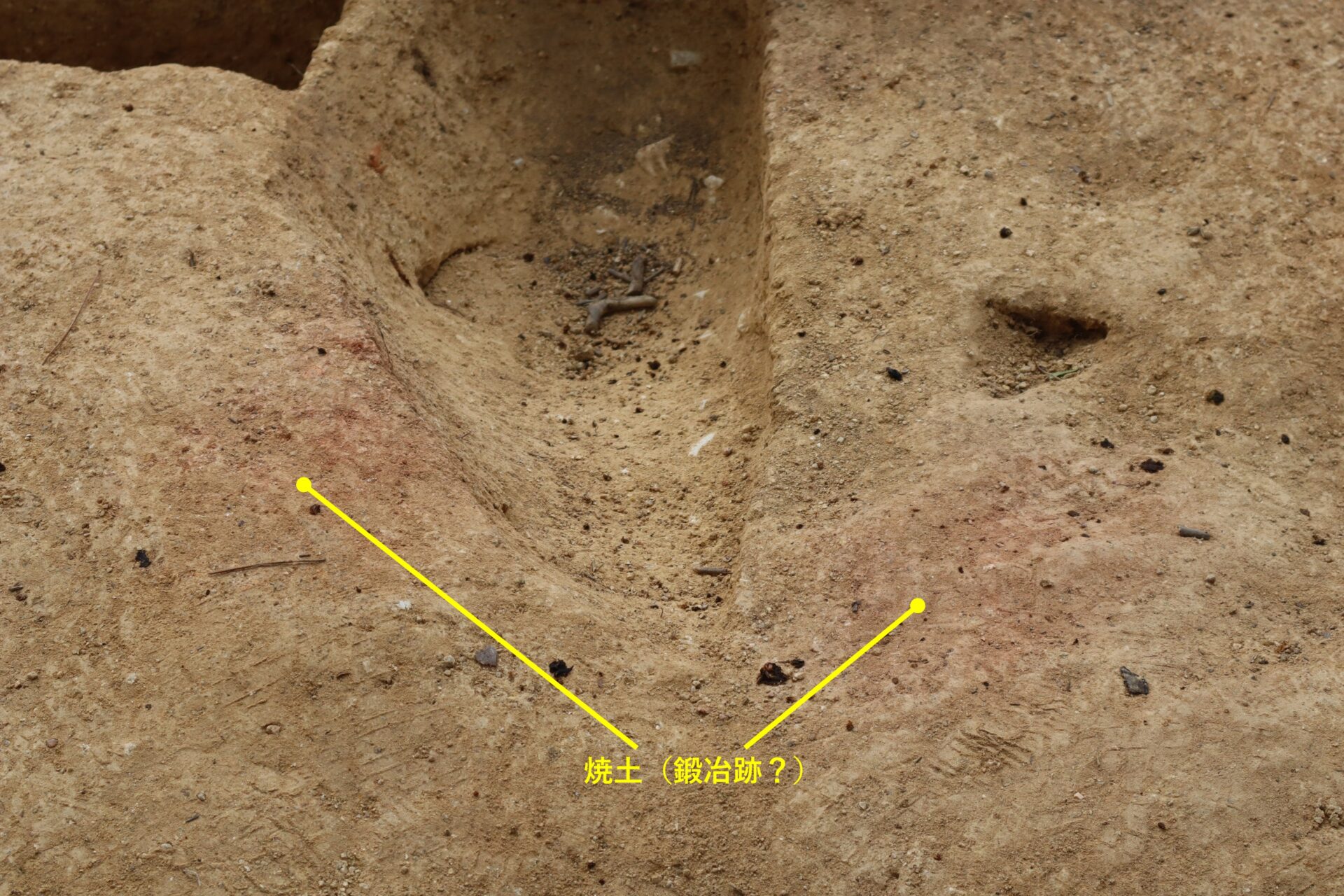
There have been interesting discoveries during the investigation of Kodo. One is that pottery from around the 10th century was found in traces where the foundation stones had been removed.
Additionally, iron tools were excavated, and burnt earth was confirmed.
This may indicate that the Kodo was lost relatively early in the Heian period after its establishment.
It is also thought that the site may have served as a smithing workshop.
Conclusion
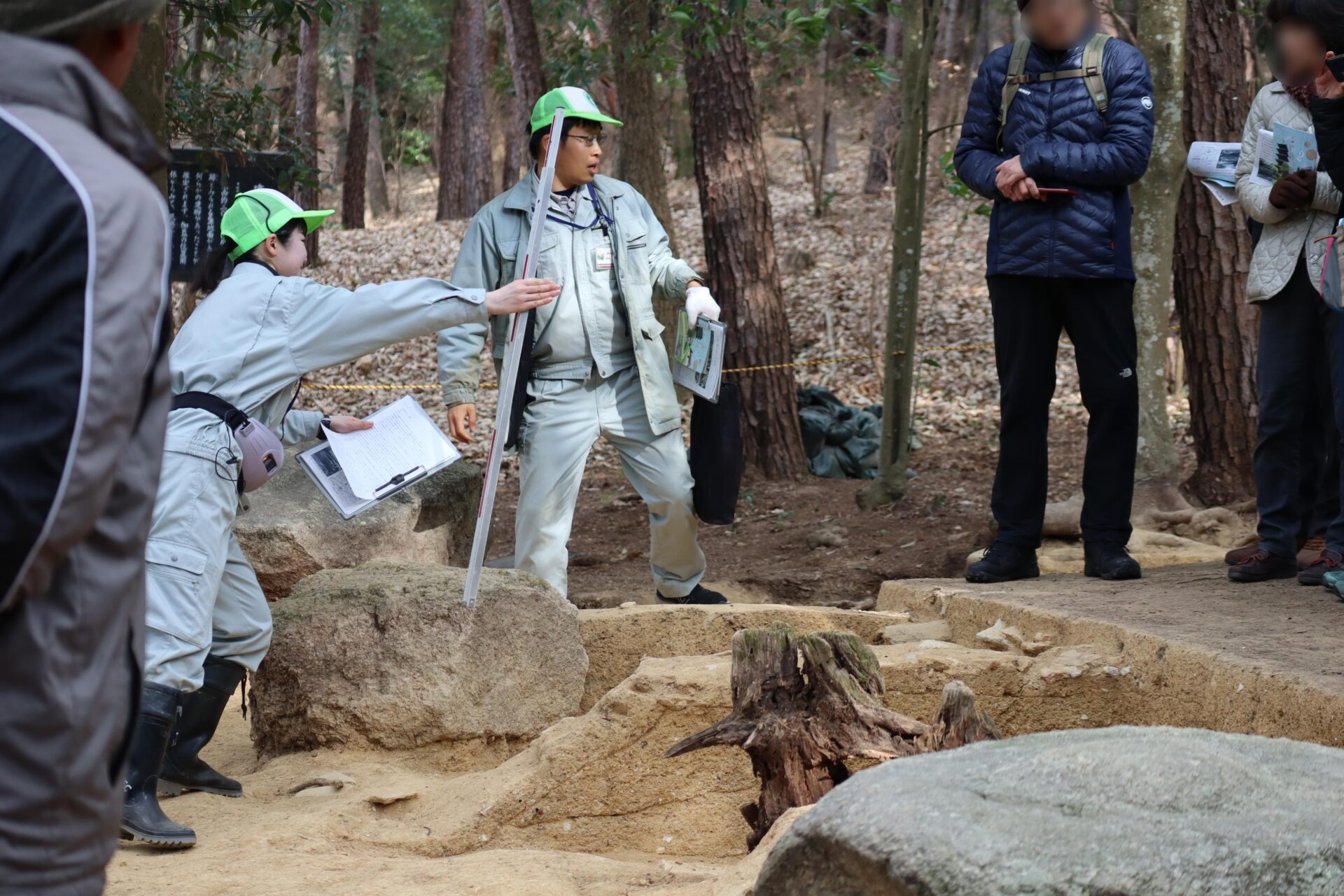
The Okayama Prefectural Ancient Kibi Cultural Property Center has been promoting the "Kibiji Historical Heritage" charm dissemination project since 2020.
Since 2023, excavation surveys have begun at the site of Bichu Kokubun-ji Temple.
The site of Bichu Kokubun-ji Temple, which has been shrouded in mystery until now, is gradually revealing the positions, sizes, and structures of the South Gate, Chumon, and Kodo through this investigation.
However, the contents and figures presented this time are preliminary. They may change with future investigations.
We look forward to the investigations planned for after 2024, including those of the main hall.
I hope the results of the investigations will be introduced as part of the charm dissemination project.
When visiting the five-story pagoda of Bichu Kokubun-ji Temple, a symbol of Kibiji, why not also visit the site of Bichu Kokubun-ji Temple a little to the east? You might hear the whispers of the nuns.
Data on the On-site Explanation Meeting for the Site of Bichu Kokubun-ji Temple
| Name | On-site Explanation Meeting for the Site of Bichu Kokubun-ji Temple |
|---|---|
| Date | On-site explanation meeting January 27, 2024 1st session: 10:00 AM - 11:00 AM, 2nd session: 1:00 PM - 2:00 PM, 3rd session: 3:00 PM - 4:00 PM On-site opening January 29 - February 2, 2024 10:00 AM - 12:00 PM, 1:00 PM - 3:00 PM |
| Location | Excavation site of the site of Bichu Kokubun-ji Temple, Kamibayashi, Soja City |
| Participation Fee (Tax Included) | Free |
| Homepage | Okayama Prefectural Ancient Kibi Cultural Property Center |