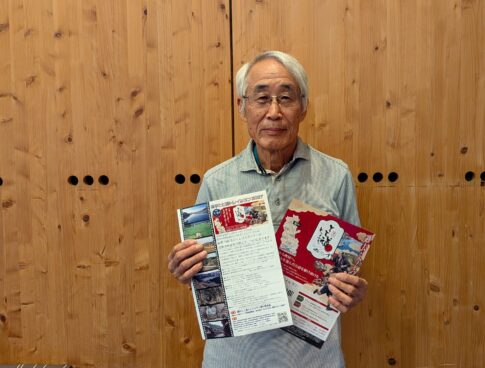
Interview with Koike Yoshihisa, Assistant Manager of the Tourism Project Division, Industry Department, Soja City
Before setting out on the cycling route, we spoke with Koike Yoshihisa, Assistant Manager of the Tourism Project Division, Industry Department, Soja City.
This interview was conducted during our first visit in May 2021.

Could you tell us how Kibichari came about?
Koike (surname only)
In May 2018, the story “The Town Where the Legend of Momotaro Was Born: Okayama—A Tale of Demon-Slaying Inspired by the Heritage of Ancient Kibi,” submitted to the Agency for Cultural Affairs by four cities—Okayama City, Kurashiki City, Soja City, and Akaiwa City—was recognized as Japan Heritage.
Japan Heritage is a national program that recognizes “stories” conveying Japan’s culture and traditions through the historical appeal and distinctive features of local areas, and uses them to revitalize communities.
It comprises 28 cultural properties said to have inspired the original Momotaro legend, including Kibitsu Shrine, Kinojo Castle, and kibidango.
After the Japan Heritage designation, the Japan Heritage “The Town Where the Legend of Momotaro Was Born: Okayama” Promotion Council (Okayama City, Kurashiki City, Soja City, and Akaiwa City) planned and launched Kibichari to encourage people to “easily explore Japan Heritage sites by bicycle.”
The Kibiji Cycling Road passes through Okayama City and Kurashiki City, so we also work together across the wider area to plan and run cycling tourism using Kibichari.
I transferred to the Tourism Project Division, Industry Department, in July 2020. By then, the project was already underway.

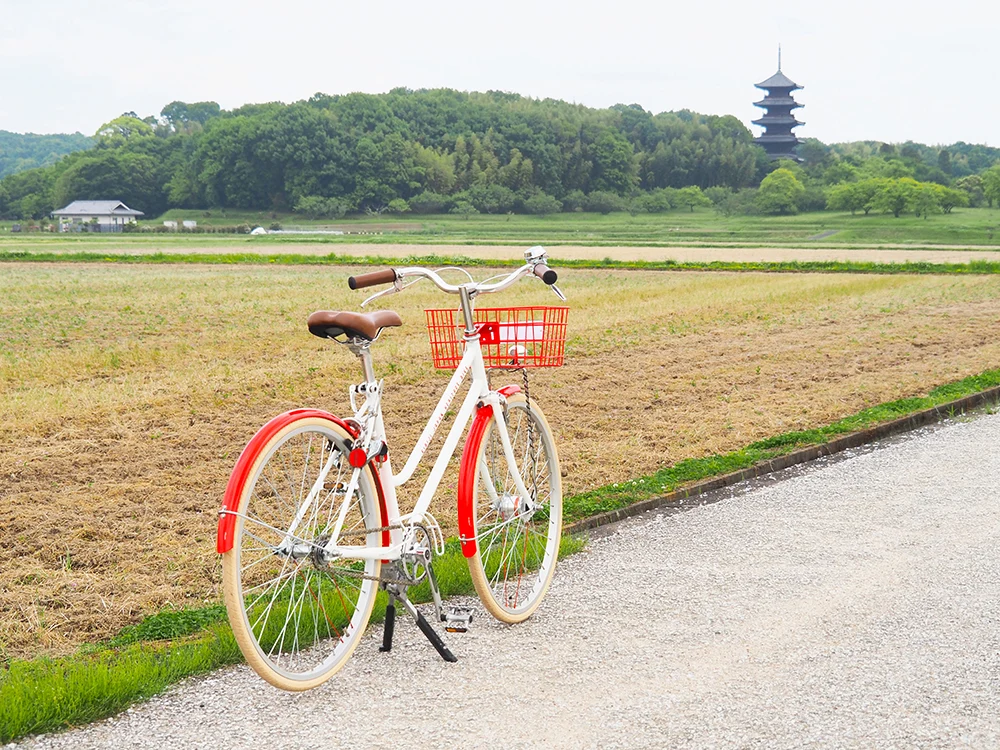
When I first saw Kibichari’s design, I thought, “It turned out really cute.”
Just two of the spokes are red, which shows how much attention was paid to the details.

Could you tell us about the Japan Heritage sites in Soja City?
Koike
The best-known site is Kinojo Castle. According to the Momotaro legend, Ura (the demon) is said to have taken refuge there during his battle with Momotaro.

It stands atop a mountain about 400 meters above sea level and can be seen in the distance from the Kibiji Cycling Road.
Other sites include Oni no Kama, along the road to Kinojo Castle; Chisui River, said to have flowed with Ura’s blood; Tsukuriyama Kofun; and Komorizuka Kofun.

Tsukuriyama Kofun and Komorizuka Kofun are along the Kibiji Cycling Road.
Tsukuriyama Kofun, the 10th-largest burial mound in Japan, is notable because you can climb it. Be sure to give it a try.
You can go as far as the entrance to the cave at Komorizuka Kofun.
Zozan Kofun, which you reach by following the Kibiji Cycling Road to Okayama City, is the fourth-largest in Japan and can also be climbed.
Cycling around the area gives you a real sense of how many burial mounds are clustered here, which I think is fascinating.
How would you recommend enjoying Kibichari?
Koike
Kibichari is not only stylish-looking; it’s also easy to pedal off on and comfortable to ride.

The tires are 26 inches. I think it’s suitable for children from around the upper grades of elementary school.
The seat height can be adjusted, so adults can ride comfortably too, making it a good option for a family cycling trip.
There are many famous Japan Heritage sites in Okayama City and Kurashiki City, such as Kibitsu Shrine and Koikui Shrine. I’d be delighted if people also learned that Soja City has Japan Heritage sites and enjoyed exploring the wider area by bicycle.
Most of the route is gently sloping, so I think it’s an easy cycling road to try even if you’re not confident in your stamina.
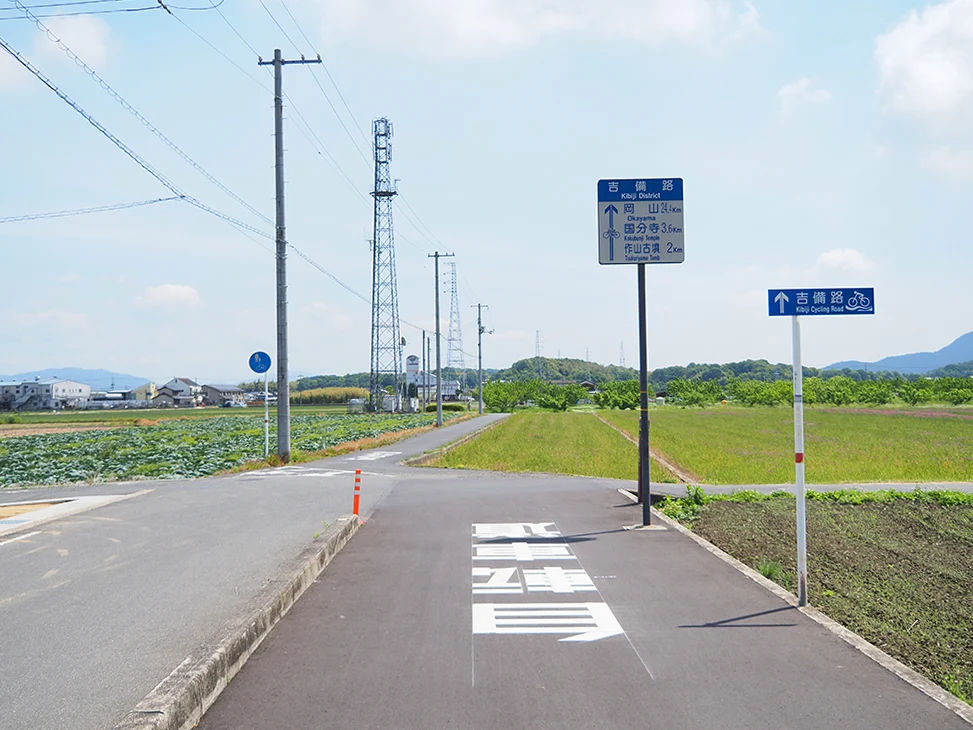
Also, rental bicycles can be used beyond the cycling road, so you can ride around town, for example through the shopping streets.
Soja has many bakeries, so visiting them by bicycle might be fun too.


What would you like to know about Kurashiki?
Enter a search term to find articles on this site