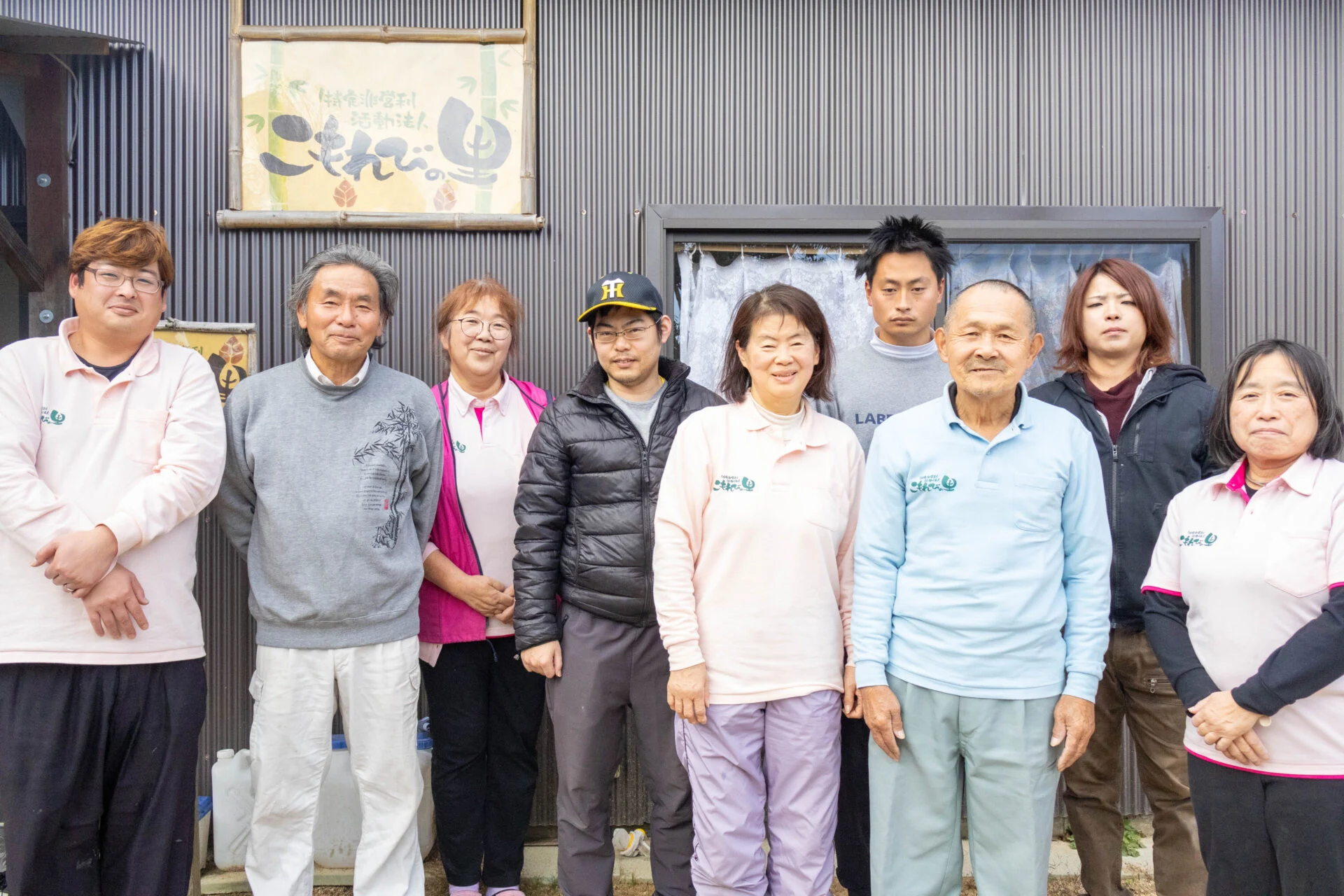
Non-profit organizations engaged in social contribution activities are active all over Japan.
The Komorebi no Sato, a specified non-profit organization operating in two locations, Mabi and Soja City, is a group that conducts social contribution projects utilizing bamboo, a local specialty.
The main activities focus on disaster recovery support and independence support for those who are socially withdrawn or have disabilities. How is bamboo being used in these two types of support?
We interviewed the thoughts of the Komorebi no Sato.
About Komorebi no Sato
Komorebi no Sato (hereinafter referred to as "Komorebi no Sato") is a non-profit organization established in 2020, based in Kurashiki City, Mabi, and Soja City.
The impetus for its establishment was the heavy rain disaster in July 2018. It was founded by ten members who met through disaster volunteer activities, with the aim of providing disaster recovery support and independence support for socially withdrawn individuals and those with disabilities.
As of 2025, it is engaged in the following six social contribution projects.
- → Employment continuation support project based on the law for comprehensive support for the daily and social lives of people with disabilities (Comprehensive Support for Persons with Disabilities Act)
- Activities to promote community development
- Consultation and support projects
- Projects contributing to the community through agriculture
- Volunteer and community exchange projects
- Projects necessary to achieve the organization's objectives
While Komorebi no Sato conducts various projects in disaster recovery and welfare, a significant feature is its efforts utilizing bamboo, a specialty of Mabi.
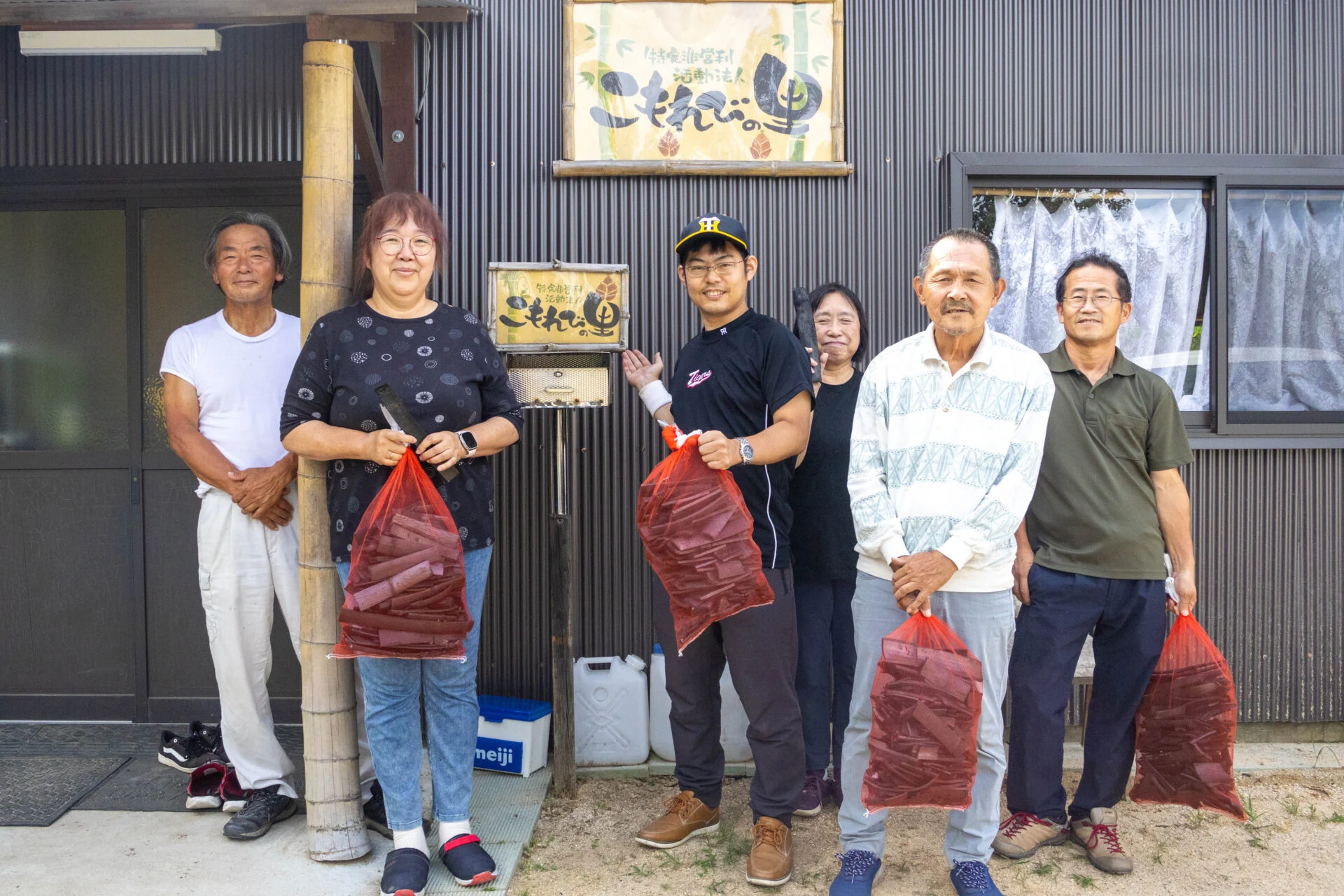
At the Employment Continuation Support Type B Office operated by Komorebi no Sato, product development and sales using Mabi's bamboo are conducted. The bamboo charcoal produced there was also sent to the disaster areas affected by the heavy rain disaster in July 2020 and the Noto Peninsula earthquake. It is said that placing bamboo charcoal under the floors of flooded houses can help with deodorization and moisture removal.
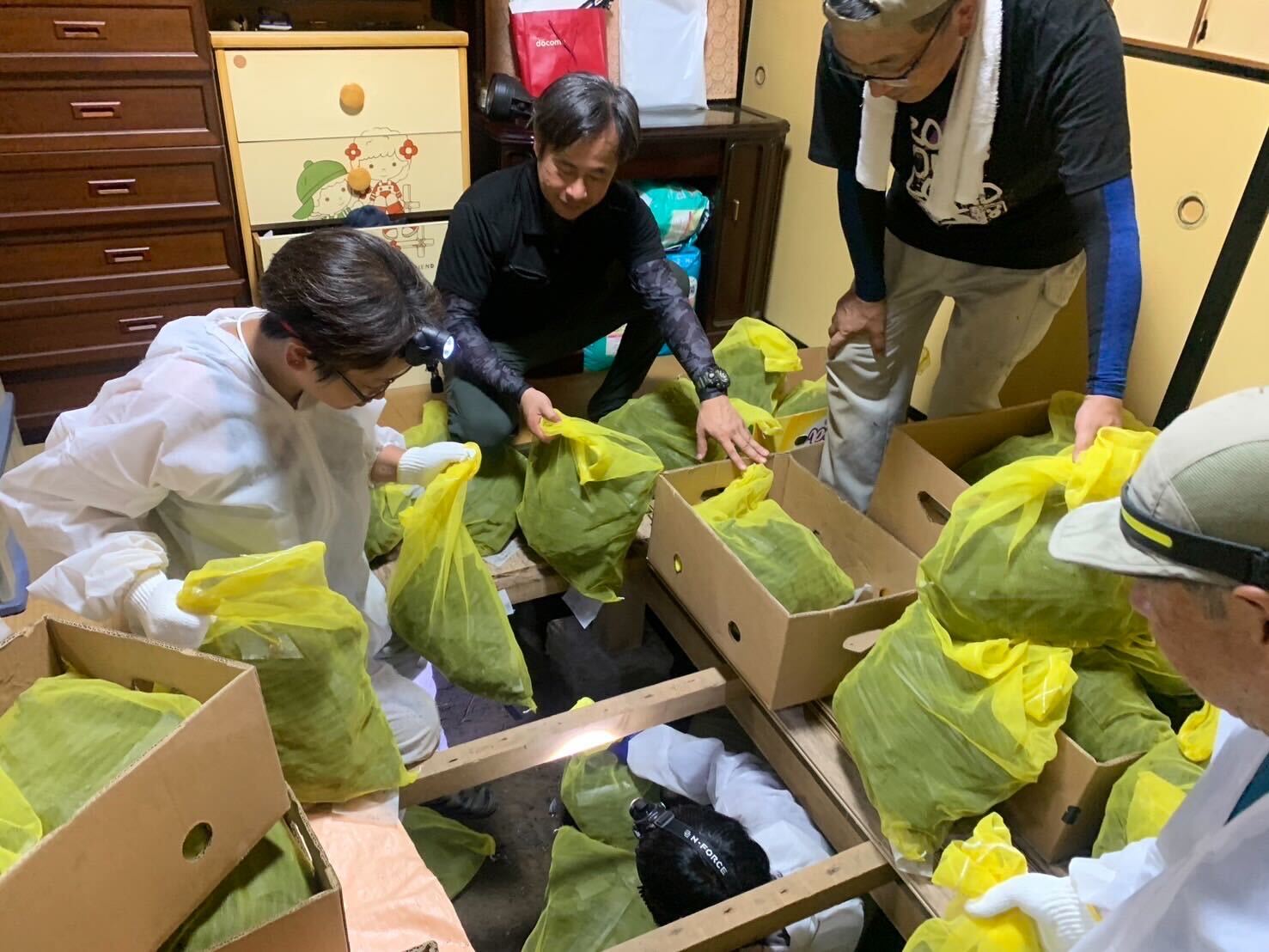
Since Komorebi no Sato was established by disaster volunteer members, there is a very strong commitment to recovery.
After the heavy rain disaster in July 2018, Komorebi no Sato hosted a recovery event called Ganbarou! Mabi! KIZUNA Festa, bringing smiles to many children with the cooperation of numerous volunteers. While cherishing the experiences they had during the heavy rain disaster in July 2018 and the connections made through disaster volunteer activities, they are currently focusing on recovery support across Japan.
Masako Akasaka, the vice representative of Komorebi no Sato, says, "I believe that by involving socially withdrawn individuals and those with disabilities in social contributions like disaster recovery support, it leads to a sense of purpose and confidence."
Komorebi no Sato Employment Continuation Support Type B Office
Let me introduce the main project of Komorebi no Sato, the Komorebi no Sato Employment Continuation Support Type B Office.
The Employment Continuation Support Type B Office is a welfare service that provides a place for people who find it difficult to work in general employment due to disabilities, etc., to gain skills and knowledge while connecting with society.
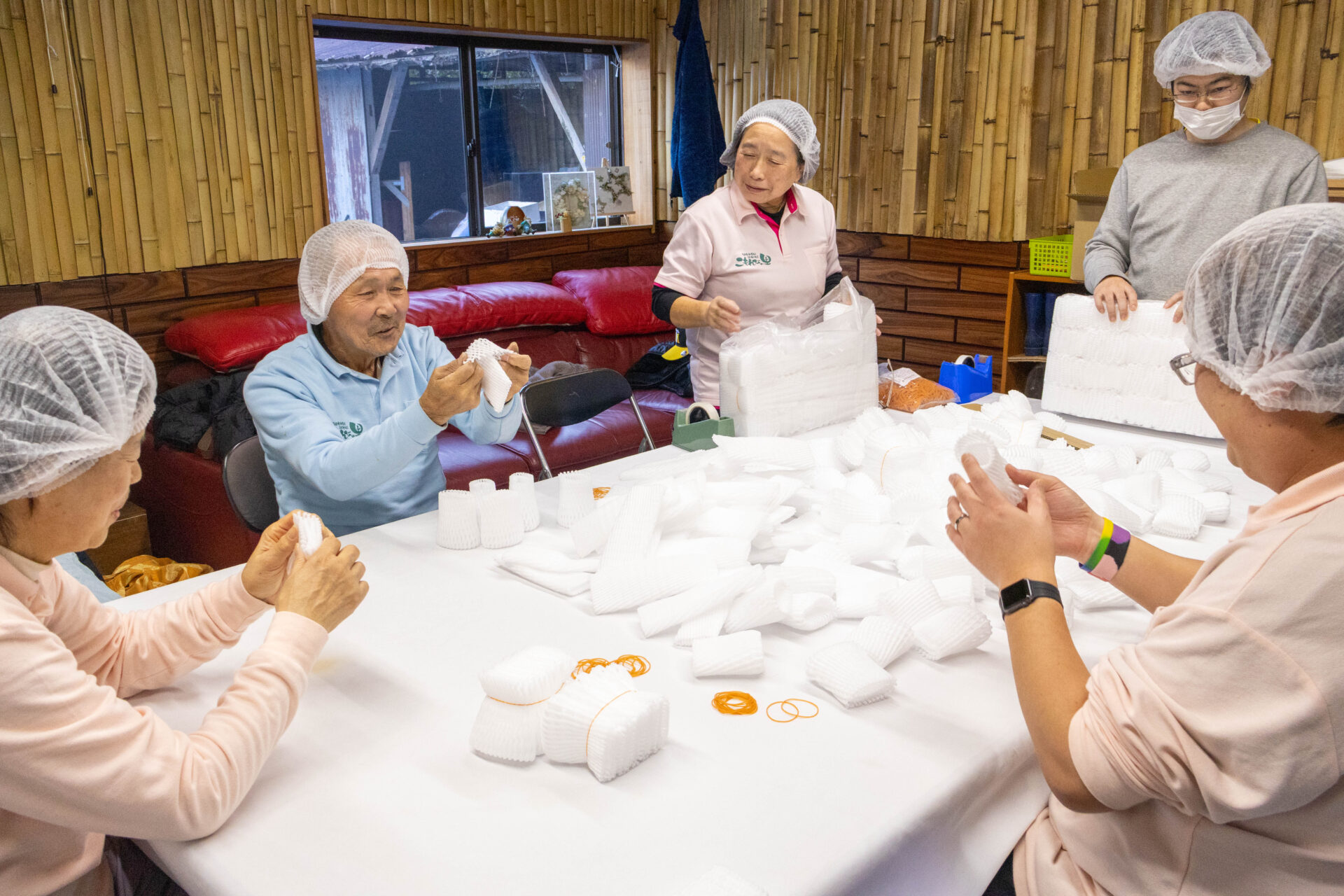
Komorebi no Sato has offices in two locations, Soja City and Mabi, operating on Mondays, Wednesdays, and Fridays in Soja, and on Tuesdays and Thursdays in Mabi.
At the Soja office, they mainly engage in agricultural and orchard management activities. It is said that they sometimes harvest seasonal vegetables together with students from Okayama Prefectural University. On rainy days, they do tasks such as assembling candy boxes and sorting card games as indoor work.
While the Mabi office also does indoor work, product creation using bamboo is a unique job for Mabi.
Development of products using Mabi's specialty bamboo
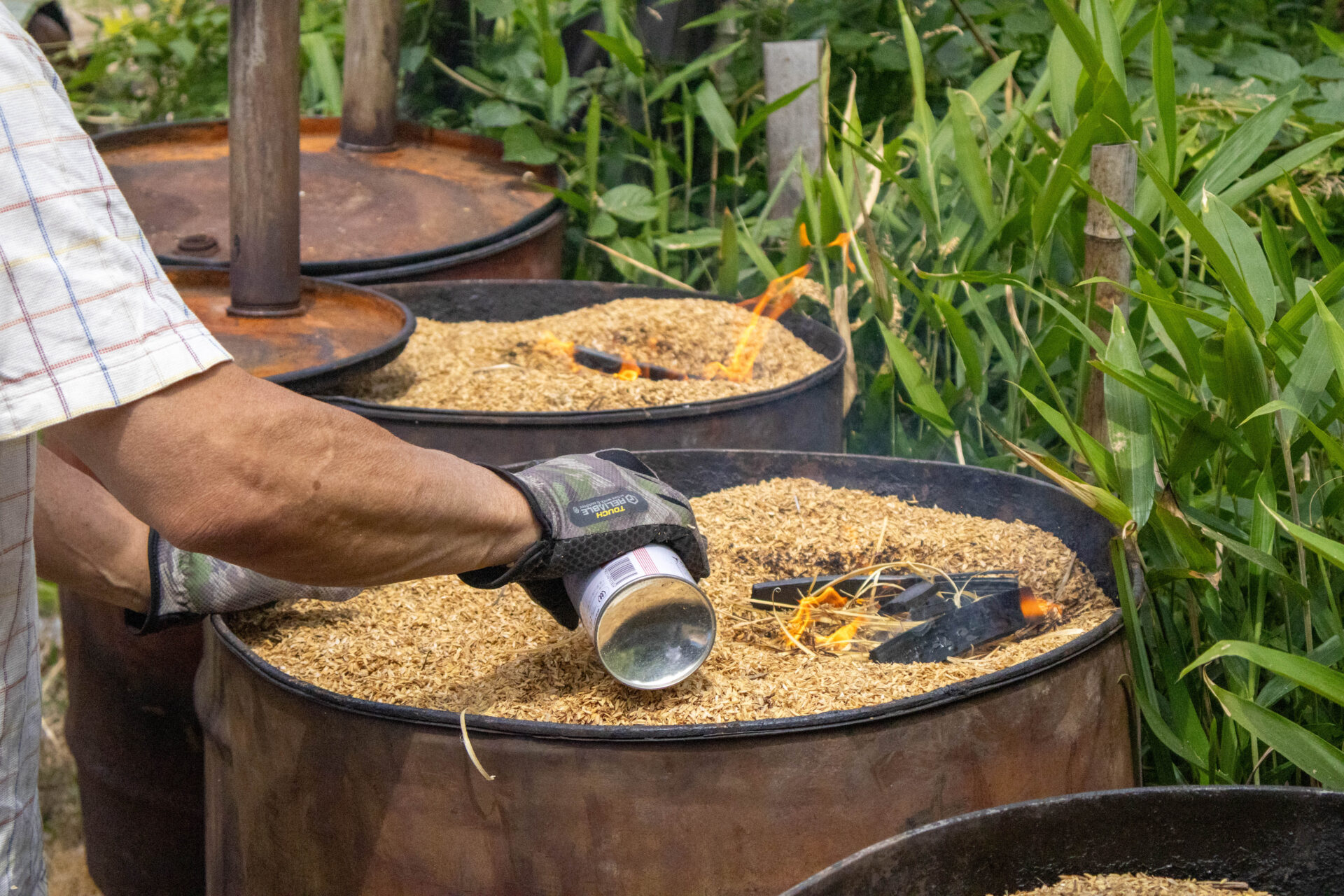
At the Mabi office, they produce bamboo charcoal using a unique method.
This method involves using a drum can and rice husks. It takes about 3 to 4 days to complete, but by taking the time to heat it thoroughly, they can produce high-quality bamboo charcoal that is easy to ignite.
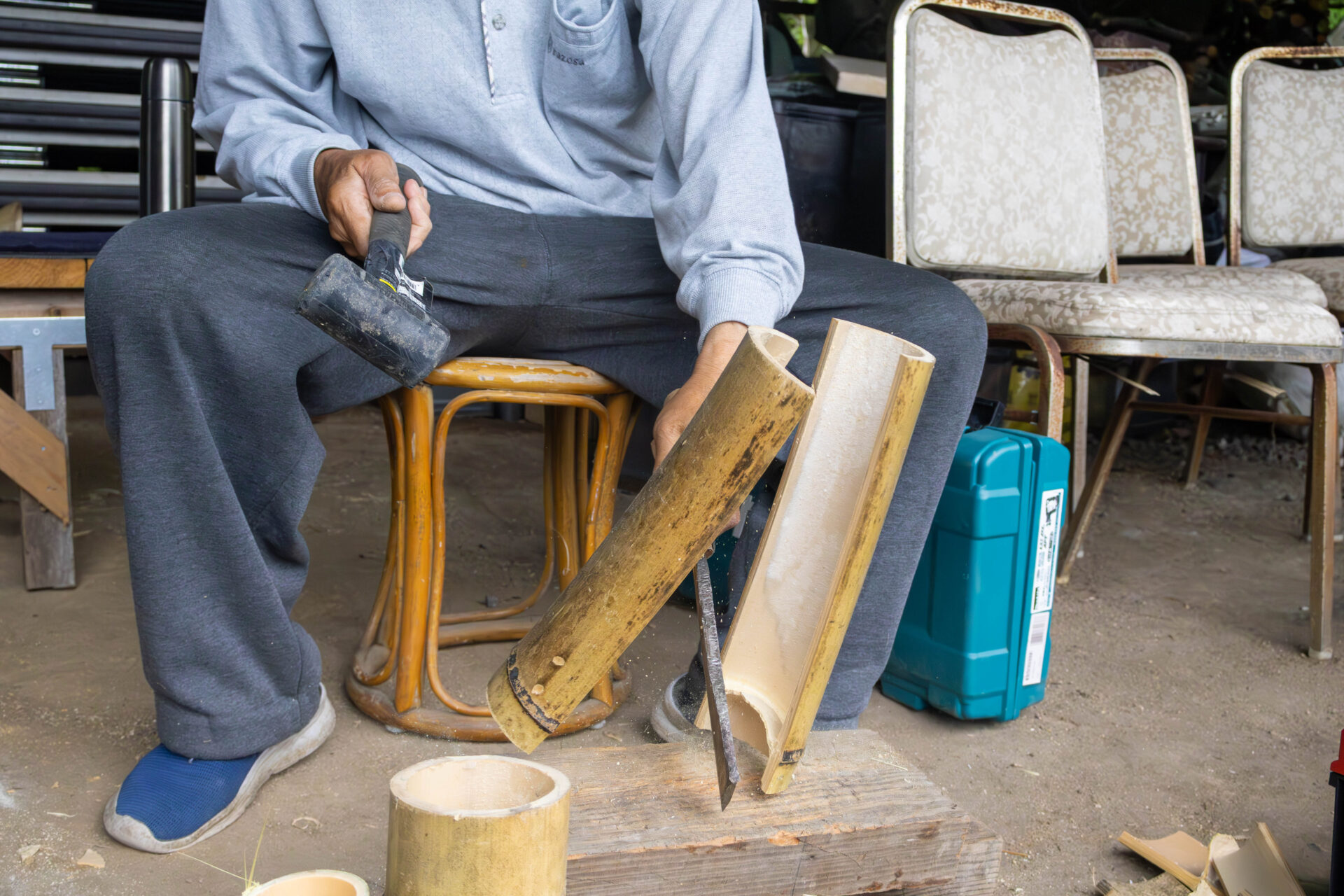
The users (people working at Komorebi no Sato) cut long, sturdy bamboo into appropriate sizes using an electric saw, and further split them into smaller pieces using a hatchet and hammer to knock out the nodes.
During my interview, I observed that they were working while casually dividing roles and engaging in small talk. The sounds of cutting and splitting bamboo rhythmically echoed throughout the premises.
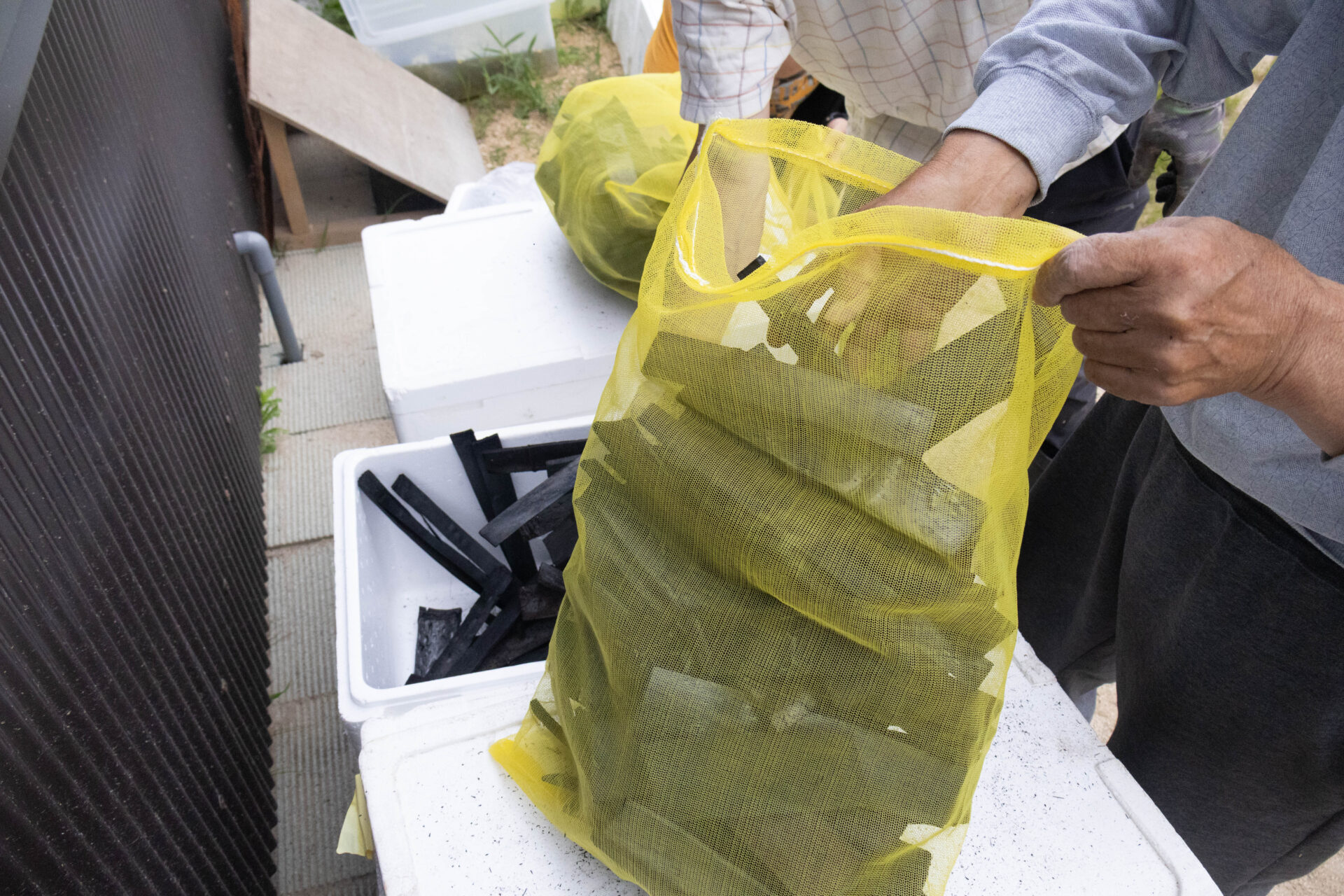
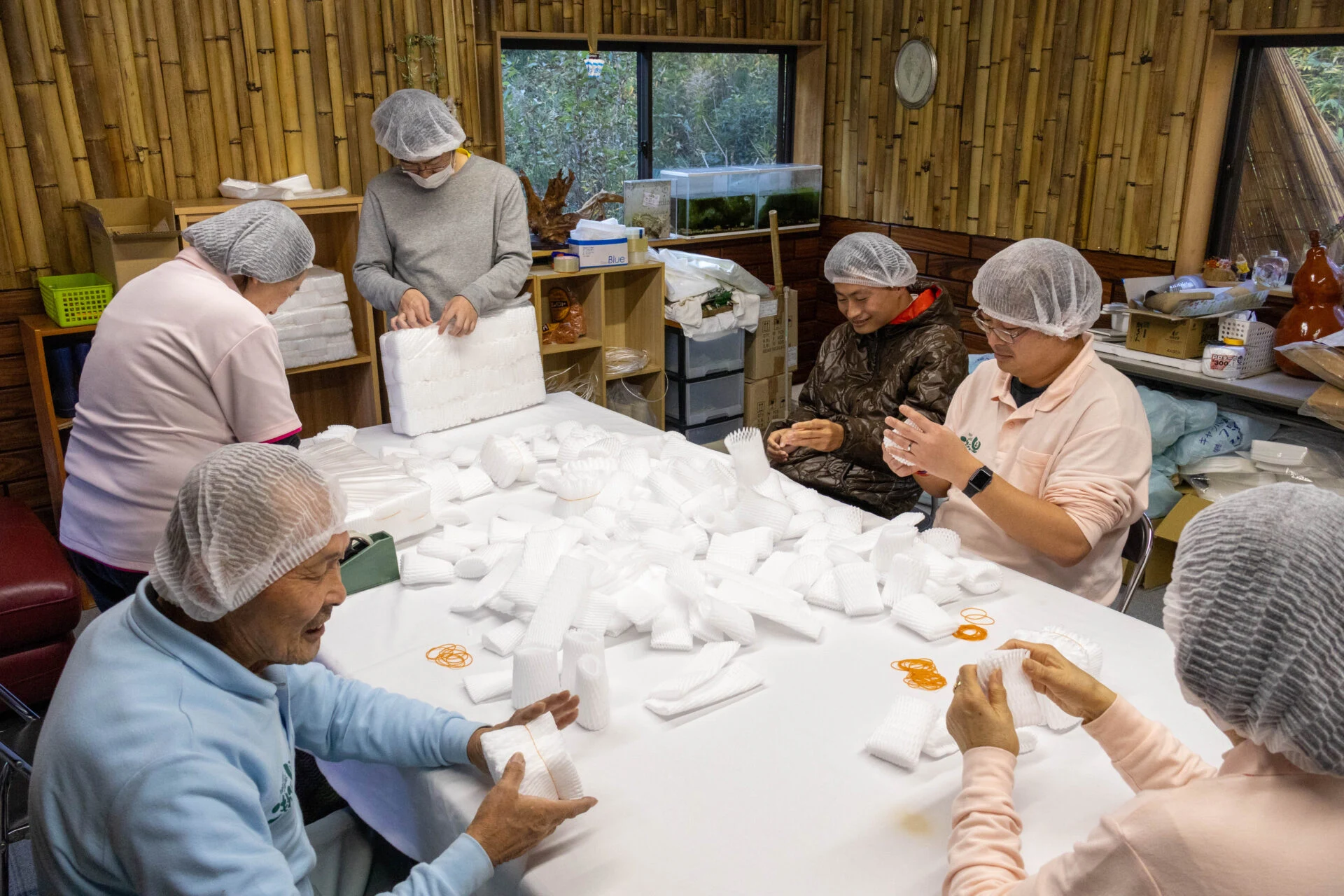
The completed bamboo charcoal is used in various items as fine bamboo charcoal chips, and it can also be sent directly packed in nets to disaster areas. The packaging process is done manually for each item.
When sending bamboo charcoal to disaster areas, the disaster volunteer organization INOLIN JAPAN, which was also involved in the establishment of Komorebi no Sato, transports it to the affected areas.
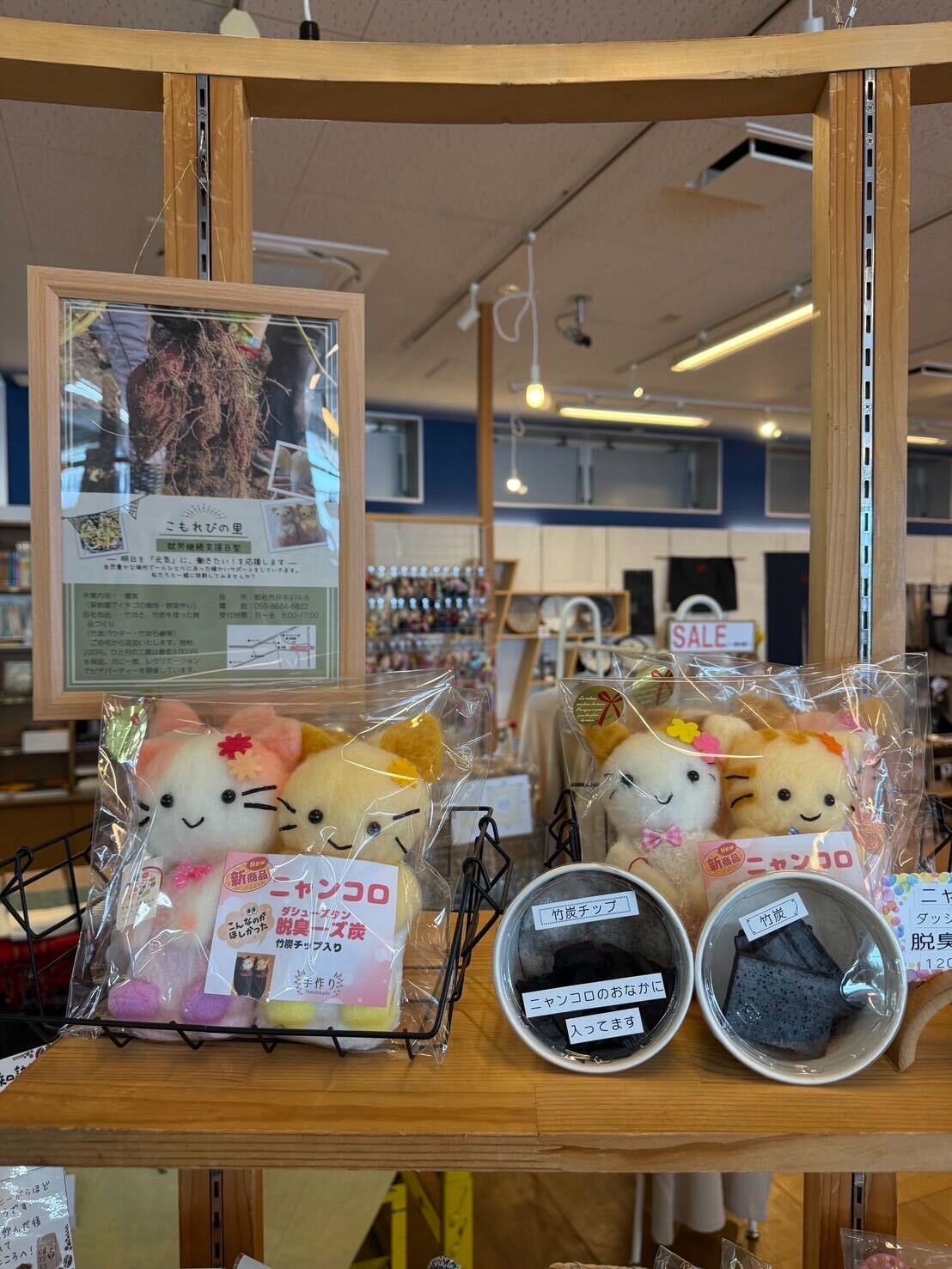
Bamboo charcoal has also been transformed into original products such as Nyan-koro Datsushuu-zan (Deodorizing Charcoal) and Bamboo Charcoal Soap, which have been sold at events.
In particular, Nyan-koro Datsushuu-zan has been popular, sometimes leading to production not keeping up with demand.
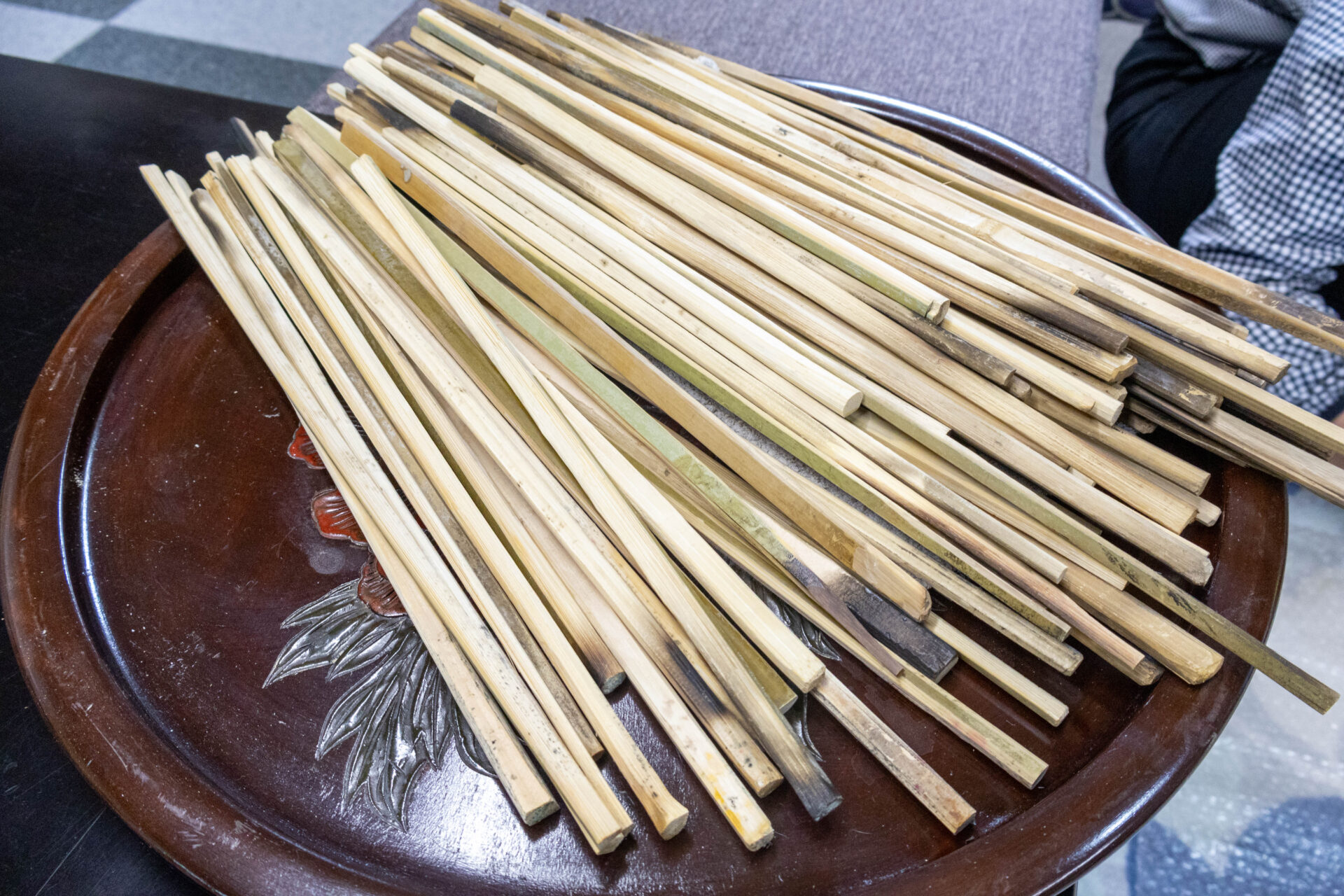
During the interview, they were making bamboo skewers, so I asked, "Are you going to sell these too?" It turns out that the bamboo skewers are used for cotton candy sold at the Marche. The sturdy and long bamboo skewers can be used to make large cotton candy, and they were very popular at events.
Connecting with society through participation in events
An essential part of employment continuation support is building connections with society.
At Komorebi no Sato, users also participate in events to engage with people from outside.
Every summer, Komorebi no Sato hosts a nature experience program for parents and children called Bamboo Challenge. It is planned with the aim of allowing local people to interact with bamboo, and it is an event where everyone enjoys playing with bamboo toys and cooking using bamboo and bamboo charcoal. Users also participate and support the event.
Additionally, they may set up stalls at markets and festivals held in Soja City. The current users seem to have become accustomed to events, as they are adept at setting up tents and assembling machines and tools.
Monthly recreational activities
In addition to work, seasonal recreational activities are also held regularly.
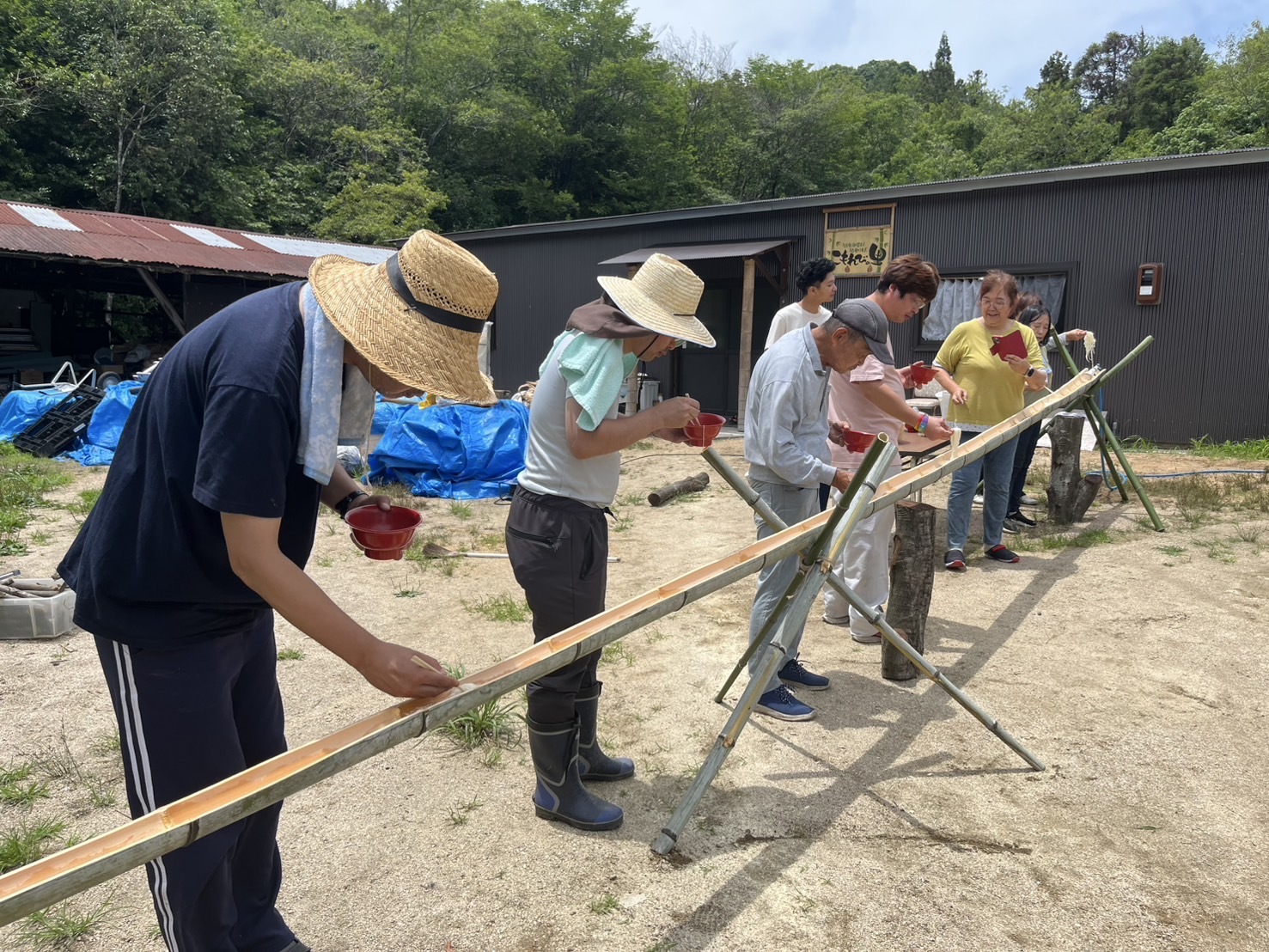
In summer, they made a stand from freshly cut bamboo and enjoyed eating nagashi somen (flowing noodles) together.
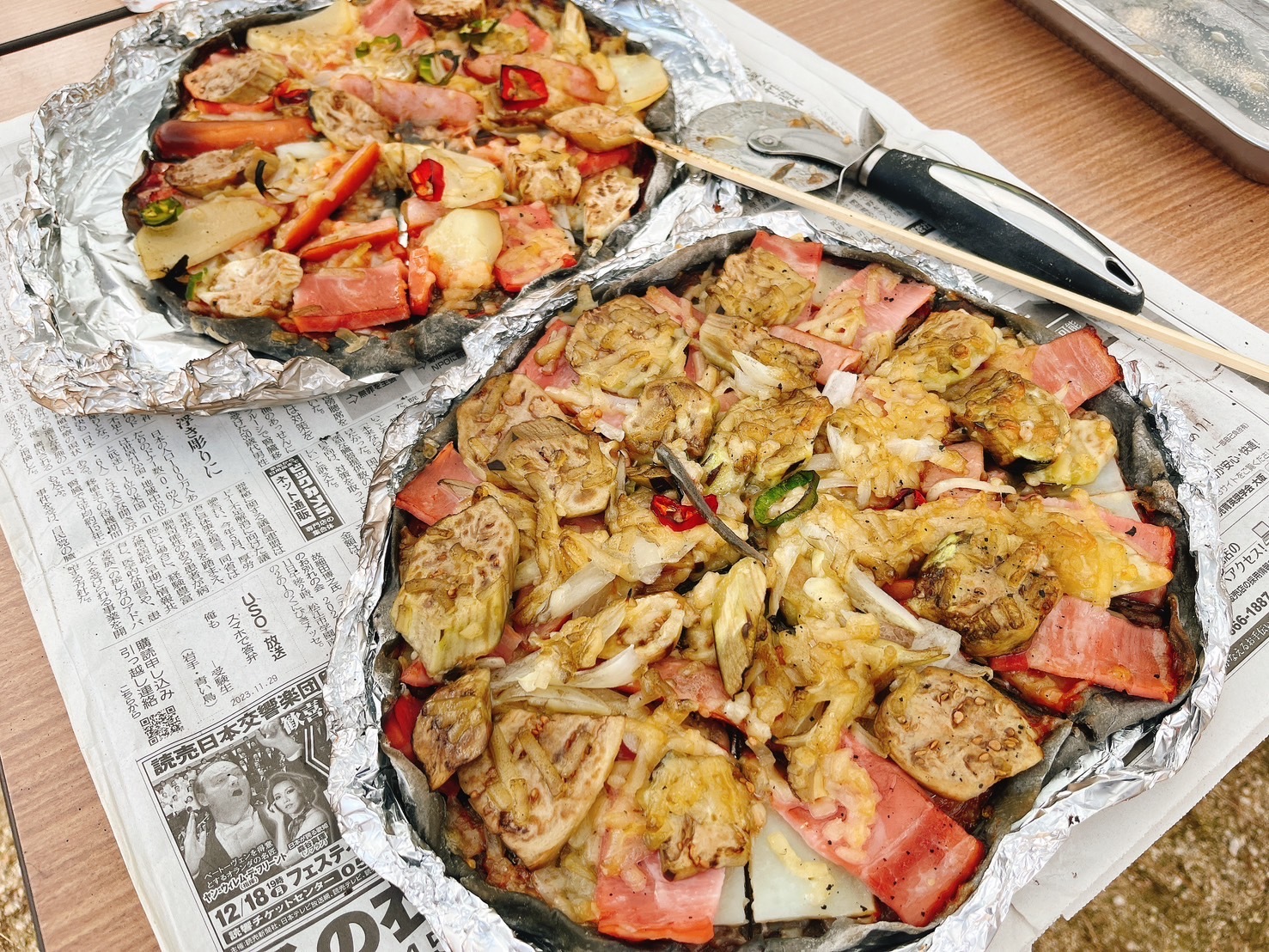
As the year-end approaches, a large stone mortar and pestle are prepared, and everyone participates in making mochi (rice cakes).
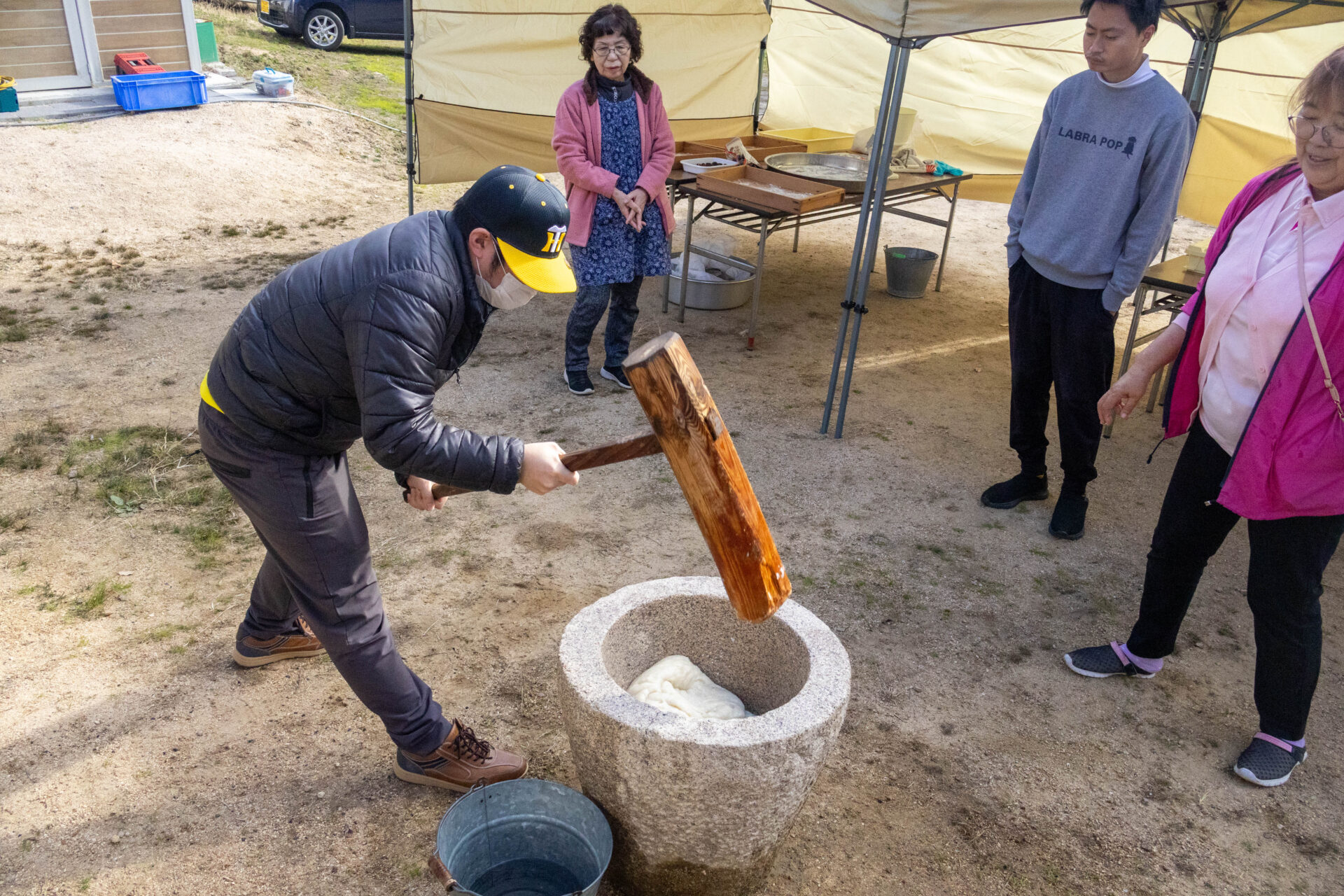
On days of recreational activities, not only the regular members but also external people connected to Komorebi no Sato gather. It was impressive to see the users participating happily in a lively atmosphere.
The meals include bamboo charcoal and vegetables made by the users, allowing them to enjoy the fruits of their own production.
Komorebi no Sato provides users with connections to society in various ways.
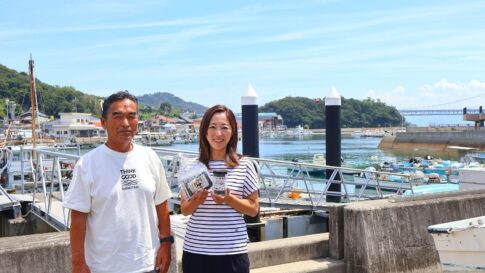
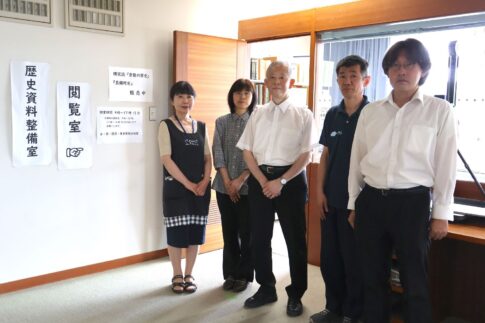
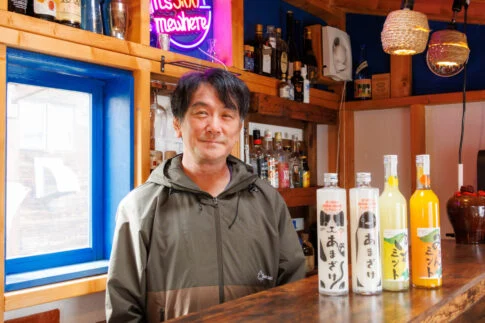
To understand their thoughts, we interviewed the chairman Yakushiji Masashi and the vice-chairman Akazaka Masako.
Data of the Non-Profit Organization Komorebi no Sato
| Organization Name | Non-Profit Organization Komorebi no Sato |
|---|---|
| Industry | Disability Welfare |
| Representative Name | Chairman Yakushiji Masashi |
| Established Year | March 13, 2020 |
| Address | 154 Ougubo, Soja City, Okayama Prefecture |
| Contact | 050-8884-6822 |
| Website | Non-Profit Organization Komorebi no Sato |