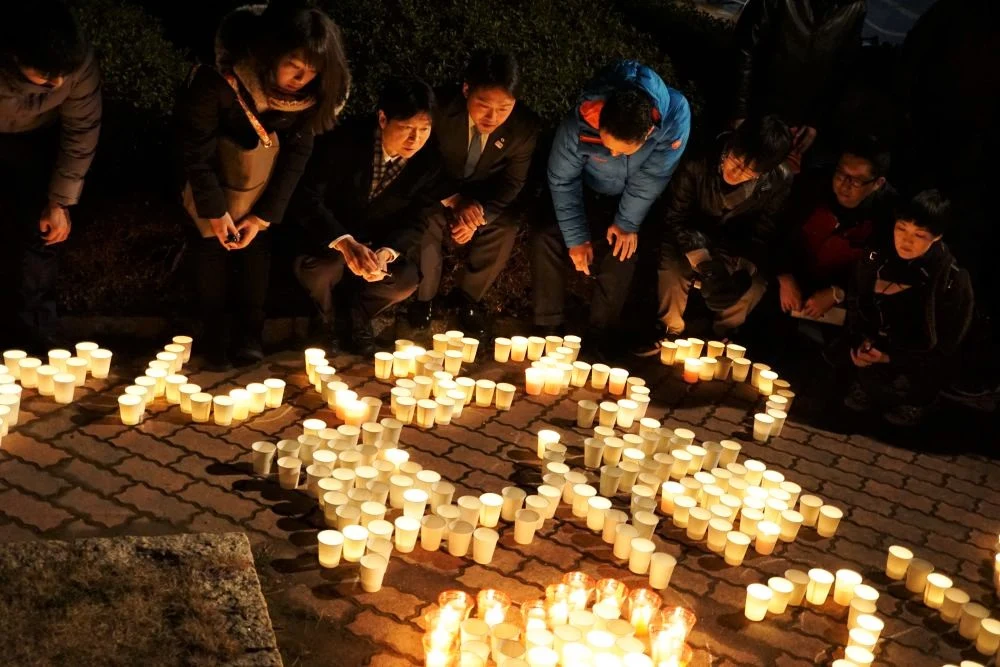
The Noto Peninsula Earthquake occurred on January 1, 2024.
Since the earthquake, Kurashiki City has quickly dispatched city staff to provide support in various forms, including the provision of water and food supplies, as well as the transportation of toilet trailers within the city.
About six months after the earthquake, in June 2024, a friend who is part of the regional revitalization cooperation team in Mabi invited me to come and see the production of bamboo charcoal.
In Mabi, which was affected by the heavy rain disaster in July 2018, bamboo charcoal made from local specialty bamboo is being delivered to the disaster area of the Noto Peninsula earthquake, and they are said to be engaged in the production of this bamboo charcoal.
I thought that few citizens know about the role of bamboo charcoal in disaster areas, so I interviewed the people involved in the support activities using bamboo charcoal.
Here, I will introduce the report on the bamboo charcoal production.
Bamboo Charcoal from Mabi Active in Disaster Areas
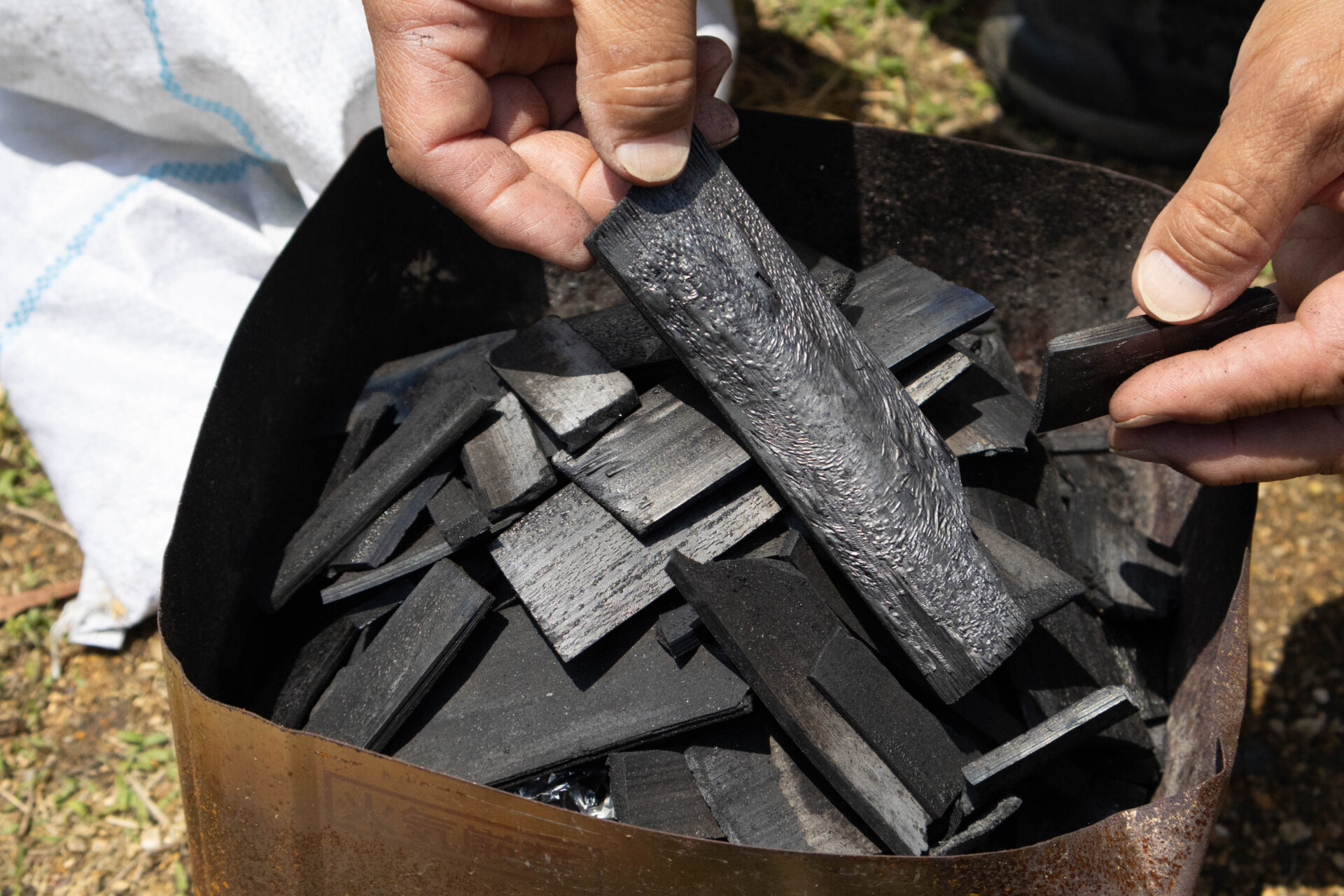
In Mabi, various bamboo products such as crafts and bamboo shoot processed products are manufactured and sold, utilizing the local specialty bamboo.
Among them, bamboo charcoal, which can be used in various situations, is purchased by a wide range of age groups due to its convenience.
While bamboo charcoal is strongly associated with use in barbecues and camping for starting fires, it is also said to be used for the following purposes, leveraging its deodorizing effect, moisture absorption, and purification functions.
- Putting bamboo charcoal in the bathtub
Mineral components dissolve, creating gentle water for the skin. There is also a warming effect due to far-infrared radiation. - Putting bamboo charcoal in tap water
Reduces chlorine odor, transforming it into smooth and delicious mineral water. - Cooking rice with bamboo charcoal
Produces fluffy, shiny, and delicious rice. - Placing bamboo charcoal in the vegetable compartment of the refrigerator
Adsorbs ethylene gas emitted from vegetables and fruits, prolonging freshness. It can also deodorize the refrigerator. - Mixing bamboo charcoal into pet litter
Reduces odors from pet waste.
In addition to the above uses, bamboo charcoal from Mabi has also been utilized in disaster situations.
During the heavy rain disaster in July 2018, bamboo charcoal was laid under the floors of houses that had been flooded, contributing to deodorization and moisture removal.
From the experience of using bamboo charcoal in disasters, the non-profit organization Komorebi no Sato started activities to ensure that bamboo charcoal could be sent to disaster areas in preparation for disasters occurring throughout Japan.
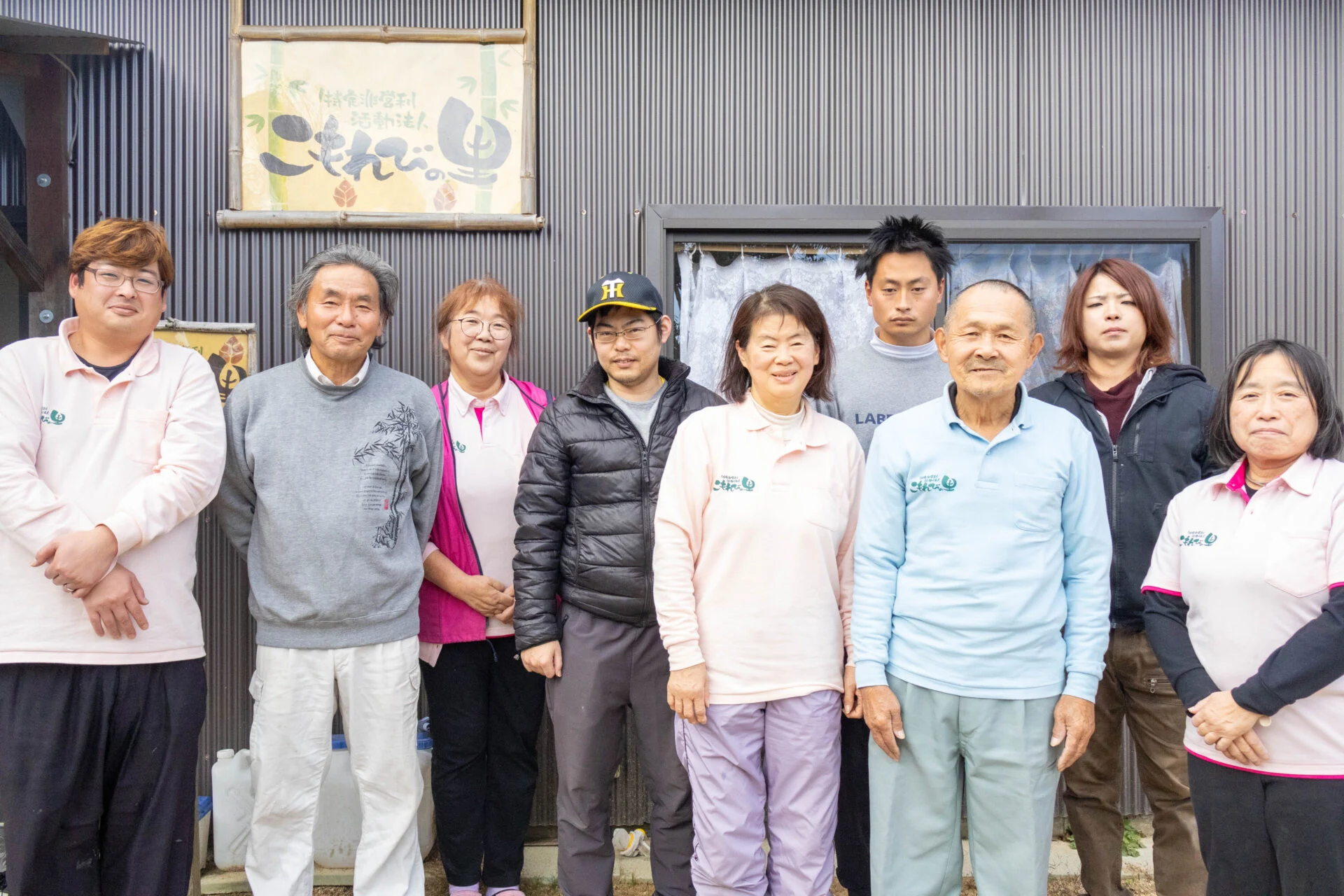
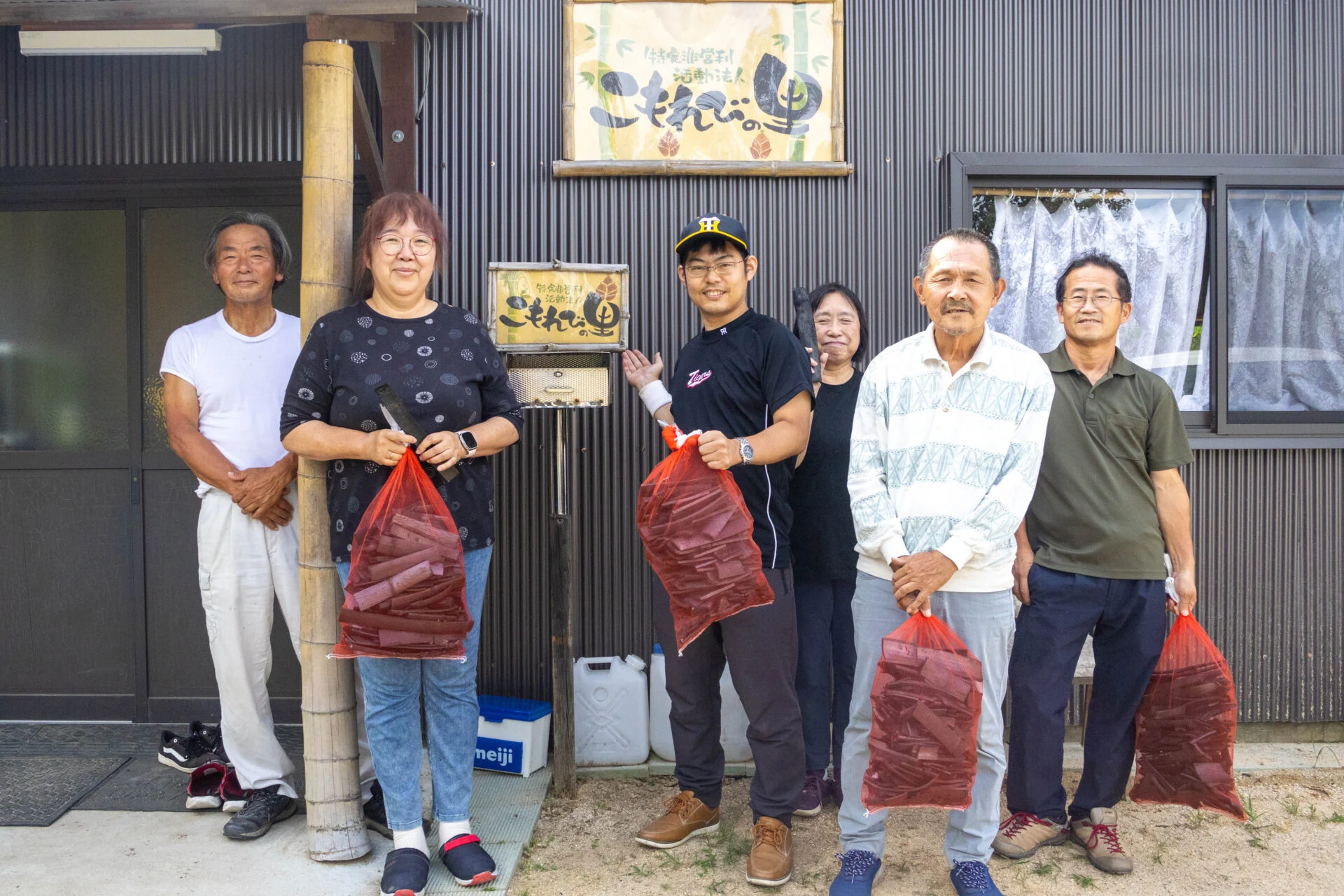
Komorebi no Sato began its activities in March 2020 in Soja City and conducts employment support projects for people with disabilities and the elderly through the processing and sale of bamboo, a local specialty of Mabi.
The bamboo charcoal sent to the Noto Peninsula earthquake area was planned in collaboration with Yoshida Masahiro, who is part of the regional revitalization cooperation team in Mabi.
On June 6, 2024 (Thursday), I visited the bamboo charcoal production work for delivery to the disaster area of the Noto Peninsula earthquake.
The Process of Making Bamboo Charcoal
Upon arriving at the Komorebi no Sato Mabi Volunteer Workstation, which serves as the bamboo charcoal production site, a fragrant smell of burning bamboo wafted through the air.
The workstation is surrounded by bamboo groves, creating an environment suitable for producing bamboo products.
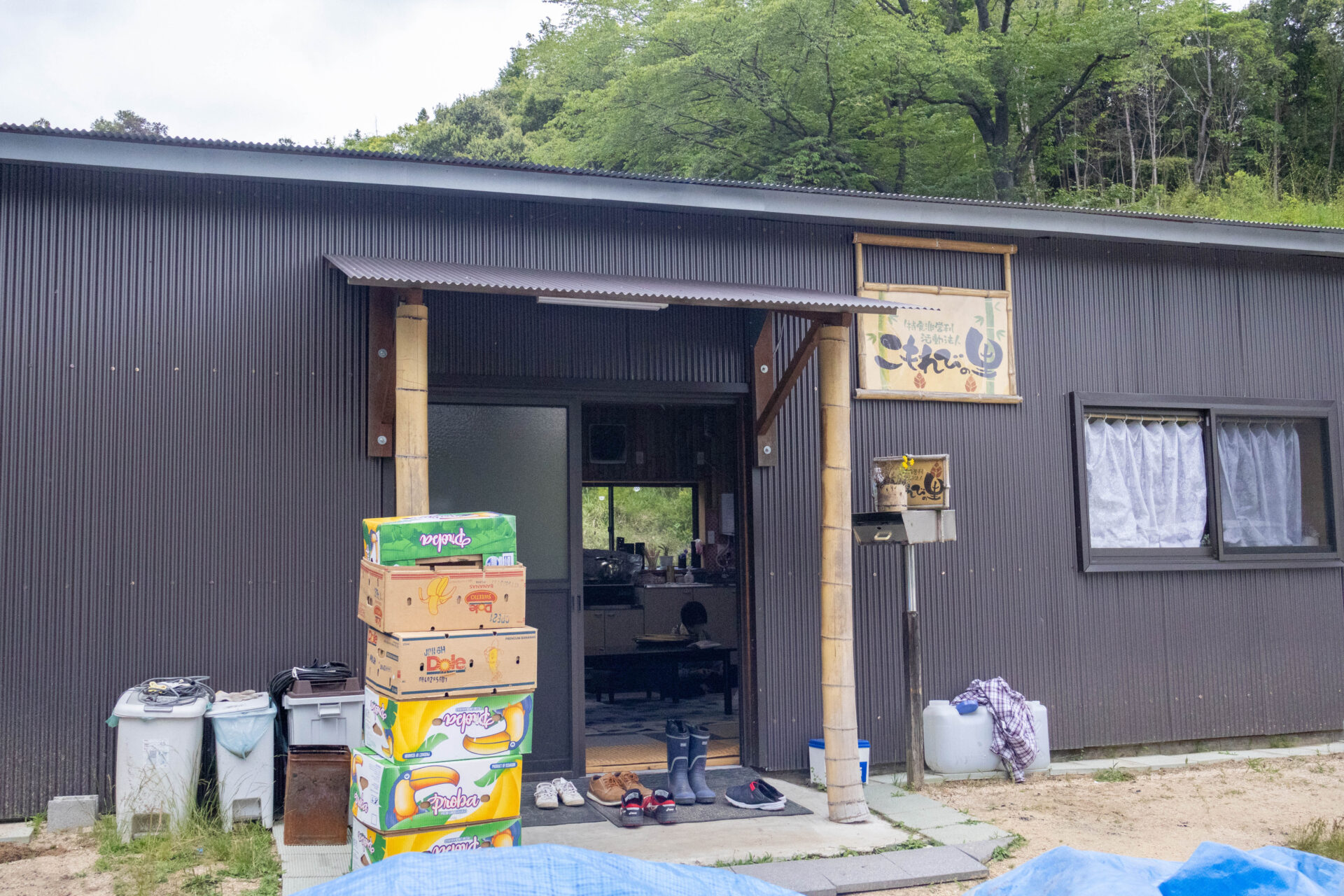
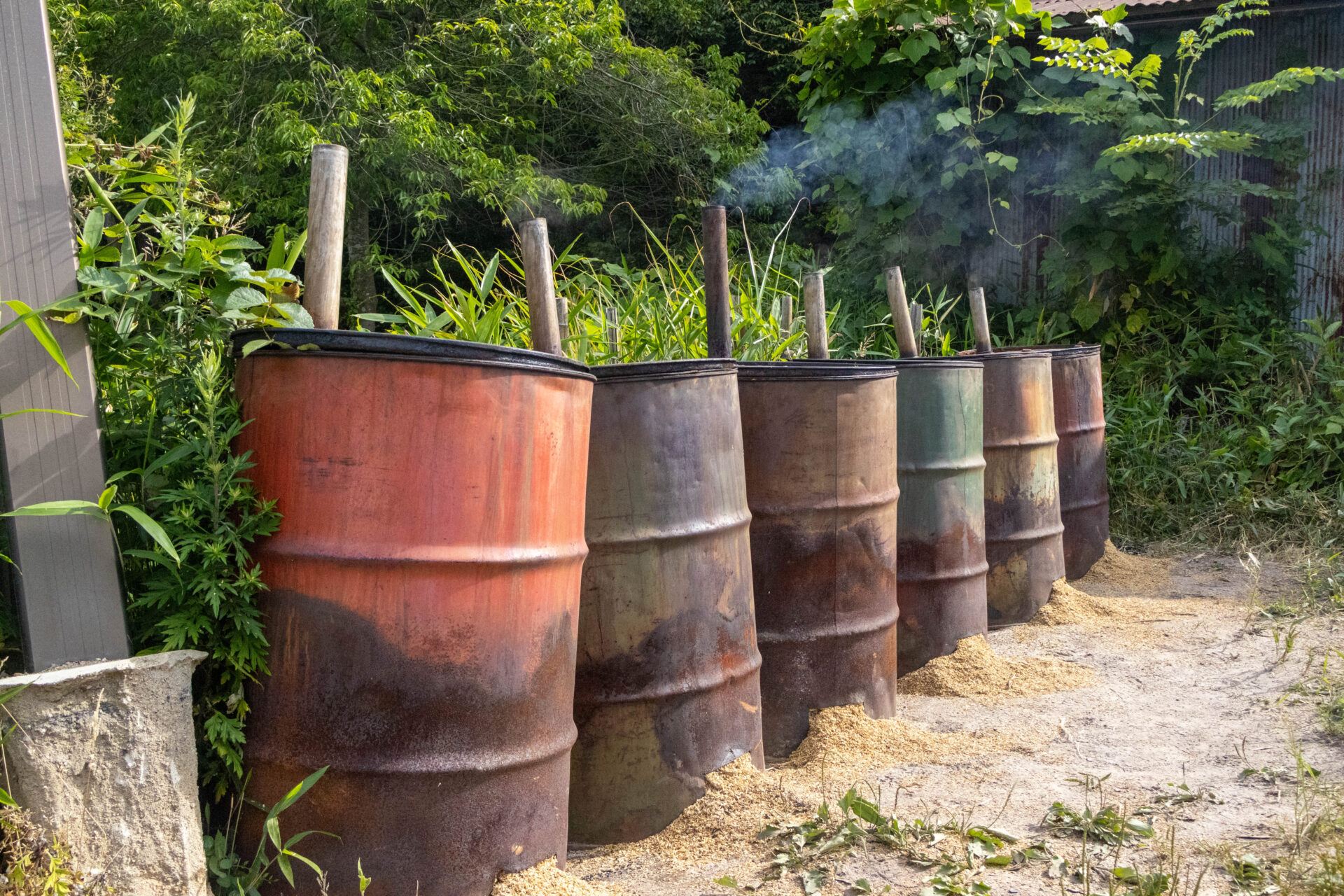
The source of the aroma was coming from a drum can placed on the premises.
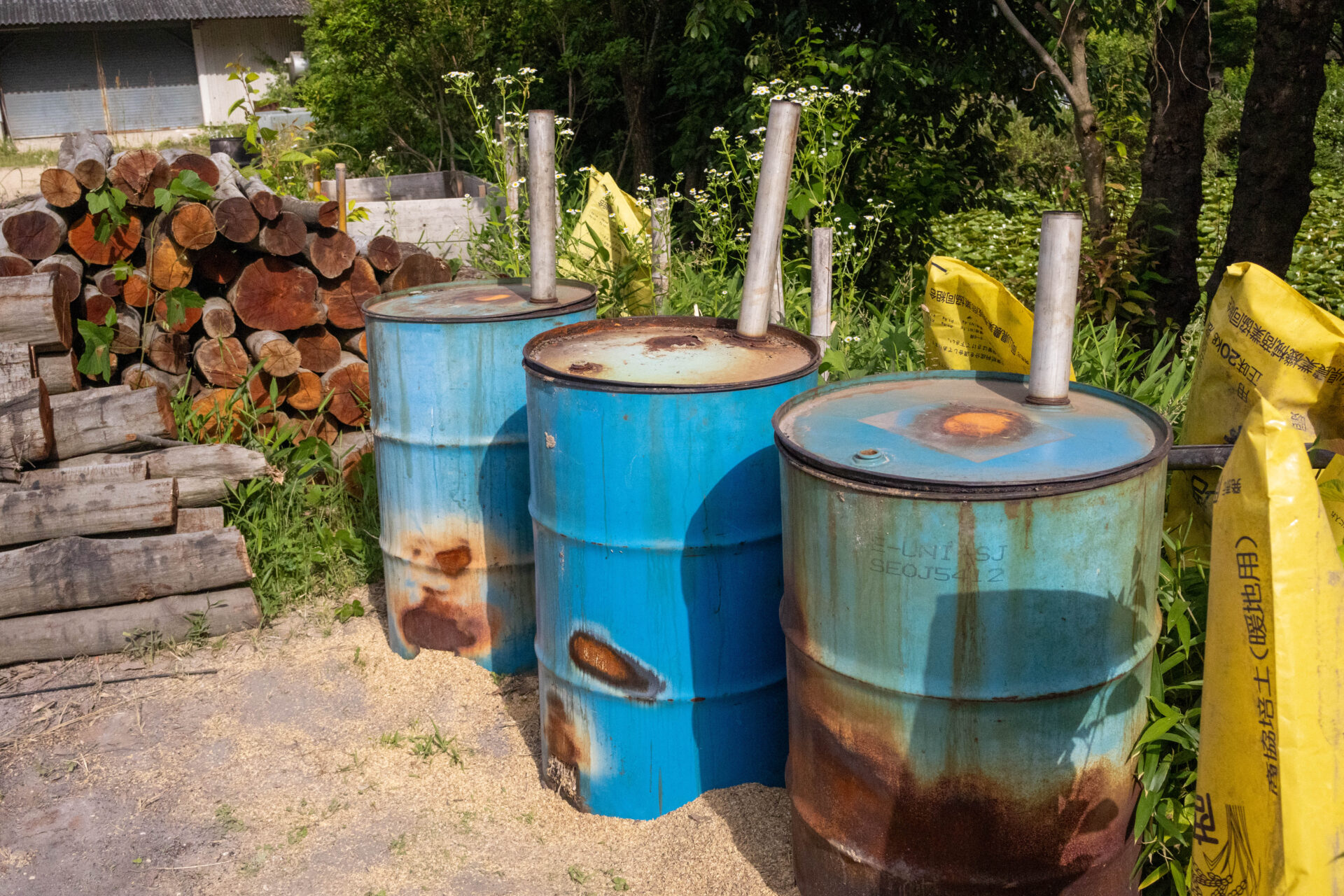
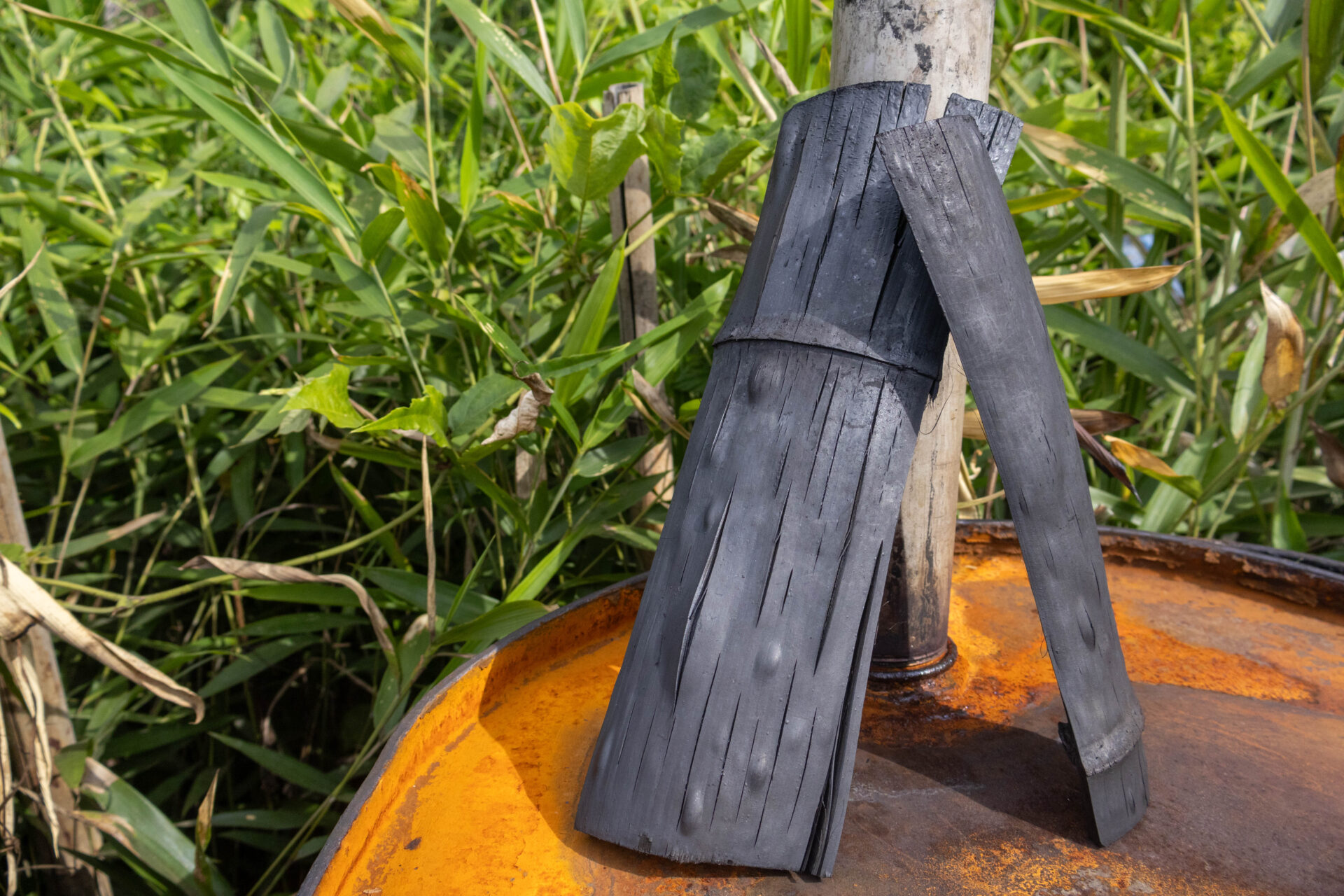
The drum can has been repurposed for bamboo charcoal production, and the chimney on top was reportedly added by the staff of Komorebi no Sato. The staff mentioned, "The drum can is an essential part of bamboo charcoal production."
Unique Bamboo Charcoal Production of Komorebi no Sato Achieved Through Trial and Error
Three staff members were working on splitting bamboo at the workstation.
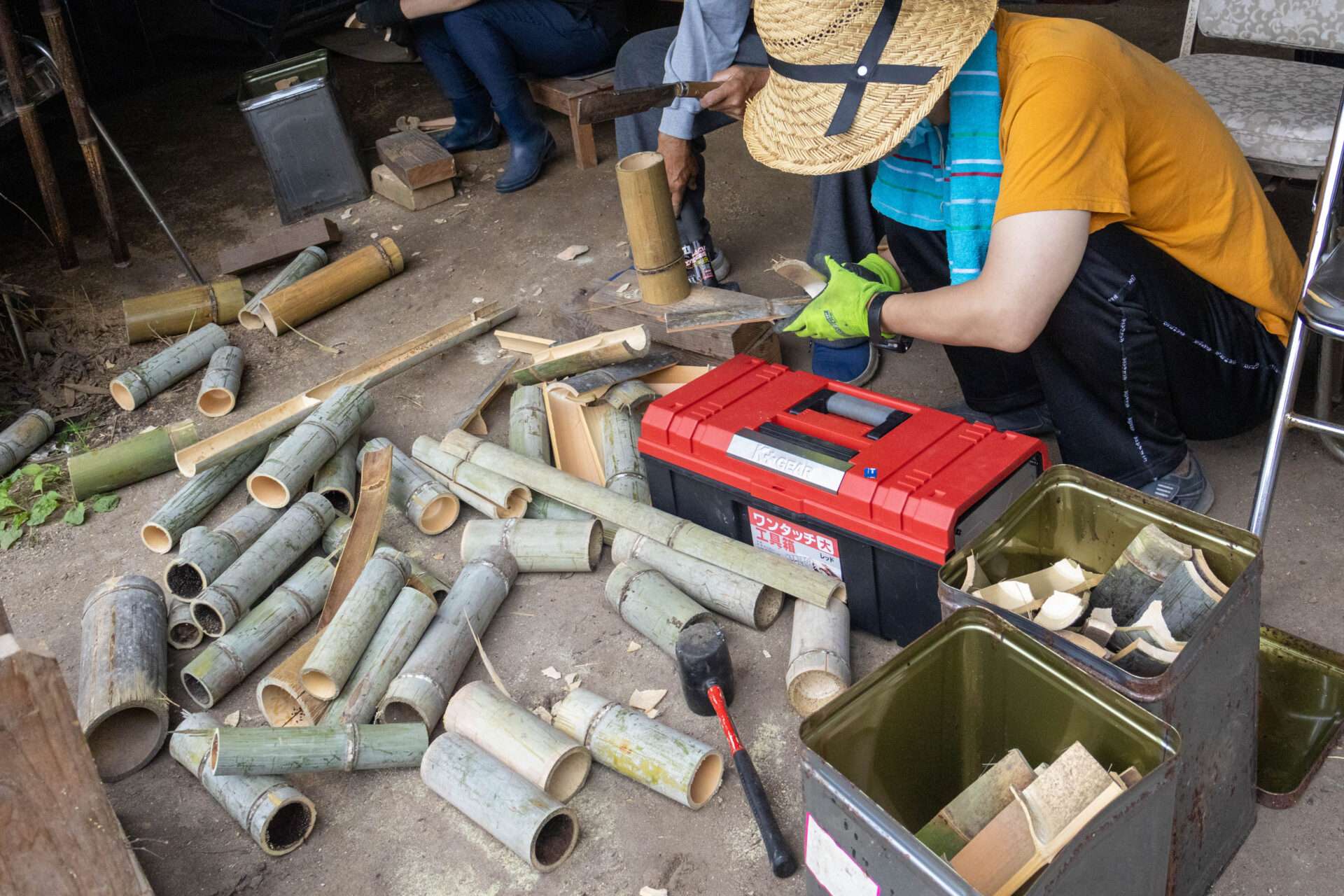
Using a hatchet and a hammer, they made a small split in the bamboo, and then the bamboo split in half all at once.
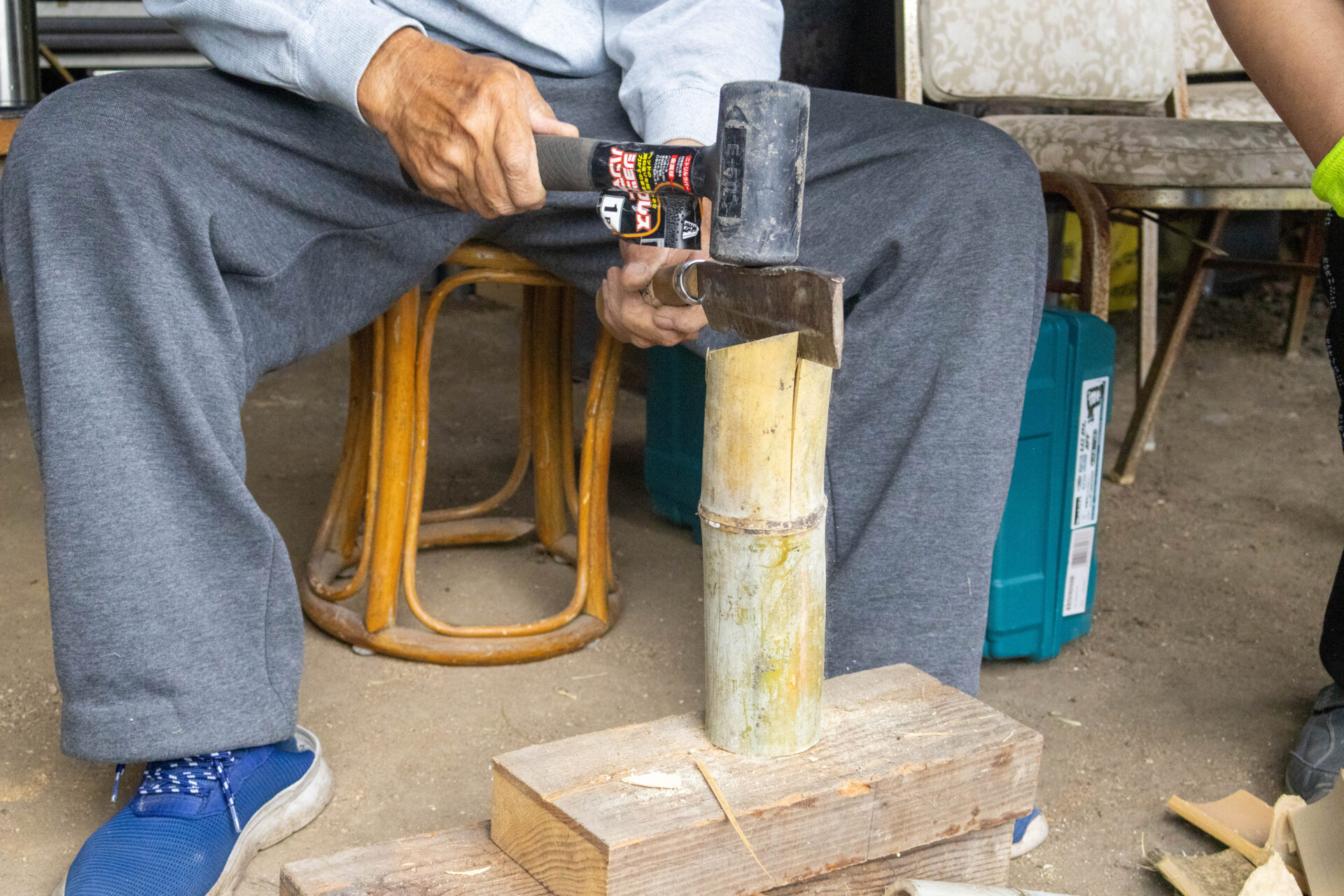
Since it was my first time seeing bamboo being split, I was surprised and said, "It splits so beautifully," to which a staff member replied, "Bamboo splits straight and beautifully. There is even a proverb that says someone has a personality like split bamboo."
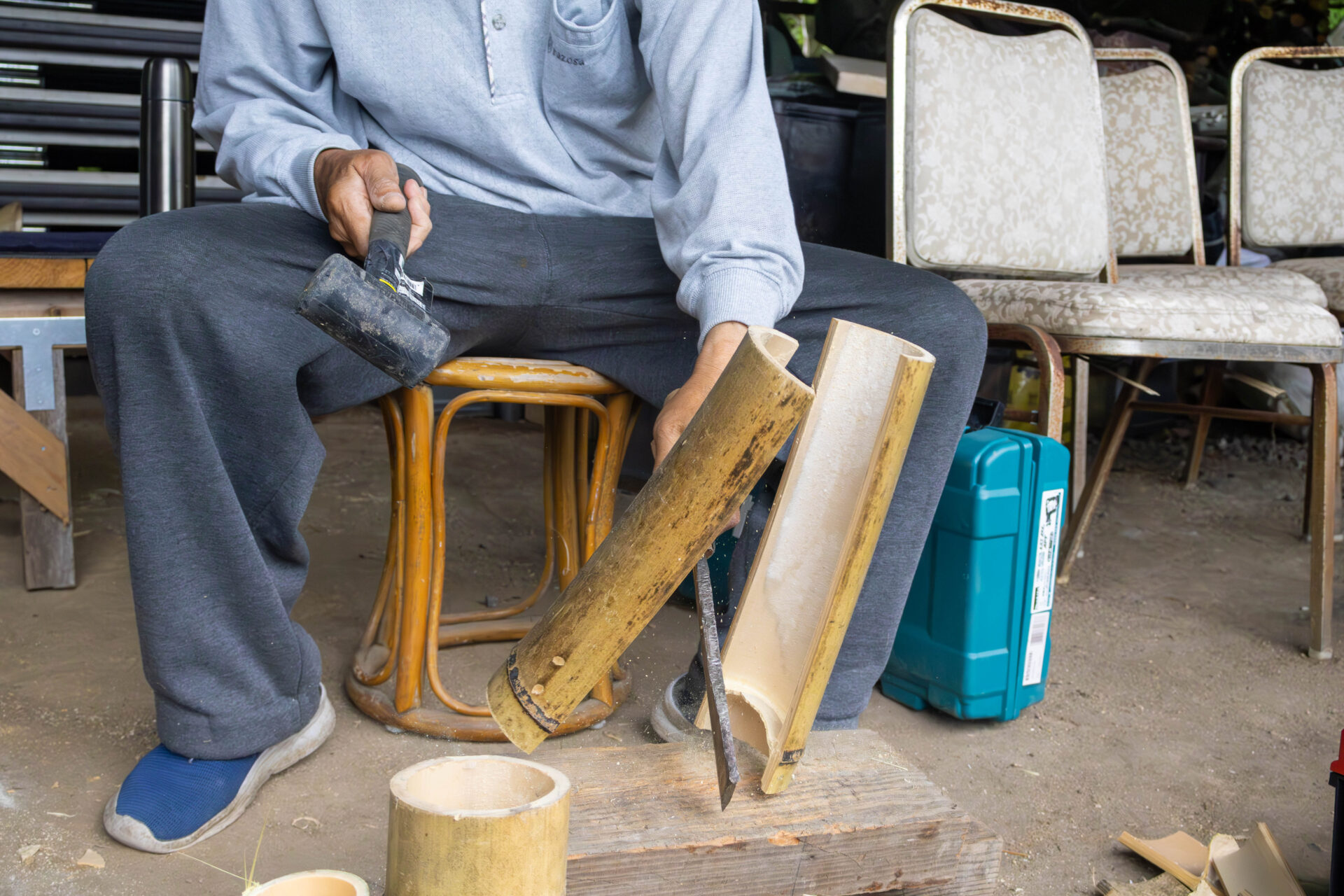
As the veterans split the bamboo rhythmically one after another, it seemed easy, but I realized that splitting hard bamboo skillfully requires experience.
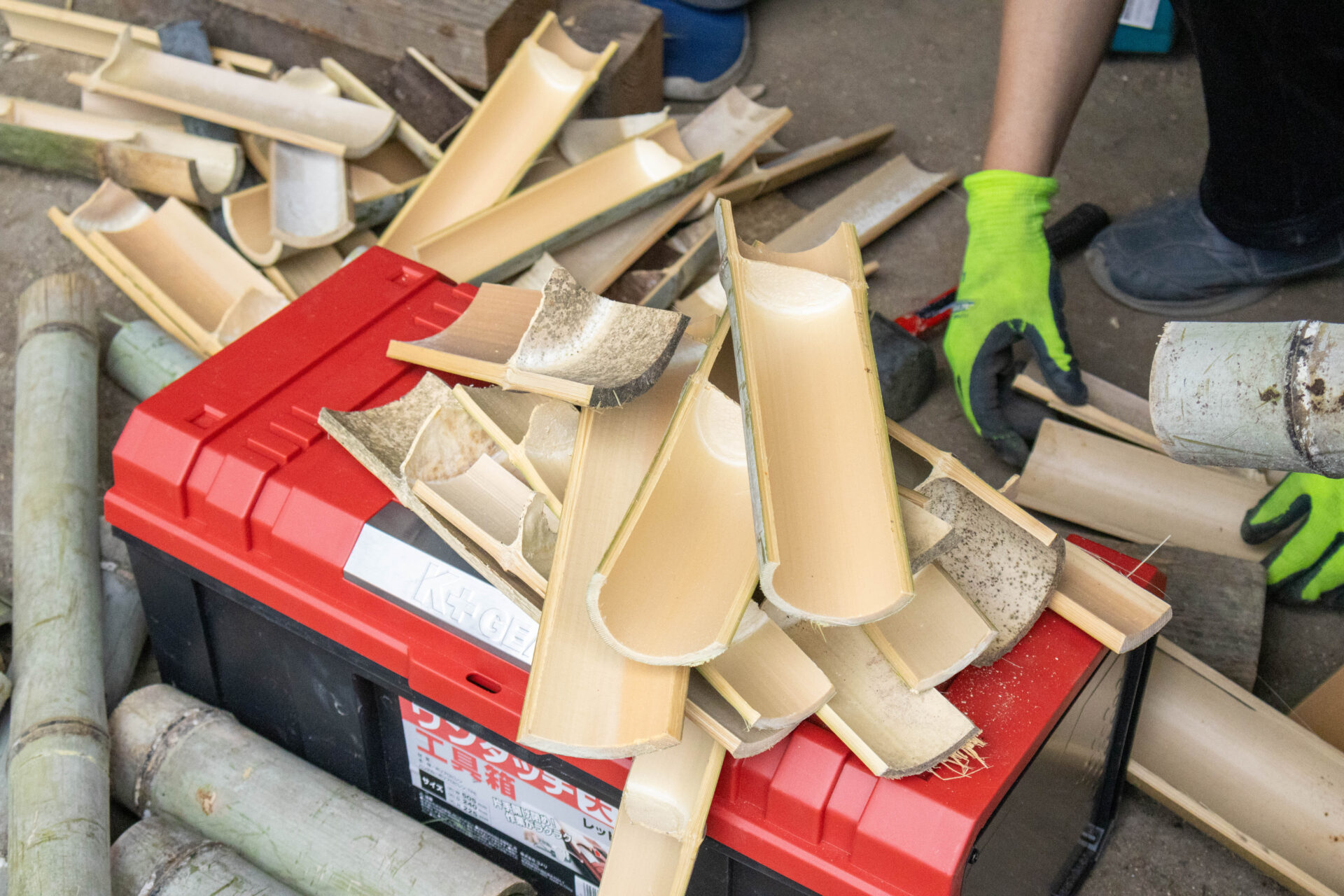
The split bamboo is then laid out in an aged can and packed in. Removing the nodes is said to allow for more bamboo to be packed into the can.
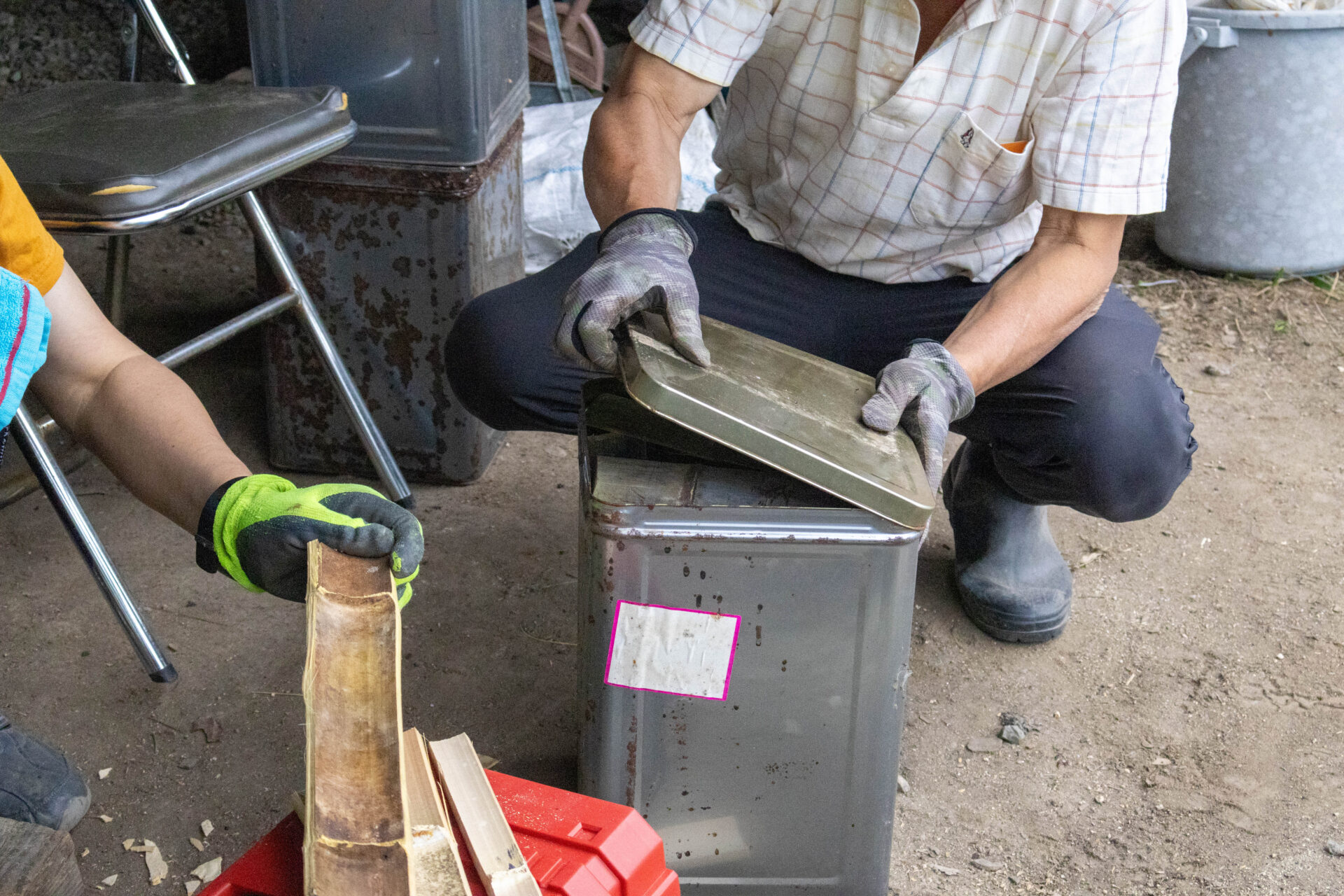
The cans filled with bamboo are placed at the bottom of the drum can, and the next step is to ignite the fire. All the drum cans are well-used, conveying their active role in bamboo charcoal production.
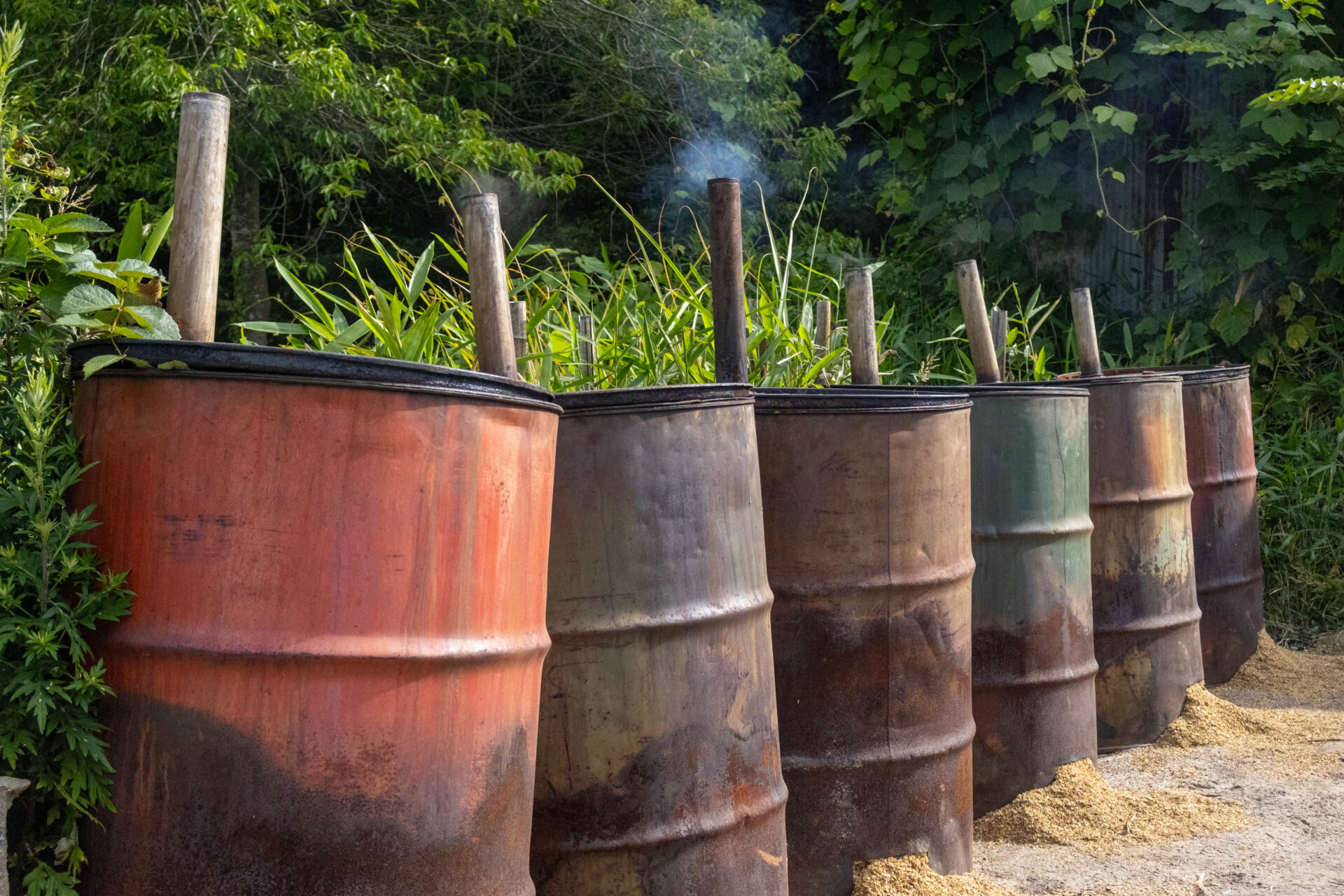
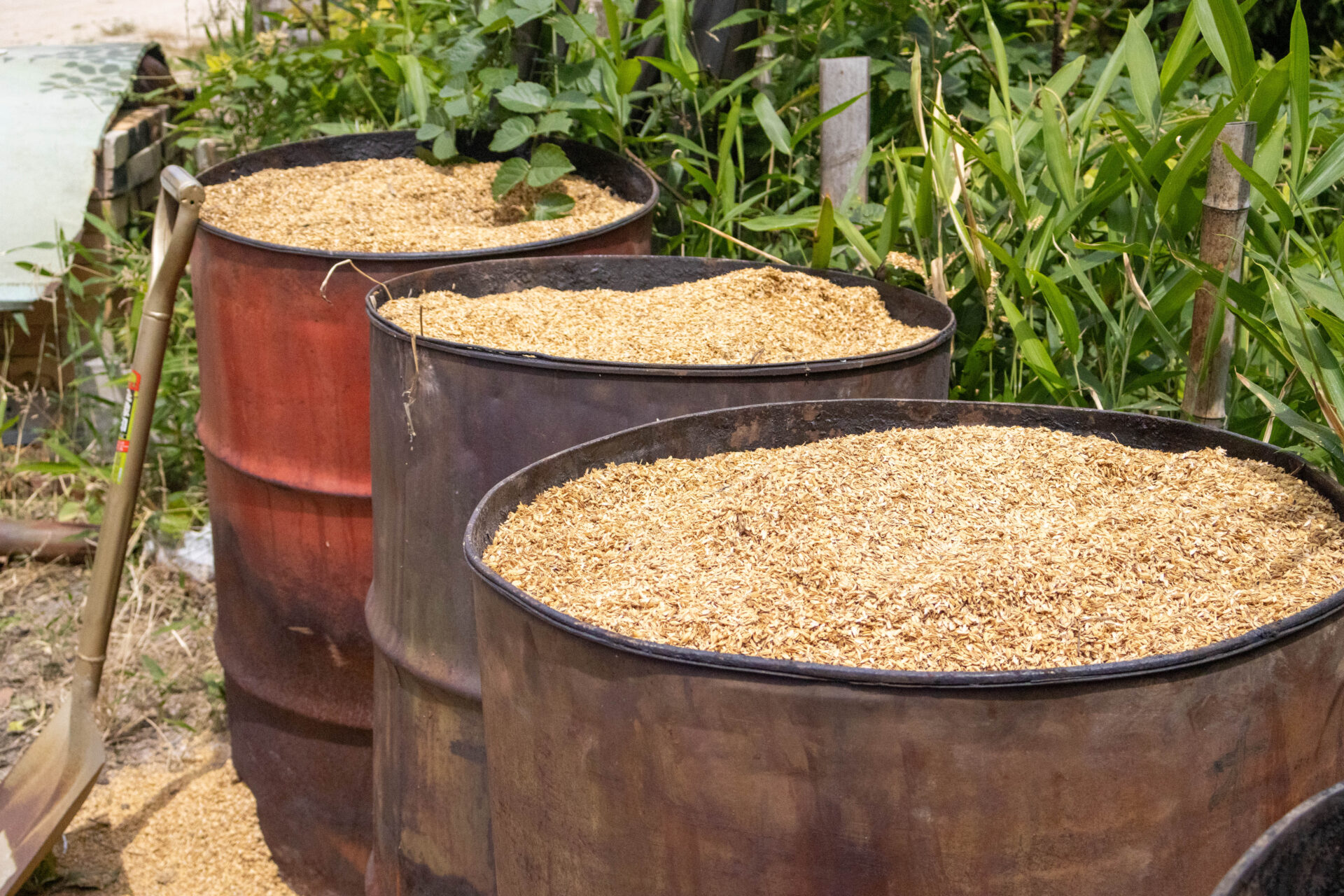
The material used for ignition is a large amount of rice husks.
Using a shovel, rice husks are scooped and gradually added until the drum can is full. By burning the rice husks, the fire spreads slowly, resulting in beautiful and less brittle bamboo charcoal. After much trial and error, they found that rice husks were the most suitable combustible material.
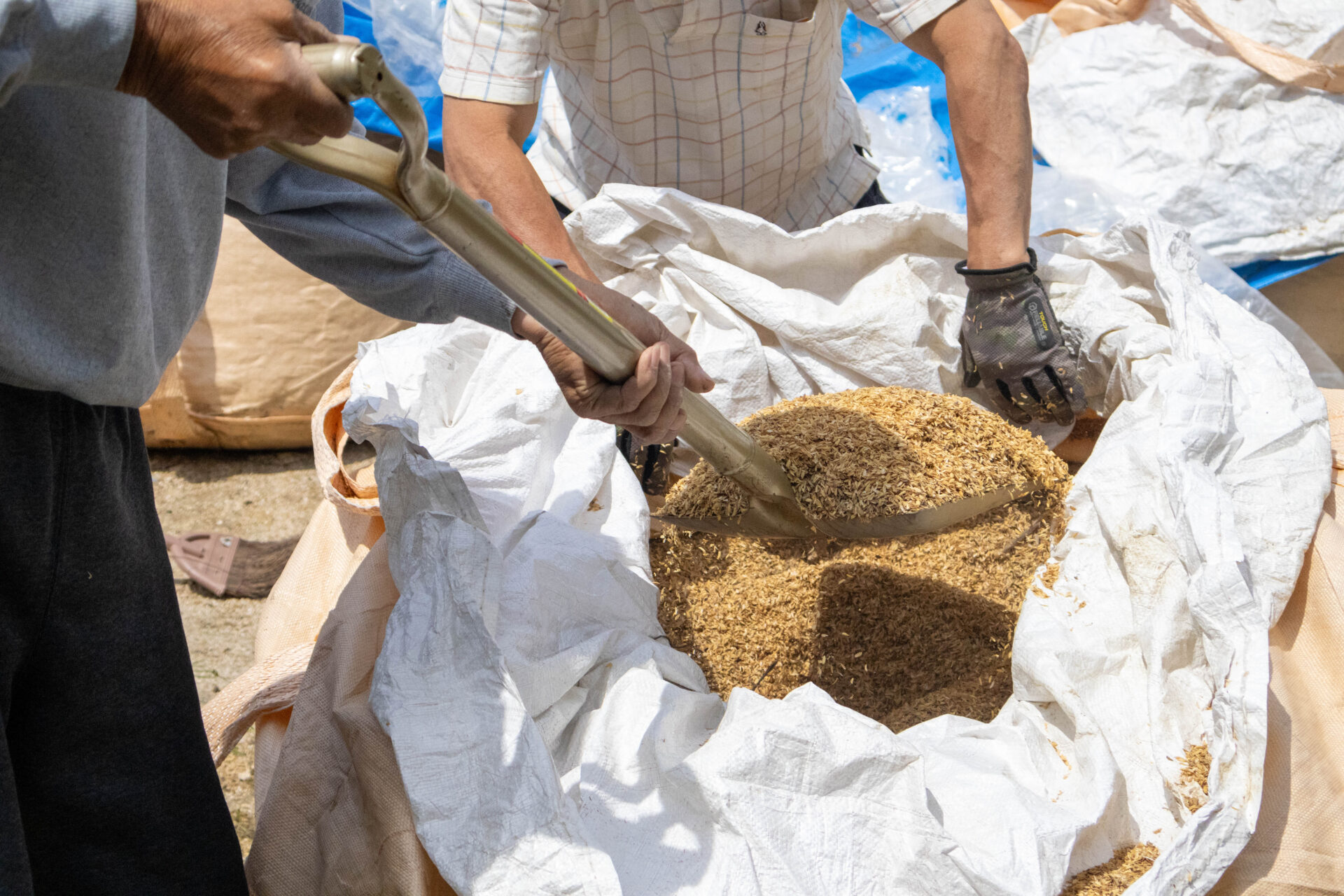
I also had the opportunity to experience the task of adding rice husks.
At first glance, it seems like a simple task, but scooping rice husks with a shovel is difficult, and I spilled some while trying to put them into the drum can. I realized that there is a technique to filling the drum can efficiently. Lifting and lowering the heavy shovel also provided a good workout.
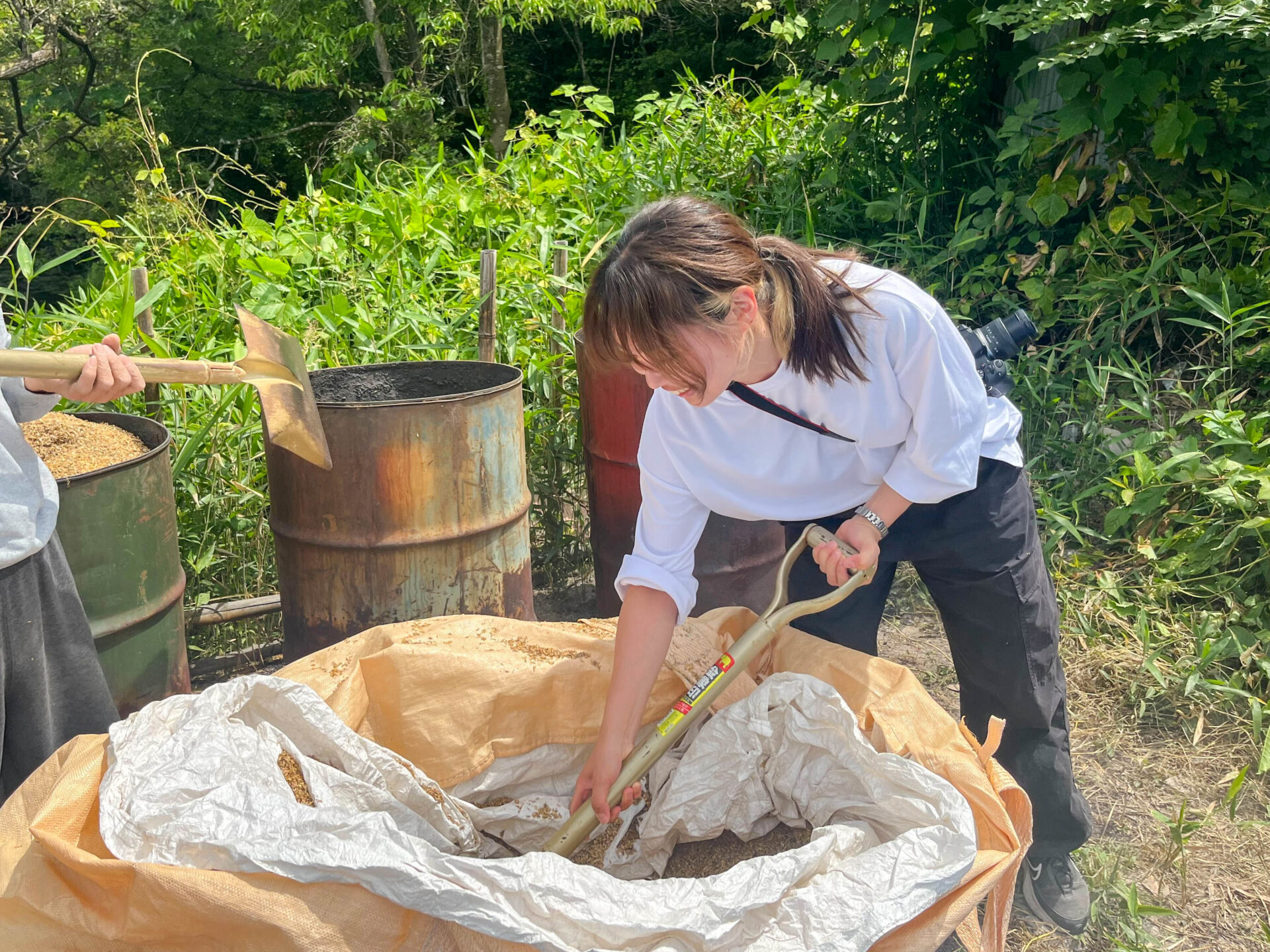
After taking turns with the shovel to add rice husks, all the drum cans were filled to the brim.
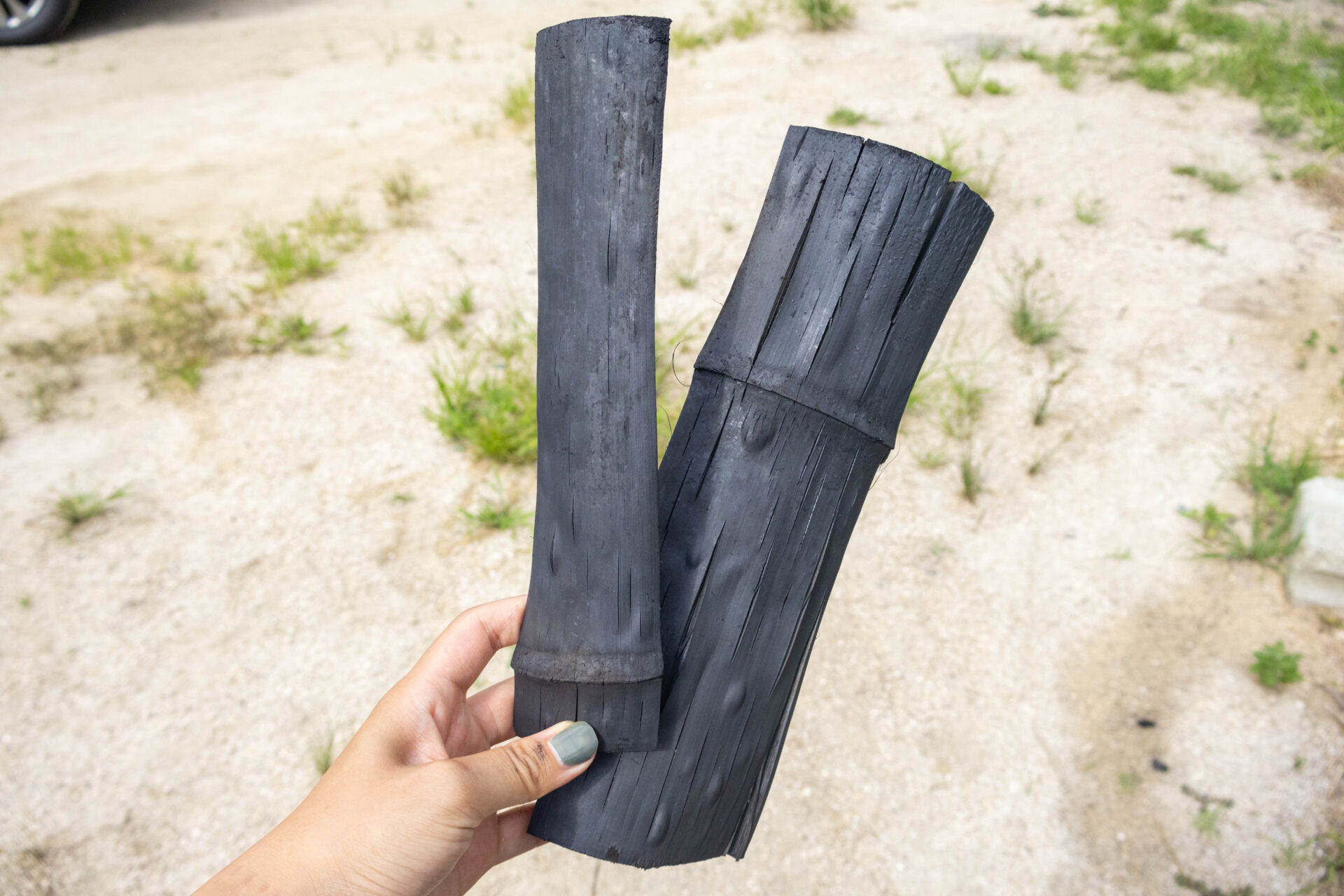
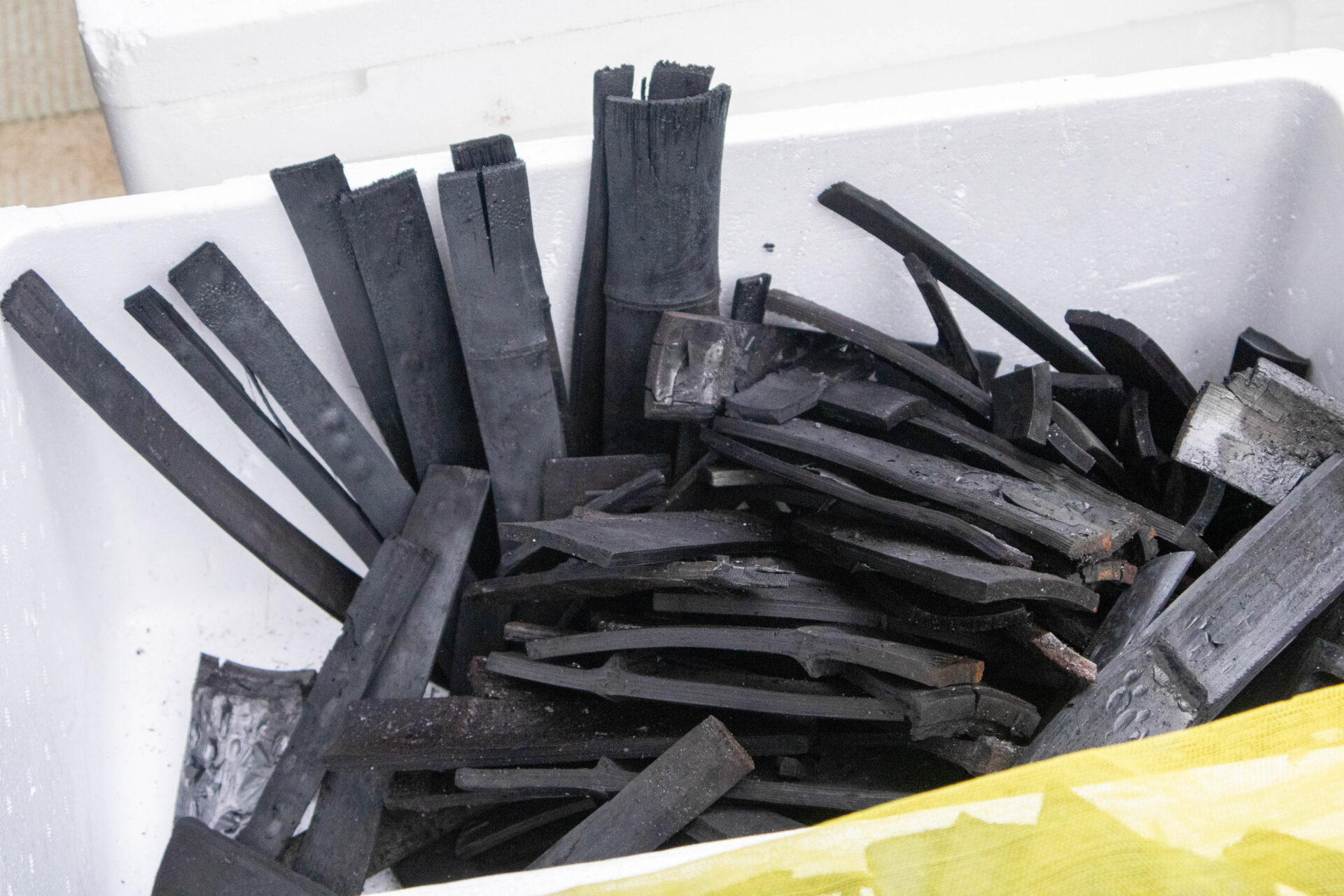
The bamboo charcoal used for ignition is bamboo charcoal from Mabi, produced at Komorebi no Sato, which has the characteristic of being easy to ignite. When I held it, it was very light, and when split, it made a satisfying "crack" sound.
In addition to bamboo charcoal, dried bamboo shavings are also placed to set up for easy ignition.
Once the burner is lit, close the lid and it's done.
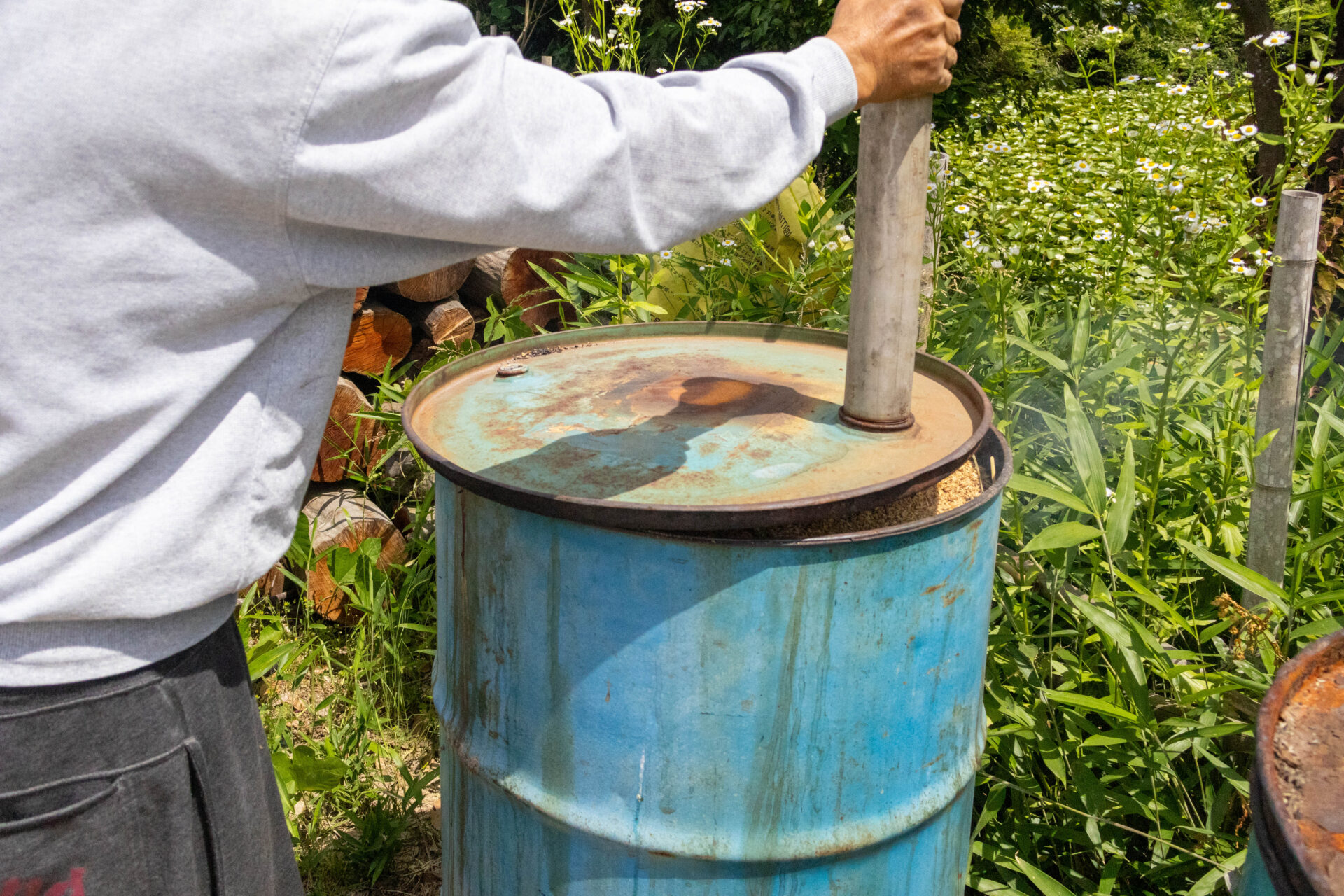
After closing the lid, white smoke was flowing from the chimney. It seems that if this smoke is coming out, the ignition has been successful.
Bamboo charcoal takes time to complete, and it is left for about 3 to 4 days while the inside of the drum continues to burn, and once the fire is completely out, it is finished.
I was under the impression that bamboo charcoal would be ready in a few hours, so I was surprised to learn that it takes several days. I believe that taking the time to make it carefully results in high-quality bamboo charcoal.
Packaging work done by hand
After the bamboo charcoal making work was completed, the packaging of the already completed bamboo charcoal was carried out.
Bamboo charcoal to be sent to the disaster area in Noto is placed in nets and packed into boxes.
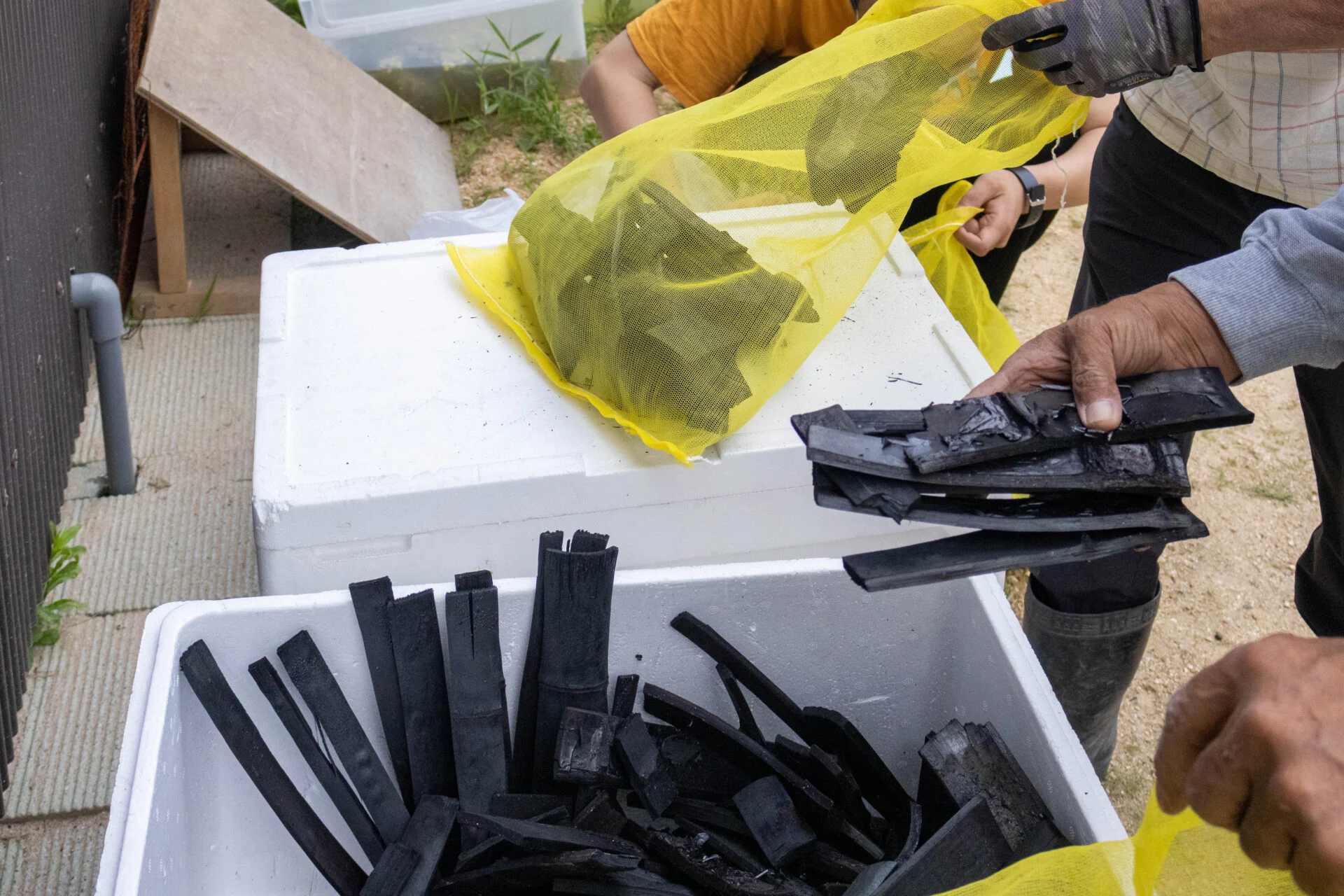
At Komorebi no Sato, both the bamboo charcoal making and packaging work are done entirely by hand. While it cannot be produced in large quantities like a factory, the bamboo charcoal made with care and time is of high quality and has strong deodorizing effects.
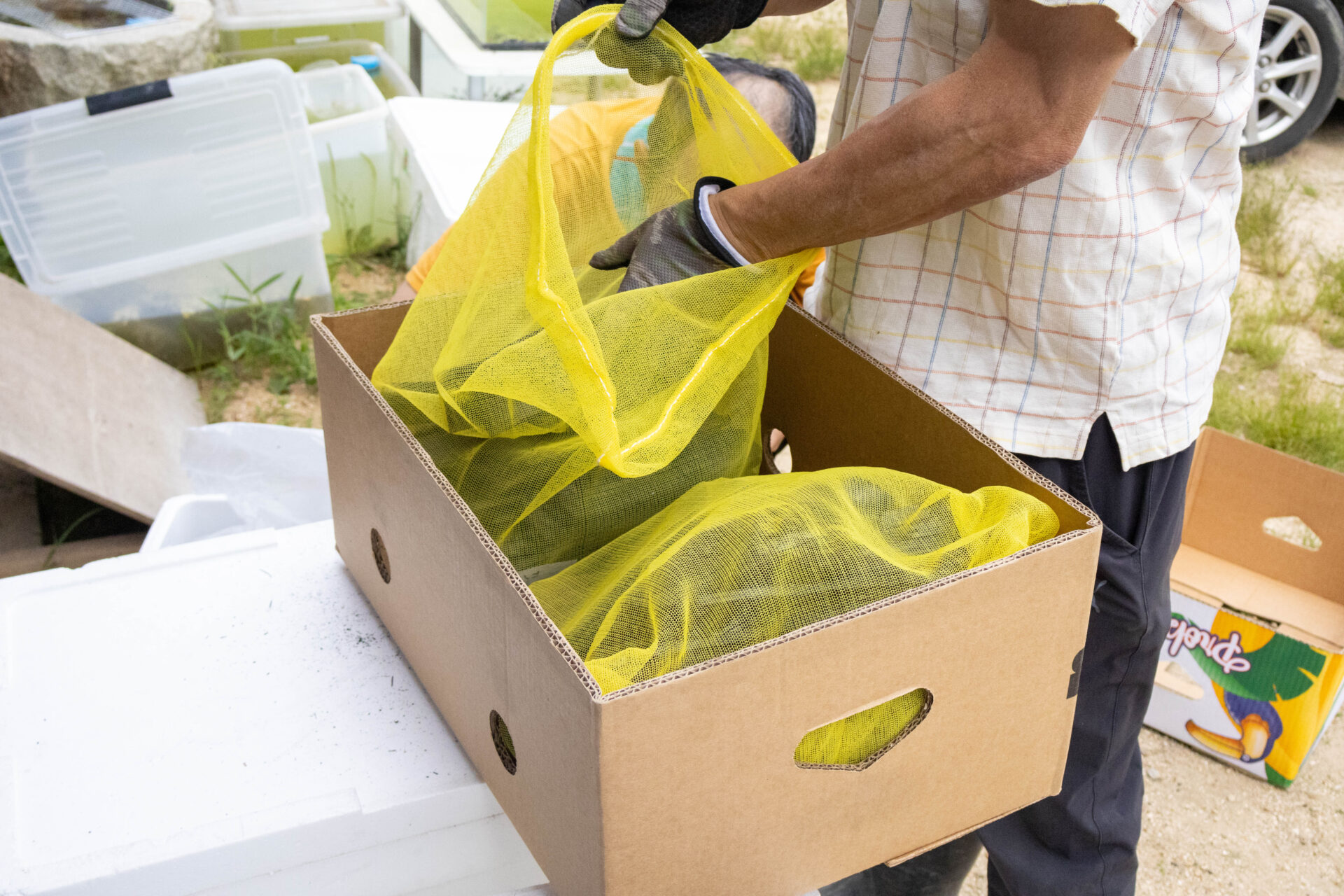
Regarding the bamboo charcoal made for use in disaster areas, the staff said, "Thinking of the people who will use it raises our motivation."
The bamboo charcoal used in the recovery from the July 2018 heavy rain disaster is being utilized in another disaster area. I feel that this is truly a support unique to Mabi that makes use of the experiences from the disaster area.
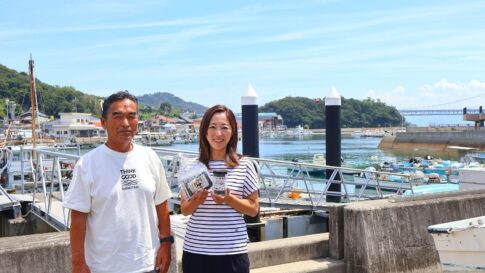
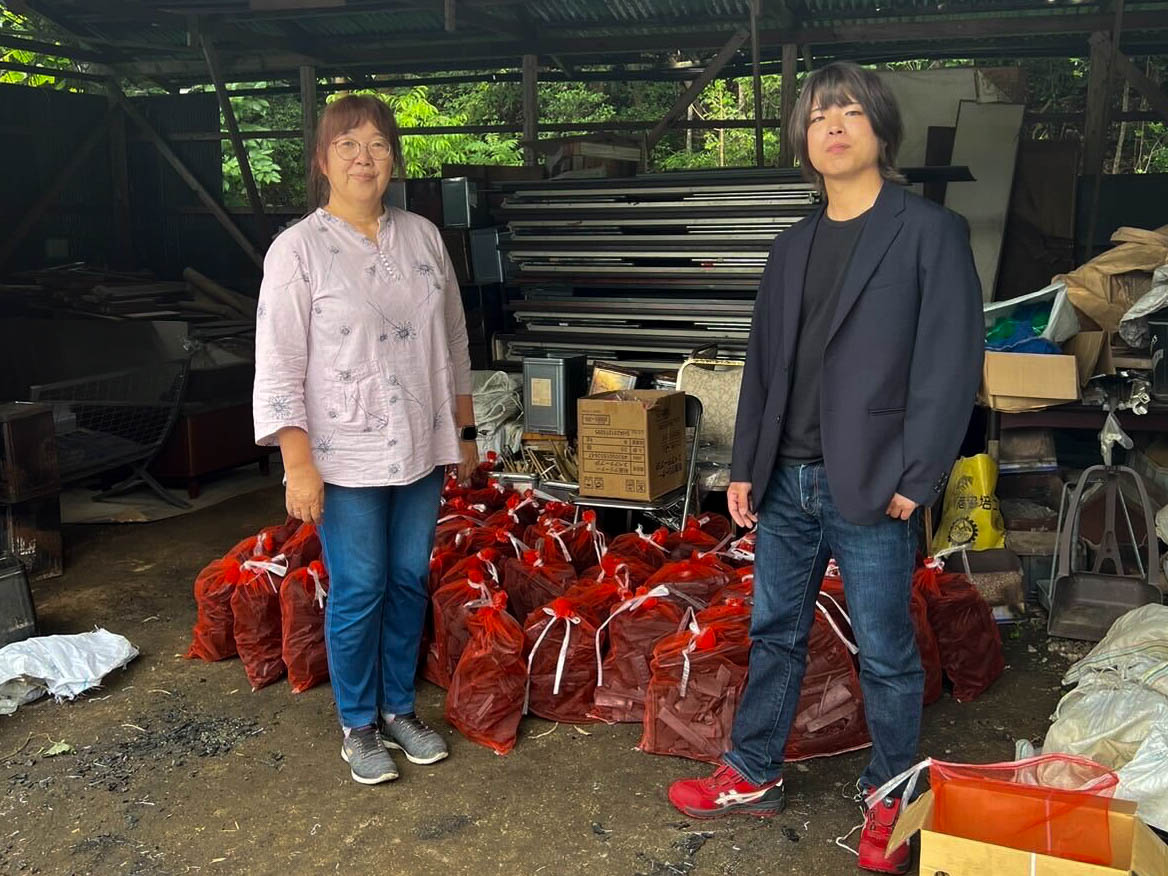
I spoke with Masako Akasaka, the vice representative director of Komorebi no Sato, which planned this activity, and Masahiro Yoshida from the Mabi Regional Revitalization Cooperation Team, about their thoughts on supporting the Noto Peninsula earthquake.
We heard about the recovery support
I believe the opportunity to send bamboo charcoal arose from the July 2018 heavy rain disaster. What motivated you to start this activity?
Yoshida (no honorifics)
I have acquaintances living in Noto, and when I thought about what I could do, I came up with the idea of providing material support using Mabi's specialty, bamboo charcoal.
As part of my mission (job description) as a regional revitalization cooperation team member, support for the recovery from the July 2018 heavy rain disaster was included. Since I had often heard the recovery thoughts from the people of Mabi, it made me feel that the earthquake in the Noto Peninsula was "not someone else's problem."
While searching for recipients and transporters, I consulted with Komorebi no Sato, which had previously sent bamboo charcoal to disaster areas, and we decided to collaborate this time.
Akasaka (no honorifics)
During the July 2018 heavy rain disaster, I was in charge of distributing supplies in the disaster area.
At that time, I had many opportunities to talk with the victims, and I heard the words of those who had lost their homes, saying, "I can only do my best to live through today" and "I had no choice but to laugh." I wanted to help in some way. Seeing the desperate victims made me think about what we could do.
At the time of the heavy rain disaster, bamboo charcoal was placed under the floor and used as a moisture absorber.
I thought, "Bamboo charcoal could be utilized in disaster areas across Japan," and that was the trigger for me to open a volunteer workspace in Mabi and start making bamboo charcoal in earnest. At Komorebi no Sato, we are working with people with disabilities who are receiving continuous employment support to assist disaster areas through bamboo charcoal production.
Can you tell us about the characteristics of bamboo charcoal and its advantages for use in disaster areas?
Akasaka
When renovating houses damaged by tsunamis or heavy rains, it is necessary to first remove moisture and odors before disinfecting under the floor.
Using bamboo charcoal, moisture can be removed even in situations where it is difficult to dry due to being soaked in water and mud, and it has a strong deodorizing effect, reducing odors. Bamboo charcoal works just by being placed under the floor.
Additionally, bamboo charcoal can be reused multiple times if washed and dried, making it environmentally friendly and producing no waste.
The bamboo charcoal made at Komorebi no Sato is burned using rice husks, allowing oxygen to circulate slowly, maintaining just the right amount of heat, and resulting in a clean shape. I have experienced its strong deodorizing effect, ease of ignition, and strong heat.
How is bamboo charcoal transported to disaster areas?
Akasaka
Among the board members of Komorebi no Sato, there is a director who is involved in disaster volunteer activities, so I had the director look for recipients.
When transporting, we receive cooperation from the disaster volunteers in Okayama, who helped us during the July 2018 heavy rain disaster.
Although it is not the same as the disaster area, at the 2024 Soja Kibiji Marathon, we sent bamboo charcoal as a return gift to those who contributed to the support fund for the Noto Peninsula earthquake.
Finally, please share a message.
Akasaka
This time, the Noto Peninsula earthquake reminded me of Mabi, which was affected by the July 2018 heavy rain disaster.
I want to continue supporting the recovery of disaster areas in other prefectures by utilizing our experiences from the disaster and the connections we have made through volunteering.
I pray that all those affected can return to their original lives as soon as possible.
In conclusion
I feel that the opportunities for the media to cover the situation in the disaster areas of the Noto Peninsula earthquake have decreased.
However, through this interview, I learned that there are still people nearby who continue to support recovery, and it has become a trigger for me to think, "Is there still something I can do?" I want to look for ways to support recovery within my capabilities.
The fact that local specialties are being utilized in other disaster areas, leveraging past experiences, makes me proud as a citizen of Kurashiki City. I want to continue supporting the activities of Komorebi no Sato and Yoshida's bamboo charcoal production.
I sincerely wish for the swift recovery of the affected communities.
Data of the NPO Komorebi no Sato Mabi Workstation
| Name | NPO Komorebi no Sato Mabi Workstation |
|---|---|
| Address | 3910 Ichiba, Mabi-cho, Kurashiki City |
| Contact | 050-8884-6822 |