Speaking of Mabi's specialty, it is "bamboo".
While you often see crafts and processed products made from Mabi's bamboo for sale, opportunities to encounter Mabi's bamboo shoots are quite rare.
As I thought, "I want to try Mabi's bamboo shoots," the season arrived at the end of April. A friend who is part of the regional revitalization cooperation team in Mabi invited me, saying, "Want to try digging for bamboo shoots?" and I challenged myself to bamboo shoot digging.
Here is an introduction to my first experience of digging for bamboo shoots.
About Mabi's bamboo shoots
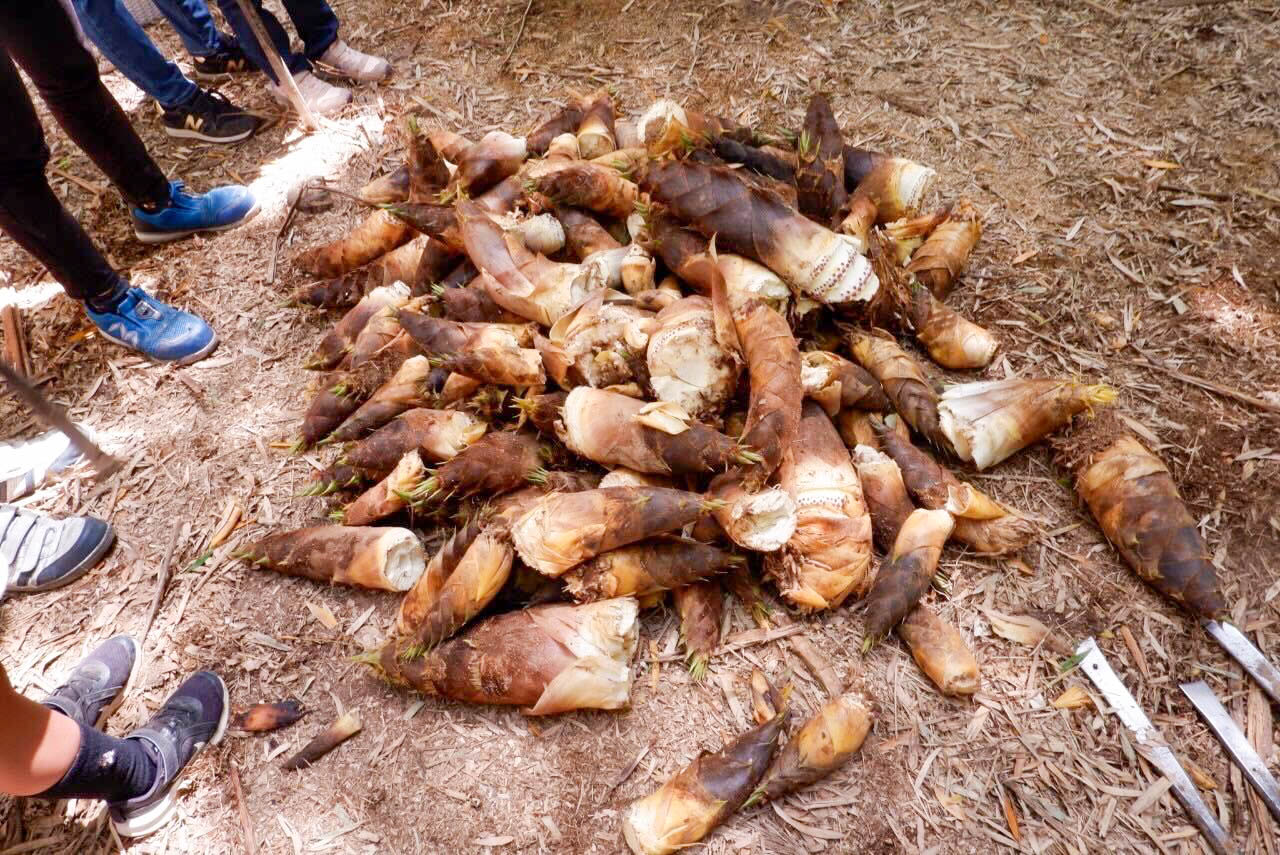
Mabi's bamboo shoots have the following characteristics in terms of taste and appearance.
- Less bitterness, sweet and tender
- White and beautiful in color
- Very low astringency compared to regular bamboo shoots
Among these, the low astringency is rare even nationwide, and generally, it is possible to remove the astringency just by boiling in hot water without using the usual rice bran needed for astringency removal. The bamboo shoots that have had their astringency removed can be eaten raw like sashimi, it seems.
Mabi's soil is suitable for bamboo shoot production, and well-maintained clayey red soil nurtures high-quality bamboo shoots. Kurashiki Tourism WEB introduced it as the largest bamboo shoot production area in western Japan.
Bamboo shoots grow quickly, and if the harvest timing is even slightly off, they can quickly turn into bamboo, so the timing for digging is very important. If too many bamboo shoots grow to the point of being unmanageable, it can lead to bamboo damage that disrupts the forest, so digging for bamboo shoots is also connected to environmental conservation activities.
I went digging for bamboo shoots
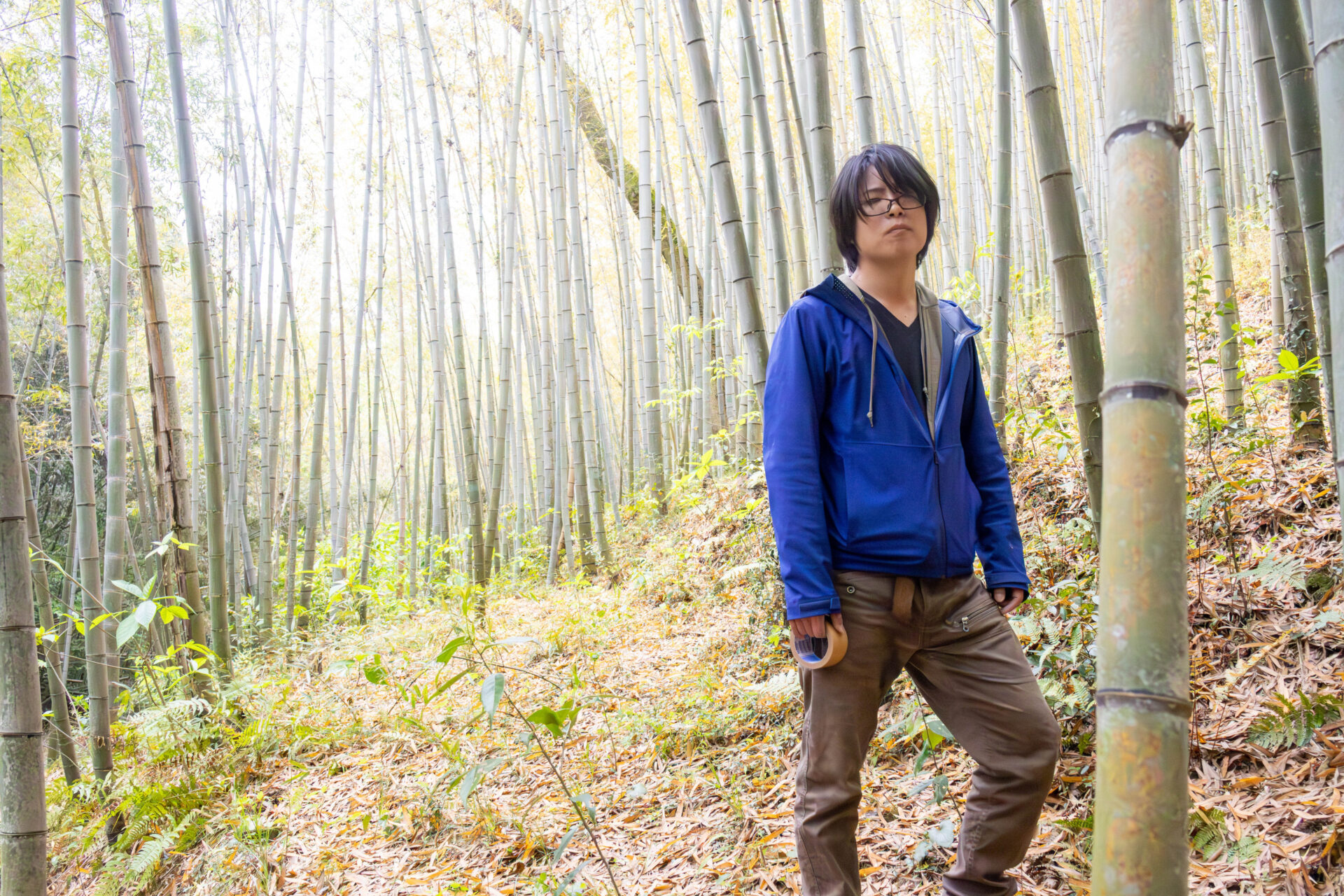
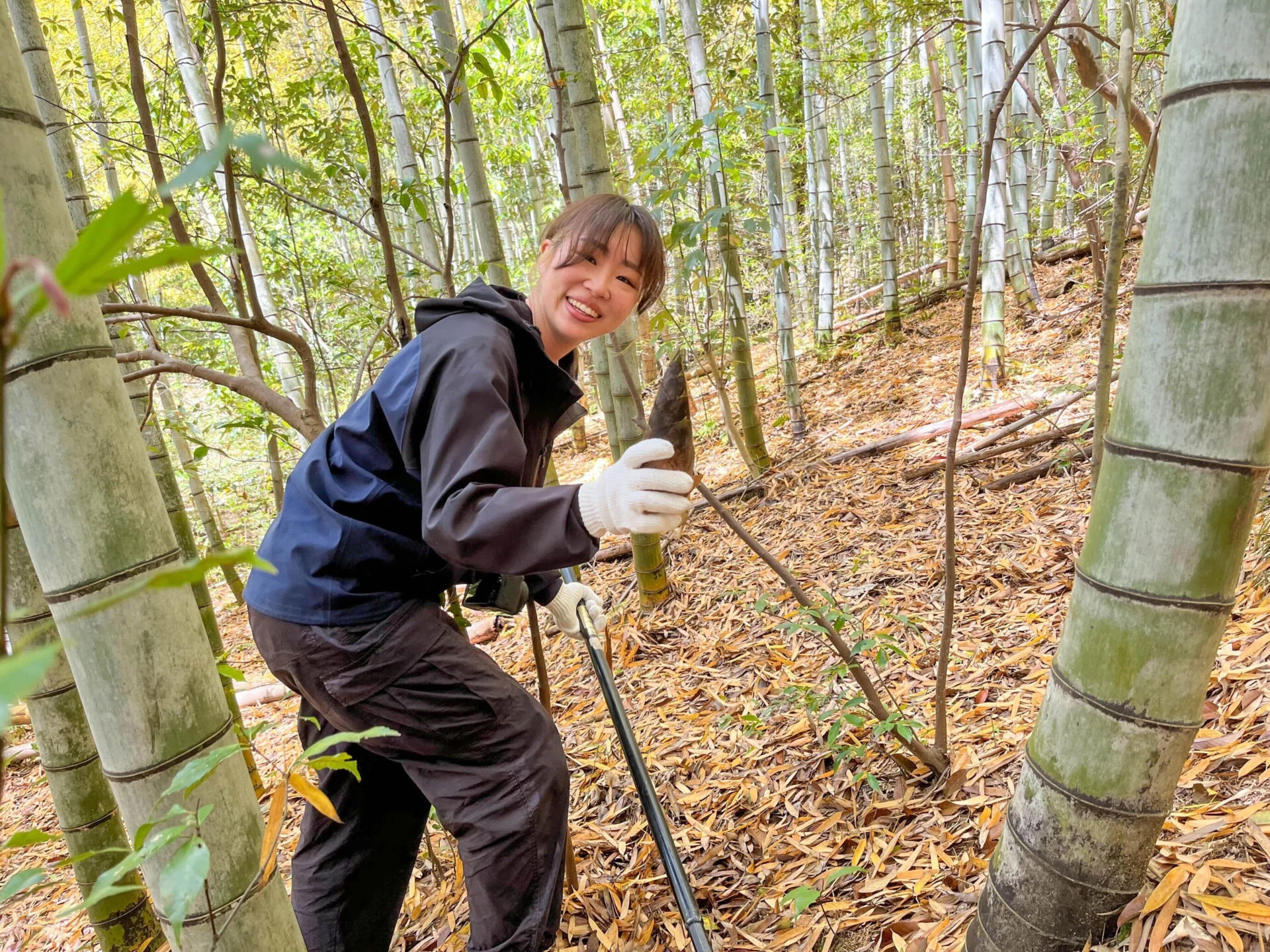
I challenged myself to dig for bamboo shoots while being guided by Yoshida Masahiro from the Mabi regional revitalization cooperation team.
The high difficulty of finding bamboo shoots
The first place I was taken to was a bamboo grove with a gentle slope.
All I could see were bamboo, and the only sounds were the rustling of branches in the wind and the chirping of birds. The soft sunlight filtering through the leaves fell on the ground, creating a calming space that was quite soothing.
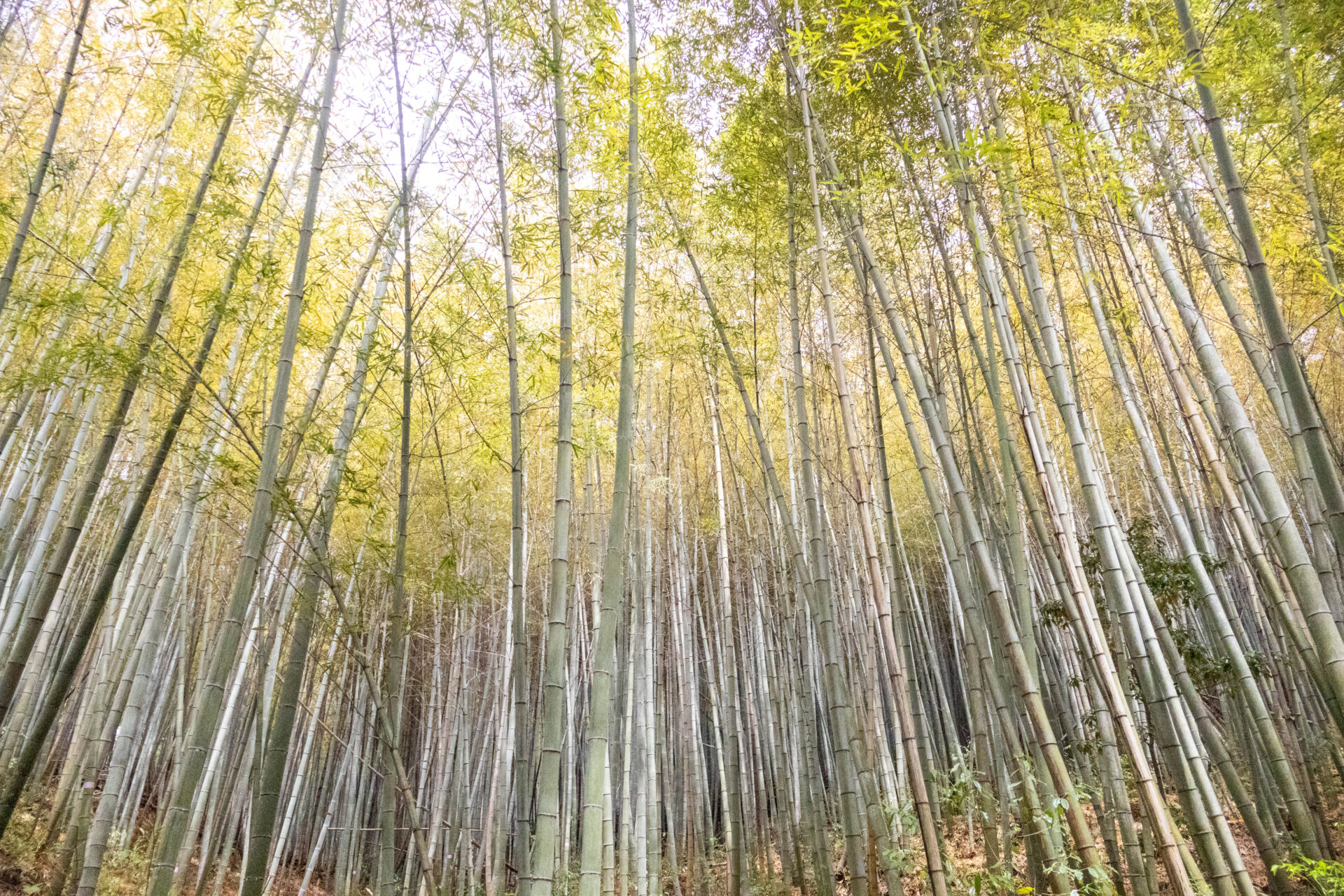
The first thing to do when digging for bamboo shoots is to search for the bamboo shoots buried in the soil.
I followed Yoshida-san as he walked into the bamboo grove.
When I asked about the tape Yoshida-san was holding, he said it was used to mark nearby bamboo when a bamboo shoot is found. Looking around the bamboo grove, I could indeed see bamboo with colorful tape attached here and there.
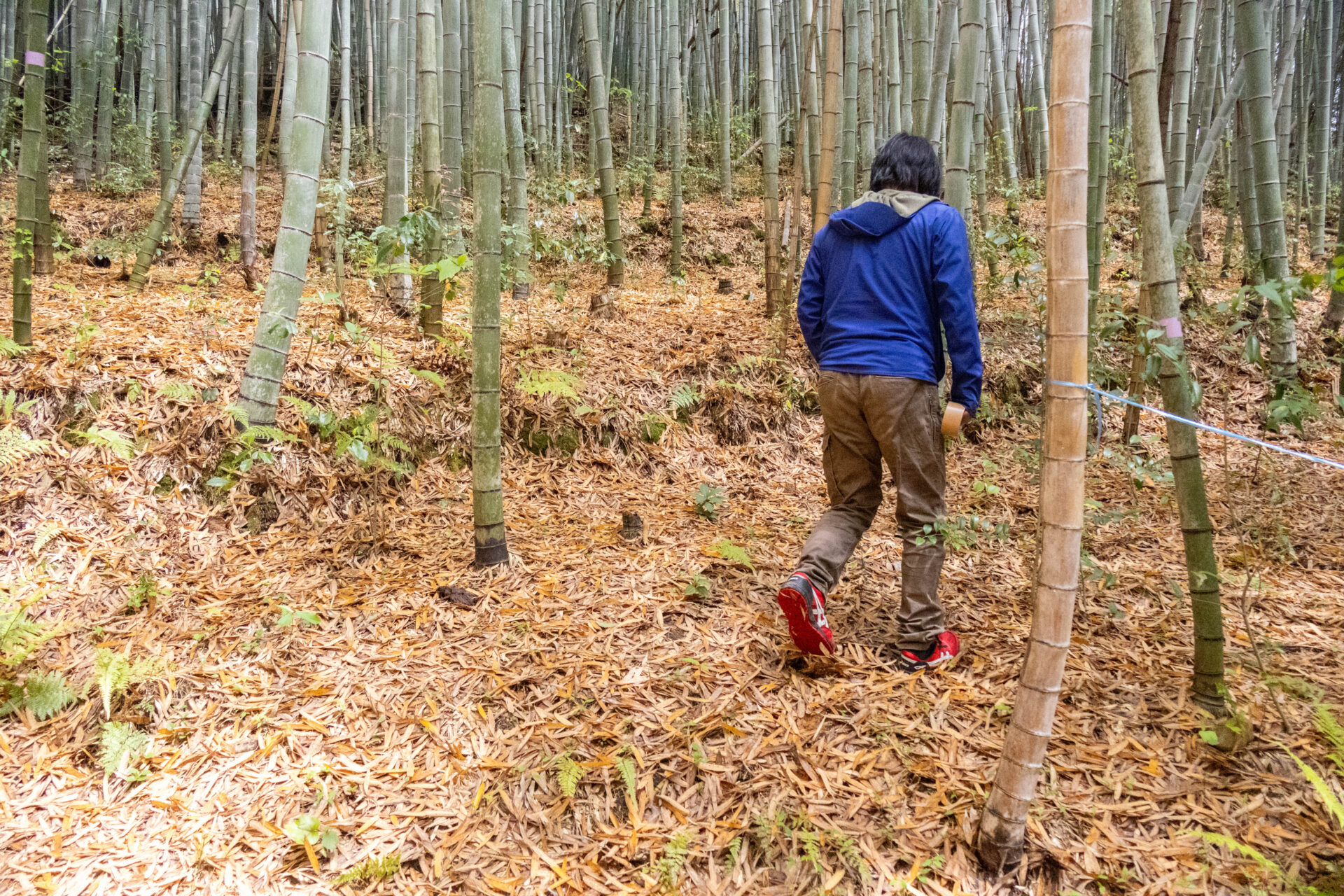
There are two methods for searching for bamboo shoots: visually searching and finding the tips of bamboo shoots by stepping on the ground with your feet.
It seems that there is a trick to searching with your feet, and I tried to step on the ground to search, but I only found stones, thinking I had stepped on something hard, and couldn't find any bamboo shoots at all.
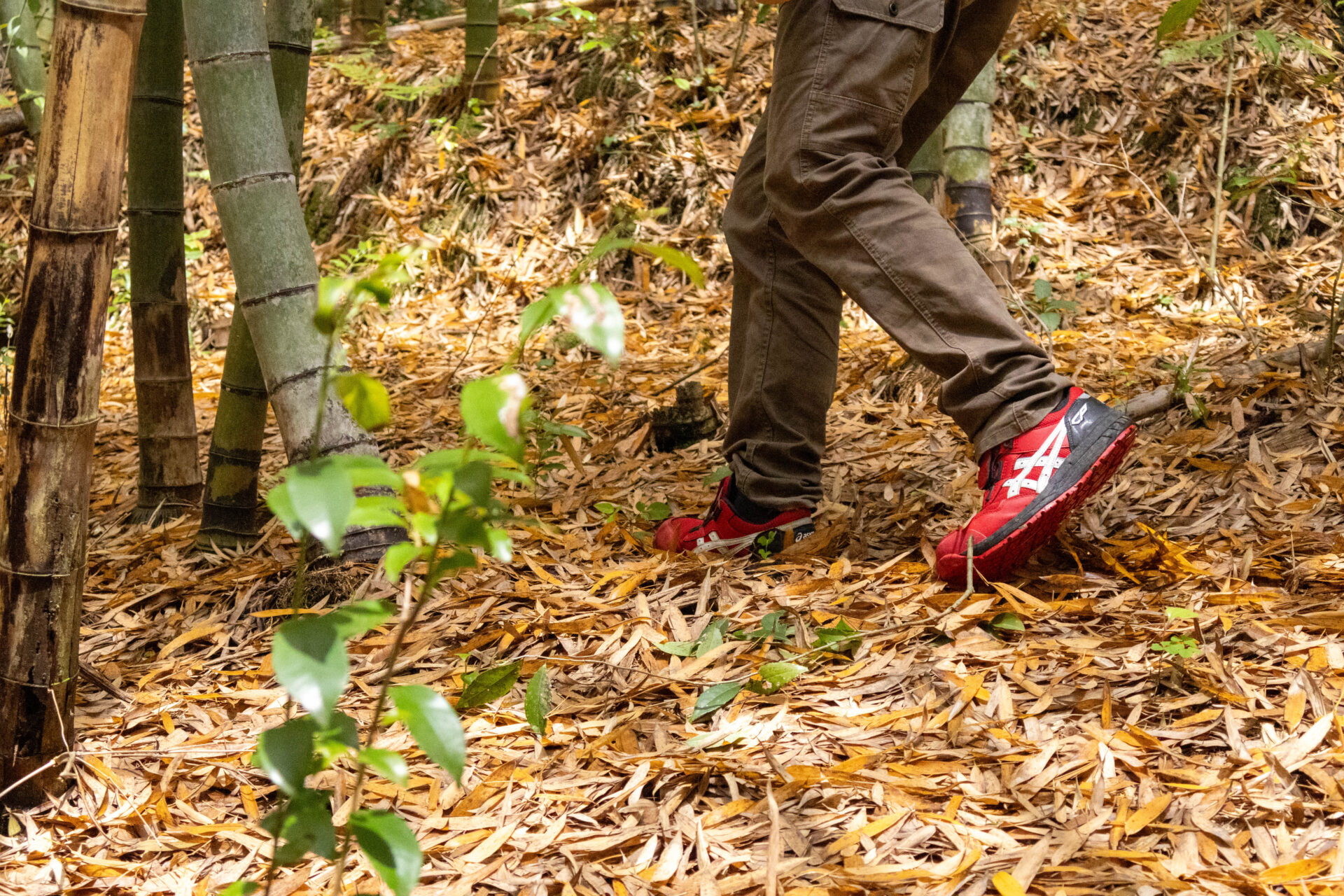
I also tried searching visually, but from an amateur's perspective, I couldn't find any, so I proceeded slowly while observing carefully.
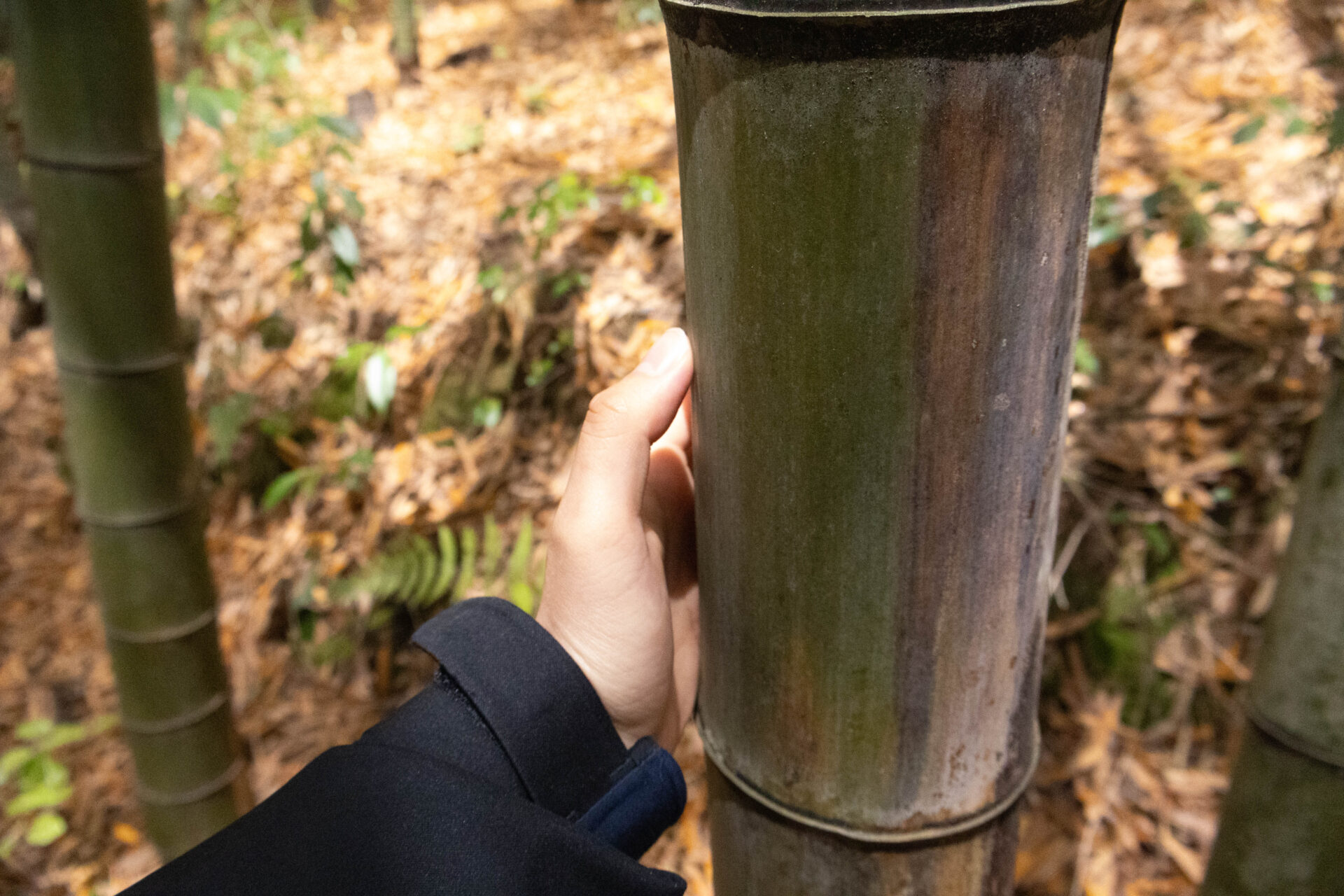
At one point, the ground became uneven, and when I grabbed a nearby bamboo, I was surprised by its thickness and sturdiness. I couldn't imagine that the soft bamboo shoots would eventually grow into such impressive bamboo. It felt cool, smooth, and I wanted to keep touching it.
After walking for about 15 minutes, Yoshida-san discovered a bamboo shoot and brought the tools for digging.
Usually, a hoe is often used for digging, but in Mabi, a tool called Tsuki is used. It is characterized by being straight from the handle to the tip, with a flat blade. The Tsuki was light enough for even those with weak strength to hold with one hand, but it might be a bit difficult to carry around in the bamboo grove.
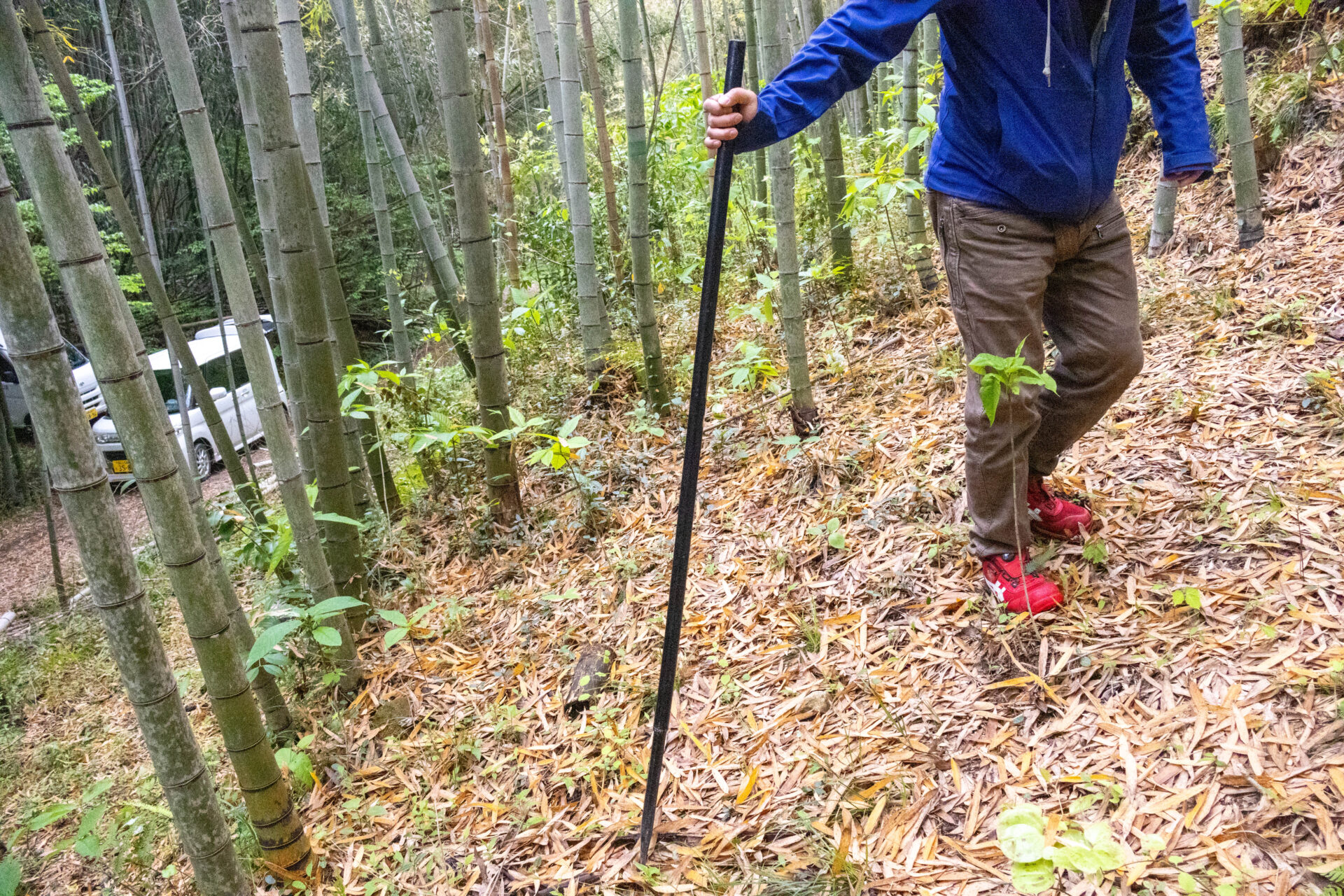
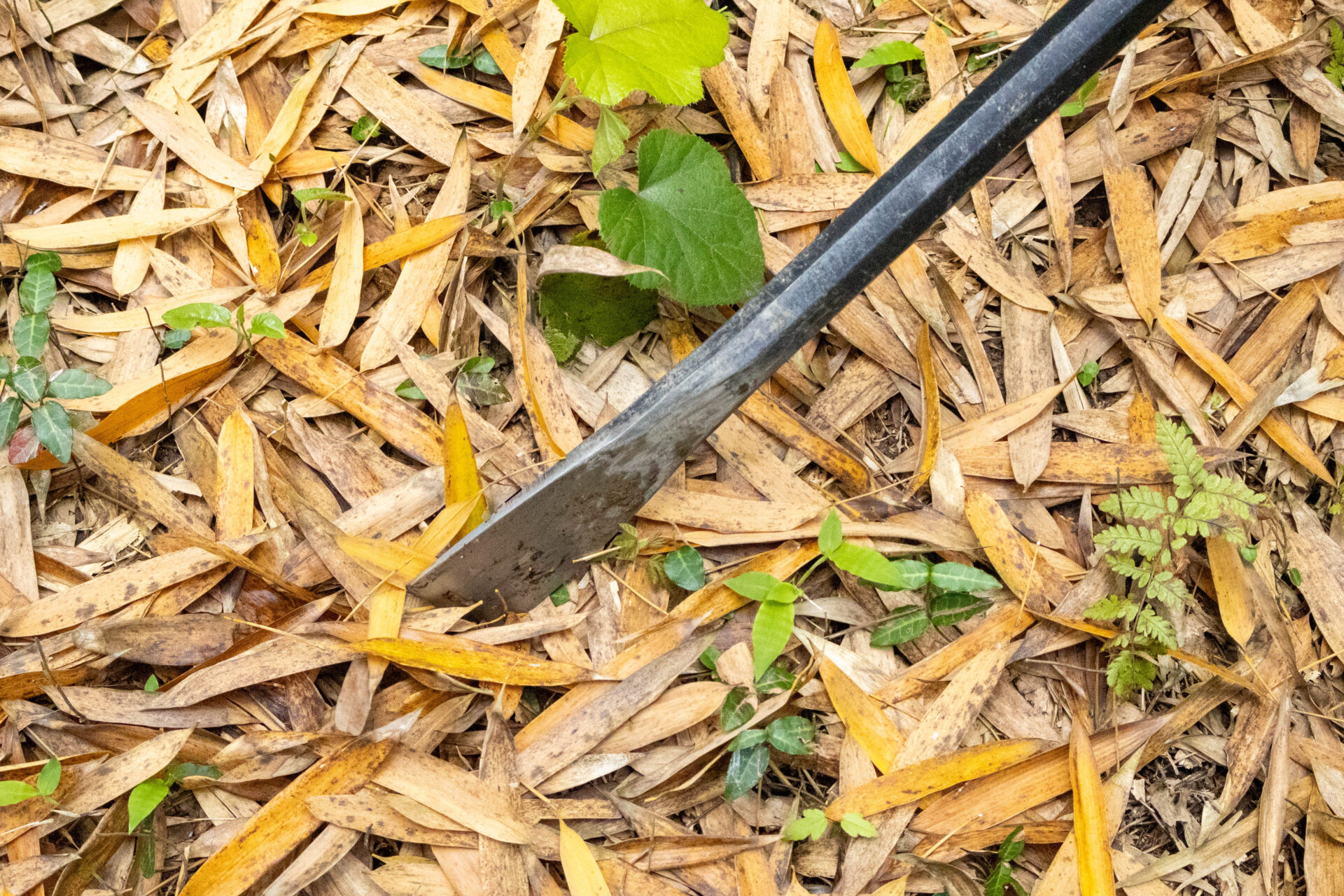
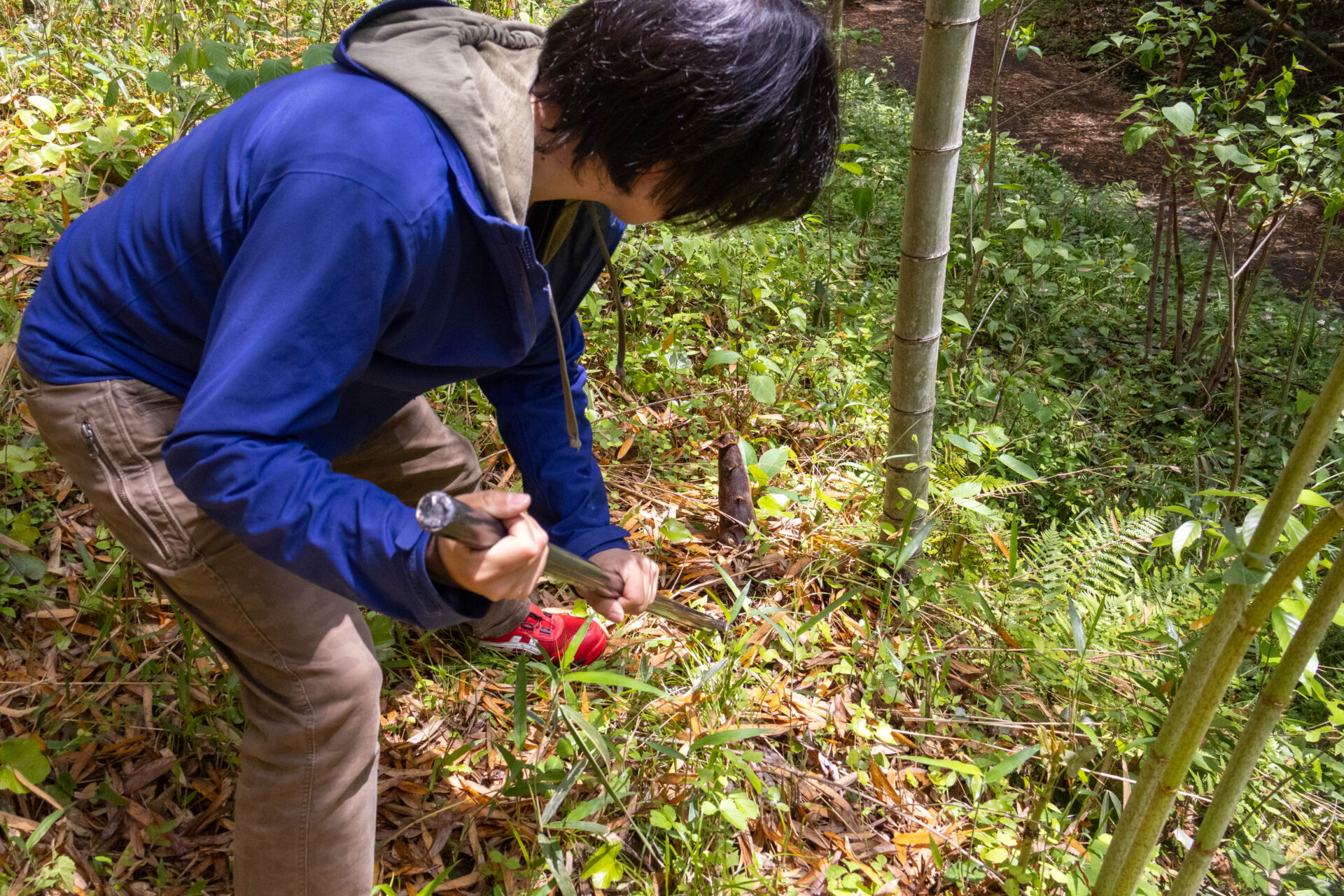
I immediately started digging for bamboo shoots using the Tsuki. First, I observed Yoshida-san as he demonstrated how to dig.
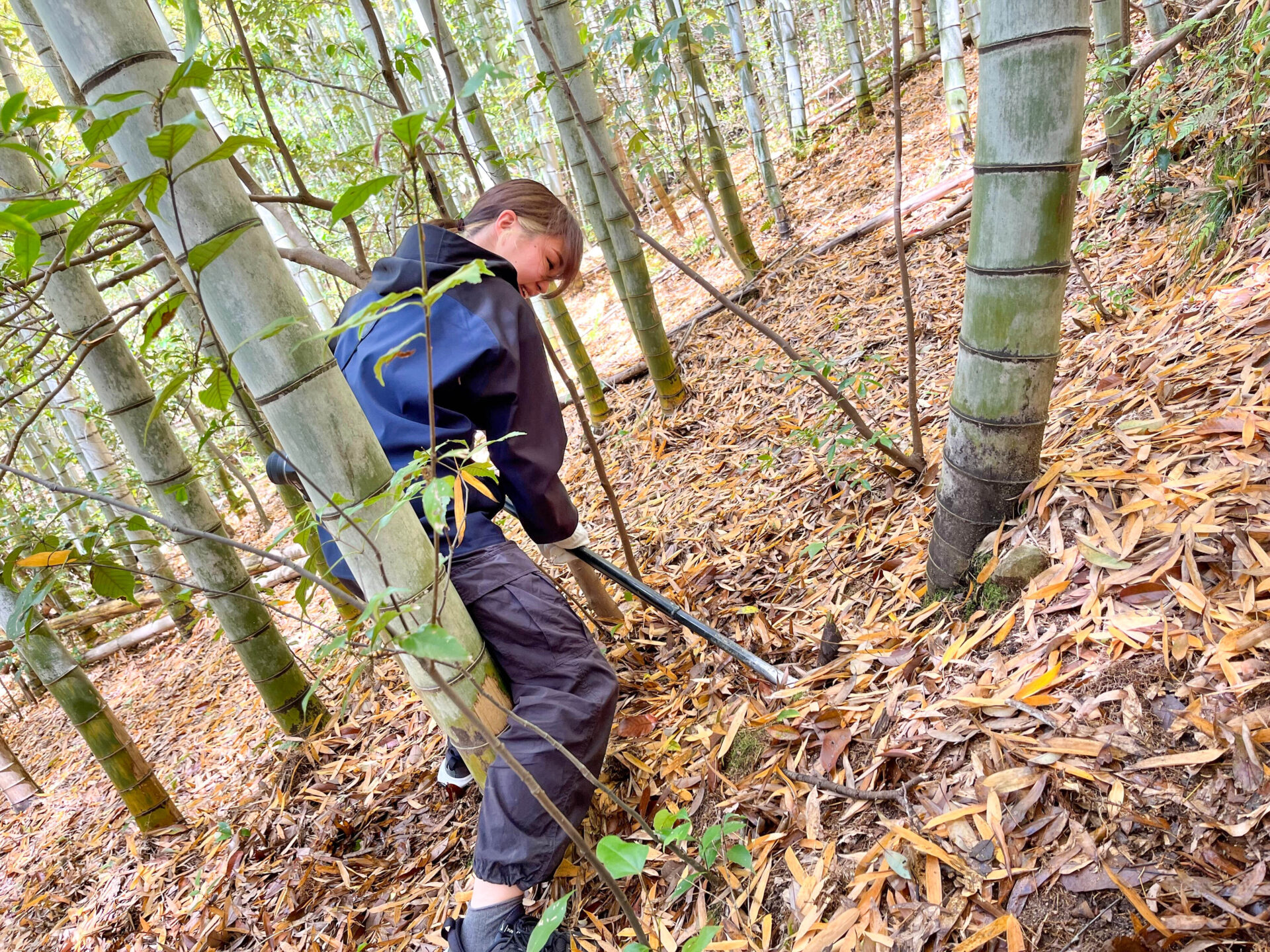
Aiming for the base of the bamboo shoot, swing the Tsuki down diagonally with force and stab it into the ground.
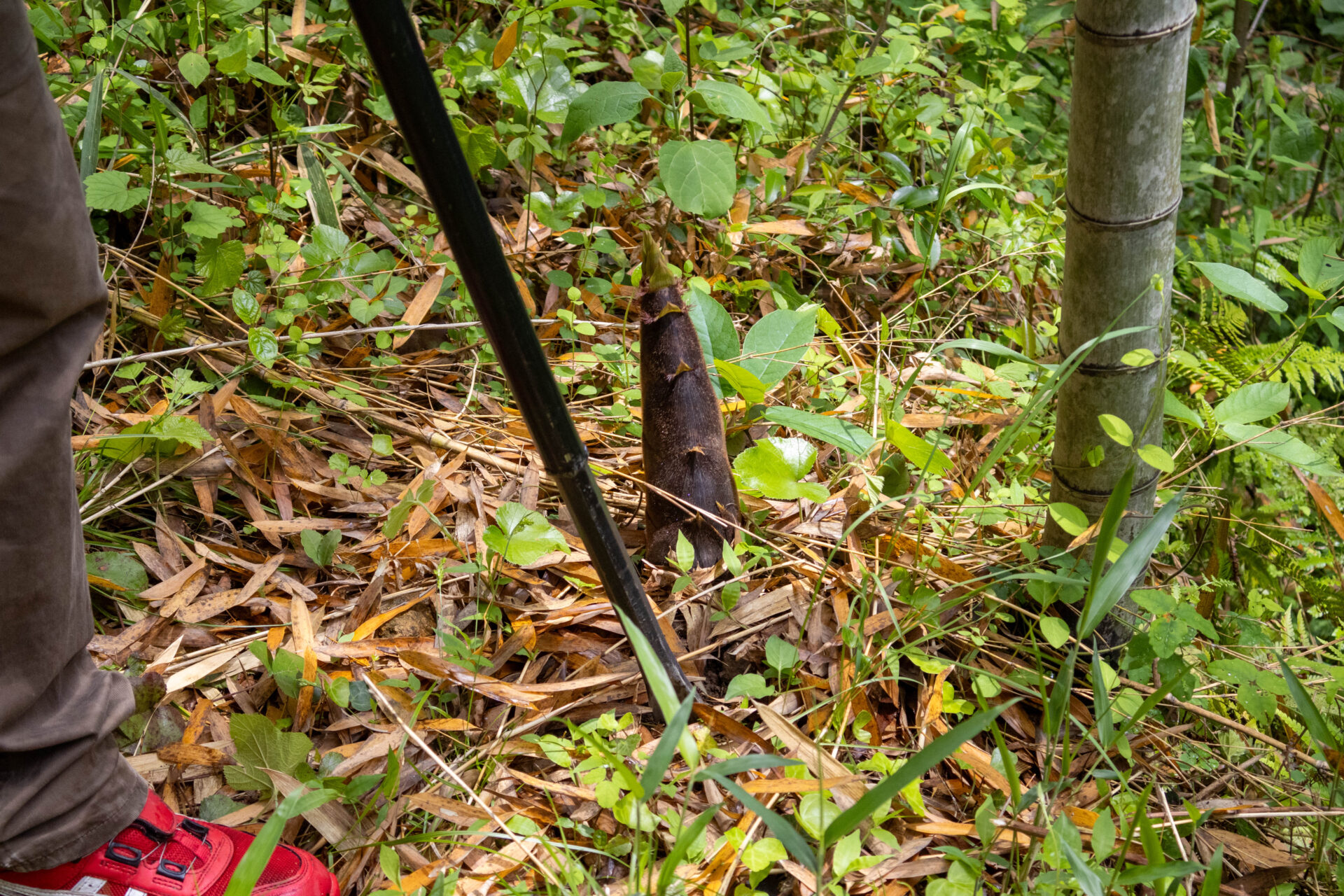
Once the Tsuki was stabbed into the base, using the principle of leverage, I lifted the bamboo shoot.
Carefully moving the Tsuki while being careful not to break the bamboo shoot, it slowly fell to the ground, completely detached from the base.
When I picked it up, it was quite a sizable bamboo shoot.
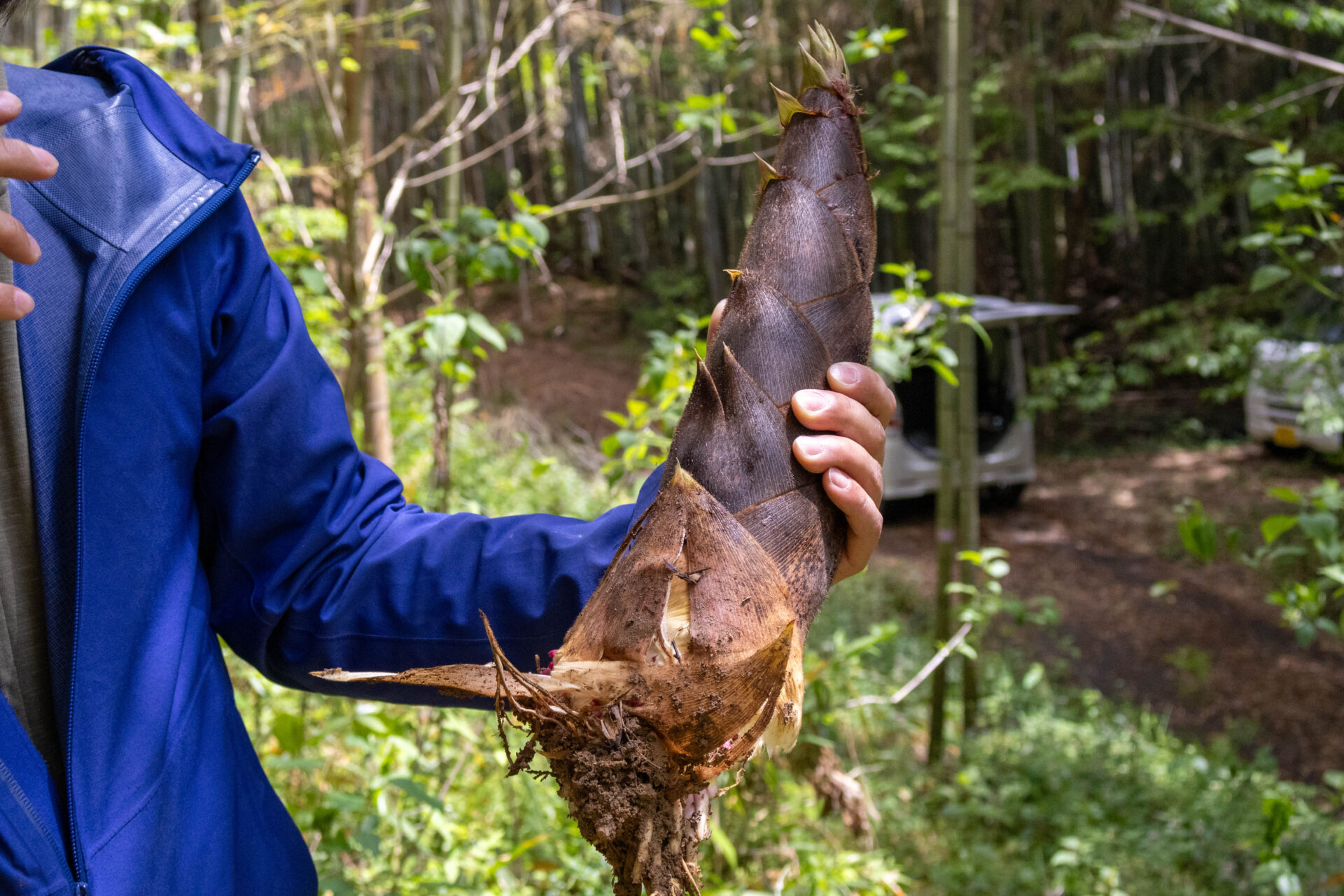
Personally, I thought, "I'm happy that there's a lot to eat," but it seems that bamboo shoots that have grown to this size above ground are hard because they have been exposed to too much sunlight, and Yoshida-san taught me that "bamboo shoots that have grown large while buried underground are soft and delicious."
It turns out that too much sunlight changes the taste and texture.
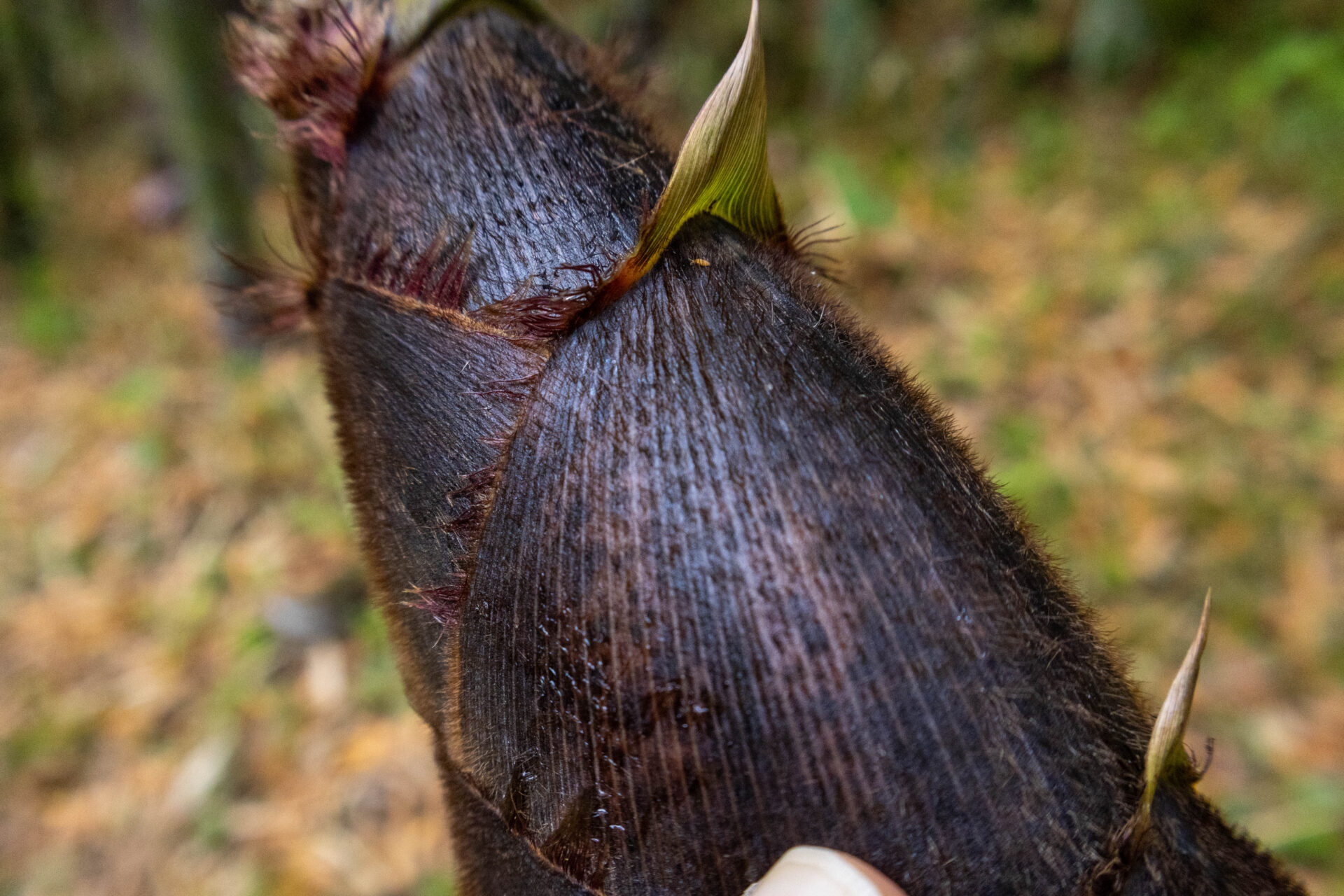
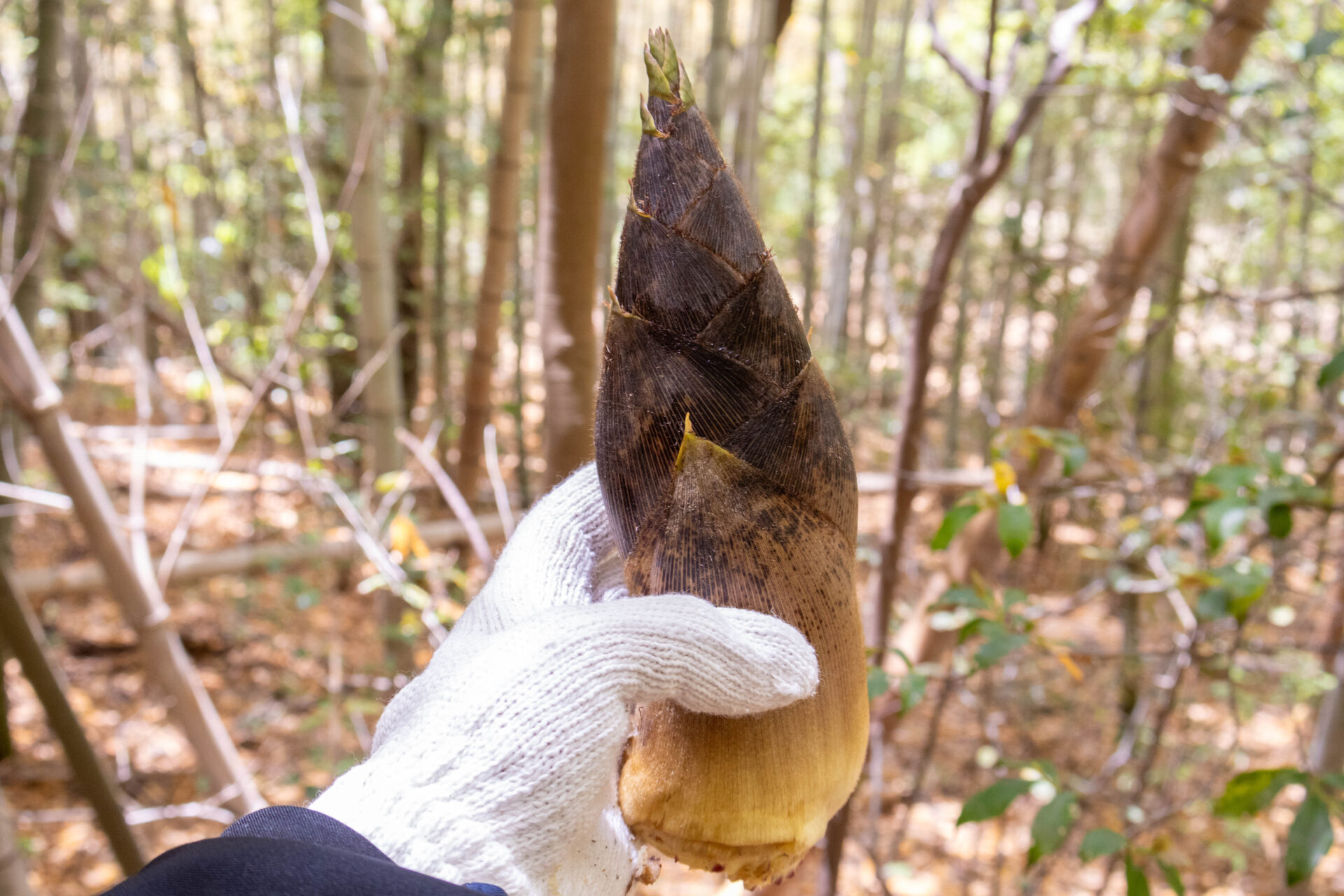
This was my first time touching a raw bamboo shoot. The surface of the skin was covered in fine hairs, making me feel like I was touching a living creature.
The amount of bamboo shoots that grow is said to be influenced by the amount of rainfall the previous year, and this year (2024) it seems that the yield is particularly low.
Let's challenge bamboo shoot digging
We moved to another bamboo grove and began searching for bamboo shoots to dig for myself.
Along the way, I found traces of wild boars eating bamboo shoots, realizing that we are sharing precious natural blessings.
As soon as we entered the bamboo grove, Yoshida-san pointed and said, "It's growing over there," but I couldn't find where it was. As expected, it was quite a struggle for an amateur to find them.
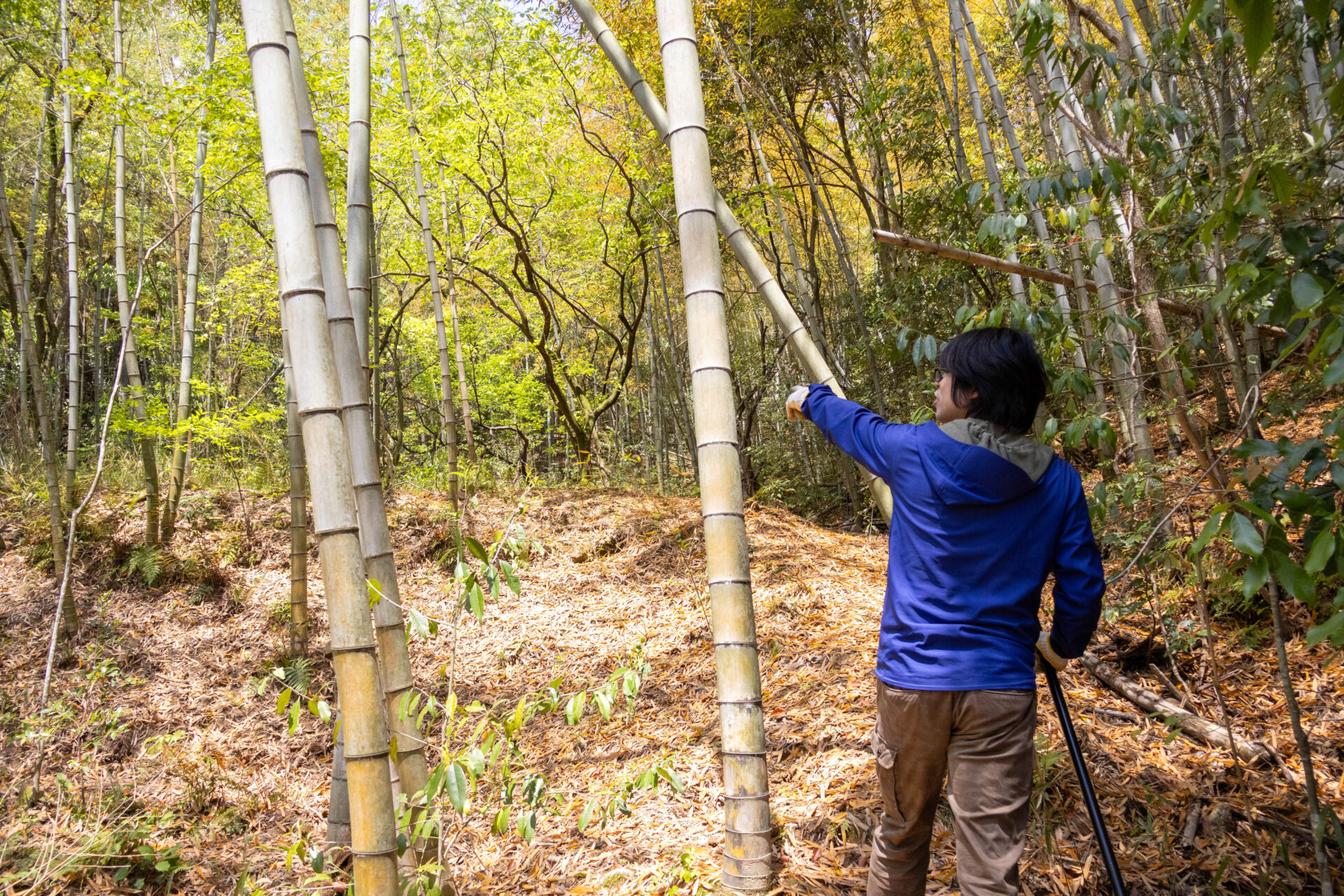
I will try digging up the bamboo shoots that Yoshida found.
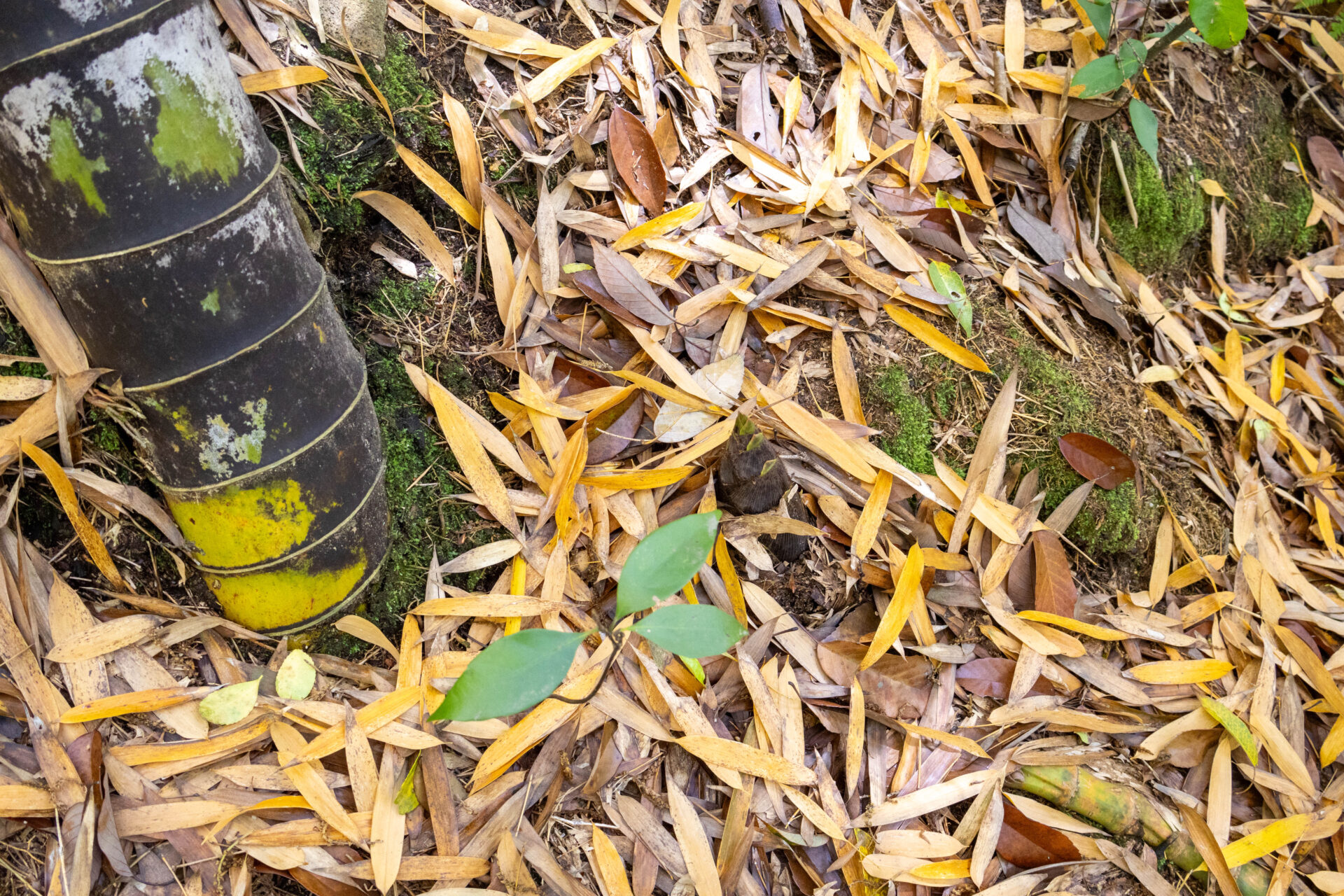
Following Yoshida's example, I first stabbed the base of the bamboo shoot with a digging tool. I didn't feel any particular resistance as I stabbed the bamboo shoot, and while feeling uncertain if this position was correct, I continued to dig deeper at an angle. Since it was on a slope, I braced myself by hooking my foot on a bamboo.
After a while, the bamboo shoot rolled out onto the ground.
The edible part was unscathed and was cleanly cut from the base. My first bamboo shoot digging was a great success.
I will try digging up another one.
A bamboo shoot peeking out slightly from under the fallen leaves. Since the base position is hard to predict when it is buried deep, I will first dig around the soil.
If a lot of it is hidden, my expectations rise that it might be a large bamboo shoot.
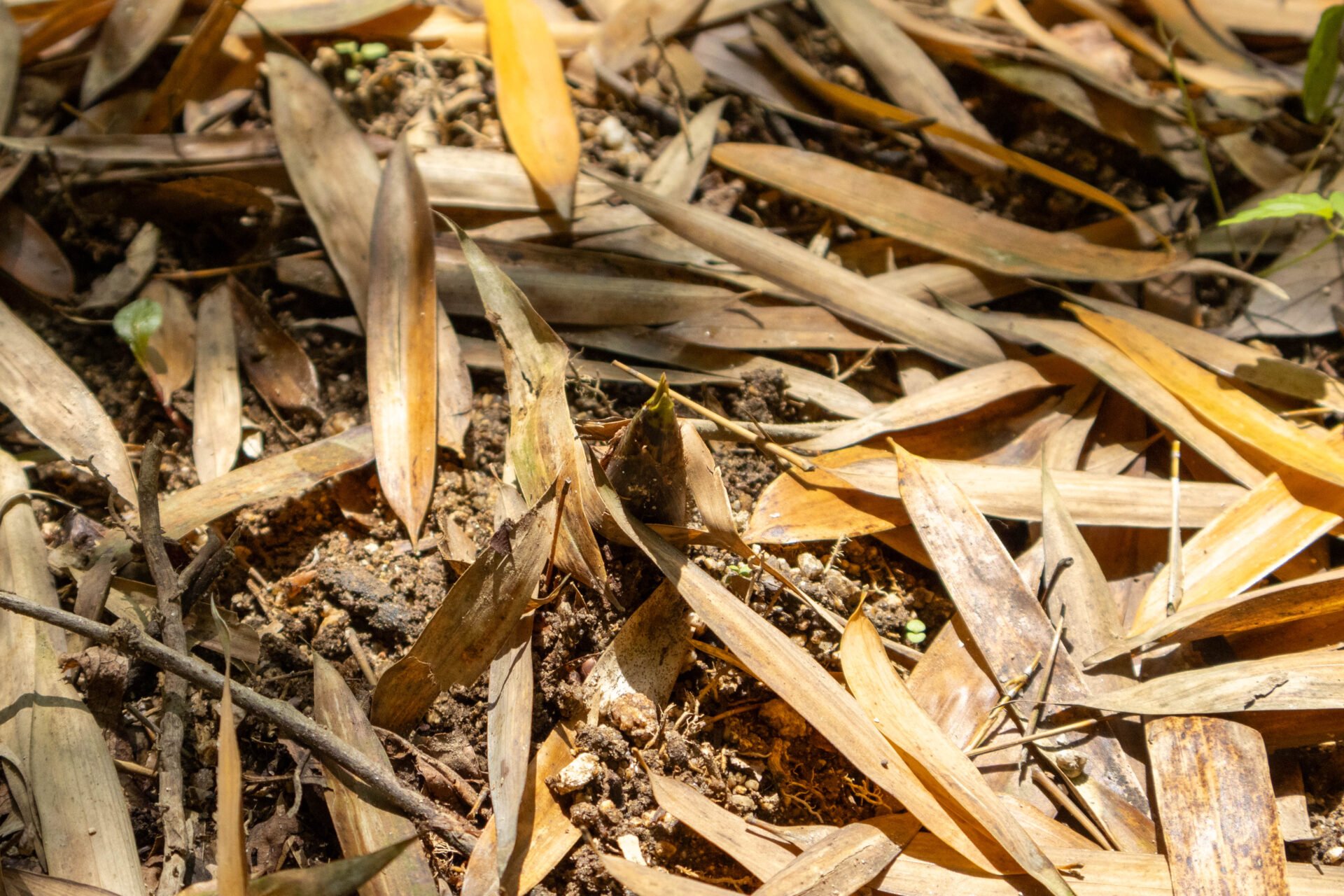
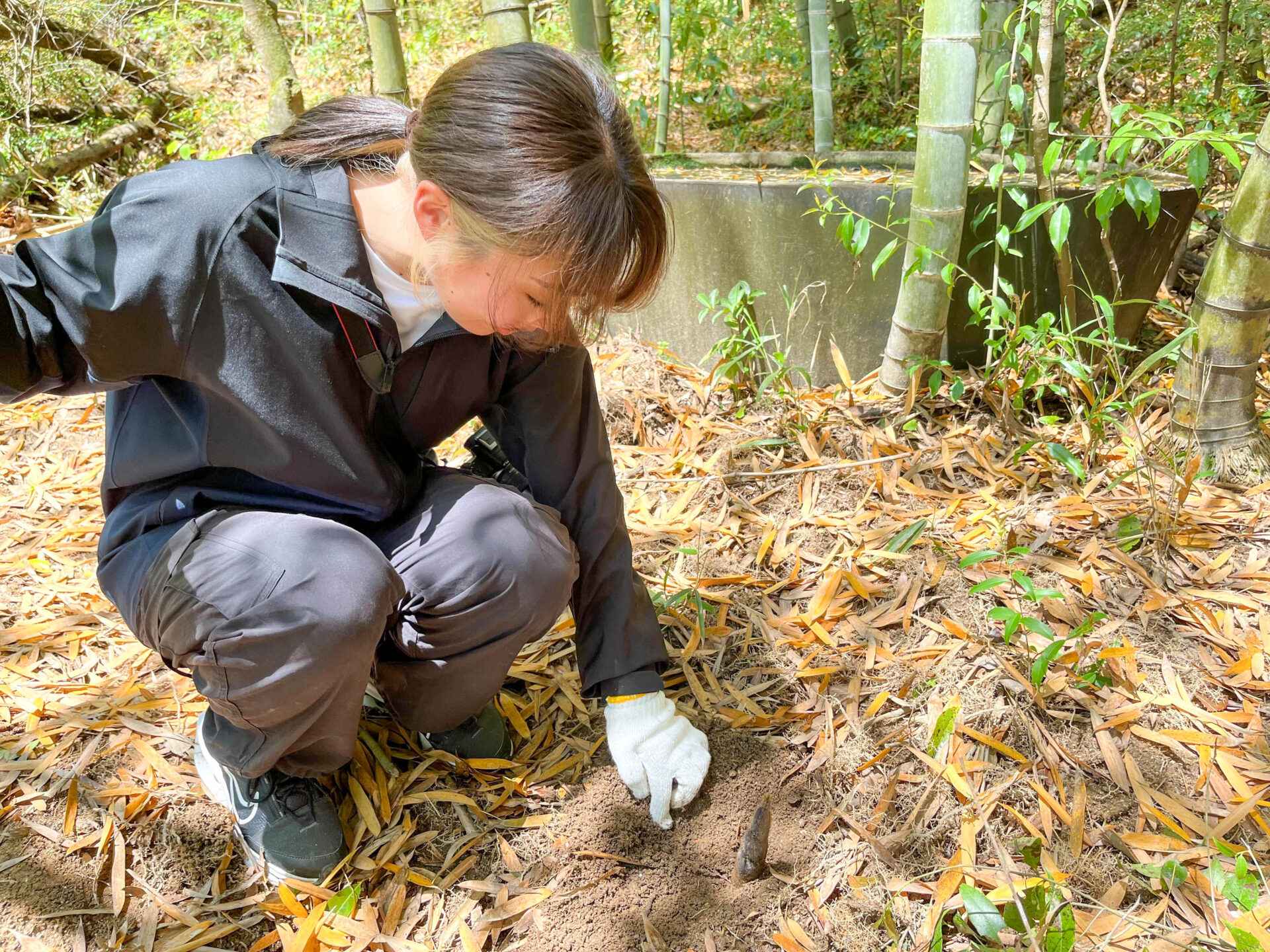
When I stabbed with the digging tool, I felt quite a light resistance. When I dug it up, I harvested a bamboo shoot that was slimmer and cuter than I had expected. It's difficult to predict the size of the bamboo shoots hidden in the soil.
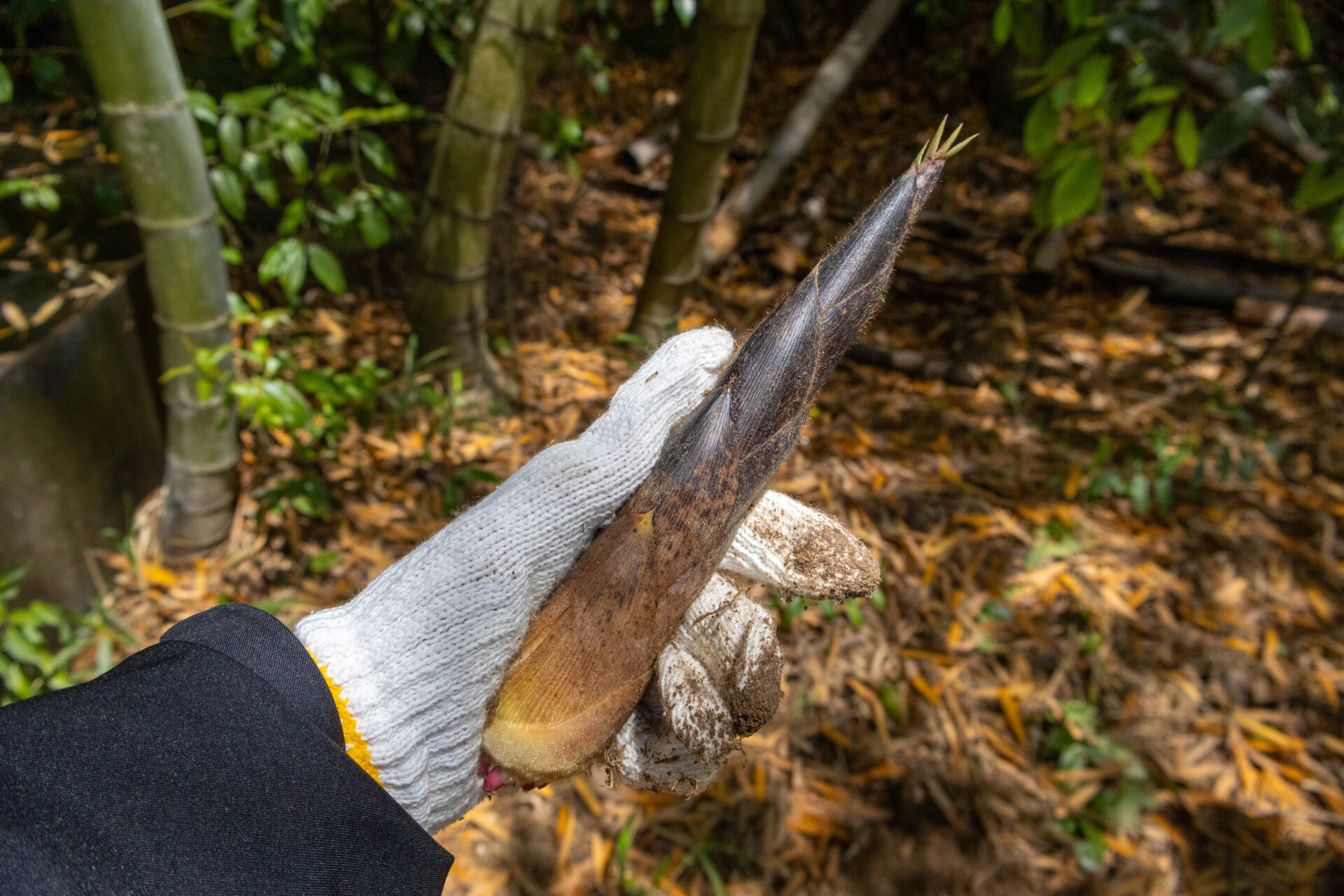
When I lined up the harvested bamboo shoots, their shapes and sizes were all different.
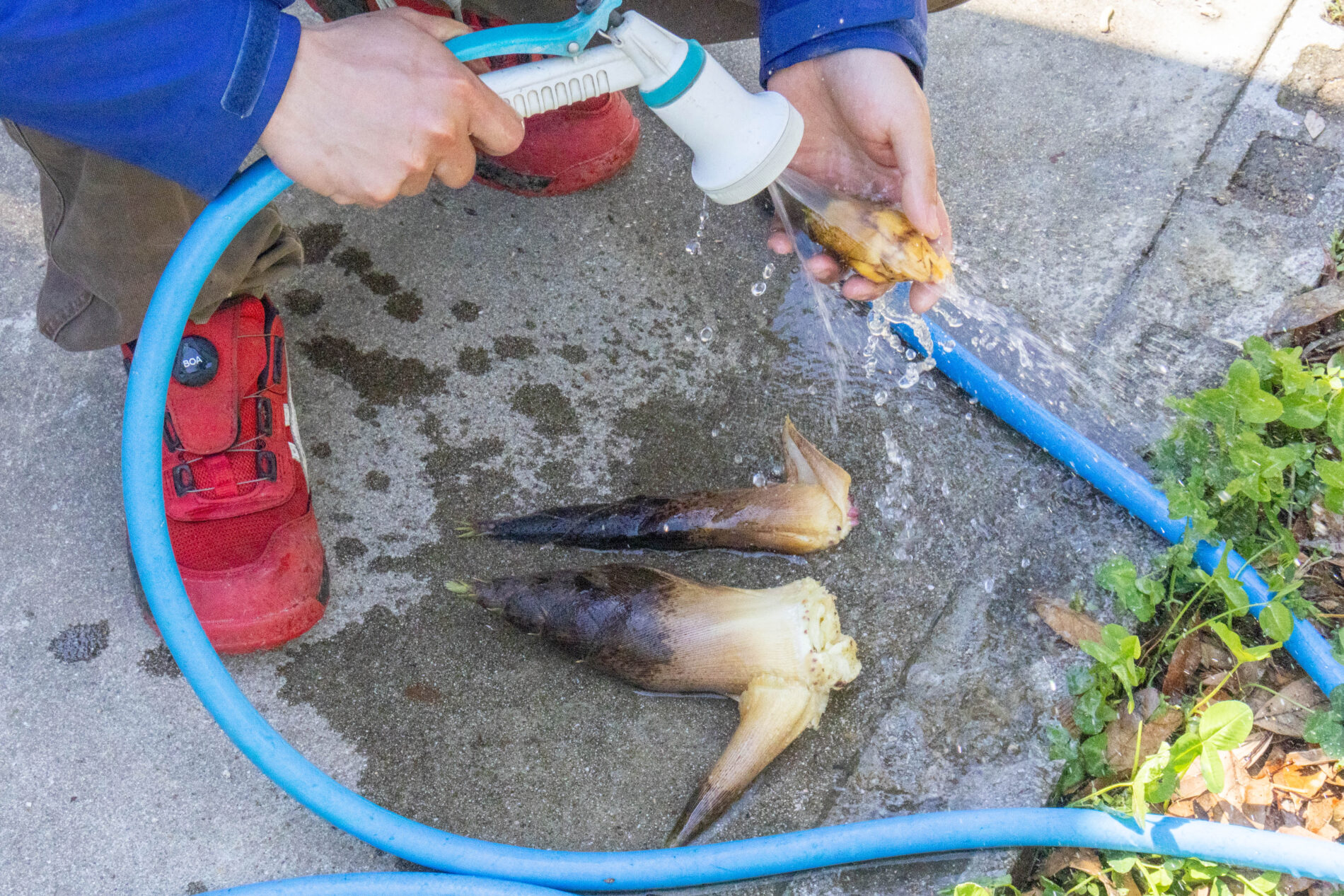
Not just bamboo shoots, but in regular supermarket shopping, I usually see vegetables and fruits with uniform shapes and sizes, so I felt a freshness in the various sizes of bamboo shoots.
Finally eating the bamboo shoots from Mabi
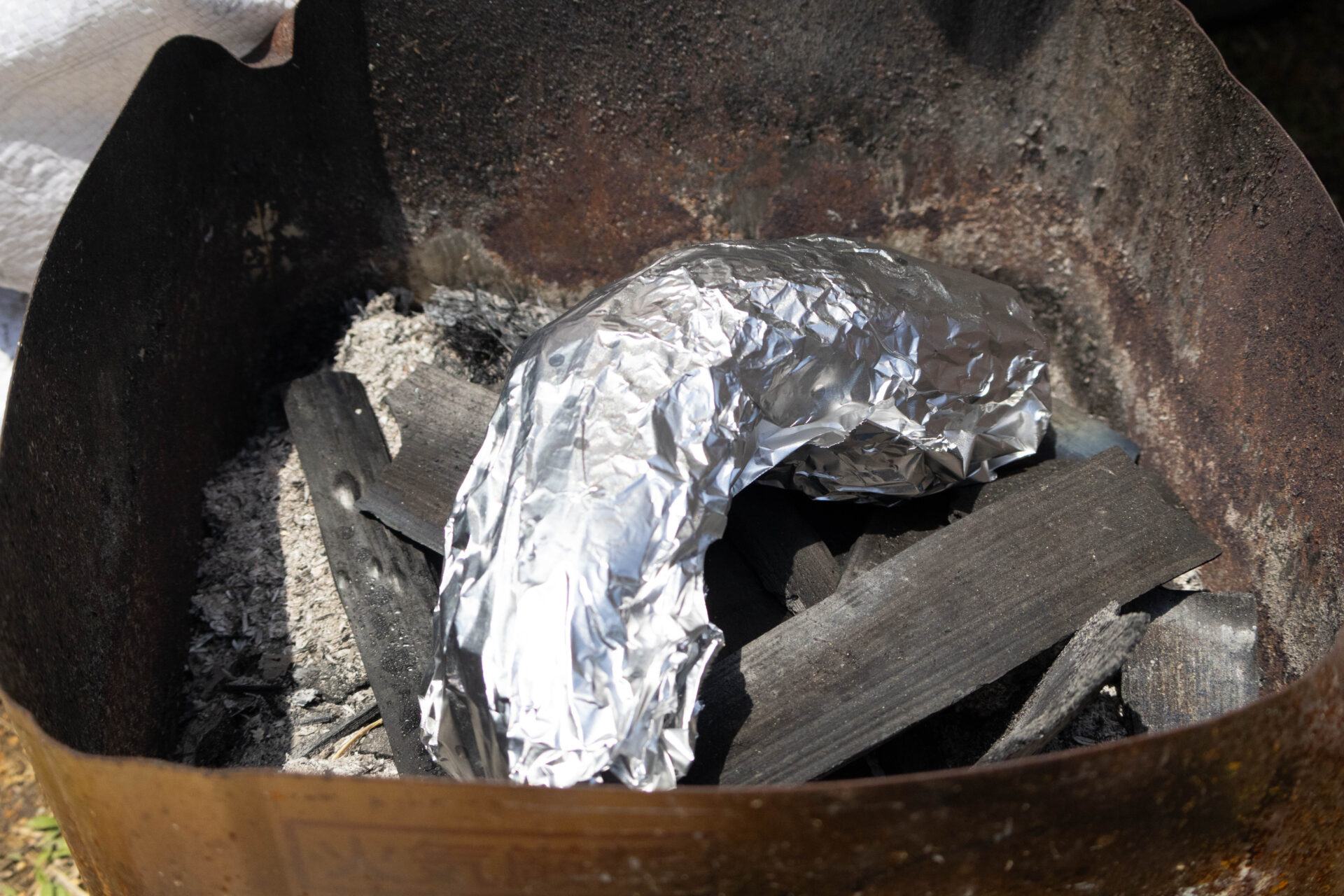
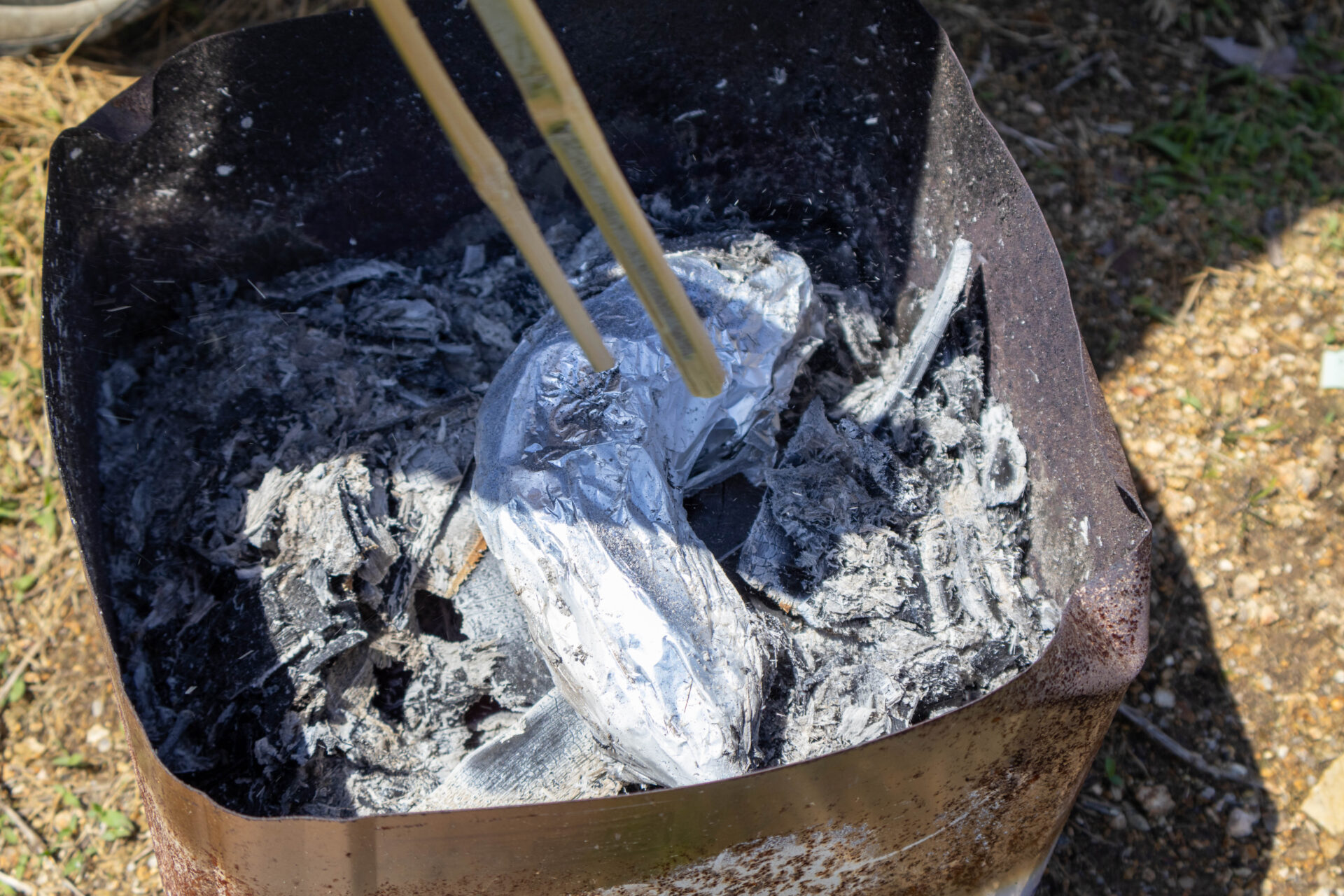
After washing the freshly dug bamboo shoots with water to remove dirt and soil, I simply wrapped them in aluminum foil and prepared to grill them over charcoal.
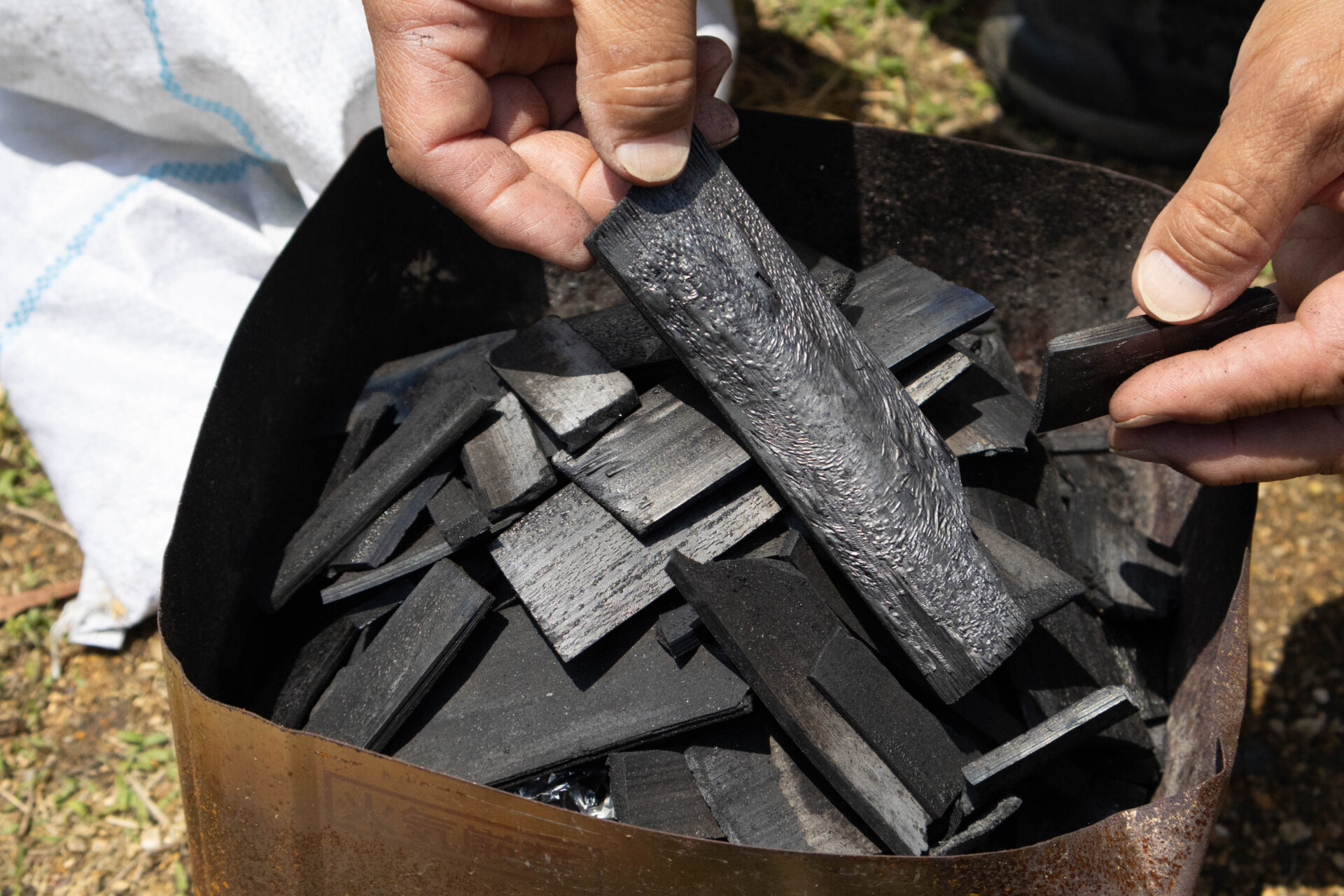
The charcoal used for grilling is made from bamboo charcoal produced in Mabi.
Bamboo charcoal from Mabi is said to catch fire easily and has strong heat. I piled the charcoal high enough to cover the bamboo shoots and then lit it.
While the bamboo shoots were being grilled, I observed the preparation process.
The bamboo shoots were cut with a knife, and fingers were inserted into the cuts to peel off the skin. It looked difficult to peel if the skin was hard.
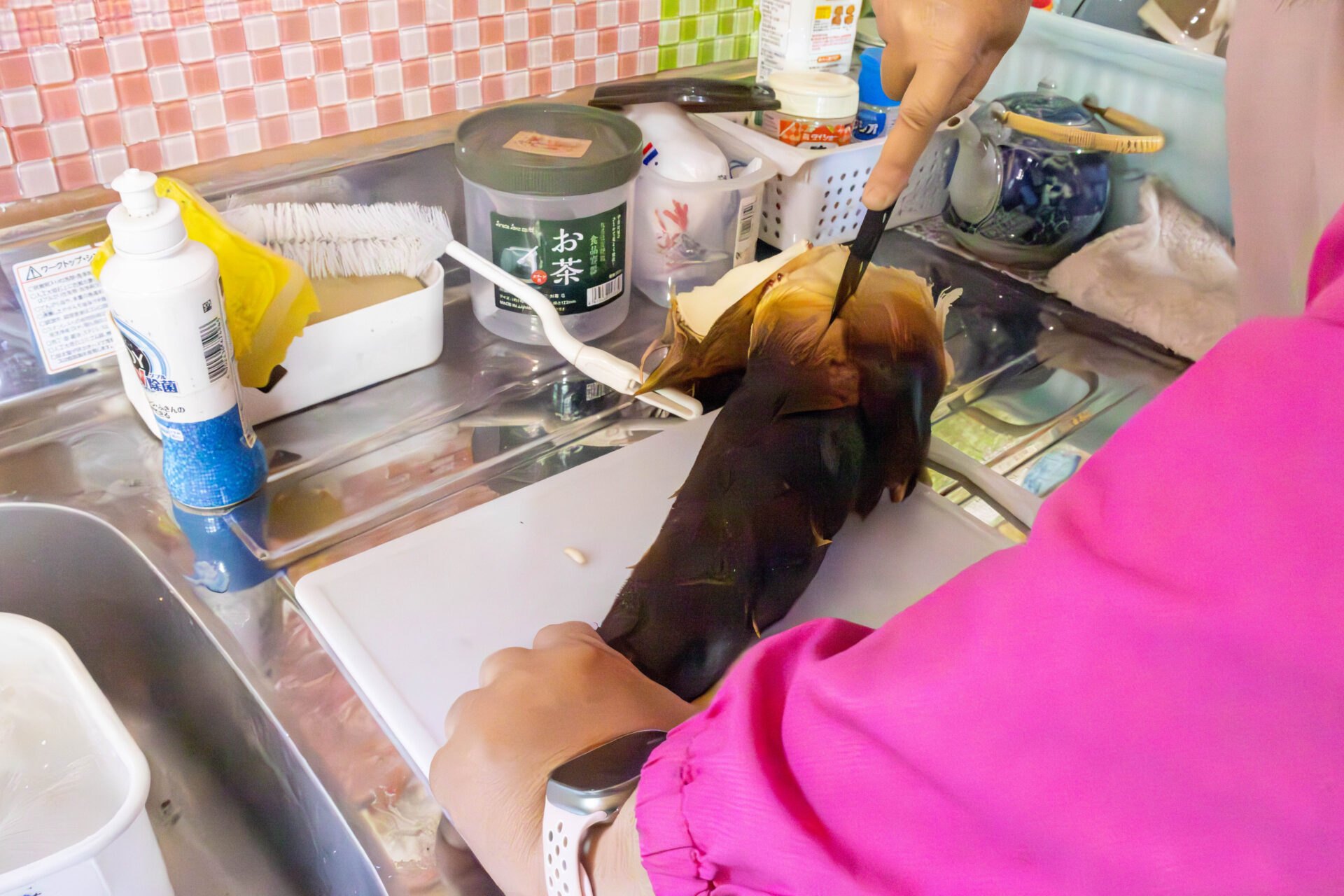
Since I had never cooked bamboo shoots before, I was curious about how far to peel the hard skin, but I was surprised to find that the bamboo shoot had multiple layers of skin. It quickly became thinner.
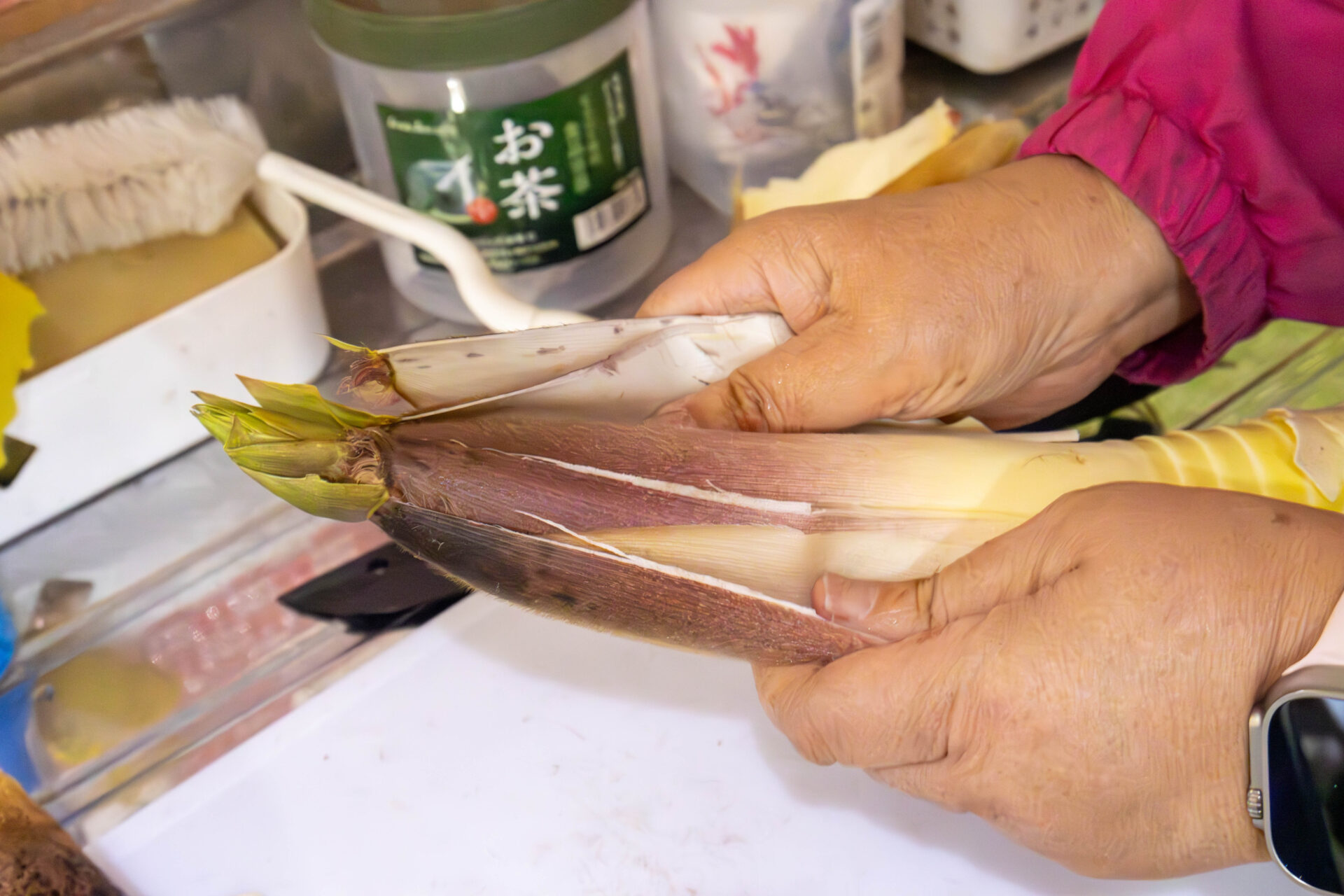
The part that finally appeared was pure white with a fine texture.
Previously, Yoshida told me that bamboo shoots from Mabi are known for their whiteness, and indeed they seemed whiter than regular bamboo shoots. The base part is said to be perfect for simmered dishes.
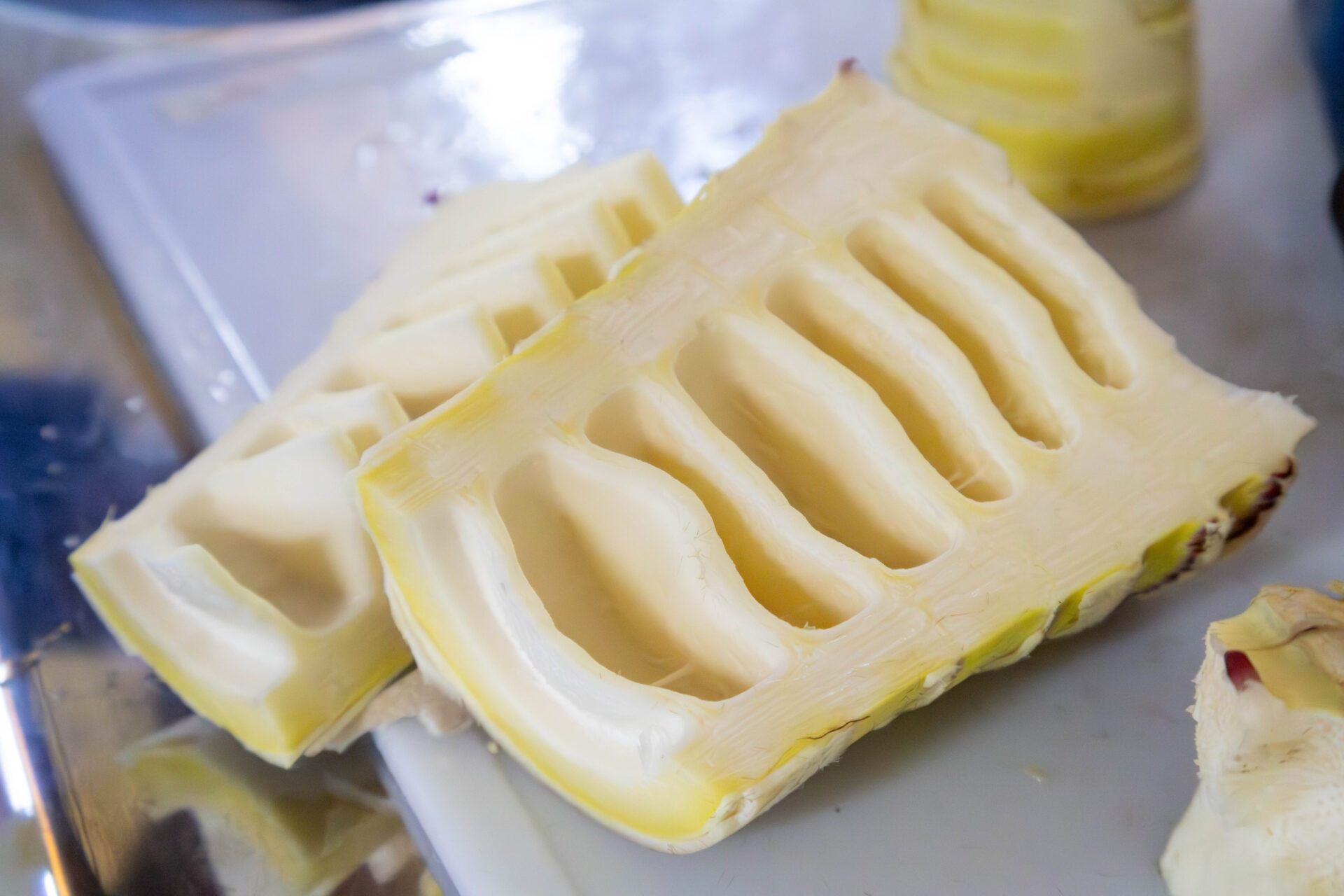
The tip part is soft, and it is recommended to eat "bamboo shoot sashimi" after boiling and peeling each piece and dipping it in soy sauce. I couldn't eat it this time due to time constraints, but if I can get freshly dug bamboo shoots next year, I would like to try it.
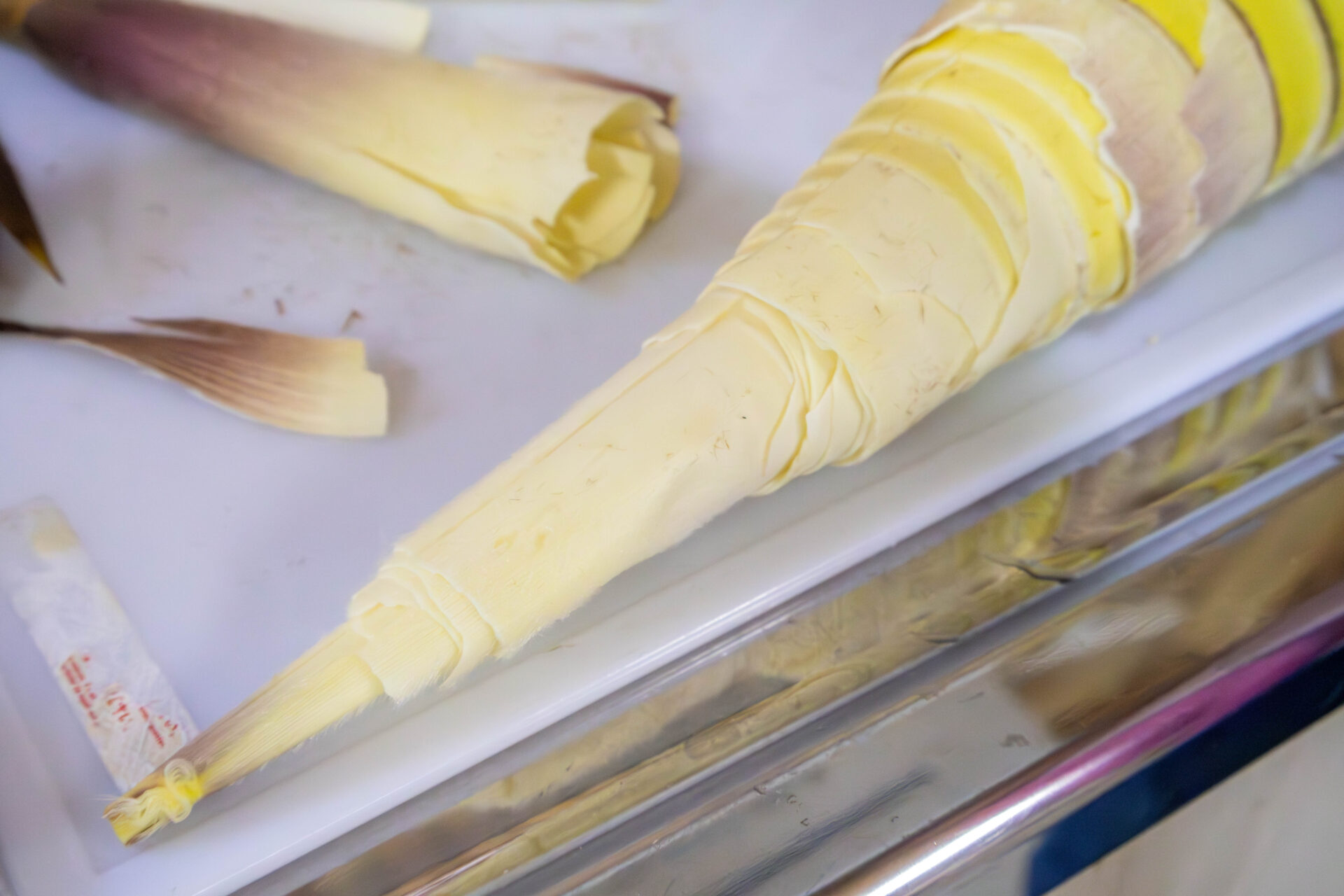
Peeled bamboo shoots are boiled in a large pot. After a while, the heat is turned off, and as the water cools, the bitterness is removed, completing the preparation.
Using nuka (rice bran) for removing bitterness is less labor-intensive, and I thought it was a great charm of Mabi's bamboo shoots.
Looking at the charcoal grilling from earlier, most of the bamboo charcoal that was piled up has burned away.
They are taken out while hot and cut.
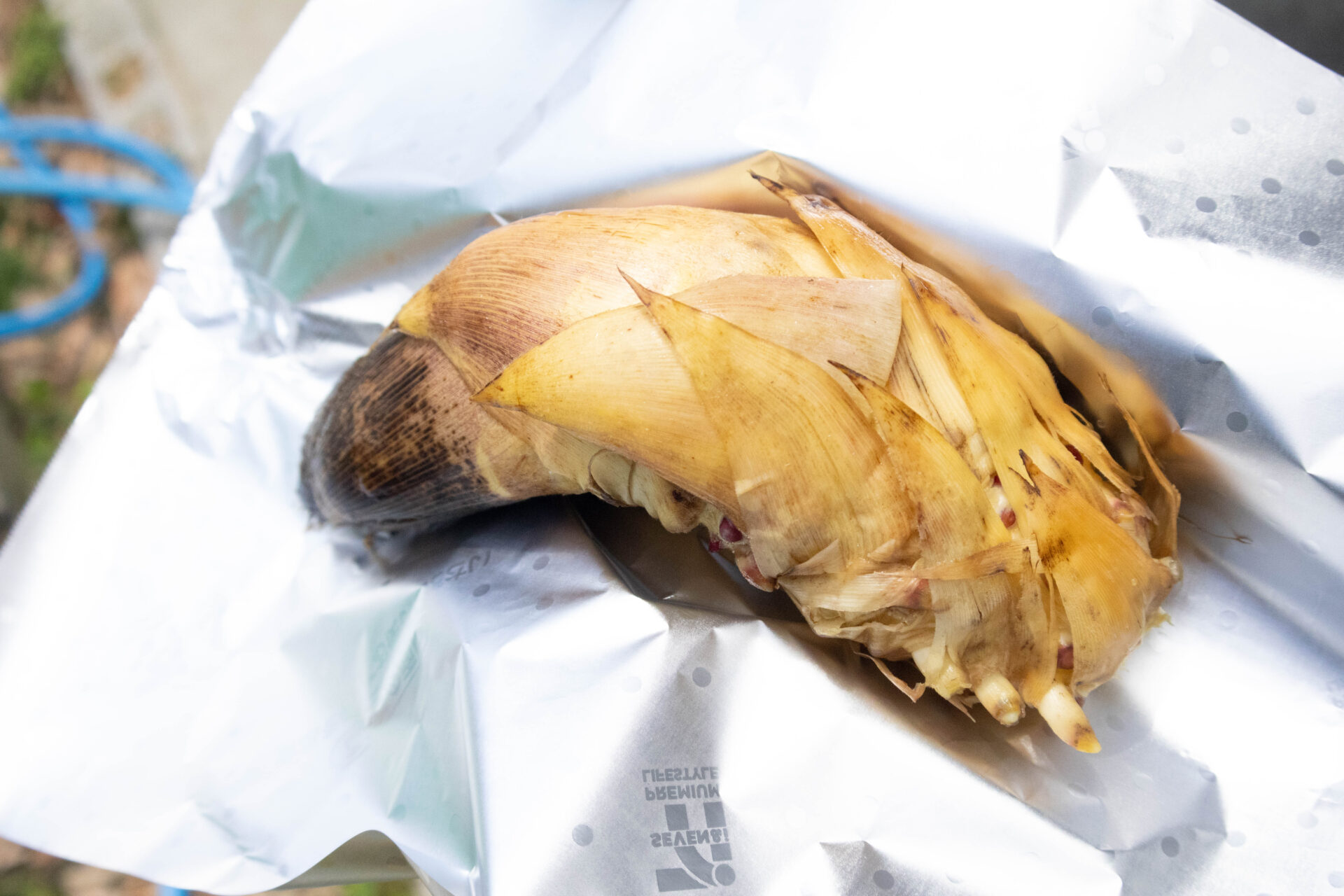
The color of the flesh, which was white in its raw state, changed to a slightly yellowish color when heated. I immediately dipped it in soy sauce while it was still hot.
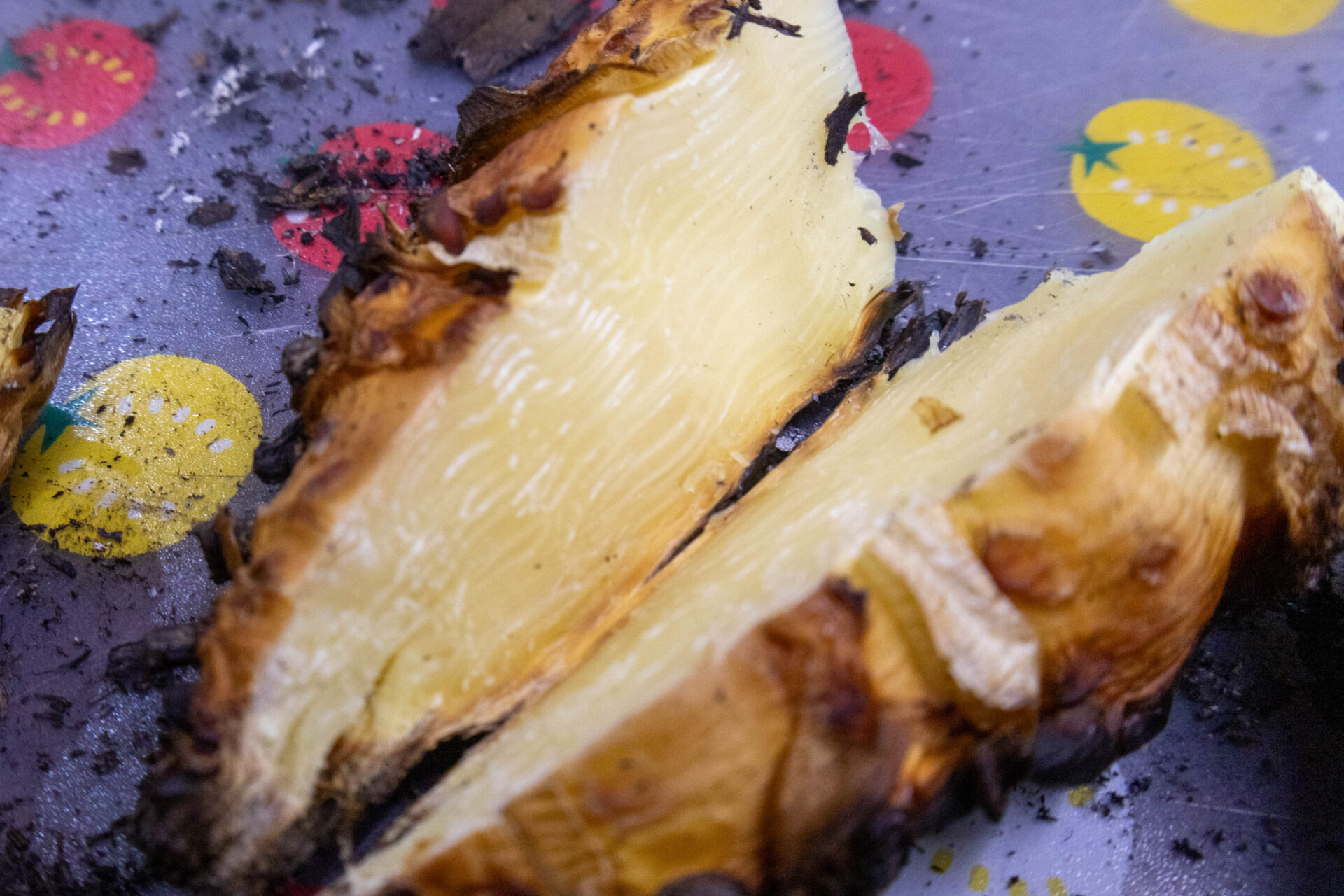
What surprised me when I put it in my mouth was the softness and juiciness of the flesh. It was juicy like fruit, and the softness was different from any bamboo shoots I had eaten before.
I had heard that Mabi's bamboo shoots are sweet, but their sweetness exceeded my expectations. It felt so high in sugar content that it could be compared to some kind of fruit. The aroma was also fruity, unlike what I would expect from bamboo shoots. Usually, the flavoring in stews or stir-fries already adds aroma, so I was shocked to realize that "bamboo shoots also have a delicate fragrance."
The deliciousness of Mabi's bamboo shoots, which I tasted for the first time, made the fatigue from walking around the bamboo grove disappear in an instant.
Conclusion
The long-awaited Mabi bamboo shoots. The freshly dug bamboo shoots were rich in flavor and very delicious. Moreover, this time I was able to eat the ones I dug myself, which made the taste feel even more special.
Using a tool made it easy for beginners to dig, but if you're not used to it, you might accidentally stab the flesh part, so experience and skill are necessary for clean digging. Bamboo shoots often grow in hard-to-reach places, making it difficult to dig unless you're an experienced person. Nevertheless, opportunities to dig bamboo shoots are rare, so I think it was a great experience.
In Mabi, there are events for bamboo shoot digging experiences, so please check online when the peak season (late April to early May) arrives.