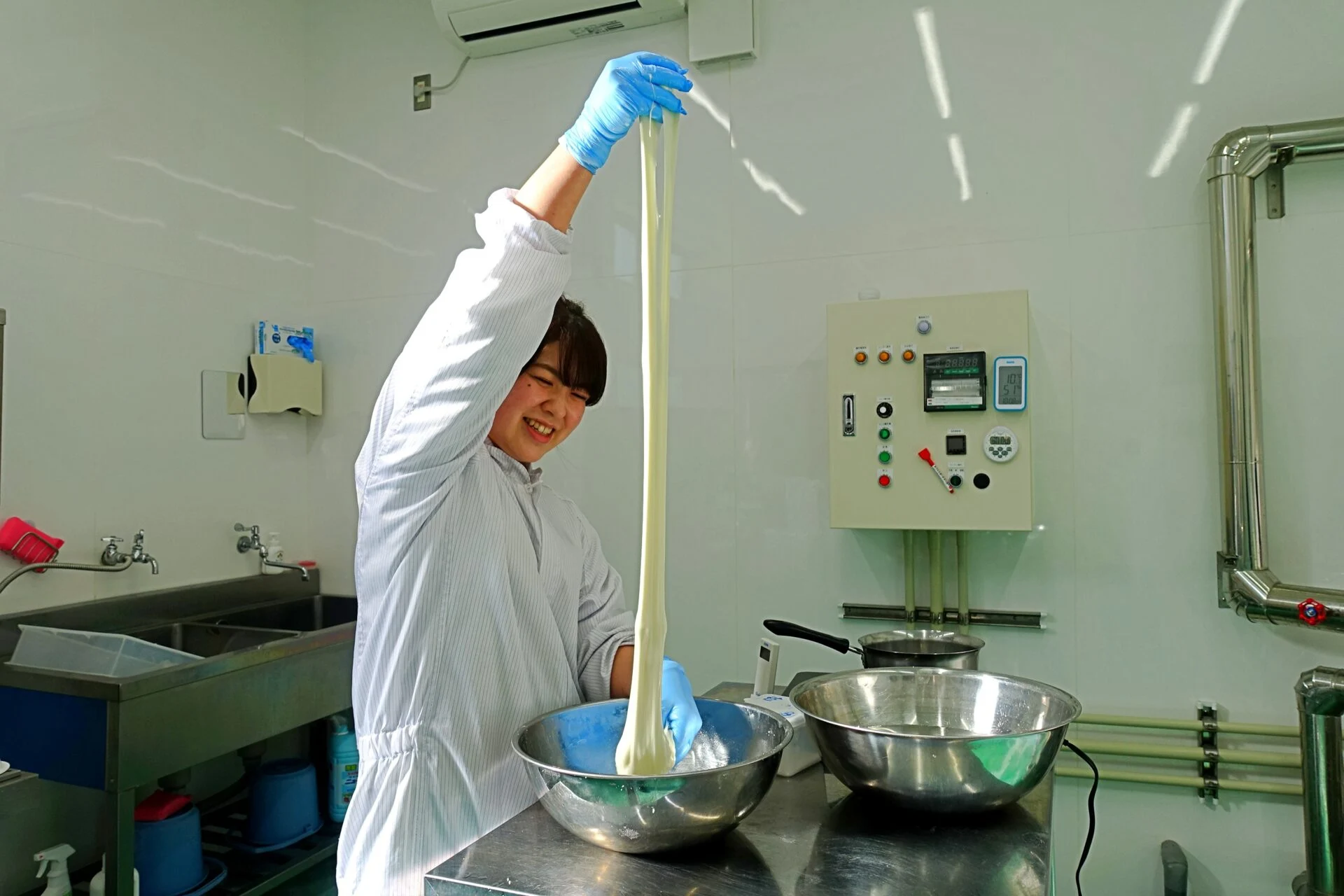
Interview with third-generation cheesemaker Miyake Haruka
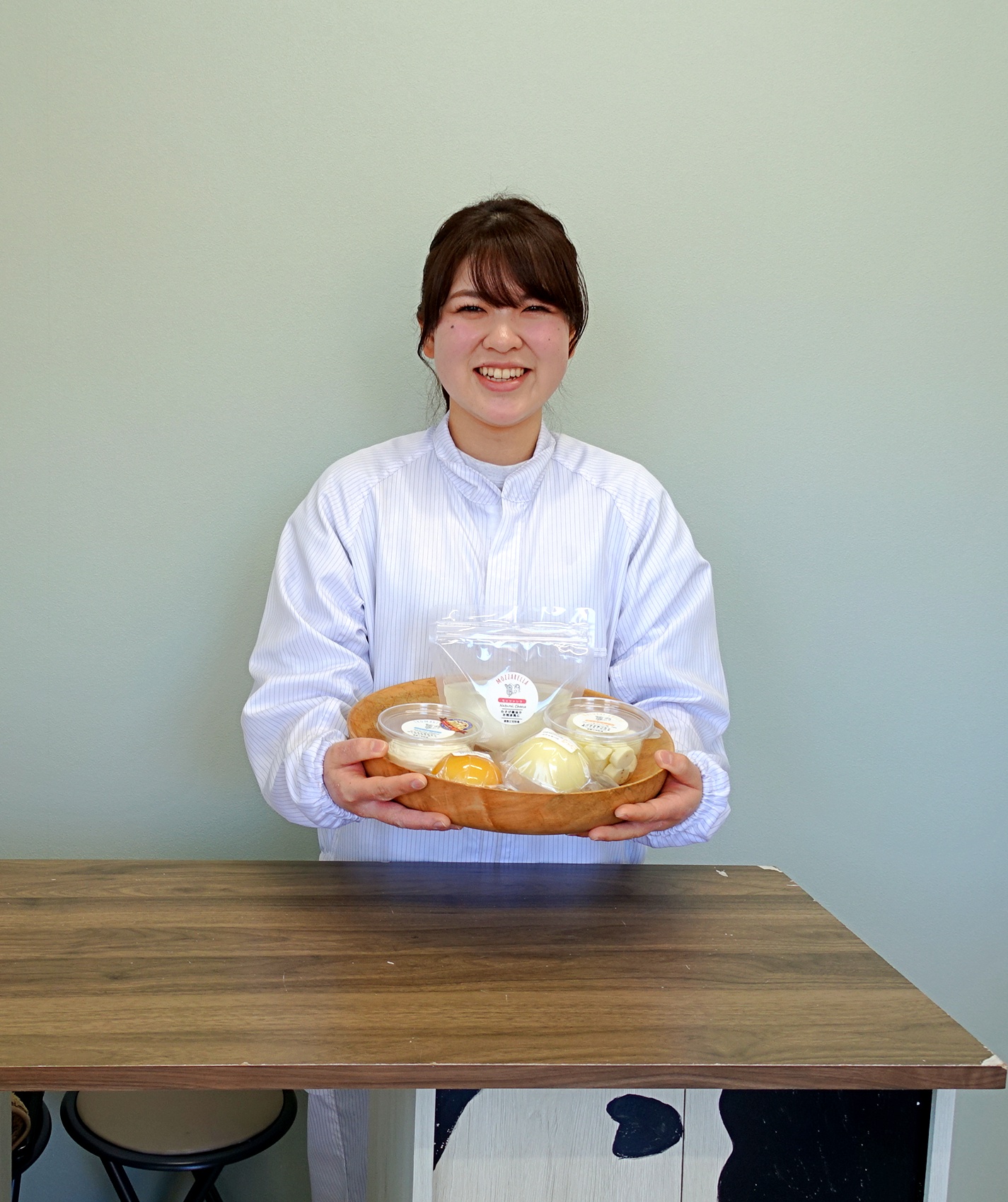
We spoke with Miyake Haruka about what inspired her to establish a cheese creamery and the thoughts behind it.
A major turning point: the JA Zen-Noh Dairy Farming Dream Contest in high school
What inspired you to want to have your own cheese creamery?
Miyake (hereafter, Miyake)
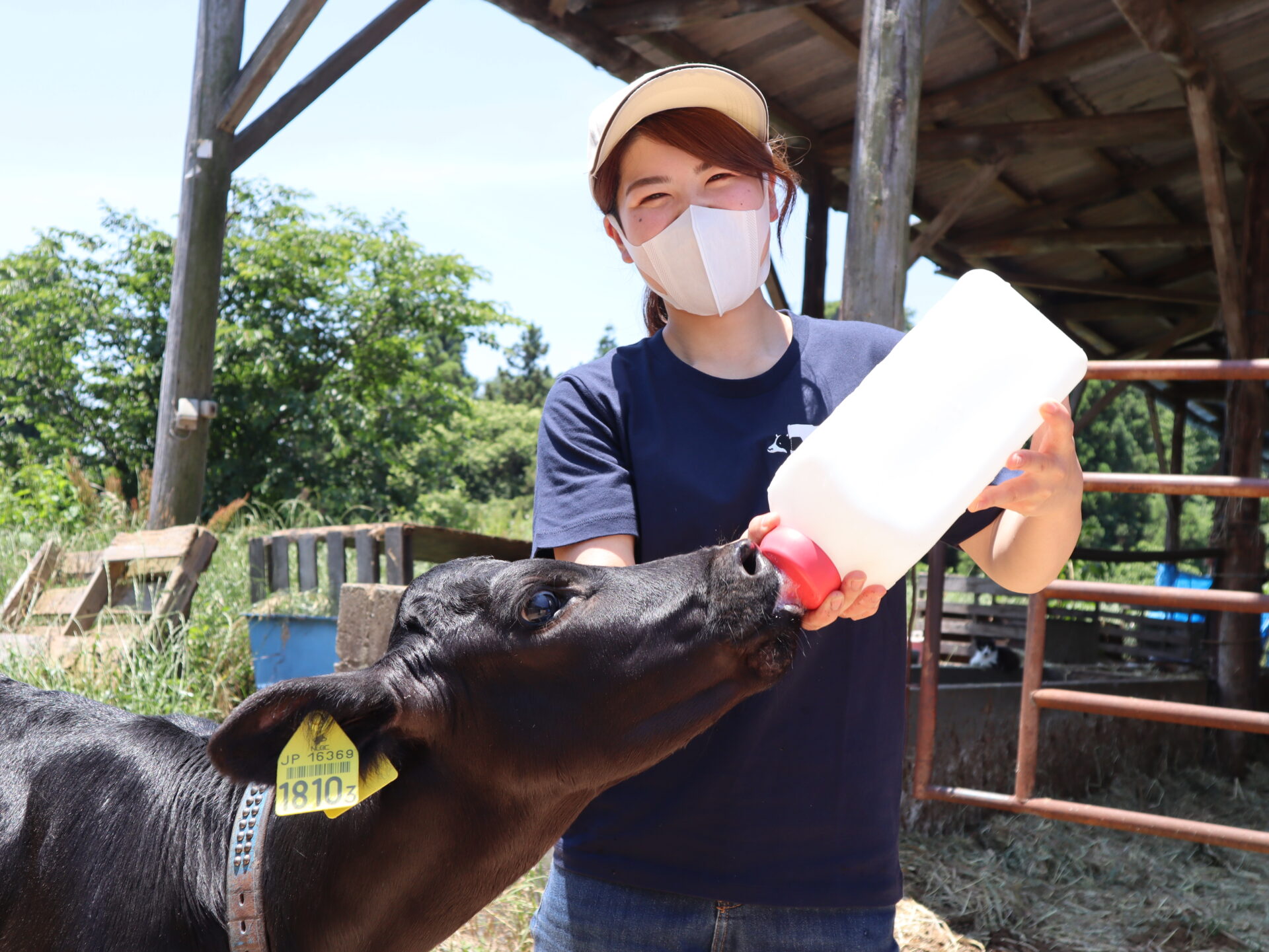
My parents were dairy farmers, so cows and dairy farming had been a familiar part of my life for as long as I can remember.
That said, I wasn't particularly set on taking over my parents' farm. My feelings began to change when I went to an agricultural high school.
One day, my homeroom teacher asked, “Would you like to enter an essay contest?” I entered without giving it much thought.
I wrote about dairy farming and what I wanted to do in the future, and to my surprise, I won the top prize. I was truly amazed—I never expected to win an award.
As part of the prize, I was given the opportunity to train at a farm in Kagawa Prefecture, and that experience became a major turning point.
Cheesemaking at her training farm that she could never forget
What kind of experience was it?
Miyake
It may have been a crossroads in my life!
I loved eating cheese, so I was able to train at a farm that had a cheese creamery.
I got to try making mozzarella there. I was so impressed that you could make cheese by doing just one extra step with milk...
I couldn't forget how enjoyable making cheese was, or how delicious it tasted.
I dreamed of making cheese using milk from my family's farm.
To study dairy farming in depth, I went to university in Hokkaido. After graduating, I spent a year training at a farm in Obihiro.
It was a family-run farm with a cheese creamery.
There, I learned the fundamentals of cheesemaking in great detail.
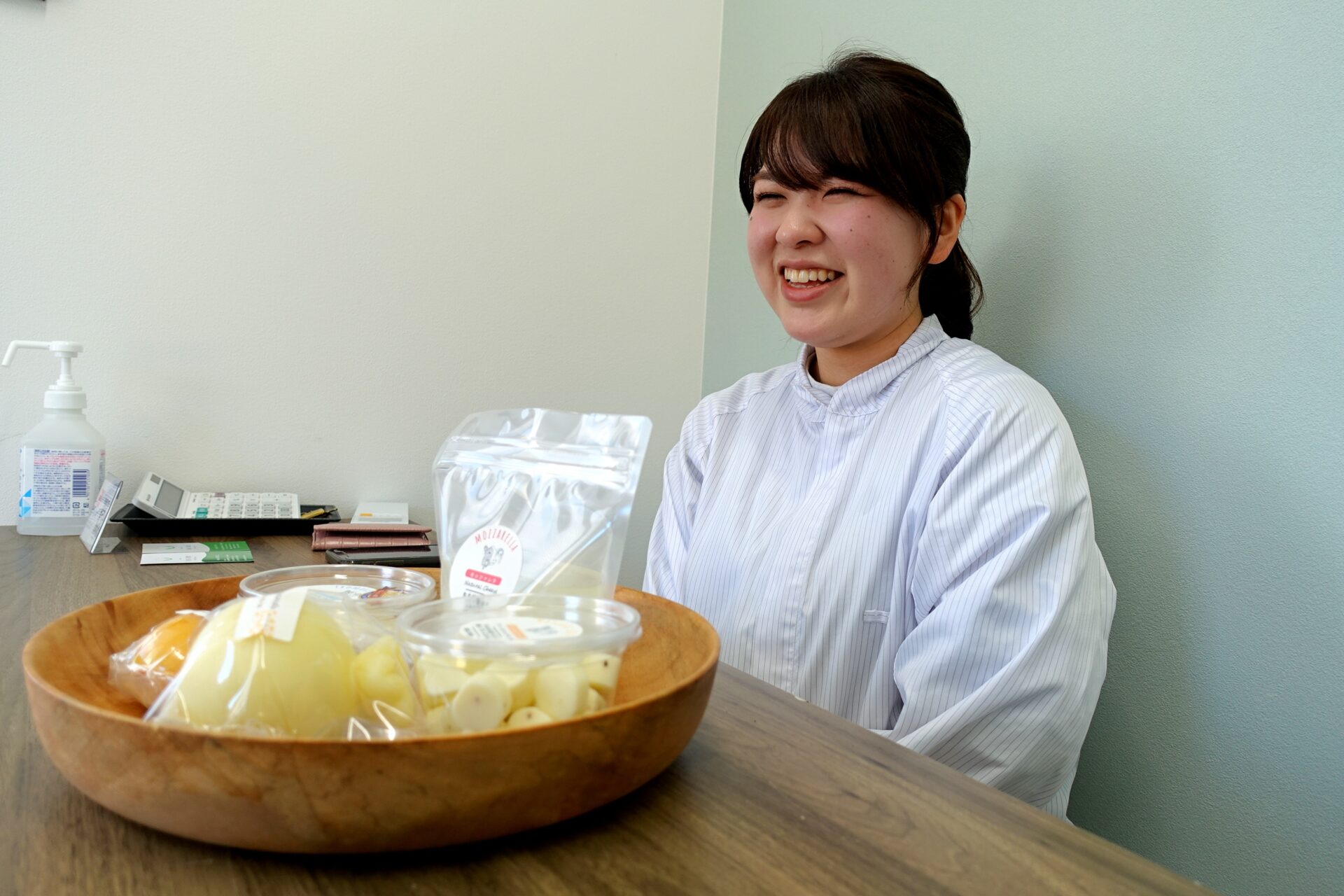
An unexpected problem stood in the way of establishing the creamery
You opened three years after returning to your hometown. Could you tell us about the challenges you faced or any memorable episodes?
Miyake
After returning from Hokkaido, I started working toward establishing a cheese creamery, but things didn't go as smoothly as I had hoped.
The planned site for the creamery had been designated as an agricultural promotion area. Regulations meant it couldn't be used for anything other than agriculture...
The land was restricted from being used to build not only a shop, but also a processed-food factory.
I contacted Kurashiki City many times and consulted senior dairy farmers about what to do. After submitting and revising the application repeatedly, I finally received permission from Kurashiki City to build.
It took a year to get permission. I was also applying for a subsidy, so preparing everything was difficult.
That process took about a year as well. Then it took another year from the construction discussions to completion, so it was three years before we could open.
Were there times when you felt like giving up?
Miyake
Things kept going wrong, and there were many times when I thought, “I just want to give up!”
The stress made me lose as much as 10 kilograms. What supported me through it was, as always, the people around me.
I truly couldn't have established the cheese creamery on my own. I believe I was able to start the business thanks to the help and support of so many people.
It also made me realize once again how important human connections are.
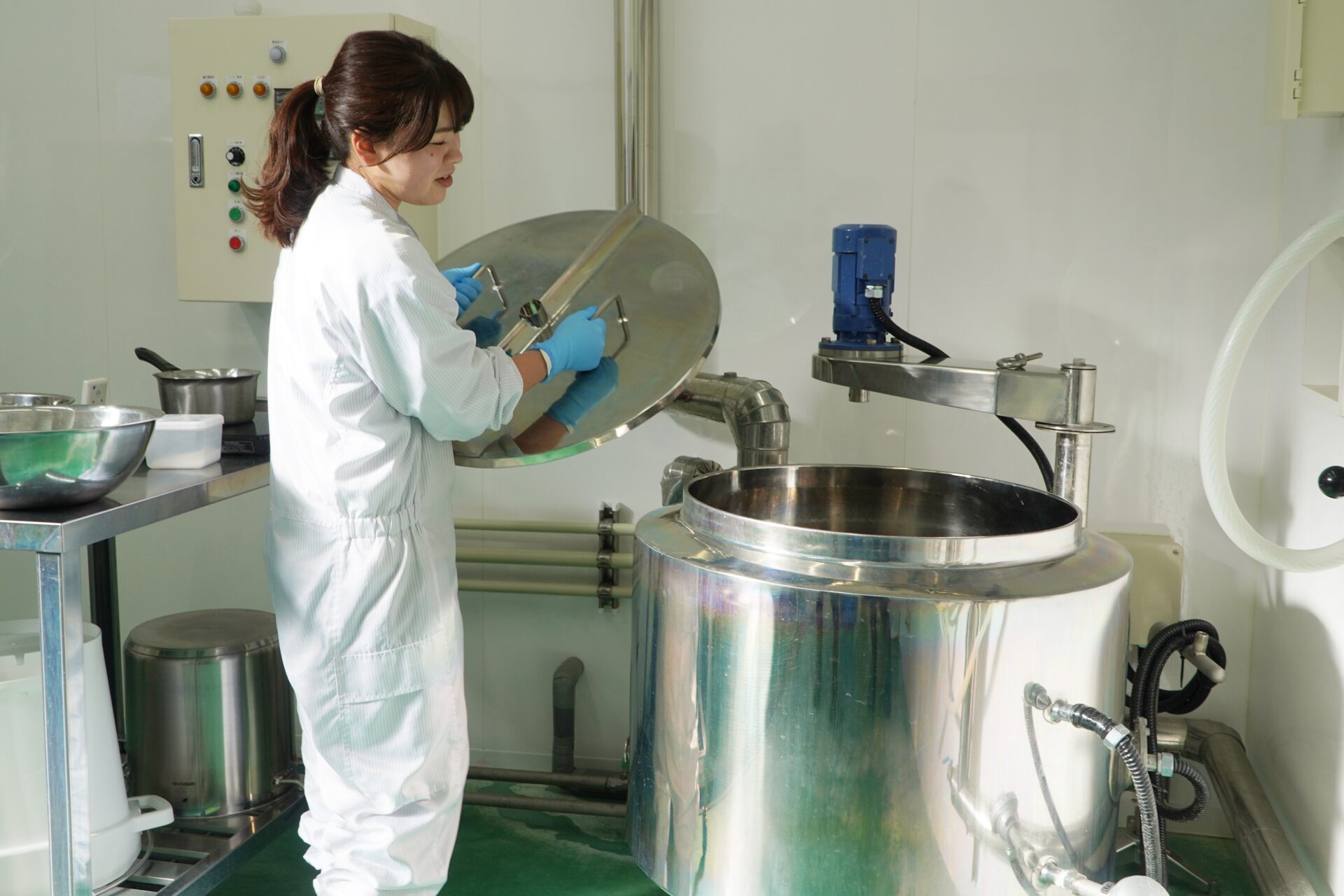
Pursuing deliciousness: the lifelong path of a cheesemaker
Please tell us more about dairy farming and cheesemaking.
Miyake
Actually, dairy farming and cheesemaking have something in common. Both involve working with living things.
In dairy farming, you work with cows; in cheesemaking, you work with lactic acid bacteria. Observation is essential in both.
This is something my parents have always valued, too: they take great care to monitor the cows' health so they don't get sick. They watch how the cows are doing, how full their udders are, and how much milk they produce during milking.
Because caring for them is part of every day, you notice even the slightest change.
On the other hand, lactic acid bacteria are key to cheesemaking.
Because the bacteria are alive, their activity changes depending on the weather and temperature.
Even a one-degree change in temperature can bring out acidity or make the cheese milder.
Even when I do the same things, there are days when I think, “Today's cheese is especially delicious.” It's fascinating.
I carefully observe the condition of the cheese. I fine-tune the process to find the best combinations and keep updating how I make it.
What do you find interesting about making cheese?
Miyake
Every dairy farmer and cheesemaker has their own preferences and things they consider important.
The way the cheese is kneaded, the fermentation time, and the combinations of lactic acid bacteria used all differ.
There is no right answer and no finish line. If you want to keep exploring, the path goes on forever.
That can make it challenging, but I find the depth of cheesemaking fascinating, and that's why I continue.
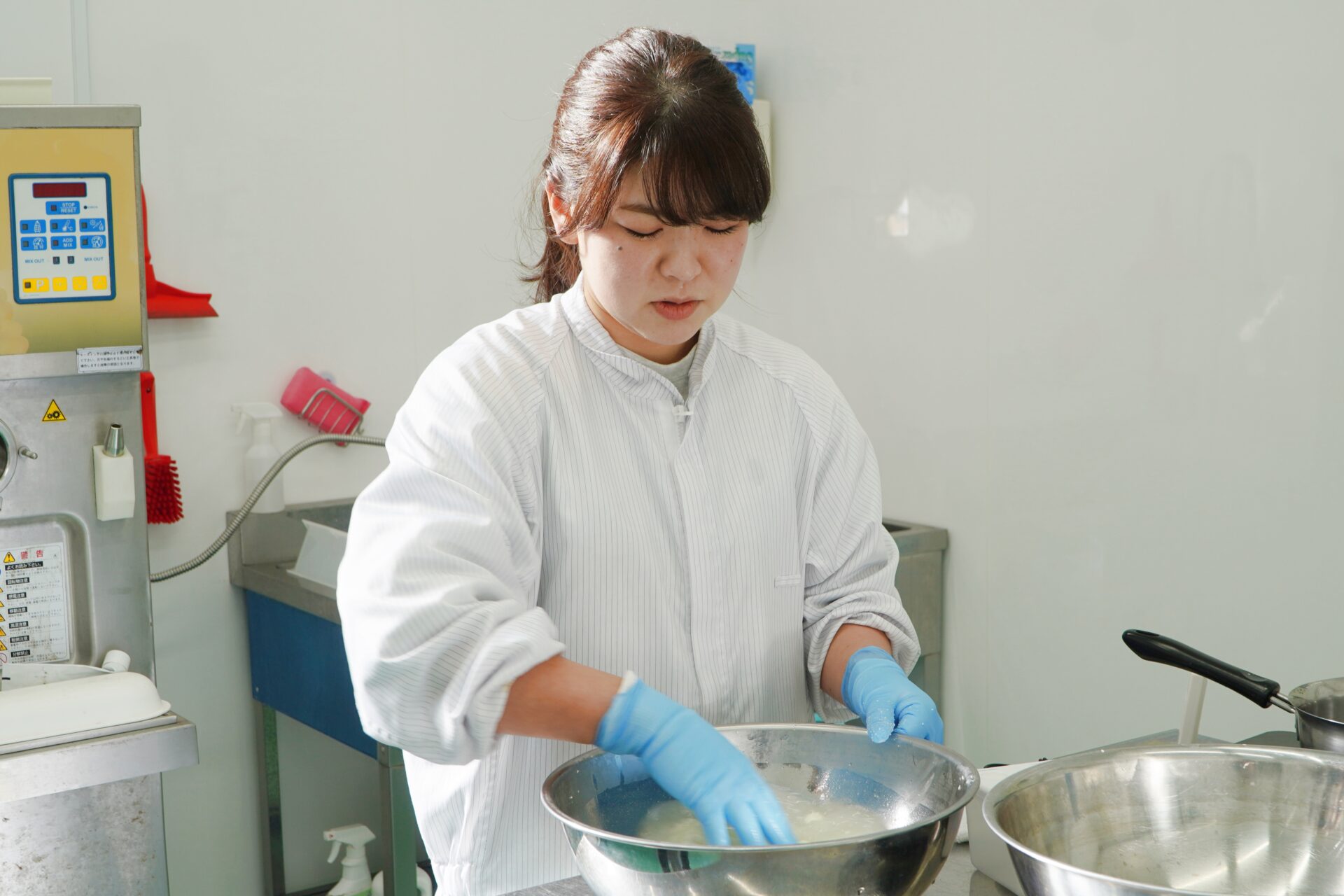
What are your most popular or recommended products?
Miyake
Our most popular product with customers is fromage blanc.
Its texture is closer to yogurt than cheese.
It's made simply by adding lactic acid bacteria, so you can really taste the milk.
It's still not very familiar in Japan, but in France it's so common that it's even used as baby food.
You can spread it on bread or top it with jam. Add grated garlic and it makes a dip, too.
It has a mild flavor, so I think it's easy to enjoy even for people who aren't familiar with cheese.
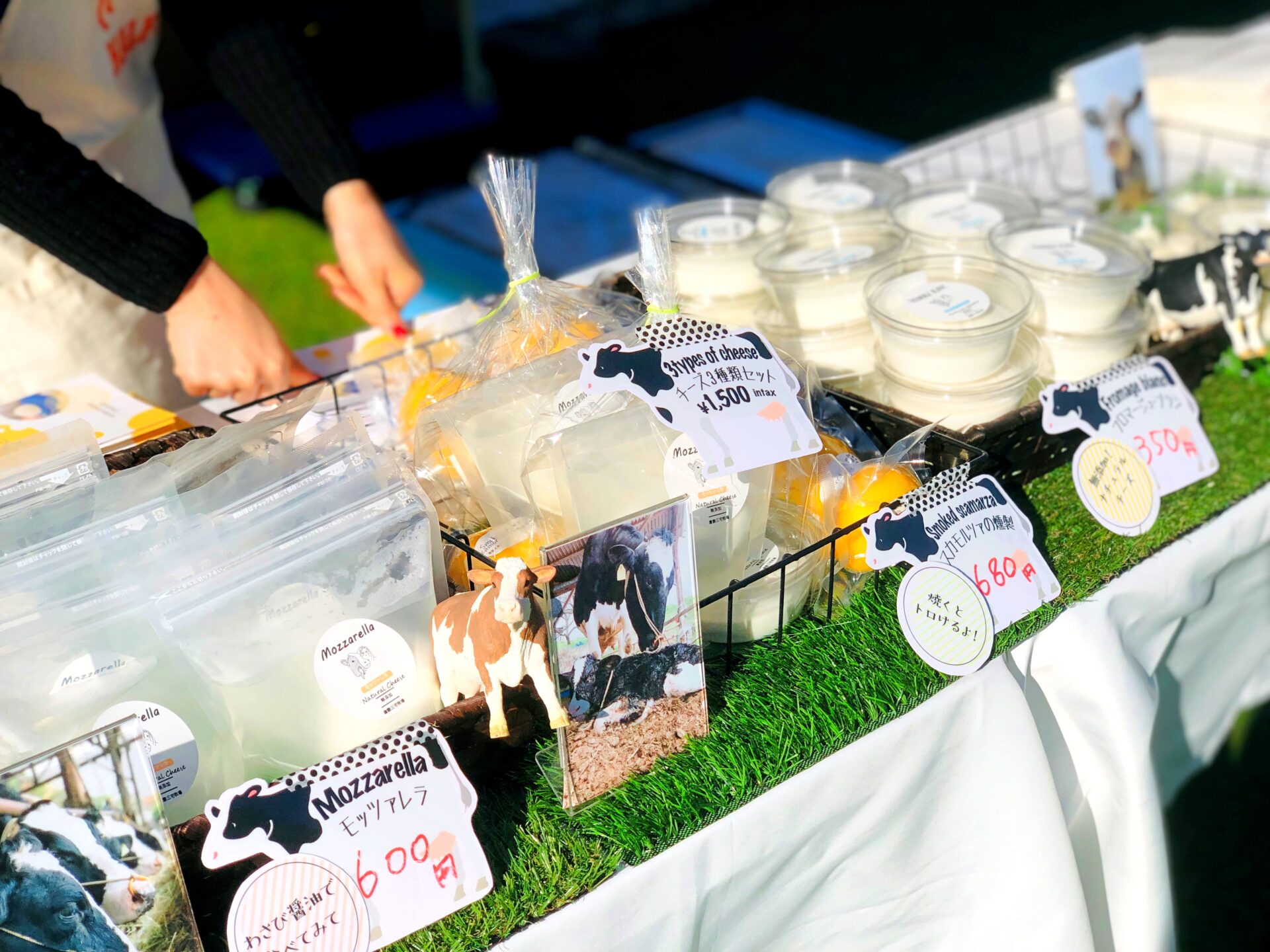
Surprisingly good with Japanese food! Mozzarella with a milky sweetness
Miyake
My recommendation is mozzarella.
When people think of mozzarella, some may picture caprese—tomatoes with olive oil.
But... it goes surprisingly well with Japanese food, too. One combination I really hope you'll try is wasabi soy sauce.
Slice the mozzarella thinly, like sashimi.
The sharp kick of wasabi soy sauce brings out the milky flavor.
It also goes well in miso soup, hot pot, and kimchi dishes. There are so many ways to enjoy it, and I'd be happy if you tried it with all kinds of dishes.
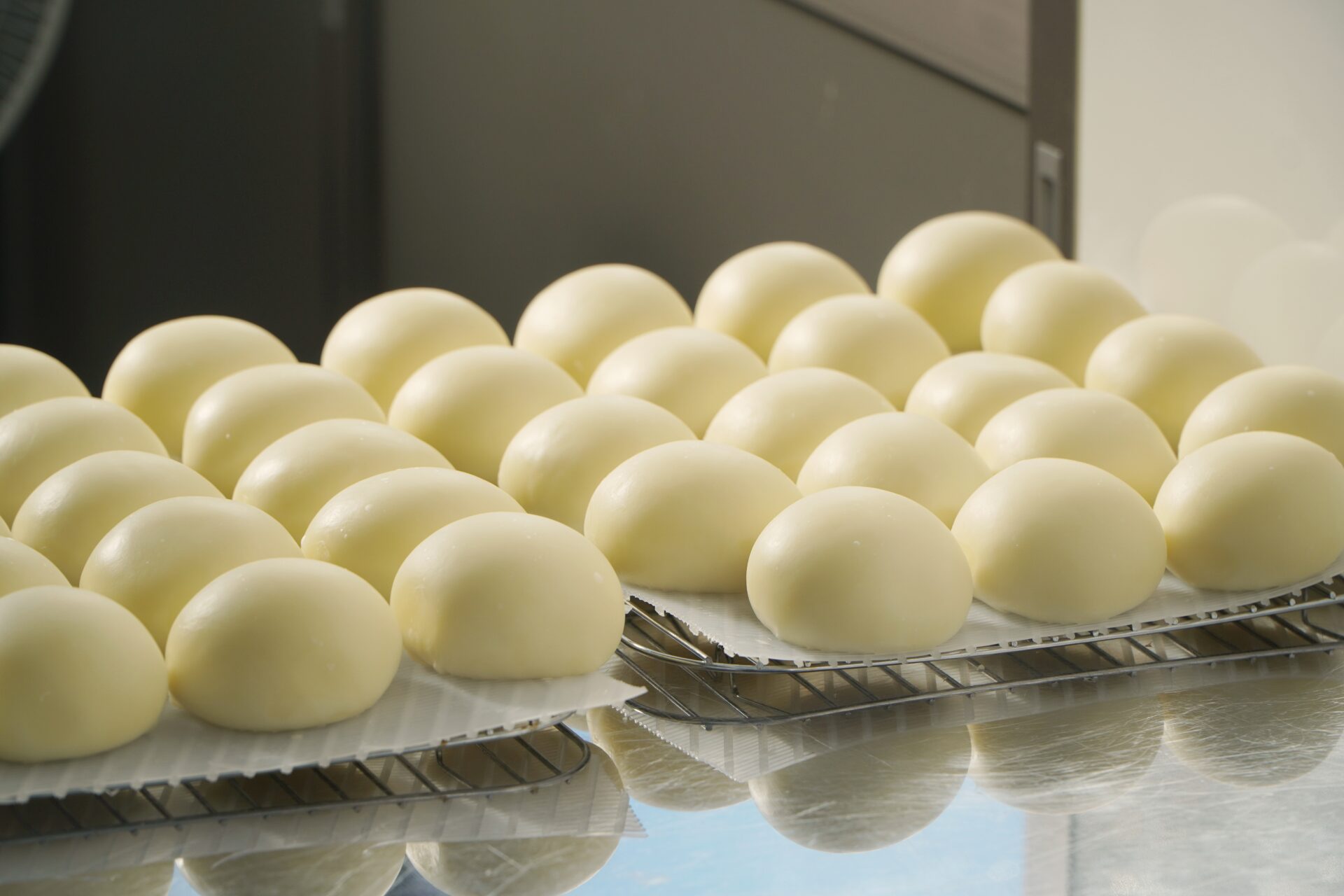
Connecting customers with dairy farmers and cows through cheese
What values guide your business?
Miyake
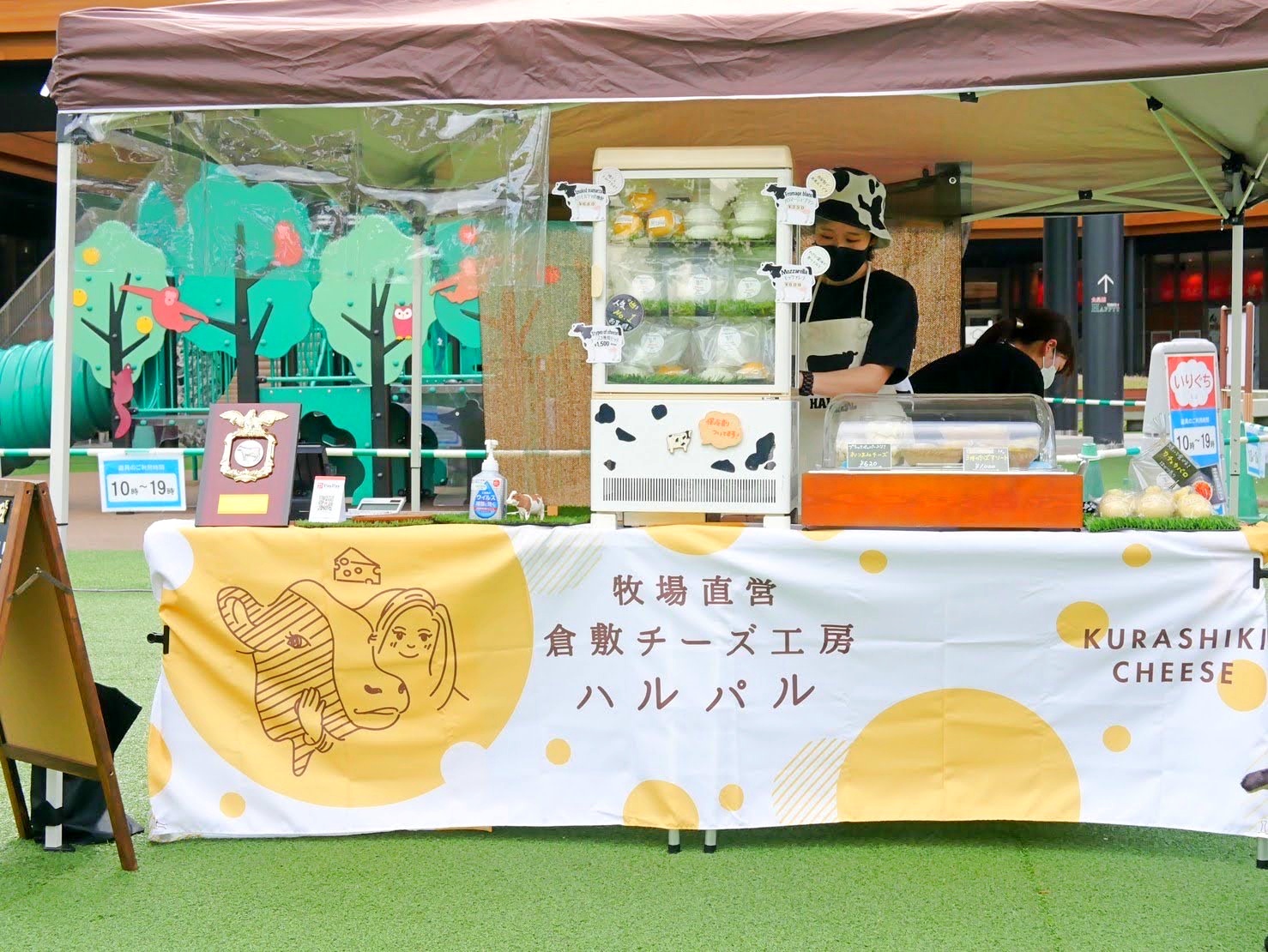
First and foremost, I want more people to know about dairy farmers.
There are currently six dairy farms in Kurashiki, five of them in Tamashima. I'm concerned that this number will decline because of the demanding nature of dairy farming and the lack of successors.
I often sell directly to customers at events, so I can hand the products to them myself. We sometimes get to chat at those times, too.
We're now in our third year since opening, and I'm happy that customers have started telling me things like:
- “I know there's a dairy farm in Tamashima.”
- “The cheese was delicious.”
I'm hearing comments like these more and more.
I feel that awareness is gradually growing.
When people pick up or eat dairy products, it would make me very happy if they thought, even just a little, about dairy farmers and cows.
Supporting dairy farming: another reason she started making cheese
Miyake
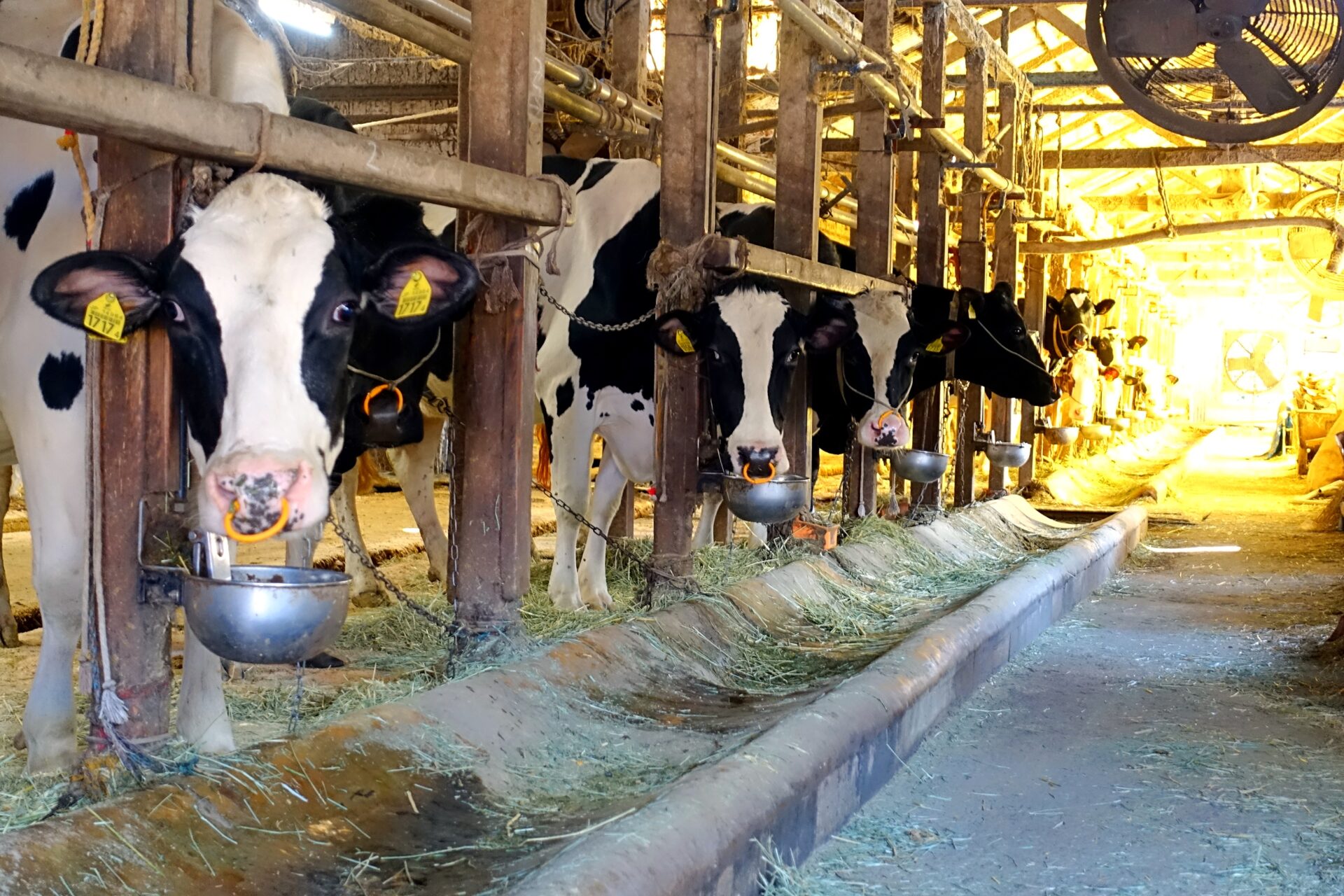
Dairy farming is rewarding work, but it also has a very demanding side.
It's work with no days off, 365 days a year; feed and supplies are getting more expensive, while purchase prices aren't rising. In those circumstances, I thought, it would help to have a product whose value we could create ourselves.
I thought that having another source of income besides selling raw milk might help us get through unstable times.
Having two pillars would also make the business more stable. In fact, during the COVID-19 pandemic, many industries faced a turning point.
The dairy industry was no exception, facing extremely difficult conditions, including distribution disruptions and soaring feed costs.
The dairy farm run by my parents also faced difficult circumstances, but having the cheese creamery helped us get through them.
My parents take care of the cows every day to provide “delicious milk,” and I'm glad I can support them in this way, too.
Tell us about winning the Gold Award at the 14th ALL JAPAN Natural Cheese Contest.
Miyake
It is a contest held every two years to determine Japan’s best cheese.
Many cheese makers set winning an award at the competition as a major goal, and I’m one of them.
I entered fromage blanc, mozzarella, and smoked scamorza in the contest.
The fromage blanc, a fresh cheese, made it to the final judging. I was grateful to receive the Gold Award.
Actually, this was my second time entering.
I never imagined I would win an award, so I didn’t even go to Tokyo, where the event was held. I was making mozzarella at the workshop.
My phone rang around evening, and I wondered what it was. When I answered, it turned out to be someone from the contest office.
They said, “You’ve advanced to the final judging, and the Gold Award is confirmed.”
I couldn’t believe it! Could something like that really happen?
After that, I was so restless that I couldn’t settle down, and I couldn’t concentrate on making cheese.
Winning the Gold Award on her second try brought an outpouring of joy and gratitude
How did you feel when you found out you had won?
Miyake
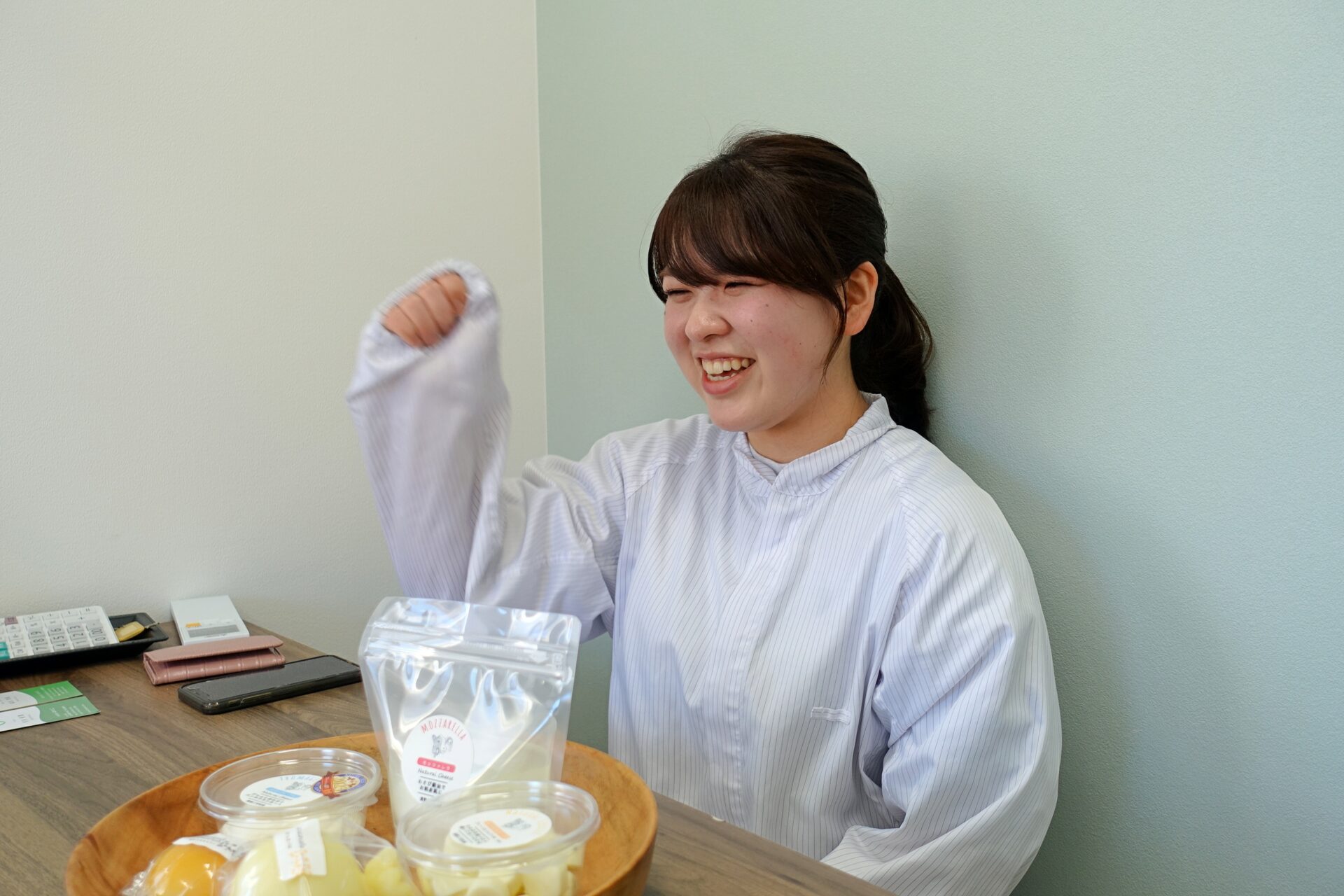
I was so happy. At the same time, all kinds of emotions came pouring out.
There is no one right way to make cheese. What tastes “delicious” differs from person to person.
I make cheese hoping to deliver delicious cheese to my customers, but I never know whether they’ll find it delicious.
Sometimes I’m plagued by doubts, wondering if what I’m doing is really right.
Winning the award also gave me confidence.
It made me feel that what I’d been doing all along wasn’t wrong.
I also felt that my parents’ dairy farming had been recognized.
The process for making fromage blanc is very simple. You just add lactic acid bacteria to milk; you don’t even add salt. The flavor of the milk comes through more directly.
I was so happy to feel that people had recognized the high quality of the milk from the cows my parents raise.
What are your plans for the future, and what would you like to try?
Miyake
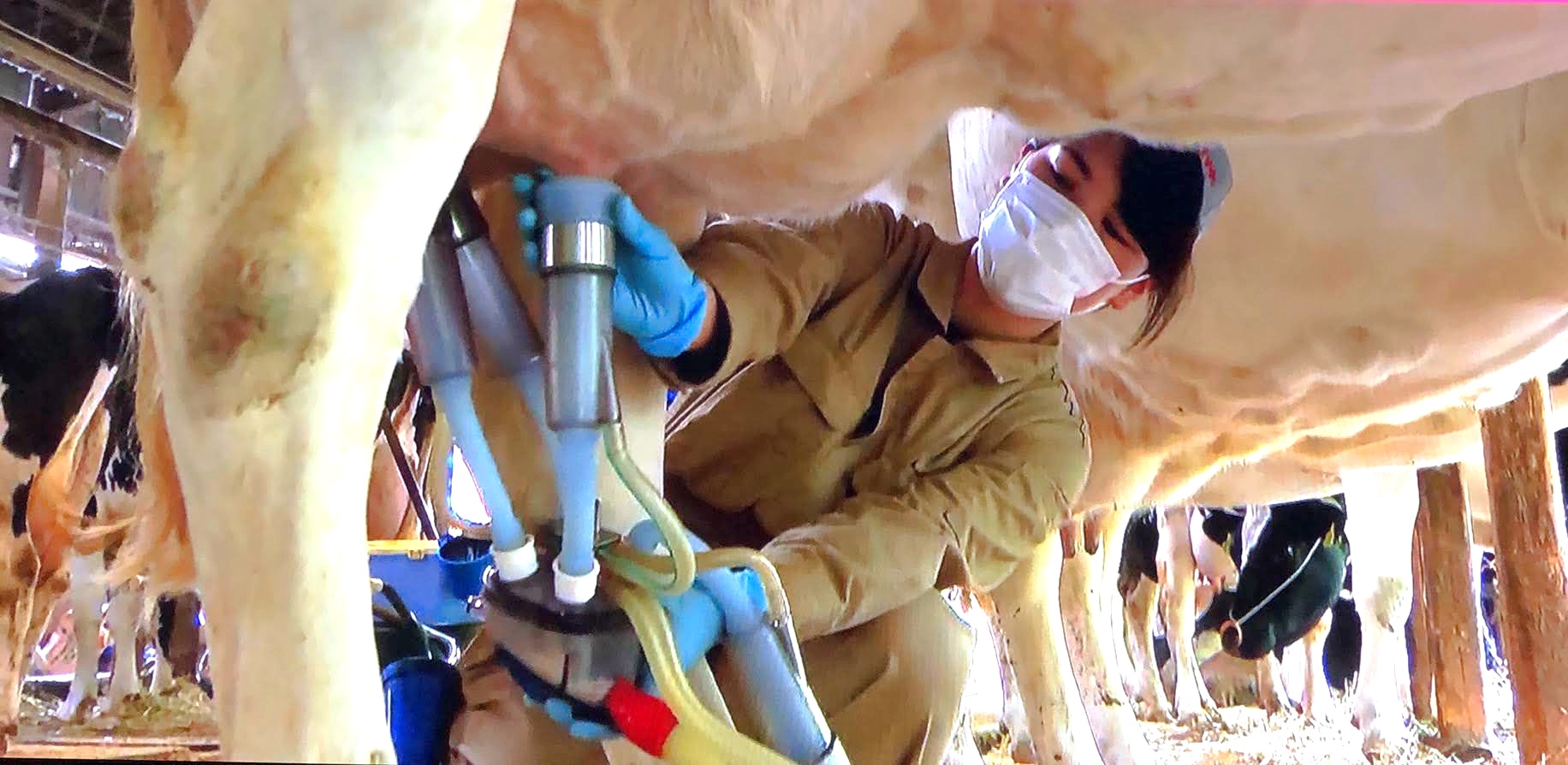
Recently, I’ve also been focusing on developing new products.
After many rounds of testing, I’ve perfected a soft-serve ice cream.
I supply “Miyake Farm Soft-Serve Ice Cream” to Kurashiki Fruit Village in Tamashima, so I’d be happy if you gave it a try.
A new yogurt is also nearly ready.
We plan to supply the yogurt to Okayama Co-op and local farmers’ markets, and sell it at events.
I’d also like to open a shop in Kurashiki’s Bikan Historical Area someday.
Right now, I make the soft-serve using only milk, but eventually I’d like to make soft-serve ice cream with cheese in it.
I can’t forget the cheese soft-serve I had in Hokkaido.
Adding cheese gives it a rich flavor, and above all, the sweetness of the milk goes so well with the cheese’s subtle tang. The sweet-and-salty taste is addictive.
I want to tell more people about dairy farmers’ work and the cows through delicious dairy products.
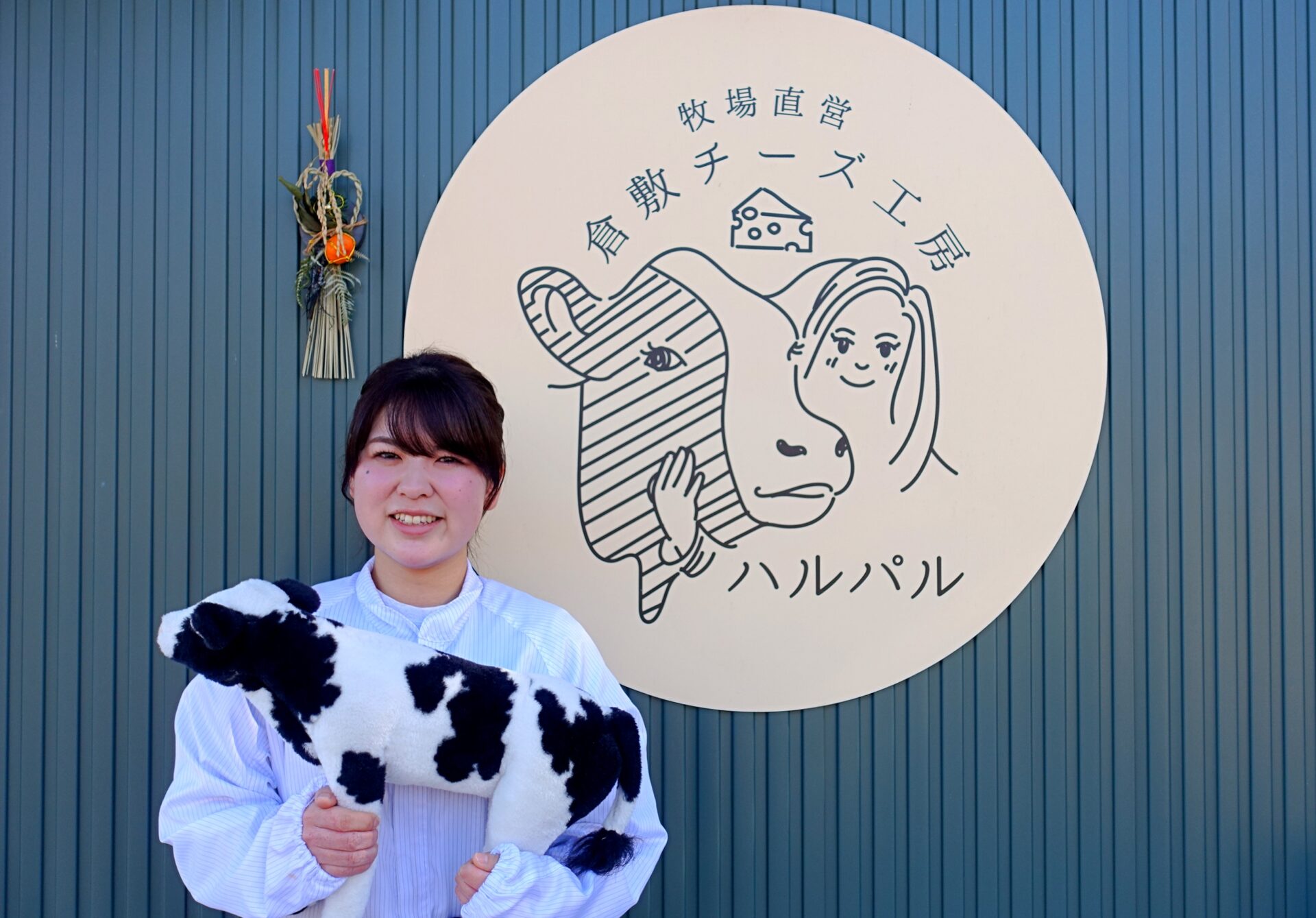
From the Writer
Miyake’s deep love and pride in dairy farming remain unwavering, even amid the difficult circumstances facing the industry.
On the contrary, they have become a source of strength for forging a new path.
She wants to connect dairy farmers and consumers through cheese.
Miyake says that when the two sides connect, dairy farming can continue into the future.
At our home, milk, cheese, and yogurt are always waiting in the fridge as snacks for the children.
And soft-serve ice cream is a special treat we enjoy when we’re out.
We used to eat these things without giving them much thought, but since the day of the interview, our family has been talking about them more.
- “This is milk from a cow, right?”
- “Who do you think takes care of the cows?”
- “Let’s thank the cows and the dairy farmers!”
When we think about the people and animals behind the products and food we eat, we appreciate and enjoy eating even more.
Whether at mealtimes, as a snack, or as a treat to enjoy while relaxing, adding cheese to our lives can make everyday life richer.
Kurashiki Cheese Kobo Harupal Information

| Name | Kurashiki Cheese Kobo Harupal |
|---|---|
| Address | 5423-11 Tamashima Sue, Kurashiki City, Okayama Prefecture |
| Contact | 080-1907-5901 |
| Parking | Available |
| Payment methods |
|
| Reservations | Reservations are required. Orders are accepted by phone, fax, or email. Products can be picked up at the cheese workshop or shipped. Products are also available through the online shop. Phone: 080-1907-5901 (text messages also accepted) Fax: 086-522-6510 Email: info@kurashiki-cheese.com |
| Website | Kurashiki Cheese Kobo Harupal |


What would you like to know about Kurashiki?
Enter a word to search articles on this site