Interview with Kayoko Domoto, in charge of baked goods, and Emi Hashihara, in charge of jam
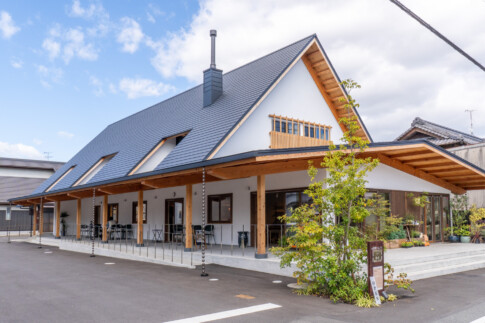
We spoke with Kayoko Domoto, who is in charge of baked goods, and Emi Hashihara, who is in charge of jam, about their work at Miyake Shoten Cafe Workshop, a renovated nagaya gatehouse that is quite different from other workshops.

The artisans behind Miyake Shoten
Could you tell us about your backgrounds?
Hashihara (honorifics omitted)
We both graduated from the same confectionery school in the Kansai region.
We have worked at Miyake Shoten in Honmachi, Hayashi Genjuro Shoten, and the waterside cafe Miyake Shoten in Sakazu. We came here when Miyake Shoten Cafe Workshop opened.
One thing that surprised us about working here is that Okayama has so many kinds of fruit.
Coming from outside the prefecture, we really appreciate how abundant the fruit is.
Peaches and grapes in particular seemed like luxury items to us, so we were surprised by how often we get to enjoy them in Okayama.
It’s nice to have fruit so close at hand.

Seasonal jams and baked goods
Do you have any particular principles when it comes to your jams and baked goods?
Hashihara
We use fruit that’s in season to make products that reflect the seasons and the way people live.
We buy fruit at a fair price that would normally be discarded and never make it to stores because it’s slightly damaged or for similar reasons. We’re able to use it generously.
For example, we handle about two tons of peaches over the course of a season, and we do all the processing here in the workshop, including peeling and removing the pits.
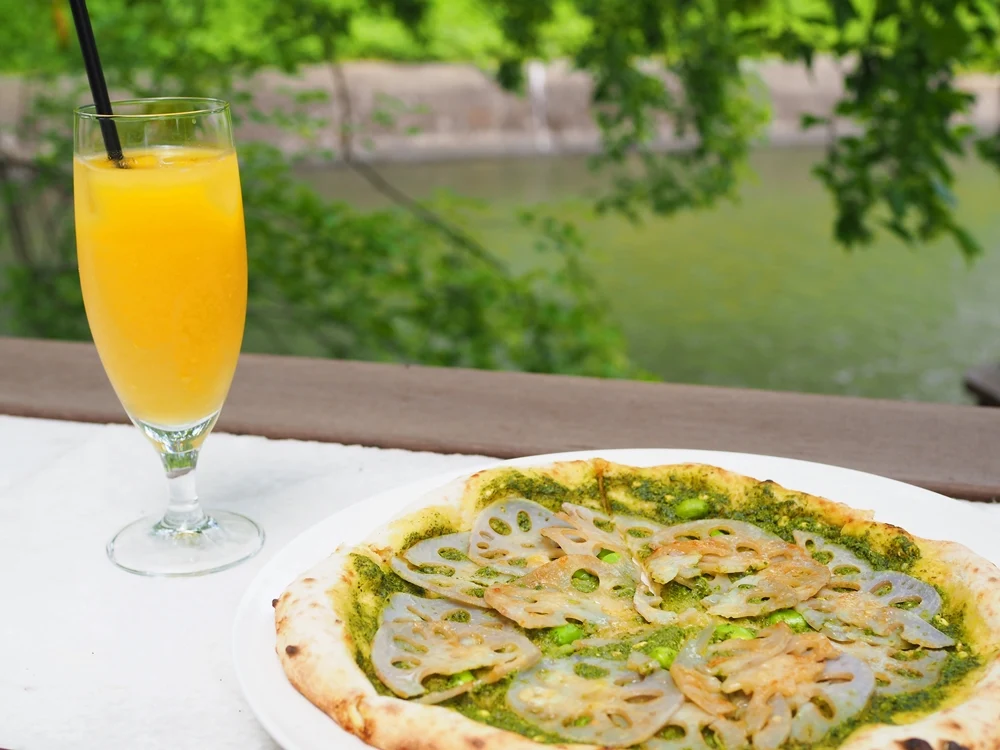
We also make good use of the fruit peels, using them to make pizza dough at the waterside cafe Miyake Shoten.
We use the peels to make our own yeast, which goes into the pizza dough.

Domoto (honorifics omitted)
The fruit we work with changes with the seasons.
In summer, we have peaches; as the season progresses, Pione grapes and figs; and in autumn, chestnuts.
We also fold seasonal fruit into our baked goods.
We bring out the seasons in our pound cakes with ingredients like fresh ginger in early summer, white peaches in summer, and lemons in winter.
We also use ingredients suited to the season in our financiers and florentines.
Challenges along the way
Are there any challenges?
Domoto
Working with fruit can be challenging at times.
For example, even peaches of the same kind can vary in sweetness depending on the variety.
We need to adjust things, such as adding acidity, depending on the fruit we’re working with, so it’s important to know the varieties.
The temperature and humidity also affect how things bake, so we need to make adjustments there, too.

Valuing connections with farmers
You source your fruit from farmers in Okayama and nearby areas, right?
Hashihara
Yes, we source it from local contract farmers.
Miyake Shoten wants to value its connections and collaboration with farmers, so we sometimes visit them in person.
Meeting farmers in person lets us learn things we wouldn’t know just by staying in the workshop.
When we meet farmers who grow crops without pesticides or with reduced pesticide use, we can see how much care and love they put into their work.
We’ve also helped harvest lemons.

Hashihara
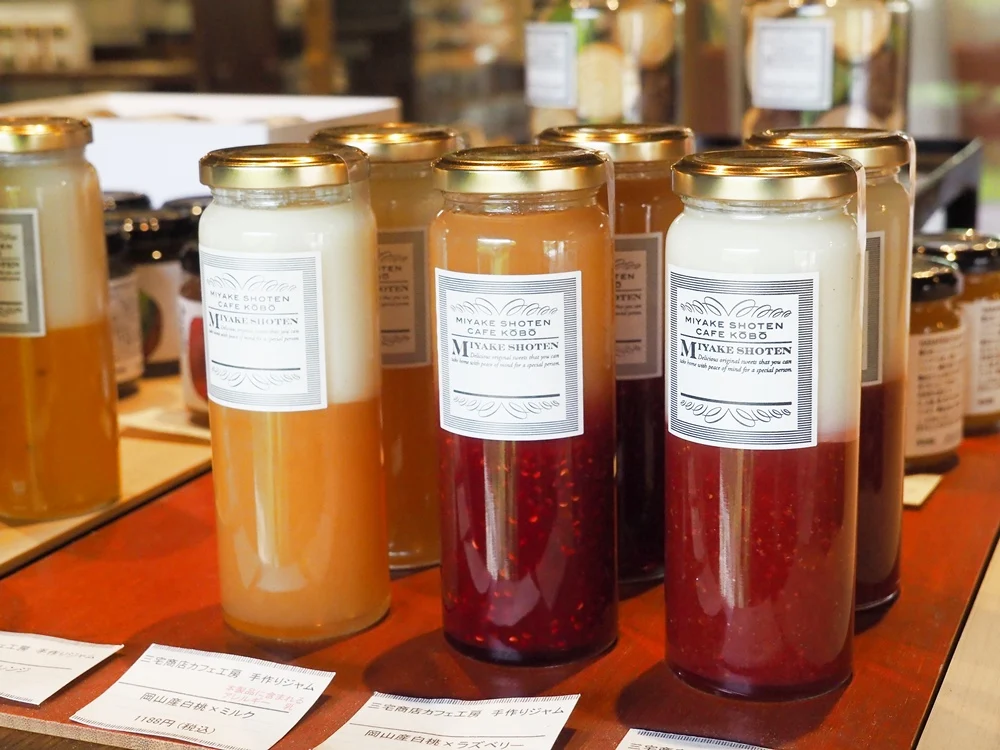
We use an Italian vacuum kettle to make our jam.
It can create a vacuum inside, allowing us to cook the jam at a low temperature of 70 degrees.
Cooking it under vacuum helps preserve its beautiful color.
The vacuum process also preserves the aroma and flavor, which makes the farmers happy.

Domoto
They say, “You’ve made something so delicious with the fruit we grew ourselves.”
Many farmers are delighted to see the fruit they’ve grown with such care turned into a product and sold.
Seeing how happy they are makes us feel responsible and reminds us that we have to keep doing our best.
How to enjoy jam and baked goods
What do you have in mind when making your jams and baked goods?
Hashihara
We originally baked bread at the waterside cafe Miyake Shoten in Sakazu.
When we thought about what would go well with bread, we decided to make jam and baked goods.
That’s how our jams and baked goods came about.
We used to make them at Hayashi Genjuro Shoten, but have been making them here since Miyake Shoten Cafe Workshop opened.
We make them hoping people can enjoy the cafe’s flavors at home, too.
Domoto
For example, people use our jam to make parfaits at home or serve it alongside their cooking.
Of course, we hope people will also give it as a souvenir.
Some people enjoy it as a souvenir and then buy it for themselves the next time.
We have an online shop, so you can buy our products from anywhere in Japan.

Hashihara
We’d also be happy if people used our products as gifts.
We have a red-and-white two-layer jam that is sometimes given as a wedding gift or a gift to celebrate a new home or other occasion.
It’s also popular as a Mother’s Day gift.
From the Writer
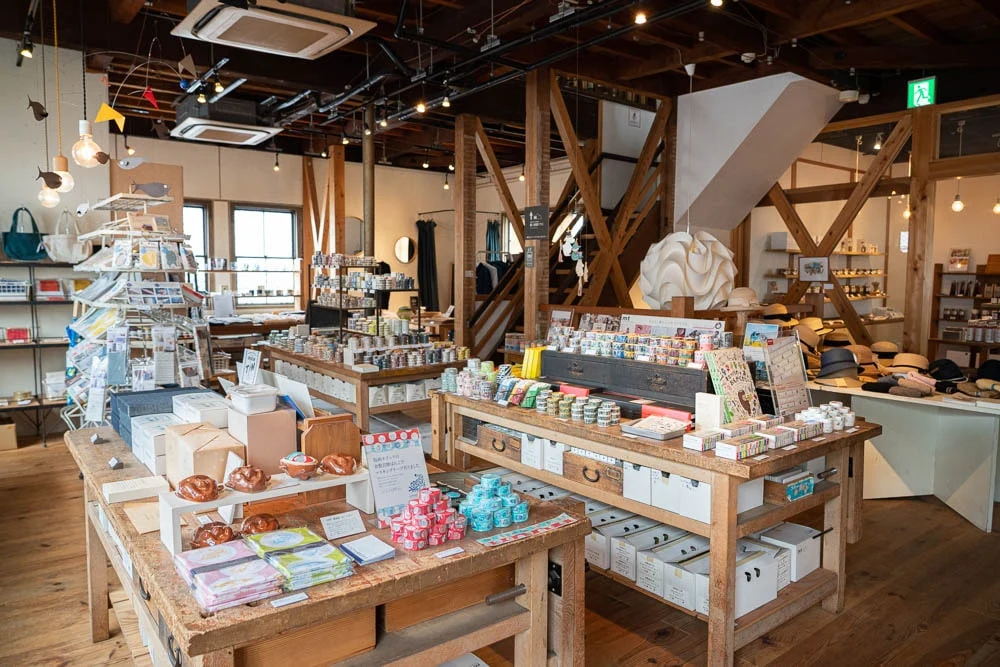
Miyake Shoten Cafe Workshop makes some of the menu items for its affiliated cafes, as well as processed products such as jam and baked goods.
Since its products are used as souvenirs and gifts and are also available through an online shop, before visiting, I had imagined it would be a large factory with steel structures.
In reality, however, the workshop is housed in a renovated building that has long been an important part of the local community.
This cafe workshop, which preserves a building that is a local treasure while valuing its connections with farmers, is truly one of a kind.
I hope the jams, baked goods, and other treats made in this small workshop in Sakazu will continue to bring smiles to many people.


What would you like to know about Kurashiki?
Enter a search term to find articles on this site