Interview with Kameyama Yuka, representative of Nijiiro Shoten

We interviewed Kameyama Yuka, representative of Nijiiro Shoten.
Renovating to “make truly good products and sell them at fair prices”
Could you tell us why you stopped serving crepes, which were unusual around the Bikan Historical Area, and renovated the shop?
Kameyama (surname only)
Thankfully, our crepes were very popular, especially with younger customers. On the other hand, we felt that it was an issue that few customers noticed or purchased the goods in the shop after coming in just to use the cafe.
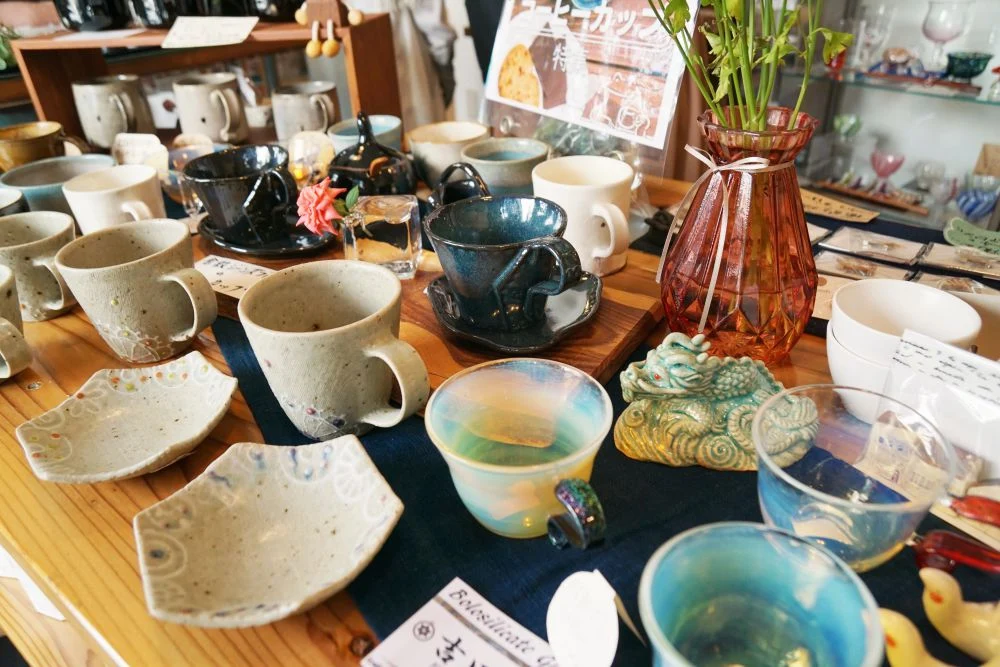
Nijiiro Shoten opened primarily to sell goods made at welfare facilities and similar places, which are displayed inside the shop. However, our concept of “making truly good products and selling them at fair prices” means that each item ends up having a high price.
So we felt we needed to create a shop where our goods could reach people who appreciate the value of high-quality items that cost more, and that led to the renovation.
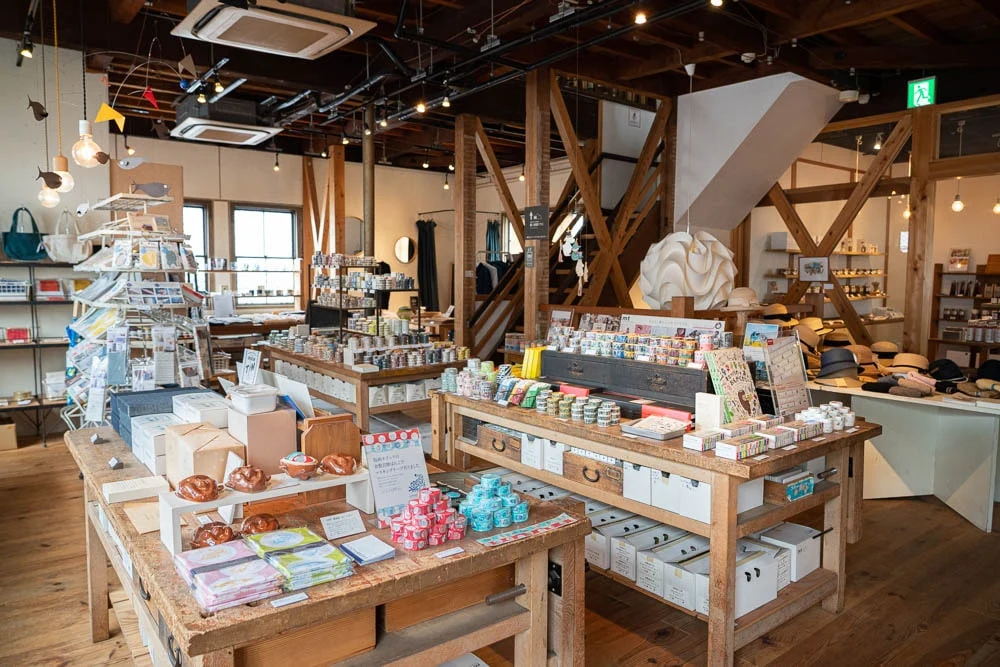
Now, customers in their 40s to around their 70s who are looking for “truly good things” have started coming in. The shop is beginning to thrive as a place to share the quality and appeal of our products, the interest of handmade work, and “experiences you can only have here,” such as sashiko workshops.
We’re also seeing more customers from overseas.
They take their time looking at one-of-a-kind goods that can only be bought here, and enjoy buying snacks made with fruit that has been turned into dried fruit, which is difficult to take home overseas.

What is the purpose of inviting guest chefs?
Kameyama
We stopped serving crepes regularly as part of the renovation, but we still have the kitchen, so we hold pop-up events where we invite chefs to serve gourmet food.
We invite guest chefs whom the members of our management meetings genuinely want to eat from, including shops with many fans that are hard to get to from Kurashiki, and shops that don’t have a physical location.
That’s because Nijiiro Shoten is a little away from the central area of the Bikan Historical Area, so we usually have more customers who come specifically for the goods than those who just happen to drop in.
But on days when a guest chef visits, their fans come in. Customers who are different from our usual ones enter the shop, discover an artist’s work and say, “This is lovely,” then take it home with them.
I think that’s a great cycle.
I’d also be happy if guest chefs could use this as an opportunity to increase sales or as a stepping stone toward opening their own physical shop.
A place to discover one-of-a-kind items found “only here”
You also hold workshops regularly.
Kameyama
Every item displayed at Nijiiro Shoten is a one-of-a-kind item found only here.
And if you think, “What about something made at a workshop?”—that would be a one-of-a-kind item found only here, made by you.
We plan various workshops in the shop, and when ajisaidrop is here, they hold sashiko workshops.
We sometimes provide the materials for workshops, but we also hold workshops where people bring their own sashiko projects and sit around a large table, quietly stitching together.

We hold these workshops hoping to become a kind of community for people who find the products displayed in this shop lovely.
One workshop that we offer regularly lets you choose what you want to make from a variety of patterns, then pick your favorite from several types of thread and make a covered button. It takes about 30 minutes to an hour to finish, so it’s easy to join.
With store-bought kits, the patterns and thread are predetermined, but at ajisaidrop’s workshops, you can choose everything yourself, so we recommend them as a way to more fully experience something “found only here”.
These workshops are popular not only with Japanese customers but also with visitors from overseas. Sashiko works are loved around the world, so the thread and experiences available only here seem to be precious to them.

Why doesn’t the shop name or other information indicate that the items on display are made at welfare facilities and similar places?
Kameyama
The reality is that items made by people with disabilities are often sold on the market at low prices. However, Nijiiro Shoten displays “truly good things,” many of which are made using high-quality materials. When we considered that we wanted to sell them at fair prices, we concluded that we should not put welfare front and center.
When you pick up an item at a shop selling goods or folk crafts, don’t you first become interested in it because of how it looks or feels, thinking, “That’s lovely”?
We also place shop cards and similar information next to our products.
People who genuinely love goods and folk crafts will first take an interest in the product itself, and then should also relate to the story behind how something they liked came to be.

There are many shops selling everyday household goods in the Bikan Historical Area.
We run our shop hoping people will visit us as one of those shops and enjoy the once-in-a-lifetime encounter with the item in front of them. We’d be grateful if they then became interested in the artist’s story as well… That’s why we deliberately avoid overusing the term “disability welfare” in our shop name and on social media.
Also, while the goods are made at welfare facilities and similar places, that isn’t necessarily the case for our guest chefs. We hope that people who come looking for gourmet food will see our shop for the first time and become interested in it.
We want to cherish both encounters with people who sincerely want to support disability welfare and encounters with customers who simply want to enjoy a once-in-a-lifetime meeting with a work of art.

Do you have any tips for choosing items that are “found only here”?
Kameyama
All the items at Nijiiro Shoten are displayed so you can pick them up, so we recommend holding them in your own hands and experiencing their texture and how they feel to hold.
Even items that look similar feel slightly different.
Because these are tools you use every day in your life, try choosing while imagining how you would use them in your own home.
Hoping to evolve into a place for “encounters” and “neighborhood chats”
How would you like to use Nijiiro Shoten in the future?
Kameyama
First, I hope it will become a place for encounters.
I want it to be a place where people can enjoy not only the works, but also the artists and the stories behind them.
I’d also like it to become a place for neighborhood chats.
Working quietly is one of the appealing aspects of workshops, but another great part is working with your hands while chatting with people who share your interests.
Communities where people gather, work with their hands, and chat have existed around the world for a long time. I hope Nijiiro Shoten can become that kind of place.

From the Writer
One-of-a-kind household goods and the lives of people in the Bikan Historical Area are highly compatible, and the shop may become one of the essential communities for people seeking everyday goods.
See it, touch it, experience it, and take it home.
This is a recommended shop for anyone who wants to take their time finding a favorite one-of-a-kind item.
Nijiiro Shoten details

| Name | Nijiiro Shoten |
|---|---|
| Address | 1-24 Higashimachi, Kurashiki City, Okayama Prefecture |
| Parking | None |
| Hours | Fridays (1:00 p.m.–4:00 p.m.) Saturdays, Sundays, and public holidays (11:00 a.m.–4:00 p.m.) |
| Closed | Monday, Tuesday, Wednesday, Thursday Check the calendar posted on the official Instagram each month |
| Payment methods |
|
| Website | Nijiiro Shoten official Instagram |


What would you like to know about Kurashiki?
Enter a search term to find articles on this site