Interview with the Curator of Nozaki's Historical Residence
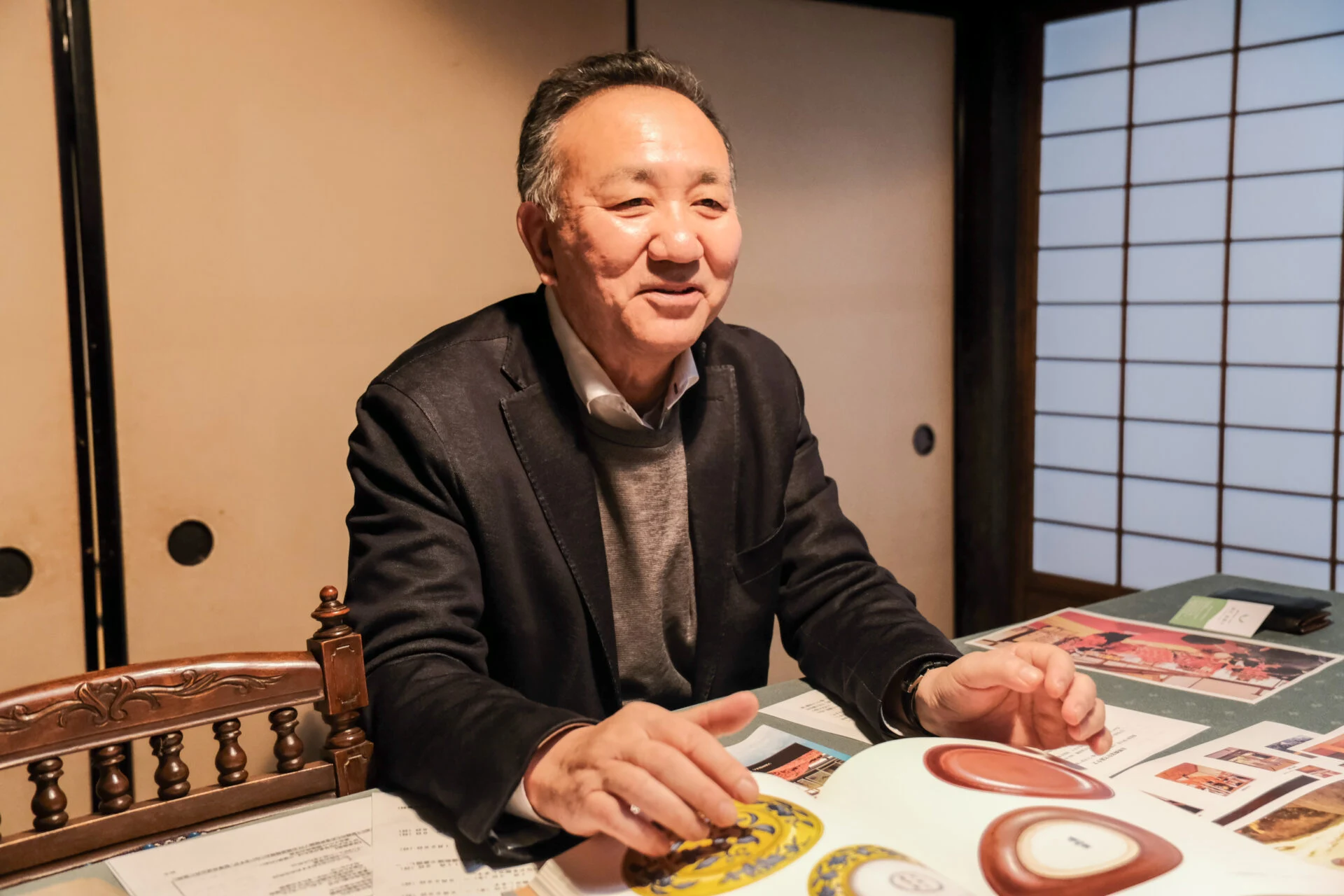
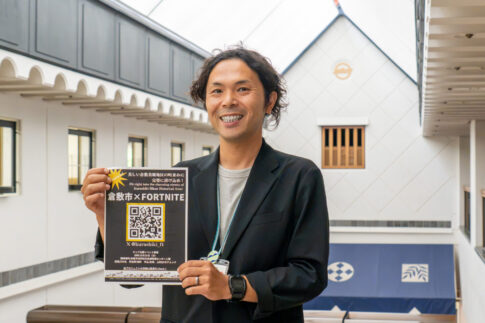
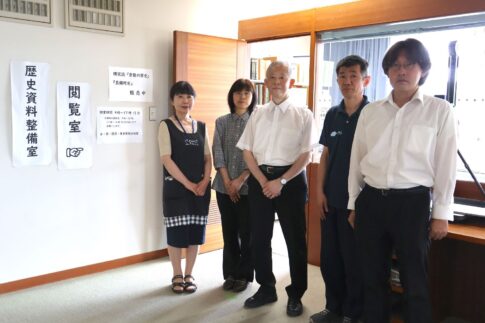
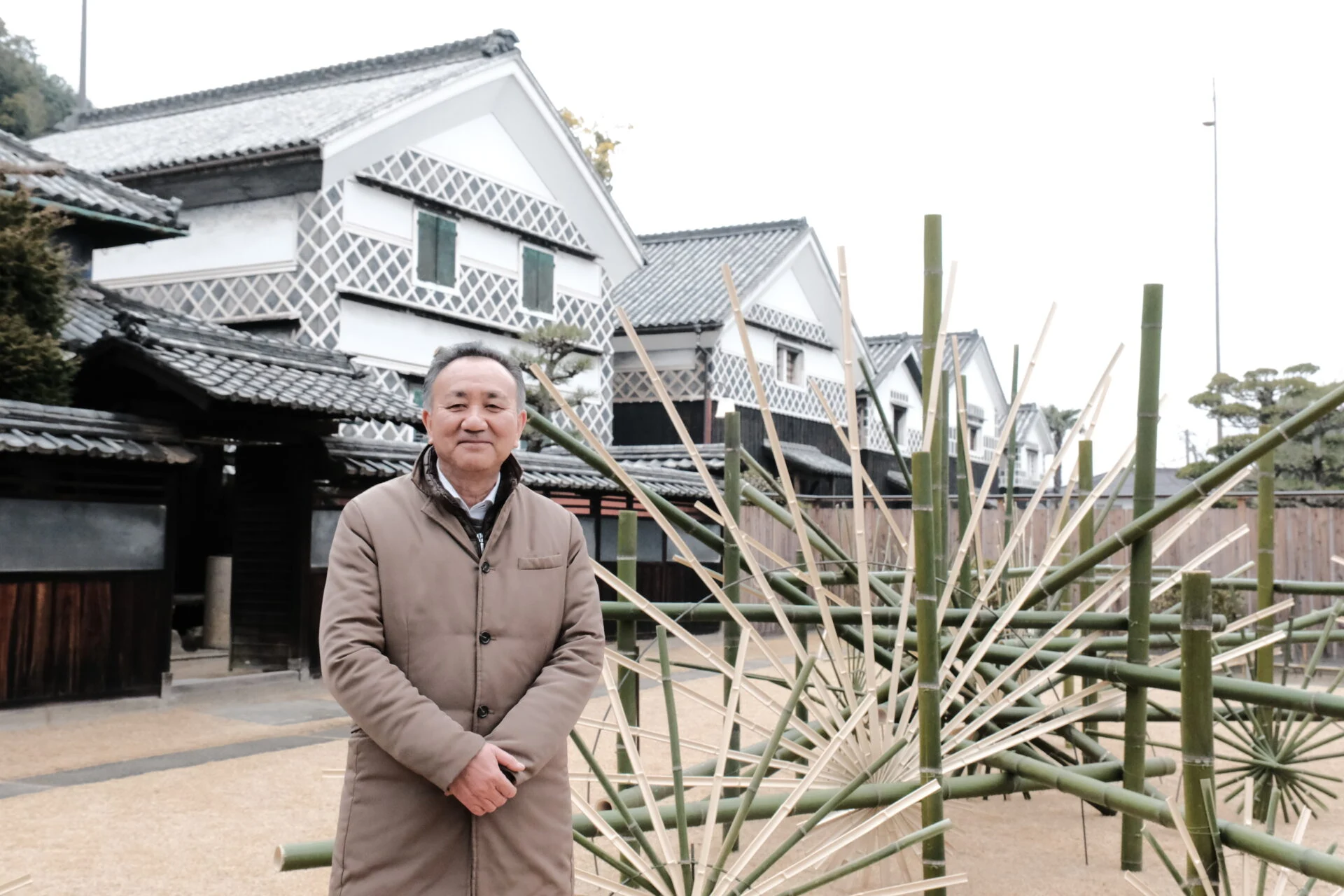
I spoke with Tsuji Noriyuki, the curator of Nozaki's Historical Residence, about how they continue to protect and utilize the residence.
A Nationally Designated Important Cultural Property that has been Carefully Passed Down
I heard that the entire Nozaki's Historical Residence is designated as a Nationally Designated Important Cultural Property.
Tsuji (no honorific)
Nozaki's Historical Residence is the mansion built by Nozaki Buzaburo, who succeeded in the salt production business.
Since the Kojima area was not damaged by air raids, not only the main house but also the storehouses and other buildings still exist.
While there are still buildings from the Edo to Meiji periods across the country, it is true that many places do not have any buildings other than the main house remaining.
Moreover, I believe that the fact that not only the buildings but also the salt production business continues even after about 200 years is a unique aspect of the Nozaki family's history.
What remains are not just the buildings and the business. Many cultural materials such as antiques, hanging scrolls, and Noh masks are also preserved.
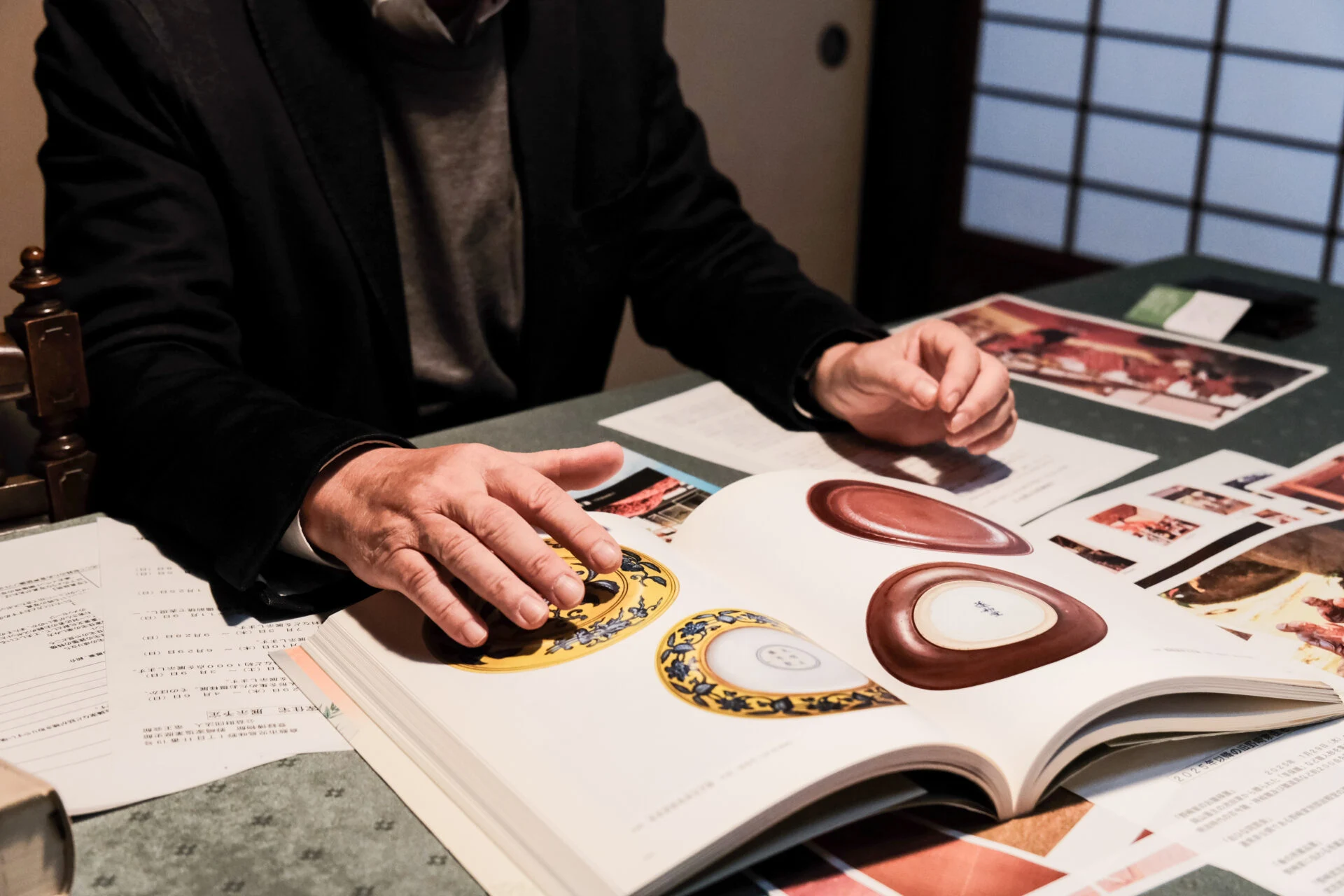
In particular, it is common for antiques brought from the continent to have cracks and chips.
However, the antiques remaining in Nozaki's Historical Residence are well-preserved, so many fine pieces are also appreciated.
What is appreciated is not just their visual beauty.
It is also characteristic that detailed notes are attached regarding when and from whom they were received.
There are nearly 100,000 documents remaining just in written records.
This record includes not only antiques but also letters.
Usually, only the letters received here are kept, while those sent from here are with the recipients.
Therefore, to know the details of the exchanges that took place, it is necessary to confirm with the other party as well.
However, Nozaki's Historical Residence also retains copies of the letters sent, so it is possible to accurately understand what exchanges occurred in the correspondence.
I believe that the result of carefully passing down materials, including the buildings, has been recognized, leading to its registration as a Nationally Designated Important Cultural Property.
From a Life of Poverty to Becoming a Distinguished Family that Produced a Member of the House of Peers
What kind of person was Nozaki Buzaburo, who built this magnificent mansion?
Tsuji
In fact, Buzaburo's father also ventured into the salt production business but failed. As a result, he experienced a life of poverty.
At the age of 38, he was faced with the following three choices.
- To hire people and engage in agriculture in Kyojo Shinden
- To manage a tabby business in Osaka
- To create a salt field in Kojima
The salt production business requires significant initial investment in labor and time, and due to the background of Buzaburo's father's failure in the salt production business, it seems that relatives opposed it. However, he started the salt production business in Kojima against that opposition.
To create a salt field, it is necessary to build a dam at the port. The stones for that were transported from Washuzan Hill and Shimotsui.
About 460 people were involved, and it took a year and a half to complete the salt field.
As a result, the salt production business was successful, gaining trust, and the third generation, Takekichiro, became a member of the House of Peers.
What was the Nozaki family to the citizens of Kurashiki, especially Kojima?
Tsuji
Members of the House of Peers who were large taxpayers were elected by mutual election from 15 direct national tax payers from each prefecture.
The Nozaki family was ranked 8th nationwide and was the family with the highest tax payment not only in Kojima but also in Kurashiki.
The Nozaki family villa, Gikando, which serves as the venue for the "Hina Dōsōkai" held every February to March, is positioned as a guesthouse where important figures from across the country gather.
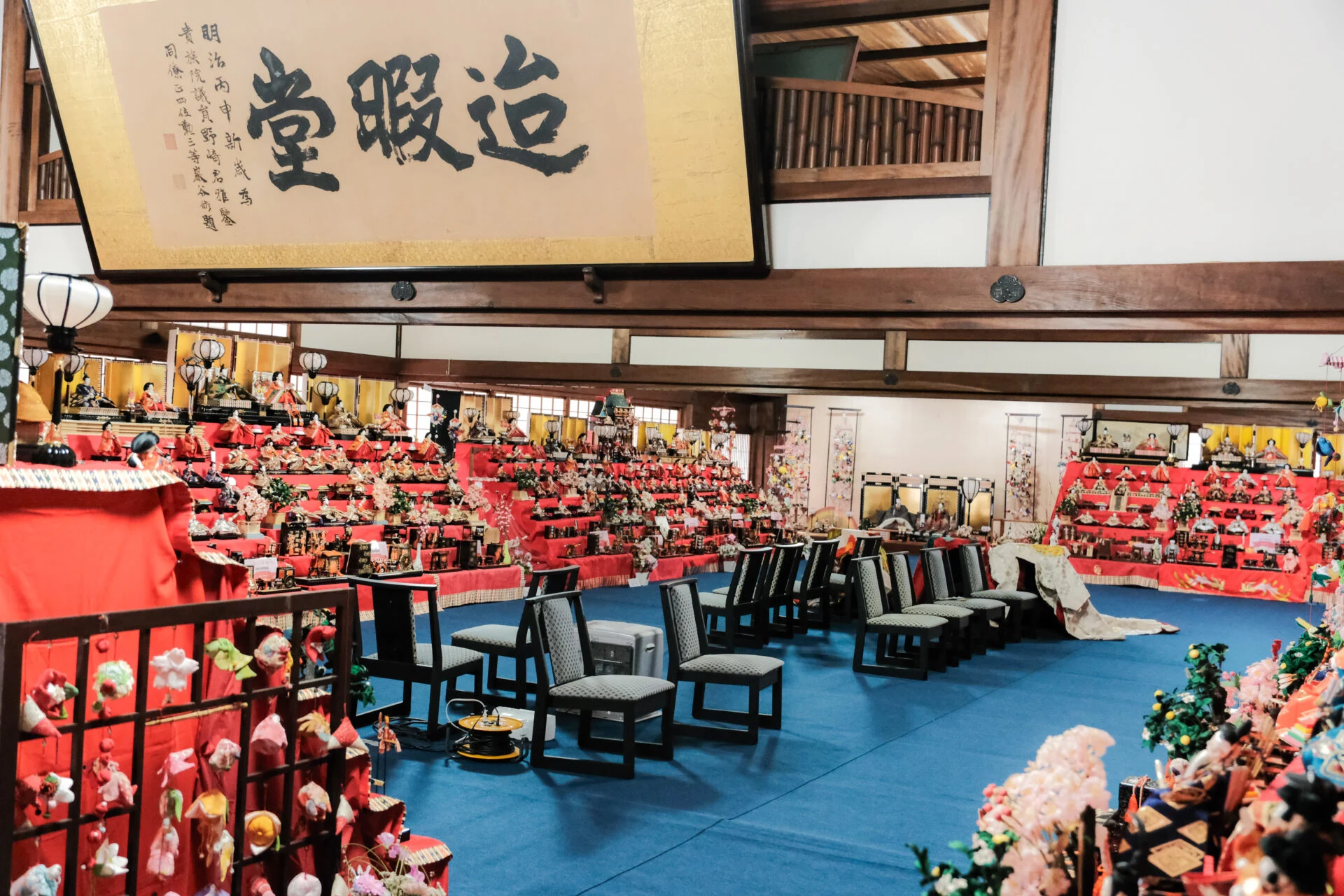
However, the Nozaki family has always valued the local people from the beginning.
Earlier, you saw the toilet with a ceramic toilet used by servants in the mansion.
In the Meiji period, while ceramics were used in the toilets of nobles, it was customary for servants to dig a hole in the ground to relieve themselves.
Researchers studying that era unanimously say that this toilet indicates that "the Nozaki family must have treated their servants very kindly."
Additionally, records show that the "Nozaki Family Hina Doll Exhibition" held at Nozaki's Historical Residence has been open to the public since the Meiji period.
This exhibition was very popular, attracting as many as 1,500 visitors in a single day.
In this way, it seems that even as a distinguished family, they had the idea of opening their mansion to the citizens.
The idea of opening the mansion to the citizens is still being passed down today.
When maintaining the residence as a Nationally Designated Important Cultural Property, are there any particular points you pay attention to?
Tsuji
Since it is an old building, there are instances of leaks.
Leaks are a major factor that can damage the building, so we try to respond quickly when we notice them.
Also, if leaves and other debris clog the gutters, it can damage the building, so we take measures in advance when a typhoon or heavy rain is expected, and it is essential to maintain the building regularly.
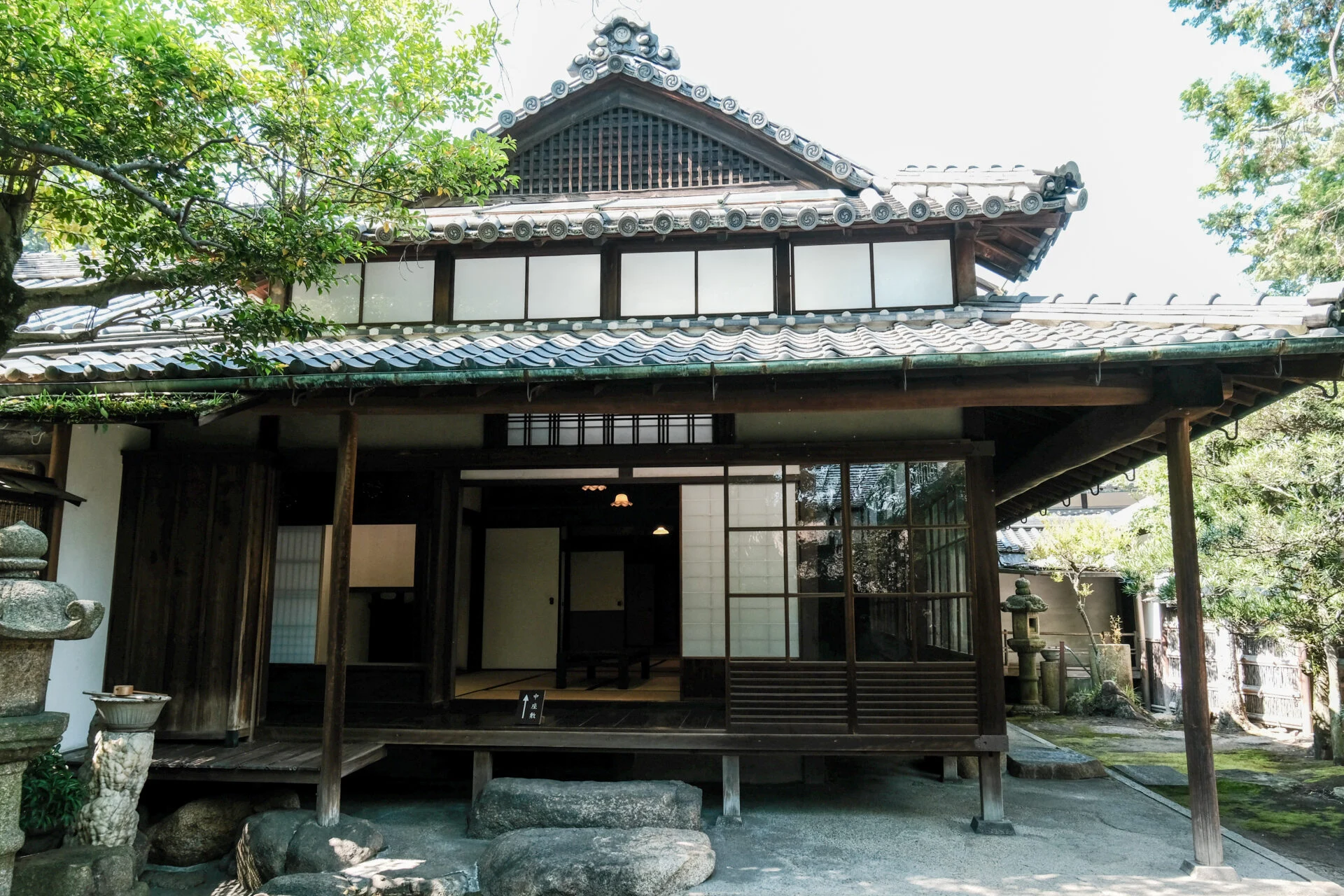
Starting in 2026, construction for seismic reinforcement will begin.
This is also a necessary effort to pass down Nozaki's Historical Residence.
Since it is a Nationally Designated Important Cultural Property, it took several years just to create the plans for the construction.
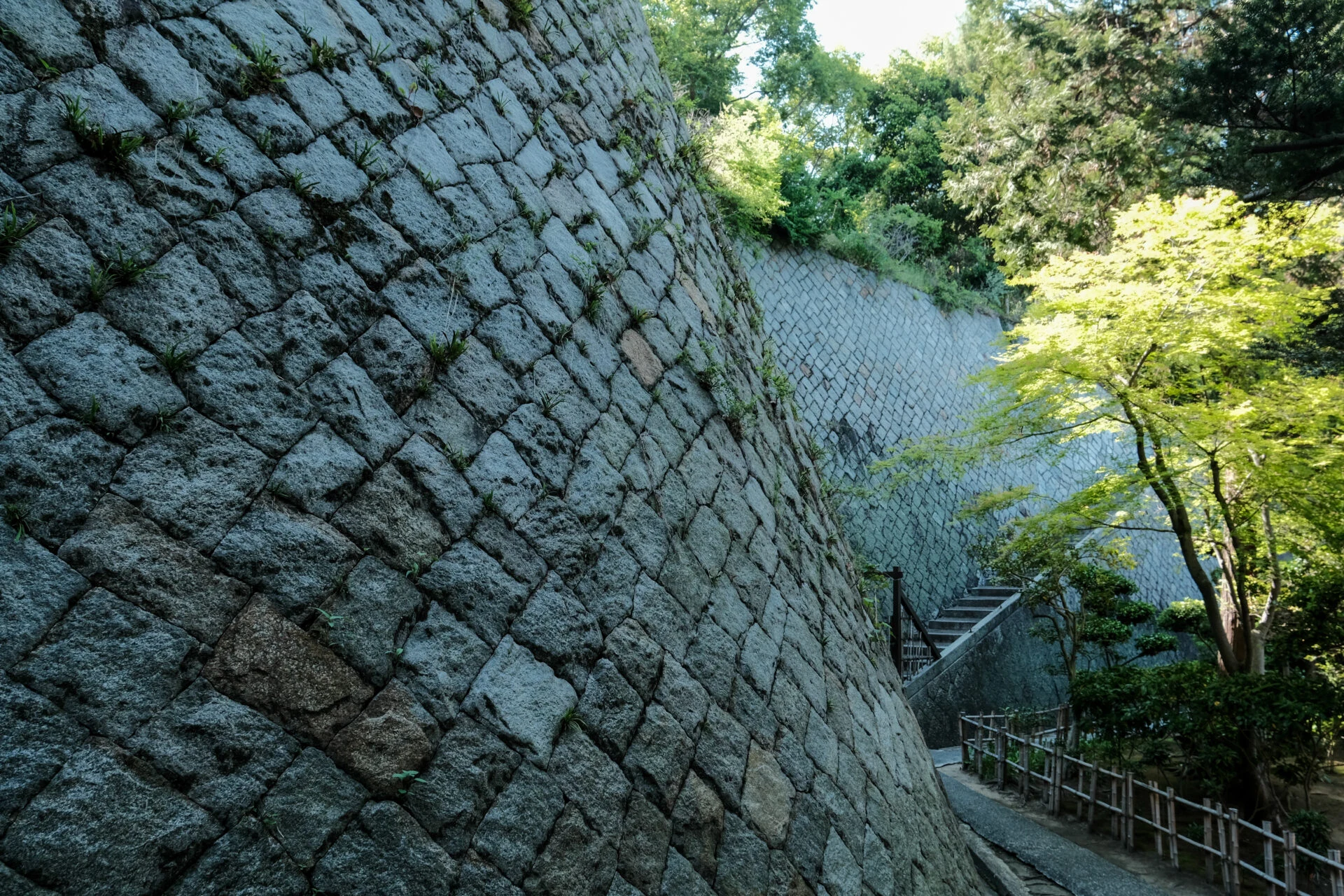
In particular, experts were impressed by the stone wall at the back.
That stone wall is characterized by its meticulousness, as if it were constructed using machinery, and its soft image created by curves without corners, like those found in castles.
The large-scale Bizen stonework, which is 12 meters high and 50 meters long, is rare, and it took various ideas from experts to finally create the design.
The construction will be carried out in sections, so a long-term closure is not currently planned, but for the next 13 to 14 years, there will always be some part under repair.
You will be able to enjoy the calm and spacious Nozaki's Historical Residence until the end of 2025, so I hope many people will come to visit.
I Want the Citizens of Kurashiki, Especially Kojima, to Experience Culture at Nozaki's Historical Residence
Various special exhibitions are also being held, right?
Tsuji
We will display items from Nozaki's Historical Residence, but we also hold special exhibitions featuring artists related to the Seto Inland Sea.
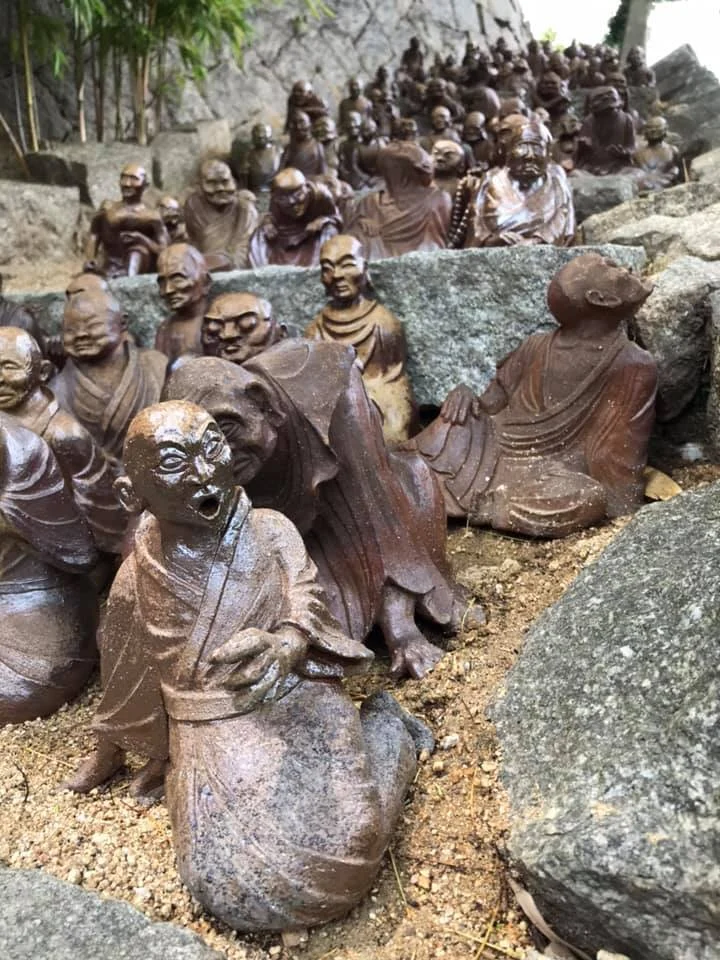
Usually, contemporary art is mostly displayed inside the mansion, but the exhibitions of "Five Hundred Arhats" by Akio Hamamatsu, who produces Bizen ware at Oji Kiln in Tamano City in 2019, and "Komainu" in 2024 were also displayed outdoors.
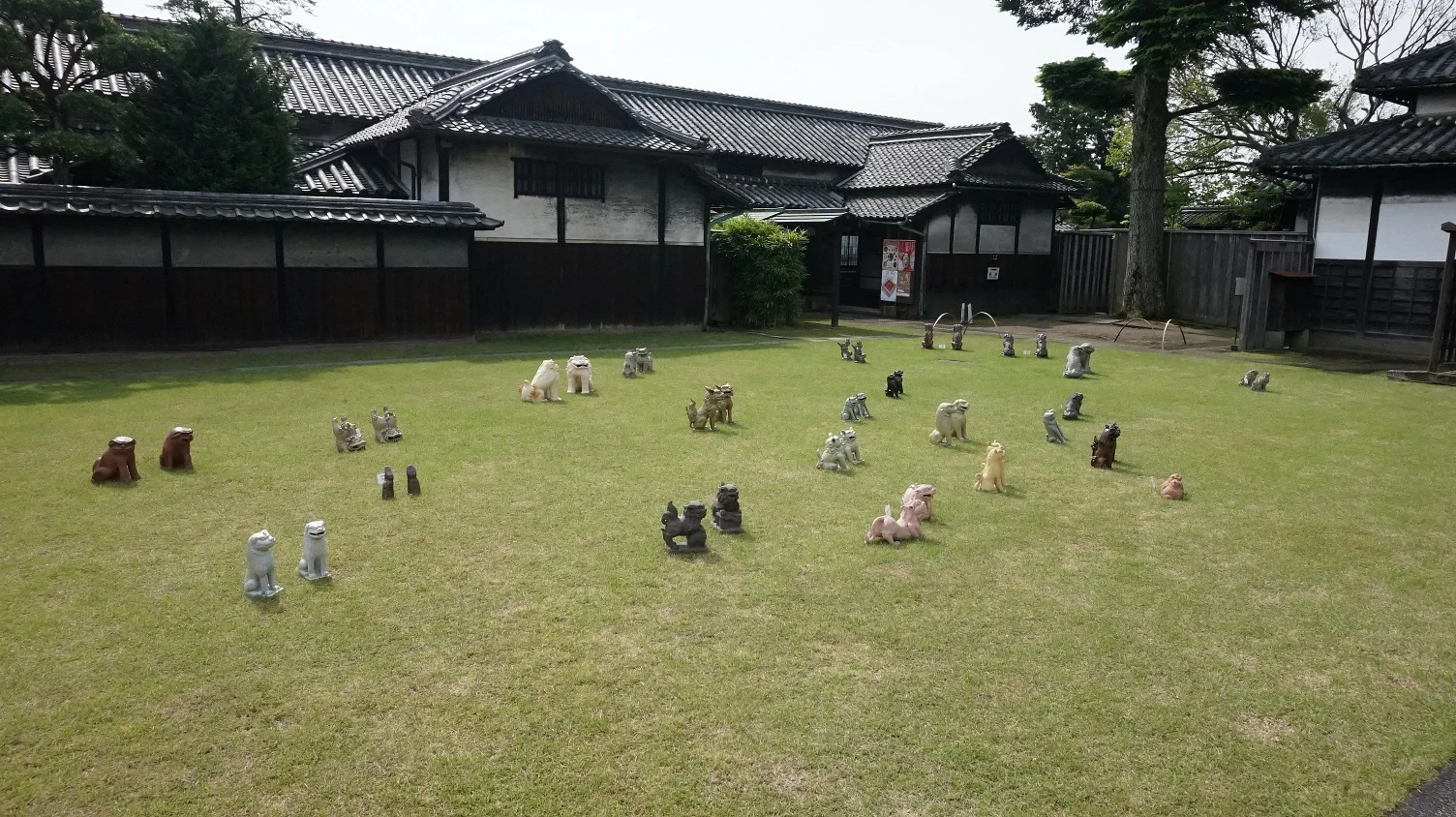
In 2024, as it was the 90th anniversary of Seto Inland Sea National Park, 90 pairs of Komainu appeared throughout the grounds, providing a different view than usual, which was well received.
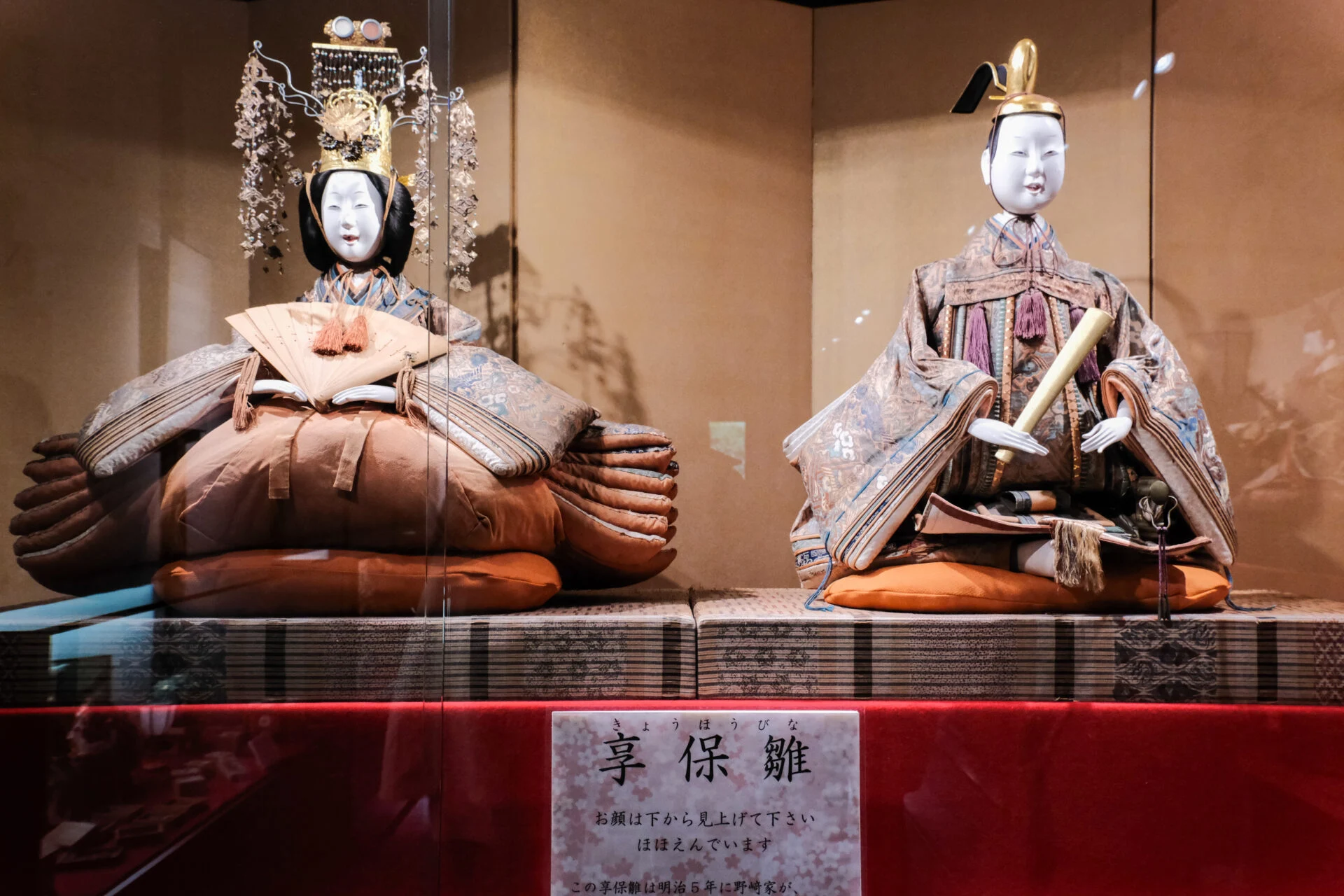
The "Calendar Exhibition" and "Nozaki Family Hina Dolls" are held every year.
The calendar features items selected from the many collections that match the season. The calendar is also for sale, so please enjoy art appreciation at home.
Please tell us your recommended way to enjoy Nozaki's Historical Residence.
Tsuji
Since Nozaki's Historical Residence is a building filled with craftsmanship, why not ask the staff or volunteer guides to accompany you? They will introduce you to many interesting facts about the mansion.
In addition to viewing the buildings and cultural properties, we also offer opportunities to experience traditional performing arts that utilize the buildings and cultural properties.
The "Kojima Noh" held annually at the Nozaki family villa, Gikando, is one such opportunity.
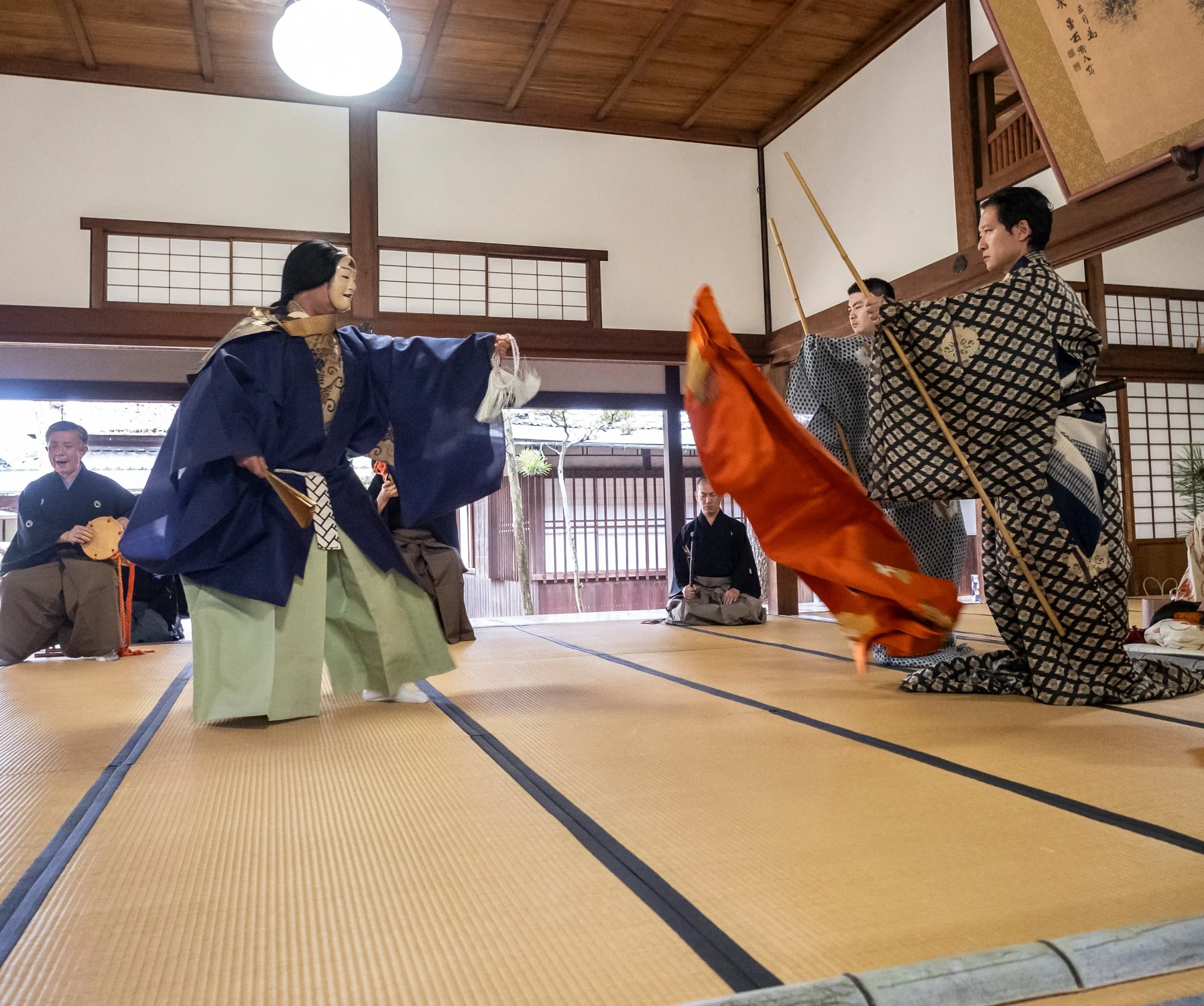
According to the performers, performing Noh at Nozaki family villa, Gikando, has a different sound quality than in a hall, allowing them to dance comfortably.
Such traditional performing arts are rarely seen as you go further into the countryside.
That is why I want to pass it down as a place where the people of Kojima and Kurashiki can experience live traditional performing arts.
I hope that children, as well as adults, will come to see the Noh performances, so the morning program is designed for children, targeting daycare centers and kindergartens.
I want the children to feel the real power that is here.
Please give a message to the readers.
Tsuji
In this busy modern age, I believe that looking at the Japanese garden from the old buildings of Nozaki's Historical Residence will bring peace to your heart and calm your mind.
Please enjoy a leisurely time.
Conclusion
When visiting a confectionery shop in Kurashiki City, you often see waffles filled with sweet and fluffy custard cream. It's curious that they can be found not only in Western-style pastry shops but also in traditional Japanese sweet shops, and I discovered a waffle maker in the kitchen of Nozaki's Historical Residence.
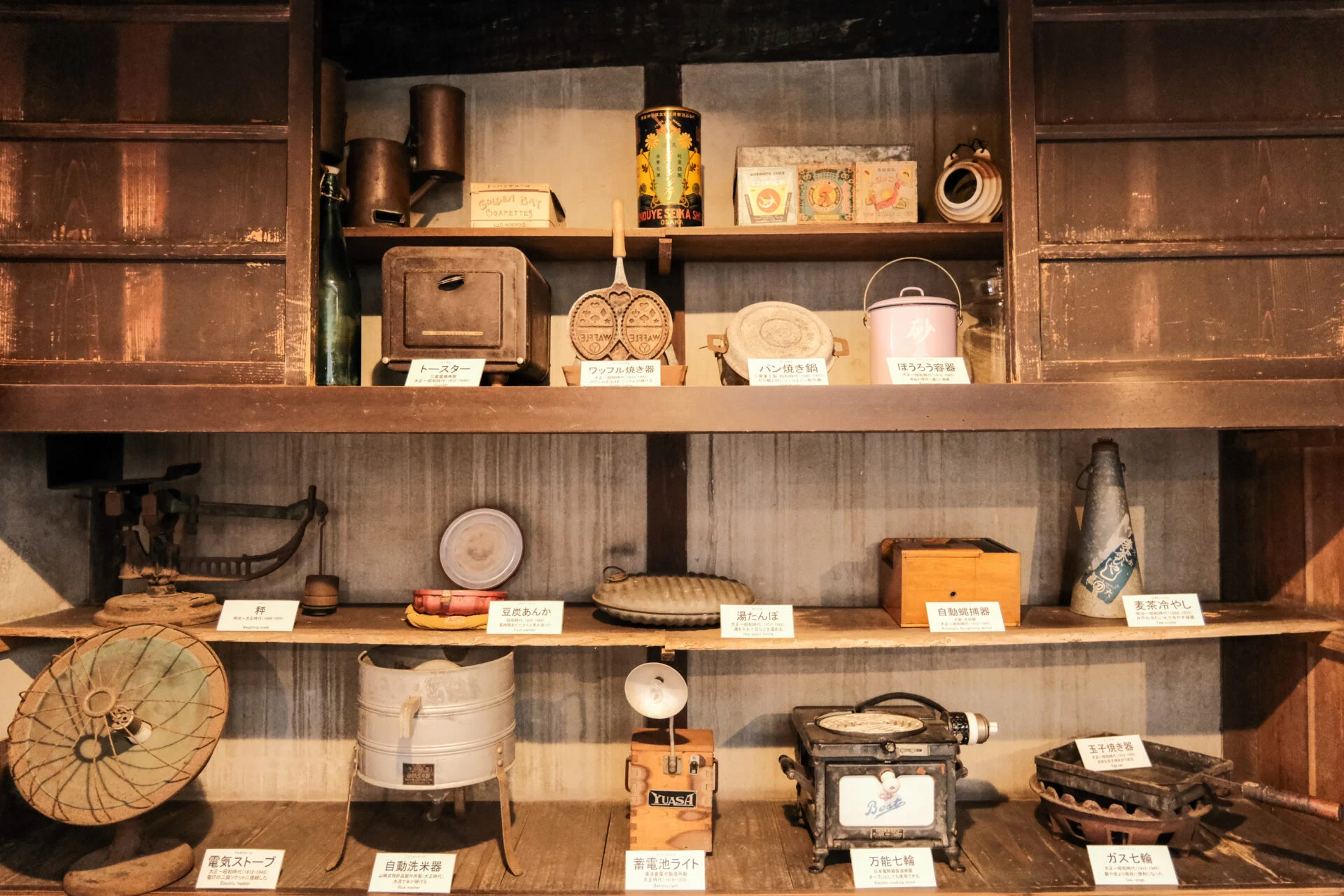
In the port town of Kurashiki, the lifestyle of people from the Meiji to Showa periods continues to be preserved at Nozaki's Historical Residence.
I hope this place continues to be a site for preserving and experiencing history.
Data on Nozaki's Historical Residence
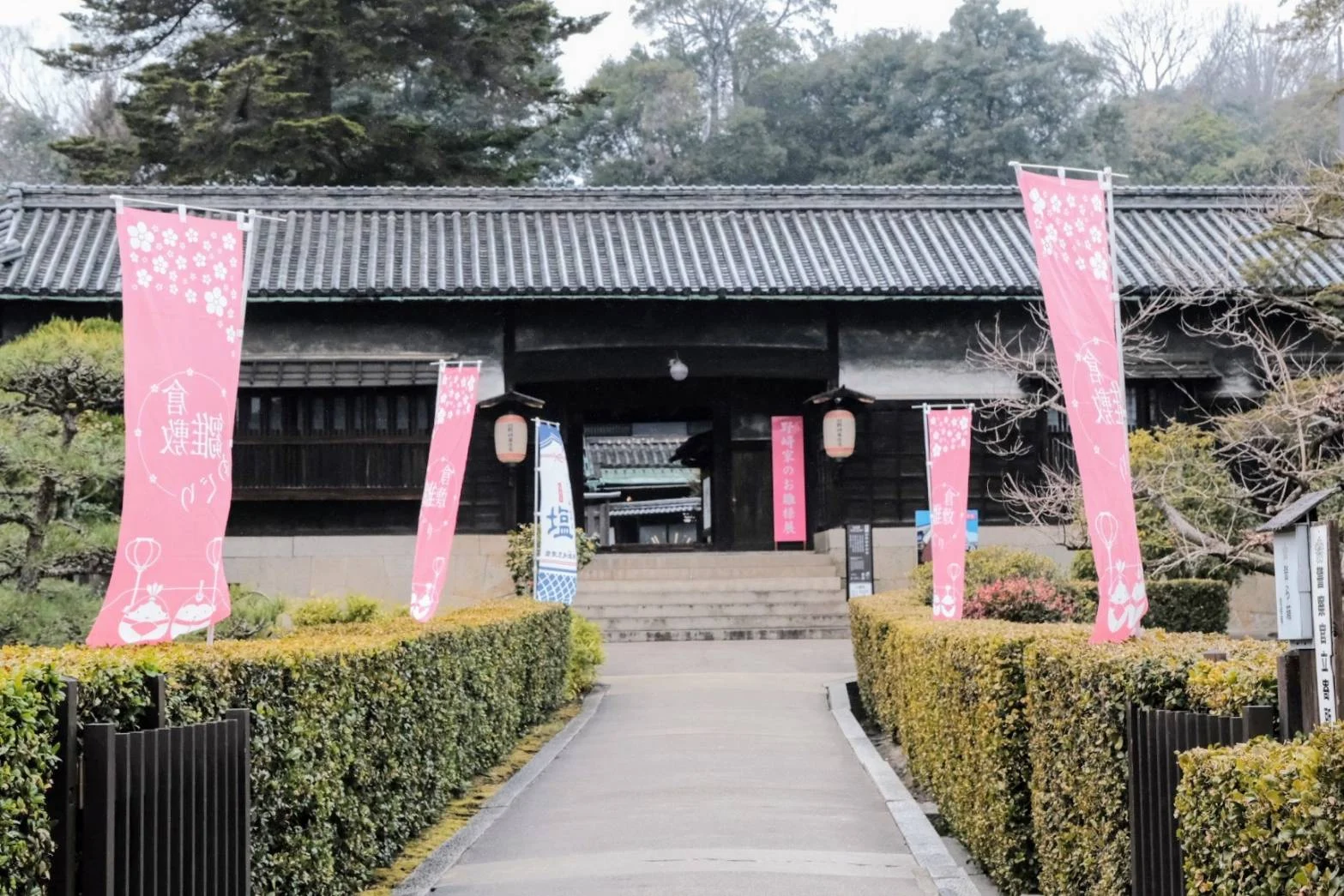
| Name | Nozaki's Historical Residence |
|---|---|
| Location | 1-11-19 Ajino, Kojima, Kurashiki City, Okayama Prefecture |
| Contact | 086-472-2001 |
| Parking | Available 【 Free 】 5 large buses / 36 passenger cars |
| Opening Hours | 9:00 AM - 4:30 PM (5:00 PM closing) |
| Closed | Monday If Monday is a holiday, the following weekday Year-end and New Year holidays (12/25 - 1/1) |
| Admission Fee (including tax) | Adults (high school students and above): 500 yen Elementary and junior high school students: 300 yen Preschool children: Free * 20% discount for groups of 30 or more * Elementary and junior high school students and high school students are free on Saturdays, Sundays, and holidays. * 20% discount for those with a disability certificate (for the individual and one accompanying person) * Discounts cannot be combined * Free for elementary and junior high school students, high school students, and accompanying teachers when used as part of a class. |
| Payment Method |
|
| Smoking | Completely non-smoking (smoking area available outdoors) |
| Restrooms | Western-style toilets, Japanese-style toilets |
| Website | Nozaki's Historical Residence Nozaki's Salt Industry Historical Museum |