If you suddenly had to live a wheelchair life due to illness or an accident tomorrow, would you be able to positively continue to challenge yourself with new things?
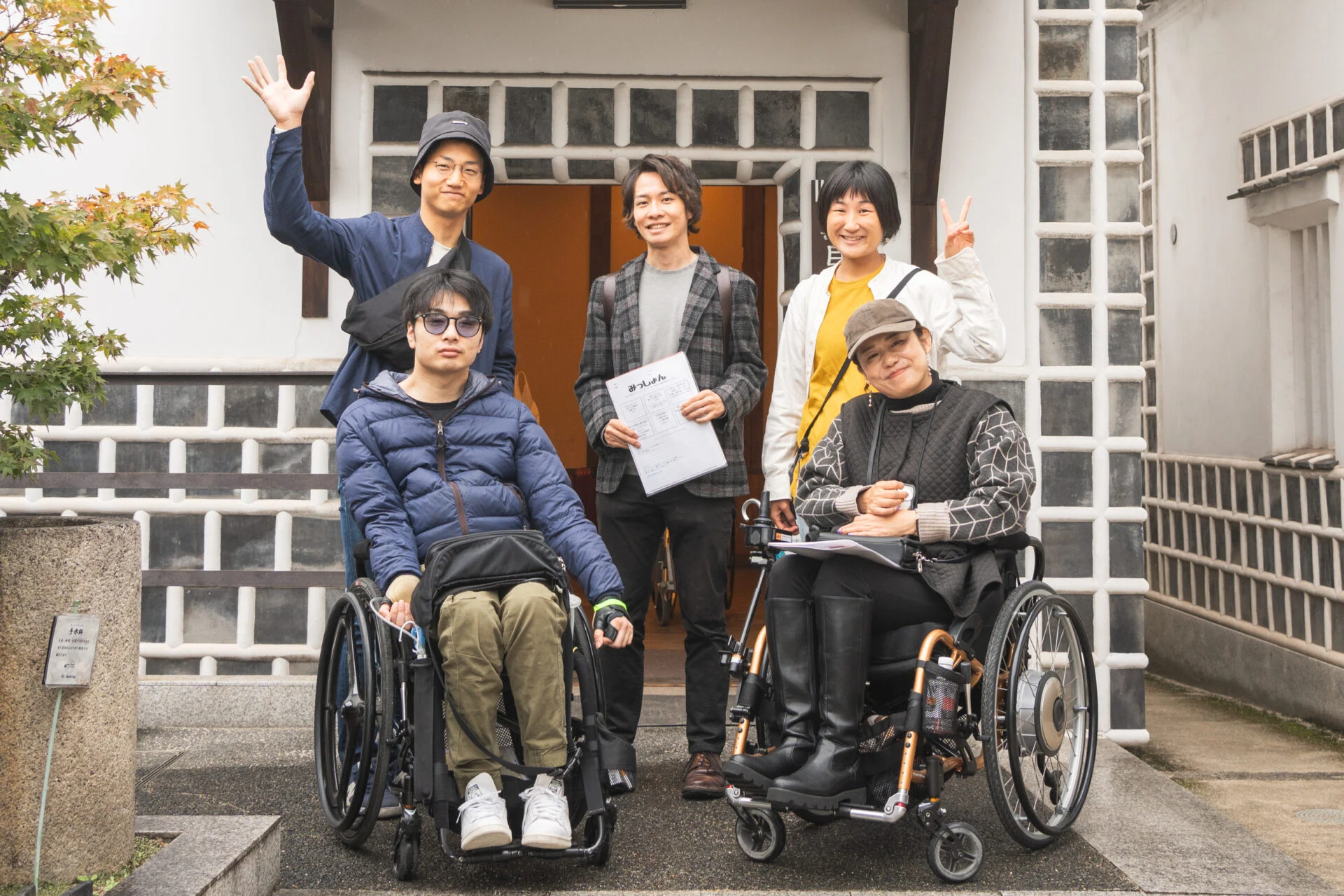
Two men who became wheelchair users due to illness and accidents have come to Kurashiki from Kyushu and Okinawa for a wheelchair street walking event.
Because they have experienced difficult times themselves, they do not want others to suffer the same hardships. They want to support those who challenge themselves positively to pursue their desires. I listened to the passionate talks of these two individuals.
About the lecture by Yosuke Ochimizu & Tatsuya Miyo "Never Give Up on Challenges - Dreams After 5 Years and What Comes Next"
On May 25, 2024, at the Kurashiki Community Center, the "Never Give Up on Challenges - Dreams After 5 Years and What Comes Next" was a collaboration lecture by wheelchair users Yosuke Ochimizu and Tatsuya Miyo.
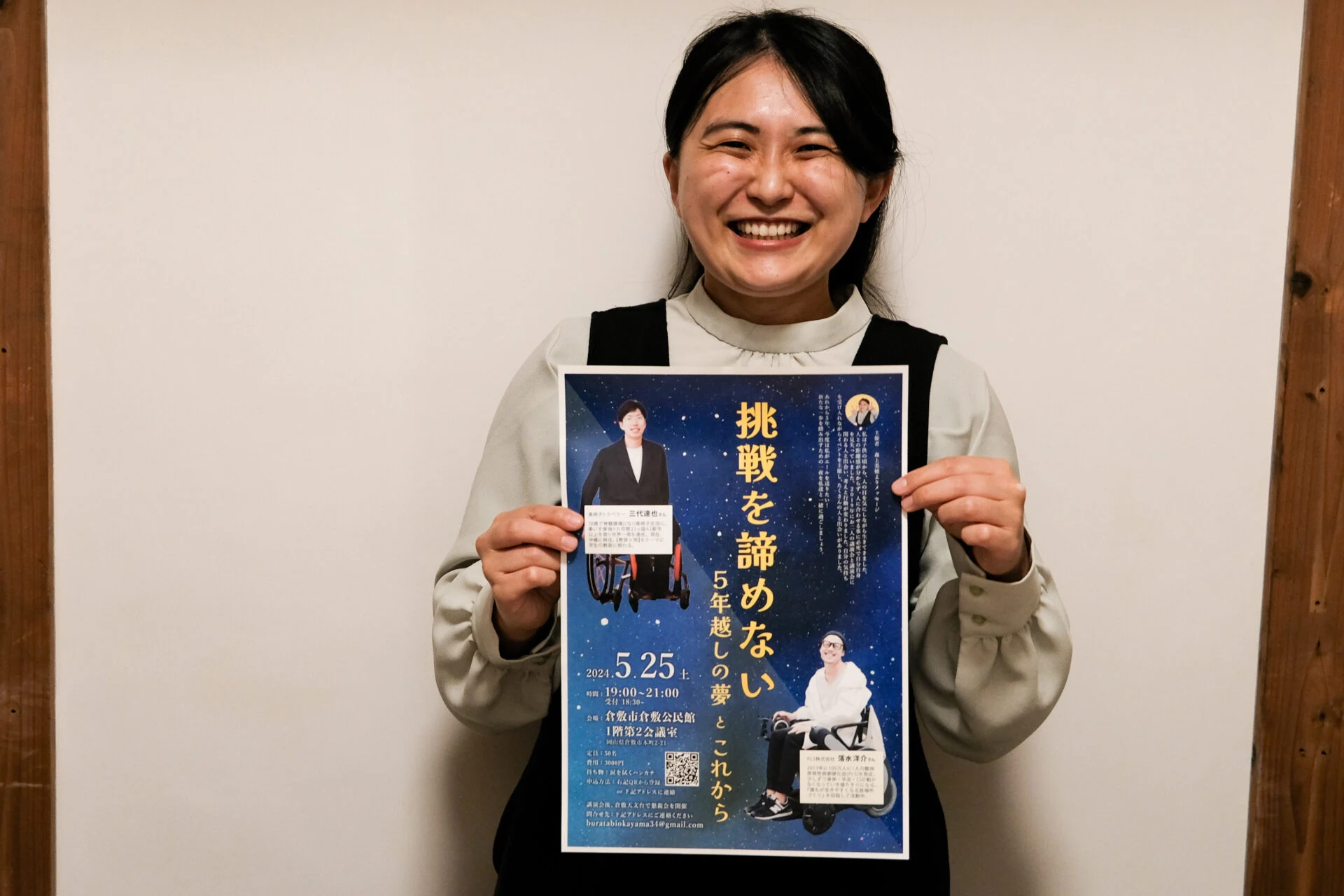
The organizer is physiotherapist Miho Morigami. Every spring and autumn, she holds wheelchair street walking events in the Bikan Historical Area.
This lecture was held as a pre-event for the wheelchair street walking event. The background of how Morigami came to hold this lecture is introduced in this article.
Who are Yosuke Ochimizu and Tatsuya Miyo?
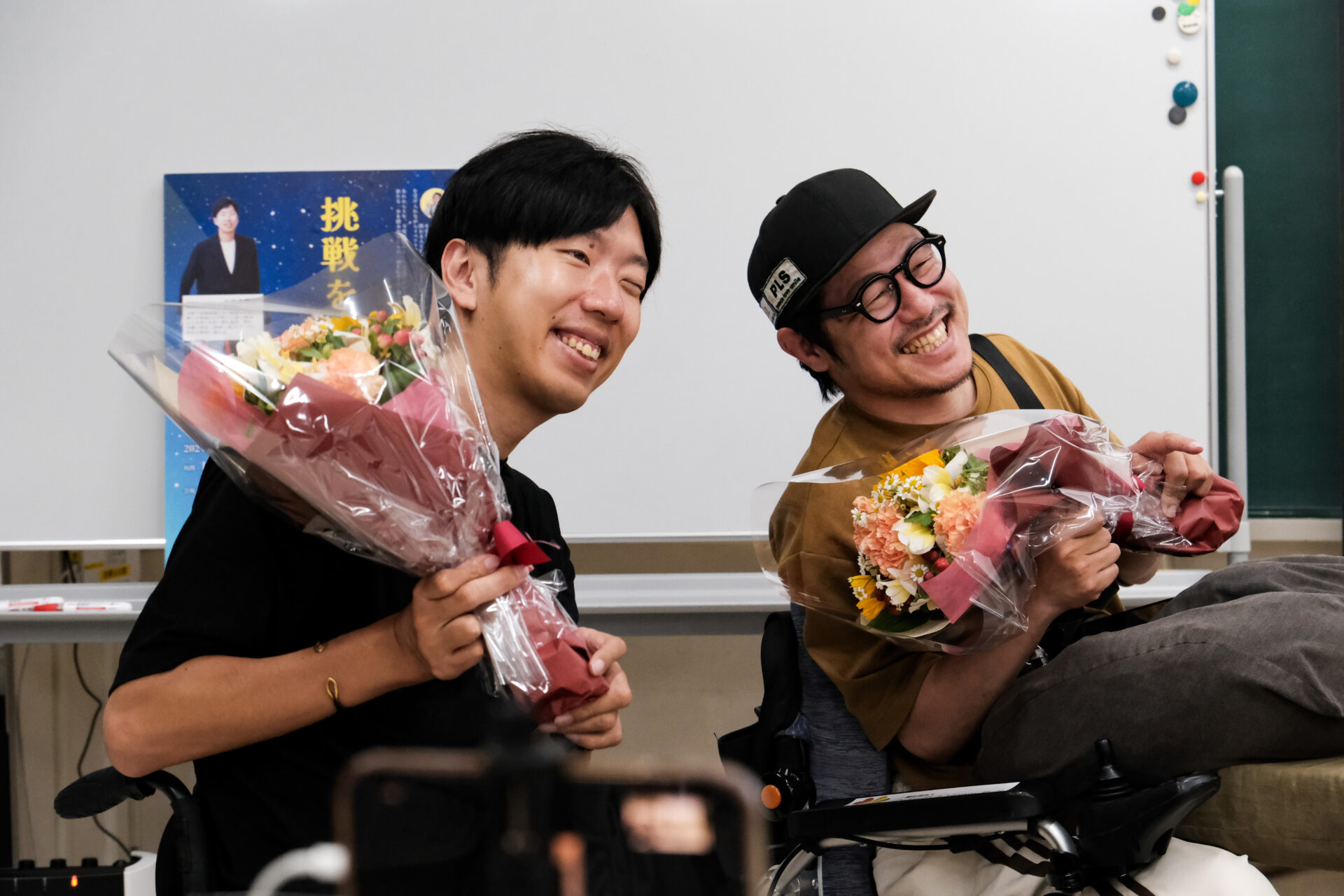
Yosuke Ochimizu
Yosuke Ochimizu was born in 1982 in Kitakyushu City, Fukuoka Prefecture.
He played soccer from a young age and had experience playing in the Kitakyushu selection team with former Japan national team forward Yoshito Okubo during elementary school.
He worked in sales and product development at a cosmetics company, but in 2013, he developed primary lateral sclerosis (hereafter referred to as PLS), a rare disease affecting 1 in a million, and gradually became bedridden as his body, limbs, and mouth lost mobility. He is currently actively engaged in lectures, live events, and appearances on television and various media across the country.
In 2021, he established PLS Co., Ltd. and is energetically conducting over 100 lectures a year nationwide, aiming to create places where everyone can live comfortably.
Tatsuya Miyo
Tatsuya Miyo was born in 1988 in Hitachi City, Ibaraki Prefecture.
In 2006, he sustained a spinal cord injury in a motorcycle accident, which forced him into a wheelchair lifestyle. After undergoing surgeries and rehabilitation, he traveled alone to Hawaii in 2011, where he encountered a much more advanced barrier-free environment than in Japan, sparking his interest in overseas travel.
After that, he left his job in disabled employment and decided to travel the world alone by wheelchair, aiming to share the appeal of barrier-free environments abroad. He achieved a world tour, visiting over 42 cities in 23 countries over approximately 9 months. He currently resides in Itoman City, Okinawa Prefecture.
After returning from his world tour, he has been actively giving lectures nationwide as a wheelchair traveler. He is also involved in supervising the creation of tours that are easy to travel by wheelchair in collaboration with travel agencies, and actively engages in welfare education for students under the theme of "Education x Travel," expanding the scope of his activities.
The atmosphere of the venue on the day
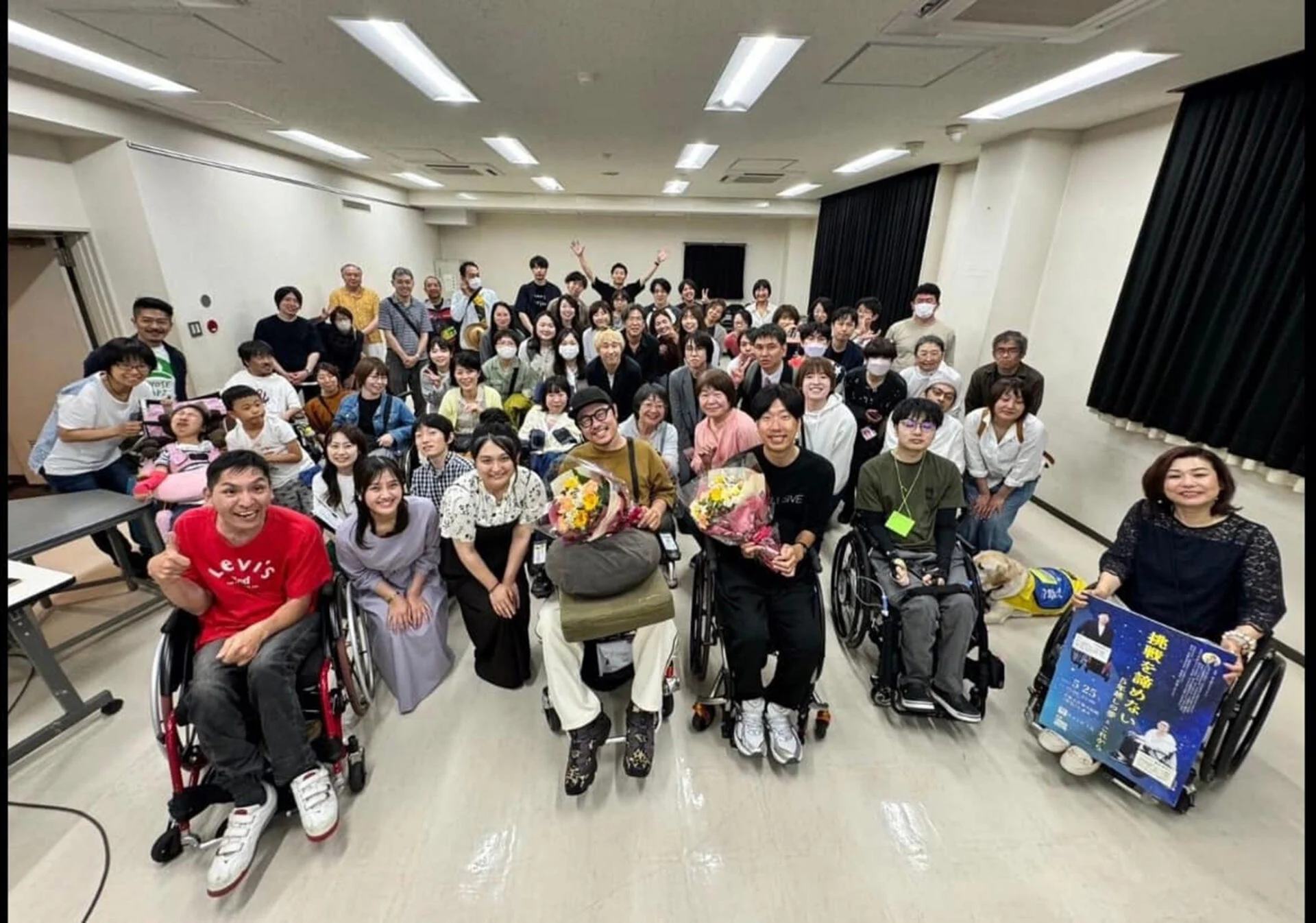
On the day of the event, when entering the second meeting room on the first floor of the Kurashiki Community Center, several wheelchairs were lined up in the front row.
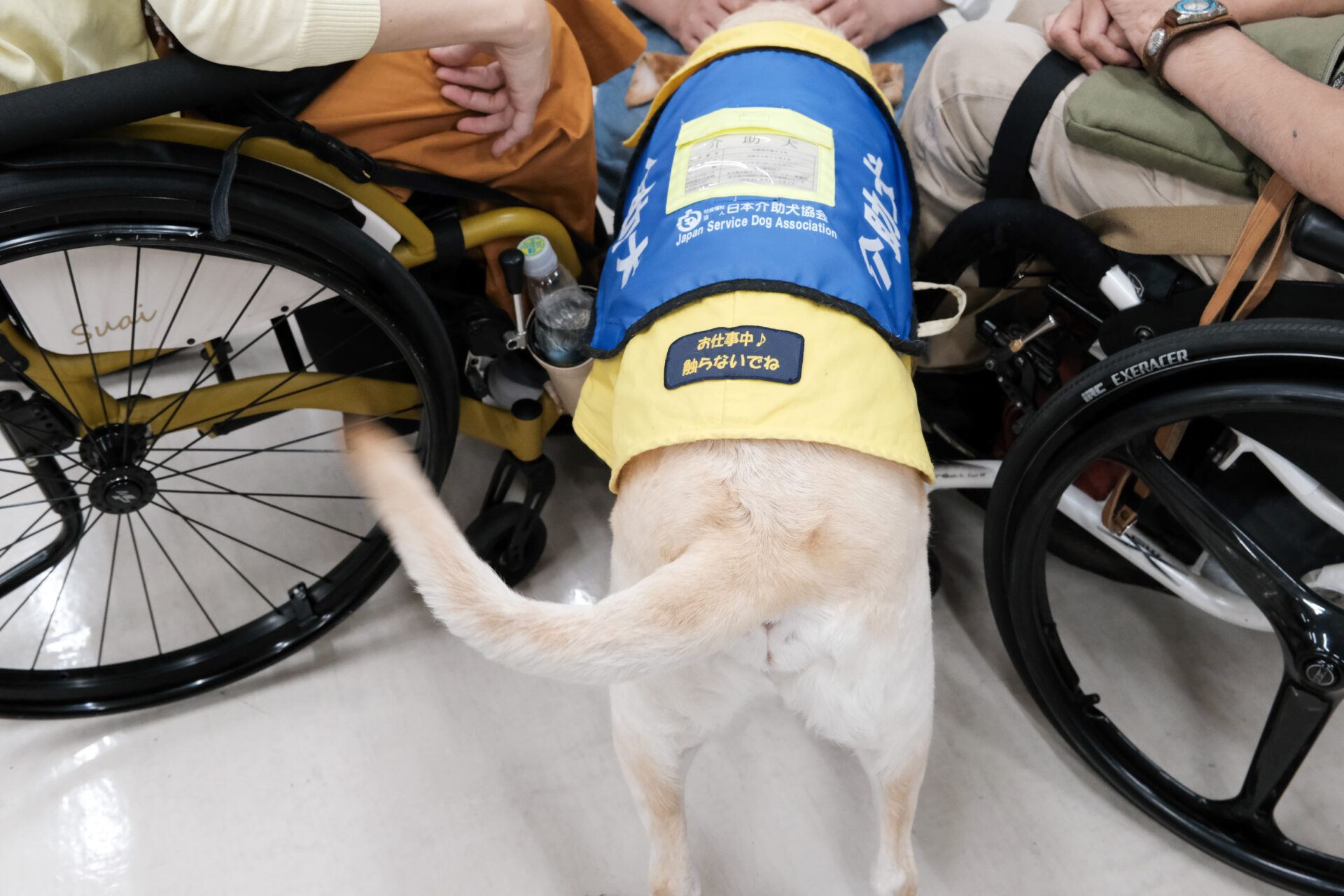
Furthermore, people from outside Kurashiki City, regardless of whether they have disabilities or not, gathered to hear the lectures of Ochimizu and Miyo. The ability of these two to attract people is one of the reasons for holding this lecture.
I have a hearing impairment, so I used a hearing assistance system and a speech recognition app to listen to their talks. I had informed the organizer in advance, and they kindly prepared a table for my smartphone running the speech recognition app, which I appreciated.
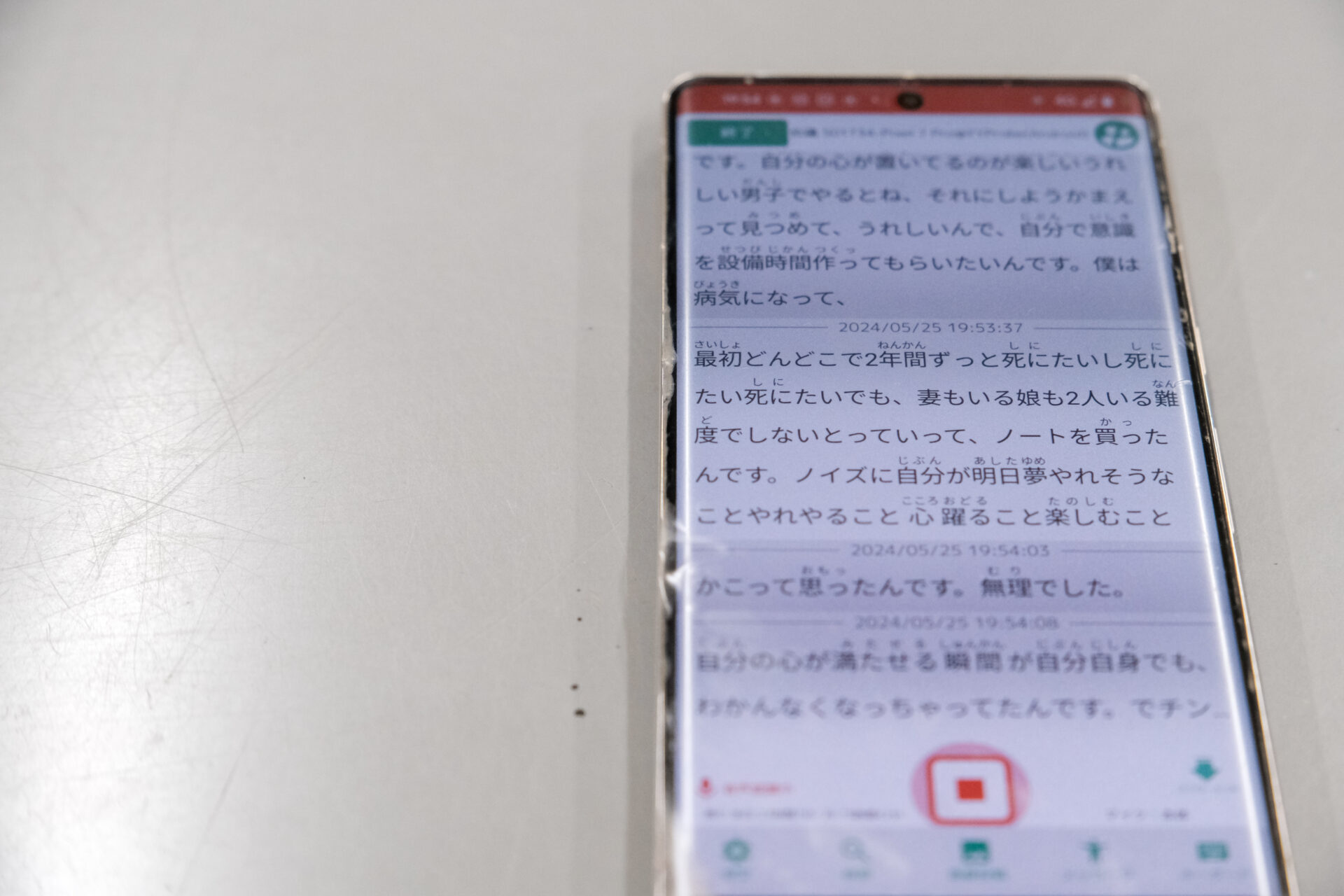
Hearing assistance system
A system where words picked up by the transmitter's microphone are sent directly to the receiver attached to the hearing aid.
Speech recognition app
An application that converts spoken information into text information.
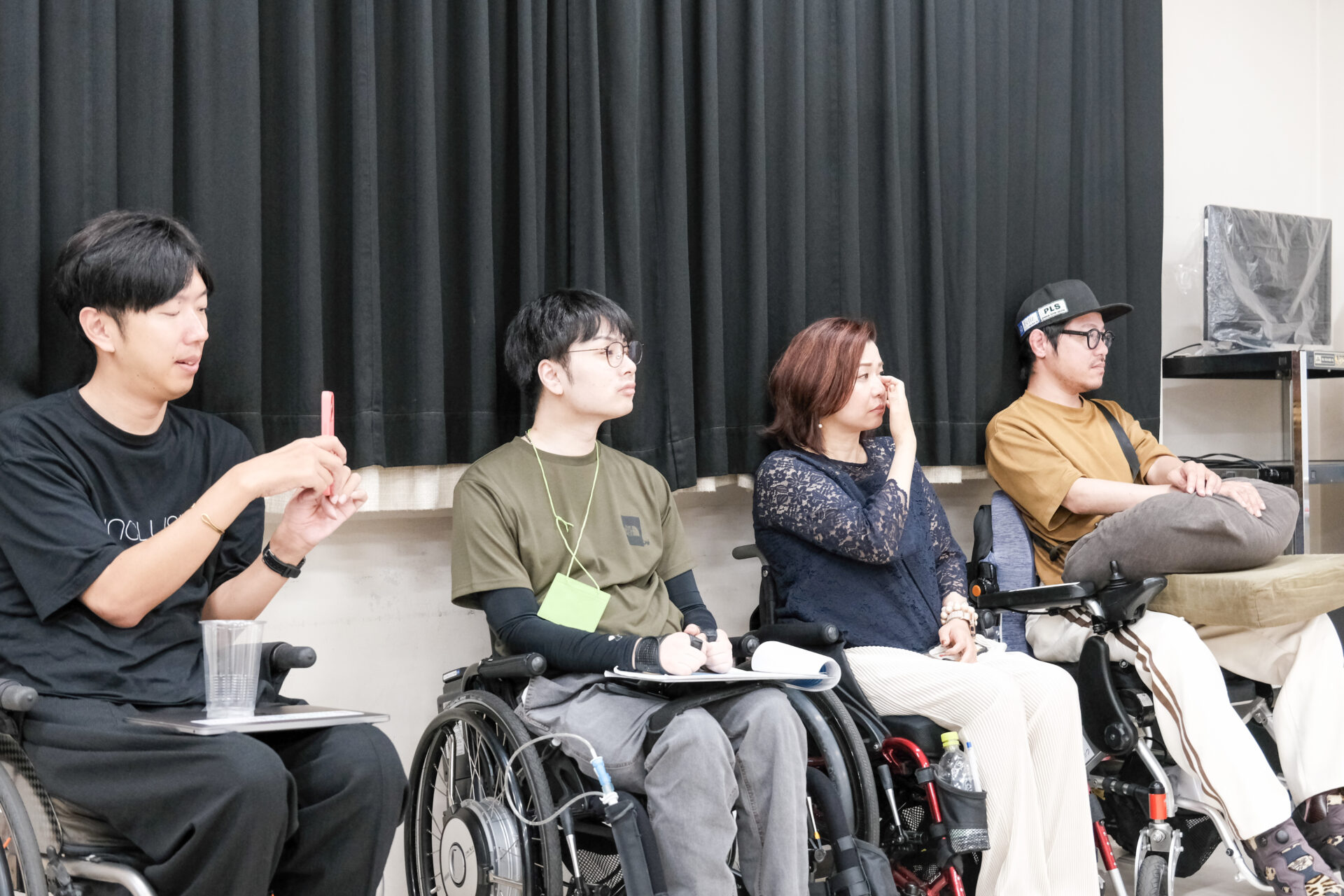
At 7 PM, the scheduled start time for the lecture, the two hosts announce the opening.
In this lecture, not only the two speakers but also the two hosts are wheelchair users. The organizer's desire to "support the activities of people with disabilities" is conveyed.
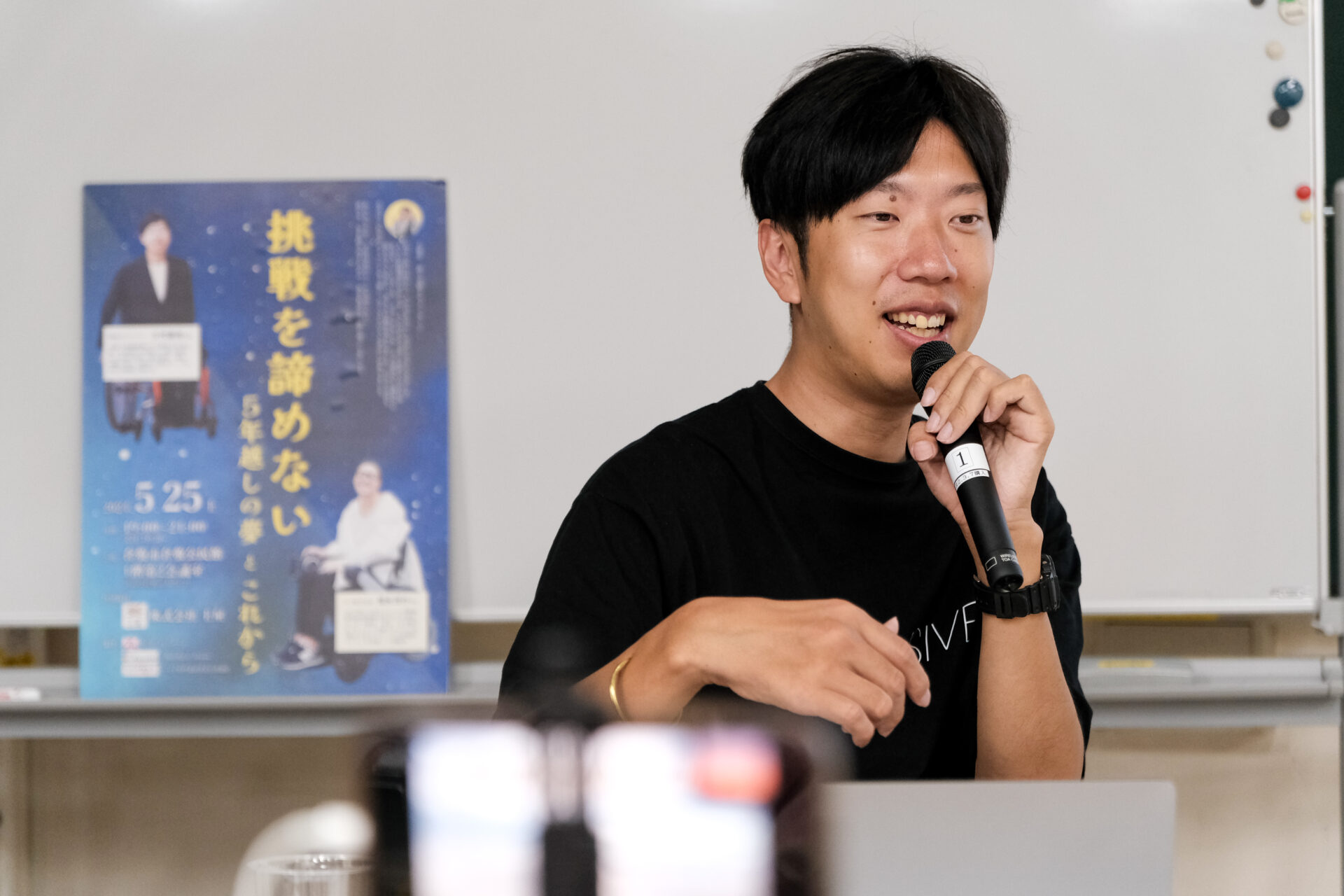
Tatsuya Miyo's lecture
"Never Give Up on Challenges - Dreams After 5 Years and What Comes Next" began with Tatsuya Miyo's lecture.
Known as a "wheelchair traveler," Miyo began by saying, "Today, I will only talk about my travels for about 5 minutes. Because what I want to talk about today is Hero's Journey."
The theme of the lecture is "Hero's Journey"
The Hero's Journey is a narrative flow common to heroes in movies, comics, and novels, proposed by American mythologist Joseph Campbell. It consists of a law of 12 steps that are followed sequentially.
For more details, please check the images of Miyo's lecture slides.
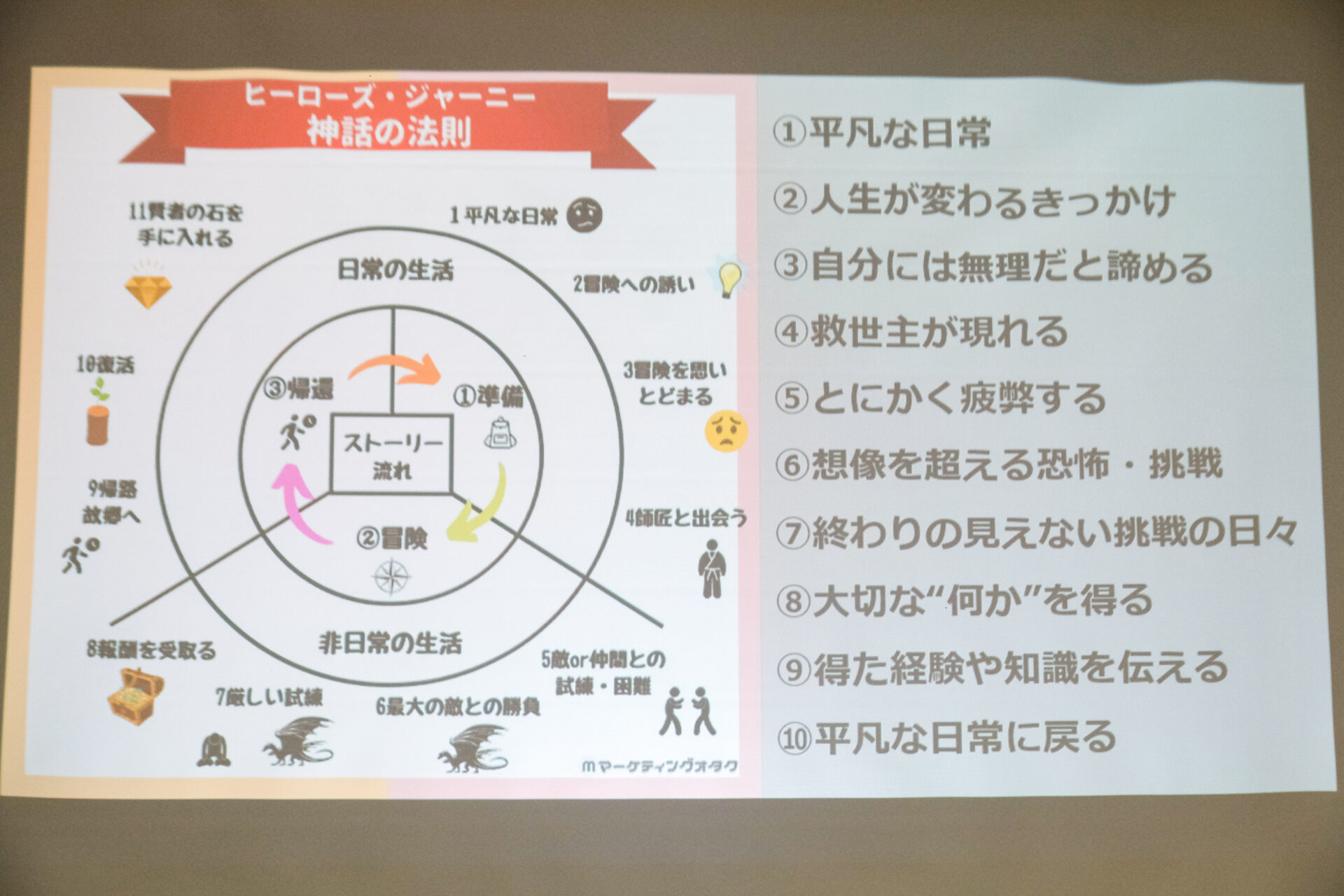
Miyo's Hero's Journey
Miyo suffered a spinal cord injury in a motorcycle accident at the age of 18, while he was busy with part-time jobs. This forced him into a wheelchair lifestyle.
After several years of rehabilitation, he became able to live independently, but regarding rehabilitation and subsequent employment, he was said to have lived a passive life, following the instructions of family and supporters.
However, a senior wheelchair user he met at the rehabilitation facility advised him to "try taking the train from the rehabilitation facility to your home," "challenge living alone," and "try going on an overseas trip," encouraging him to step outside.
Miyo's debut in overseas travel was to Hawaii. He chose Hawaii thinking it would be easier to visit a place where Japanese is commonly spoken.
When he actually traveled abroad, he was moved not only by the physical barrier-free features, such as wheelchair-accessible paths to the beach, but also by the emotional barrier-free environment, where people would reach out to him, a wheelchair user, saying, "Let's dance together."
After that, he challenged himself to a world tour and moved alone to Okinawa, a place he liked in Japan, and began to live a life where he actively takes on various challenges, sharing those experiences through lectures nationwide.
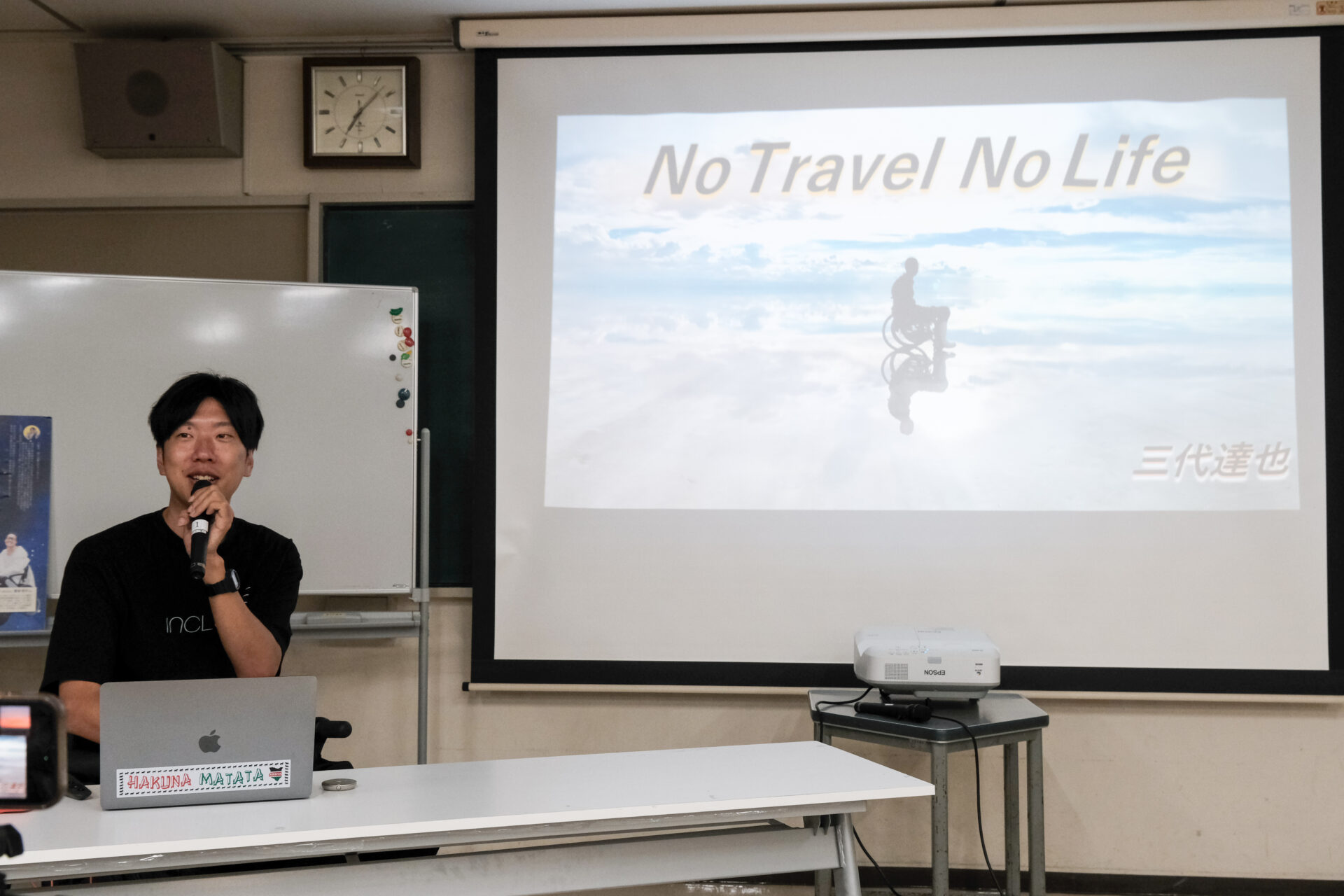
Daily activities in the spirit of "Perception, Action, Thought"
A phrase that Miyo values is "Perception, Action, Thought," a Zen expression. It reads as "Tomokaku Ugou," and he emphasizes that it is important to take action before thinking.
In this lecture, he encouraged the audience not to think, "What would I do?" after listening to the lecture, but to find something they can do now and act immediately, and then think about "What should I do next?" based on the results of their actions. He urged the audience to look for triggers to act while listening to Ochimizu's talk, handing the microphone to him.
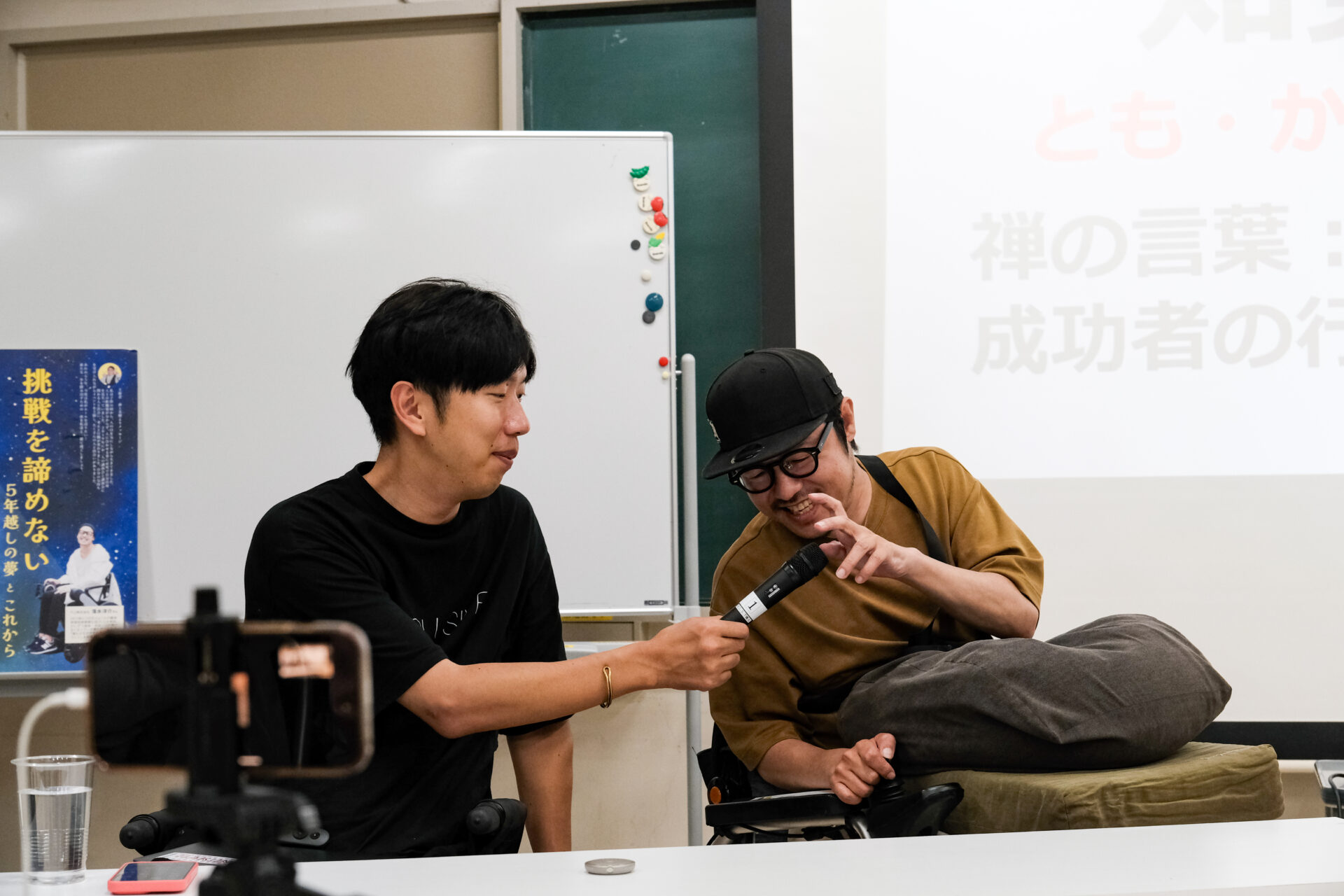
I also have a hearing impairment, but I have experienced solo travel abroad.
When I tell others, "I can't hear," many people are willing to teach me their country's sign language or communicate with me through writing, leading me to think that "perhaps communication might be smoother abroad than in Japan." Therefore, I found many of Miyo's episodes relatable and nodded along while listening to his talk.
Additionally, after the lecture, Miyo actively asked me questions like, "How do hearing-impaired people usually communicate?"
His ability to ask questions immediately about his curiosities and say, "I think this," truly embodies "Perception, Action, Thought." I tend to pretend to understand to get through situations even when I don't grasp the conversation due to my hearing impairment.
However, I realized that I need to first express that "I didn't understand" and value the process of mutual understanding with those around me.
Yosuke Ochimizu's lecture
"I have a disease called PLS. Do you know what PLS is? It's Peace Love Smile," he said.
With that first line at the start of his lecture, the entire venue was enveloped in warm smiles.
Ochimizu's lecture did not include slides or materials; he spoke slowly and carefully at his own pace. His disease is a progressive one that gradually causes muscles to lose mobility. Because the muscles in his mouth do not move freely, he has a unique, relaxed tempo in his speech.
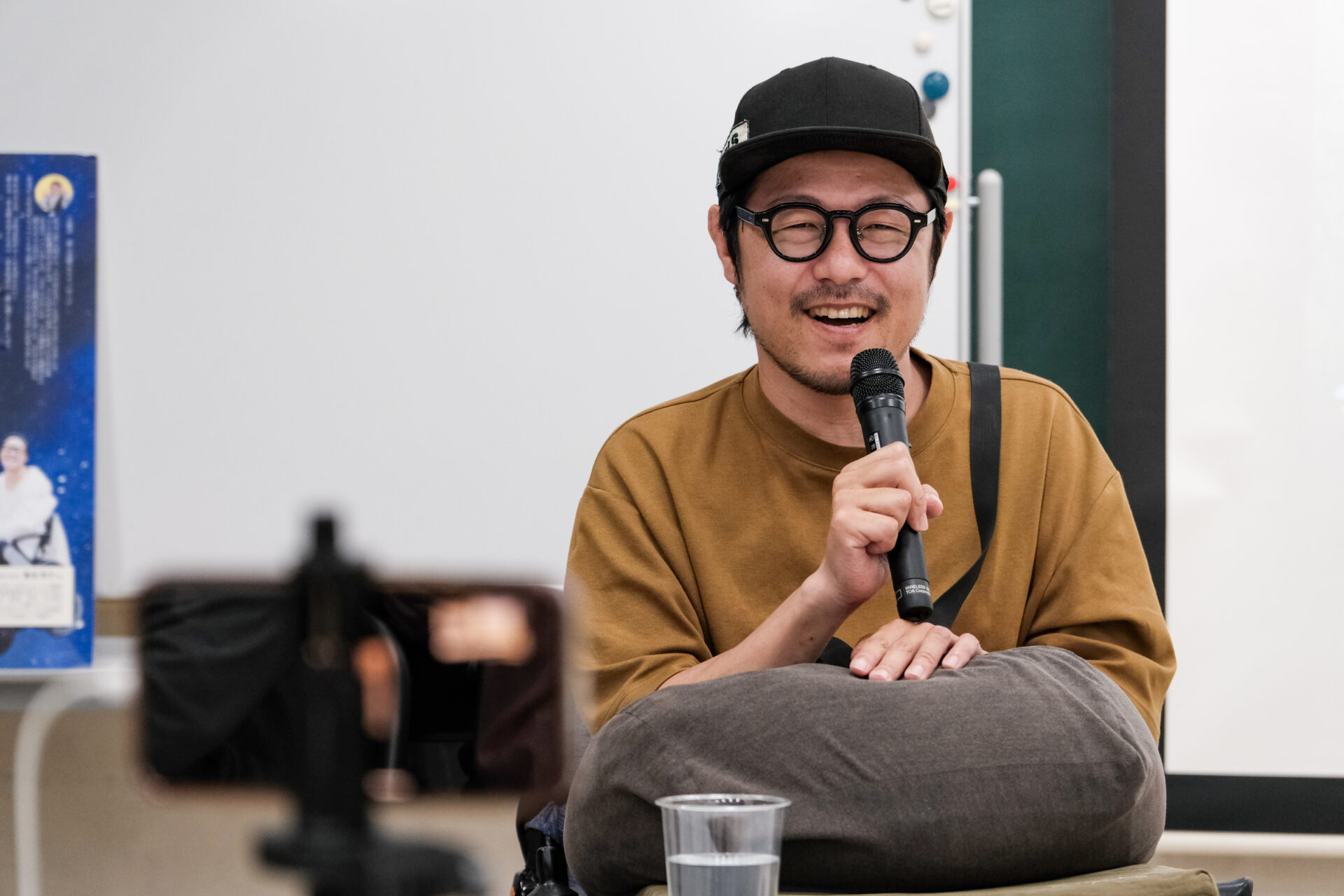
The theme of the lecture is "Positivity is a skill"
With a relaxed tempo, Ochimizu skillfully captivates the audience's hearts with just a few words, allowing them to listen attentively. The theme of the lecture is "Positivity is a skill".
Throughout the approximately one-hour lecture, Ochimizu repeatedly states, "Positivity is a skill. It is something you can acquire with practice." He mentions that he is "happiest in life right now." This realization came after he developed a condition called PLS, which made him grateful for the "ordinary" ability to meet friends and work.
He says that understanding what "ordinary" is has become his strength.
Because of PLS, I can now choose options that fill my heart
Ochimizu was not someone who could think positively from the start. For the first two years after his illness was diagnosed, he spent his days feeling down, wondering, "Why did this happen to me?" During that time, he began to write down moments that made his heart dance in a notebook.
He realized that before his illness, he often compromised on nearly 80% of his daily choices, such as thinking, "I really want a 1,000 yen lunch, but I guess I'll go with the somewhat cheaper 800 yen lunch."
However, now that he has PLS and is losing muscle strength day by day, he thinks, "This might be the last time I can do this," when making even small daily choices, allowing him to choose the best option for himself at that moment.
By gaining the ability to discern what options fill his heart, he confidently states, "I am happiest in life right now," and expresses his wish that "fewer people experience the painful struggles I have," says Ochimizu.
"I am here giving this lecture because I have made an effort to be positive. Positivity is a skill,"
he said with a smile, but seriously, and the venue was enveloped in a profound silence.
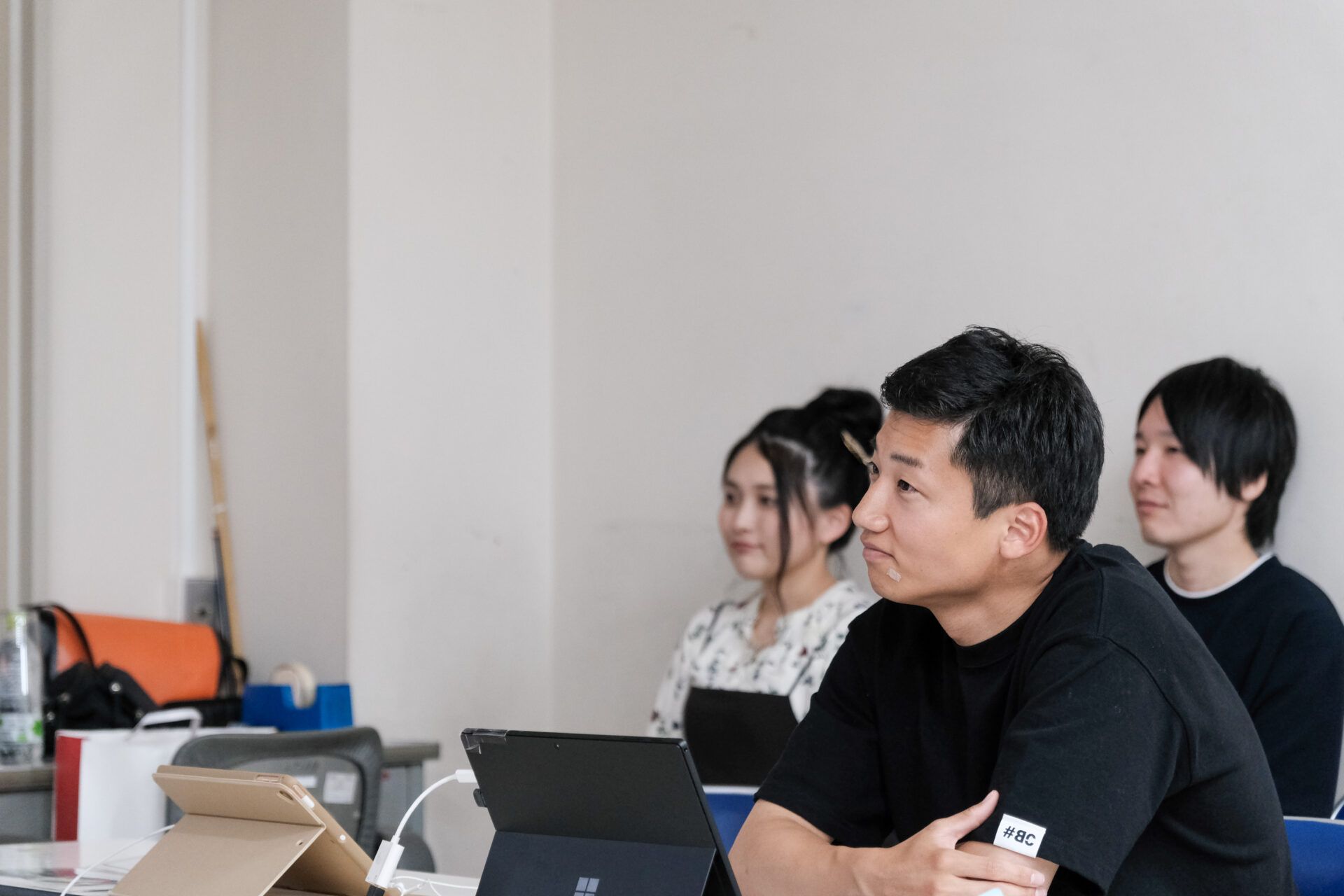
Smiles, frowns, and support are contagious
I believe that every word resonated with our hearts because they were all serious messages backed by Ochimizu's real experiences.
Like San-dai, Ochimizu spoke to me after the lecture. He listened intently to my activities as a community revitalization cooperation team member in Kurashiki City and as a writer for Kurashiki Tocotoco, and smiled, saying, "I am happy to hear about the achievements of my friends with disabilities."
Because they are people who speak in front of others, it may be that they find joy in each other's stories and support each other's activities. During the lecture, he mentioned, "Smiles and frowns are contagious," and it was indeed an interaction that gave me the feeling of "Let's do our best" with both of them.
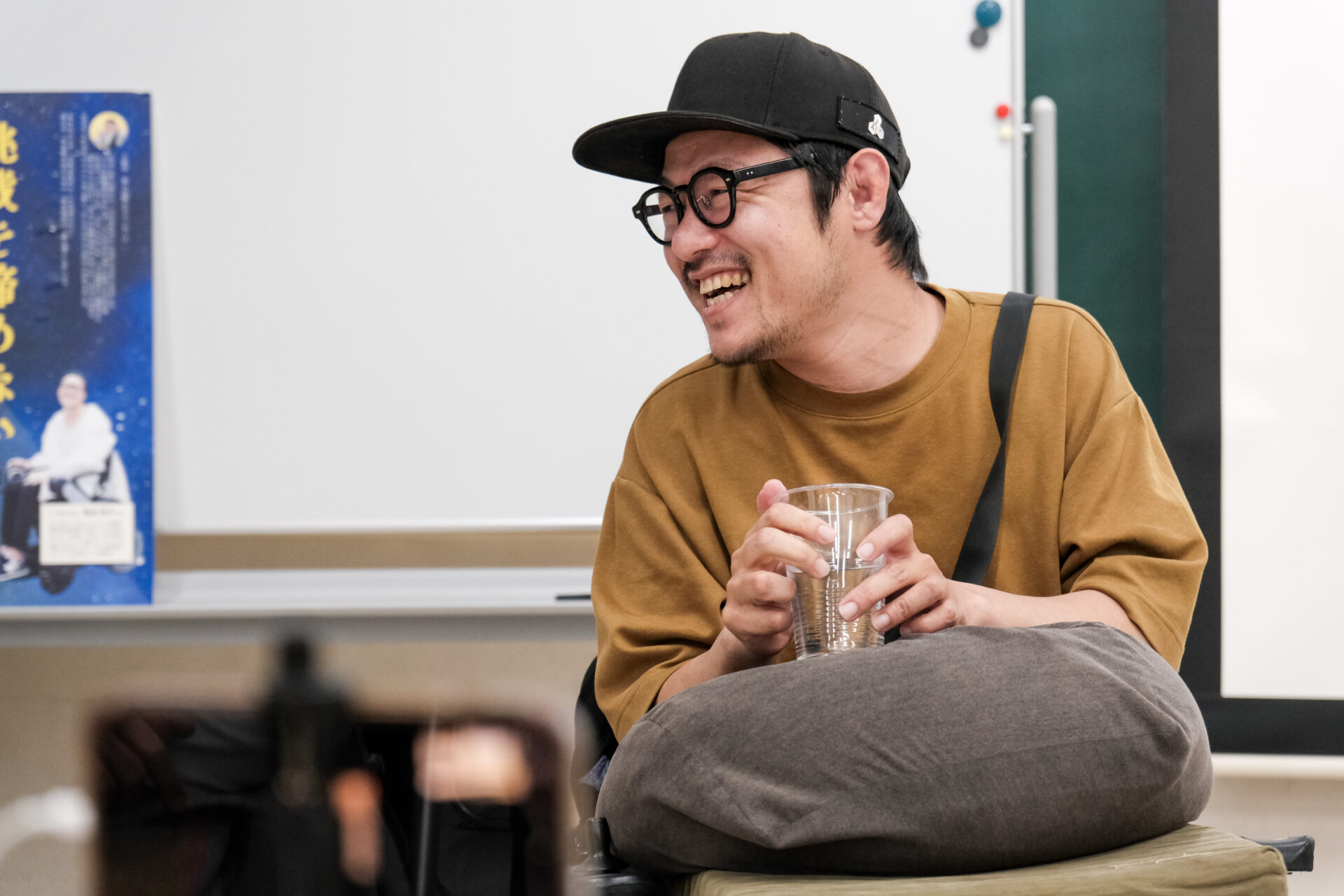
Miho Morigami who fulfilled her dream after five years
The lecture "Never Give Up on Challenges - A Dream Fulfilled After Five Years and What Comes Next" was a dream fulfilled for the organizer, Miho Morigami, after five years.
Five years ago, Morigami was deeply moved by the lectures of Ochimizu and San-dai and has been working tirelessly for the past five years to realize their lecture in her hometown of Okayama Prefecture.
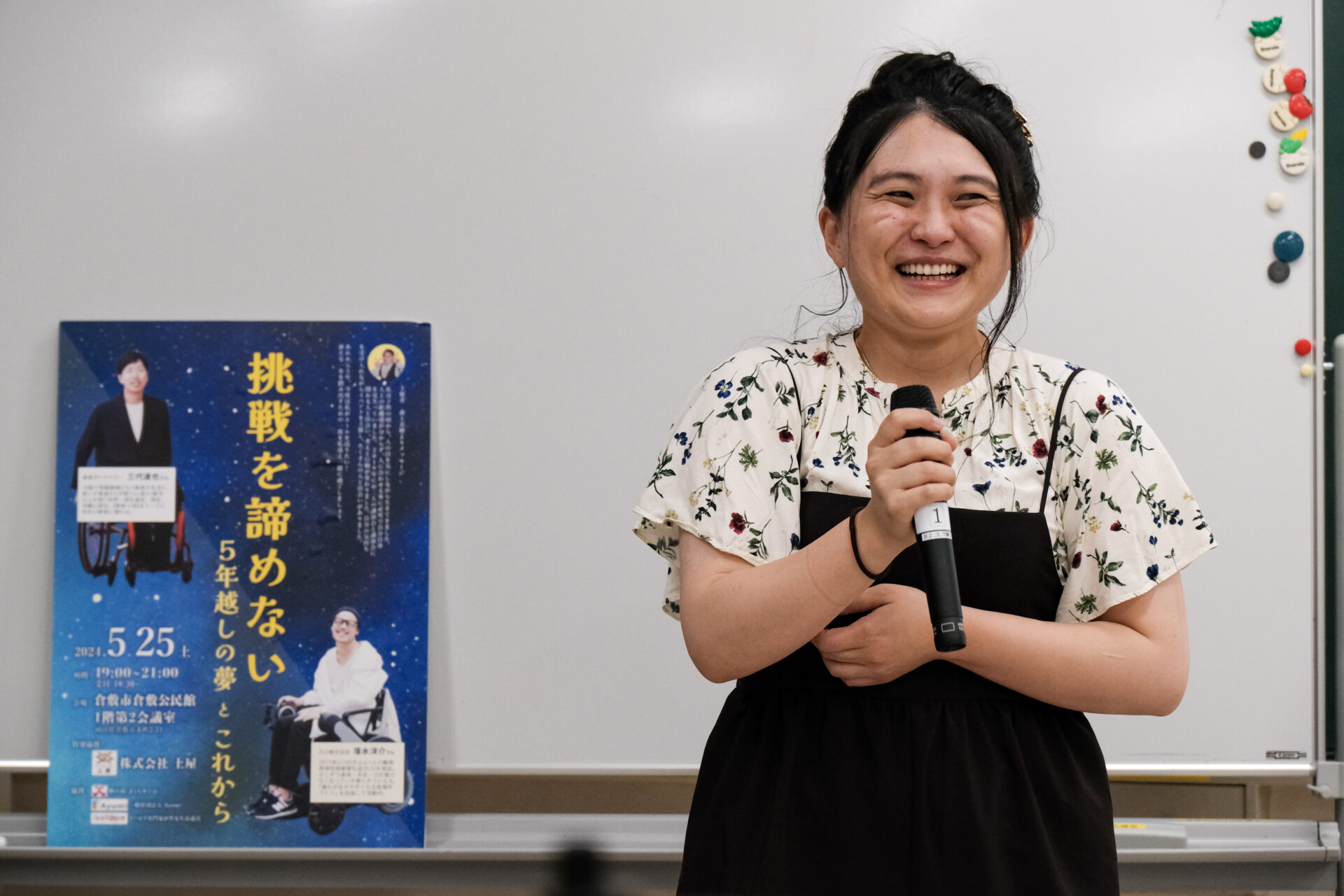
At the end of the lecture, Morigami was seen shedding tears as she reflected on the memories of the past five years. Most of the approximately 50 participants gathered in the venue were people who knew about her efforts over the past five years.
Her strong feelings received applause from everyone in the venue, and the lecture concluded.
In conclusion
When I interviewed the organizer, Morigami, beforehand and asked, "Why did you decide to hold this lecture?" she replied, "When I heard the two of them speak, I was inspired by their many episodes of taking action to do what they want to do despite their disabilities."
I wondered why she answered "inspired" instead of "moved." I think it is because both Ochimizu and San-dai have found "what they can do now" based on their experiences of not being pessimistic about their disabilities and are trying to pass that on to the next generation, which I understood by participating in the lecture.
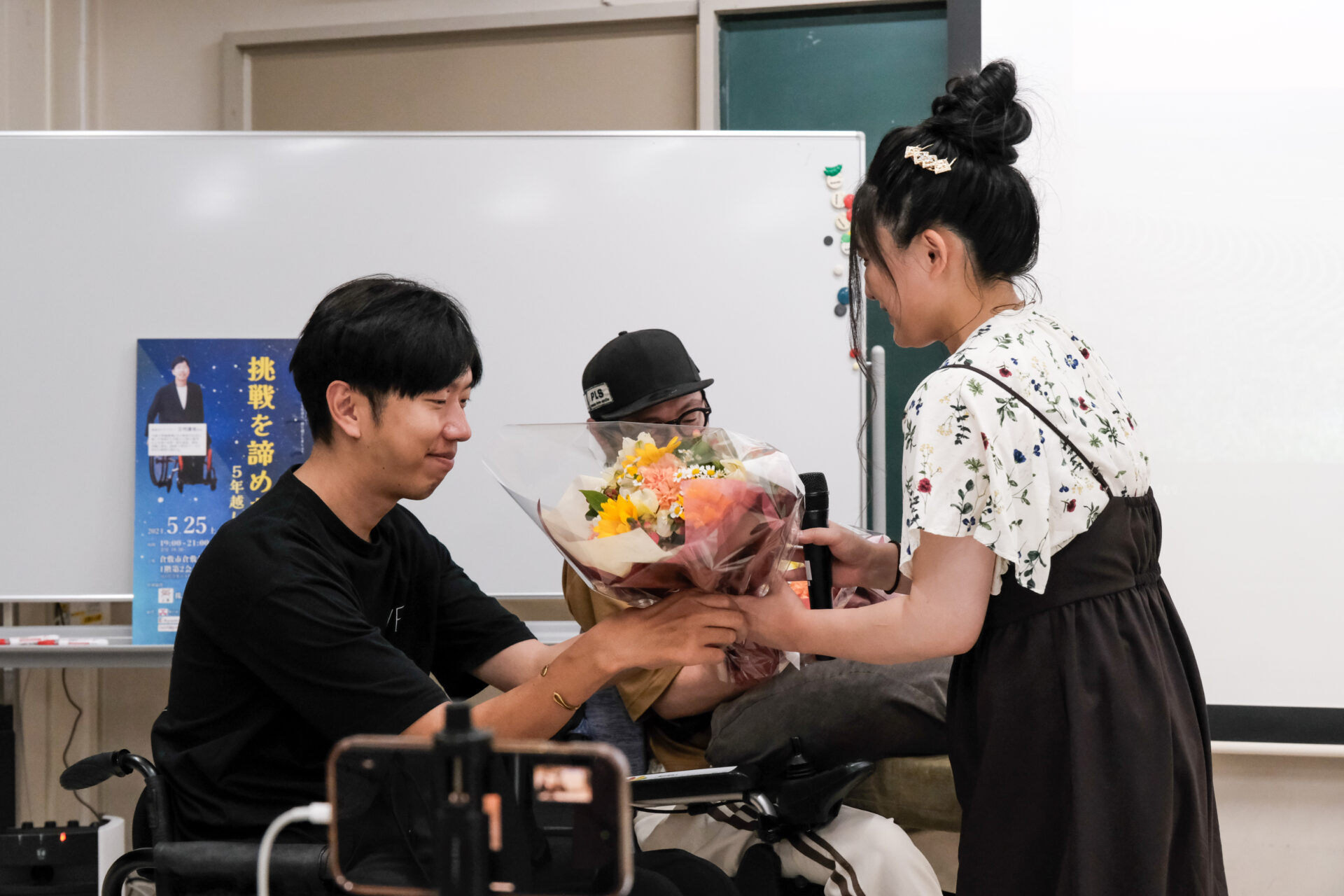
People who are challenged in their own ways despite their disabilities often seem like "special people" and make others think, "I can't imitate them." However, because both of them have backgrounds as able-bodied individuals, they clearly conveyed what they want the audience to understand and practice, based on their understanding of the uniqueness of their experiences.
That is why their stories are persuasive, and I believe they give us the courage to take action and challenge ourselves with what we can do now.
Data on the Ochimizu Yosuke & San-dai Tatsuya Lecture "Never Give Up on Challenges - A Dream Fulfilled After Five Years and What Comes Next"
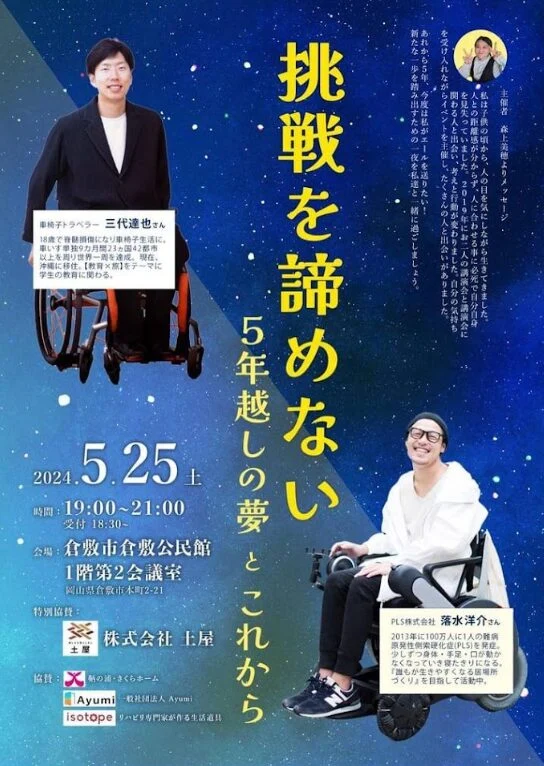
| Name | Ochimizu Yosuke & San-dai Tatsuya Lecture "Never Give Up on Challenges - A Dream Fulfilled After Five Years and What Comes Next" |
|---|---|
| Date | May 25, 2024 (Saturday) 7:00 PM - 9:00 PM |
| Location | 2-2-21 Honmachi, Kurashiki City, Okayama Prefecture |
| Participation Fee (including tax) | 3,000 yen for in-person attendance, 1,000 yen for online attendance |
| Homepage | Ochimizu Yosuke & San-dai Tatsuya Lecture "Never Give Up on Challenges - A Dream Fulfilled After Five Years and What Comes Next" |