The Takahashi River, flowing through the western part of Okayama Prefecture, carries water as it merges with numerous tributaries.
And the place where the river's water gathers and flows is Kurashiki.
In Kurashiki, the "Takahashi River Shijuku" was established in the autumn of 2020.
The participants gathered as students come from the Takahashi River basin and various professions and positions from both inside and outside Okayama Prefecture.
The instructors include former members of the Community Revitalization Cooperation Corps, executive members of the Takahashi River Basin School, practitioners of the project, and various experts in skills and know-how.
With such a diverse group of people coming together, it is very exciting to see what kind of school it will become.
I will report on the opening ceremony of the "Takahashi River Shijuku" held on November 3, 2020 (Tuesday).
What is "Takahashi River Shijuku"?
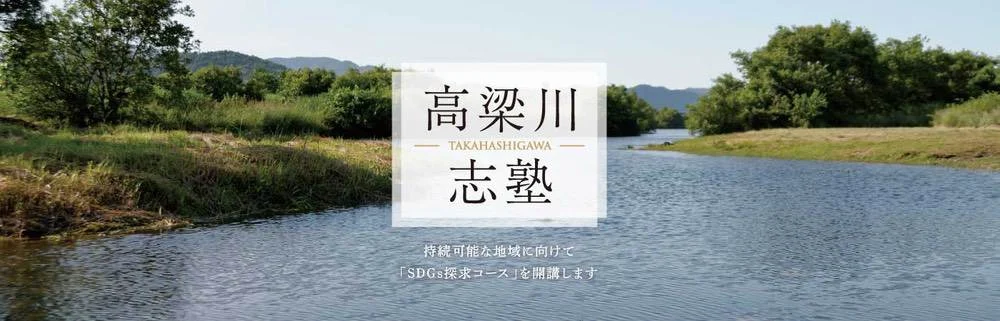
What kind of place is "Takahashi River Shijuku"?
According to the official page, it is described as follows.
Using the nature, history, culture, and industry of the Takahashi River as materials for "fieldwork," the school aims to foster learning and mutual improvement across diverse generations, transcending affiliations and positions, and to grow into human resources that will support community development in the Takahashi River basin and sustainable regions.
Source: Takahashi River Shijuku
It is hosted by Kurashiki City as part of the city's "Municipal SDGs Model Project" and is operated by the General Incorporated Association Takahashi River Basin School.
There are two types of courses available for enrollment.
- SDGs Exploration Course
- Auditor Course
The "SDGs Exploration Course" includes the following content.
Exploratory learning involves students setting their own issues and themes, collecting, organizing, and analyzing information for solutions, and engaging in discussions and collaborations with those around them. This course includes practical training and presentation creation as outputs, in addition to classroom learning.
Source: Takahashi River Shijuku
The "Auditor Course" allows participants to attend lectures on a per-lecture basis.
The period runs from November 2020 until the completion ceremony on February 14, 2021 (Sunday).
For more details, please check the "Takahashi River Shijuku" website.
Flow of the Opening Ceremony of Takahashi River Shijuku
The flow of the day is as follows.
| Program | Person |
|---|---|
| 1. Greeting | Hiroshi Sakanoue, Representative Director of Takahashi River Basin School |
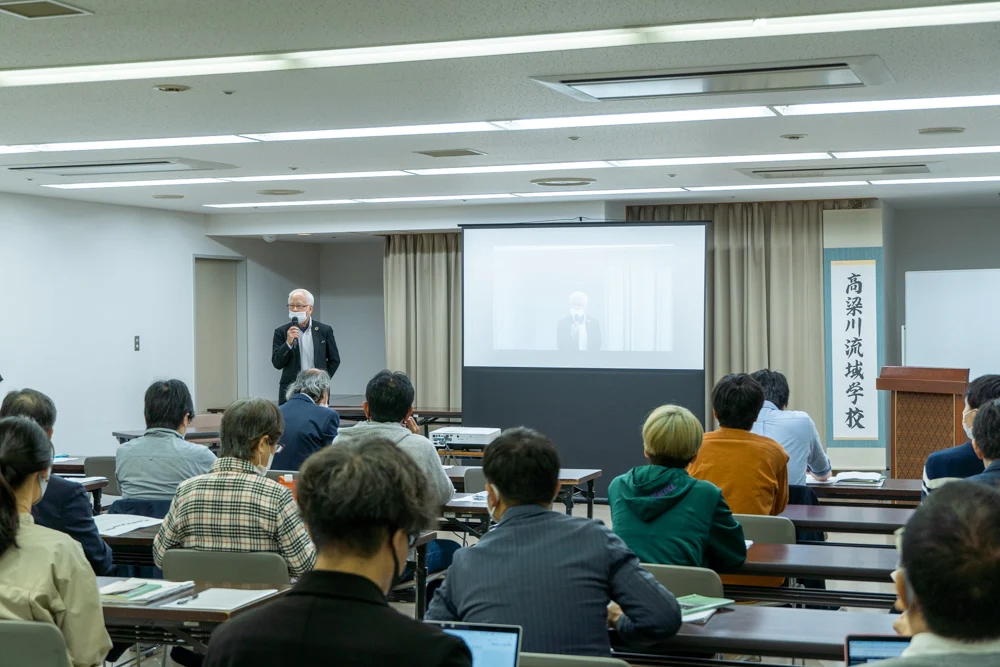
| 2. Message from the Principal of Takahashi River Basin School (video) | Nobutake Kanzaki, Principal of Takahashi River Basin School |
| 3. Explanation of the project purpose | Yoshitaka Arimoto, Chief of the Planning and Management Office, Kurashiki City Planning and Finance Department |
| 4. Overall schedule and main programs | |
| 5. Introduction of the members of the basin school | |
| 6. "Learning" in the Takahashi River Basin: Past and Future | Coordinator Tatsuya Ishihara Former Representative Director of Takahashi River Basin School Kensaku Okubo Current Representative Director of Takahashi River Basin School Hiroshi Sakanoue |
| 7. Mini workshop by participants | Facilitator: Ryunosuke Matsubara |
| 8. Presentation by group representatives | |
| 9. Closing and administrative announcements |
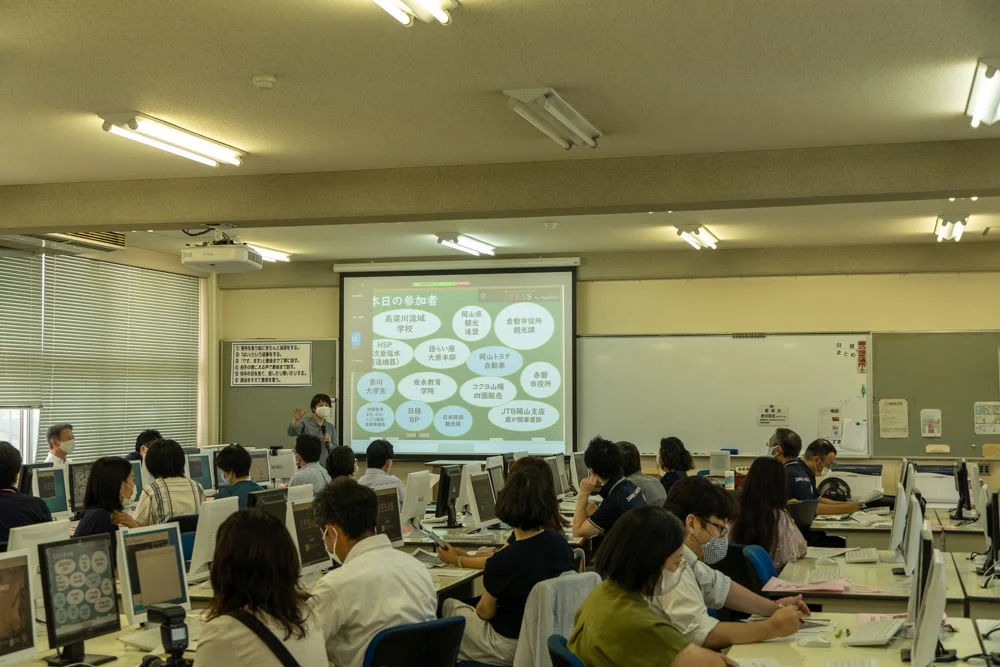
There were greetings from stakeholders, an overview explanation of "Takahashi River Shijuku," dialogues, mini workshops by participants, and presentations by groups.
Greeting by Hiroshi Sakanoue, Representative Director of Takahashi River Basin School
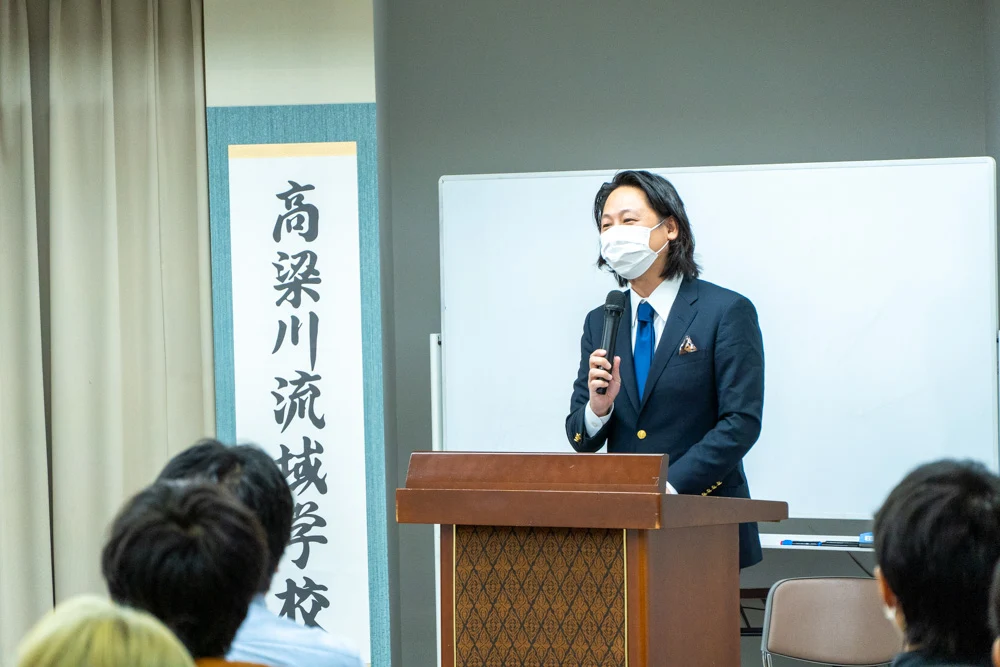
Hiroshi Sakanoue, Representative Director of Takahashi River Basin School, gave a greeting to congratulate the students on their enrollment.
Mr. Sakanoue mentioned that about 10 years ago (around 2010), he left the company he was working for at the time, thinking, "I want to engage in community activities in my hometown of Kurashiki."
Later, he had the opportunity to meet Mr. Yasunori Nakamura, the current Vice Representative Director of Takahashi River Basin School, through support activities for the Great East Japan Earthquake.
When he asked Mr. Nakamura about important aspects of community activities, he received the keyword "from distant places, from weak places," along with the connections of the Takahashi River basin.
Using this keyword as a starting point, he visited the seven cities and three towns of the Takahashi River basin and engaged in discussions with people involved in the Community Revitalization Cooperation Corps and NPO activities.
Based on these experiences, he spoke to the students who are investigating the current situation of the Takahashi River basin or considering starting new initiatives, saying, "I hope you value connections."
He also introduced the words of Ohara Magosaburo: "If seven or eight out of ten people agree, it’s better not to do it."
He concluded by expressing hope that Takahashi River Shijuku would become a catalyst for creating small but certain initiatives in a time when the world’s values are changing significantly due to the COVID-19 pandemic, aiming for a sustainable regional future.
Message from Nobutake Kanzaki, Principal of Takahashi River Basin School
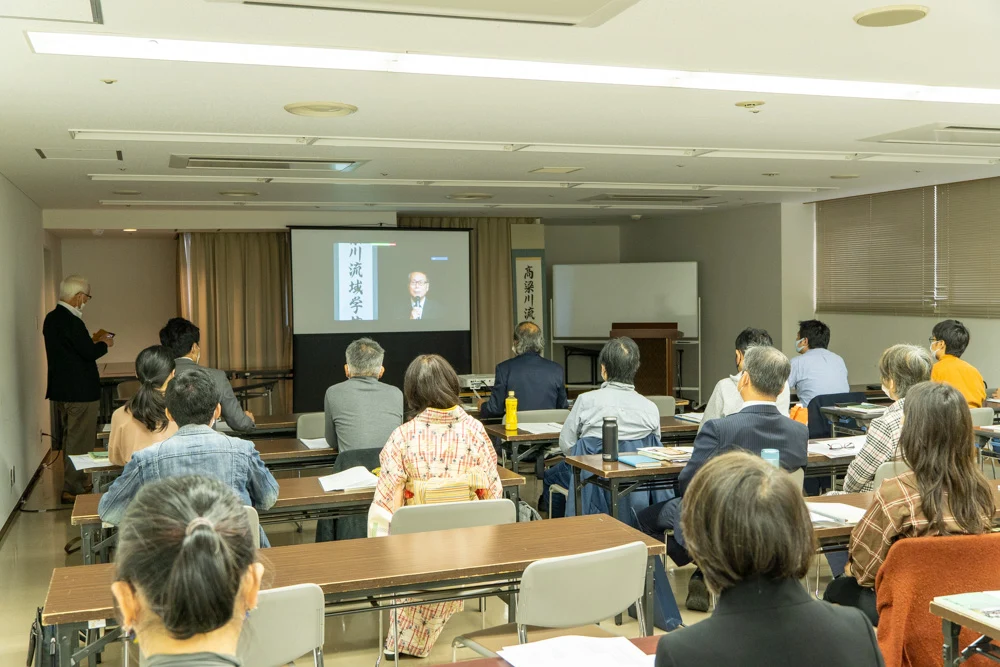
Nobutake Kanzaki, Principal of Takahashi River Basin School, delivered a message via video.
Dialogue between the new and former representative directors of Takahashi River Basin School
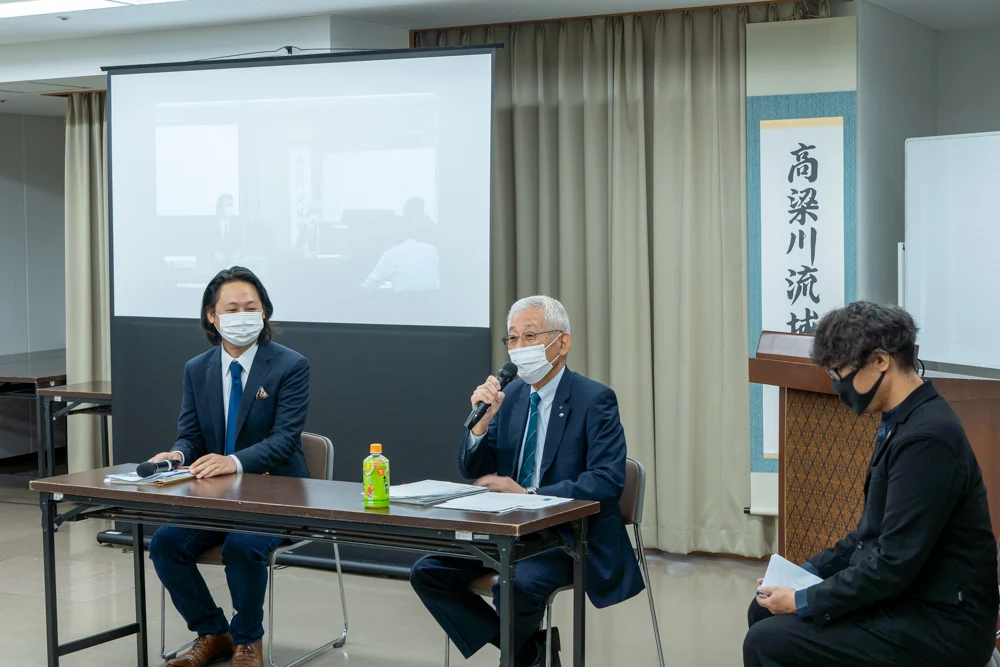
A dialogue titled "Learning in the Takahashi River Basin: Past and Future" was held between the new and former representative directors.
The coordinator was Tatsuya Ishihara, Vice Representative Director of Takahashi River Basin School.
During the dialogue, the following flow of the Takahashi River Basin School was introduced:
- The activity that became the predecessor of Takahashi River Basin School, called "GREEN DAY"
- The establishment of Takahashi River Basin School
- After five years of activities, a generational change occurred, and in 2020, Sakanoue became the representative director
Mini workshop by participants

Participants were divided into teams of four to share self-introductions and thoughts on the following themes.
- Self-introduction (current self)
- Reason for participation (future self)
- Future of the basin (future region)
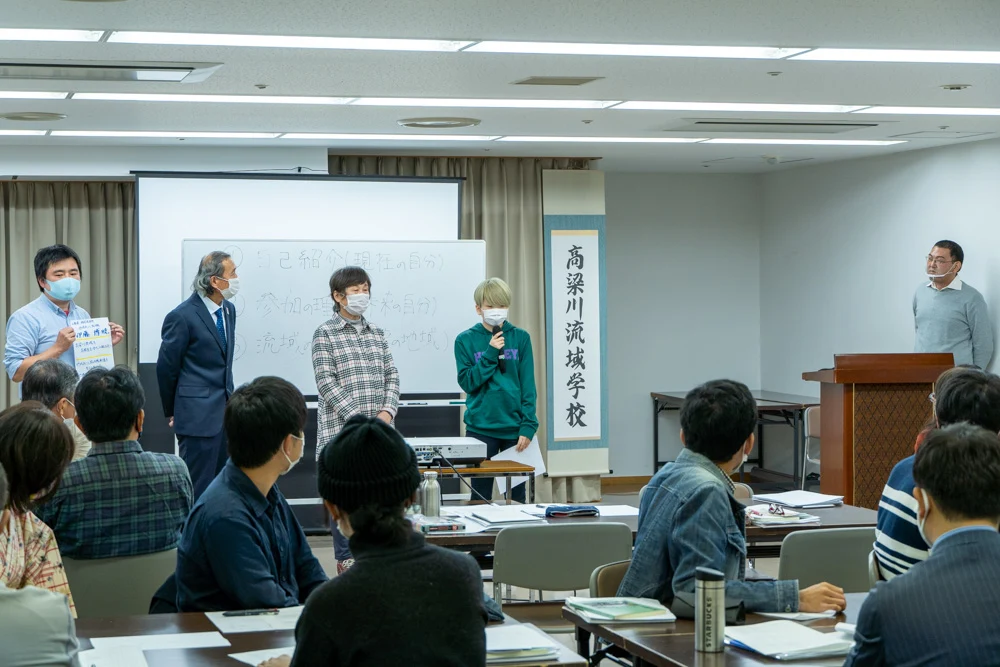
After the workshop, each team presented what discussions they had, including their reasons for participating in "Takahashi River Shijuku" and how they would like to engage in community activities in the future, interspersed with self-introductions.
Everyone has various thoughts and reasons for participating.
The presentations progressed in a very warm atmosphere as everyone listened attentively to each other's thoughts.
Conclusion
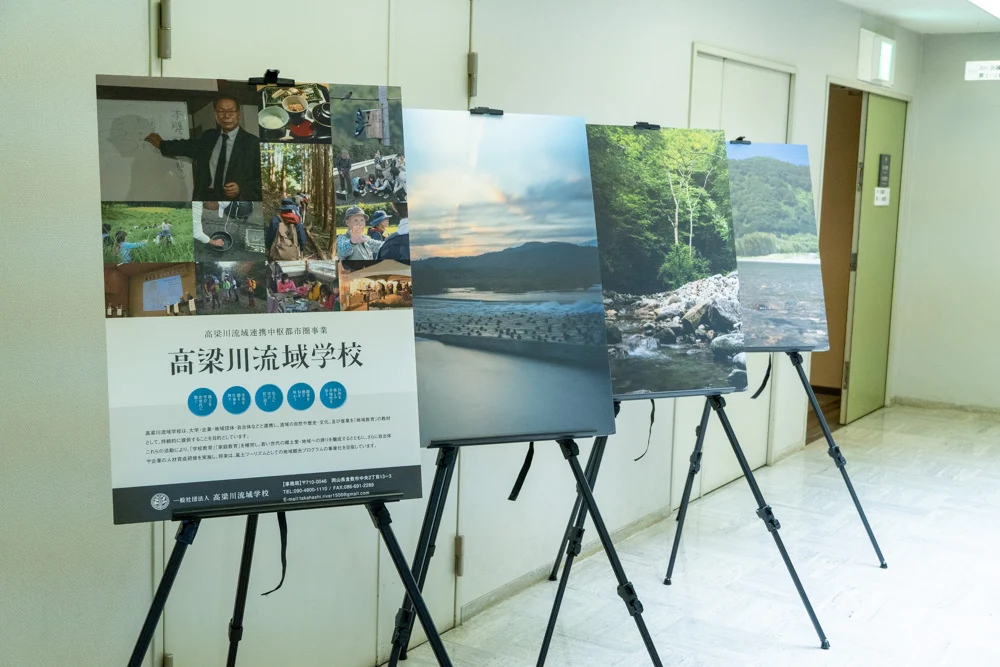
As children, at least in elementary school, there was time to learn about the community we live in.
For example, there are opportunities to learn about the history of the area, the unique challenges it faces, and who has been involved in various initiatives.
However, as adults, we often become so busy with daily life that opportunities to focus on community issues become scarce.
At "Takahashi River Shijuku," there is an auditor course that can be taken casually by those not involved in community matters, allowing them to attend lectures on topics of interest.
As long as there is internet access, participants can join from anywhere.
The recruitment guide for "Takahashi River Shijuku" envisions the following types of people for its curriculum.
- People who want to learn methods for solving community issues
- People who want to learn know-how for planning and managing projects and events
- Business owners and staff who want to incorporate SDGs into their management
- Next-generation human resources participating in NPOs and community activities
- Government officials and educators who want to deepen their understanding of SDGs
People who do not fall into the above categories can also participate, and the more diverse the participants, the more they can stimulate each other.
I am very excited to see what kind of community development will emerge from the new human resources born through "Takahashi River Shijuku."
Data of the Opening Ceremony of Takahashi River Shijuku
| Name | Takahashi River Shijuku Opening Ceremony |
|---|---|
| Date | Date and time of the opening ceremony: November 3, 2020, 10:00 AM – Duration of the Takahashi River Shijuku program: November 3, 2020 – February 14, 2021 (completion ceremony) |
| Location | 1-18-1 Chuo, Kurashiki City, Okayama Prefecture, Geibunkan Hall |
| Participation Fee (including tax) | For details, please check the Takahashi River Shijuku website. ① SDGs Exploration Course students 10,000 yen (participation in all programs on the day, archive viewing available) *Uniform fee regardless of whether attending in person or online ② Auditors (attending only lectures) In-person attendance: 1,500 yen per session (limited number of participants) Online/Archive attendance: 500 yen per session *Participants will be provided with a page for viewing later. *Some courses may charge additional actual costs. *Some courses may be available for free public access. |
| Website | Takahashi River Shijuku | Takahashi River Basin School |