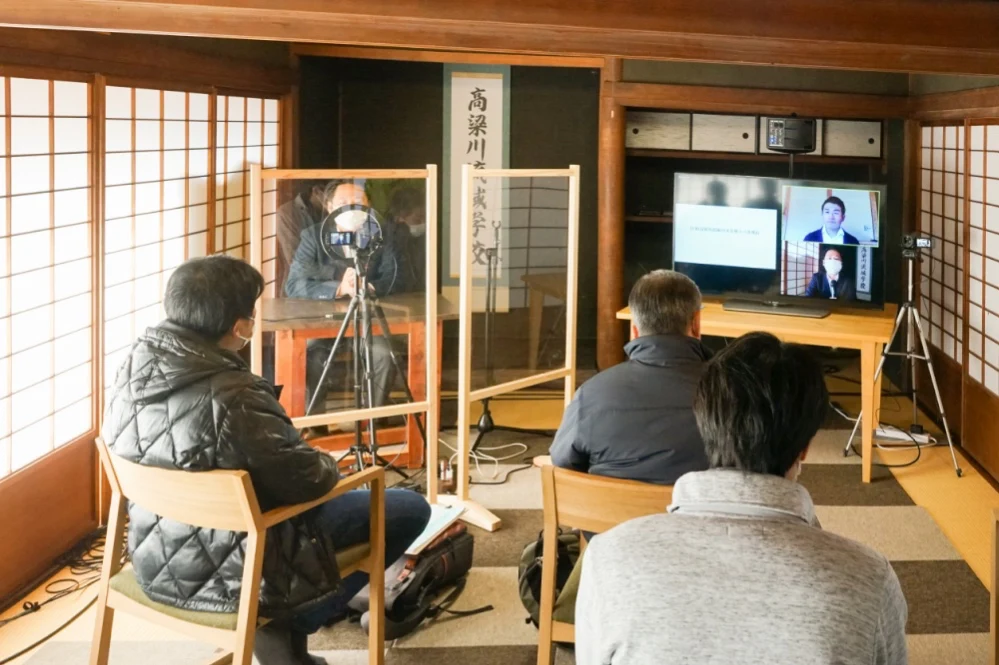
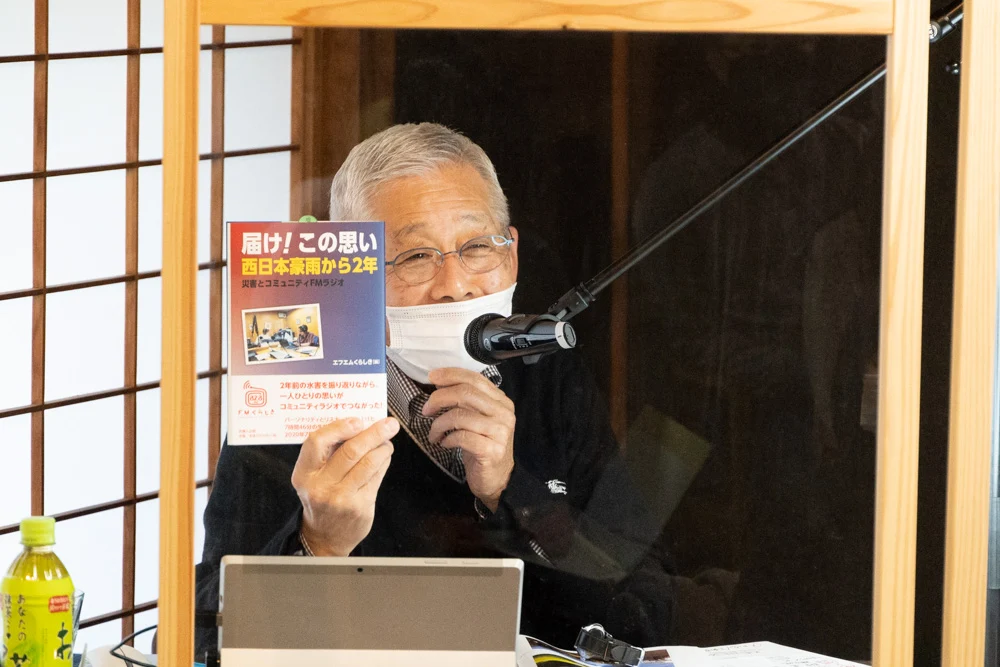
The "Takahashi River Shijuku" is being held from November 2020 to February 2021.
A total of 41 courses classified into three categories: SDGs Vision, Liberal Arts, and Skills, are being attended by 23 students and occasional auditors.
On January 23, 2021 (Saturday), as part of the Skills category, Maiko Okimura, a former regional revitalization cooperation team member from Asakuchi City, Okayama Prefecture, gave a lecture.
I will report on the content of the lecture.
Overview of Takahashi River Shijuku
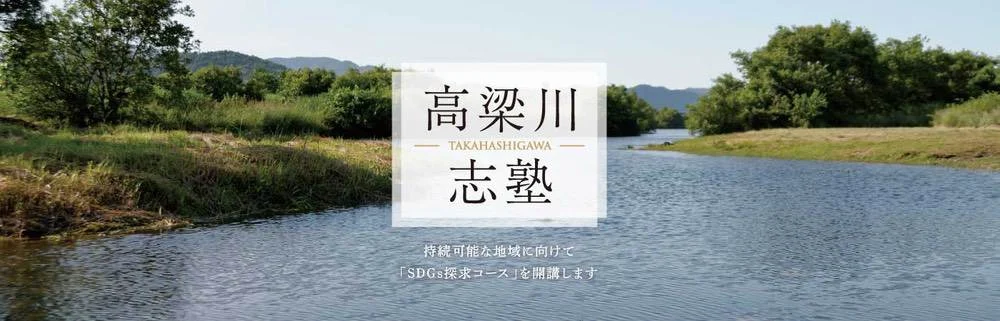
The "Takahashi River Shijuku" is a school operated by the general incorporated association Takahashi River Basin School as a commissioned project by Kurashiki City, aiming to foster human resources who will be responsible for regional development and "sustainable" communities through history, culture, industry, and fieldwork in the Takahashi River basin.
There are two types of courses available:
- “SDGs Exploration Course” which includes practical training and presentations
- “Auditor Course” where participants can attend optional lectures
The opening ceremony was held on November 3, 2020, and 41 lectures will be conducted until the completion ceremony on February 14, 2021.
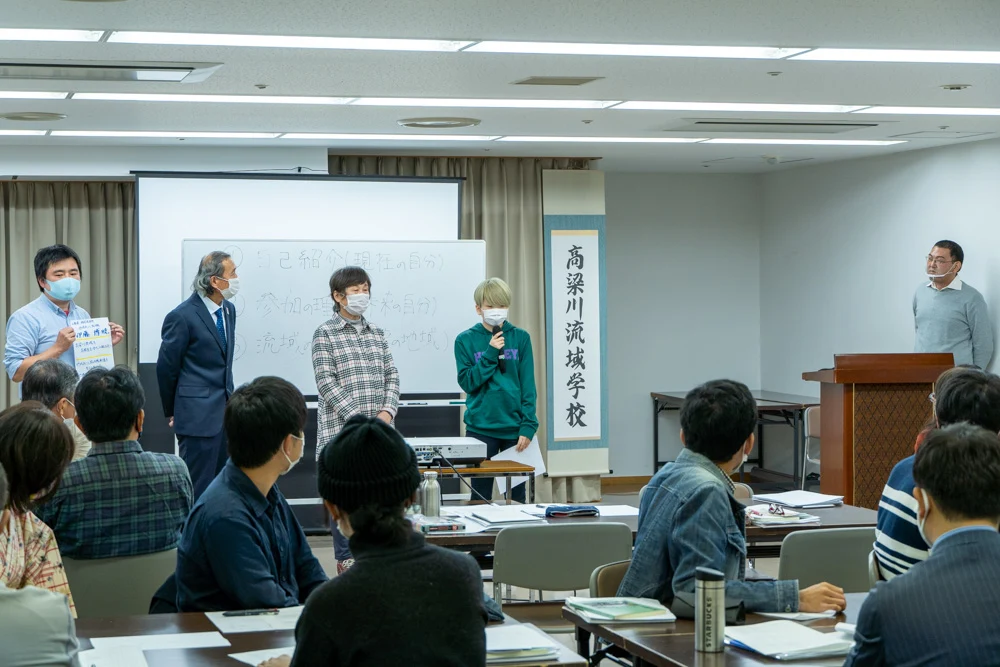
The themes are as follows:
▼ SDGs Vision Edition
Courses that provide a deep understanding of the current efforts to solve issues and the vision for 2030 in the Takahashi River basin through lectures by practitioners and experts, leading to awareness for action.
▼ Liberal Arts Edition
Courses to learn about history, culture, and industry in the Takahashi River basin, gaining knowledge that serves as a foundation for activities.
▼ Skills Edition
Courses to acquire skills and know-how for exploratory learning, such as presentations, accounting for non-profit organizations, data analysis (using RESAS), utilizing IT tools, and using blogs and social media.
For more detailed information, please see the special page for "Takahashi River Shijuku".
Background of Maiko Okimura, Former Regional Revitalization Cooperation Team Member from Asakuchi City
My first impression of Okimura was "energetic."
Watching her speak lively, I could feel Okimura's energy.
Hearing her background made it clear why she has such a vibrant personality.
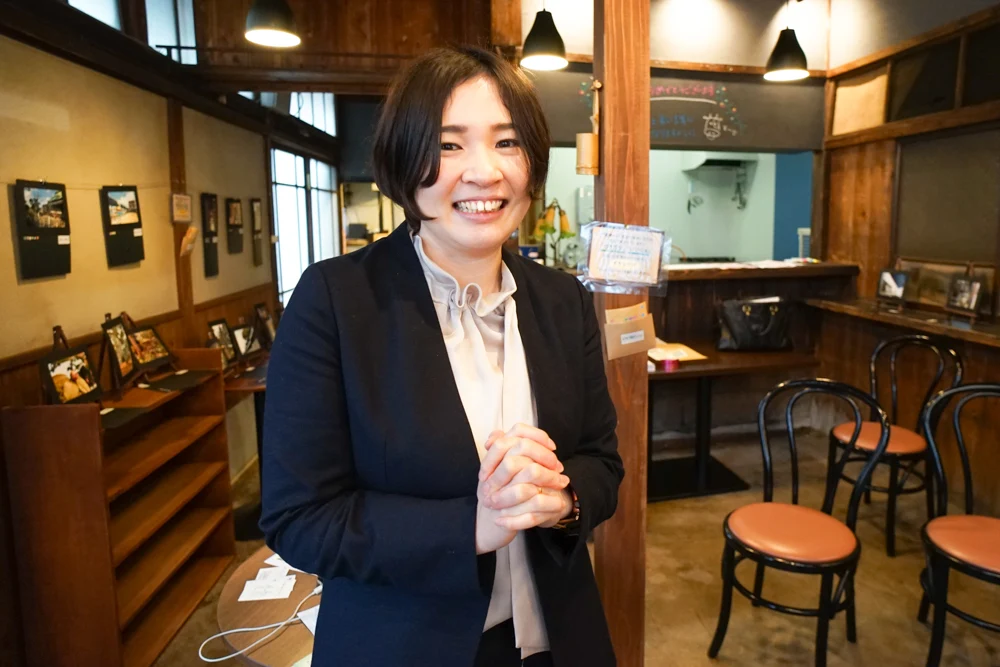
She was born in Tochigi Prefecture and raised in Hokkaido.
In high school, she saw a television program featuring architectural models that renovated difficult-to-live-in small houses and thought, "I want to make this too!" and went on to a vocational school for architecture in Hachioji, Tokyo.
After studying at the vocational school, she transferred to the evening division of Tokyo University of Science.
During the day, she worked part-time at a structural engineering office and continued her studies at university at night.
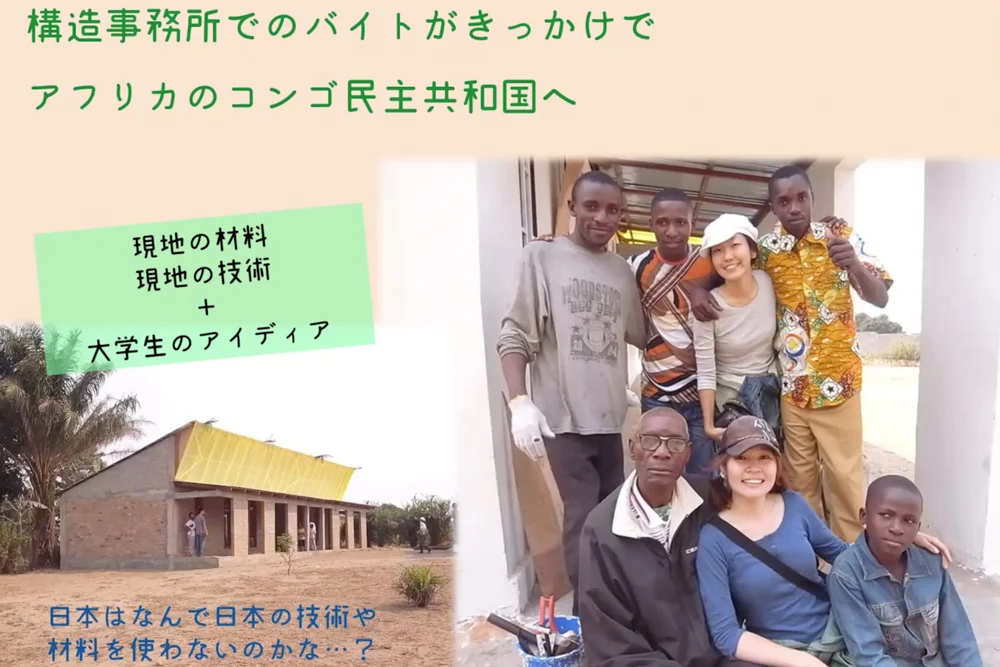
Okimura participated in a project to build a primary school in Kinshasa, the capital of the Democratic Republic of the Congo, thanks to her part-time job.
Japanese university students went to the site, with architecture students constructing the school building and education students planning the classes.
The construction of the school utilized local materials and techniques.
Having experience working at a structural engineering office, Okimura began to question the heavy reliance on foreign techniques such as nails and bolts in Japan.
Wanting to study traditional Japanese techniques, Okimura left university after returning to Japan and participated in a training course to cultivate human resources utilizing regional resources as a coordinator for agricultural, commercial, and industrial collaboration.
Through studying and practicing forest thinning and traditional construction methods, she had the opportunity to meet various people.
Next, she received work in model making and drafting from acquaintances she met in the training course and became a freelancer.
She started working under the name "moko Design Office."
By the way, her office was a four-and-a-half-tatami mat property in Kagurazaka, Tokyo, with a rent of only 40,000 yen per month, which was incredibly cheap.
After that, she continued to connect with work through introductions from friends.
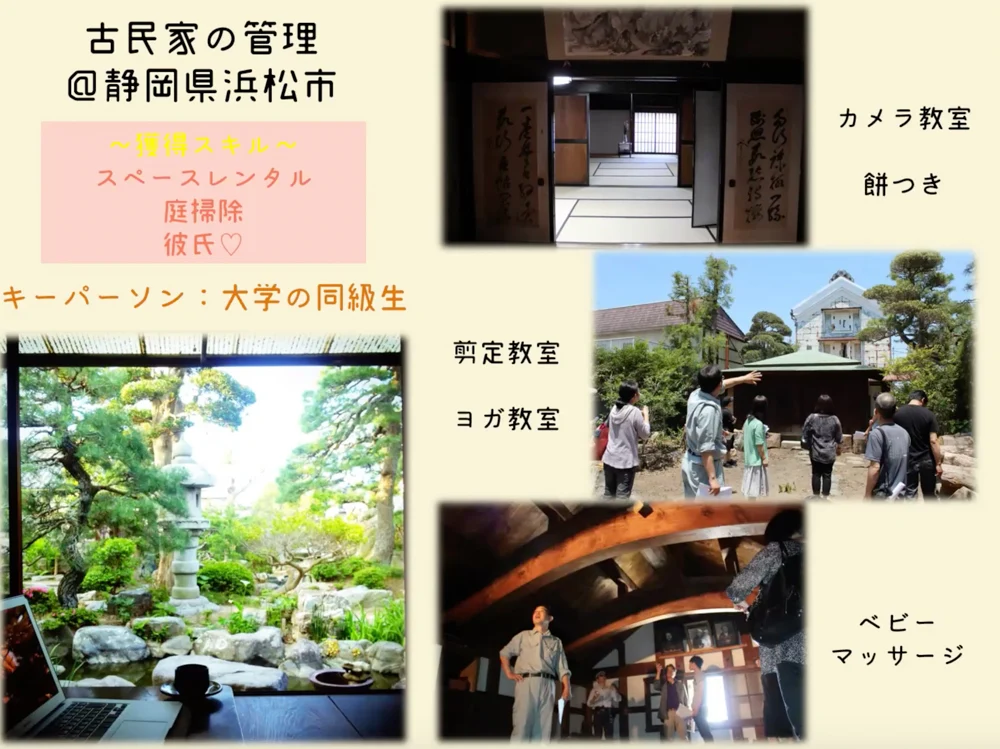
She renovated old houses in Iga City, Mie Prefecture, managed a rental space business for traditional Japanese houses in Hamamatsu City, Shizuoka Prefecture, and operated an old house restaurant in Zushi City, Kanagawa Prefecture.
Since becoming a freelancer at the age of 23, she has gained a wealth of knowledge and skills through numerous encounters and experiences.
Through her freelance work, she emphasized during her lecture that her "experience level has increased tremendously."
On the other hand, finding work and living on her own is not just fun.
She mentioned that there were many difficult times as well.
Feeling the desire to create her own place in a new land, Okimura joined the regional revitalization cooperation team.
She was drawn to the catchphrase "A town of stars and the sea" and moved to Kamogata in Asakuchi City in 2016.
Listening to Okimura's rapidly unfolding life is exciting in itself.
I was strongly attracted to her way of life, challenging herself to pursue what she is interested in.
Activities as a Regional Revitalization Cooperation Team Member
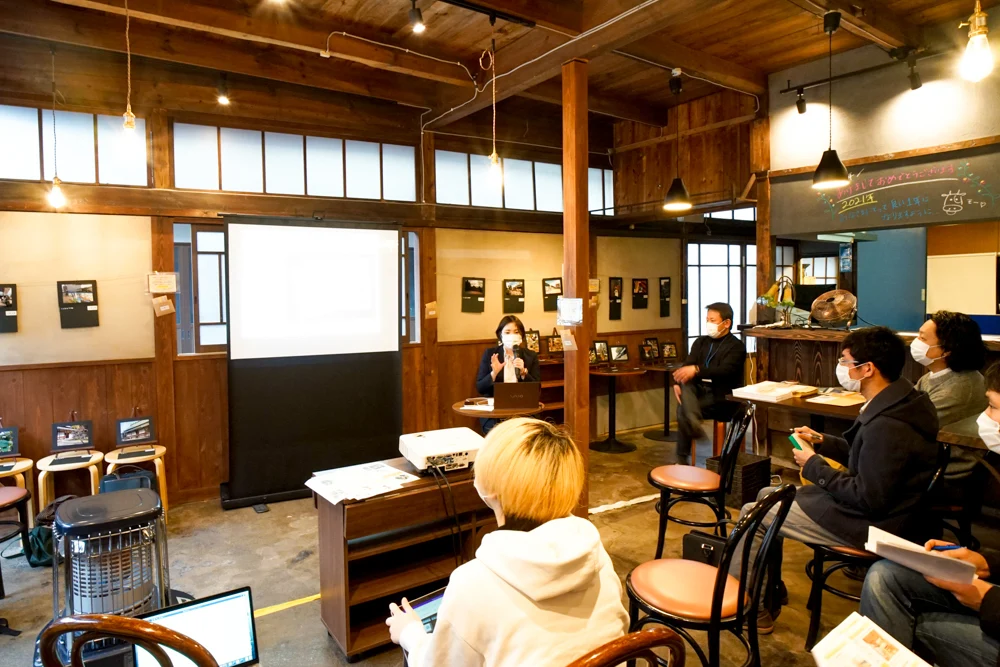
Since becoming a regional revitalization cooperation team member, Okimura has continued various activities.
Her work covers a wide range, including measures for vacant houses, creating disaster prevention maps, introducing transportation services for the elderly, and hosting lectures.
This is because the term of the regional revitalization cooperation team is only three years.
During that time, she must create projects that will revitalize the community through her own efforts.
From the beginning of her tenure, she made efforts to be recognized by the local people by appearing in many places.
By learning Nankin Tamasudare (a traditional Japanese performance), she was invited to more senior citizen gatherings, gaining many opportunities to interact with the elderly.
While working as a regional revitalization cooperation team member, she established Moko’a in May 2017.
"Moko" means "one" in Lingala, the language of the Congo, and "a" represents Asakuchi, she explained.
Even after completing her term as a regional revitalization cooperation team member, Okimura continues to support the community through her organization.
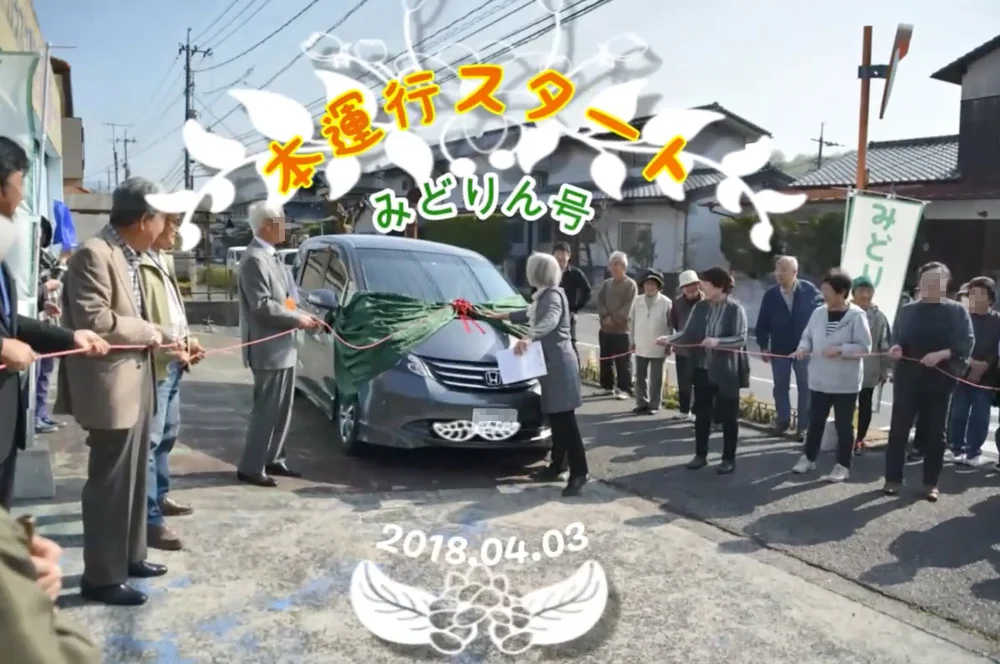
One of the activities supported by "Moko’a" is the transportation service "Midorin-go."
In Midorioka, Kamogata Town, Asakuchi City, where aging is rapidly progressing, many people felt anxious about not being able to secure transportation for shopping and medical visits.
Thus, the community-driven transportation service "Midorin-go" was born, targeting residents of the Midorioka area.
A community exchange hub called "Ikigai Plaza" was established, creating a place where residents can engage in activities such as a lunch café and handicraft classes.
The profits generated from the activities at "Ikigai Plaza" are used to operate "Midorin-go," creating a system that allows the community to sustain the project.
Why Regional Revitalization is Necessary
Modern Japan is said to be a society with a declining population.
However, looking around the town, one cannot see the effects of population decline.
Okimura explained the issues of a declining population and the reasons why regional revitalization is necessary using statistical data.
| 1995 | 2015 | 2035 (Projected) | |
|---|---|---|---|
| Total Population (A) | 38,595 | 34,235 | 27,607 |
| Aged 85 and Over (B) | 932 | 1,845 | 3,564 |
| A/B | 41.4 | 18.6 | 7.7 |
In 1995, the population of Asakuchi City was about 38,000, and in 2015 it decreased to about 34,000, a reduction of about 10% over 20 years.
Furthermore, population decline is expected to accelerate, with a projected decrease of about 20% to approximately 27,000 by 2035.
The number of elderly people aged 85 and over who require living assistance doubled from 1995 to 2015, reaching about 1,800.
By 2035, it is estimated to increase to approximately 1.9 times, around 3,600, meaning that 7.7 people will need to support each elderly person aged 85 and over.
Moreover, it seems that retired individuals aged 65 to 74 mainly participate in community activities, but as time passes, they will shift to the side that requires support.
While the number of people providing support decreases, the number of those needing support is rapidly increasing.
| Emerging Issues | |
|---|---|
| Declining Birthrate | School consolidation, decline in regional vitality |
| Aging Population | Shopping support, elderly safety checks, dementia prevention |
| Population Decline | Weakening of human connections, withdrawal of commercial facilities, increase in vacant houses and abandoned farmland |
Transportation support for shopping and safety checks required due to dementia must be carried out by someone.
Additionally, the withdrawal of commercial facilities and the increase in vacant houses and abandoned farmland will occur due to population decline.
Of course, tax revenues will decrease, making it impossible for local governments to respond.
The local residents must create their own community and build an environment where they can support each other.
Regional Revitalization Utilizing Vacant Houses
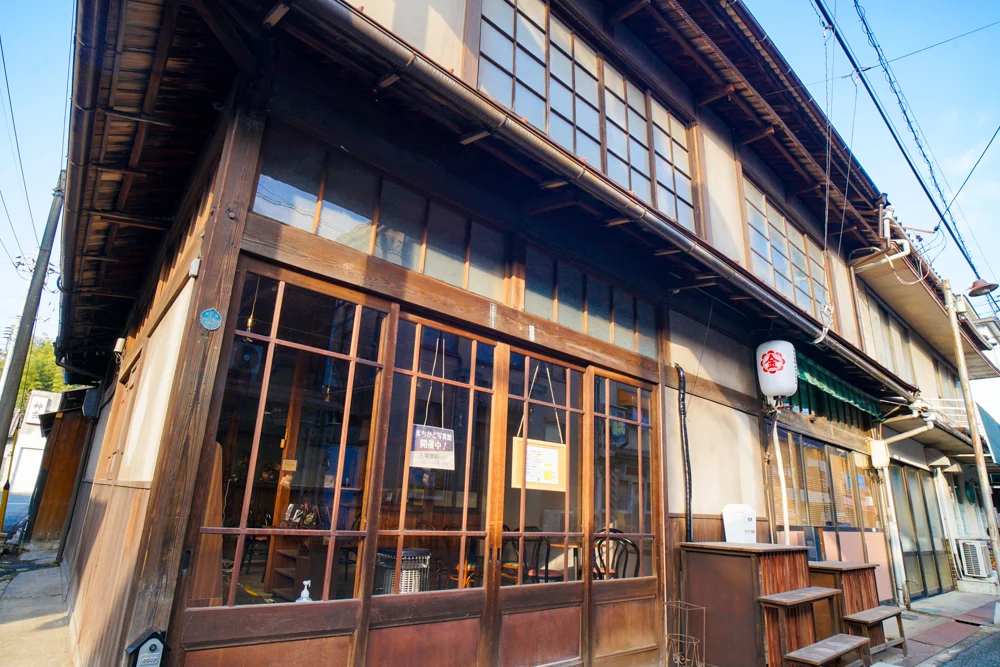
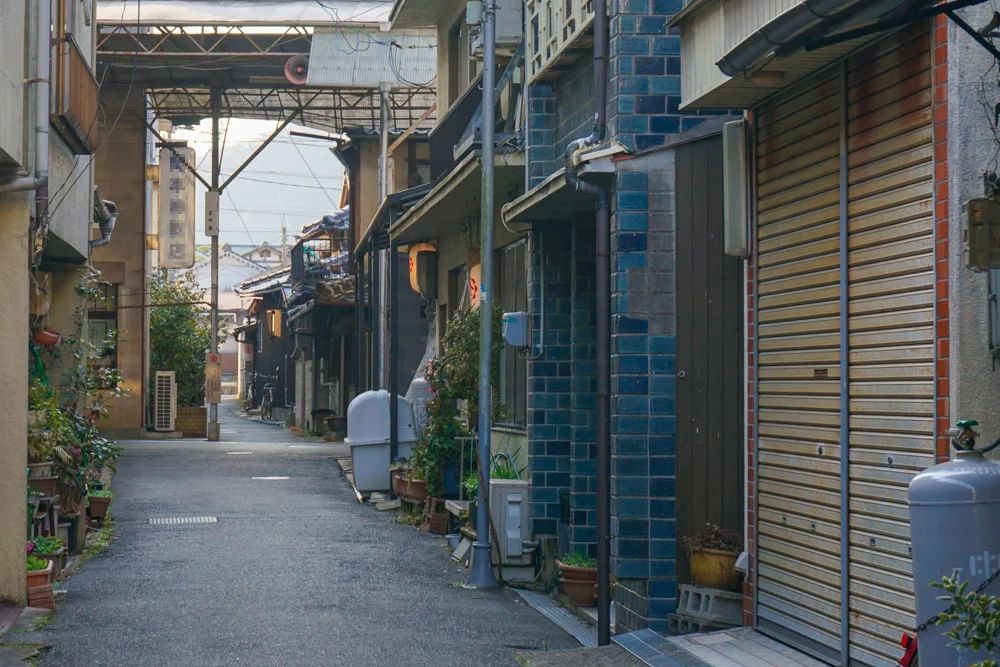
Asakuchi City, Kinkō-cho has a history of thriving as a town in front of the headquarters of the Kinkō religion, and it retains a retro atmosphere in its townscape.
However, the sparsely populated town has a desolate and lonely atmosphere.
Mr. Okimura is working on revitalizing the area, including the utilization of vacant houses in Asakuchi City, Kinkō-cho, as follows.
- Survey of vacant houses
- Utilization case of vacant houses "Space Kinseikan"
Survey of vacant houses
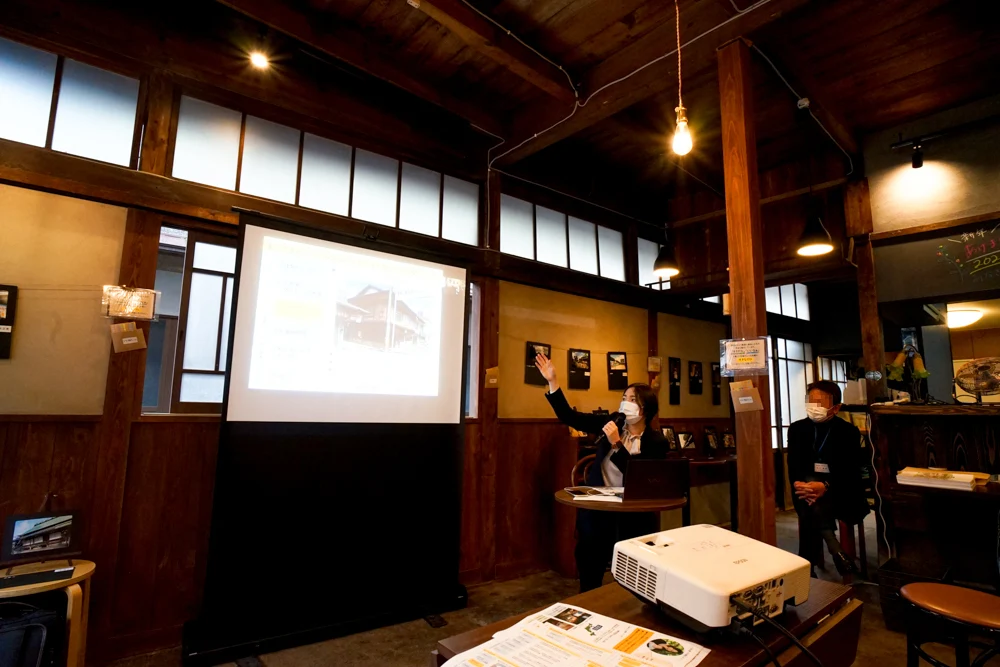
Before starting the utilization of vacant houses, Mr. Okimura had the question, "Are there really vacant houses?" and began a survey of the actual situation of vacant houses in cooperation with local residents.
Vacant houses were marked in yellow, houses that seemed likely to collapse were marked in red, and vacant lots were marked in blue, visualizing the distribution of vacant houses by placing stickers on a blank map.
It seems there were surprisingly many vacant houses in the town.
Additionally, by working with knowledgeable elderly residents, they confirmed the owners of vacant houses for each property.
By understanding who to contact to rent or sell, they are progressing with the organization towards utilization.
Utilization case of vacant houses "Space Kinseikan"
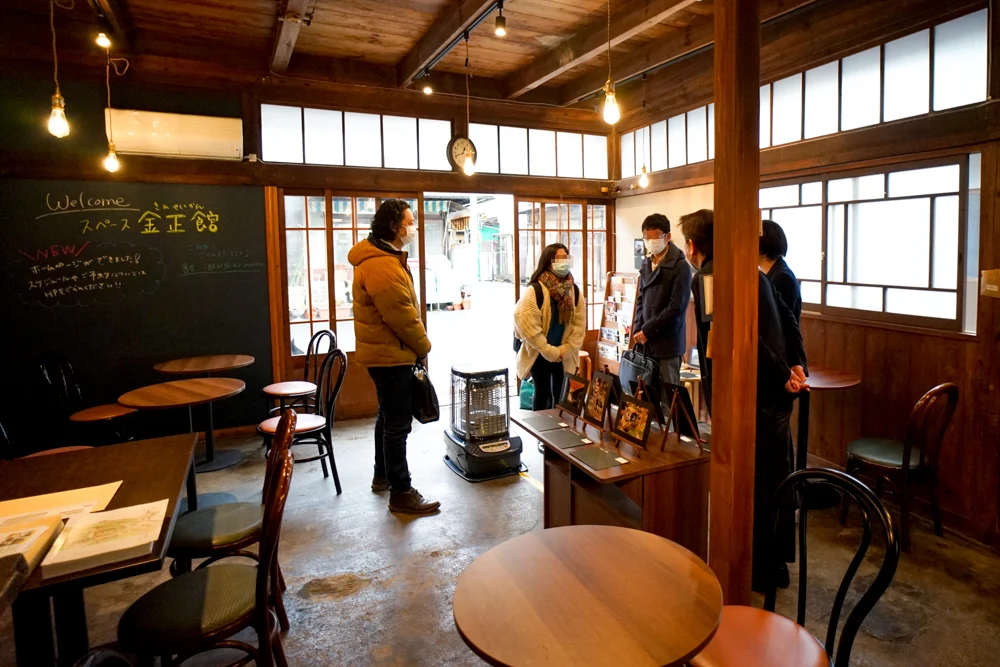
As a utilization case of vacant houses, they introduced "Space Kinseikan."
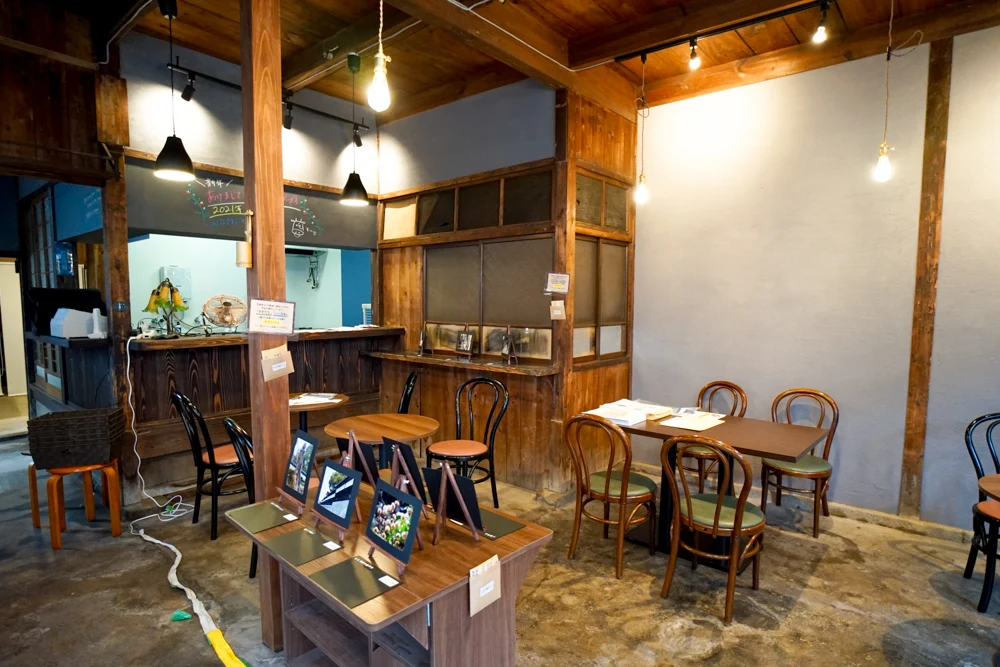
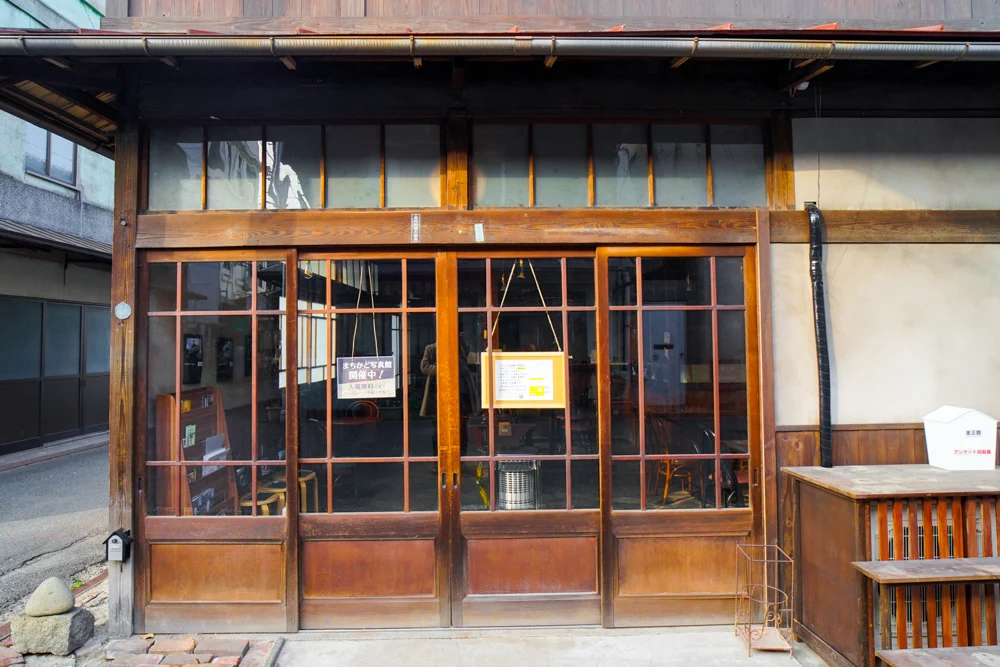
This is the location that serves as the venue for the Takahashi River Shijuku lecture.
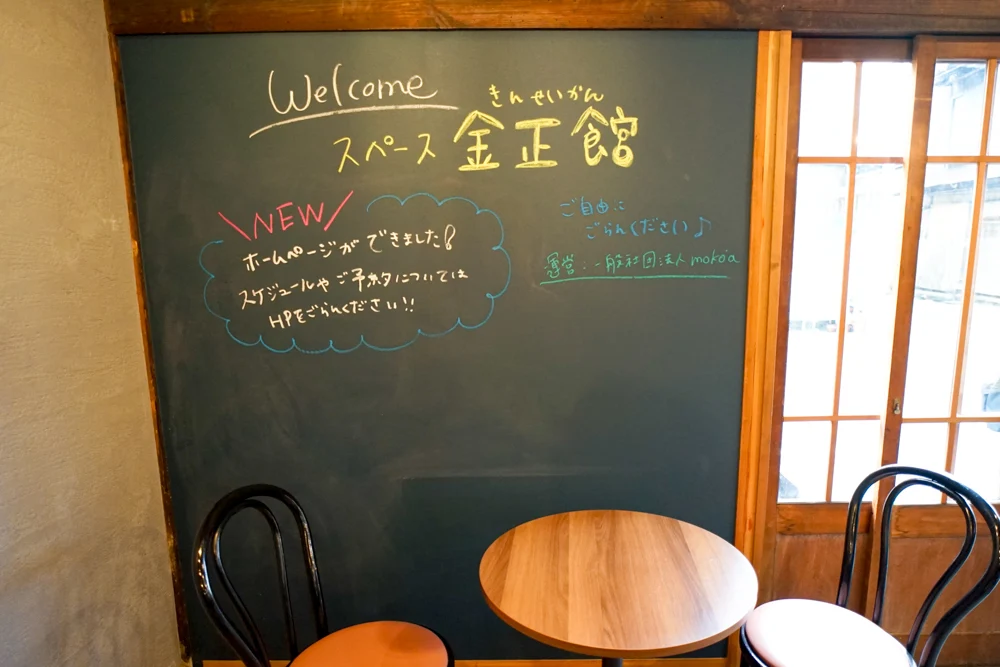
"Space Kinseikan" used to operate as a dining hall where residents gathered until several decades ago.
There were plans to demolish it, but when Mr. Okimura expressed his desire to utilize it, it was donated to him.
The renovation was conducted in the form of experiential workshops involving local residents.
They invited carpenters, architects, and plasterers to provide guidance while renovating together with local residents.
They also considered the operational methods after the renovation with the residents.
To learn from utilization cases, they visited shopping streets in Soja City and Fukiya in Takahashi City.
The vacant store that was scheduled for demolition transformed into a rental space.
It has been reborn as a facility for community activities, including café operations, workshops, study sessions, and community activities, where local residents can interact.
Not only do local residents gather, but people from outside the town also visit to hold events, making it a place for interaction with outsiders.
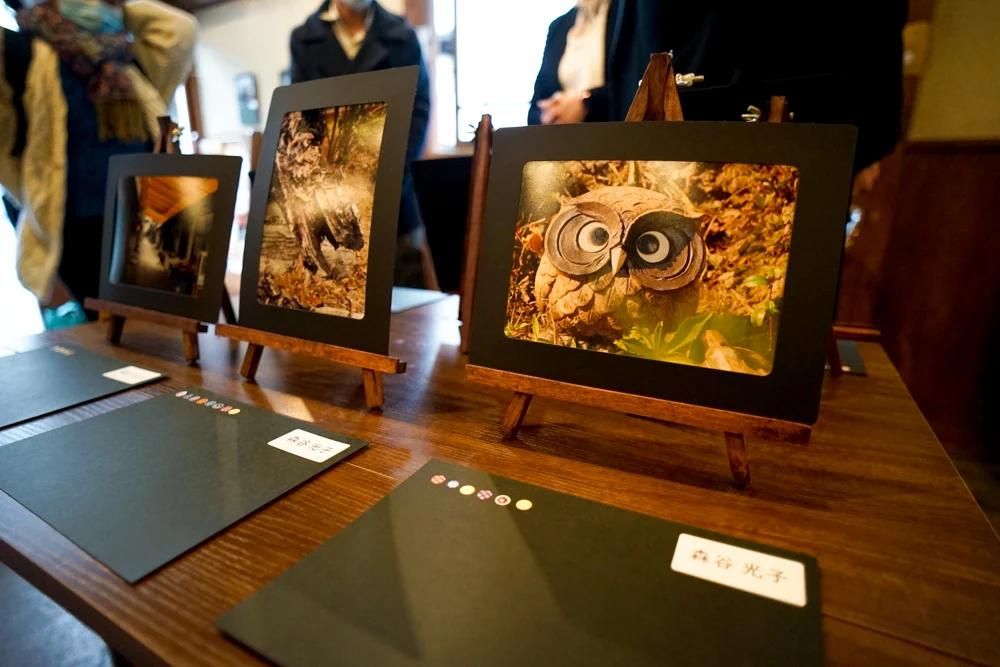
He also talked about the reason for involving local residents in the renovation of the vacant store.
Local people cannot imagine that a building, which has become a familiar and ordinary presence, can be reborn anew.
When the space is actually created, it sparks imagination and makes it easier for ideas to emerge.
During the renovation of "Space Kinseikan," there was a significant change when the store's lighting was turned on for the first time.
Seeing the bright and stylish interior, local people were overjoyed.
The number of people actively involved in activities began to increase.
There are many things that cannot be conveyed just by words, so it is important to have them experience it.
He mentioned that accumulating successful experiences with local people leads to the revitalization of the town.
Thoughts after attending
Mr. Okimura has gained a wealth of knowledge and skills through various experiences, including building schools abroad, utilizing old houses across Japan, studying at vocational schools and universities, and working as a freelancer.
I admire his ability to fully demonstrate his skills as a member of the Community Revitalization Cooperation Corps.
There were two particularly impressive things from this lecture.
- Meticulous data organization and research
- The main characters are the local people
Meticulous data organization and research
One is the meticulousness in data organization and research.
Mr. Okimura never forgets to smile when in front of people, but he continues to make steady efforts such as studying materials and participating in seminars to understand the social issue of population decline.
Visualizing demographic data and vacant house information is a means to clearly explain issues to stakeholders and propose projects, he mentioned.
Moreover, before implementing a project, he conducts thorough hearings with local government and residents to organize issues and then formulates a concrete plan.
Mr. Okimura's cheerful personality is a significant factor that allows him to engage with local people.
Furthermore, his ability to explain clearly based on data and research facts is also a reason why many people trust Mr. Okimura.
The main characters are the local people
The other is his thorough belief that the main characters are the local people.
Considering the sustainability of the local community, it is necessary for local residents to take the lead in projects, rather than the Community Revitalization Cooperation Corps.
The mission of the Community Revitalization Cooperation Corps is to provide a catalyst for the community to thrive.
Many of the projects Mr. Okimura has undertaken have mechanisms for local people to get involved, and I strongly felt his intention to create opportunities for community revitalization.
Indeed, Mr. Okimura is engaged in activities to revitalize the community.
Conclusion
In this lecture, I was able to gain specific knowledge about the issues facing local communities and community revitalization, such as the regeneration of vacant houses.
Above all, the greatest learning was hearing about Mr. Okimura's way of life, driven by his interests.
I feel it was a lecture where I could learn about the diversity of ways of living.
Data of Takahashi River Shijuku
| Name | Takahashi River Shijuku |
|---|---|
| Date of event | Date and time of this lecture: December 19, 2020, 10:00 AM to 12:10 PM Duration of the Takahashi River Shijuku program: November 3, 2020, to February 14, 2021 (graduation ceremony) |
| Location | 294-7 Otani, Kinkō-cho, Asakuchi City, Okayama Prefecture |
| Participation fee (including tax) | On-site participation: 1,500 yen Online participation / archive participation: 500 yen |
| Homepage | Takahashi River Shijuku | Takahashi River Basin School |