About 20 minutes by car from JR Kurashiki Station towards Chayamachi Station.
When you arrive at a place called "Obitaka," where large rice fields stretch out, the golden ears of rice were shining in the sunlight on the day of the interview.
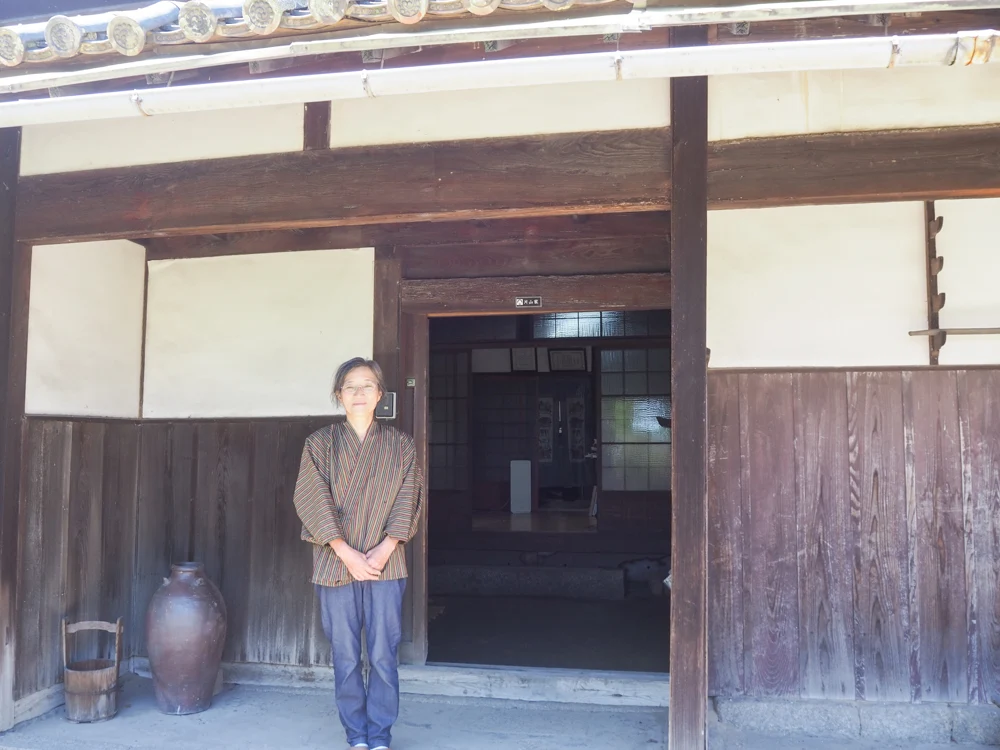
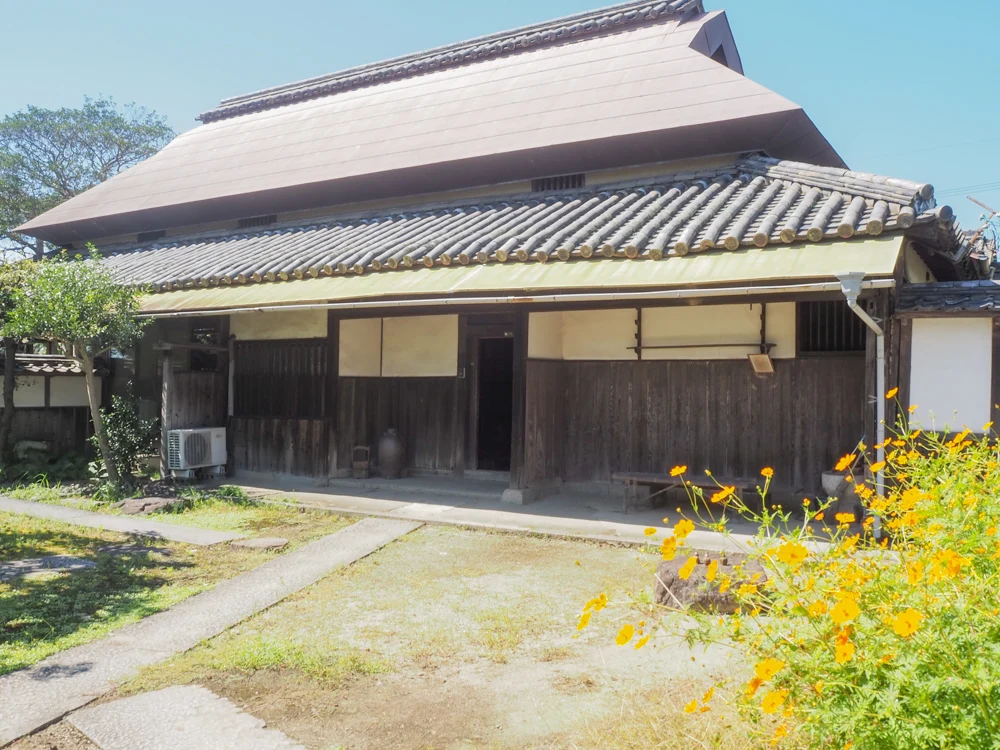
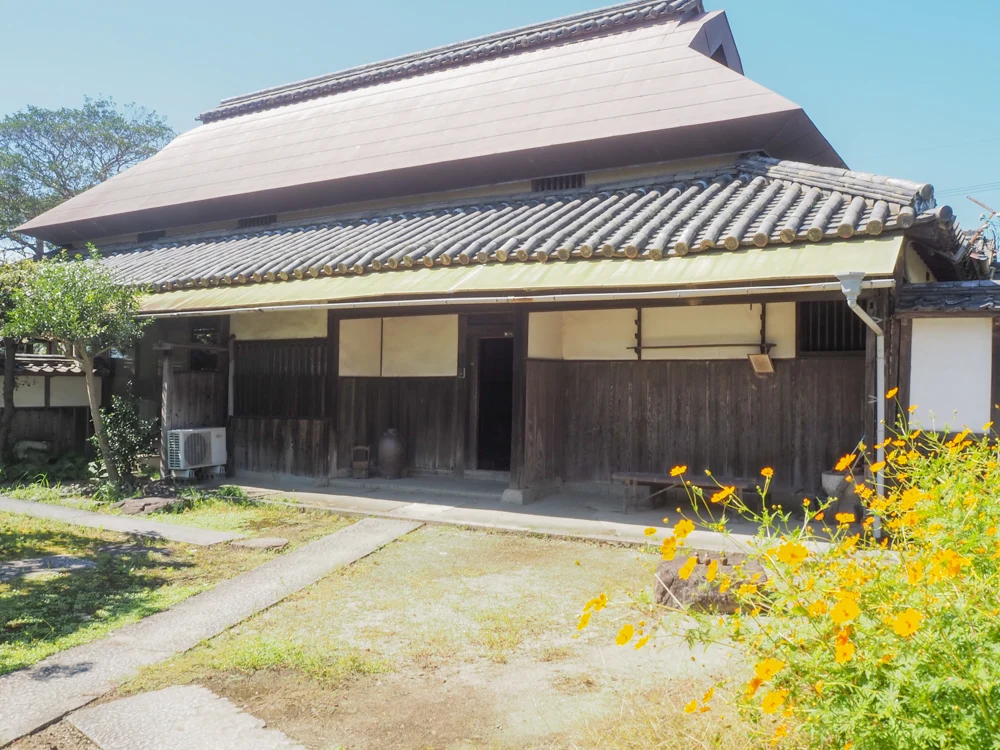
In one corner, there is a sturdy old house surrounded by tall plants.
This is the Tsukubo Katayama House.
Built in the 1800s, the Tsukubo Katayama House is still used as a residence today, while some areas are also utilized as a community exchange space.
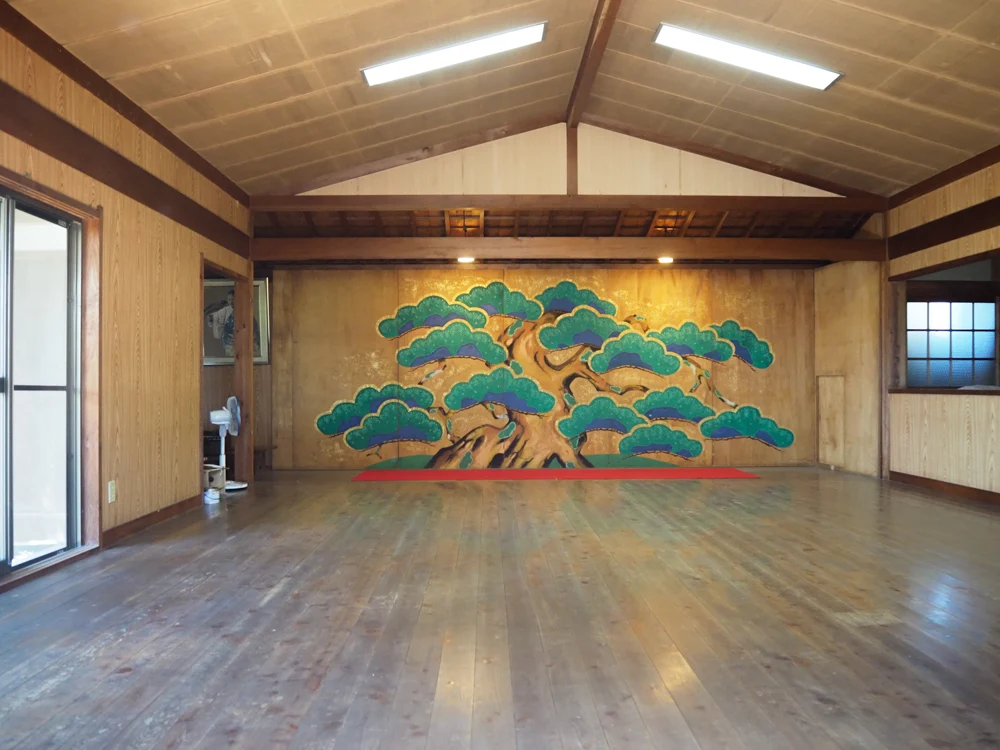
Notably, it features a Noh stage on the premises!
Under the guidance of Miho Takiguchi, the representative of the NPO Tsukubo Katayama House Project, we interviewed her about what kind of old house it is and the thoughts behind its utilization.
What is the Tsukubo Katayama House? A 200-year-old old house utilized as a community exchange space
The ancestors of the Katayama family were vassals of the Awa Miyoshi family.
They are said to have moved to the Obitaka area after purchasing new rice fields and built the current Tsukubo Katayama House as a southern branch in 1803 (Kyo-wa 3).
While engaging in agriculture, they expanded their land and were known as wealthy farmers at that time.
According to Takiguchi, the house where the Katayama family lived for generations was vacant for a while around 2010 (Heisei 22).
The descendants, including Takiguchi and her siblings, took turns maintaining it, but the building and garden were large, making it difficult for just the family to maintain the Katayama residence.
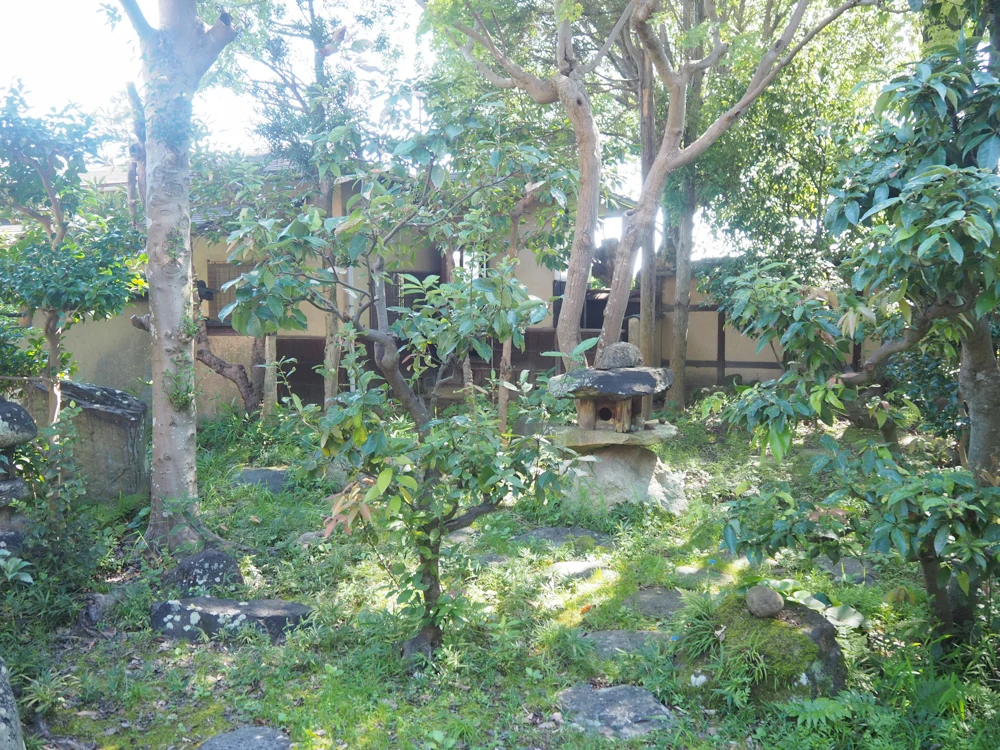
Since then, they began to consider ways to utilize the space with the help of local people and others, and in 2017 (Heisei 29), they incorporated the project.
They officially started utilizing it as the NPO Tsukubo Katayama House Project, with Takiguchi as the representative.
In addition to Noh classes using the Noh stage, they hold many events, including classical music concerts and exchange meetings, beyond just Noh.
Features of the Tsukubo Katayama House: A design that maximizes enjoyment of the beautiful garden
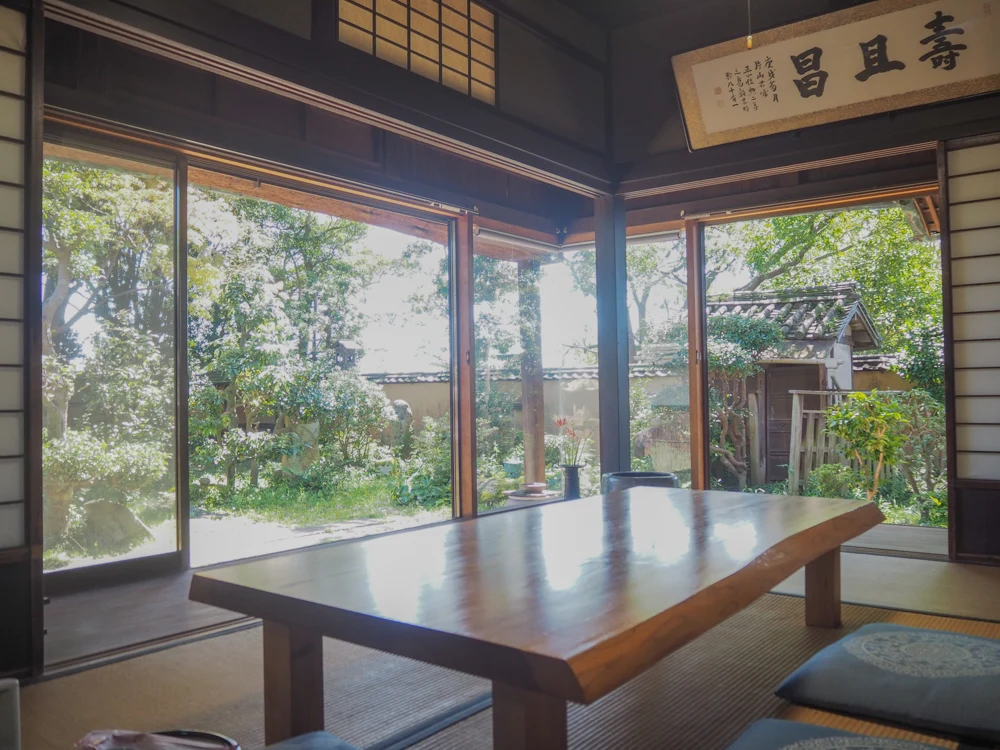
The Tsukubo Katayama House is an old house that is over 200 years old.
Although it is being restored as needed, the Tsukubo Katayama House has maintained its appearance almost unchanged from 200 years ago.
One of its prides is that there are no columns supporting the building.
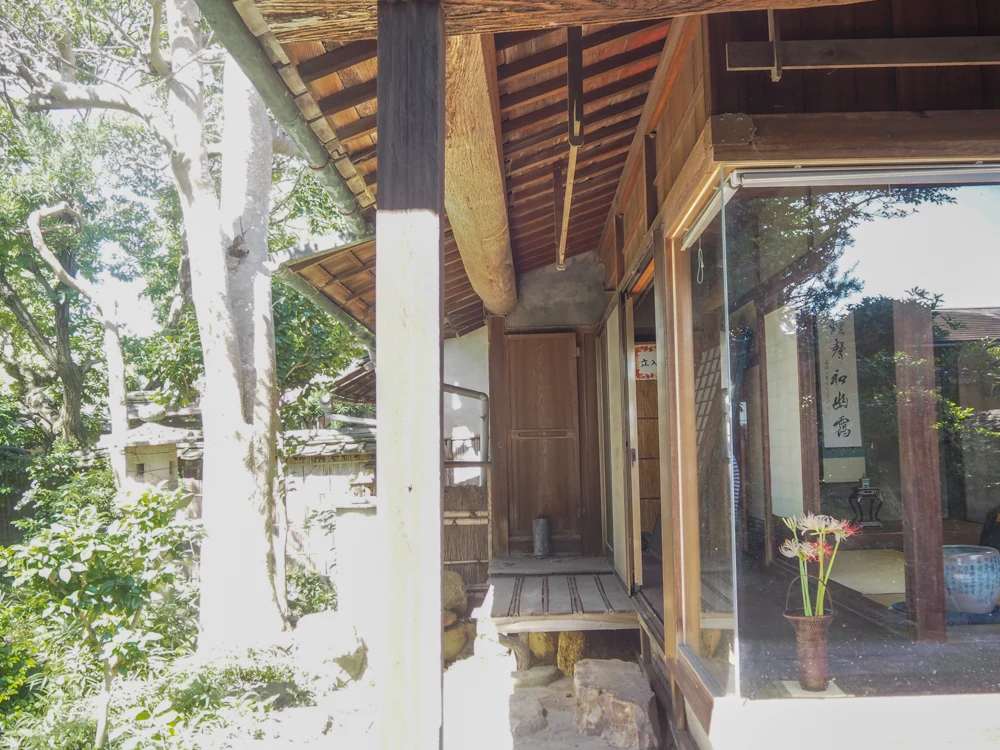
According to Takiguchi, "It has been passed down that our ancestors were particular about the garden, so to showcase the garden, no columns were erected on the guest room side."
However, it is concerning that without columns, the eaves might sag.
In fact, there is a mechanism called hanegi in the attic to prevent the eaves from sagging, which supports the eaves.
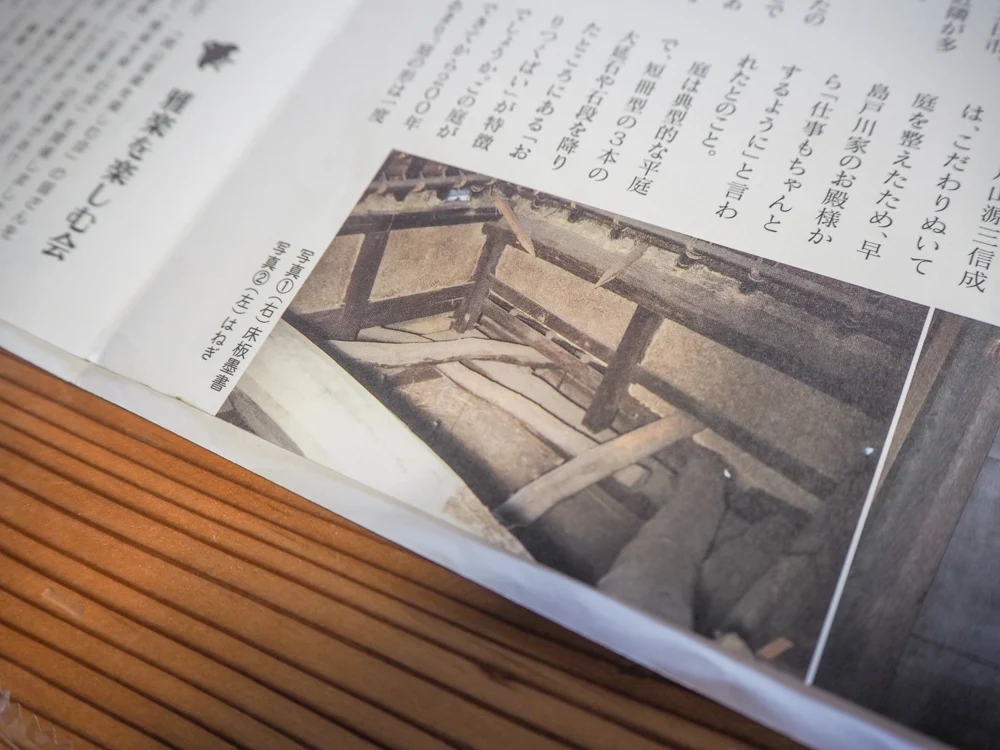
It is impressive that such innovative building techniques were being used over 200 years ago, showcasing the sophistication of the architectural technology of that time.
By the way, the underside of the eaves is said to be painted with bengara.
When you think of "bengara," it reminds you of the scenery of Fukiya Furusato Village in Takahashi City, but it is still used today as a traditional Japanese paint.
Bengara has insect-repellent and anti-decay effects, and is characterized by its bright vermilion color.
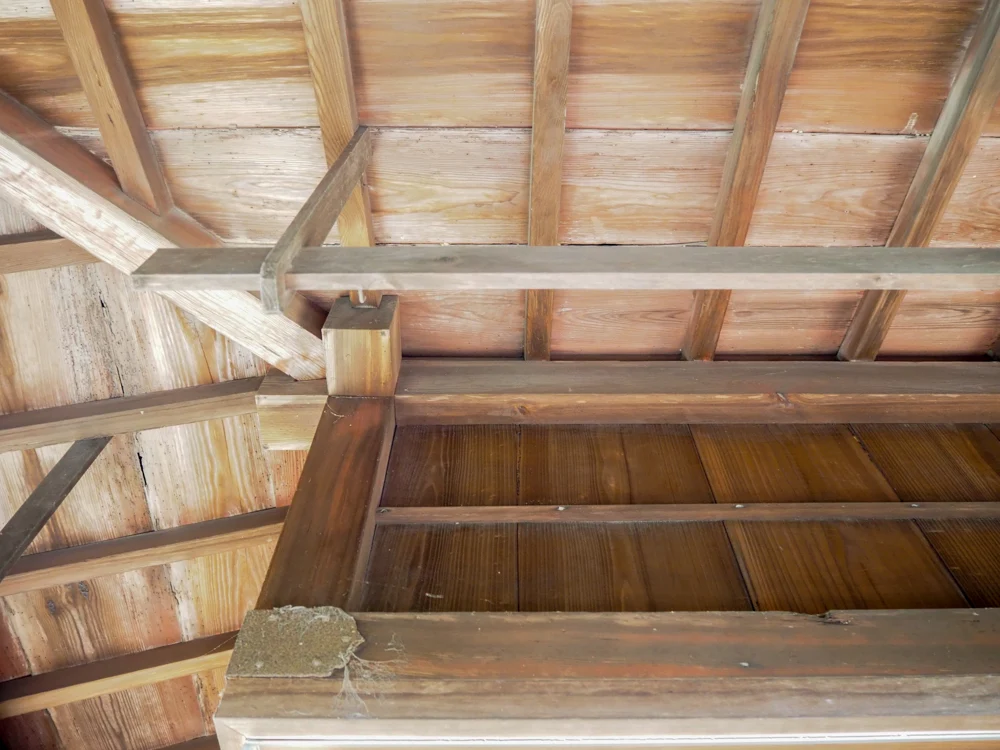
When you look up, you can indeed see a faint trace of the vermilion color of the bengara.
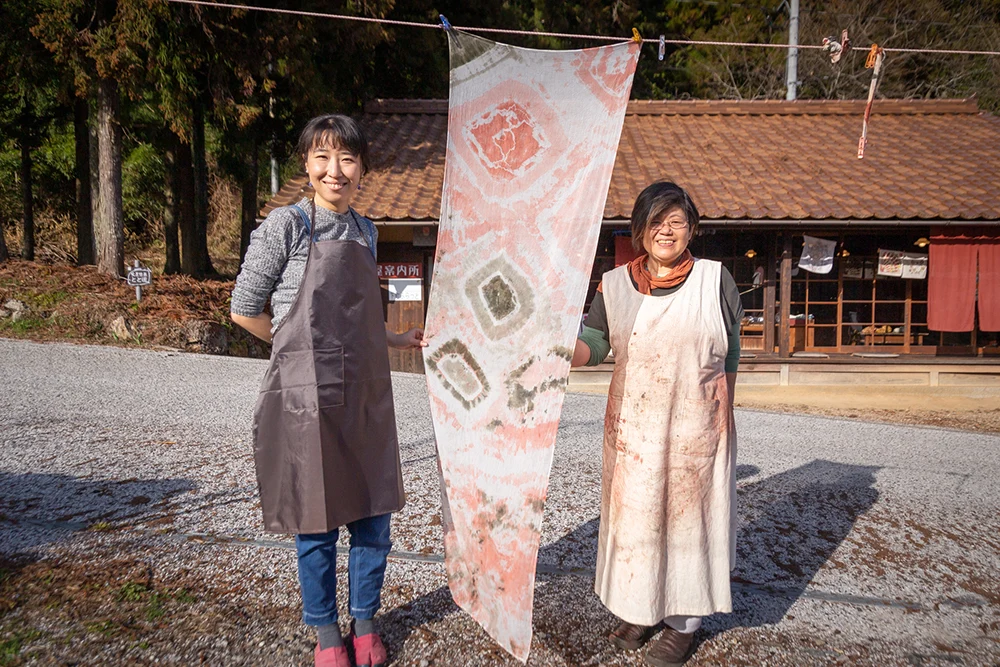
Available rental spaces and examples of events
The Tsukubo Katayama House can be used as an event venue if you become a member.
Let me introduce the available rental spaces along with examples of past events.
Having a Noh stage might lead one to think that "only Noh can be performed," but many events other than Noh are also held.
Noh stage
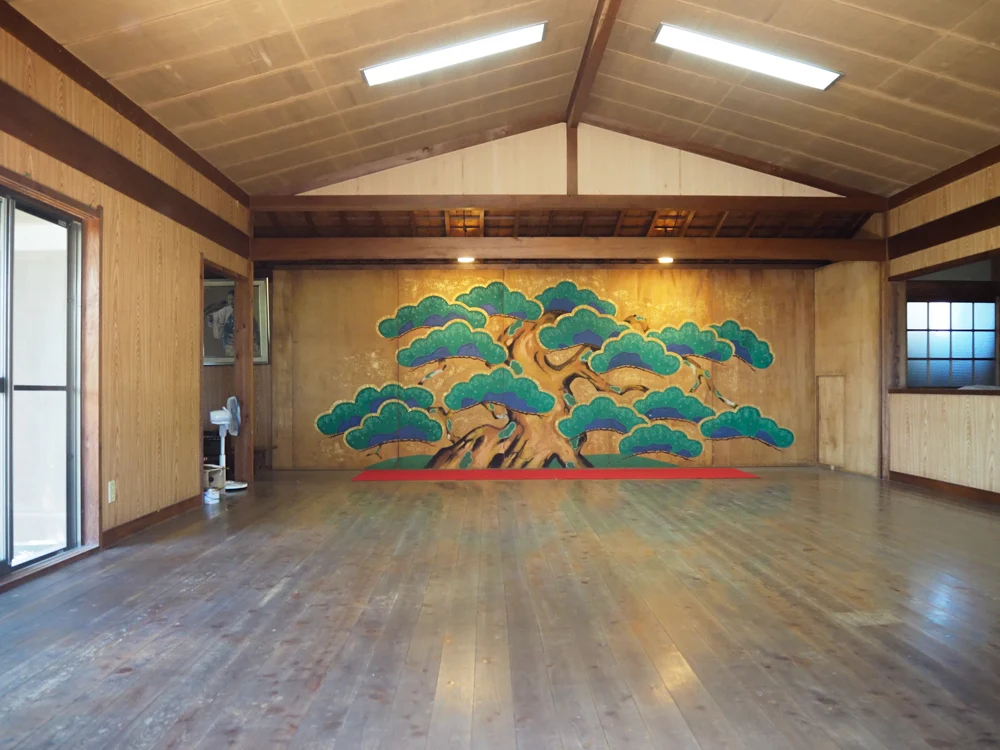
It is rare to have a Noh stage within the grounds of an old house.
The Noh stage was created because Takiguchi's grandmother, Katsuko Katayama, was a Noh master, and it was built so that "practices could be held regularly."
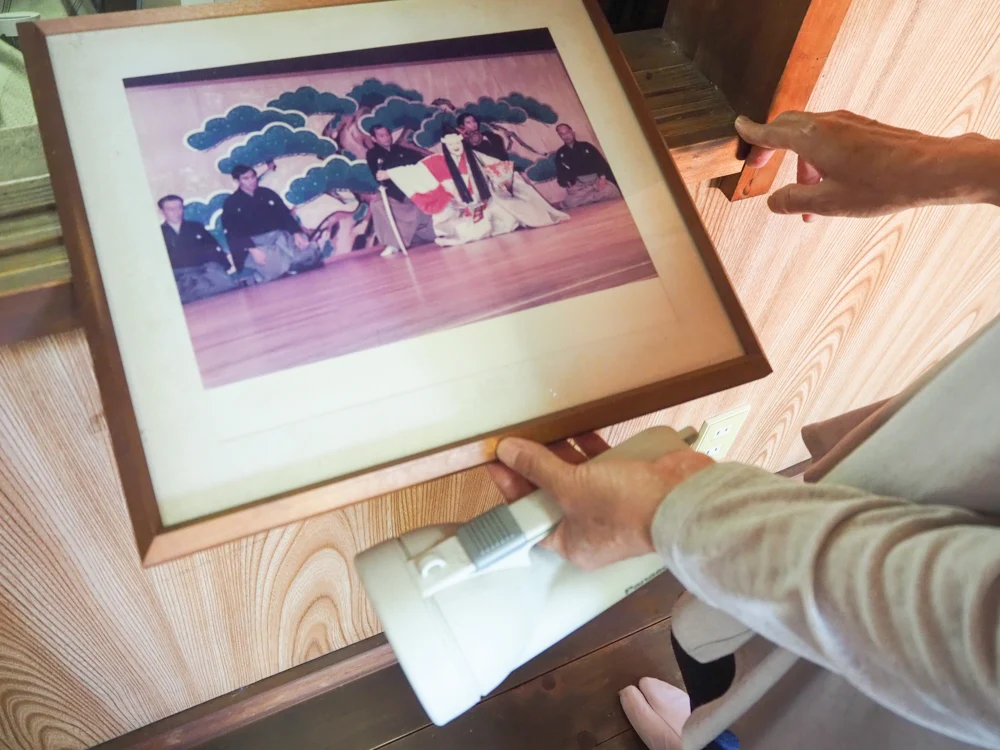
The place that used to be the retirement house was rebuilt, and it was completed in 1978 (Showa 53).
Due to space constraints, there is no bridge (hashigakari) or boundary between the stage and the audience, but it can be said to be a stage akin to a Noh theater.
The bridge (hashigakari) is a passage that usually positions itself on the left side of the Noh stage (from the audience's perspective). It connects the main stage and the mirror room (a place like the stage wings that is not visible to the audience) like a bridge.
The mirror board at the back of the stage is removable.
Before the Noh stage was built, around 1965 (Showa 40), the mirror board was already in place, and it was taken to venues for Noh performances.
The pine tree depicted on the mirror board is quite impressive.
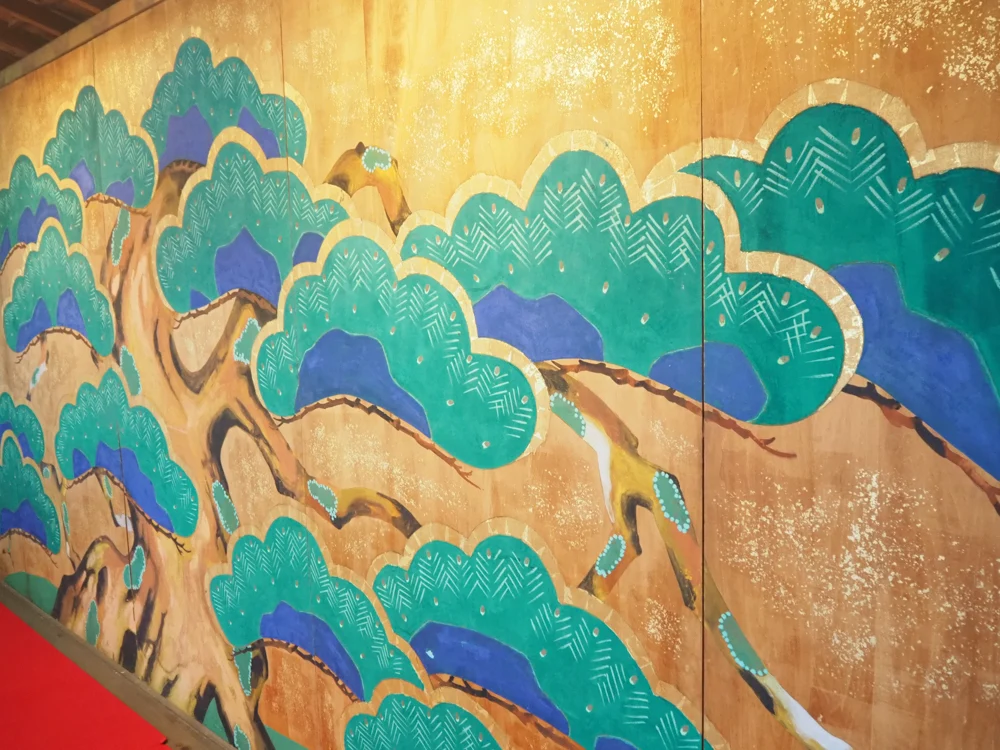
Noh stages can vary in their characteristics, with some being realistically depicted and others being more abstract, but Takiguchi noted that "the pine here is abstract."
It is recorded that the artist who painted the pine was Heizo Imose, a disciple of the painter who depicted the pine on the Noh stage at the Kanze Hall in Kyoto.
Takiguchi has actually visited the Kanze Hall and mentioned, "I thought the abstract aspects were similar."
By the way, the Tsukubo Katayama House's Noh stage is equipped with air conditioning.
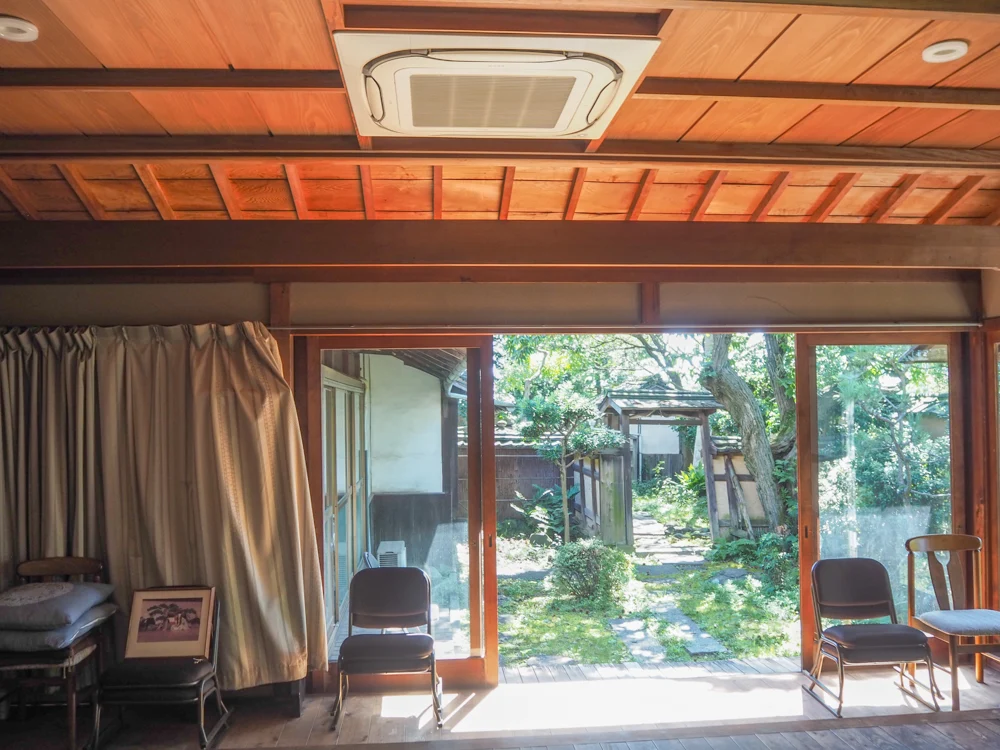
The air conditioning system was not in place until a few years ago, but in 2018 (Heisei 30), they conducted a crowdfunding campaign and successfully reached their target amount!
With the support funds, they installed a commercial air conditioner.
Now, practices and events can be held comfortably on the Noh stage regardless of the season.
Behind the Noh stage, there is a waiting room that can also be used for meetings.
Past Events Held
The Noh stage at the Tsukubo Katayama House is used about once a week as a practice space for local residents.
Sometimes, they invite Noh performers from the Hayashi family, who have had a relationship with the Katayama family for three generations, to hold Noh lectures and Noh experience classes.
▼ "Noh Night" 2020
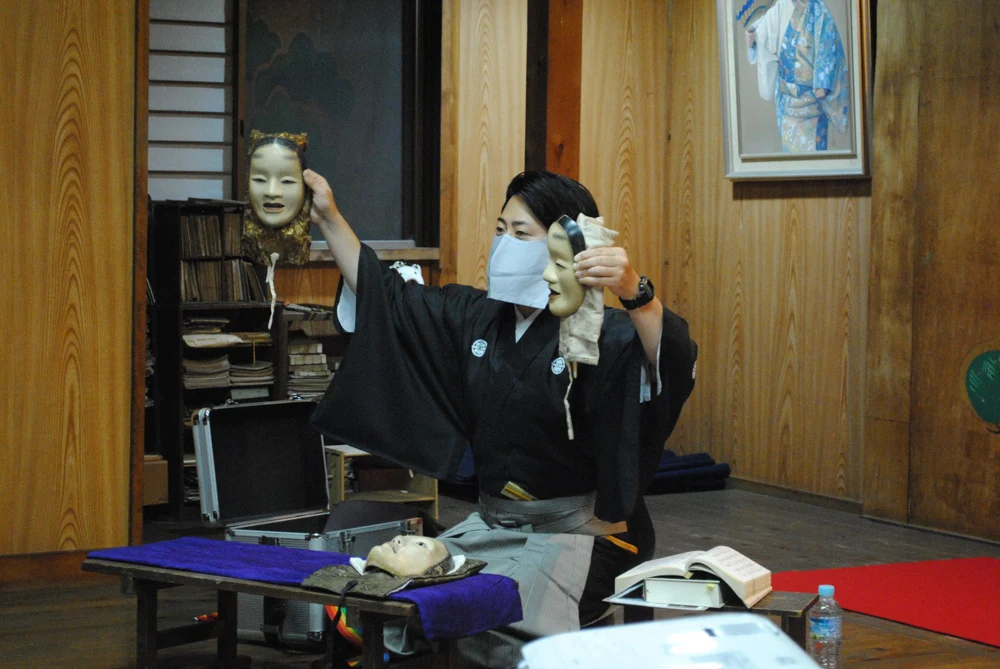
▼ "Enjoying Gagaku" 2019
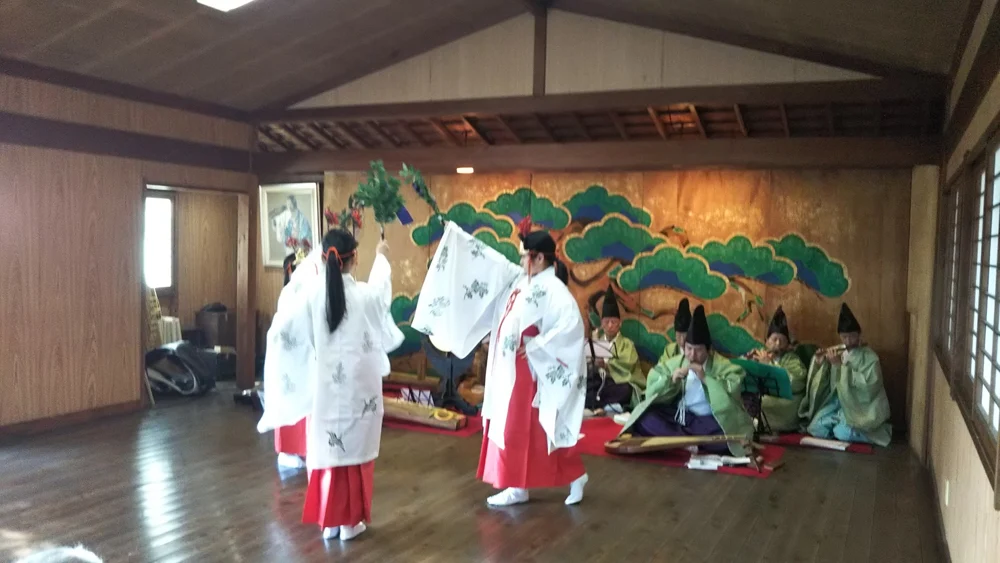
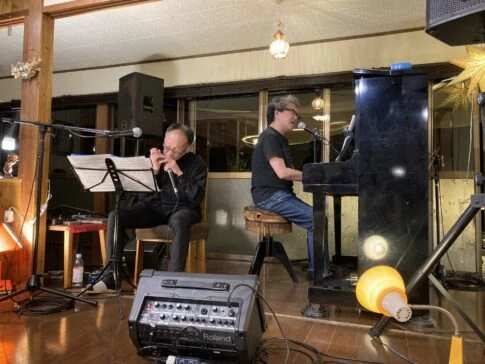
Additionally, since the Noh stage is equipped with high-quality sound facilities, it can be used for many purposes beyond Noh.
Mr. Takiguchi said, “In the future, I hope it can be utilized in various ways, not just for Noh.”
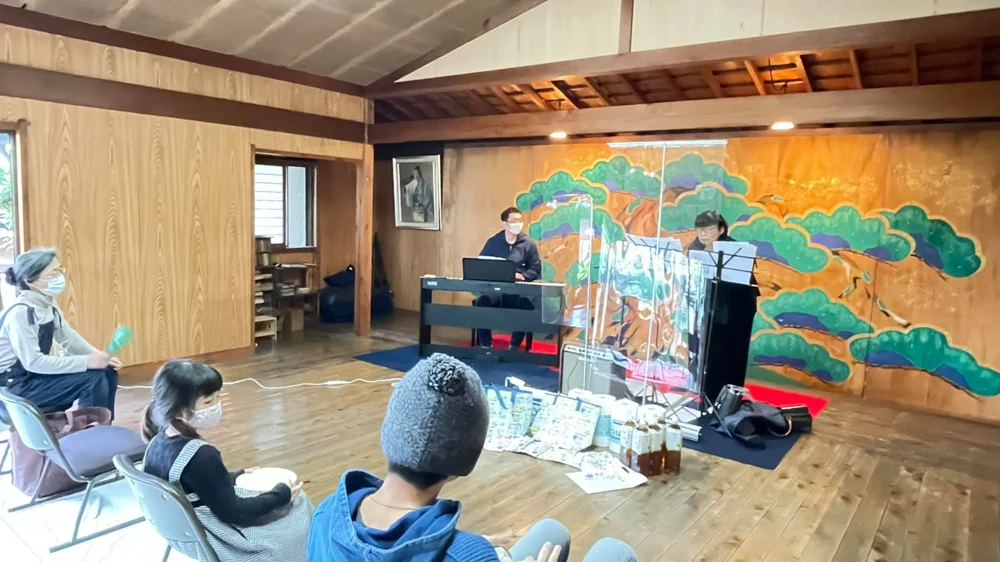
▼ "Chat Discussion in Mini Concert" 2021
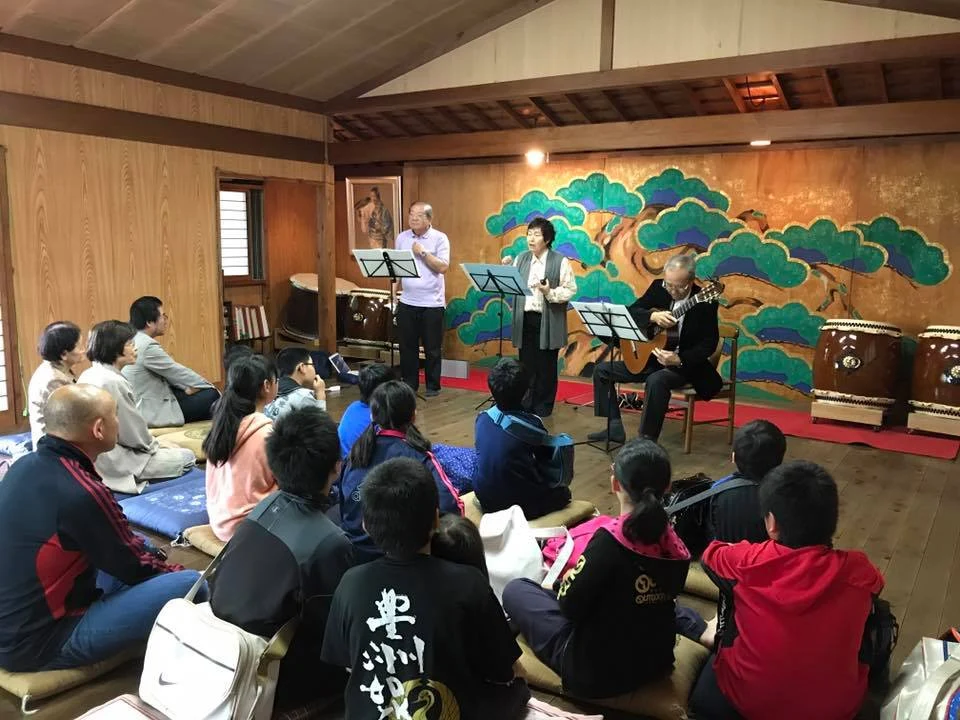
▼ "Ocarina Concert" 2017
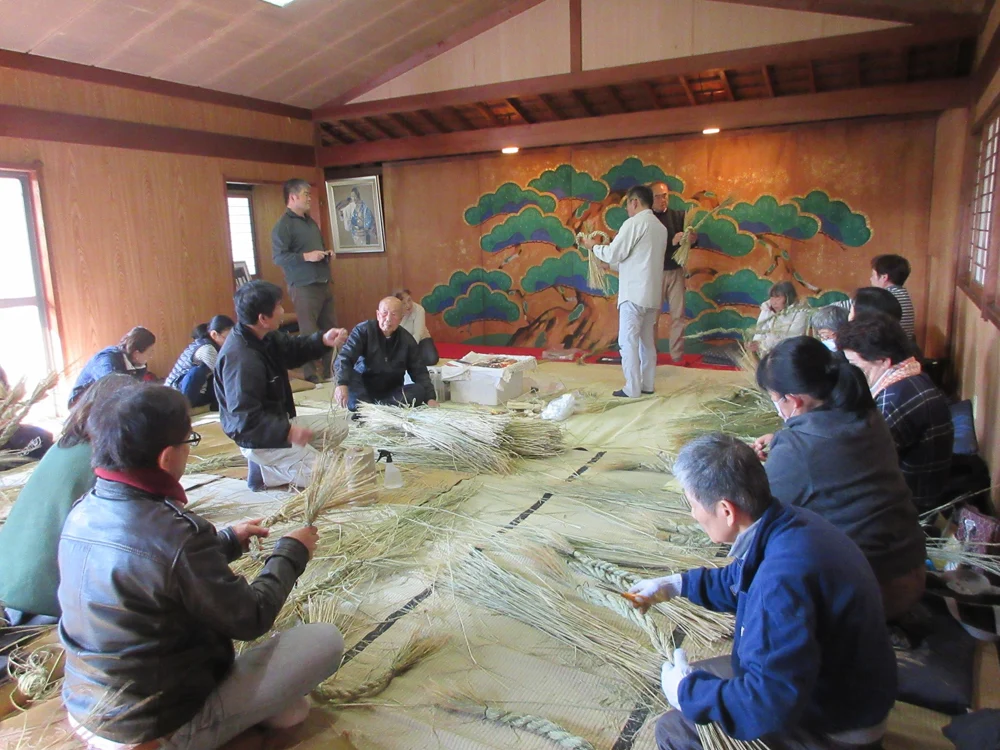
▼ "Straw Workshop" 2019
Looking back at past events, it became clear that the usage methods are not much different from those of regular cultural facilities.
Of course, since it is an old folk house, consideration is necessary, but if the basic rules are followed, the ways to use it can be quite broad.
How about moving a presentation venue to the Noh stage of Tsukubo Katayama House?
Guest Room
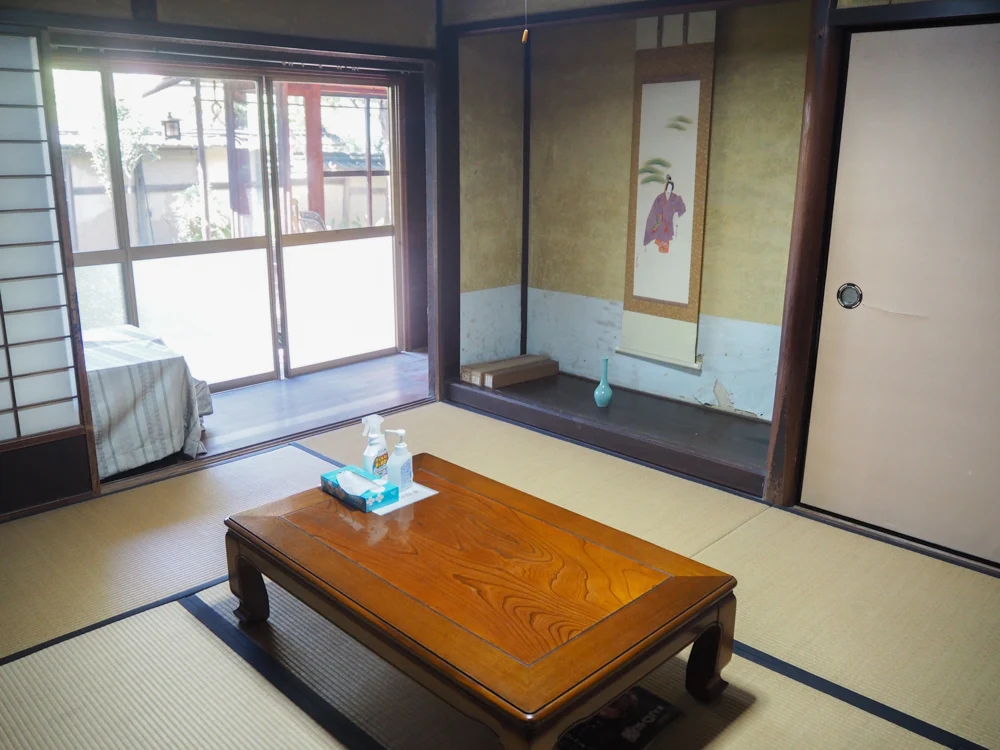
The guest room is about 8 tatami mats in size.
It seems that if it is a gathering to talk around a table or to create something, it can be held in the guest room.
The guest room is where you can most feel the charm of “having no pillars,” which is a commitment of Tsukubo Katayama House.
When you look outside from the guest room, you can enjoy the garden view without anything obstructing it.
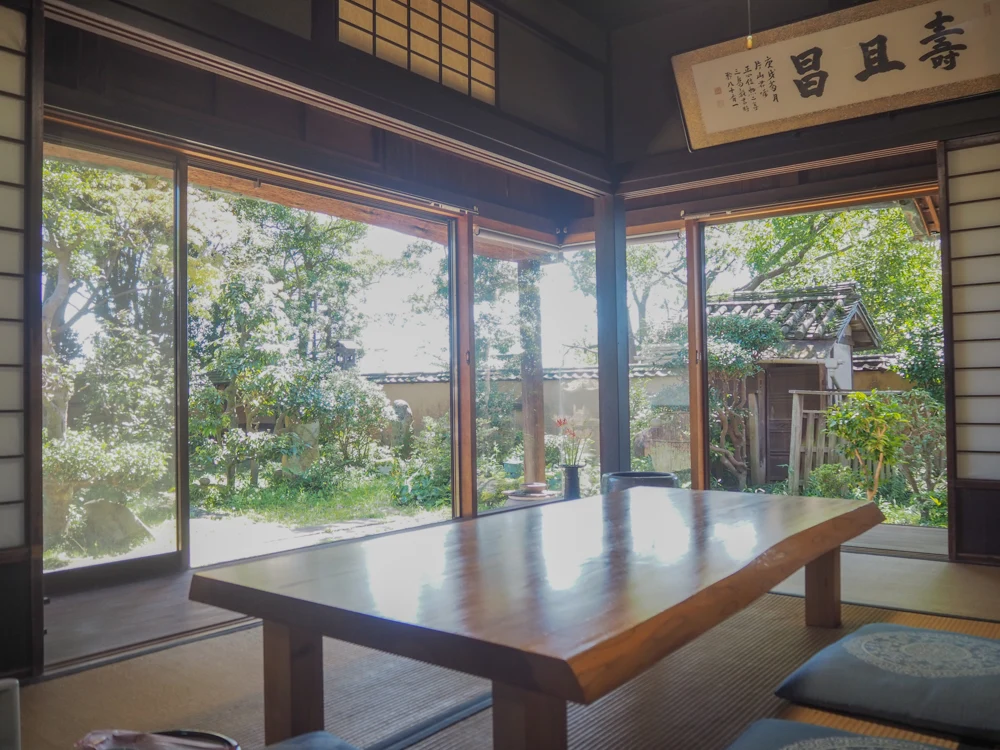
Since the day of the interview had very good weather, the blue of the sky, the green of the plants, and the slightly colored maple leaves were vividly visible.
Seeing a different view than usual, it seems that conversations with local people would also become lively.
Past Events Held
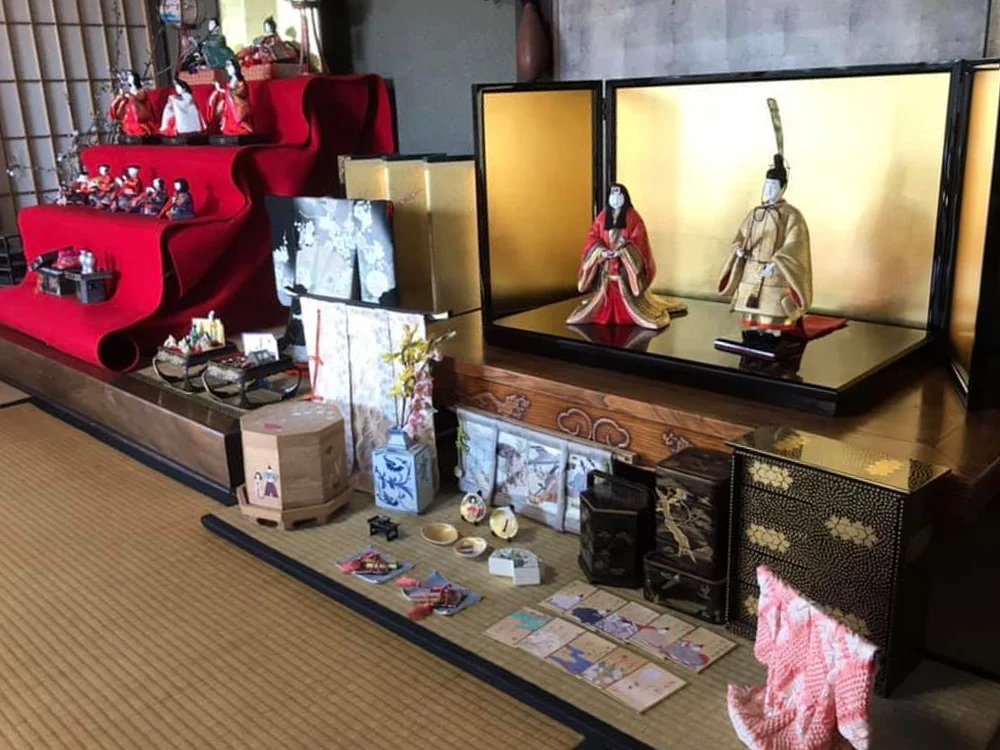
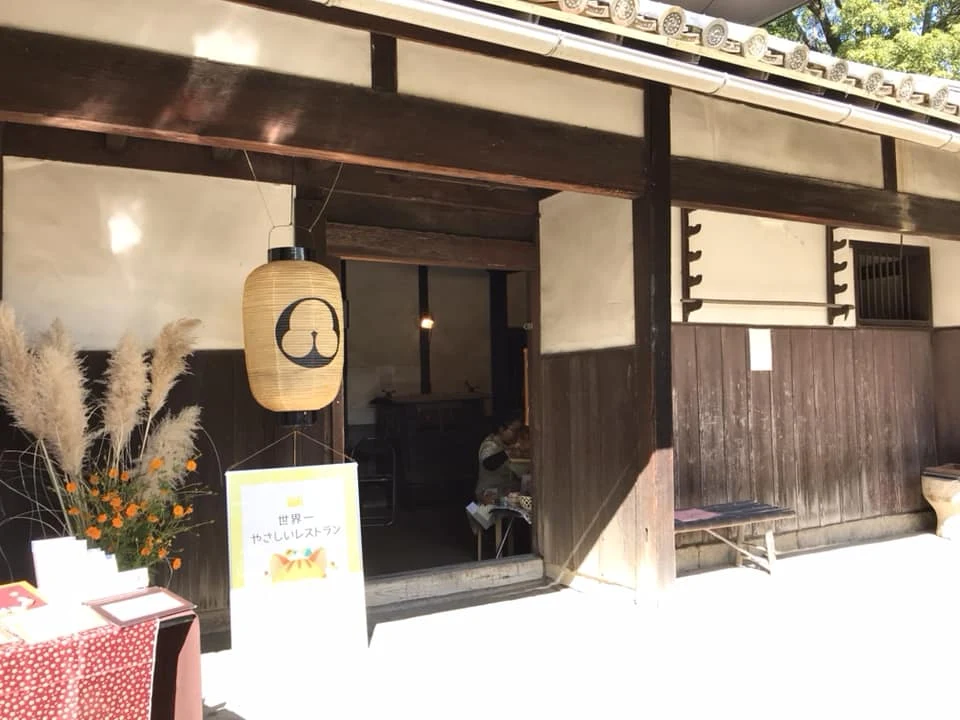
In the guest room, it seems that Hinamatsuri events and restaurants are held, which are events close to everyday life.
Please check the event information by season.
▼ "Chat Discussion (Home Gardening Class)" 2021
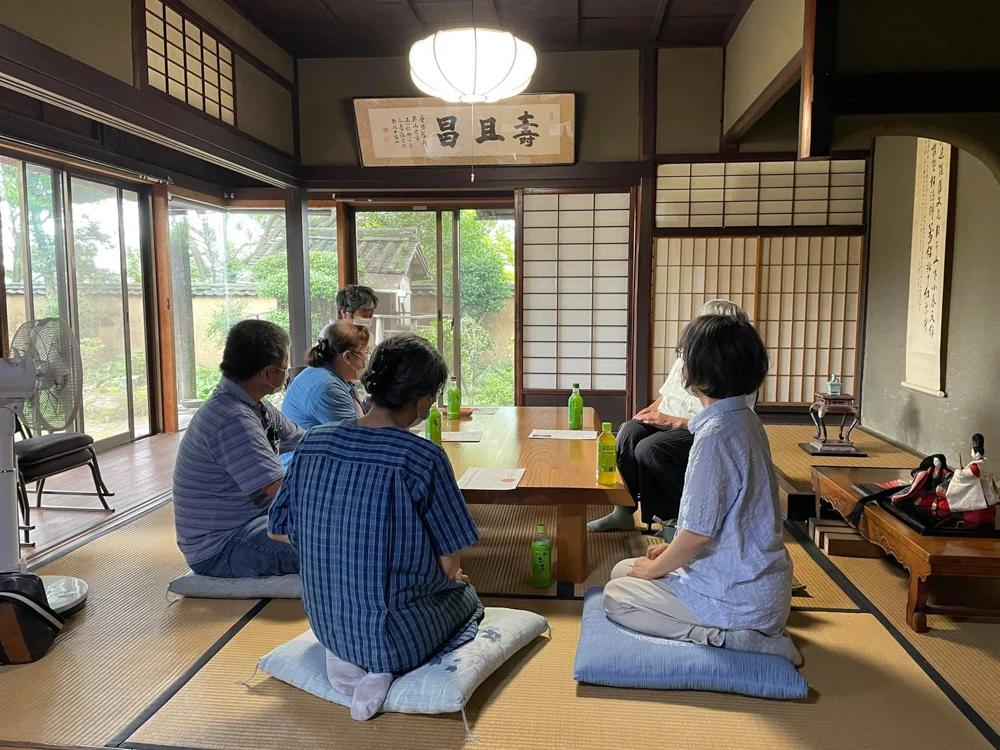
▼ "Hinamatsuri" 2019
▼ "The Kindest Restaurant in the World" 2019
All event information is posted on the Tsukubo Katayama House Project's Facebook or website.
Considering Library-like Utilization
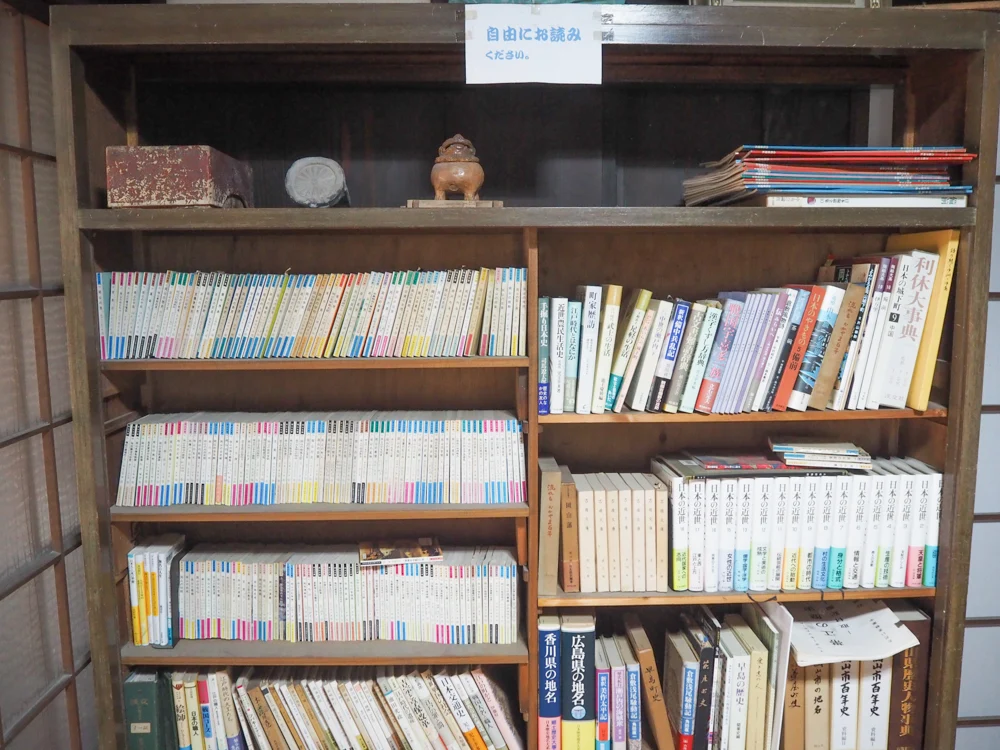
Tsukubo Katayama House has many books remaining.
There are rows of Okayama books, and there are catalogs from the 50th anniversary of the Ohara Museum of Art...
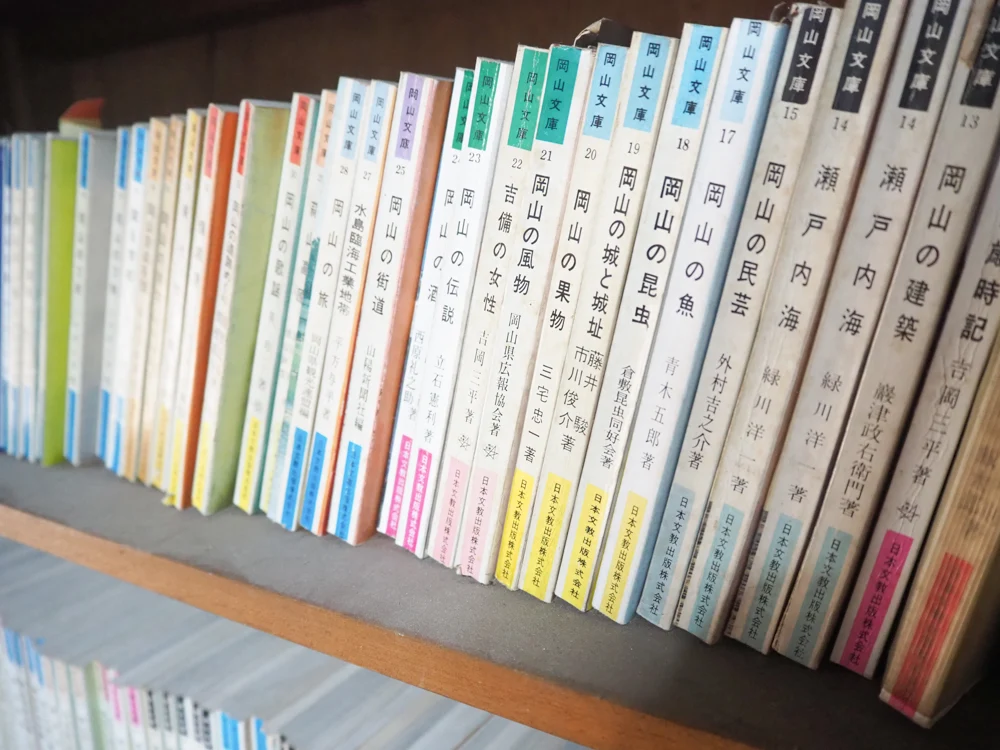
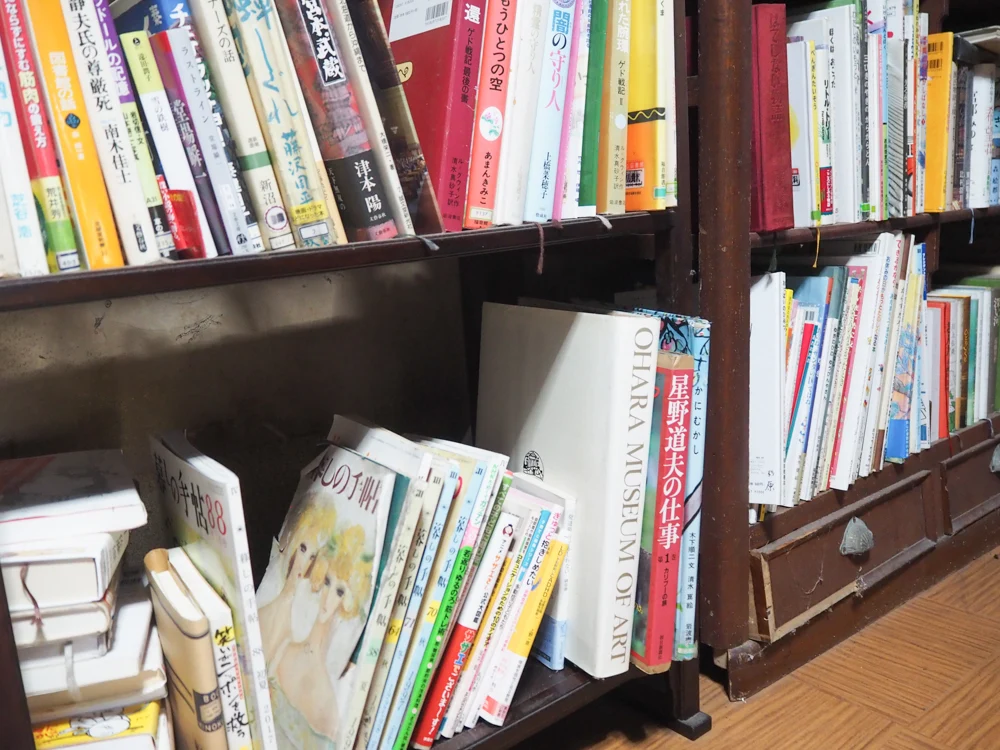
You can trace the history of Okayama, and there are also historically valuable books.
Additionally, there is a publication called "Tsukubo Seasonal Calendar" issued by Tsukubo Katayama House, which provides information on past events.
Currently, books are scattered around the premises, and according to Mr. Takiguchi, “There seem to be still some rare books.”
Once the acceptance system is in place, such as gathering books in one location or repairing the floor to support the weight of the books, they hope to utilize it like a library.
If you are interested, please take a look at the books that are currently gathered in one place.
Conclusion
This interview was conducted with the hope that while valuing the traditional performing art of Noh, people would feel closer to Tsukubo Katayama House.
Surely, this is not only Mr. Takiguchi's sentiment but also the consensus of the generations of the Katayama family.
It is rare to have an old folk house with a Noh stage, but it is also unusual to have a Noh stage that can be used for purposes other than Noh.
For those who usually participate in local events, it might be fun to take this opportunity to host gatherings.
Of course, as an event participant, feel free to visit.
The solidly built Tsukubo Katayama House and Noh stage are waiting for you.
Data of Tsukubo Katayama House
| Name | Tsukubo Katayama House |
|---|---|
| Location | 727 Obitaka, Kurashiki City |
| Contact | 080-3107-5759 |
| Parking | Available Free |
| Opening Hours | Opening hours vary by event ※ Event information is posted on the organization's website or Facebook (https://www.facebook.com/tsukubokatayamake/?ref=page_internal) ※ For inquiries, please contact the organization's representative email (project.katayama@gmail.com), or reach out via Facebook Messenger or the inquiry form on the website. |
| Closed | Open only during events |
| Admission Fee (including tax) | ◆ For event participation: Admission fees vary by event ◆ For event hosting: Membership is required 【Regular Member】 Admission fee 5,000 yen / Annual fee 5,000 yen 【General Member】 Admission fee free / Annual fee 2,000 yen 【Sponsor Member】 Admission fee 3,000 yen / Annual fee (corporate name) 10,000 yen / (individual name) 5,000 yen |
| Payment Method |
|
| Reservation | Possible For participation in events, please confirm details with the event organizer. |
| Smoking | Completely non-smoking |
| Toilet | Western-style toilet |
| Website | NPO Tsukubo Katayama House Project |