In the autumn of 2025, Yurin-so Villa located in the Bikan Historical Area will be open for special viewing.
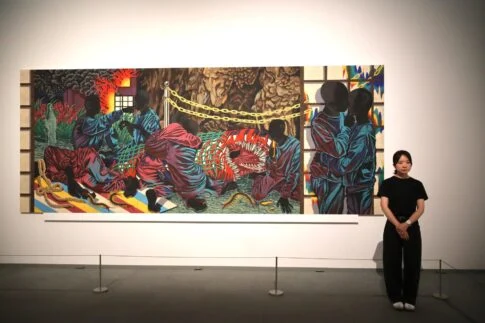
During this special opening, Yurin-so Villa will serve as the venue for the exhibition “Nostalgia, Where to?”—A Meeting of Art, Literature, and Music by artist Moriura Yasumasa.
The exhibition, themed around Art and Music, evokes memories of the 1970 Osaka Expo.
This special opening of Yurin-so Villa in the autumn of 2025 is also part of the Setouchi Triennale 2025, and we will introduce the highlights.
About “Yurin-so”
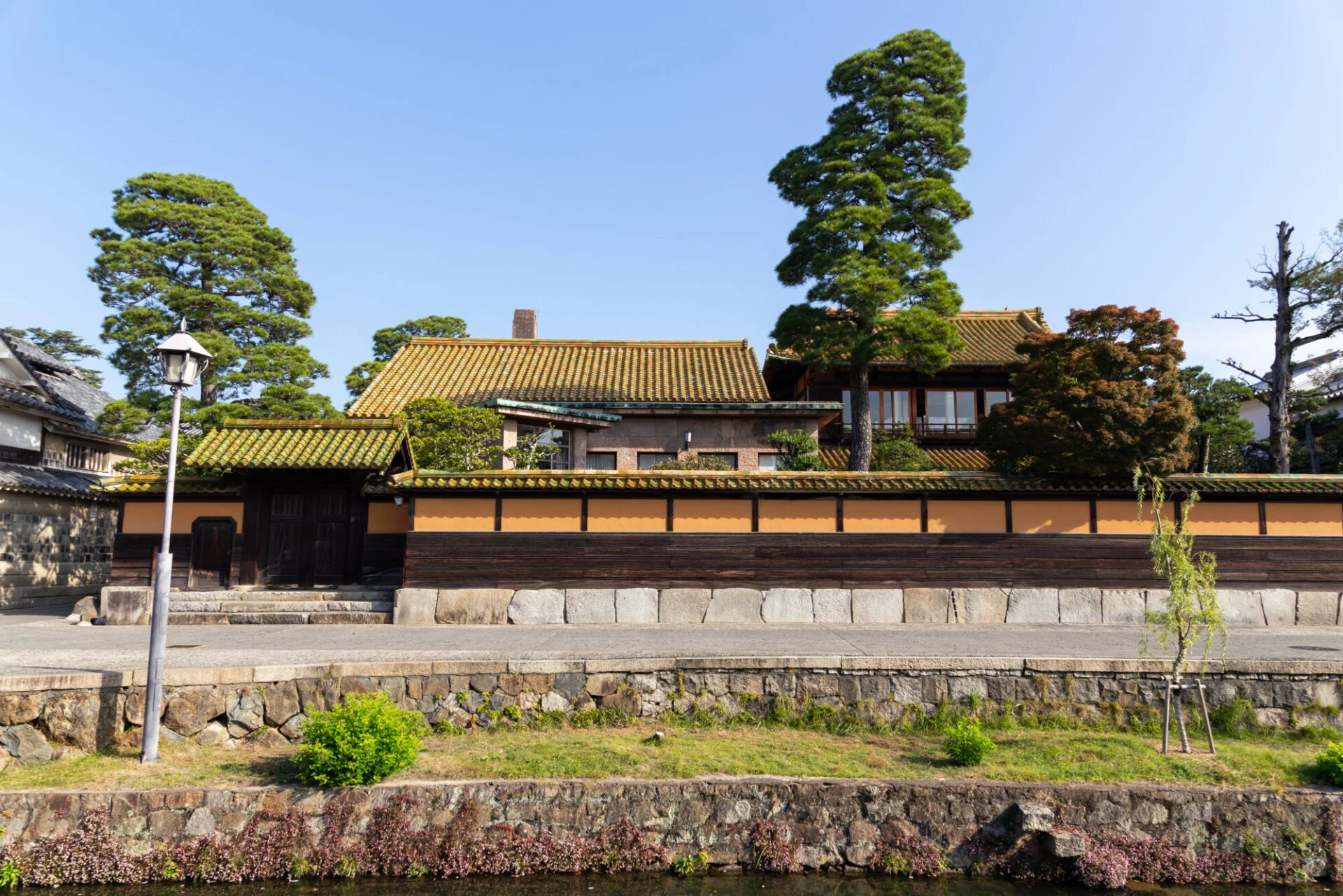
Across from the Ohara Museum of Art, there is a building that stands out with its presence.
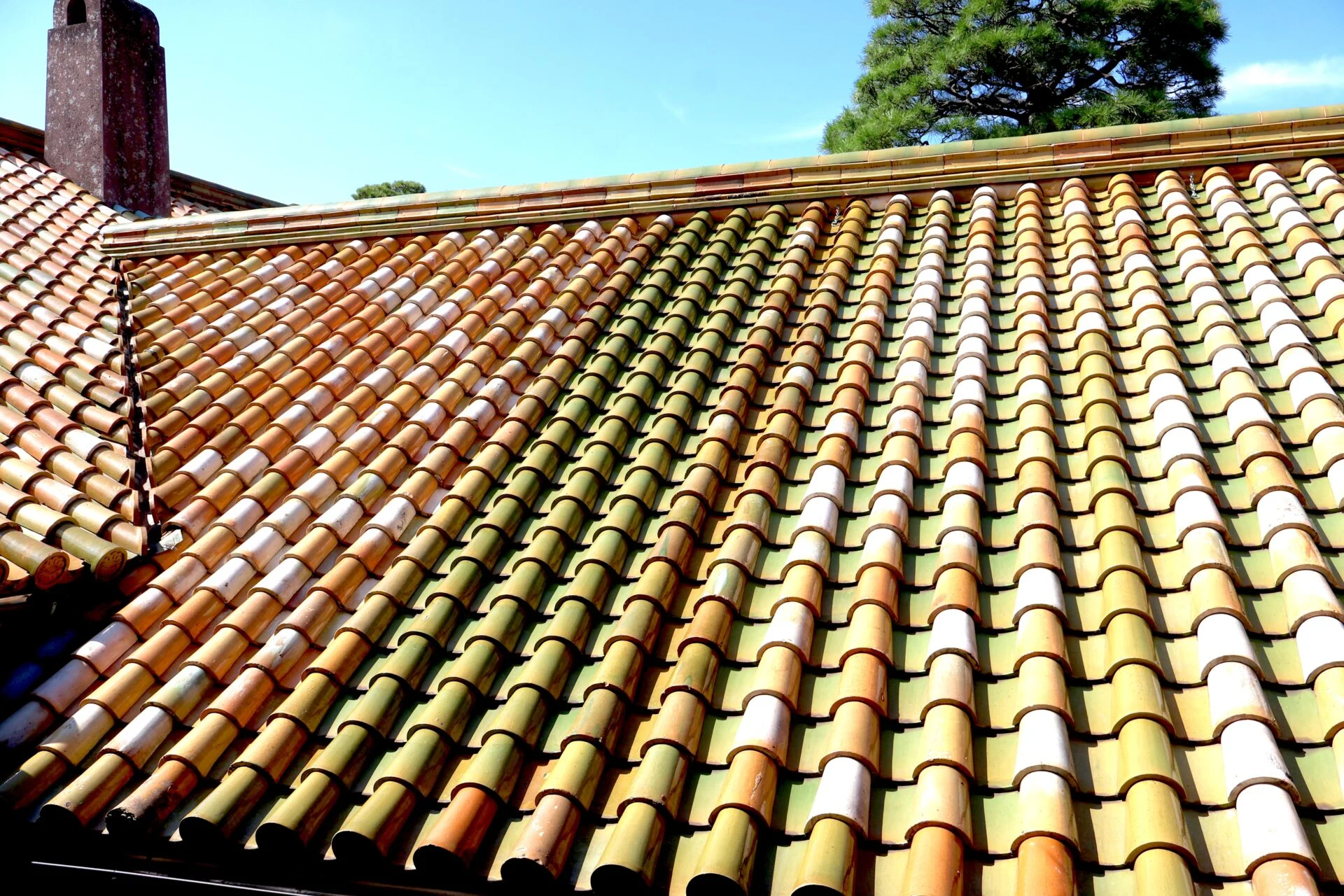
The “Yurin-so Villa,” with its beautiful green and orange tiled roof, was built in 1928 (Showa 3) as a villa for Ohara Magosaburo, the founder of the Ohara Museum of Art.
Its name is derived from a passage in the Analects: “Virtue is not solitary; surely it has neighbors” (徳不孤必有隣). This means that a virtuous person is not isolated and will surely find companions who understand them.
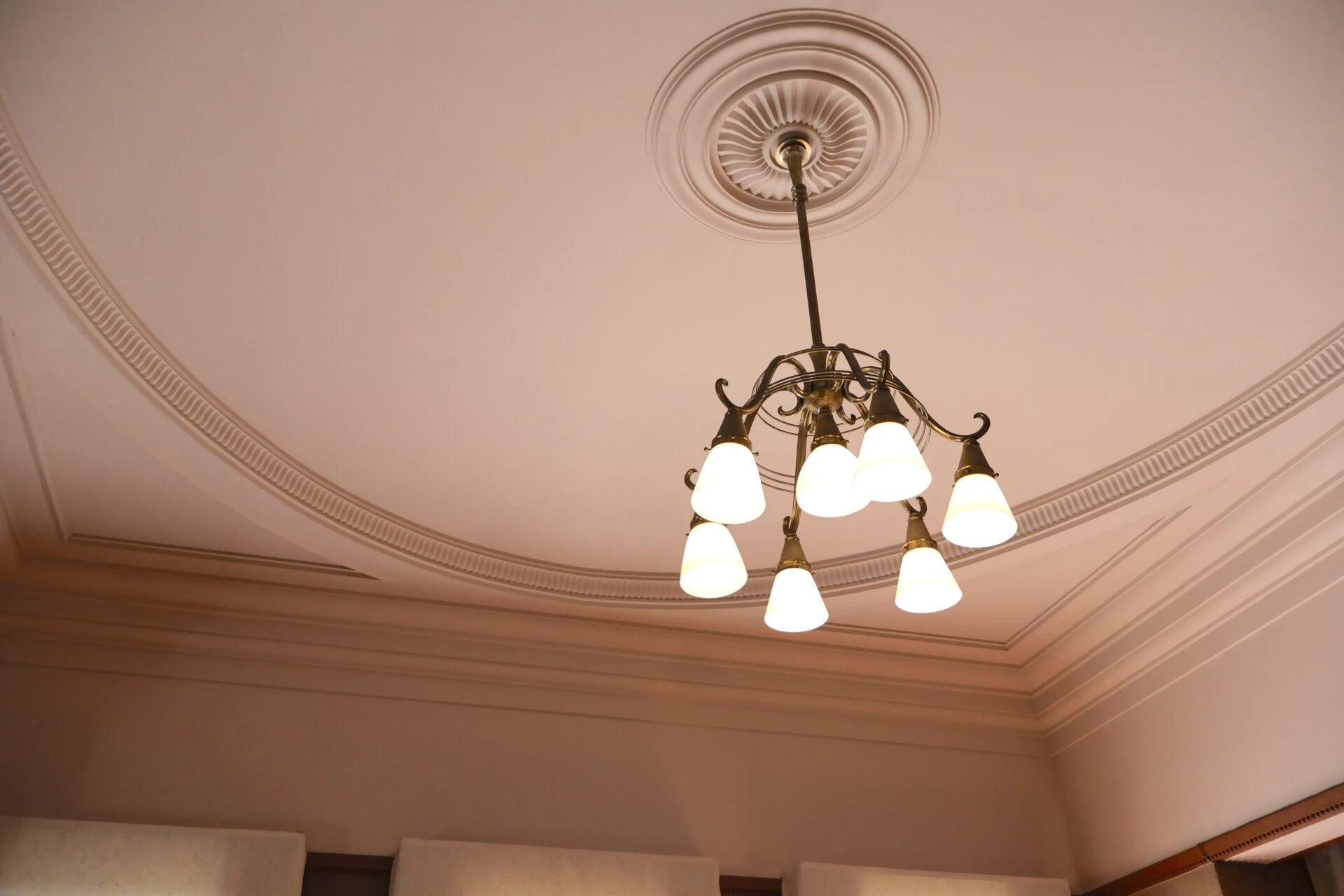
Originally conceived as a residence for his ailing wife, Sueko, it eventually became a modern building that also served as a guesthouse for distinguished visitors to Kurashiki.
Yurin-so Villa was long closed to the public, but since 1997, it has been open for exhibitions and special viewings in spring and autumn, allowing visitors to tour the interior.
Contents of the Special Opening
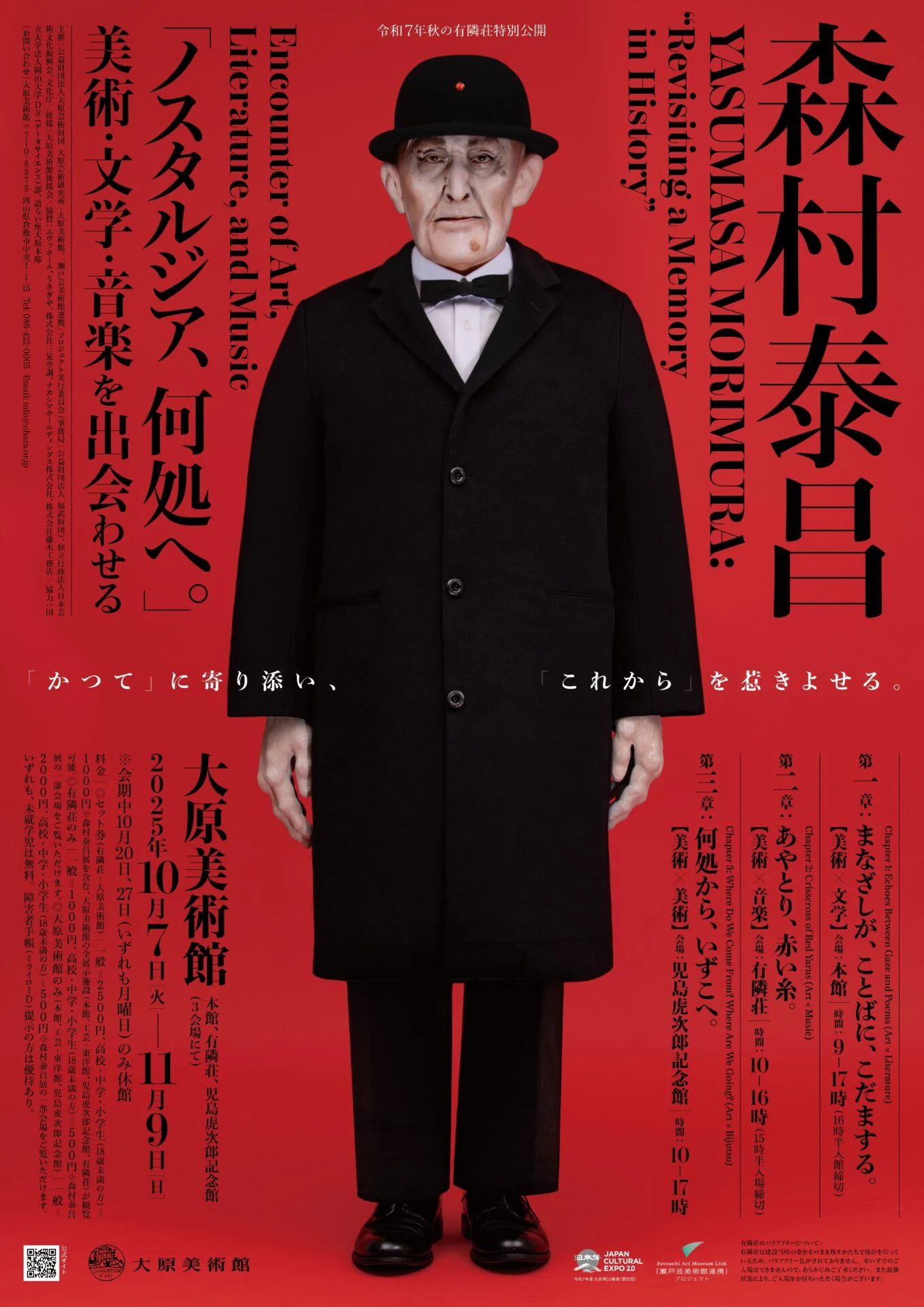
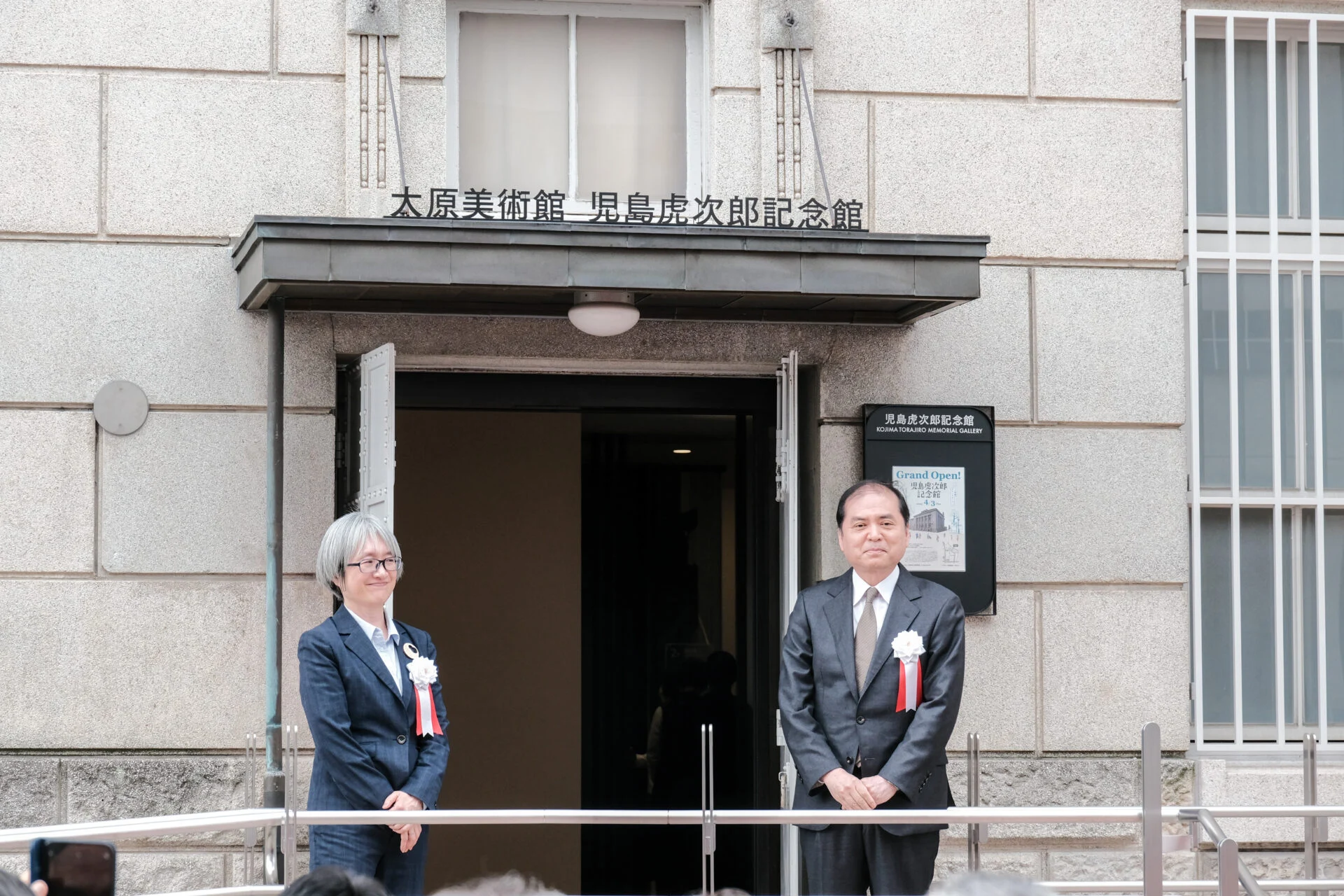
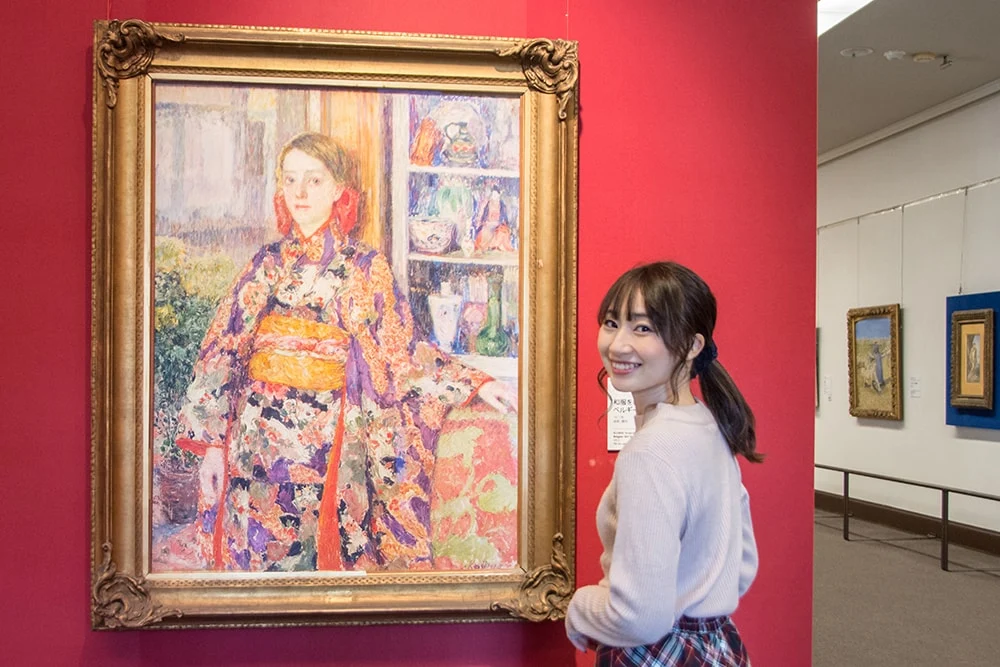
The special opening of Yurin-so Villa in the autumn of 2025 will be held at three locations: the Ohara Museum of Art, Yurin-so Villa, and the Kojima Torajiro Memorial Gallery.
The themes for each location are as follows:
- Ohara Museum of Art, Chapter 1
“The gaze echoes in words. (Art × Literature)” - Yurin-so Villa, Chapter 2
“String games, red thread. (Art × Music)” - Kojima Torajiro Memorial Gallery, Chapter 3
“From where, to where. (Art × Art)”
The first floor features memories of the Expo and “The Man by René Magritte”
Upon entering Yurin-so Villa, a space where art and music deeply intertwine unfolds.
The theme of this venue is a spatial art piece that resonates with sounds flowing from ceramic speakers, inspired by the memories of the 1970 Osaka Expo that Moriura visited and the “Polyhedron Music Hall” conceived by Ohara Soichiro for the Expo.
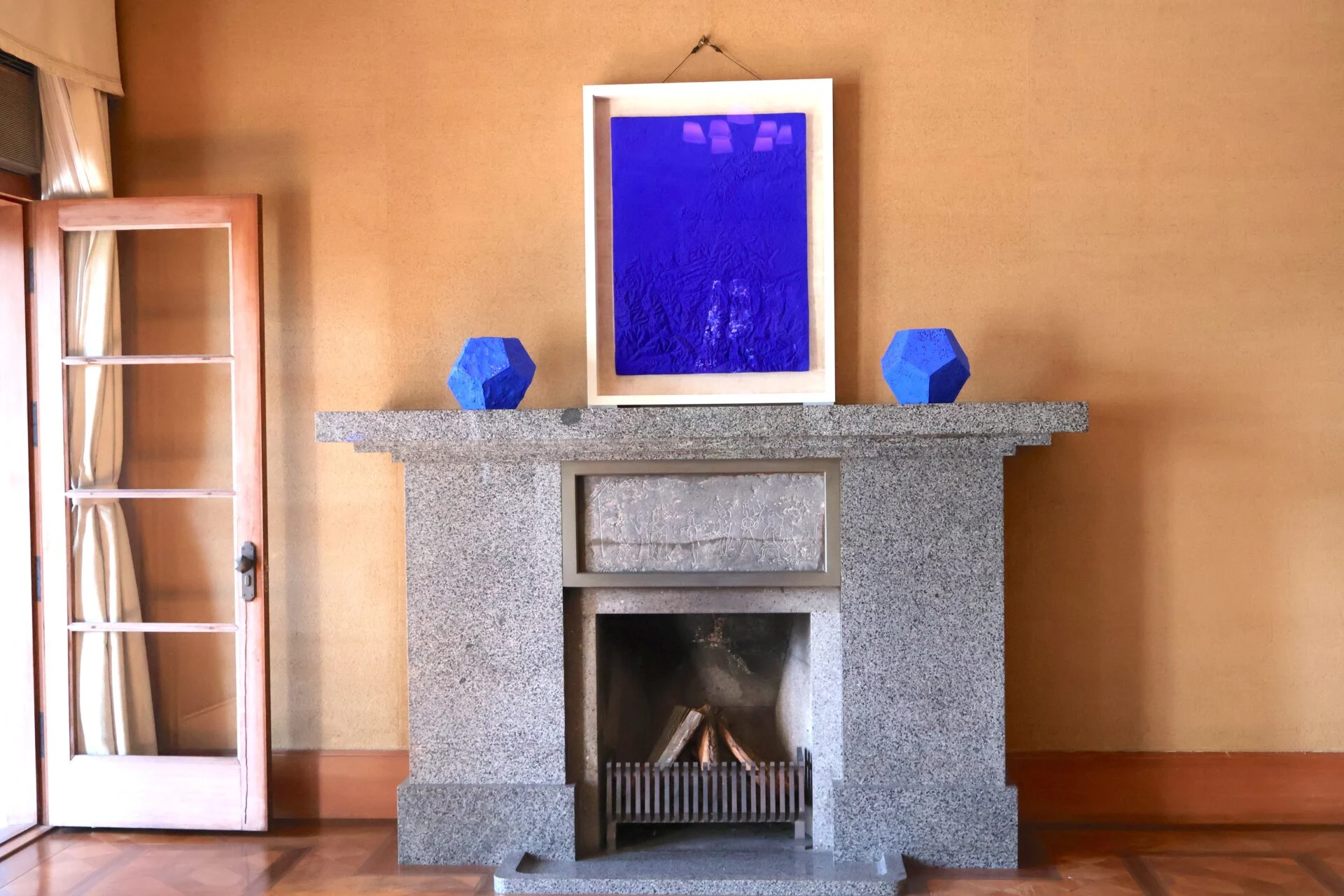
The “Textile Pavilion” exhibited at the 1970 Osaka Expo was a pavilion created mainly by textile companies such as Kuraray and KURABO INDUSTRIES LTD., which were founded by the Ohara family. Moriura has created a new work titled “String games, red thread” based on the memory of the red laser light used in this “Textile Pavilion.”
At the “Textile Pavilion,” artists and musicians collaborated to aim for a fusion of art and science. This exhibition inherits that spirit and is displayed at Yurin-so Villa as a place where “Art” and “Music” meet.
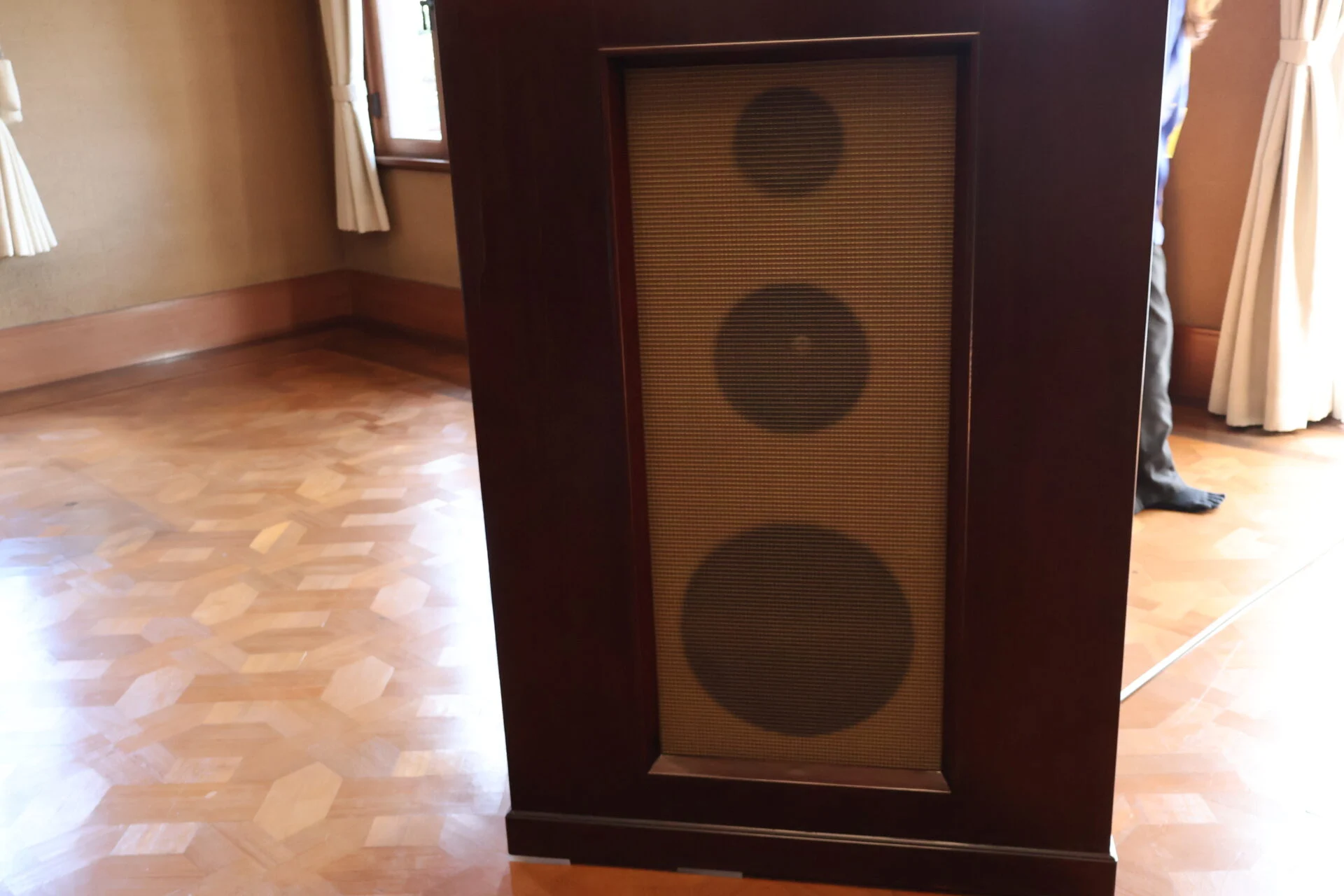
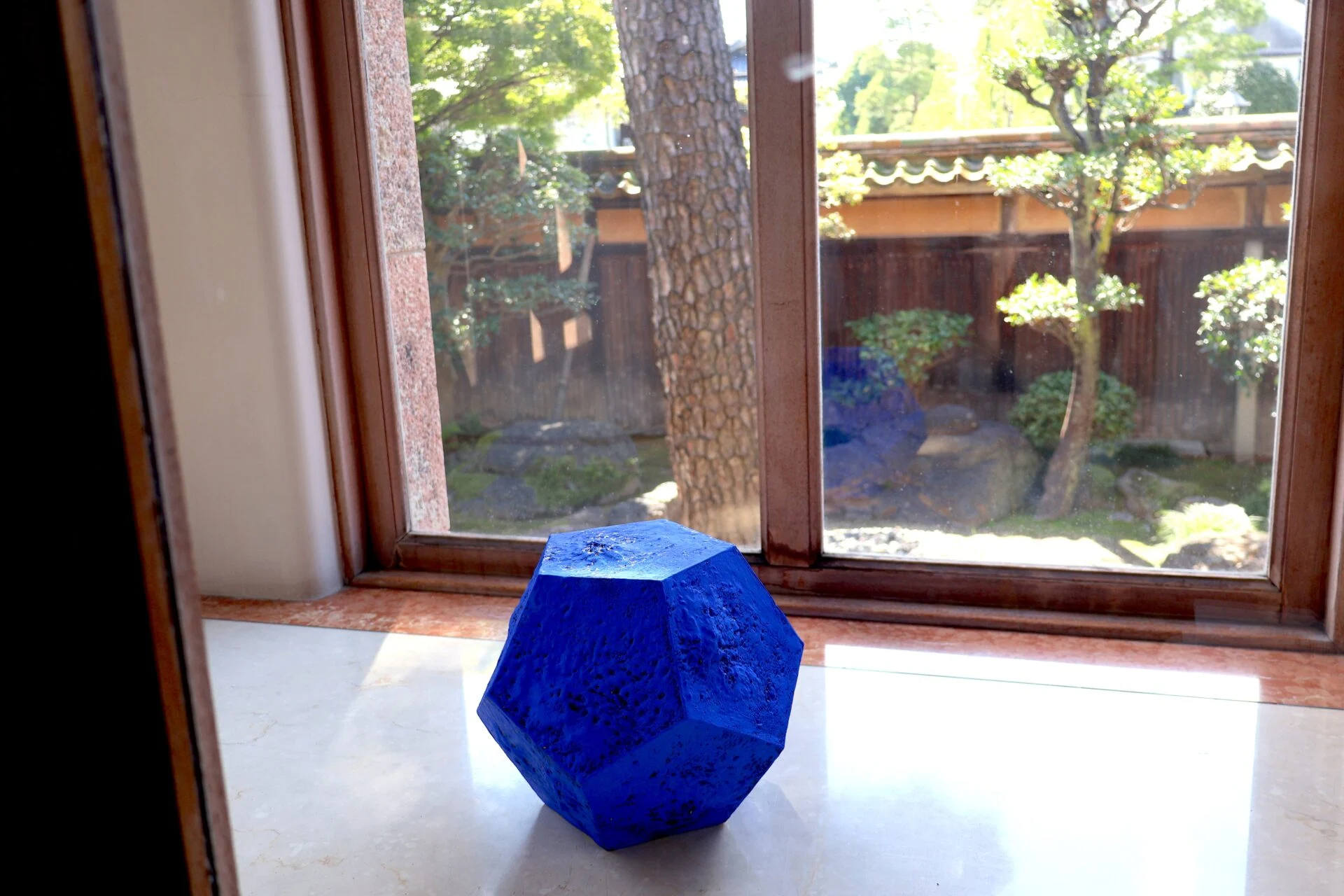
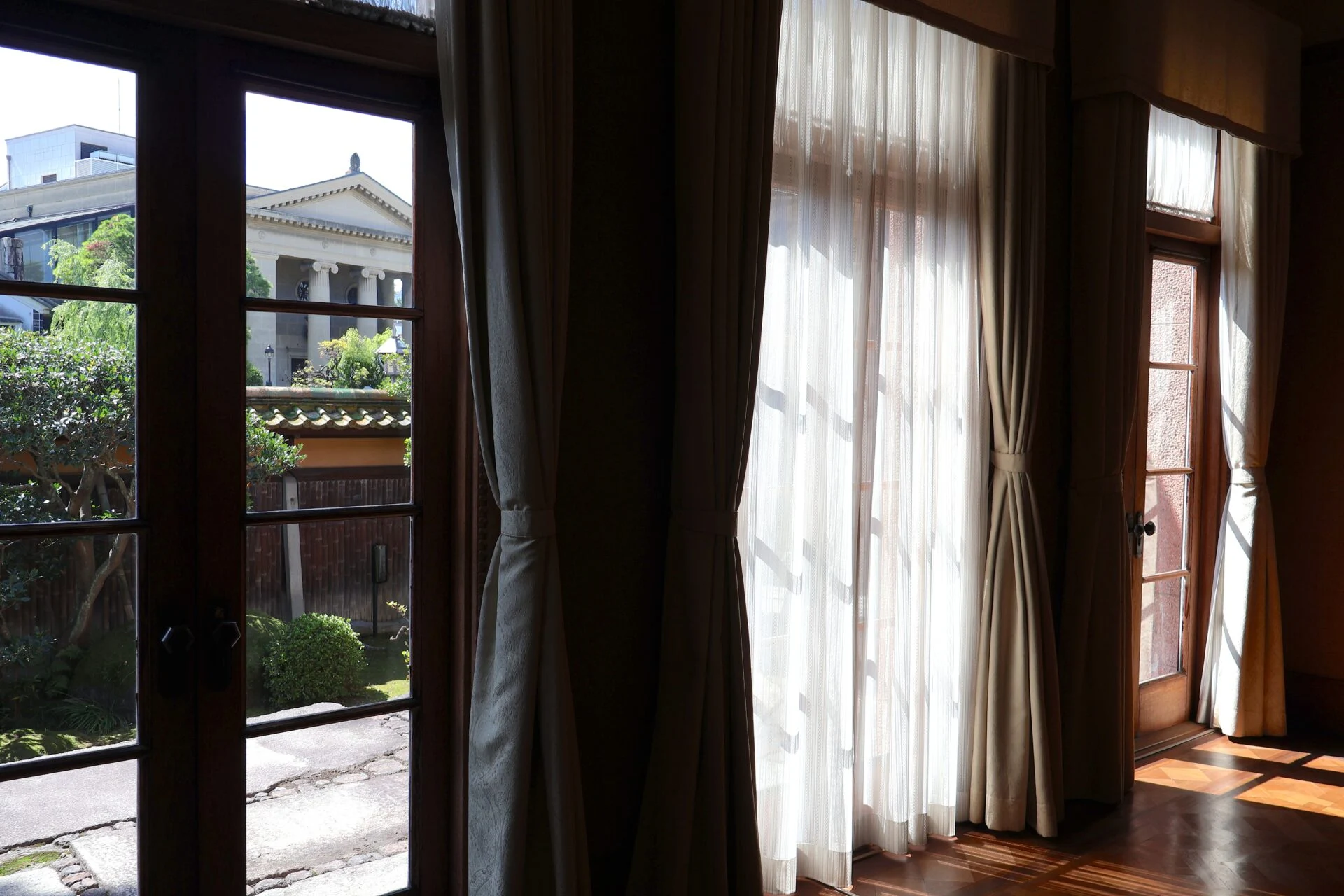
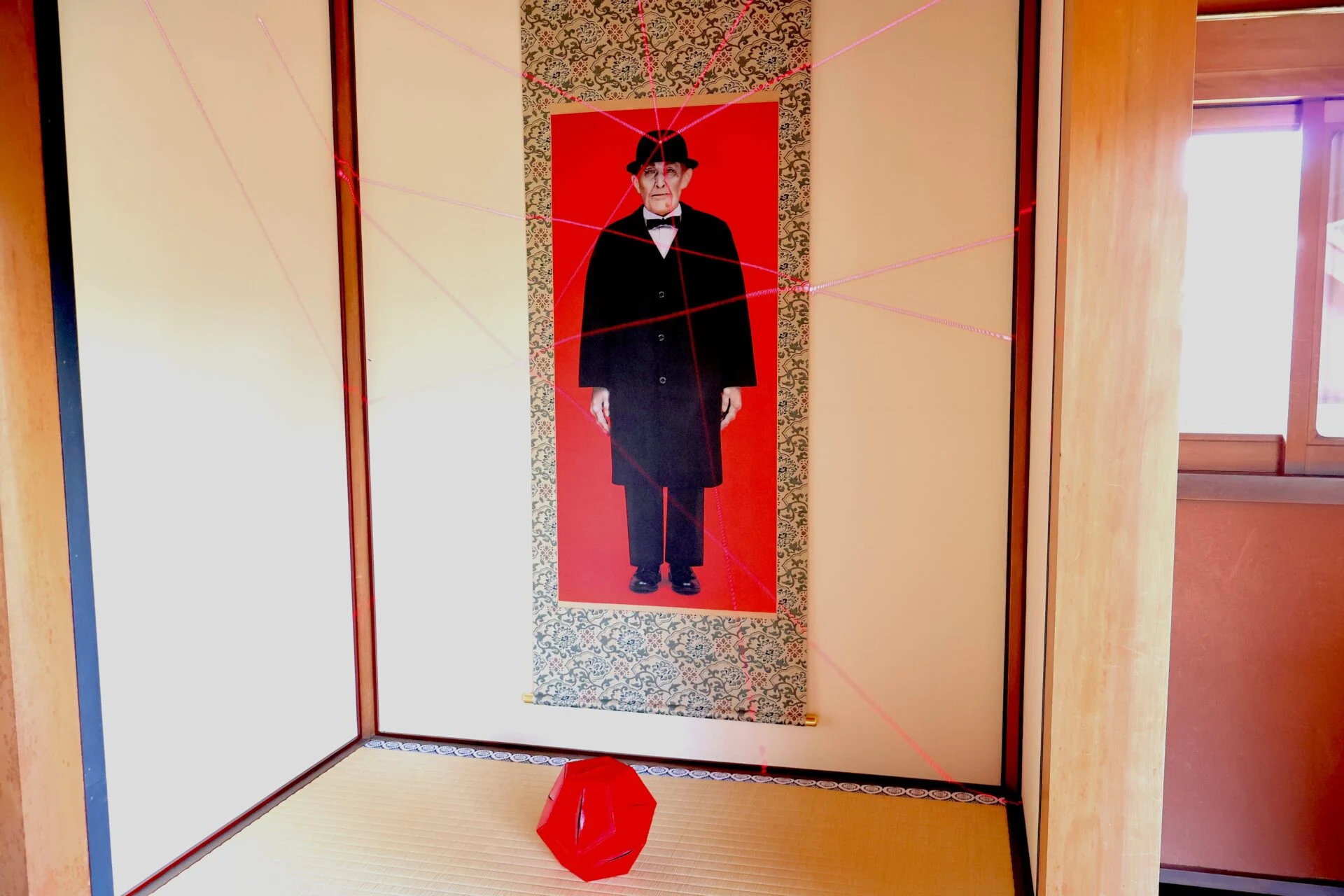
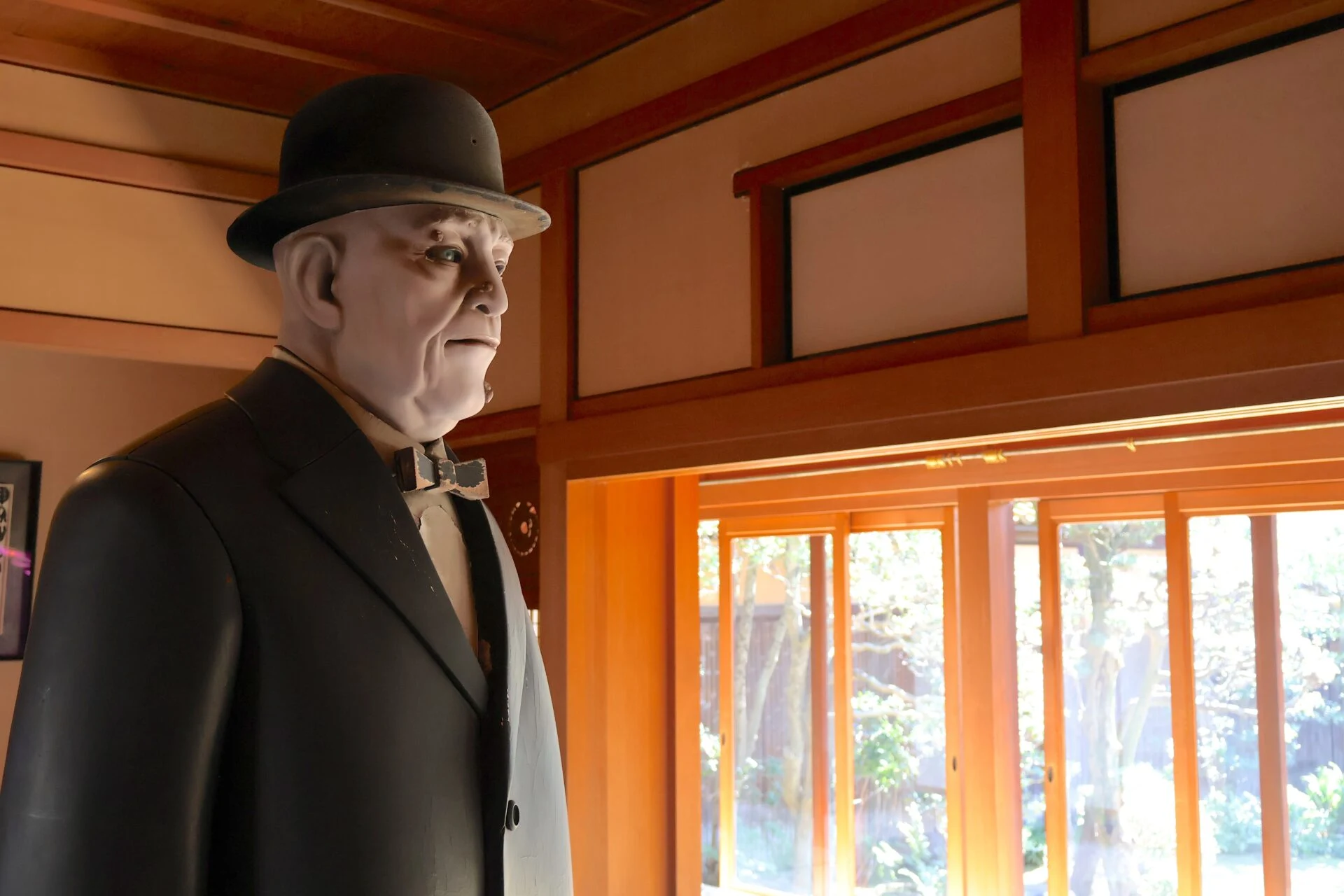
As you move from the Western-style room to the inner Japanese-style room, you will find “The Man by René Magritte,” created by Shimo Yotsuya, which was exhibited at the “Textile Pavilion” during the 1970 Expo.
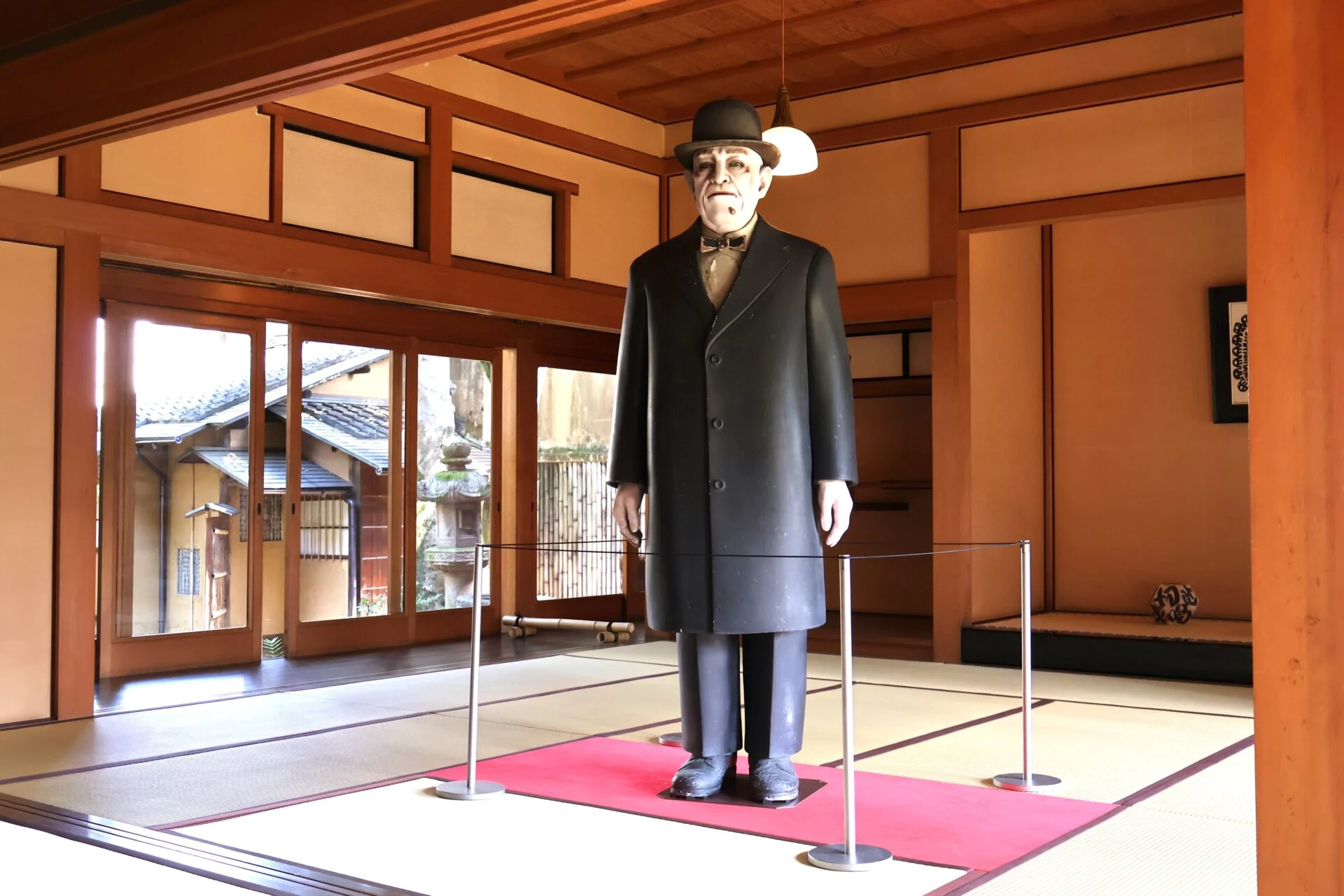
This large piece, about 2 meters tall, has an astonishingly realistic appearance.
It is said that there were originally 20 pieces, but only 4 remain today, and this one has been borrowed from Osaka University.
Moriura visited the “Textile Pavilion” during the 1970 Osaka Expo and remembers the red laser light emitted from the hole in the front of the doll's hat.
The second floor features echoes of voices and laser beams
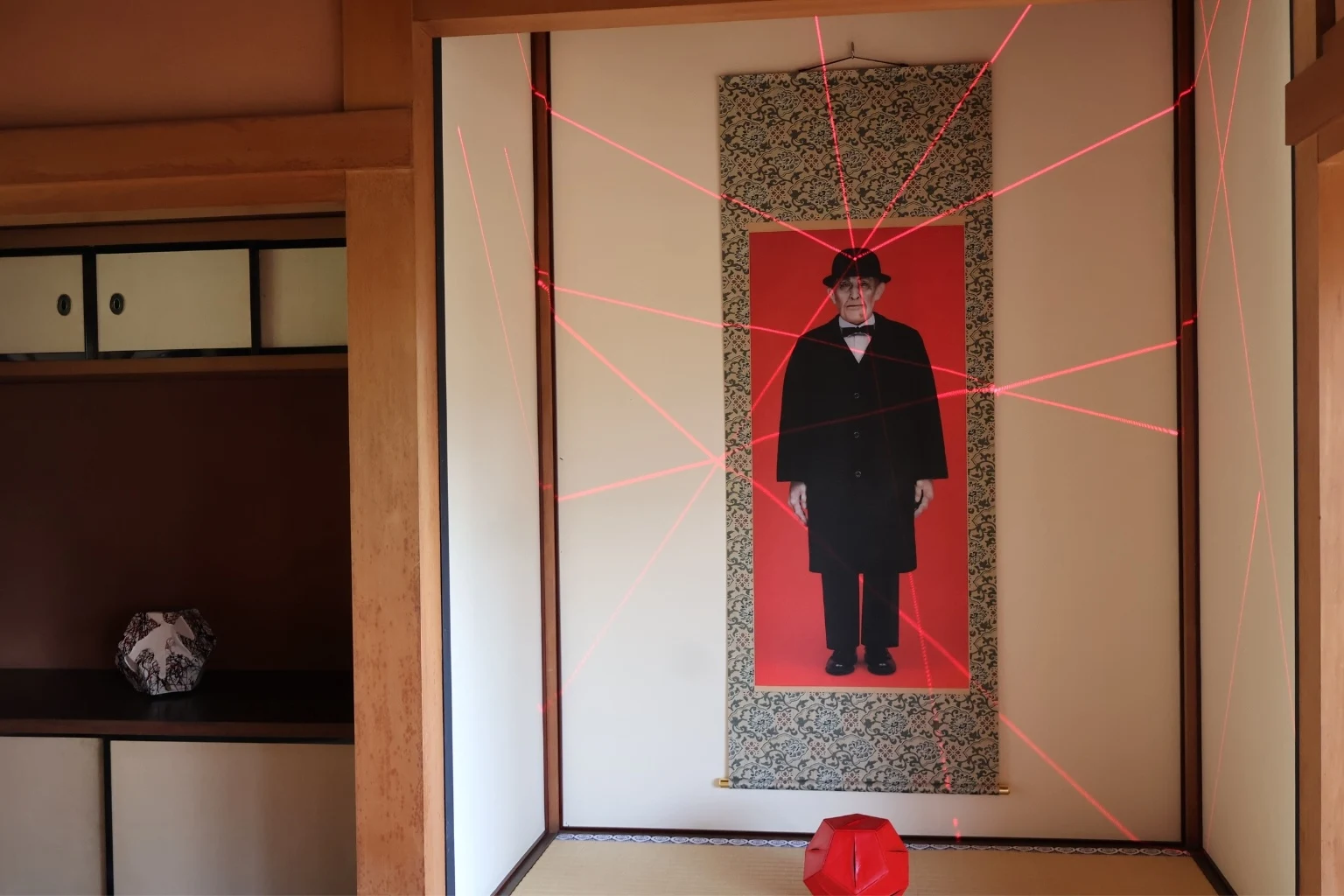
A laser beam seems to emerge from the photo of Mr. Morimura dressed as "The Man by Rene Magritte," as if recreating the time. According to Mr. Morimura, the laser beams of that time may have been cutting-edge, but they were not as strong as modern light; they were thin beams of light.
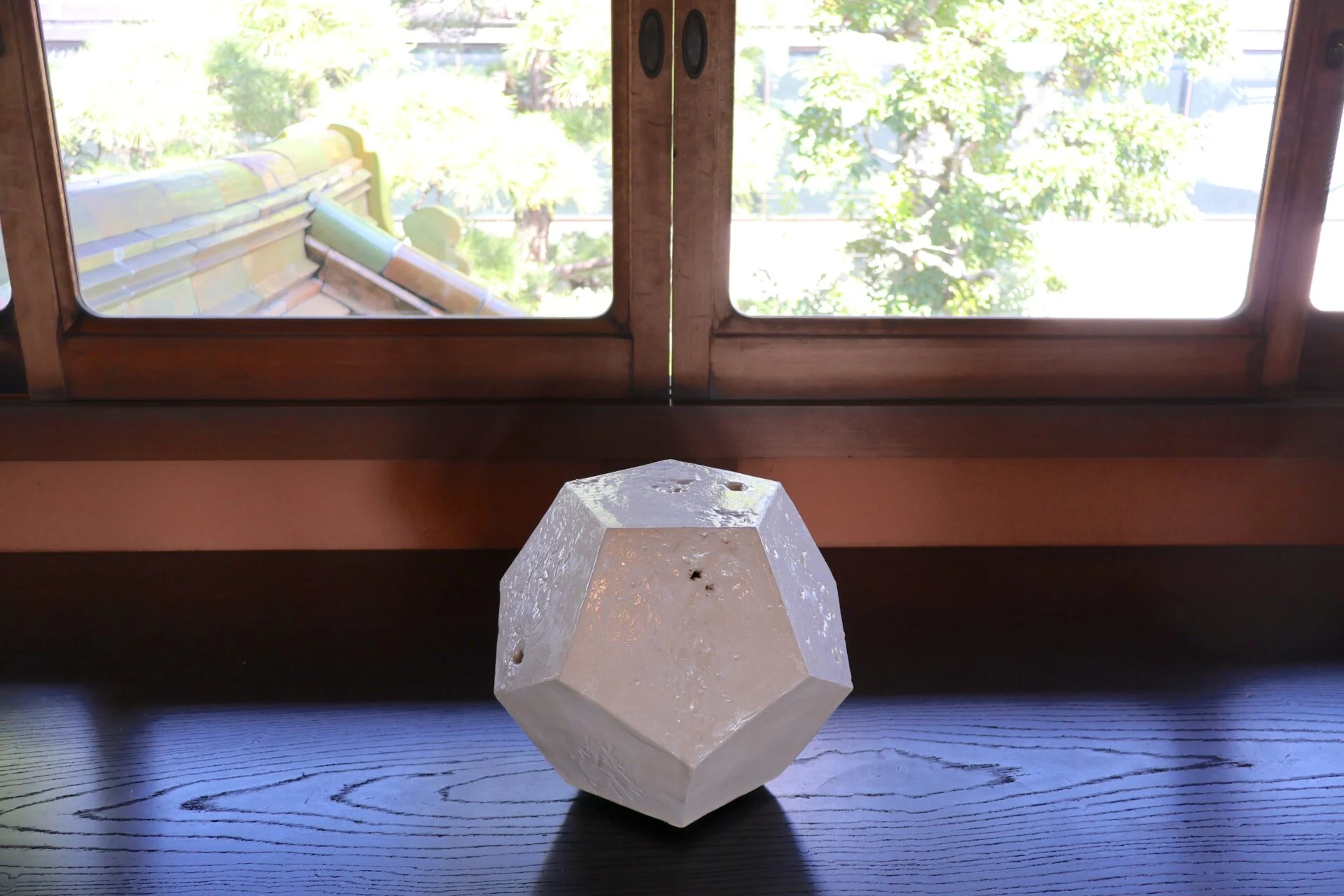
Additionally, whispers and voices can be heard from the various dodecahedrons in the room.
Voices and sounds also come from the objects that pay homage to the "Dodecahedron Music Hall" that Ohara Soichiro once dreamed of. Depending on where you stand, the way you hear the voices and sounds changes.
I was enveloped in a strange sensation that felt both ordinary and extraordinary. I couldn't help but think, "Where am I?"
Mr. Morimura Yasumasa: "I want you to feel the atmosphere echoing from 55 years ago"
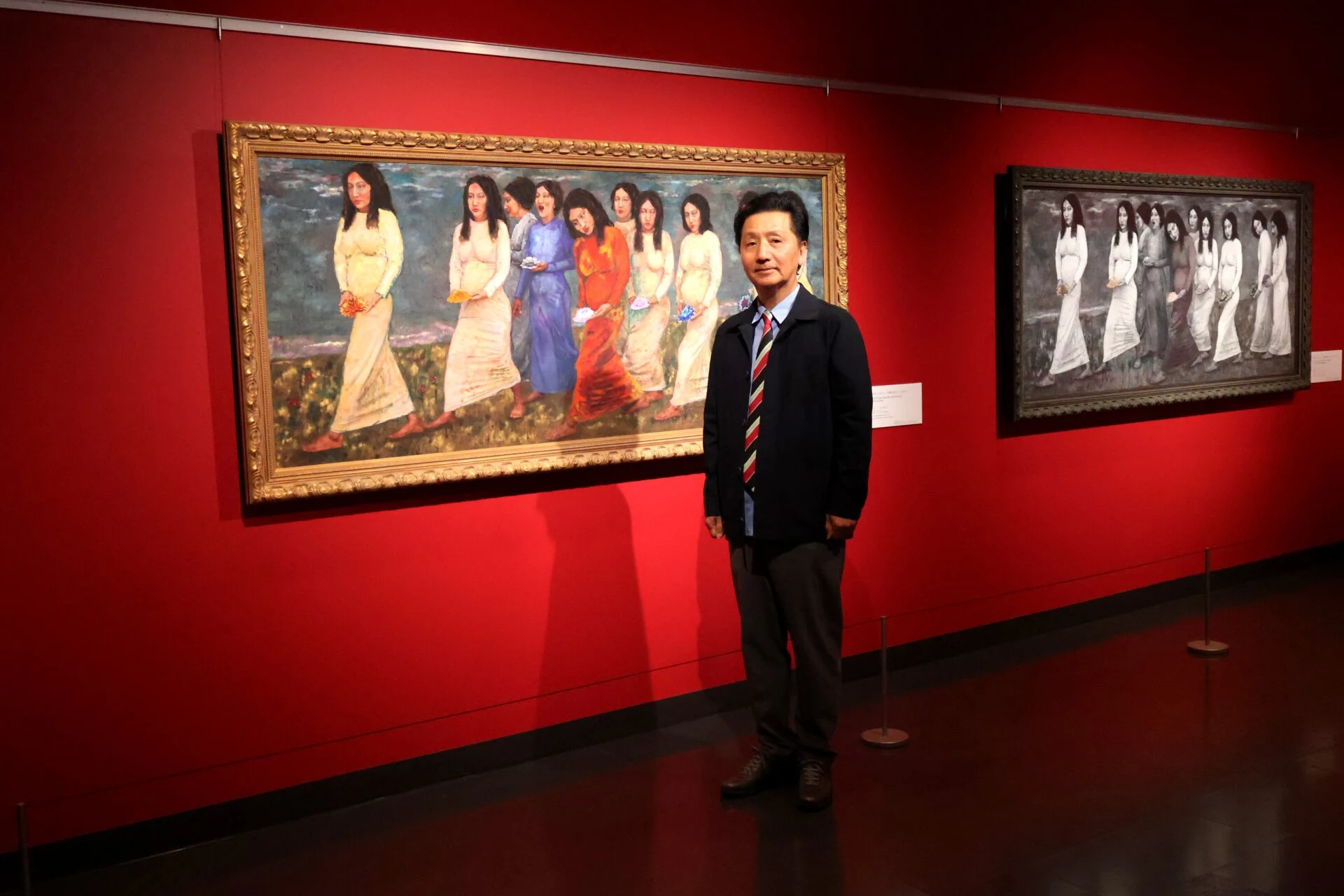
'Where From, Where To.' Study
Mr. Morimura Yasumasa spoke about this exhibition as follows.
Morimura Yasumasa
In holding this exhibition at the Ohara Museum of Art, I was first attracted by the unique "scent" of this museum. In the Meiji, Taisho, and Showa eras, art, literature, and music were inextricably linked.
I felt it was too regrettable for that fascinating world to be forgotten.
Thinking about whether we could look back at that era once more and create new encounters was the beginning of this exhibition.
And Yurin-so Villa is centered around the memory of the 1970 Osaka Expo that I experienced when I was 19 years old. The sight of 'The Man by Rene Magritte' lined up at the "Textile Pavilion" is still vividly etched in my memory. However, rather than recreating the hustle and bustle of the Expo 55 years ago, I wanted to create a space where that memory quietly resonates like an echo.
The "voice" that can be heard from the second floor is also a self-portrait for me. I hope you can feel the echoes of the era when art and music met within the presence of Yurin-so Villa.
Explanation by Mr. Yanagisawa Hideyuki, the curator
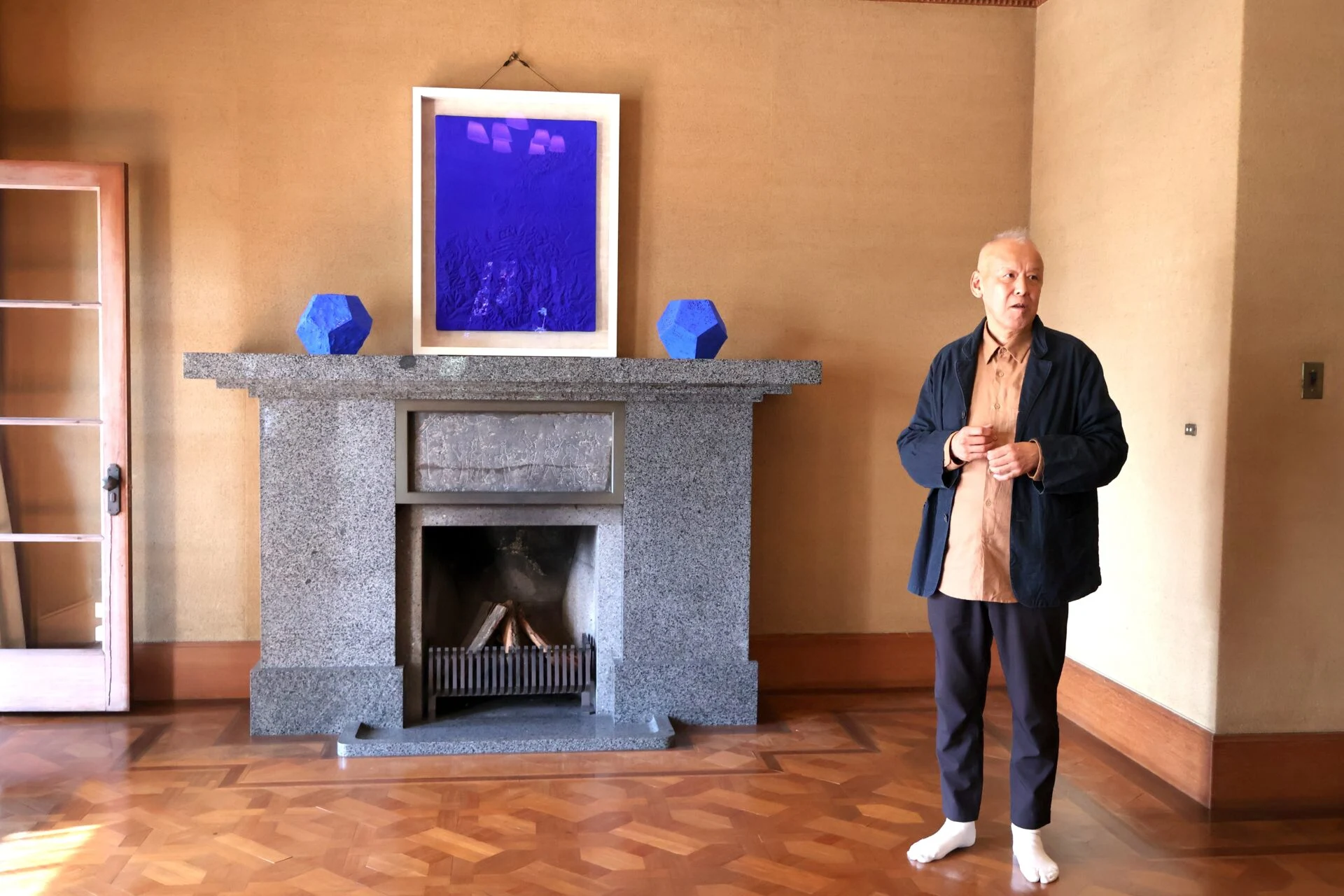
Mr. Yanagisawa Hideyuki, Senior Advisor at the Ohara Art Foundation, who was in charge of the planning, spoke as follows.
Yanagisawa Hideyuki
Ohara Soichiro was a businessman who supported modern Western painting and the Mingei movement in Japan, and he had a deep love for music.
In particular, he cherished the experience of listening to the chirping of birds and the sound of the wind that could be heard from nowhere while strolling through the forest. To realize that ideal, he proposed an advanced concept called the "Dodecahedron Music Hall" for the 1970 Osaka Expo, but it was not realized.
This time, Mr. Morimura focused on "Ohara Soichiro's dream."
The "dodecahedron objects" placed throughout Yurin-so Villa respond to Ohara Soichiro's concept.
At Yurin-so Villa, please listen carefully.
The entire building resonates like an instrument. Also, the sound changes between the first and second floors. On the second floor, the music fades away, and instead, you should hear whispers and soliloquies.
After experiencing the "melodic music" on the first floor of Yurin-so Villa, ultimately, both words and music are deconstructed, and a world exists where only pure "sound" remains.
This flow will be one of the important experiences that runs through this exhibition.
The special exhibition at Yurin-so Villa is until November 9, 2025 (Sunday)
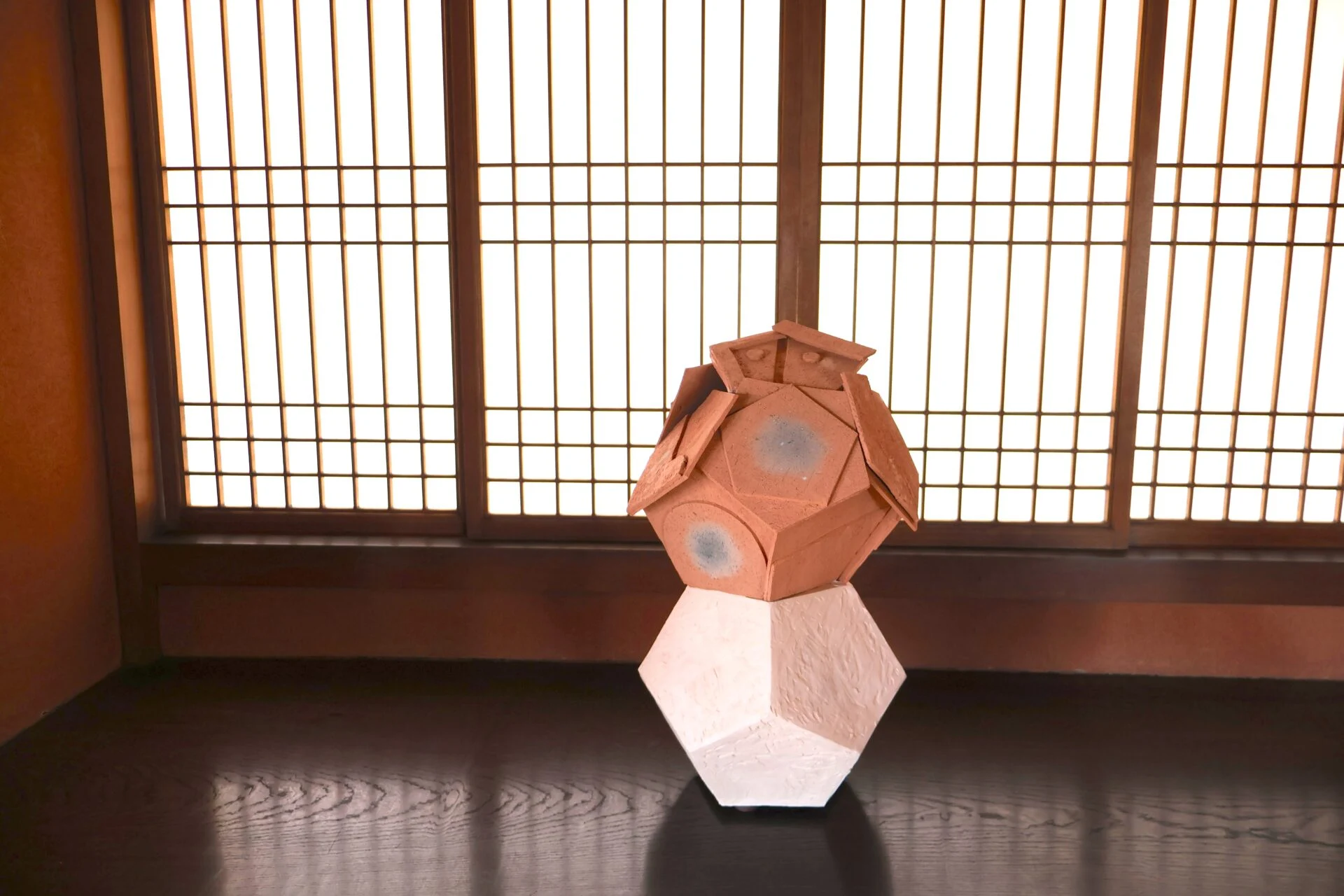
The special exhibition at Yurin-so Villa in the autumn of 2025 is being held until November 9 (Sunday).
In the beautiful interior of Yurin-so Villa, I felt how pleasant it is for art and music to overlap. Since the sounds change depending on where you stand, I think it would be fun to change your position and listen carefully to the sounds.
In 2025, when the Expo is held again in Osaka, I enjoyed an art space that evokes memories of the 1970 Osaka Expo. Mr. Morimura's art works at the Ohara Museum of Art and the Kojima Torajiro Memorial Gallery are also wonderful, so please be sure to take a look.
Additionally, with the common passport for the Setouchi International Art Festival 2025, you can enter the special opening of Yurin-so Villa once. Whether you are an art fan who has enjoyed the Setouchi International Art Festival or someone who wants to experience the resonating art and music at the special opening of Yurin-so Villa, please take this opportunity to visit.
Data for the special opening of Yurin-so Villa in autumn 2025: Morimura Yasumasa "Nostalgia, Where To." - Bringing together art, literature, and music -
| Name | Special opening of Yurin-so Villa in autumn 2025: Morimura Yasumasa "Nostalgia, Where To." - Bringing together art, literature, and music - |
|---|---|
| Dates | October 7 (Tuesday) to November 9 (Sunday), 2025 10:00 AM to 4:00 PM (last entry at 3:30 PM) |
| Location | 1-3-18 Chuo, Kurashiki City, Okayama Prefecture |
| Admission fee (including tax) | Ohara Museum set ticket Allows viewing of all venues of the Morimura Yasumasa exhibition (main building, Yurin-so Villa, Kojima Torajiro Memorial Gallery). 【Set ticket】 Yurin-so Villa + Ohara Museum General 2,500 yen 【Set ticket】 Yurin-so Villa + Ohara Museum High school, middle school, elementary school students (under 18) 1,000 yen Yurin-so Villa only *Some venues of the Morimura exhibition can be viewed. General 1,000 yen High school, middle school, elementary school students (under 18) 500 yen *Please present a disability certificate (Mirairo ID) for discounts. *Free for preschool children. |
| Website | Ohara Museum of Art official website |