Japan is a country that values history and tradition
Don't you feel that way somehow?
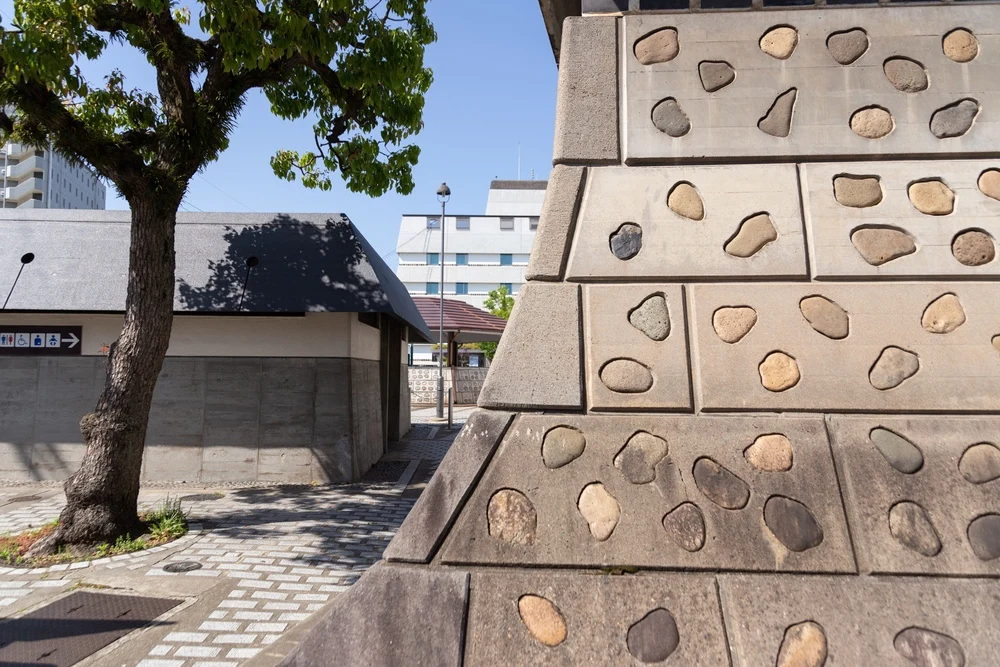
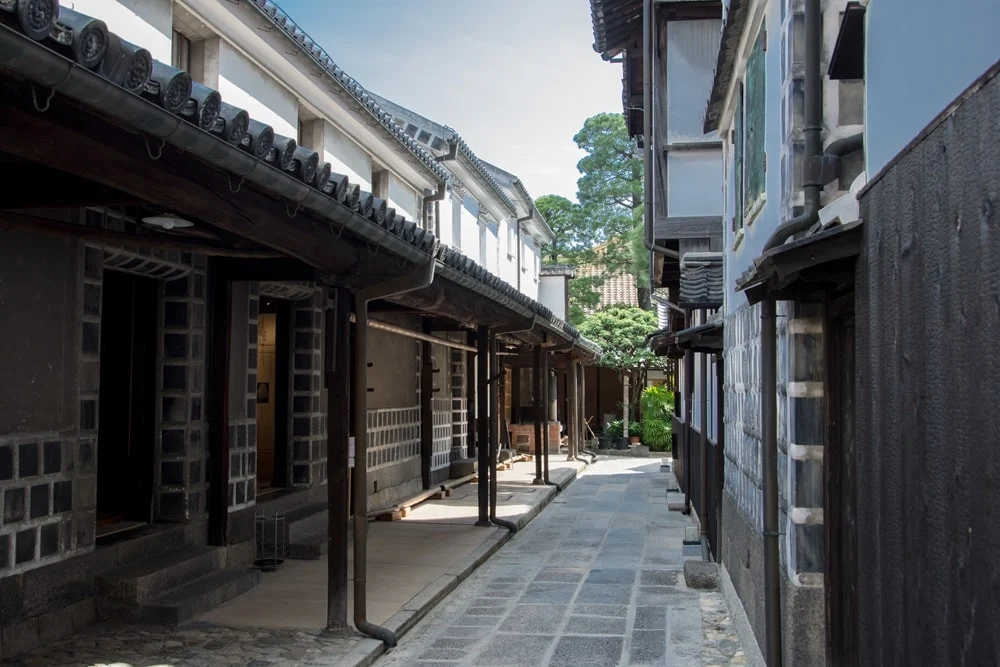
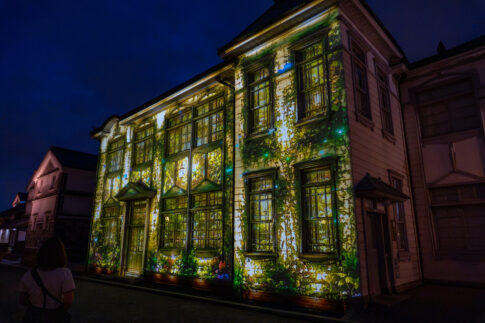
Living in Kurashiki City, which has the Bikan Historical Area that conveys the townscape of the Edo period to the present, makes one particularly prone to such thoughts.
An opportunity to reconsider such assumptions was provided by a lecture held on July 24, 2026 (Friday).
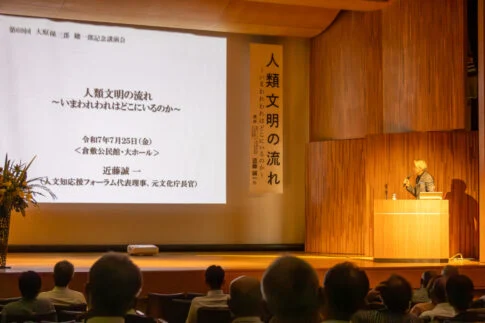
Here is an introduction to the content of the "70th Ohara Magosaburo and Soichiro Memorial Lecture."
About the 70th Ohara Magosaburo and Soichiro Memorial Lecture
Ohara Magosaburo, who founded the "Kurashiki Sunday Lectures," was succeeded by his eldest son Soichiro after Magosaburo's passing.
Furthermore, even after Soichiro's death, the spirit of the lectures has been passed down through people who have inherited it, changing names and forms while transcending time.
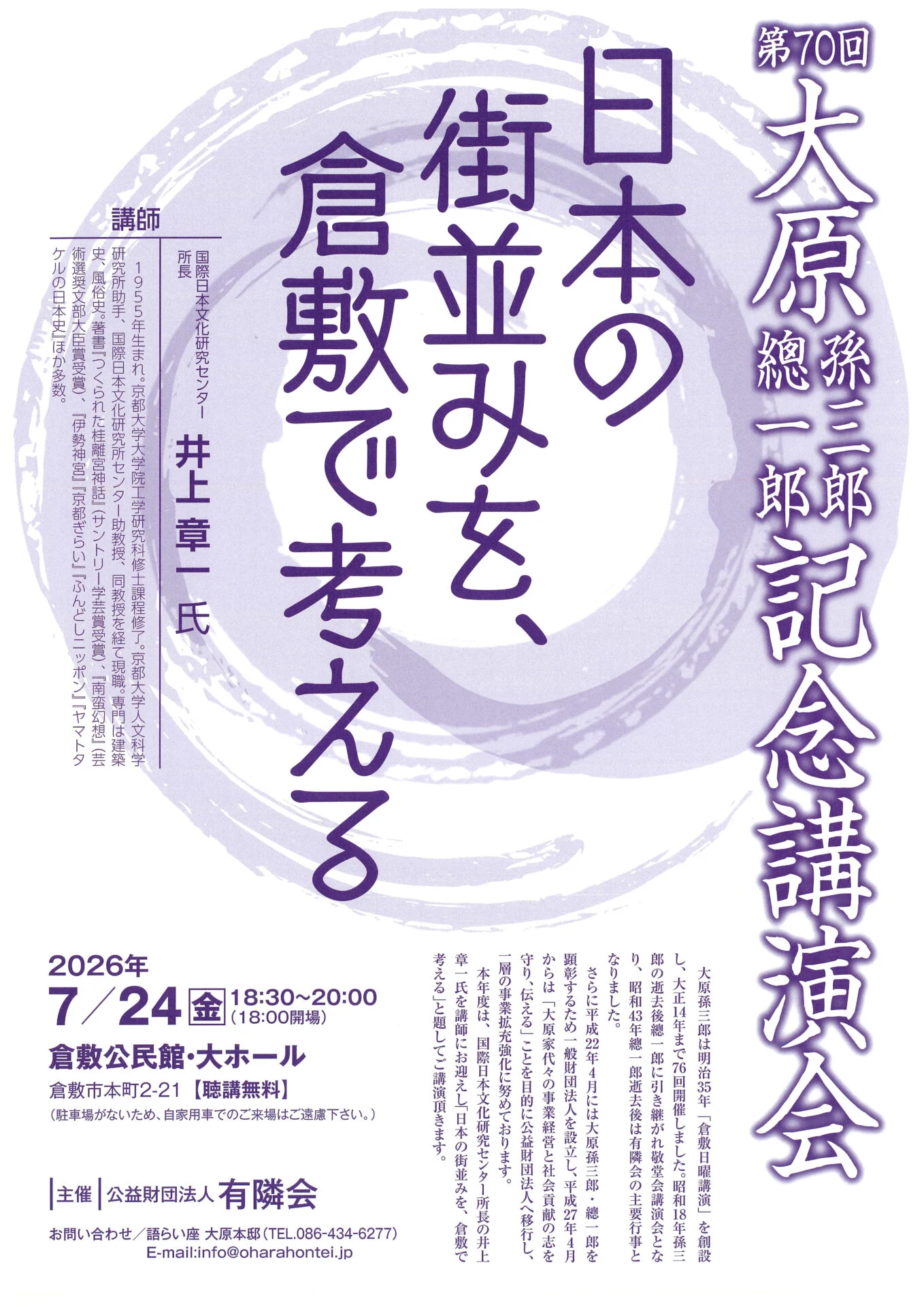
Currently, the "Ohara Magosaburo and Soichiro Memorial Lecture" is held once a year in late July, organized by the "Yurin-kai Public Interest Incorporated Foundation."
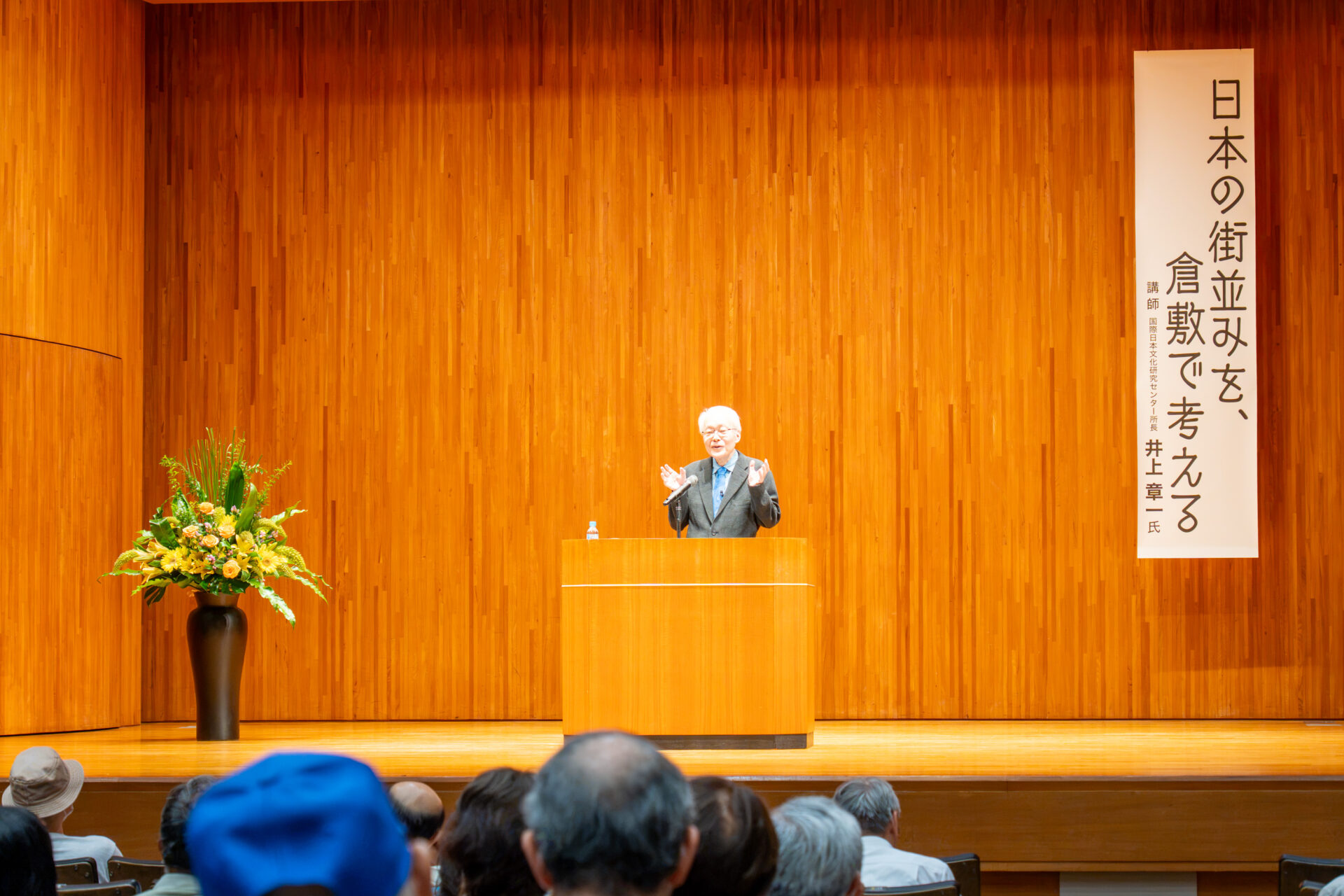
The lecture on July 24, 2026 (Friday) marked the 70th event, with the director of the National Institute for Japanese Culture, Shoichi Inoue, as the speaker, presenting a lecture titled "Considering Japan's Townscapes in Kurashiki."
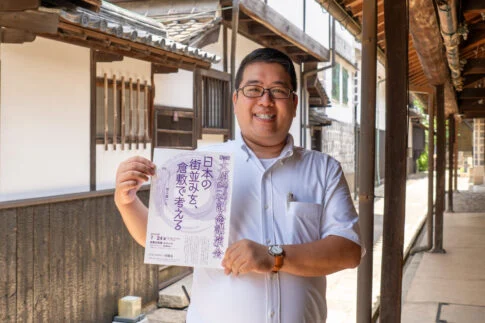
Lecture "Considering Japan's Townscapes in Kurashiki"
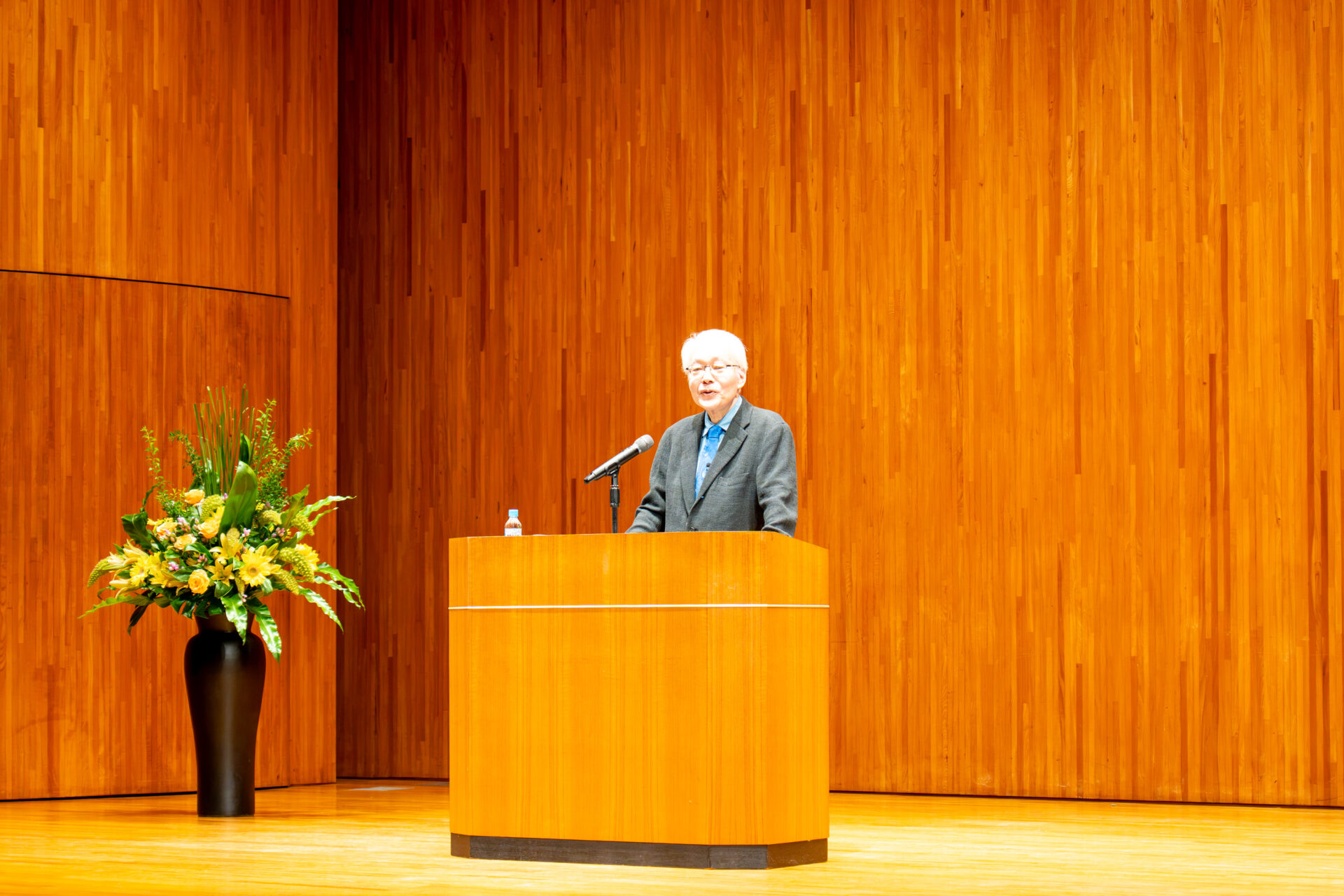
At the beginning, Inoue described the nature of the lecture.
"This is not a talk filled with the so-called scholarly evidence. I am not able to utilize statistical data to speak. You will be accompanying me on what I usually think about, what I considered when I aspired to be an architect in my youth, and what I stopped thinking about for a while," he said.
The discussion began with the evaluation that Japanese people are often described as a "nation that values harmony." The handbook for international students published by the Ministry of Education, Culture, Sports, Science and Technology also states that they are a nation that values overall harmony.
However, Inoue, who studied architecture, expressed that he feels the opposite when observing townscapes.
"Think of the bustling streets of a big city. How many buildings are designed to harmonize with the adjacent buildings? It can be said that there are almost none," he stated.
He cited the Kawaramachi Street in Kyoto, where buildings line up as if to say, "I won't conform to my neighbor," from Sanjo to Shijo.
On the other hand, the bustling streets around the Opera House in Paris are generally aligned with the taste from the time of Napoleon III. Buildings of the same color and shape line up, making it difficult to know where you are walking, and you may even get lost.
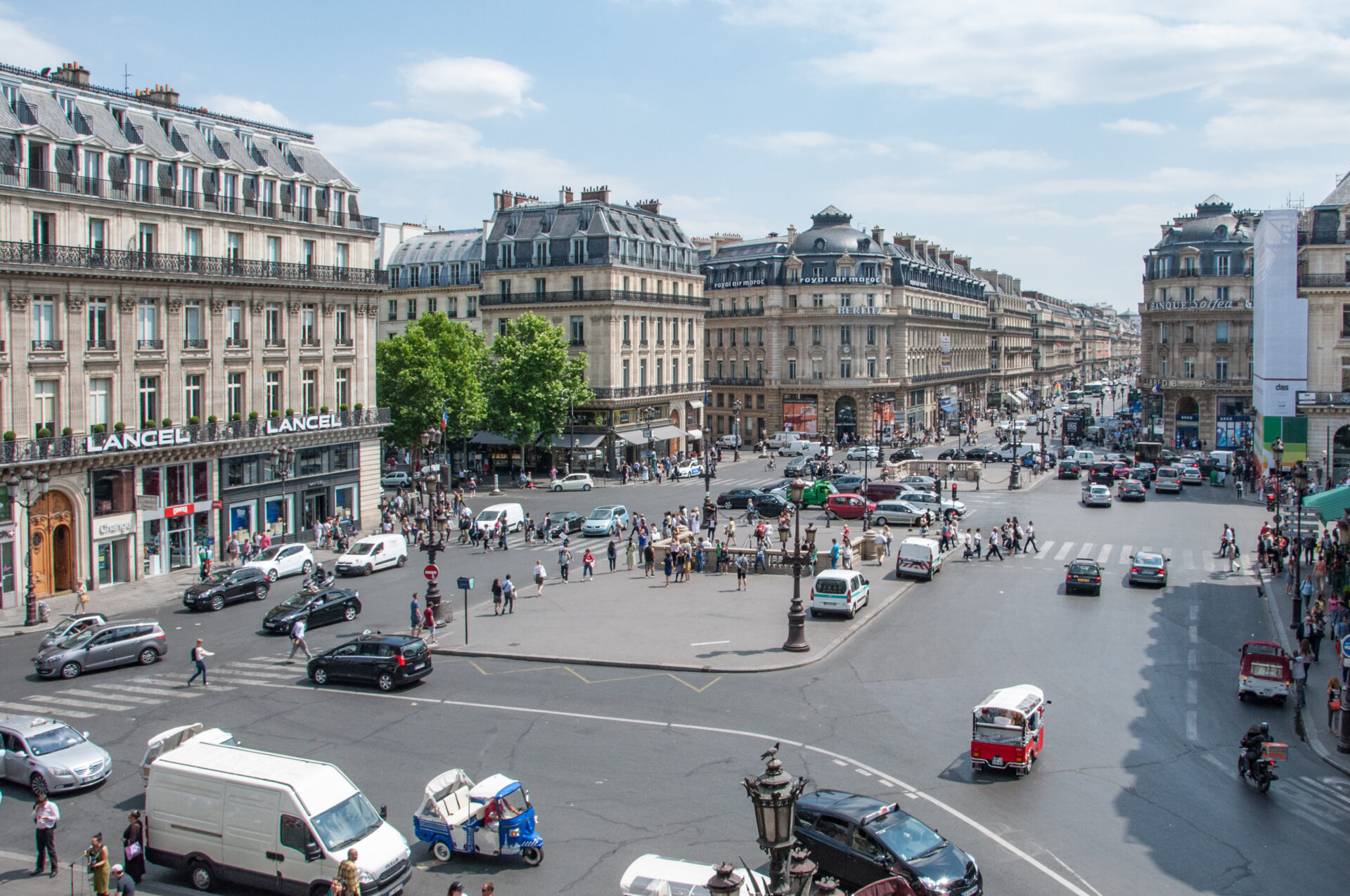
"It is rather the European bustling streets that value harmony. It is Japan that stands out with individuality," he stated.
A River Without Handrails and an Administration Seeking Handrails
Inoue began discussing the differences between Japan and overseas through the topic of handrails.
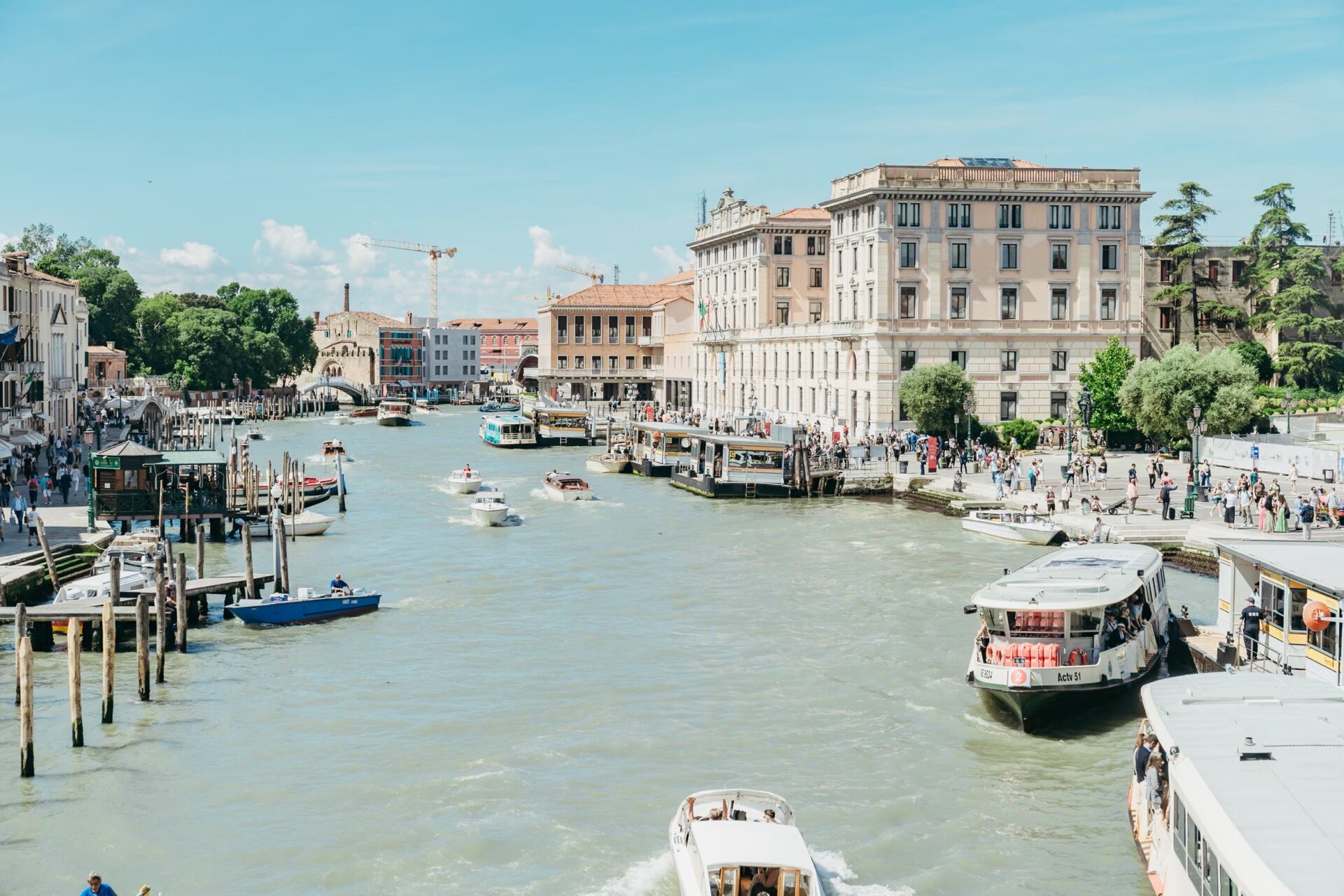
In Venice, known as the "City of Water," there are almost no handrails along the canals. Drunk people may fall in. Inoue himself recalls witnessing such a scene once in his youth. Yet, Venice does not install handrails along the canals. "I wouldn't say they completely disregard people's health, but I think it is a city that values history more than health," he remarked.
In contrast, Dotonbori in Osaka has high handrails installed. "They are set up to avoid any strange accidents and to prevent the administration from being held accountable," he explained.
He then brought up an episode regarding the TIME'S building in Kyoto (hereafter referred to as "Times Building").
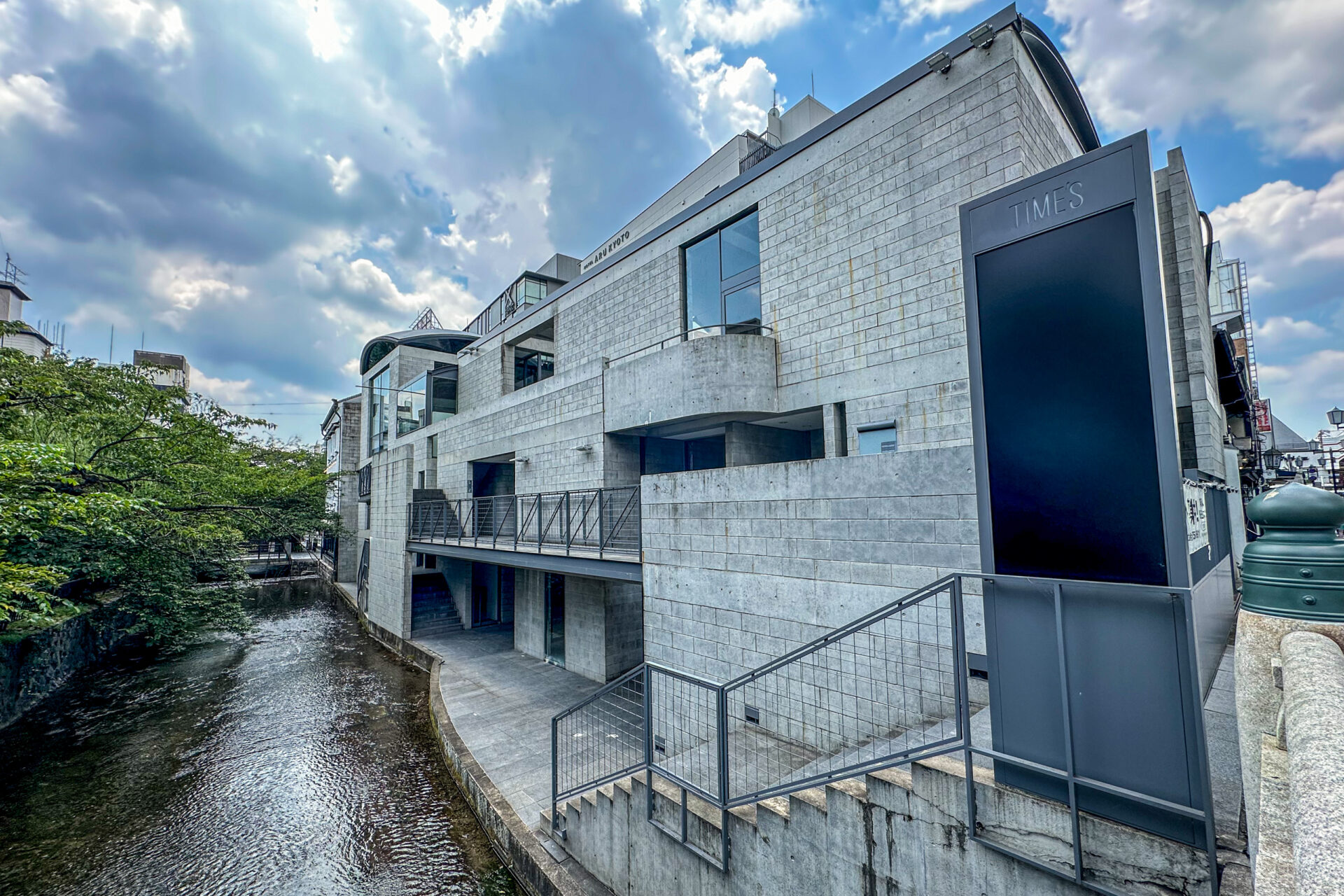
The Sanjo Bridge, where Takase River and Sanjo Street intersect.
On the southwest side stands the Times Building, which extends a platform towards the Takase River, without handrails. The designer is Tadao Ando.
Inoue shared an episode he heard from Ando, stating that "Kyoto City Hall strongly insisted on installing handrails, but he rejected that." Inoue added, "He said that, but I wonder if it's really true."
However, in reality, the Times Building has no handrails. When Inoue asked architects in Kyoto, he received the response, "It was possible because it was Ando."
The story does not end here. A new building has been constructed on the north side of the bridge across from the Times Building. It also extends a platform towards the Takase River. However, it has small handrails.
"The landscape where handrails cannot be installed along the Takase River in that area was established due to Tadao Ando's stubbornness. The administration wants to install handrails even on rivers that are only 2 or 3 cm deep. They are creating a city in such a way that the city hall's responsibility is not questioned in the event of an accident when permission was granted without handrails," he explained.
"I think we are quite protected by the administration. This is a bold statement, but perhaps our average lifespan being at the world's highest level is also thanks to handrails," he remarked, quickly adding, "This is a bold statement, though."
The First Air Raid on Rome and Italy's Decision
Another topic that took a long time was Italy during World War II.
Inoue first introduced a timeline of Japan.
On December 8, 1941 (Showa 16), the attack on Pearl Harbor occurred. On April 18, 1942, Tokyo, Nagoya, and Kobe were bombed for the first time. Then, on August 15, 1945, the Emperor's announcement was made. Calculating backward, Japan endured air raids for about 3 years and 4 months.
Air raids on the Italian mainland began earlier. They started right after Italy joined the war in June 1940, with industrial cities in northern Italy like Turin and Genoa being repeatedly targeted.
However, the bombing of the capital, Rome, was significantly delayed. Bombs first fell on Rome on July 19, 1943.
"The air raid on Rome on July 19 must have been a tremendous shock to the Italians," Inoue stated.
Following this air raid, Italy began to abandon the continuation of the war.
Six days later, on July 25, King Vittorio Emanuele III dismissed and arrested Prime Minister Benito Mussolini.
What Inoue focuses on is why they were able to make a decision immediately after the first air raid.
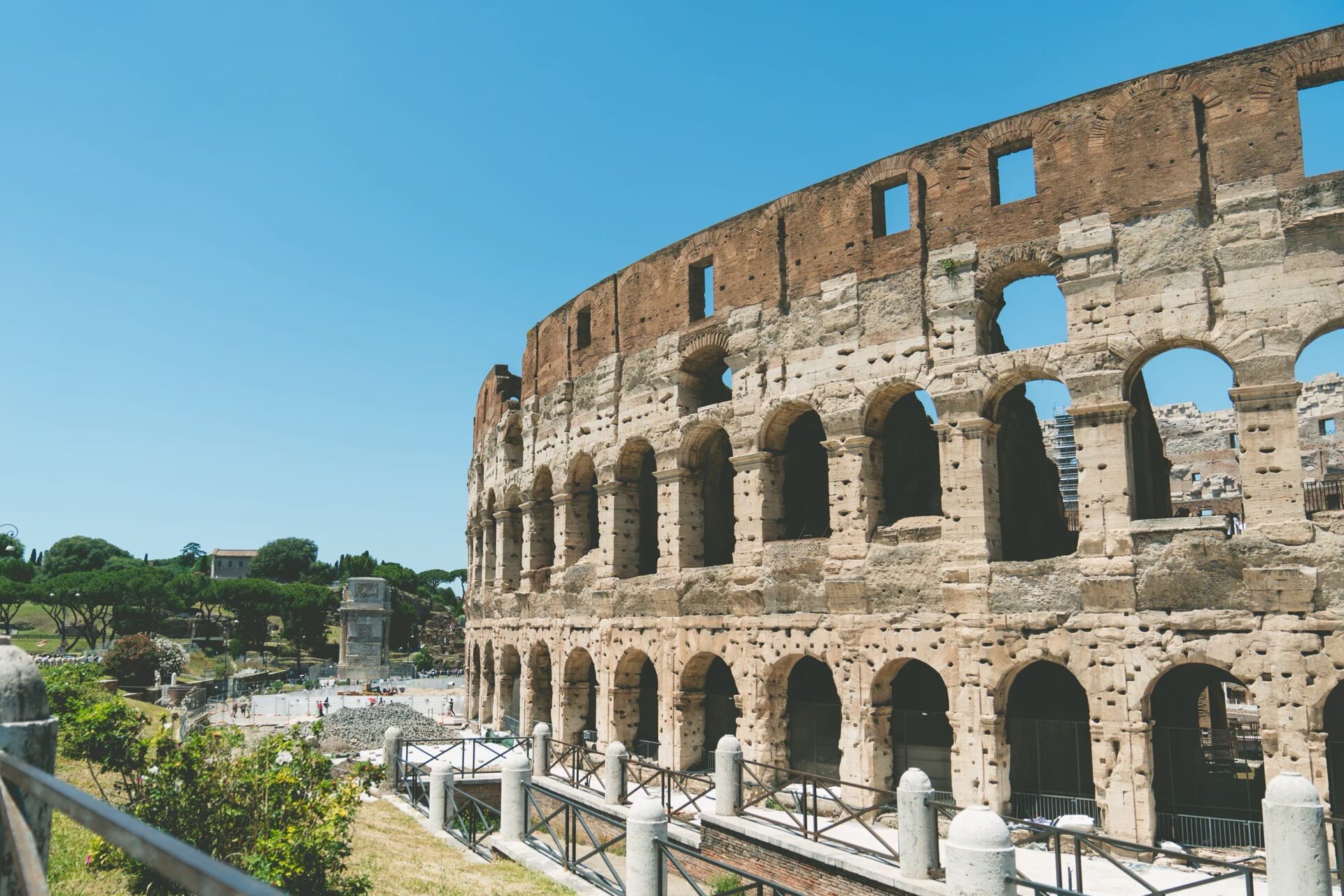
Rome is a city that has continued since ancient times. The Colosseum, which accommodates 50,000 people, was built around 70 to 80 AD, and it is lined with renowned Renaissance and Baroque architecture, including Michelangelo's Campidoglio Square. These could potentially collapse.
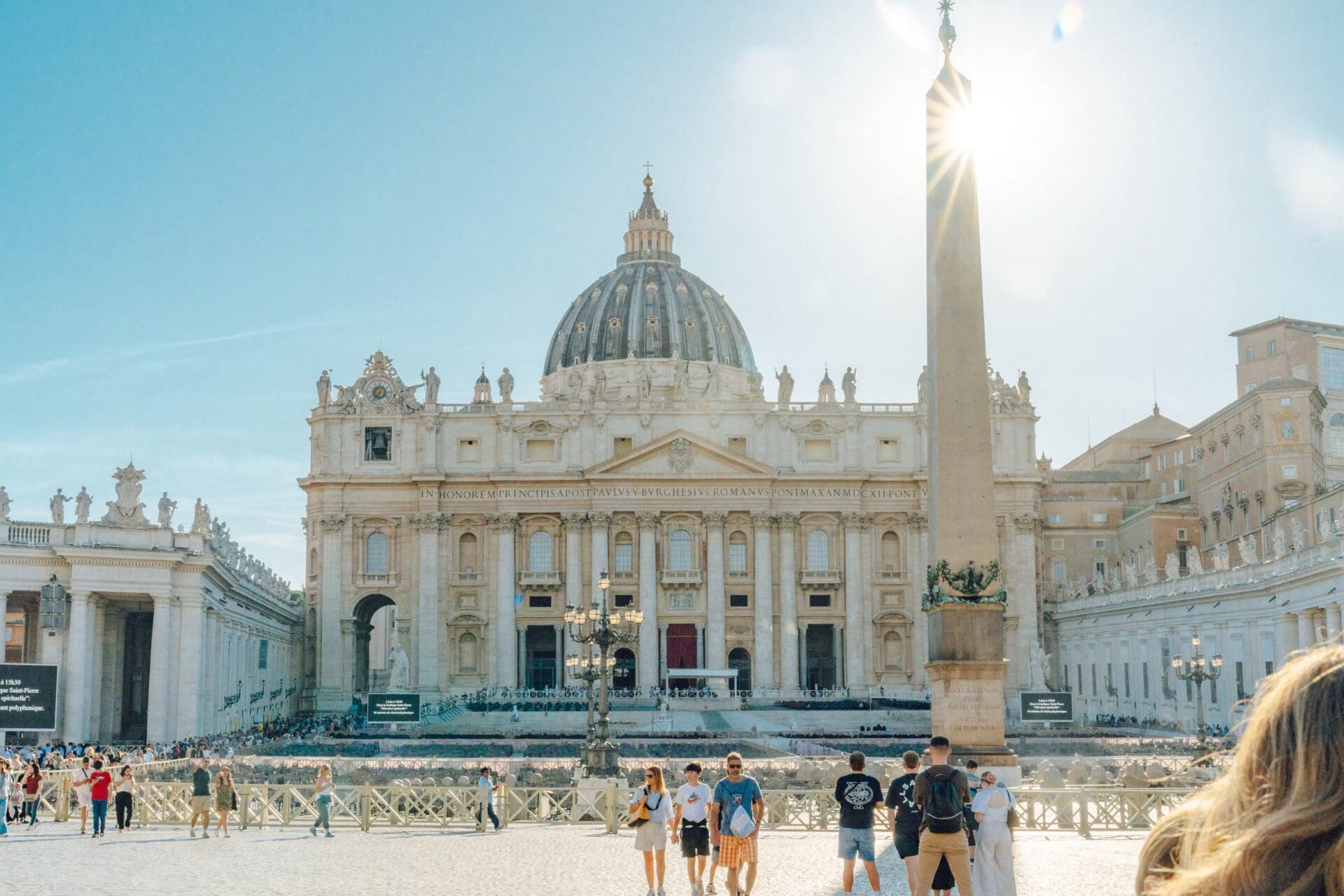
Furthermore, if bombs fall on Rome, the fire could reach the Vatican Palace. The headquarters of Catholicism could burn.
In such a situation, he stated, "If asked to provide evidence, I have none. I am just saying this based on intuition," and continued.
"I think the General Staff could not endure the possibility of the ruins and the Vatican Palace collapsing. Architectural culture became a bulwark against the desire to continue the war. Architecture became a deterrent to war. Perhaps I could be wrong, but I think it is quite a beautiful story," he remarked.
And then, the discussion returned to Japan.
"The Empire of Japan endured for 3 years and 4 months after the first air raid. For the army and navy at that time, there was not a single building that needed to be protected. It was okay for the city to burn. Some military personnel were even considering scorched earth tactics."
"This is very heartbreaking for me, as someone who once aspired to be an architect," he continued.
He added that Paris was the same.
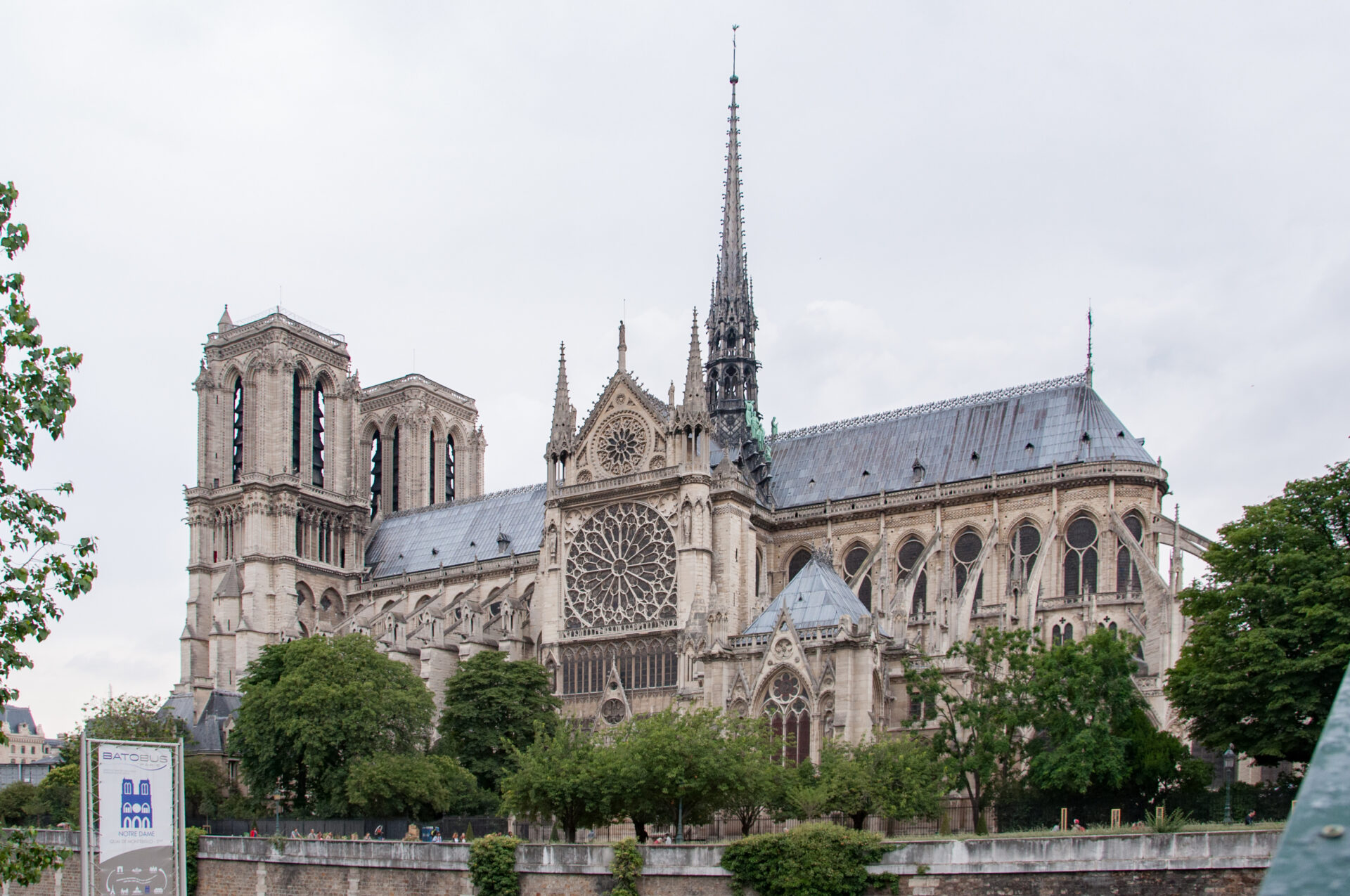
On May 10, 1940, the German army began its offensive to the west, entering Paris on June 14. Paris surrendered without a fight. It is said that the artworks in the Louvre Museum had been evacuated since the previous year, but the Louvre Palace and Notre-Dame Cathedral could not be moved.
"I believe the French could not endure the thought of Paris becoming a battlefield. In that sense, architecture became a deterrent to war," he stated.
The Paradox of a Country That Does Not Respect Architecture Raising Architects
At the end of the lecture, Inoue discussed a paradox.
In modern Japan, there are many architects who are active worldwide. There are countless names to mention, both before and after Tadao Ando. So why are Japanese architects so highly regarded worldwide?
"There are architects in Florence and Venice as well. However, they have almost no architectural work. Because they have none, they turn to designing supercars or boats. Most of the cool boat and car designers in Italy are architects," he explained.
In contrast, Japan, at least compared to the old cities of Europe, has a mountain of job opportunities. This is because it is a country that repeatedly engages in scrap-and-build.
"The Japanese climate, which does not respect architectural culture, has given rise to scrap-and-build, and that situation has nourished architects to soar into the world. A culture that does not respect architecture nurtures architects. I will conclude today's speech with this paradox," he stated.
Conclusion
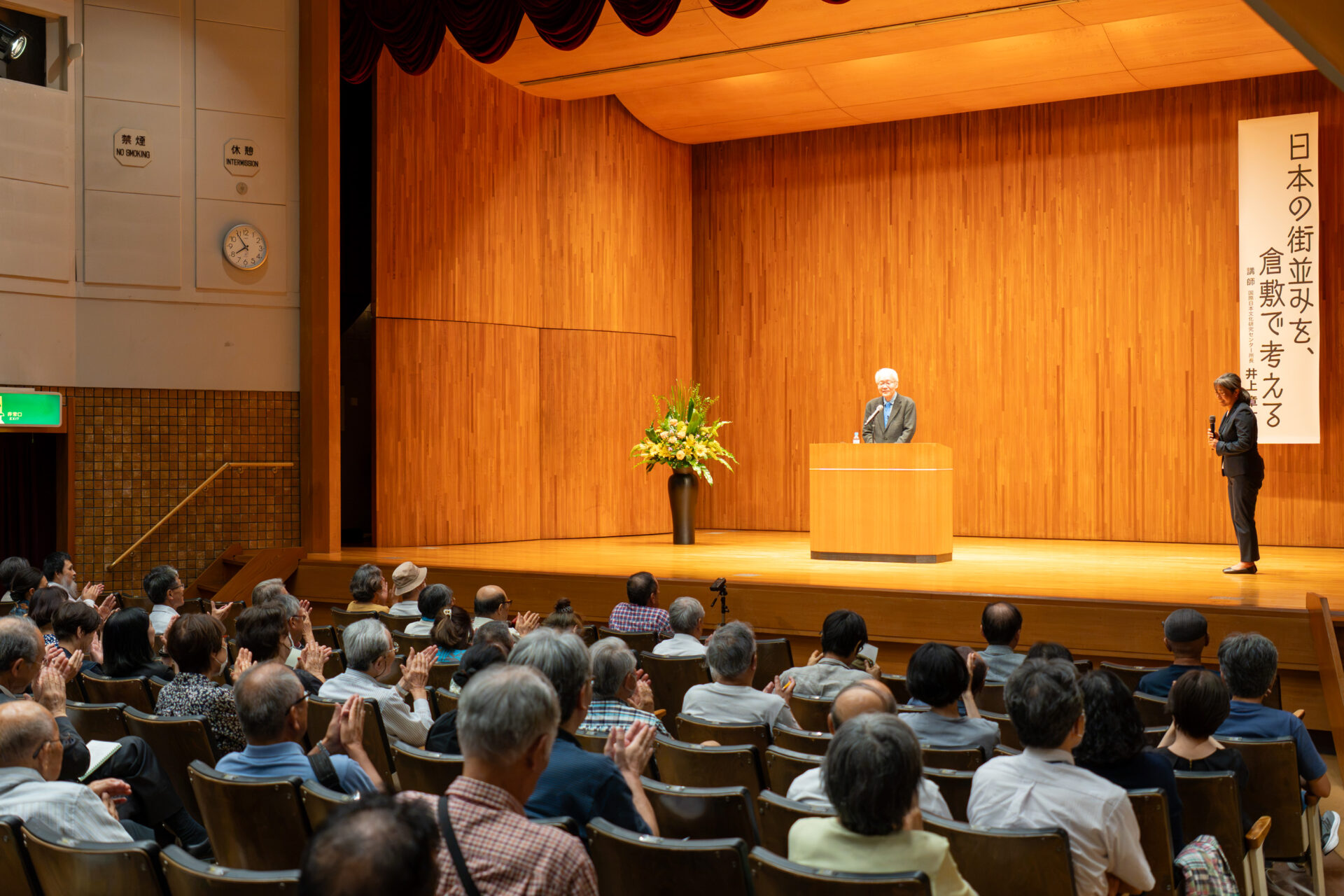
In a lecture lasting about 90 minutes without slides or handouts, Mr. Inoue repeatedly stated, "This is a controversial opinion" and "There is no evidence," while discussing the reasons why Japan's townscapes are not harmonious, weaving between topics from the story of administrative handrails to wartime Rome.
However, there is a sense of understanding in his talk.
For example, if the idea of adding a promenade along the Kurashiki River in the Bikan Historical Area were to come up, I thought, "Handrails" would surely be installed, or perhaps such a discussion would not even be "permitted" in the first place.
The Bikan Historical Area has preserved its townscape as a result of respecting architectural culture, and the buildings constructed afterward also emphasize "harmony."
This lecture made me feel the significance of considering Japan's climate, which does not respect architectural culture, in Kurashiki.
Data for the 70th Ohara Magosaburo and Soichiro Memorial Lecture
| Name | 70th Ohara Magosaburo and Soichiro Memorial Lecture |
|---|---|
| Date | July 24, 2026 (Friday) 6:30 PM - 8:00 PM (Doors open at 6:00 PM) |
| Location | 2-21 Honmachi, Kurashiki Community Center, Large Hall |
| Participation Fee (including tax) | Free |
| Homepage | Yurinkai Public Interest Incorporated Foundation |