Interview with President Ohshima Yasuhiro
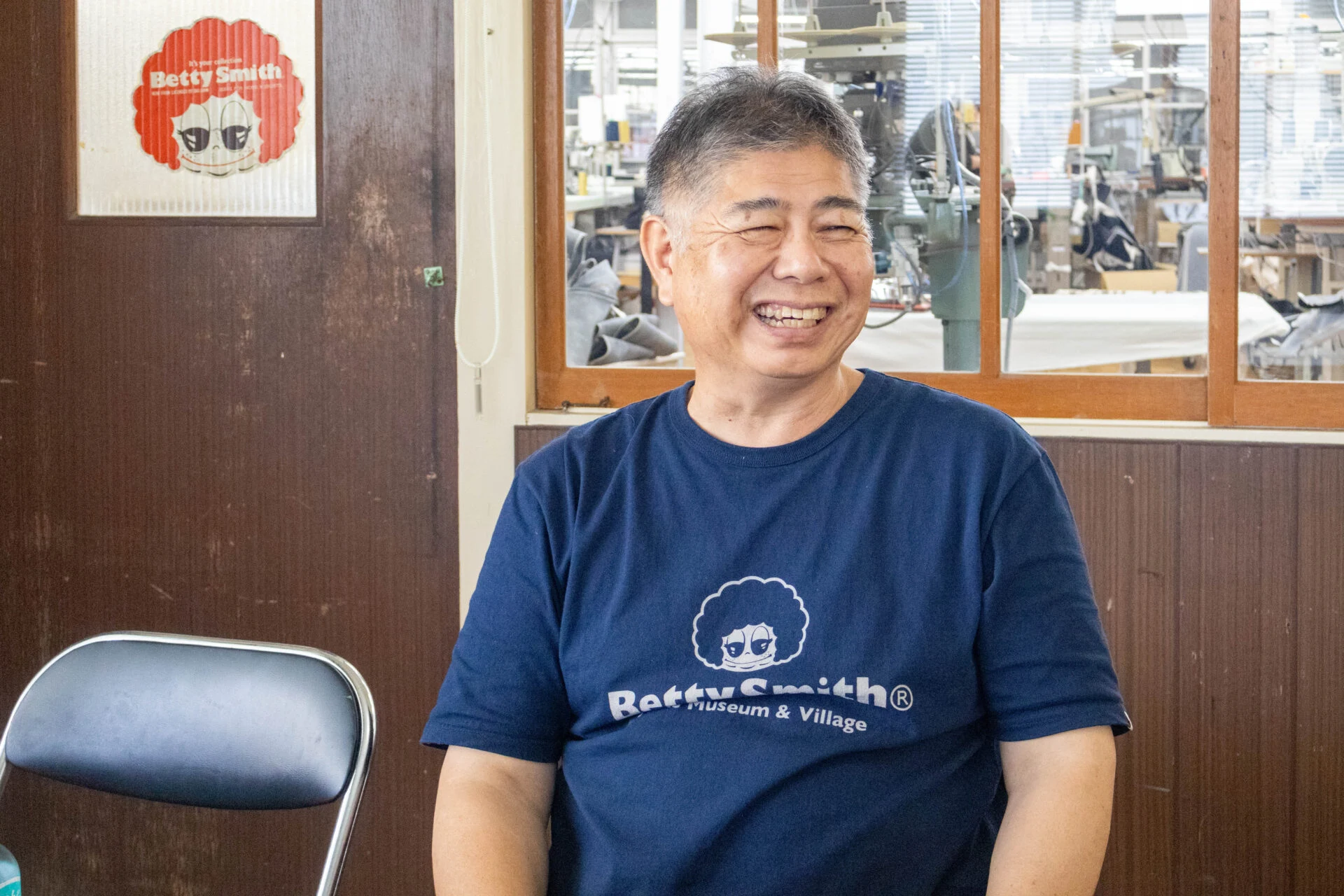
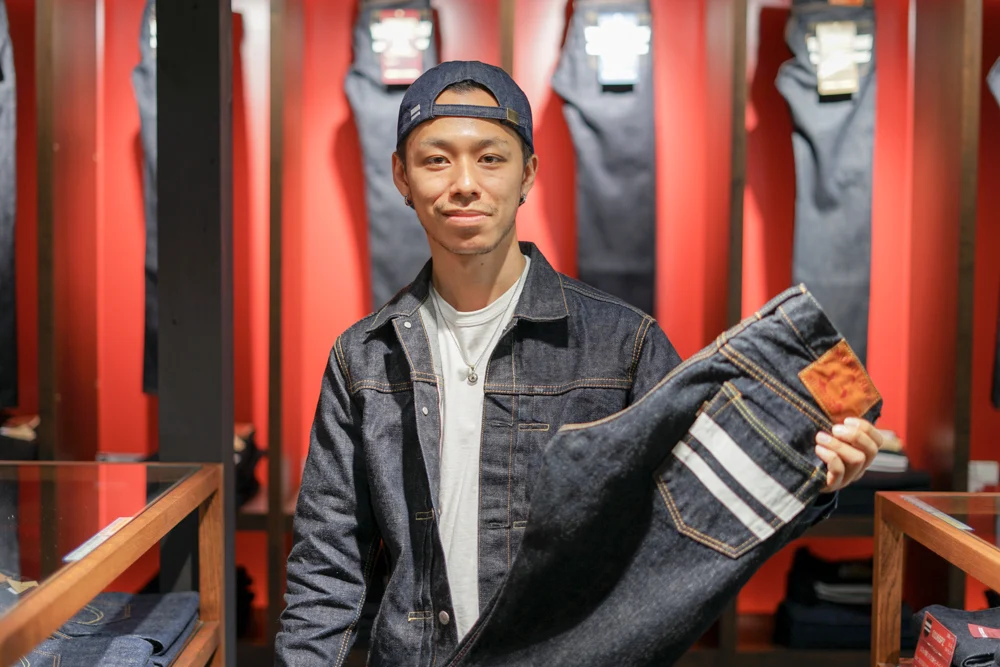
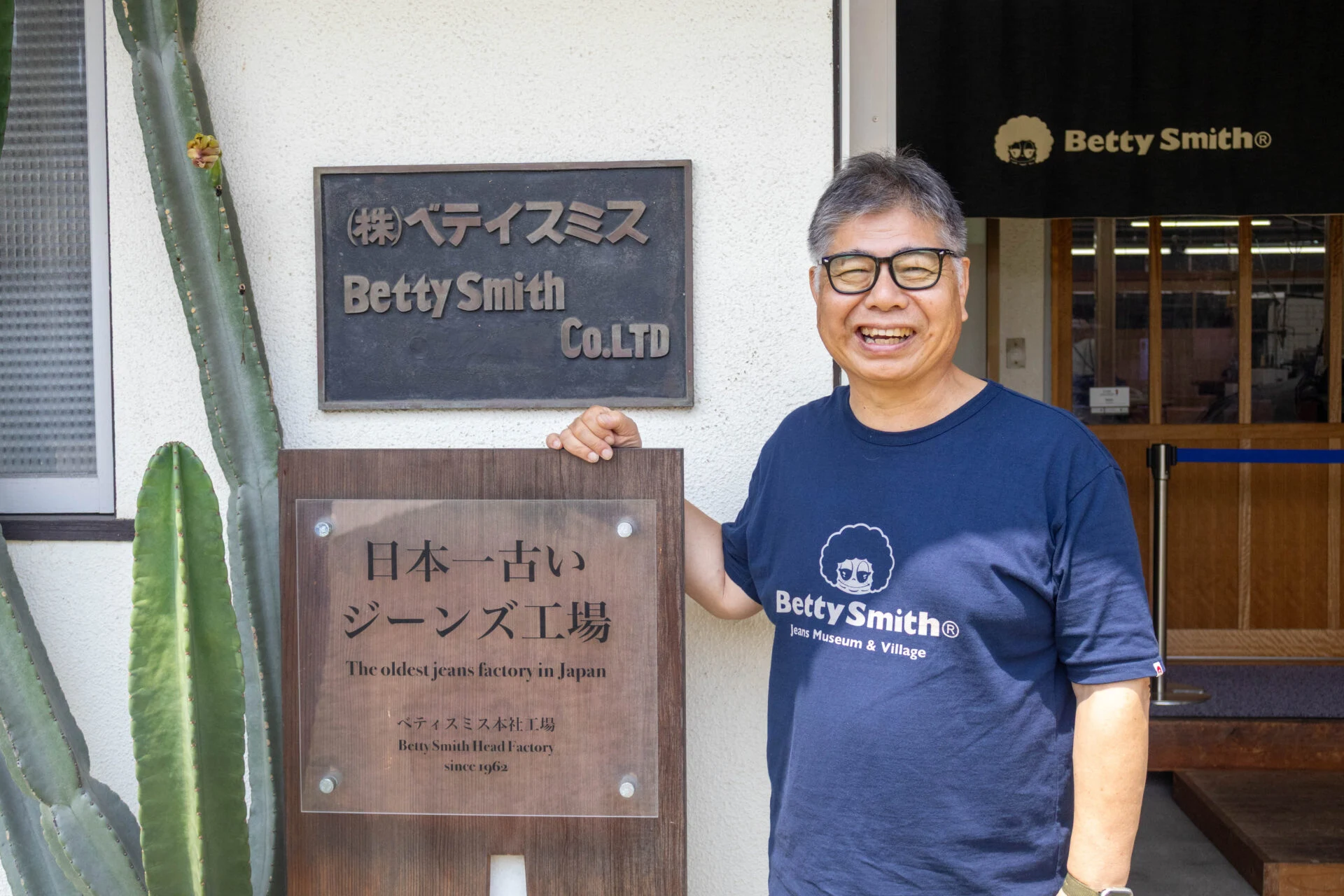
We interviewed President Ohshima Yasuhiro of Betty Smith Co., Ltd. about his past initiatives and future prospects.
Jeans brought back to Kojima shortly after the war
Why did jeans start being made in Kojima?
Ohshima
Jeans were introduced to Japan after World War II.
After the war, used jeans from America were sold at the black market in Ueno, Tokyo.
Jeans started being made in Kojima around 1965.
Until then, Kojima was a city with many student uniform manufacturers. While sales representatives from these manufacturers traveled nationwide, a sales representative from Big John encountered jeans that were selling like hotcakes at the black market in Ueno and thought, “Let’s make this the next industry!” and brought the idea back to Kojima.
You had been making student uniforms for a long time, and now you started making jeans. It must have been quite challenging to change what you were producing?
Ohshima
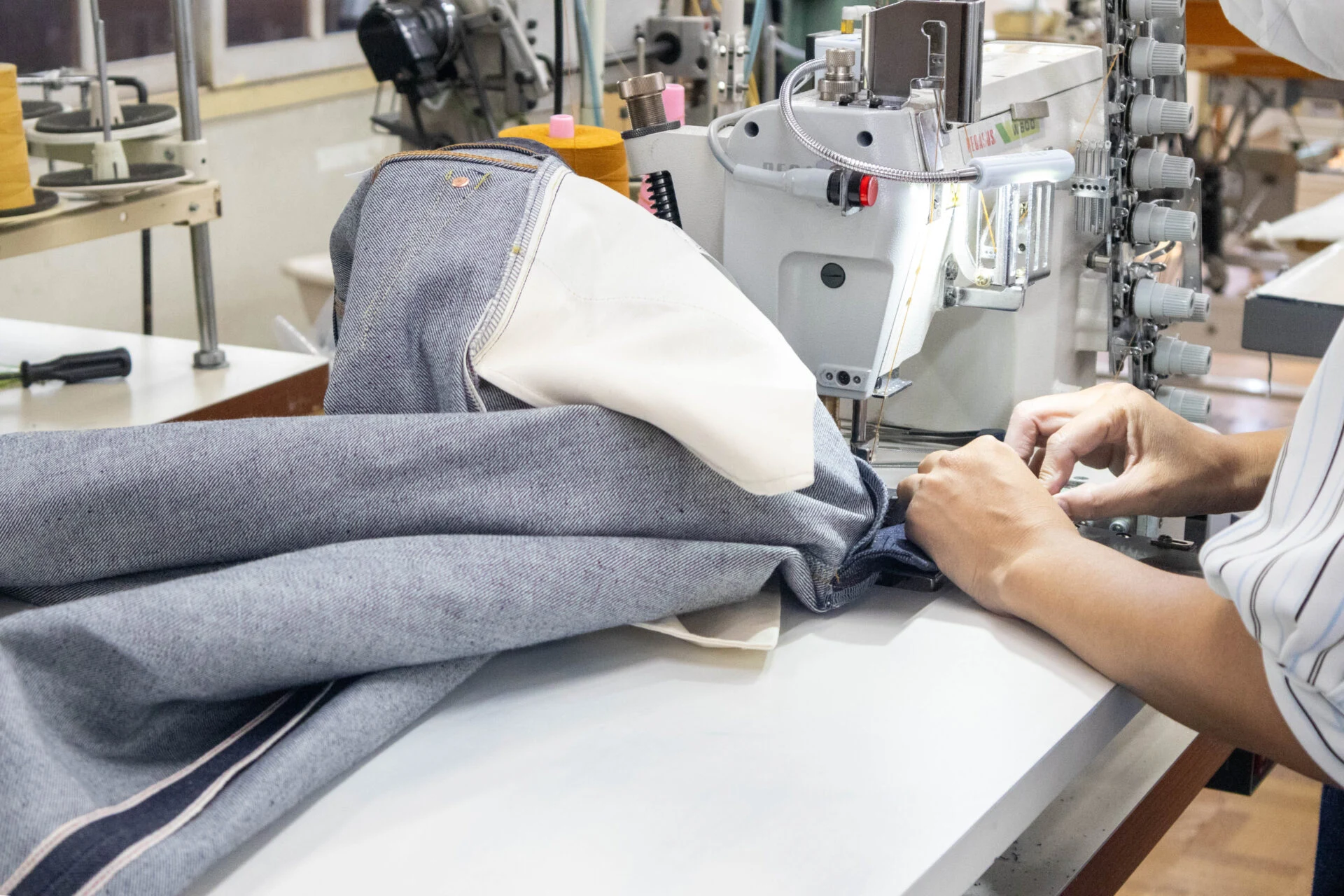
Denim fabric is thick, so the sewing machines used for student uniforms could not handle the needles. Additionally, craftsmen's hands would get stained blue, and there were physical challenges in carrying the thick and heavy fabric.
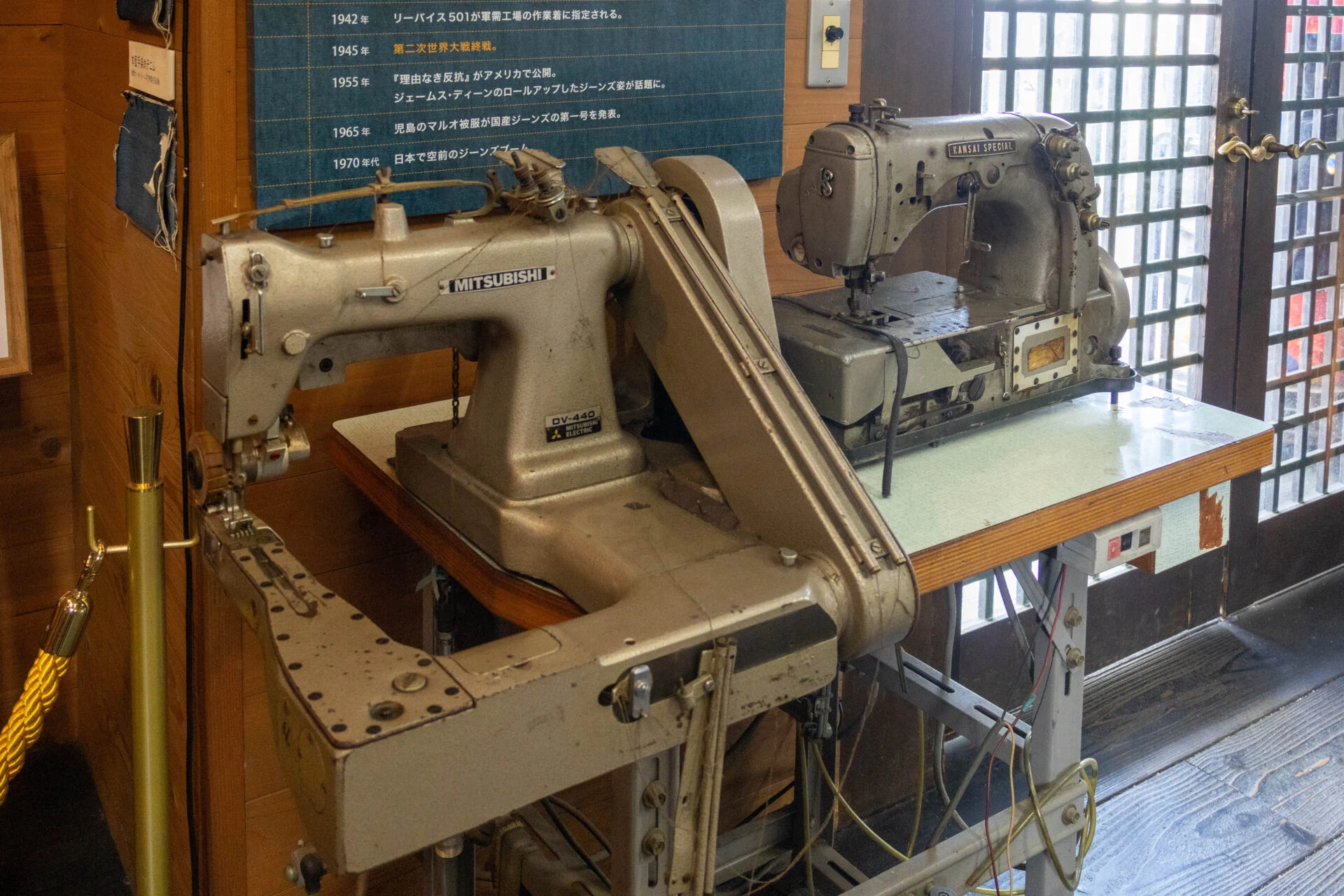
First, we imported sewing machines from America to ensure we could sew jeans properly and gradually created an environment for making jeans.
So there was such a background to the production of domestic jeans.
Ohshima
Kojima is called the "birthplace of domestic jeans" because it successfully achieved mass production in Japan.
The new industry of jeans was born by utilizing the sewing techniques that had been cultivated until then, which is a rare case even on a national level.
Personally, I think it is similar to Sakai City in Osaka Prefecture, which mass-produced guns during the Edo period. Sakai, which had been making castings and blades, started making something completely different using that technology... I feel it is similar to Kojima's jeans.
Reasons for challenging pioneering initiatives
Why did you start making ladies' jeans?
Ohshima
The main purpose is to differentiate from other manufacturers.
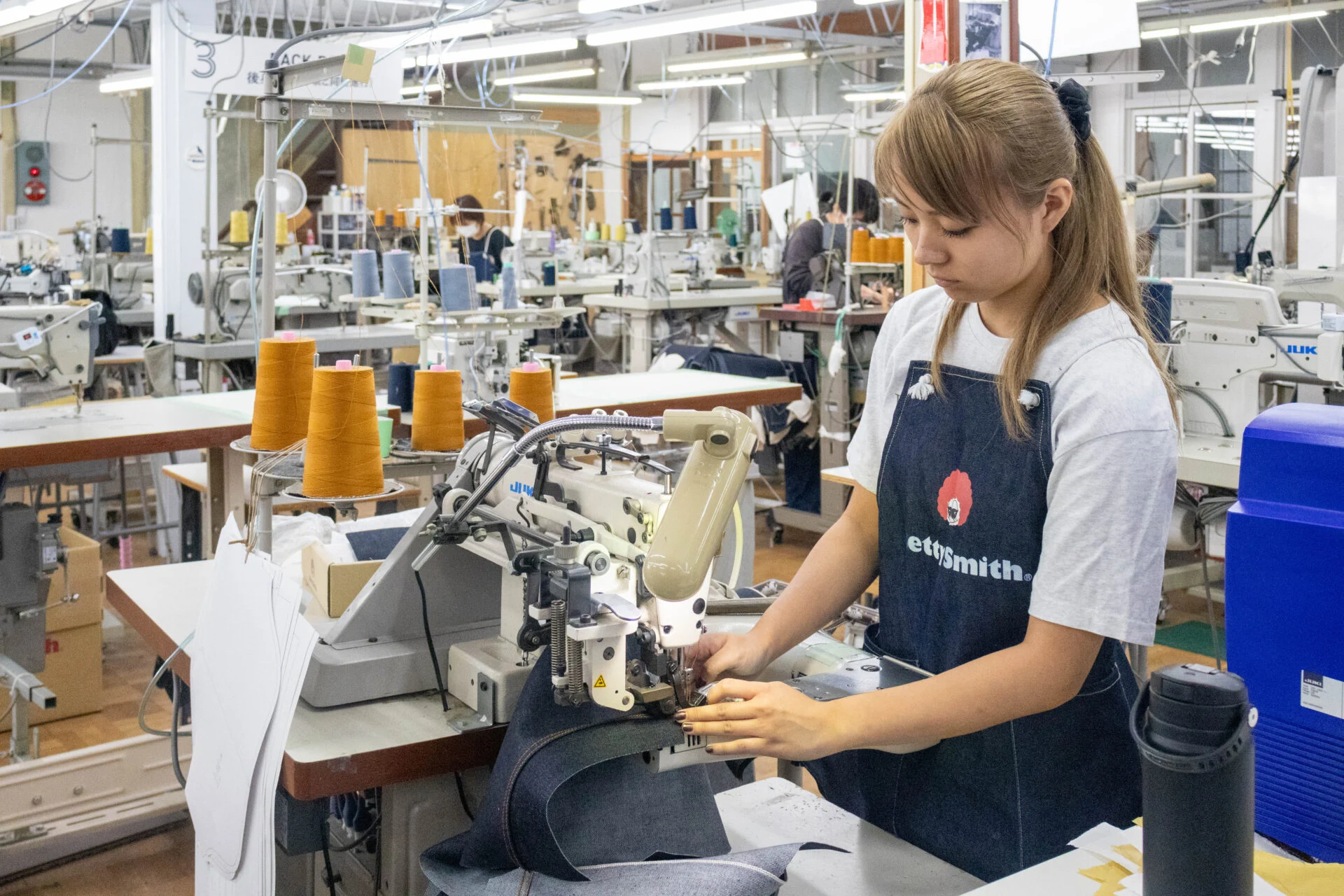
At that time in Kojima, only men's jeans were being made. Women were wearing men's jeans, but they inevitably lacked a good fit. Of course, the comfort was not that great either.
Therefore, I thought that if we manufactured ladies' jeans tailored to women's styles, more people would be able to wear jeans.
As a result, ladies' jeans sold like hotcakes, and I was able to confirm that there was demand.
What was the trigger for starting initiatives like Kurashiki Order Jeans and jeans-making experiences, which are pioneering in the industry?
Ohshima
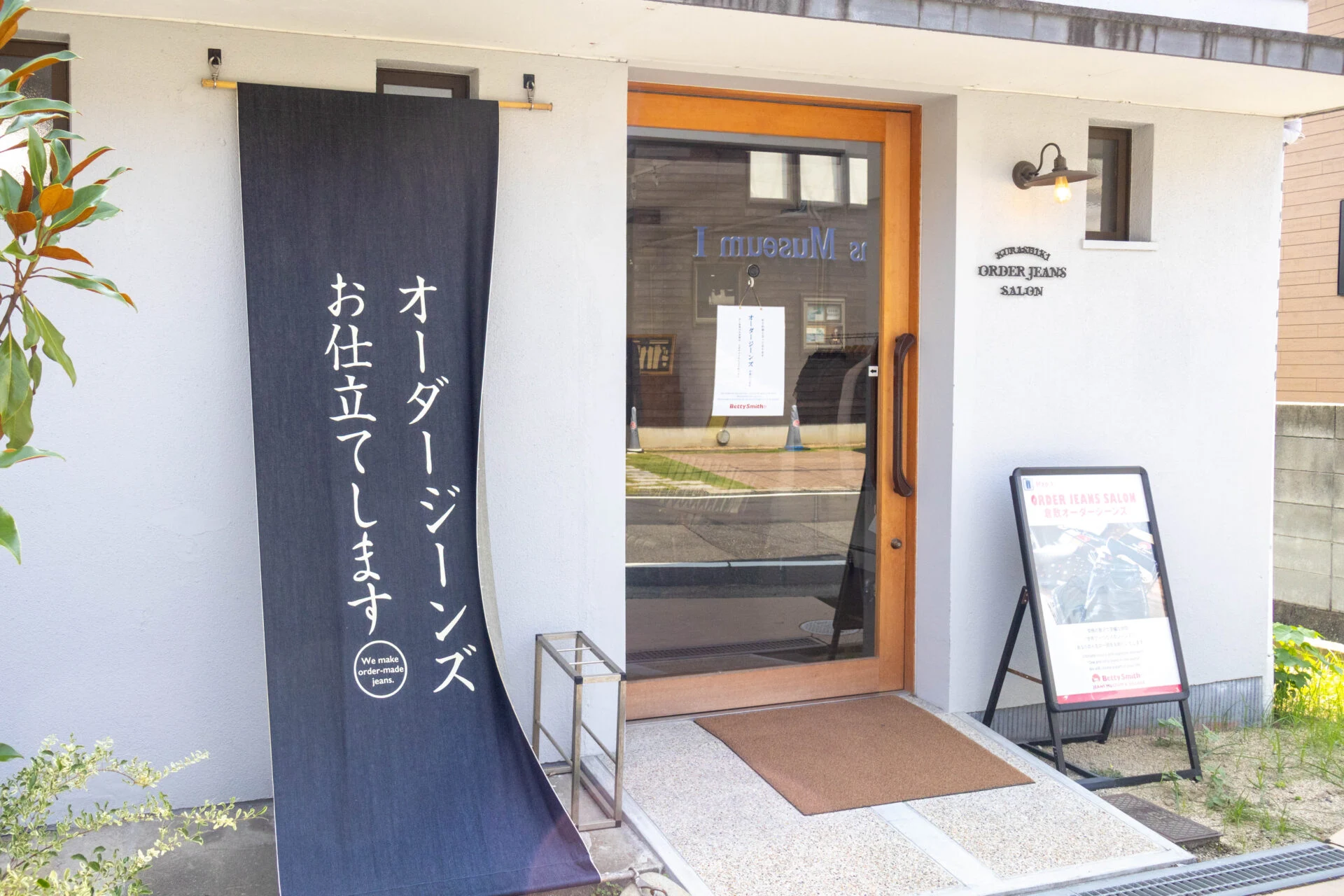
Kurashiki Order Jeans started in response to customer requests for "I want jeans that fit my body." At that time, our company was also trying to develop new jeans, so we gradually started taking orders.
Then, when we opened the Jeans Museum in 2003, more customers began to express interest in buying jeans in Kojima.
At that time, there were no places to buy jeans in Kojima, so we officially started Kurashiki Order Jeans, where customers could have their own custom jeans made. I wanted customers to enjoy the process of purchasing, not just buy something when they came to Kojima.
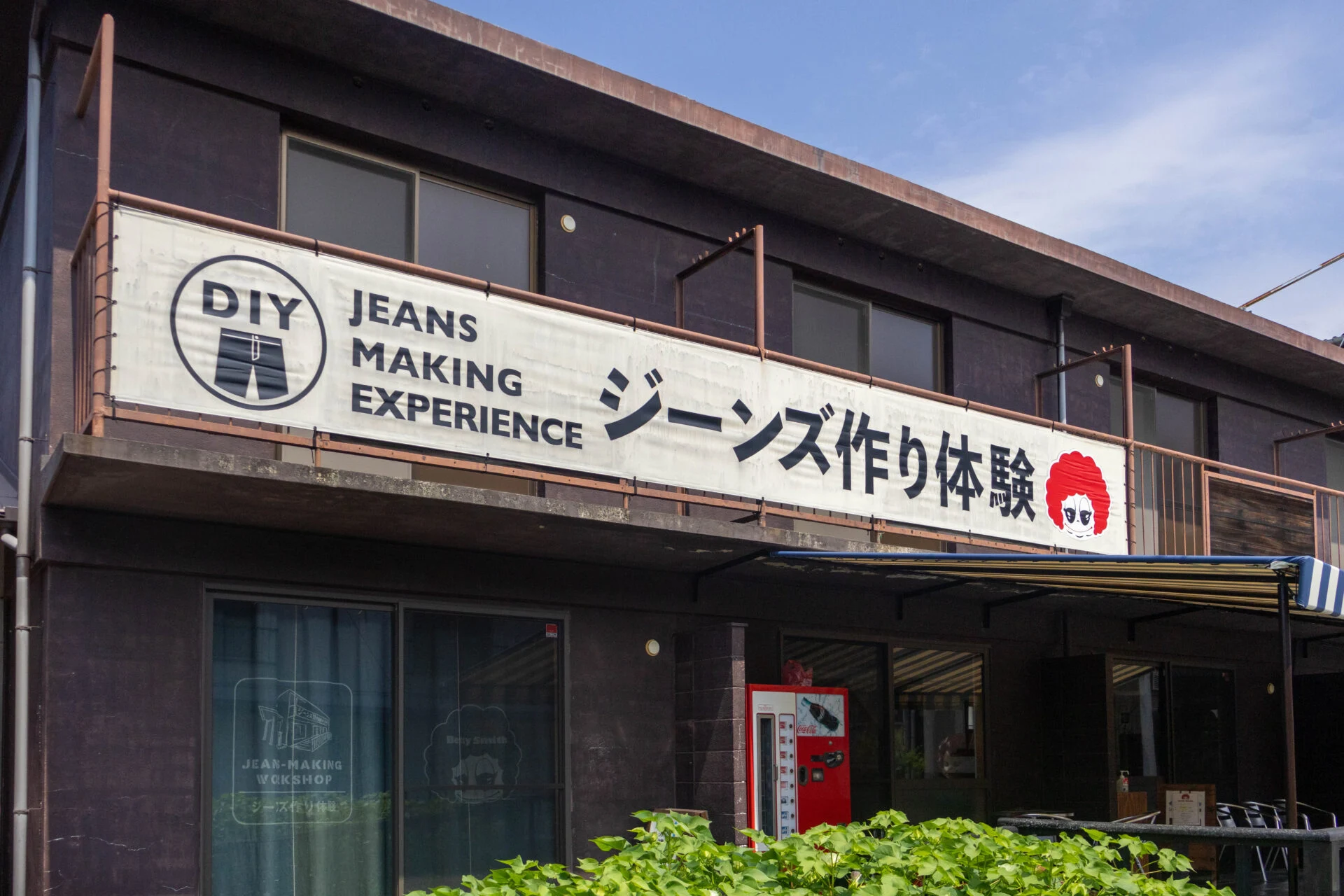
That said, custom-made jeans are expensive, so we also started jeans-making experiences to make it more accessible for everyone.
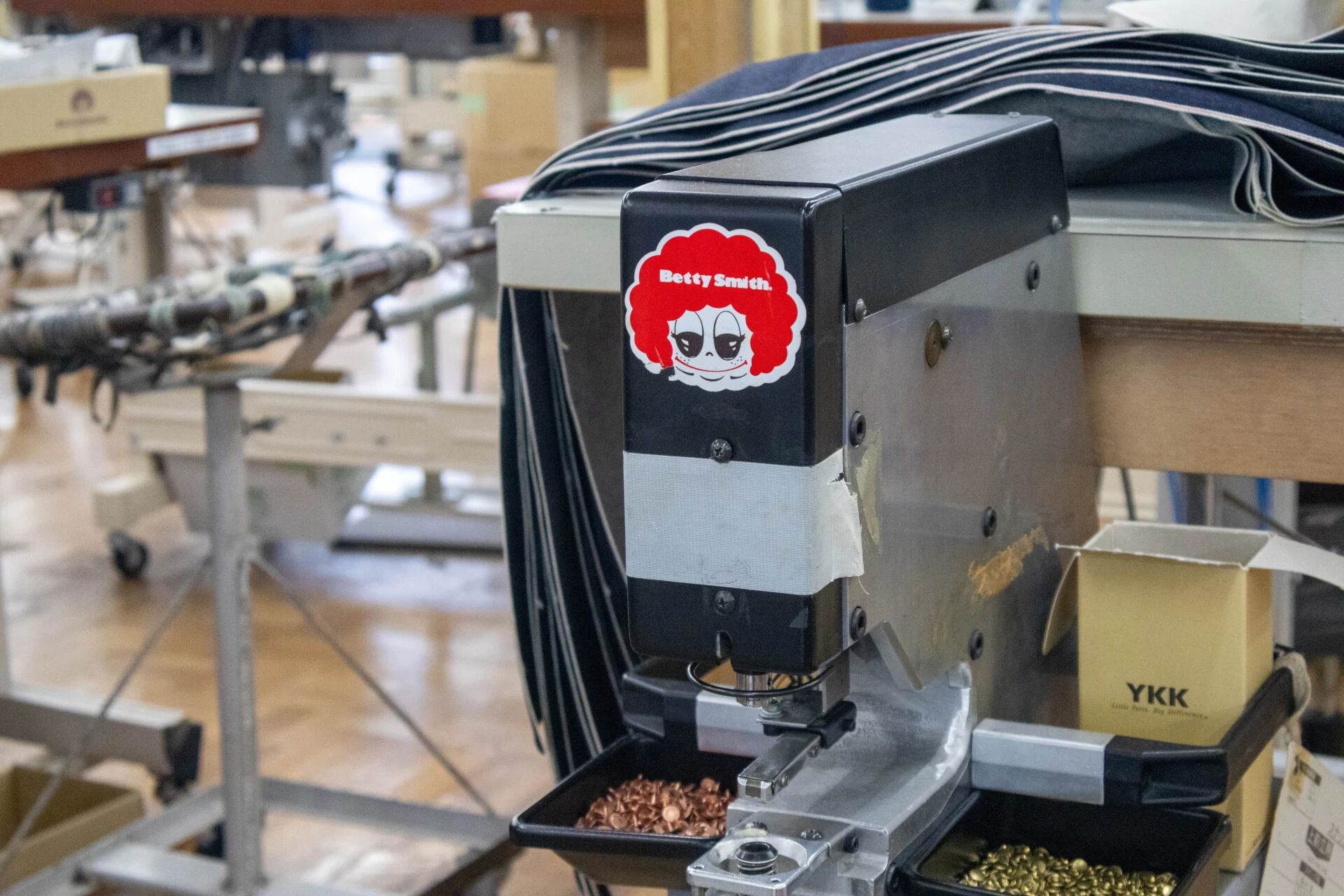
In the jeans-making experience, participants can attach buttons and rivets (metal parts for reinforcement) to completed jeans. This style of participating in one of the many manufacturing processes was inspired by the concept of self-service udon.
I wanted to propose a new way to enjoy jeans that had never existed before.
I believe we have been working on manufacturing in response to customer needs over the years.
The importance of nurturing producers in manufacturing
What initiatives are you taking to convey the new appeal of jeans?
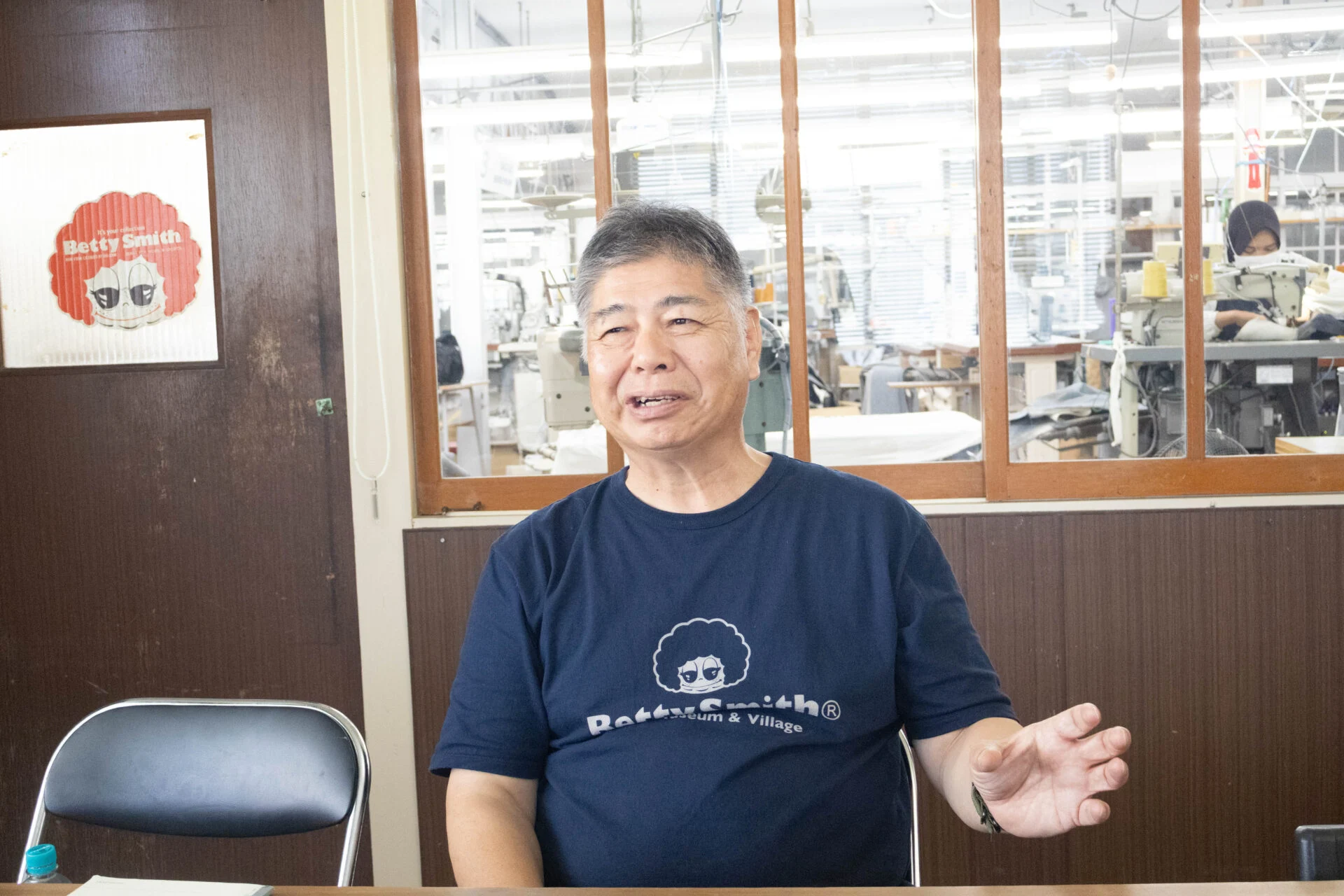
Ohshima
I believe that by sincerely engaging in manufacturing, we can convey the new value of jeans.
To achieve this, it is important to first create an environment where craftsmen can dedicate themselves to manufacturing. We are supporting young craftsmen to obtain the textile meister qualification and purchasing new machines, nurturing each individual to be able to make proper jeans.
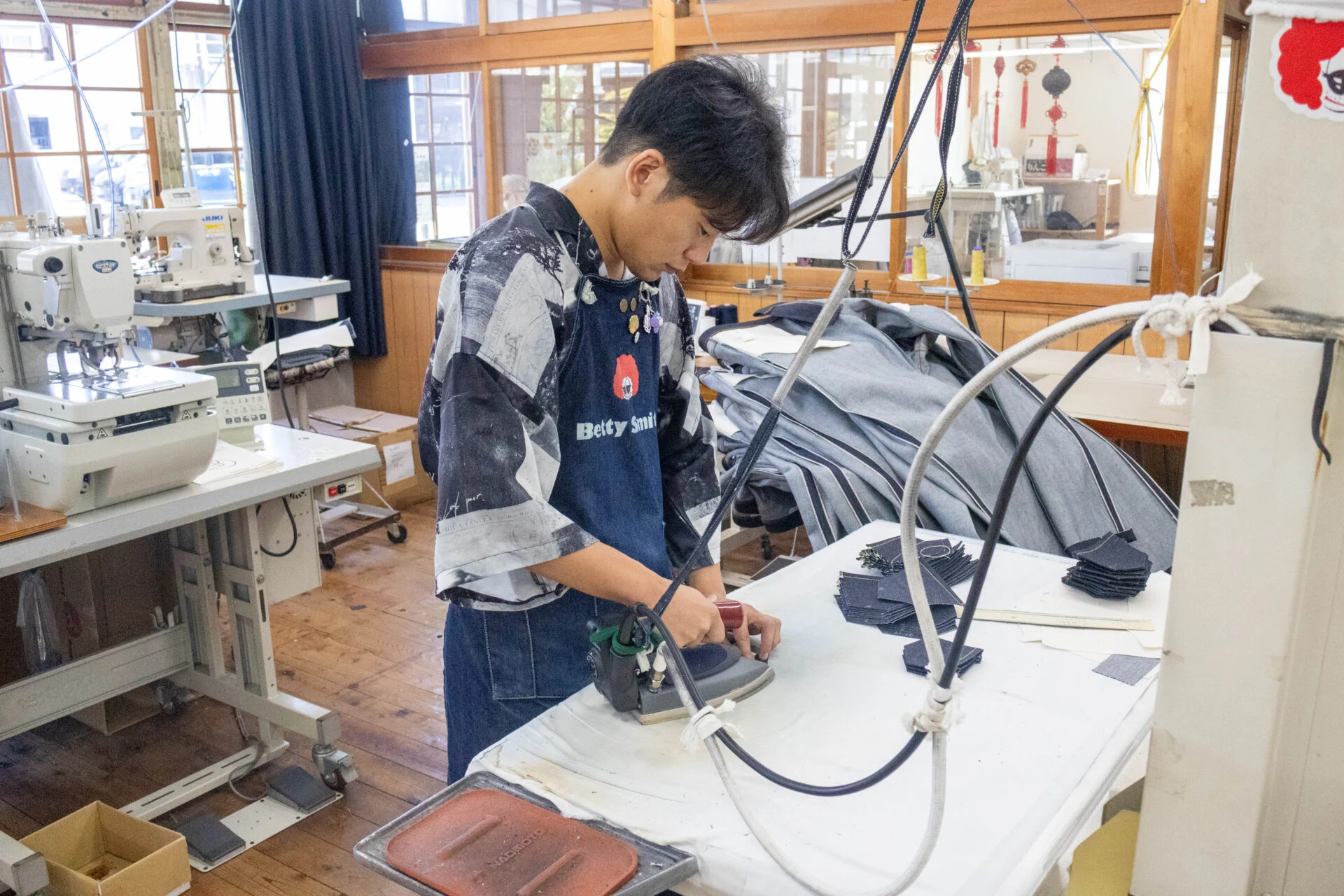
You are focusing on nurturing craftsmen.
Ohshima
Yes. For craftsmen aiming for independence in the future, the skill to sew a pair of jeans by themselves is very useful, and having the textile meister qualification adds value to their skills. In other words, it increases their income.
Many of the younger craftsmen today have goals like "I want to be independent" and "I want to start a brand", so I want to respond to those needs as much as possible.
Sewing skills can be utilized at any age.
We have a craftsman who was employed at 85 years old, and I thought this is exactly what it means to have a skill. If you can earn money at any age, it leads to a sense of purpose in life.
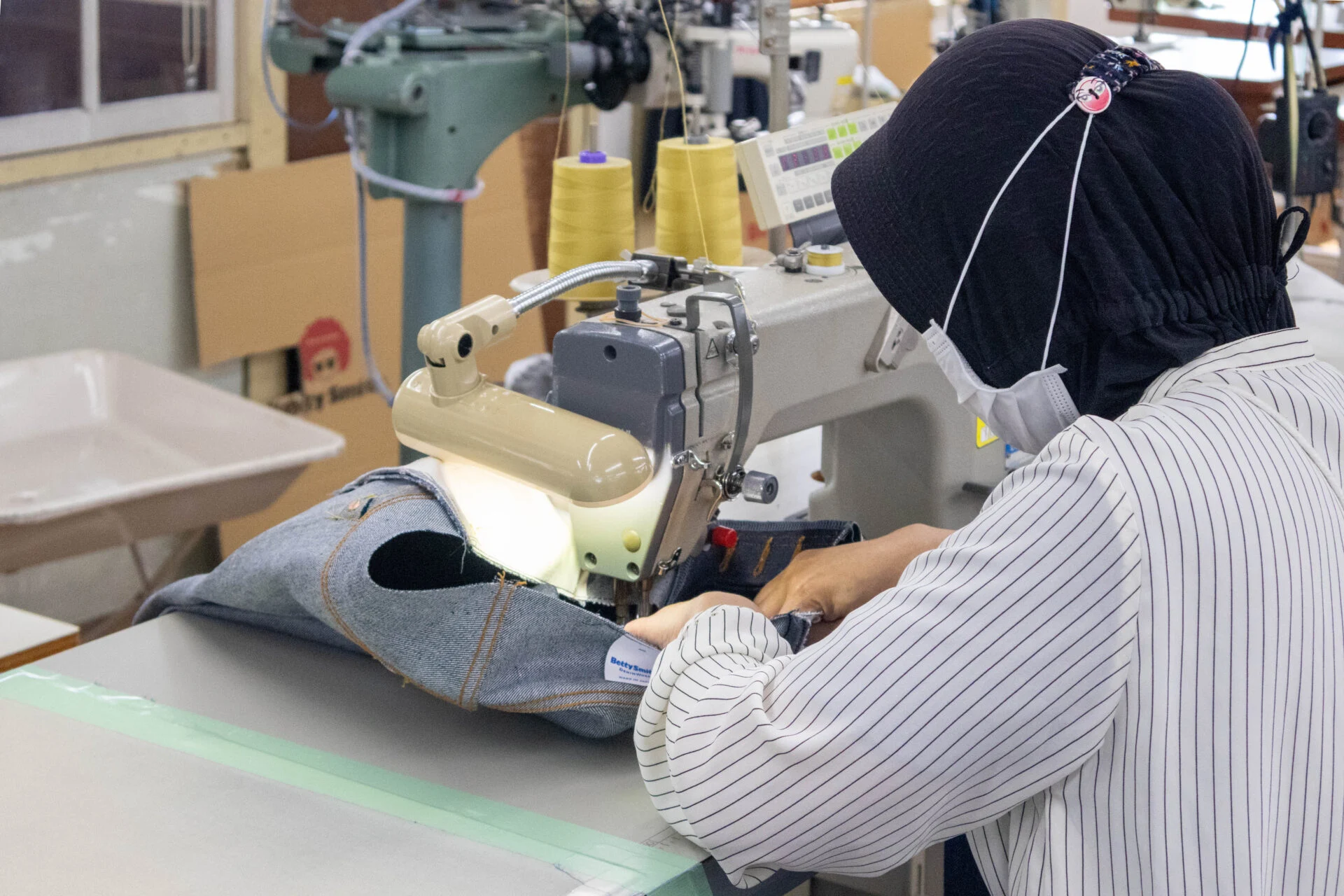
I think that craftsmen aiming for independence will have to leave the company, but why do you still want to support them?
Ohshima
Not only in the textile industry, the number of producers in the manufacturing industry is decreasing.
By supporting the goals of young people, I believe new people will enter the industry, which is facing a labor shortage.
And because they have goals, their speed of improvement will also increase. They will work hard to "become a full-fledged craftsman quickly!" which I believe leads to better manufacturing results.
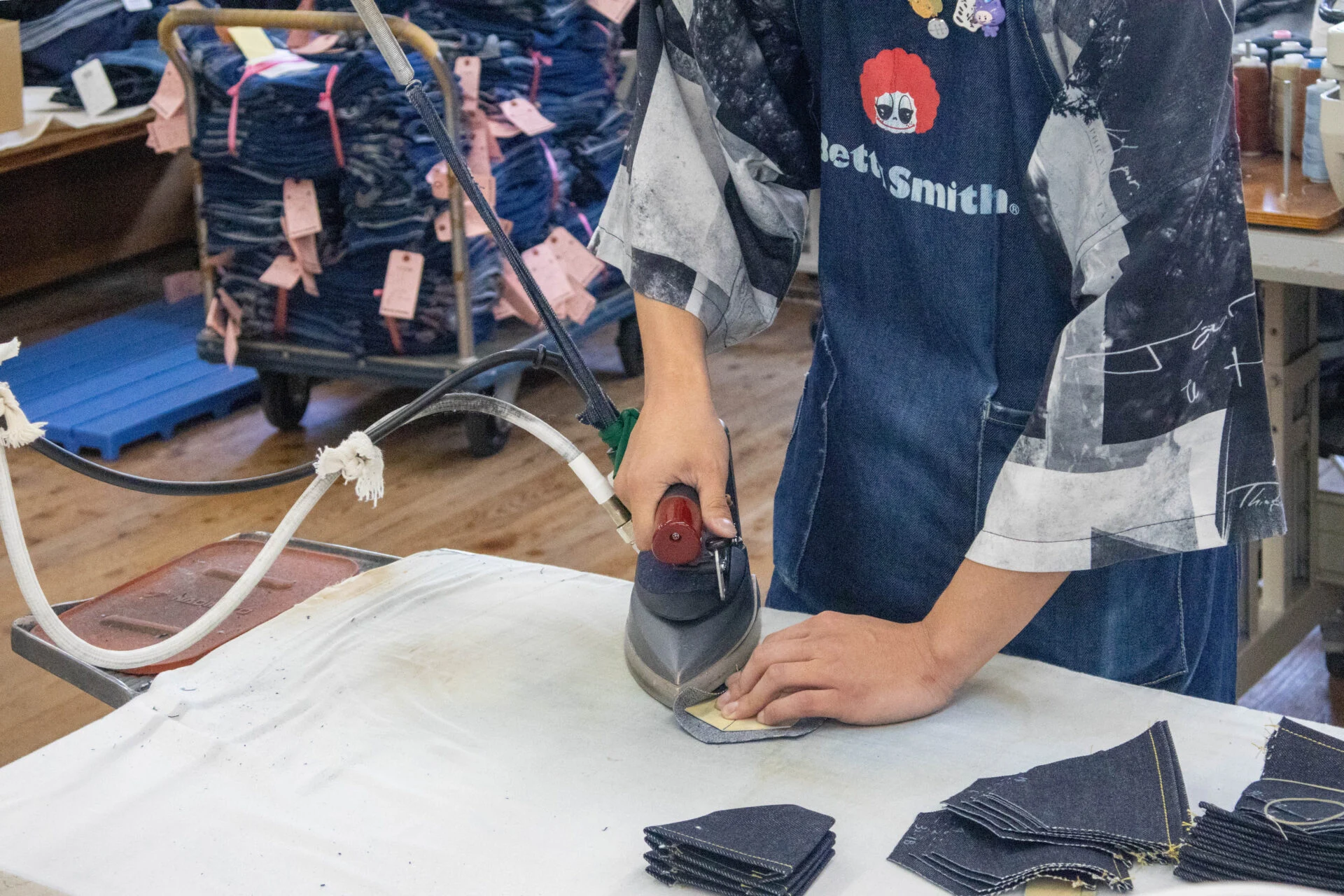
Continuing to thrive in the textile town of Kojima
Please tell us about initiatives for regional revitalization using jeans.
Ohshima
We created a town tour map so that people can enjoy Kojima from various perspectives.
Kojima has not only jeans manufacturers but also button shops, fabric shops, tatami edging companies, and tourist attractions like udon and Washuzan Hill, providing a wealth of content. There are many hooks to make people think, "Maybe I should visit Kojima."
While visiting Washuzan Hill, I peeked into a jeans shop and searched for handmade items after eating udon... I felt it was an initiative that reveals various charms of the region in a chain reaction.
What is the appeal of the town of Kojima, which continues to thrive as a textile town?
Oshima
I believe it is the well-established infrastructure for manufacturing textile products. The fact that production can be completed entirely in Kojima is its unique strength.
Moreover, while the production volume of jeans has been decreasing year by year, the quality has significantly improved. It is precisely this high quality that makes Kojima known as the "Jeans Town." There are regions around the world referred to as "〇〇 Town," and the products made there are all of high quality.
I feel that jeans have been built not just as an industry but as a culture.
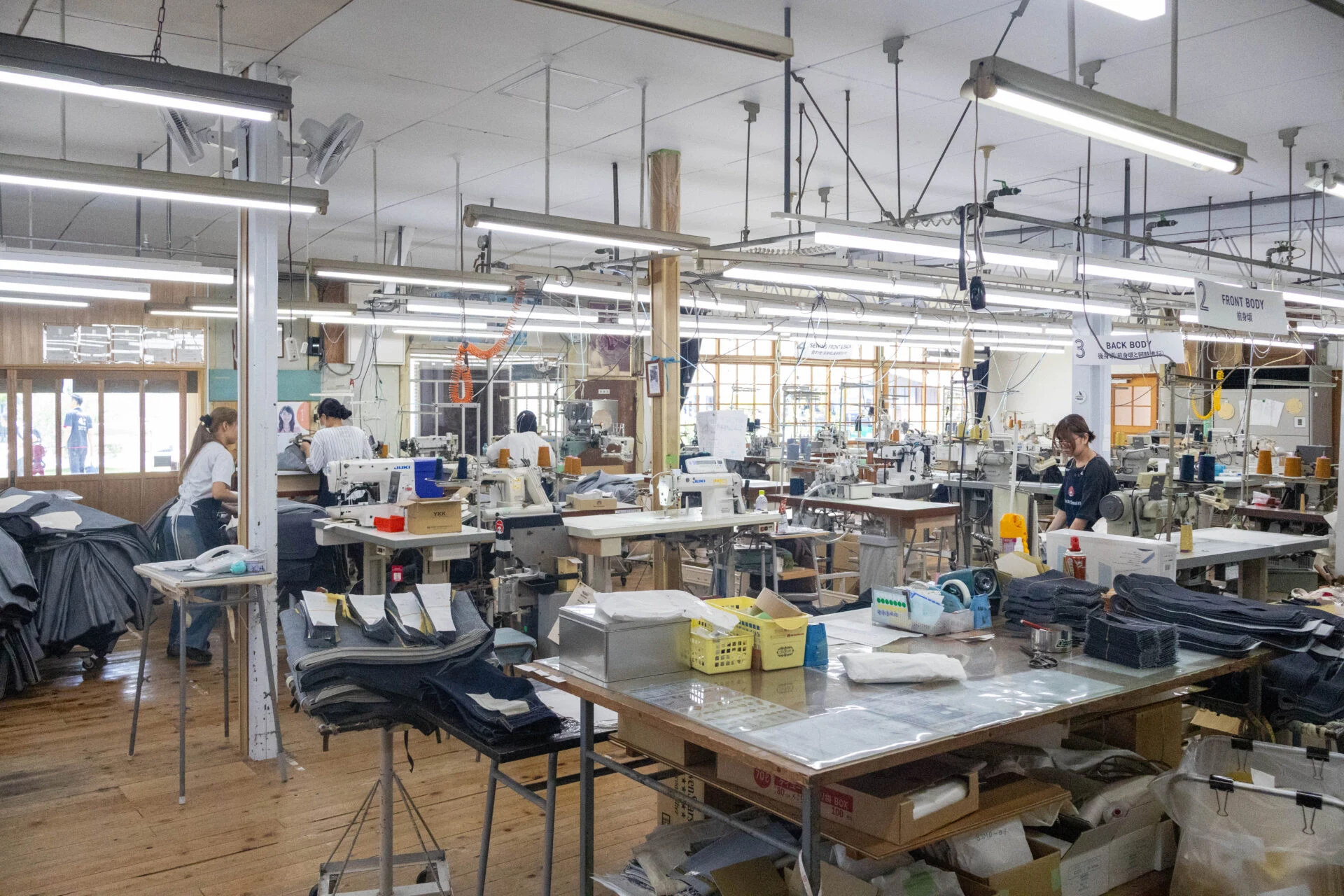
Kojima is flexible in incorporating new things according to the times, isn't it?
Oshima
Being able to create what is demanded by society according to the times is also an appeal of Kojima.
It is not about making crafts, but rather about making products. While it is a town with many artisans, I believe there is also a merchant spirit.
Please tell us about your future prospects.
Oshima
In order to ensure that the manufacturing industry that has supported Kojima does not come to an end, I want to cherish and nurture young artisans. And I hope to work hard to deliver the high-quality jeans from Kojima, made by artisans, to the world.
Also, while keeping in mind the theme of "Creating Japan's Jeans Culture," I want to expand the possibilities of jeans. I will work to create jeans that can be enjoyed in new ways, not just worn.
Conclusion
The author has been told several times by friends visiting from outside the prefecture, "I want to go to the Jeans Town."
The image of "Kojima as the Jeans Town" being rooted in many people's minds may be a sign that it has established itself as a culture.
In modern times, labor shortages are a concern in every industry, but I found Betty Smith's approach to human resource development to be very positive and wonderful. I hope that the number of artisans involved in manufacturing in Kojima will increase, even if just by one.
Let’s keep an eye on how Betty Smith will create new values for jeans in the future.

Data of Betty Smith Co., Ltd.
| Organization Name | Betty Smith Co., Ltd. |
|---|---|
| Industry | Planning, manufacturing, and sales of casual jeans |
| Representative Name | Oshima Yasuhiro |
| Year Established | 1962 |
| Address | 5-2-70 Shimonochō, Kojima, Kurashiki City, Okayama Prefecture |
| Contact | 086-473-4460 |
| Website | Betty Smith Co., Ltd. Website |