In early spring 2024, I received a message from a sign language learner living in Yakage Town asking, "Would you like to participate in the joint sign language training session for the Chugoku region being held in July?"
At the same time, I heard from friends with hearing impairments and sign language interpreters who frequently gathered in Kurashiki City. When I asked why, they said, "We are preparing for the joint sign language training session for the Chugoku region."
I became curious about what kind of gathering the "joint sign language training session for the Chugoku region," which everyone from beginners to those who use sign language daily mentioned, would be, so I decided to participate.
What is the 31st Joint Sign Language Training Session for the Chugoku Region?
The 31st Joint Sign Language Training Session for the Chugoku Region was a training session organized by the Chugoku Region Sign Language Circle Liaison Council and the National Sign Language Interpreter Issues Research Association Chugoku Block.
In 2024, it was held over two days on July 20 (Saturday) and 21 (Sunday) under the theme "In the Land of Sunshine, Connecting with Friends Hand in Hand" at the Okayama Prefectural Comprehensive Welfare, Volunteer, and NPO Hall, Kirameki Plaza.
The session was organized by the Okayama Prefectural Branch of the National Sign Language Interpreter Issues Research Association and the Okayama Prefectural Association for the Welfare of Persons with Hearing Impairments, among others, forming the executive committee for the 31st Joint Sign Language Training Session for the Chugoku Region.
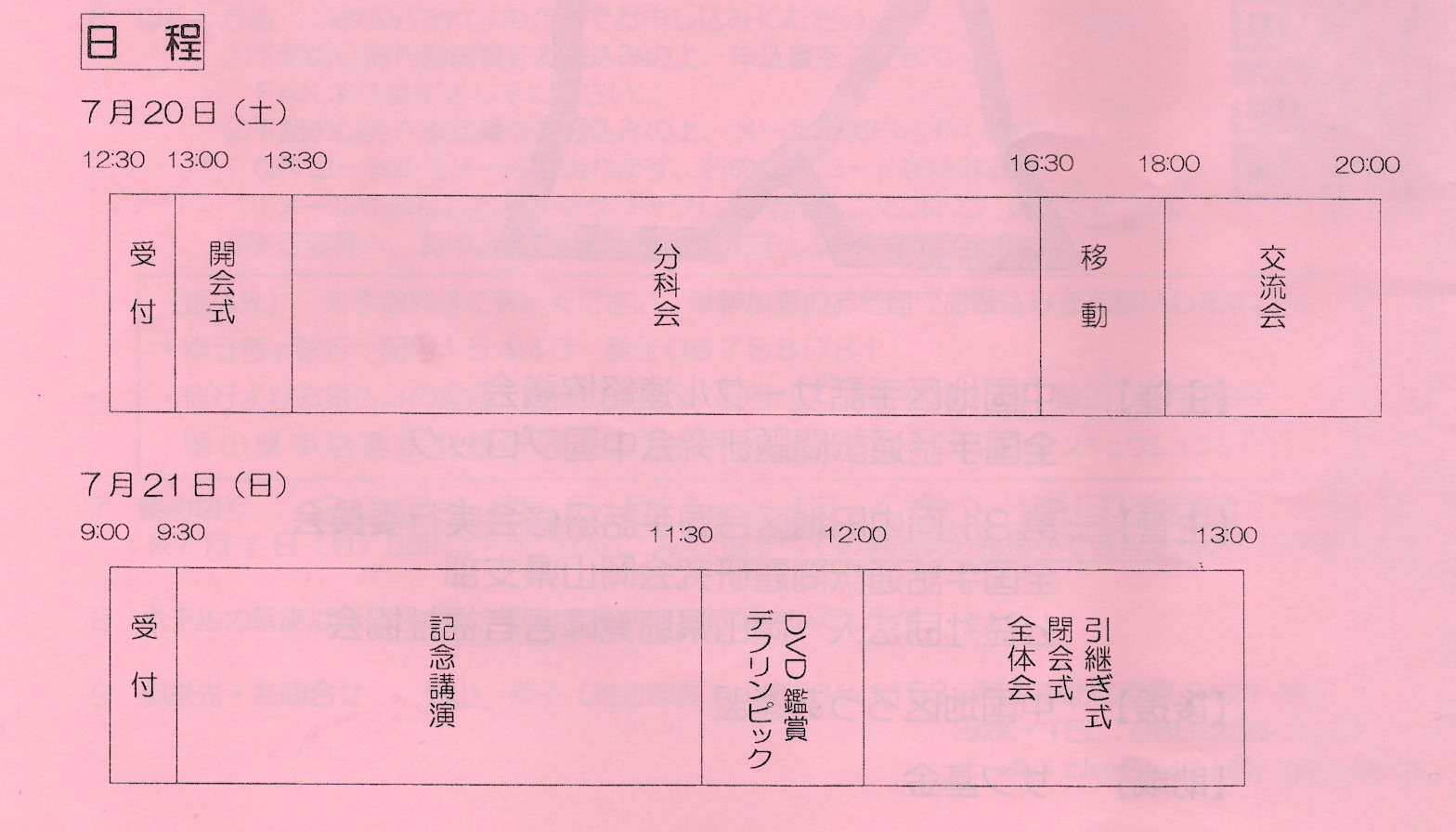
The schedule for the two days is as follows.
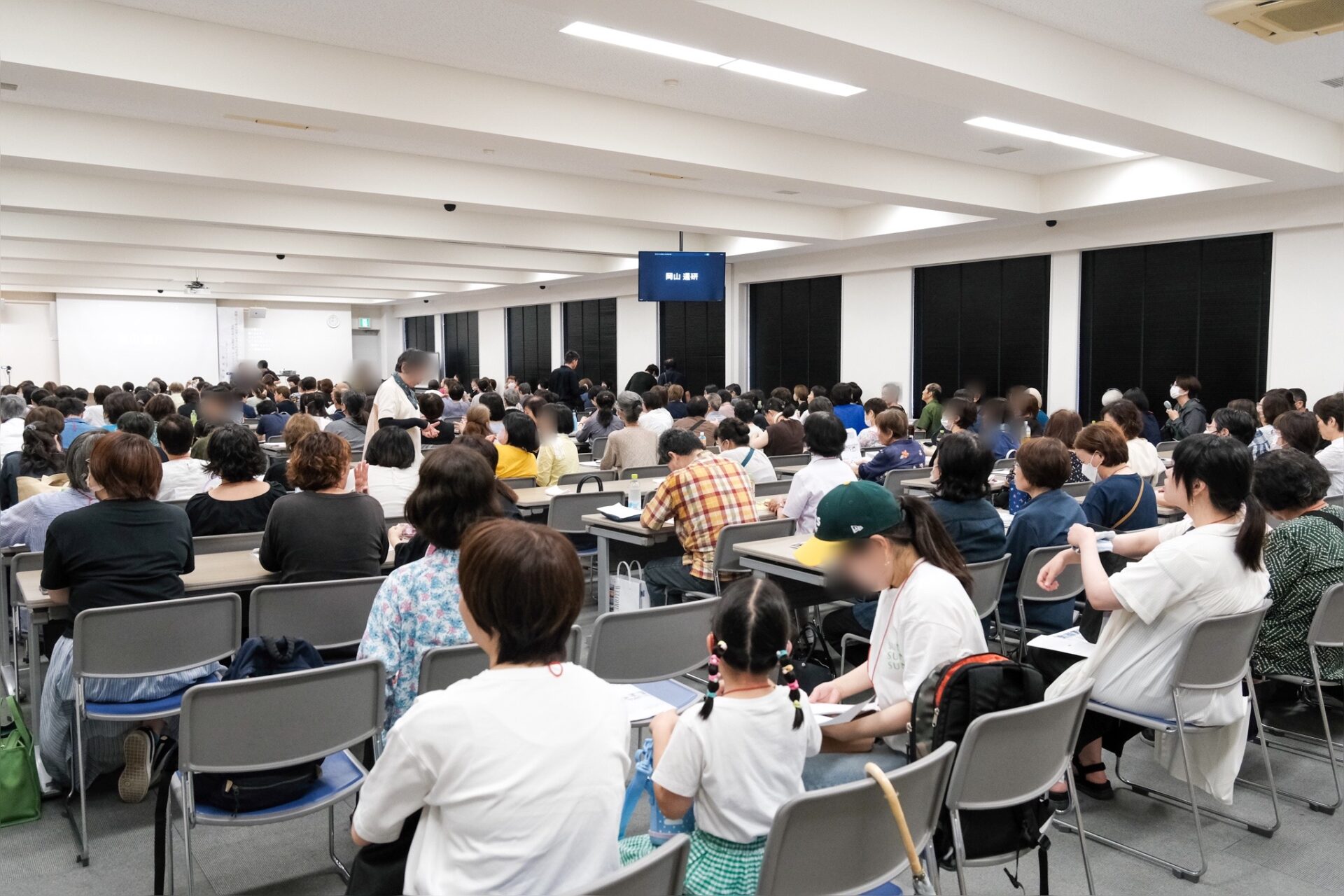
A bustling venue
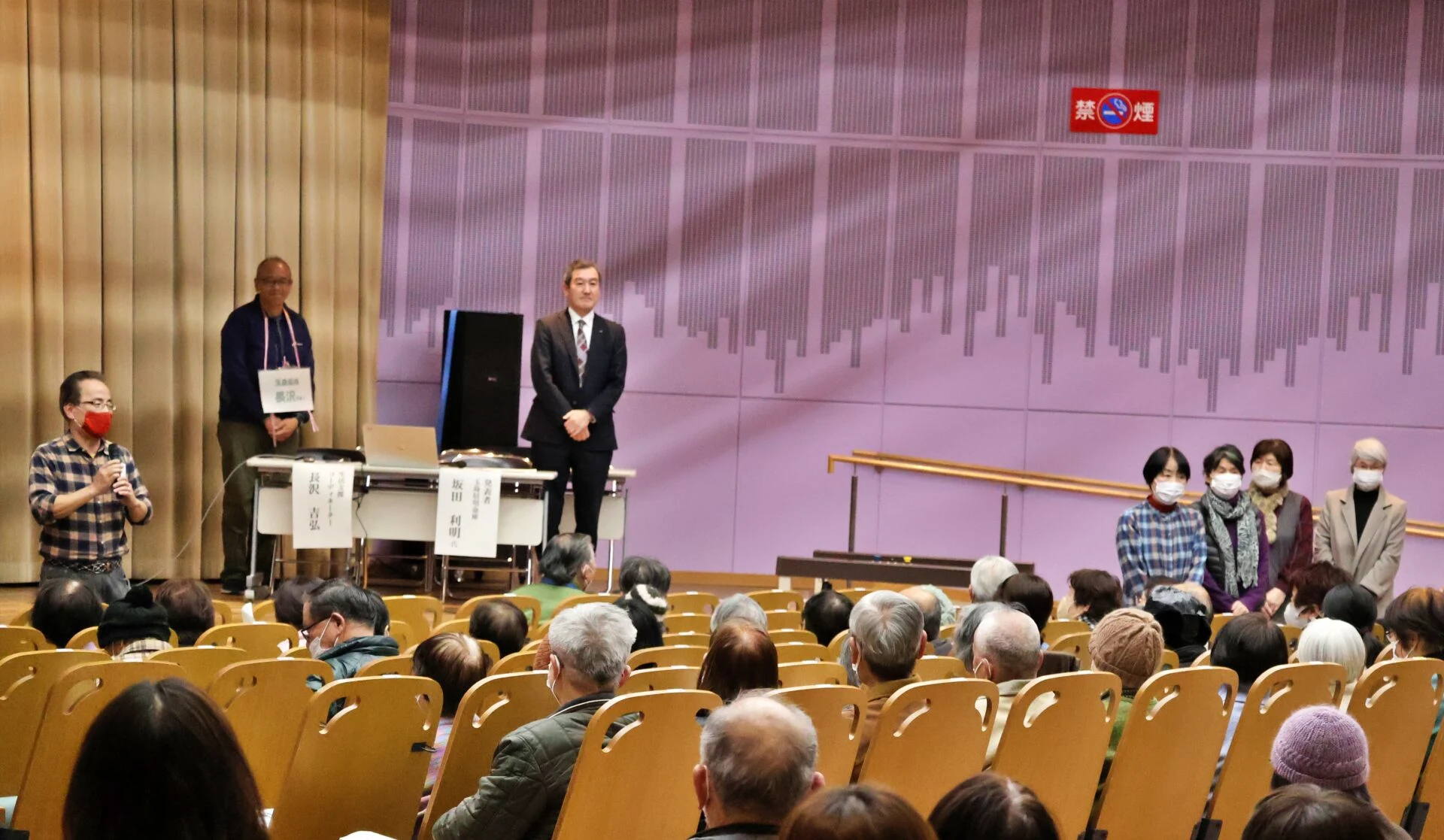
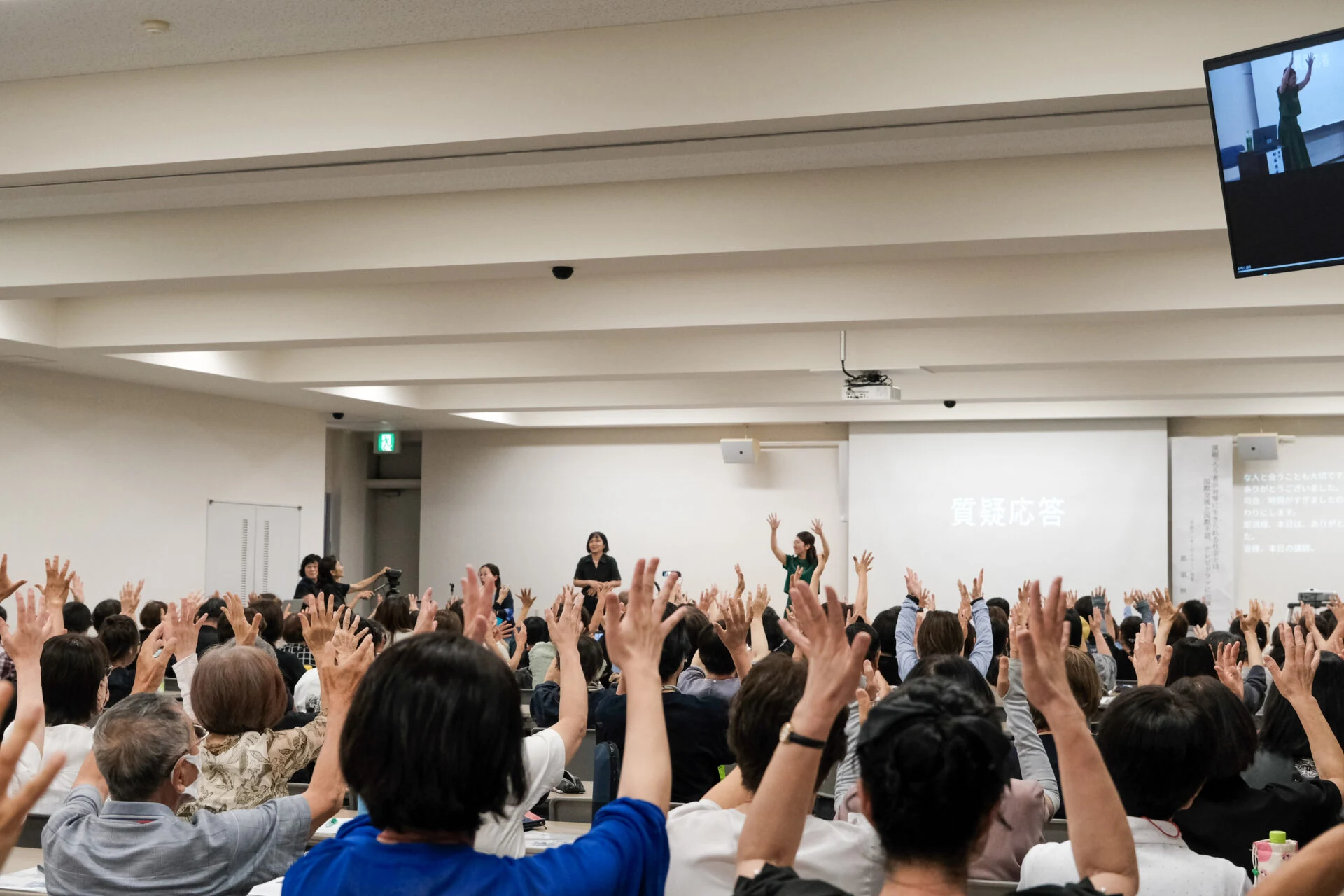
At the opening ceremony, the director of the Okayama Prefectural Center for Persons with Hearing Impairments said, "I have been the director here for five years, but I have never seen a conference room filled with so many people." By the time the opening ceremony began, chairs were placed in the aisles on both sides due to the large turnout.
For the commemorative lecture the next day, numbered tickets were distributed 45 minutes before the lecture began, and many participants who could not enter the venue watched the online streaming video in a separate room.
I participated in the opening ceremony and subcommittees held on the first day, as well as the programs after the commemorative lecture on the second day, so I will report on those.
The state of the subcommittees
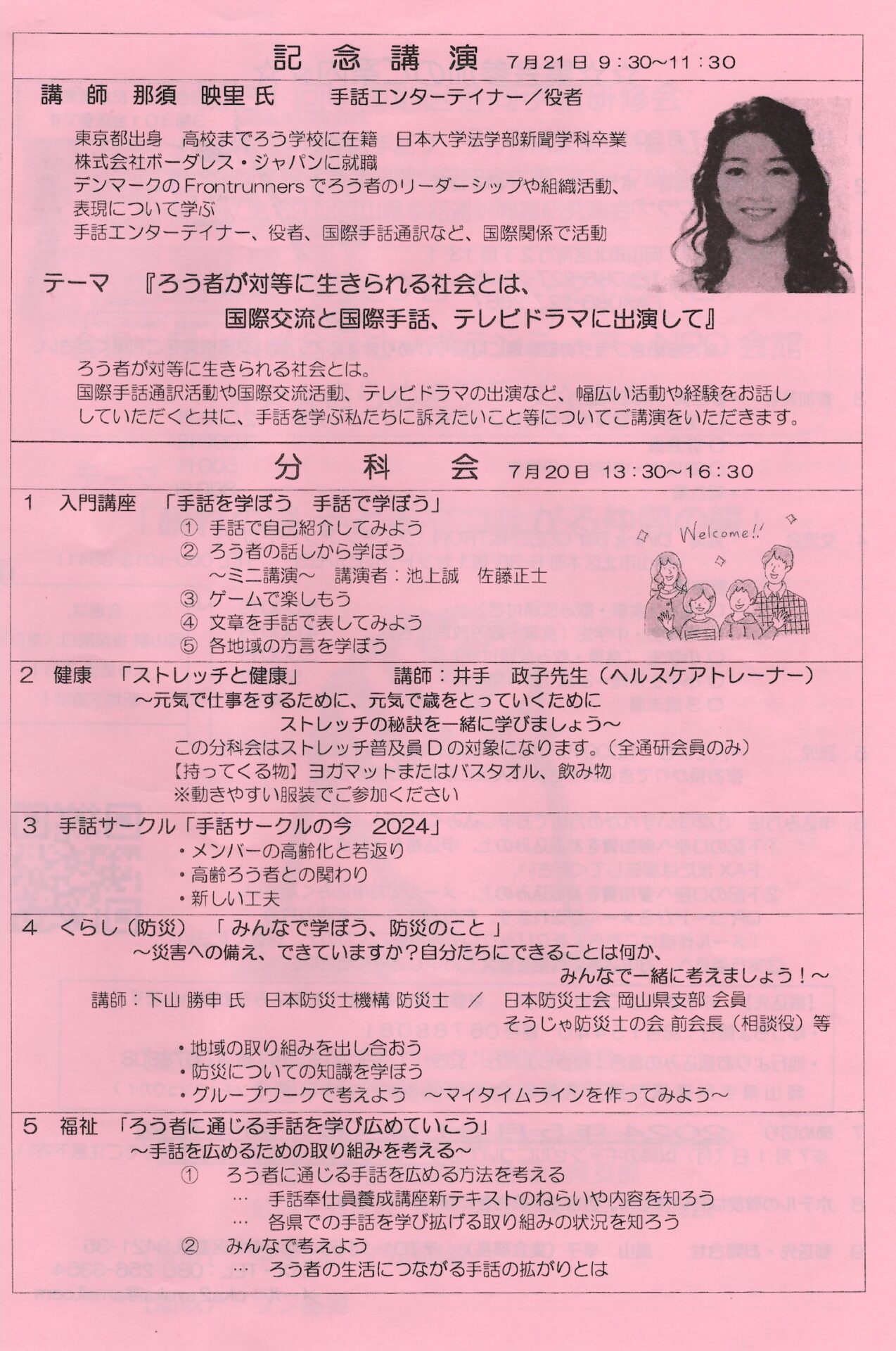
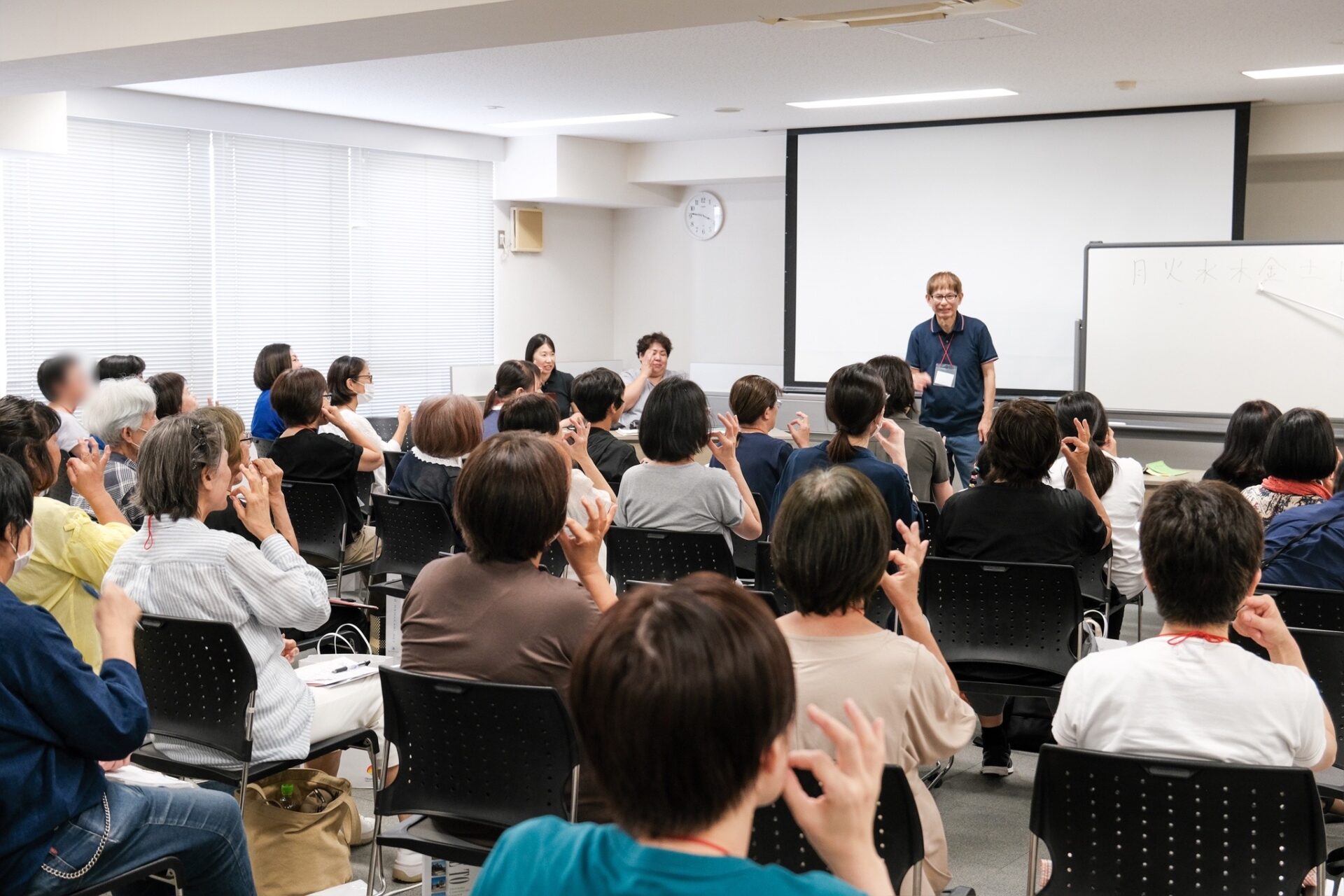
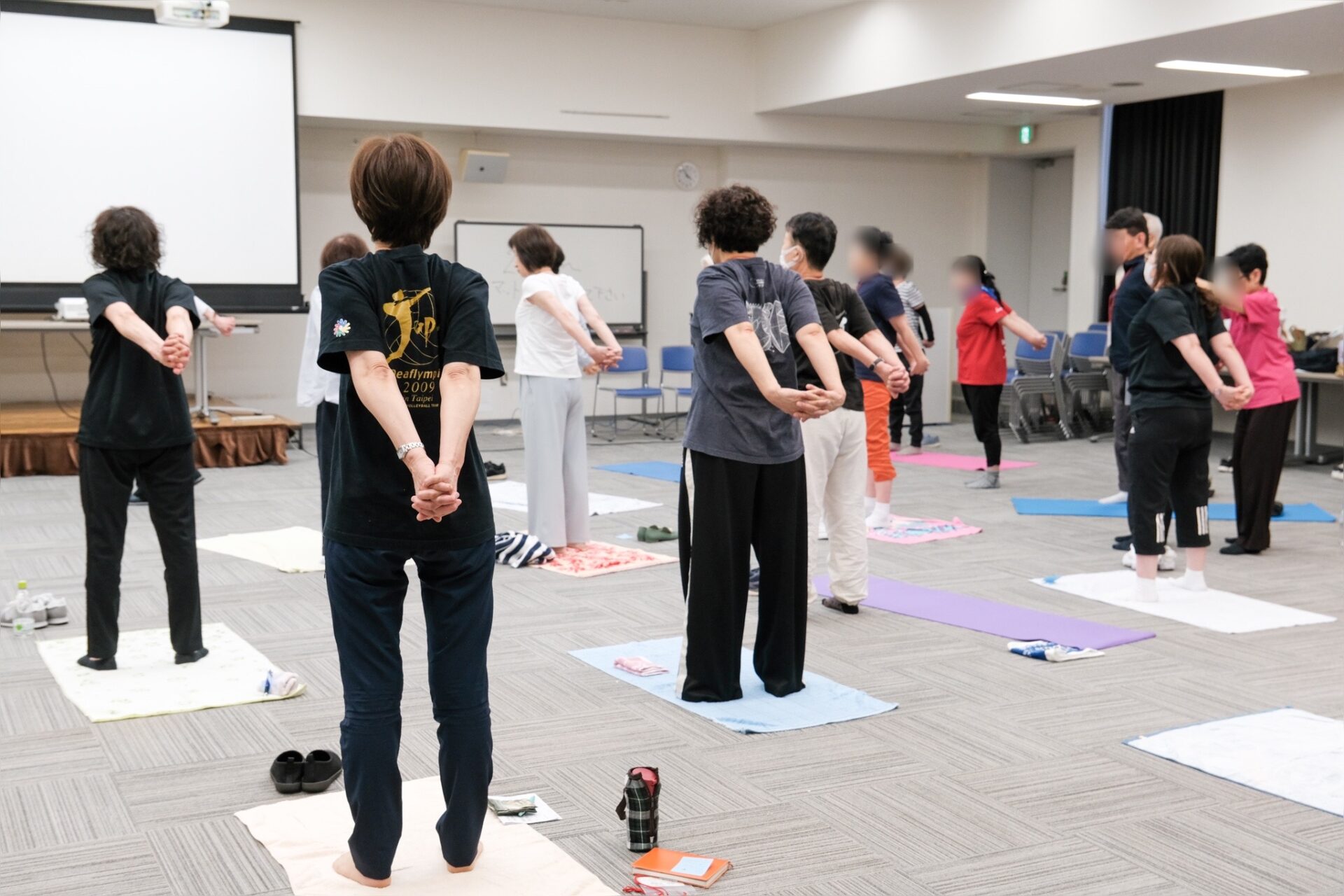
The Okayama Prefectural Branch of the National Sign Language Interpreter Issues Research Association holds its own training sessions every year, dividing into multiple subcommittees to deepen learning in each area. In 2024, it became a large training session with participants not only from Okayama Prefecture but from across the Chugoku region, while utilizing the know-how from previous years to set up the following five subcommittees.
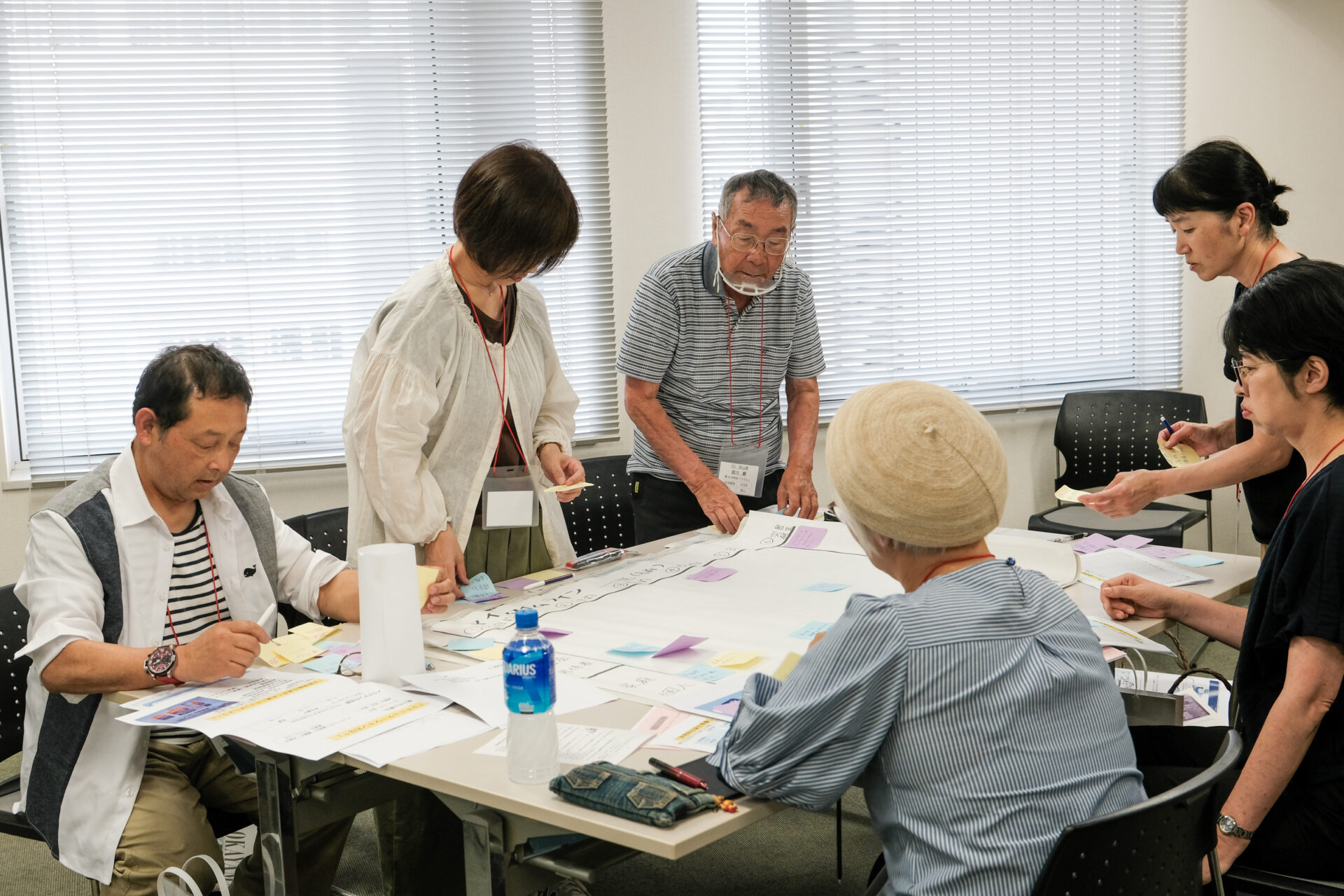

The urgent issue of disaster prevention in the Chugoku region is heavy rain disasters
I am from Miyagi Prefecture, so when I think of disasters, the Great East Japan Earthquake is fresh in my memory.
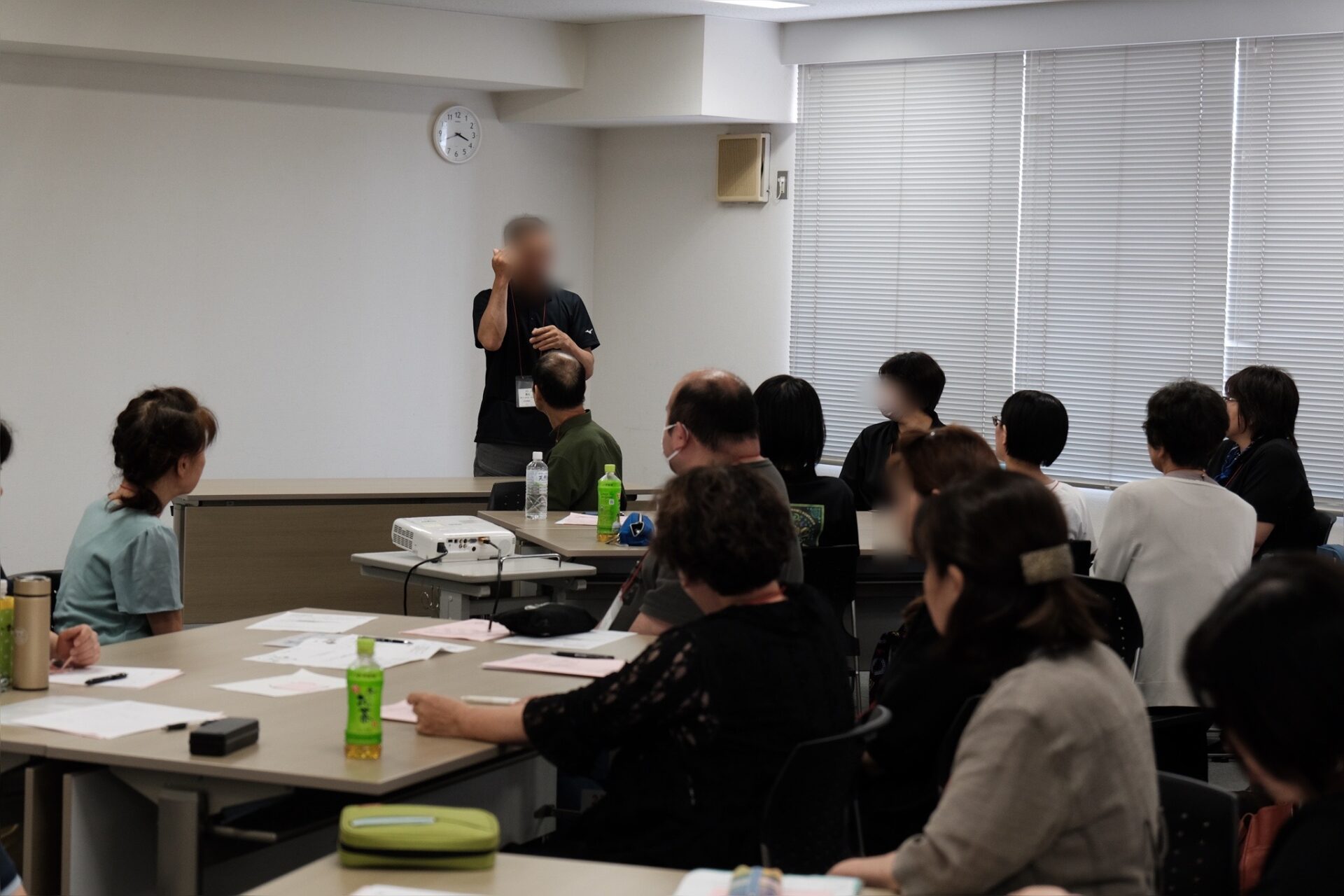
I moved from Kanto to Kurashiki in December 2023, but I am not aware of what I need to prepare as a person with a hearing impairment in my area. Therefore, I participated in Subcommittee 4: Living (Disaster Prevention) 'Let's Learn Together About Disaster Prevention - Are We Prepared for Disasters? What Can We Do Together?' .
Subcommittee 4 proceeded as follows:
- Let's share local initiatives
- Let's learn about disaster prevention knowledge
- Let's think together in group work - Let's create My Timeline
First, each group discusses what kind of disaster prevention initiatives are being carried out in their living area.
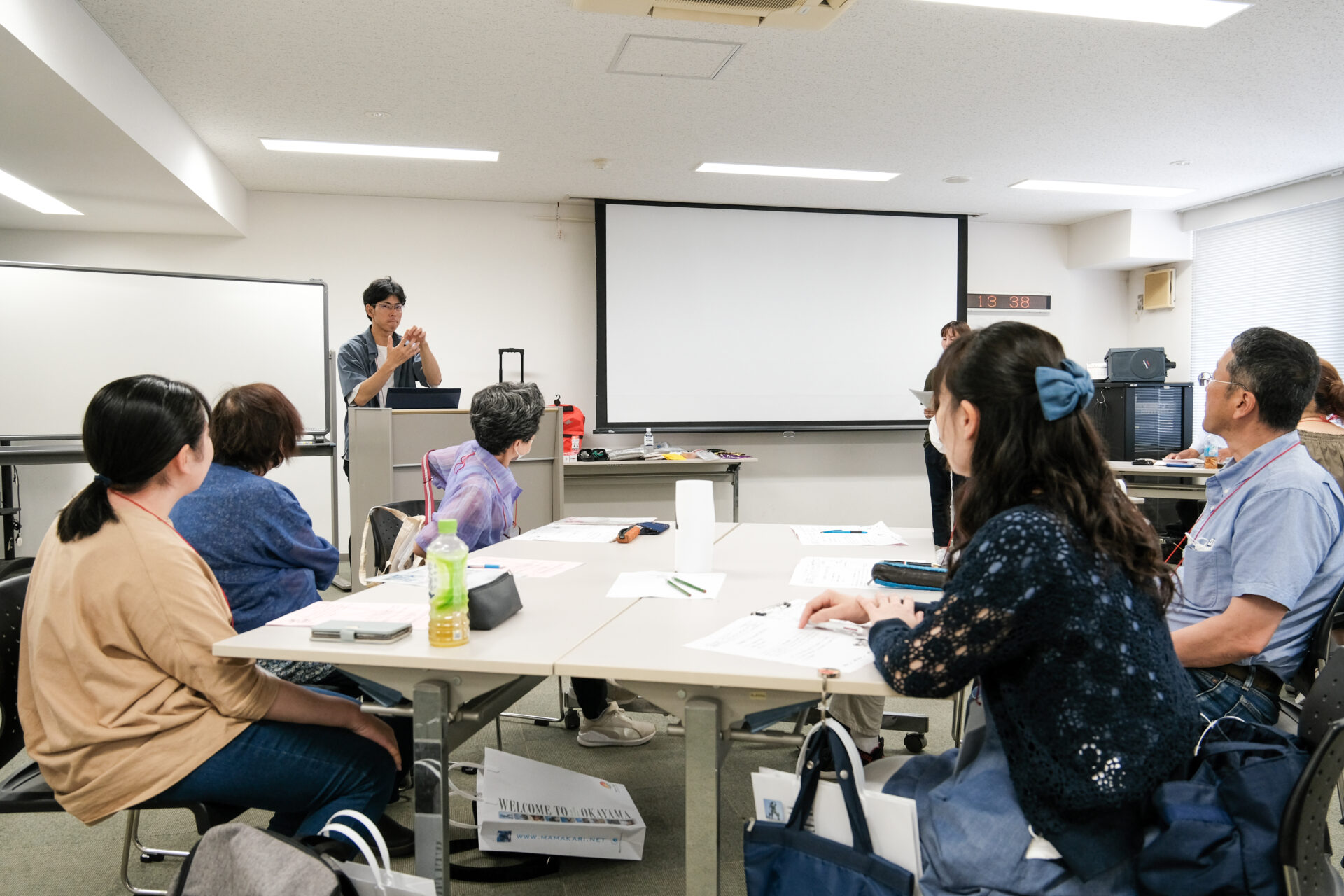
In my group, examples were raised such as the distribution of bandanas to inform evacuation centers that one is a person with a hearing impairment in Kurashiki City, and instances in Hiroshima Prefecture where organizations of persons with hearing impairments hold study sessions on disaster prevention together with sign language circles and summary writing circles.
In other groups, there were participants who were victims of the July 2018 heavy rain disaster, and it was shared that particularly in the Chugoku region, heavy rain disasters are an urgent issue that needs to be addressed.
Proposal of My Timeline
Next, we invited Masanobu Shimoyama, a disaster prevention specialist from the Japan Disaster Prevention Association, to deepen our knowledge about disaster prevention.
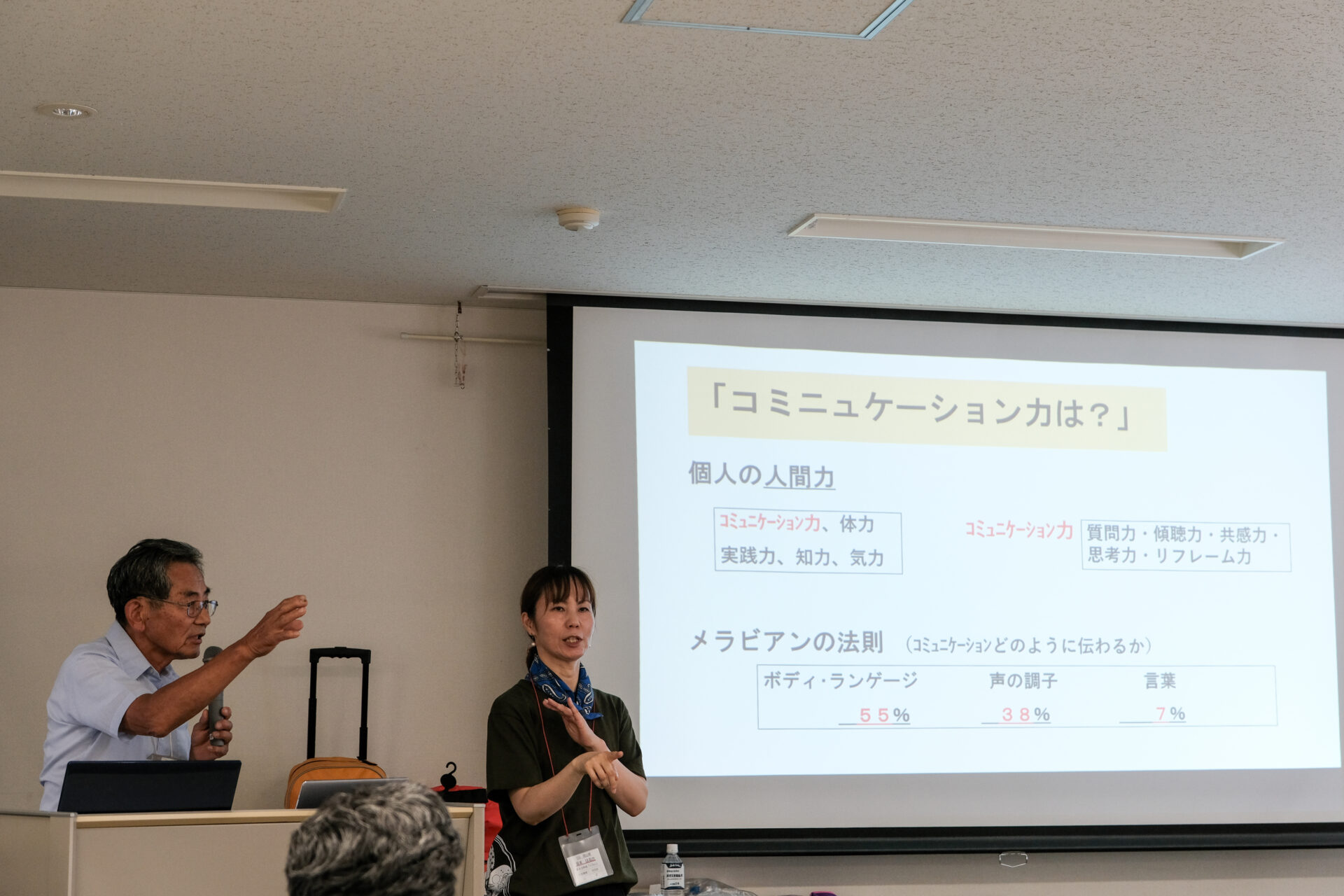
According to Shimoyama, regarding the psychological aspects of people, the stronger the belief that "I will be fine" or "This time will be fine," the more likely they are to delay evacuation during a disaster. On the other hand, when people see those around them evacuating or are encouraged to evacuate by others, they are more likely to take action. Therefore, it was emphasized that there is a need to collaborate with those around us in disaster prevention efforts.
One specific example mentioned was the creation of "My Timeline." This is a method of visually organizing what actions we can take from three days before a disaster until the moment it occurs.
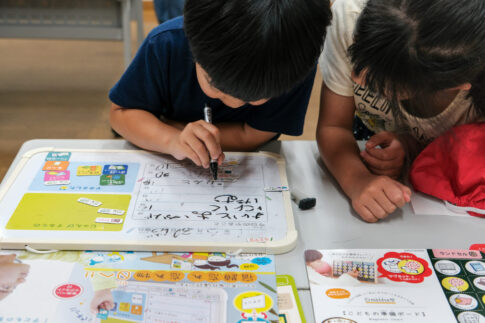
Following Shimoyama's talk, we began creating "My Timeline" in groups.
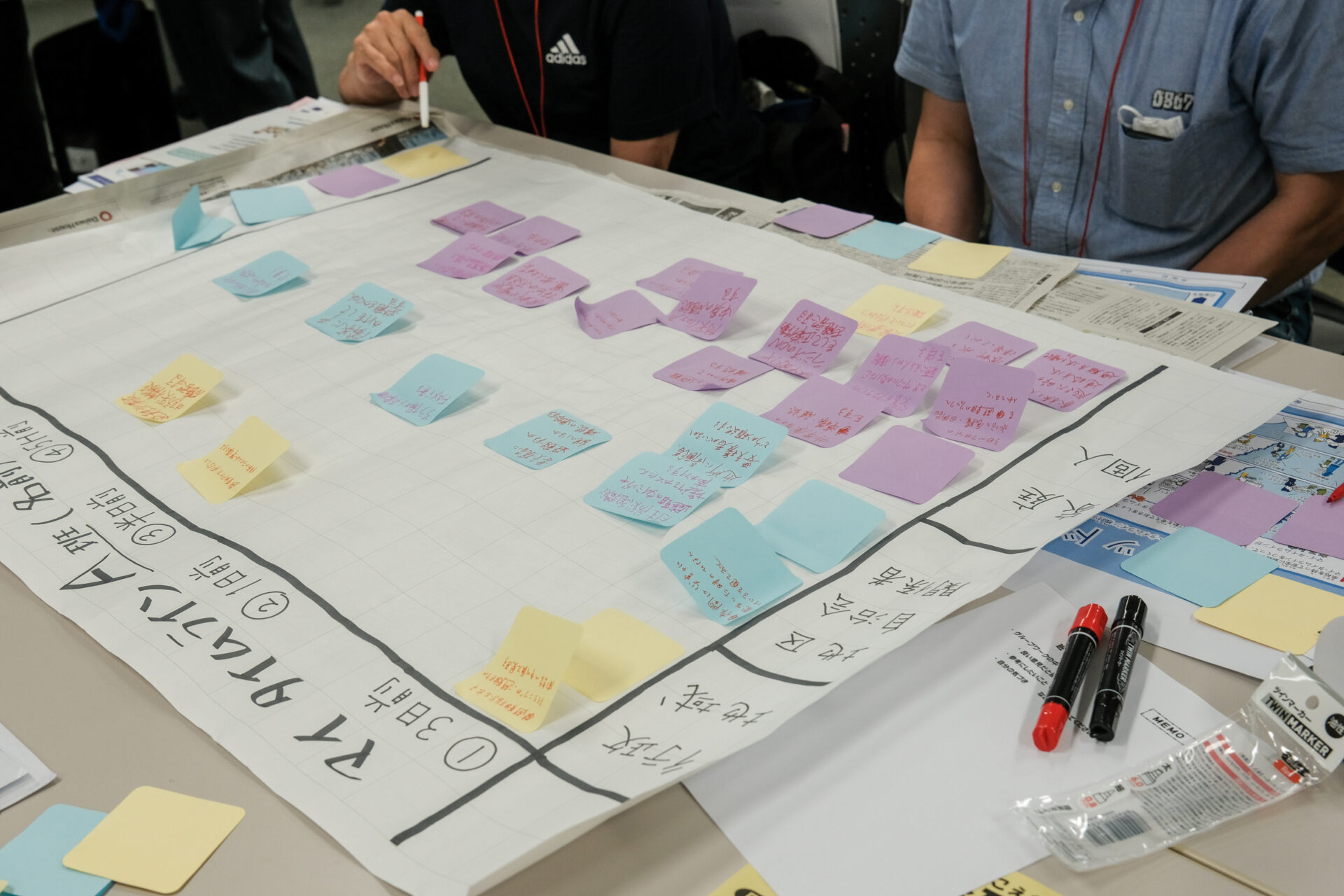
It seems that all groups are prioritizing the preparation of mobile batteries and charging smartphones. Since many persons with hearing impairments cannot hear phone calls or radio sounds, smartphones are essential for video calls, gathering information through text and video, and written communication in evacuation centers.
Initially, the focus was on actions that individuals could take. However, as we created "My Timeline" on large poster paper in groups, we began to feel the necessity of working together with those around us to address issues such as "deciding who will check the evacuation status of persons with disabilities" and "understanding what support needs exist in the neighborhood."
In today's world where relationships with neighbors are thin, proposals for disaster prevention at the "sign language circle" level
My group consisted of people living in relatively large cities such as Okayama City, Kurashiki City, and Onomichi City in Hiroshima Prefecture. Therefore, the concept of "neighbors" is not very strong.
On the other hand, since this training session was a "sign language training session," many participants belonged to sign language circles. Even if the idea of neighbors does not immediately come to mind, when thinking of friends from the sign language circle, specific individuals come to mind, such as "I want to check on XX's evacuation status" or "I want to confirm the contents of the emergency bag with everyone."
In response to this kind of interaction among participants, Shimoyama suggested that "the increase of disaster prevention specialists with hearing impairments and disaster prevention specialists who can interpret sign language will enable more disaster prevention efforts that meet our needs."
In fact, there are disaster prevention specialists with hearing impairments and those who can interpret sign language.
The state of the commemorative lecture
The second day began with the commemorative lecture.
The lecturer was Eri Nasu, a deaf individual (person with hearing impairment) who has experience as a sign language entertainer, actor, and international sign language interpreter, and has appeared in dramas such as "silent" and NHK E-Tele's "Everyone's Sign Language."
“A society where deaf people can live equally, through international exchange and international sign language, and by appearing in television dramas” is the theme of a lecture from the perspective of deaf individuals, where Ms. Nasu shares her activities and experiences to appeal to those learning sign language.
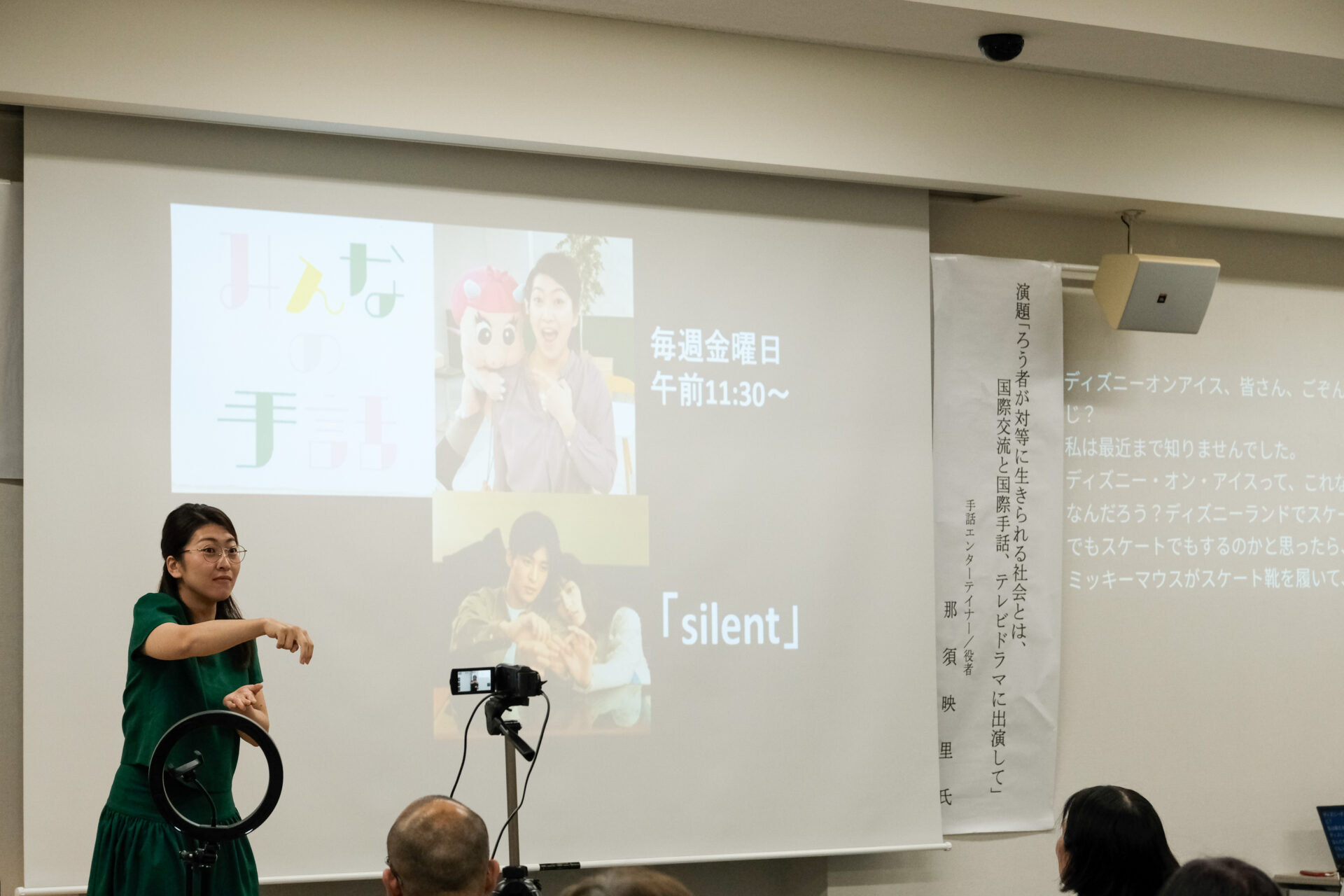
Since Ms. Nasu is a woman in her twenties, many young people gathered at the venue, even more than on the first day. The venue was divided into two parts, one being a live venue and the other showing an online broadcast, indicating a lively atmosphere.
Entry to the main venue began at 8:45 AM with the distribution of numbered tickets, but some people were reportedly waiting in line as early as 8:00 AM. I arrived at the venue almost simultaneously with the start of ticket distribution and managed to get a numbered ticket for entry to the live venue.
Introduction to International Sign Language
In Ms. Nasu's lecture, she first introduced international sign language based on her study abroad and internship experiences overseas.
Just as spoken languages differ from country to country, sign languages also differ by country. Spoken languages, influenced by historical backgrounds such as colonial rule, have resulted in countries in Latin America using Spanish and some African countries using French as their official languages. However, sign languages are not as affected by such influences, and most countries have their own sign languages.
So, how do people from different countries who use sign language communicate with each other? While spoken languages often adopt English, international sign language is used in sign language.
International sign language is a neutral sign that is not the language of any one country, but it is still unfamiliar to sign language learners and deaf individuals living in Japan.
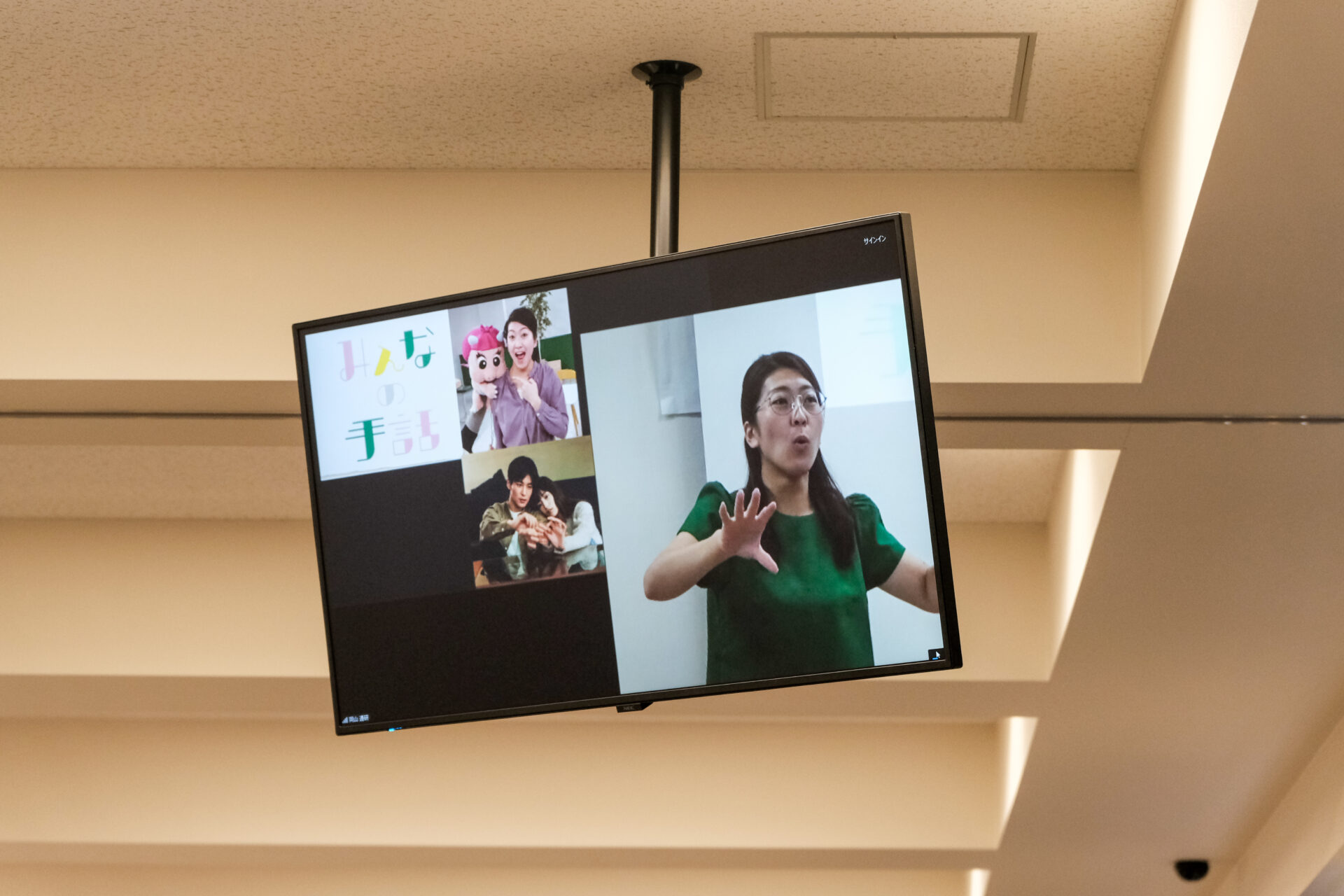
According to Ms. Nasu, international sign language is a sign, not a language.
It is said to be more like a list of words. Therefore, it is not suitable for expressing emotions, but it is used as a common sign among countries to convey facts, such as during broadcasts of the Deaflympics (Olympics for the hearing impaired) or instructions to athletes.
Next year (2025), the Deaflympics will be held in Japan. It is expected that tourists with hearing impairments will visit from all over the world, so I thought it would be important for the host country to take an interest in international sign language.
The Activities of Deaf Individuals Lead to the Success of Sign Language Interpreters
After a break, the second half featured Ms. Nasu, who is active in a wide range of fields as a sign language entertainer, actor, and international sign language interpreter, discussing how she changes her sign expression methods depending on the roles required in those situations.
Sign language entertainers and actors express emotions richly to “perform.” On the other hand, in the context of international sign language interpretation, the goal is to “interpret,” so emotions are not included, and facts are conveyed. When expressing sign language alone for long periods, adjustments are made to avoid excessive strain on the arms, such as not making expressions too large.
In this way, sign language interpreters are an indispensable presence for Ms. Nasu to participate in society as a deaf individual.
In situations where emotional expression is necessary, careful coordination with staff is particularly important, and it is said that it is difficult to work on drama sets without sign language interpreters due to the various audio information present.
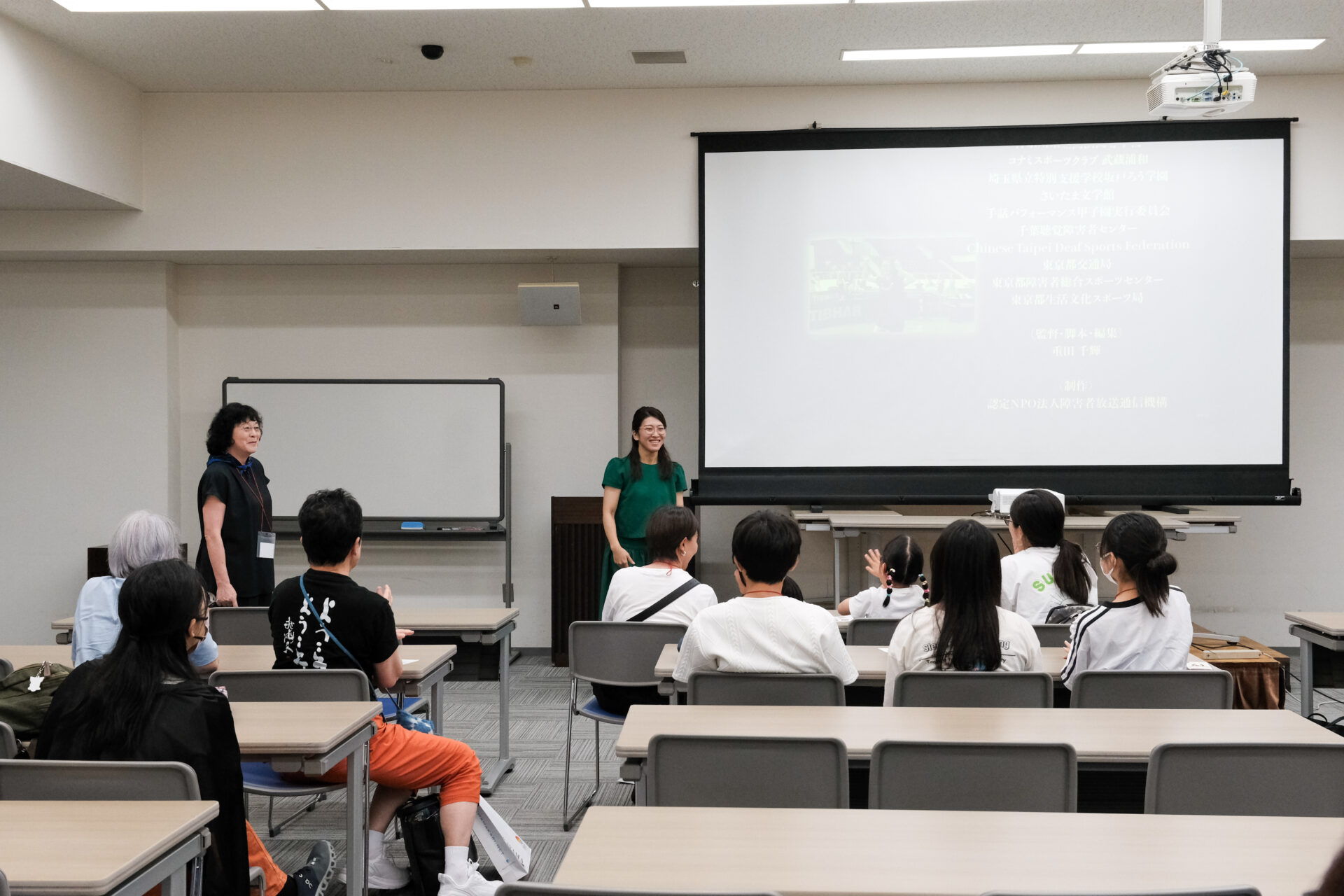
While expressing gratitude to the sign language interpreters who support her daily, she also stated, “By having deaf individuals active in society, the work of sign language interpreters will continue to increase. Therefore, to realize an equal society, deaf individuals and sign language interpreters should work hand in hand.”
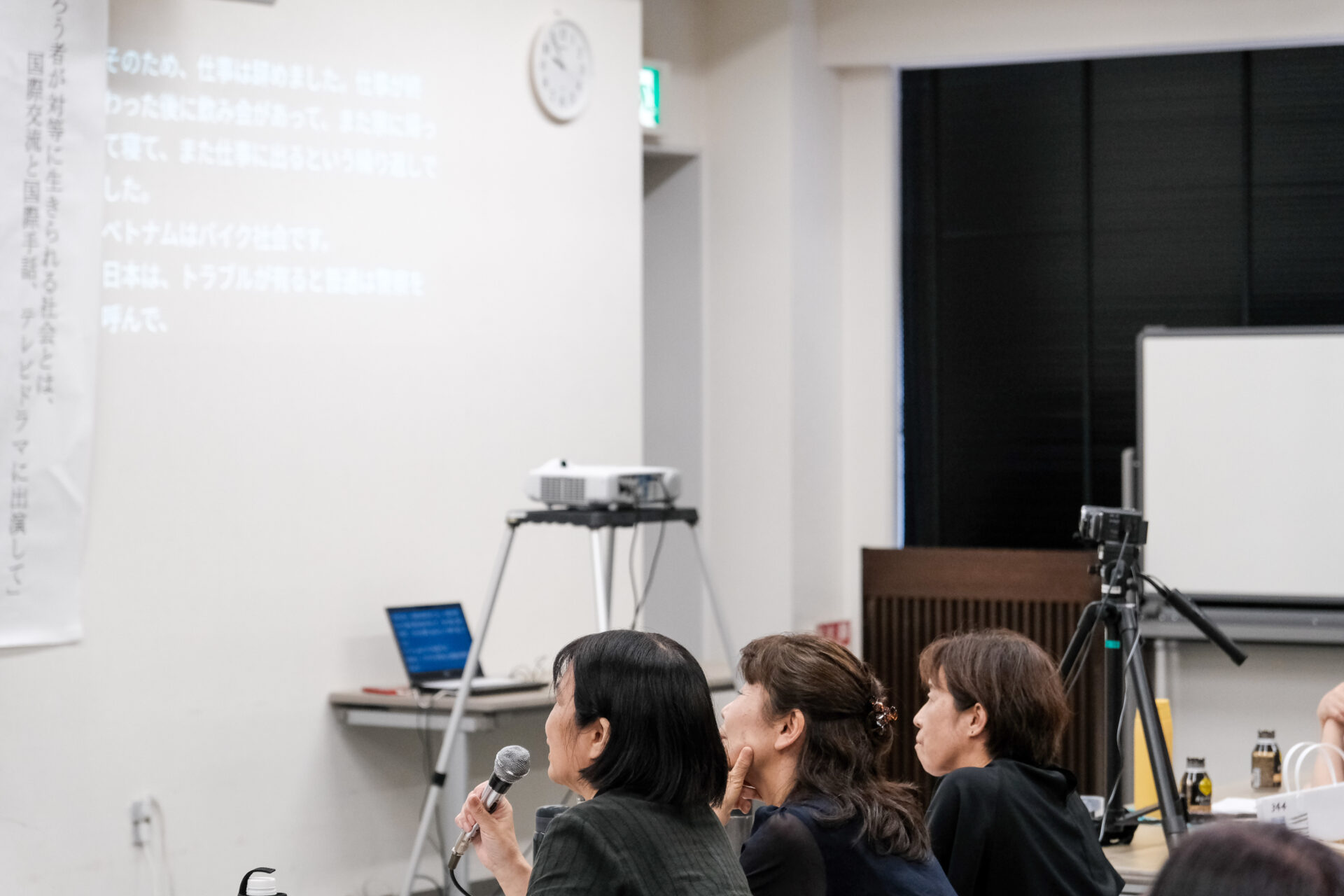
As someone with a hearing impairment, I often have opportunities to request sign language interpretation in both my personal and professional life.
In such situations, I feel gratitude for being “interpreted for” and a sense of guilt that the interpreter is taking time out of their busy schedule for me.
However, after listening to Ms. Nasu's talk, I realized that by requesting sign language interpretation, I might be increasing the work for interpreters and contributing to their skill improvement.
From now on, when I request sign language interpretation, I want to approach it not passively, but with the perspective of refining expressions together with the interpreter and considering situations where the interpreter can be active, which has become a valuable learning experience for me.
A Training Session Gathering Beginners of Sign Language and Deaf Individuals Who Use Sign Language in Daily Life
This sign language training session gathered not only sign language interpreters but also a variety of people from beginners of sign language to deaf individuals who use sign language in their daily lives. The person who informed me about this training session is also a beginner who has just started learning sign language.
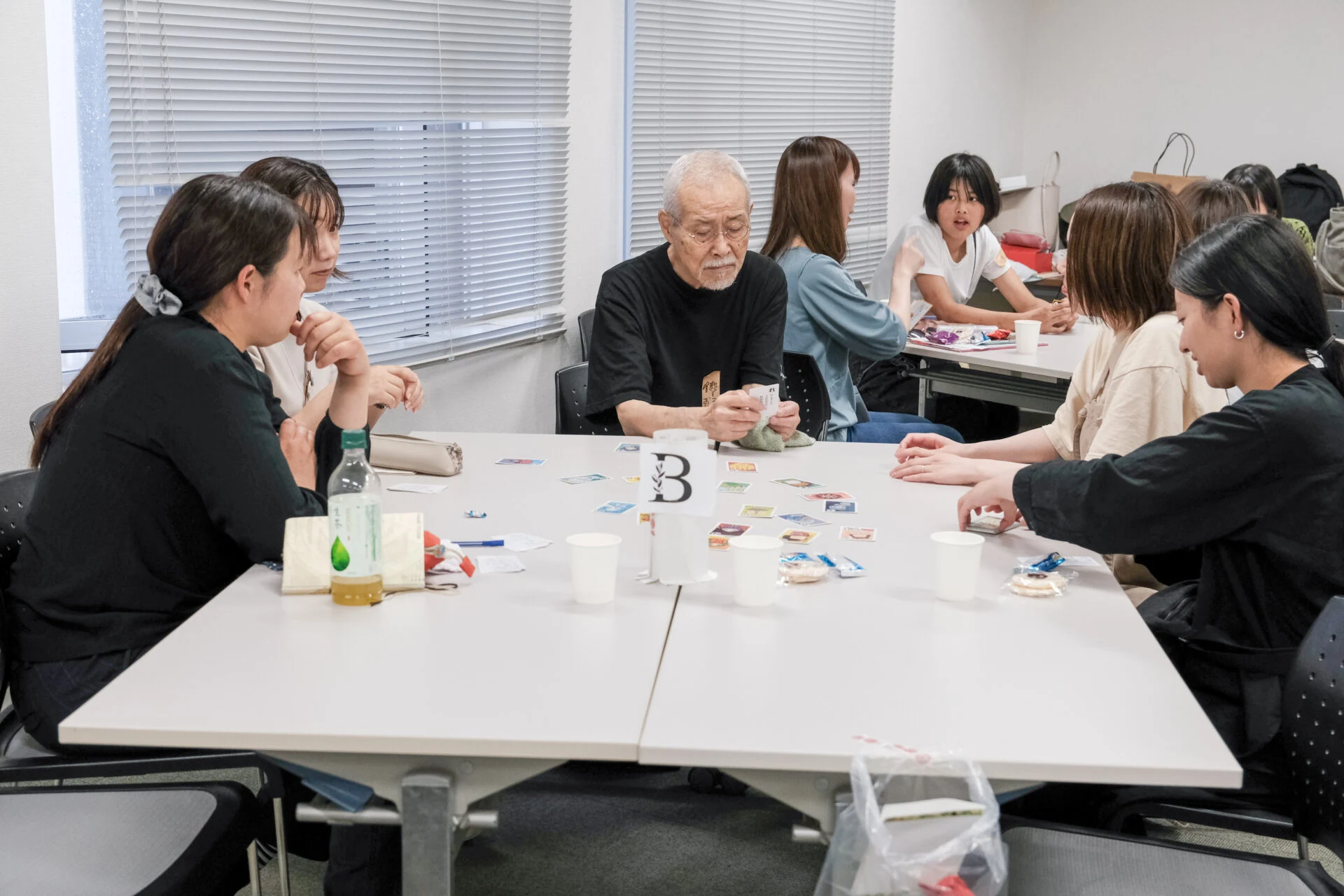
On the first day, the subcommittee meeting venue deepened learning using sign language among beginners, interpreters, and deaf individuals. Of course, there are individual differences in sign language skills, but the organizing committee members were attentive to ensure that participants could communicate smoothly, providing interpretation as needed and even interpreting among participants, which left a strong impression on me.
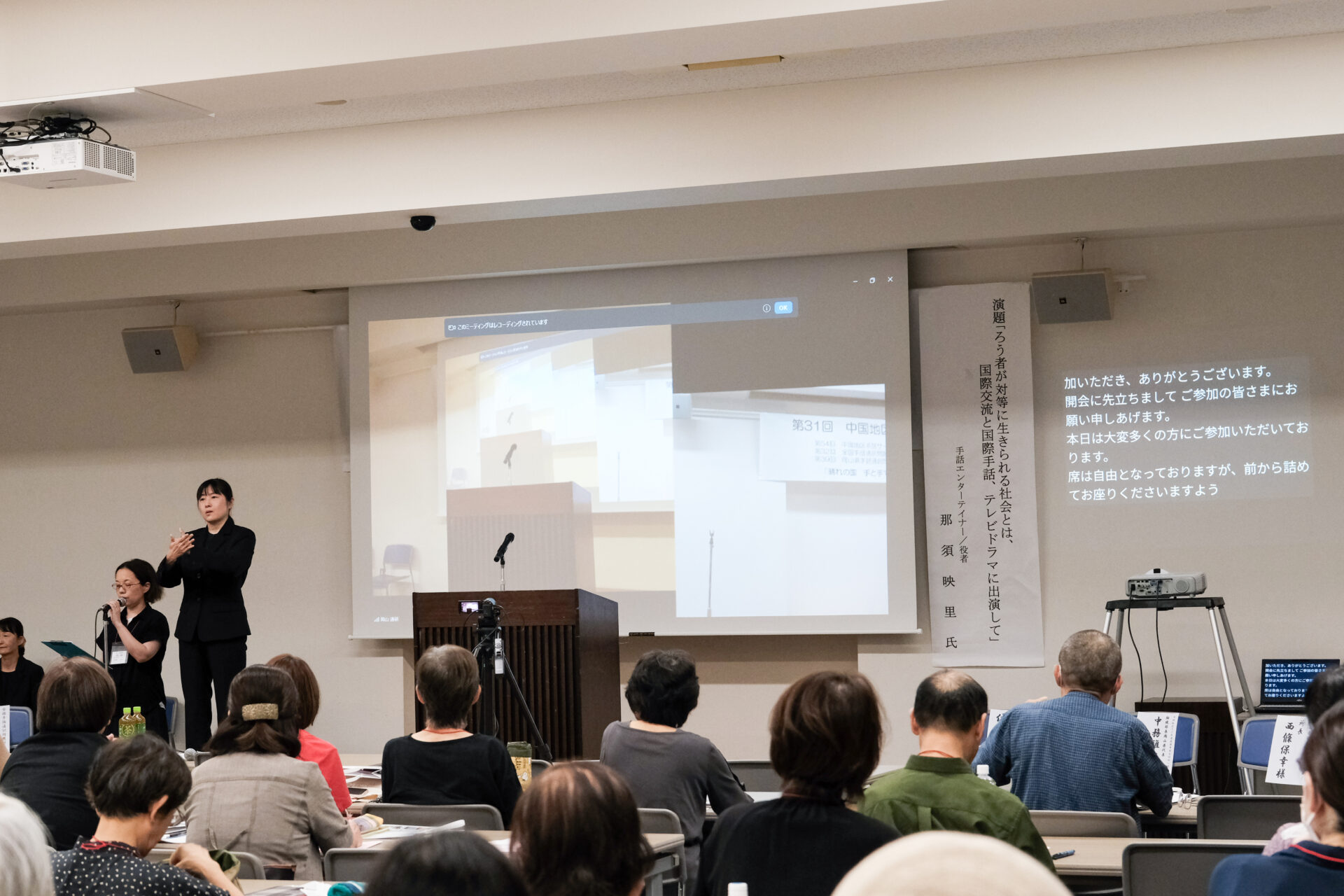
Since sign language has dialects, even participants from the same Chugoku region encountered expressions they had never seen before. They were seen asking each other, “What does this mean?” and teaching each other region-specific expressions, with some expressing surprise, saying, “So this was a dialect!”
Conclusion
In daily life, I rarely have the opportunity to meet people who use sign language, but seeing a venue filled with people interested in sign language was refreshing.
From October 18 (Friday) to 20 (Sunday), 2024, the 54th National Deaf Women's Conference will be held in Kurashiki City, and in the summer of 2025, the Deaflympics will be held in Japan. I hope that this training session, which allowed people related to sign language in Okayama Prefecture and the Chugoku region to become acquainted and deepen their exchanges, will further expand the circle of friends connected hand in hand.
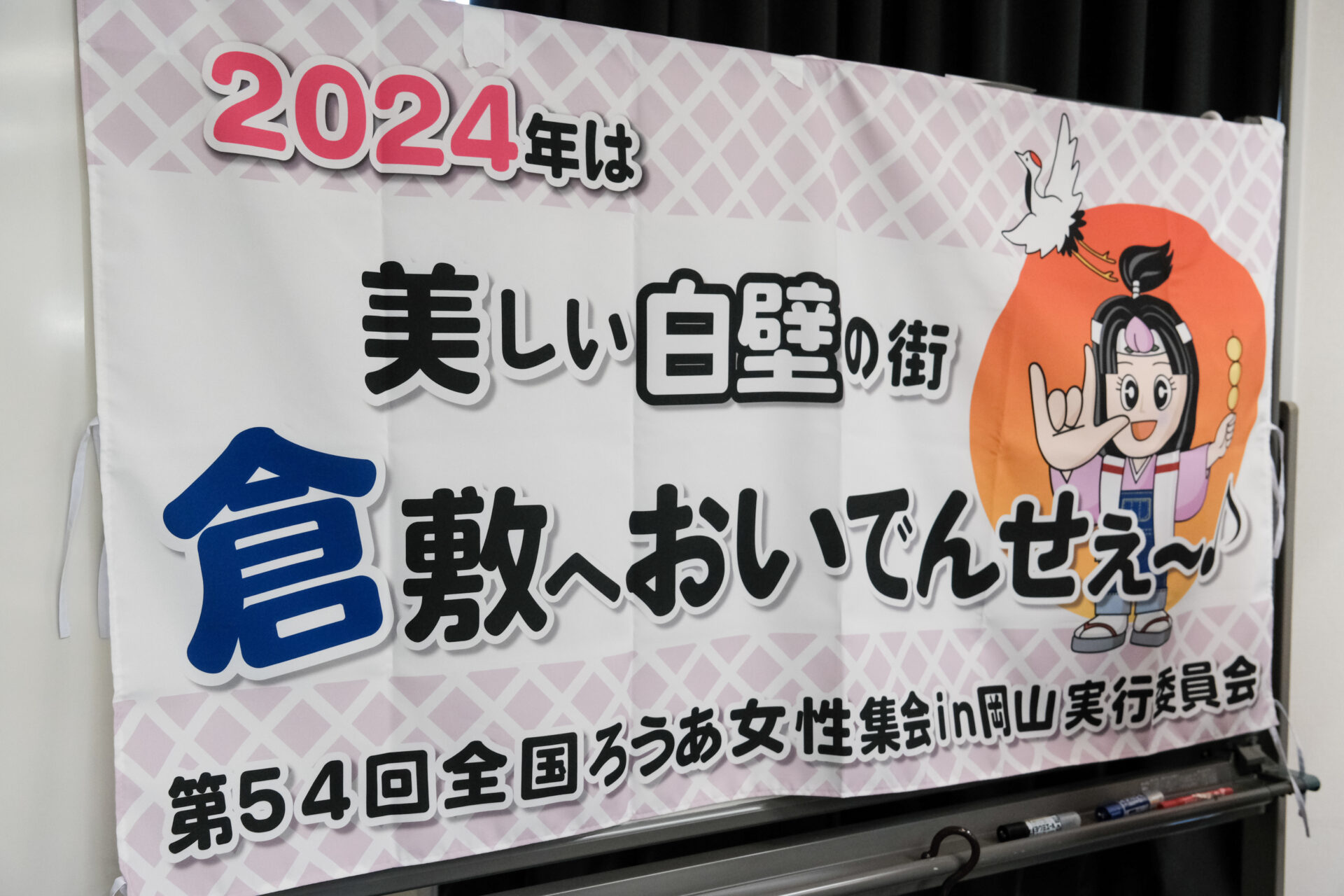
The 2025 Chugoku Regional Joint Sign Language Training Session is scheduled to be held in the neighboring Hiroshima Prefecture.
Data for the 31st Chugoku Regional Joint Sign Language Training Session
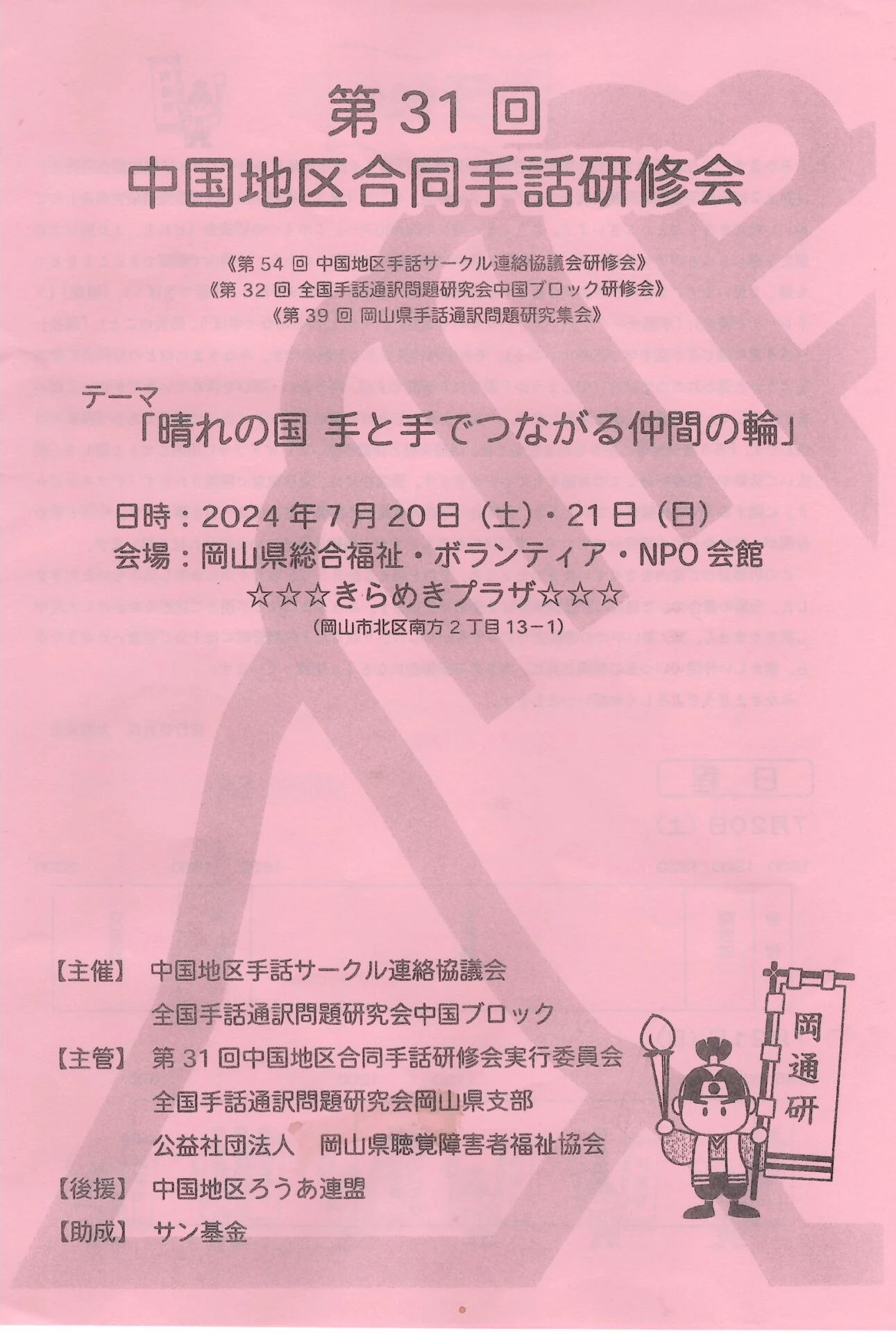
| Name | 31st Chugoku Regional Joint Sign Language Training Session |
|---|---|
| Date | July 20, 2024 (Saturday) 1:00 PM - 8:00 PM July 21, 2024 (Sunday) 9:30 AM - 1:00 PM |
| Location | 2-13-1 Minamigata, Kita Ward, Okayama City, Okayama Prefecture |
| Participation Fee (including tax) | Members of the National Sign Language Interpretation Issues Research Association, Hearing Impaired Welfare Association, and their families, as well as circle members: 2,000 yen Non-members: 3,000 yen High school, middle school, and elementary school students: 500 yen * The exchange meeting is a separate fee |