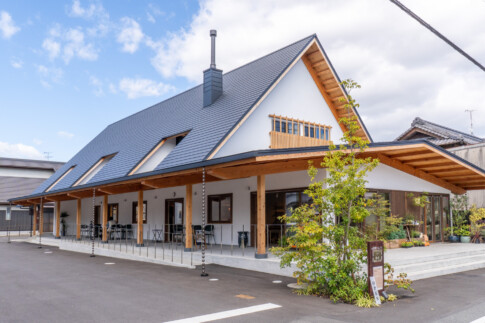
“Kurashiki Mirai K-juku” is a seminar held once a month at “Ohara House Katalyzer,” a nationally designated Important Cultural Property in the Bikan Historical Area.
In fiscal 2020, it was also held as the “Takahashi River Basin Future Career Education Seminar,” commissioned by Kurashiki City.
The 20th session looked back on the 2020 seminars. Under the theme “Communities Change, Teachers Change, Children Change: Creating New Value through Community-School Collaboration,” three speakers gave presentations on their practical work.
I attended the “20th Kurashiki Mirai K-juku,” held on Saturday, December 26, 2020, and would like to share what I felt more people should know about.
The information presented here is as of the article’s publication in February 2021. Please note that it may differ from current information.
What is the “Takahashi River Basin Future Career Education Seminar”?
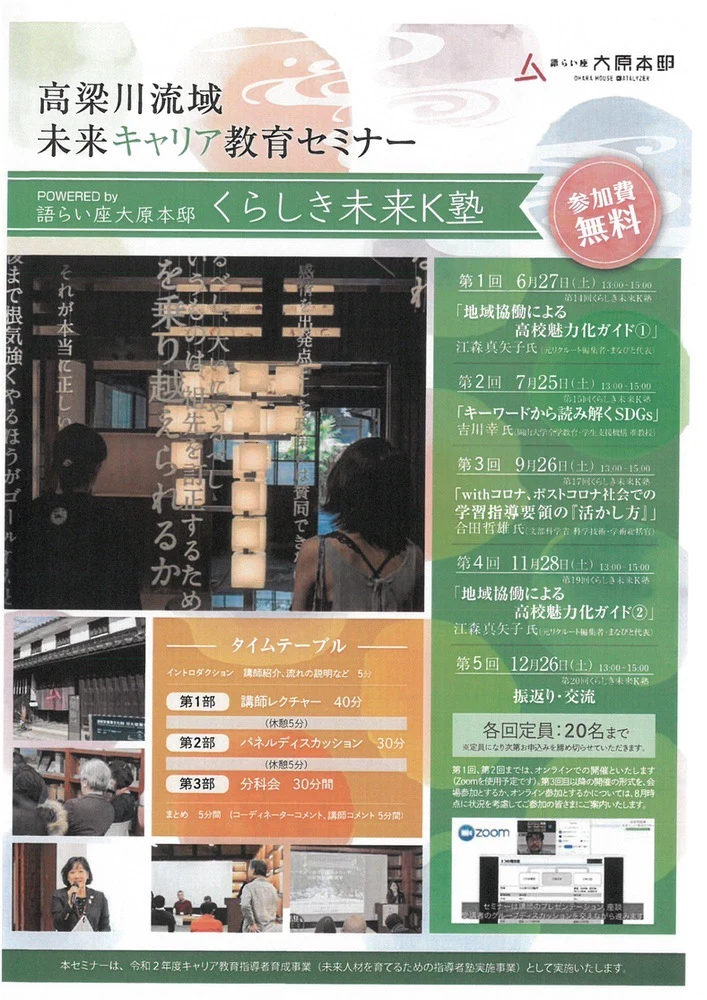
In fiscal 2020, “Kurashiki Mirai K-juku” was also held as the “Takahashi River Basin Future Career Education Seminar.”
The “Takahashi River Basin Future Career Education Seminar” is a monthly seminar held in partnership with a Kurashiki City initiative, supporting the creation of connections among teachers, businesses, and the community.
The seminar consists of five sessions, and this was the fifth and final one.
As with the third session, attendance was limited, and the seminar was held in a hybrid format, with both in-person and online participation.
For reports on previous sessions, see the articles below.
- Session 1: Building a Sustainable Model of Education through Schools and the Community
- Session 2: Understanding the SDGs through Keywords
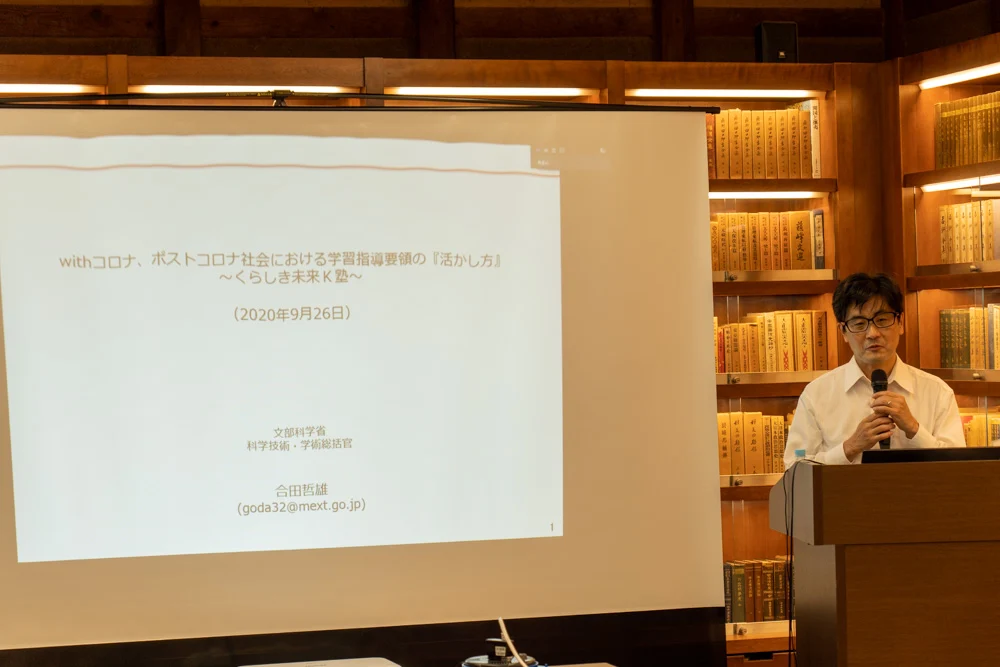
- Session 3: How to “Make Use of” the Courses of Study in a Society with COVID-19 and in the Post-COVID Era
Overview of the 20th Kurashiki Mirai K-juku / 5th Takahashi River Basin Future Career Seminar
The theme was “Communities Change, Teachers Change, Children Change: Creating New Value through Community-School Collaboration.”
The seminar proceeded as follows:
- Presentations on practical work by three speakers
- Breakout session
- Presentations on the discussion
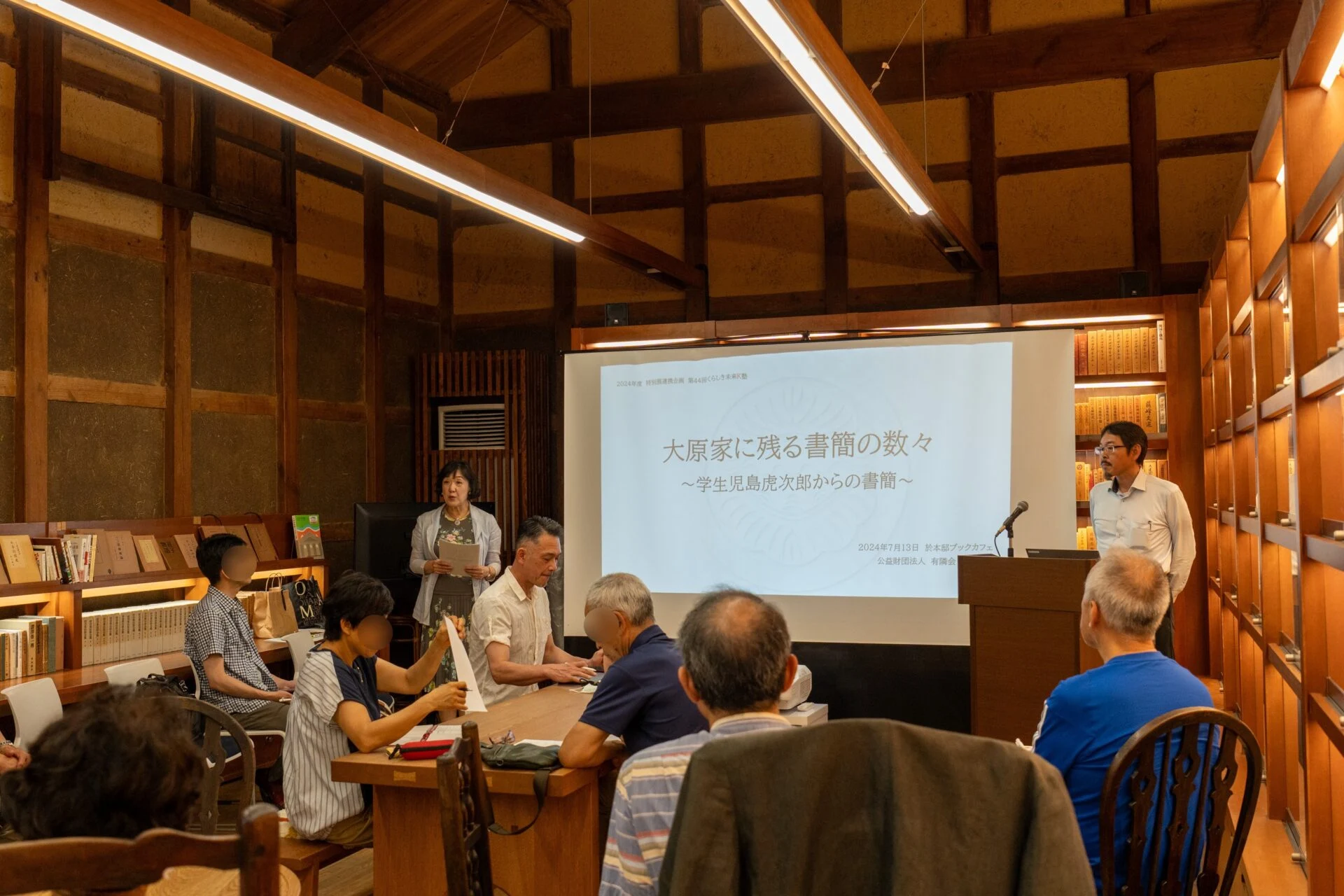
There were about 20 participants in total, attending in person and online.
Participants came from a range of backgrounds, including education professionals.
Talk by Yamazaki Yoshimi

The first speaker was Yamazaki Yoshimi, who works in the education of children with disabilities at Okayama Prefecture Health and Forest Academy.
Yamazaki spoke about using the OriHime avatar robot in educational settings.
She shared, with photographic records, the story of a student with a respiratory illness who was unable to participate in an off-campus school activity but took part through OriHime.
She also explained that a disability support facility on the same grounds as the Health and Forest Academy has been using OriHime to serve customers, because COVID-19 infections made face-to-face service impossible.
Apparently, few organizations in Okayama Prefecture currently use OriHime.
I first learned about OriHime through Yamazaki’s talk.
Now that interacting with people has become difficult amid the COVID-19 pandemic, I think there are more places where OriHime can play an active role.
Talk by Kawasaki Yoshimi

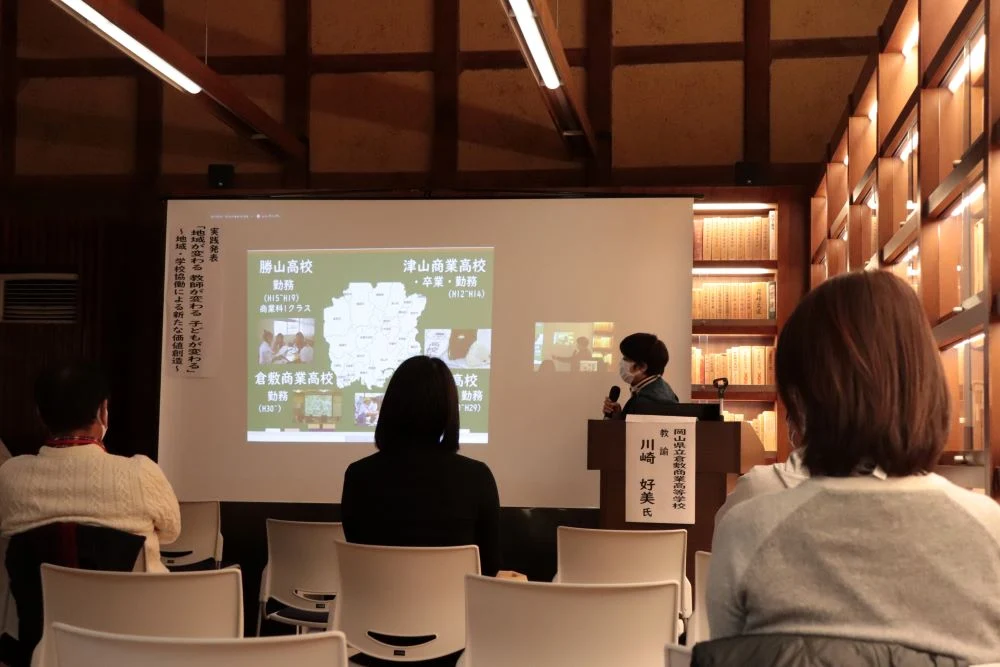
The next speaker was Kawasaki Yoshimi, who works as a teacher at Okayama Prefectural Kurashiki Commercial High School while promoting the Regional Economy and Society Analyzing System (RESAS) and engaging in community activities.
Kawasaki spoke on the theme “Taking Stock of Inquiry-Based Learning,” sharing insights and inquiry themes from activities during fiscal 2020.
At high schools, students’ career-related inquiry seems to have the following characteristics:
- General academic high schools: “Exploring ways of life” to help decide one’s future path
- Vocational high schools: “Exploring destinations” with employment in mind
I attended a general academic high school, so I had thought of inquiry-based learning as career exploration. I was interested to learn that the content of inquiry-based learning differs between general academic and vocational high schools.
Both types of schools may study their local communities through inquiry-based learning, but each has its own characteristics.
I thought that students’ perspectives could broaden further if students from vocational and general academic high schools had opportunities to learn together, drawing on what they have learned at their respective schools.
Talk by Toi Kengo

The final speaker was Toi Kengo, representative director of Haretoco General Incorporated Association.
Toi spoke about what he had learned through collaborating with high schools and the connection between education and “Kurashiki Tocotoco,” which he runs, bringing a perspective unique among the speakers as someone who is not an education professional.
He said that his image of schools changed when he was asked by Kawasaki, one of the speakers, to speak in a high school class.
He told us that he had previously thought of schools as rigid, but realized that in reality they were “more open to anything” than he had expected.
Toi said that using “Kurashiki Tocotoco,” which he runs, as a platform for high school students to present their community activities is meaningful because it lets them share their achievements through a web media outlet.
Rather than publishing news reports, publishing articles written by the students themselves allows many people to see the results of their activities.
Furthermore, because the articles remain online, they can easily be accessed even after the students graduate.
It is not easy for high school students to create a place where they can publish information online by themselves.
Nor is the experience of having one’s writing published by a web media outlet something everyone gets to have.
Using a local information platform like “Kurashiki Tocotoco” allows many people to see what high school students are doing.
I also felt that having an article they had written about their activities published would give the students a great deal of confidence.
Breakout Session

In the breakout session at this Kurashiki Mirai K-juku, participants formed groups of four or five to discuss the question, “What are communities and schools already able to accomplish by working together? And what challenges remain?”
There were four groups in all, each holding its own discussion.
In my group, one person said that the fact that high school students are engaged in community activities is itself an example of collaboration between the community and schools.
Another person said that publishing reports on “Kurashiki Tocotoco” also helps more people learn about the activities than would be possible through presentations within the school.
On the other hand, the difficulty of raising the money needed for activities was raised as a challenge.
For example, sports and cultural clubs receive subsidies when they compete in national tournaments, but apparently commercial and industrial contests may not receive subsidies even when participants qualify for national competitions.
Kurashiki City currently has a program that provides grants to schools that qualify for national commercial and industrial competitions (Kurashiki City Incentive Grant for Young Skilled Workers Participating in National Competitions, etc.). Some participants hoped the program would spread beyond Kurashiki City.
Another group reportedly discussed how off-campus learning is available to students in both general and specialized courses, but that opportunities are not equal.
There was also an opinion that although community activities take place within schools, parents and society may not understand them very well.
The discussion also touched on differences in views on community activities between schools and the businesses that welcome local communities and students.
Summary
At the 20th Kurashiki Mirai K-juku, we learned about collaboration between communities and education through presentations on practical work by three speakers.
After attending the seminar, I felt that collaboration between communities and education means “thinking about the future of the community.”
Adults are the ones supporting communities today.
But the people who will shape the future of communities are the adults of the future—in other words, young people today.
At this Kurashiki Mirai K-juku, I learned about the importance of sharing students’ activities.
When I was in high school, I knew that some of my classmates were doing community activities as part of their integrated studies, but I remember having few opportunities to learn what they were actually doing.
Booklets summarizing their activities were available in the school library, but they could not match the speed with which web media can report on activities.
I hope that more students will share their activities through open platforms such as web media in the future.
Kurashiki Mirai K-juku is a place for learning that is easy to take part in.
Regardless of age or position, all participants can discuss things as equals and think about the future.
That was how I felt as the only university student among the participants.
Articles about Ohara House Katalyzer
20th Kurashiki Mirai K-juku / 5th Takahashi River Basin Future Career Education Seminar Information

| Name | 20th Kurashiki Mirai K-juku / 5th Takahashi River Basin Future Career Education Seminar |
|---|---|
| Date | December 26, 2020 (Saturday), 1:00–3:00 p.m. |
| Location | 1-2-1 Chuo, Kurashiki City, Okayama Prefecture |
| Participation fee (tax included) | Free |
| Website | Takahashi River Basin Future Career Education Seminar |

What would you like to know about Kurashiki?
Enter a word to search articles on this site