"Kurashiki Mirai K Juku" is a seminar held once a month at the nationally designated important cultural property "Ohara House Katalyzer" located in the Bikan Historical Area.
In the 2020 fiscal year, it is also being held as the "Takahashi River Basin Future Career Education Seminar" commissioned by Kurashiki City.
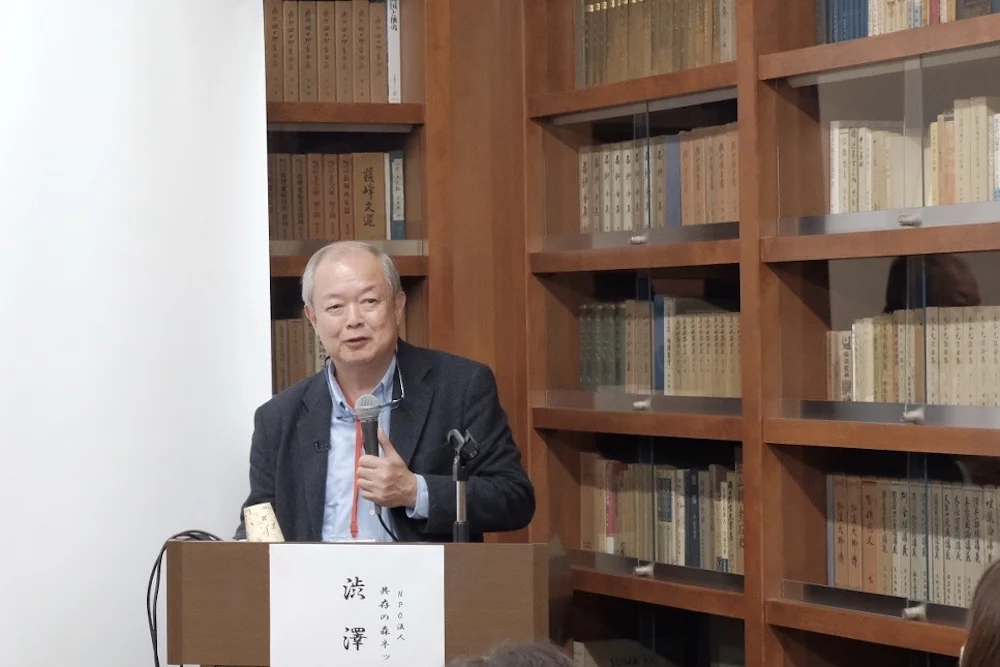
The 17th session was conducted by Tetsuo Goda from the Ministry of Education, Culture, Sports, Science and Technology, with the theme "How to Utilize the Curriculum in the With-Corona and Post-Corona Society."
On September 26, 2020 (Saturday), I participated in the "17th Kurashiki Mirai K Juku" and picked up and introduced what I felt should be known by people other than those involved in education.
What is the Takahashi River Basin Future Career Education Seminar?
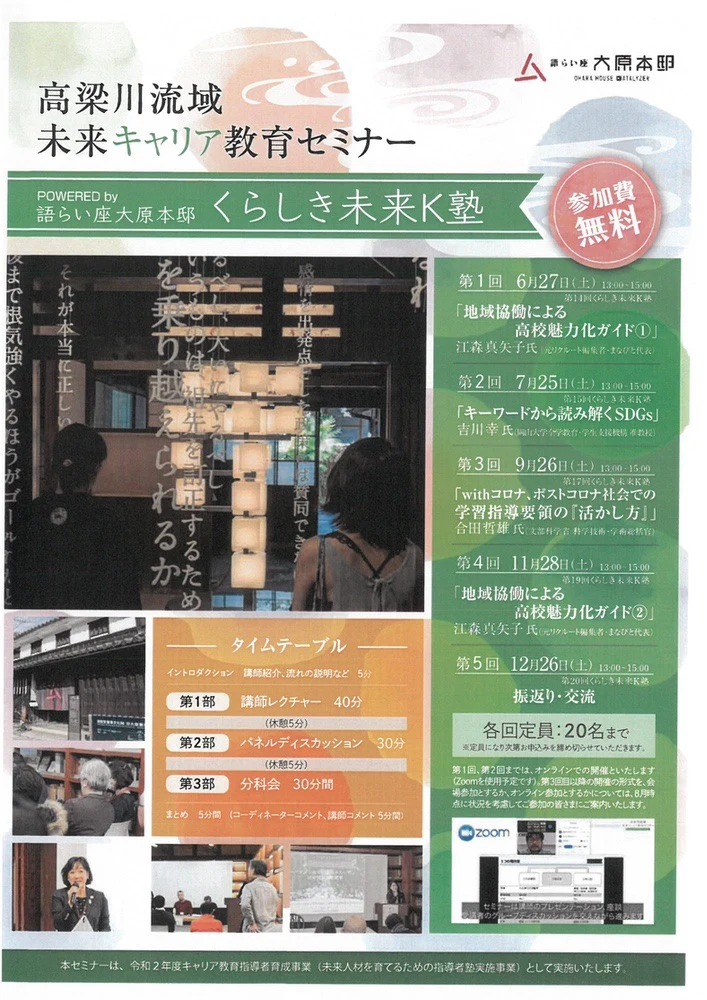
The "Kurashiki Mirai K Juku" for the 2020 fiscal year is also being held as the "Takahashi River Basin Future Career Education Seminar."
The "Takahashi River Basin Future Career Education Seminar" is a monthly seminar that supports the creation of connections among teachers, businesses, and the community, in collaboration with Kurashiki City's projects.
This is the third session of a total of five seminars.
The first and second sessions were primarily held online due to measures against the COVID-19 pandemic, but the third session was held as a hybrid seminar with both in-person and online participation, limited to a smaller number of participants.
Please see the following articles for reports on the first and second sessions.
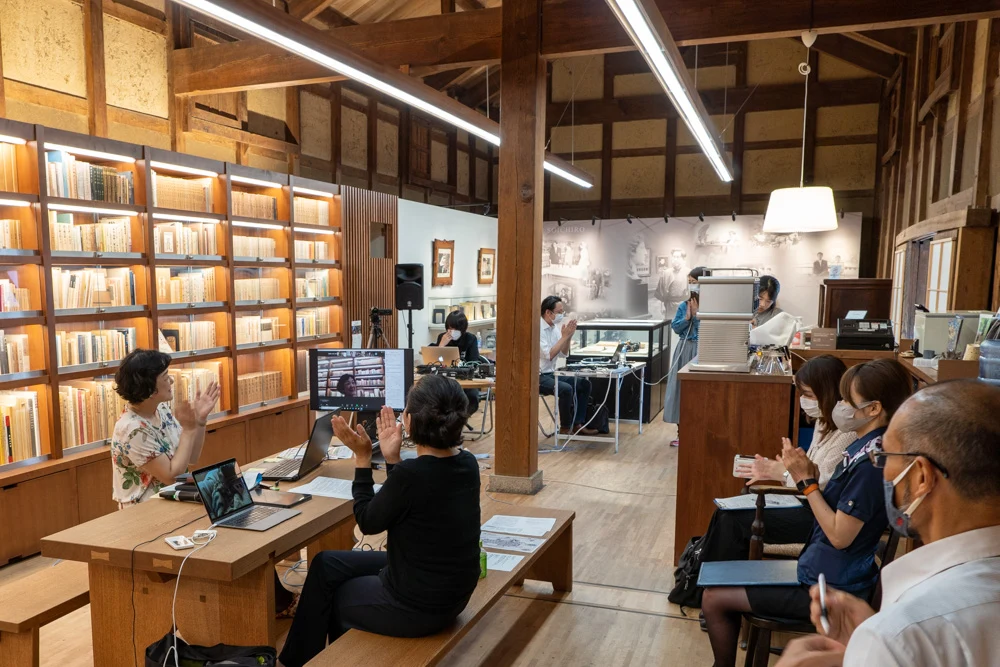
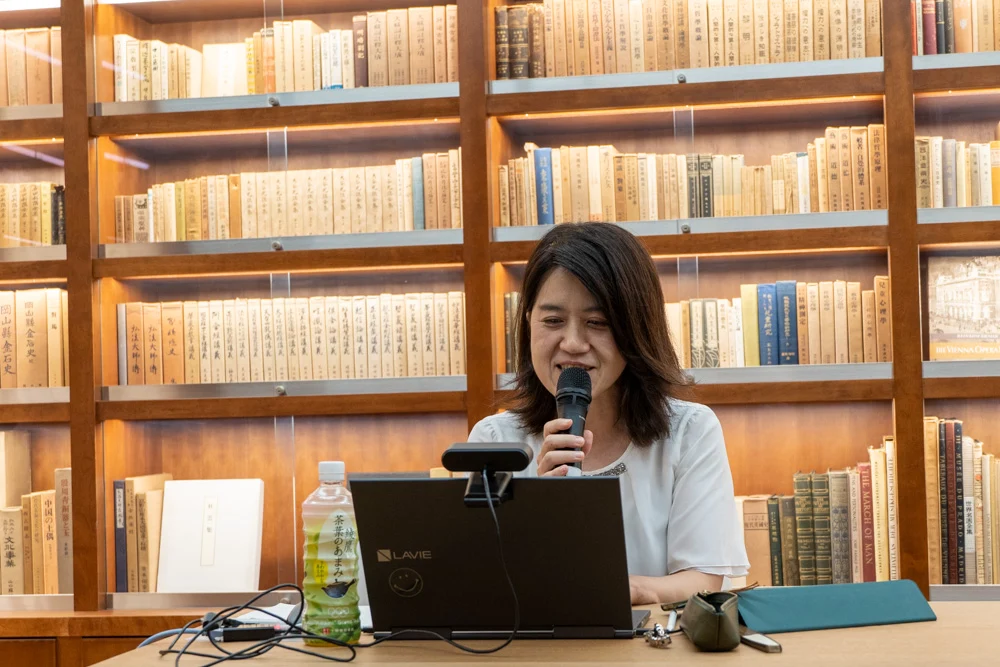
Overview of the 17th Kurashiki Mirai K Juku "How to Utilize the Curriculum in the With-Corona and Post-Corona Society"
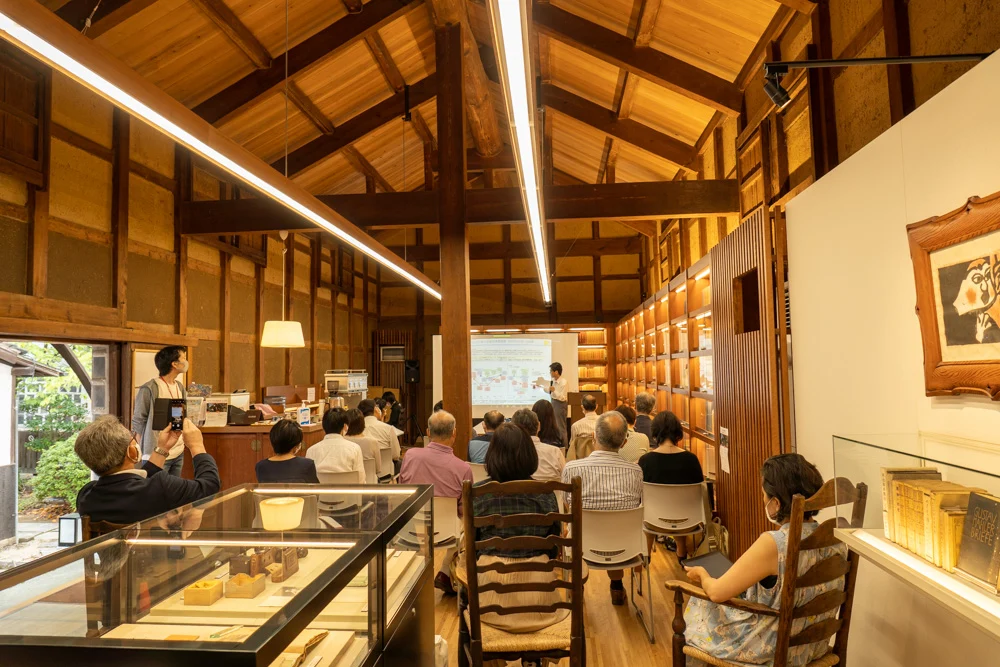
This time, the theme was "Curriculum," and the seminar was held in the following order.
- Lecture by Tetsuo Goda from the Ministry of Education, Culture, Sports, Science and Technology
- Workshop
- Q&A session
Tetsuo Goda from the Ministry of Education, Culture, Sports, Science and Technology is one of the bureaucrats involved in the revision of the "Curriculum Guidelines" in 2017 and 2018.
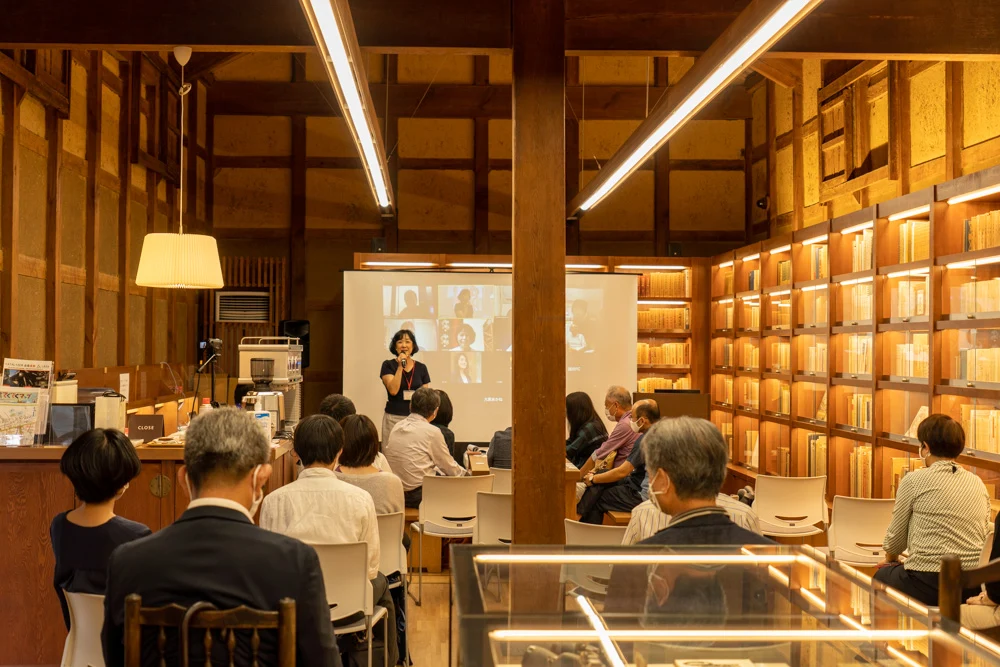
The number of participants was "about 30" in total, both in-person and online.
Participants included a wide range of people, mainly from the education sector, as well as business owners and local politicians.
Tetsuo Goda's Lecture
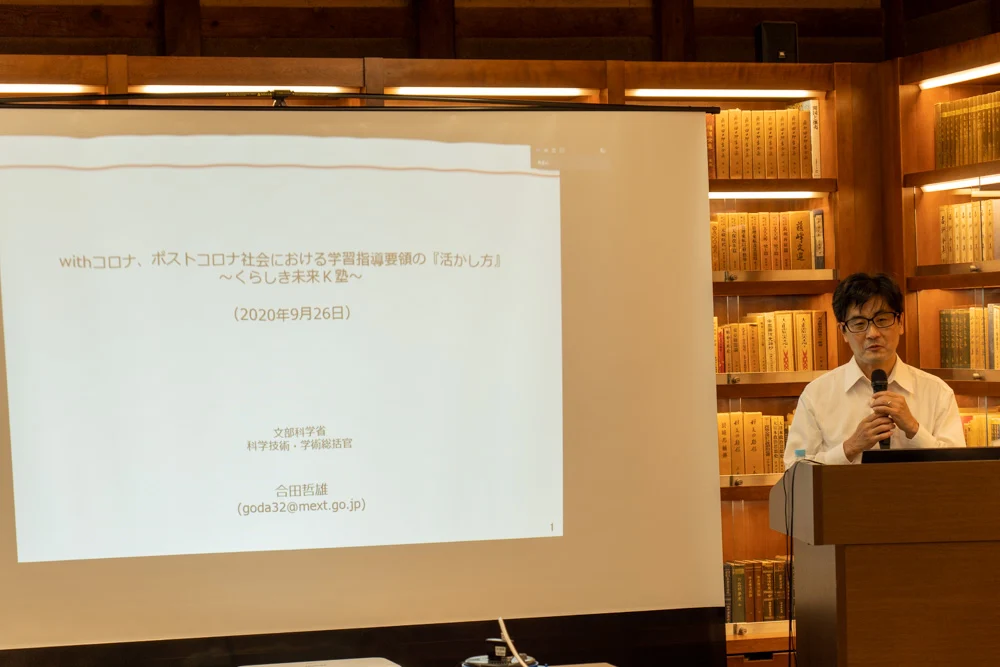
The "Curriculum Guidelines" may be familiar to those in the education sector, but many people, including employees of private companies and freelancers, may feel that they have little connection to it.
I am one of those people.
However, as a father of two children, I have never felt the importance of educational institutions like I did during the COVID-19 pandemic in 2020.
The reason is the "nationwide school closures starting in March 2020."
Tetsuo Goda's lecture began with an introduction to the behind-the-scenes of the announcement of nationwide school closures.
At that time (February 2020), due to the many unknowns regarding the COVID-19 pandemic, we were forced to switch to telework and online classes.
As a result, the "value of schools themselves" was re-evaluated.
Schools as "Welfare Spaces" Beyond Education
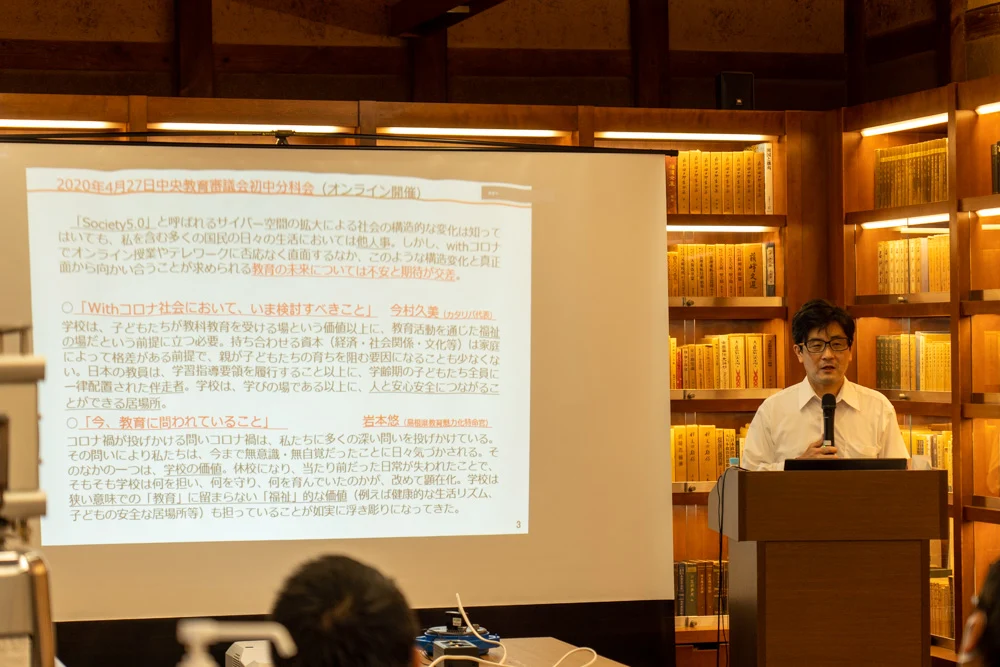
With the school closures, the "everyday life that was taken for granted" was lost, and it became clear what schools were responsible for, what they protected, and what they nurtured," quoting a participant's statement from the Central Education Council on April 27, 2020, Goda said.
During the subsequent Q&A session, a university student mentioned that "learning can be done online, but human relationships have become thin," which is an example of how schools functioned as "places of belonging."
Goda's daughter, who attends university, also reportedly cried because she couldn't conduct experiments due to the school closures.
There are many other examples. However, this does not mean that "traditional school education" was better.
As a result of the increase in online classes, there are cases where students who wanted to learn but couldn't (due to illness or school refusal) were able to participate in classes.
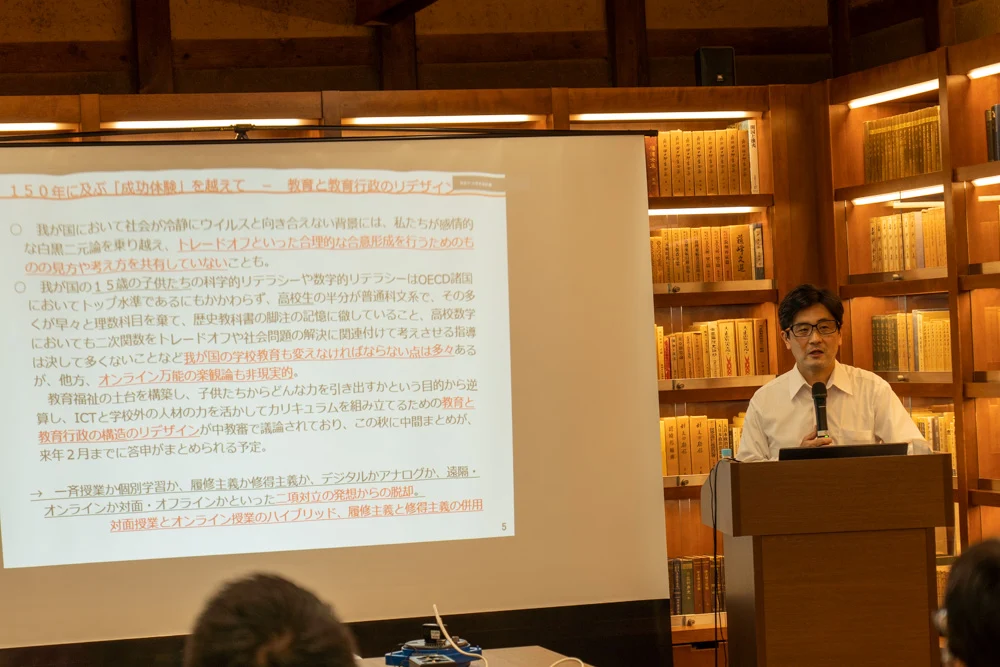
- Classroom instruction or individual learning
- Curriculum-based or competency-based
- Digital or analog
- Remote/online or face-to-face/offline
Rather than this binary opposition, it is important to combine both in a "hybridization."
This can be said not only for schools but also for general businesses.
"School Ver.3.0" Towards Society 5.0
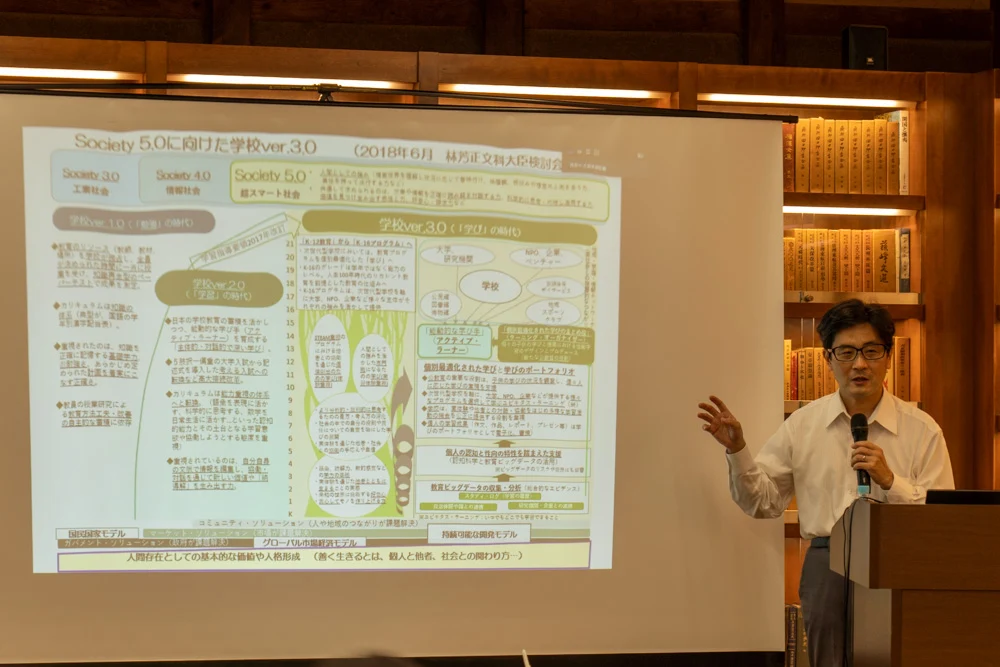
There is a policy called "Society 5.0."
Society 5.0 is a human-centered society that achieves both economic development and the resolution of social issues through a system that highly integrates cyber space (virtual space) and physical space (real space).
Source: Cabinet Office "Society 5.0"
In a society where all people and things are connected through the Internet of Things (IoT), and knowledge and information are shared, the role of schools will also change.
- School Ver.1.0 is the "Era of Study"
- School Ver.2.0 is the "Era of Learning"
- School Ver.3.0 is the "Era of Learning"
Schools are trying to change.
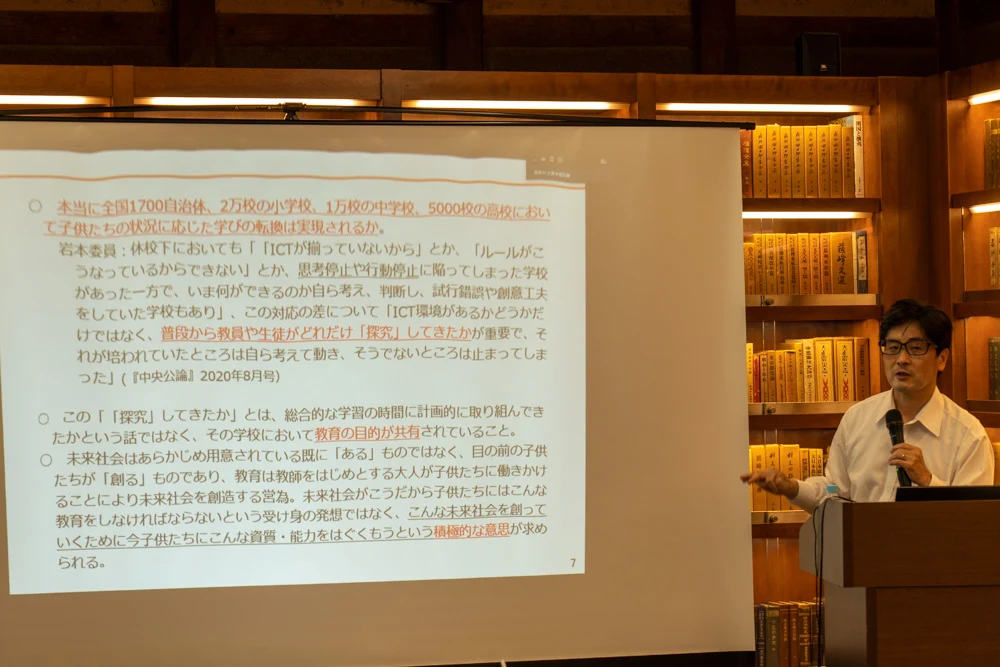
However, if teachers and adults have a passive mindset of "this is what education is needed for children because this is how future society will be," it will lead to children's "difficulties in living."
Children who distance themselves from the shared recognition of "this is normal" in classes or schools may feel isolated or excluded.
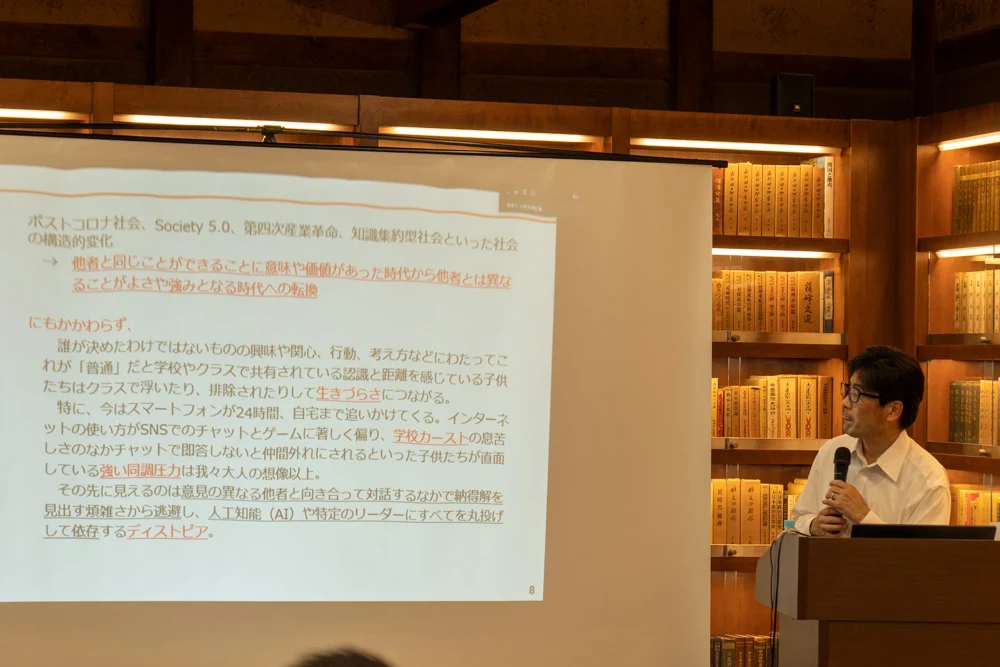
Now that smartphones chase children 24 hours a day, it is necessary to understand that the "strong pressure to conform" that children face is beyond adults' imagination.
That is why there is a need for a proactive intention to cultivate such qualities and abilities in today's children to create such a society.
"Mastering" the Curriculum
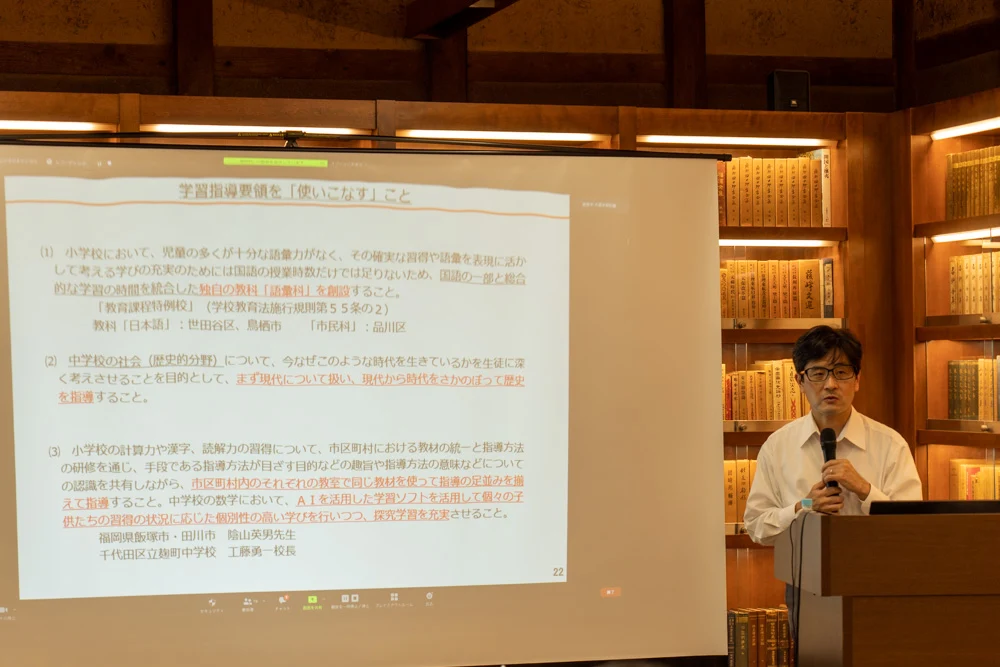
Now, I will introduce the main topic, which is the "Curriculum Guidelines," but first, do you know what it is?
According to the Ministry of Education, Culture, Sports, Science and Technology's website, it is described as follows.
The "Curriculum Guidelines" are standards for educational curricula established by the Ministry of Education, Culture, Sports, Science and Technology to ensure a certain level of quality in schools nationwide. They are revised approximately every ten years.
Ministry of Education, Culture, Sports, Science and Technology: Basic Information on the Curriculum Guidelines
Textbooks and timetables for children are created based on these guidelines.
The most recent revision was in 2017 and 2018, and it will be implemented on the following schedule.
- Elementary School: From the 2020 fiscal year
- Junior High School: From the 2021 fiscal year
- High School: From the 2022 fiscal year
I used to think of it as a kind of manual for what should be done in school education.
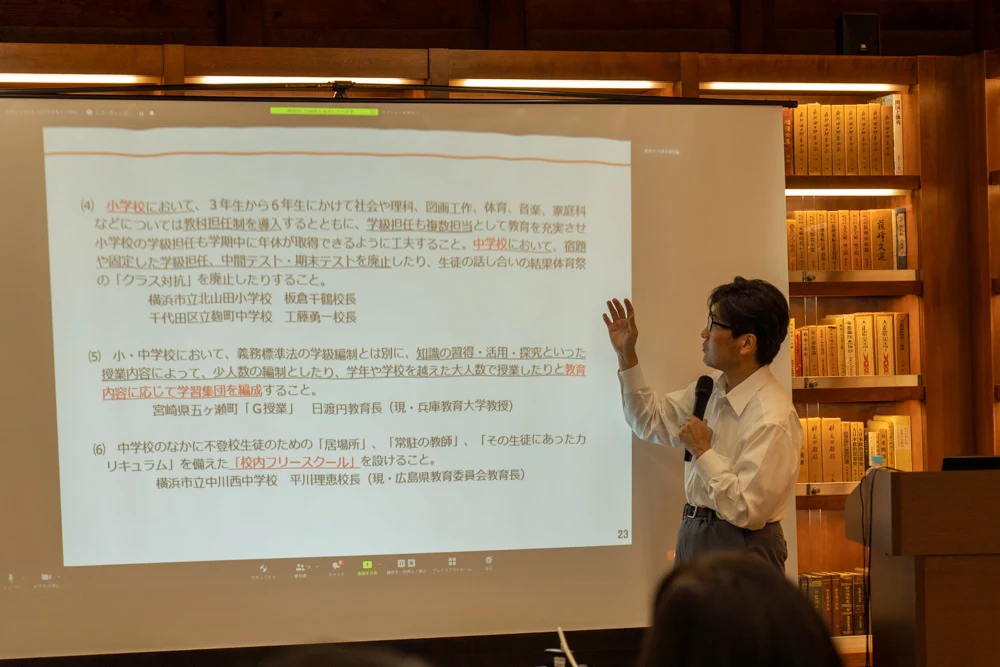
Therefore, I thought it would be written in great detail, but it is merely a "standard," and the detailed implementation is left to the schools and teachers.
What surprised me during Goda's lecture was the example of a school that abolished mid-term and final exams in junior high school.
I thought mid-term and final exams were "rules of junior high school."
However, the fact that they can be abolished means that they are not "rules" stipulated by the Curriculum Guidelines.
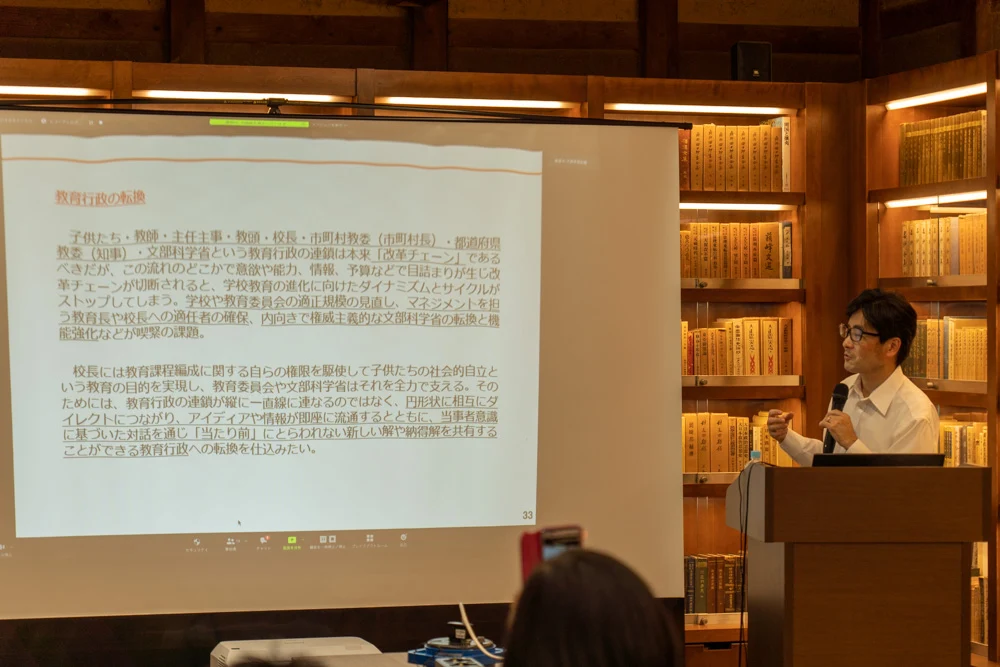
From this, it can be said that it is important to consider the "value of the school itself" and to make decisions about the operation of the school with a proactive mindset.
Conclusion
The concept of the "curriculum guidelines," which can be considered a national guideline, felt like a story from a distant world.
However, when I listened to the stories of those involved in its creation, it strangely felt closer to me.
It is obvious, but the "curriculum guidelines" are also something created by people.
During the school closures from March to May 2020, what I felt as a parent of an elementary school child was the importance of the existence of "teachers".
For example, I can understand the answers to elementary school math and Japanese.
However, I do not know "how to teach." I realized the value of a "teacher" who can teach from the child's perspective.
If it is just about conveying the content written in textbooks, there may be aspects that can be done through online classes.
Perhaps future education may mostly become that way. However, that does not mean that "face-to-face education" is unnecessary.
I felt such things as "a parent."
Mr. Goda, who is involved in the creation of the curriculum guidelines as a bureaucrat, mentioned that it is important to combine both rather than seeing them as a binary opposition, creating a "hybridization." I found that very reassuring.
Articles about Ohara House Katalyzer
Data for the 17th Kurashiki Future K School / 3rd Takahashi River Basin Future Career Education Seminar
| Name | 17th Kurashiki Future K School / 3rd Takahashi River Basin Future Career Education Seminar |
|---|---|
| Date | September 26, 2020 (Saturday) 1:00 PM - 4:00 PM |
| Location | 1-2-1 Chuo, Kurashiki City, Okayama Prefecture |
| Participation Fee (Tax Included) | Free |
| Homepage | Takahashi River Basin Future Career Education Seminar |