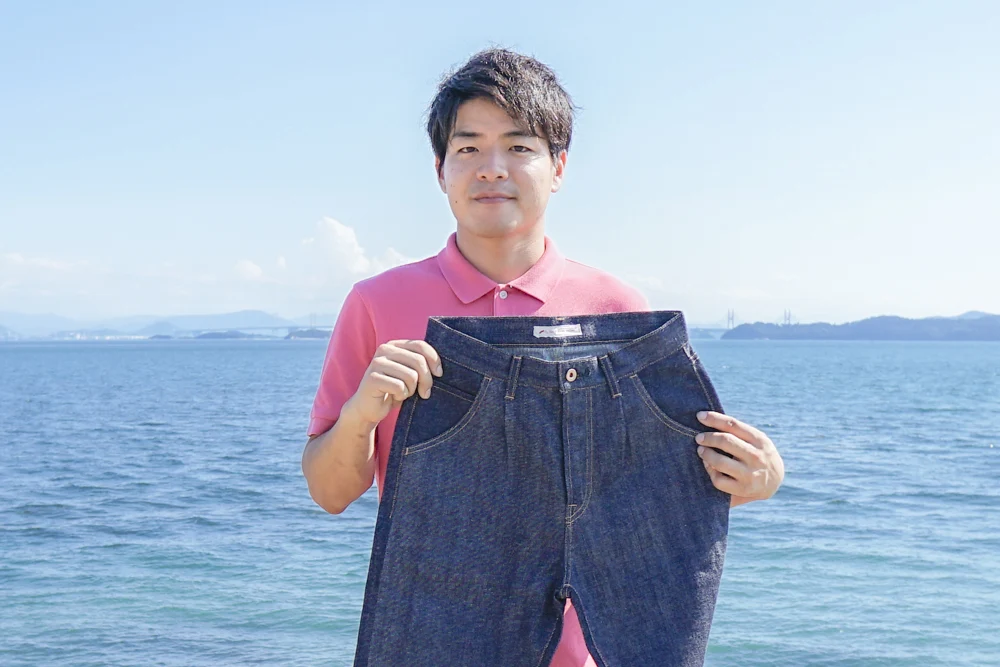
Is the activity to protect the global environment something that can only be done by certain environmental organizations?
One way for us general consumers to contribute to environmental protection is to purchase low environmental impact products.
However, it is difficult to understand the impact on the environment just by looking at the products on store shelves, and it seems necessary to know the production process in order to choose products appropriately.
The apparel brand land down under offers " circular jeans " that produce no waste by circulating resources.
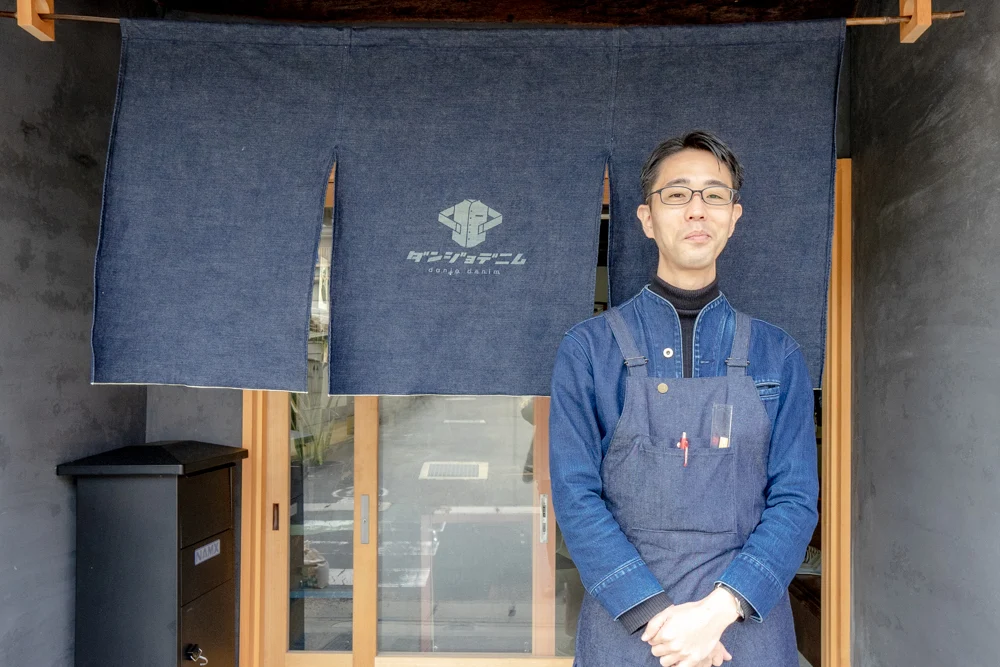
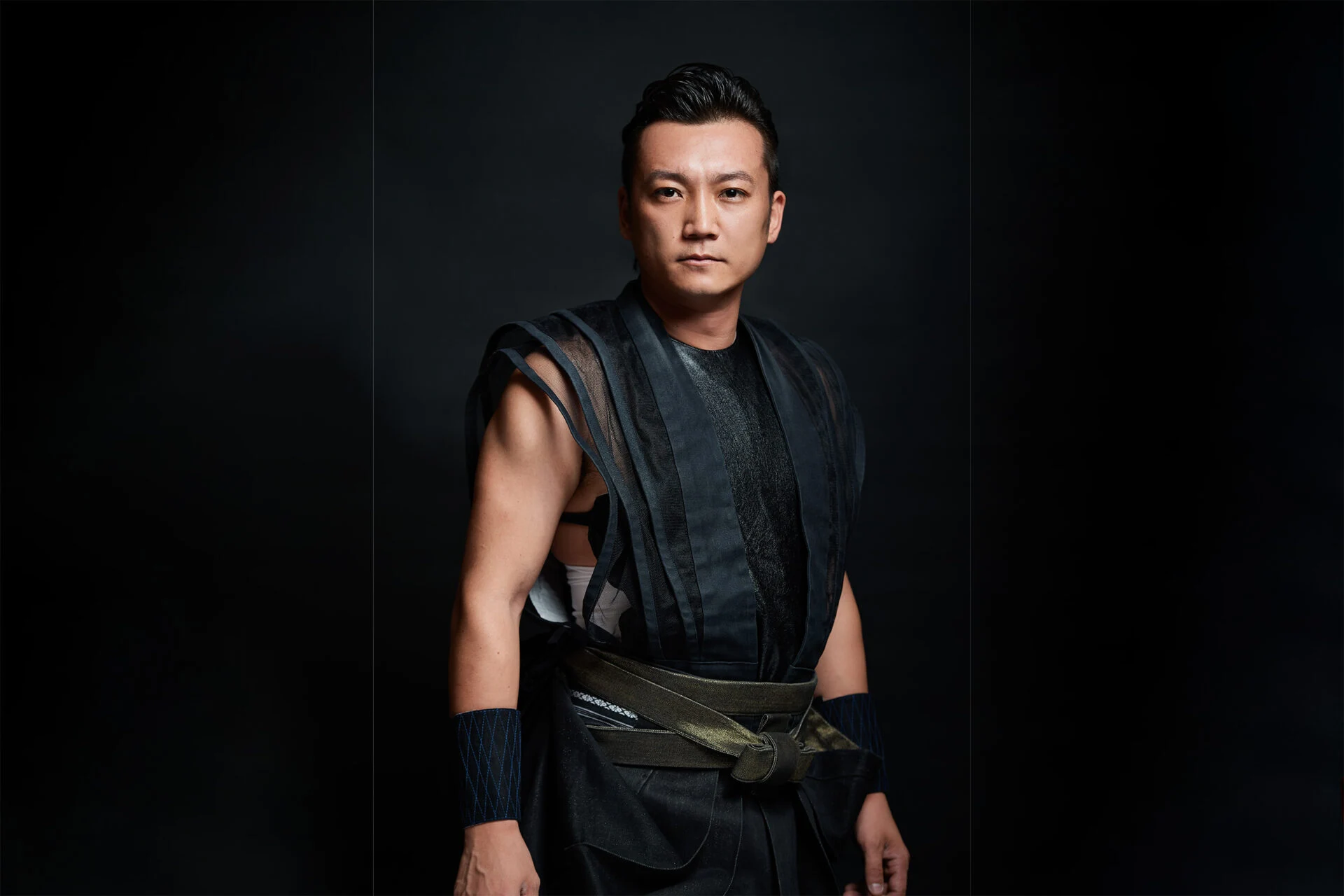
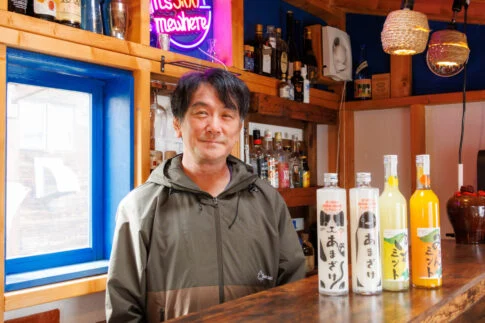
Ikegami Yoshiyuki has established land down under, thinking of introducing the concept of circular economy into jeans making through his experience as a regional revitalization cooperation volunteer in Kojima, Kurashiki City.
We will introduce the content of the interview with Mr. Ikegami about the background of the establishment of land down under and the circular jeans.
Apparel brand "land down under" aiming for a circular economy
What is land down under?
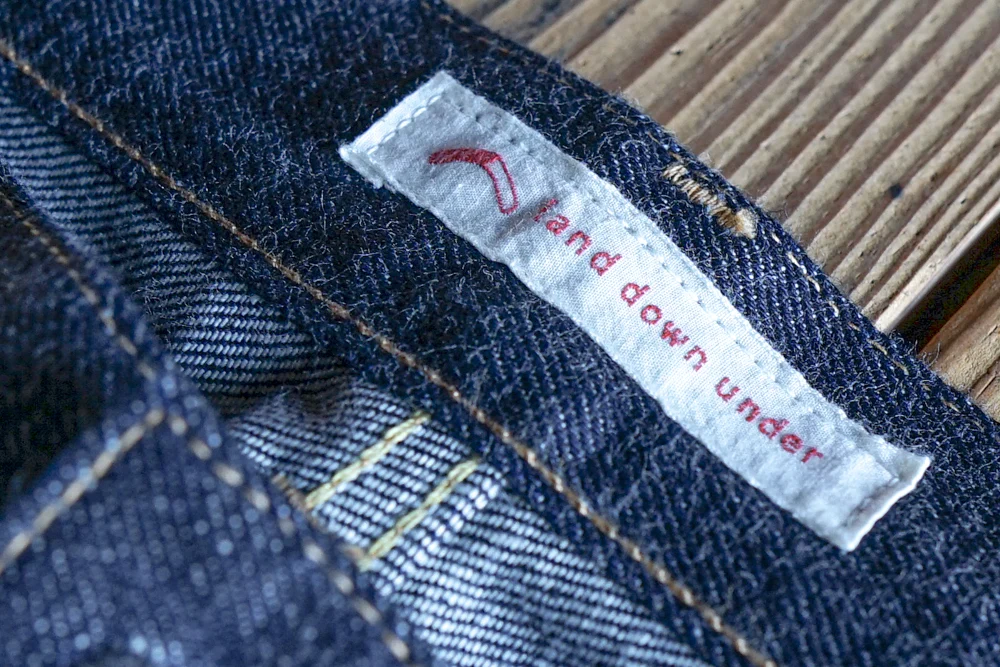
Mr. Ikegami felt discomfort with the structure of the apparel industry, where products are mass-produced and mass-disposed, and established land down under in January 2021, intending to introduce the concept of circular economy into jeans making.
Circular economy is the idea of utilizing products that would have been discarded as waste as resources to create the same products.
Land down under aims to realize the circular economy in jeans making by providing "circular jeans".
How to purchase "circular jeans"
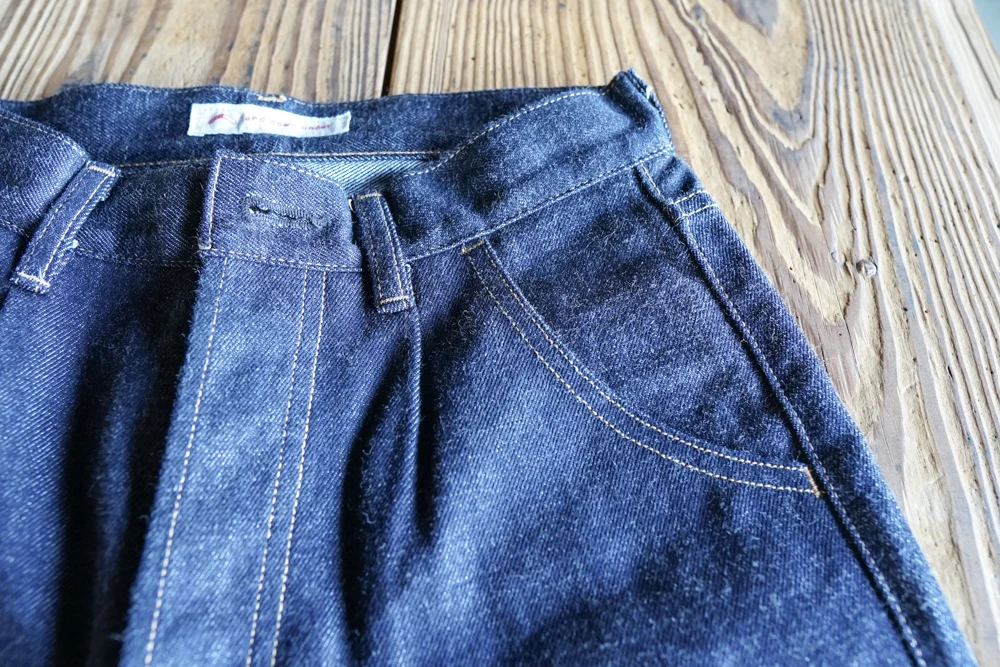
Circular jeans can be purchased from the land down under website.
Sizes are available in 3S, SS, S, M, L, and LL.
The website organizes the concept of land down under and the ideas of circular economy in clothing production, so those who are interested should check it out.

Background of Mr. Ikegami Yoshiyuki, representative of land down under
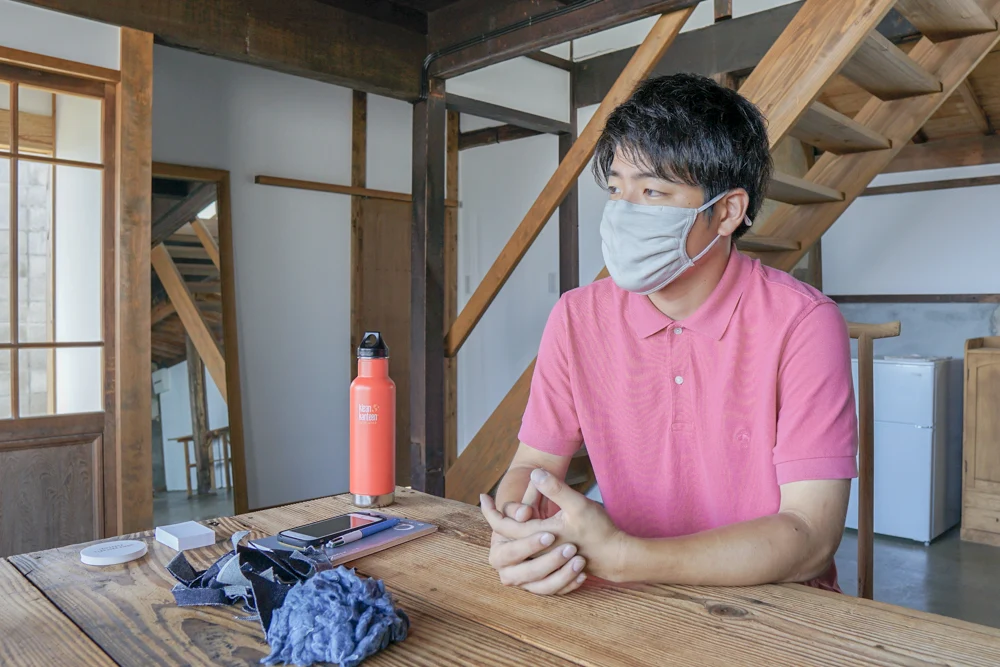
Mr. Ikegami, who had an interest in clothing production, got a job at a major apparel company after completing his master's program in graduate school.
However, feeling that he wanted to be more involved in clothing production, Mr. Ikegami decided to leave the company and moved to Kojima, a jeans production area, as a regional revitalization cooperation volunteer.
To discover new regional revitalization projects, he visited many textile-related factories.
He became aware of the reality of the apparel industry, where products are mass-produced and mass-disposed, and came up with the idea of circular jeans.
After completing his term as a regional revitalization cooperation volunteer in Kurashiki City in March 2021, he continues to challenge himself in jeans making based on the concept of circular economy as the representative of land down under.
Interview with Mr. Ikegami, representative of land down under
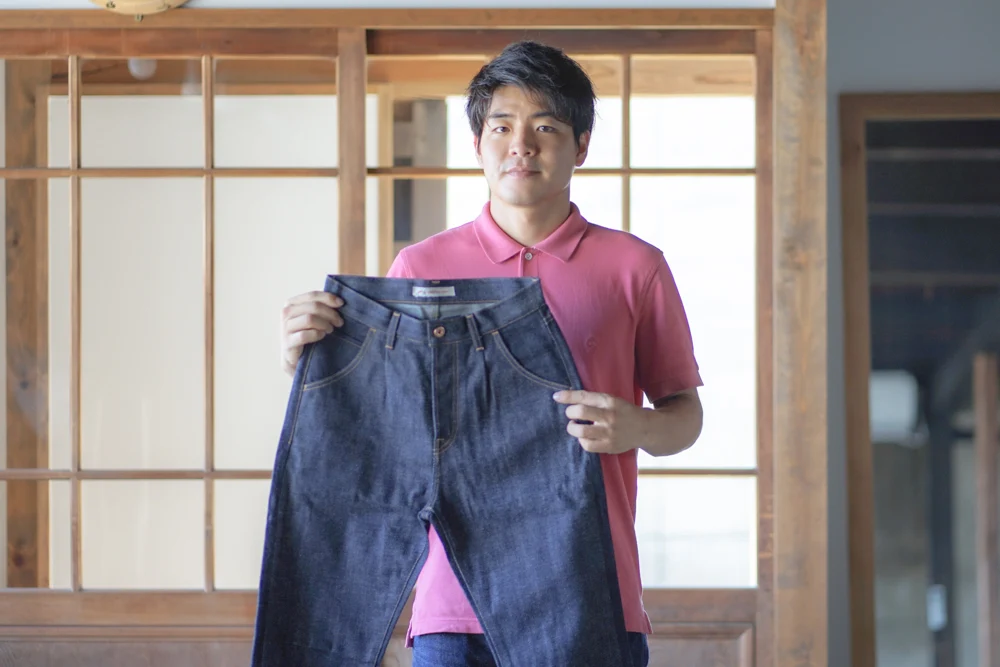
Background of becoming a regional revitalization cooperation volunteer
What prompted you to become a regional revitalization cooperation volunteer?
Ikegami (no honorifics)
I was interested in clothing production, so after graduating from graduate school, I got a job at a major apparel company.
However, as I had anticipated before joining, my career at the major apparel company started as a sales associate in a physical store.
There were many practical tasks related to sales, such as store layout and inventory management, and I couldn't gain sufficient knowledge about clothing production, which I was originally interested in.
Of course, since it is a large company, there is a possibility of being assigned to a department directly related to clothing production, such as the production department, but it would likely take about five years to transfer.
I thought it would be more meaningful to spend time in a clothing production area, so I decided to resign after four months of joining.
Why Kojima, Kurashiki City?
Ikegami
Generally, clothing loses value when it gets sweat stains or fades.
On the other hand, jeans are characterized by gaining flavor the more they are used.
I was attracted to the uniqueness of jeans, where aging becomes value.
So, when I researched Kojima, the jeans production area, I happened to find a recruitment notice for regional revitalization cooperation volunteers.

Activities as a regional revitalization cooperation volunteer
How did you act when you first arrived?
Ikegami
I visited factories of other local specialties in Kurashiki City, such as canvas, tatami edging, and Sanada cords, through the Kojima Chamber of Commerce, which was my host.
Furthermore, I continued activities to get introduced to other related companies at the places I visited.
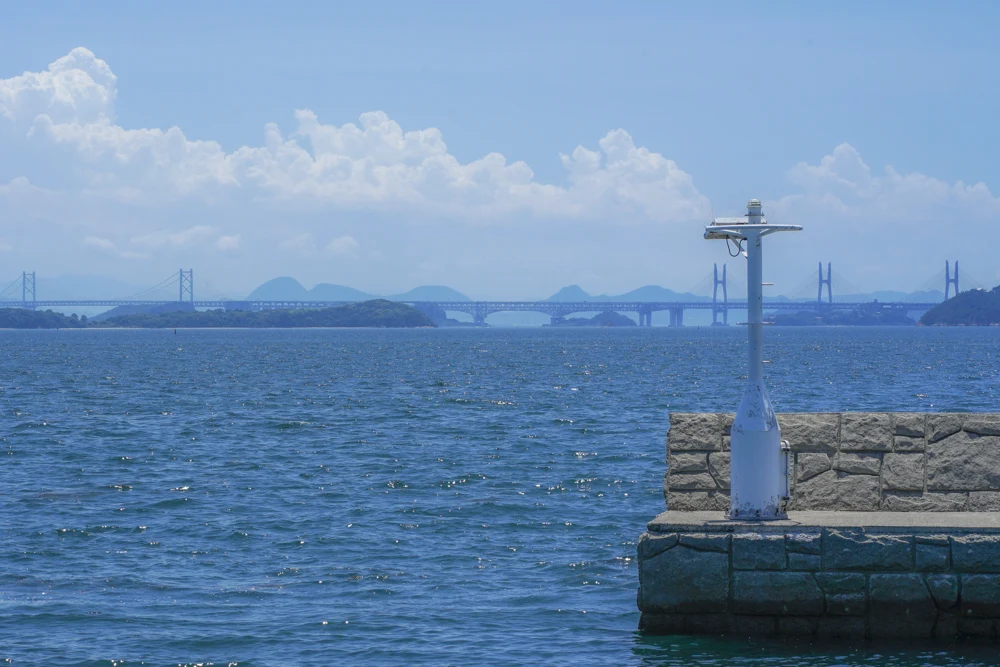
I also went to Ojigadake Hill and Washuzan Hill to enjoy the wonderful scenery of the Seto Inland Sea, and participated in casual conversations with residents at nearby cafes, trying to observe the state of the town.
To gather a lot of information, I focused on activities to visit various places for about three months.
What challenges did you notice?
I visited various places in Kojima for several months, but there were not many opportunities to interact with people of my generation.
In companies, I was often guided by older people, so the people I became close to were usually a decade or two older than me.
I also realized that there were no places for tourists and local people to interact.
Therefore, I decided to propose and get involved in establishing a complex facility that serves as both a guesthouse and a cafe, to help tourists and locals learn about Kojima's textile industry through interaction.
Are there any tips for gathering local information?
Ikegami
It is important to perceive events occurring in the region from multiple perspectives.
When organizing the information gathered by going out into the community from a multifaceted perspective, you can foresee that even though it is one event, people have completely different perceptions of it.
In my student days, I majored in cultural anthropology.
Cultural anthropology is a discipline that collects information through fieldwork in the community to capture cultural phenomena.
The habit of thinking beyond common sense may have been cultivated through my studies.
Several years have passed since I graduated from graduate school, and looking back, I have come to realize that my experiences as a student have been beneficial in my current work.
About land down under
What prompted the establishment of land down under?
Ikegami
While visiting production sites, I learned that large amounts of denim fabric that became non-standard due to defects such as scratches are discarded.
There are brands that utilize non-standard fabric, but they procure denim fabric at prices that are almost negligible.
In fact, denim fabric is a product with a high cost ratio, and the loss caused by non-standard fabric is quite significant for factories.
I felt discomfort with the structure where only the factory side suffers disadvantages without the trading companies or brands taking on risks.
I decided to create jeans using non-standard fabric in a way that minimizes the risks for the factory.
At land down under, we purchase denim fabric at a price higher than the cost required for its production and utilize it for jeans making.
How did you come up with the idea of circular economy?
Ikegami
Simply utilizing non-standard denim fabric does not solve the problem; if the products do not sell, they will become waste.
Therefore, in order to make jeans that consumers would choose, I thought one step further about how to solve the problem, which led me to the concept of circular economy.
Even if the product becomes difficult to wear, following the idea of circular economy, I started creating a system that prevents non-standard denim fabric from becoming waste by circulating resources.
By having consumers empathize with the concept of land down under and choosing our jeans, we aim to be a brand that prompts a reconsideration of mass production and mass consumption.
Please tell us about the basic concept of circular economy.
Ikegami
A common method of reusing unused textile products is to use them as cushioning material for sofas and other items.
Reusing products to create something different is called downcycling, and eventually waste will be produced, meaning resources cannot circulate forever.
On the other hand, the basic principle of circular economy aims to create the same product from the same product.
In other words, the ultimate goal is to continue making jeans from unused jeans.
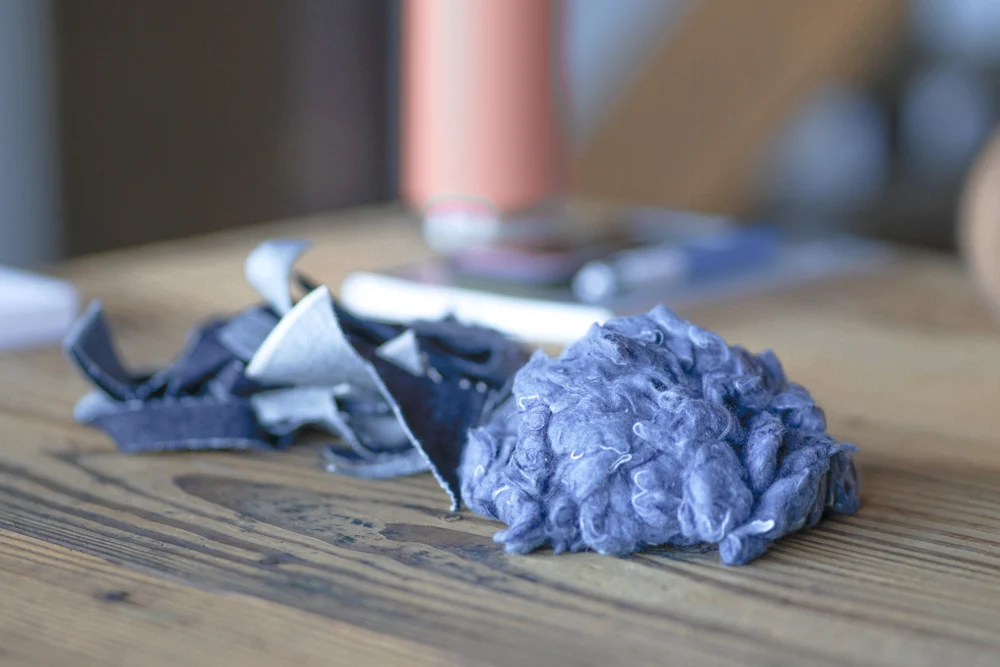
At land down under, we are building a system to circulate the materials of jeans.
Features of "circular jeans"
What does a design that is easy to recycle look like?
Ikegami
Since different materials cannot be recycled together, when recycling jeans, it is necessary to separate cotton from non-cotton materials.
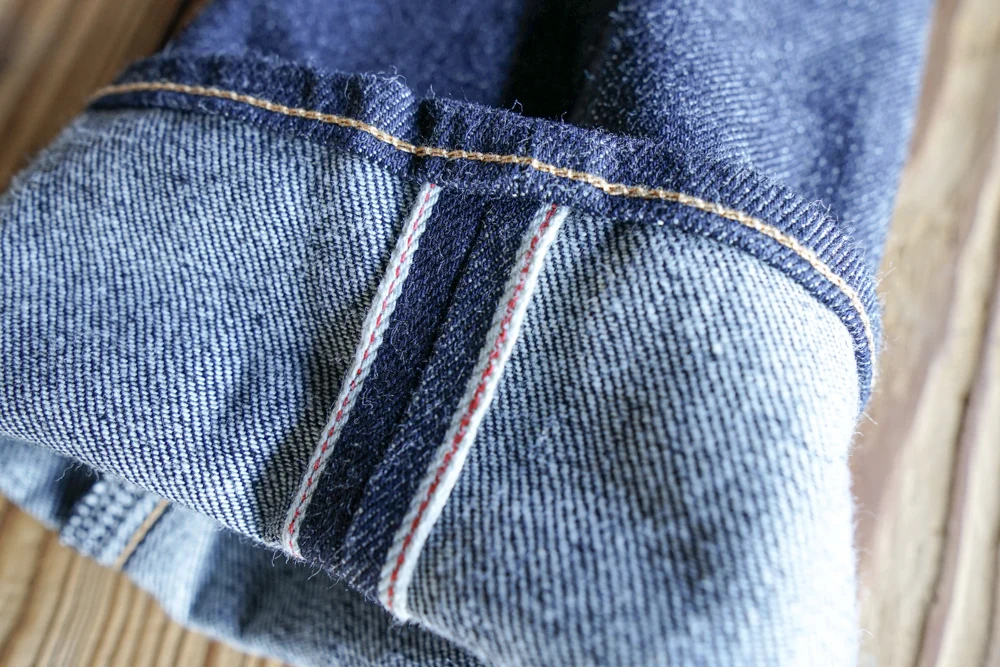
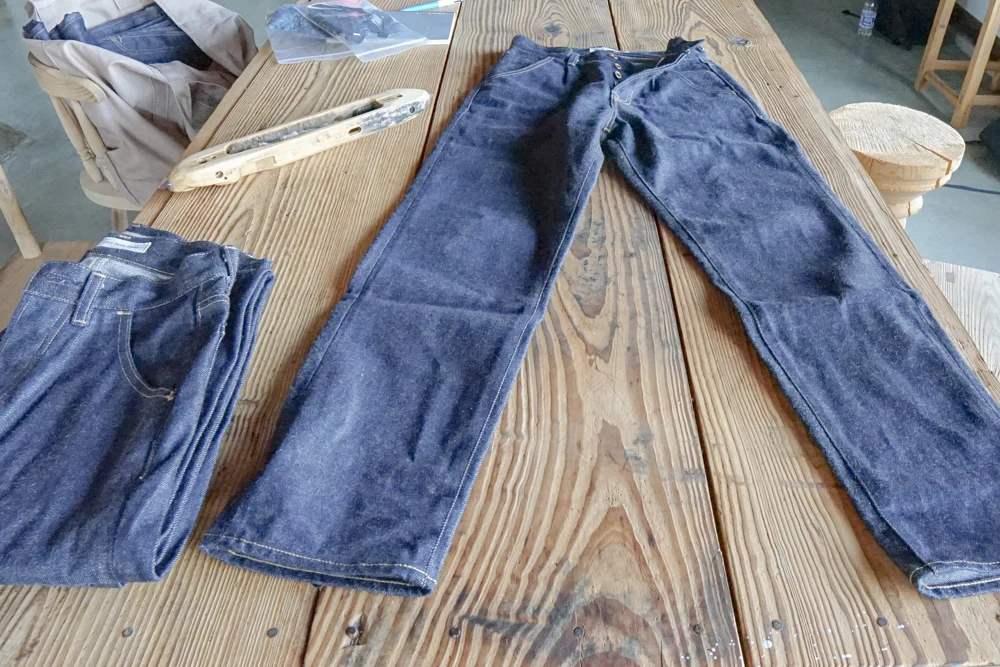
Therefore, land down under's jeans eliminate metal rivets and change the sewing thread from polyester-containing thread to cotton thread to simplify the sorting process.
In fact, the sewing thread used in jeans sold in general is often made of polyester.
Moreover, we are particular about using cotton for brand tags and care labels, which are often made with polyester.
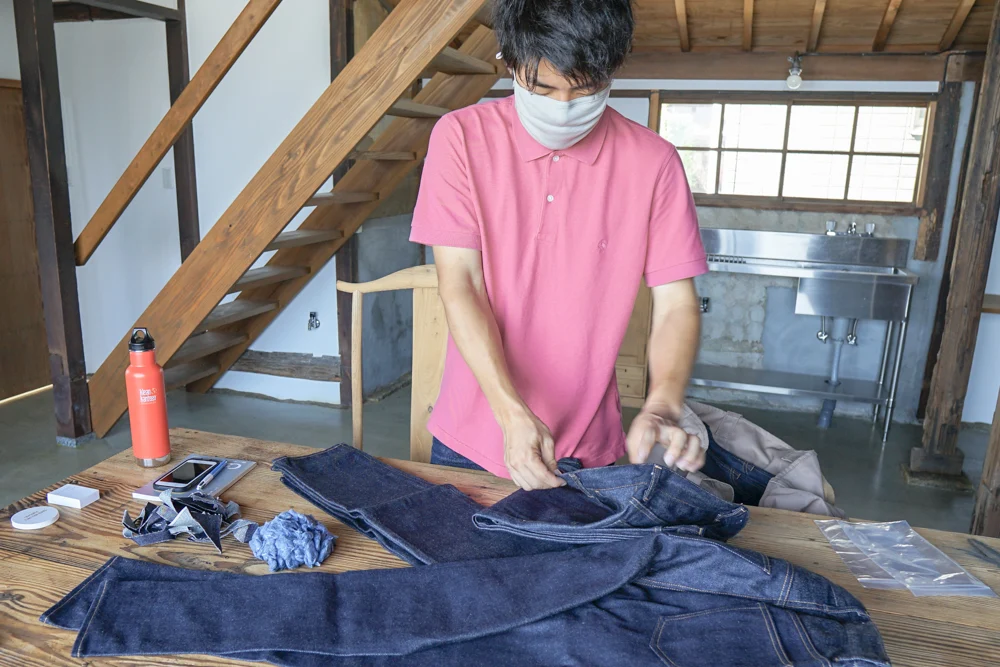
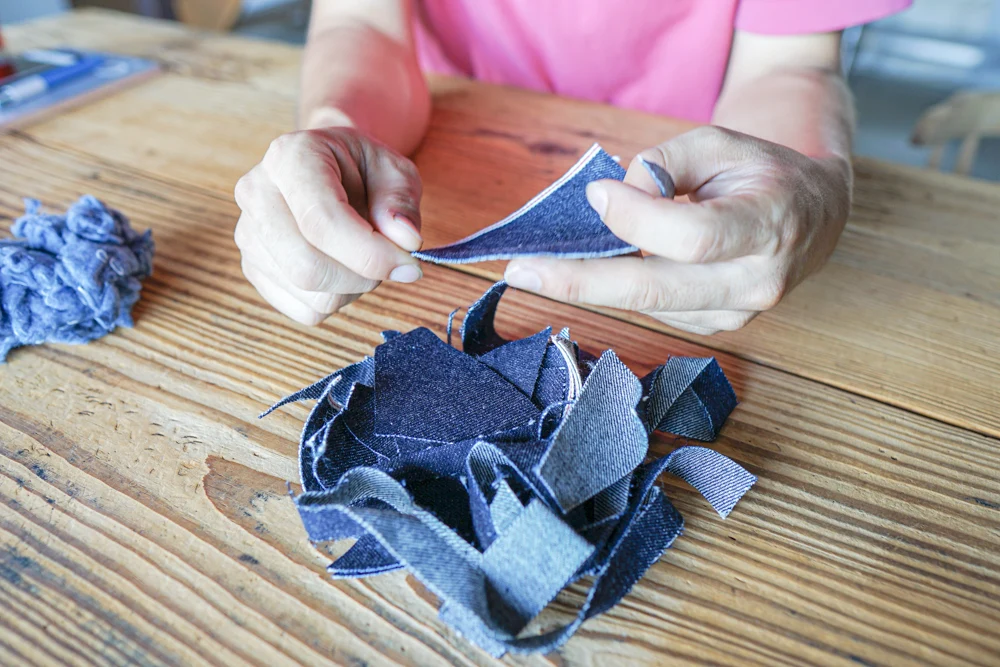
In the recycling of jeans, unused products are cut into scraps of about 4 centimeters on each side and then processed into cotton-like material using a fluffing machine.
The process of removing metal rivets and polyester sewing threads incurs labor and costs, so we have devised ways to make it easier to recycle from the start.
Is it possible to recycle 100 percent?
Ikegami
It is said that recycling denim fabric 100 percent is difficult.
When woven as fabric and then turned into cotton, the fibers become shorter, so it is necessary to mix natural materials to ensure strength and comfort.
However, in the case of cotton, a large amount of water is required for cotton cultivation, so it is said that recycling has less environmental impact than making everything from natural materials.
What will you do next to achieve a circular economy?
Ikegami
While recycling tends to attract attention, the circulation of resources in jeans production is not limited to recycling.
There are also circulations such as repair, which involves patching holes in products with fabric, and remake, which involves disassembling products that can no longer be worn and sewing them back together.
Recycling requires time and cost to turn fabric into cotton, and carbon dioxide is generated during transportation by truck and the process of turning it into fibers.
Based on the concept of a circular economy, it is important to prioritize small circulations with less environmental impact.
The recycling system is being established, so we are also considering developing systems for repair and remake.
Hearing about "Circulating Jeans"
With the growing awareness of the natural environment, the phrase "low environmental impact" has become more commonly heard.
However, I think many people are confused about how to identify products that have low environmental impact.
In the case of "circulating jeans," based on the concept of a circular economy, the system for circulating the materials of jeans contributes to reducing environmental impact.
Additionally, as a more specific example, eliminating rivets from jeans and using natural threads instead of petroleum-derived fibers for sewing thread can also be said to lower environmental impact.
The vague term "low environmental impact" has become clear with specific examples, and I learned a lot from hearing about Ikegami's efforts.
The lessons learned from "circulating jeans" seem likely to help in identifying low environmental impact products in other fields as well.
I hope this article serves as a reference for new manufacturing based on the circular economy.