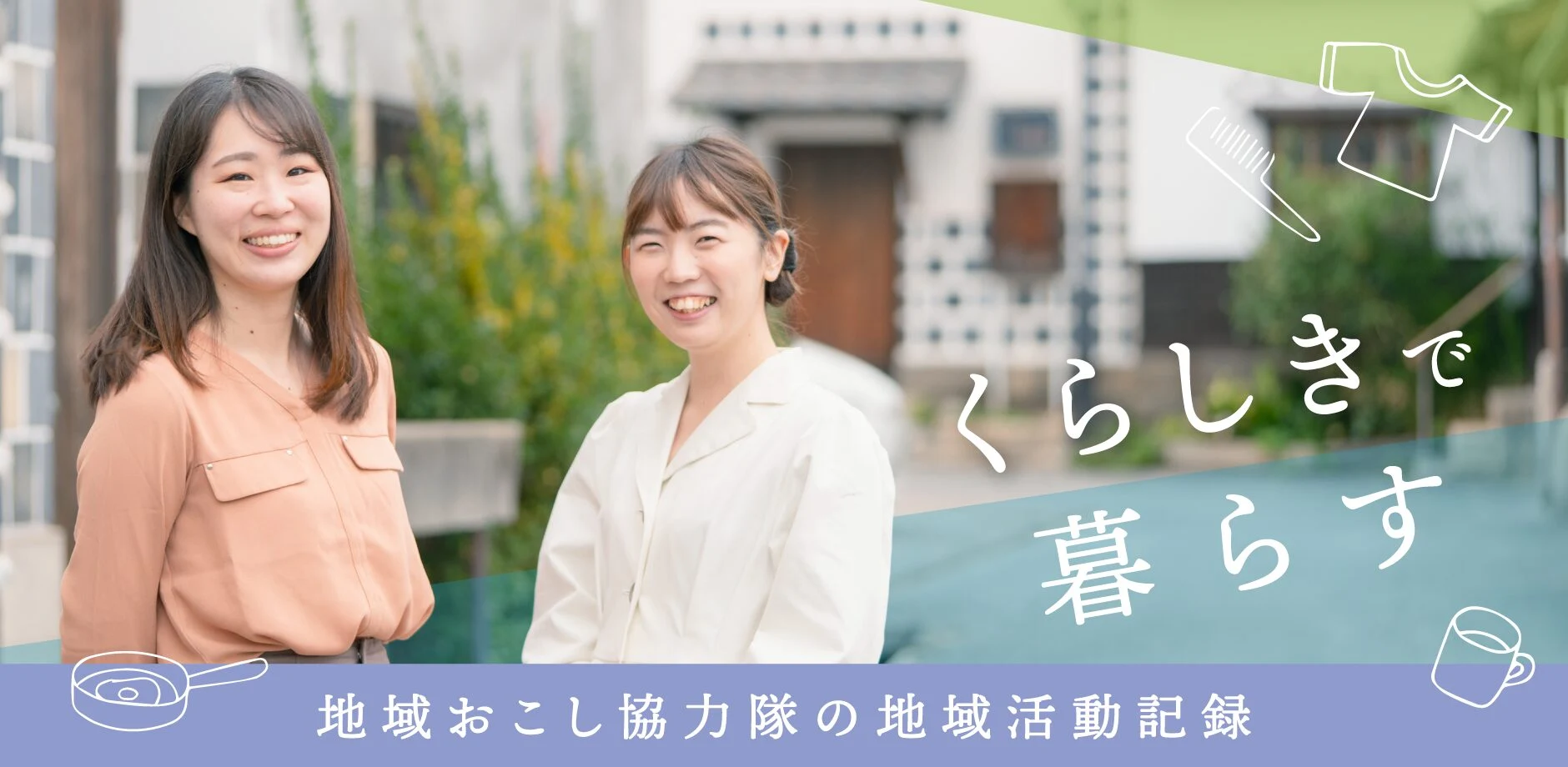
The author is a newcomer who moved from Kanagawa Prefecture to Kurashiki in 2023.
As a newcomer myself, I often ask the people I meet in Kurashiki about their hometowns. Surprisingly, there are many newcomers from outside the prefecture in Kurashiki, and there have been many occasions where conversations have sparked around migration stories.
Furthermore, just as I was thinking I wanted to connect with other newcomers, I learned about the existence of the Newcomer Exchange Meeting organized by Kurashiki City. The Newcomer Exchange Meeting is an event where newcomers living in the Takahashi River basin can interact.
With high hopes for meeting new newcomers, I decided to participate.
What is the Newcomer Exchange Meeting?
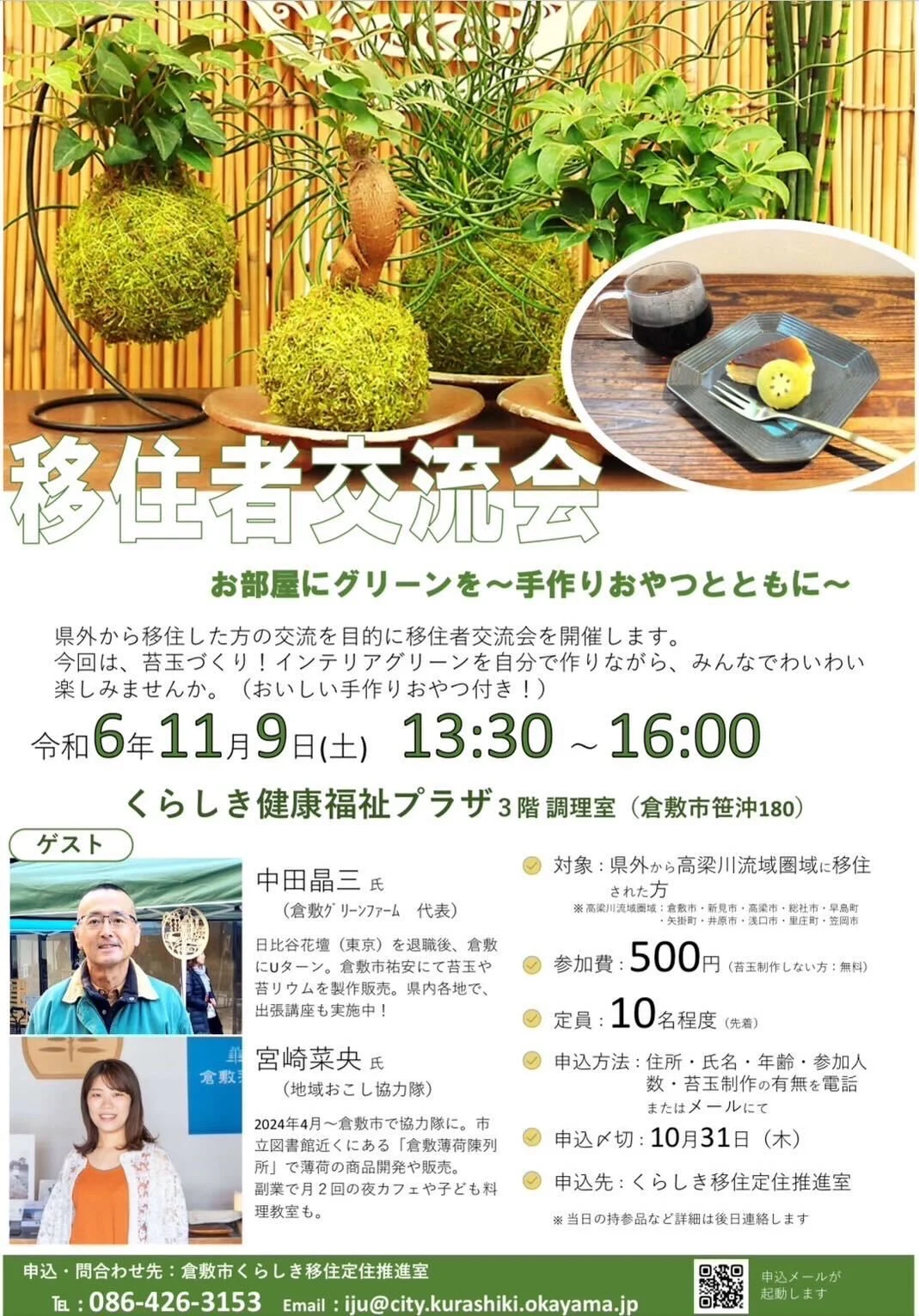
The Newcomer Exchange Meeting is an event organized by the Kurashiki City Migration and Settlement Promotion Office. It was held on Saturday, November 9, 2024.
The target participants were people who had moved to the Takahashi River basin from outside the prefecture, but in reality, most participants were newcomers to Kurashiki City. The highlight of the exchange meeting is creating moss balls. Participants enjoy interacting with each other while trying their hand at making original moss balls.
The instructor is Akira Nakada, the representative of Kurashiki Green Farm, who is engaged in community activities through moss balls. Nakada is also a returnee who moved back to Kurashiki.
After creating the moss balls, there is a time set aside to enjoy snacks and have conversations. The snacks are provided by Nao Miyazaki, a member of the Kurashiki City Regional Revitalization Cooperation Team. Miyazaki is a qualified nutritionist and served healthy snacks.
The Newcomer Exchange Meeting was held in a very warm atmosphere. Here’s a look at the events of the day.
The Day's Events
The Newcomer Exchange Meeting was held in the cooking room of the Kurashiki Health and Welfare Plaza.
The Exchange Meeting Starts! First, Choose Your Favorite Plant
Bright light streamed into the cooking room. On the cooking table, soil and moss were prepared for nine participants.
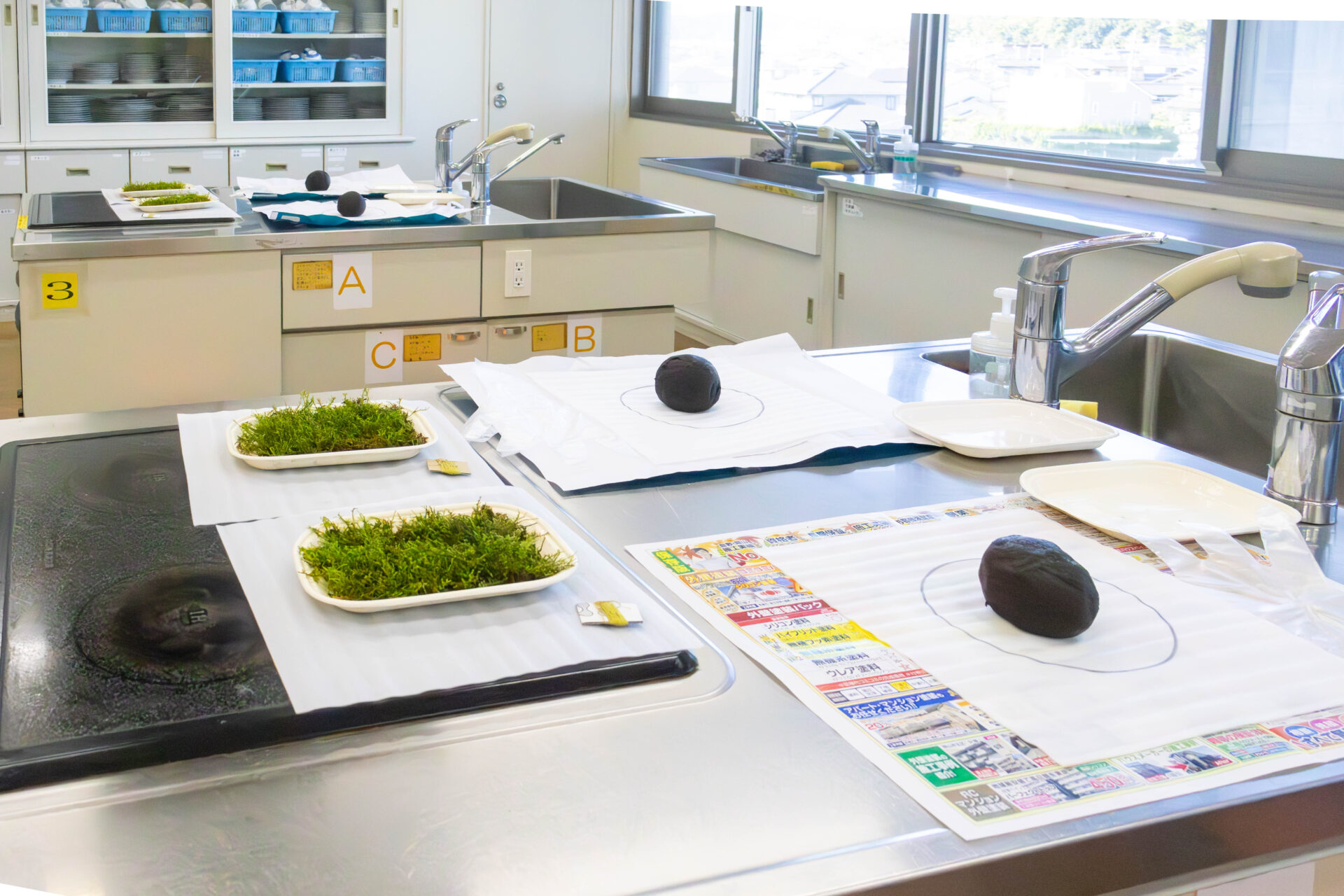
Once all the participants were gathered, the self-introduction time began. Everyone shared their names, hometowns, and how they came to move to Kurashiki. Many had moved from the Kanto and Kansai regions, but there were also participants from Kyushu and the neighboring city of Tamano.
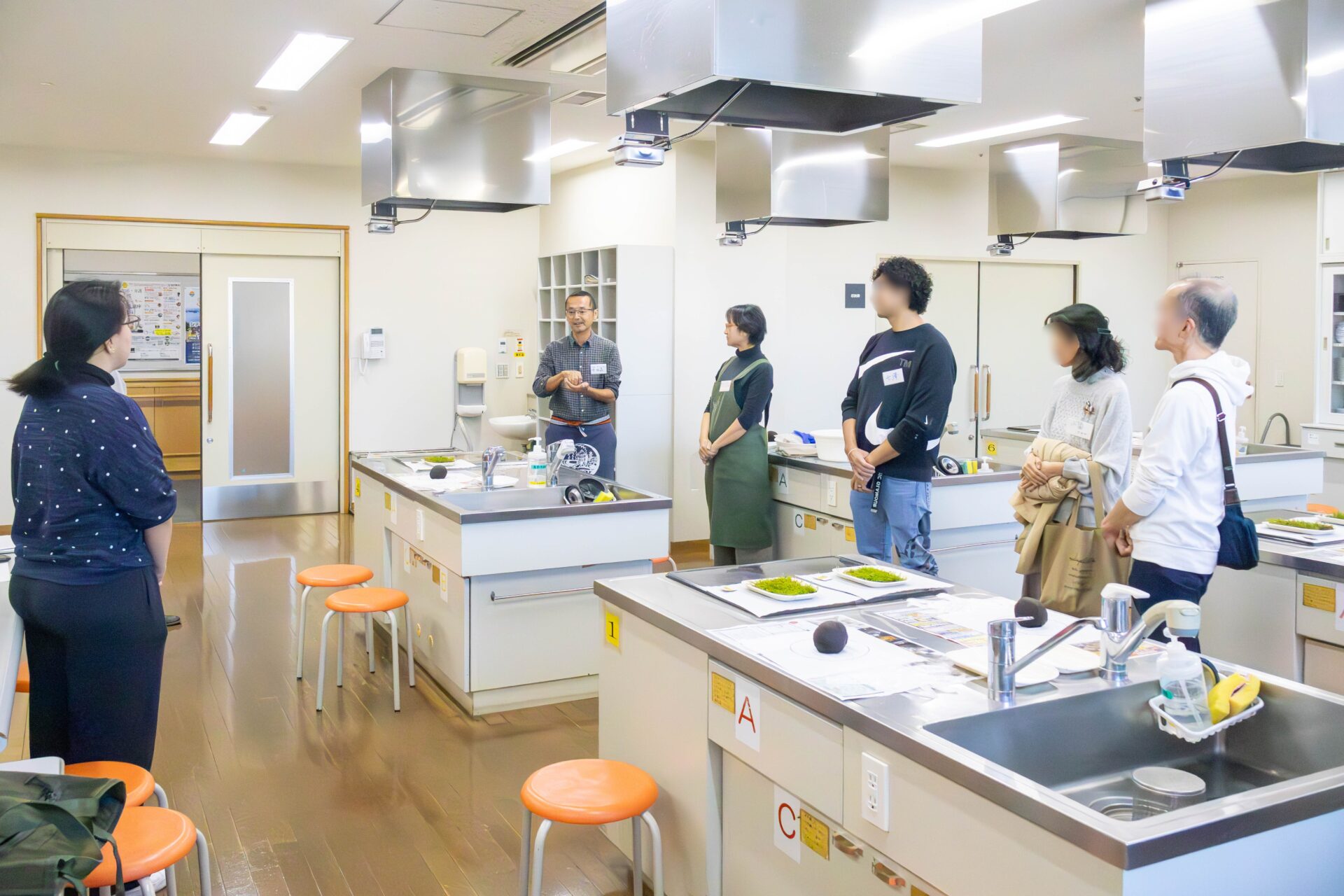
As they listened to each other's self-introductions, they found commonalities, and there were sounds of "Oh!" as the excitement of the exchange meeting began to build.
After the self-introductions, Akira Nakada from Kurashiki Green Farm explained about moss balls. There was a clear attention to detail in all the soil, moss, and tools that would be used.
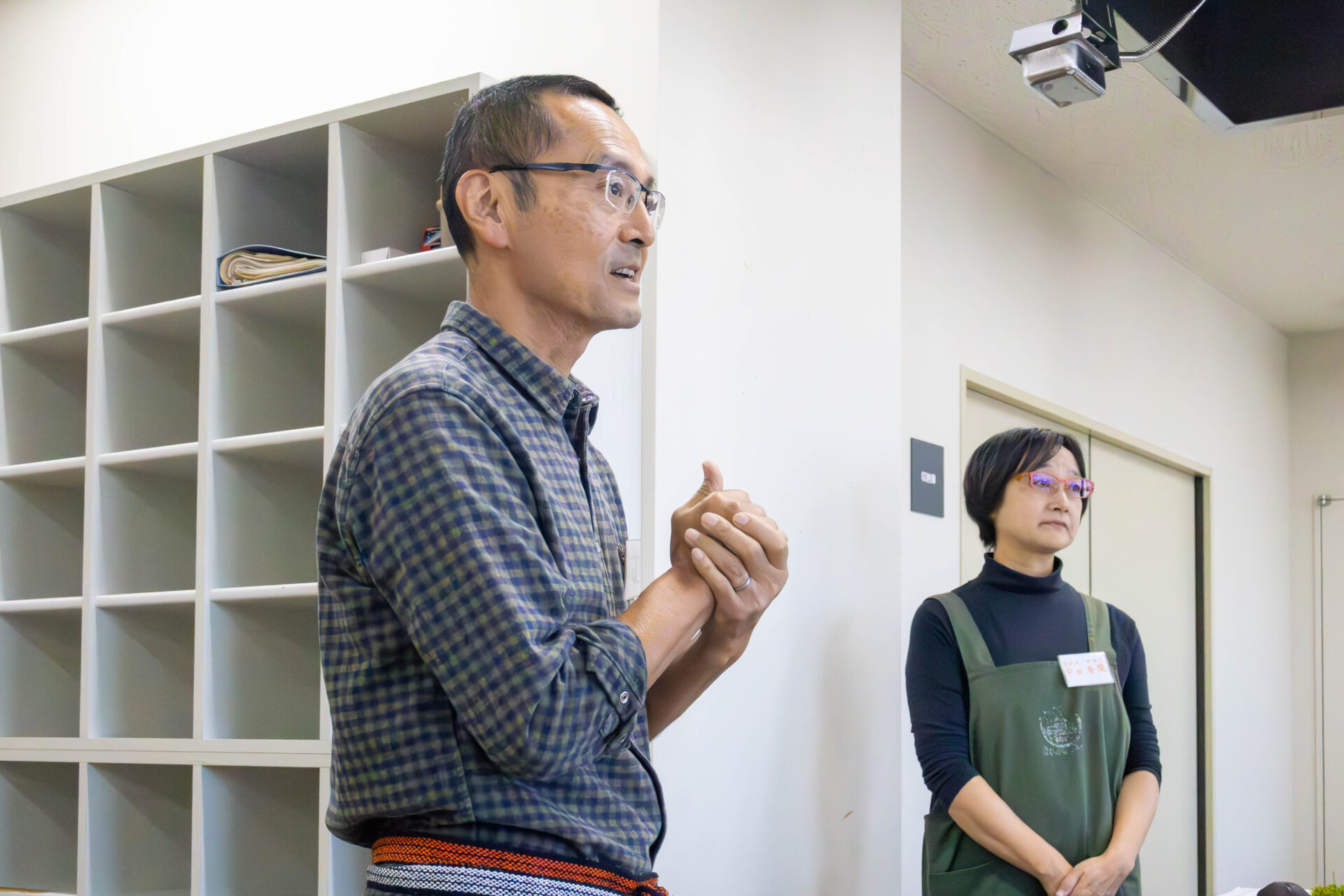
The process began with selecting a plant from the five types prepared for the moss ball.
The plants included Japanese Maple, Black Pine, Madokazura, Shima-toneriko, and Ficus microcarpa. Depending on the variety, there are different characteristics and ways to enjoy them, such as those that change color with the seasons or those that are easy to care for for beginners.
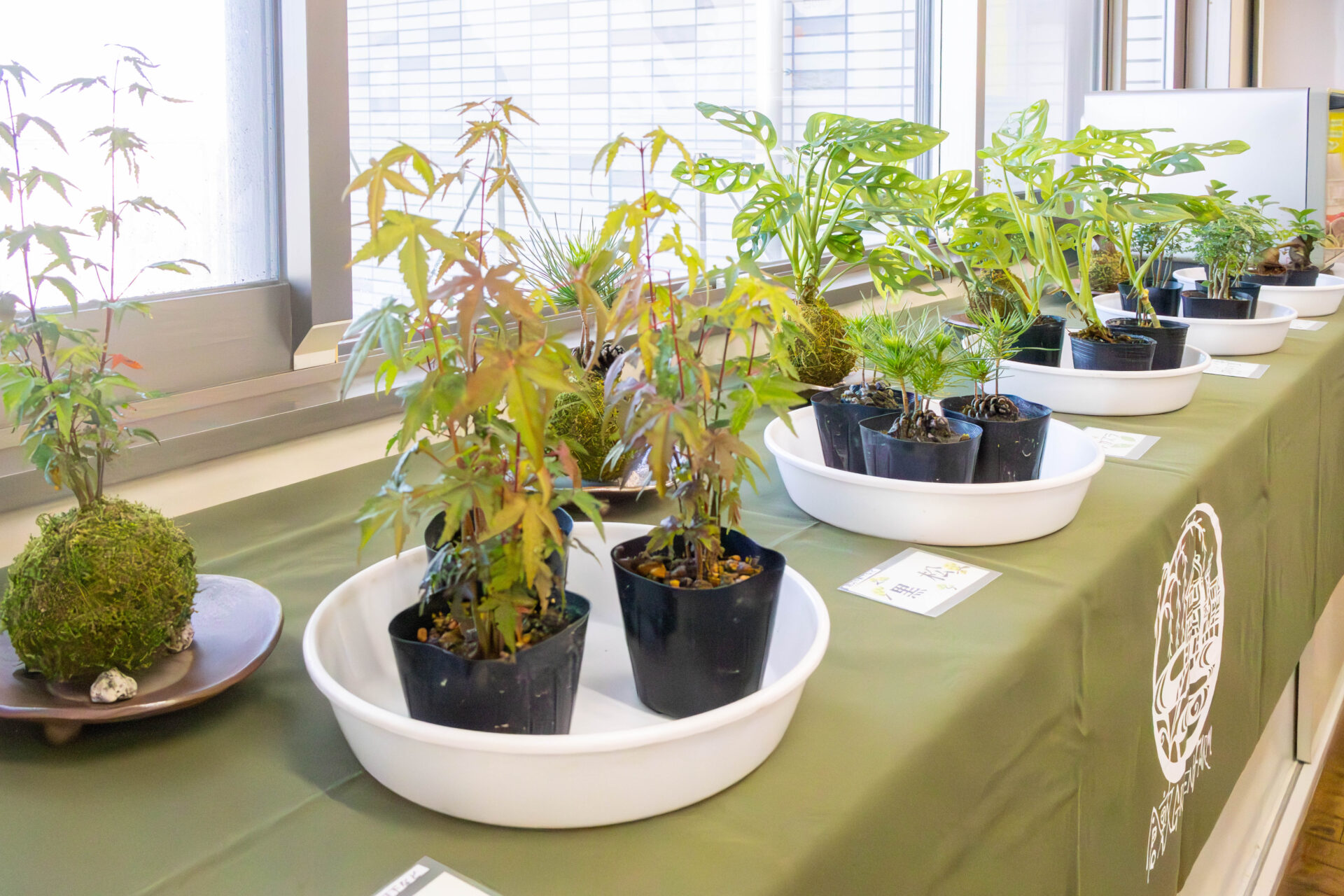
There were some varieties I had never seen before, but Nakada kindly explained their characteristics, making it easy to choose a plant that suited my lifestyle.
A participant who works in customer service was choosing a plant to display in their store, saying, "I might grow it in the shop." Since moss balls don't take up much space, they make great subtle decor.
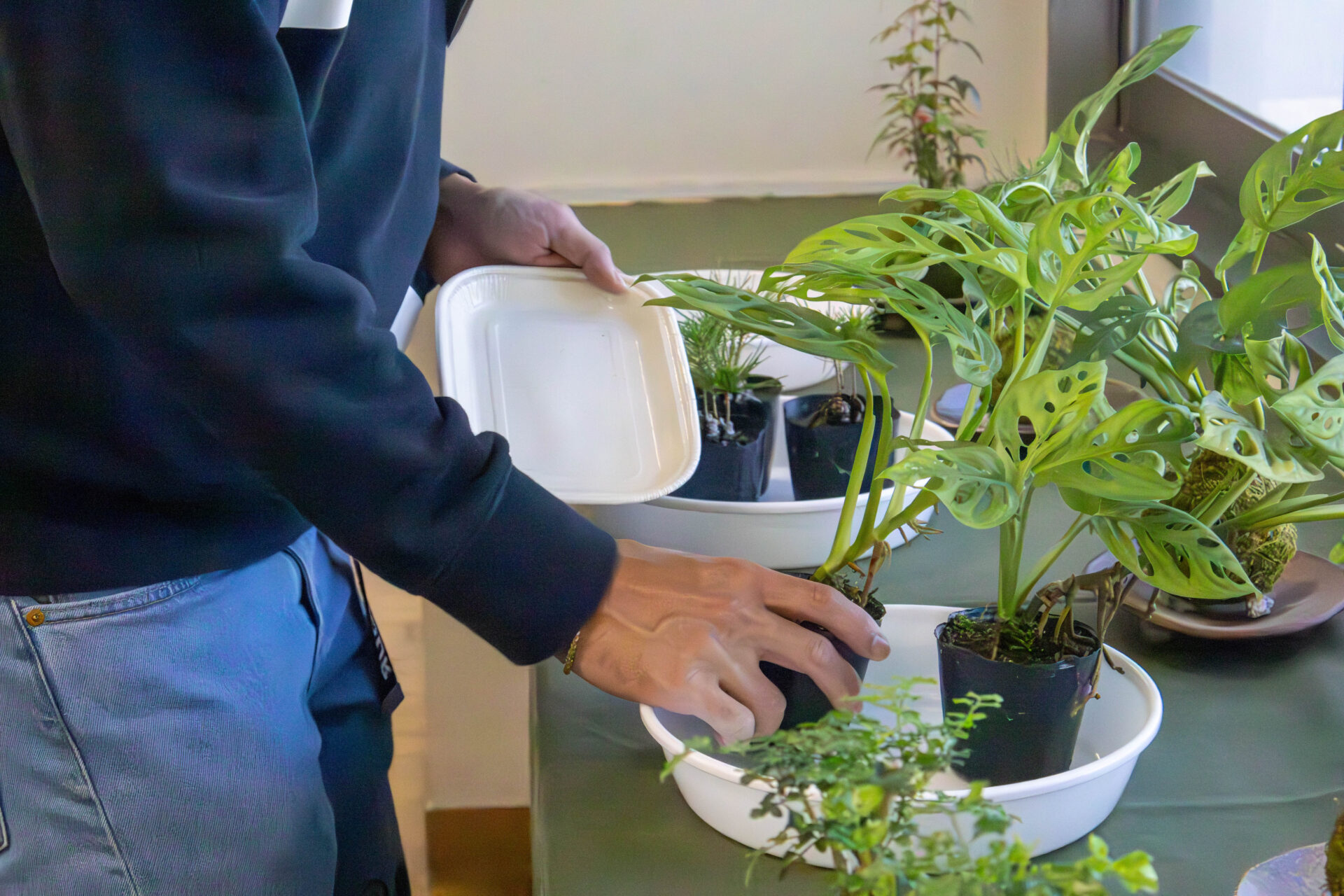
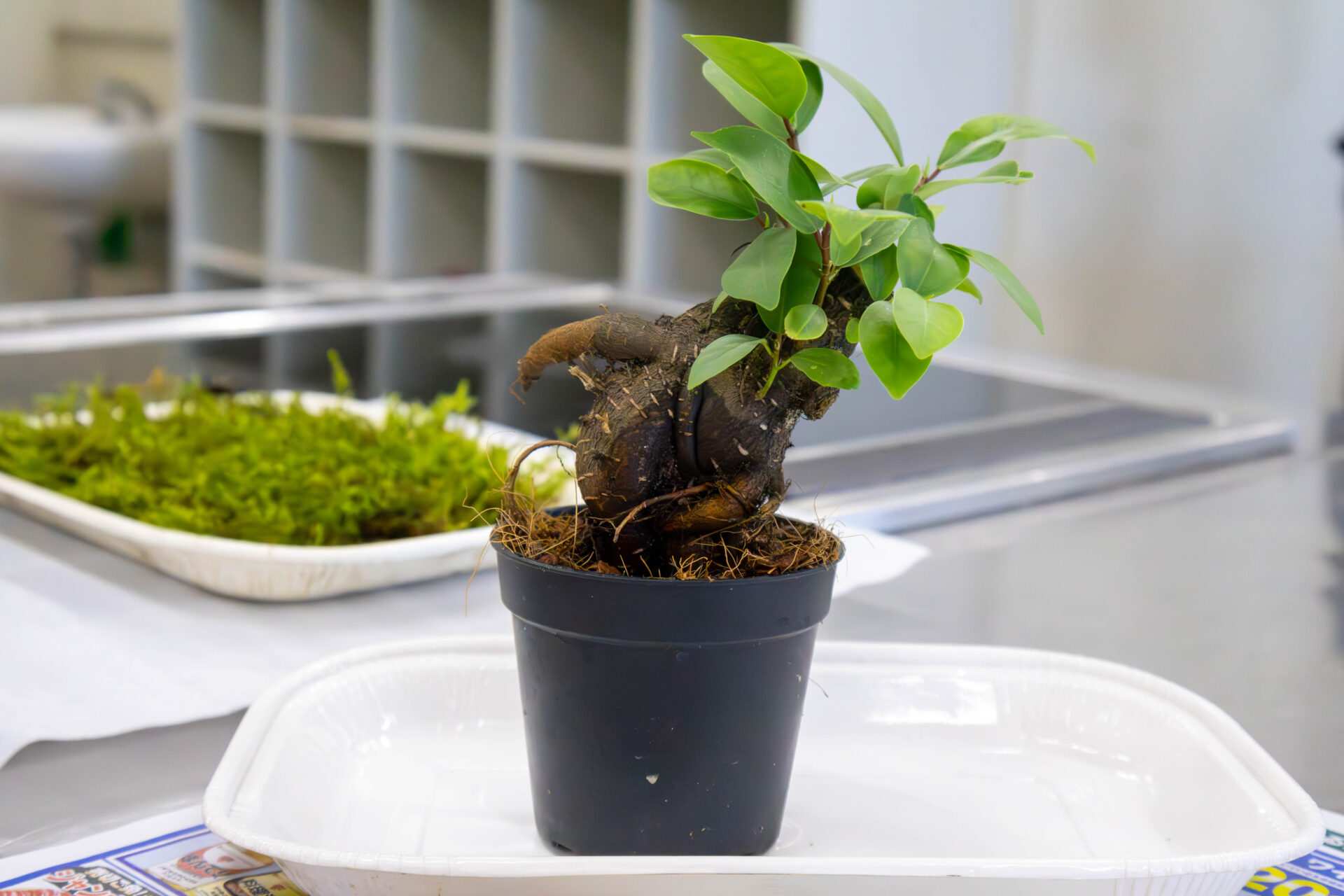
I chose a Ficus microcarpa. It was posed as if it was about to escape from the pot, and I fell in love with its lively charm at first sight.
Creating Moss Balls to Feel Nature in Your Hands
Once everyone had chosen their favorite plants, it was finally time to start making the moss balls.
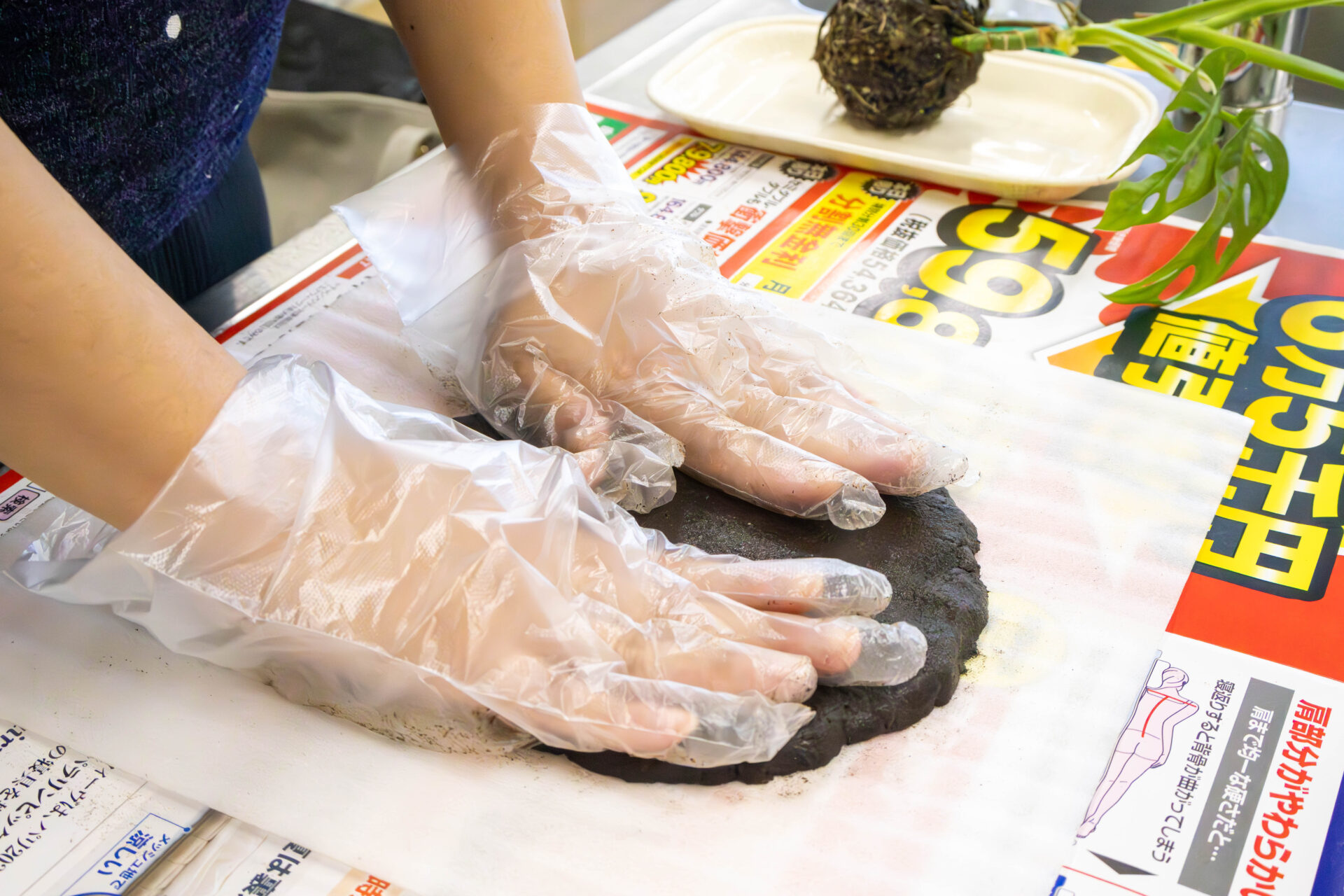
First, we flattened the moist clay that would serve as the base.
The clay is an original product from Kurashiki Green Farm. It contains rice husk charcoal, which has purifying properties and helps prevent root rot. The moist clay feels cool and has a strange texture that is neither hard nor soft. We shape it into a nice round form.
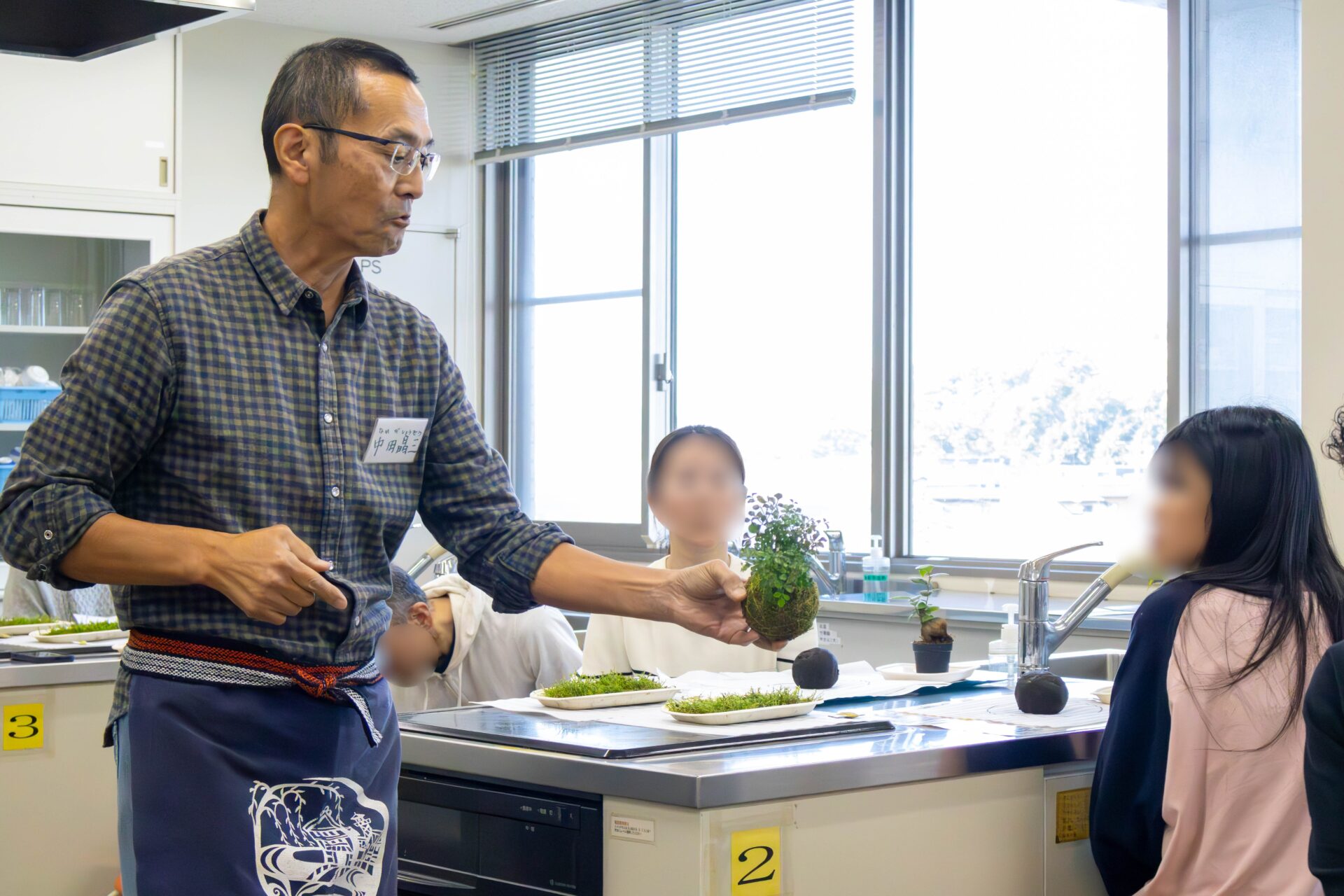
Nakada went around the tables one by one, so I could easily ask questions if I didn't understand something.
Each table had pairs of two working together, and at every table, the conversation flowed as they made the moss balls.
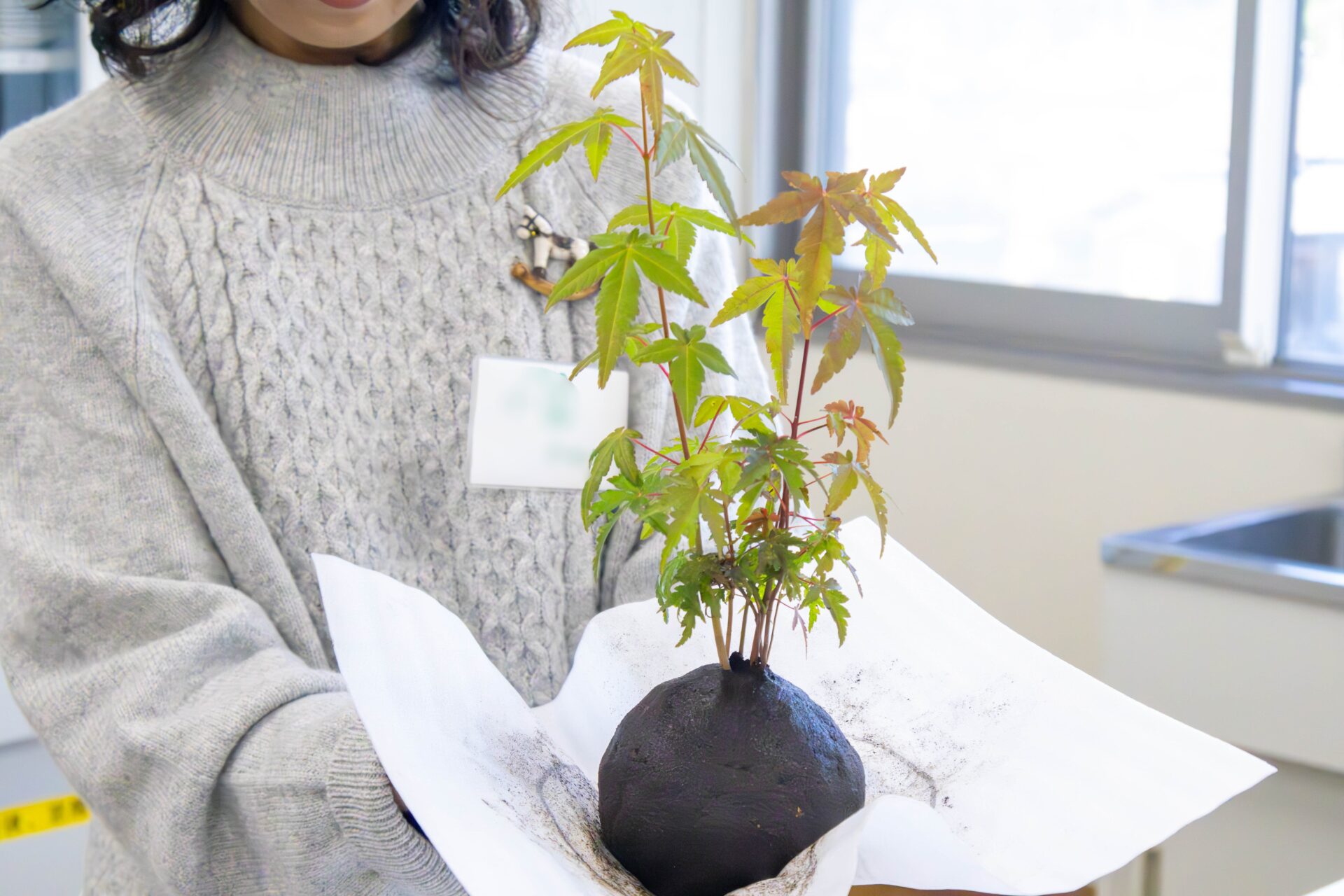
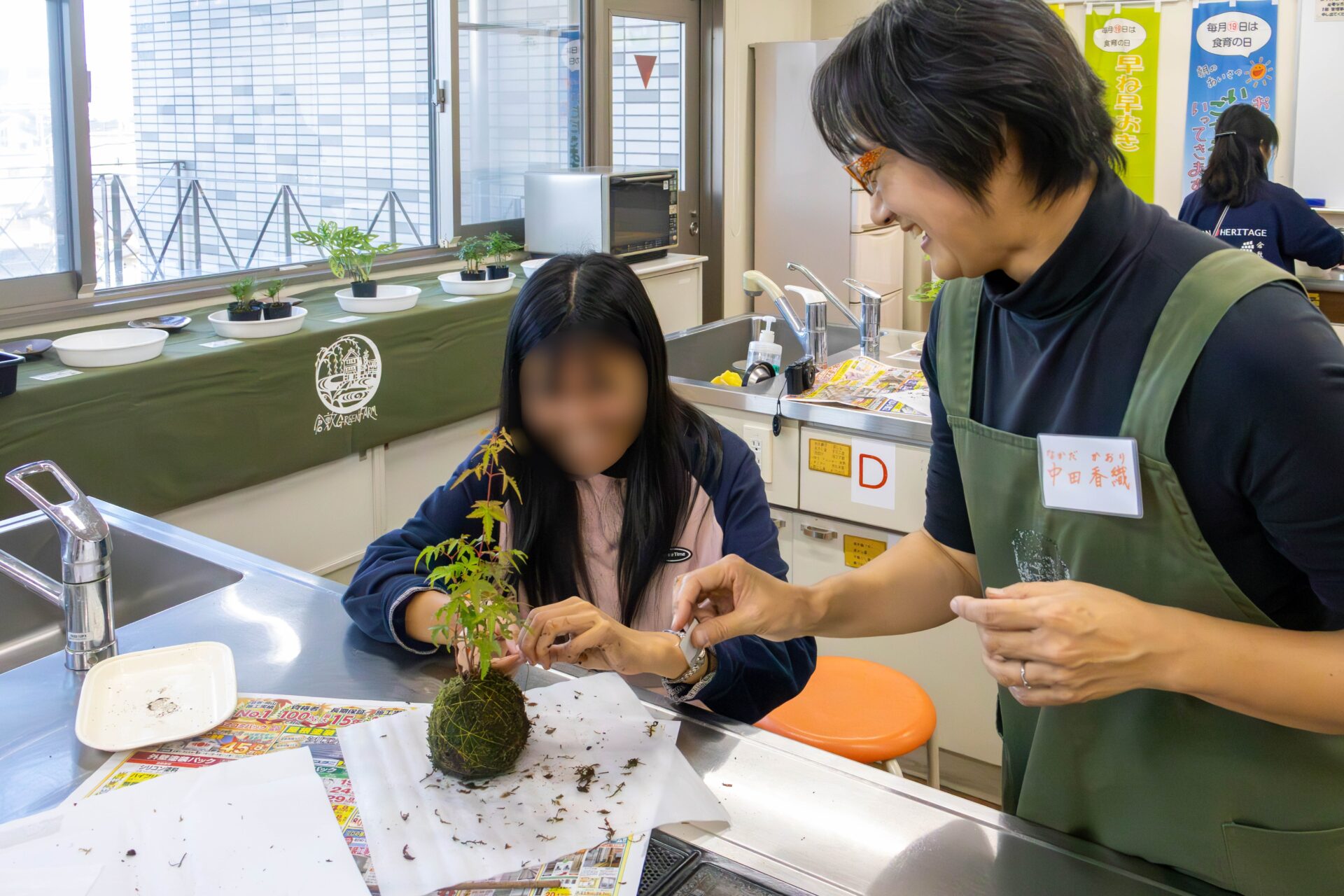
Once the soil was flattened, we took the plants out of their pots and used the flattened soil to wrap around the round part of the roots. It was said that it was better to use paper to attach it rather than touching it directly with our hands.
Watching Nakada's demonstration, the soil started to look like sweet bean paste, and it felt like we were making traditional Japanese sweets.
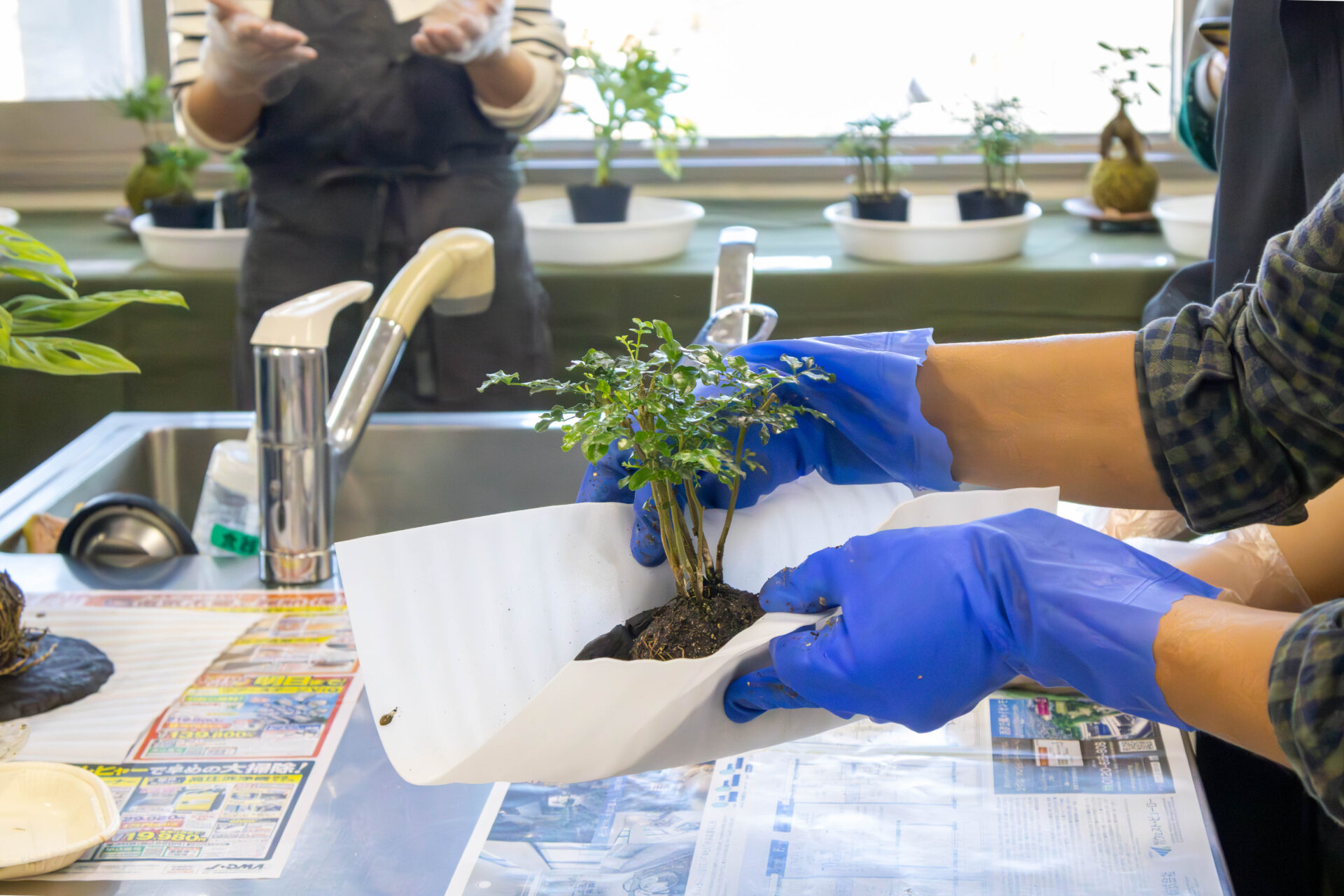
The task of wrapping the soil was surprisingly difficult, and I struggled a bit to get it to stick tightly. However, it was a refreshing and enjoyable experience since it was something I don't usually do.
Throughout the room, I could hear voices saying, "I did it!" and "How does it look?"
Next, we will begin the process of attaching the main character, the moss.
The moss was cultivated in Gotsu City, Shimane Prefecture. It is a variety called haigoke, which means "creeping moss," and it has the characteristic of spreading horizontally. It is said to be a common variety seen in parks, shrines, and temples, as well as in daily life.
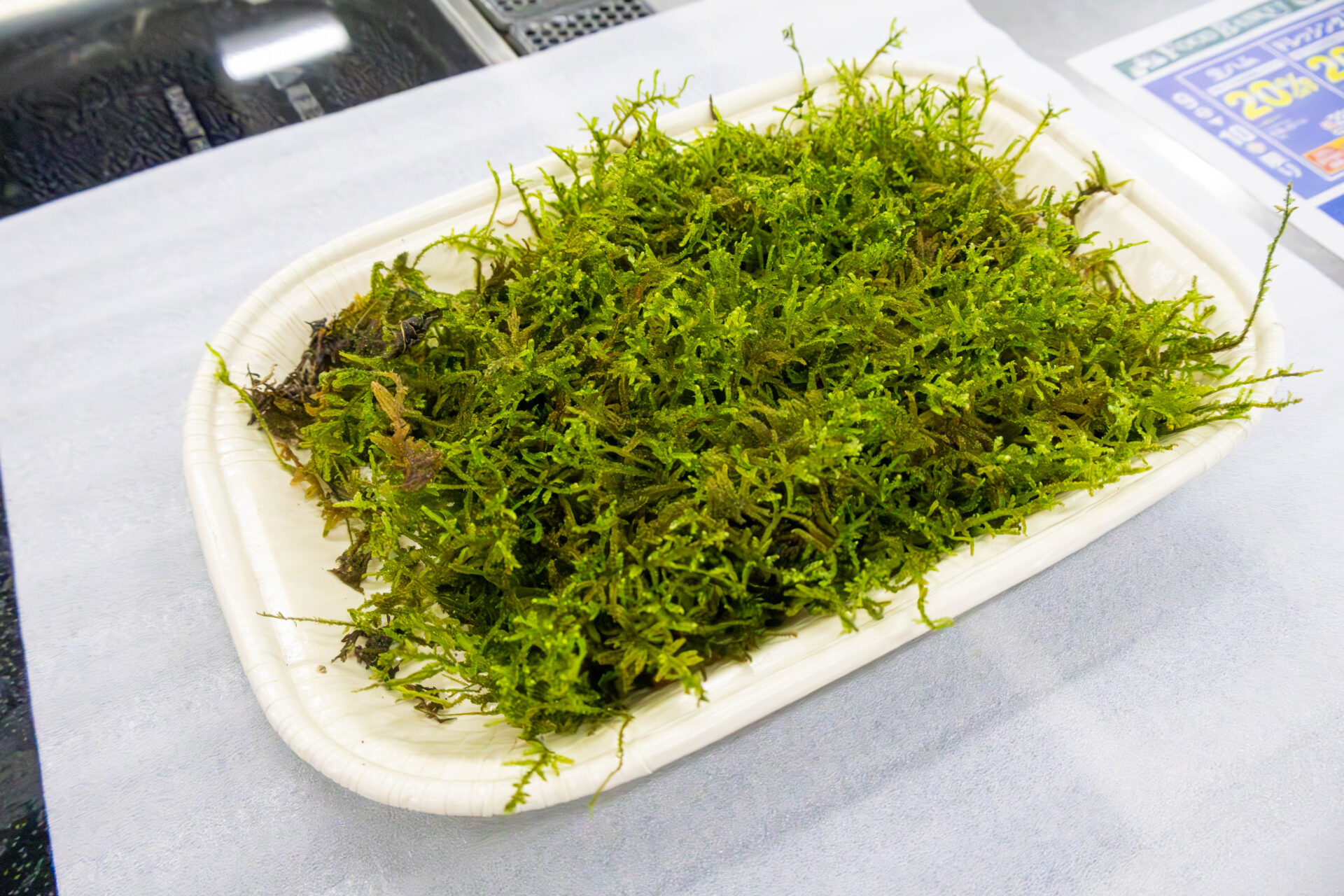
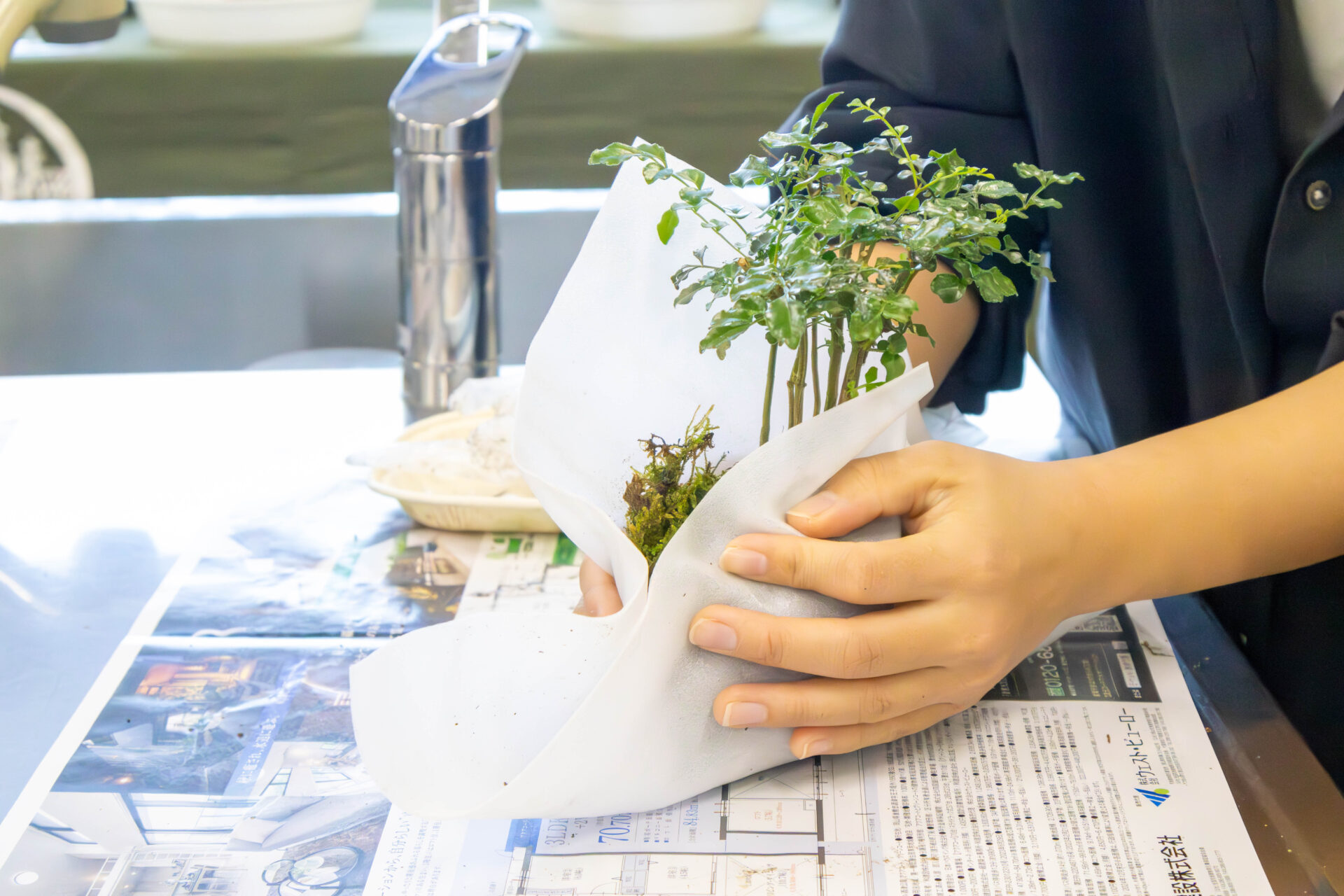
The prepared moss was in a rectangular shape, but it was stretched thin until it could be wrapped like the soil. When I touched the moss with my bare hands, I could feel its freshness, and I realized that the moss is alive. It felt like it had been a long time since I touched moss with my bare hands.
Just like when wrapping with soil, we will also wrap the moss. Perhaps having grasped the technique from the previous task, everyone was smoothly attaching the moss.
Finally, we securely wrap it with thread to reinforce it so that the moss does not come off.
The thread used at this time is 100% cotton natural material, which is also used in the sewing of jeans in Kojima. It is finished with environmentally friendly thread that will eventually return to the soil.
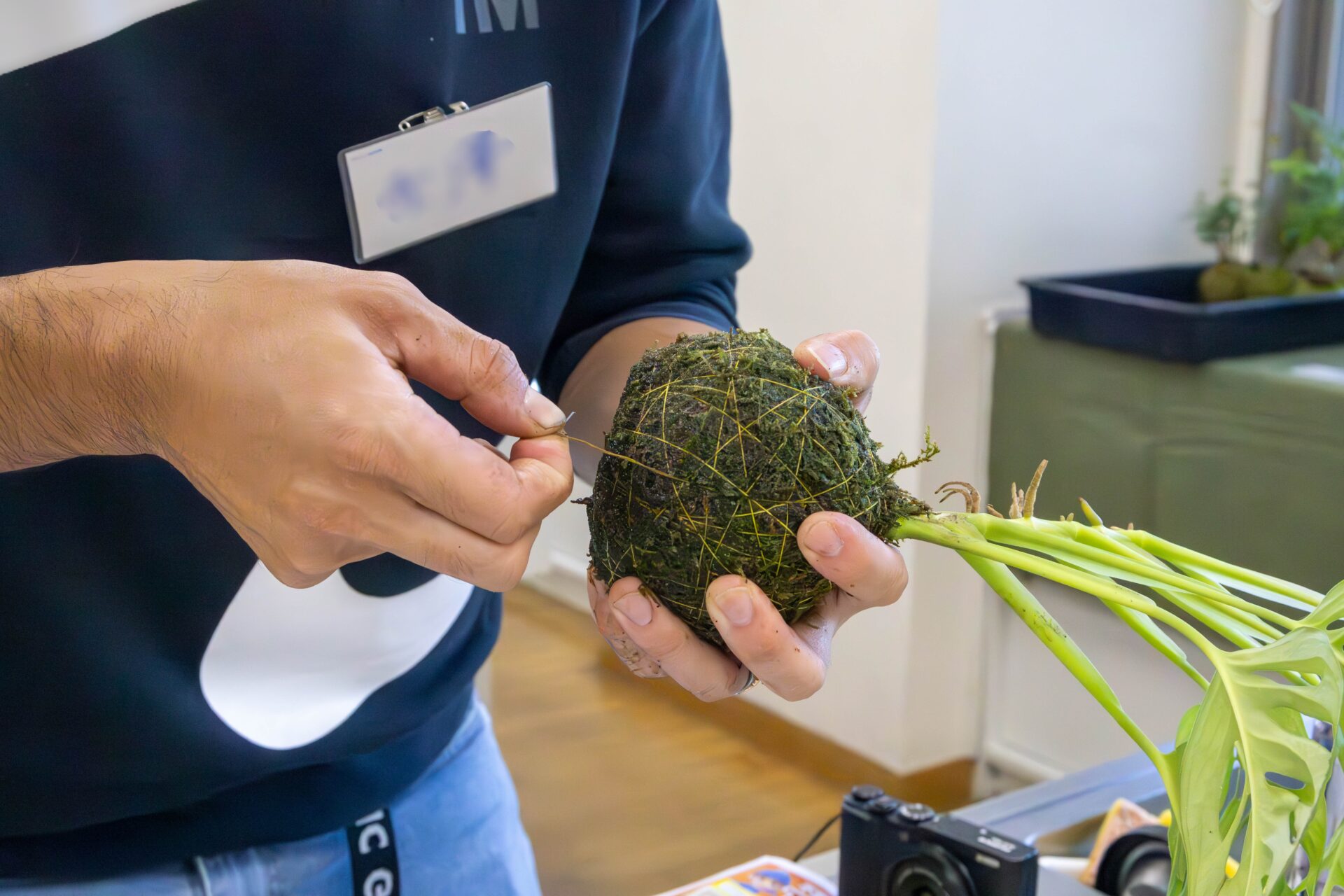
It seems that there are also tips for wrapping the thread depending on the plant, and with the advice of Mr. Nakata and his wife, everyone completed their moss balls. A sense of attachment to the original moss balls grew, and participants were filled with smiles.
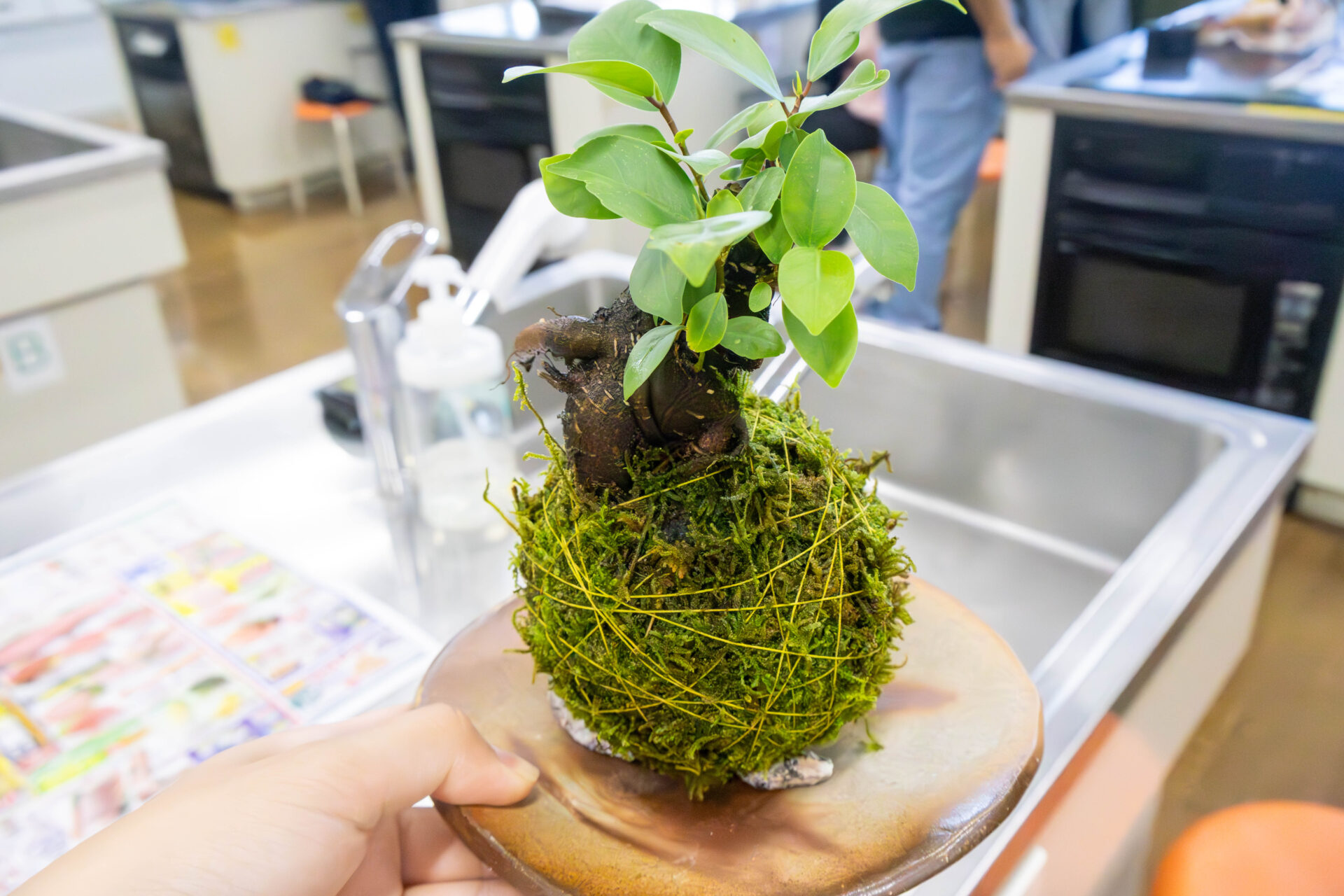
I also made a moss ball with a Ficus microcarpa while receiving advice.
Somehow, I feel that the Ficus microcarpa looks even livelier. I decided to "decorate it in the living room and greet the Ficus microcarpa every morning."
Socializing Time with Delicious Snacks
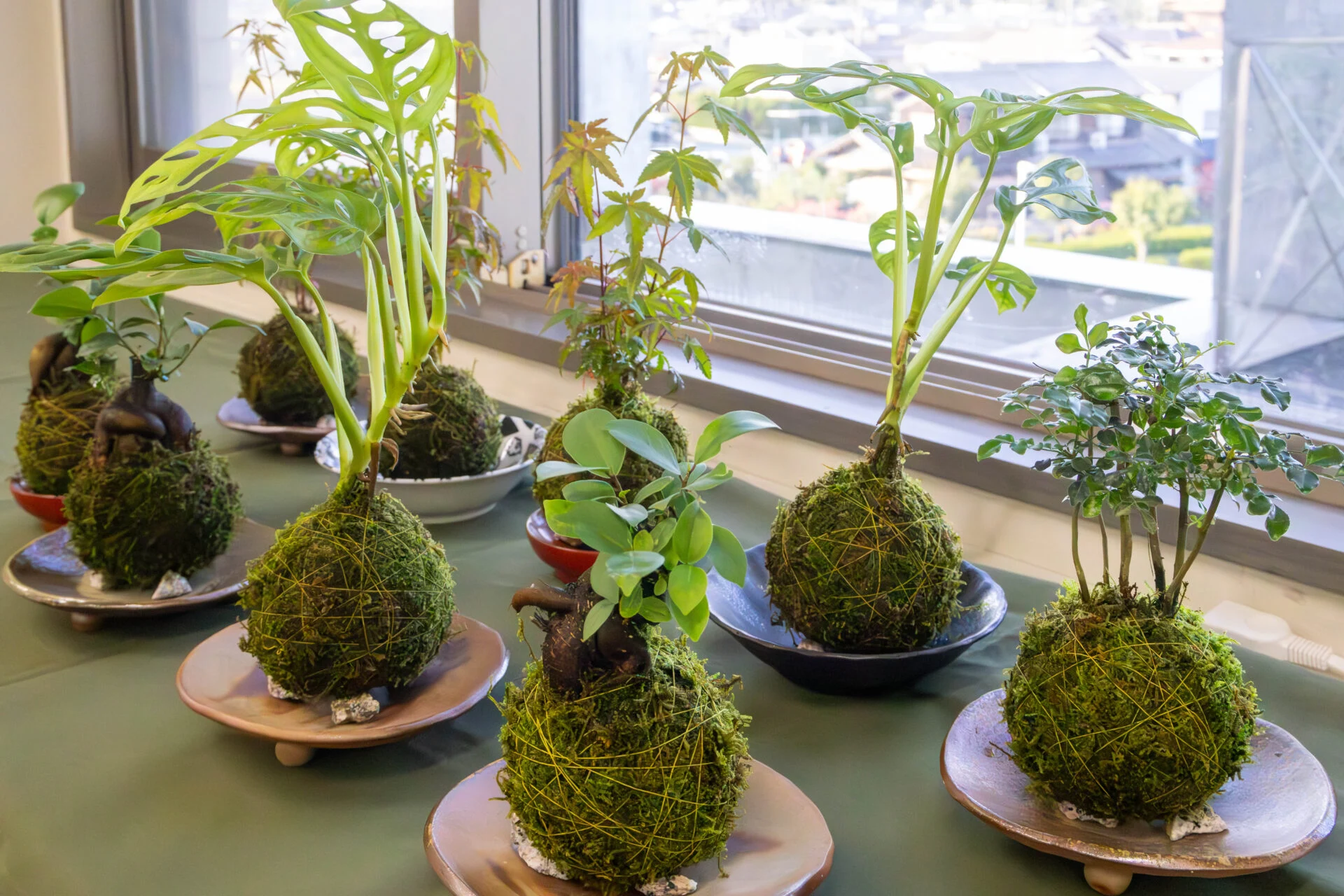
We lined up the moss balls we made together by the window, and a photo session began.
There were moss balls with a solid stability and those with a lively dynamism, each with its own personality, making it interesting to compare them.
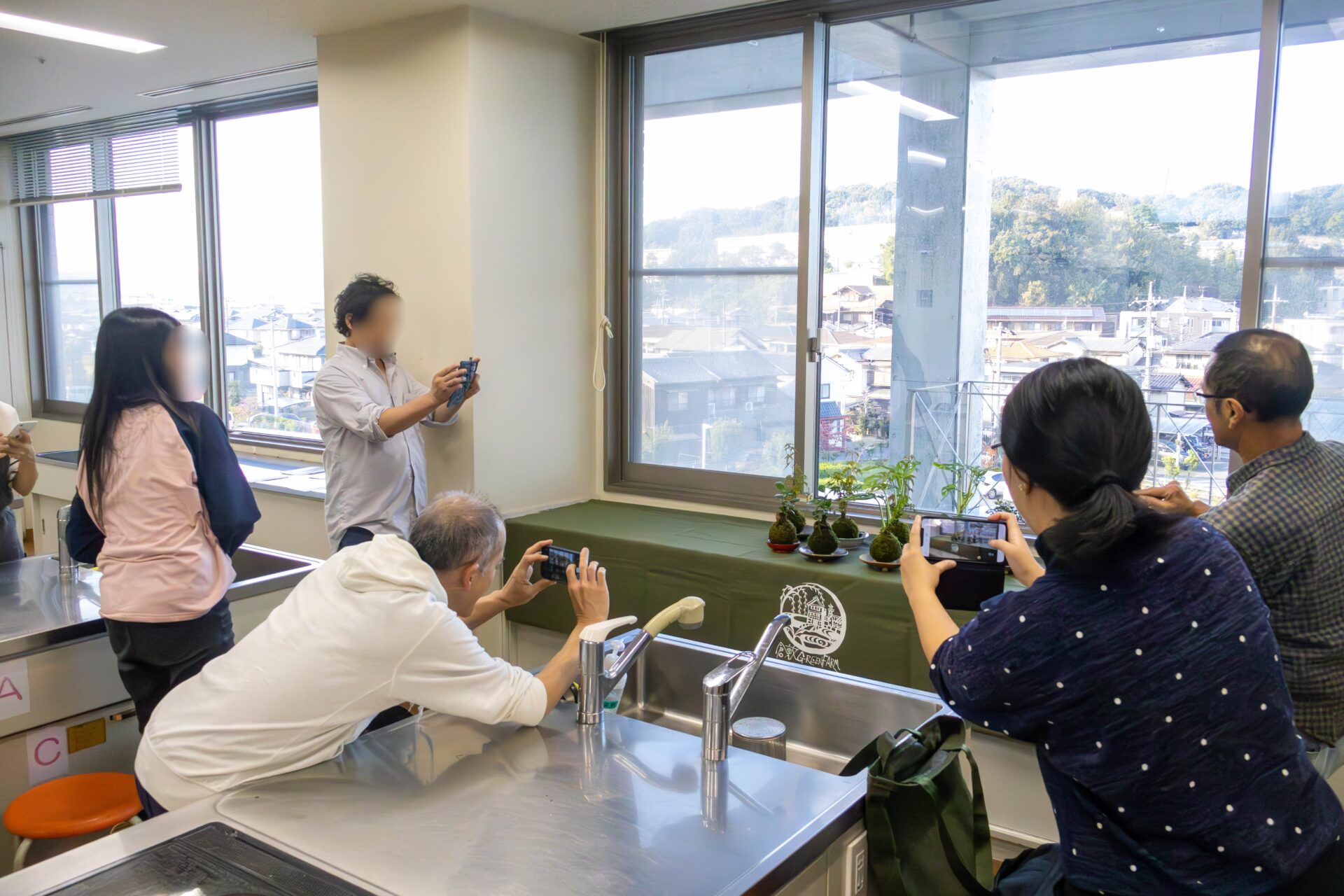
The moss balls were surrounded by participants who quickly turned into photographers, and everyone took their own group photos. It was like parents taking pictures of their children during a school event.
After the moss ball photo session settled down, we started to feel a bit hungry.
Miyazaki from the Kurashiki City Regional Revitalization Cooperation Team served rice flour baked cheesecake and cookies, along with coffee. The kiwi-shaped cookie, which one might think is kiwi-flavored, turned out to be matcha-flavored. The cute cookies with a playful spirit and the gentle-tasting cake warmed our stomachs.
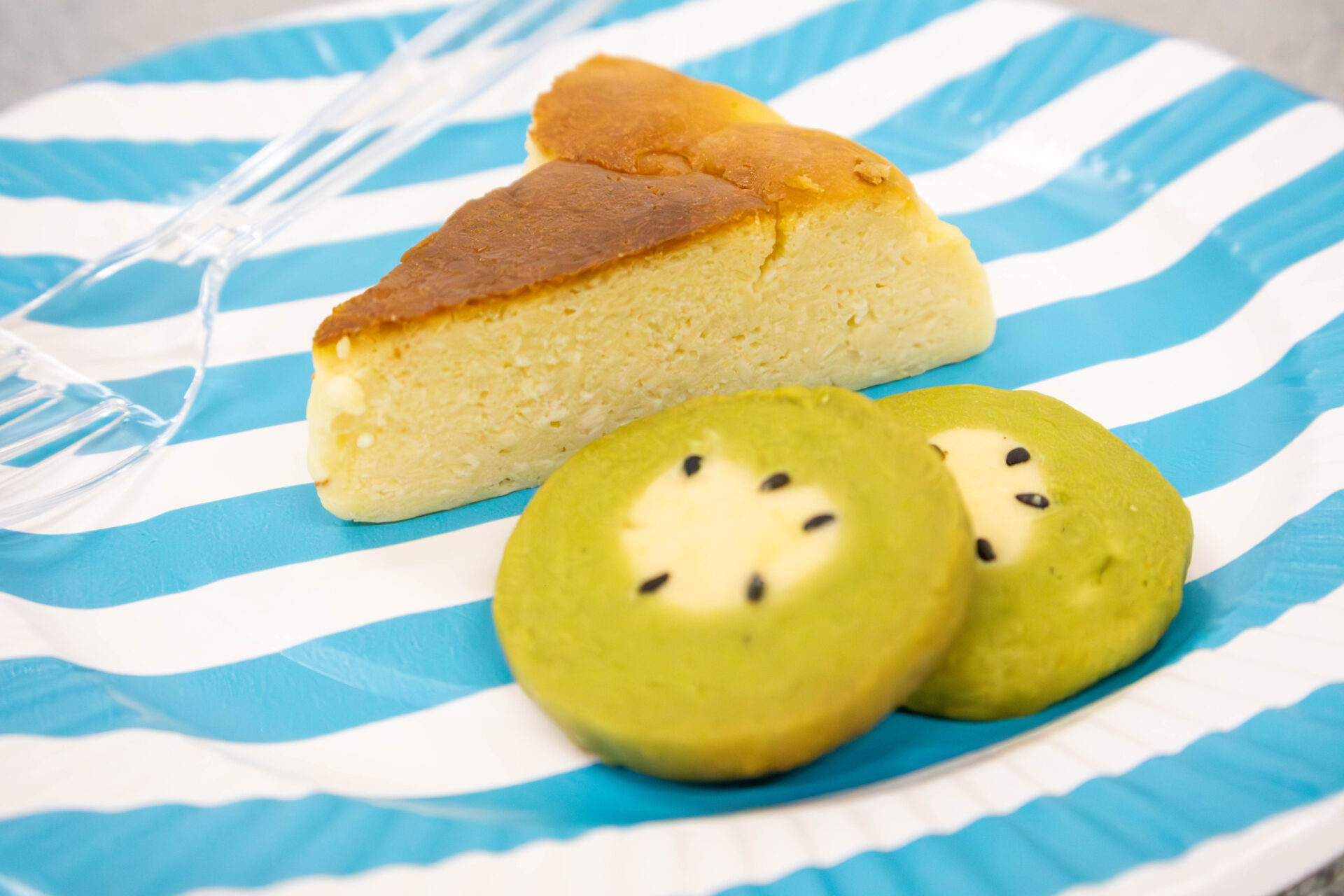
As we shared our impressions of the snacks, the conversation naturally expanded.
Around me, the discussion heated up about the livability of Kurashiki. Many newcomers feel attracted to the high convenience of living, and I nodded in agreement.
The topic of "What was the deciding factor for moving to Kurashiki?" also came up, and a participant sitting next to me said, "The atmosphere of Kurashiki is wonderful, and it's great that you can live without a car."
There is an image that moving to the countryside requires a car, but in Kurashiki, if you live near the station, you can live without a car. I also moved to Kurashiki without owning a car, so I could really relate to that deciding factor.
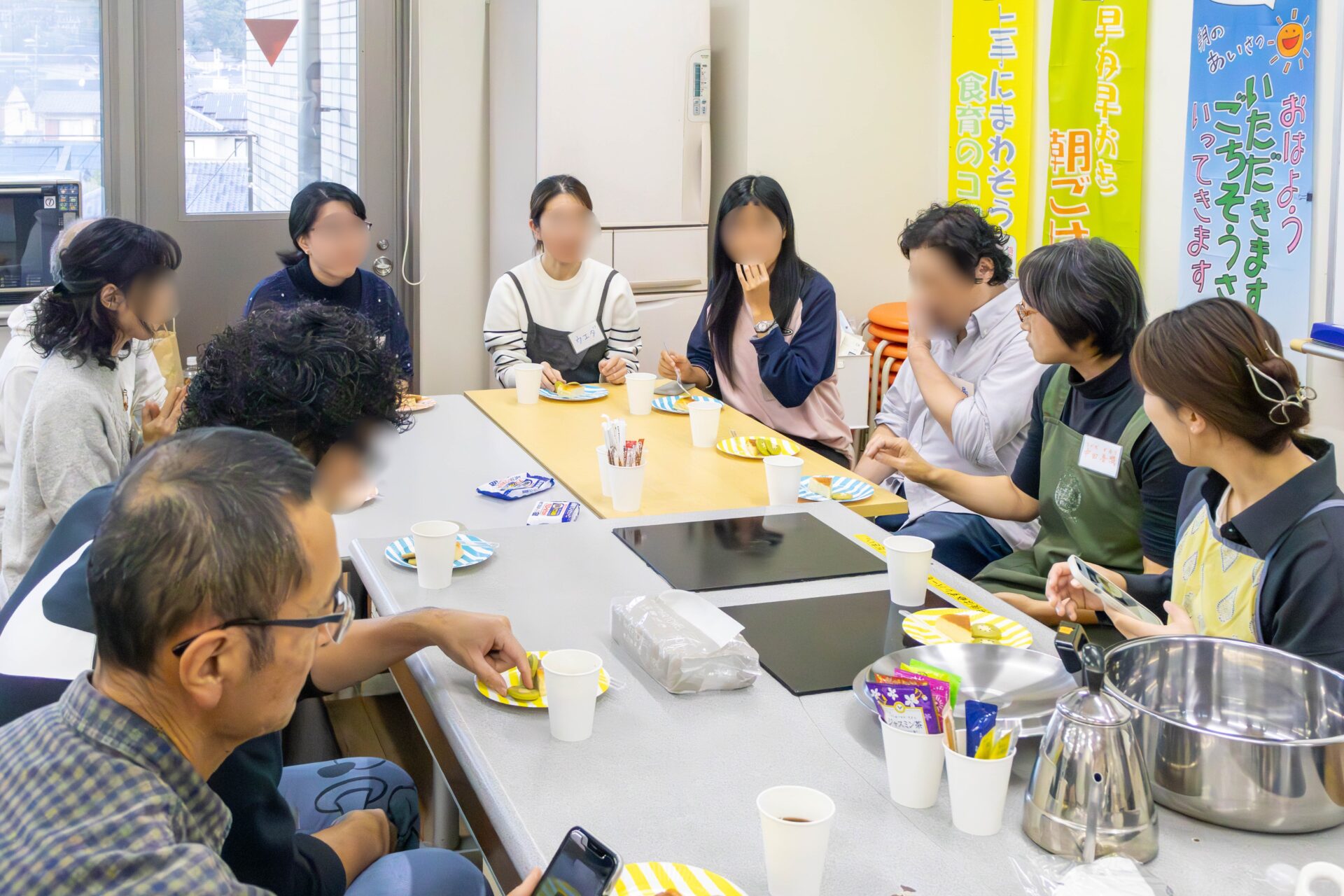
There were also endless topics unique to newcomers, such as "How to make friends in a new place" and "Characteristics of Kurashiki that are not found in my hometown."
Before we knew it, time flew by, and the交流会 (social gathering) ended in a very warm atmosphere.
Conclusion
This was my first time participating in the newcomer交流会 (social gathering). I was a bit nervous about what the atmosphere would be like, but it was a pleasant and friendly mood throughout, so I enjoyed it.
Since it was a small group, I was able to talk to various people evenly.
I had vaguely thought, "I hope I can make friends," but as a result of this event, I ended up going out to eat with a few people I got to know later, so I feel it was worth participating.
Creating moss balls also generated common topics, making it easier for participants to talk to each other. If there are future events, I would like to actively participate.
Data on the Newcomer交流会 (Social Gathering)
| Name | Newcomer交流会 (Social Gathering) |
|---|---|
| Date | November 9, 2024 (Saturday) From 1:30 PM to 4:00 PM |
| Location | 180 Sasao, Kurashiki City, Okayama Prefecture |
| Participation Fee (including tax) | 500 yen |