I am Watanabe Fumina, a second-year student at Kinkō Gakuen High School, who became fascinated while researching "Kurashiki Glass," one of Kurashiki's folk crafts.
Kinkō Gakuen High School has a class called Inquiry Learning, where students can research what they want to know, and I am part of a four-person team conducting research and PR activities on "Kurashiki Glass" in the field of regional studies.
In this article, I, the representative Watanabe, will introduce "Kurashiki Glass," which captivated me through our inquiry activities!
This article is a contribution by the Kinkō Gakuen High School Special Advancement Class Humanities Japan Heritage Team. It has been re-edited and published by the Haretoco General Incorporated Association editorial team.
What is "Kurashiki Glass"?
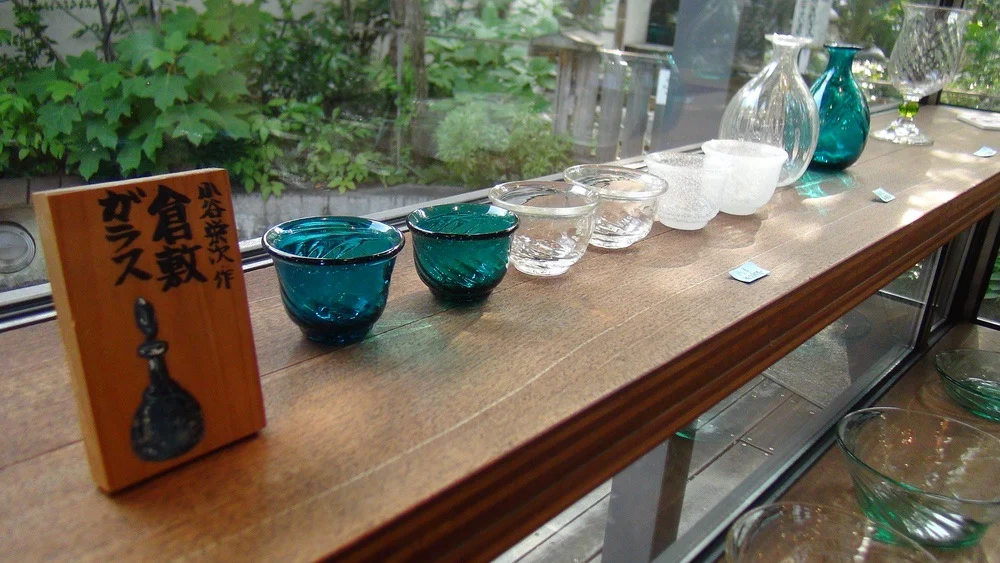
Do you know "Kurashiki Glass"?
"Kurashiki Glass," which originated in Kurashiki City and is also a Japan Heritage, is a collective term for blown glass products made only by the founder Kodani Shinzō and his son Eiji.
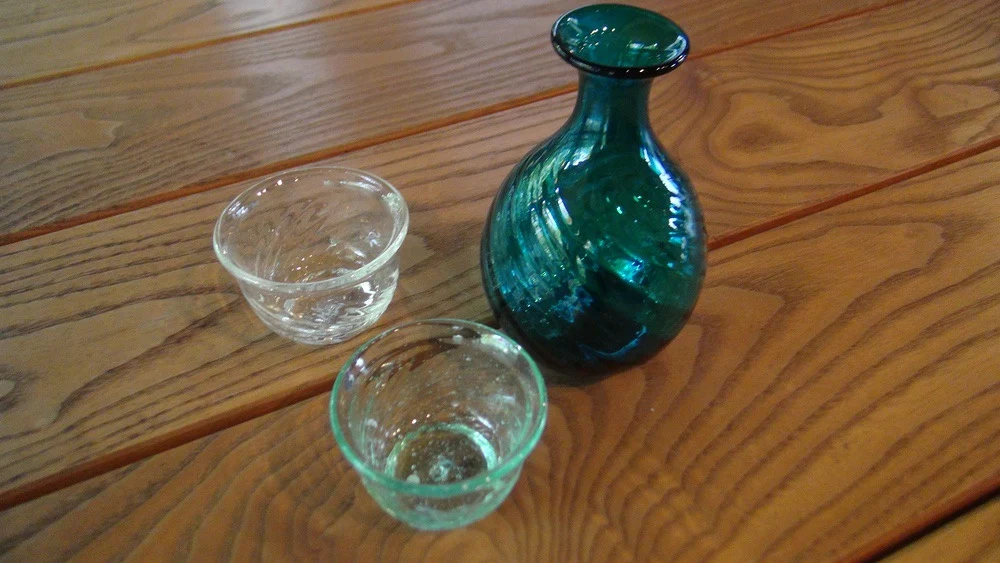
It is characterized by a gentle "twisted mold pattern" and "Kodani Blue."
Twisted Mold
A stripe pattern that evokes a sense of swaying waves
Kodani Blue
A color that seems to blend green and blue softly, a special color unique to "Kurashiki Glass" (not something Kodani started saying)
Moreover, "Kurashiki Glass" is a blown glass product that pursues the beauty of "utility," which is refined through use in daily life, and has been loved by many for over 50 years.
My relationship with "Kurashiki Glass"
I first encountered "Kurashiki Glass" when I was young.
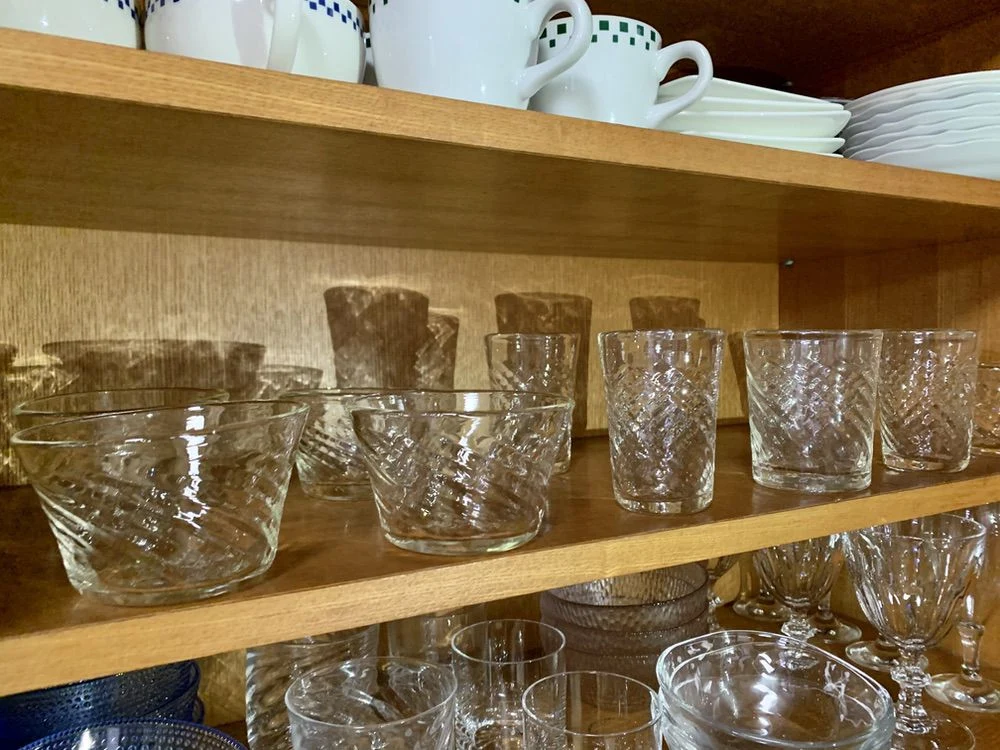
I used "Kurashiki Glass" at home without knowing what it was.
I remember my parents often saying, "Be careful not to break it," which made me wonder if I was using it carefully.
Then, the reason I learned about "Kurashiki Glass" was that my brother became a blown glass craftsman.
My brother originally wanted to become a shoe designer.
When I asked him, "Why did you start blown glass?" he replied, "I thought the glass (Kurashiki Glass) I always used was nice."
I was surprised that there was something about "Kurashiki Glass" that could change my brother's aspirations, and I began to take an interest as well.
Around that time, I had the opportunity to research something in my inquiry class, so I decided to study "Kurashiki Glass."
Flow of inquiry activities
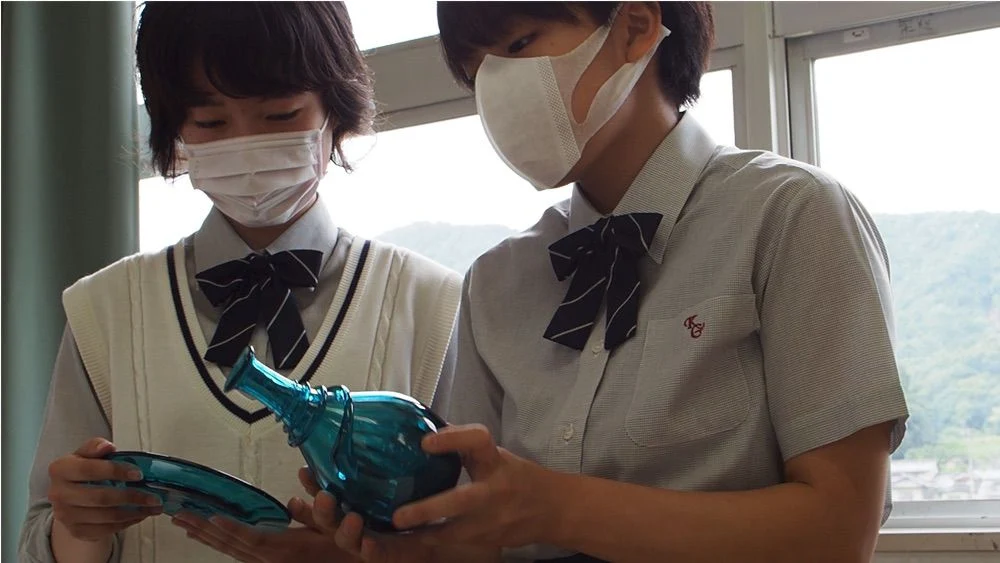
Our inquiry activities were conducted in the following flow.
- Detailed research on "Kurashiki Glass"
- Visiting the workshop of Kodani Eiji
- Promotional activities
I will introduce the activities carried out in each step.
Detailed research on "Kurashiki Glass"
First, I decided to conduct detailed research on "Kurashiki Glass."
What is "Kurashiki Glass"?
"Kurashiki Glass" possesses a unique charm that is not found in machine-produced items, along with functionality as a tool for daily life, characterized by being "practical tools for living" rather than works of art by the craftsman.
As a folk craft, "Kurashiki Glass" embodies the spirit of folk art as advocated by the first director of the Kurashiki Museum of Folkcraft, Tonomura Kichinosuke, who stated it should be "healthy, without waste, serious, and unpretentious."
Folk craft is a term created by Yanagi Muneyoshi, known as the "father of the folk craft movement."
Through the folk craft movement centered around Yanagi Muneyoshi, the beauty of various daily utensils used in life was discovered, establishing a new standard of beauty that had not existed before.
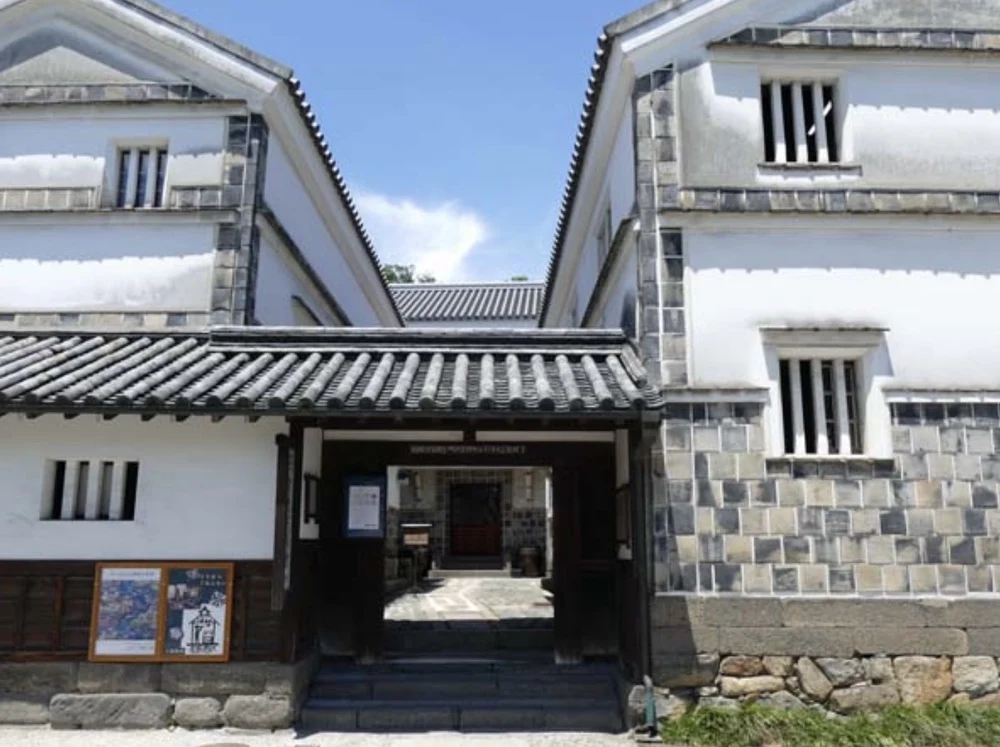
The "Kurashiki Glass," which embodies a simple "beauty" born from the pursuit of "utility," has been loved by many for over 50 years.
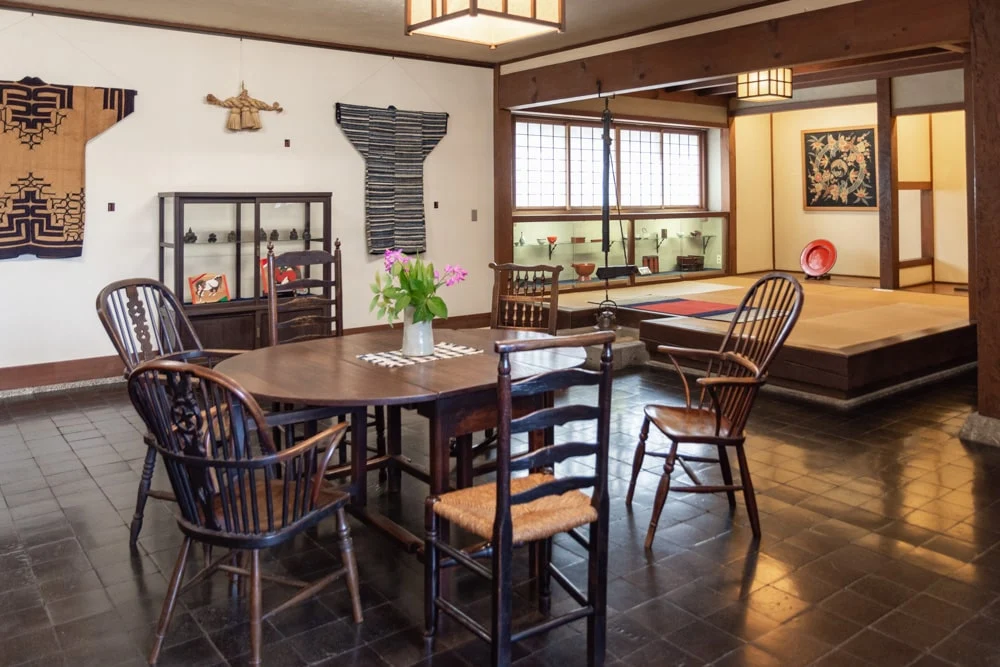
The Birth of "Kurashiki Glass"
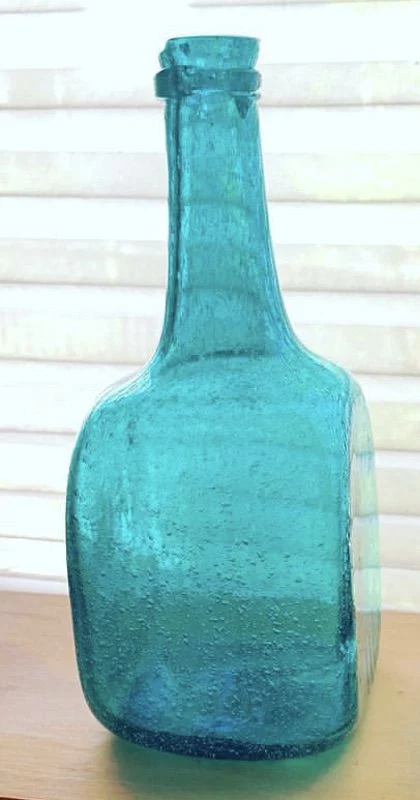
The founder of "Kurashiki Glass," Mr. Mizo, originally made Christmas tree ornaments.
Mr. Mizo was visited by the first director of the Kurashiki Museum of Folkcraft, Tonomura Kichinosuke, who brought Mexican glass and requested, "Make something like this," which was the trigger for the birth of "Kurashiki Glass."
Koya Blue
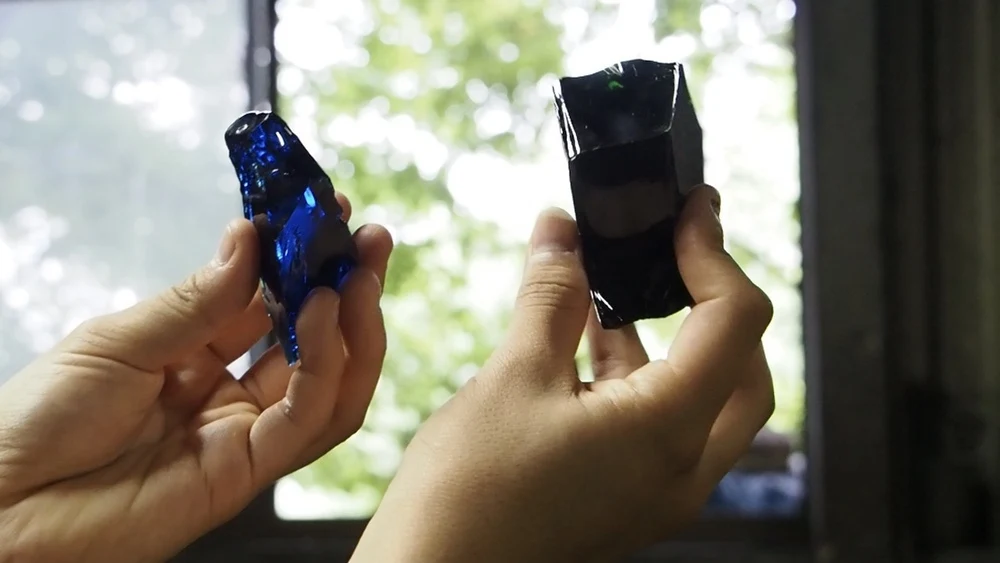
There is a brand color called "Koya Blue" in "Kurashiki Glass."
Koya Blue is a color that appears to be a light mix of green and blue, a special color unique to "Kurashiki Glass."
At that time, Mr. Mizo mixed cheap blue glass he bought with a Suntory moss green whiskey bottle that he crushed.
Currently, Koya Blue is created by combining blue glass named "Asagi" with green glass.
Visiting Mr. Koya Eiji's Workshop
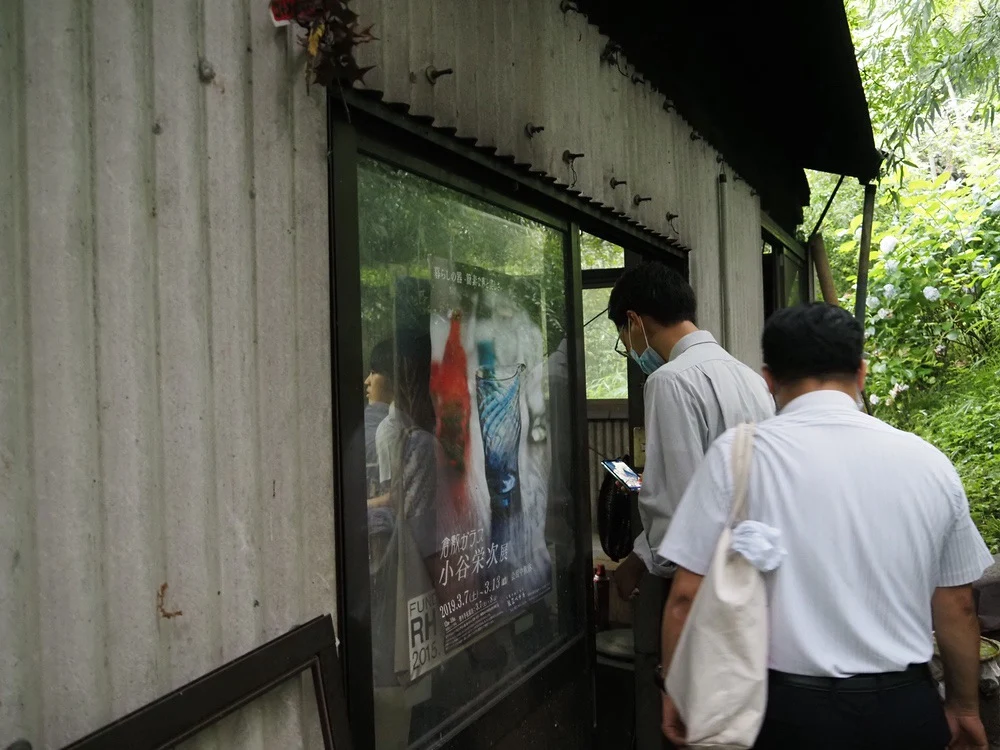
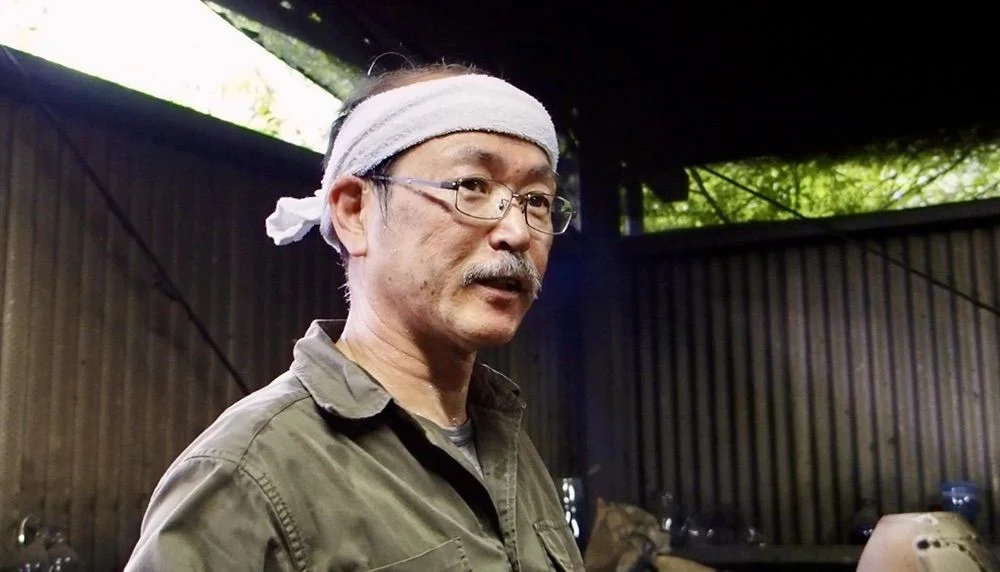
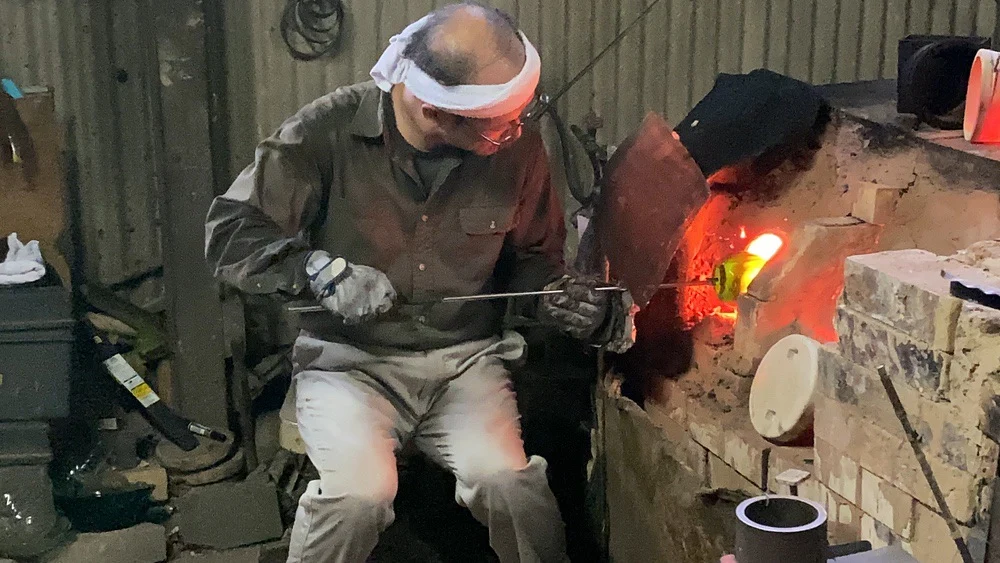
Wanting to see the process of Mr. Koya's "Kurashiki Glass" production, I visited Mr. Koya Eiji's workshop in July 2020.
It was the height of summer, and with the heat from the melting furnace exceeding 1,000 degrees, the workshop was unbearably hot.
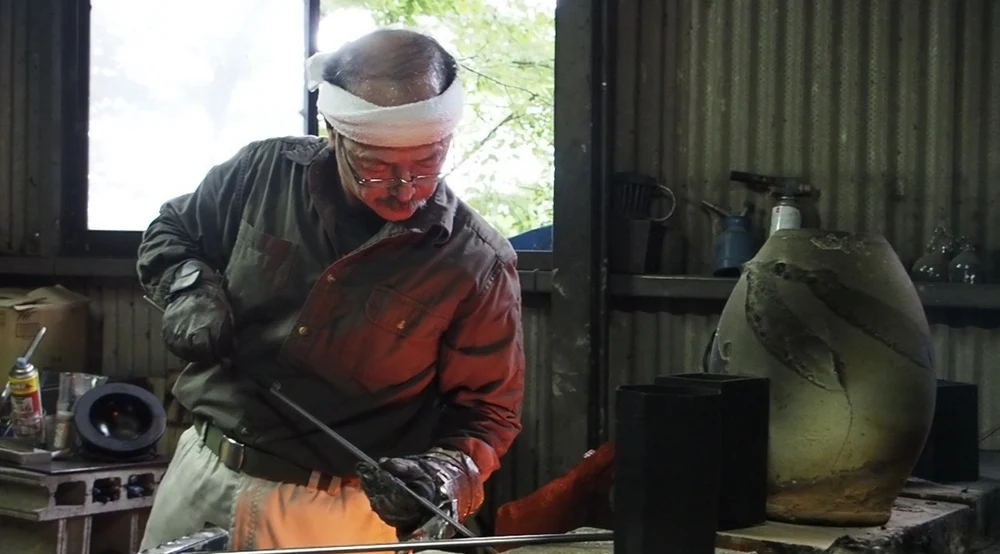
Mr. Koya, with sweat on his forehead, carefully takes glass with a blowpipe.
"I'll make the first one," says Mr. Koya.
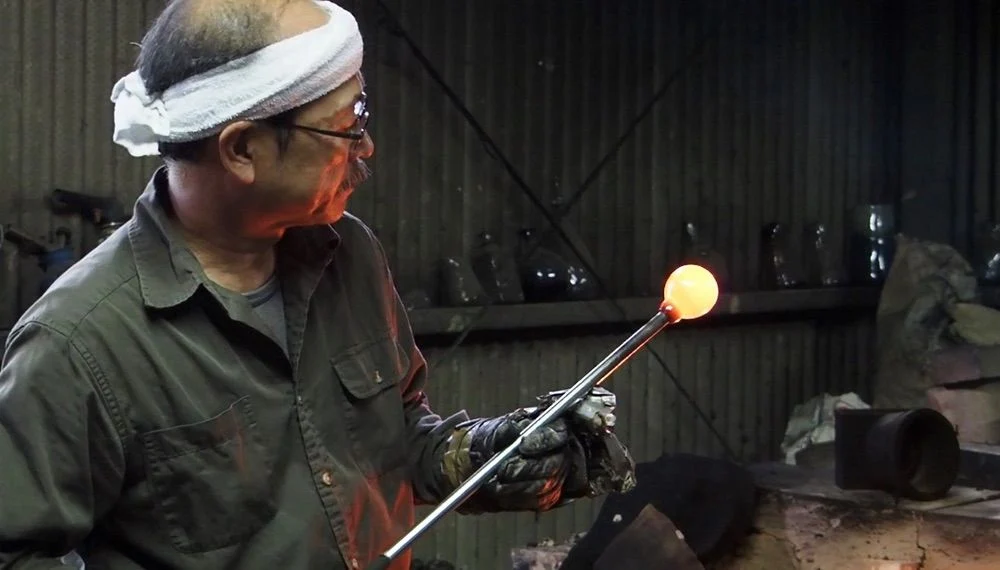
He blows into the blowpipe to create a small ball.
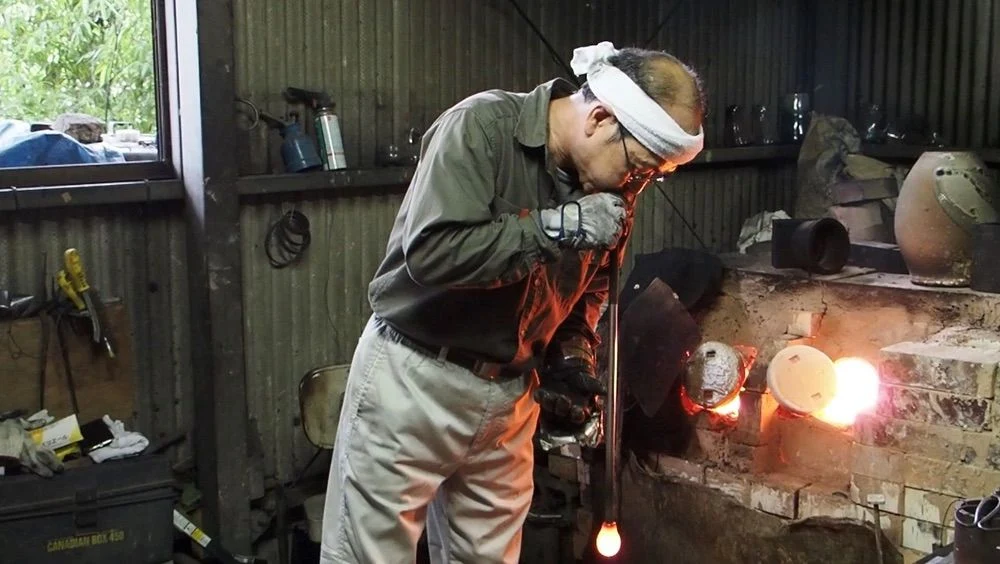
"What to make is decided by looking at the shape and size of this (ball),"
The concentration when adding the gentle twisted stripe pattern, a characteristic of "Kurashiki Glass," was breathtaking.
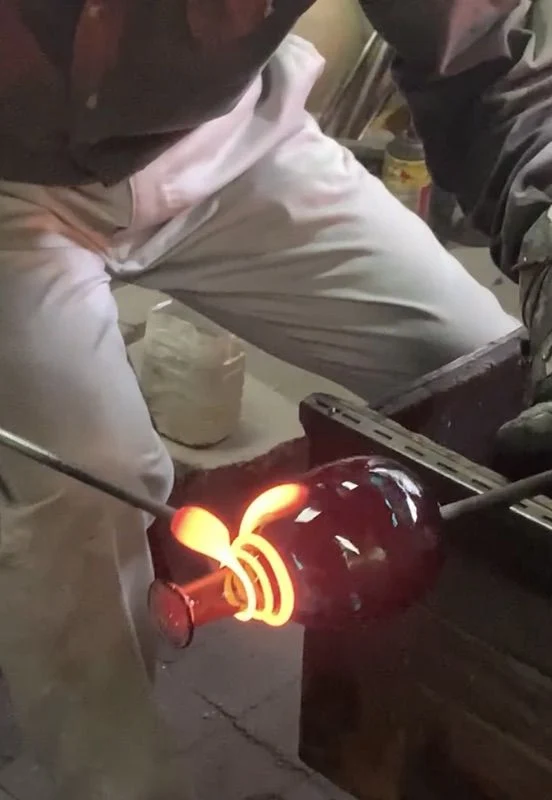
Additionally, he added glass to a vase to create patterns and spun the blowpipe to make flat plates.
The process was like a flower blooming, and I was so captivated that I forgot the heat.
Before the visit, I had thought of "Kurashiki Glass" as something amazing from a distance, vaguely.
Mr. Kotani's production scene and hearing his thoughts changed my image of "Kurashiki Glass."
I felt that it is more attractive and closer to our daily lives.
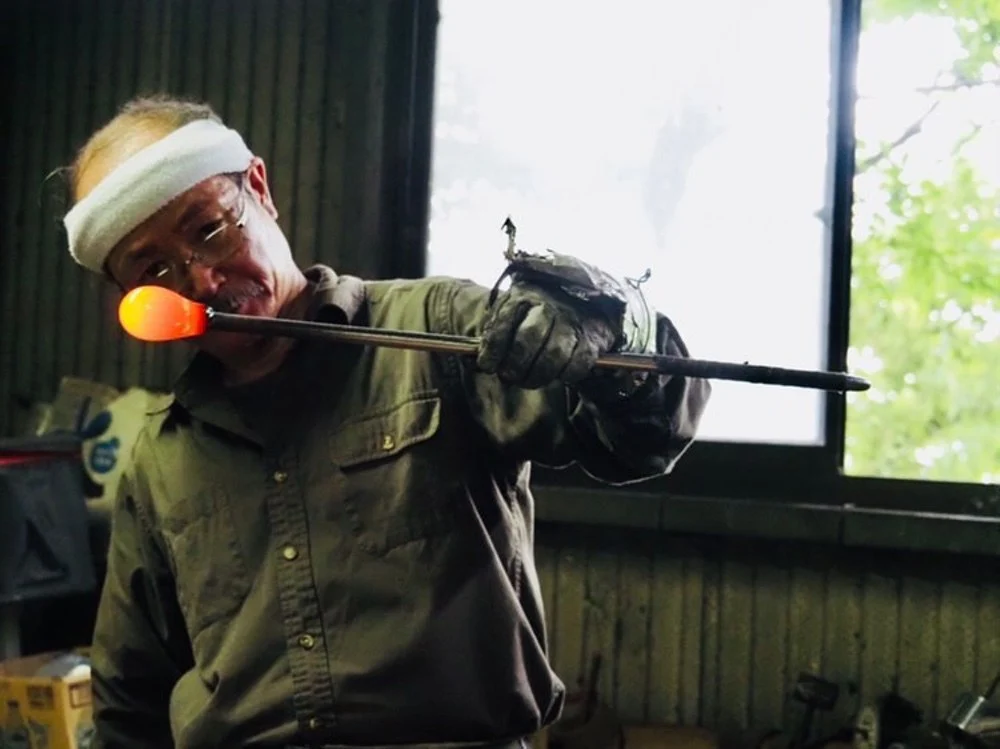
I was moved to realize again that the everyday items I have used since I was little are made in this way.
This strengthened my desire for young people to re-recognize the goodness of local products, folk crafts, and Japan Heritage.
Promotion Activities
How can we let people know the goodness of local products, folk crafts, and Japan Heritage through "Kurashiki Glass"?
First, I created a catchphrase "Adding to Life, Kurashiki Glass" and a logo.
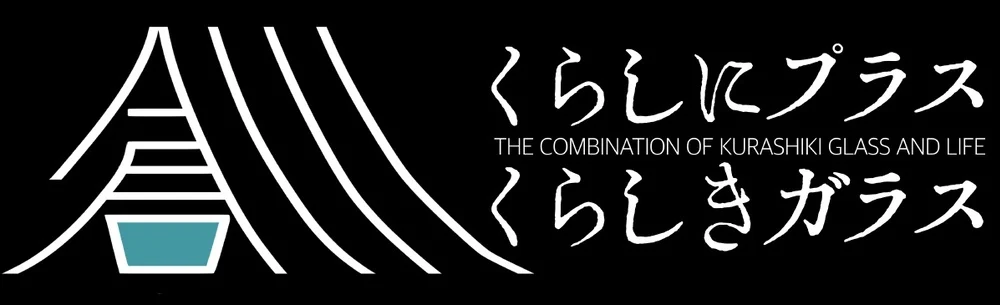
The logo represents the kanji "倉" from "Kurashiki Glass" and the unique blue color and stripe pattern known as "Kotani Blue."
The catchphrase "Adding to Life, Kurashiki Glass" conveys the meaning that by incorporating "Kurashiki Glass" into our lives, we can feel the practical beauty and warmth of crafts.
I particularly want people of my generation, those in their teens and twenties, to know about "Kurashiki Glass."
I thought that videos, which are easy to spread, would be useful for PR activities targeting the younger generation, so I decided to create three types of videos.
- 30-second commercial
- A digital archive video recording the creation process and the real voice of Mr. Eiji Kotani
- A 3-minute video summarizing "Kurashiki Glass" and our activities
First, I created a 30-second commercial and learned the difficulty of creating visual works through my first experience with video editing.
Next, I produced a digital archive video that details the birth of "Kurashiki Glass," its connection with the Kurashiki Museum of Folkcraft, and the production process.
Finally, I created a 3-minute video about "Kurashiki Glass" that can be learned from our activities.
To ensure that people in English-speaking countries can also view it, I thought of an English version of "Adding to Life, Kurashiki Glass," titled "CHOOSE IT YOURSELF CHANGE YOUR LIFE," and added English and Chinese subtitles to all the narration.
This video is a culmination of my activities over the past year.
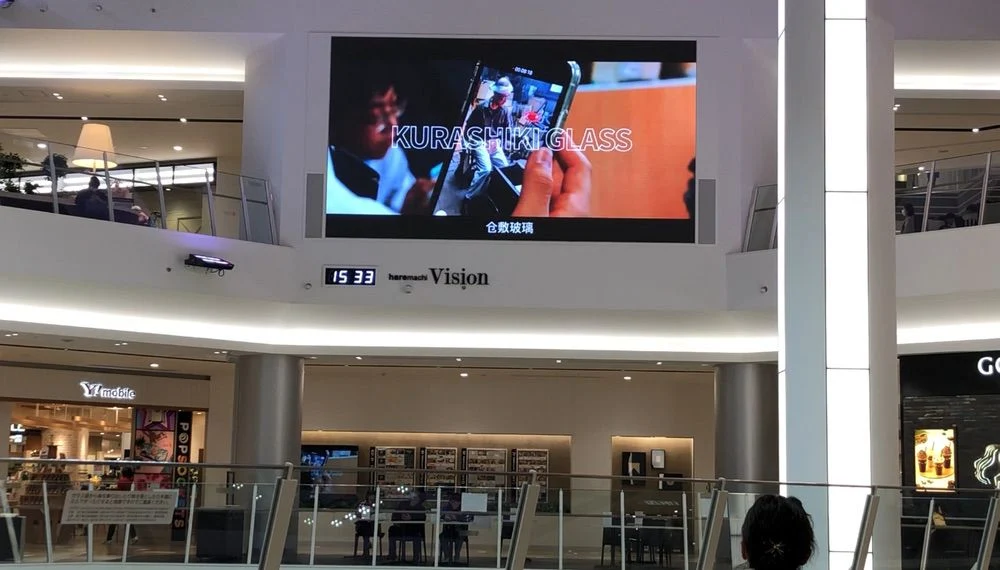
The video was also displayed on the large screen at Mirai Square on the first floor of Aeon Mall Okayama.
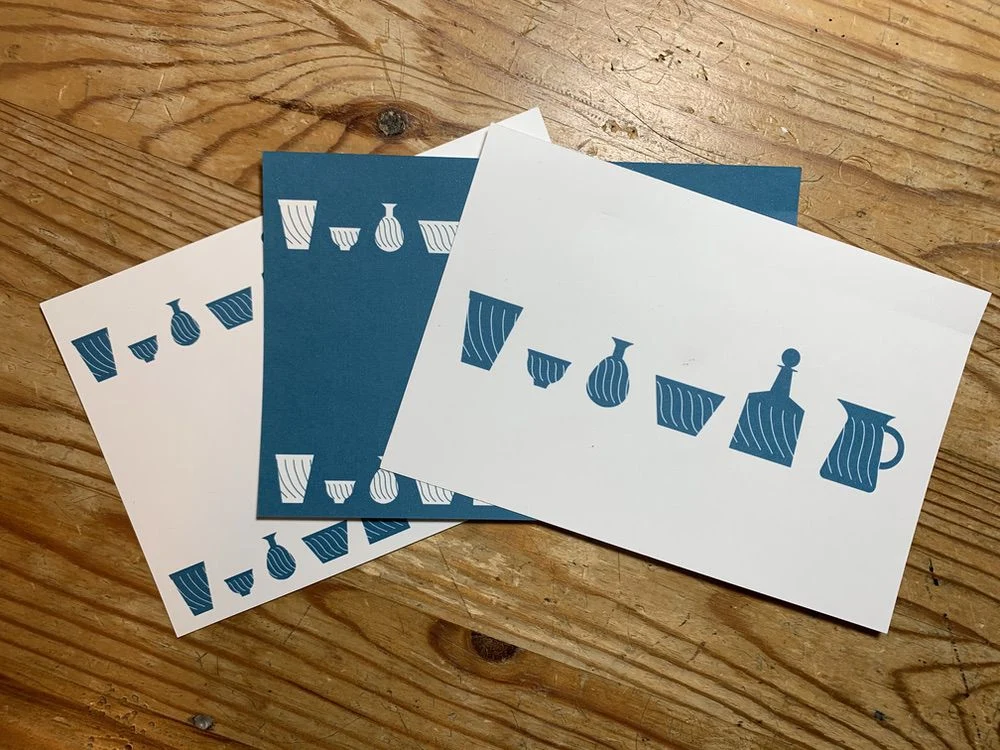
The white silhouette with stripes flowing in the video represents the famous "Kurashiki Glass" works, and based on this, I also produced postcards.
I plan to produce more videos and goods about "Kurashiki Glass" in the future.
I am looking for places that will allow sales, exhibitions, and broadcasts, so I would be happy if anyone interested could reach out to me.
I will share the latest activity updates on social media.
- YouTube Channel
Summary
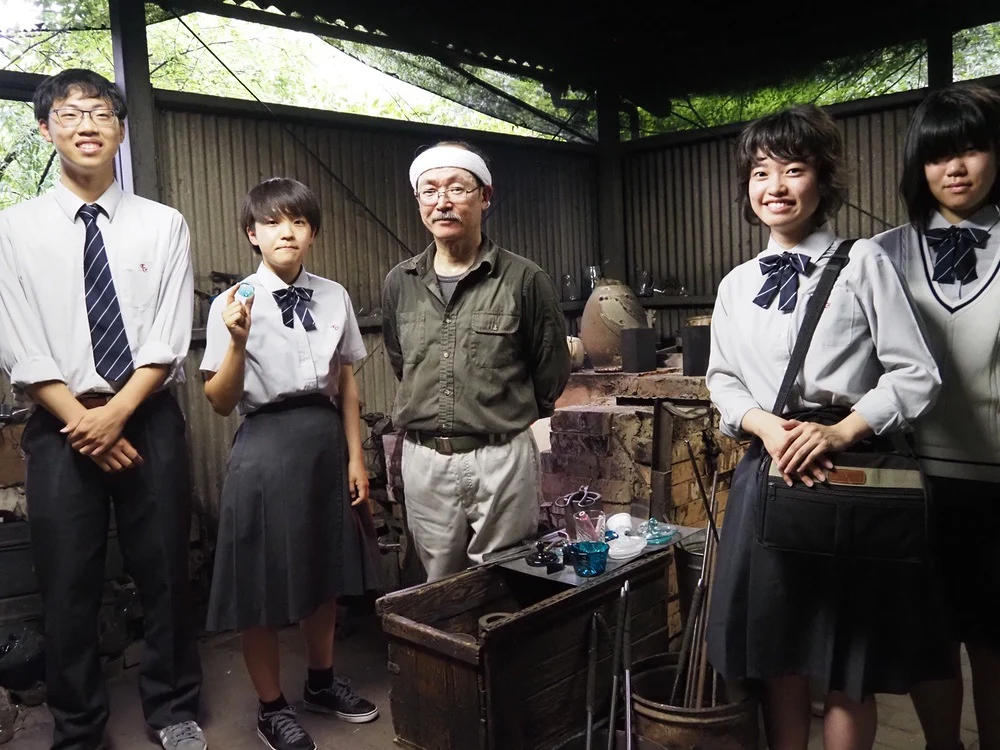
The exploration activity of the folk craft "Kurashiki Glass" has become the most enjoyable and memorable experience of my high school life.
From the small question of "What is 'Kurashiki Glass' that I have been using casually in my daily life?" many perspectives emerged.
The first is the beauty pursued in the daily use of folk crafts and the flow of tradition reflecting the historical background of Kurashiki.
From this, I felt the importance of local products, crafts, and Japan Heritage, and the necessity to pass them on to the next generation, which led me to start PR activities.
The second is the importance of thinking about and creating effective means for PR.
The experience of digitalizing traditional cultures like "Kurashiki Glass," preserving them, and disseminating them made me realize that this is an important means for the future, where social media becomes commonplace.
Finally, through this activity, I have solidified my future dreams.
I had the opportunity to talk with many people with various professions, thoughts, and ideas, and I was able to engage in experiences that ordinary high school students might not have.
And from now on, I want to continue this activity, hoping that more people will re-confirm the importance of local products, crafts, and Japan Heritage, just like I did.
I hope that this introduction will lead to people learning about the charm of "Kurashiki Glass" and becoming interested in other folk crafts, starting with "Kurashiki Glass."
And how about coming to Kurashiki, the town that gave birth to "Kurashiki Glass," and adding "Kurashiki Glass" to your daily life?
Places to Purchase Kurashiki Glass