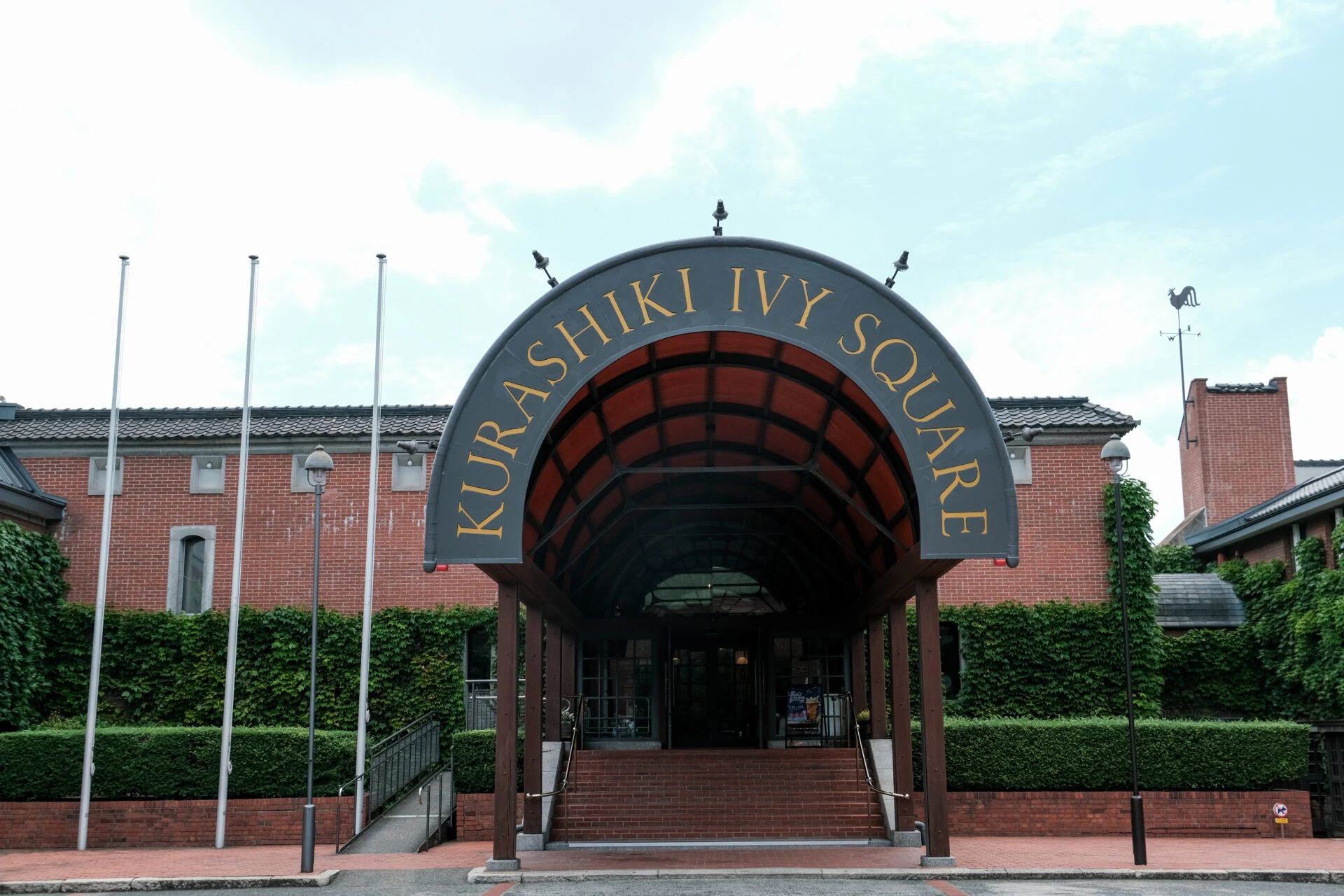
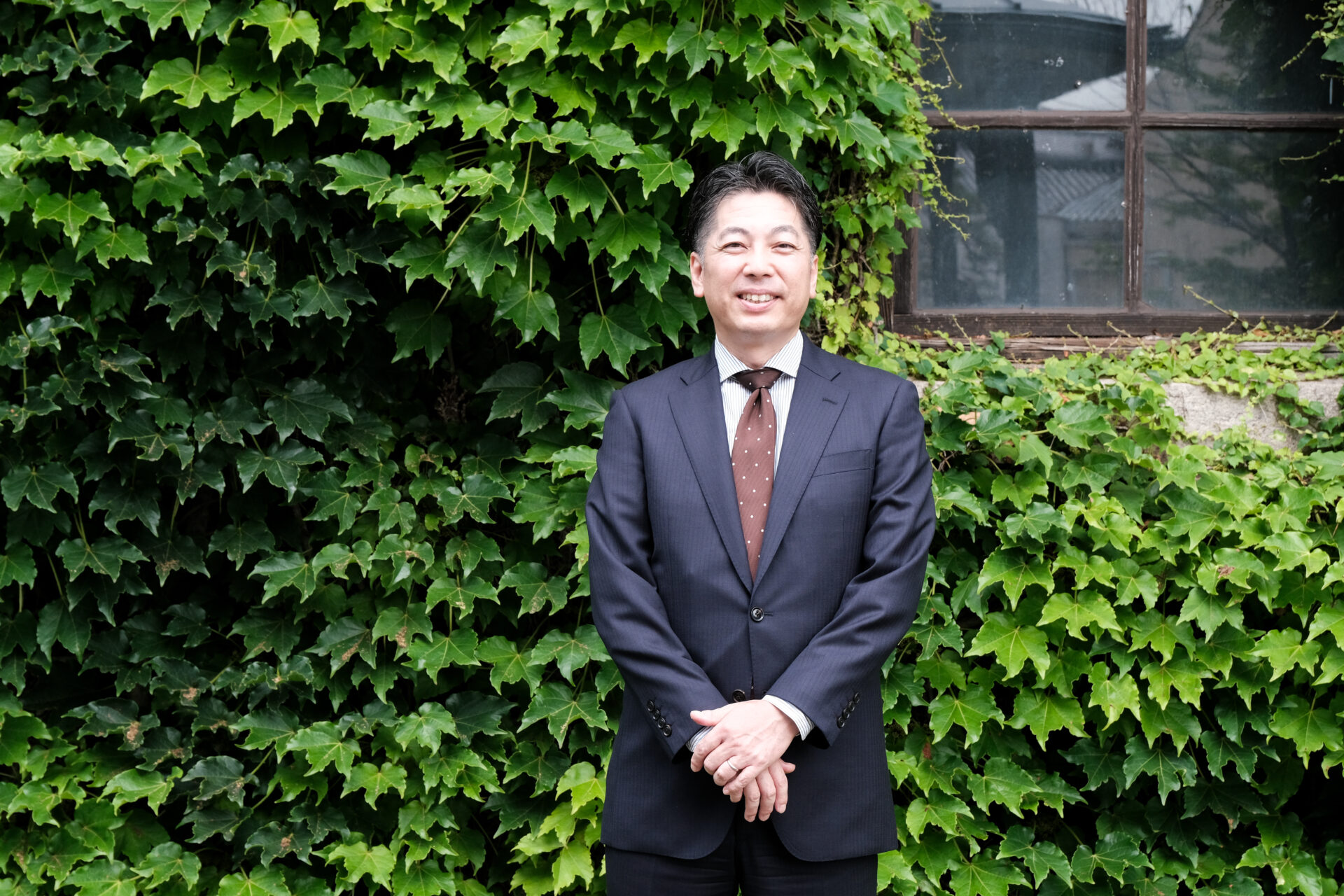
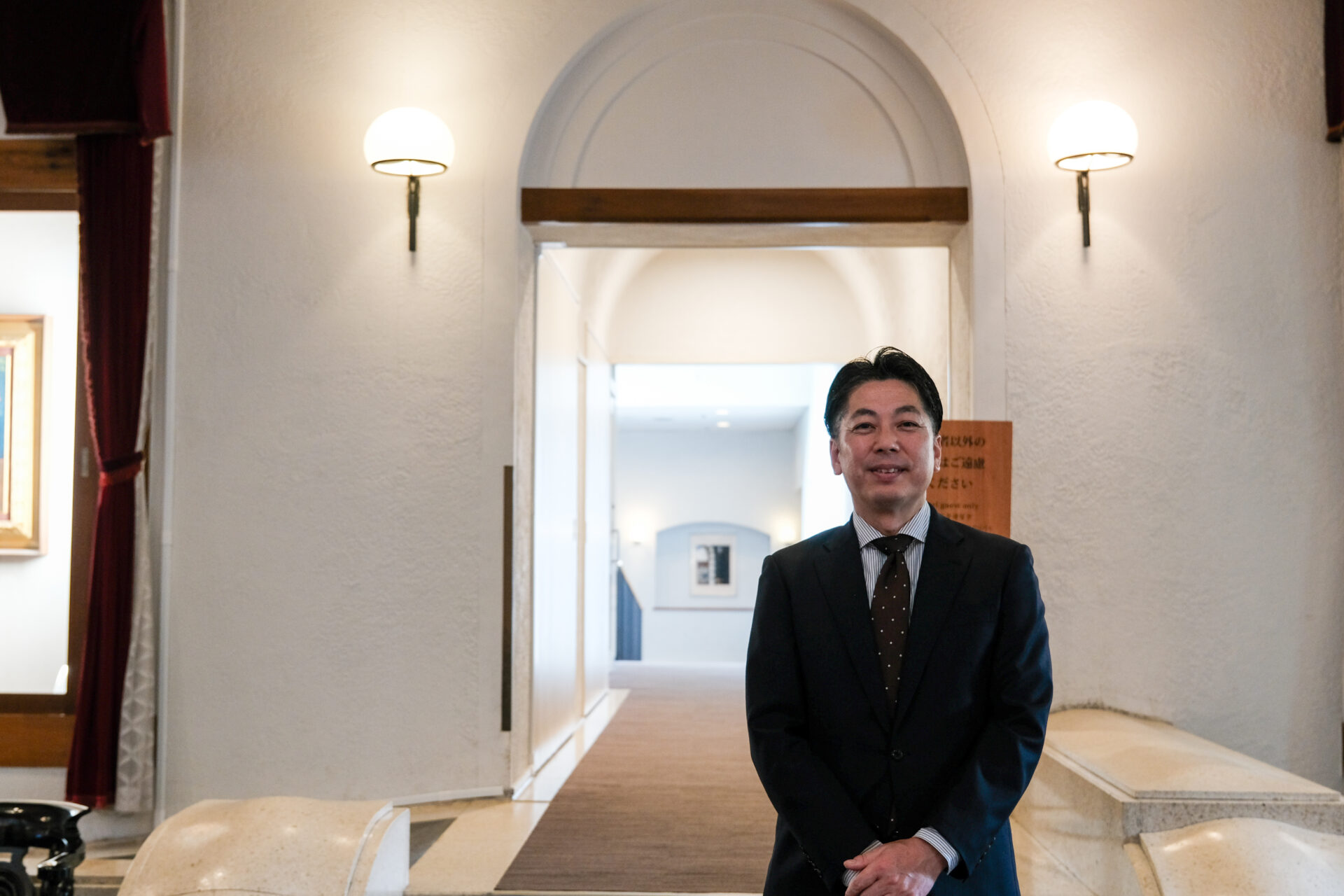
We interviewed Ken Fukai, head of accommodations at Kurashiki Ivy Square, about the key points of the guest-room renovations and what he keeps in mind when serving guests.
Creating a safe and comfortable accommodation environment that meets the needs of the times
I understand that the guest-room wing at Kurashiki Ivy Square underwent major renovations over the three years from 2018 to 2020. What were the key points of the renovations?
Fukai (surname only)
More than 20 years had passed since the previous renovations (1996–1997), and the times had changed considerably. Previously, most of our guests were from Japan, but now the number of international visitors to Japan has increased significantly.
Naturally, this has changed the services guests expect from our facilities. We decided that it was urgent to renovate our facilities to meet the needs of the times, while continuing to value our principles and concept.
There were two key points to these renovations: ensuring the structural safety of the building and implementing modern features expected in guest rooms.
Kurashiki Ivy Square was redeveloped from a textile mill into a cultural complex centered around a hotel. Fifty years have passed since it opened in 1974, and it needed renovations to meet modern earthquake-resistance standards. We carried out extensive reinforcement as part of these renovations, and I believe the facility is now a place guests can use with peace of mind.
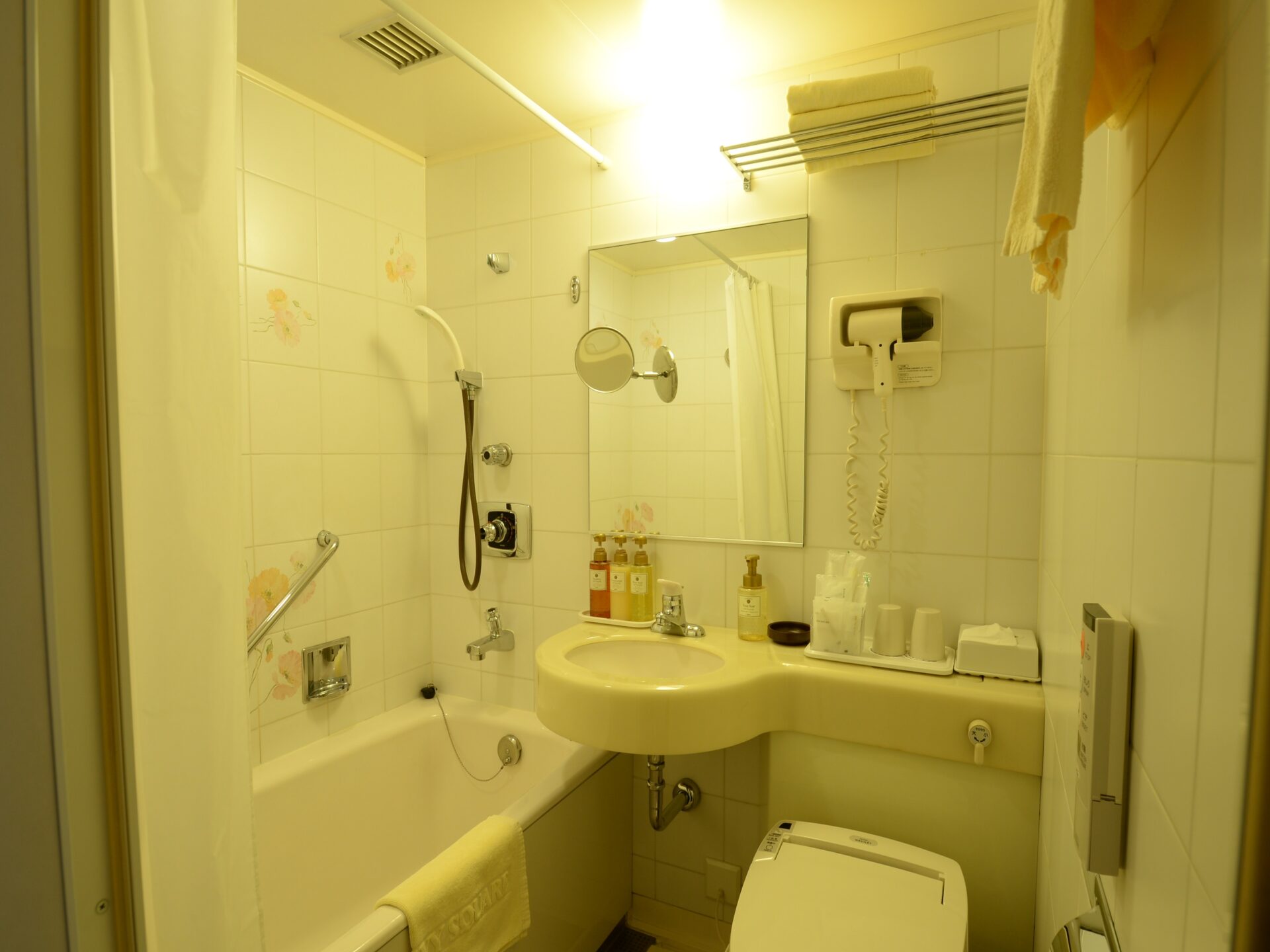
For the in-room facilities, we focused on the guest experience as our top priority, incorporating the latest features such as air conditioning. Previously, the bath, toilet, and washbasin were combined in a single unit bathroom, but in the renovated standard rooms and above, these are now separate.
We also installed bathrooms with a separate washing area, which Japanese guests are familiar with, so I think comfort has improved considerably.
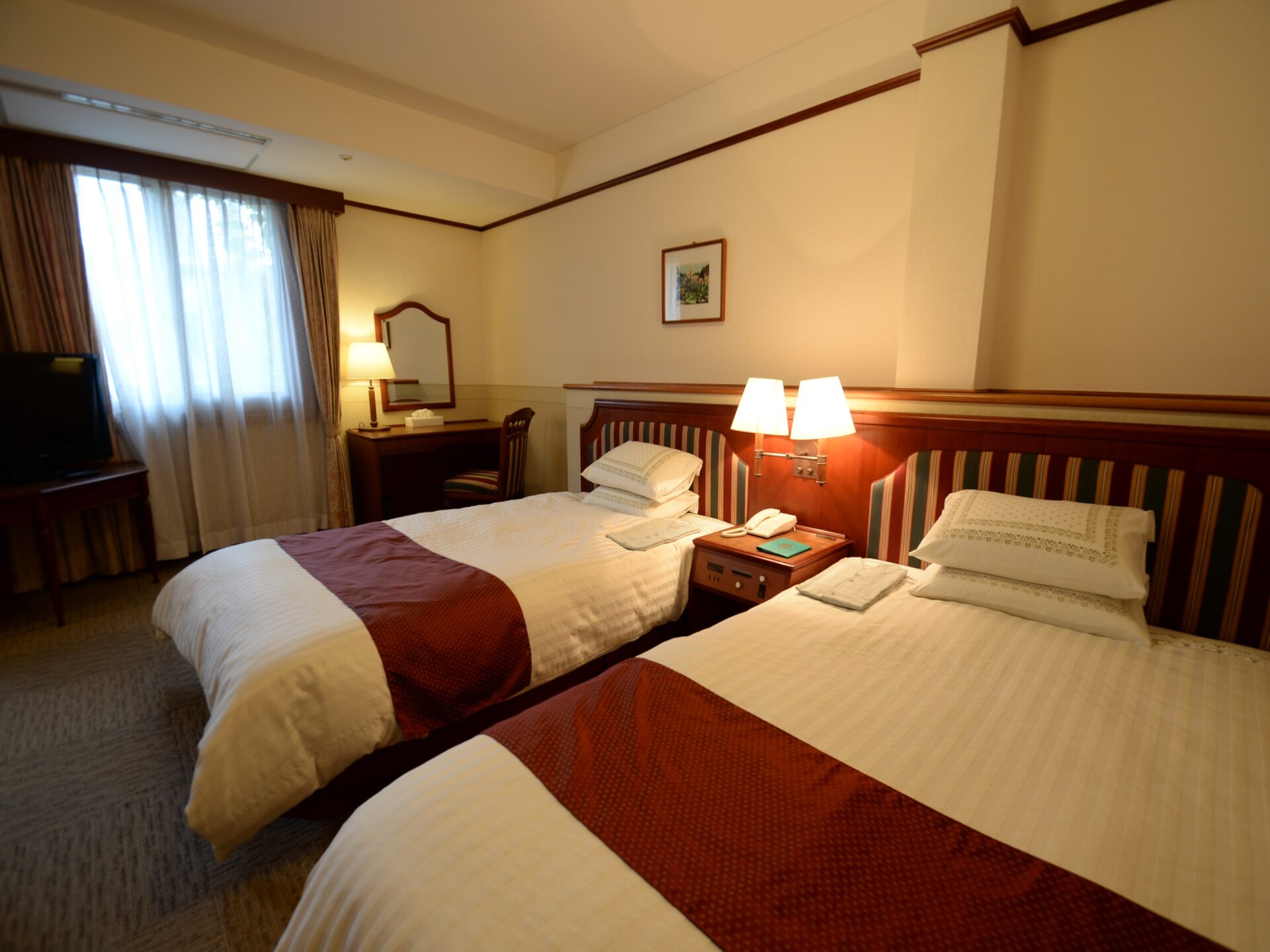
We also changed the room interiors from Art Deco-style furnishings to a natural style. All the furniture in the guest rooms is new.
When I toured the building earlier, I heard that the number of guest rooms was reduced to make room for an elevator.
Fukai
When we opened in 1974, we had 180 guest rooms. As of 2024, we have 145.
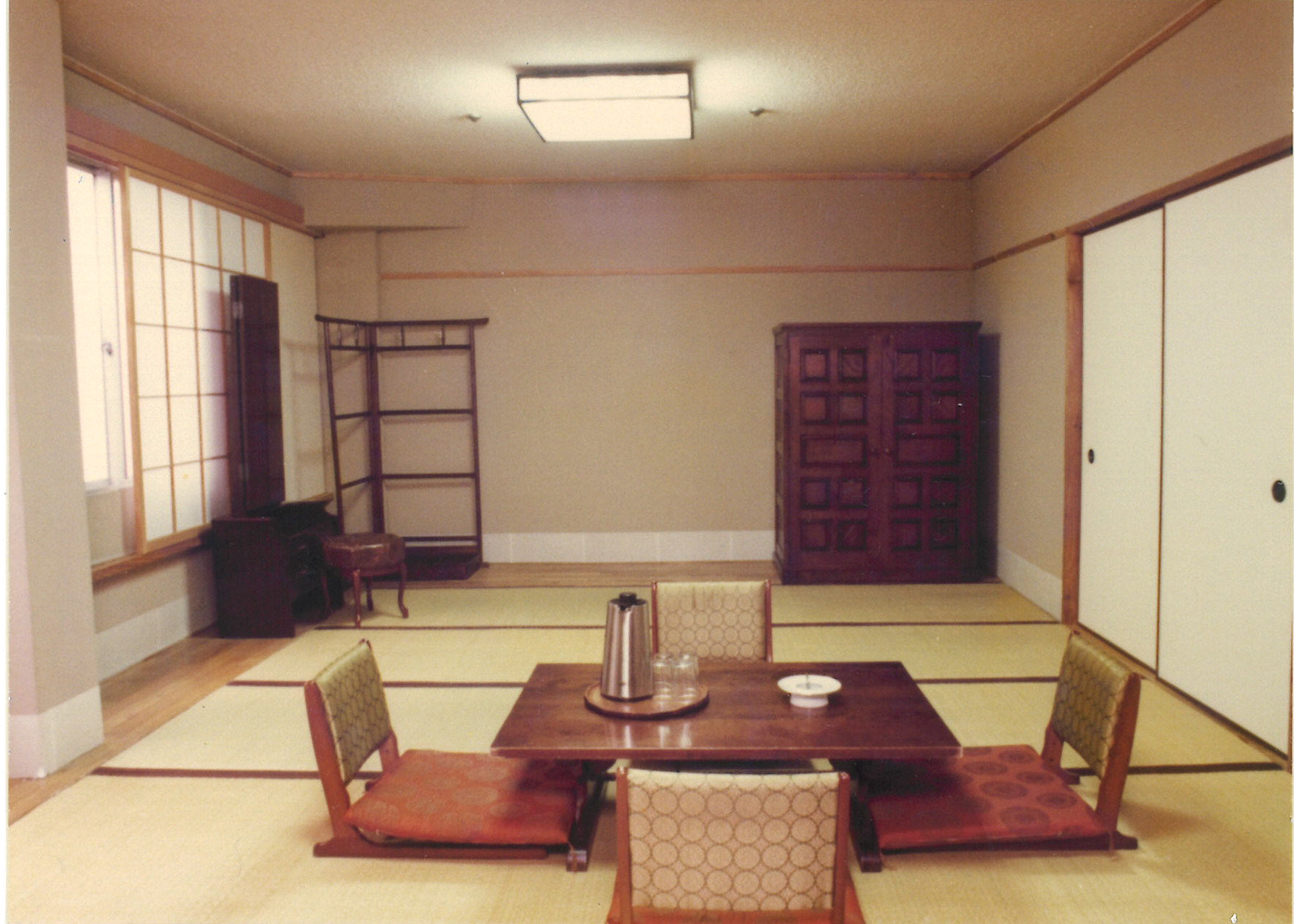
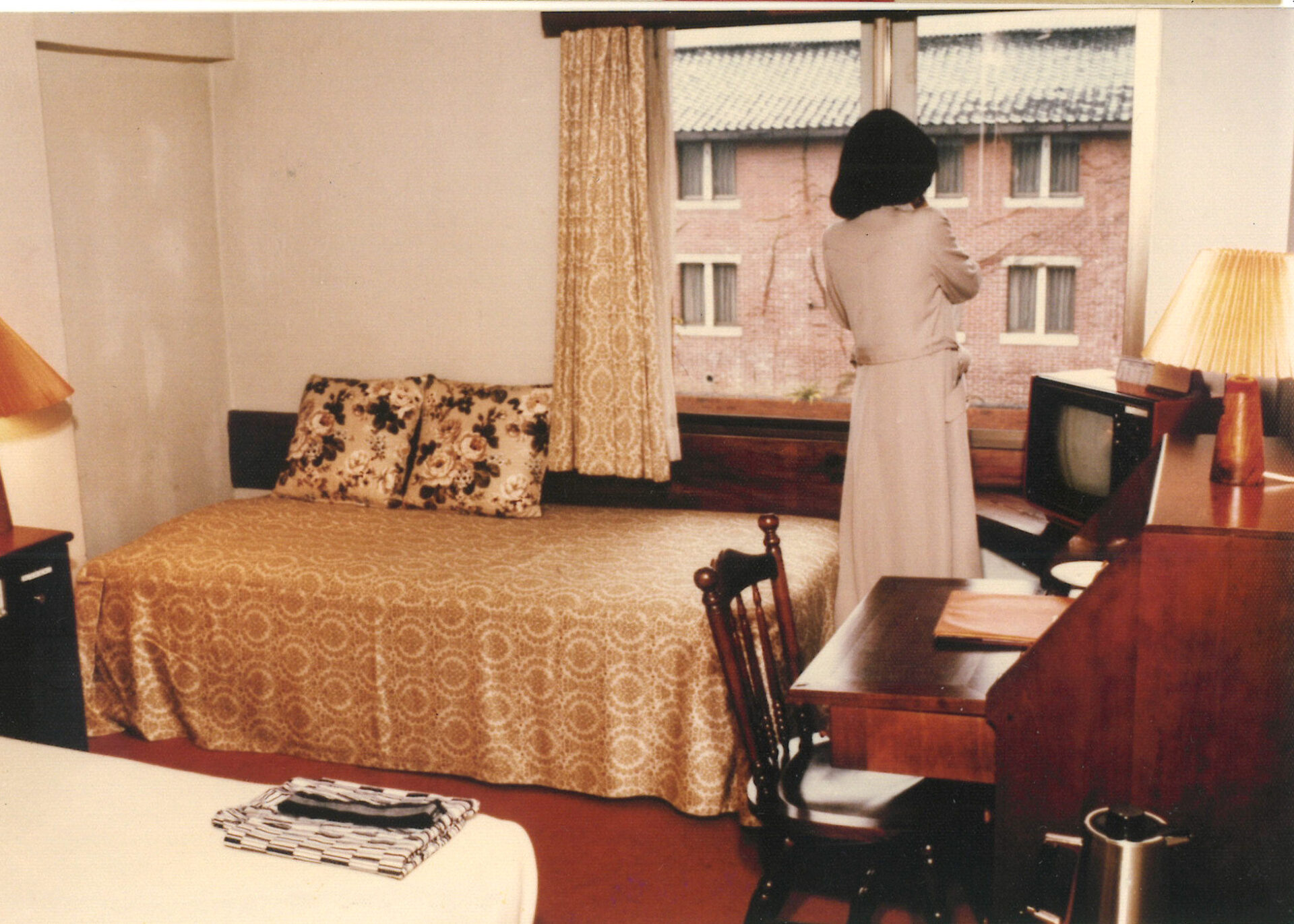
In these renovations, we introduced a range of room types that we did not previously offer, including family rooms and suites. At the same time, we placed great importance on improving the facilities in our public spaces.
A wide variety of guests stay at our hotel, so even though the number of guest rooms decreased, we actively invested in essential facilities, such as adding elevators.
So responding to “changing times” was also a key point of the 2020 renovations.
Fukai
When we first opened, group guests, such as school-trip groups, accounted for a large share of our revenue. Today, however, declining birthrates and the spread of the internet and smartphones have made travel increasingly individual.
On the other hand, we are grateful that many international visitors now come to the area around the Bikan Historical Area. Many guests from overseas stay for extended periods, and tend to bring larger amounts of luggage.
To make their stays comfortable, transforming our guest rooms and public spaces into more spacious areas was an important part of these renovations.
Kurashiki Ivy Square was designed by Chintaro Urabe during its renovation. Was the 2020 renovation also carried out in collaboration with Urabe Design?
Fukai
That’s right.
Urabe Design has worked on many important buildings still standing in Kurashiki, not just Kurashiki Ivy Square. Above all, I believe they understand better than anyone the principles of this facility as set out by Chintaro Urabe.
We discussed everything with Urabe Design, day and night—not only the building’s structure and facilities, but also the interior design and furniture, right down to a single cup.
Of course, our staff have changed since we first opened. But being able to continue improving this facility together with Urabe Design, no matter the era gives us great confidence.
Proposing experiential accommodation plans that reflect the appeal of the local area
I looked at the accommodation page on your website. You have a wide variety of plans.
Fukai
Before the renovations, we only had standard accommodation plans, such as plans with breakfast or with dinner and breakfast. Along with renovating the facility, we developed a variety of experiential accommodation plans in collaboration with appealing tourist attractions in the Bikan Historical Area.
The Ohara Museum of Art is a major attraction for visitors to Kurashiki. I imagine many people visit it.
Our accommodation plan in partnership with the Ohara Museum of Art includes not only museum admission, but also a special ticket holder exclusive to the plan and original Ohara Museum of Art masking tape. The ticket holder and original masking tape are not for sale, so they are only available through this accommodation plan. It is very popular as a plan that lets guests enjoy Kurashiki’s rich art scene.
We also offer many intellectually engaging plans that let guests enjoy Kurashiki even more, including a plan with a brewery tour in partnership with Morita Shuzo, the only sake brewery in the Bikan Historical Area.
What inspired you to create accommodation plans in collaboration with the local community?
Fukai
What comes to mind when you hear “Okayama Prefecture”? Momotaro, kibi dango, muscat grapes, Korakuen Garden… Perhaps not much else.
Recently, thanks to artists and comedians from Okayama, the prefecture may have become somewhat better known than before. Even so, I think many people still find it hard to picture what it is like.
But it is a naturally rich region surrounded by the sea, mountains, and rivers, with a mild climate. It has many sunny days and good transport links, and is a wonderful, comfortable place to live. Despite having all these advantages, I have long felt that what makes Okayama Prefecture special is not being communicated enough to the outside world.
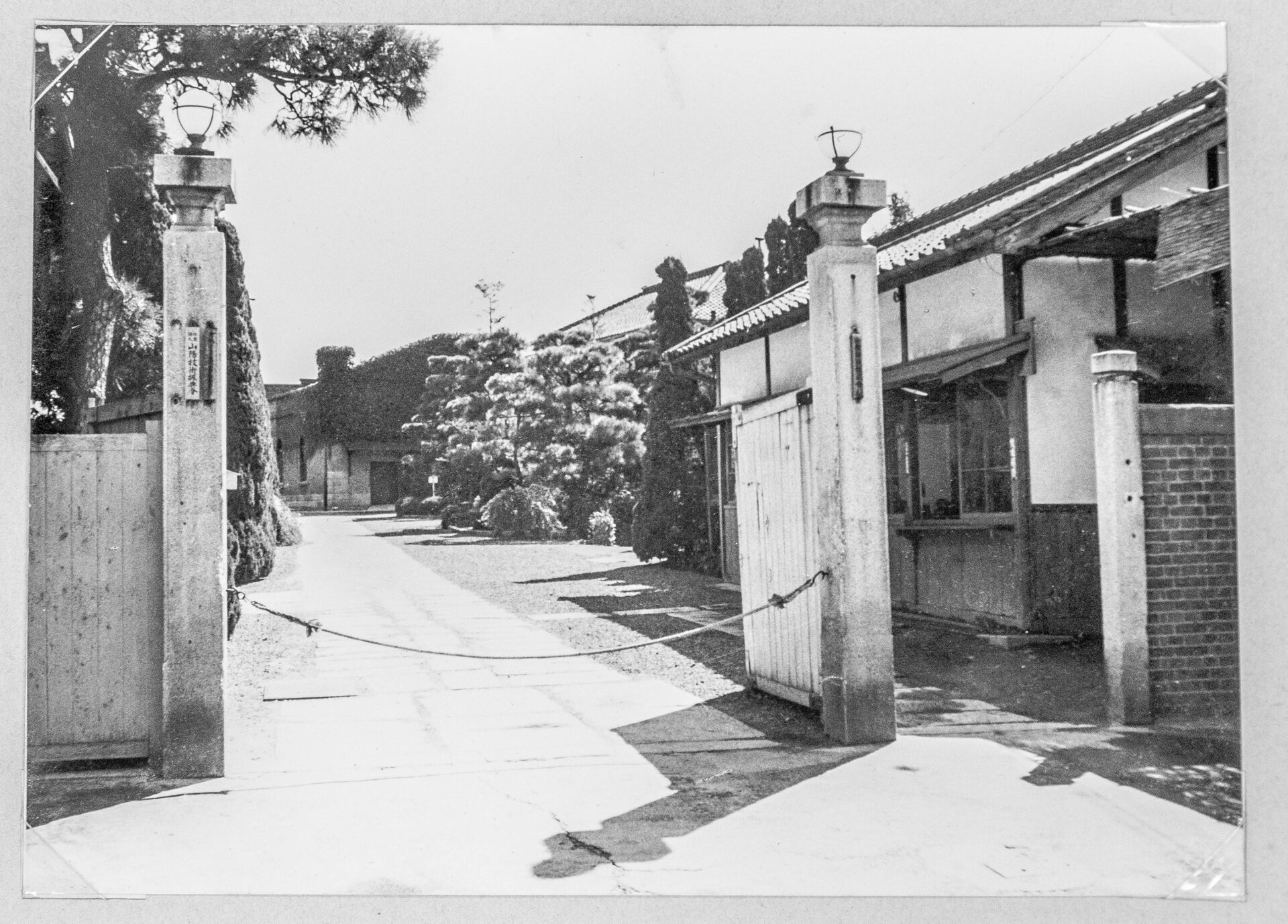
Our hotel has now been open for 50 years. We are very grateful that it has become fairly well known as a facility in Japan.
That is precisely why, by actively engaging with people in the local community, we can share the appeal of Kurashiki’s tourist attractions with more people. Those who experience them can then tell others who have not yet visited.
We hope that these efforts, little by little, will help spread the appeal of Kurashiki both in Japan and overseas.
Offering a stay experience unique to a facility transformed from a textile mill into a hotel
The comfort of the interior changes with the times, while the historic landscape is preserved. That’s important.
Fukai
I think so too.
The philosophy and principles established when we opened are things we must cherish, no matter how much the times change. But they should never make us stop thinking. While keeping what matters close to heart, I believe it is essential as a hotelier to keep pursuing better accommodation experiences in response to the ever-changing needs of the times.
What do you keep in mind when serving guests?
Fukai
Hotels have various departments, such as accommodations and food and beverage. When you work at a hotel that welcomes a wide range of guests, all kinds of things happen. Of course, many good things happen, but unfortunately, unexpected problems can arise too.
I have seen many times that, especially in difficult situations, facing guests with sincerity ultimately leads to them leaving the hotel with a smile.
In general, I think hotel staff are expected to have a spirit of hospitality, be professional, and show thoughtful consideration, among other things.
Of course, these qualities are necessary and should always be kept in mind. But the most important thing is to be sincere. I feel that people who make sincerity their guiding principle grow into excellent hotel staff.
What would you like Kurashiki Ivy Square to become in the future?
Fukai
Today, this place has been redeveloped as a tourism complex centered around a hotel. But it was originally the birthplace of KURABO INDUSTRIES LTD., and has helped shape Kurashiki’s textile industry and the development of the city. It is a place that has journeyed through history alongside this city.
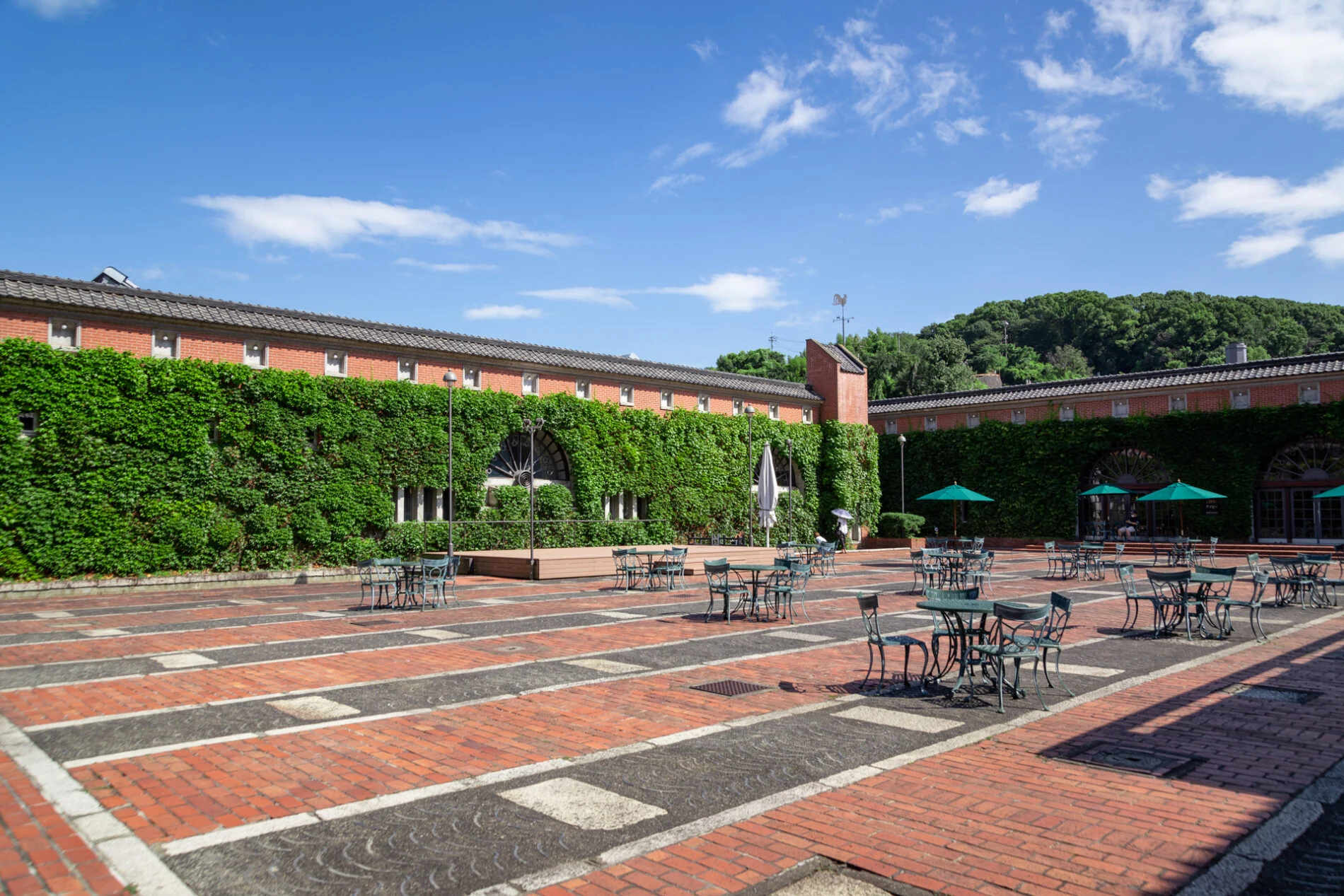
As I mentioned earlier, in recent years we have welcomed more guests who speak different languages and come from different cultures. We are truly grateful that they have chosen to come all the way to Kurashiki in Okayama Prefecture from among so many tourist destinations.
I believe our facility has a role not only as a place to stay, but also as a messenger that shares the history and culture of this city with guests from Japan and abroad.
Of course, we must continue to provide guests with a safe and comfortable environment. Beyond that, we hope that guests who stay with us will tell their families and friends about their experiences in Kurashiki, and that new visitors will come to the city as a result. We hope this cycle will continue, allowing the city to shine for years to come.
Finally, do you have a message for our readers?
Fukai
When Kurashiki Ivy Square opened in the 1970s, the prevailing idea was “scrap and build”—demolish old things and replace them with new ones. I understand that when plans were being considered for redeveloping the former factory, one proposal was to demolish it entirely and build a mid- to high-rise hotel.
In the end, however, they chose a preservation and revitalization plan that transformed the site while retaining the former factory’s exterior and basic structure.
This decision was made not simply for the company’s profit, but because they believed that bringing this place—one that could be called a historic site—back to life in a way that would pass it on to future generations was a contribution to the local community.
This principle continues to run through the heart of Kurashiki Ivy Square today, and will never change.
We hope guests will experience at Kurashiki Ivy Square the comfort that can only be achieved by cherishing the things that should be preserved.
Continuing to live on while changing. We warmly invite you to visit Kurashiki Ivy Square. We look forward to welcoming you.
From the Writer
I love taking spontaneous weekend trips, so I often stay at accommodation facilities.
When I was younger, I wanted to spend money on food and experiences while keeping accommodation costs down, so I didn’t pay much attention to where I stayed.
For me, Kurashiki Ivy Square was the first place that made me think, “Someday, I’d like to stay here,” and inspired me to take a trip with staying there as the main purpose.
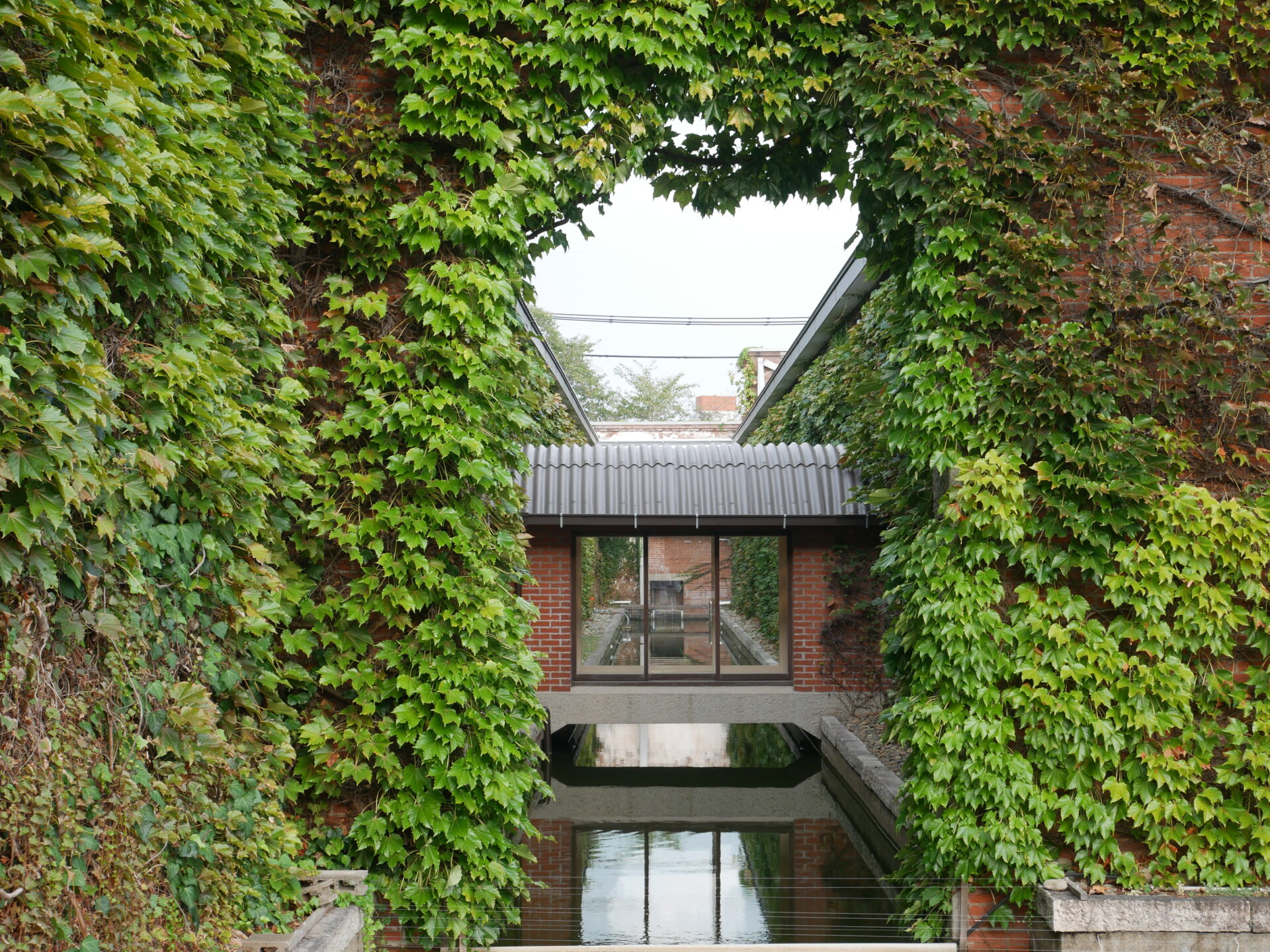
The one-of-a-kind stay offered here, in a former textile mill, is about more than simply staying in a site of Japan’s industrial modernization heritage. The comfort that can be pursued precisely because the things that should be preserved are cherished inspires someone’s longing to stay here. This is an experience made possible by a facility that serves as a “messenger,” connecting Kurashiki’s past, present, and future.
Whether you live in Kurashiki or are visiting as a tourist, staying here offers the chance to discover a new side of Kurashiki Ivy Square and the city of Kurashiki.
Why not enjoy a safe and comfortable stay at Kurashiki Ivy Square while experiencing its history?
Kurashiki Ivy Square Information

| Name | Kurashiki Ivy Square |
|---|---|
| Address | 7-2 Honmachi, Kurashiki City, Okayama Prefecture |
| Contact | 086-422-0011 |
| Check-in | 3:00 p.m. |
| Check-out | 11:00 a.m. |
| Payment methods |
|
| Facility information | All rooms are non-smoking (smoking areas available separately) |
| Baths | Large public bath; bathrooms in guest rooms (some rooms may have shower booths) |
| Wi-Fi | Available |
| Parking | Available 120 spaces *Guests do not need to reserve; 500 yen per vehicle per night (until noon the following day) |
| Website | Kurashiki Ivy Square |



What would you like to know about Kurashiki?
Enter a word to search articles on this site