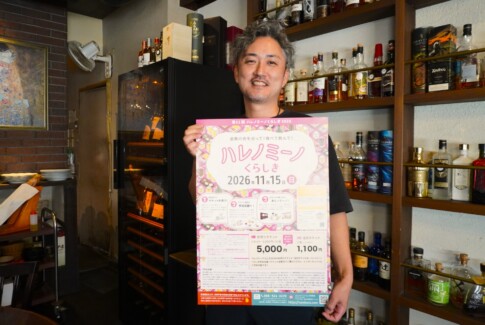
Interview with Yuta Sugihara, Representative Director of Matsumoto Tekko

Matsumoto Tekko Co., Ltd. has been in business for over 50 years, yet is active in the cutting-edge field of robotic systems.
The company is also proactive in adopting new initiatives, such as its personnel evaluation system and the use of tablets at work.
We interviewed Yuta Sugihara, Representative Director of Matsumoto Tekko Co., Ltd., about the company’s characteristics and strengths, the people it seeks to hire, why it revamped its personnel evaluation system, and its aspirations for the future.
Matsumoto Tekko’s work is “breathing life into robots”

What kind of company is Matsumoto Tekko?
Sugihara (titles omitted)
Matsumoto Tekko currently has 15 employees. Including part-time workers and employees of partner companies, the workforce totals around 100.
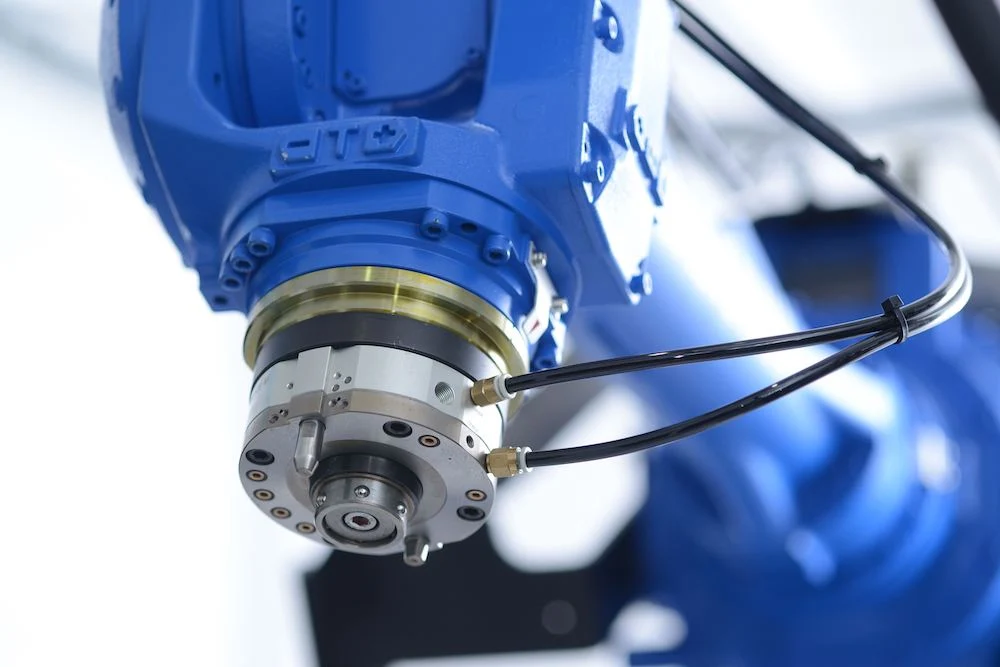
Our main business is manufacturing industrial robotic systems for use in production facilities across a wide range of fields.
We design robotic systems to suit each client company’s products, manufacturing processes, technology, and work environment. We then build the systems at our company and install them at the client’s production site.
We also handle maintenance and repairs after installation, as well as modifying robotic systems to meet changing conditions after they have been introduced.
Companies like ours that operate industrial robotic system businesses are called “robot system integrators” or “robot SIers.”
The Japan Robot Association, of which our company is a member, describes the work of a robot system integrator as “breathing life into robots”—and that’s exactly right.
Matsumoto Tekko’s strengths are its regional location and extensive experience in industrial robotics

There must be other companies in the same industry across Japan. What are Matsumoto Tekko’s strengths, and how does it differ from other companies?
Sugihara
The key strengths are “being based in a regional area” and our “extensive experience” with industrial robotic systems.
Robot system integrators are concentrated in urban areas such as Osaka.
However, companies in urban areas inevitably have limited space on their premises.
Without a large site, it can be difficult to install large equipment or manufacture large robots.
By contrast, our company is located on the outskirts of a regional city.
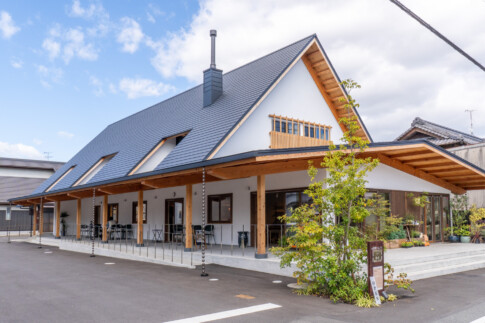
That means we have a large site and a spacious building for our workshop.
We also have a full range of equipment and machinery, and can manufacture large robots.
That’s a strength unique to a regional company.

What about your other strength, your extensive experience in the robotics business?
Sugihara
We initially started out providing robot maintenance services, and including that work, we have more than 30 years of history.
We haven’t just been doing this for a long time; we’ve also worked on robotic systems in a wide range of fields.
Thanks to that wealth of experience, we can advise and make proposals for robotic systems in any industry.
Another major strength is that we handle everything in-house, from consultation, proposals, and design to manufacturing and assembly, on-site installation and setup, and post-installation maintenance, repairs, and modifications.
We’ve heard from clients that they feel reassured entrusting everything to a single company.
Revamping the personnel evaluation system so that performance and evaluations are linked regardless of age

Your personnel evaluation system is distinctive. Has it always been this way?
Sugihara
No. Previously, our personnel system was based on the conventional seniority system.
Ever since I became representative director, I’ve felt that we needed to revamp the personnel system.
So we took the plunge and set about changing it.
At first, though, we couldn’t create a system that worked as we wanted. We spent about three years trying different approaches while listening to our employees, and finally arrived at our current personnel evaluation system.

Changing an existing system must have taken a great deal of effort and perhaps faced opposition. Why did you go ahead with the changes despite that?
Sugihara
Because I feel that, in today’s world, the problems inherent in seniority-based systems lead to significant losses.
With a seniority system, younger generations are inevitably at a disadvantage.
Under a seniority system, even if younger employees receive high evaluations, it’s difficult for those evaluations to translate into commensurate results—in other words, pay.
That can undermine the motivation of younger employees.
They will shape the company’s future, so this also affects the company’s future.
We reformed the system with the goal of creating a personnel evaluation system in which younger employees are not disadvantaged, every generation is evaluated fairly, and those evaluations are reflected in pay.
Another reason for reforming the system was to make it easier to understand.
Under the previous personnel evaluation system, it was unclear who evaluated employees and how.
It was also difficult to tell what level of evaluation corresponded to what salary.
I think it’s important to have a system that is easy for anyone to understand.
Our employees seem satisfied with the current personnel evaluation system.
Of course, we’ll continue to make improvements whenever needed.
For example, reducing overtime is currently one of the evaluation criteria.

That makes sense—reducing overtime has certainly attracted attention as part of work-style reform.
Sugihara
Some people may associate overtime with earning “overtime pay.”
That’s why you sometimes hear people say they’d be in trouble if overtime were eliminated because they’d lose that extra pay.
It’s the opposite at our company.
Since reducing overtime is one of our evaluation criteria, employees who reduce it receive higher evaluations, which ultimately benefits them.
However, depending on the job, our employees may have to travel for work, and sometimes overtime or work on days off is unavoidable.
Things that are unavoidable, such as business trips, are treated as a separate item from overtime and are not included in evaluations.
We value employees who work little overtime and those who make an effort to reduce it.
Technical sales is a job for the times ahead, requiring advanced knowledge

What kinds of positions is Matsumoto Tekko currently recruiting for?
Sugihara
In addition to recruiting new graduates, we are currently hiring for a technical sales position as a mid-career role.
We have few employees in their 30s, so we’re looking to balance the age distribution.
What does the technical sales position involve?
Sugihara
Technical sales staff listen to clients’ needs, discuss them with the plant manager on site, and develop, propose, and estimate robotic system equipment suited to each client.
The job requires technical knowledge of robotic systems, as well as the ability to develop concepts, make proposals, and negotiate.
The skills required are advanced, but the rewards are substantial.
With hard work, a technical sales employee can become the highest-paid person in the company.
Technical sales is an important role needed not only at our company but throughout the robot system integrator industry.
Since technical sales requires technical knowledge, many people in the role have prior on-site experience.
After joining us as a technical sales employee, new hires initially work on site for a set period to gain hands-on experience at our company.
By the way, some employees also advance from on-site work to become plant managers, another career path besides technical sales.
The future will bring “collaboration” between people and robots

Whenever robots come up, people sometimes say, “Robots and AI (artificial intelligence) will take people’s jobs.”
Sugihara
Many people may have that impression.
However, Japan is an aging society with a declining birthrate.
Labor shortages are already becoming an issue, and they are likely to grow more serious.
Manufacturing is an important industry that supports Japan’s economy.
Robotic systems play an important role in addressing the aging workforce and labor shortages at manufacturing sites.
The key is “collaboration” between people and robots.

Collaboration between people and robots?
Sugihara
Until now, the prevailing idea was to entrust almost an entire process to robots and fully automate it.
That may be where the idea that “robots and AI will take people’s jobs” comes from.
But things are changing now.
Safety systems for robotic systems have advanced, making it increasingly safe for people to work near robots.
Now that people can work alongside robots, collaboration is becoming easier.
Robots are naturally good at “repeating the same movements accurately for long periods”.
People, on the other hand, can adapt their work flexibly to the situation.
Conversely, it’s difficult for robots to assess a situation and adapt their work accordingly.
People, too, have physical and mental limits, so they can’t perform repetitive tasks accurately for long periods.
So people and robots each take on the areas they excel at and focus on their respective strengths.
In other words, collaboration between people and robots means dividing roles between them.
Matsumoto Tekko is a local workshop producing global products

What are your aspirations for the future, or things you’d like to try?
Sugihara
We don’t intend to make the company dramatically larger.
I think around 30 employees at most would be fine.
Instead, I want to make this a company where employees can earn a good living.
To that end, we’ve repeatedly revised the personnel evaluation system so that effort and results are properly reflected in pay.
Our goal is for employees to feel satisfied working at this company.
There’s also something an employee said that has stayed with me.
“Matsumoto Tekko is a small local workshop, but its work and products are global.”
I want future employees to see for themselves that even a company in a rural part of Japan, rather than a large corporation, can thrive on the world stage.
From the Writer

Japan’s economy is said to face labor shortages as its biggest challenge.
One way to address this is to introduce robotic systems.
I had no idea that a long-established factory in Kurashiki was active in this important field, which will shape the future of Japan’s economy.
It is also worth noting that, just as President Sugihara introduced reforms to ensure that employees’ hard work is properly reflected in their pay, this long-established company is flexibly adapting its structure to the times.
I hope you’ll remember that Kurashiki is also home to an interesting company, Matsumoto Ironworks, whose work extends overseas.
Matsumoto Ironworks Co., Ltd. Information

| Organization name | Matsumoto Ironworks Co., Ltd. |
|---|---|
| Industry | Manufacturing (various robotic systems) |
| Representative | Sugihara Yuta |
| Year established | Established: 1967; founded: 1965 |
| Address | 501-10 Urata, Fukuda-cho, Kurashiki City, Okayama Prefecture |
| Contact | 086-427-2272 |
| Website | Design, manufacture, installation, and maintenance of various industrial machinery and equipment | Matsumoto Ironworks Co., Ltd. |


What would you like to know about Kurashiki?
Enter a keyword and we'll search the articles on this site