Interview with the Couple Narrators "Mucchan and Kacchan"
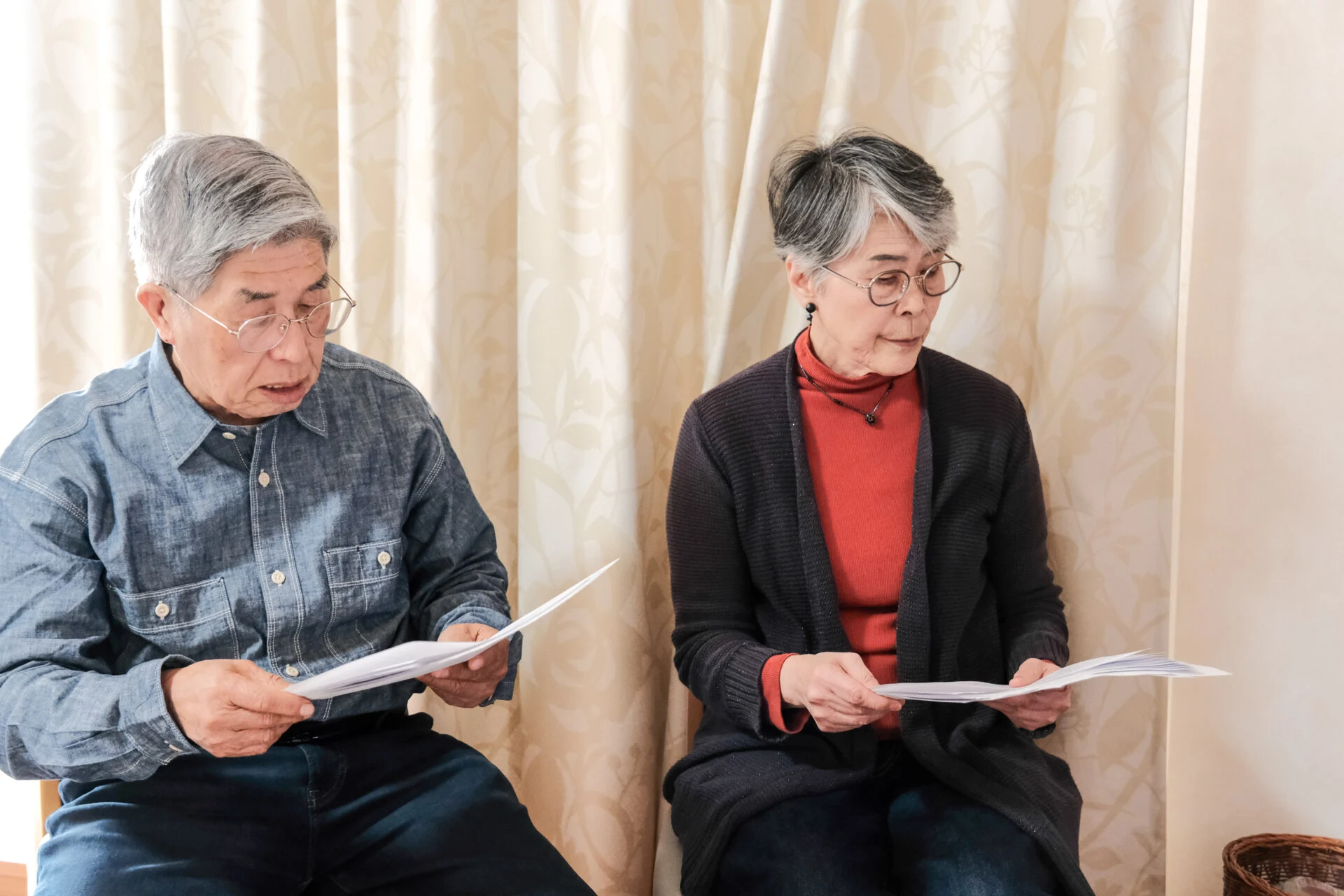
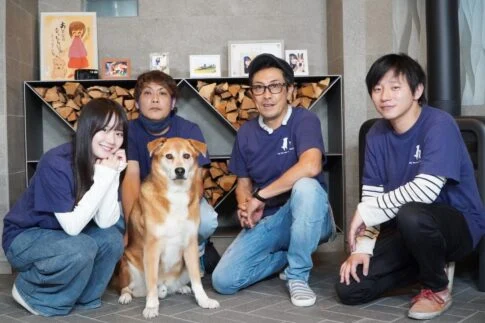
We spoke with Yabuki Katsutoshi and Yabuki Mutsumi, who are active as the couple narrators "Mucchan and Kacchan."
I want to show the excitement of watching a live narration to everyone in Kojima! I want them to see it!
Please tell us about your encounter with live narration.
Katsutoshi (no honorifics)
We boarded a world cruise ship in 2004.
On the ship, there are lecturers involved in entertainment, environmental issues, and politics, known as "guides," who come aboard one after another. One of them was Sasaki Akiko, a live narrator, who held a screening of a live narration film on board.
That was our encounter with live narration films.
Mutsumi (no honorifics)
Don't you have the image that live narrators are like "old men with beards" as they age?
But Sasaki was a young woman in her 30s. I was surprised by that first.
At the beginning of the screening, I was thinking, "She is talking."
But I quickly became immersed in the film.
I forgot that "she is talking" and felt as if I was watching a normal sound film.
So, when the screening ended and I saw Sasaki sitting next to the screen, I realized, "She was the one talking all by herself!" and I was overwhelmed with emotion.
And I thought, "When I return to Japan, I have to show this excitement to everyone in Kojima! I want them to see it!"
Katsutoshi
After returning to Japan, we held an event called "Live Narration Cinema Live" in Kojima in 2005. At that time, we did not perform the live narration ourselves, but invited Sasaki to Kojima to showcase her narration.
I would also like to know how you both started your activities as live narrators.
Mutsumi
As we continued to hold events, we received an invitation from the Okayama Film Festival asking, "Would you like to try screening a live narration film yourselves?" I participated in a workshop hosted by Sasaki on the ship, but I was surprised because I never thought we would perform live narration in front of an audience.
However, with Sasaki's encouragement, we decided to do live narration ourselves.

The film requested by the organizer was "Goketsu Jiraiya."
It is a film starring an actor from Okayama. The request was made with the hope that people from Okayama would know that actors from Okayama were active in the early days of motion pictures.
However, there are many male sword-fighting scenes, so I couldn't maintain a strong male voice by myself.
So, I asked Sasaki, "Would it be okay if Kacchan (referring to Katsutoshi) and I did the live narration together?" She replied, "That sounds interesting!" and agreed, leading to the natural beginning of the couple narrators "Mucchan Kacchan."
Reviving silent films that lie dormant in the community through live narration
Are there any particularly impressive works?
Katsutoshi
All the works have a special meaning to us as we create the lines from scratch, but the work "Sex is Good" particularly stands out in my memory.
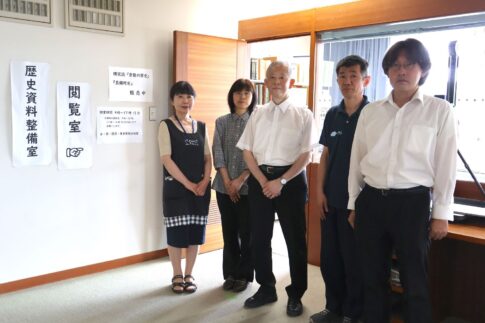
This work is a silent film discovered in 2018 at the Kankou Library in Asakuchi City. It was produced in 1924 by Kawaguchi Yoshitaro, the former director of the Imperial Cinema, who was also a follower of the Kankou religion, and only parts 1, 2, and 5 were found.
At that time, original silent films were used as part of the missionary activities.
The people at the Kankou Library wanted to show the three discovered films to everyone and seemed to have found us as live narrators.
Mutsumi
The Kankou Library had also created a script framework based on old materials, but we created a new script while arranging it to make it easier to speak along with the screen.
I remember that we held mini live performances several times at Kankou during the period of measures against the spread of the novel coronavirus.
We also created a work that recorded the live narration audio and silent film simultaneously so that it could be screened even without us, and we submitted that to the Okayama Film Festival.
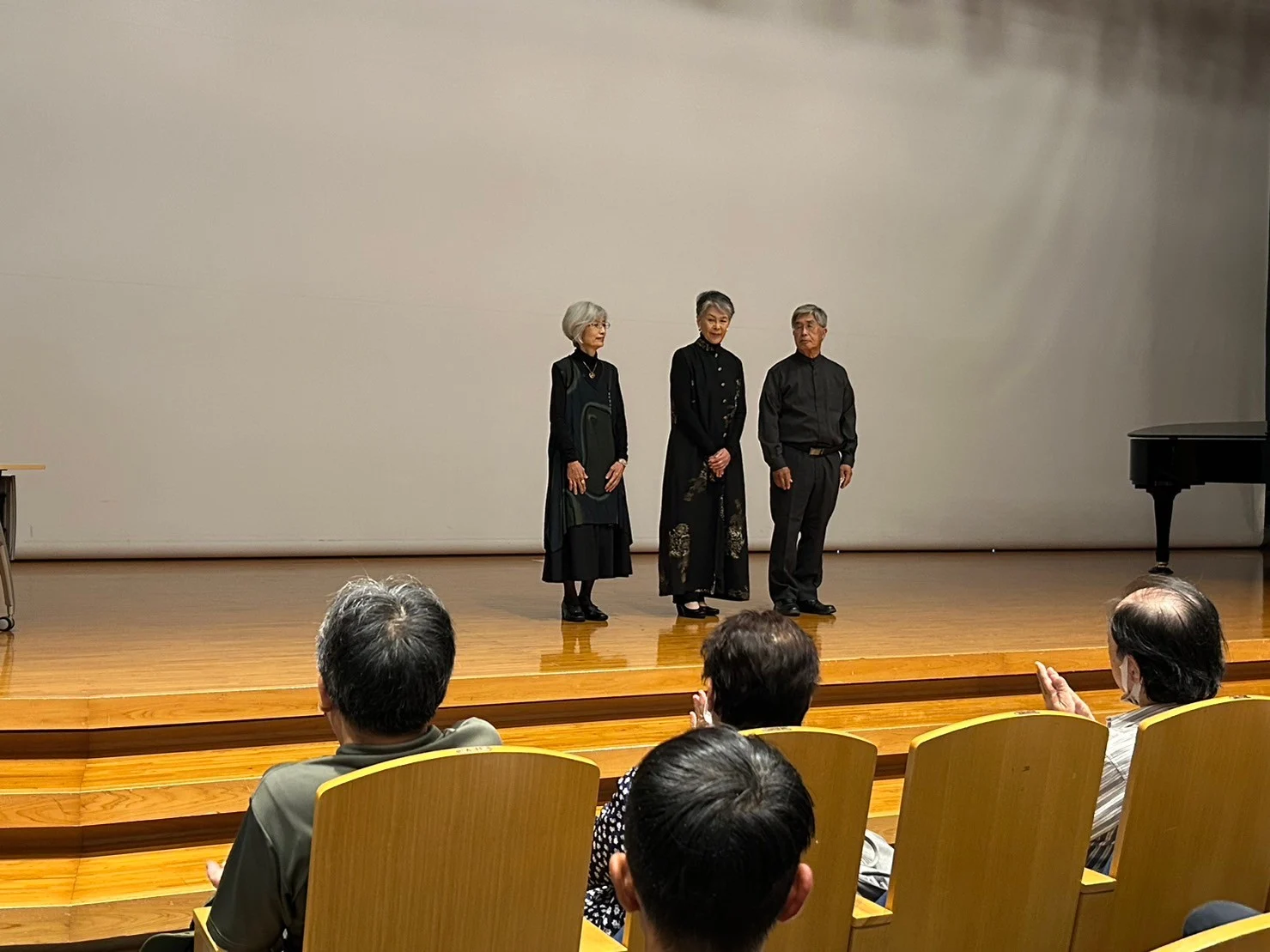
Later, we were also invited by the Kyoto University Institute for Research in Humanities, and in 2023, we had the opportunity to showcase our live narration at the 100th Anniversary Memorial Hall of Kyoto University.
Katsutoshi
It was an impressive episode that the activities we started with the desire to deliver to the local people reached the same Bichu people.
I want to pass on the immersive experience of live narration to future generations
I heard that workshops for children, as well as adults, are also being held.
Mutsumi
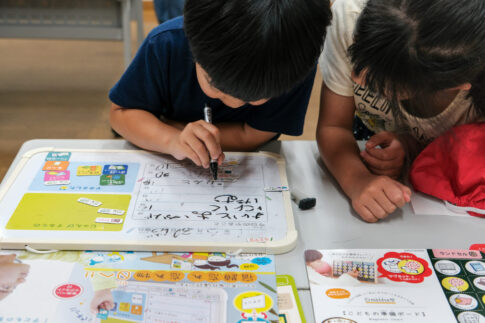
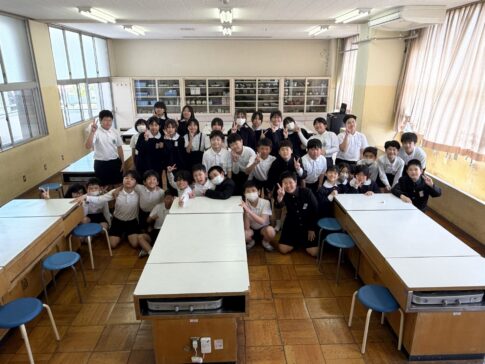
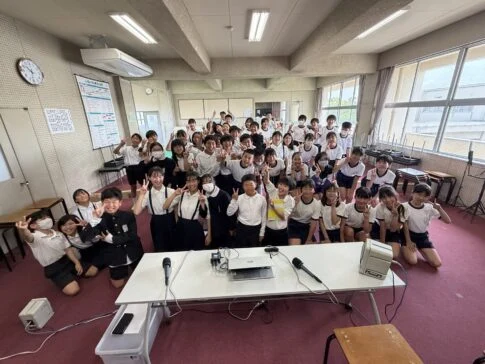
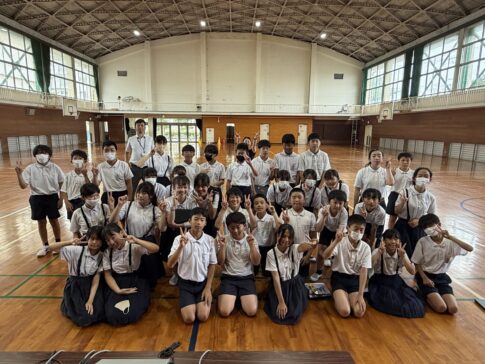
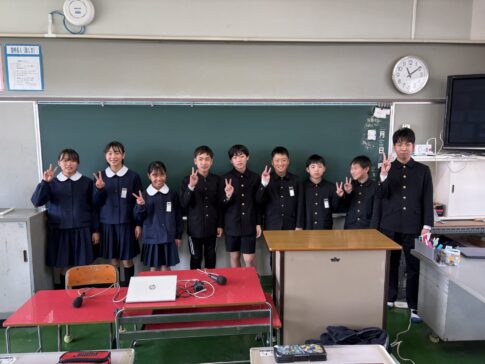
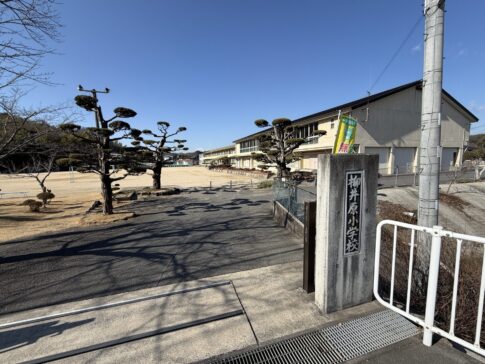
We held a live narration workshop at an elementary school in Kojima.
When we did a workshop for third-grade students and were leaving, the children said, "The live narration we just saw sounded like the voices were coming from the movie itself."
This was the most delightful comment for me as a live narrator, and it was the same feeling I had when I first watched Sasaki's live narration film.
Children express their feelings very straightforwardly, so I was truly happy to realize that the excitement I wanted to convey reached the children in Kojima.
Today's children grow up watching colorful animated films, right? However, the films we use for live narration are black and white, worn out, and flickering.
Despite that, they move the hearts of children. It was a comment that convinced me that live narration is worth preserving.
What do you both think is the charm of live narration?
Mutsumi
Above all, the sense of presence on stage is its charm.
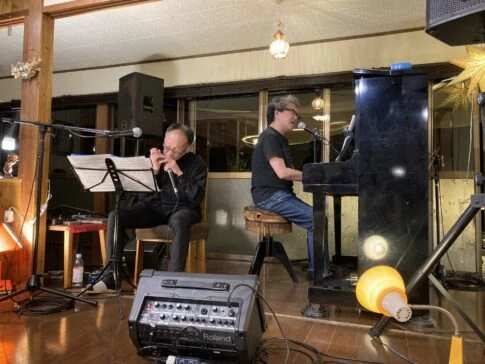
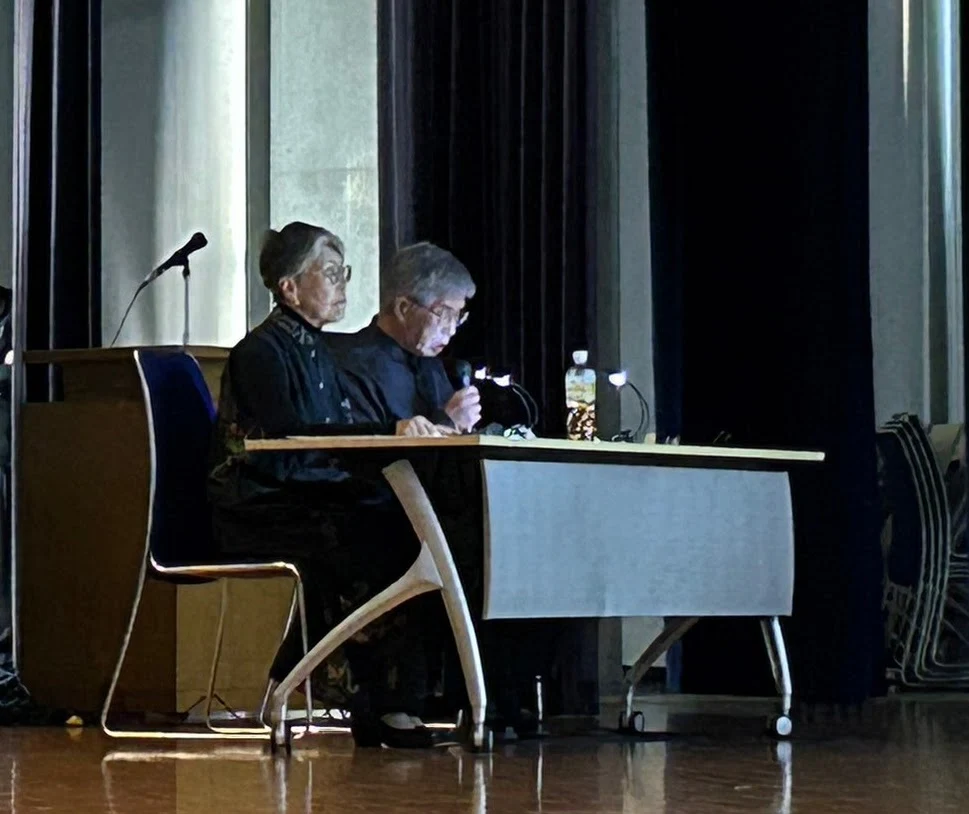
In live narration, the motion picture is on stage, musicians play music, and the live narrator provides lines and explanations of the film.
This creates a sense of presence as if the stage actors are performing right there, even though they are not physically present.
I believe this is a unique charm of live narration films created by live performances and live voices.
Katsutoshi
Since it is a live performance, the audience can also participate.
If a good scene comes up, there is applause. If there is good narration, there is applause. If there is good music, everyone claps along...
The motion picture, live narrator, musicians, and audience can become a fourfold unity in live narration films.
When the audience's feelings rise, it also conveys to the narrator's narration and music.
In other words, every time the audience changes, the live narration film itself also undergoes slight changes. That is the essence of it, isn't it?
Please tell us about your future prospects.
Katsutoshi
In fact, only Japan, South Korea, and Thailand have added lines to motion pictures.
This is because Japan has had a long-standing "narrative culture." For example, Joruri, Rokyoku, and Rakugo are representative examples.
In other words, there was originally a culture of enjoying narratives in stories, which made it easier for live narration films to take root.
We are continuing this activity with the desire to preserve live narration, which is one of the narrative cultures that have continued.
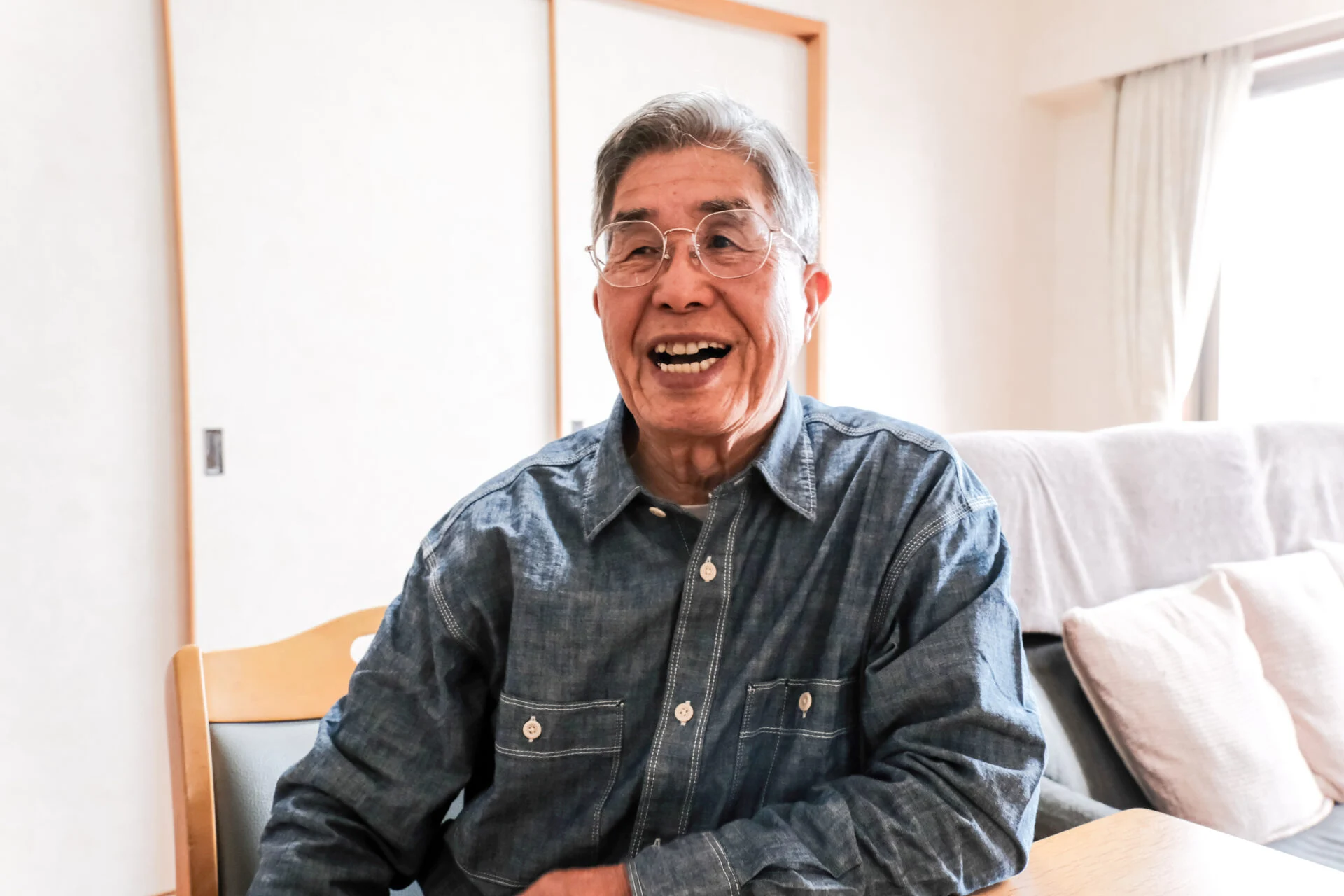
I personally love films.
I am happy when everyone enjoys and laughs.
Mutsumi
Live narration films are hardly screened in rural areas anymore. There are only a few people, including us, who are active west of Kansai.
In rural areas, opportunities to engage with culture have significantly decreased. However, there are works that people in Okayama should know, like the films from Kankou Library and the first works we screened. We want to continue connecting such works in Kojima, where we live.
Please give a message to the readers.
Katsutoshi
As we have aged, it has become challenging to follow the script in dark places and maintain a clear voice throughout.
We may not be able to challenge long films like "Mother of the Eyelids" (starring Chiezo Kataoka), which will be screened at the 3rd Shimotsui Film Club screening in May 2025.

If after reading this article, young people become aware of the existence of live narration and our work, I hope they will come to see it.
Mutsumi
From now on, I want to focus on activities that preserve live narration for the next generation, rather than being in a position to promote it ourselves.
If there are young people who feel attracted to it and want to try it, we will connect them without holding back.
Conclusion
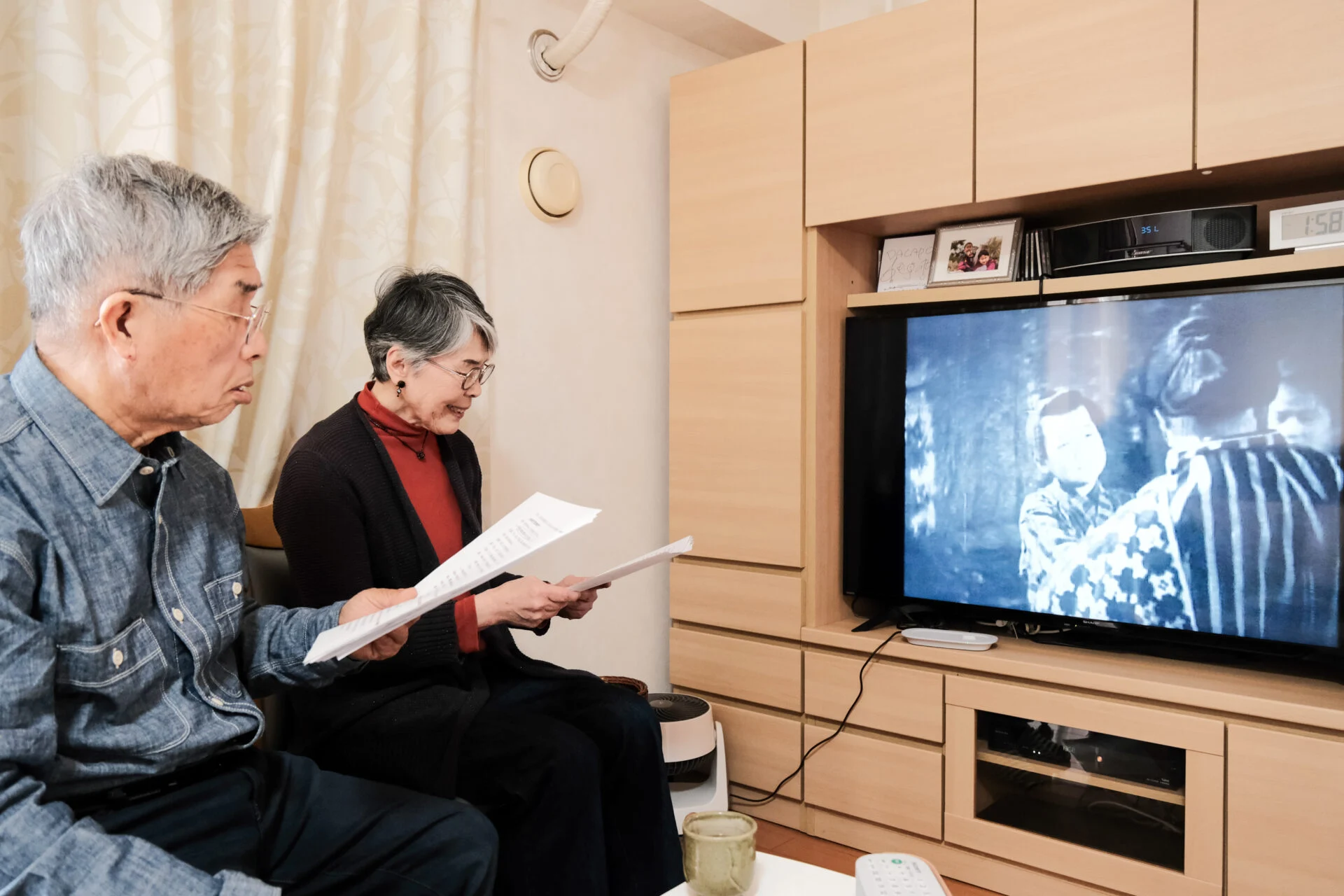
During the interview preparation, the Yabuki couple asked me, "Have you ever seen a live narration film?" When I conveyed that I had not yet seen one, they allowed me to observe the practice scene for "Mother of the Eyelids" (starring Chiezo Kataoka), which is scheduled to be screened at the 3rd Shimotsui Film Club screening on May 19, 2025 (Monday).
There are subtitles in some parts, but the rest of the parts are based on the script created by the Yabuki couple. However, the flow felt so natural that I couldn't help but be captivated, as if the film had been shot according to this script from the beginning.
There may still be silent films lying dormant in the Takahashi River basin, including Kurashiki. I cannot help but hope that activities that breathe life into films through live narration and preserve the culture of live narration will continue in this area.
Data on the Couple Narrators "Mucchan and Kacchan"
| Name | Couple Narrators "Mucchan and Kacchan" |
|---|---|
| Address | Kojima, Kurashiki City, Okayama Prefecture |