The Takahashi City Nariwa Museum of Art (hereinafter referred to as "Nariwa Museum") was established by the people of the former Nariwa Town who wanted to honor the local hero "Kojima Torajiro" and is the first municipal art museum in Okayama Prefecture.
Currently, the Nariwa Museum is holding a special exhibition titled "130 Years of Japanese Western Painting: Gem Masterpieces and Kojima Torajiro", featuring 40 works that have left their mark in the history of modern Western painting alongside representative works by Kojima Torajiro.
I visited the venue of the special exhibition, which marks the 30th anniversary of the museum's opening, together with the director, Sawahara Kazushi.
Photography is prohibited in most areas of the special exhibition commemorating the 30th anniversary of the Takahashi City Nariwa Museum. This article only includes photos from areas where photography is allowed.
What is the Takahashi City Nariwa Museum of Art?
The Nariwa Museum is an art museum located in Shimohara, Nariwa-cho, Takahashi City. It began in 1953 as the first municipal art museum in Okayama Prefecture, triggered by the purchase of works by the painter Kojima Torajiro, who was born in Nariwa Town, to commemorate the 50th anniversary of the town's administration.

The current Nariwa Museum is the third building, designed by Ando Tadao in 1994. It is a facility where you can enjoy the beautiful scenery of the building, which harmonizes the concrete walls characteristic of Ando Architecture with the surrounding nature.
The museum houses Kojima Torajiro's posthumous works, which are the origin of the Nariwa Museum, as well as ancient art collected during his travels abroad, and approximately 200 million-year-old plant fossils produced in the Nariwa region, with the plant fossils being part of the permanent exhibition.

Who is Kojima Torajiro?
Kojima Torajiro is a painter born in present-day Nariwa-cho, Takahashi City. After winning first prize for his work "Garden of Compassion" at the Tokyo Industrial Exhibition, which was purchased by the Imperial Household Agency, he studied in Europe with the support of Ohara Magosaburo, the founder of the Ohara Museum of Art, located in the Bikan Historical Area.
Kojima Torajiro continued to collect paintings and ceramics that would form the foundation of the Ohara Museum of Art. Alongside his collection efforts, he continued to create his own works, leaving behind nearly 700 pieces.
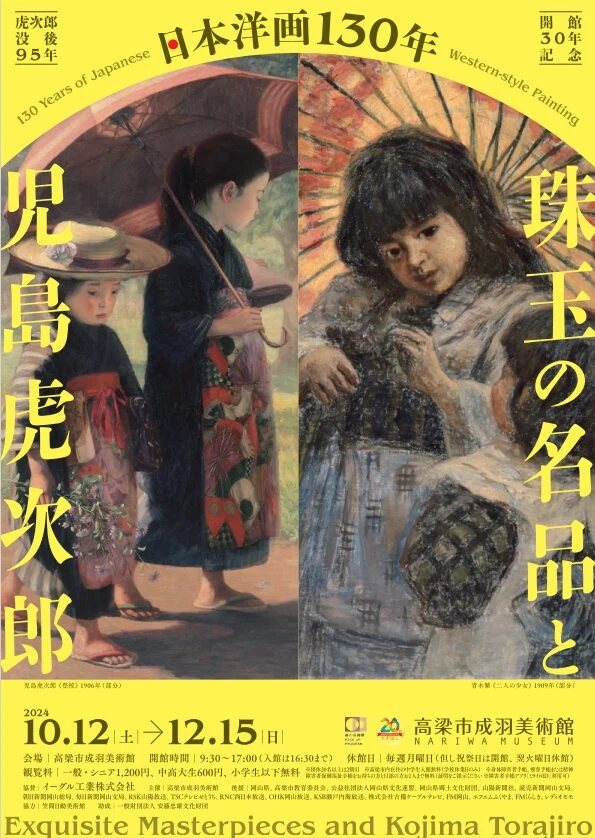
What is "130 Years of Japanese Western Painting: Gem Masterpieces and Kojima Torajiro"?
"130 Years of Japanese Western Painting: Gem Masterpieces and Kojima Torajiro" is a special exhibition that reflects on 130 years of Japanese Western painting, featuring 40 works from the Meiji period to the Heisei era, held by the Kasama Nichido Museum of Art, along with representative works by Kojima Torajiro from the Nariwa Museum.
| Venue | Takahashi City Nariwa Museum of Art |
|---|---|
| Exhibition Period | October 12, 2024 (Saturday) - December 15, 2024 (Sunday) |
| Opening Hours | 9:30 AM - 5:00 PM (Admission until 4:30 PM) |
| Admission Fee | General/Seniors: 1,200 yen Middle/High/University Students: 600 yen (Free admission for middle school students residing in Takahashi City) Elementary School Students and below: Free ※ Free admission for persons with physical disabilities, developmental disabilities, or mental disabilities and one accompanying person |
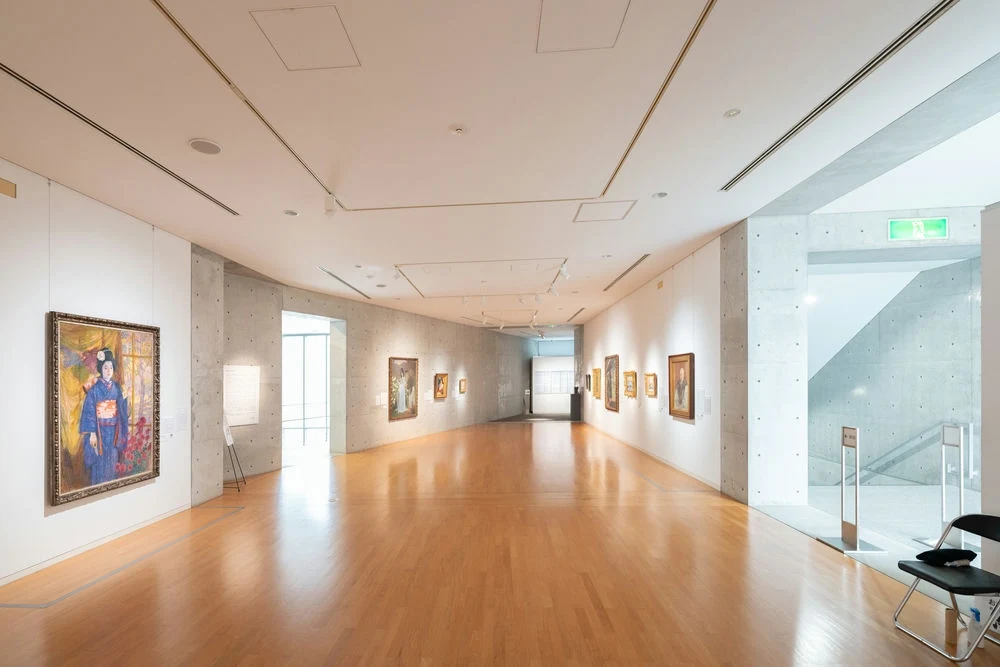
The entrance to the Nariwa Museum is on the second floor, where 40 works from the Meiji period to the Heisei era, held by the Kasama Nichido Museum of Art in Kasama City, Ibaraki Prefecture, are displayed, while the first floor features representative works by Kojima Torajiro and works by artists associated with him.

Overview of the Second Floor Exhibition Room
The entrance to the Nariwa Museum is located on the second floor, accessed via a long approach.

The long approach characteristic of Ando Architecture heightens the excitement for the exhibition.
The masterpieces that will be displayed this time, which have left their mark in the history of modern Western painting, are works held by the Kasama Nichido Museum of Art in Kasama City, Ibaraki Prefecture. Along with 38 oil paintings and 2 sculptures, there are stories and memories from the couple Hasegawa Tokushichi and Chieko, who founded the Kasama Nichido Museum of Art.

Takahashi Yuichi's "Salmon" and Kishida Ryusei's "Village Girl" are among the works displayed in the exhibition room.

You will be overwhelmed by the numerous works by artists whose names are repeated in art and history textbooks.
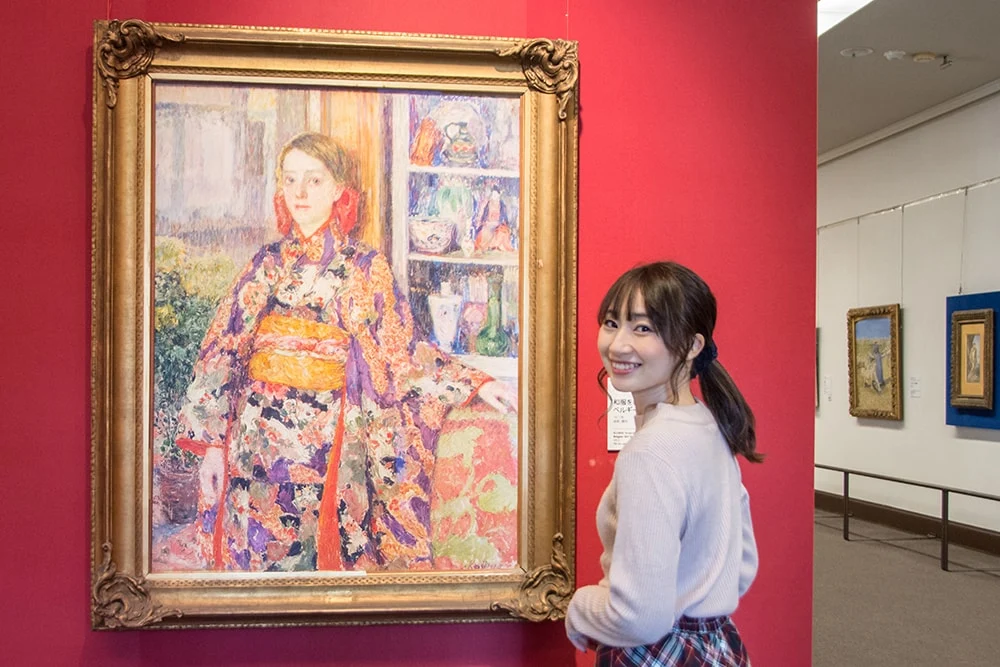
One of the recommended works by Director Sawahara is Goseda Yoshimatsu's "Kimono of a Doll". The noteworthy point is that this work was painted in 1883, just two years after Kojima was born. This painting is a valuable document that shows that there were people who went to Paris during the Meiji era and created such Western paintings.

Along with these works, Kojima Torajiro's works are also on display.


According to Director Sawahara, these works by Kojima are from before and after his study in Europe. Before studying abroad, his touch was smooth and transparent in color, but after returning from Europe, the colors became richer and techniques such as pointillism were used.
Additionally, works by Fujishima Takeji and Kuroda Seiki, whom Kojima Torajiro studied under at the Tokyo School of Fine Arts, were also displayed.

On the second floor, there are masterpieces from famous artists that you often see in textbooks and on TV. It is said to be very rare to see such masterpieces all in one place in Takahashi.
Since these are borrowed items from the Kasama Nichido Museum of Art, if you miss the exhibition period, you will hardly be able to see them again.
Photography is not allowed in the second floor exhibition room, except for the first room.
Overview of the First Floor Exhibition Room
The first floor exhibition room features the Kojima Torajiro collection held by the Nariwa Museum.

The first thing that caught my eye was the portrait of Inoue Ko, said to be a copy made by Kojima when he was 16 years old. Alongside this, the original work by Keiji Inoue is also displayed, showing that Kojima's copying skills were evident even before he entered the Tokyo School of Fine Arts.

The work "Woman Drinking Coffee" was displayed with both the sketch and the completed painting. It is a refreshing experience to be able to compare the sketch and the completed painting, as usually only the finished work is appreciated.

Works themed around Kabuki performances and kimono obi are also valuable materials that show how Kojima was searching throughout his life to "paint oil paintings (Western paintings) as a Japanese."
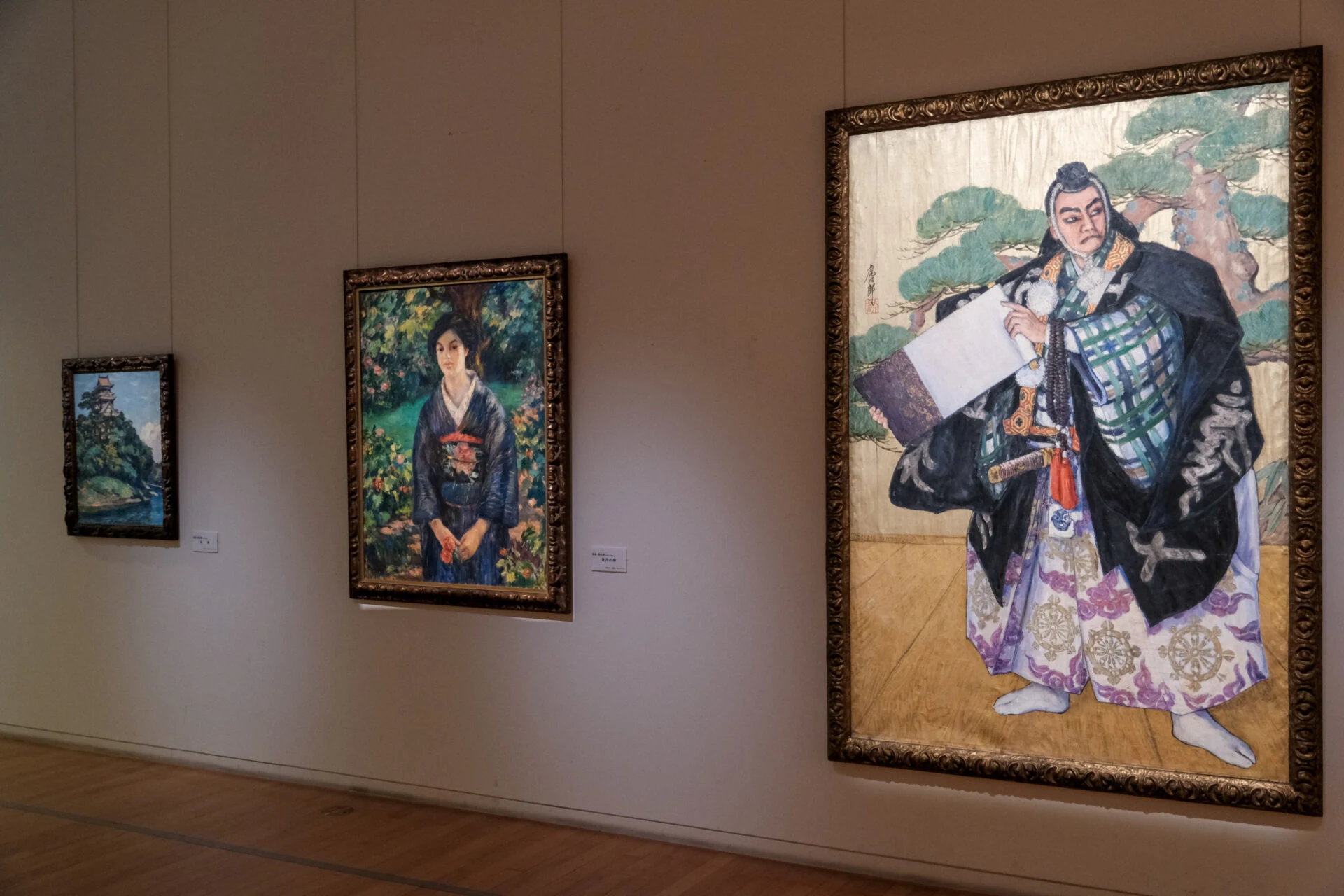
At the end of the exhibition, works by artists who were friends of Kojima and local artists are displayed under the theme "Artists Surrounding Kojima Torajiro."


All works on the first floor can be photographed
The state of the museum shop
After passing through the exhibition room, there is a museum shop and café just before the exit.
The museum shop is stocked with a variety of postcards and clear files related to the special exhibition. It seems enjoyable to choose your favorite works while appreciating them and then purchase goods featuring your favorite works, starting with postcards, at the museum shop.


Additionally, there is a wide selection of books related to the special exhibition and Kojima Torajiro, making it a great recommendation for those who want to learn more after viewing the special exhibition.

The museum shop and café can be used without purchasing a viewing ticket.
There are also original goods from the Nariwa Museum, so be sure to check those out as well.
Special exhibition highlights interview with the director of Takahashi City Nariwa Museum
I asked Director Kazushi Sawahara about the highlights of "130 Years of Japanese Western Painting: Gemlike Masterpieces and Kojima Torajiro."

What kind of presence does Kojima Torajiro have in the history of Japanese Western painting?
Sawahara
Western painting in Japan began with the Meiji Restoration. Kojima Torajiro was one of the few valuable painters who studied abroad in Europe during the Meiji era.
In the present Reiwa era, when people think of the cultural center of the world, they might imagine New York in America. However, at that time, the cultural center was Paris, France. All painters who wanted to learn Western painting studied in Paris.
However, it seems that Kojima Torajiro did not fit in Paris and studied in Ghent, Belgium. At a time when it was rare for anyone from Japan to study in Europe, his achievement of learning Western painting outside of Paris is significant.

Additionally, with the support of Magosaburo Ohara from the Ohara Museum of Art, he was also focused on acquiring works. Many of the works he acquired are still displayed at the Ohara Museum of Art today.
Many painters must have been inspired to create after seeing the Western paintings that Kojima acquired.
Sawahara
One of the purposes of Kojima Torajiro's collection of Western paintings was his desire to introduce authentic Western paintings to Japanese students who had no opportunity to see real Western paintings at that time. Therefore, I believe that the influence of the paintings he collected on Japanese Western art is significant.
There are probably many who became painters or entered the art world because of the works he collected...
So, among the 40 pieces displayed in the second-floor exhibition room of this special exhibition, I believe there are people who were inspired by the paintings that Kojima Torajiro brought back.

While his collection is famous for Western paintings, he actually also collected Egyptian art. At the time he lived, Tutankhamun was discovered, and it is said that only he and an archaeologist from Kyoto University entered Egypt from Japan. He also traveled to China and Korea.
All of these pursuits were about seeking "oil paintings as a Japanese, that is, Western paintings as a Japanese." I respect Kojima Torajiro's attitude of returning to the roots of Japanese roots and human roots.
What kind of works can be appreciated in the second-floor exhibition room?
Sawahara
On the second floor, there are exquisite masterpieces that well represent the 130 years from the Meiji Restoration to the Heisei era. It is a luxury to have such works gathered together and be able to view them closely.
In that sense, for those who love viewing paintings, it is an opportunity to see works they may have only seen in collections in person, and for those who do not often view paintings, there is a wide variety of works that allow them to feel many different things.
Please tell us your recommended way to appreciate the works.
Sawahara
Whenever I enter the exhibition room, I always think, "Let's choose one work that I would like to take home," and I gaze at the works. Then I find myself thinking, "I like this work, but it's too big to take home," or "I also like this work, but I want to place it here, so I will choose this one."

This is a way of appreciating that can be enjoyed regardless of knowledge of paintings or artists, so please give it a try.
Finally, please give a message to the readers.
Sawahara
The Nariwa Museum is surrounded by rich nature, and the journey to the museum is also enjoyable.
Please come to the Nariwa Museum of Art and find a piece of art that makes you think, "Ah, I'm glad I came" or "I want to take this painting home with me."
We look forward to your visit.
Conclusion
While taking a walk around the Nariwa Museum of Art during lunch break, I noticed posters for this special exhibition everywhere, and I could feel the atmosphere of the local people in Nariwa-cho coming together to support this familiar facility hosting the exhibition.
The mountains beginning to change color are incredibly beautiful, and you can fully enjoy the unique architecture of Ando, which combines concrete and water, in the clear air. It was a time to calmly appreciate the works of artists designated as important cultural properties and the many works of Kojima Torajiro, which the people of Nariwa continue to honor.
How about visiting the Takahashi City Nariwa Museum of Art's 30th Anniversary Special Exhibition "130 Years of Japanese Western Painting: Precious Masterpieces and Kojima Torajiro" this autumn of culture and art?
Data for the Takahashi City Nariwa Museum of Art's 30th Anniversary Special Exhibition "130 Years of Japanese Western Painting: Precious Masterpieces and Kojima Torajiro"
| Name | Takahashi City Nariwa Museum of Art's 30th Anniversary Special Exhibition "130 Years of Japanese Western Painting: Precious Masterpieces and Kojima Torajiro" |
|---|---|
| Location | 1068-3 Shimohara, Nariwa-cho, Takahashi City, Okayama Prefecture |
| Contact | 0866-42-4455 |
| Parking | Available |
| Opening Hours | October 12, 2024 (Saturday) – December 15, 2024 (Sunday) 9:30 AM – 5:00 PM (Last admission at 4:30 PM) |
| Closed | Monday If Monday is a public holiday, open on Monday and closed the following Tuesday |
| Admission Fee (including tax) | Adults and Seniors: 1,200 yen Junior High, High School, and University Students: 600 yen (Free admission for junior high school students residing in Takahashi City) Children under elementary school age: Free *Free admission for the person with a physical disability certificate, developmental disability certificate, or mental disability welfare certificate and one accompanying person |
| Payment Methods |
|
| Restrooms | Barrier-free restrooms |
| Childcare | Diaper changing station, stroller rental |
| Barrier-free | Ramps, barrier-free restrooms, elevators, wheelchair rental |
| Website | Takahashi City Nariwa Museum of Art |