Kurashiki Bikan Historical Area is a “Preservation District for Groups of Traditional Buildings,” where old-fashioned streetscapes remain.
One of the distinctive features of the Kurashiki Bikan Historical Area is that people still live their everyday lives there.
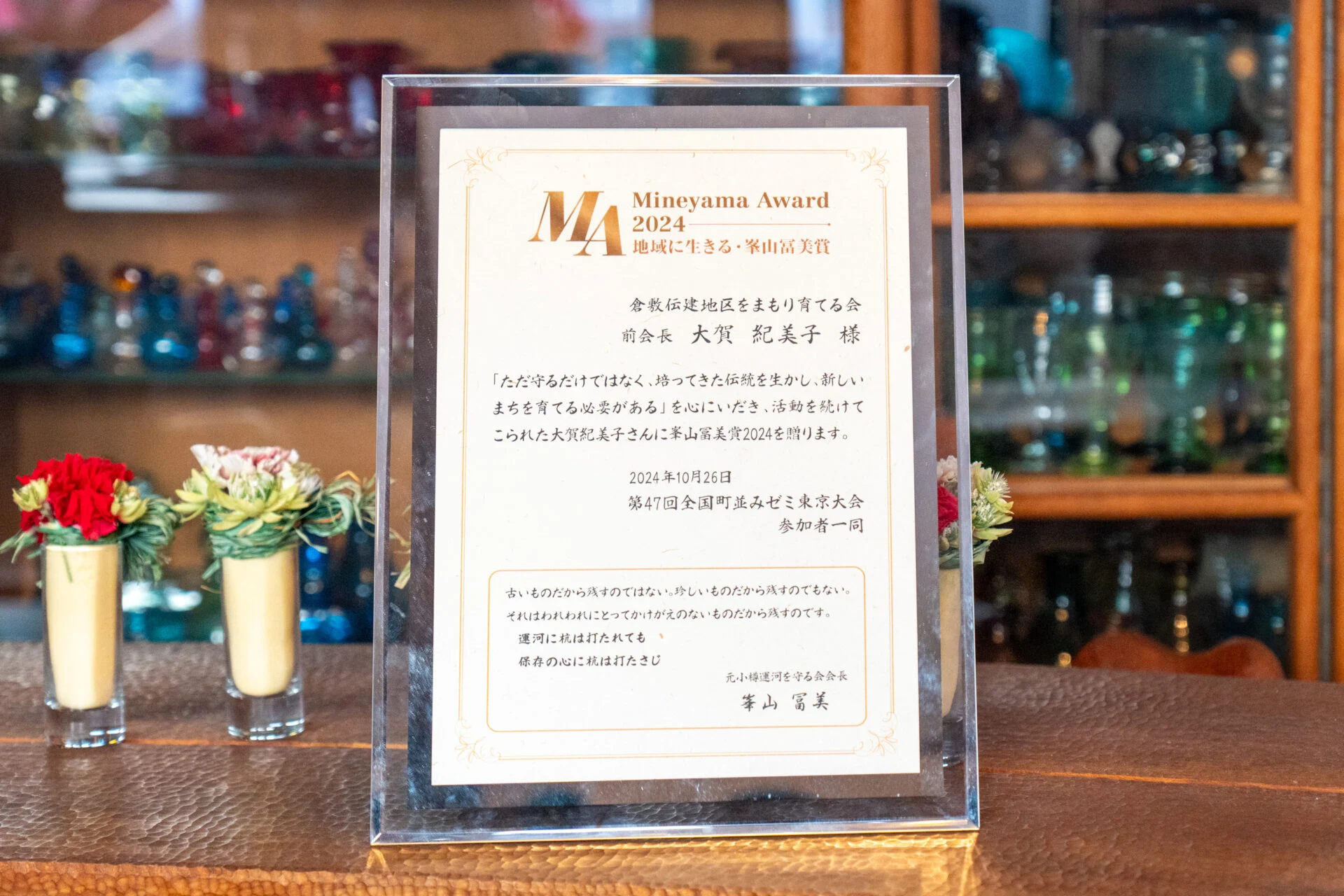
Oga Kimiko, who lives in this town and is actively involved in preserving its streetscape, received the Mineyama Fumi Award in 2024. The award is presented to people who have worked hard to preserve historic environments.
We take a closer look at Oga’s activities to date and her hopes for the future of the Kurashiki Bikan Historical Area.
The information presented here was current when this article was published in May 2025. Please note that it may differ from current information.
Oga Kimiko and the Kurashiki Bikan Historical Area
Oga was born and raised in Okayama City, then moved to Kurashiki when she married.
When the Japanese Folk Toy Museum opened in 1967, she worked tirelessly alongside her father-in-law, Oga Masanori, the museum’s first director.
The person who sparked her deep interest in folk toys was Tonomura Kichinosuke, the first director of the Kurashiki Museum of Folkcraft.
Folk toys, born from children’s play and parents’ prayers and closely connected to life in each region, captured Oga’s heart and became truly dear to her.
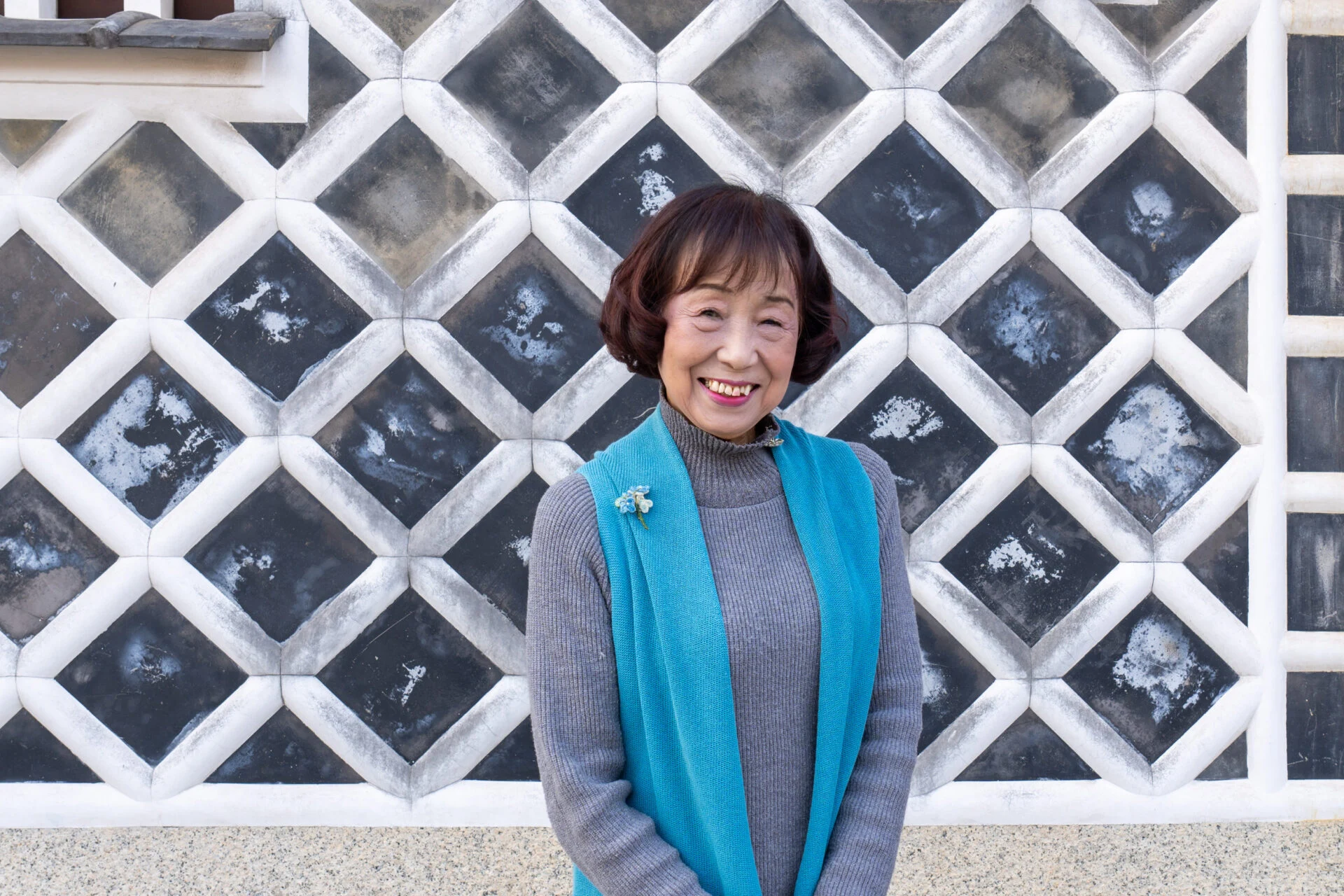
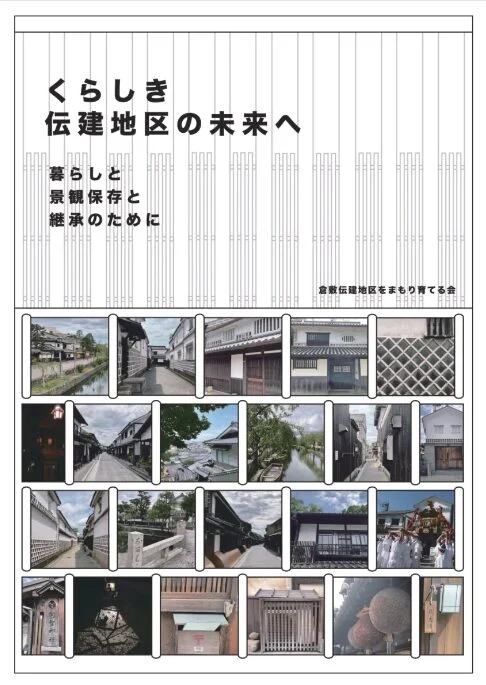
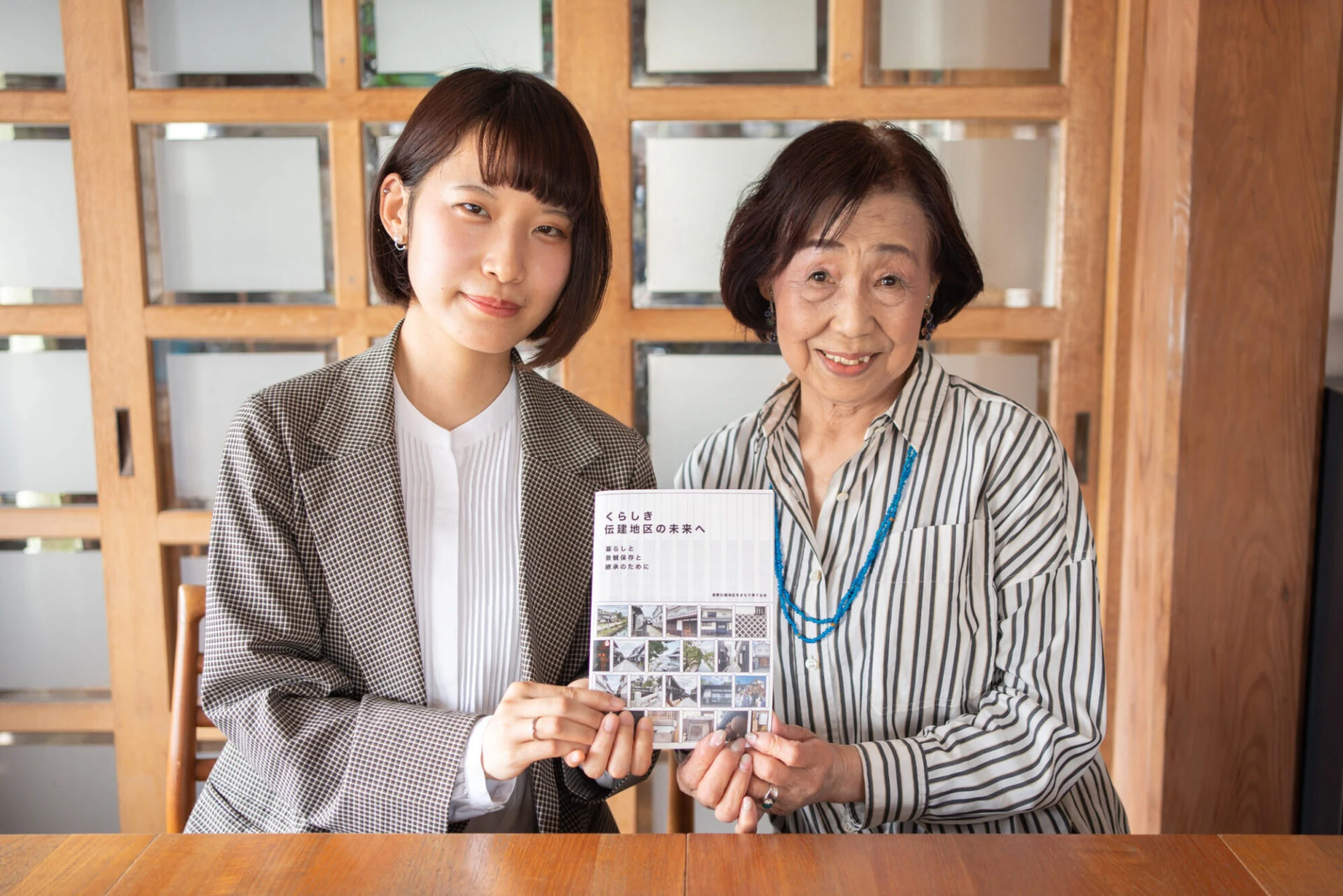
“The opening of the Japanese Folk Toy Museum was a major turning point that led me to get involved in town development,” says Oga. Since then, she has been involved in preserving the streetscape of the Kurashiki Bikan Historical Area for many years, including helping run the “Association for the Preservation and Development of Kurashiki’s Preservation District for Groups of Traditional Buildings.”
Operating the Japanese Folk Toy Museum
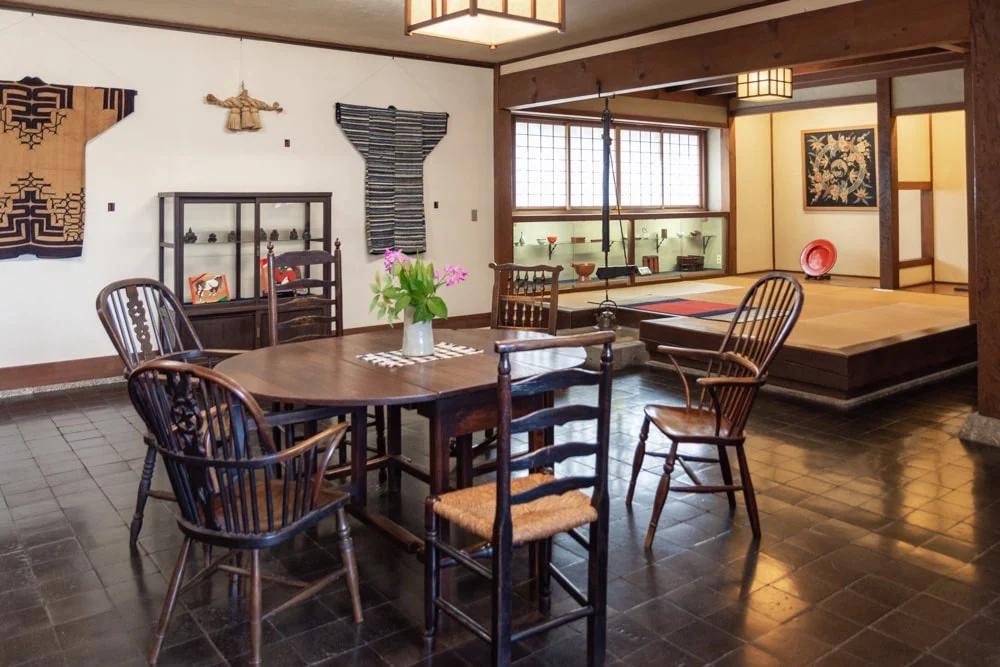
The Japanese Folk Toy Museum is a museum housed in a rice storehouse that has long been used in the Kurashiki Bikan Historical Area.
It was established after Tonomura Kichinosuke, the first director of the Kurashiki Museum of Folkcraft on the same street, suggested opening an exhibition hall for folk toys.
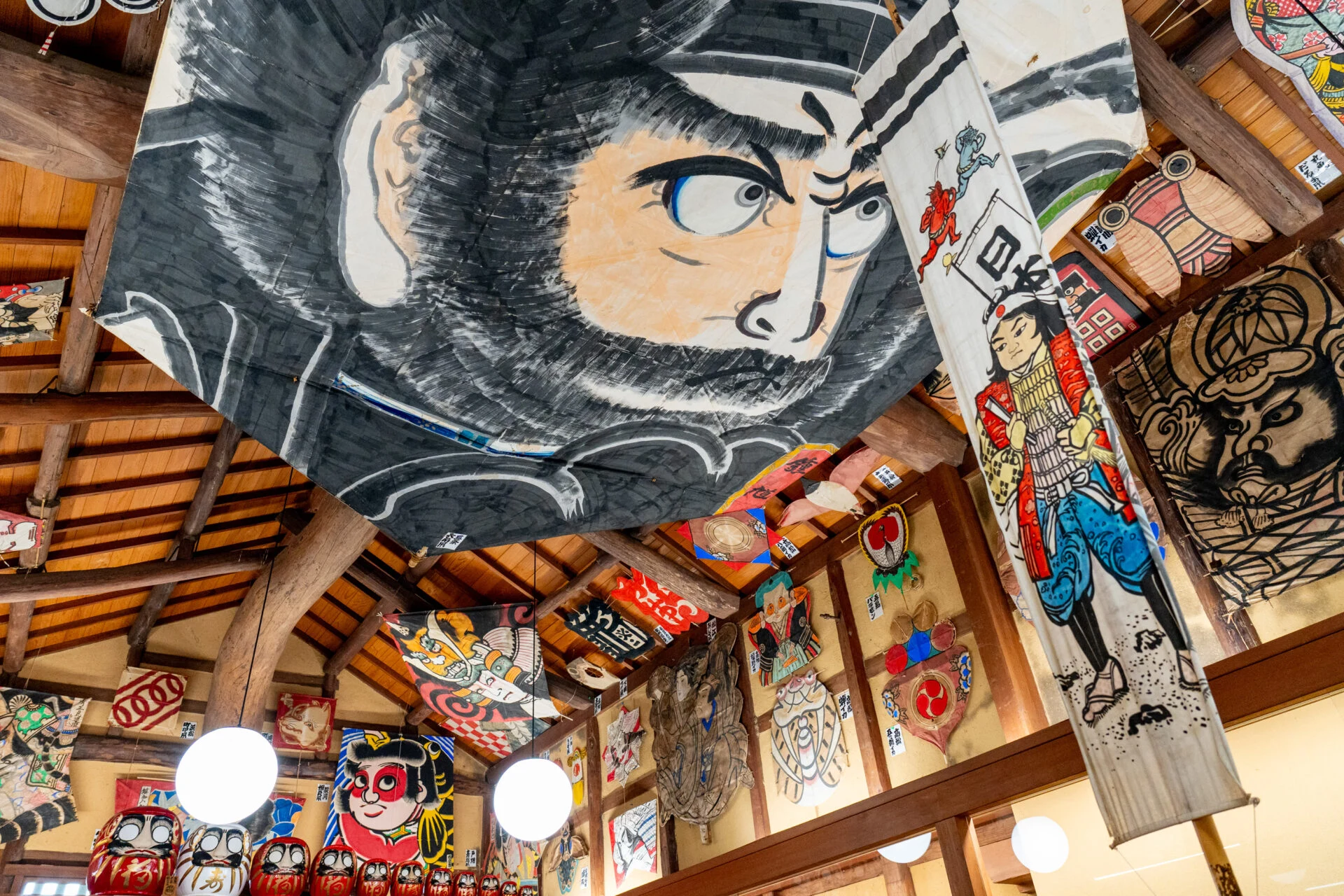
Folk toys were originally made by parents for their children, or crafted during the agricultural off-season and sold in temple towns near shrines and temples. In the Taisho era, cultural figures began taking an interest in them and collecting them.
After that period, by the 1960s, children had lost interest in folk toys. Displaying them in a toy museum gave many visitors the chance to enjoy them with a sense of nostalgia.
The Kurashiki Bikan Historical Area becomes a Preservation District for Groups of Traditional Buildings
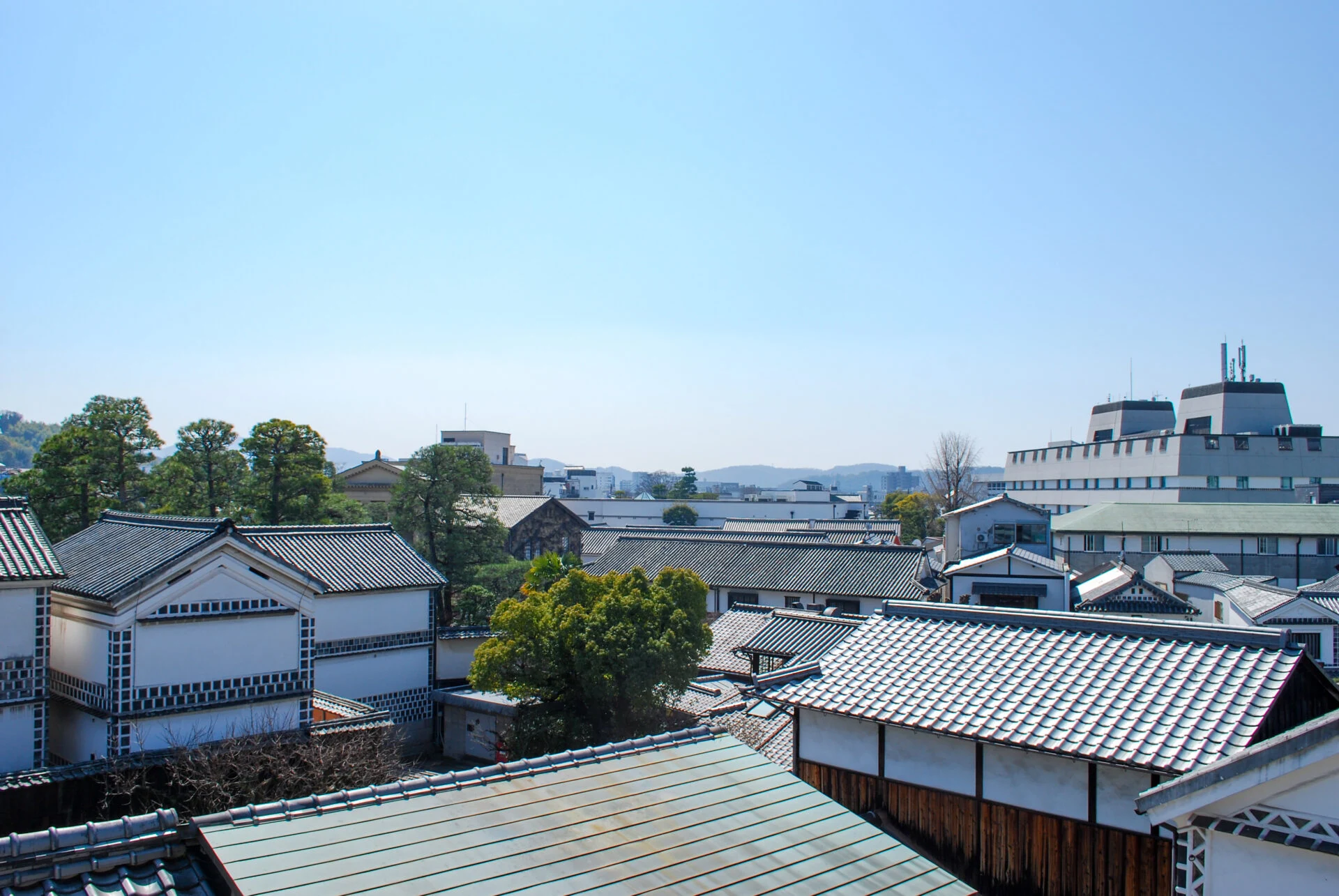
Later, in 1978, the Kurashiki Bikan Historical Area became a Preservation District for Groups of Traditional Buildings.
These districts are selected by the Agency for Cultural Affairs to preserve historic streetscapes that remain across an entire town, such as castle towns, post towns, and temple towns. In Kurashiki, streets lined with earthen-walled storehouses, merchant houses, and townhouses remain. The area is designated for preservation because it retains traces of its prosperity as a distribution hub during the Edo period.
Ohara Soichiro, who was deeply interested in Kurashiki’s streetscape, invited Tonomura to Kurashiki soon after the war. The townscape, which local residents had continued to preserve, was highly acclaimed.
This achievement was made possible because citizens, including Oga, shared the two men’s passion and continued working together to shape the town.
Operating the Association for the Preservation and Development of Kurashiki’s Preservation District for Groups of Traditional Buildings
Oga has also been involved in running the Association for the Preservation and Development of Kurashiki’s Preservation District for Groups of Traditional Buildings, established in 2006 to address issues affecting the community as a whole. She also served as its chair from 2010.
The association is made up of eight neighborhood associations located along the Kurashiki River, south of Tsurugatayama, within the designated preservation district. Its purpose is to protect and pass on the historic streetscape inherited from previous generations.
All approximately 270 households living within the preservation district, as well as all businesses operating there, are members of the Association for the Preservation and Development of Kurashiki’s Preservation District. It was established in 2006 as an organization to gather residents’ and businesses’ views on the future of the district.
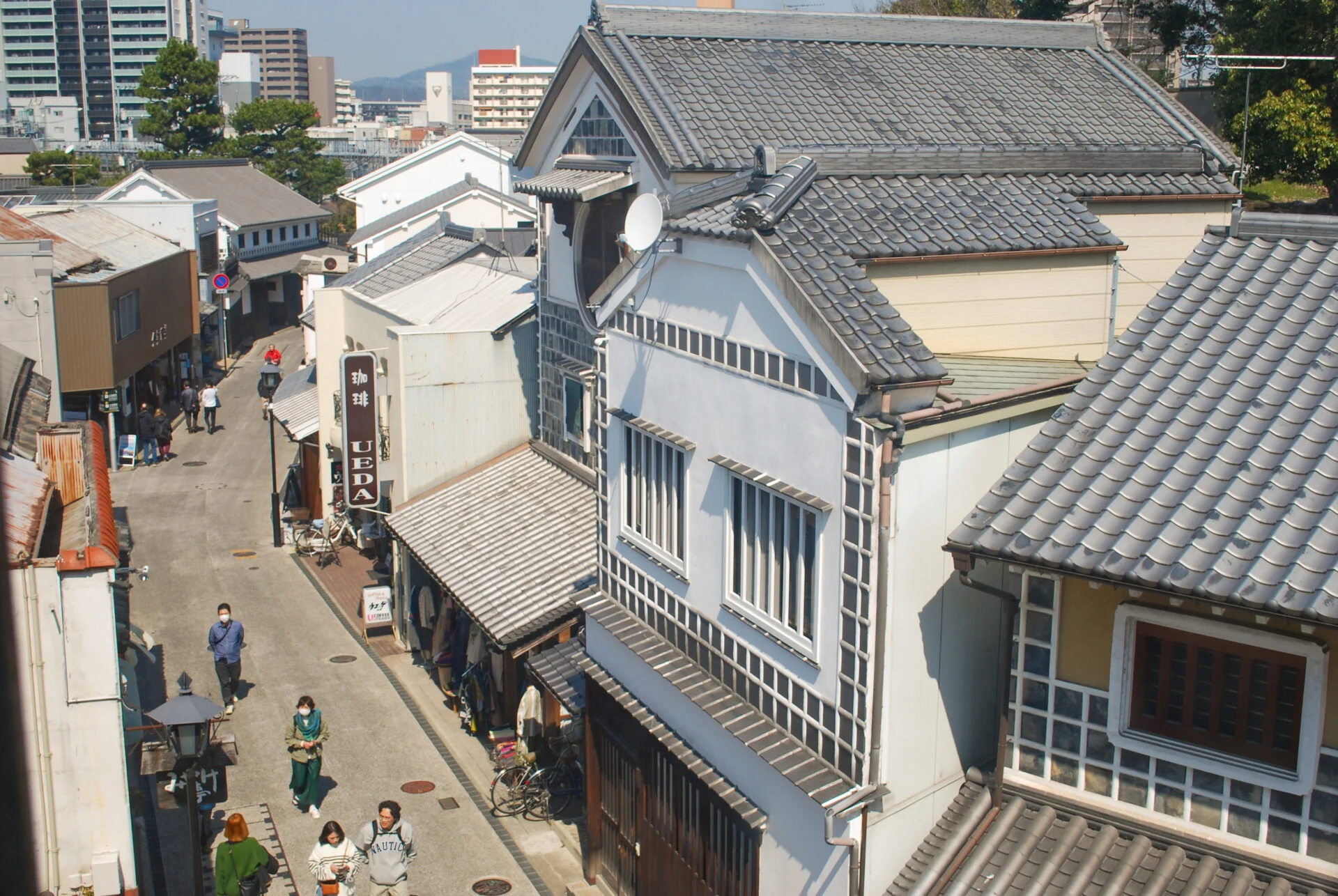
The association does more than simply preserve the streetscape.
To ensure the town can continue to be put to use, members exchange opinions and sometimes consult with the local government, working toward better town development.
More than 60 years have passed as efforts continue to preserve the streetscape of the Kurashiki Bikan Historical Area, which is both a residential area and a tourist destination.
Oga Kimiko and the Mineyama Fumi Award
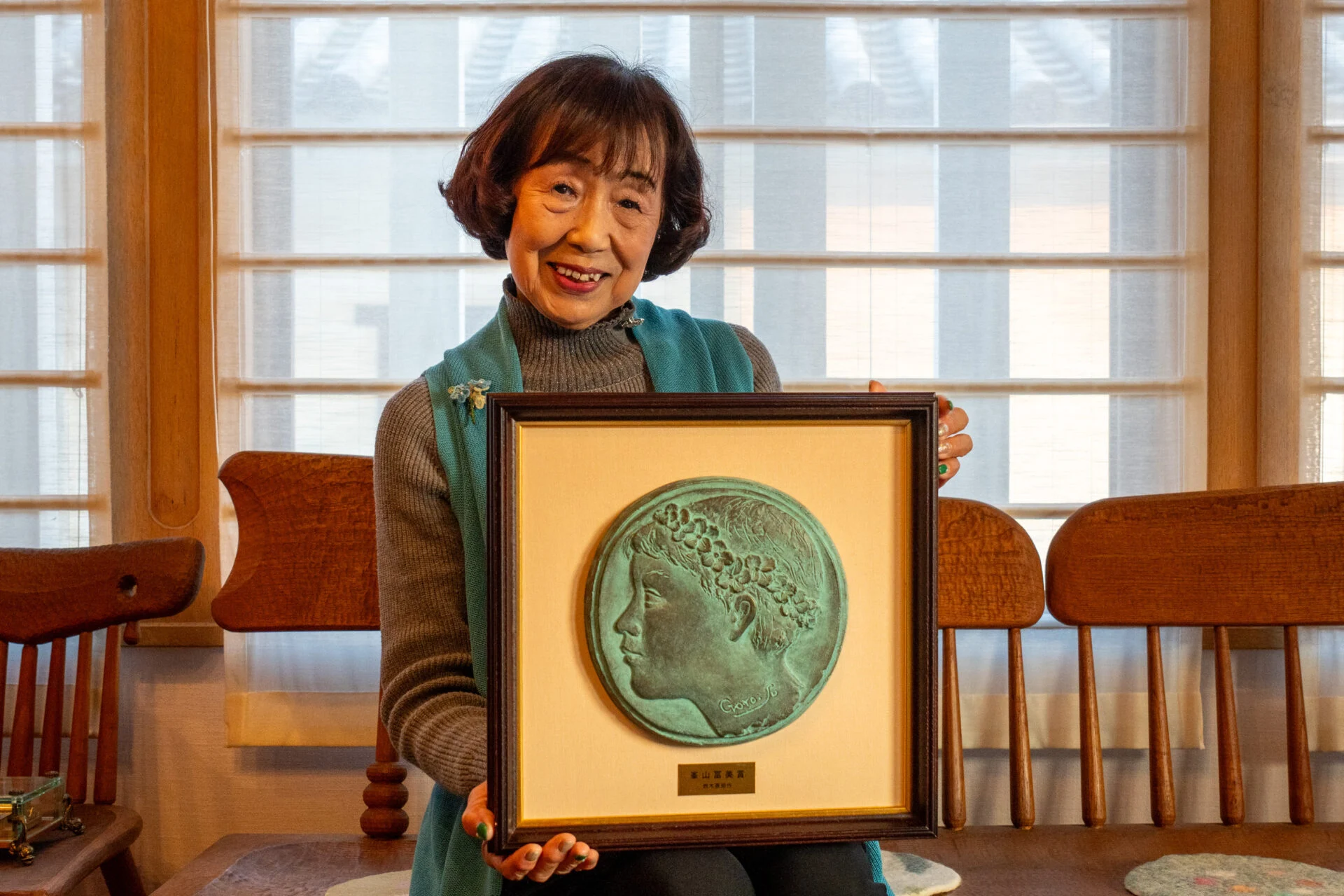
In October 2024, Oga received the Mineyama Fumi Award for her long-standing contribution to preserving traditional streetscapes through her work at the Japanese Folk Toy Museum and the association.
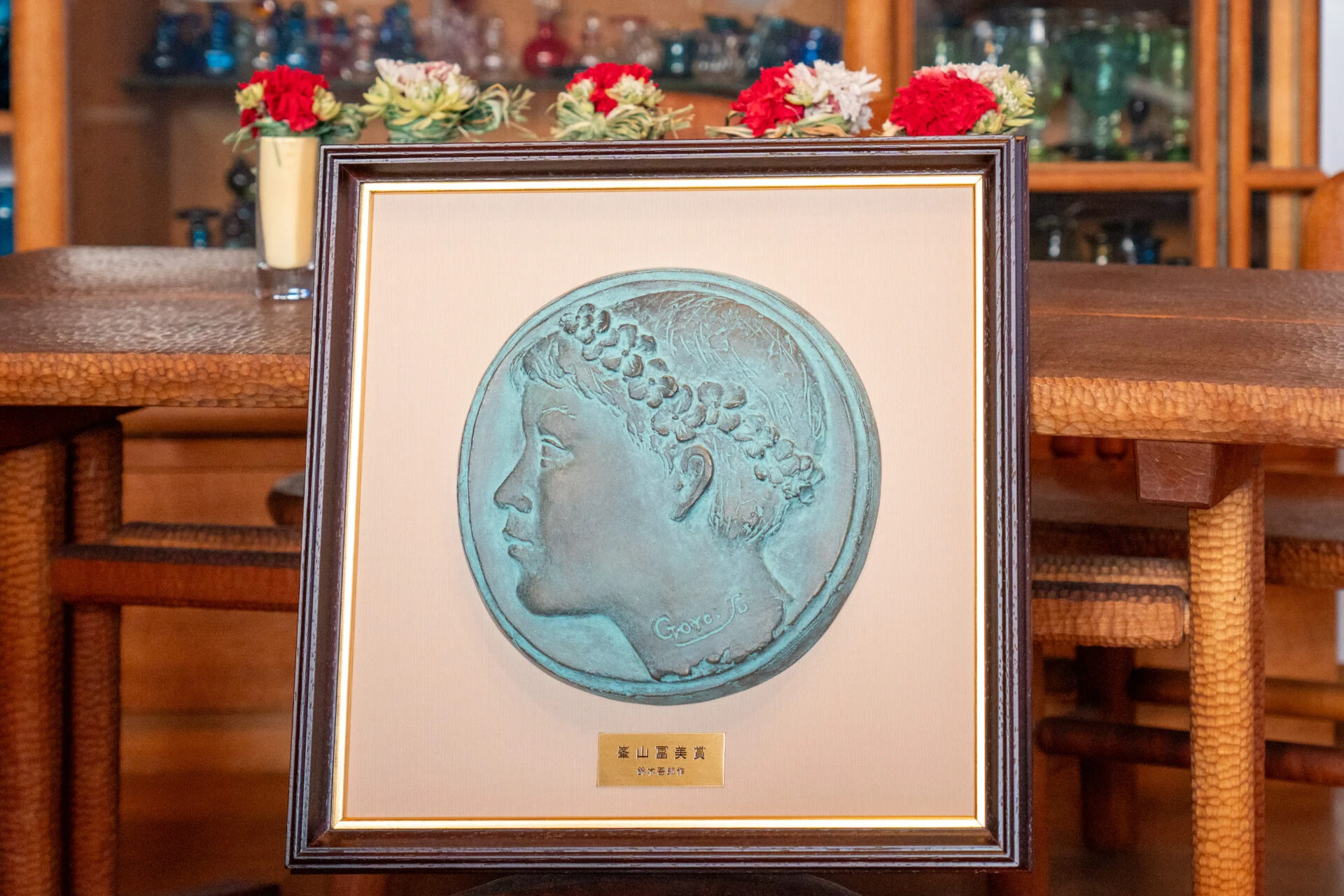
The Mineyama Fumi Award was established in 2016 by the National Federation for the Preservation of Historic Townscapes to honor the achievements of Fumi Mineyama (1914–2010), a homemaker who led efforts to preserve the historic environment around Otaru Canal in Hokkaido.
To date, 11 citizens, including Oga Kimiko, have received the award for proposing landscape preservation and town development initiatives.
Interview with Mineyama Fumi Award recipient Oga Kimiko
We interviewed Oga, recipient of the Mineyama Fumi Award, about how she feels now that she has received it and what she hopes for the future of the Kurashiki Bikan Historical Area.
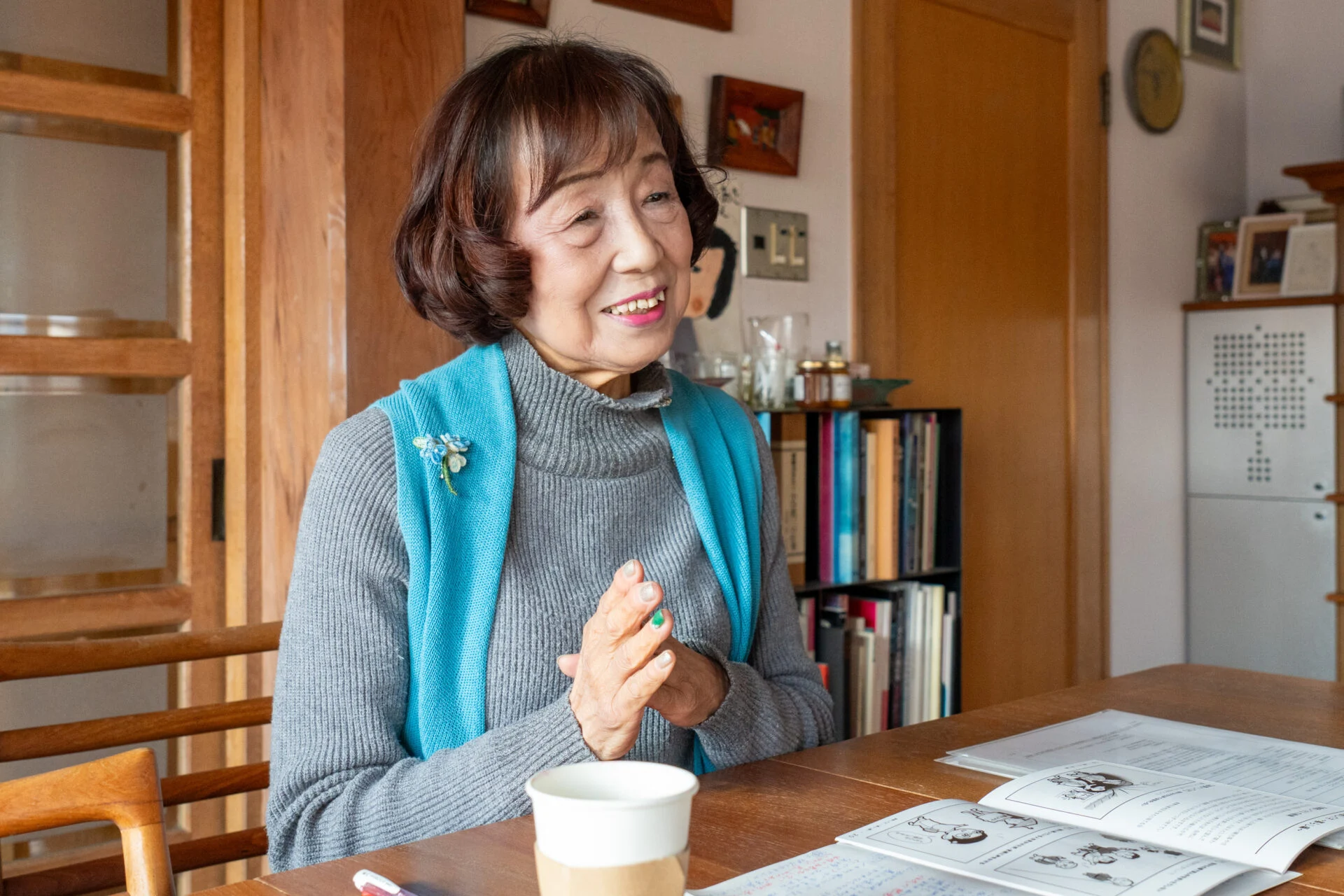
The opening of the Japanese Folk Toy Museum sparked her involvement in streetscape preservation
How do you feel now that you have received the Mineyama Fumi Award?
Oga (honorific omitted)
When I received the news, I had just stepped down as chair of the association and was feeling relieved. So at first, I was very surprised and wondered, “Why me?”
But as time passed, I came to understand that the award also recognizes the dedication of those who came before me in each era, who loved and continued to protect the Kurashiki Bikan Historical Area. I truly feel that I have received an honor beyond what I deserve. I am deeply grateful.
After I received the award, many people I work with on streetscape preservation through the Bicchu Townscape Network sent me their congratulations, which made me very happy.
At the time I heard the news, I was completely surprised. Now, several months later, I feel strongly that, having received this award, I want to serve this town for as long as my health allows.
What led you to become involved in preserving the streetscape of the Kurashiki Bikan Historical Area?
Oga
Even before we opened the Japanese Folk Toy Museum, the Kurashiki Bikan Historical Area already had the Kurashiki Museum of Folkcraft and the Kurashiki Archaeological Museum, both of which made use of rice storehouses.
The Oga family also had several rice storehouses passed down through generations, so I consulted Professor Tonomura, the first director of the Kurashiki Museum of Folkcraft. He suggested opening an exhibition hall for folk toys.
The opening of the Japanese Folk Toy Museum was a major turning point that led me to get involved in town development.
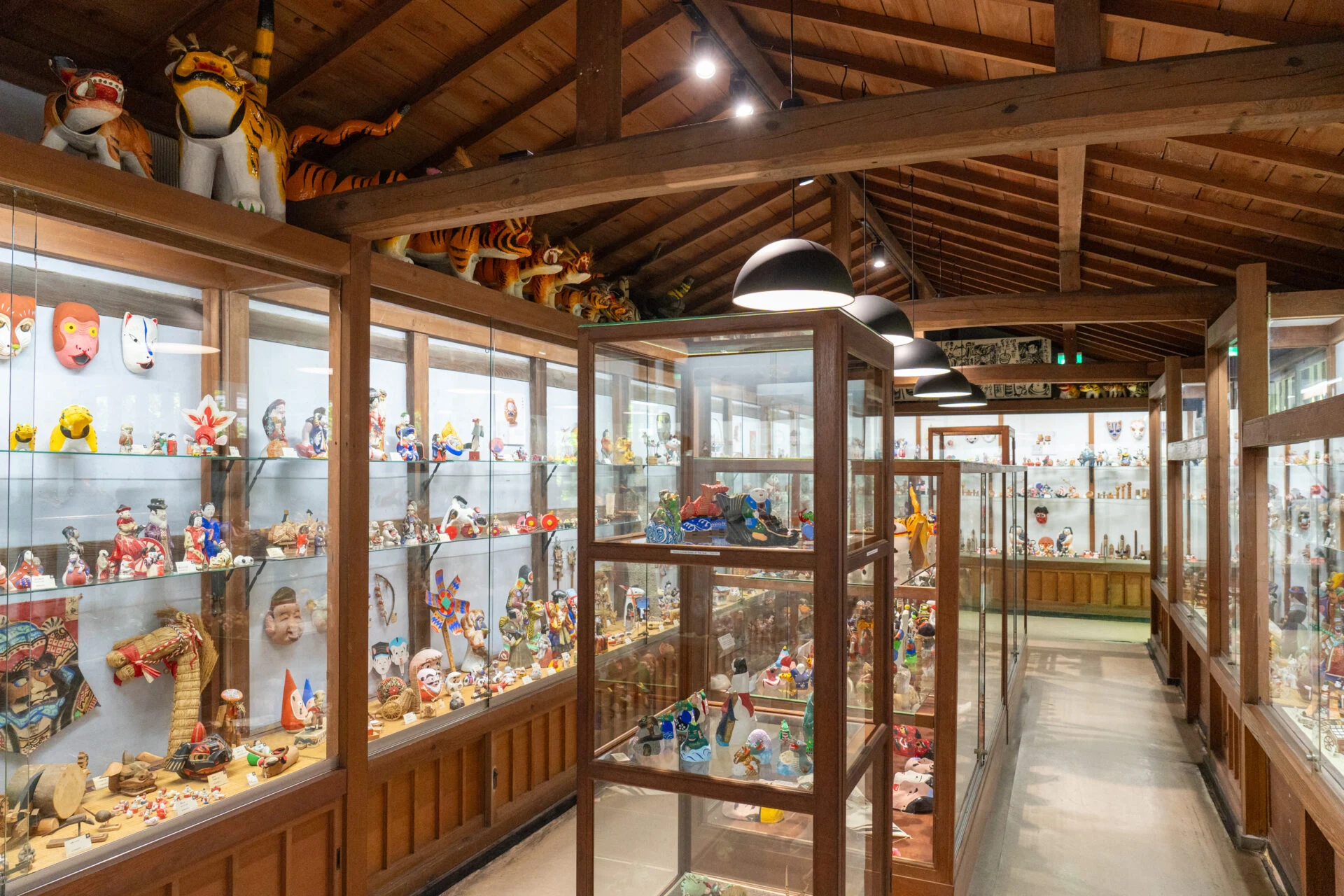
That’s because toys have been put to use in everyday life.
While waiting for their mother to finish her housework, children would play with dolls their father made from leftover materials from his work…
Toys came into being through the warmth of this kind of everyday culture.
The association works not only to preserve Kurashiki’s streetscape, but also to put it to use. My experience at the Japanese Folk Toy Museum played a major role in making this idea of “putting it to use” come naturally to mind.
Working with the local government to create a town where scenery and safety go hand in hand
What kind of organization is the “Association for the Preservation and Development of Kurashiki’s Preservation District for Traditional Buildings”?
Oga
It is a group of people who share the desire to “shape the townscape by preserving and making use of the culture of the Kurashiki Bikan Historical Area.”
It is made up mainly of local residents and businesses within the preservation district, organized around the neighborhood associations.
In the 1960s, when I moved from Okayama City to Kurashiki City after getting married, many people lived in this area.
But the population has declined year by year, and today more people make their living from businesses serving tourists.
I have worked to ensure that the association is a place where people can pass on the culture they want to preserve as part of the district, while also helping business owners see life in the Bikan Historical Area as something that is personally relevant to them.
The discussions and learning among people who think seriously about the town were fascinating, and I always enjoyed taking part in the association’s meetings.
Could you share a memorable episode from your time with the “Association for the Preservation and Development of Kurashiki’s Preservation District”?
Oga
In 2008, a new landing was built on the Kurashiki River.
From a safety standpoint, the old Gangi (landing steps) were considered dangerous.
However, the new Gangi did not suit the preservation district, so after discussions with Kurashiki City, we used the stones that had been kept and restored the Gangi to their original state.
Through this process, rather than simply making requests to the local government, we discussed with them what measures were needed to preserve the town’s landscape and worked together to find a solution.
I was glad that we were able to think together with the local government about this town.
We are also working with the local government on the Omotenashi Meister initiative.
The Kurashiki Bikan Historical Area has many historic buildings, such as storehouses and townhouses, and renovations can be difficult due to cultural property protection requirements.
The Omotenashi Meister program was launched to train people to provide thoughtful hospitality to older people, people with disabilities, and families with young children by using human support to overcome barriers that cannot be removed through physical improvements.
The program is currently run by the Kurashiki City Transportation Policy Division.
Of course, we want to protect the traditional landscape, but safety must not be neglected in the process.
Many members of the association have also been certified as Omotenashi Meisters, and we are working toward a town where scenery and safety go hand in hand.
Passing on the charms of the Kurashiki Bikan Historical Area to the next generation
Is there any culture you hope to continue protecting in Kurashiki?
Oga
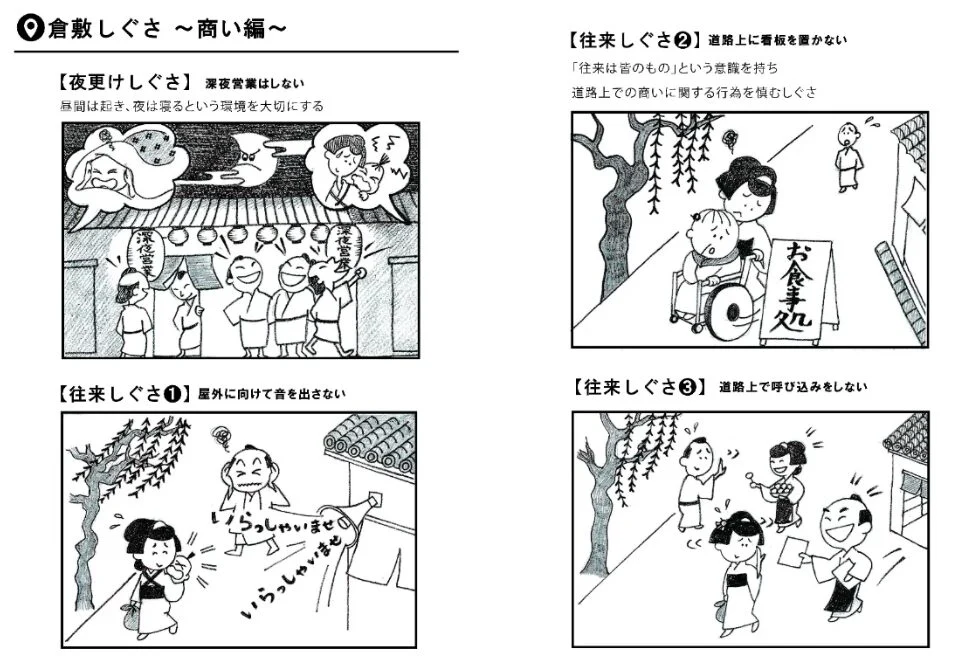
The association is promoting “Kurashiki Shigusa.”
In the Kurashiki Bikan Historical Area where we live, many tourists pass through alongside local residents.
If we residents and people who do business here first act with consideration for others, tourists will also act considerately.
Do you have a message for our readers?
Oga
Keeping in mind the award’s words, “It is necessary not only to preserve, but also to make use of the traditions cultivated over time and nurture a new town,” I hope to continue my work while showing respect for the pioneers who advocated preserving the streetscape of the Bikan Historical Area, such as Professor Tonomura and Ohara Soichiro.
I am truly grateful to have received such a wonderful award.
From the Writer
I, too, am a newcomer who moved to Kurashiki from the Kanto region in December 2023 as a Community Revitalization Cooperator.
Before moving, I had a strong impression of the traditional streetscape and thought it must be an area where many people had lived for generations.
However, after actually starting life in Kurashiki, I began meeting many newcomers who were working to revitalize the community.
Traditional streetscapes and newcomers.
At first glance, they may seem like opposites, but I felt that it is precisely because people like Oga, who value the layers of history, support the town that better community-building is progressing together with newcomers.
This award offers an opportunity to reflect on the thoughts of those who have protected and nurtured this town, and to consider the future of the Bikan Historical Area.
Congratulations on your award, Oga!

What would you like to know about Kurashiki?
Enter a word to search articles on this site