Do you know the term "circular economy"?
It is not just a trendy or temporary term; it refers to the circular economic activities that have already begun to be addressed on a global scale.
While including the traditional 3Rs of recycling activities, it aims to continue circulating the value of products while minimizing resource consumption and reducing waste output.
3Rs: Reduce, Reuse, Recycle
With the growing awareness of resource circulation, the fashion industry, which generates large amounts of waste and pollutants, has become an international issue.
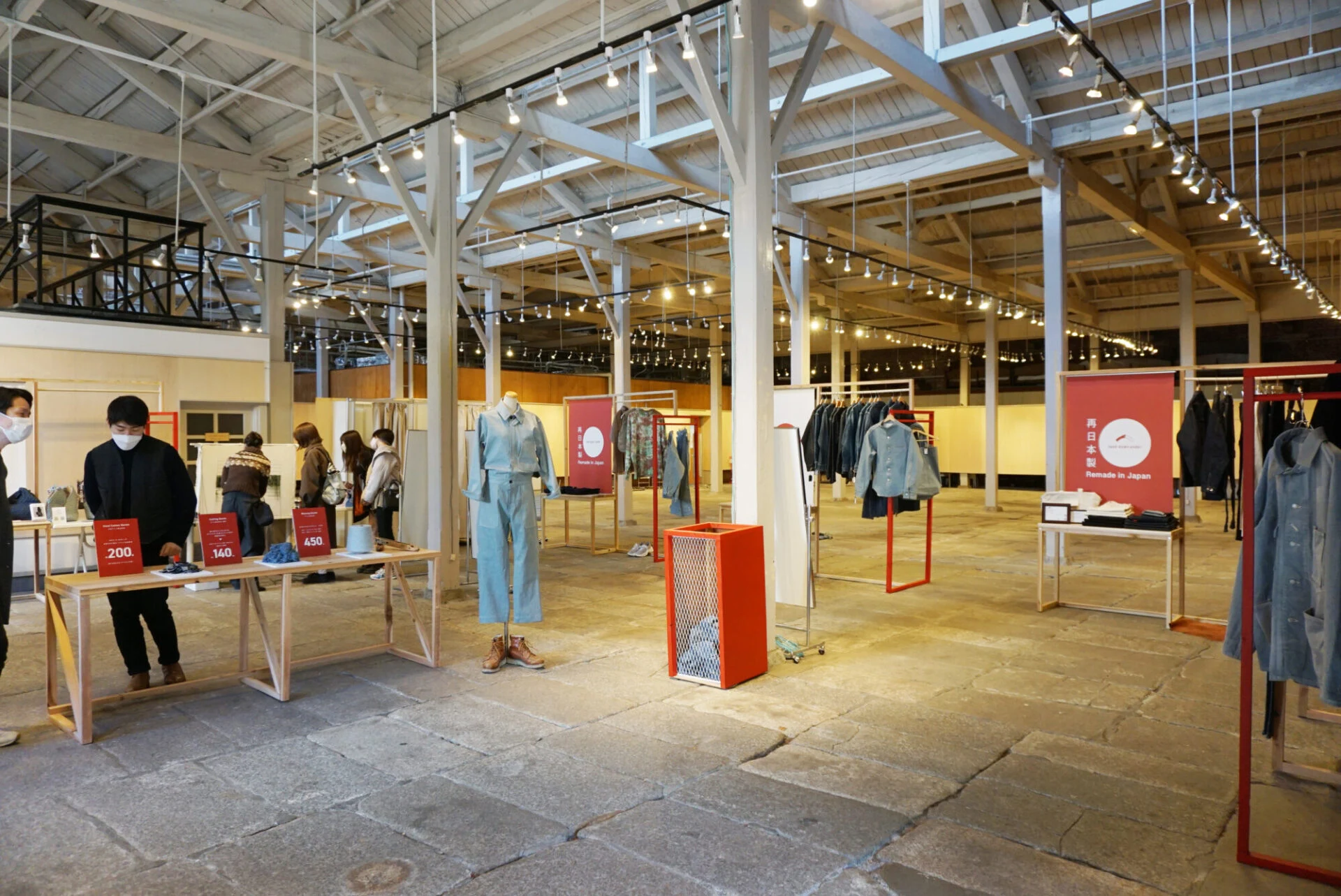
In this context, the "Remade in Japan" recycling denim project, involving five apparel brands from Kurashiki City, Okayama Prefecture, started in the fall of 2022.
I visited a one-day exhibition that served as a report on the 2022 initiatives and an awareness campaign for the general public.
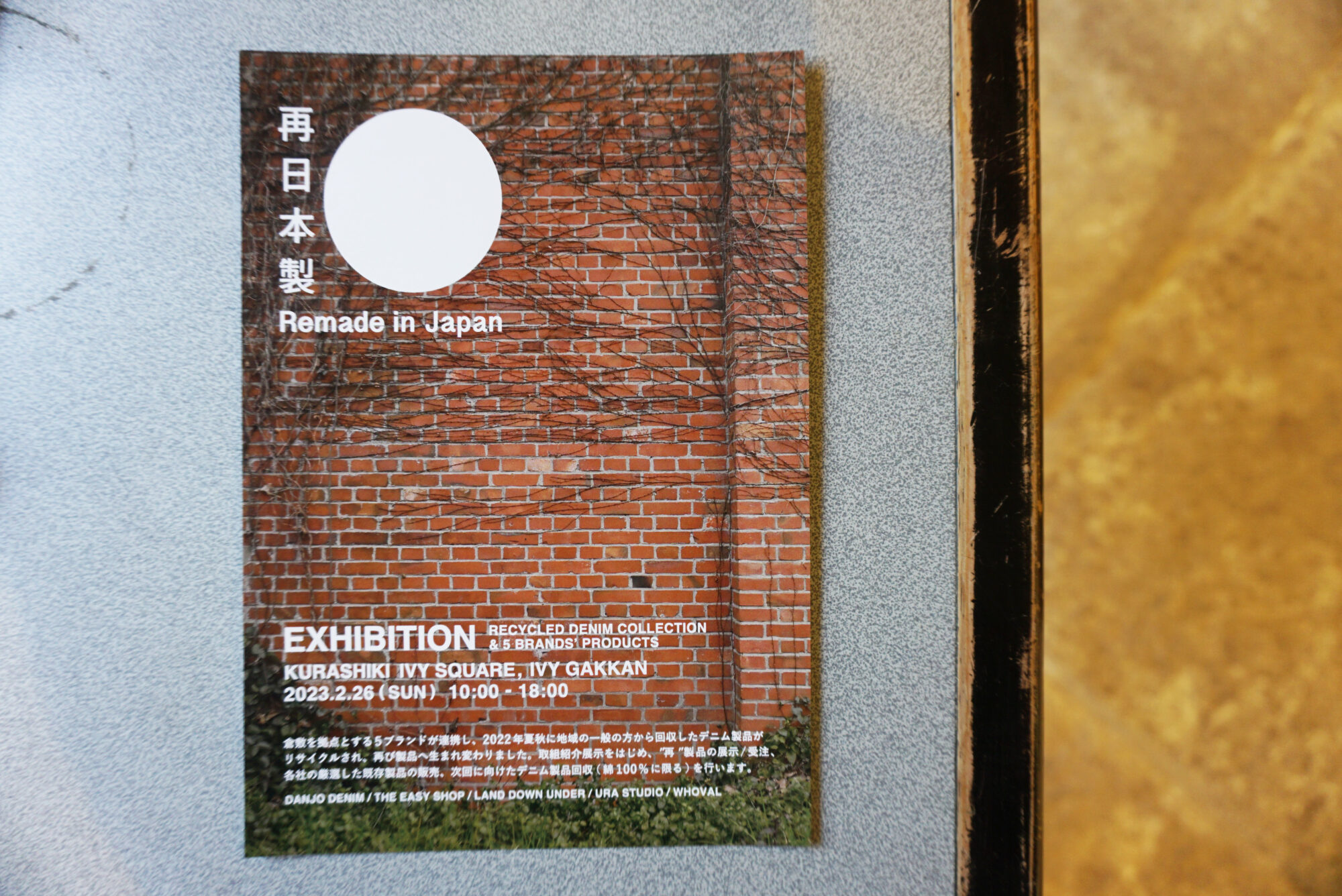
Overview of the "Remade in Japan" EXHIBITION
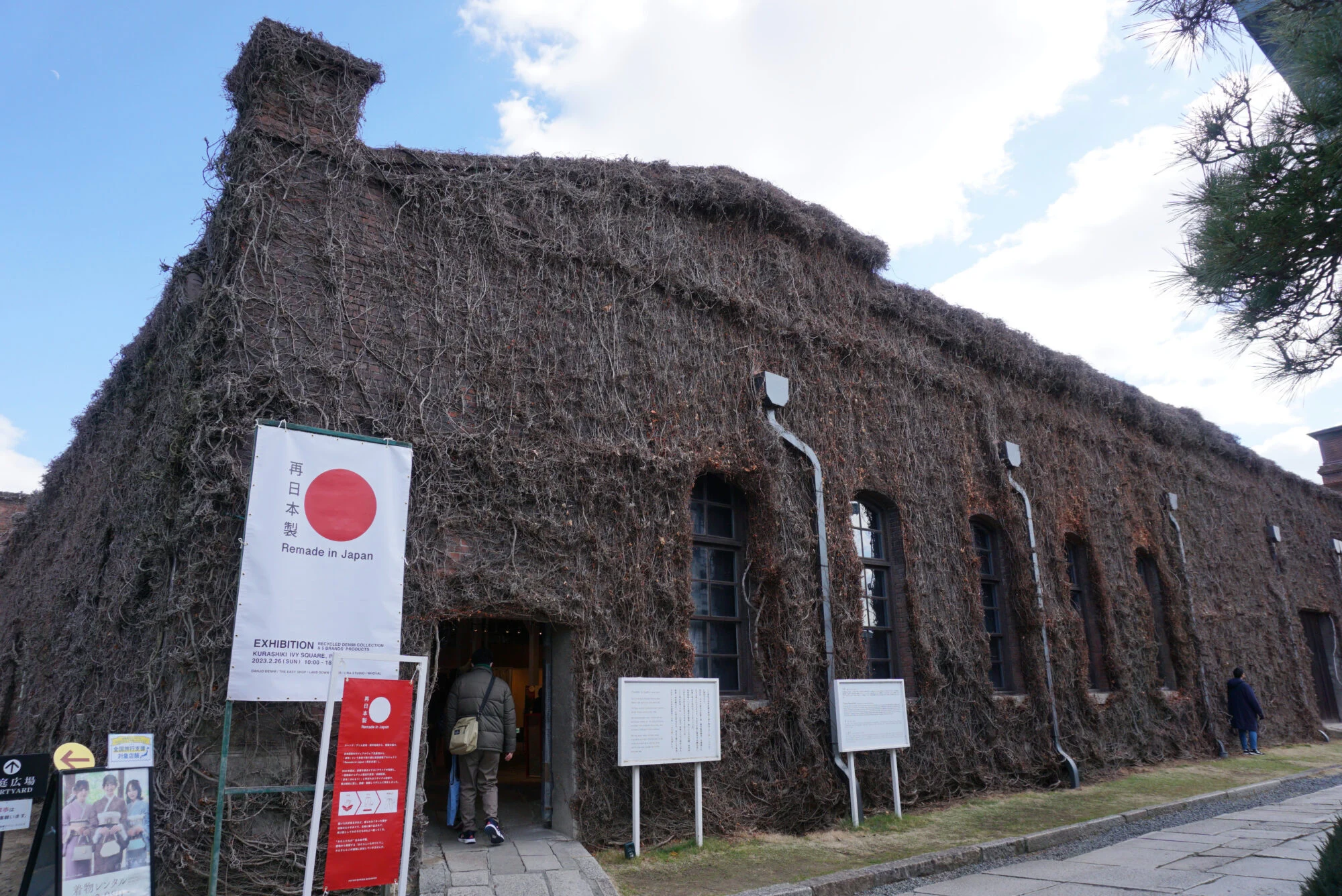
The exhibition was held at Kurashiki Ivy Square.
In the Ivy Hall, where lush ivy grows in the fresh green season, there was no sign of ivy when I visited in late February, but the scenery was still rich in flavor.
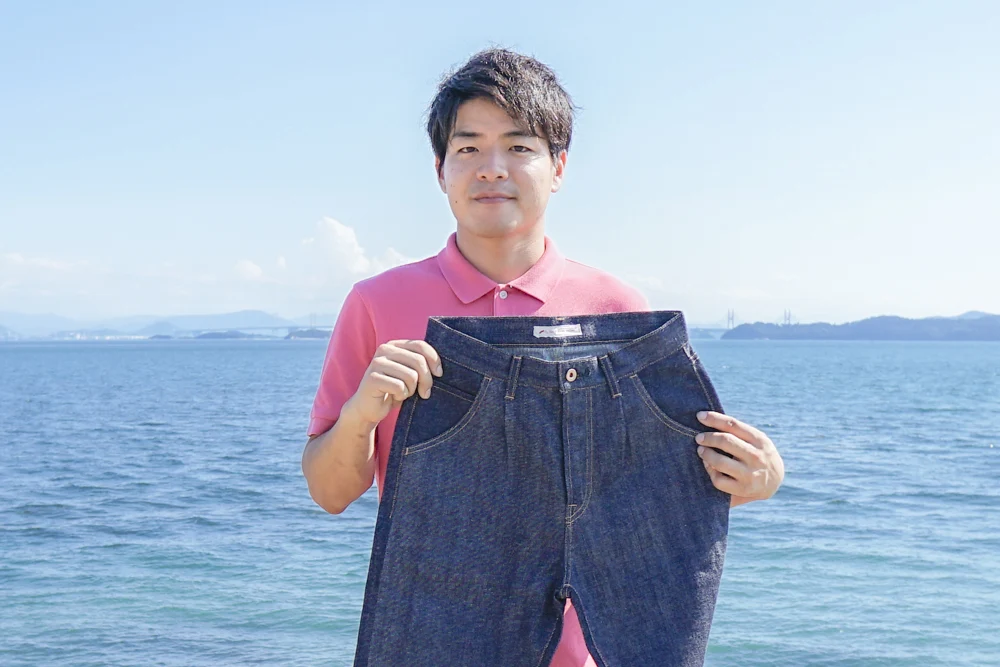
"Remade in Japan" is led by Ikegami Yoshiyuki, the representative of the brand land down under, which was launched in 2020.
Since its establishment, land down under has incorporated the concept of circular economy into its clothing production.
I had the opportunity to hear a bit from Mr. Ikegami, who is leading the project as a pioneer of circular apparel brands from Kurashiki.
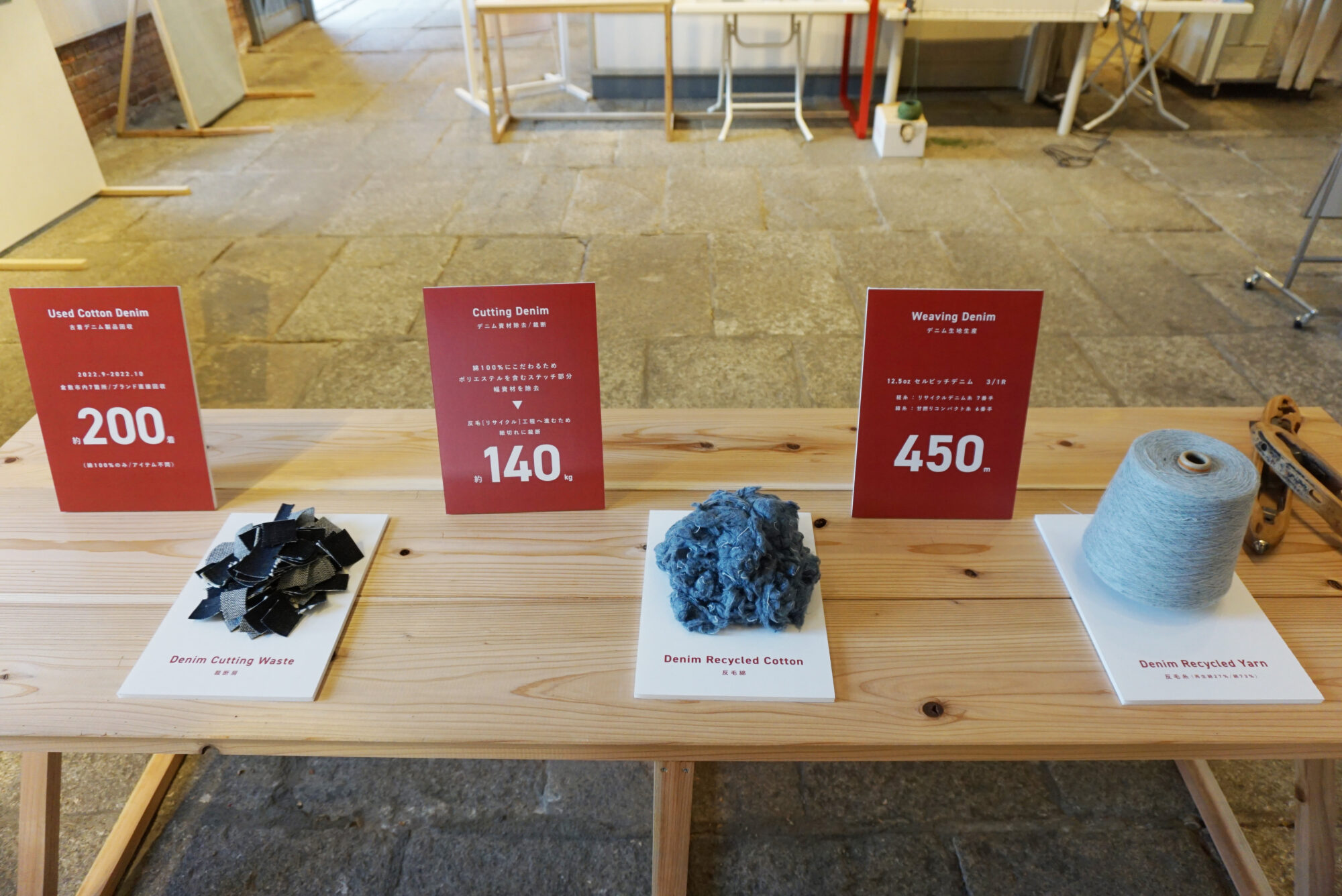
What is "denim to denim regeneration" in "Remade in Japan"?
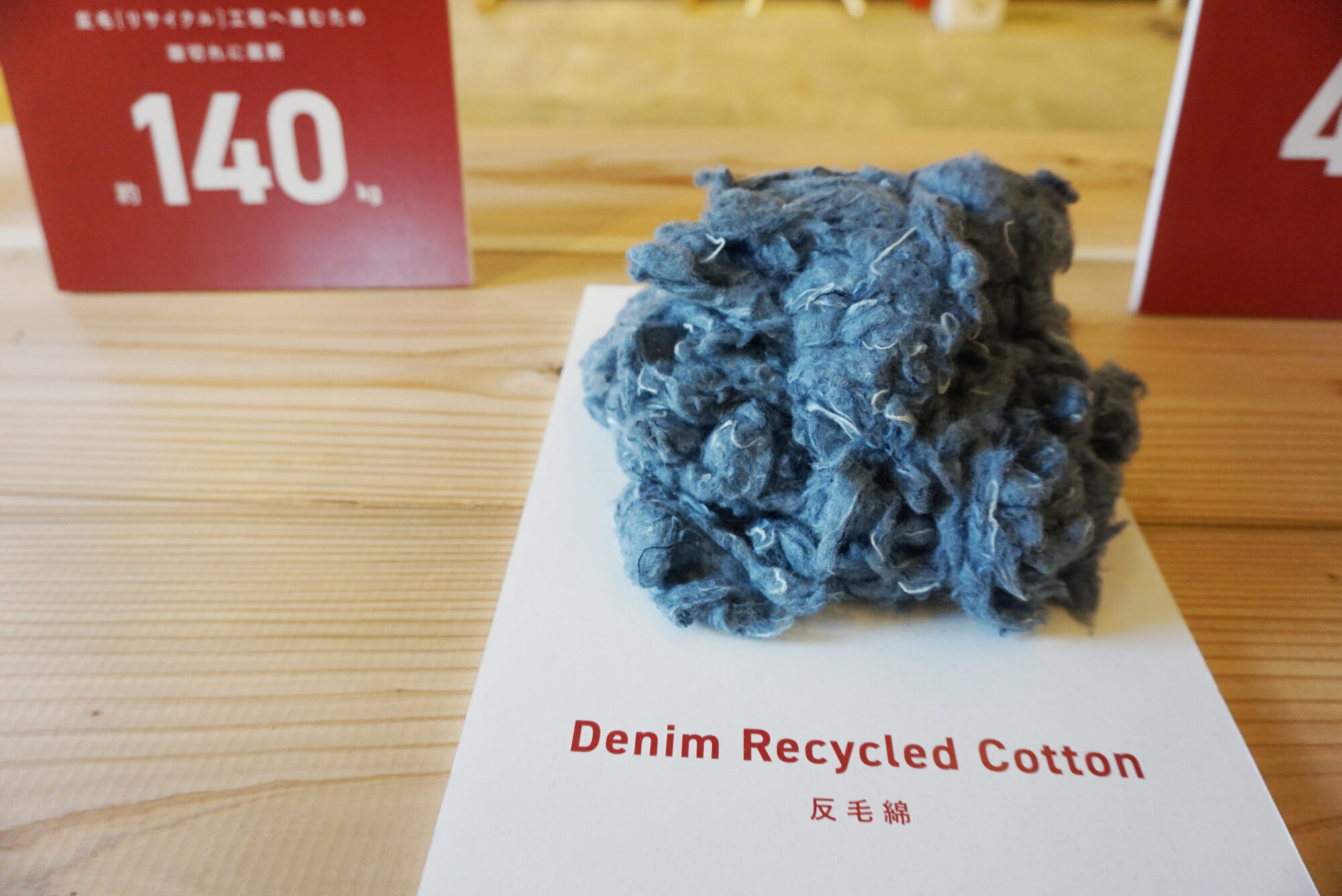
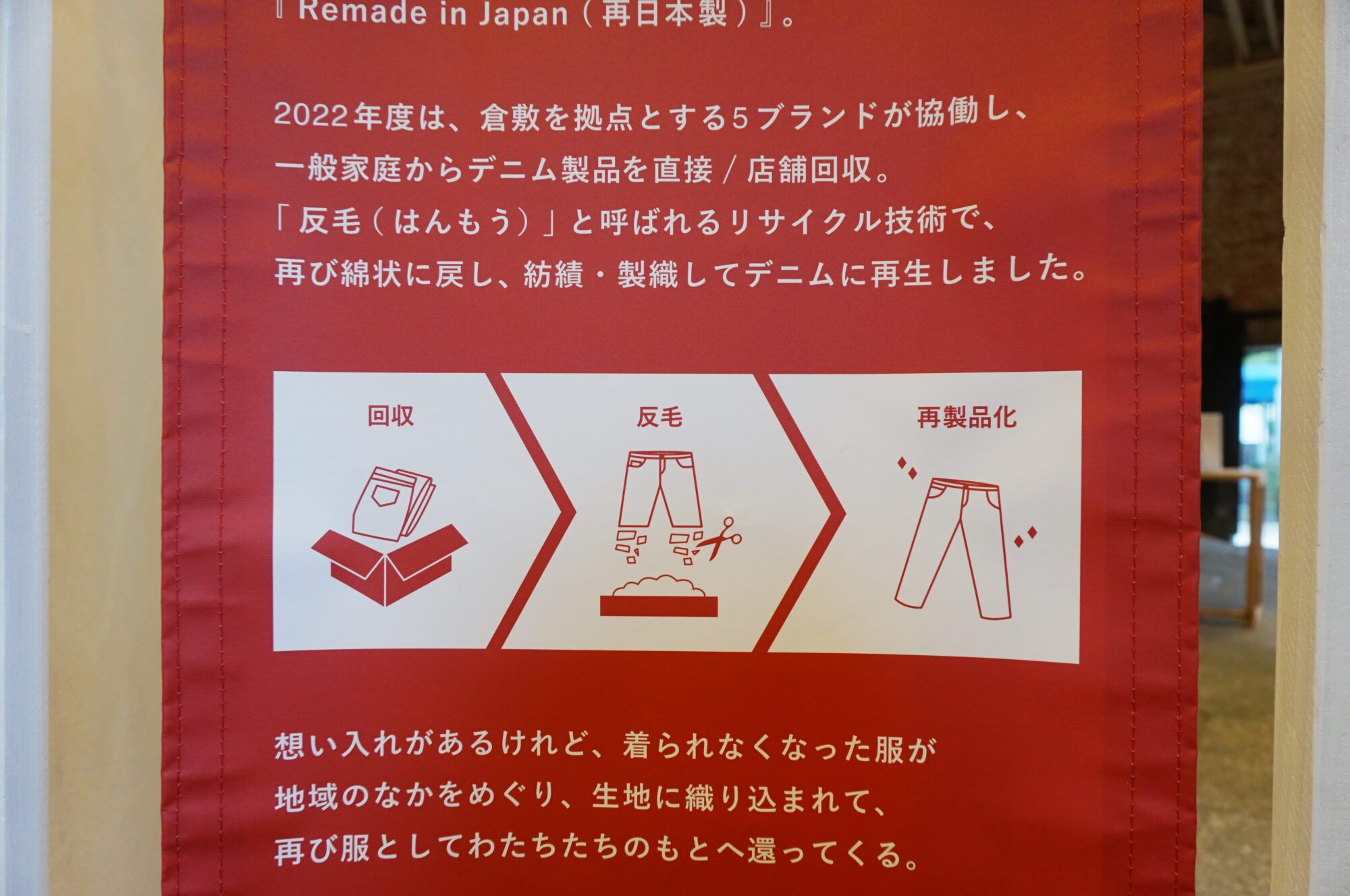
First, denim products made of 100% cotton collected from the general public are finely cut.
Next, using a recycling technology called hanmou, regenerated yarn is spun, and denim fabric is woven again.
New denim products are created using the regenerated denim fabric by each company, and the initiative aims to return them to the town and people through stores, creating a cycle.
Purpose of the exhibition
This is one of the outcomes of the 2022 project, a report.
I believe most people do not know that denim can be regenerated, so it is also to widely inform the general public about the "denim regeneration initiative."
I hope that when we do the "Remade in Japan" project again next time, those who are interested will participate.
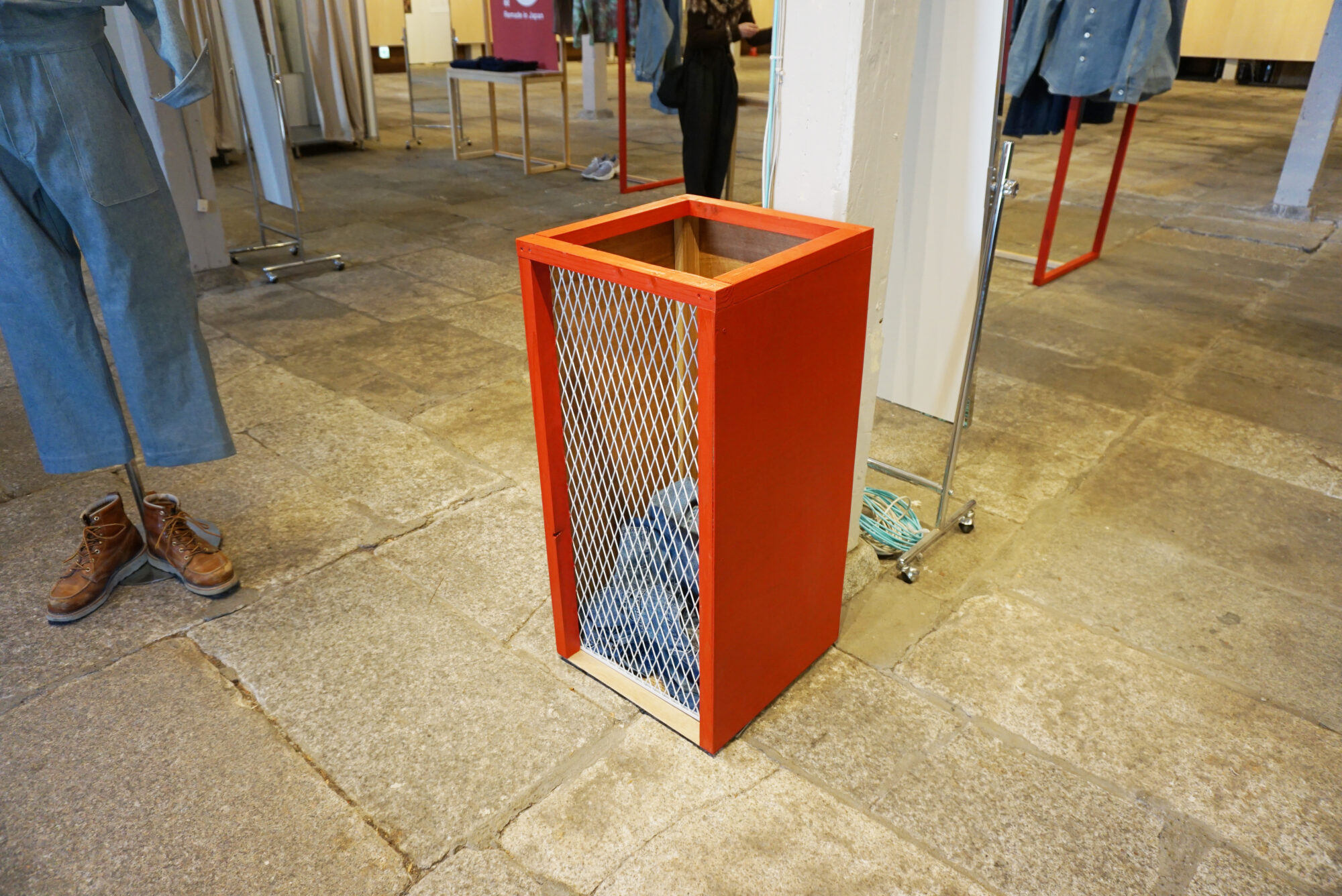
Continuously regenerating new value semi-permanently
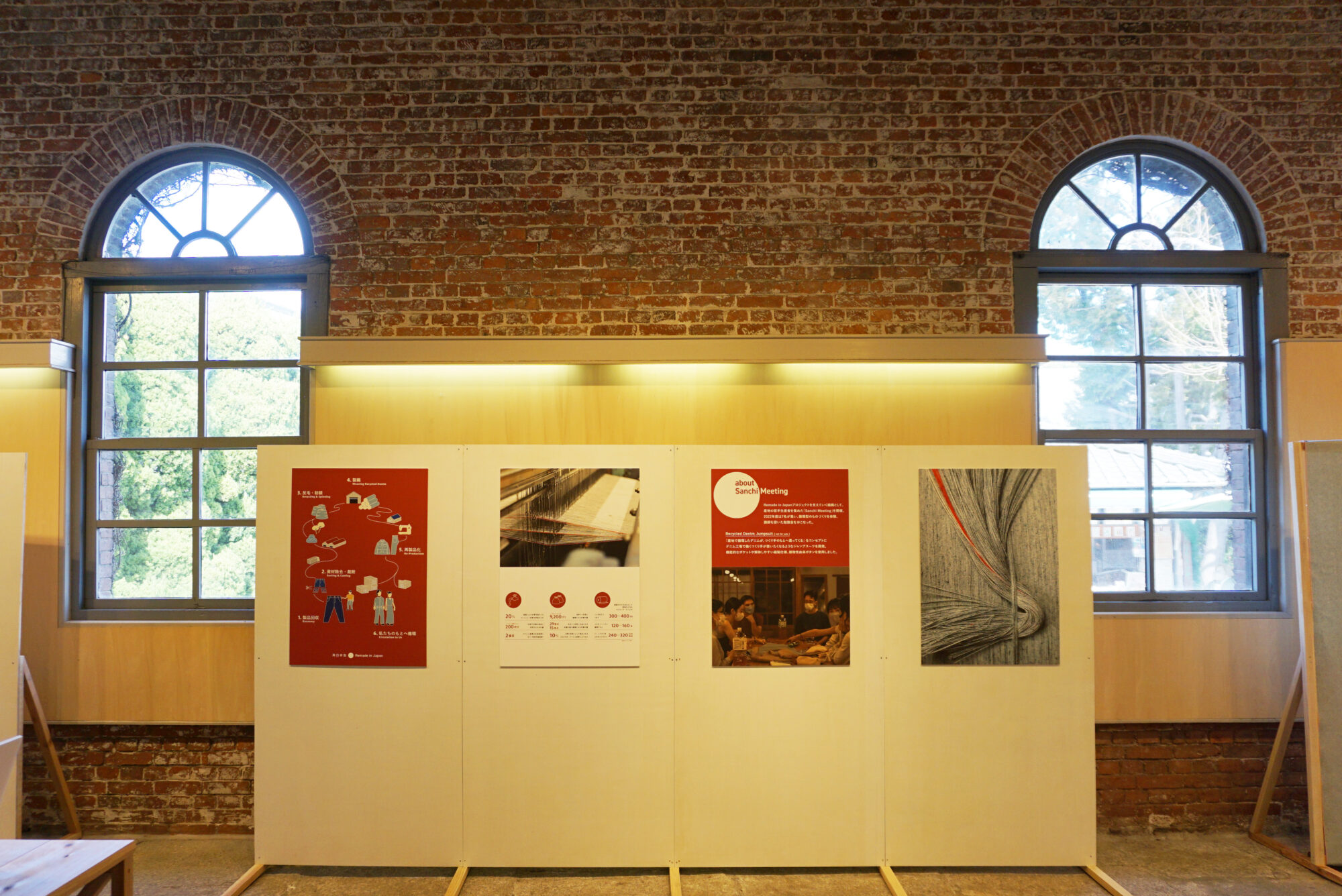
The main focus of the project is the recycling business by the five brands, but as a secondary initiative, a "Sanchi meeting" was held, centered around young producers from the production area.
Alongside the main business, seven members experienced circular manufacturing through study sessions over about six months.
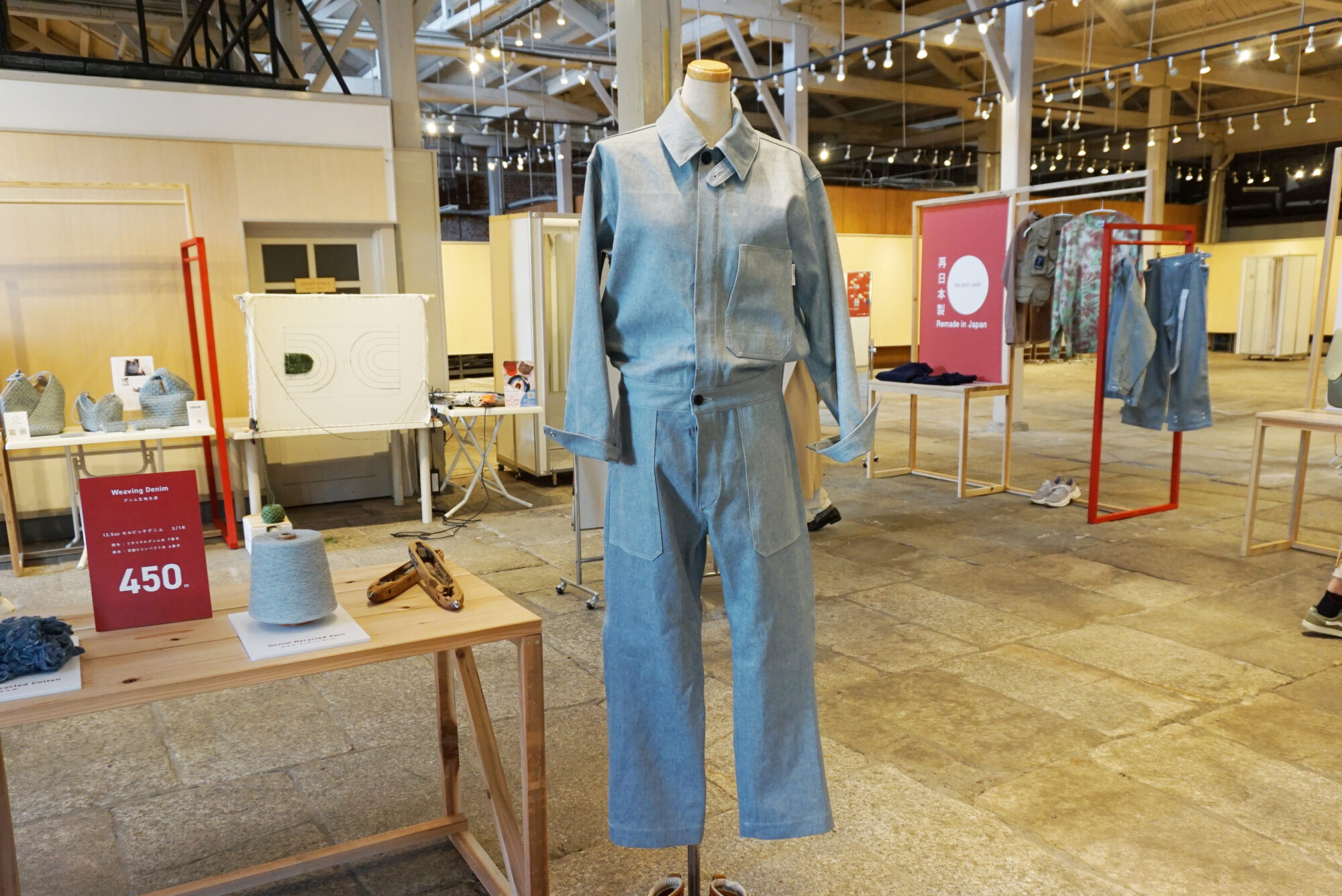
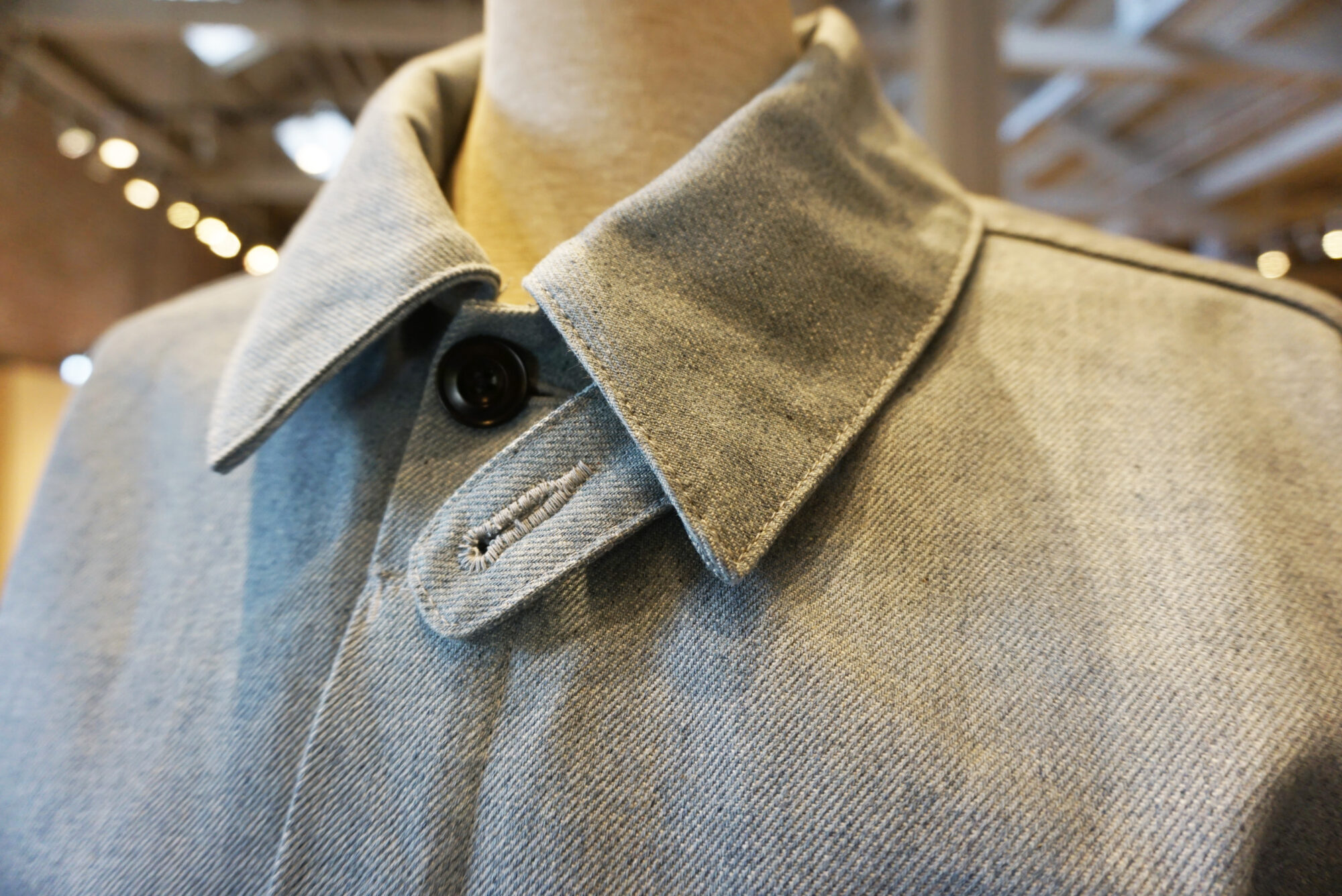
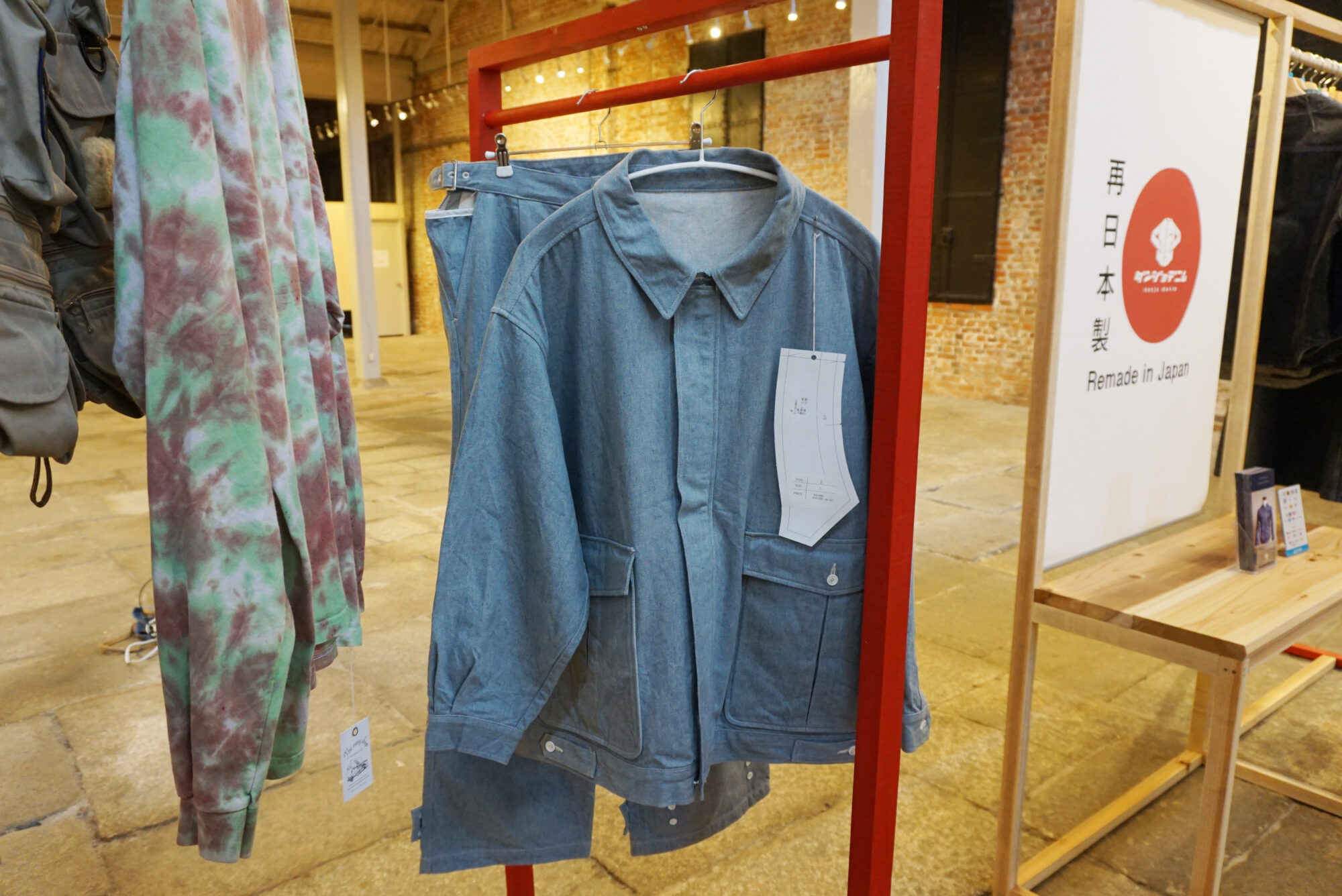
One of the outcomes of the 2022 project completed was this jumpsuit, commonly known as a "tsunagi."
When you look closely at the fabric, you can see tiny dark blue specks that create a pattern.
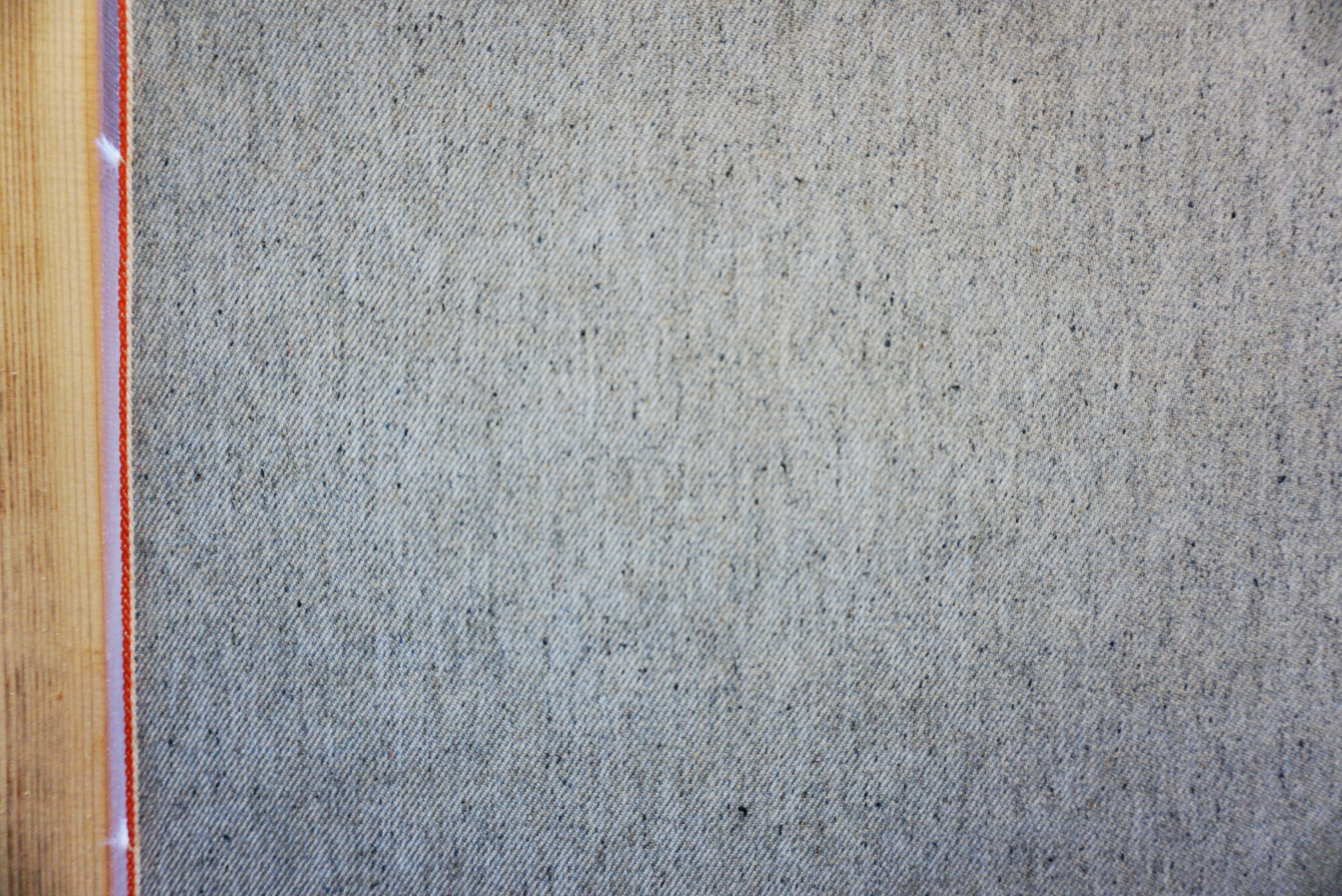
The collected denim comes in various shades, from dark navy to light blue, resulting in fabric woven with subtle nuances.
The impression of regenerated denim is that it feels like a completely newly developed material, rather than something that has been regenerated.
It has cute specks like nep yarn, and rather, it seems fashionable...
Nep yarn refers to the knots formed by intertwined fibers, and products made from fabric woven with this yarn are common.
Until now, when I heard "regenerated," I had a slightly negative impression of the term itself (even if that is not the case), but I did not have that image here.
While I was admiring the shape and fabric, I was taught that there is another point to consider.
Clothing production with an eye on resource circulation
The commitment to the jumpsuit made from regenerated denim is not just the 100% cotton recycled fabric.
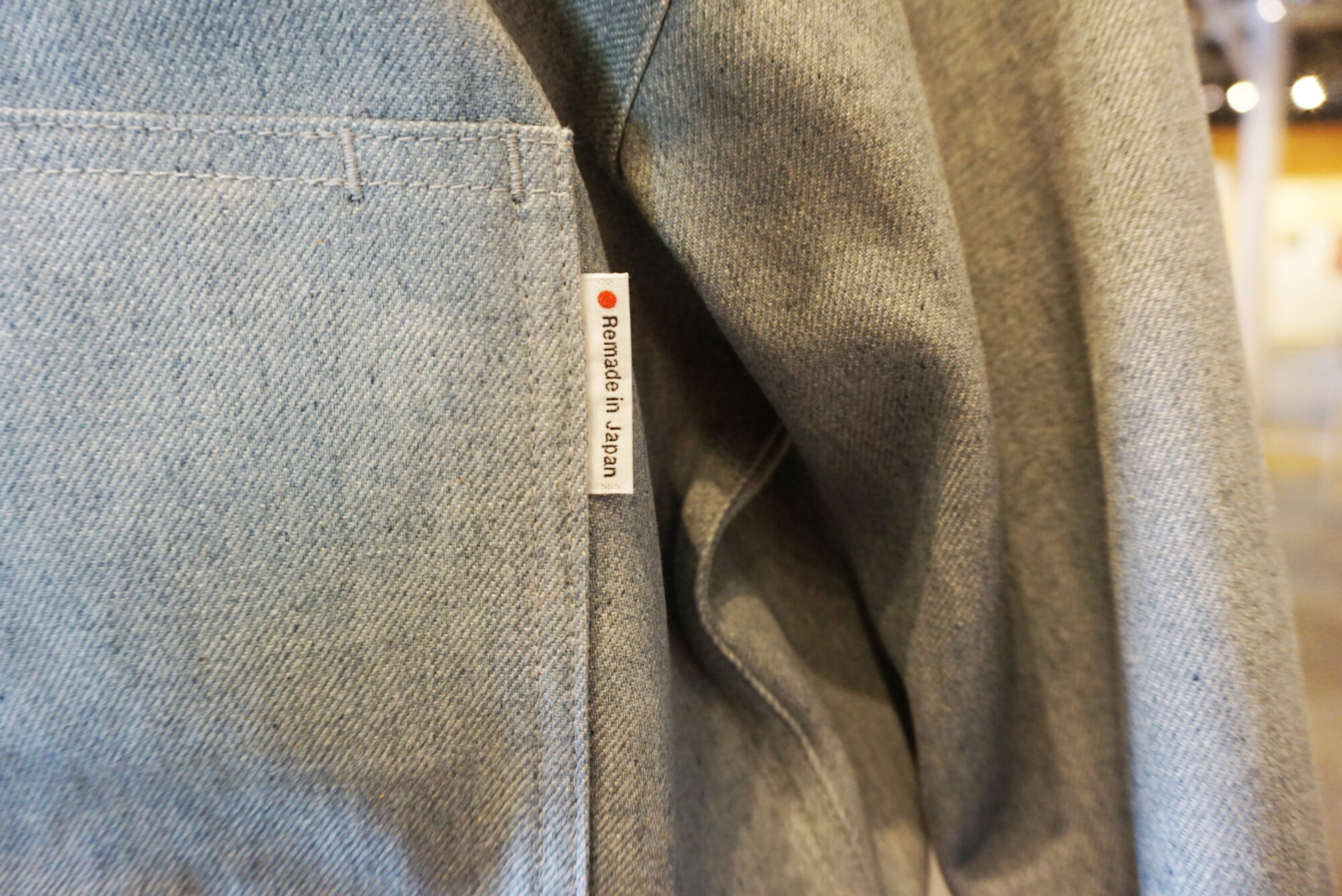
The sewing thread is also made of cotton, and most existing small tags are made of polyester, but they are made of cotton, including the embroidery.
Instead of plastic materials, nut buttons made from palm nuts, which are plant-based, are used.
Everything is made from easily recyclable materials.
This jumpsuit also serves as a sample of recycled products, showing that "this is how you can make it."
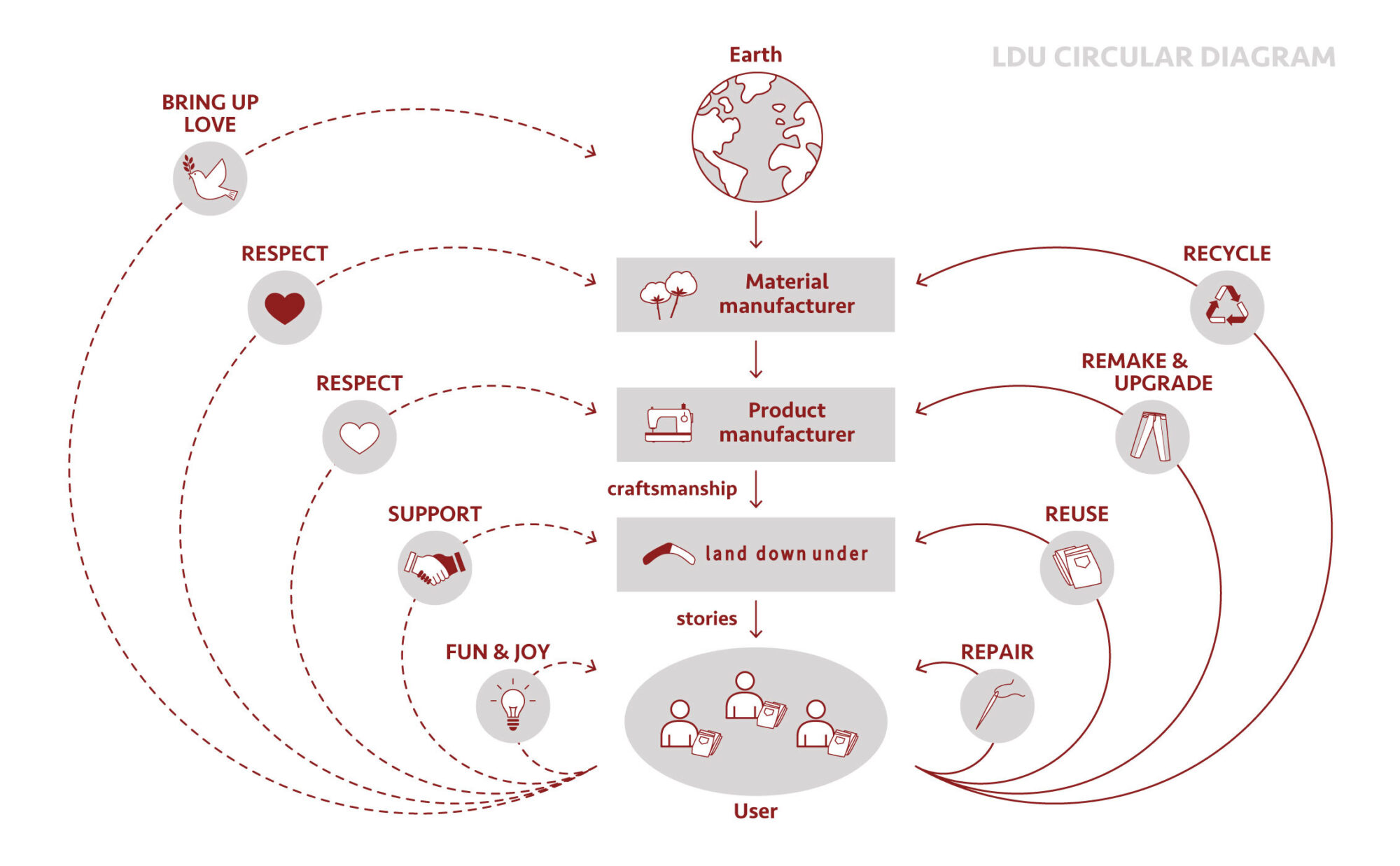
It is not just about discarding items used for recycling or reuse.
It is not just about discarding items after remaking them once.
It can be regenerated again.
While creating new value, it minimizes waste of resources and circulates resources semi-permanently.
This was the moment I understood the mechanism of the circular economy in my mind.
Exploring the five co-hosting brands
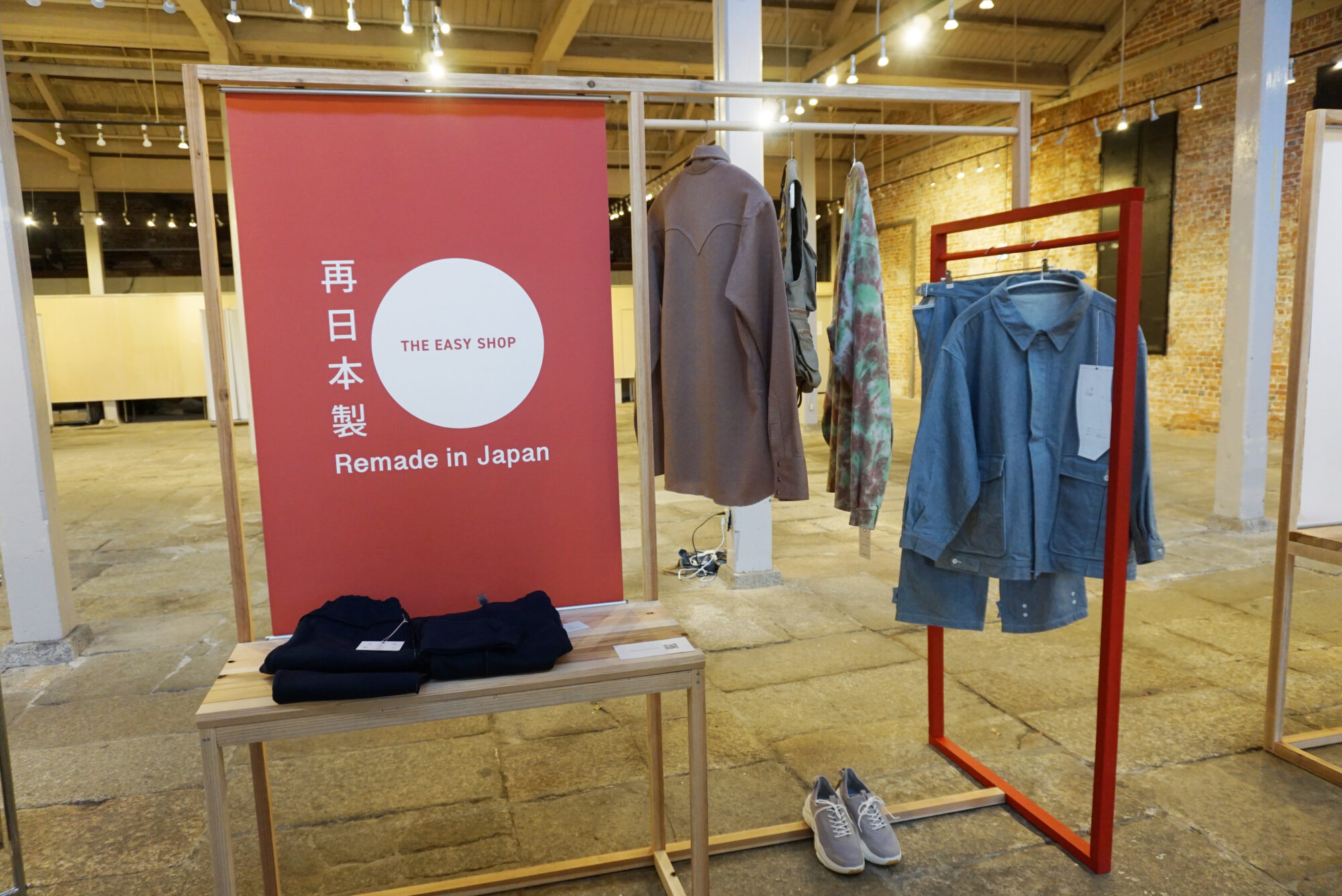
Having gained a little understanding of the circular economy, I toured the booths of the five co-hosting brands.
▼ The five brands are as follows:
- THE EASY SHOP
- Danjode Denim
- WHOVAL
- Ura studio
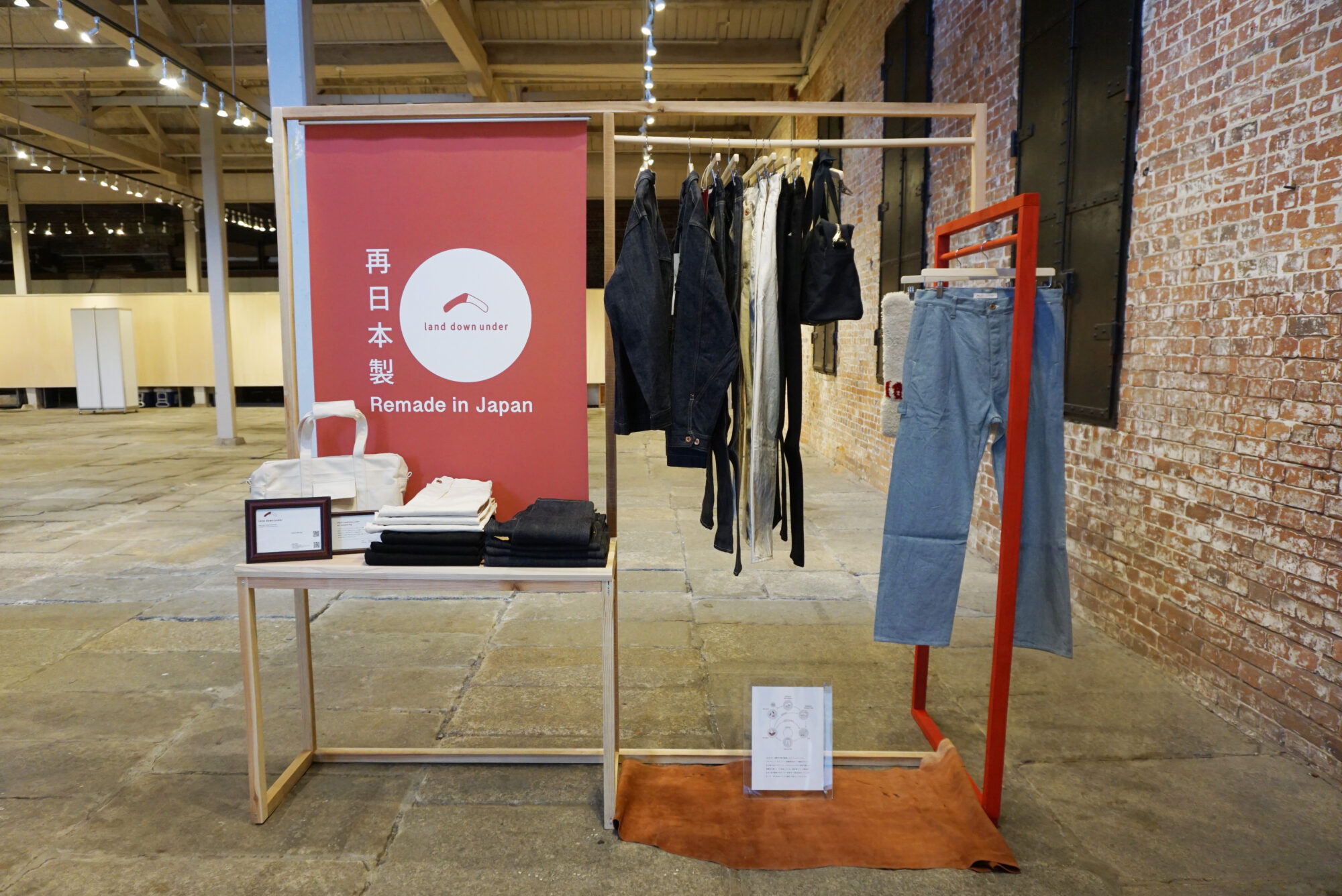
- land down under
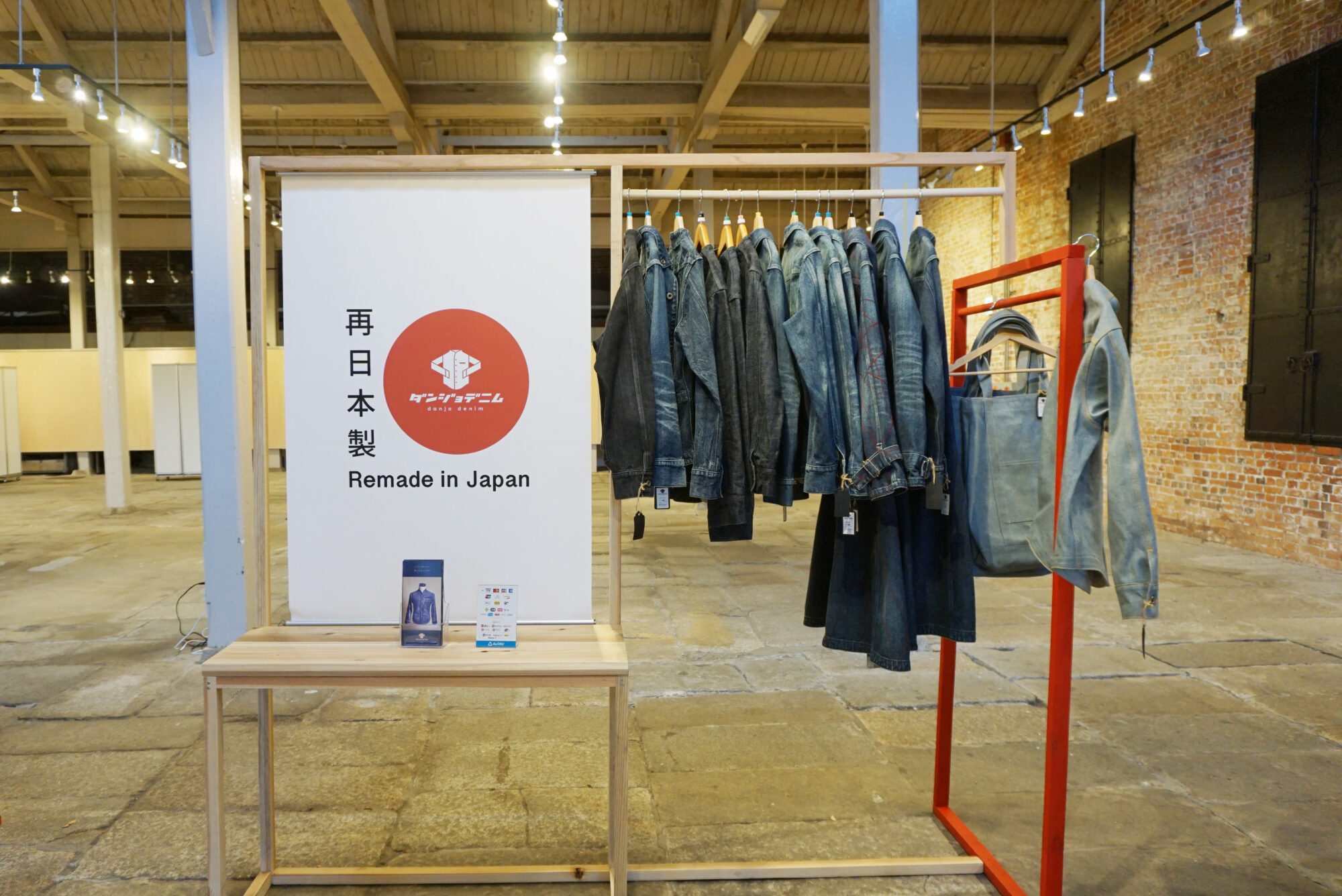
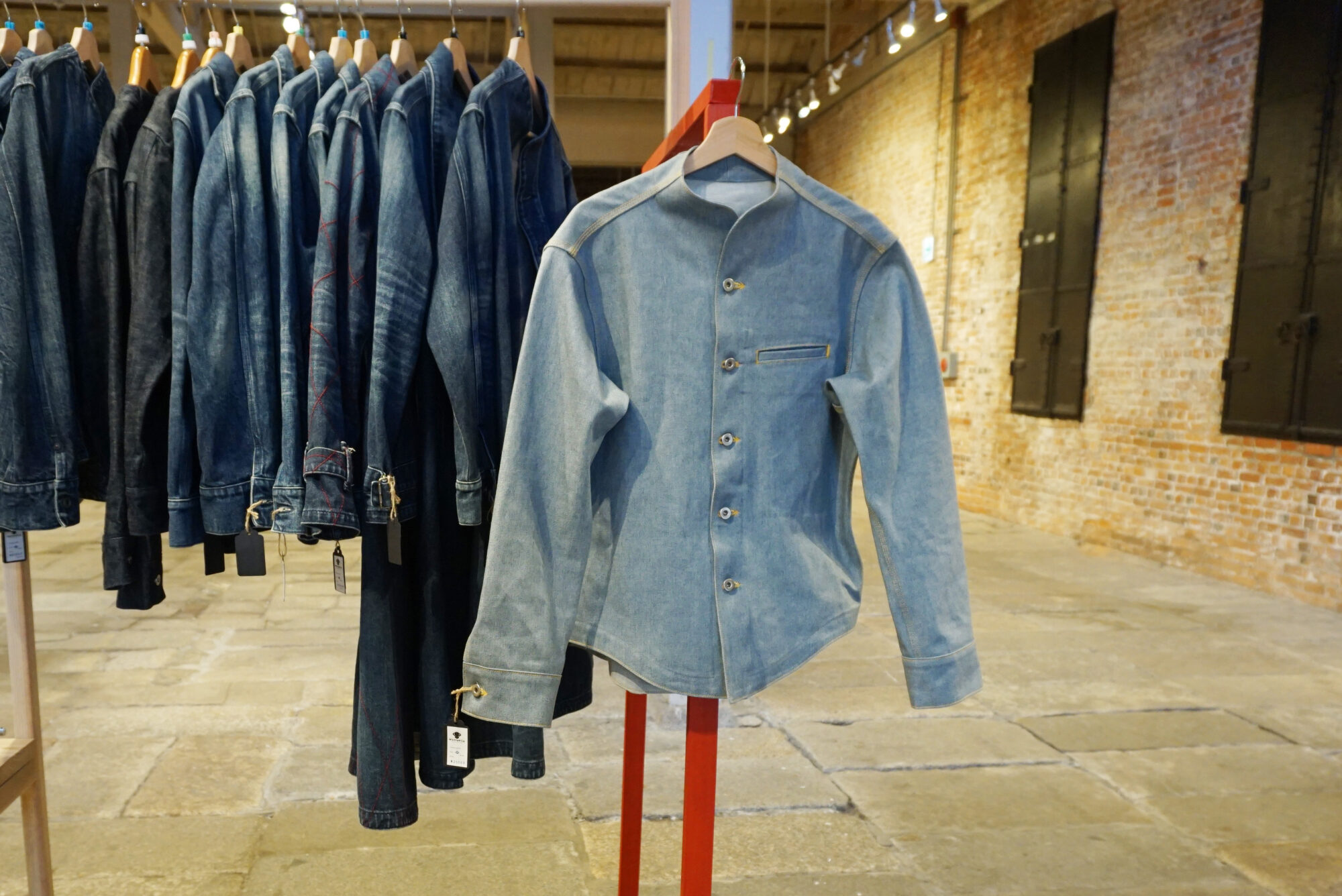
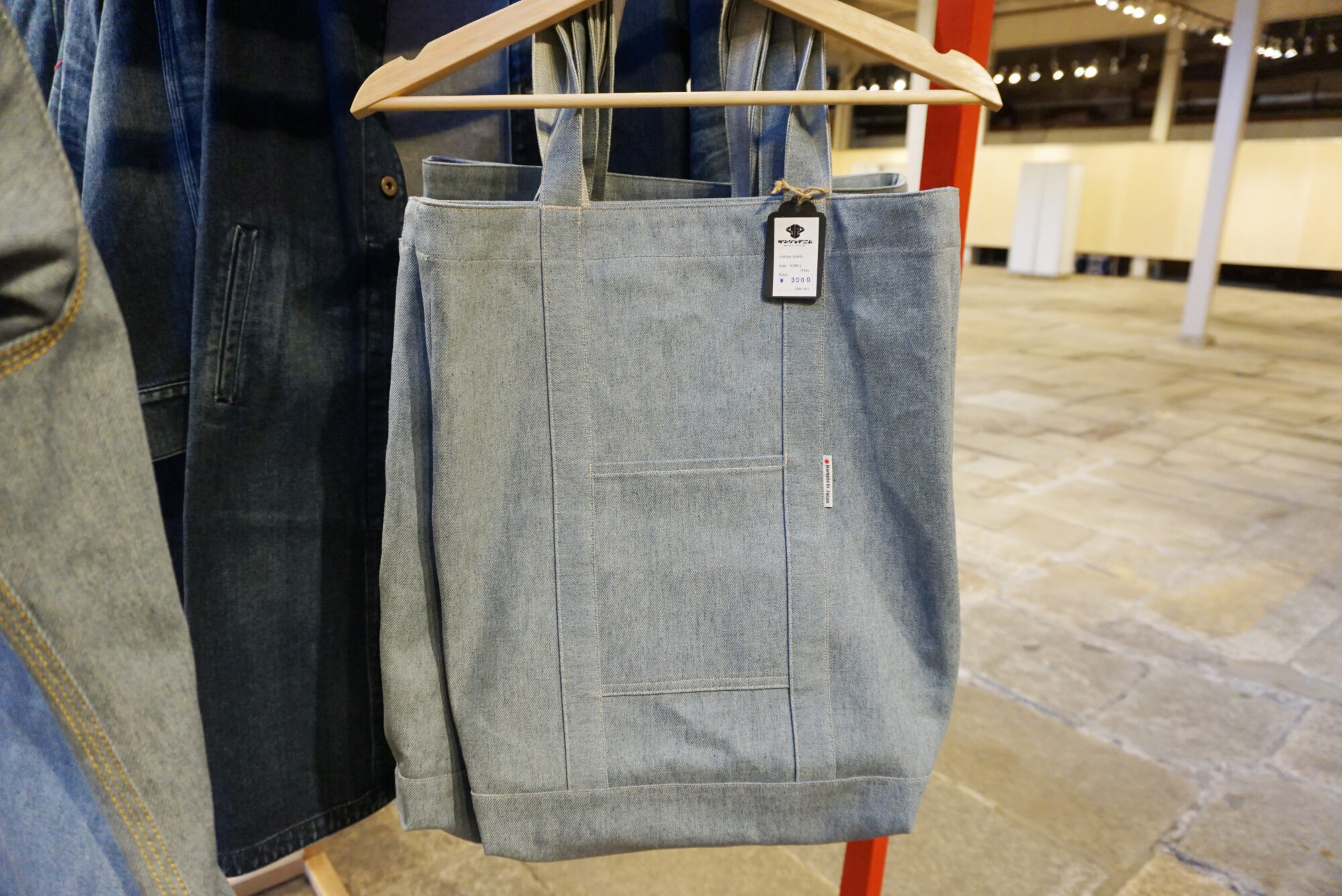
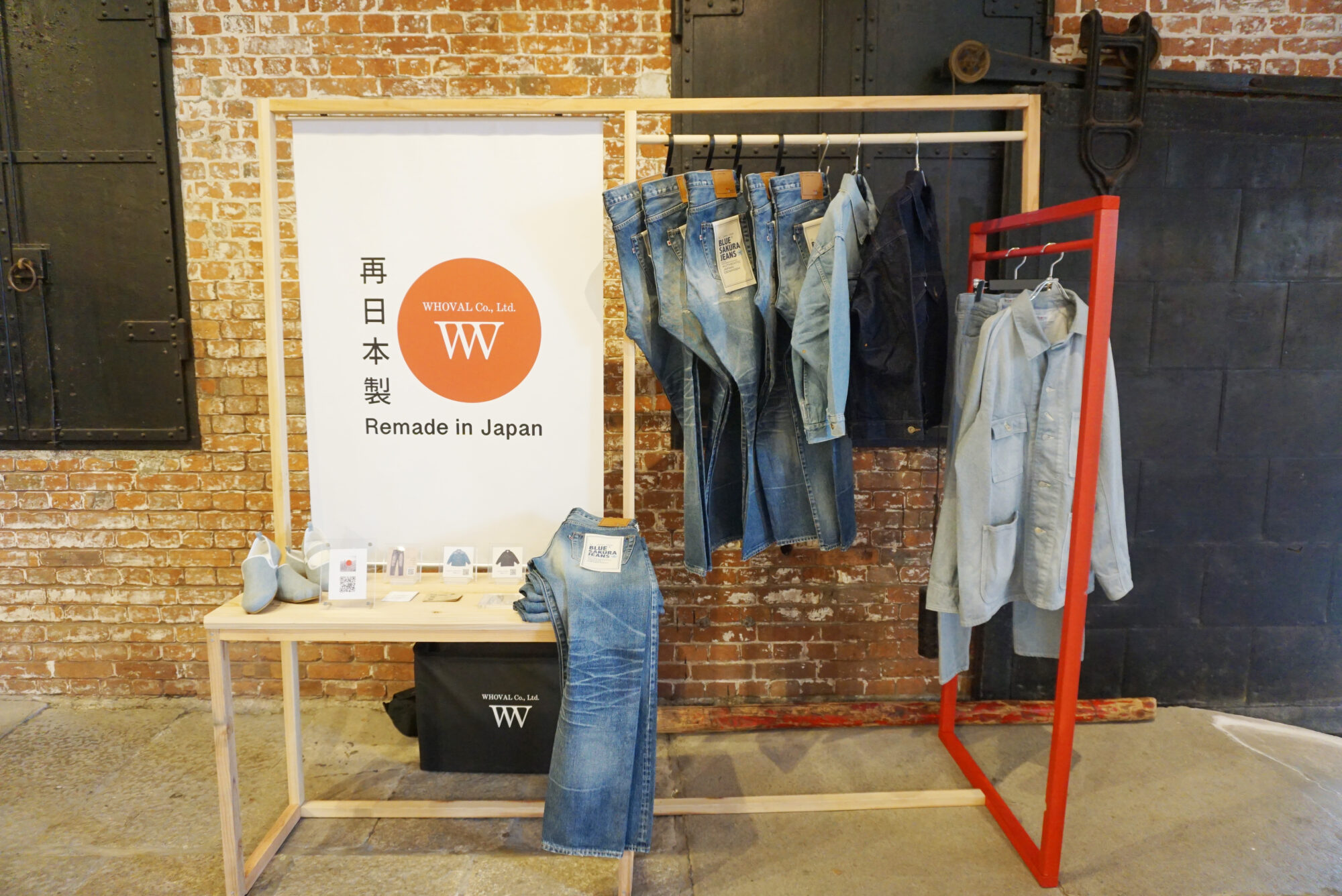
The white rack on the left displays their own products, while the red rack on the right holds products made from regenerated denim fabric.
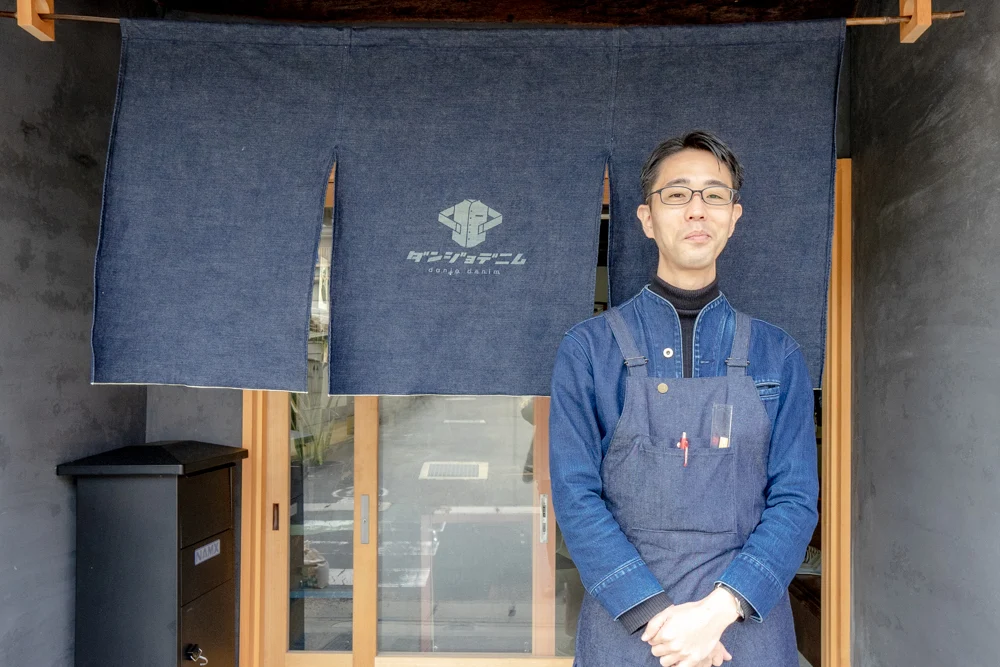
▼WHOVAL (Huval)
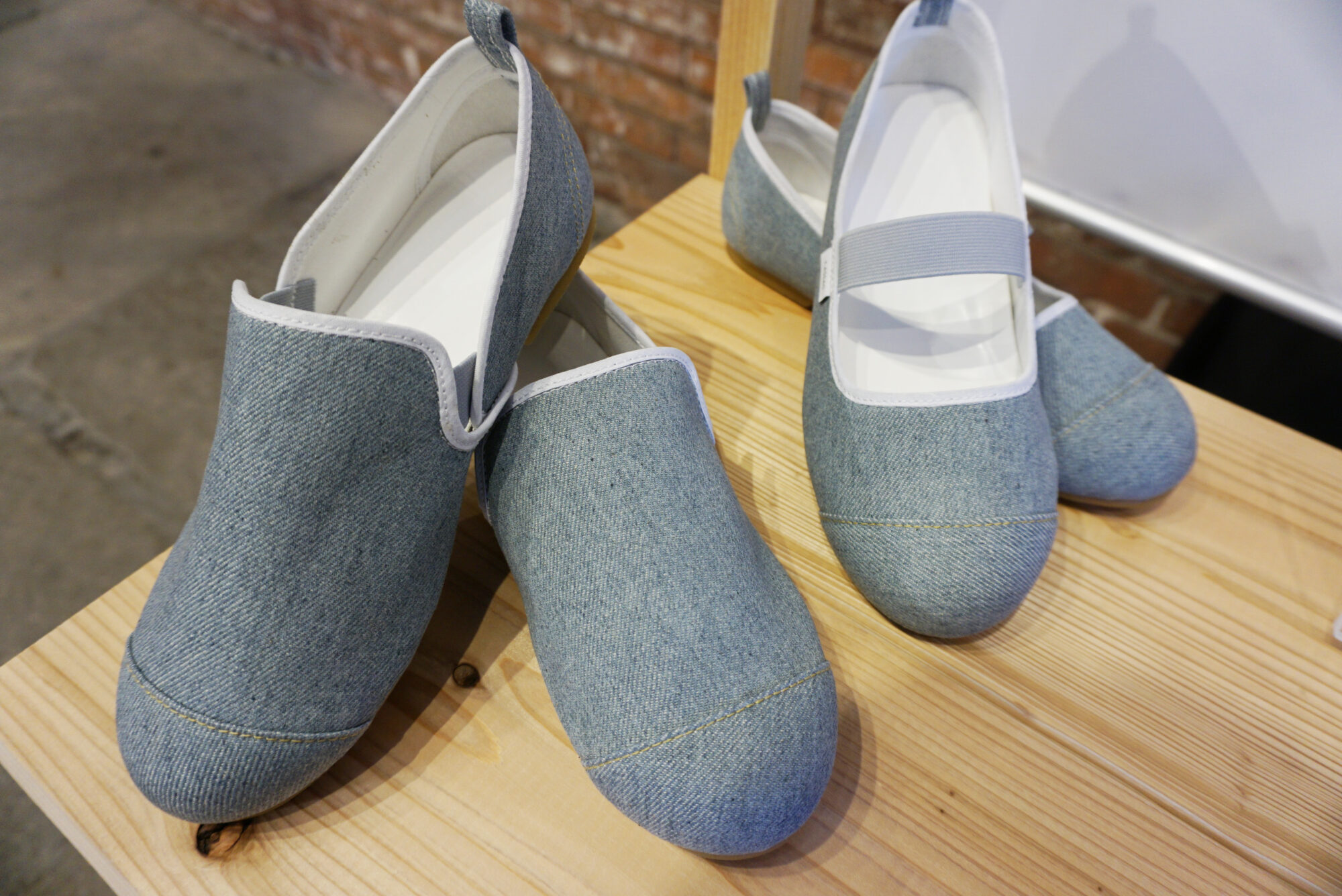
Even though recycled denim is said to be environmentally friendly, it seems that items requiring strength, such as shoes, also use synthetic fibers.
▼Ura Studio (Ura Studio)
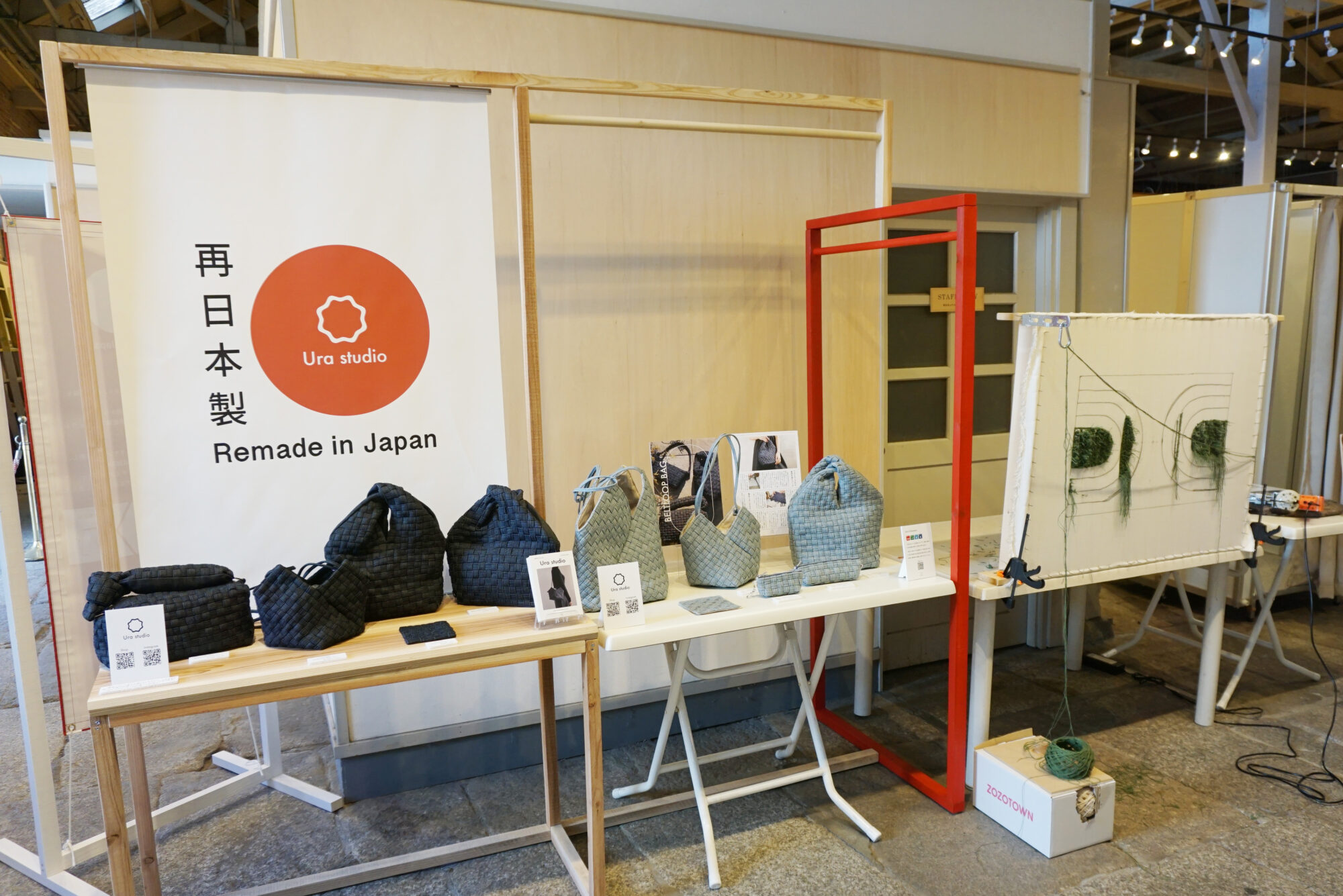
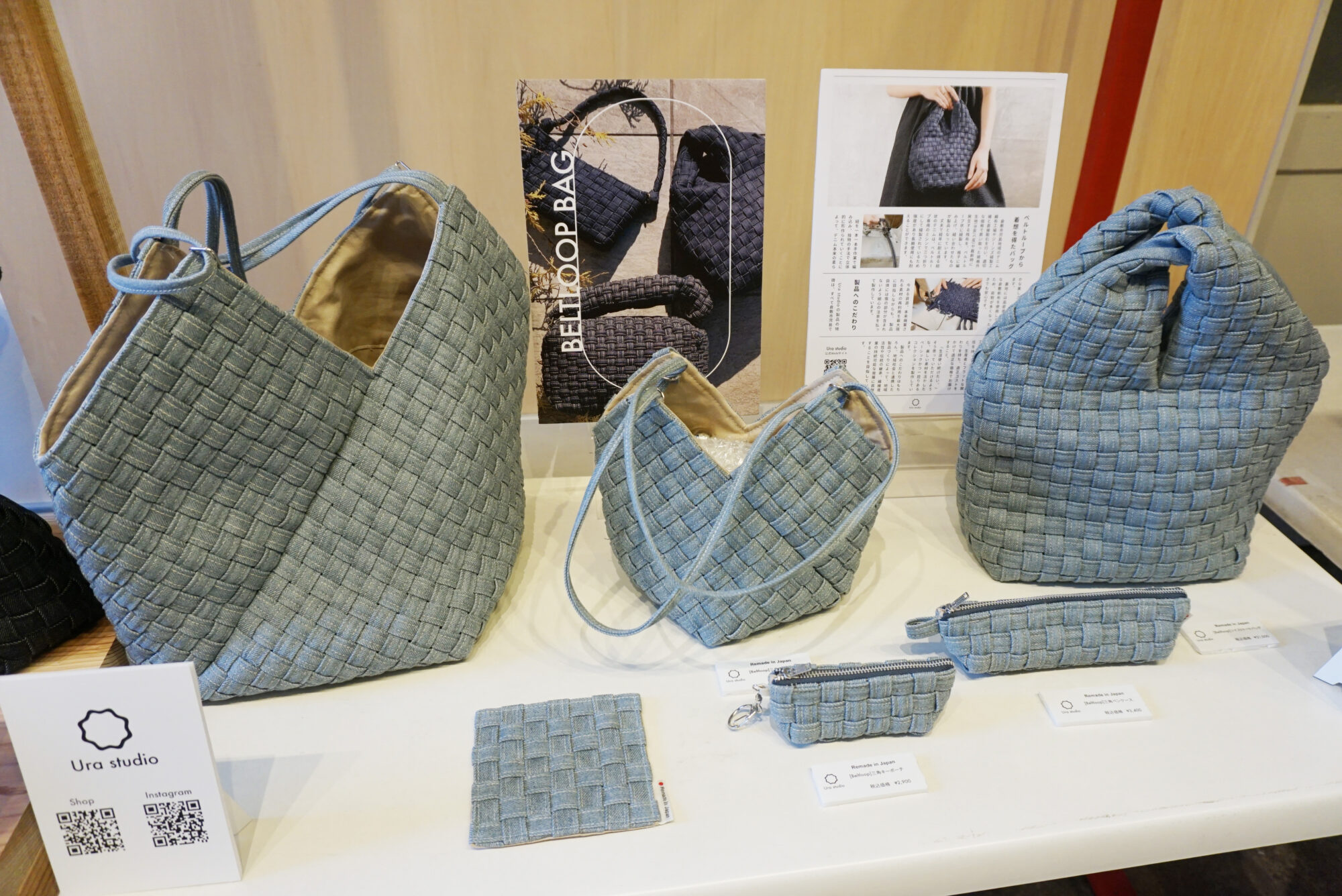
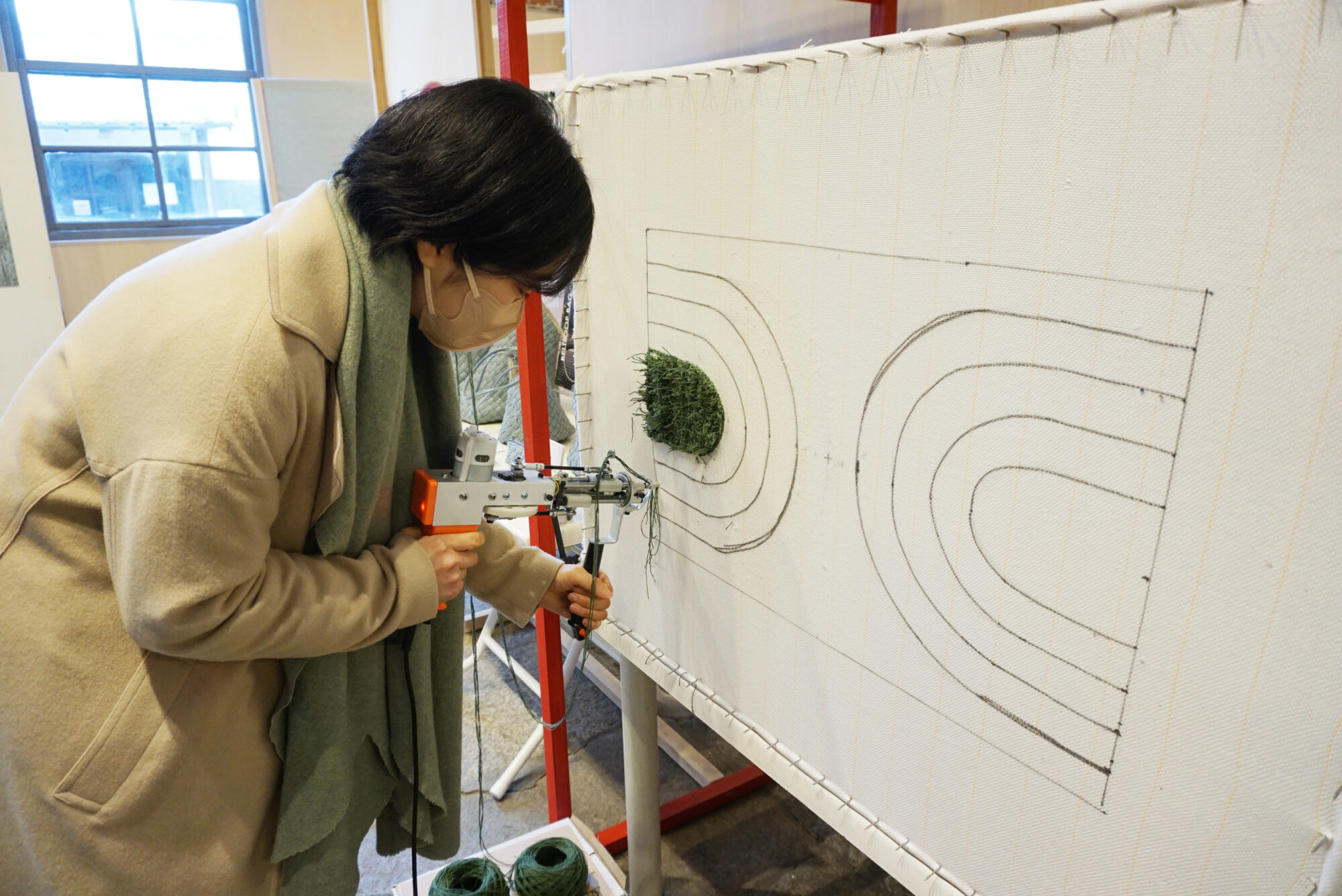
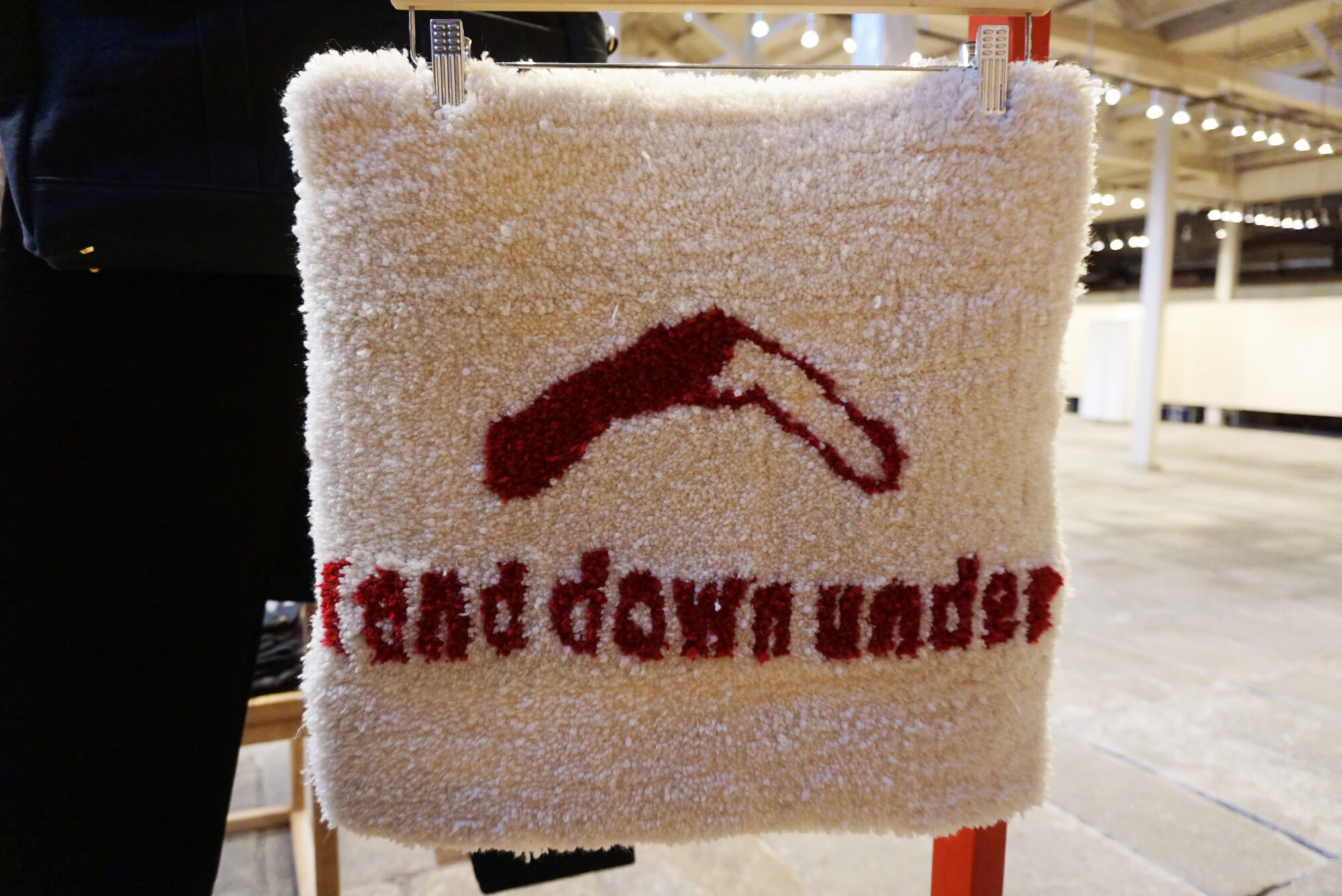
Ura Studio also held workshops to create rugs by hand using a technique called tufting.
They use yarn made from leftover threads of Kurashiki canvas.
Mr. Ikegami explained two reasons why this project was co-hosted by five brands.
To Work Together as a Town and Community
The first reason is that by co-hosting, it becomes easier to create recycled fabrics from a scale advantage.
If it were done by just one company, the financial burden would be significant, but by collaborating, costs can be reduced and order quantities can be increased.
Additionally, to achieve a sustainable resource cycle, it is necessary to work together as a town and community centered around the production area.
A Chance to Rethink Clothing Production
The second reason is that it provides an opportunity for clothing companies to rethink their approach to clothing production.
When considering recycling, current clothing often has many combinations of different materials, making it difficult to recycle.
Of course, I understand that it is difficult to suddenly make everything 100% cotton.
By participating in this initiative, there is a possibility that some products could be sewn with cotton thread, or that product development without using different materials could be attempted, leading to new insights in the manufacturing process.
Conclusion
In a circular economy, it is required to design with reuse in mind from the manufacturing stage.
Continuing to circulate limited resources.
Through 'Remade in Japan', I am very excited about the future where methods of resource circulation using recycled denim spread from here in Okayama, the birthplace of jeans.
Visiting the exhibition made me realize that it is not just a matter for the producers; we, the consumers, also need to be conscious of this.
And someday, it will no longer be necessary for producers to say, "This is recycled denim" or "This is a recycled product."
For consumers, it is about buying a product because it is good, and it just happens to be recycled denim.
Knowing that once we have used something carefully, it can circulate as a recycled resource should be a given.
I believe that only when this happens will we truly become a part of a natural cycle.
In this event report, the thoughts and concepts behind the project are only introduced in fragments and have not been fully conveyed.
For those who want to know more, please follow the articles from the media information at the bottom of the Remade in Japan page on the land down under website.
This site where you can learn about environmental issues in fashion is also a useful reference, so please check it out.
Data of the 'Remade in Japan' EXHIBITION
| Name | 'Remade in Japan' EXHIBITION |
|---|---|
| Date | February 26, 2023 (Sunday) |
| Location | Kurashiki Ivy Square Ivy Hall |
| Participation Fee (Tax Included) | Free |
| Homepage | Remade in Japan |