During the Edo period, Shimotsui thrived as a port of call for Kitamaebune ships. The folk song known as “Shimotsui-bushi” was sung to welcome the people aboard these ships. Shimotsui-bushi spread throughout Japan as a folk song representing Okayama, and the National Shimotsui-bushi Contest is held every September.
Since a national contest is held, Shimotsui-bushi may seem to be well known. However, the shortage of successors to folk songs is a concern throughout Japan, and Shimotsui-bushi is no exception.
The festival “Shimotsui Yoiakari,” planned to pass Shimotsui-bushi on to the next generation, will be held on October 5, 2024.
Here, we introduce Shimotsui Yoiakari, a new initiative to pass on this folk song.
The information presented was current when this article was published in September 2024. Please note that it may differ from current information.
What Is Shimotsui Yoiakari?
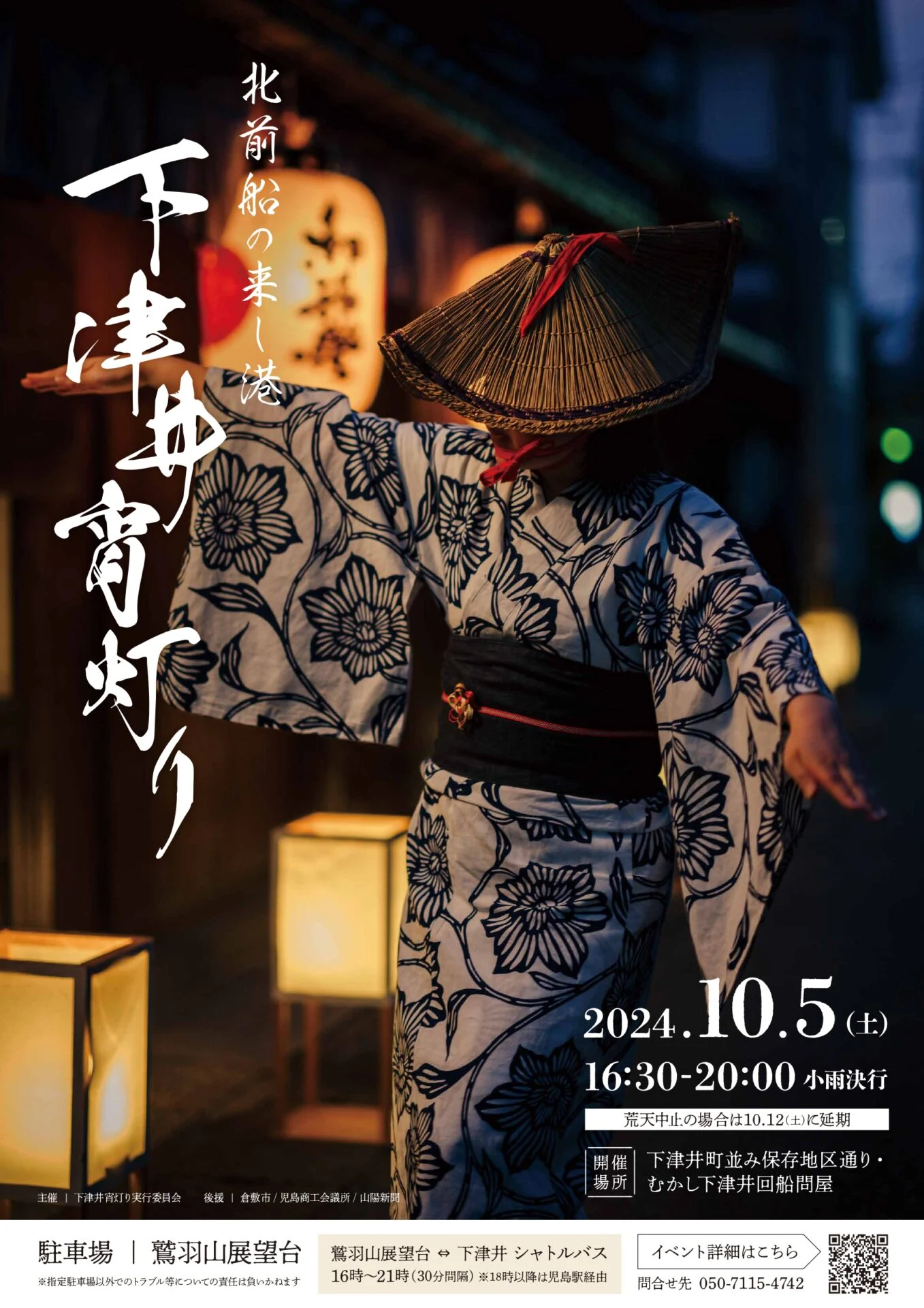
“Shimotsui Yoiakari” is an event to be held on Saturday, October 5, 2024.
The history of Shimotsui-bushi, sung at Shimotsui Yoiakari, dates back to the Edo period.
At the time, Shimotsui flourished as a port of call for Kitamaebune ships and a hub for extensive trade and exchange among people. The Kitamaebune ships traveled throughout Japan and also brought news of the latest trends. It is said that their crews and the people of Shimotsui often exchanged information.
It is said that Shimotsui-bushi began when people adapted popular songs in a distinctly Shimotsui style and performed them at drinking parties to entertain the crews. Shimotsui-bushi gradually took shape as it incorporated popular trends, eventually becoming established in the community.
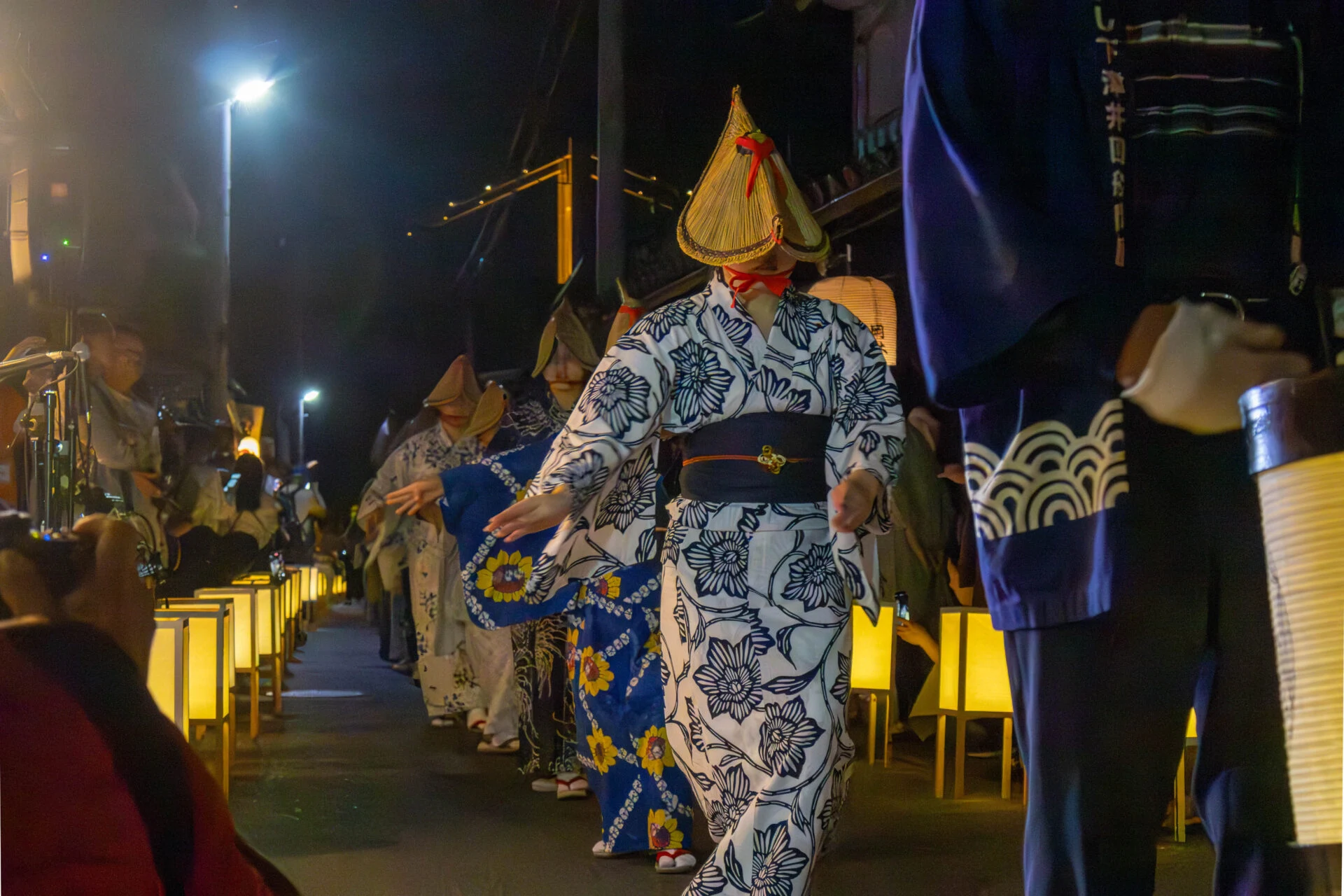
At Shimotsui Yoiakari, you can enjoy the “parade dance” performed by volunteers who have practiced extensively, as well as “Shimotsui-bushi for Everyone,” an interactive version of Shimotsui-bushi that anyone can easily join.
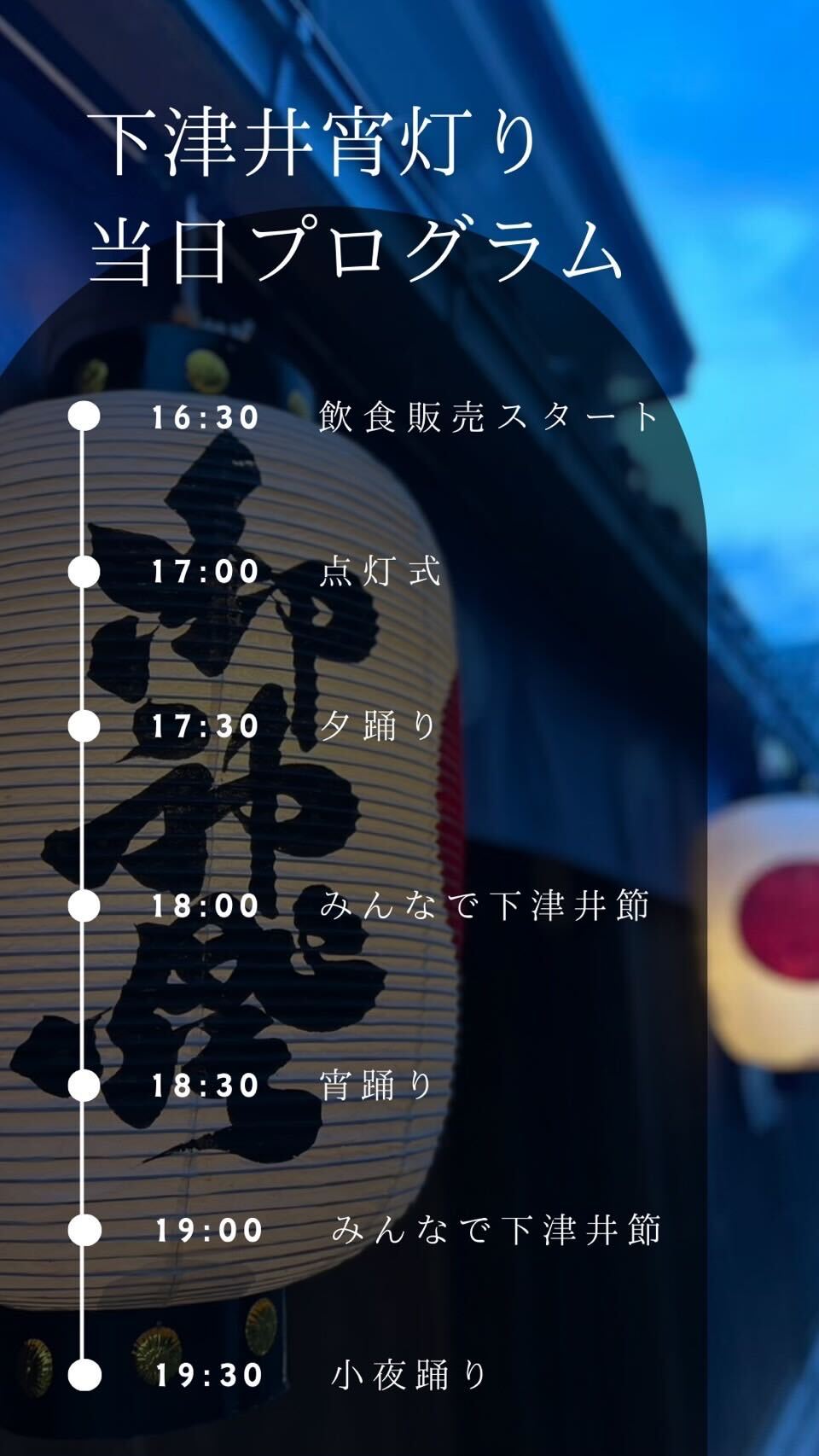
Check the image below for the Shimotsui Yoiakari schedule.
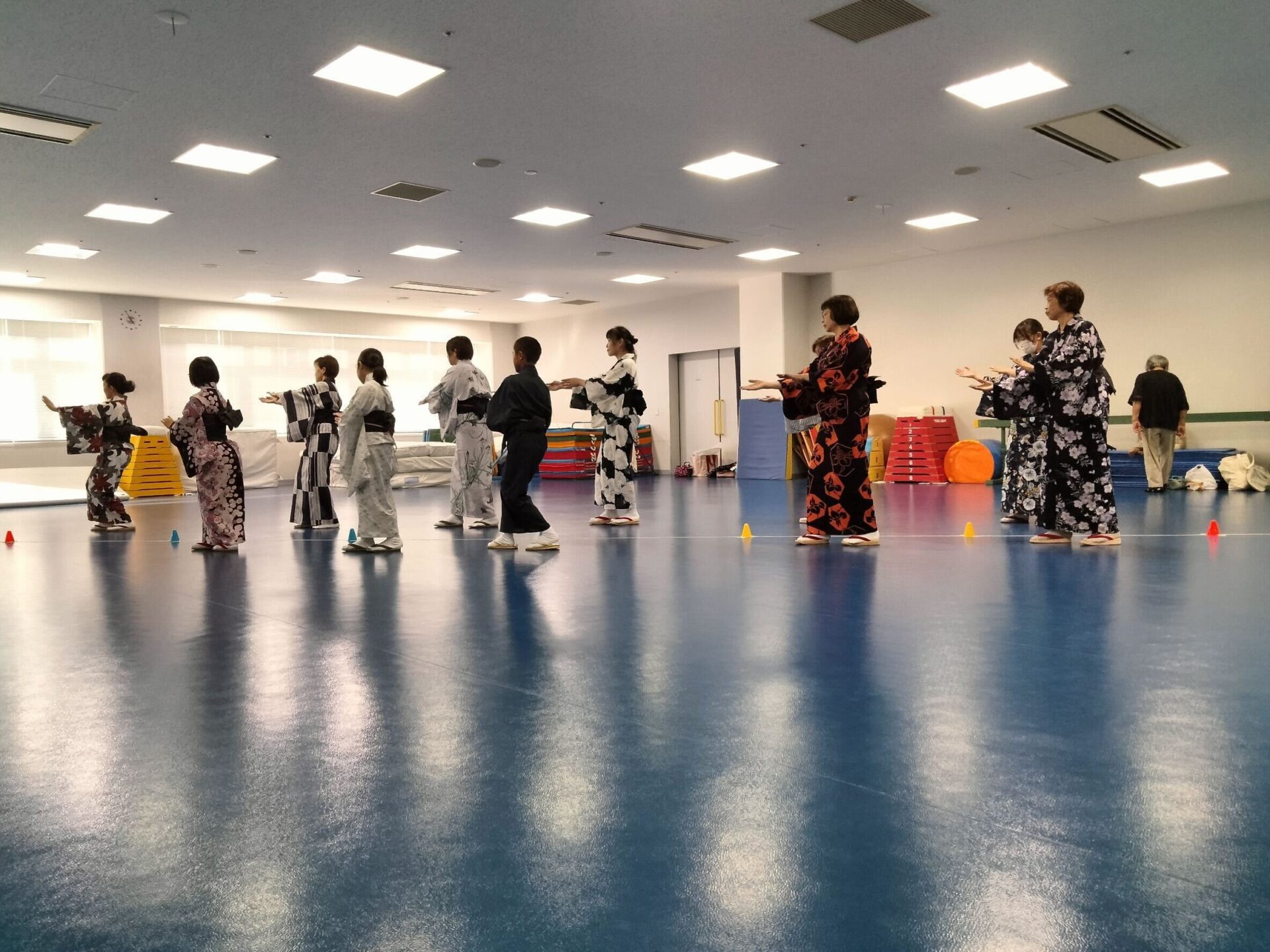
Some of the parade dancers are junior high school students from Shimotsui. You can see people of all ages dancing Shimotsui-bushi and passing it on.
The venues are the Shimotsui Shipping Agent Museum and the Shimotsui Townscape Preservation District. Both places retain the atmosphere of a traditional fishing town, so the songs and dances of Shimotsui-bushi will make you feel as if you have traveled back in time.
Food vendors will also be there, so you can enjoy festival food while watching Shimotsui-bushi.
This is the first time Shimotsui Yoiakari is being held. We spoke with Tsunoto Yukari of the Shimotsui Yoiakari Organizing Committee about what inspired the event.
Interview with Tsunoto Yukari
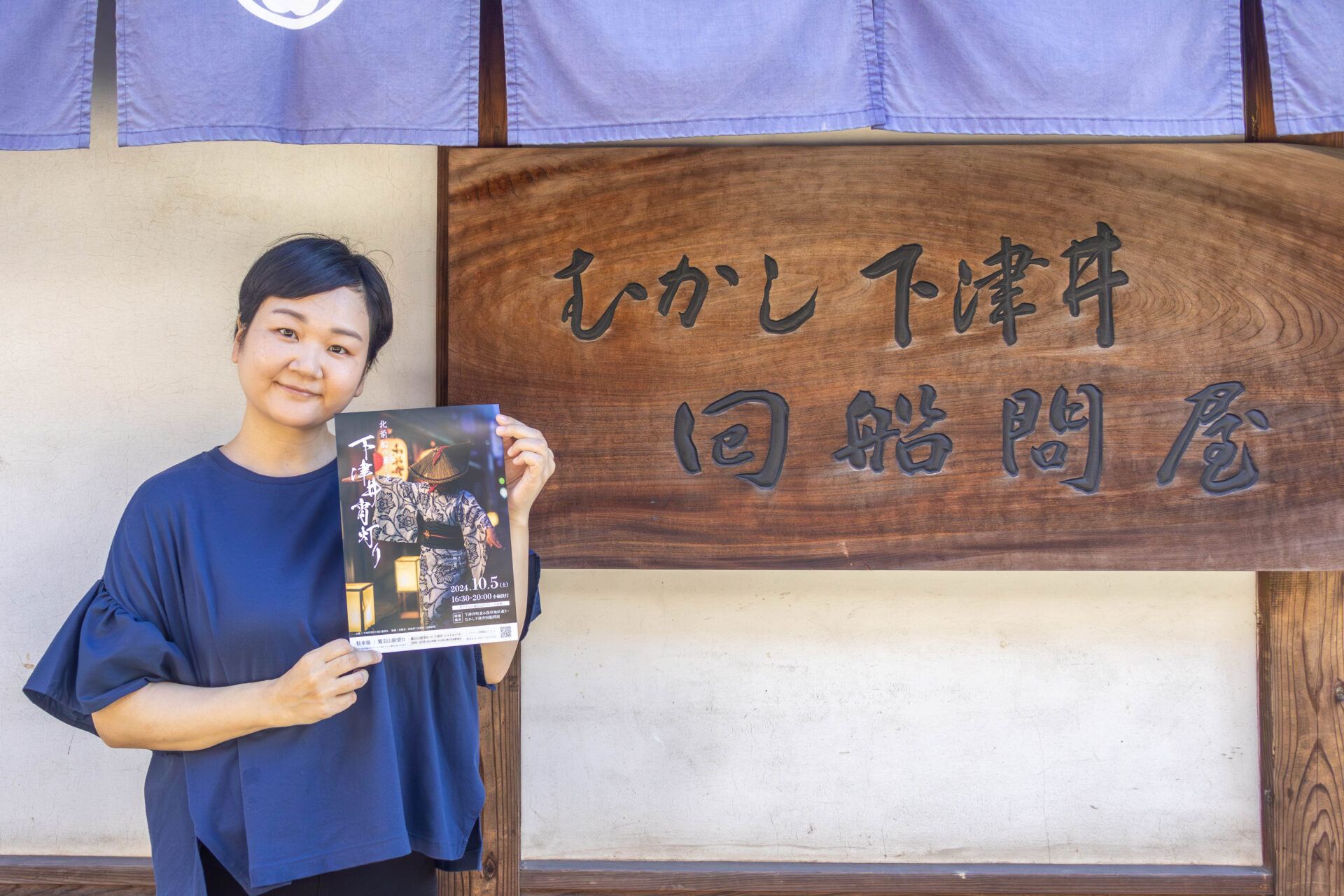
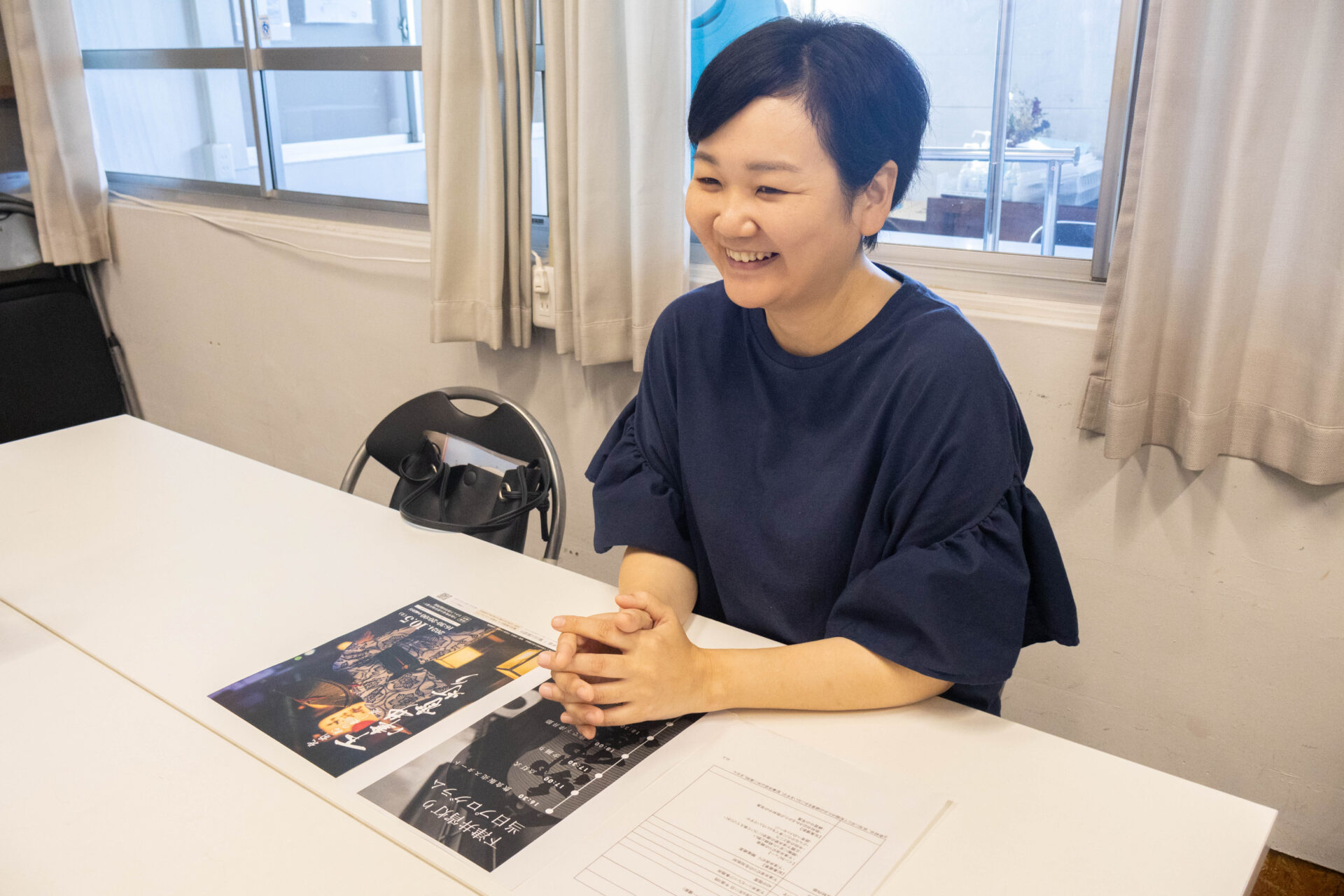
Tsunoto Yukari, the person who initiated Shimotsui Yoiakari, is from Tsuyama City, Okayama Prefecture. She is a folk singer who won the 25th National Shimotsui-bushi Contest, held in 2010.
Tsunoto says she entered the world of folk music at age 18, and the first song her teacher taught her was Shimotsui-bushi.
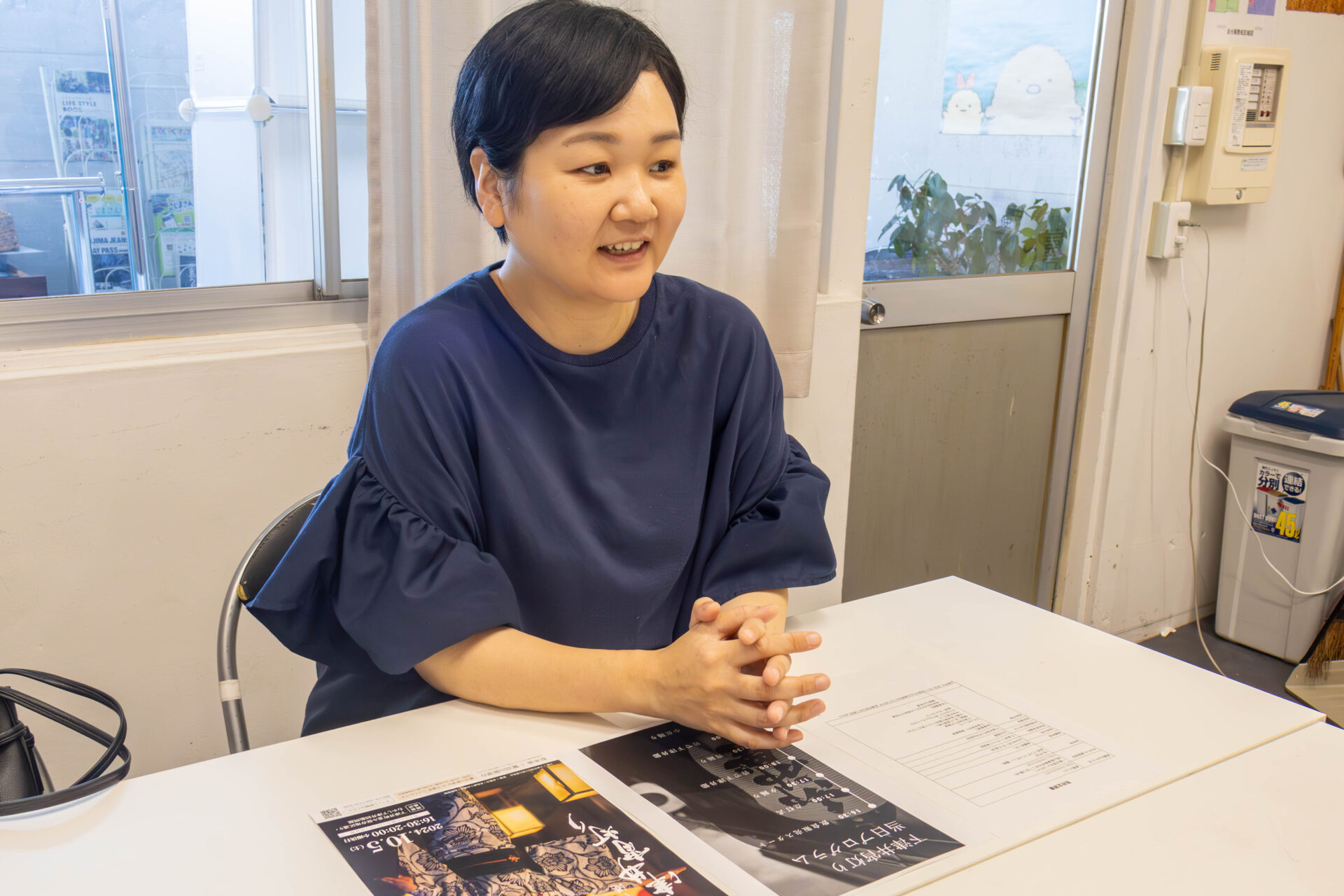
How did you come up with the idea for Shimotsui Yoiakari?
Tsunoto (surname only)
I love traveling, and I’ve visited festivals and traditional local events all over Japan.
Wherever I went, I noticed that there are fewer people carrying on these traditions nationwide, and more and more communities are at risk of losing their traditional events and culture. The people who have been at the heart of preserving them are also getting older. They were working hard despite facing the ongoing uncertainty of whether they would be able to continue the following year.
Seeing this situation made me wonder, “What is my role? What can I do?” The first thing that came to mind was to pass Shimotsui-bushi, which had always been close to me, on to the next generation.
There are festivals throughout Japan where people dance in the streets, such as Owara Kaze no Bon in Toyama Prefecture. Inspired by festivals like these, I planned this event, where people dance Shimotsui-bushi through the streets.
Shimotsui has a townscape preservation district that retains the atmosphere of its historic port town, so I wanted to make use of the district to introduce people to Shimotsui-bushi.
When I shared the idea with people in Shimotsui—“What do you think about dancing Shimotsui-bushi through the streets?”—I was happy that they encouraged me, saying, “That sounds great” and “We’ll support you!”
Did people in the community feel the same way about these challenges?
Tsunoto
I think people who live in Shimotsui are lively and enjoy a bustling atmosphere.
Still, the population inevitably keeps declining, and there are fewer young people. I think everyone is grappling with the question of how to sustain the community. Perhaps for that reason, people were open to seriously considering ideas from outside the area.
I came from outside the area myself, but when I proposed Shimotsui Yoiakari, someone said, “Thank you for bringing energy to Shimotsui.” I was grateful and thought, “They really see it that way!”
Folk music is my specialty, so I’m working to pass on Shimotsui’s culture and traditions through folk music. It seems to me that people in different fields are each thinking about how to make Shimotsui a sustainable community.
The lyrics of Shimotsui-bushi have been passed down since the Edo period. Is the choreography also traditional?
Tsunoto
For this event, we’ll perform the oldest choreography still passed down, which was created about 80 years ago. I believe there was dancing during the era when the Kitamaebune ships brought prosperity, but the choreography itself has not been passed down to the present day.
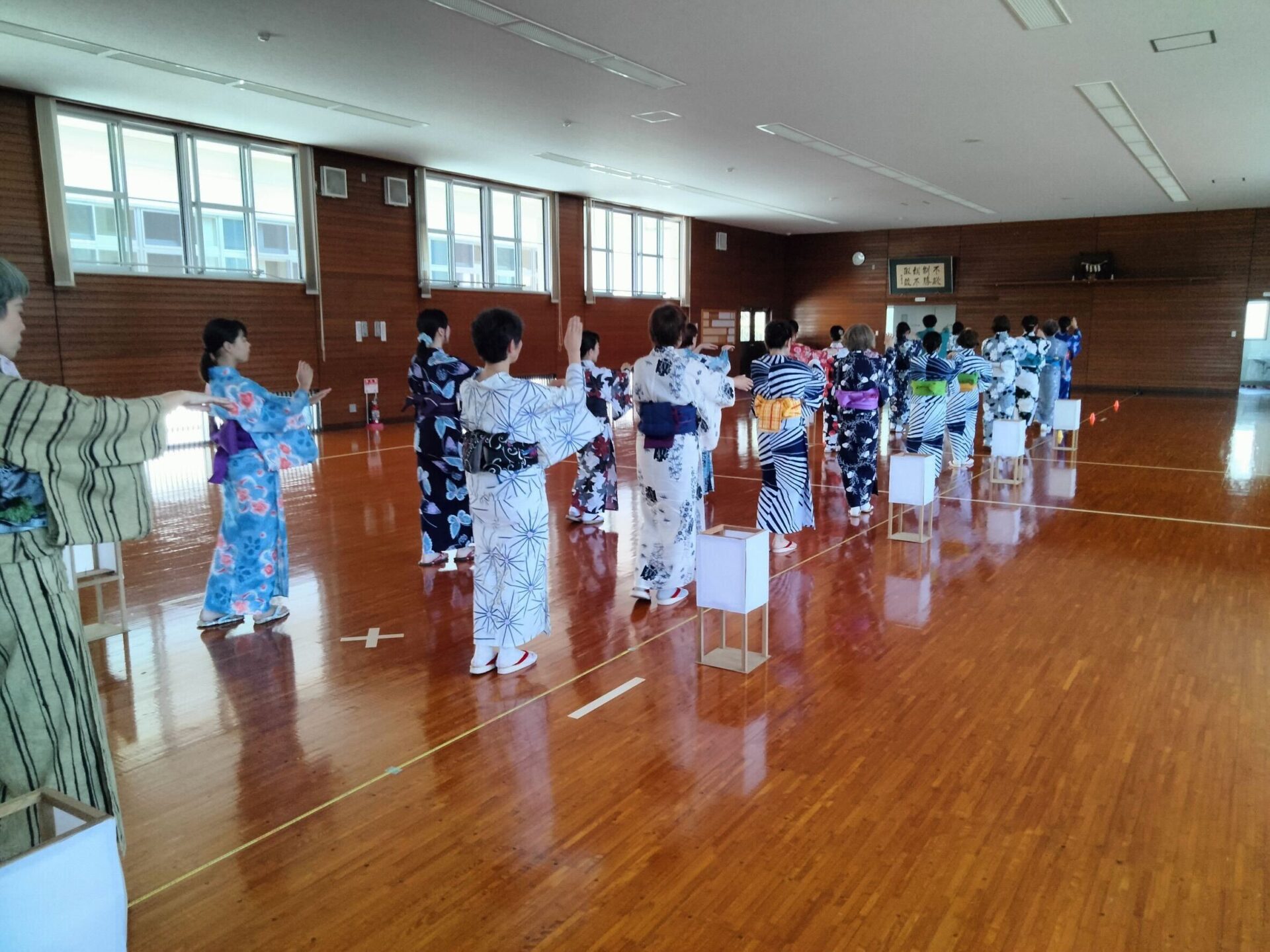
I’ve heard that people used to dance Shimotsui-bushi whenever they gathered, such as for school sports days and Bon dances. But opportunities to dance it dwindled, and until quite recently, only five people could dance it properly. Even when opportunities were created to teach the dance, it was difficult to keep them going.
Some of those five people have passed away, and others are elderly and can no longer dance because of problems with their legs. I felt that we were at the very last moment to pass it on. This time, I resolved that we would make sure to preserve the dance, and we’re receiving instruction in the choreography from those among the five who are still physically able. Those who can no longer dance also give us verbal advice on our dancing.
The people who taught me about Shimotsui-bushi are passing away one after another, which makes me feel sad and concerned. But for now, I’ll learn everything I can. I’d be happy if we could convey, even a little, that we’ve done our very best to pass on both the dance and the song.
What are some highlights of the event?
Tsunoto
Every movement in the Shimotsui-bushi dance has meaning, making it one of a kind. I think it will be a rare performance that you can only see here.
As for the staging, we’re paying particular attention to the andon lanterns. That’s because the lyrics of Shimotsui-bushi include the line “The light of the town’s lanterns beckons,” and we want to set out lanterns to evoke, even a little, the atmosphere of the bustling port town of that time.
People dancing in the glow of the lanterns, with the songs of Shimotsui-bushi heard all around… I hope we can recreate a dreamlike space that makes you feel as if you’ve traveled back to Shimotsui of that time, even if just for one night.
Who would you like to come to the event?
Tsunoto
I especially hope people from Shimotsui will come. We’ve been preparing for a long time, so you might think, “So this is what they were getting ready for,” or “They really worked hard.” I’d be happy if you came and watched over us warmly.
Also, if anyone who sees Shimotsui Yoiakari this year would like to take part next year, I hope you’ll join us in building it together. As we hold it for a second and third year, I hope people’s affection for Shimotsui-bushi will grow stronger year by year.
I think people naturally gather when the local community is having fun and full of energy. Rather than Shimotsui Yoiakari itself drawing people in, I hope it will be an event where the local people enjoying the festival attract new people.
Do you have a message for our readers?
Tsunoto
I think many people have some idea of Shimotsui as a port town. But that’s not all there is to Shimotsui. I hope you’ll discover new things to love about Shimotsui through Shimotsui Yoiakari.
This festival is one step toward promoting Shimotsui-bushi. Even after Shimotsui Yoiakari is over, I’d like to hold dance practice sessions regularly and increase the number of dancers. I also want to work on promoting the songs and shamisen.
I want to nurture the next generation of people involved with Shimotsui-bushi, so if you’re interested, let’s pass it on together.
Come to Shimotsui Yoiakari and see what we can do!
From the Writer
During the interview, Tsunoto told me, “In the old days, folk song lyrics varied depending on who was singing. Some people even sang lyrics they made up on the spot.” I think these songs became established in their communities and were passed down because so many people freely adapted and sang them over a long period of time.
We rarely get the chance to hear folk songs in our everyday lives, but if Shimotsui Yoiakari is held every year, Shimotsui-bushi may one day become something familiar to us.
I’m looking forward to seeing Shimotsui-bushi performed in the dreamlike space lit by lanterns. I’d also love to try “Shimotsui-bushi for Everyone,” which anyone can join.
Please come along to the first-ever Shimotsui Yoiakari.
Shimotsui Yoiakari Information
| Name | Shimotsui Yoiakari |
|---|---|
| Date | Saturday, October 5, 2024 4:00 p.m. to 8:00 p.m. *If canceled due to severe weather, postponed to Saturday, October 12 |
| Location | Shimotsui Townscape Preservation District Street and Shimotsui Shipping Agent Museum |
| Website | Shimotsui Yoiakari Instagram |


What would you like to know about Kurashiki?
Enter a search term to find articles on this site