In Kurashiki City, a volunteer training course called Sign Language Volunteer Training Course is held every year.
In recent years, it has become so popular that it reaches capacity on the first day of registration.
One of the places where people who want to learn sign language gather is a sign language circle.
There are six sign language circles in Kurashiki City, which belong to the Kurashiki City Sign Language Circle Liaison Council (referred to as "City Sign Council"). This year (2024) marks its 40th anniversary.
I will report on the discoveries and learnings from the commemorative lecture held to celebrate the 40th anniversary of the City Sign Council.
What is the Kurashiki City Sign Language Circle Liaison Council?
The Kurashiki City Sign Language Circle Liaison Council (hereinafter referred to as "City Sign Council") is a gathering of sign language circles active in Kurashiki City.
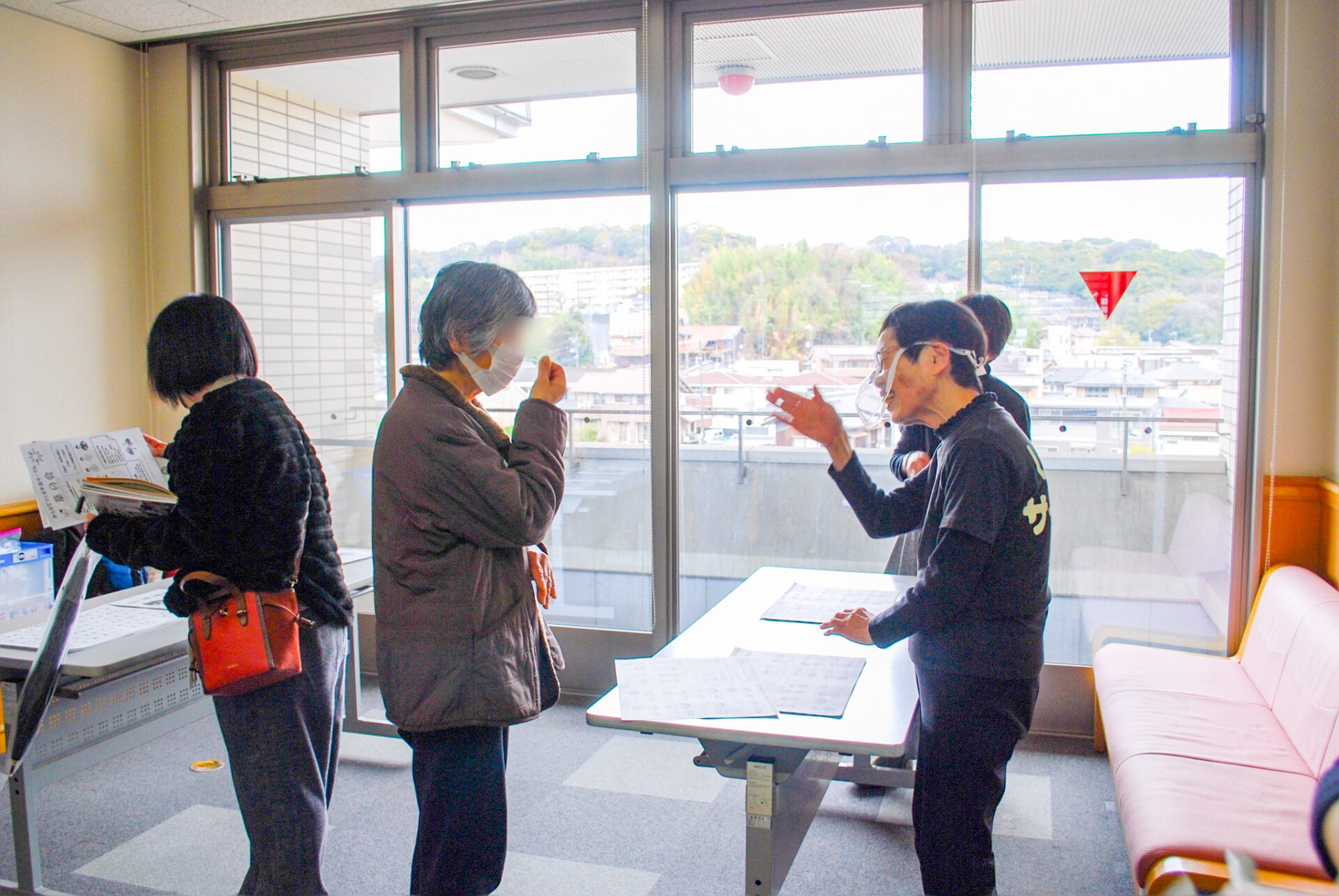
Currently, the following six organizations are members.
- Kusanokai Sign Language Circle
- Kura Sign Language Circle
- Kojima Sign Language Circle
- Tamashima Sign Language Circle
- Nishiachi Sign Language Circle
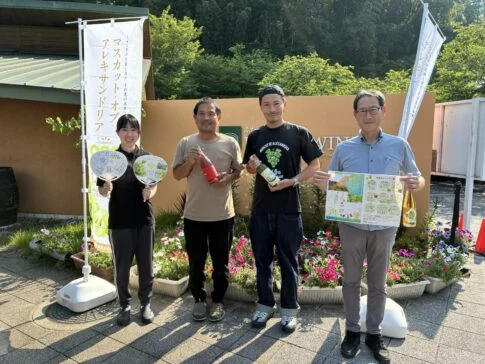
- Funao Sign Language Circle Muscat
Recently, due to the influence of television dramas, sign language has been appearing more frequently, and it seems that the number of members in the sign language circles belonging to the City Sign Council is increasing year by year.
The City Sign Council exchanges information related to sign language while working hand in hand with organizations of hearing-impaired individuals, and regularly holds events using sign language.
What is the Kurashiki City Sign Language Circle Liaison Council 40th Anniversary Commemorative Lecture?
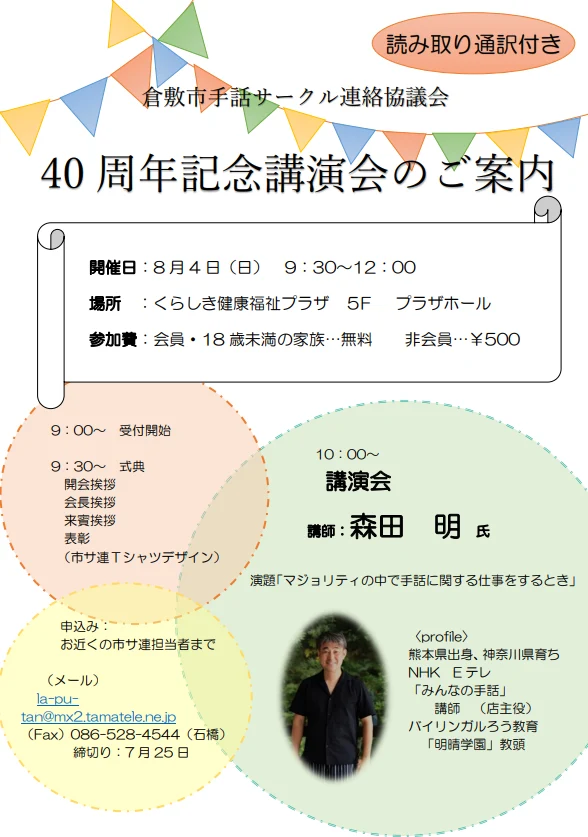
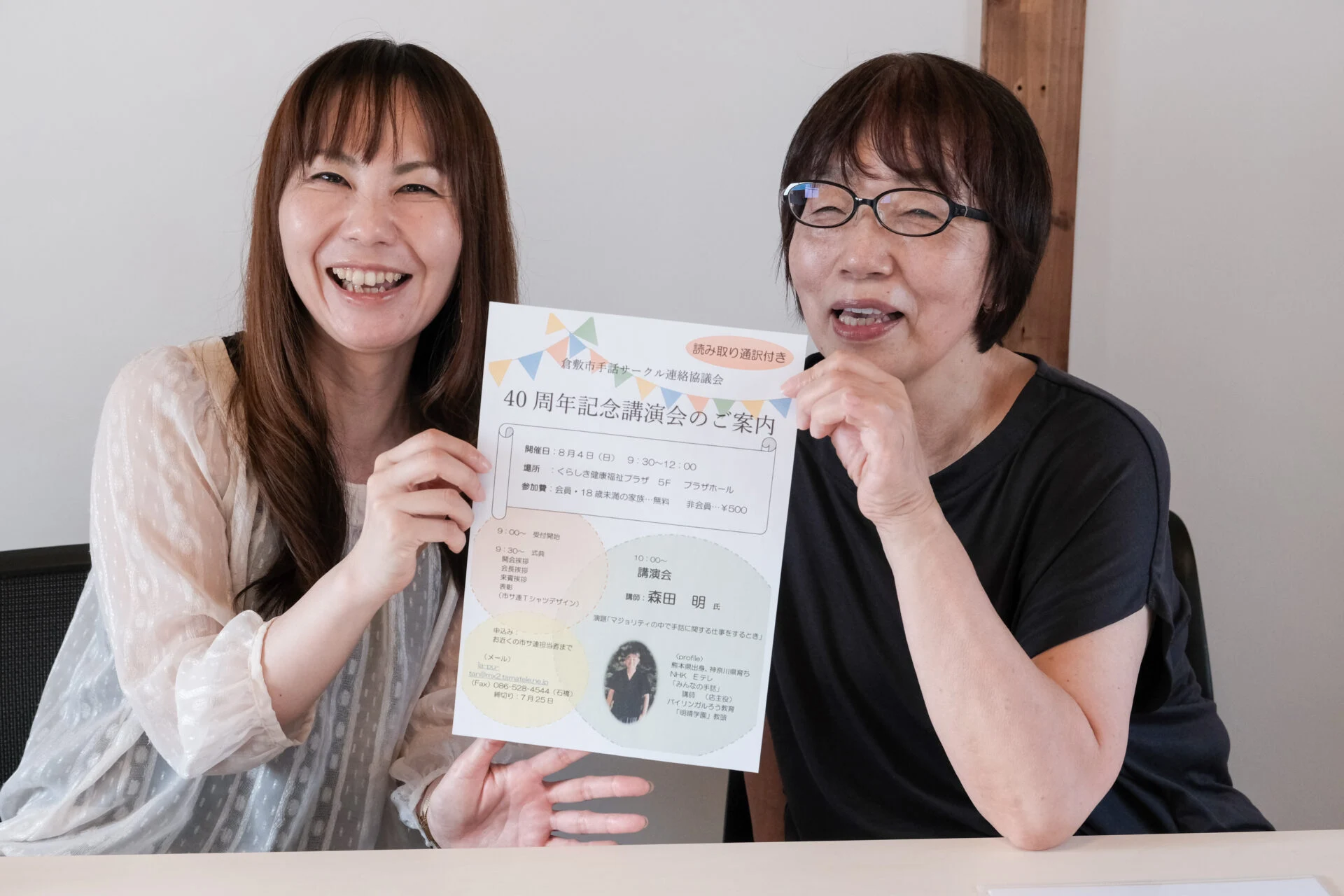
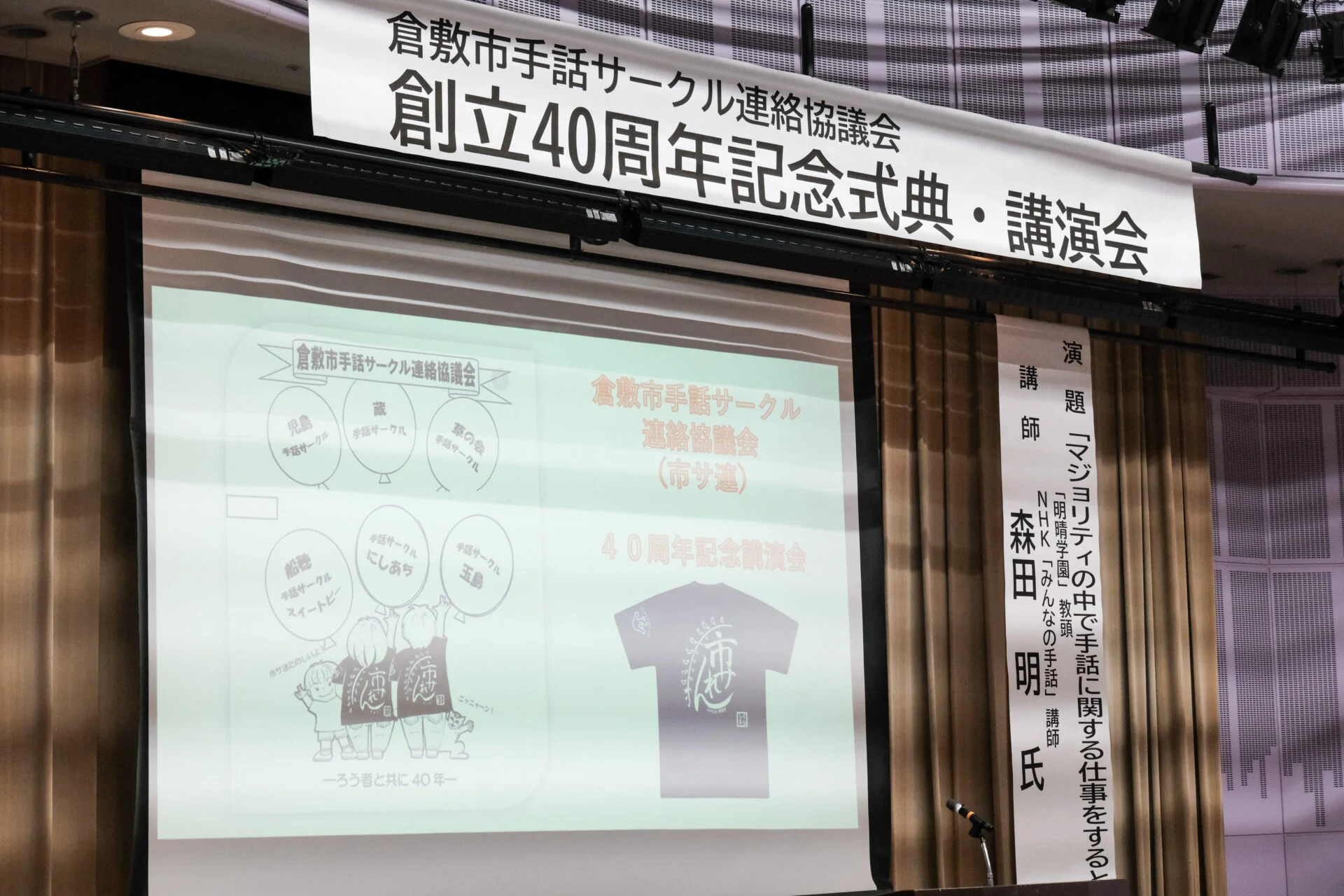
On August 4, 2024 (Sunday), the 40th anniversary commemorative lecture hosted by the City Sign Council, which is a gathering of sign language circles active in Kurashiki City, was held at the Plaza Hall of the Kurashiki Health and Welfare Plaza.
The speaker for the commemorative lecture is Akira Morita, the vice principal of Meisei Gakuen, the only school for the deaf in Japan that educates in Japanese sign language, and who also appears on NHK E-Tele's "Minna no Shuwa."
For more details, please check the image below.
The Day's Events
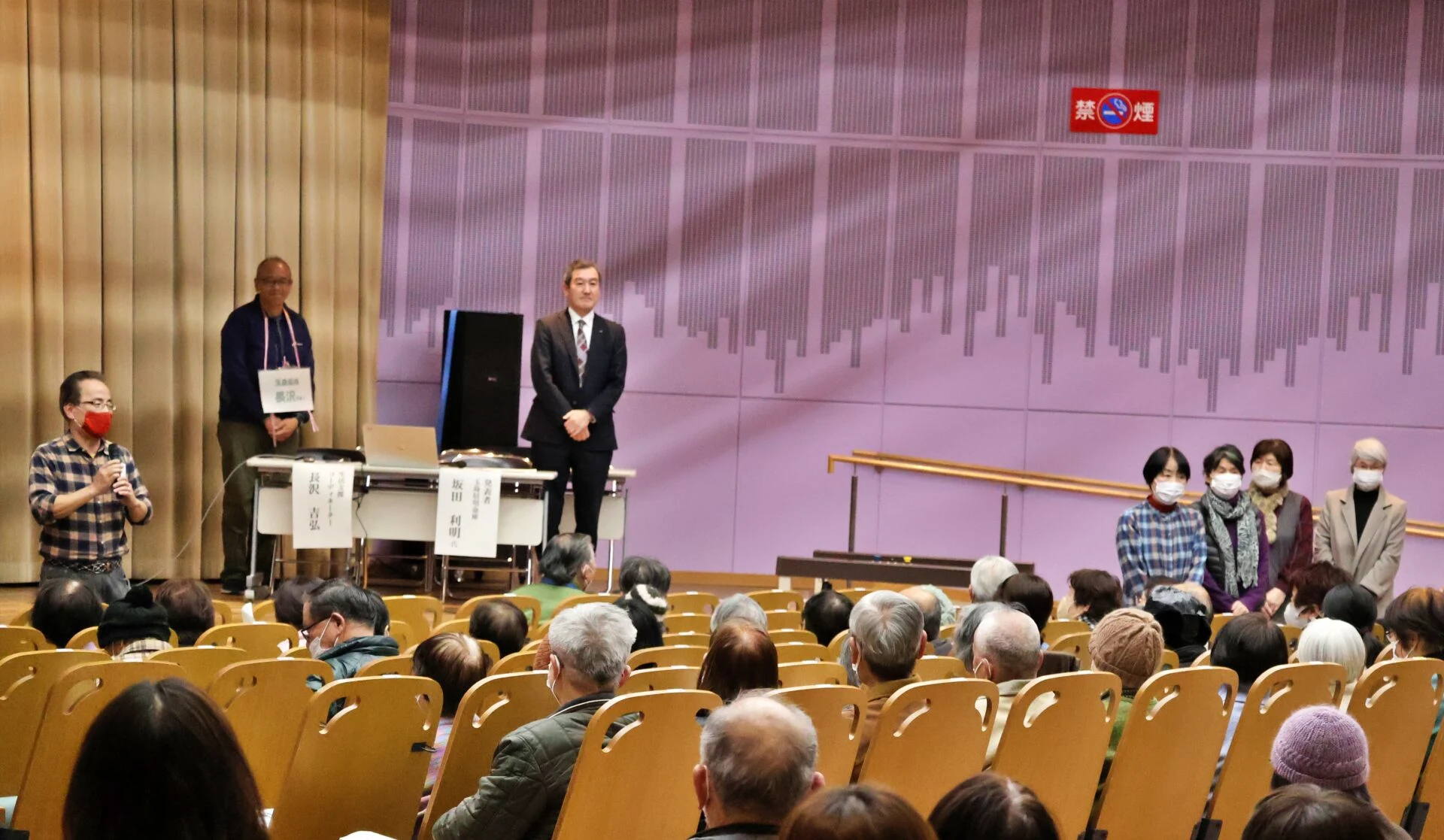
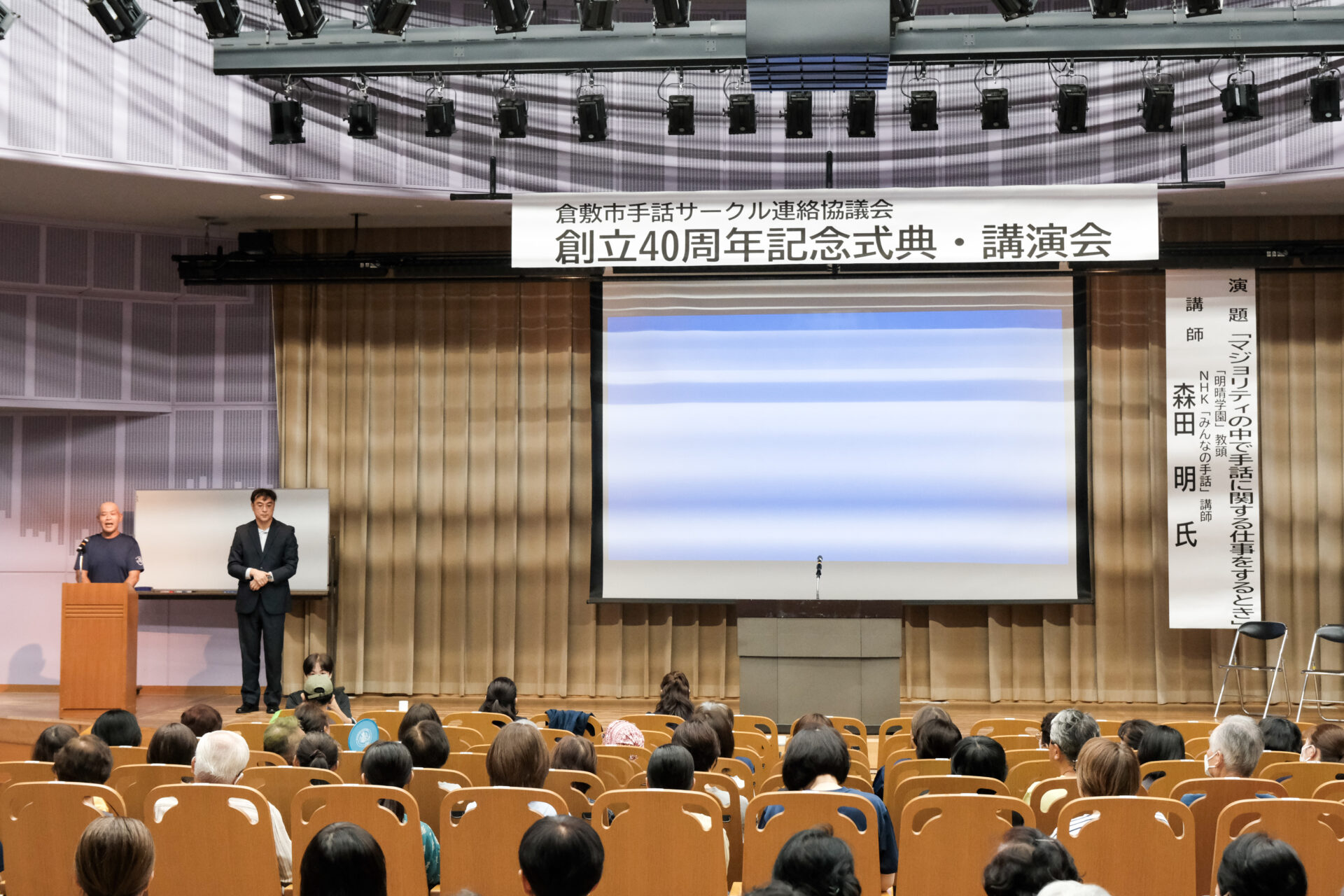
On the day of the event, not only members of the City Sign Council but also a wide range of people, including hearing-impaired individuals living or working in Kurashiki City and general participants interested in the commemorative lecture, visited the Plaza Hall. About 70% of the seats in the Plaza Hall were filled, indicating a great turnout.
Mr. Morita, the speaker for the commemorative lecture, is a deaf person who uses sign language as his first language. The anticipation in the venue rises as Mr. Morita, who usually appears on television, comes to Kurashiki. His lecture is conducted in sign language, so a sign language interpreter is also on standby for those who may have concerns about understanding sign language.
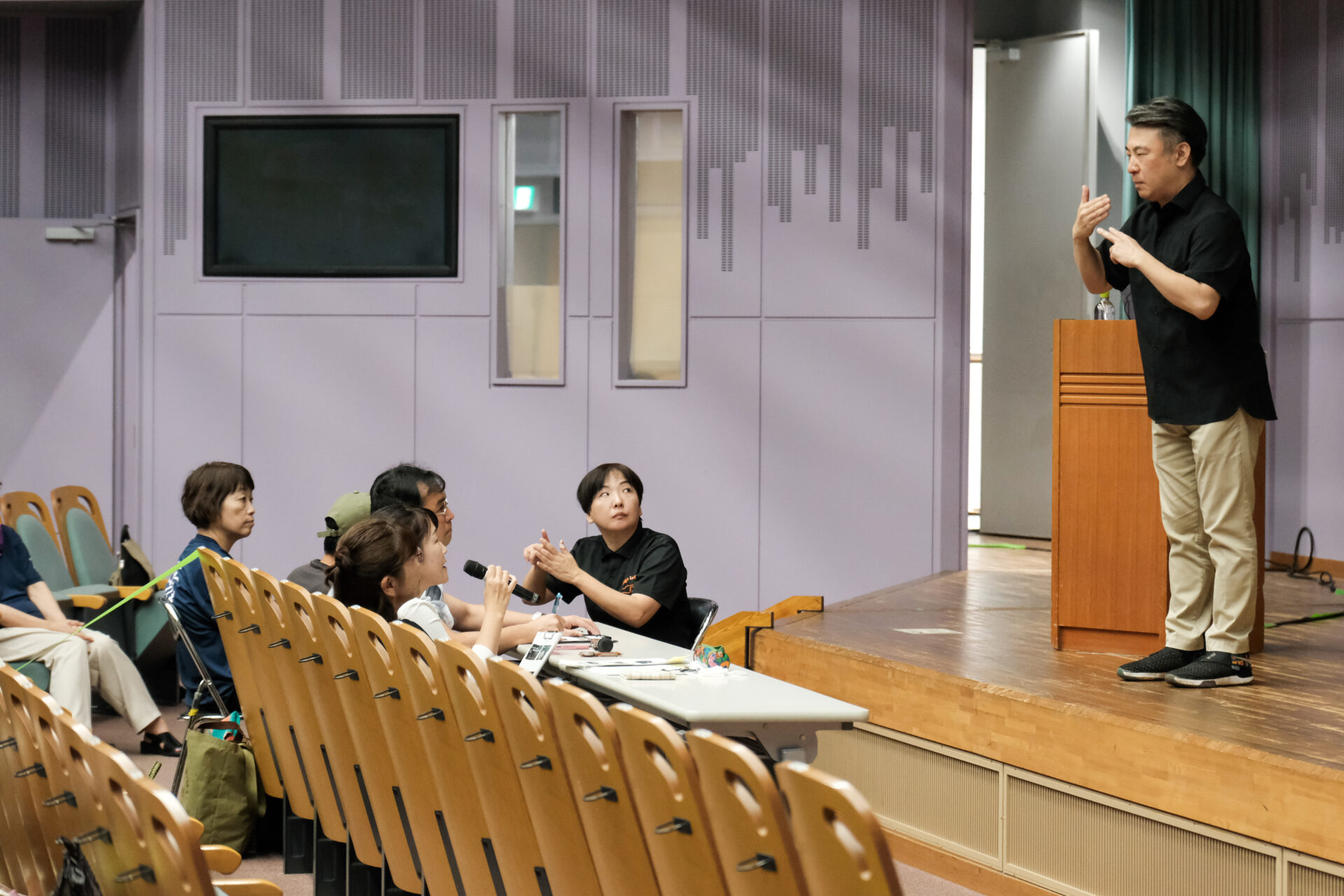
Sign language interpretation refers to interpreting sign language into spoken language. Since there are many unique expressions in sign language, it is a challenging task to interpret them into Japanese. On this day, one of the interpreters, whose parents are deaf, mentioned, "I am nervous about whether I can interpret into Japanese that everyone can understand."
For the hearing-impaired in Kurashiki City, the City Sign Council is the closest good understanding partner
At the beginning of the meeting, the president of the Kurashiki City Association of the Hearing Impaired, which participated as a guest, stated in his greeting, "Sign language circles are the closest good understanding partners for hearing-impaired individuals."
Sign language is an important language for hearing-impaired individuals to think and convey their thoughts, but it is not understood by everyone. In daily life, they often communicate in Japanese through lip reading (a method of understanding speech by reading the shape of the speaker's mouth) or writing, adapting to the majority of hearing individuals. However, for some hearing-impaired individuals, Japanese may be a second language, making it difficult for them to convey their thoughts accurately.
In sign language circles, regardless of whether one can hear or not, experiences of being able to communicate freely in sign language are shared, and they expressed to the City Sign Council members their hope to be a bridge between hearing-impaired individuals and hearing individuals.
The City Sign Council and the Kurashiki City Association of the Hearing Impaired regularly participate in each other's events and deepen their exchanges. As a result, many of them are familiar with each other, and at the lecture venue, it was common to see hearing City Sign Council members and hearing-impaired individuals joyfully catching up after a long time.
Original certificate made of denim fabric from the City Sign Council
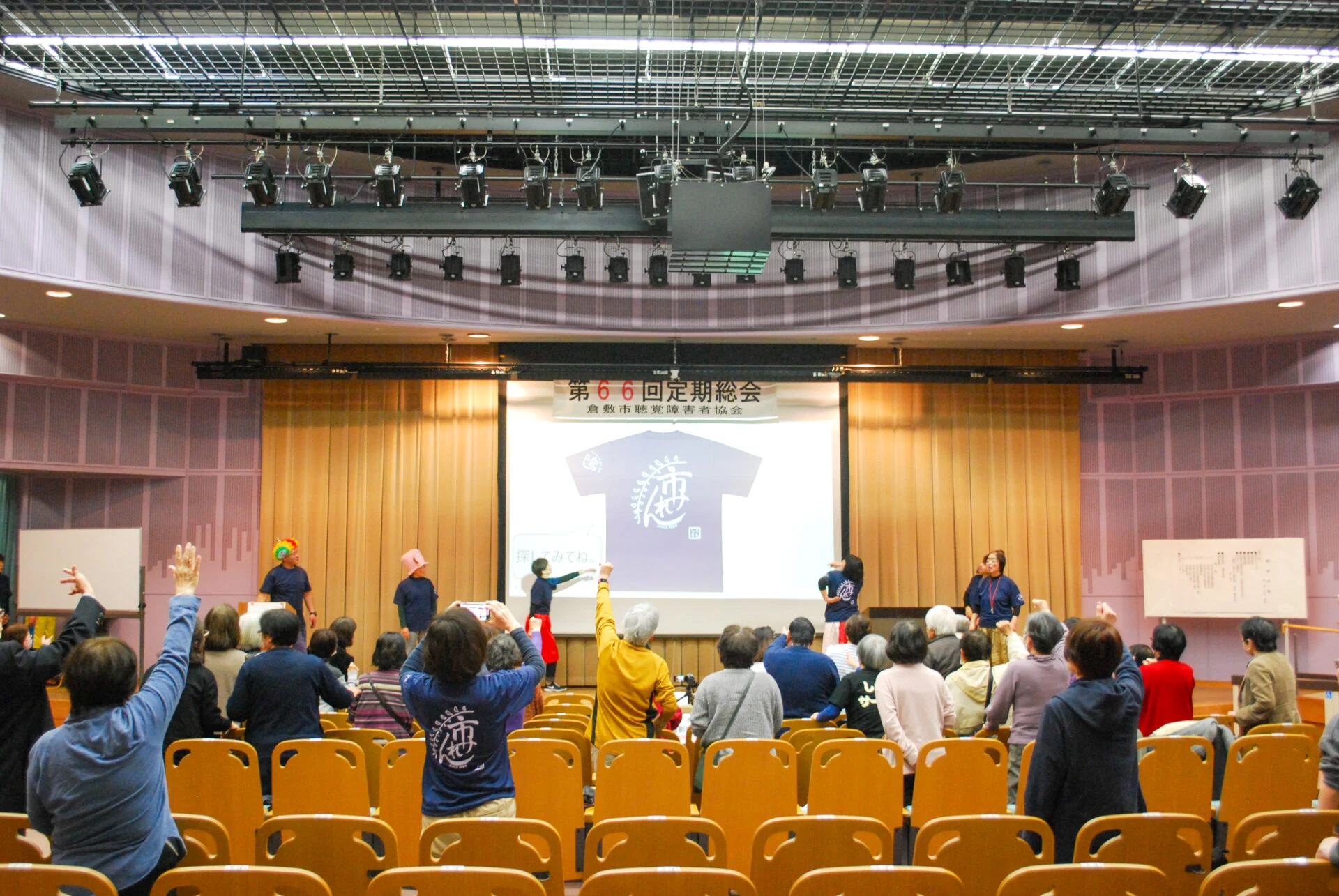
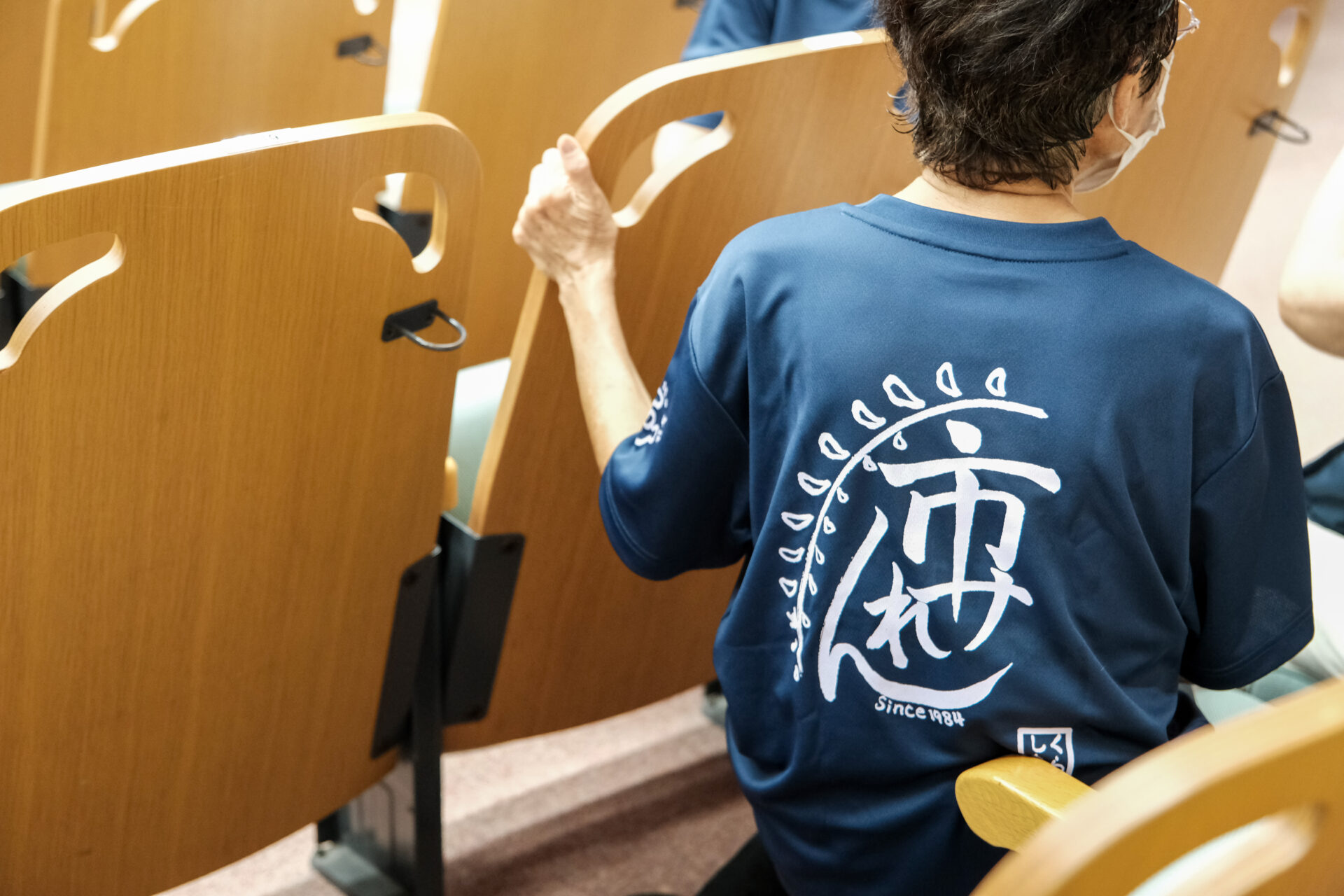
To commemorate the 40th anniversary, the City Sign Council created matching T-shirts, which they wear like uniforms at City Sign Council events. The design of this T-shirt was decided through suggestions from the members of the City Sign Council. In conjunction with this commemorative lecture, the designer was introduced, and a certificate and commemorative gift were presented to the designer from the City Sign Council.
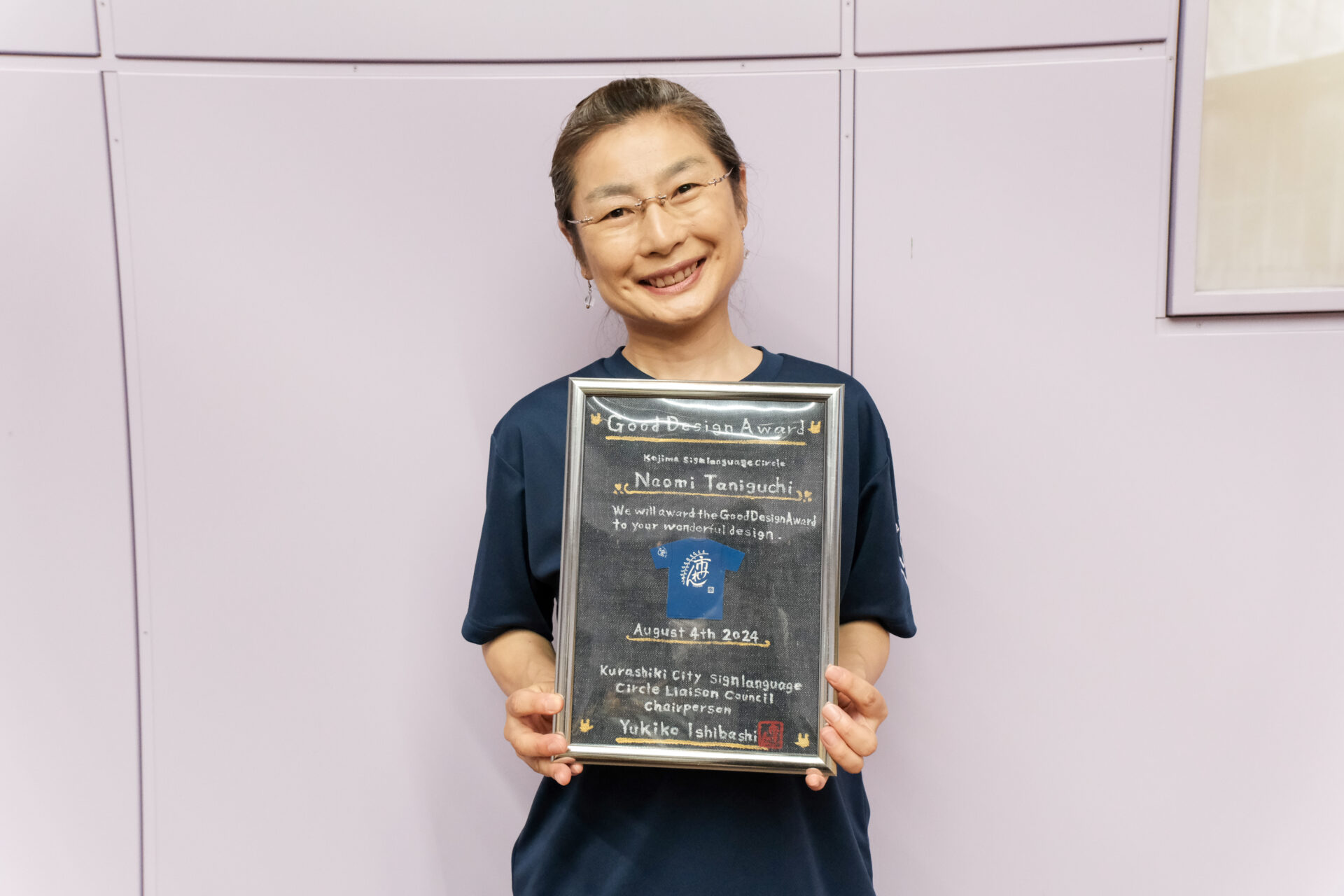
The certificate is made of denim fabric, a specialty product of the Kojima area in Kurashiki City. The awardee expressed, "I want to send a certificate to the person who designed this certificate too!"—a stylish certificate.
You can see the City Sign Council T-shirts at sign language-related events in Kurashiki City. Please look for them.
When working with sign language in the majority
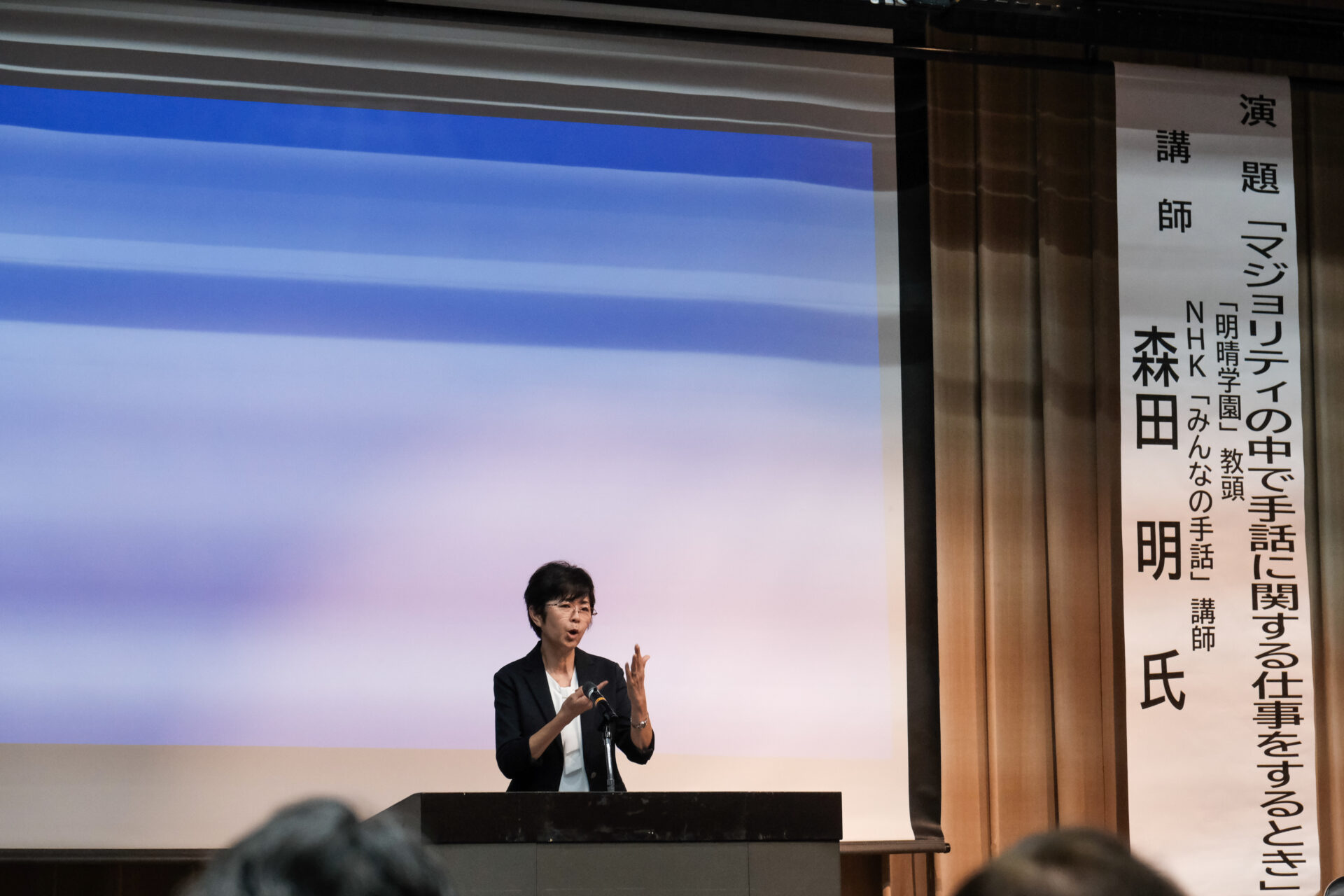
Finally, we have the much-anticipated commemorative lecture by Akira Morita.
The title is "When working with sign language in the majority."
Mr. Morita takes pride in being a deaf person who uses sign language as his first language.
Deaf individuals who use sign language as their first language are a minority in a world where hearing individuals are the majority. Therefore, when sign language is portrayed in the media, he is conscious of the inheritance of sign language without giving the impression to hearing individuals that "hearing-impaired people = pitiful."
This way of thinking is not only applied when working in the media among the majority but is also kept in mind in his educational activities as the vice principal at Meisei Gakuen, a private school for the deaf.
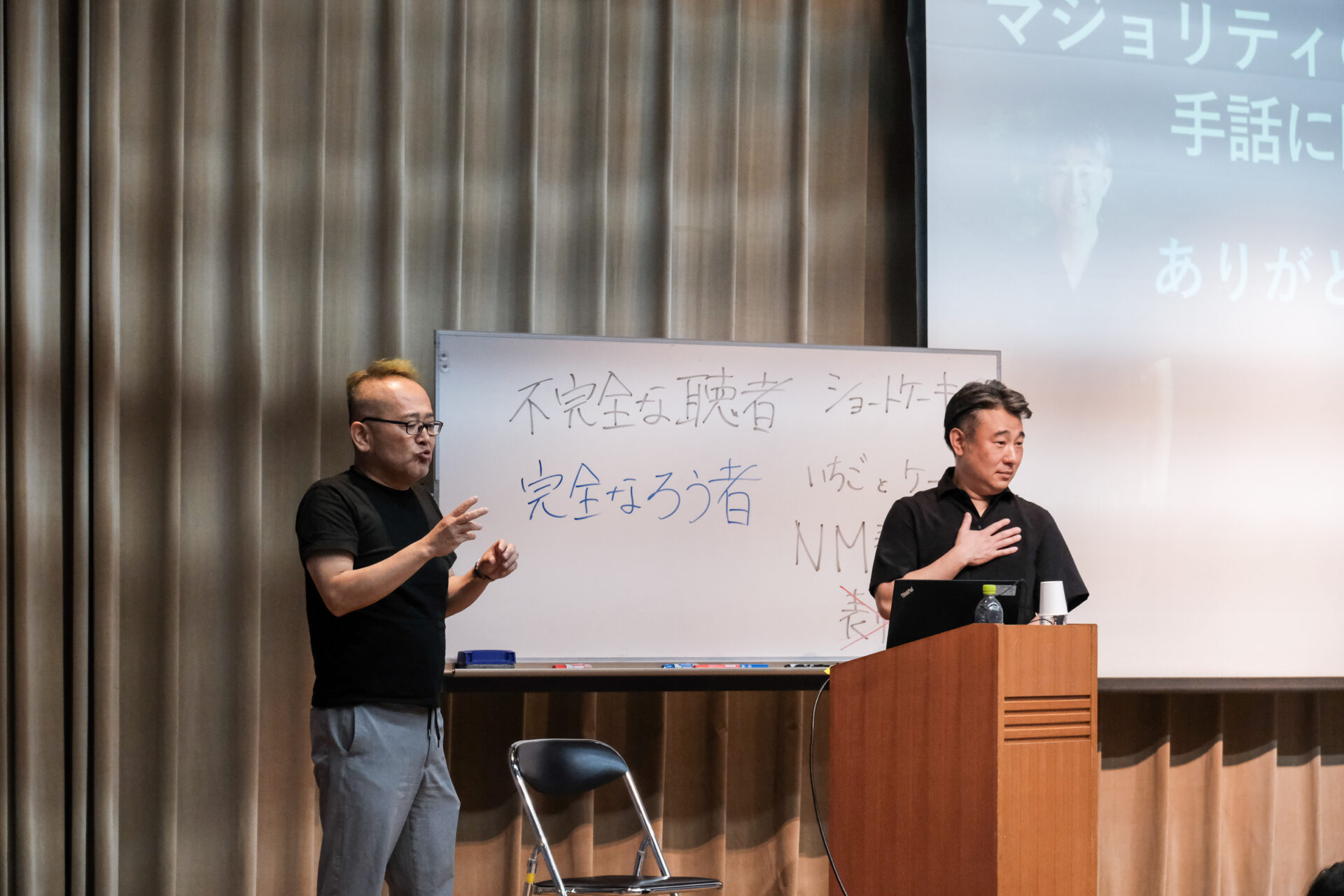
Mr. Morita's consistent thought has permeated not only the children and students but also the hearing teachers working at the school, and it was evident from the introduction of video materials that "just as hearing individuals speak in spoken language, English speakers speak in English, deaf individuals speak in sign language. It's just that, so we are not pitiful," and that all children feel pride in being able to use sign language as their first language.
Additionally, he proposed unique self-expression through sign language, such as wordplay and sign language poetry that cannot be expressed in Japanese.
Jokes and wordplay are enjoyable at the moment when the connections in one's mind come together, and even if you hear an explanation later, it rarely leads to the same laughter as in real-time. Similarly, the humor in sign language wordplay can also be diminished when interpreted.
In the venue, those who could speak sign language without translating Mr. Morita's sign language into Japanese often laughed, while hearing individuals, who are usually in the majority, sometimes found themselves lagging behind in the conversation.
As a hearing-impaired person myself, I can understand Mr. Morita's sign language without translating it into Japanese. Therefore, I enjoyed the wordplay in real-time and was continuously surprised by the different expressions. On the other hand, I was concerned that hearing participants were not laughing in the same way.
However, after the lecture, a hearing participant told me, "It was a valuable opportunity to understand a little bit of how hearing-impaired individuals feel when they cannot keep up with our conversations," and I realized that it was a lecture that both hearing and hearing-impaired individuals could enjoy from different perspectives.
Conclusion
I am a hearing-impaired individual who moved to Kurashiki from the Kanto region in December 2023. Initially, I had no friends or acquaintances in Kurashiki City who could use sign language, but as I visited sign language circles belonging to the City Sign Council, I am gradually expanding my circle of friends and acquaintances with whom I can communicate in sign language.
Since both hearing-impaired individuals and those who can communicate in sign language are minorities, I am supported by the time I can freely communicate with someone in the sign language circle. I hope that the activities of the City Sign Council and the hearing-impaired individuals in Kurashiki City will continue to expand.
Data on the Kurashiki City Sign Language Circle Liaison Council 40th Anniversary Commemorative Lecture
| Name | Kurashiki City Sign Language Circle Liaison Council 40th Anniversary Commemorative Lecture |
|---|---|
| Date | August 4, 2024 (Sunday) 9:30 AM - 12:00 PM (Registration: 9:00 AM -) |
| Location | 180 Sasao, Kurashiki City, Okayama Prefecture |
| Participation Fee (including tax) | Free for members of the Kurashiki City Sign Language Circle Liaison Council and family members under 18 Non-members: 500 yen |