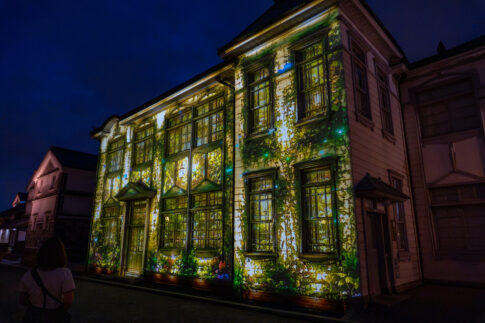
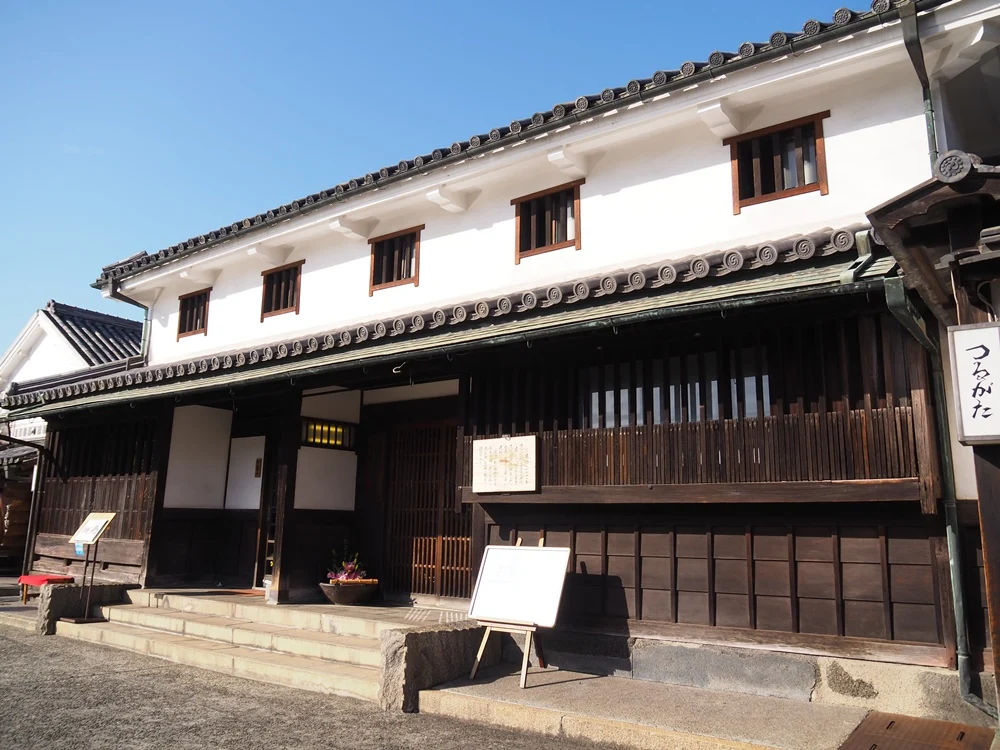
White-walled buildings lined along Kurashiki River in the Bikan Historical Area.
Although each building has its own characteristics, you are moved by the unified landscape.
Originally a storehouse, the buildings have been renovated into a ryokan (inn), dining establishments, and souvenir shops while maintaining their original appearance.
As you look at the buildings, a particularly tall pine catches your eye.
The pine tree, which is taller than the buildings and grows straight up, is at Tsuru-gata Dining.
Located in the center of the Bikan Historical Area, we covered the traditional Japanese restaurant "Tsuru-gata Dining."
History of the second oldest building in Kurashiki
The entrance to Tsuru-gata Dining has two options: the dining area "Tsuru-gata Dining" and the accommodation "Ryokan Tsuru-gata."
To the right is "Ryokan Tsuru-gata," and to the left is "Tsuru-gata Dining (hereafter, Tsuru-gata)."
You can use the dining service even if you do not stay at the ryokan.
The courtyard is surrounded by walls, so it cannot be seen from the outside, but a tall pine tree peeks out.
It is a magnificent pine tree that is taller than the two-story building.
It can be seen well from the street along Kurashiki River and from the Punting Boat Rides on Kurashiki River that leisurely glide along the river.
The boatman shares trivia and history about Kurashiki while rowing the boat, and the stories of Tsuru-gata and the pine tree often come up.
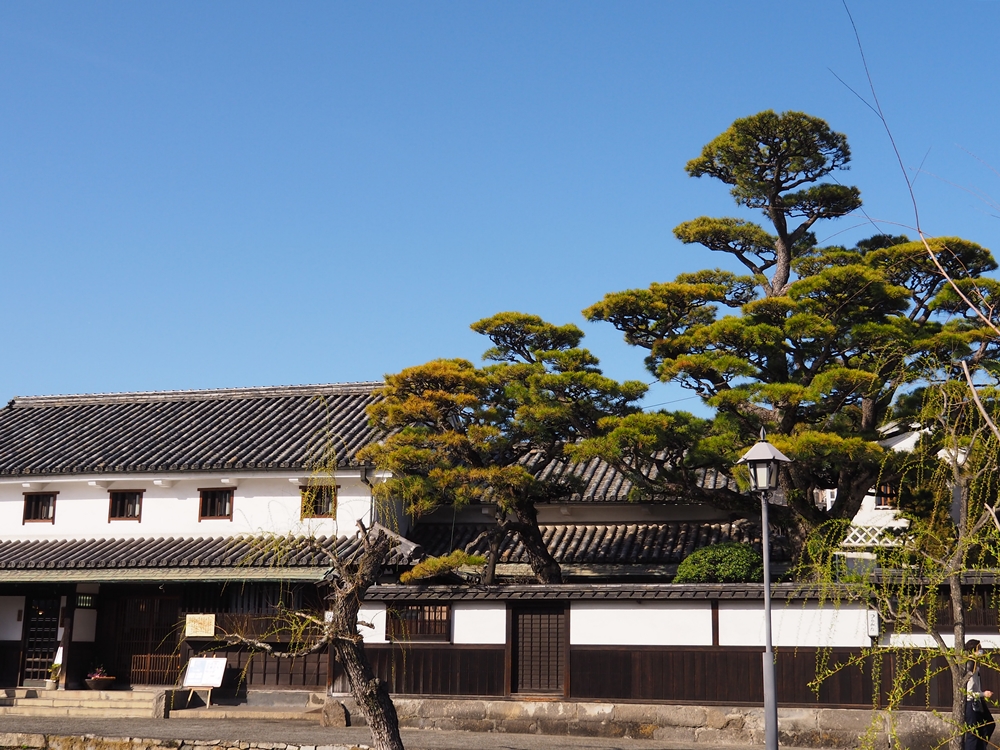
The tree is approximately 400 years old.
It has likely watched the changes in Kurashiki from high above.
The building of Tsuru-gata is younger than the pine, but it was still built in 1744 during the mid-Edo period.
What kind of year was 1744?
Upon researching, it turns out that Europe was in the midst of the War of the Austrian Succession, and in Japan, the main hall of Izumo Taisha Shrine was completed.
Even if it doesn't resonate much, it feels like a long time ago.
It is said to be the second oldest building in Kurashiki.
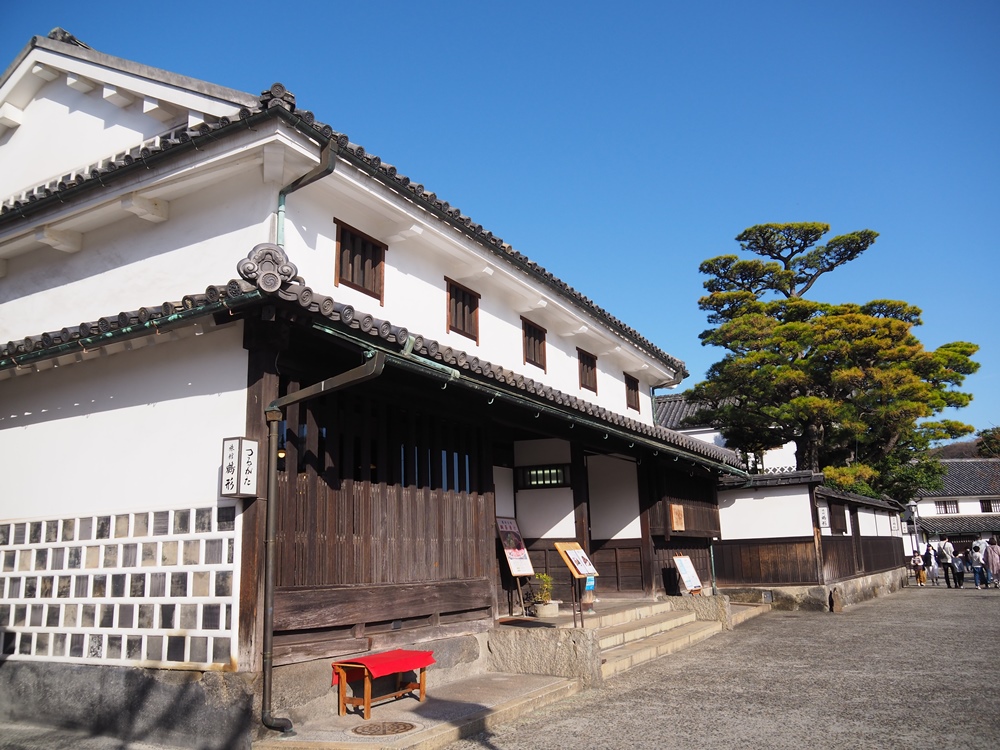
Until it was transformed into a ryokan and dining establishment in 1970, it was an oil wholesaler.
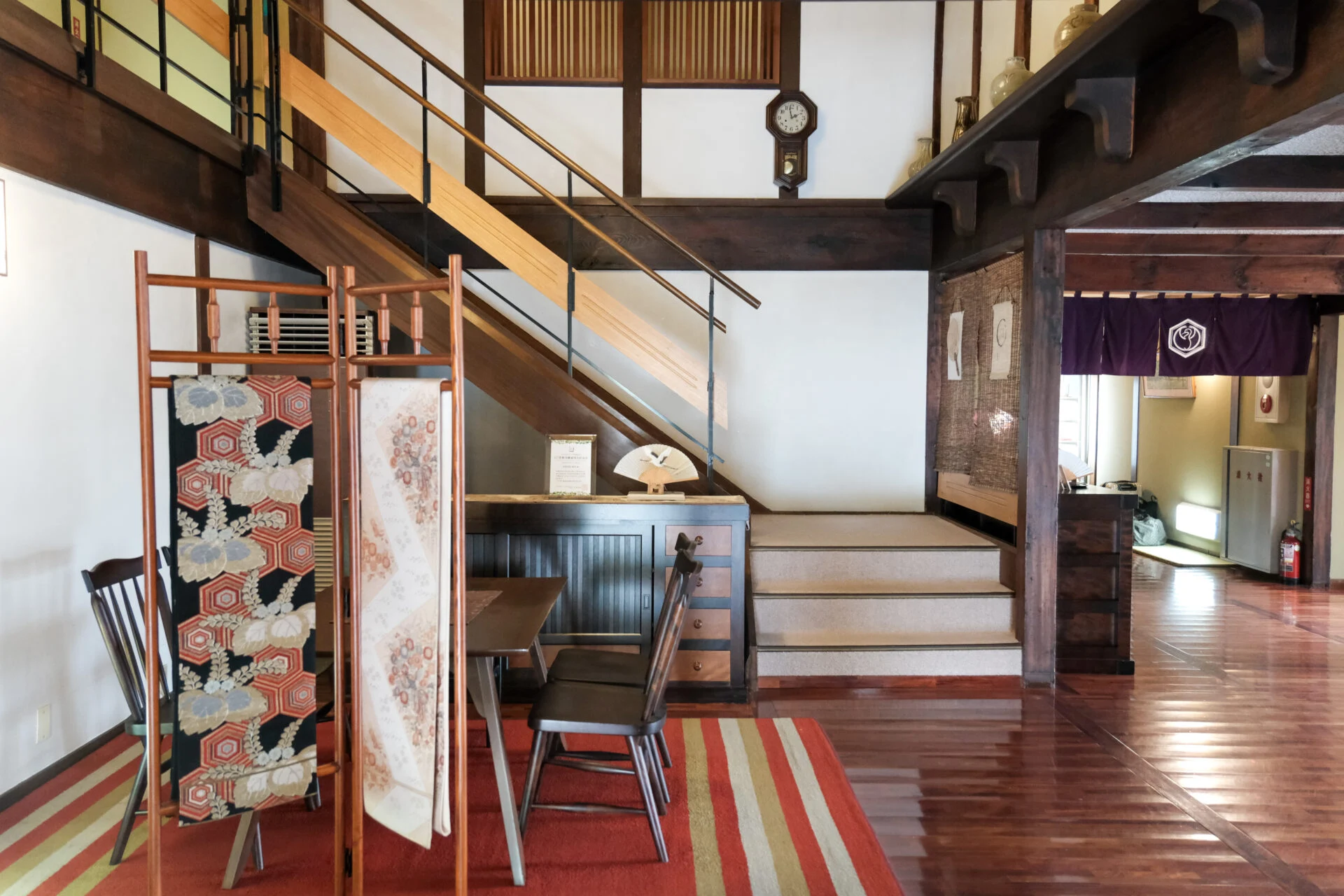
There are guest rooms that have been renovated from storehouses, and remnants of the warehouse can still be seen in the second-floor structure.
Due to minimal renovations, you can feel the history throughout.
Tsuru-gata's menu
If you are using the dining service only, please enter from the left entrance.
Although it is a Japanese restaurant, all seats are at tables.
In the center of the restaurant, there is a long table with four tables for four people, and one counter seat facing the street.
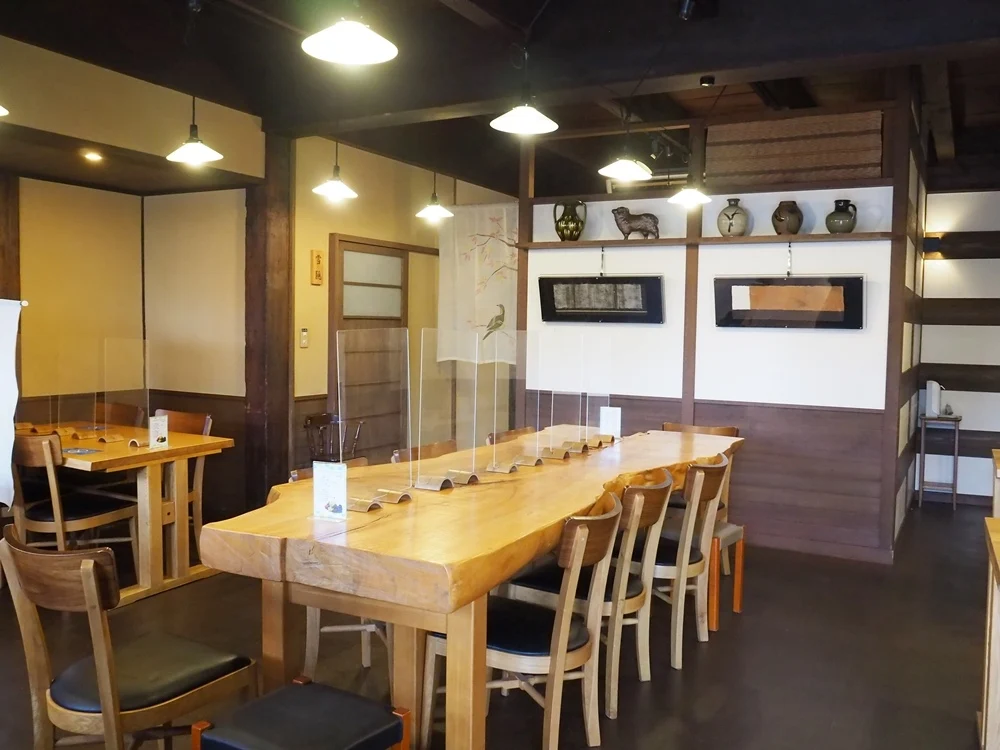
The menu is as follows.
Information as of April 2023 (Reiwa 5). Prices include tax.
Previously, they operated in three categories, including dinner, but as of April 2023, they are only serving lunch.
| Menu Name | Price (including tax) |
|---|---|
| Specialty Tai Chazuke | 1,900 yen |
| Domestic Beef Sukiyaki Hot Pot | 2,300 yen |
| Recommended Lunch Set: Tsuru-fu | 2,300 yen |
Specialty Tai Chazuke
The specialty menu of Tsuru-gata is, as the lunch name suggests, "Specialty Tai Chazuke."
What kind of image comes to mind when you hear "chazuke"?
In my case, I imagine a simple dish with white rice topped with rice crackers and pickled plum.
However, Tsuru-gata's chazuke is far from simple; it is luxurious!
It completely shattered my concept of chazuke.
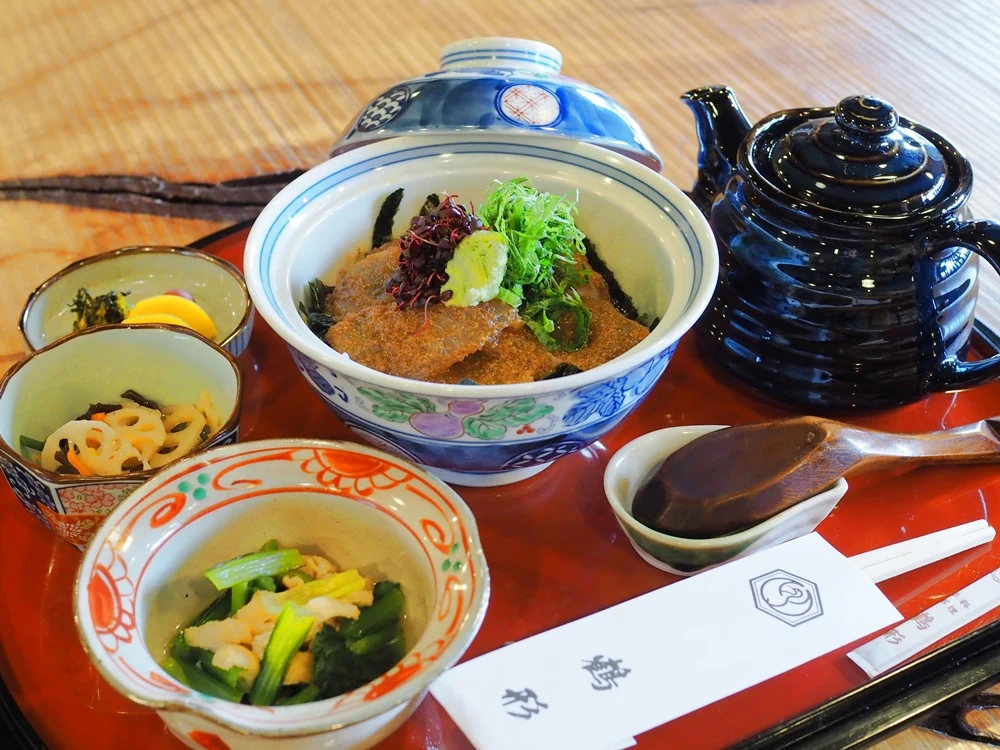
I was captivated by the mound of sea bream piled high in the bowl.
The sesame sauce is generously drizzled over the sea bream, and a savory aroma wafts through the air.
First, I took a bite without pouring any tea.
It resembles a sea bream sashimi bowl, and it's delicious enough to enjoy without the tea.
The large and thick sea bream pairs perfectly with the white rice.
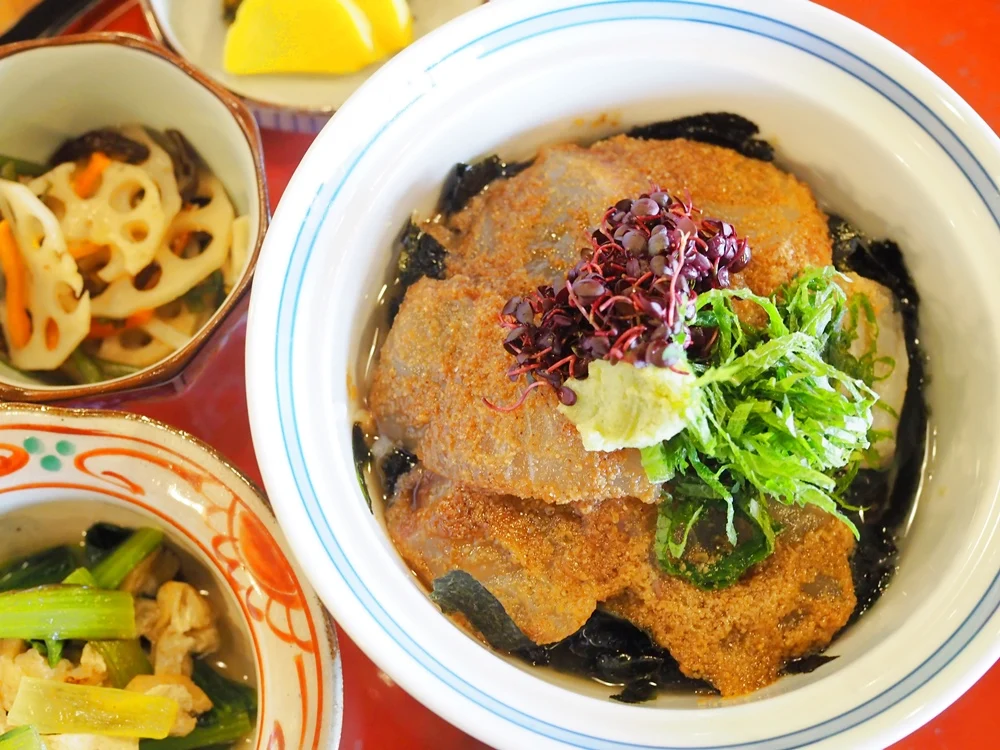
Next, I made it into a tea rice.
It is recommended to pour the tea over it and let it steep for a bit before eating.
Steeping makes the sea bream's flesh fluffy.
The flavors of the sea bream and sesame sauce dissolve into the tea, spreading throughout the bowl.
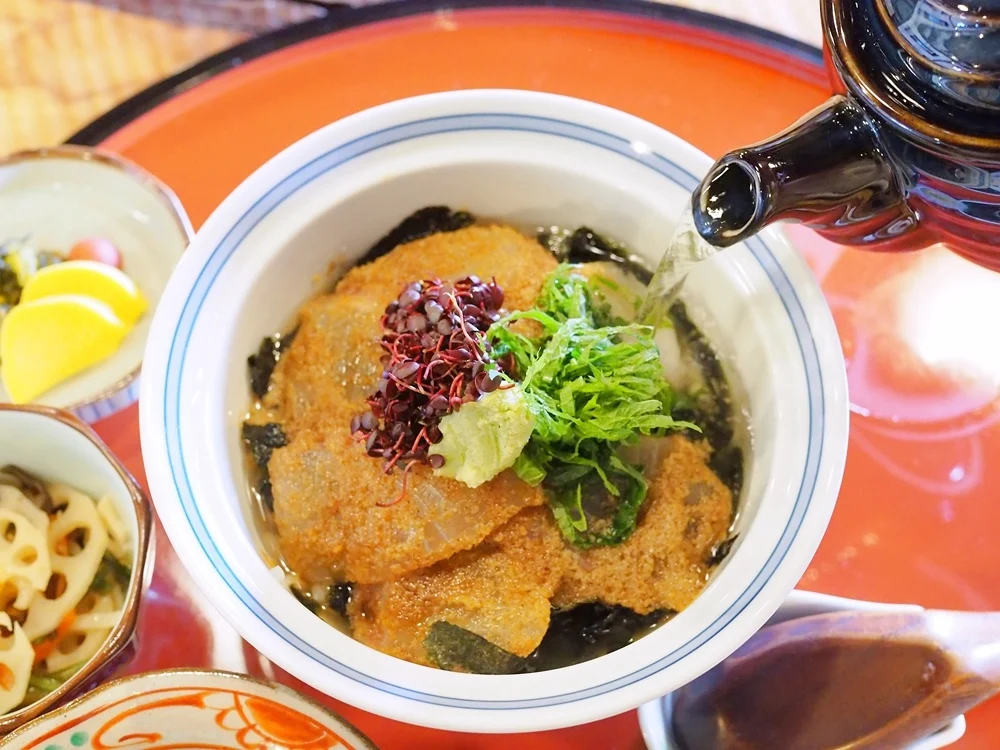
I enjoyed a luxurious tea rice that I had never eaten before.
With two side dishes and a soup, the tea rice goes down easily.
Domestic Beef Sukiyaki Hot Pot
The domestic beef sukiyaki hot pot arrives with a bubbling, appetizing aroma.
Udon noodles are already included in the iron pot from the start.
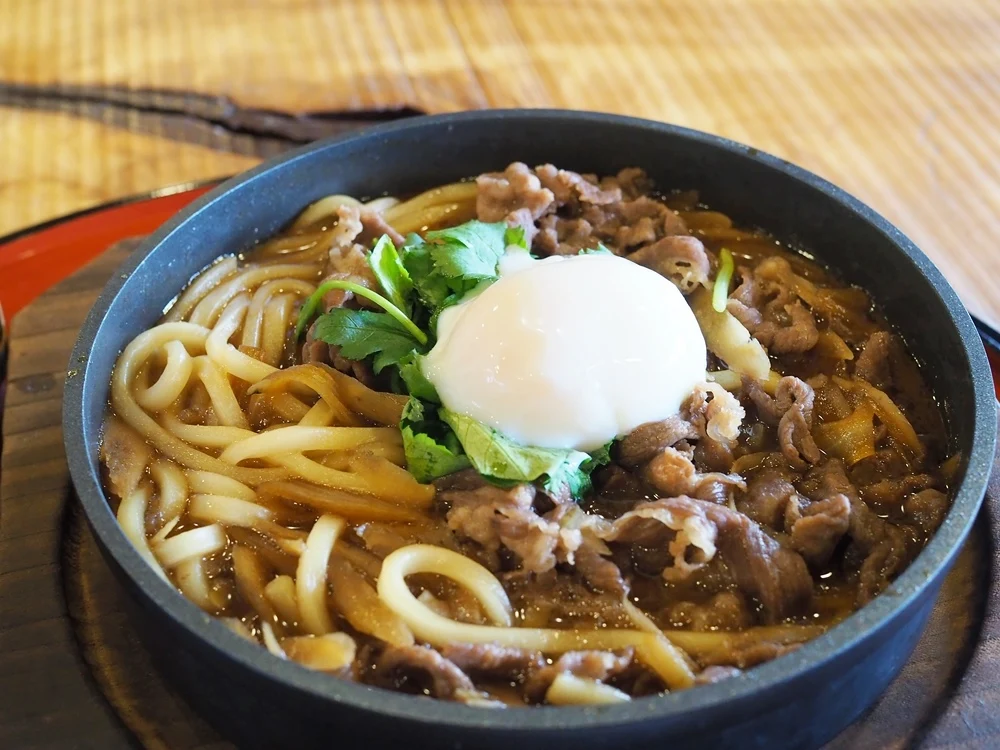
Tsurugata's sukiyaki style involves adding a soft-boiled egg later.
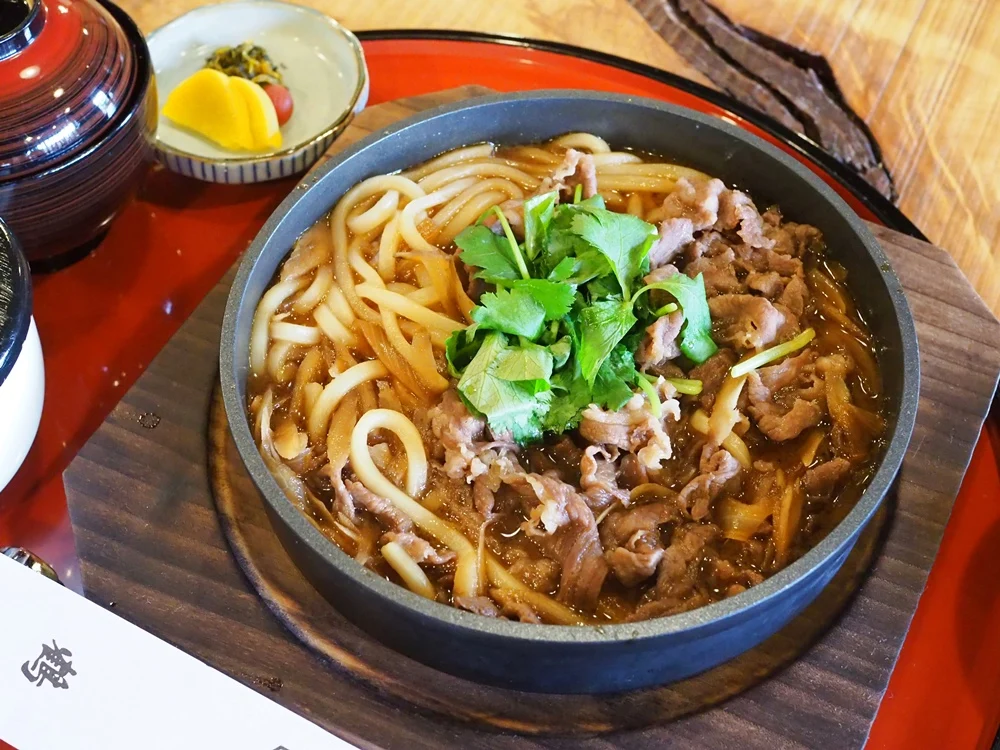
I learned for the first time that in my family's sukiyaki, we dissolve a raw egg and add the meat and other ingredients, while there is also a way to eat it with a soft-boiled egg on top.
Even without the egg, the sweet flavor of the sauce is well absorbed, so it's also recommended to eat it as is first.
After savoring it, feel free to add the egg at your preferred timing.
Recommended Lunch Set: Tsurufu
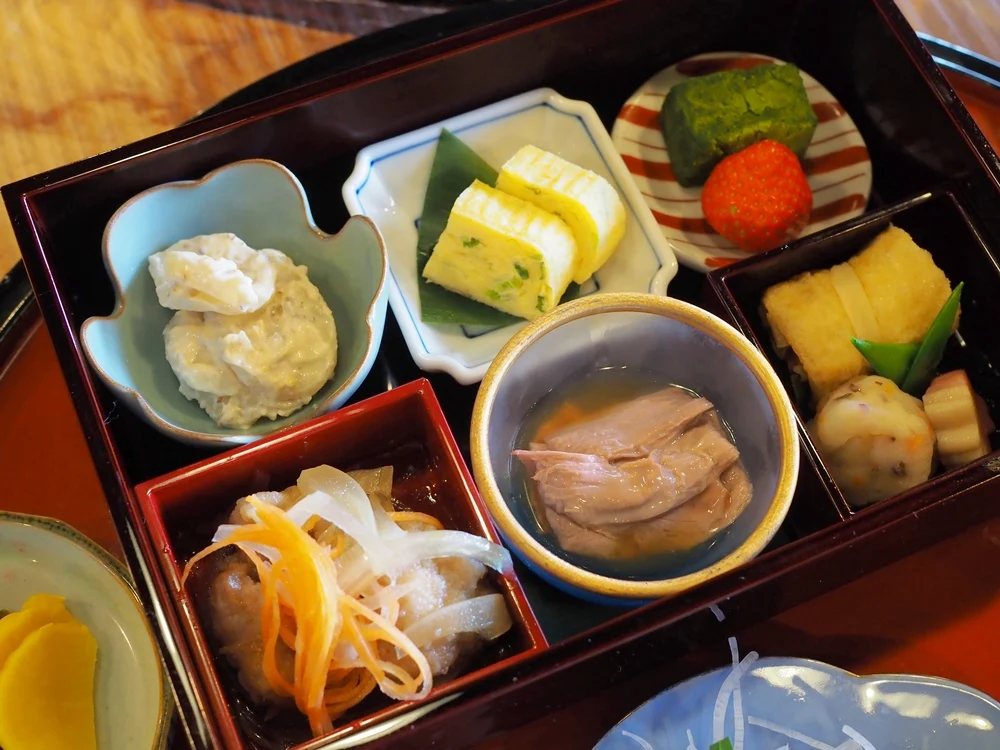
The "Tsurufu" menu changes with the seasons and includes sashimi, grilled dishes, and sweets.
It's recommended for those who want to try a variety of flavors in small portions.

▼ There are fried chicken nanban and stacked yuba, making it hard to decide where to start.
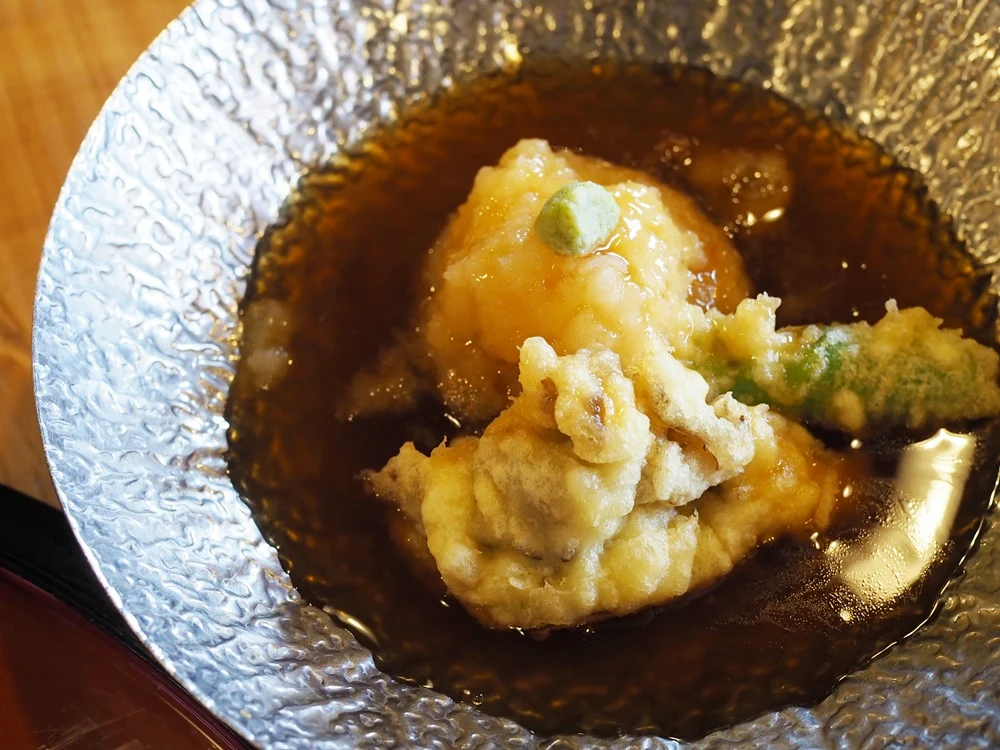
▼ There are lotus root cakes, maitake mushrooms, and green chili tempura, all topped with a tempura dashi sauce.
Second Floor Seating Without a Ceiling
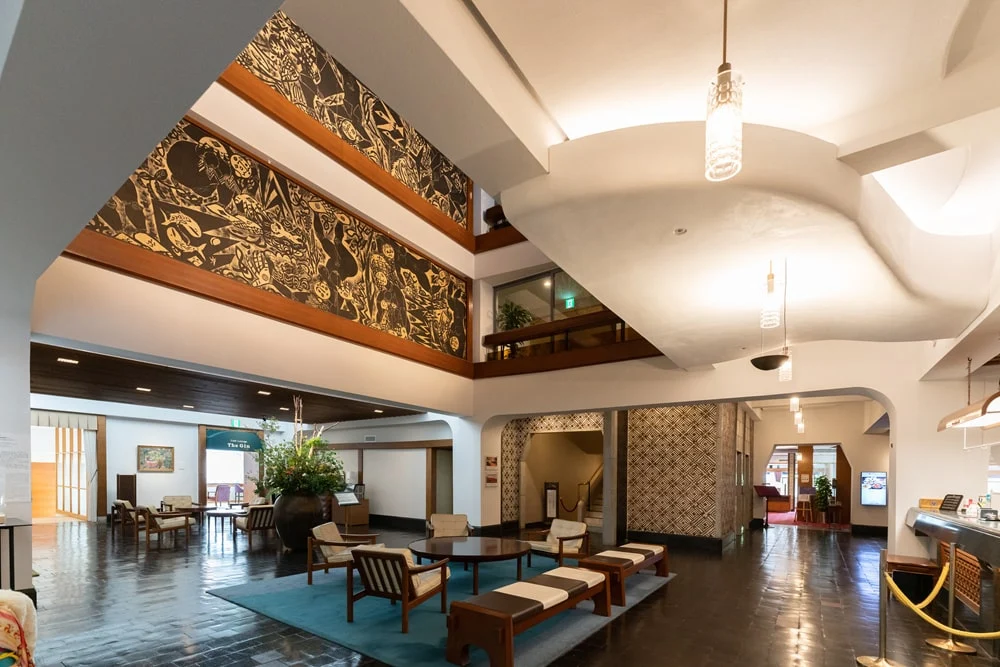
Typically, meals are taken in the dining area on the first floor, but the second floor is used for group guests and events.
Upon entering the room, you are captivated by the large beams and pillars, and the structure is also surprising.
Since there is no ceiling, the originally attic space is exposed.
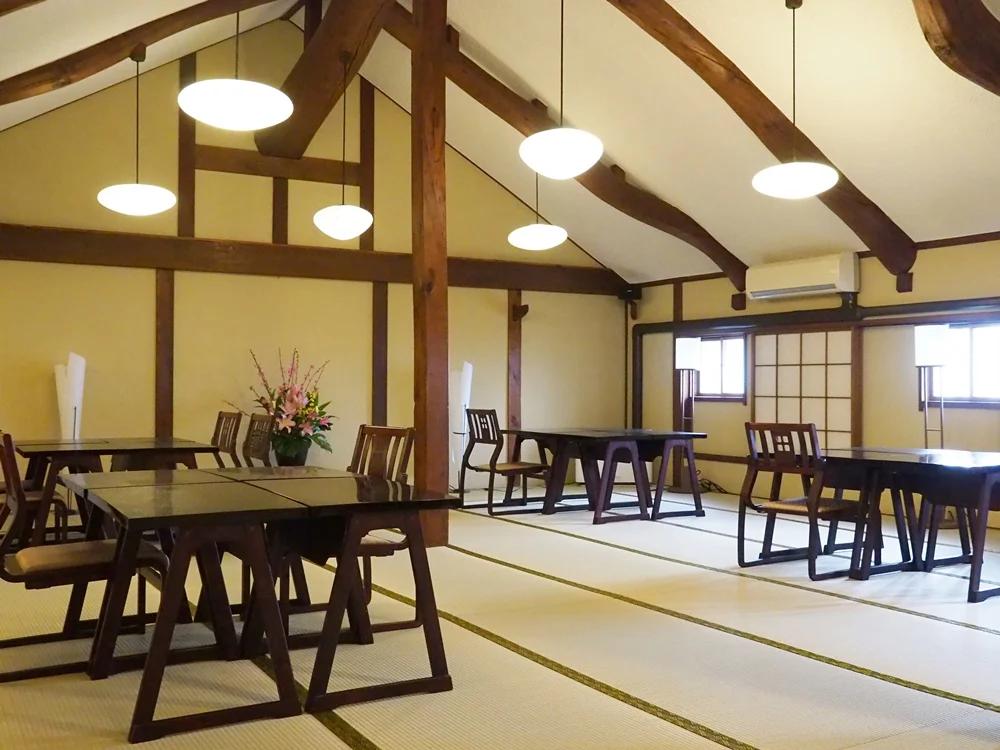
The second floor originally served as a warehouse for an oil dealer, so it has no ceiling.
The person who built the ships of the Murakami Navy, which once operated in the Seto Inland Sea, was involved in the construction of Tsurugata, so the way the beams are assembled is said to be the same as the construction of a ship's bottom.
It is said that the curvature is intentionally designed to relieve weight.
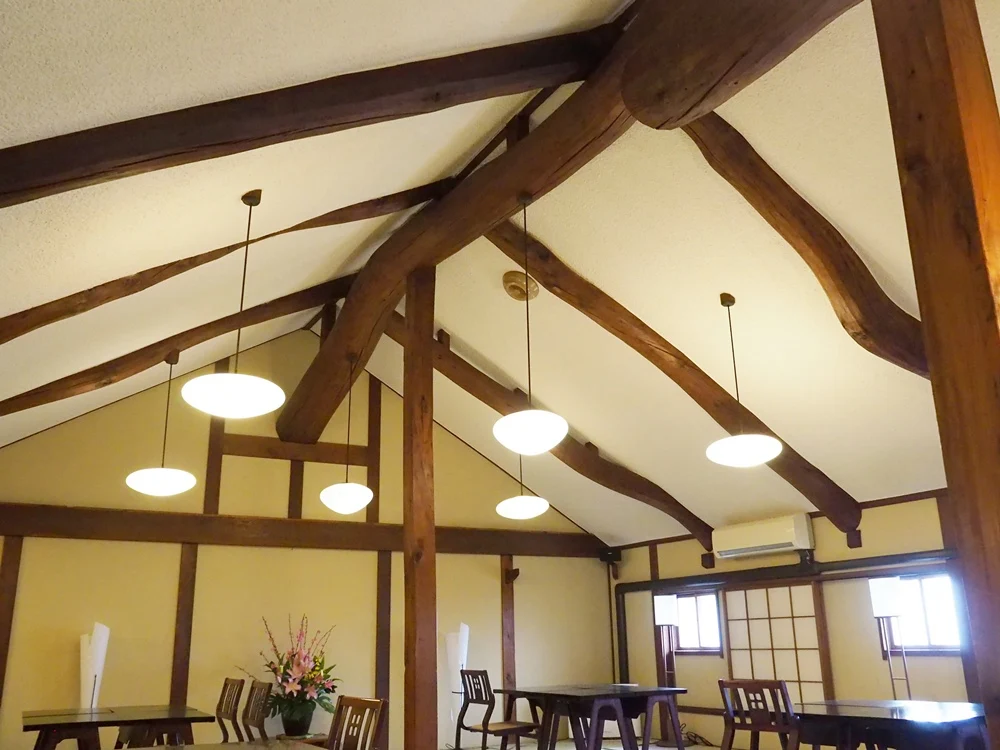
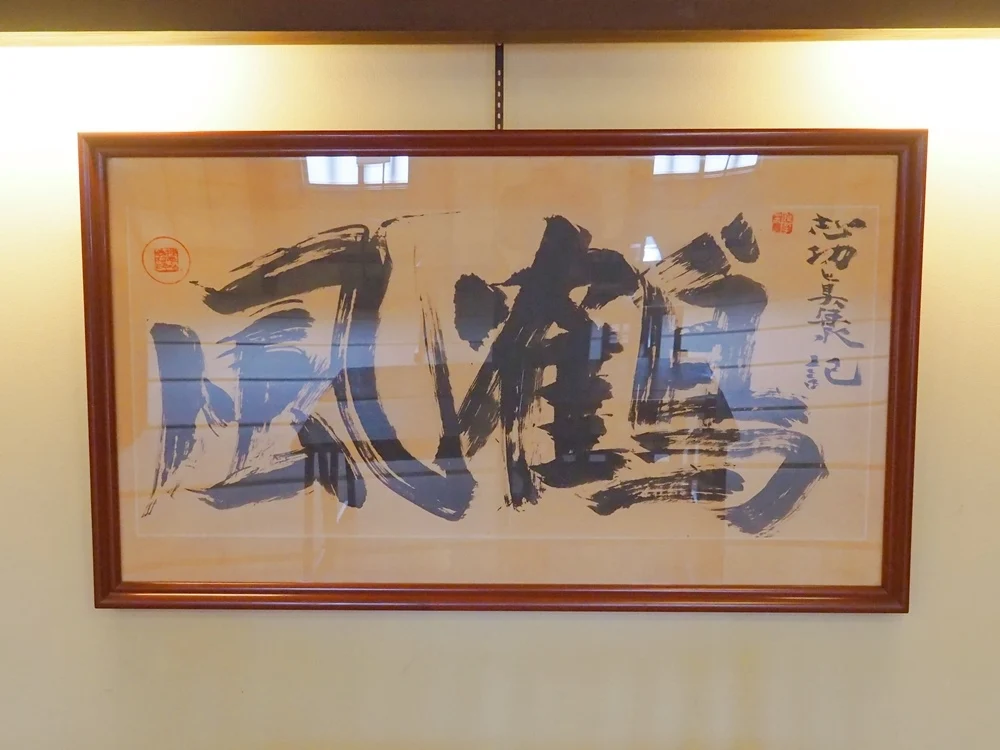
The beams are impressive, but the writing on the walls also catches the eye.
In the center of the room hangs a piece by the printmaker Munakata Shiko titled "Tsurufu."
The name "Tsurugata" is derived from "Tsurufu" and the "Tsuruga" mountain that towers behind the restaurant.
A Japanese Restaurant that Feels the History of Kurashiki
Tsurugata, built in the mid-Edo period, retains traces of its past as an oil dealer.
Although it has been about 280 years since it was built, it does not feel old.
Rather, it is so clean and well-maintained that one might think it has only been standing for a few decades.
We spoke with the manager, Murakami Hiroto, and the head chef, Kataoka Kiyoto, about Tsurugata's cuisine and building.
Data for the Restaurant Tsurugata
| Name | Restaurant Tsurugata |
|---|---|
| Address | 1-3-15 Chuo-cho, Kurashiki City, Okayama Prefecture |
| Contact | 086-424-1635 |
| Parking | None |
| Business Hours | 11:00 AM - 2:00 PM |
| Regular Holiday | Monday |
| Payment Methods |
|
| Reservation | Available |
| Seats | 29 seats (Counter: 5, 4-person tables: 4, Long table: 1) |
| Smoking | Completely Non-Smoking |
| Toilet | Western-style toilet |
| Website | Ryokan Tsurugata |