People say, “Children are children of the wind,” but anyone can get sick or injured. Sometimes, they may even have to be hospitalized. One place that ensures children can continue their education during such a period is a hospital classroom.
A hospital classroom is a special support class for children with health impairments or physical frailty, established within a hospital for students who must be hospitalized due to injury or illness.
Kurashiki City has the following two hospital classrooms.
- Ohara Memorial Kurashiki Central Medical Organization, Public Interest Incorporated Foundation, Kurashiki Central Hospital
Hospital classrooms of Kurashiki City Kurashiki-Higashi Elementary School and Kurashiki City Higashi Junior High School - Kawasaki Medical School Hospital
Hospital classrooms of Kurashiki City Sho Elementary School and Kurashiki City Sho Junior High School
At Kurashiki Central Hospital, where interactions with people from outside the hospital, including volunteers, are resuming as measures to prevent the spread of COVID-19 begin to ease, an exhibition is being held that offers a glimpse into the hospital classroom’s activities and the “firsthand voices” of the people involved.
The information presented was current when this article was published in March 2025. Please note that it may differ from current information.
About Kurashiki Central Hospital
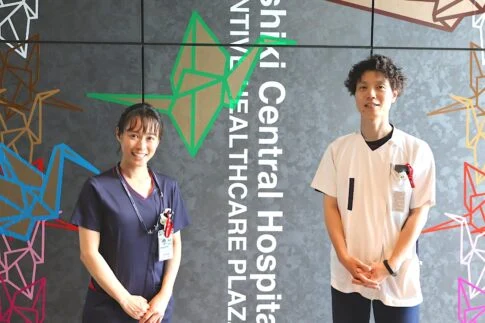
Ohara Memorial Kurashiki Central Medical Organization, Public Interest Incorporated Foundation, Kurashiki Central Hospital (hereafter, “Kurashiki Central Hospital”) is a private general hospital located about a 15-minute walk from JR Kurashiki Station.

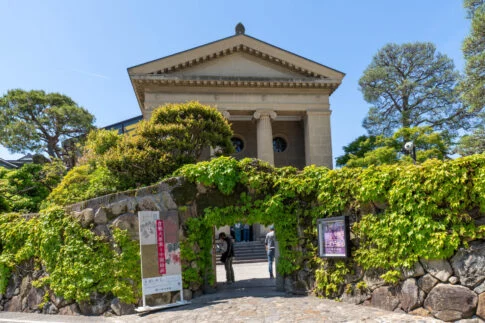
Its founder was Ohara Magosaburo, who also founded the Ohara Museum of Art in the Bikan Historical Area. Since there is no public general hospital in central Kurashiki City, it serves as a community hospital for local residents.
In addition to its role as a core acute-care hospital providing advanced medical care, it also houses a Regional Perinatal Medical Center. As a result, it treats not only Kurashiki City residents but also patients from across Okayama Prefecture and neighboring prefectures who require specialized treatment.
What Is the Kurashiki Central Hospital Classroom?
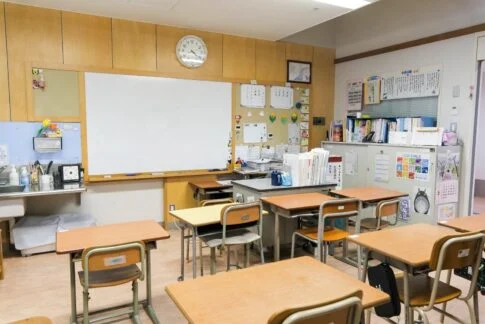
A hospital classroom is located in the pediatric ward of Kurashiki Central Hospital.
The elementary school class is designated as a special support class of Kurashiki City Kurashiki-Higashi Elementary School, and the junior high school class as one of Kurashiki City Higashi Junior High School.
For this reason, students who use the hospital’s special support class transfer into the class for the period they attend the hospital classroom.
Students prioritize their treatment and examinations while continuing their studies in each subject. The lessons follow the textbooks and materials used at the schools they attended before hospitalization. For junior high school students, the hospital classroom obtains assignments from their previous schools and also holds regular and proficiency tests.
As this is a special support class, students also have time for independent living activities, a distinctive part of special needs education. Kurashiki Central Hospital calls this “Genki Time” and, we are told, organizes activities where the children can gather together and deepen their friendships.
Independent living activities
Activities that foster the knowledge, skills, attitudes, and habits necessary for individual students to pursue independence and proactively improve and overcome various difficulties arising from their disabilities, thereby cultivating the foundation for harmonious physical and mental development. (Ministry of Education, Culture, Sports, Science and Technology)
Hospital Classroom: The Dream Tree Exhibition
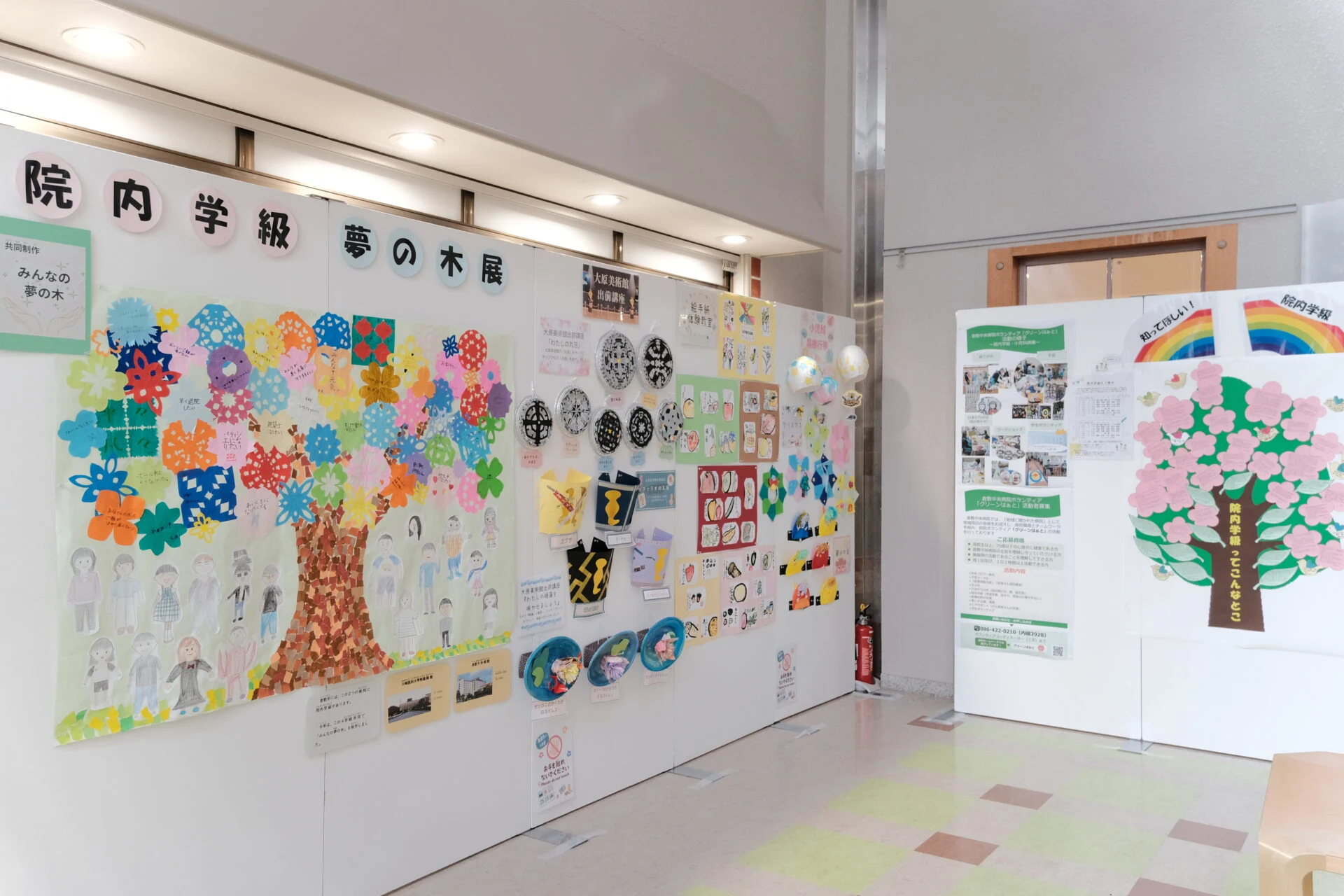
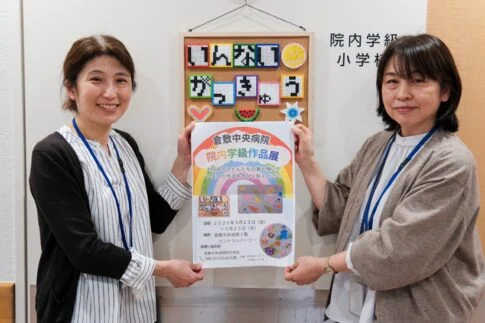
“Hospital Classroom: The Dream Tree Exhibition” is an exhibition featuring works by students in Kurashiki Central Hospital’s hospital classroom, along with messages from people involved with the classroom.
It is being held at the Central Parlor on the first floor of Kurashiki Central Hospital from Monday, March 17 to Wednesday, March 26, 2025.
Although the exhibition is being held inside the hospital, it is open to the general public. Please bring a mask and wear it while viewing the exhibition as a precaution against infectious diseases.

I visited the exhibition shortly after noon on Tuesday, March 18, and would like to share what I saw.
Works by Students in the Hospital Classroom
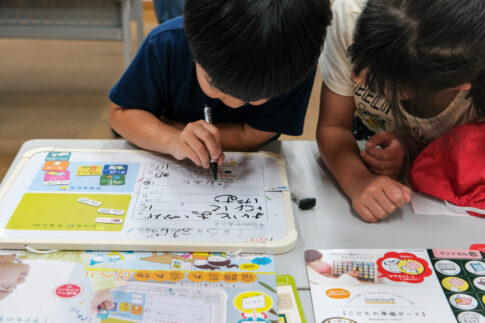
In the hospital classroom, students are given time to study not only Japanese and mathematics but also practical subjects such as music and arts and crafts.
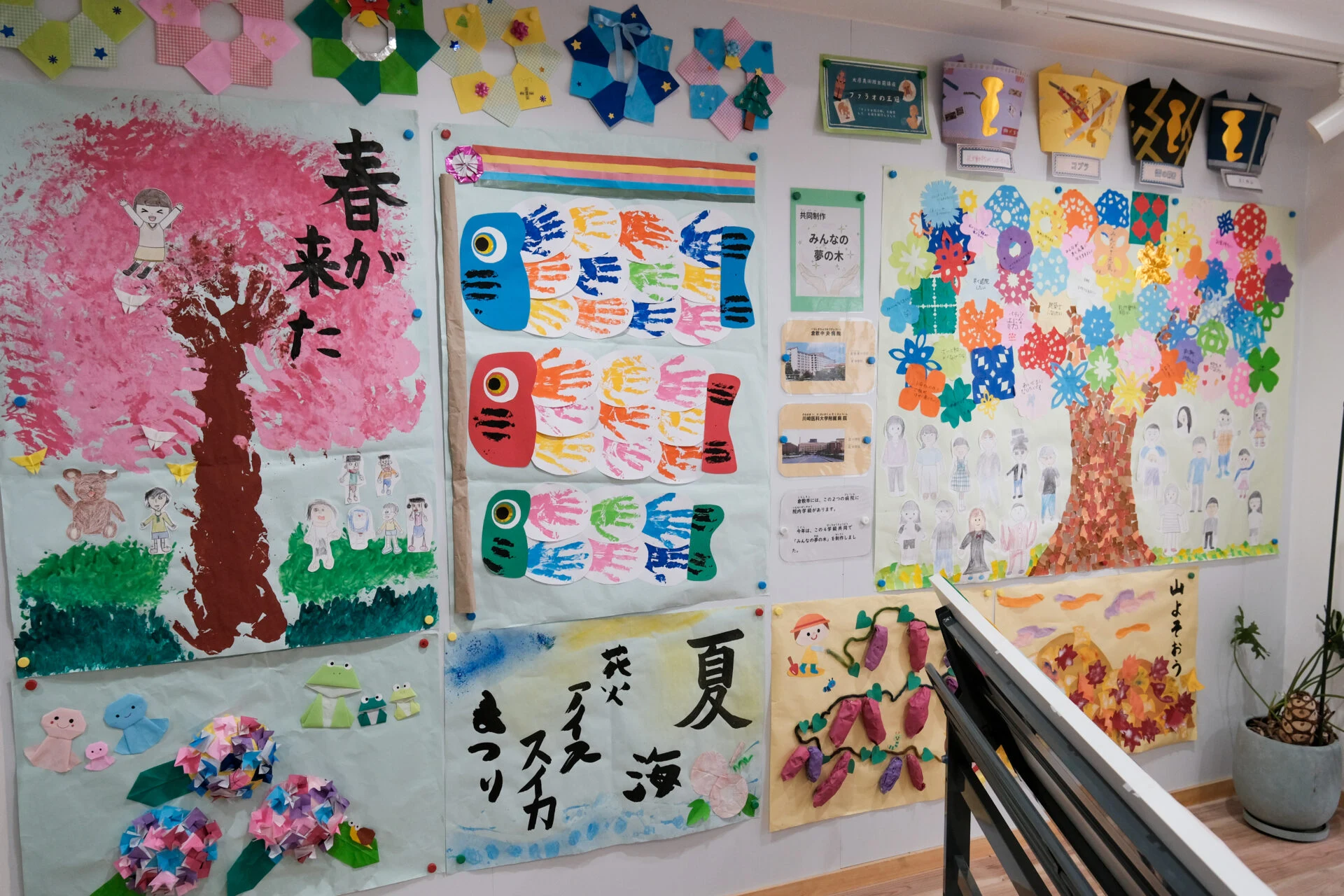
The “Hospital Classroom: The Dream Tree Exhibition” displayed some of the works created not only during arts and crafts and art classes, but also during “Genki Time” (independent living activities).
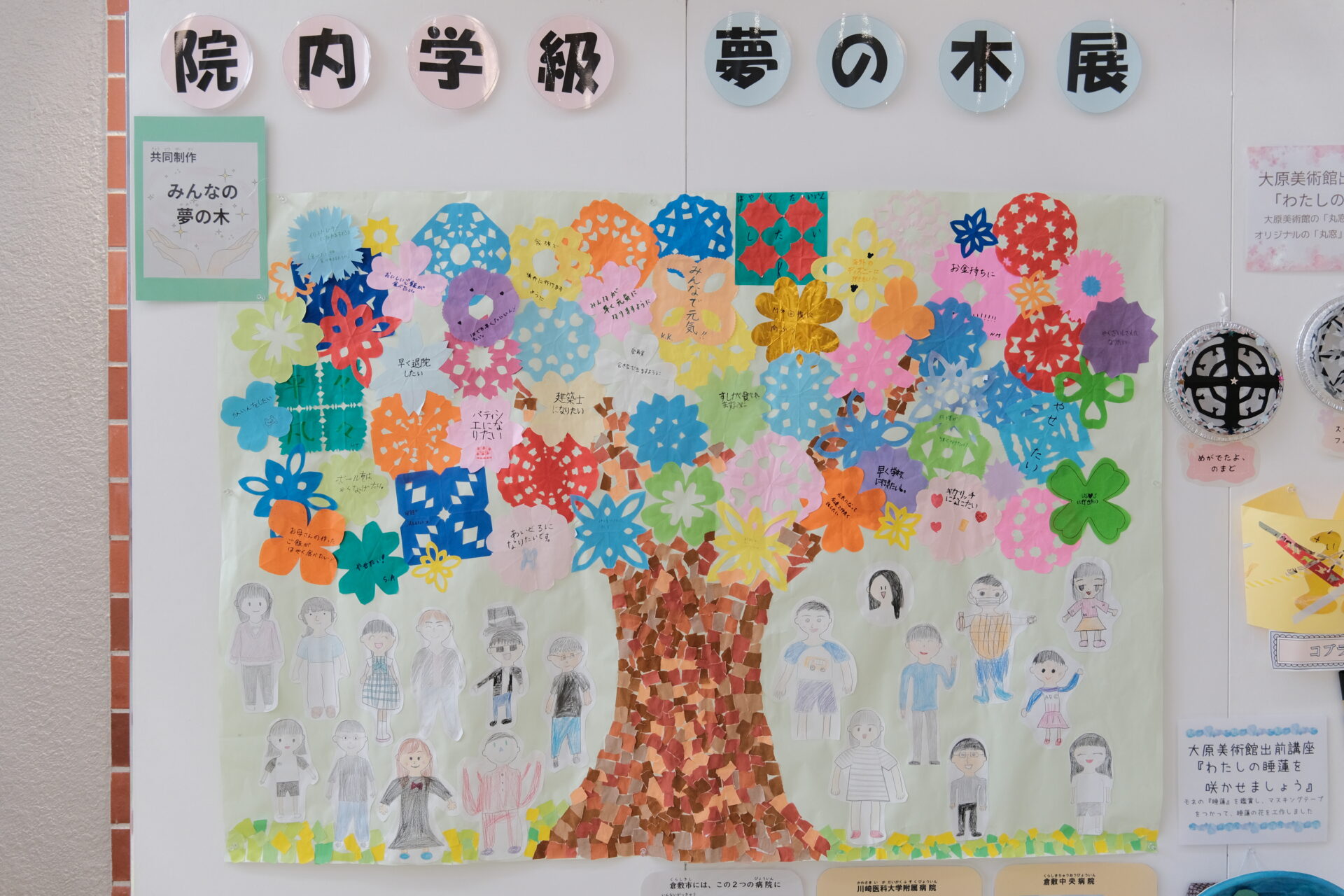
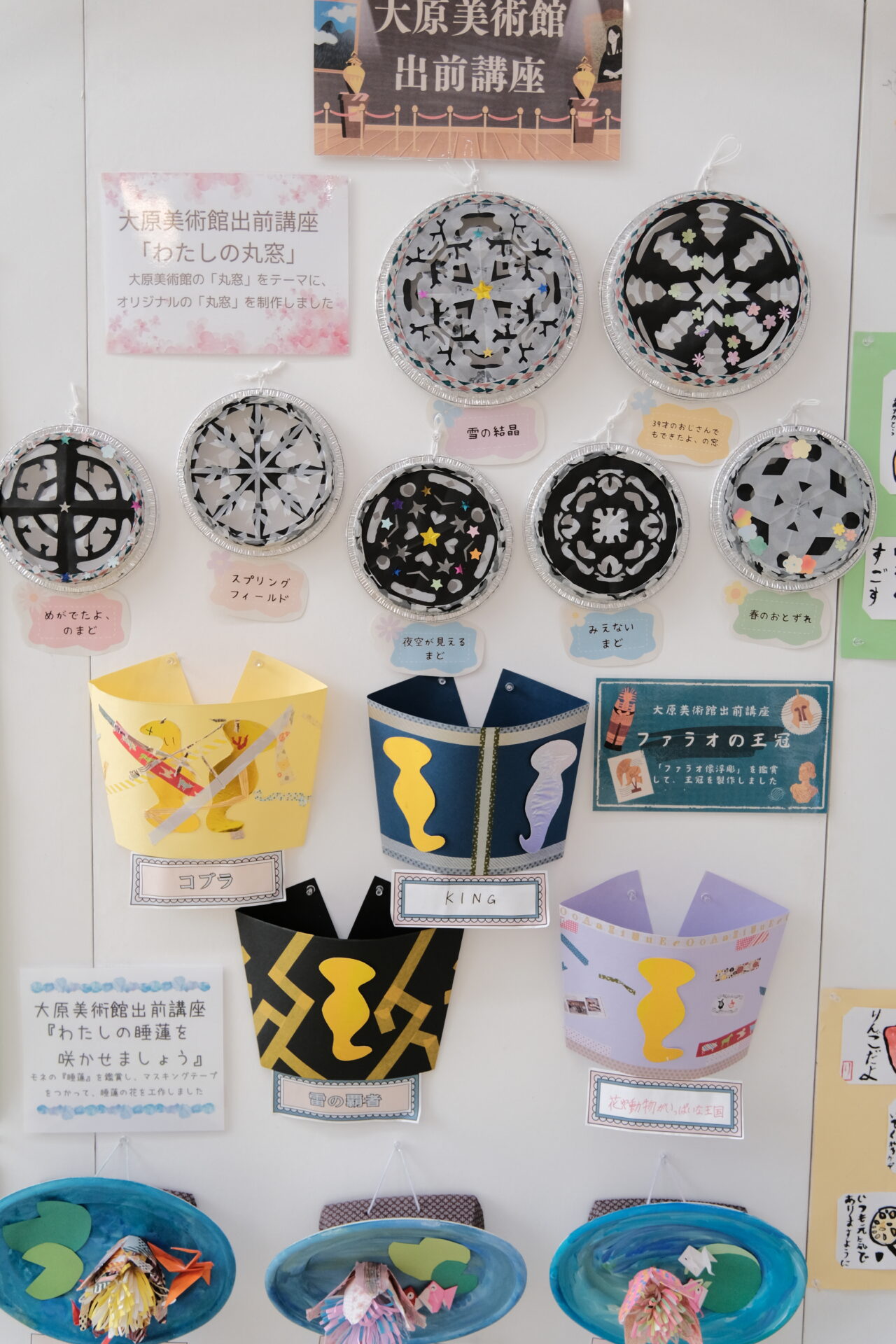
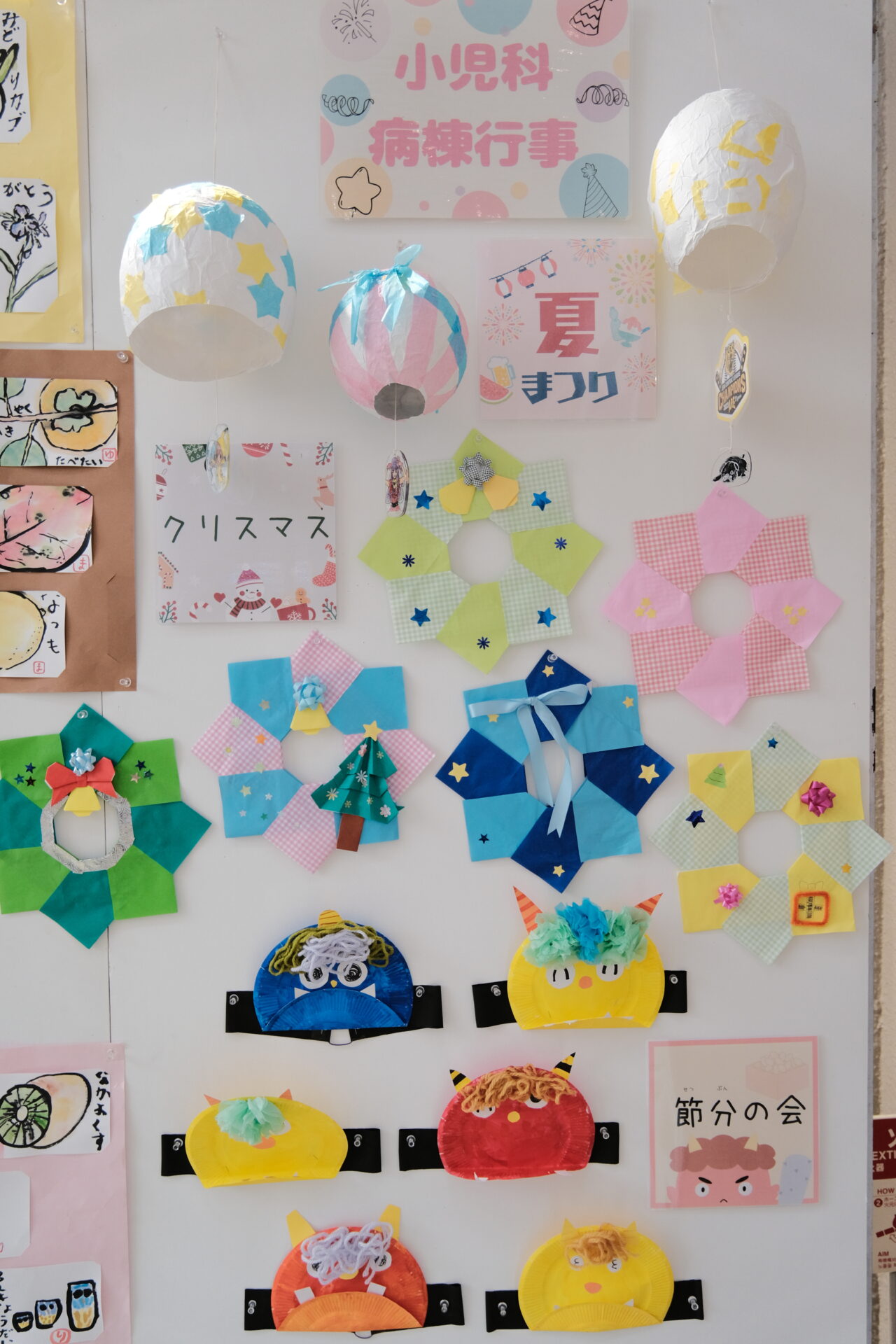
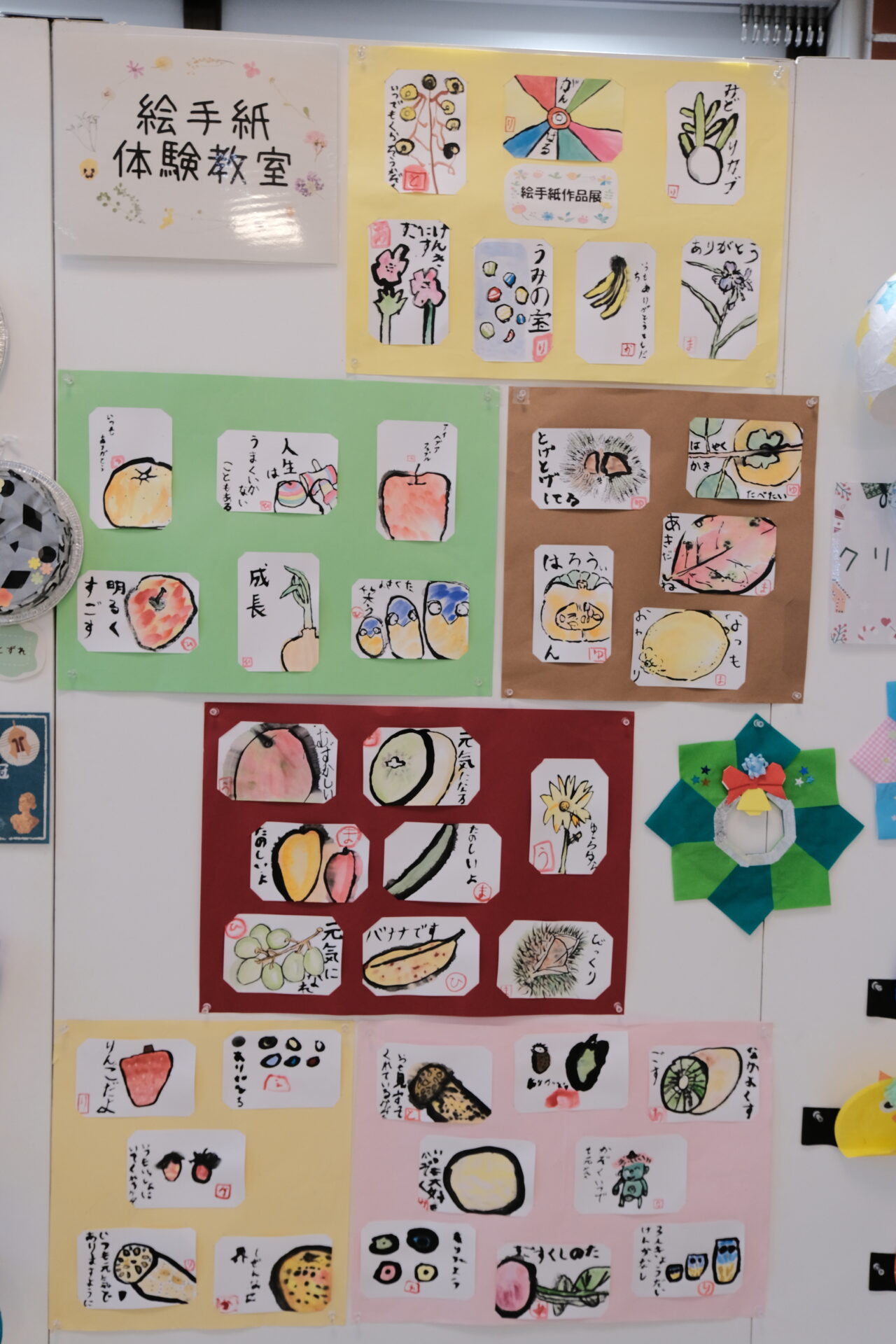
Some students enrolled in the hospital classroom are unable to leave the ward for long periods. One of the classroom’s distinctive features is that it incorporates many activities that allow these children to have experiences while remaining in the hospital.
Every work created by the children is richly expressive and delicate. It’s hard not to stop and admire them.
Messages from People Involved with the Hospital Classroom
The “Hospital Classroom: The Dream Tree Exhibition” was organized not by the hospital classroom’s teachers, but out of a desire to help more people, both inside and outside Kurashiki Central Hospital, learn about the existence of the hospital classroom.
The wooden display bearing these messages was made at Kurashiki Central Hospital.
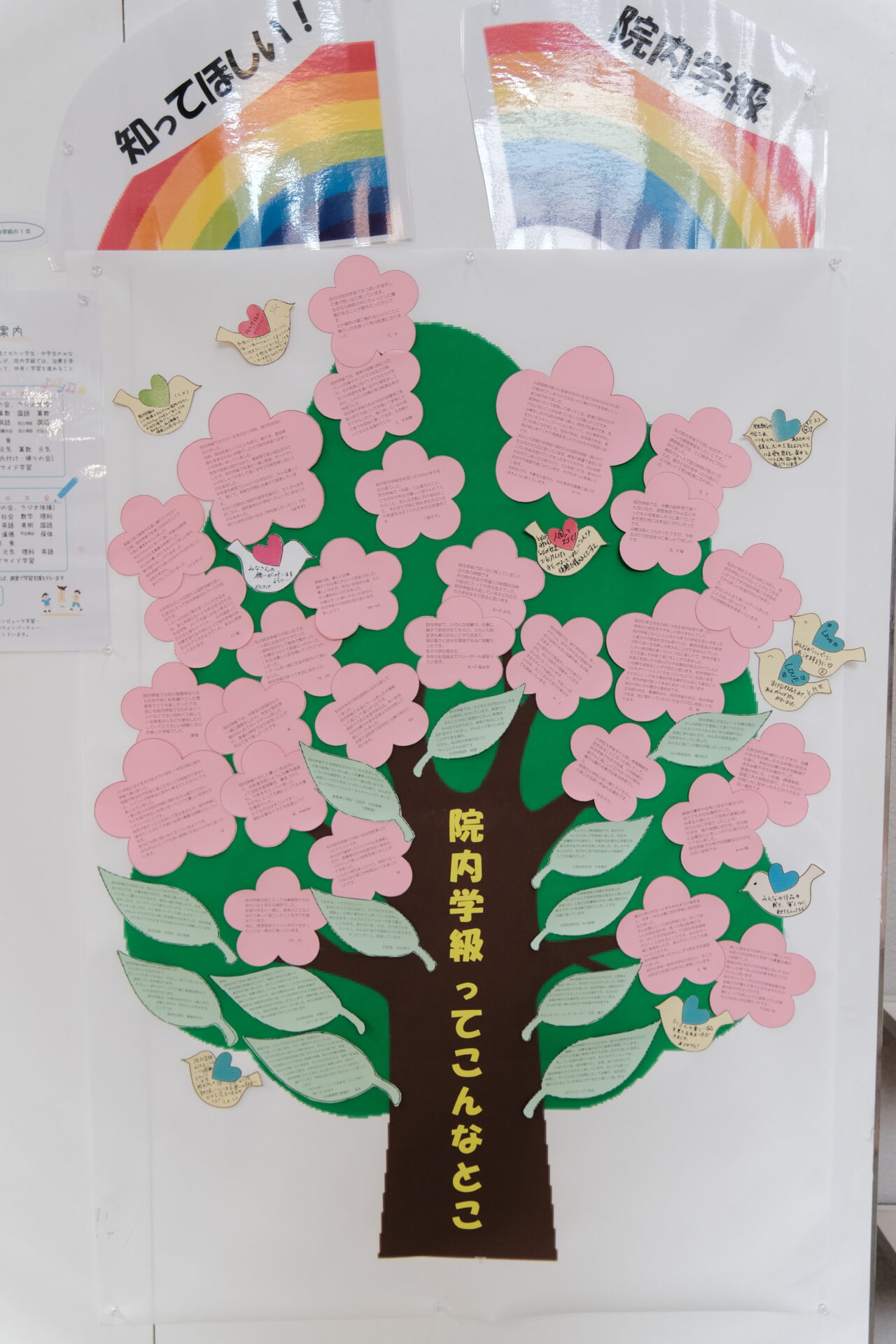
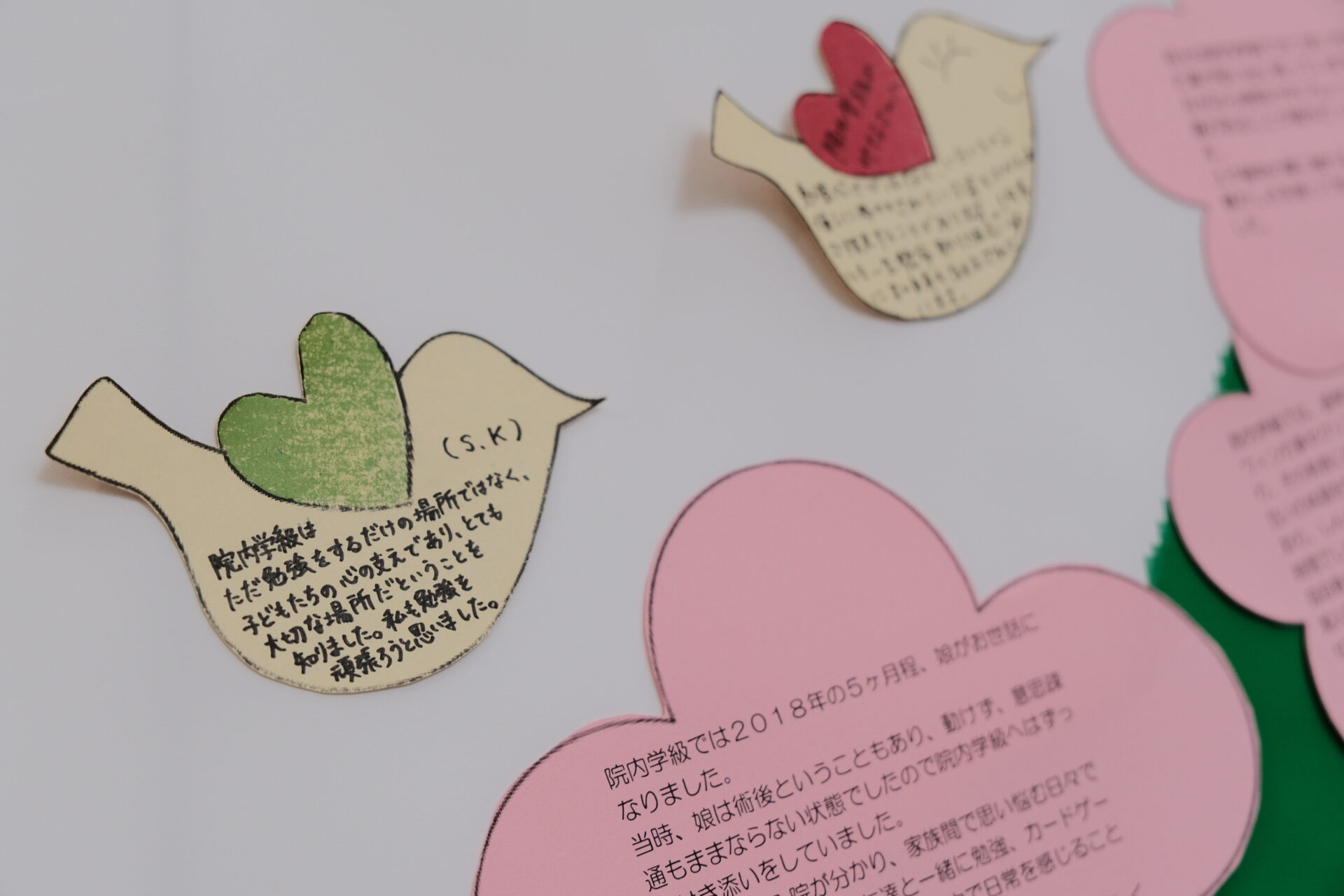
The pink petals carry messages from children who graduated from the hospital classroom and their parents; the green leaves carry messages from doctors and teachers involved with the classroom; and the birds scattered throughout carry messages from visitors who viewed the exhibition.
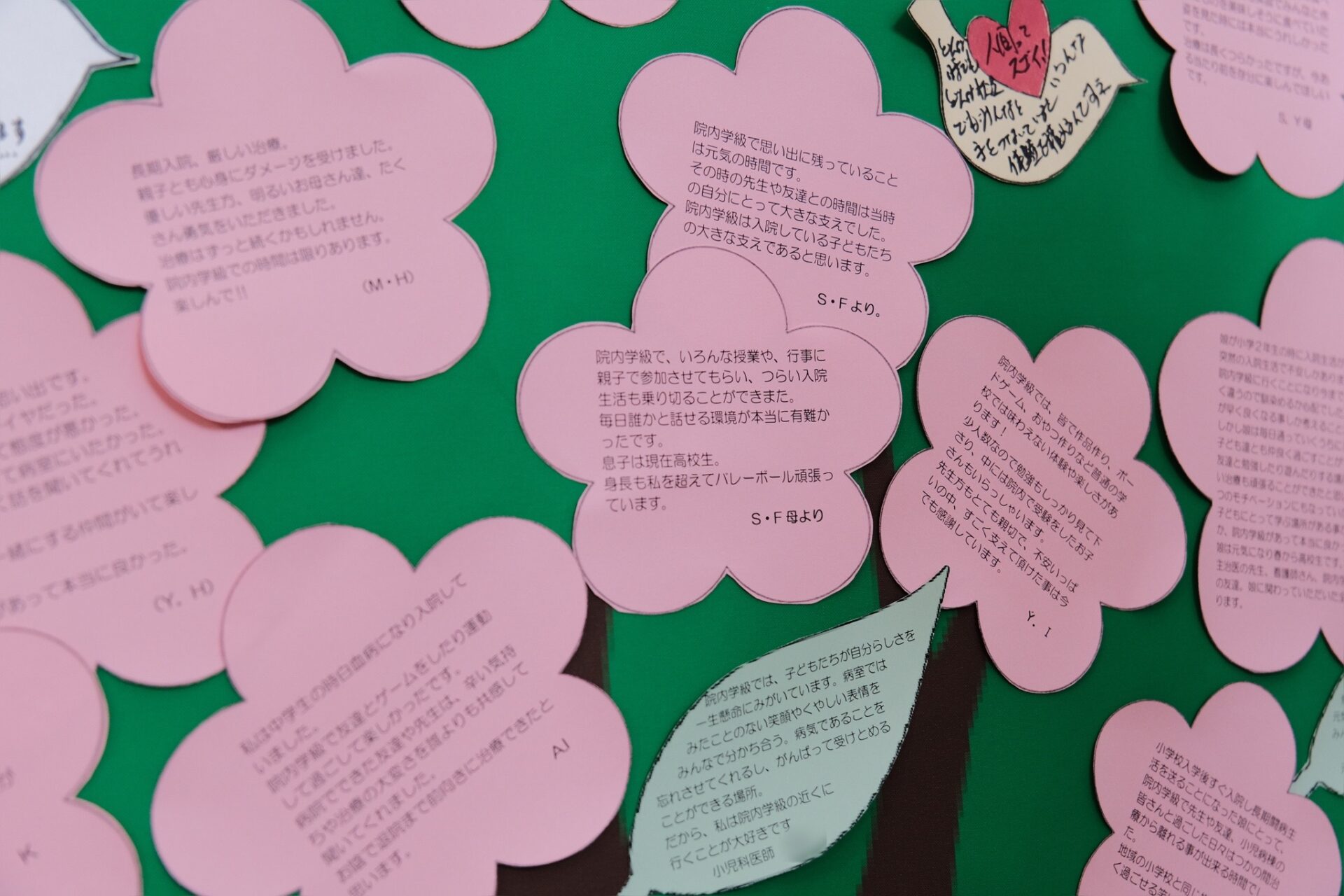
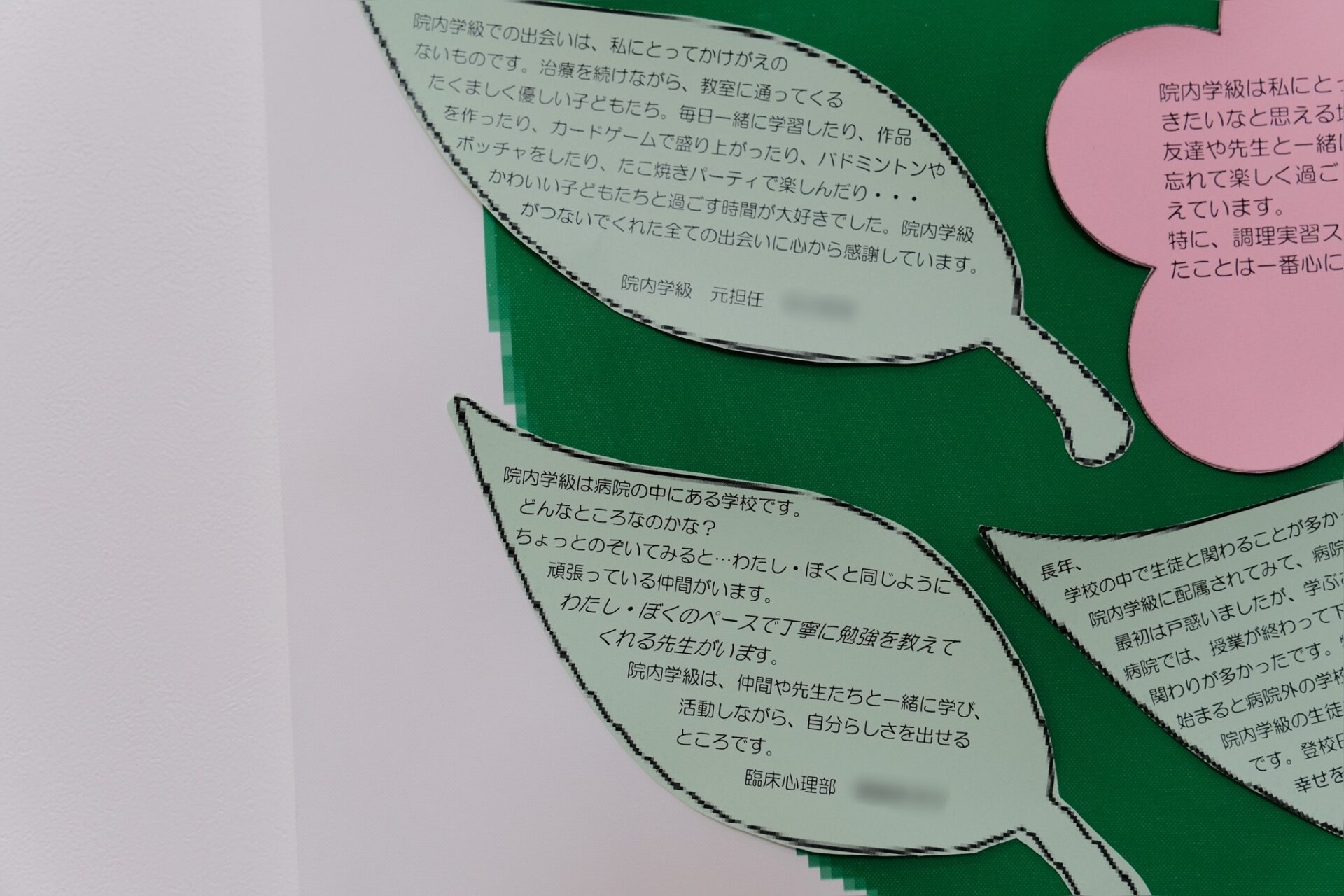
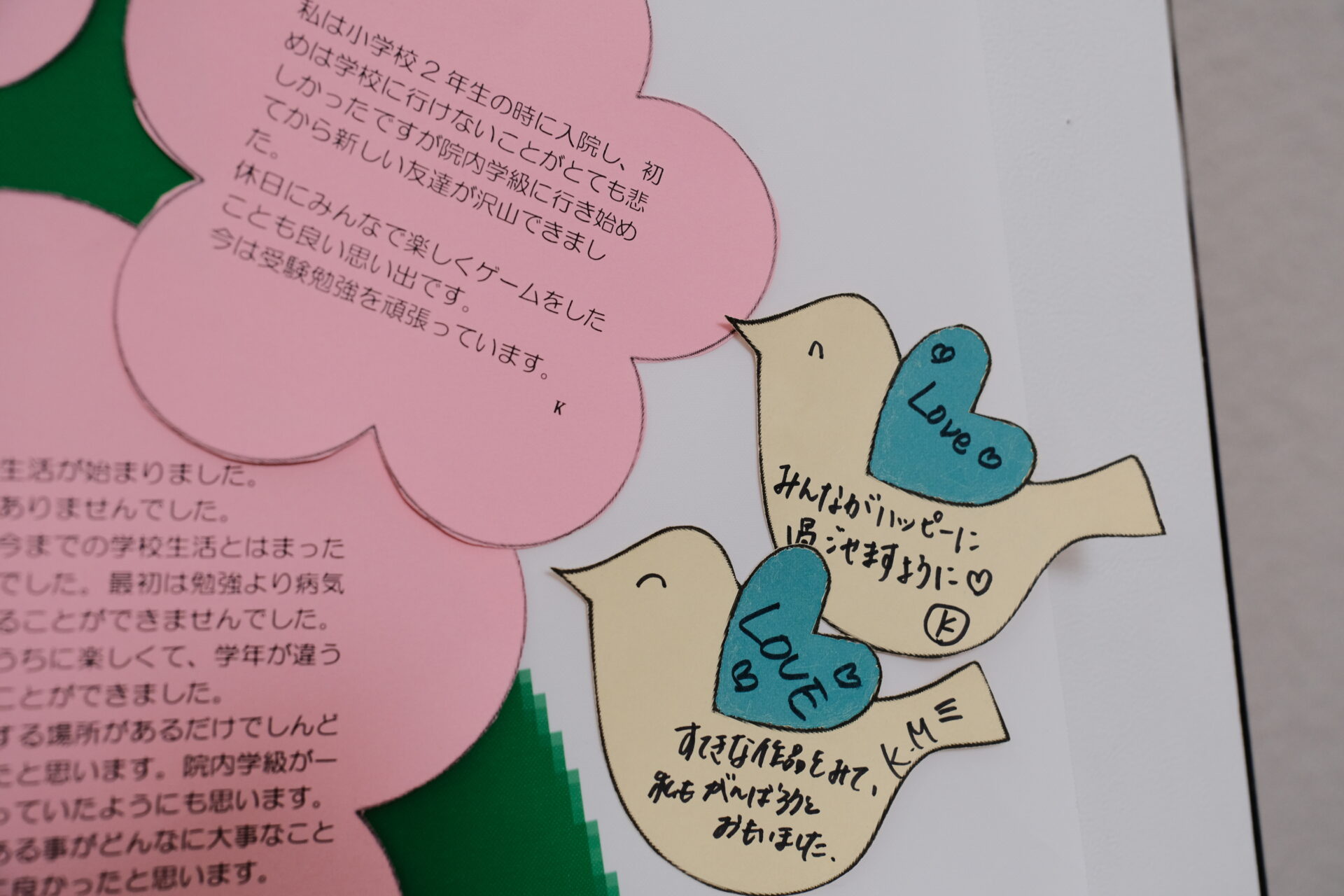
The exhibition offers a clear picture of what the hospital classroom meant to its graduates and their parents, and of the people involved in the classroom.
After the exhibition ends, they are considering displaying it in the pediatric ward as well. They are currently welcoming words of encouragement for the children working hard in the hospital classroom and their parents, as well as comments on the exhibition.
Interview with a Kurashiki Central Hospital Representative
We spoke with Miyake Yuko, a volunteer coordinator at Kurashiki Central Hospital who organized the “Hospital Classroom: The Dream Tree Exhibition.”
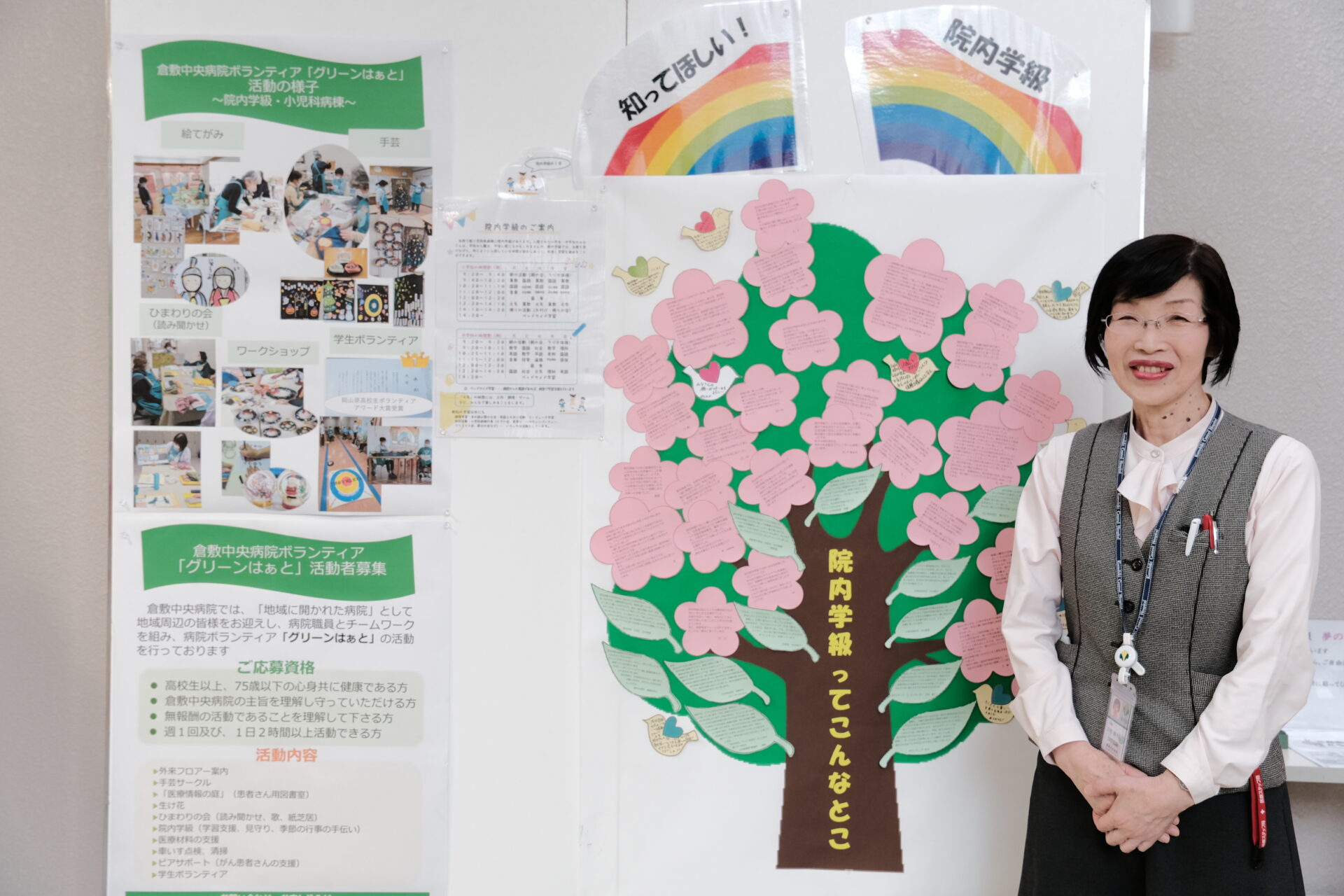
Could you tell us the purpose behind organizing the “Hospital Classroom: The Dream Tree Exhibition”?
Miyake (name omitted)
At our hospital, we permanently display the learning journey of children in the hospital classroom on a bulletin board near the “Medical Information Garden” on the first floor of the outpatient building.
Although this display is on a smaller bulletin board than the current exhibition, it has been very well received, and we have received many messages from visitors saying things like, “It lifted my spirits” and “I’m cheering on the children in the hospital classroom.”
For some time, we had wanted more people to see the children’s work.
The Central Parlor, the exhibition venue, is a gathering space for visitors and a place where events are held regularly. We thought it would be an ideal place to raise awareness of the hospital classroom and its educational activities, so we planned the exhibition.
There are only two hospital classrooms for children with health impairments or physical frailty in Kurashiki City, including the one at Kurashiki Central Hospital. There are only six in Okayama Prefecture, so awareness is low.
Also, because ours is a general hospital, people of all ages—from newborn babies to older adults—visit. So even people who know that hospital classrooms exist may not know what kind of educational activities take place there.
We hope to help more people learn about the work of hospital classrooms.
What are the highlights?
Miyake
All the works created by the children in the hospital classroom are wonderful, so I hope people will take their time looking at each one. The teachers in the hospital classroom selected the children’s works for the exhibition.
Kurashiki Central Hospital also created a message tree featuring the heartfelt words of people involved with the hospital classroom.
We asked children who continue to visit our hospital after graduating from the hospital classroom, their parents and guardians, and the medical staff and teachers involved with the classroom to contribute messages. Hoping readers would picture the people involved with the hospital classroom, we also included the contributors’ occupations and names, with their permission.
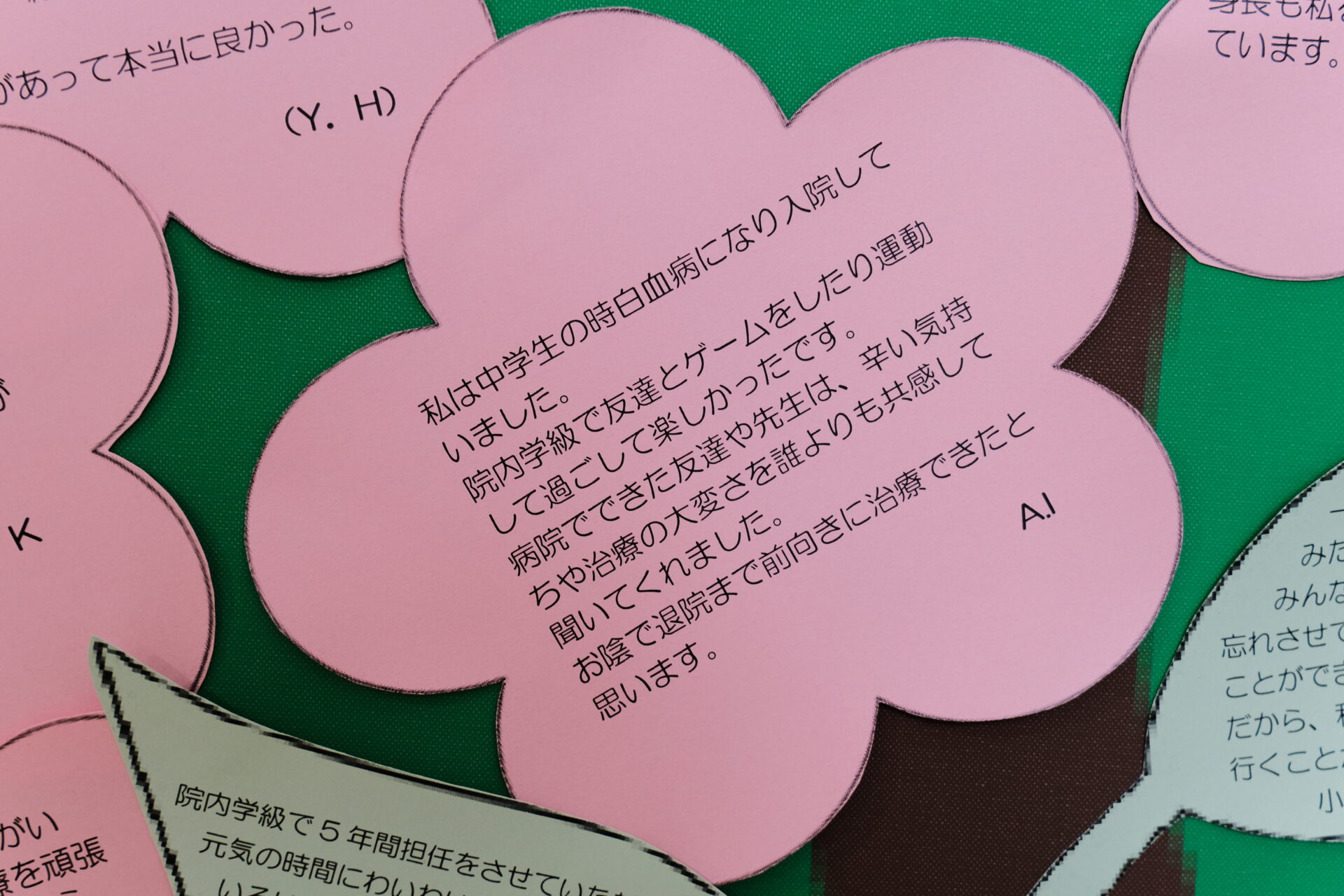
We hope you’ll read these messages one by one, too.
You also actively welcome volunteers and others, don’t you?
Miyake
We want to make sure that children who spend their days in the hospital have opportunities to interact with people from outside the hospital. Exchange with a variety of people can be refreshing, and I think it also deepens their learning.
Volunteer staff take part in activities such as making picture-letter cards featured in this exhibition and reading aloud. During the period when measures were in place to prevent the spread of COVID-19, these activities were held online, but nothing compares to meeting in person.
We are now actively welcoming volunteers while taking infection-prevention measures. If you’re interested, please get in touch.
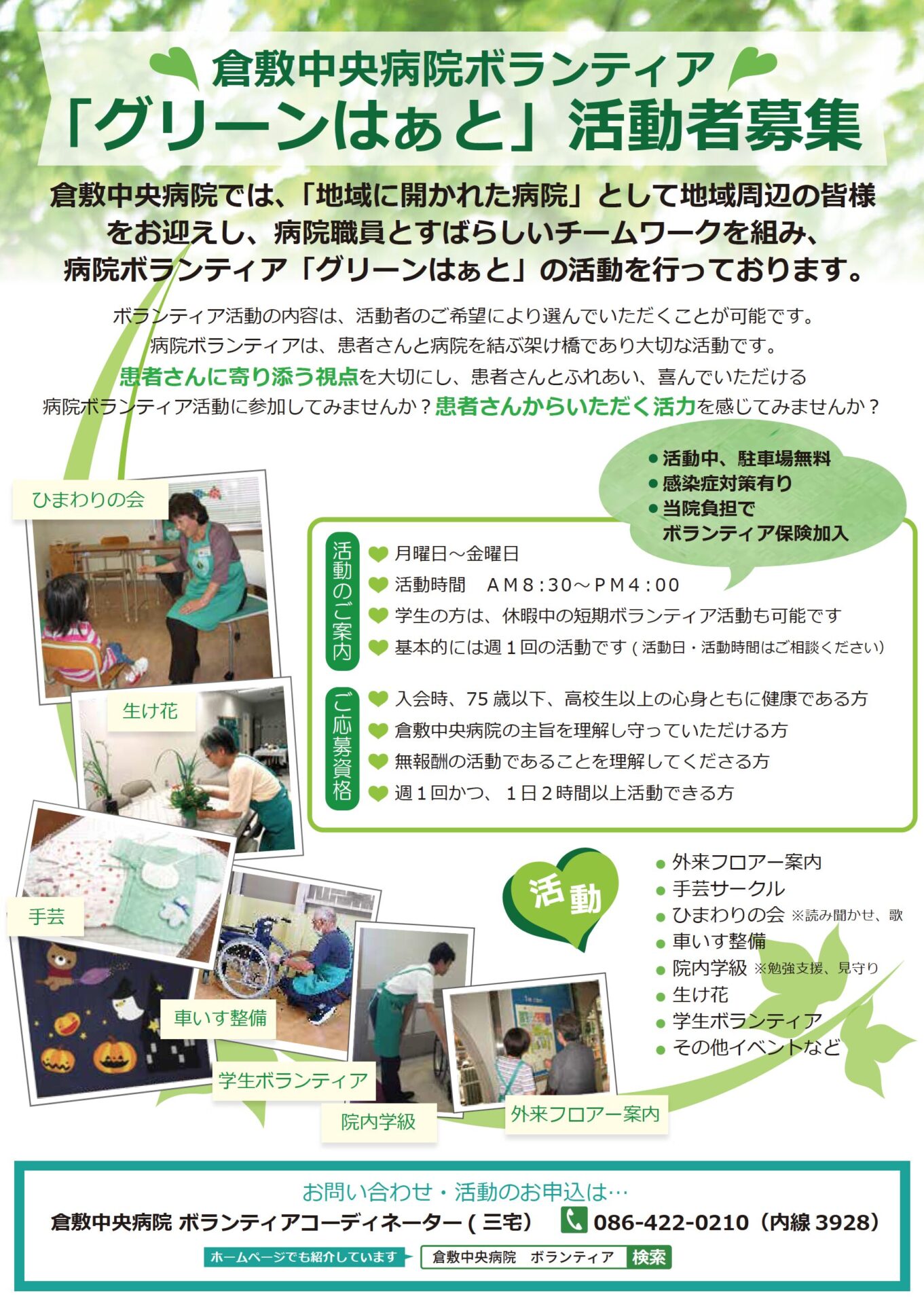
Some of the volunteer staff are graduates of the hospital classroom. They know the classroom better than the hospital staff do and understand the feelings of children who are hospitalized, making them a reassuring presence.
Could you share a memorable story from the exhibition?
Miyake
Among the parents and guardians of graduates who contributed messages to the message tree are some who have lost their children. We are grateful that these parents cooperated as “parents of graduates,” came to see the exhibition on its first day, and looked back on happy memories.
We’ve also been receiving a steady stream of comments from visitors. For example, a current high school student who had never attended the hospital classroom viewed the works and wrote, “I want to work hard at my studies, too.” It makes me happy to see all kinds of people viewing the exhibition and writing messages, so I find myself walking past Central Parlor more often than usual (laughs).
Music events will also be held at the venue during the exhibition, so we hope you’ll continue to enjoy the displays.
Finally, do you have a message for our readers?
Miyake
Of course, we hope you’ll view the works, but first and foremost, we hope this will be an opportunity for people to learn about the hospital classroom.
Please come by and share what you felt, or send a message of encouragement to the children.
From the Writer
As we looked at “Dream Tree,” Miyake smiled and said, “‘I want to eat sashimi!’ is a truly real voice from a hospital patient.”

Raw food is not allowed in hospital meals. The exhibition is filled with the “real” experiences not only of children in the pediatric ward, but also of people who have experienced life in the hospital.
This is a rare exhibition that offers a glimpse of the hospital classroom as it really is, rather than as depicted in stories or dramas. We hope many messages of encouragement will reach the people involved with the hospital classroom and the children who attend it.
Articles about Kurashiki Central Hospital
Hospital Classroom Dream Tree Exhibition Information
| Name | Hospital Classroom Dream Tree Exhibition |
|---|---|
| Dates | March 17 (Mon)–26 (Wed), 2025 |
| Location | 1-1-1 Miwa, Kurashiki City, Okayama Prefecture |
| Admission (tax included) | Free admission |
| Website | Kurashiki Central Hospital Hospital Classroom |

What would you like to know about Kurashiki?
Enter a search term to find articles on this site