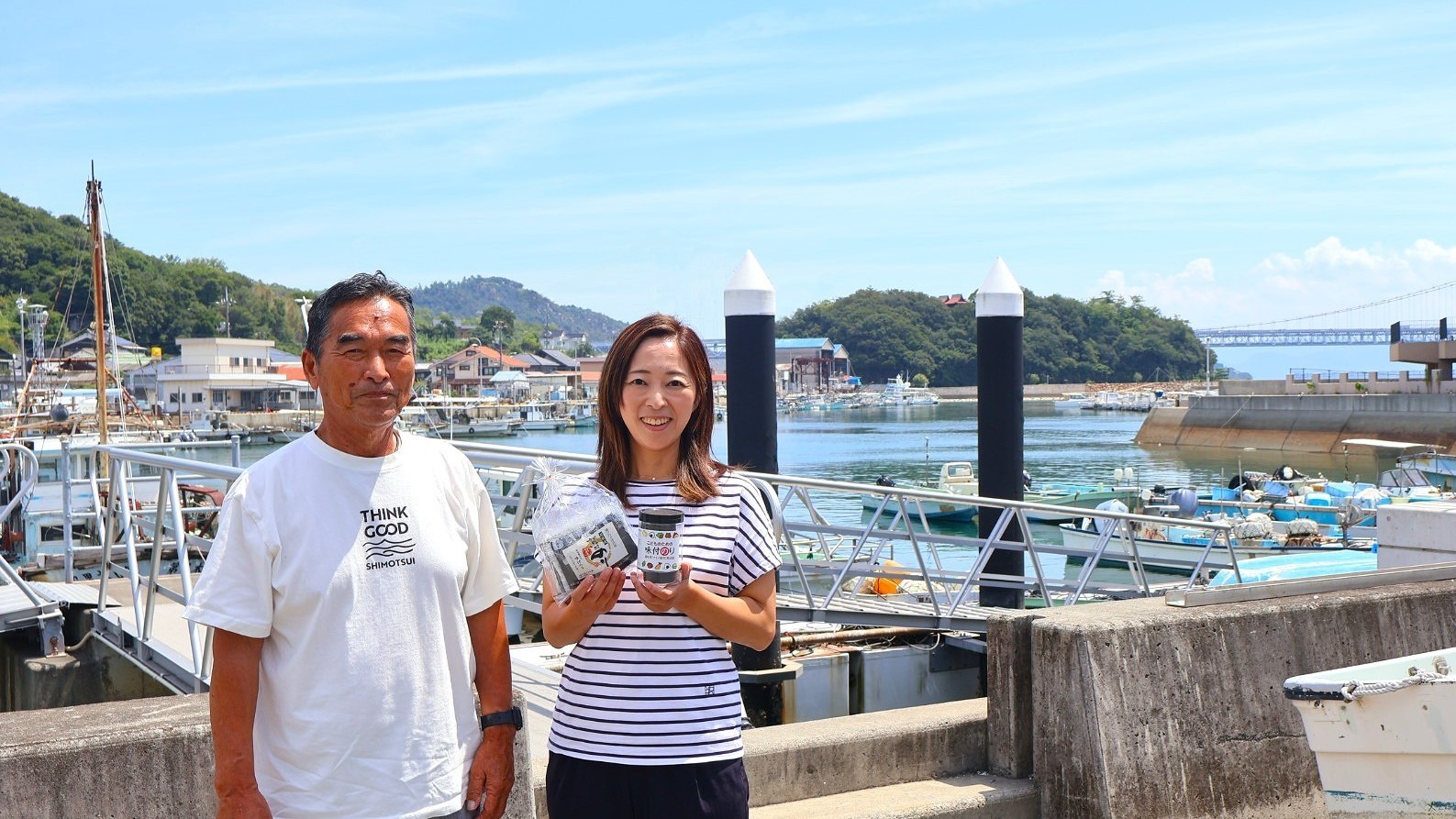
Interview with the makers of “Washu Nori”
We spoke with Nanjo Yuji, president of Nanjo Nori, and his daughter, Nanjo Yoko.
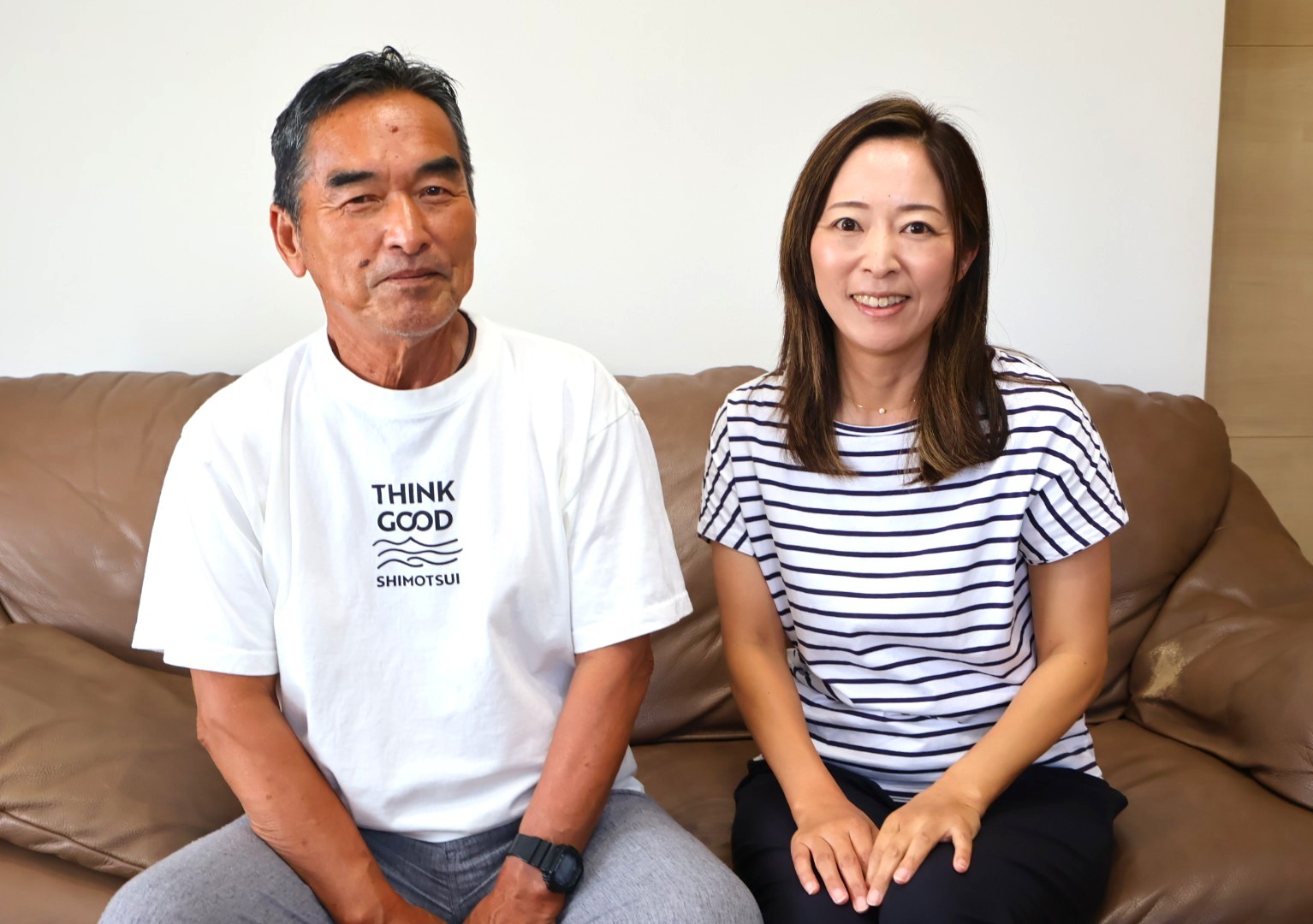
What inspired them to launch “Washu Nori”
What inspired you to launch your own brand, “Washu Nori”?
Nanjo Yoko (hereafter, honorifics omitted)
“We wanted to deliver the nori we had made with such care directly to customers ourselves.” That was what inspired us.
Previously, we shipped almost all the nori we made to the prefectural fisheries cooperative, and our work was considered done once it left our hands. But after shipping it, we had no idea where our nori went, and we never got to see our customers. That’s when we began thinking, “We want to be able to deliver the nori we make ourselves.”
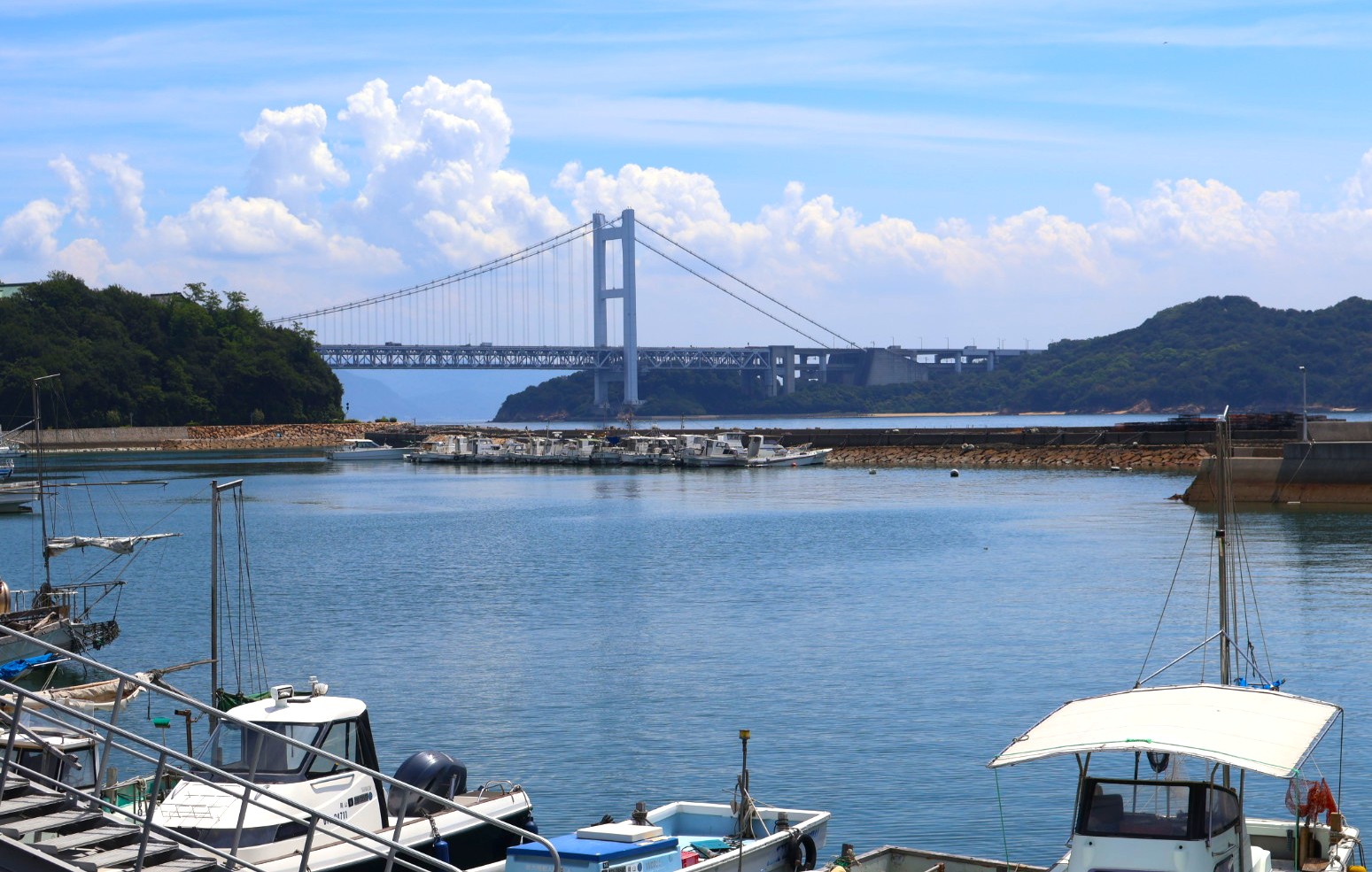
We named it “Washu Nori” after Washuzan Hill, here in our hometown of Shimotsui. We chose the name in the hope that Washu Nori would help promote Shimotsui.
Are there any particular challenges in making nori from the first and second harvests?
Nanjo Yuji (hereafter, honorifics omitted)
The nori from the first and second harvests used for Washu Nori is a delicate material that is difficult for producers to handle. Because it is soft, it can tear during production, and some sheets may not meet our standards, so the number of sheets we can turn into products is limited.
To be honest, the tougher nori harvested later in the season is easier to process, and yields more sheets. But as long as we put the “Washu Nori” name on it, we can’t compromise. That’s a standard we won’t lower, even if it means limiting production.
What do you consider important when making nori, working with nature?
Nanjo Yuji
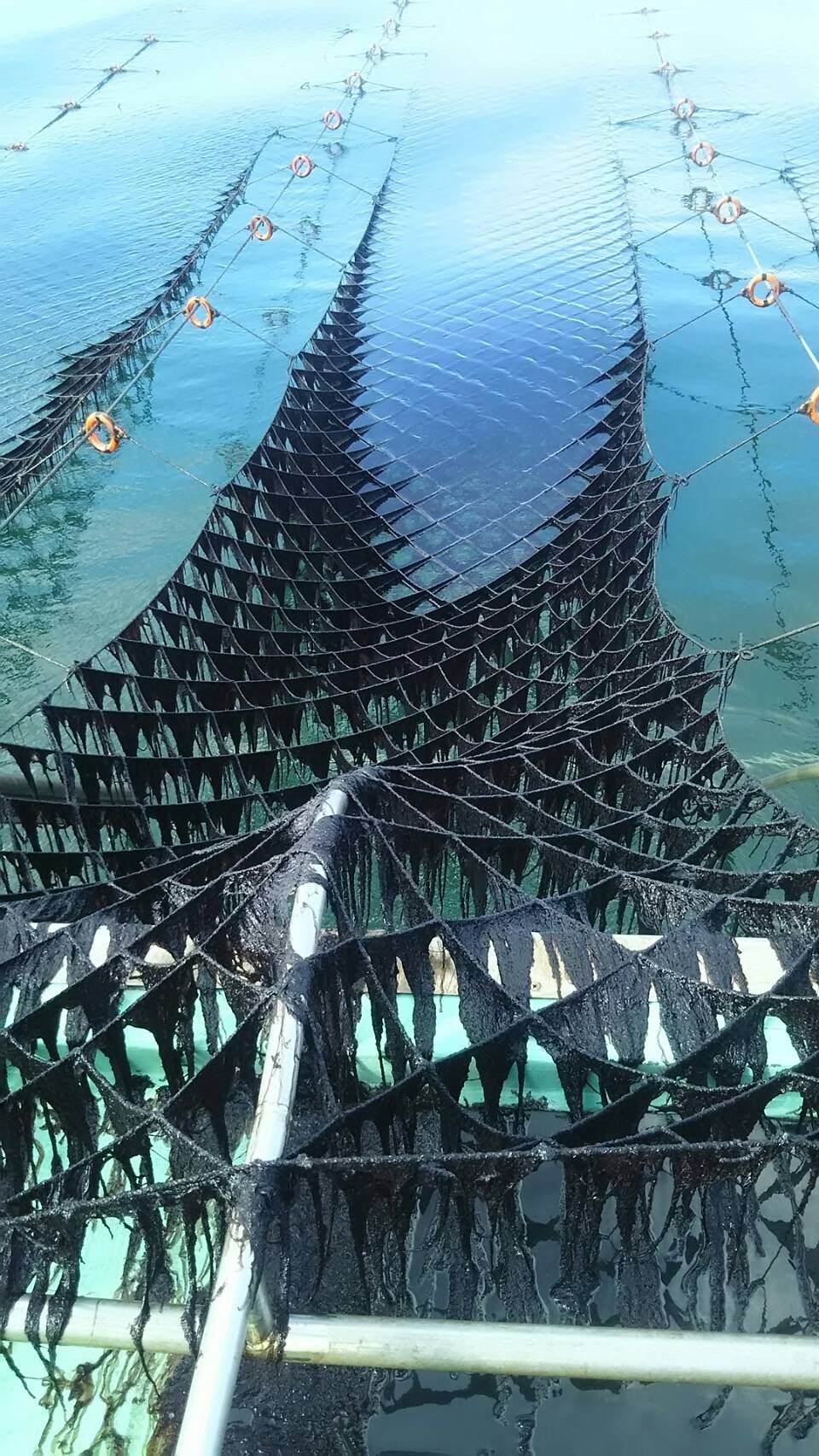
Nori-making depends on nature, so there’s no guaranteed formula for success. After ten years, you’ll have mastered the basic techniques, but even so, we approach our work each year as if we were making nori for the first time.
The condition of the nori changes daily depending on the air and water temperatures, so we adjust the processing based on its condition that day. To give one example, we adjust its thickness, changing the machine settings in increments of 10 grams.
But we can’t immediately see whether an adjustment was right. It takes about three hours for the nori to pass through the dryer and come out as a finished sheet.
If we look at the result and think, “That’s not how I expected it to turn out,” we reset the machine and wait another three hours. We repeat this process over and over. Because we’re working with nature, we have to keep thinking and finding ways to improve.
Their connection with their hometown of Shimotsui
How are you involved with your hometown of Shimotsui?
Nanjo Yoko
I’m a member of a local community revitalization group, the Shimotsui o Kangaeru-kai General Incorporated Association. Our main activities are helping organize and sponsor the Shimotsui Castle Ruins Cherry Blossom Festival, held in spring.
Local elementary school students also sometimes visit our company as part of their school district exploration activities. We tell them a little about the kind of work we do. I’d be happy if it helps them feel a little closer to the work being done in the community where they live.
Continuing to make a quality product
What are your plans for the future?
Nanjo Yuji
To keep making a quality product. That’s really all there is to it.
There are problems beyond our control as individuals, such as global warming and soaring fuel costs, and we’re always worried about what lies ahead. Even so, it’s strange how, as the season approaches, we naturally find ourselves thinking, “Let’s make good nori,” every year.
Thankfully, the labor shortage has been resolved over the past three years or so, which has made things much easier mentally. I’d like to focus even more deeply on making nori than before.
Nanjo Yoko
Above all, I want people in our local area—Kojima, Kurashiki, and Okayama—to know more about Washu Nori. We want to grow it into a brand that is familiar and loved in the community.
We want to continue delivering each sheet with care as a local specialty that people can be proud of, while cherishing the food culture and flavors that have long been enjoyed in Shimotsui.
From the Writer
I had no idea that nori was made with so much time and effort under such harsh conditions. Now that I know how it is made, the square sheets of nori I used to eat without a second thought look a little different to me.
During the interview, I learned that Washu Nori’s signature product, seasoned nori, is carefully formulated to taste just right when wrapped around freshly cooked rice.
After the interview, I went home and immediately wrapped some around a bowl of white rice and took a big bite. The crisp texture and sharp spiciness are irresistible. Imagining the harsh winter working conditions, I savored every bite.
Nanjo Nori Co., Ltd. details
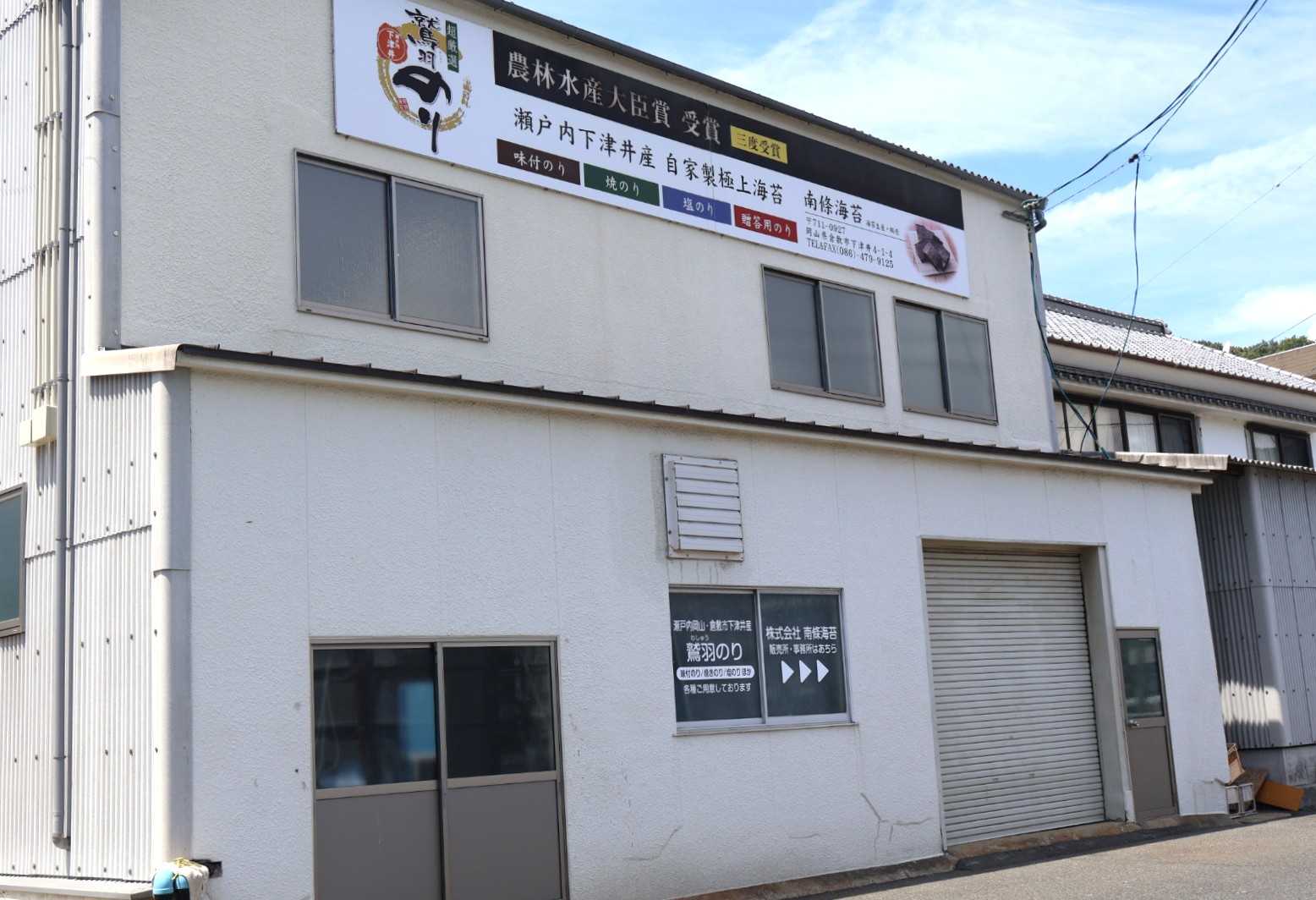
| Organization name | Nanjo Nori Co., Ltd. |
|---|---|
| Industry | Nori cultivation, processing, and sales |
| Representative | Nanjo Yuji |
| Year established | 1974 |
| Address | 4-1-4 Shimotsui, Kurashiki City, Okayama Prefecture |
| Contact | 086-479-9125 (weekdays, 1:00 p.m.–4:00 p.m.) |
| Website | Nanjo Nori |


What would you like to know about Kurashiki?
Enter a search term to find articles on this site