Interview with bartender Akio Takemoto
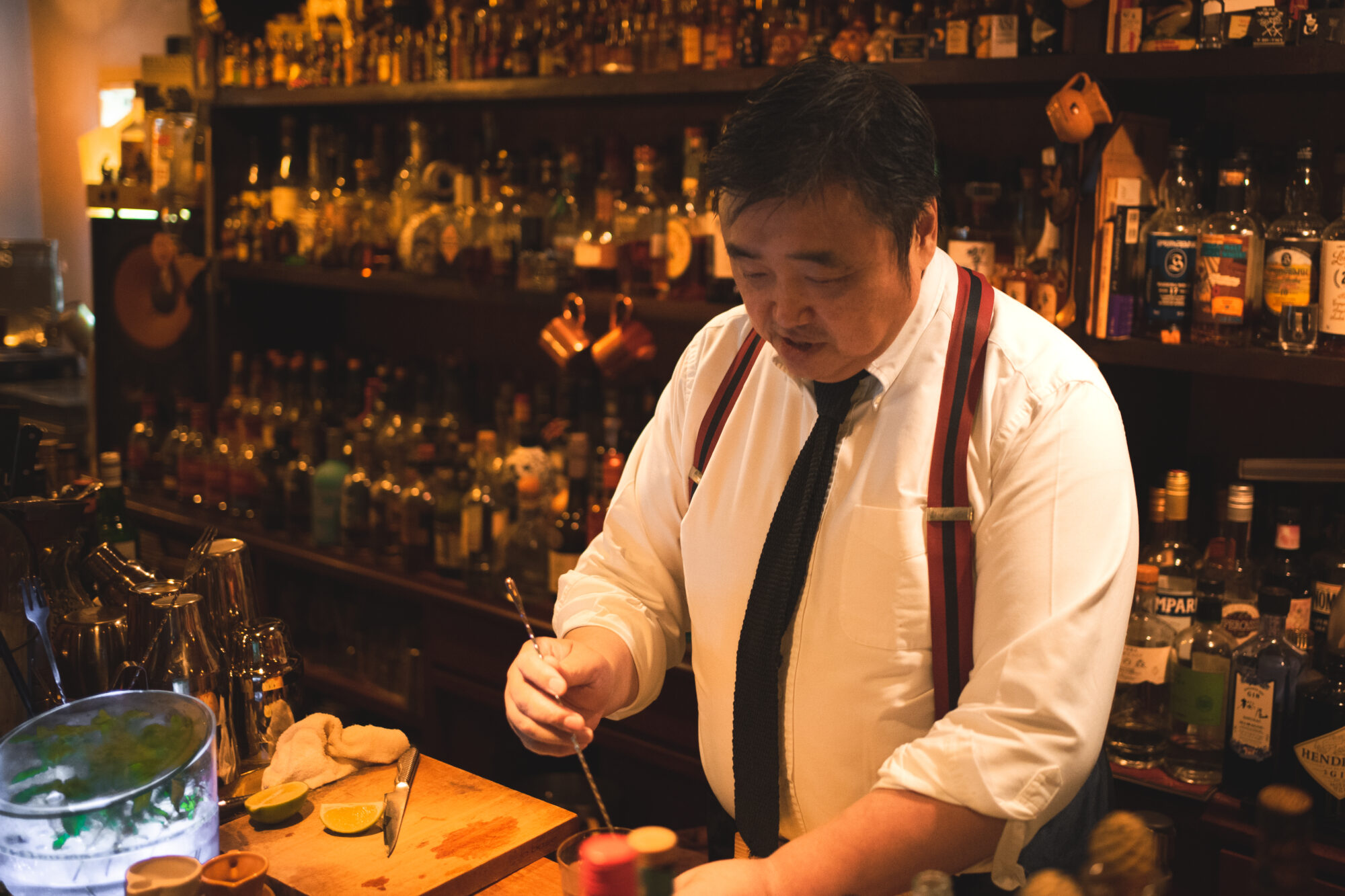
We spoke with bartender Akio Takemoto about the history of BAR TAKEMOTO.
We introduce the story behind the countless bottles of liquor lining this long-established bar in Mizushima.
Before BAR TAKEMOTO opened
Why did you open a bar in Mizushima?
Takemoto (name omitted hereafter)
Because of my father's business, we moved from Osaka to Mizushima when I was 10.
The coffee shop my mother started became popular, and because there weren't enough staff, I helped out there too.
After a while, the idea came up that I should open a shop too. I thought that if I was going to have my own place, I should do what I wanted, so at 18 I joined the Japan Bartenders Association and began studying cocktails, which I was interested in.
From there, I acquired the skills and knowledge needed to be a bartender at workshops and competitions held by the Japan Bartenders Association, and in 1984 I opened a bar in Mizushima at a different location from the current one.
In 1988, I took over the current premises from the previous owner, and have served drinks as BAR TAKEMOTO ever since.
Why did you decide to become a bartender?
Takemoto
In the 1970s, when my mother started her coffee shop, about 10 years had passed since factories began lining Mizushima, and Mizushima was thriving along with Japan's economic growth.
As a result, many of the coffee shop's customers were people working for large companies who often traveled on business or were transferred.
The adult conversations I overheard while serving customers were all about a world I knew nothing about, and I found what they talked about fascinating.
My mother had also worked at a coffee shop in Osaka, where she would shake drinks such as lemon squash before serving them to customers.
Even as a child, I watched with interest as customers enjoyed the drinks.
Through serving customers at the coffee shop, I think I found it interesting to listen to people and make them happy with drinks.
I think that experience is what led me to become a bartender.
His dedication as a bartender
How did you learn your craft as a bartender?
Takemoto
One reason I joined the Japan Bartenders Association at 18 was to learn how to make cocktails at study sessions led by bartenders active in Mizushima at the time.
After I turned 20, whenever I had saved up some money, I went as far as Osaka and Kobe to visit bars and learn.
Rather than studying, I was simply going to bars to drink, but I learned by watching how cocktails were made and learned about the bartenders' personalities through talking with them.
As I got older, my connections through the Japan Bartenders Association gave me more opportunities to travel around the country. I continued learning by visiting bars wherever I went and talking with fellow bartenders about how to make cocktails.
What is important when making cocktails?
Takemoto
The reason behind it—“Why was it made that way?”—is important.
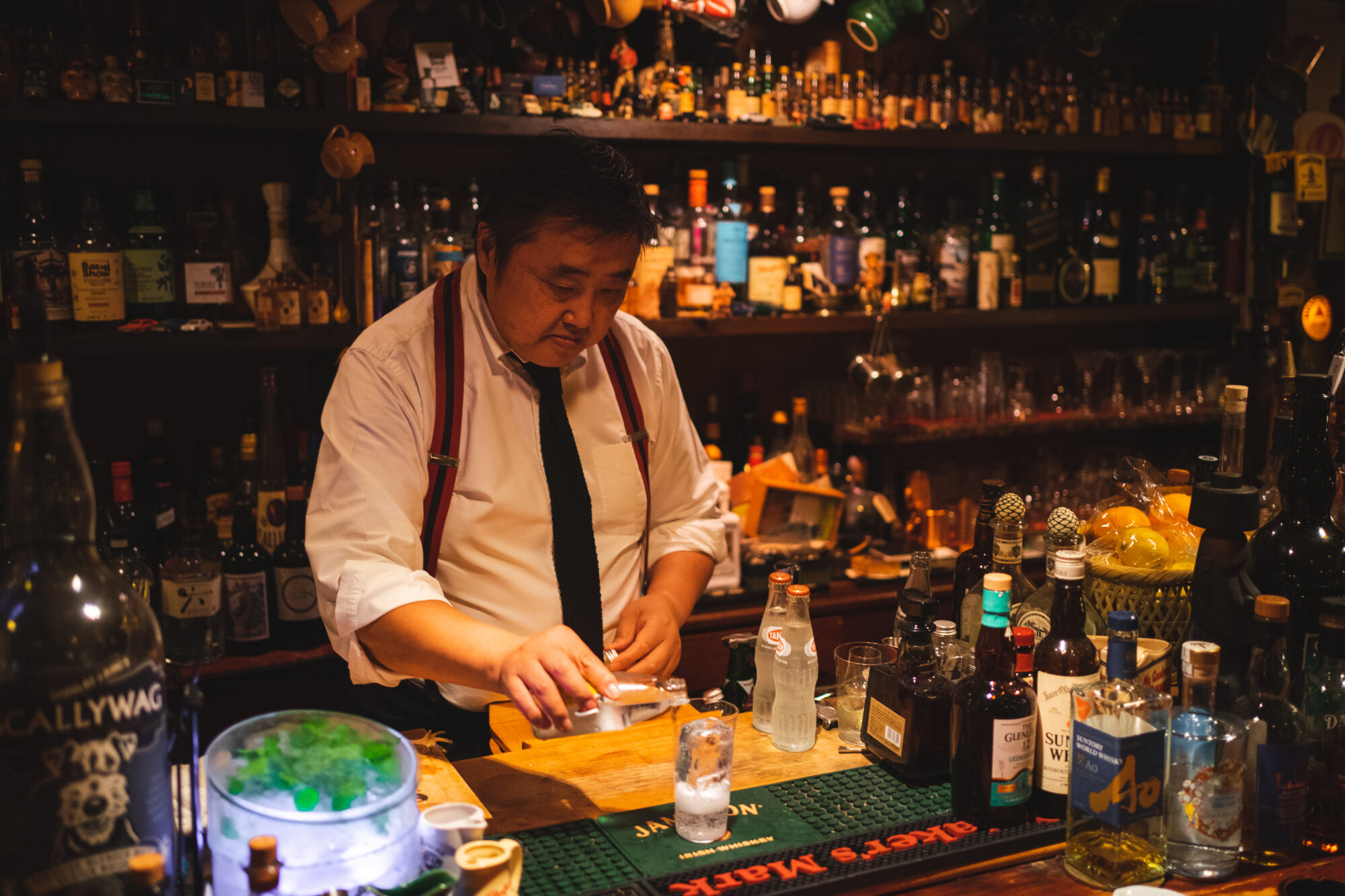
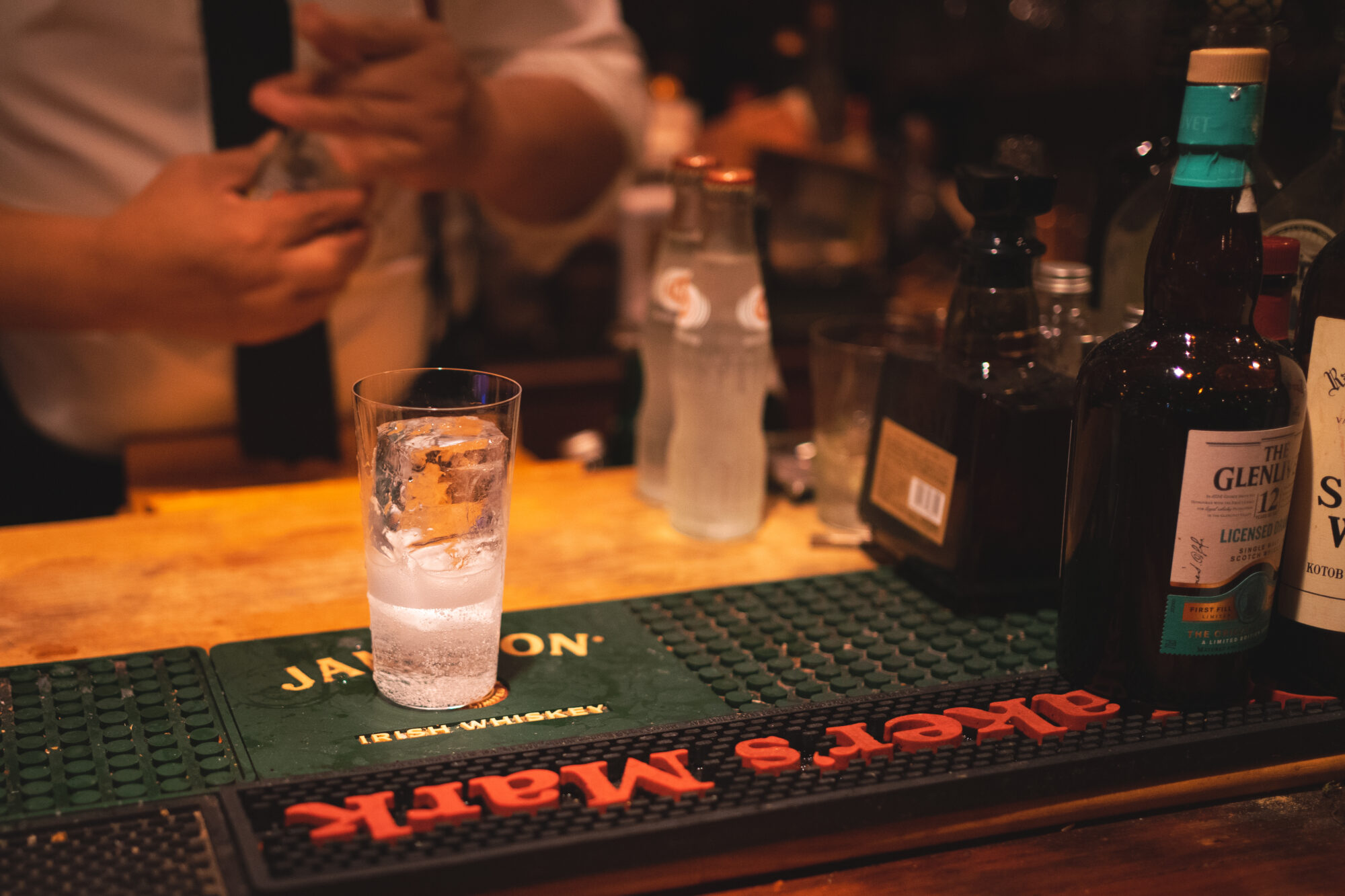
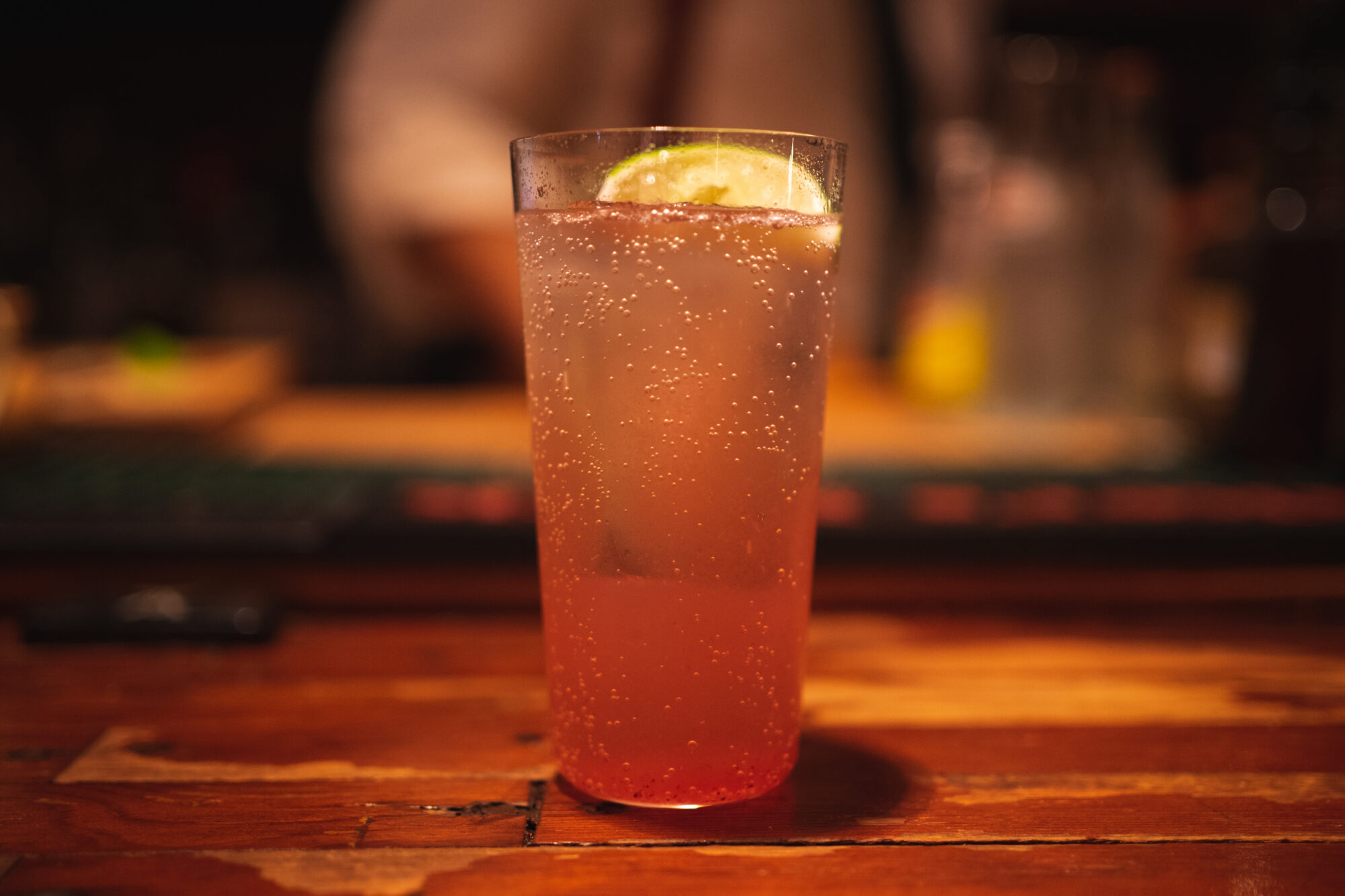
For example, I try to focus on the reason for pouring soda water between the glass and the ice so that it doesn't lose its fizz.
Every cocktail has a basic method of preparation, and it's important to master the “form.”
After that, the secret to making a cocktail delicious is figuring out how to adapt that “form.”
Each bartender has their own ideas about every step of the process.
I don't ask them a lot of questions, but when I was young, I watched closely and learned by figuring out the reasons behind how they made things.
Is there anything you keep in mind as a bartender?
Takemoto
Having an active attitude toward learning new things.
There are bartenders, even among older people, who are always looking for ways to serve better drinks and make their customers happier.
But adopting new things does not simply mean making products that are in fashion.
It's important to experiment and figure out how to make delicious drinks. Things that people keep refining will endure.
If you make something just because it's popular, it will eventually fall out of fashion.
There are clear “forms” for making drinks, but I value the attitude of incorporating new methods and ingredients to offer something better.
Why there are countless bottles of liquor
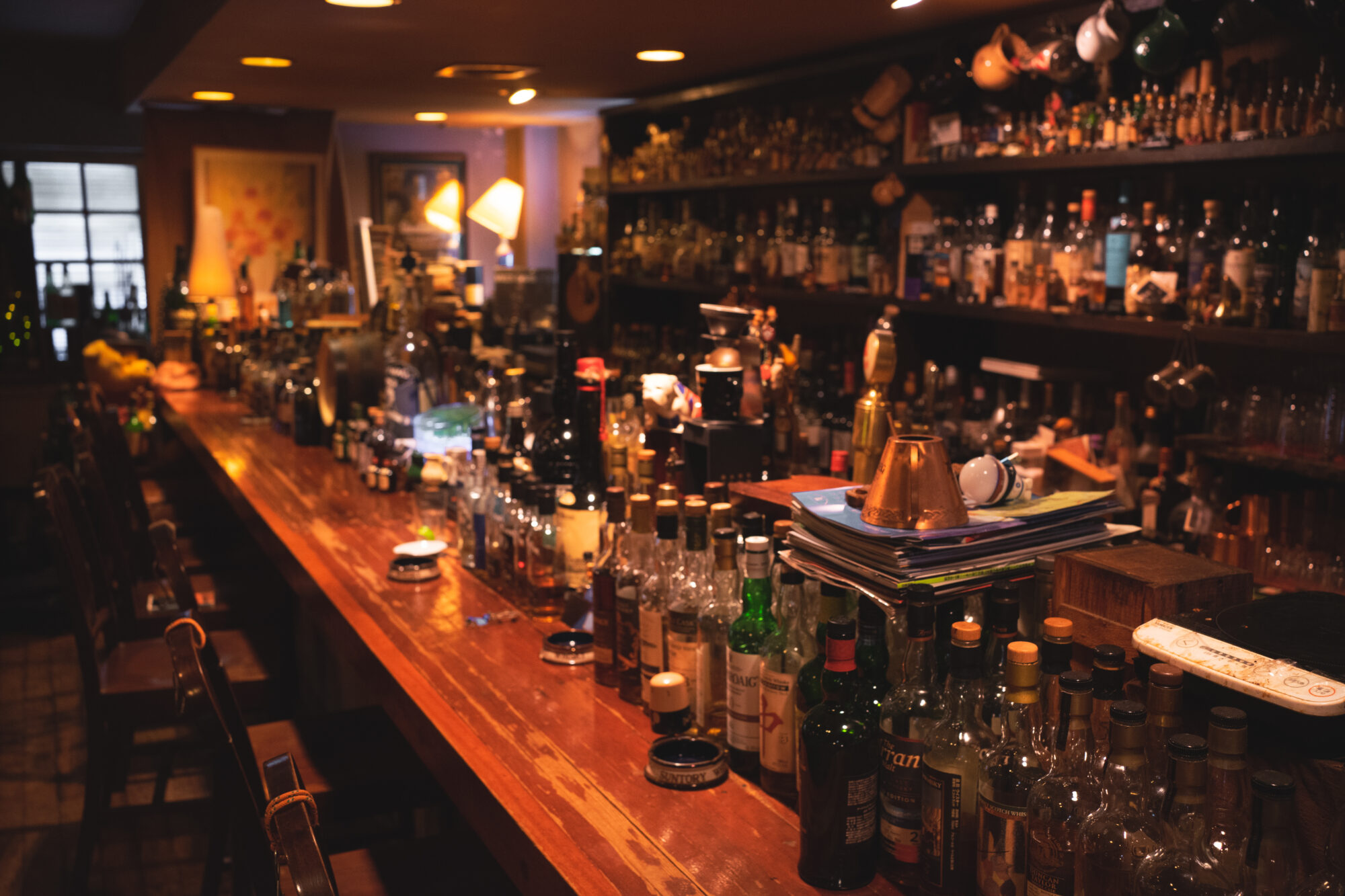
Why did the selection of liquor grow?
Takemoto
When I first opened a bar in Mizushima, many of our customers were company employees who traveled back and forth to Tokyo.
Some customers knew a lot about Tokyo bars and would teach me, saying, “You should stock that drink.”
Customers sometimes introduced me to bars in Tokyo, and I would go drinking there with people I had become friends with.
That helped me build connections with bartenders, and I started getting even more information.
The selection grew because customers taught me about different drinks.
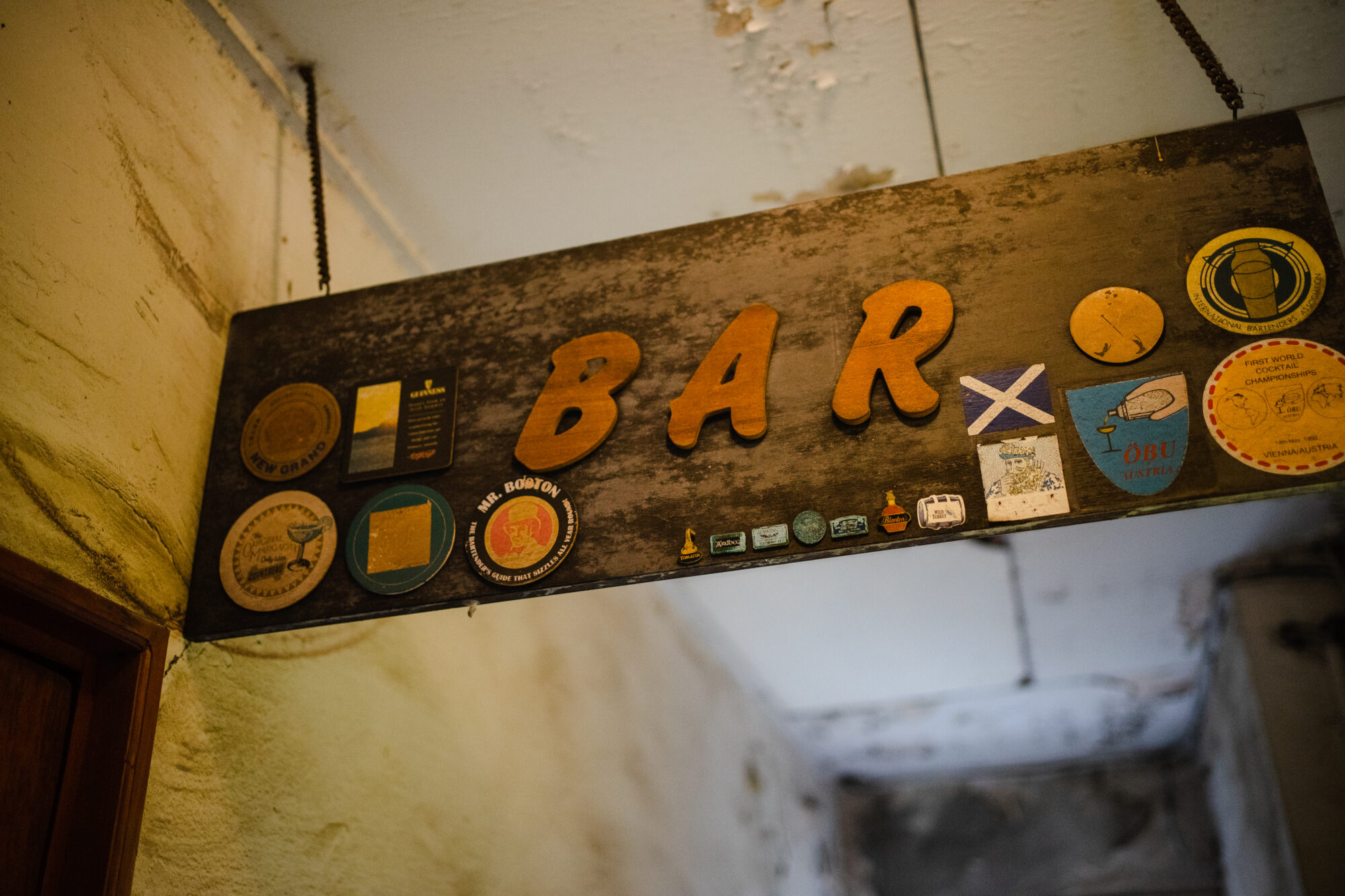
What led to you making more connections with bartenders?
Takemoto
In 1993, I went to Vienna, Austria, to support a friend at a world cocktail competition, where I met a journalist specializing in alcoholic beverages.
He got in touch with me, and we met again in Tokyo. He took me to bars run by people who were known among bartenders as great seniors.
I went around drinking martinis made for me by these senior bartenders at their respective bars, and they introduced me to others.
That's how I met bartenders with whom I still have close relationships today.
Through the people I became friends with there, I went on to connect with bartenders all over Japan, from Hokkaido to Kyushu.
My world expanded through liquor, and I became even more fascinated by it.
To Islay, the holy land of whisky
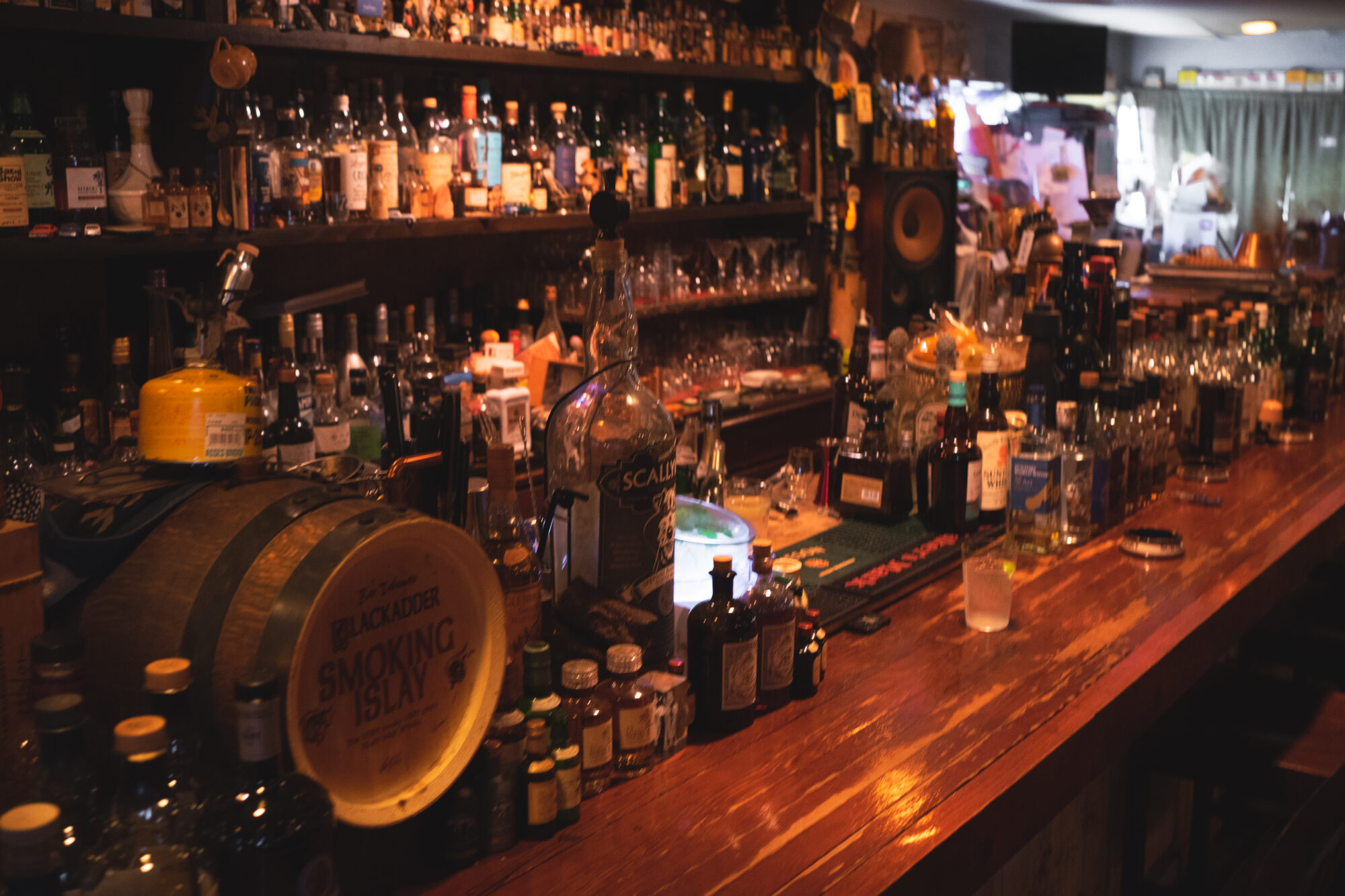
Why did you visit Islay?
Takemoto
I was lucky: among the bartender friends I was close to, there were people who had become Japanese champions and even a world champion.
As I talked with these talented friends, we decided to go together to Islay, the holy land of whisky.
So in September 1997, I went to Islay with 10 friends.
What is Islay like?
Takemoto
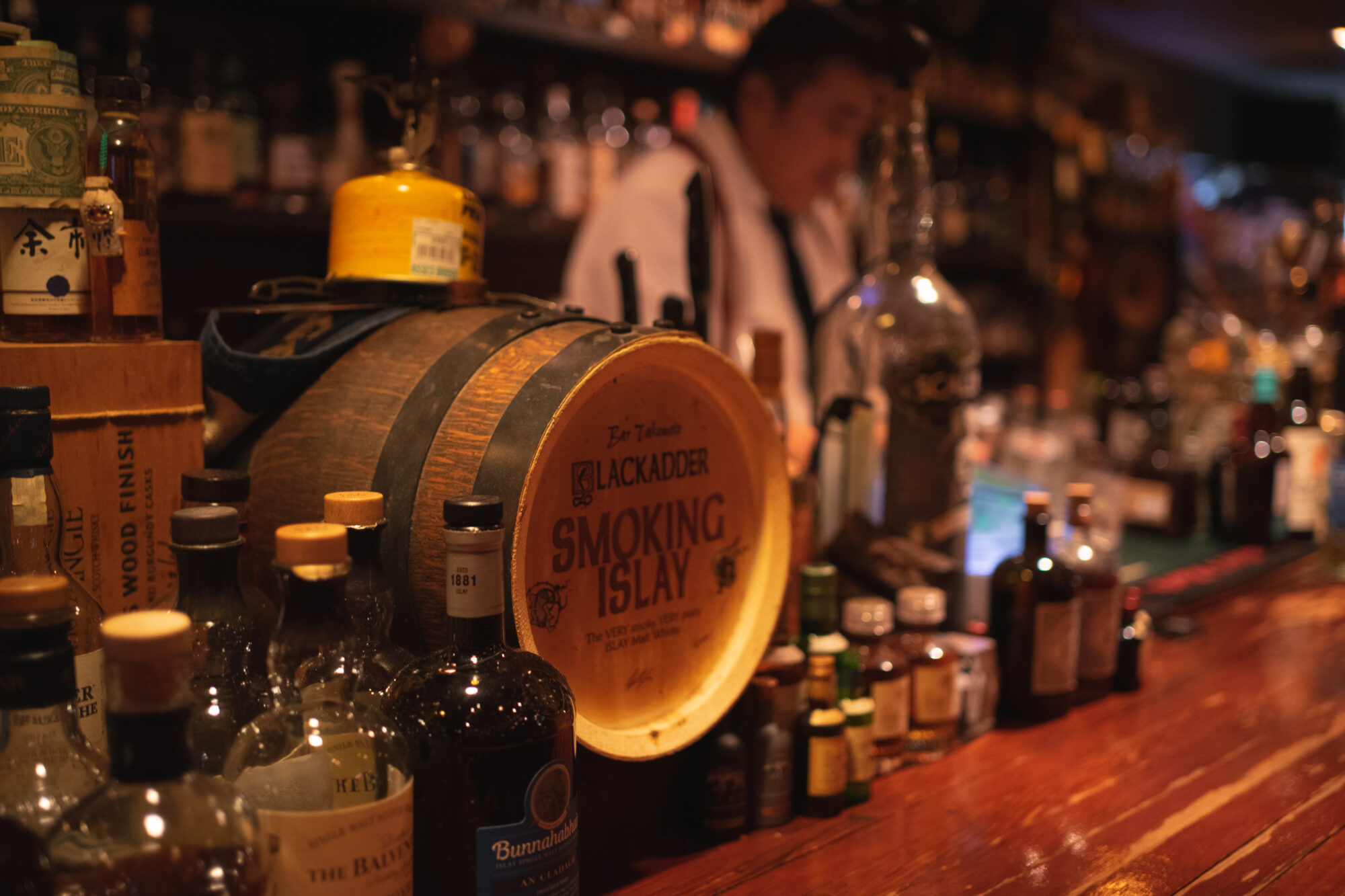
Islay, a Scottish island known as the holy land of whisky, has nine distilleries that produce representative Scotch whiskies.
Whisky made on Islay is known for its smoky aroma.
Islay is about the same size as Awaji Island, and the entire island is covered in peat, a carbonized layer of accumulated wild grasses and aquatic plants.
Malted barley is smoked over peat fires, and the aroma clings to the malt, creating the distinctive smoky aroma of whisky made on Islay.
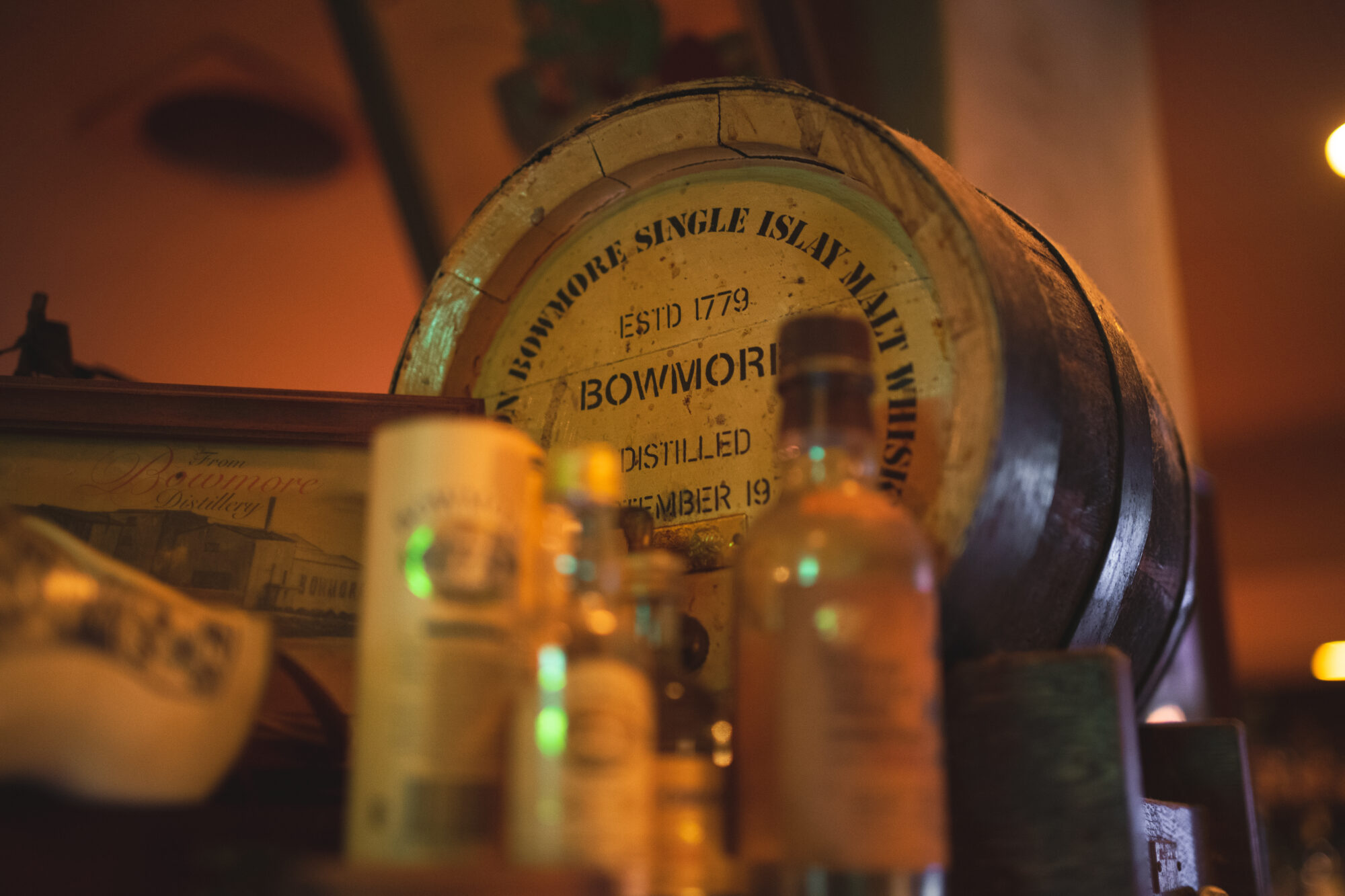
Can you tell us about a memorable experience on Islay?
Takemoto
Jim McEwan, who was then the manager of the Bowmore Distillery, one of the island's distilleries, recognized the 10 of us who had traveled together as outstanding bartenders representing Japan.
Afterward, the heads of the distilleries on Islay approved it, and the Ambassador of Islay, a group formed to promote Islay's culture in Japan, was established.
The world I had discovered through bartending expanded to the holy land of whisky.
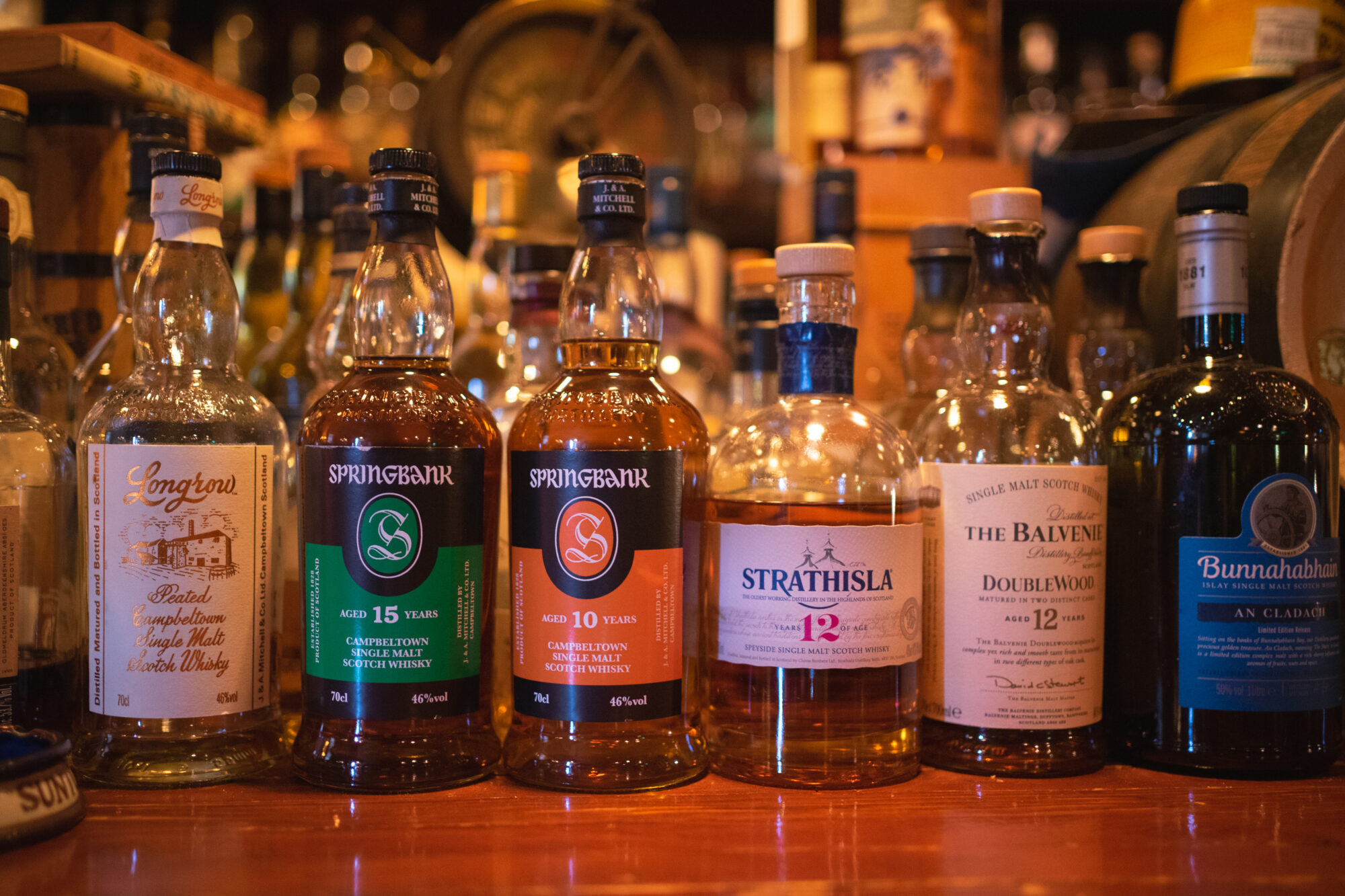
The connections I made by visiting Islay also explain why there are so many whiskies lined up in the bar.
What BAR TAKEMOTO values
Do you have an ideal bar in mind?
Takemoto
On Islay, local regulars would sometimes come to the bar with their dogs, and the bar was part of the lives of the people who lived nearby.
Actually, I went back to the same bar four years after my first visit to Islay, and met the same customers I had seen four years earlier.
Even after several years, the familiar faces still gathered there, giving it the feel of a neighborhood bar.
I felt that BAR TAKEMOTO should also be a neighborhood bar for Mizushima.
What does BAR TAKEMOTO value?
Takemoto
When I was thinking about opening a bar in its current location, I was also invited to set up shop in busy places such as Kurashiki and Okayama.
But I wanted to value connections with people and places that are meaningful to me.
Besides, a glittering city bustling with crowds of people doesn’t suit me.
That’s why I decided to keep running a bar in Mizushima.
When you run a bar in Mizushima, regular customers who work for companies in Mizushima come in, but when they’re transferred, you stop seeing them.
But when they visit Mizushima on a business trip or for some other reason, they stop by again.
I’m glad that it’s become a familiar bar even for people who now live in Tokyo.
The regular customers changing over is also something unique to Mizushima, where large companies line the streets.
I hope to continue serving drinks at a neighborhood bar that feels like Mizushima, while cherishing connections with people.
Visiting BAR TAKEMOTO
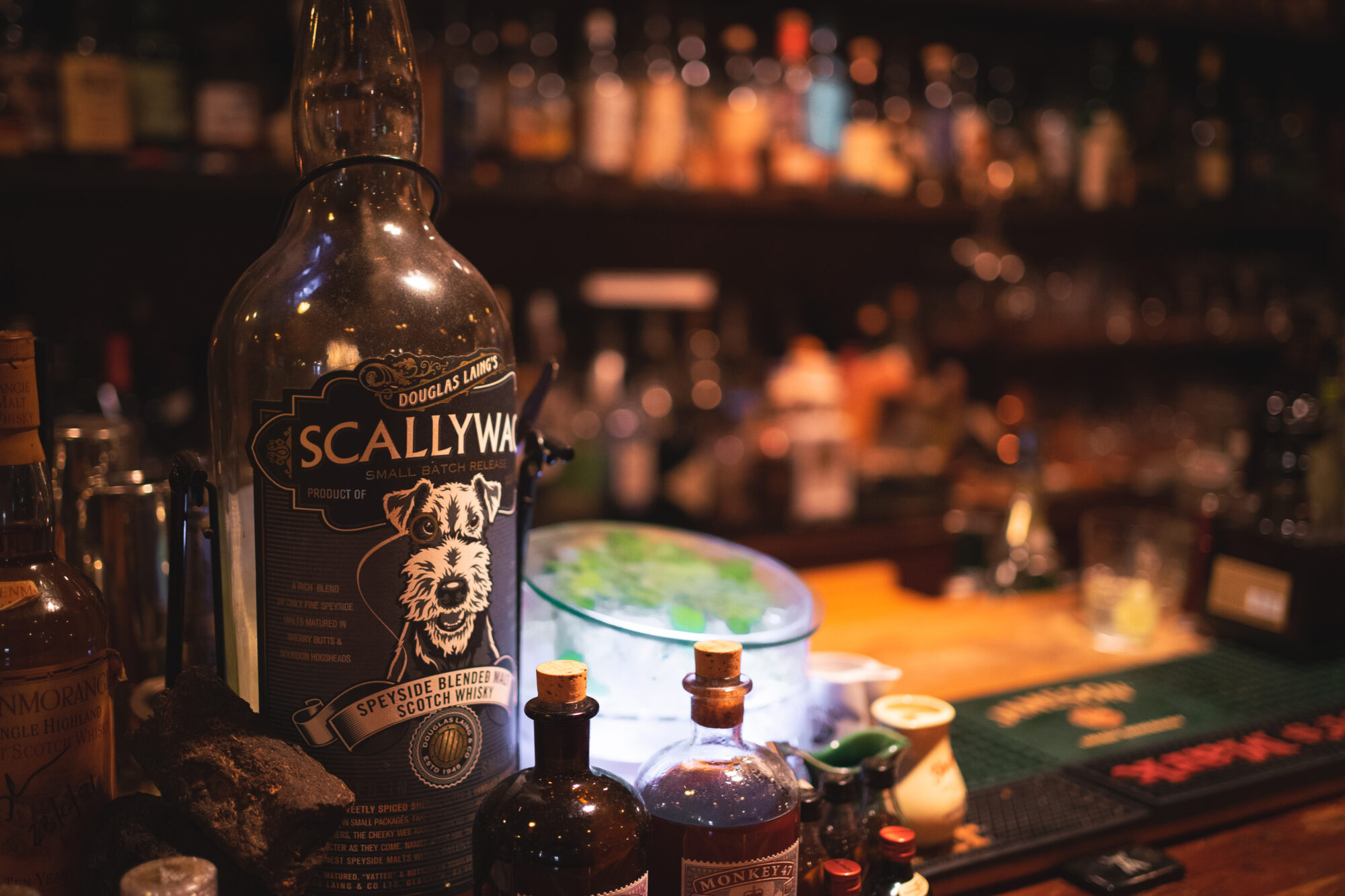
Bottles of liquor filled the top of the bar counter and the wall behind it.
The countless bottles of liquor, illuminated by the dim lights, gave me a sense of BAR TAKEMOTO’s history.
The drinks customers introduced him to when he was starting out, encounters with bartenders he admired, scenes from the whisky mecca of Islay, and all that Takemoto has experienced seemed to be packed into each bottle.
I wanted to hear more about the kinds of drinks Takemoto has enjoyed.
The next time I visit BAR TAKEMOTO, I’d like to listen to the bartender’s stories while savoring smoky Scotch whisky.
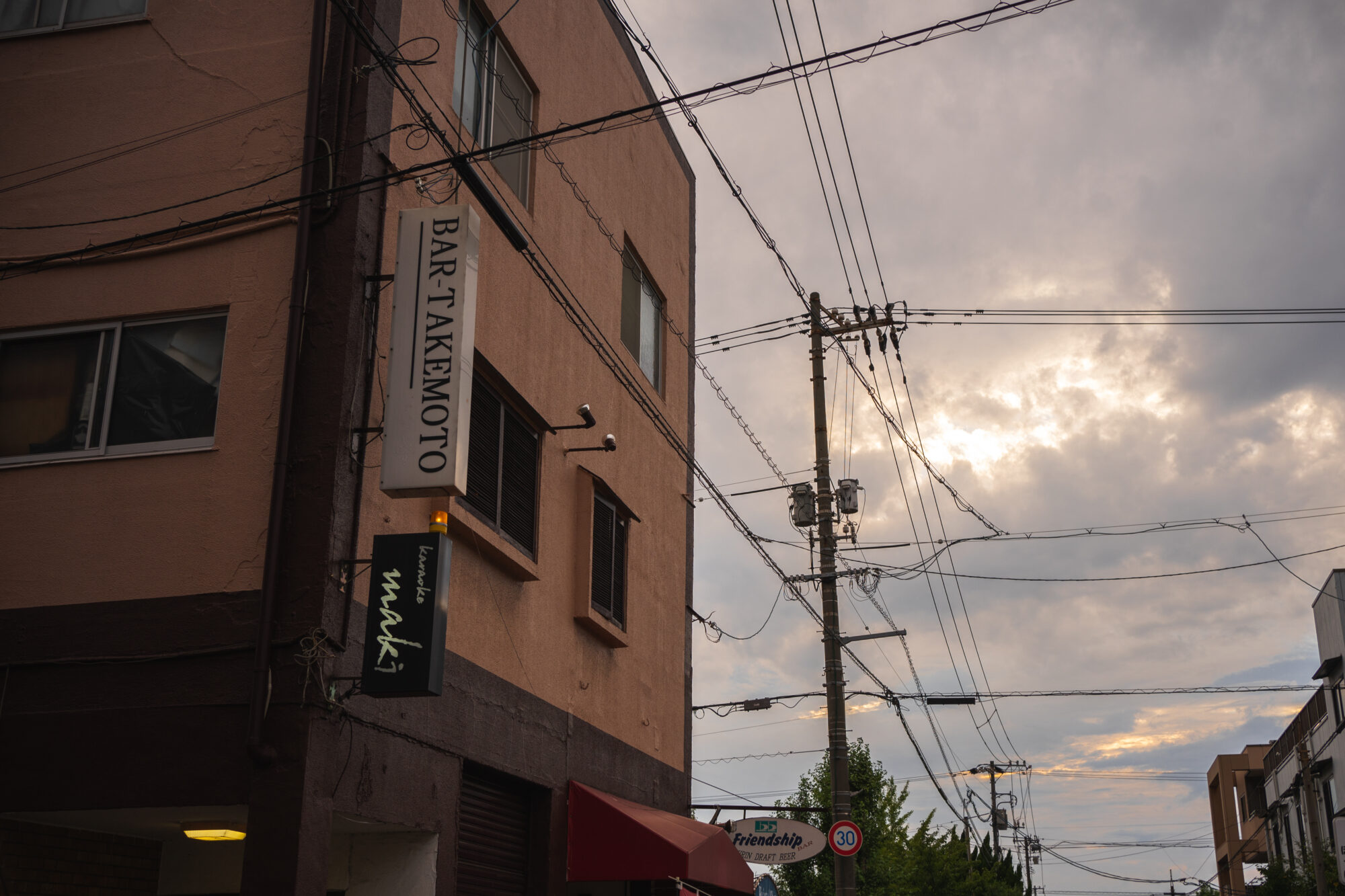
BAR TAKEMOTO Information

| Name | BAR TAKEMOTO |
|---|---|
| Address | 1-17 Mizushima Nishisakae-cho, Kurashiki City, Okayama Prefecture |
| Contact | 086-445-0037 |
| Parking | None |
| Hours | 7:00 p.m.–1:00 a.m. the following day |
| Closed | Sunday |
| Payment methods |
|
| Reservations | Accepted |
| Seating | 20 seats (10 counter seats, 2 tables) |



What would you like to know about Kurashiki?
Enter a word to search articles on this site