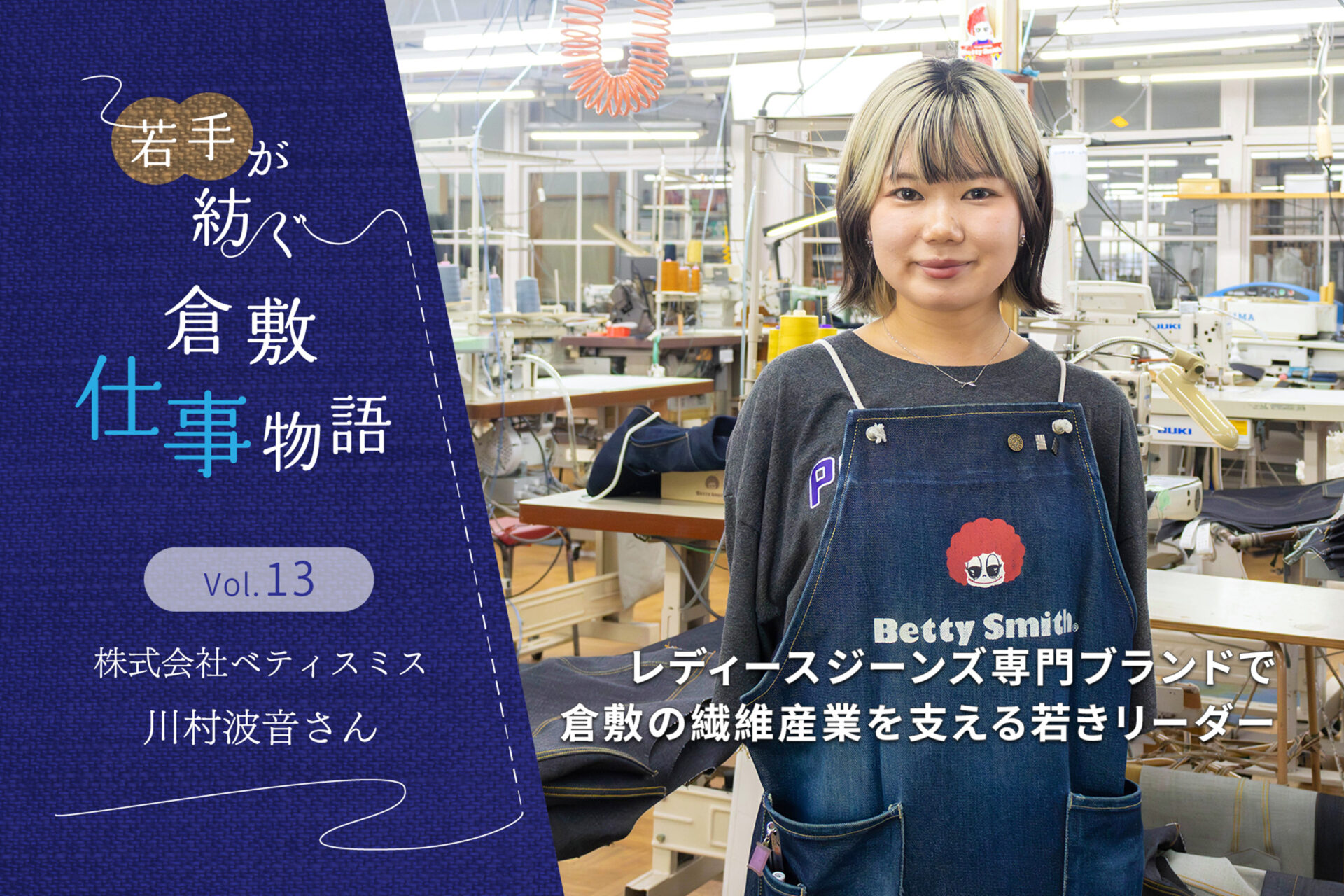
Interview with Kawamura Hanon
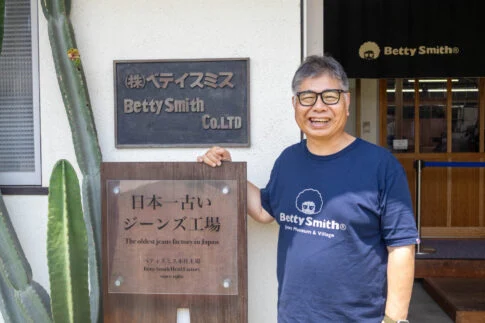
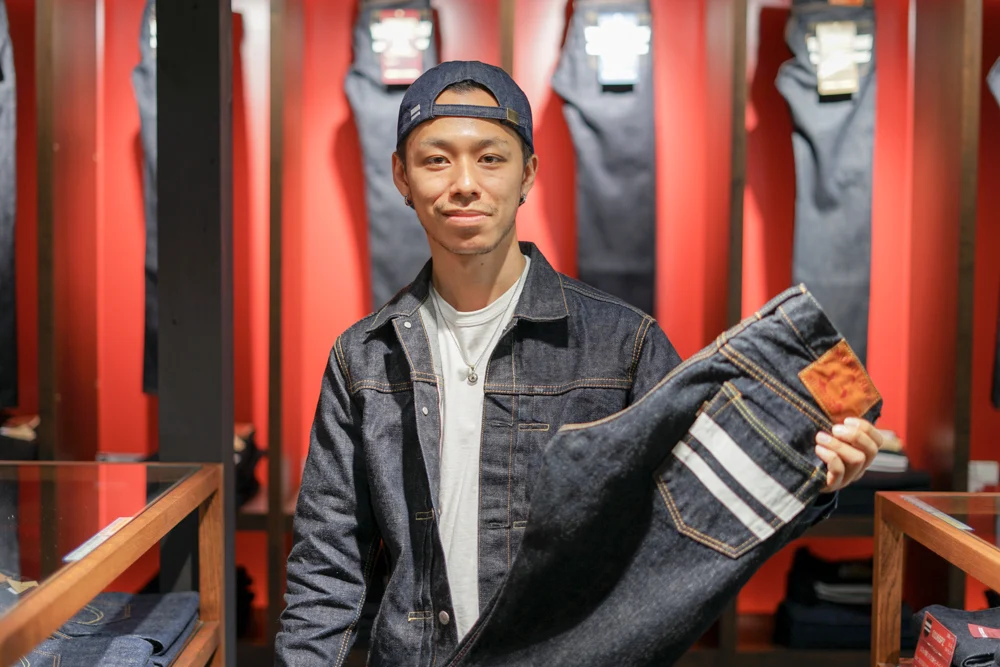
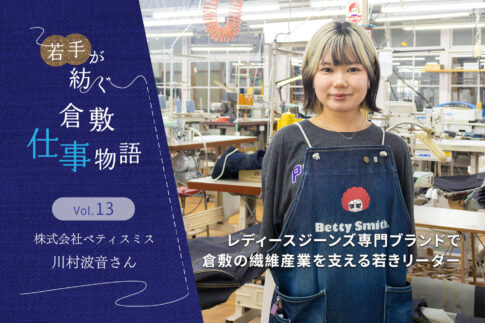
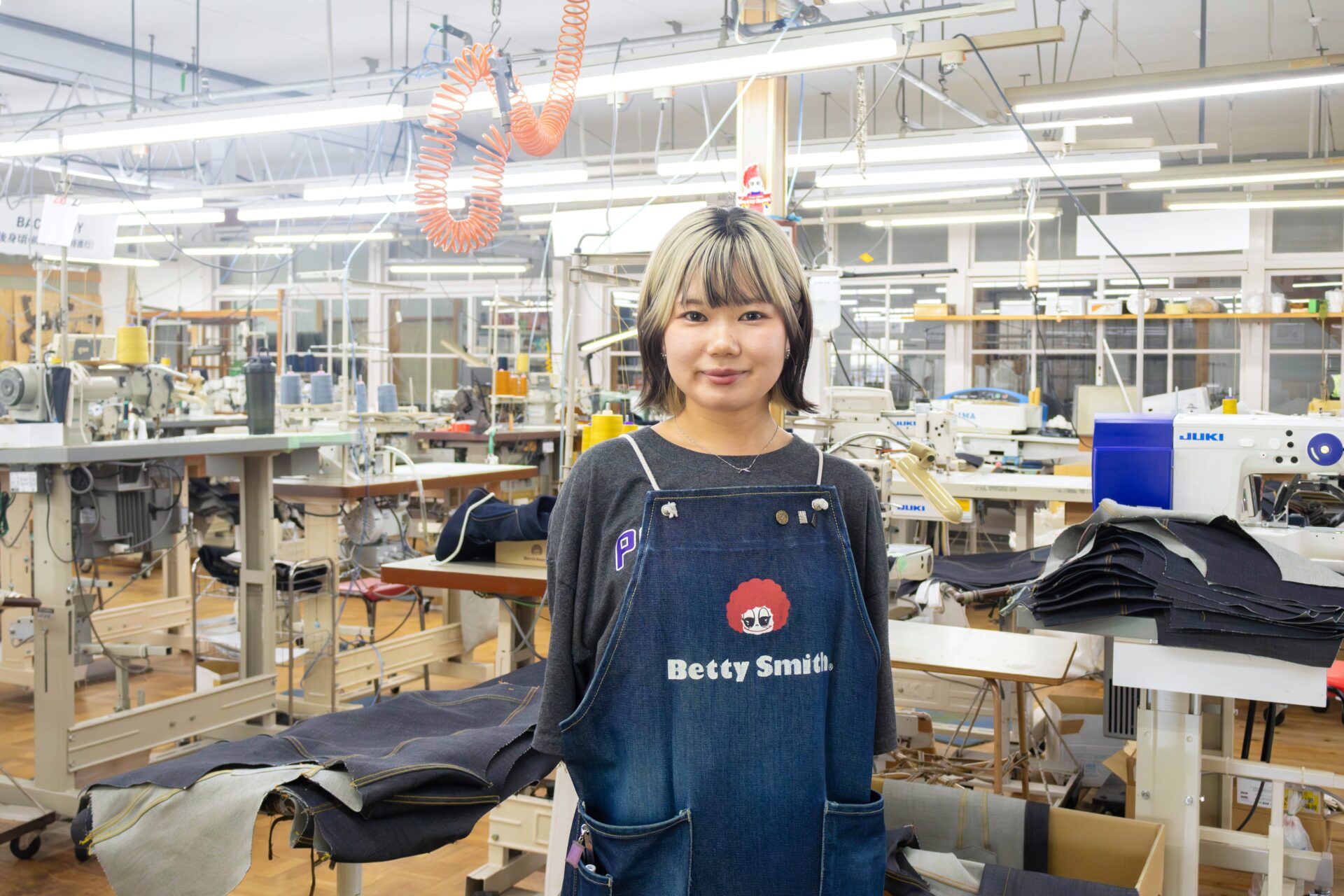
We spoke with young employee Kawamura Hanon who works at Betty Smith.
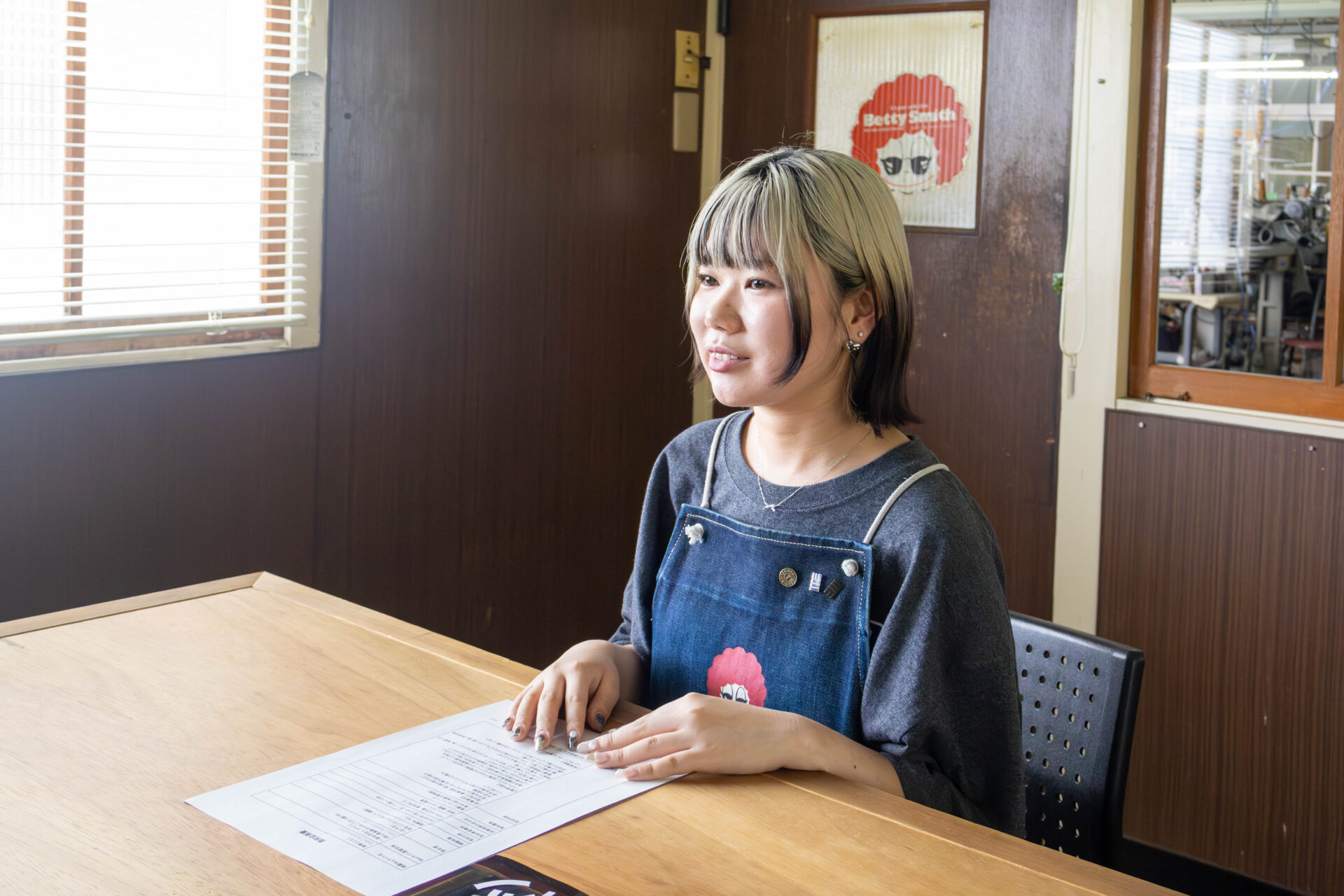
Starting with sewing one pair of jeans alone
How did you learn sewing techniques after joining the company?
Kawamura
At first, I started by getting used to simple tasks like "sewing the fabric straight" while being taught by my seniors.
Also, there was a practical exercise where I had to "first try making one pair of jeans by myself" even though I couldn't sew all the processes yet. I cut the fabric by hand and learned practically how the parts come together to create jeans. It was difficult at first because I wasn't used to the industrial sewing machine, but with the help of my seniors, I managed to shape it.
I heard you were involved in fashion since high school, but was there a difference when you actually made jeans at Betty Smith?
Kawamura
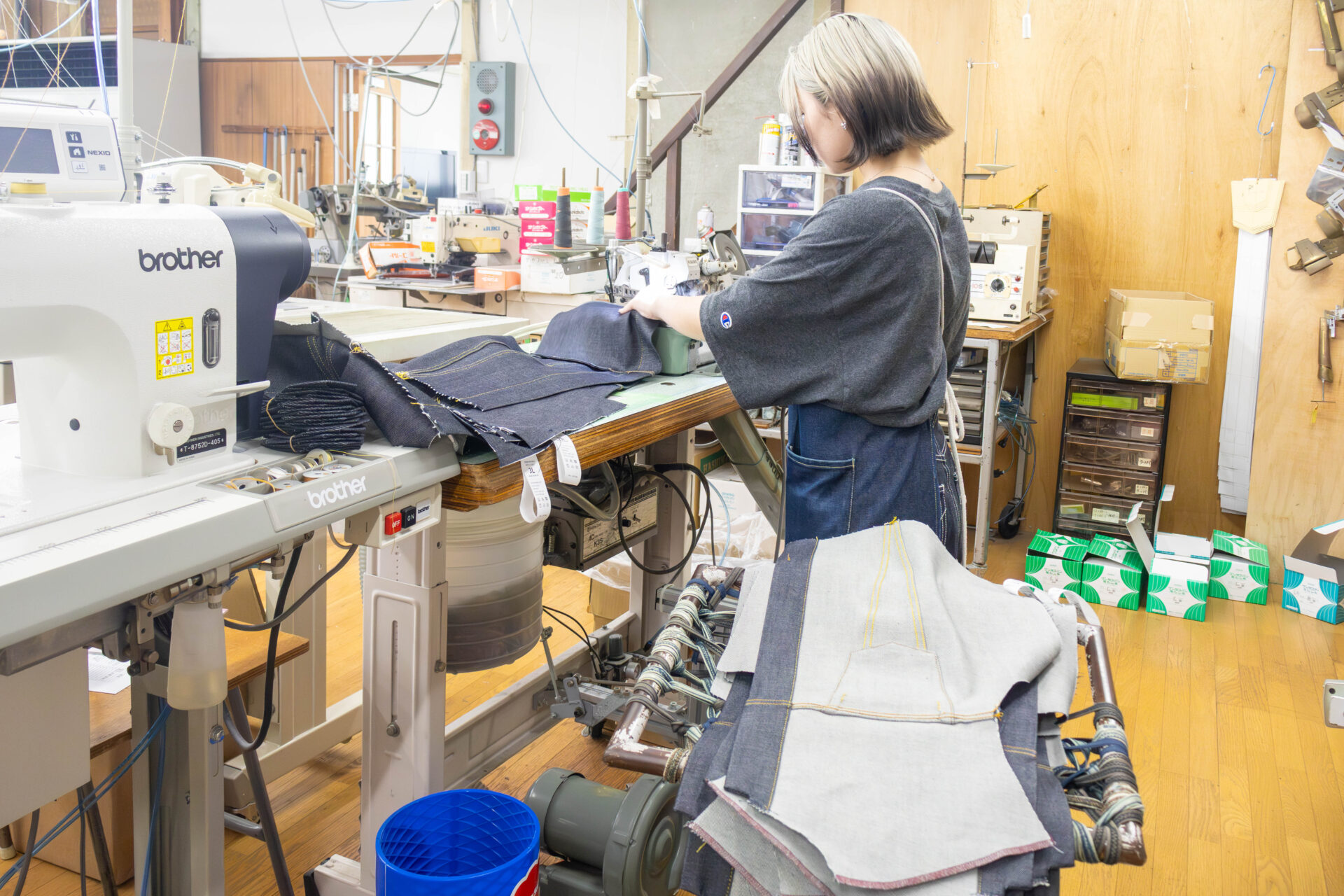
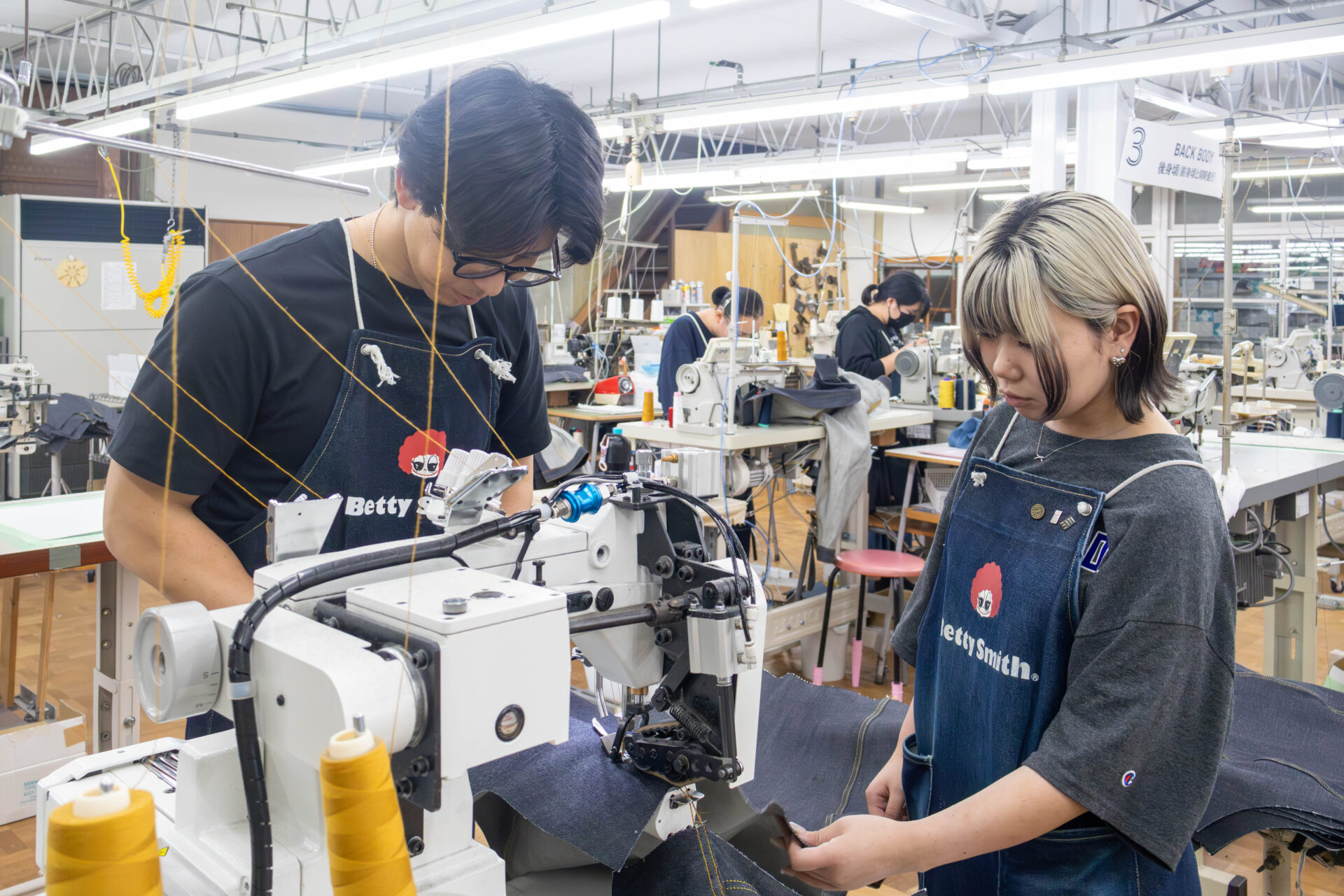
The biggest surprise was the difference between home sewing machines and industrial sewing machines. At Betty Smith, we prioritize efficiency and use "standing sewing machines," and I remember being shocked by the style of sewing while standing.
Also, there are dedicated sewing machines for each process in making jeans. The power and speed of industrial machines are completely different, so at first, I was just trying to get used to operating the machines.
When do you feel the joy and fulfillment of your work?
Kawamura
I really love sewing.
When I can use a sewing machine that I couldn't handle before, or when a task that took two hours can now be completed in one hour... I feel the greatest sense of fulfillment when I realize that my skills are improving.
Now, I spend a lot of time teaching, but I also feel happy when I see the growth of the juniors I am teaching.
Creating a workplace that utilizes each individual's personality
While working, do you ever feel, "This is unique to the Betty Smith factory"?
Kawamura
They assign work according to each person's strengths.
For example, for someone who wants to focus on one task quietly, they might assign them a time-consuming process, while for someone like me who wants to try various tasks, they allow us to experience a variety of work. I think there is an environment that tries to nurture individuality.
As a leader, is there anything in particular you are conscious of when teaching your juniors?
Kawamura
Tailoring my communication to the individual.
Some juniors thrive when given a time limit to focus, while others may work more smoothly if I explain things carefully first to alleviate their anxiety.
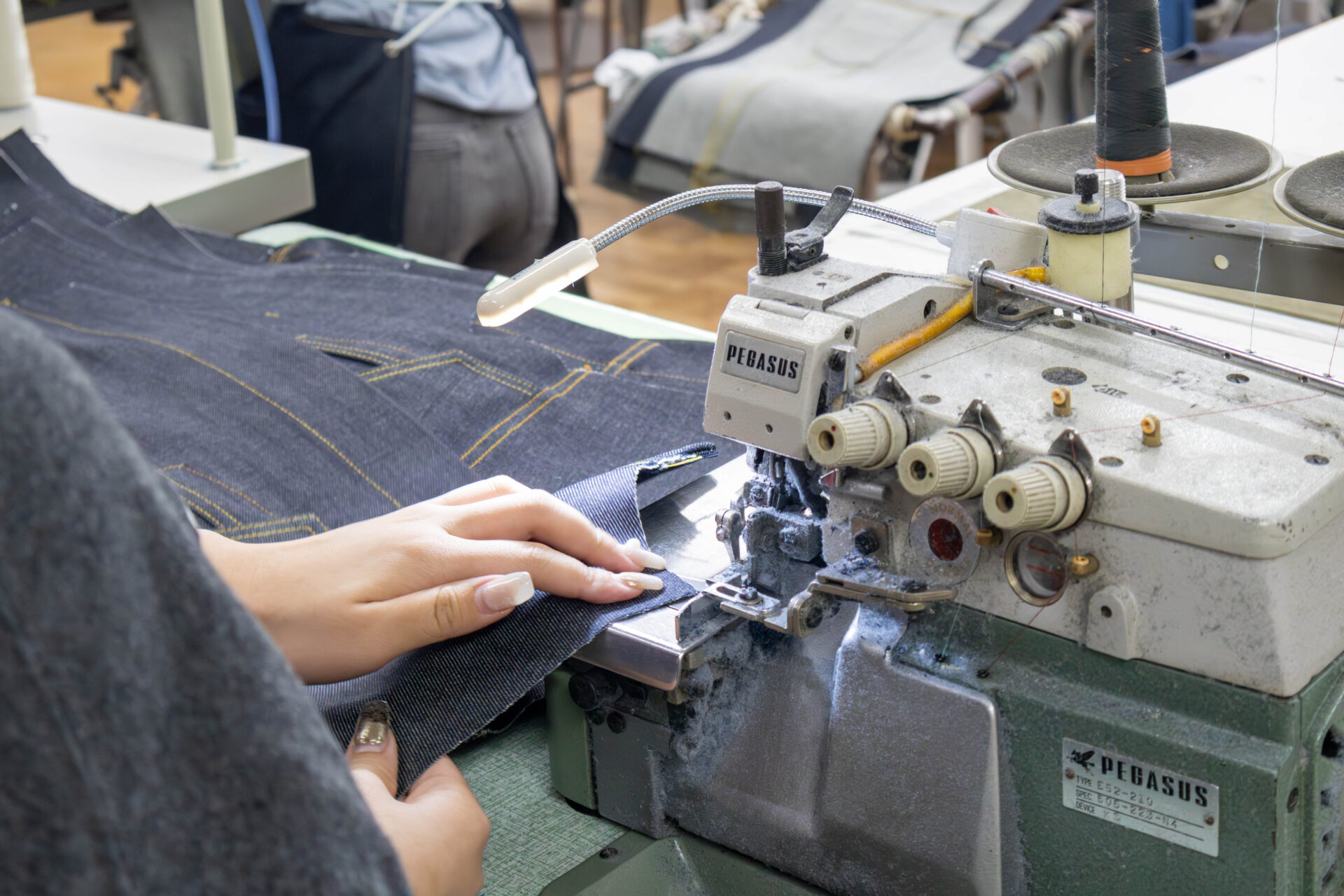
Also, when mistakes happen, I make sure to explain the reasons for "why it is wrong." For example, if they understand that "if this is off by 1mm, the fabric won't fold properly in the next process," they can work while imagining the next steps, which helps prevent mistakes.
Have you ever felt down after making a mistake?
Kawamura
Of course. There have been countless times. But one day, I suddenly thought, "Even if I keep feeling down and thinking about it, my skills won't improve."
What’s important is to switch my mindset and focus on the next task. I also tell my juniors, "This is a path everyone goes through" and "This was a mistake that leads to the next step," creating an atmosphere where they can work positively.
Becoming a reliable leader who can depend on others because I am not perfect
What challenges have you faced as a leader?
Kawamura
Honestly, at first, I was worried about whether I could communicate effectively. There were times when I struggled with how to interact with people who were different from me.
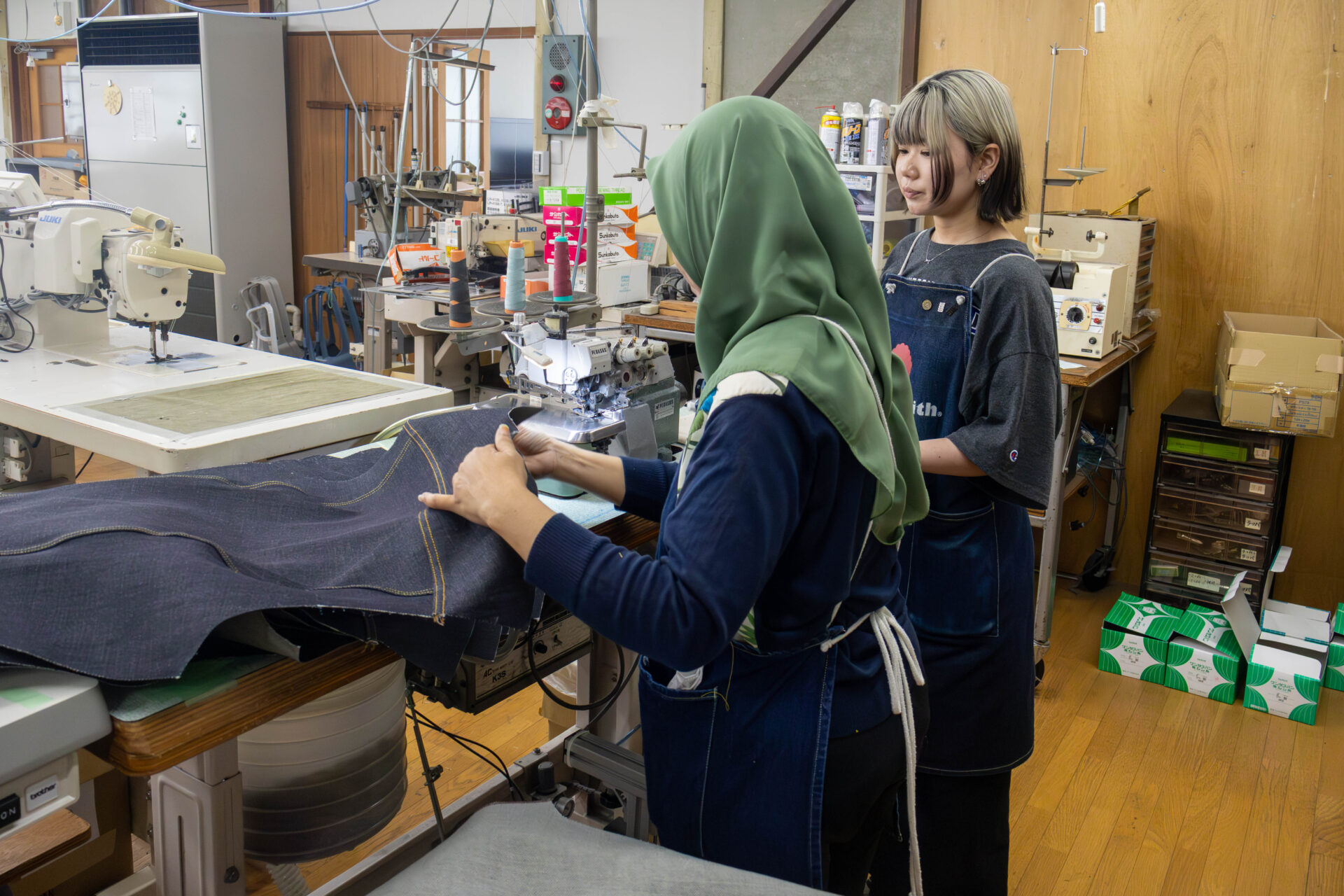
However, compared to the previous leader, I am not a perfect leader. That’s why I started asking the staff around me, "How do you do this?" By showing my willingness to rely on everyone, communication naturally increased, and it became easier to talk.
Even veterans with over ten years of experience cooperate kindly without showing any displeasure at my instructions. I think it’s an environment with many kind and gentle people.
What are your goals for the future?
Kawamura
I want to become independent one day and have my own brand.
Many people at Betty Smith become independent, and the president supports our dreams by saying, "Those with goals grow more." I believe that the experience of being involved in all processes from planning to manufacturing and sales here will definitely be beneficial when I become independent.
Finally, please give a message to readers of your generation.
Kawamura
Being involved in what you love is the greatest motivation for work.
Of course, there may be times when you struggle at work, but if you cherish your "likes" and choose a path related to them, you will surely be able to live authentically. Please take the time to find what you love so that you can enjoy working as much as possible.
Conclusion
The author was surprised by Betty Smith's policy of actively supporting independence during the interview.
The environment where one can be involved in all processes of making jeans has a lot to learn and remember, and there will surely be challenging moments. However, because there is a goal of independence, I believe that many employees can view the difficulties as mere stepping stones and approach their work with enthusiasm.
Even after becoming independent from Betty Smith, they will likely continue to thrive in various places as key players in the textile industry.
Kawamura, who supports the textile industry in Kurashiki while nurturing juniors to become key players, is someone I want to continue to support as they work hard towards their goals.
Young people weaving the Kurashiki work story Back issues

Data of Betty Smith Co., Ltd.

| Organization Name | Betty Smith Co., Ltd. |
|---|---|
| Industry | Planning, manufacturing, and sales of casual jeans |
| Representative Name | Oshima Yasuhiro |
| Year Established | 1962 |
| Address | 5-2-70 Shimonochō, Kojima, Kurashiki City, Okayama Prefecture |
| Contact Information | Please contact us via the form https://betty.co.jp/contact2/ |
| Homepage | Betty Smith Homepage |