Interview with three people involved with FM Kurashiki
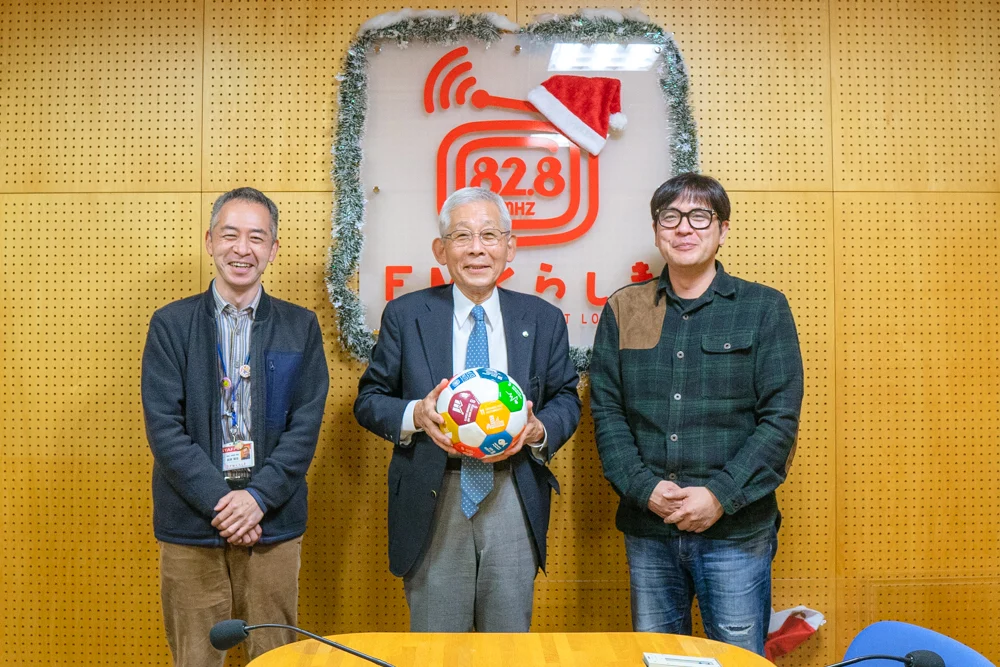
The interview content from the initial interview in December 2021 is presented here.
The beginnings of FM Kurashiki
What prompted you to establish FM Kurashiki?
Okubo (honorifics omitted)
I felt that we were entering an era when information would become important, so I wanted to create a hub for sharing information.
Around that time, regulations changed to allow radio stations to be established even in small towns.
I had thought that radio stations were something that required companies or large amounts of capital to get off the ground, but I thought it sounded interesting that one could be established in Kurashiki, too.
Also, since amateur radio was my hobby, I decided to use a radio station in the public interest to share information, something I had already been thinking of doing.

What preparations did you make?
Okubo
A few people who were central to community development in Kurashiki set up the FM Kurashiki Launch Preparations Office.
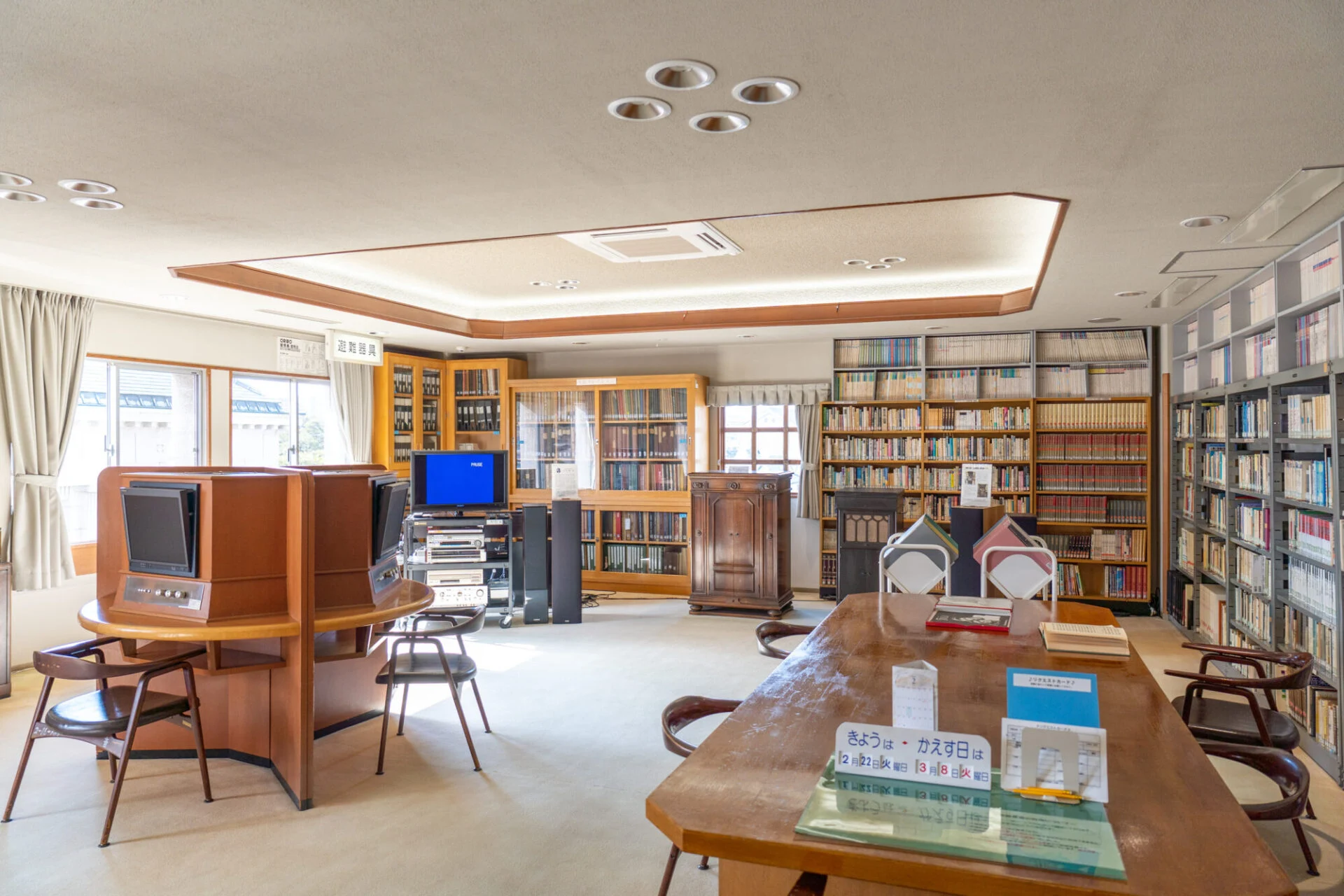
Our first meeting was held in the music library at Kurashiki Community Center.
It housed thousands of LP and SP records, and we thought we would start from a place that symbolized information and culture.

Photo courtesy of FM Kurashiki Co., Ltd.
In fact, when we launched, we even made a program called “Music Library,” and we still broadcast a program that carries on that tradition, now called “Kurashiki Music Street.”
When we decided to start a community FM radio station, there were only a few stations in other parts of Japan.
Japan’s first community FM radio station was FM Iruka in Hakodate, which opened in December 1992, and the second was FM-HANAKO in Moriguchi, Osaka.
Members of the launch preparations office and I went to visit them, and afterward we worked on preparations such as raising funds and securing a site.
What kind of program did you broadcast on opening day?
Okubo
We held a Shinto ceremony in front of the FM Kurashiki building from 8 a.m.
But I was extremely nervous, and my memory of how many people were there and who took part is hazy.
After the ceremony, we all went into the studio and got ready to play a tape with recorded audio.
Broadcasting began at 8:28 a.m., in reference to FM Kurashiki’s frequency of 82.8 MHz.
Takeshi Nakada, then mayor of Kurashiki City, pressed the button to start the broadcast.

Photo courtesy of FM Kurashiki Co., Ltd.
After that, we held a ceremony at 11 a.m., then went around looking at the Christmas trees decorated around Kurashiki City for a program called “Christmas with Radio.”
Finally, we wrapped up with a broadcast from the site of the Christmas tree displayed at Kuraray Co., Ltd.’s Kurashiki Plant in Tamashima, starting at 11 p.m.

What FM Kurashiki’s presenters care about
What led you, Mr. Maezawa, to become a presenter at FM Kurashiki?
Maezawa (honorifics omitted)
I had always loved radio, and I was job hunting with the goal of becoming an announcer.
Things didn’t go as I had hoped, though, and in the end I chose to work for a video production company in my hometown of Yonago.
We mostly produced publicity videos for local governments and companies, but at the time I couldn’t quite grasp what made a good video or how to edit one.
After a year and a half, I decided it wasn’t for me and started looking for another job. FM Kurashiki was recruiting presenters, and they responded positively to my application.
I have been a presenter at FM Kurashiki for 24 years, since 1998.
Is there anything you particularly focus on as a community FM presenter?
Maezawa
Place names.
I think many listeners feel happy when they hear the name of the place where they live on the radio.
Actually, when I moved to Kurashiki to work as a presenter, I struggled because I couldn’t pronounce the place names properly.
Most listeners are local people, so I couldn’t be the only one who didn’t know the area.
Since I’m talking to people through the radio, I need to know where each place is and what’s there.
I studied maps to learn what was where until I could say the names smoothly and naturally.
Because we’re a community FM station, I hope to build a sense of familiarity by sharing lots of place names that are close to the hearts of people in Kurashiki.

What led you, Mr. Otani, to become a presenter at FM Kurashiki?
Otani (honorifics omitted)
I loved radio and had been listening to it ever since I was in junior high school.
The first letter I sent to a radio program was for a segment where listeners confessed their feelings to someone they liked.
I sent it in thinking no one would find out, but when I went to school the next day, almost all my classmates had figured out it was me.
I must have chosen a silly radio name, the kind a junior high school student would come up with.
At the same time, it was an experience that made me realize the influence of radio.
After graduating from university, I got a job in the apparel industry, but I really wanted to speak on the radio, so I started looking for a new job.
I also sent a tape of my recorded voice to FM Kurashiki, but I wasn’t hired at the time.
After that, I studied in the UK for a year, and when I returned, I worked as a presenter at FM Kirara in Yamaguchi Prefecture.
After moving back to Kurashiki, I interviewed with FM Kurashiki and was hired.
I have been a presenter at FM Kurashiki since 2003.

Is there anything you consider important as a community FM presenter?
Otani
My relationship with listeners.
I try to deliver information from a position where I can empathize with them.
When the July 2018 heavy rains in western Japan occurred, I sometimes didn’t know how to relate to the affected areas.
I actually went to the disaster-stricken areas and saw the extensive damage firsthand.
In the midst of the chaos, no matter how much I tried to empathize with the people affected, I couldn’t, and I felt frustrated.
I lost sight of how I should be involved—as a member of the media, as a radio presenter, or simply as a person.
Because of that experience, I now face the microphone with the conviction that no one should be left behind.
If someone says they don’t understand something, I intend to explain it thoroughly.
This is no longer an era when people are revered simply because they broadcast over public airwaves.
Through sharing information on the radio, I aim to be a presenter who can walk alongside local people, leaving no one behind.

The future of FM Kurashiki
What would you like to share through FM Kurashiki?
Okubo
When we established FM Kurashiki 25 years ago, we thought our most important role was to gather and deliver local information.
For example, only community FM can feature and share information about local shops and events.
Our role has always been, and will continue to be, sharing information while staying close to the community.
Furthermore, we have come to wonder whether we can make it a place that helps solve the challenges facing the community.
After running a radio station for 25 years, you begin to see the challenges facing the community.
We see ourselves as a hub for solving problems—one that can not only broadcast information but also help local people gain new insights, so that Kurashiki can grow into a better city.
And presenters play an important role in raising awareness that encourages the community to grow.
By becoming deeply involved with the community, presenters can share information in a way that leaves no one behind.

Maezawa
To contribute to solving local challenges, I first need to make sure I’m not left behind myself.
If I don’t know not only about Kurashiki but also about world affairs and national politics, I’ll inevitably be left behind.
Whatever a guest’s profession or background, presenters need the ability to draw out information effectively through conversation.
To do that, the day before a broadcast, there are times when I study nonstop until I go to bed.
For anyone whose work involves sharing information, studying every day is a given.
It’s demanding, but I want to keep studying constantly so that I don’t fall behind.

Otani
Of course, studying is important, but to explain things clearly, you have to be the ultimate layperson.
For example, when talking with a guest, you keep in mind what needs to be conveyed, while drawing it out of the guest through conversation so you can share it with listeners.
A layperson’s perspective helps you imagine the situation of listeners receiving new information.
And to get people to listen, it’s important to empathize with them.
Because community FM is so close to the local community, radio can also convey warmth and compassion.
I believe radio can inspire and encourage people, so as a presenter, I want to share information with heartfelt words.

Hearing from people involved with community FM in Kurashiki
The writer lived in Tokyo, Saitama, Chiba, and Kanagawa until the age of 28, and remembers that topics shared by mass media in the Tokyo metropolitan area often covered a broad swath of Japan as a whole, while local public information did not feel close at hand.
On the other hand, after moving to Kurashiki, I began hearing familiar place names and local company names on the radio, and I remember starting to feel that radio was something close to me.
I was delighted to hear about events and shops I had visited, described in the radio host’s fluent words.
Since moving to Kurashiki, I’ve discovered that community FM radio is a warm presence in the lives of local people.
I’ve also come to feel a sense of closeness to the community FM hosts who share local information in a clear, enjoyable, and warm way.
The words we hear on the radio as we listen casually are backed by the hosts’ daily study and honing of their skills to share information.
Hearing from the people who share local information on community FM has made radio even more appealing to me.
I want to listen more closely and take in local information filled with warmth.


What would you like to know about Kurashiki?
Enter a search term to find articles on this site