
“Weekly Kurashiki Happy Radio” airs every Friday from 3:00 p.m. to 7:00 p.m.
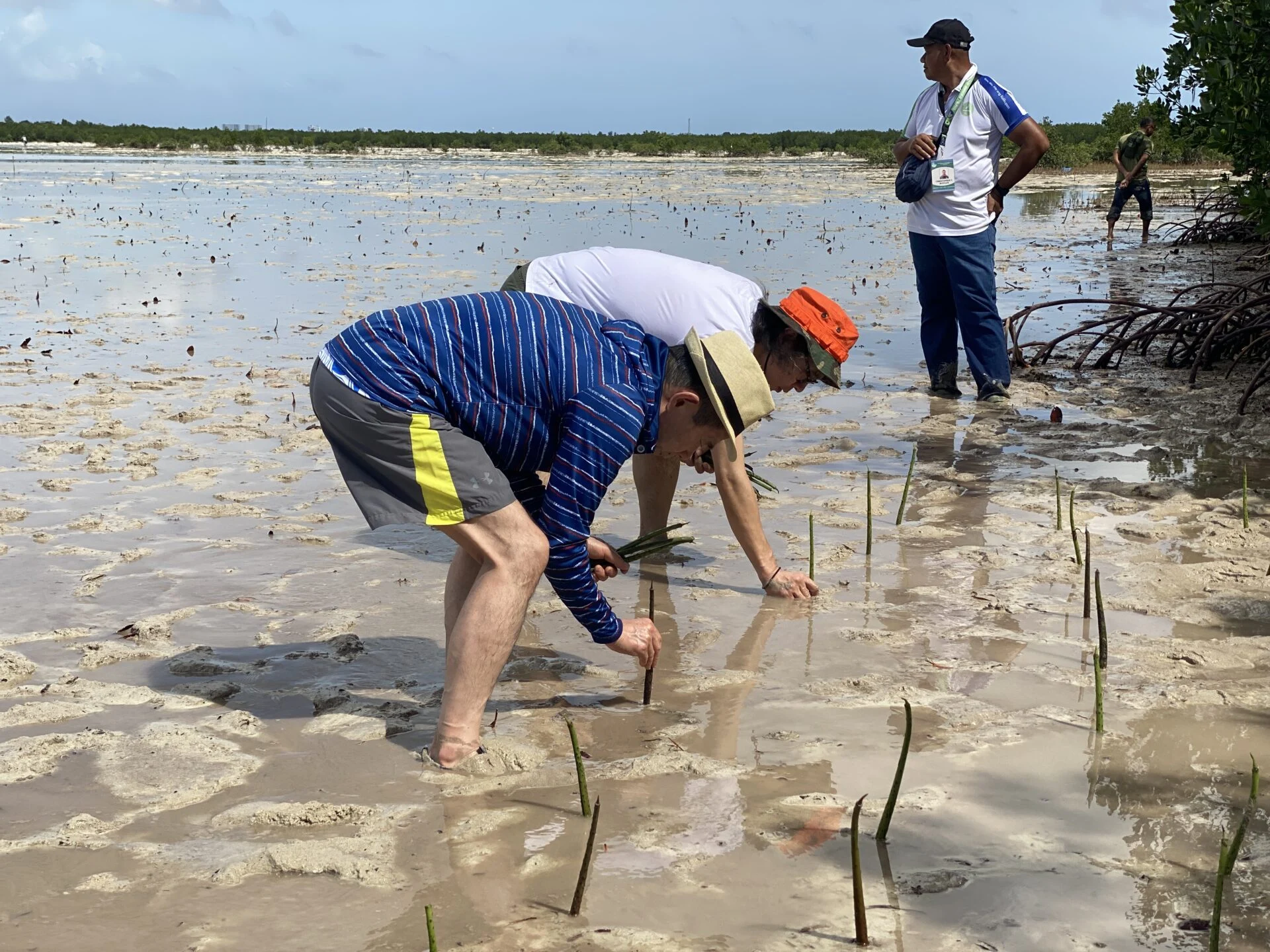
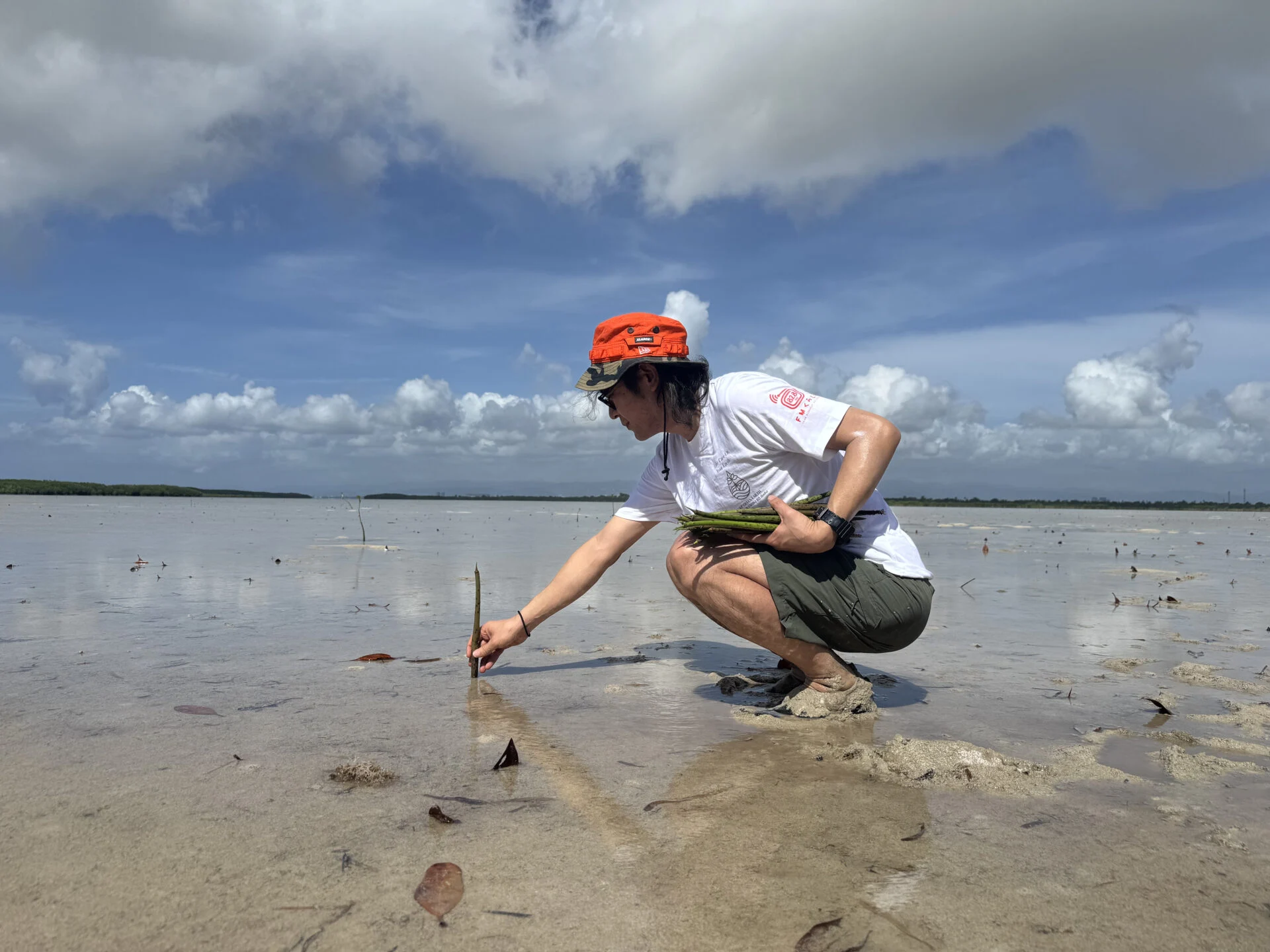
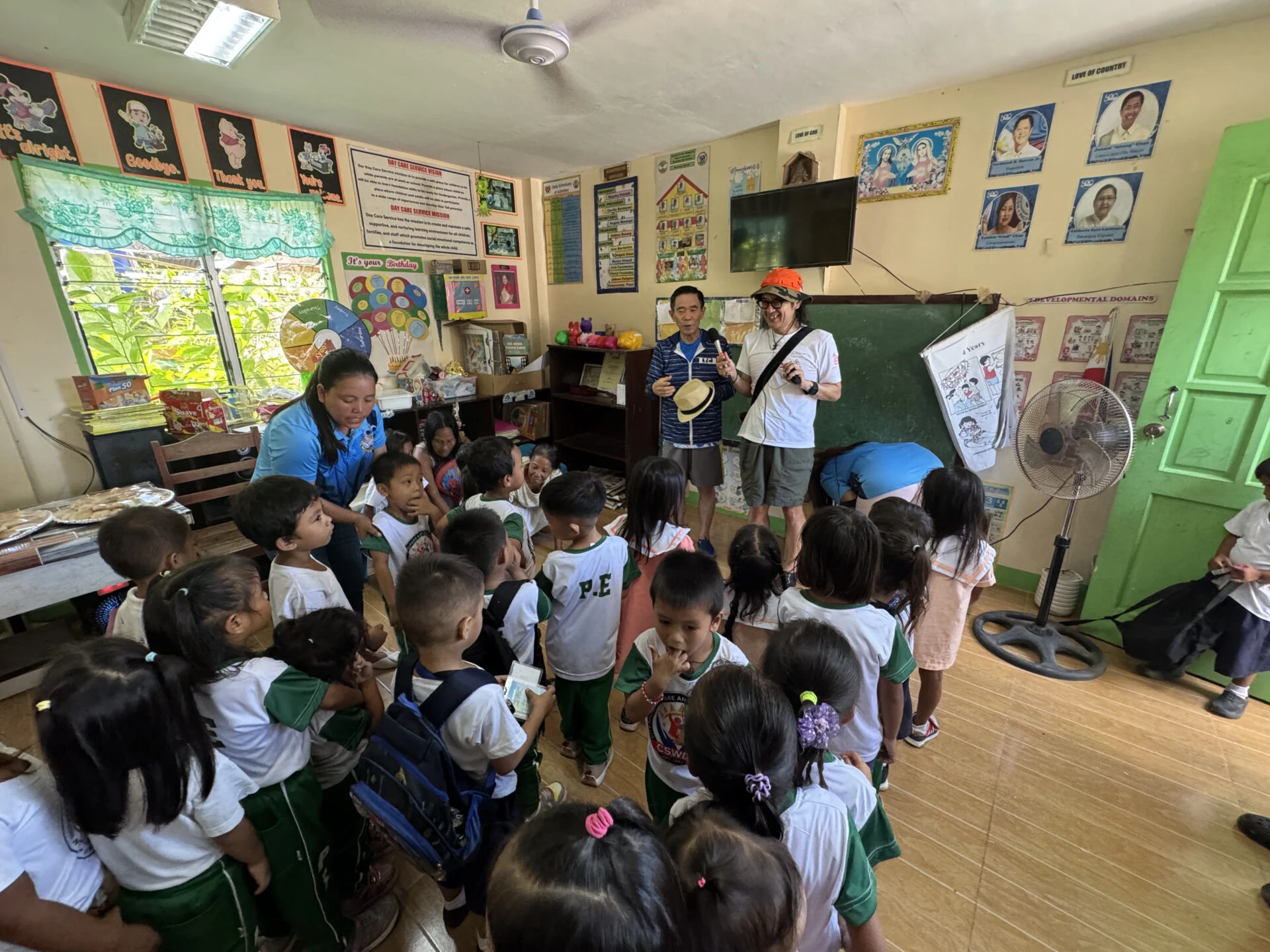
In the “Mangrove Planting Project” segment, program host Charlie Otani travels to the Philippines to report on the local mangroves and planting efforts.
With the support of kanepackage Inc., and under the guidance of the Philippine Department of Environment and Natural Resources, FM Kurashiki has launched an initiative to plant mangroves!
Here is a look at the first Mangrove Planting Project, broadcast on February 7, 2025.

This article was contributed by FM Kurashiki Inc. It was edited and published by the editorial team at Haretoco General Incorporated Association.
The information in this article was current when it was published in May 2025. Please note that it may differ from current information.
Mangrove Planting Project
The Earth we live on faces a range of environmental problems. Among them, mangrove forests—which play an important role in protecting coastlines and maintaining ecosystems—are rapidly disappearing.
As a result, coastal erosion is worsening, with serious effects on fisheries and the lives of local residents.

Planting mangroves is expected to benefit the planet in the following ways:
- Preventing coastal erosion
- Mitigating climate change
- Protecting biodiversity
- Protection from tsunamis and storm surges
- Purifying water
For this project, FM Kurashiki is partnering with kanepackage Inc. The company began planting mangroves on Olango Island in the Philippines in 2008 and has continued its efforts to protect the local ecosystem.

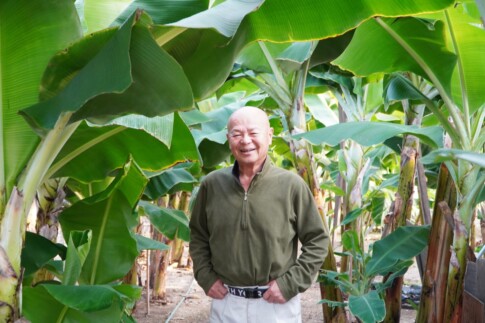
We set off to see the mangroves in the Philippines with Tessei from kanepackage Inc.
Mangroves planted on Olango Island
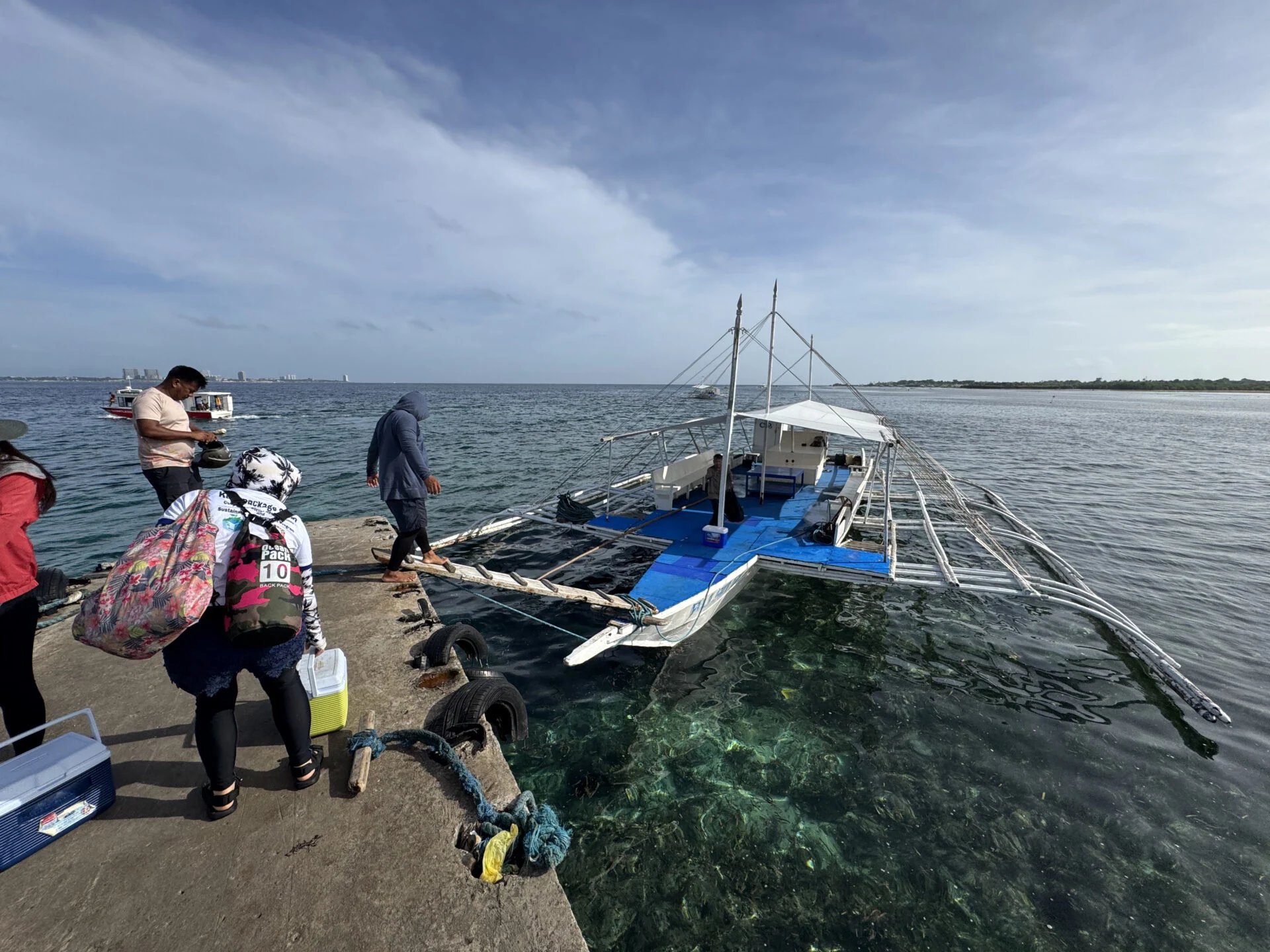
Olango Island, located just under an hour by boat from Cebu Island, was the first island in the Philippines to be designated under the Ramsar Convention.
To get to Olango Island, we took a boat called a banca. It looked just like a fishing boat used for oyster farming! The waves were calm that day.

Kanepackage’s mangrove planting activities are underway on Olango Island.
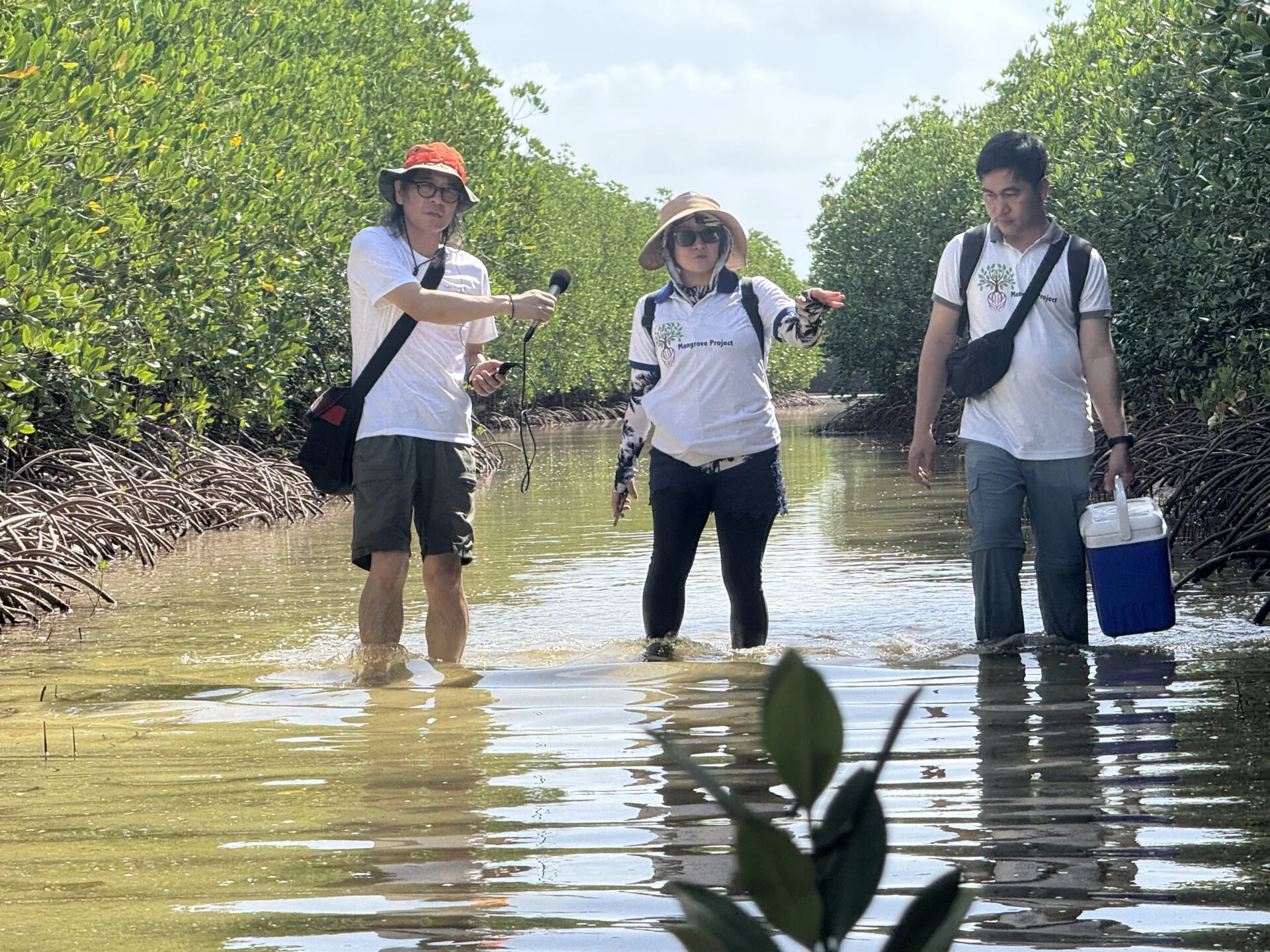
What kinds of mangroves will we see?
Why isn’t it enough to simply plant more mangroves?
Tessei explained why by giving the example of Japanese cedar and cypress trees.

For example, if a lot of Japanese cedar and cypress trees are planted, hay fever gets worse. When only certain species increase in number, the balance of the natural world is disrupted.
To avoid disrupting that balance, we hire mangrove specialists and conduct research on mangroves while expanding our planting efforts to islands throughout the Philippines.
A mangrove specialist also accompanied us on this visit.
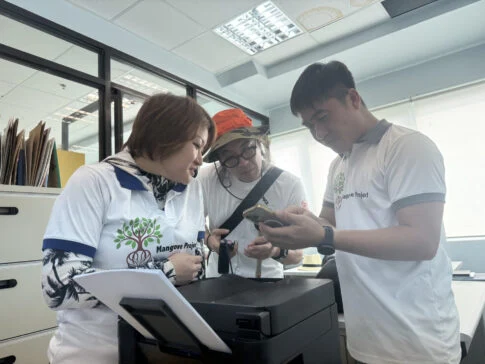
Kanepackage has a mangrove division within its CSR department, staffed by mangrove specialists. Some members have even earned doctoral degrees for their research on mangroves.
And that’s not all: to further strengthen its mangrove research, kanepackage has also opened research facilities in the Philippines, on Cebu and Mactan Islands.
When conducting mangrove research, samples are usually collected in Southeast Asia or tropical rainforests and taken to research institutions in Singapore or Japan for testing. This takes time to transport them and clear customs, so the samples can deteriorate and lose their freshness.
That’s why we also established fully equipped research facilities on Cebu and Mactan Islands. I believe we’re probably the only ones in the world with an environment that allows us to test samples while they’re this fresh.
Mangrove planting is about more than simply putting trees in the ground.
To maintain harmony with the local natural environment, it’s important to plant them according to a plan.
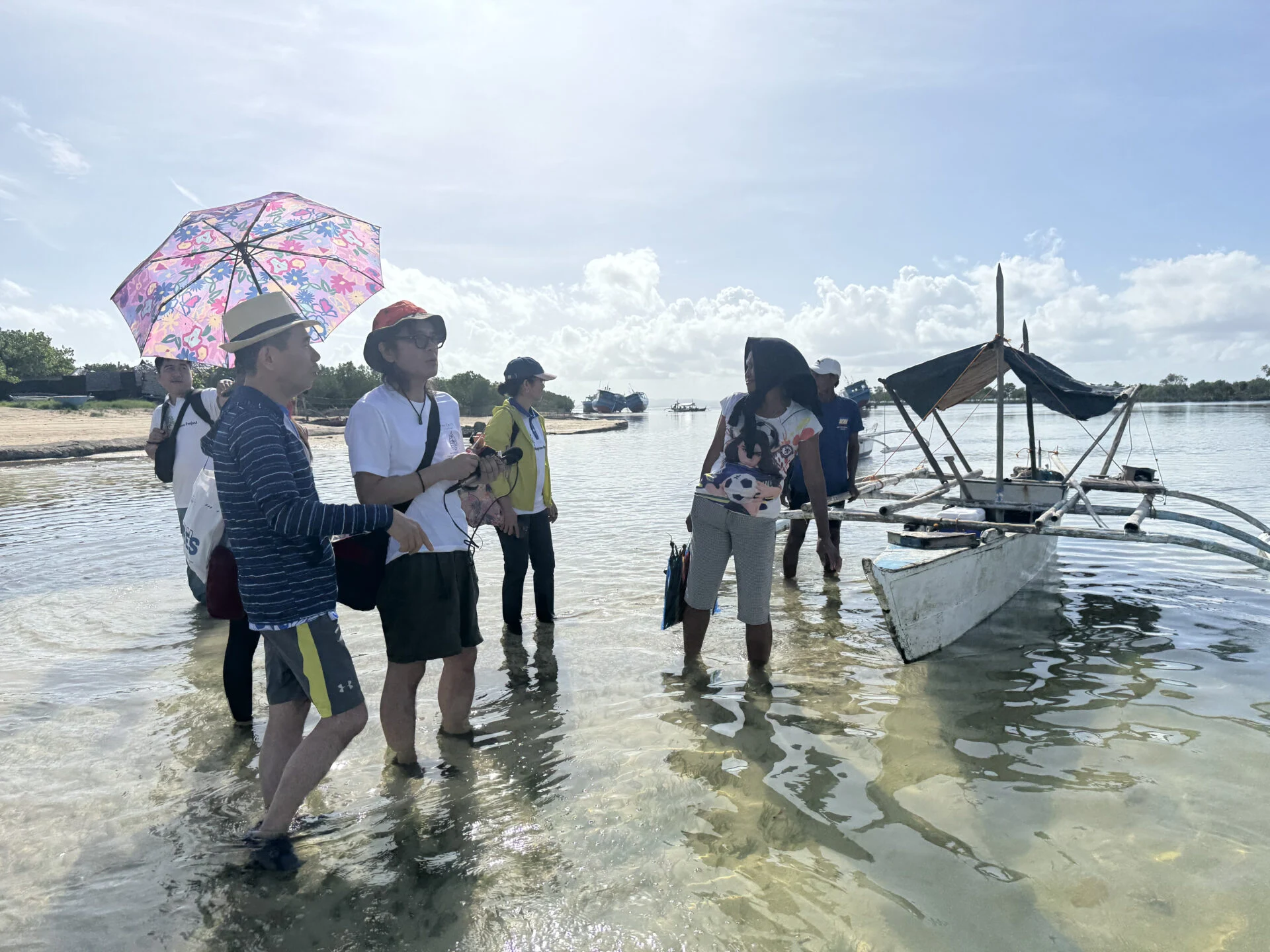
Next, we’ll finally set foot on Olango Island!

From the Writer
FM Kurashiki participates in the United Nations’ “SDG Media Compact” initiative. It clarifies the connections between its programs and the 17 Sustainable Development Goals, and works to promote the goals.
The Mangrove Planting Project is also part of a program based on the SDG Media Compact, and is still ongoing.
For each guest on “Weekly Kurashiki Happy Radio” who arrives by car, we plant one tree per car.
We also plant one tree for every 500-yen button badge purchased. As of February 2025, 80 badges had been purchased!
We will continue to provide information that is useful to everyone in the community.
Previous Mangrove Planting Project articles
You can also listen to the “Mangrove Planting Project” on Spotify.
FM Kurashiki ★ Weekly Kurashiki Happy Radio | Podcast on Spotify
FM Kurashiki “Mangrove Planting Project” Information

| Name | FM Kurashiki “Mangrove Planting Project” |
|---|---|
| Address | 520-28 Hakurakucho, Kurashiki City, Okayama Prefecture |
| Contact | 086-430-0828 |





What would you like to know about Kurashiki?
Enter a search term to find articles on this site



































Olango Island, which we’re visiting today, is where we first planted mangroves in 2008.
Mangroves take about 10 to 15 years to mature, and during that time they play a very important role by absorbing carbon dioxide and purifying water. I hope you’ll take a look at how much they’ve grown over 15 years.
Also, our work isn’t simply about increasing the number of mangroves. It’s important to plant them while maintaining the balance of the natural world.