Kojima Hina Meguri is an event centered around the Nozaki's Historical Residence, Taikado and Nozaki's Historical Residence, where visitors can view hina dolls.
The author was aware that events had been held in the past but had not been able to participate.
At this timing, as my daughter will be entering junior high school next year, I participated to pray for her healthy growth and to create memories.
About Kojima Hina Meguri
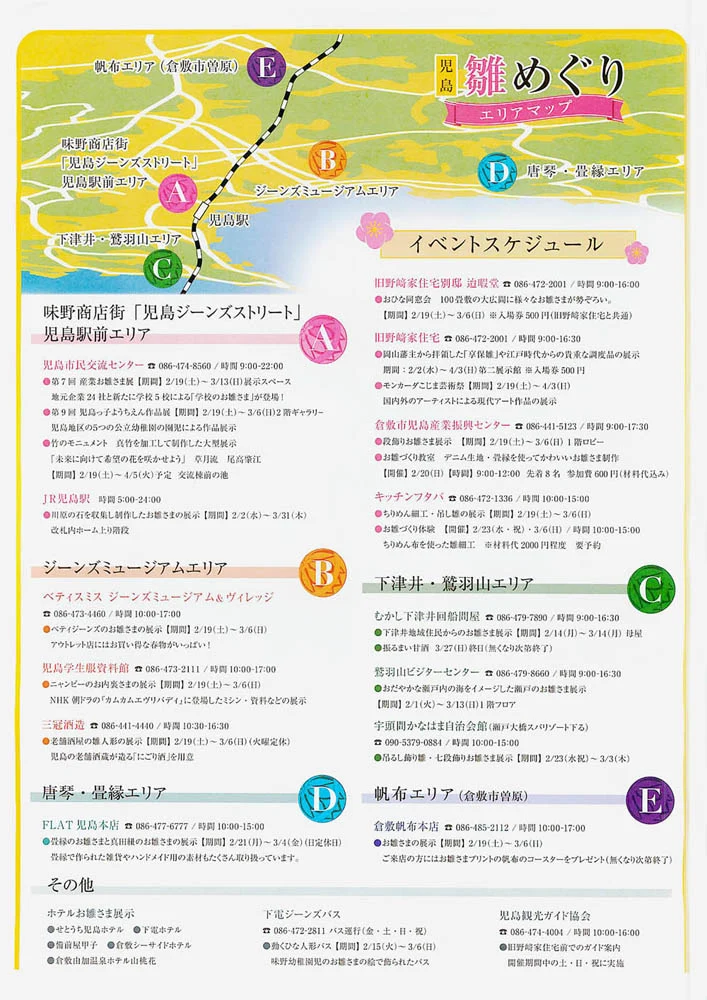
Kojima Hina Meguri is an event that revolves around the Nozaki's Historical Residence, Taikado and includes five areas (A to E) featuring hina dolls.
In addition to the main areas, many hina dolls can also be viewed at places like Setouchi Kojima Hotel and Shimoden Bus.
Along with the hina meguri, there are also exhibitions such as bamboo monuments by Toshie Odaka of the Sogetsu School and experiences for making hina dolls.
This time, I will introduce the venues I visited.
Enjoy Kojima sightseeing along with Hina Meguri!
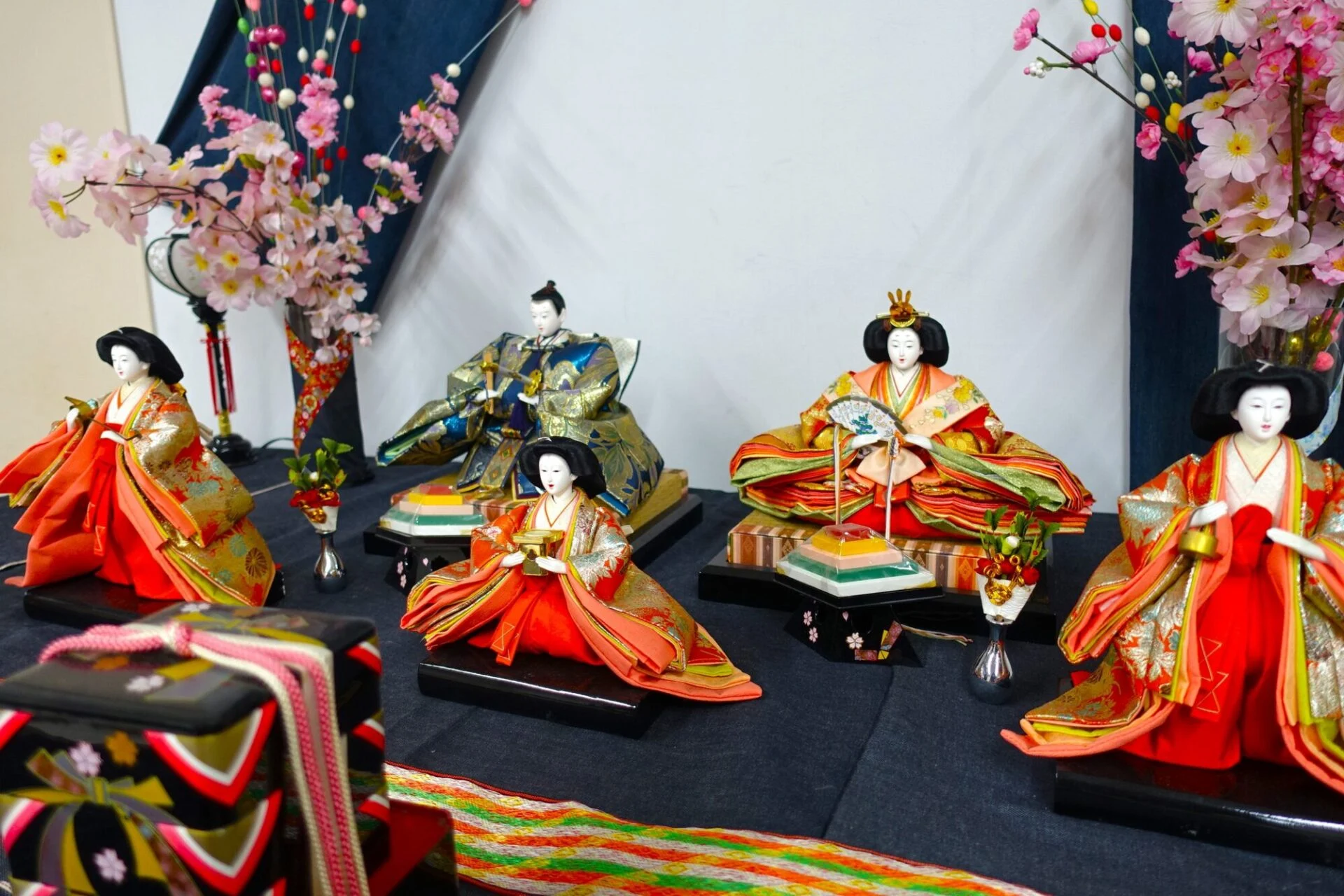
The types of hina dolls range from those dating back to the Edo period to modern times, varying in size and featuring a wide variety of designs from traditional to extravagant.
While I cannot introduce all the hina dolls I encountered, I hope you can enjoy the atmosphere of Hina Meguri and Kojima sightseeing through the photos.
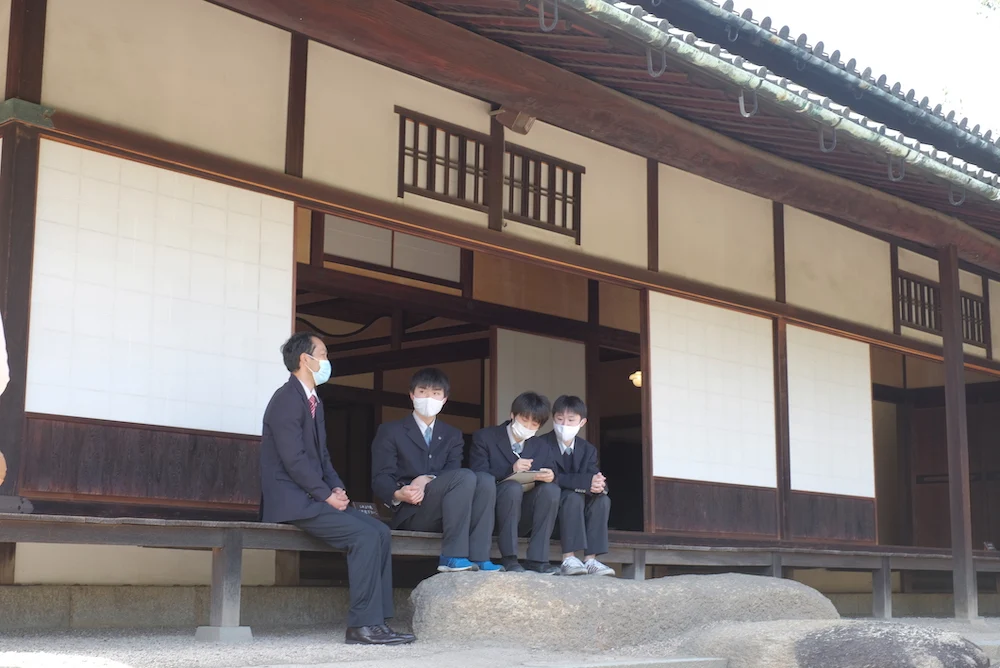
Nozaki's Historical Residence
Nozaki's Historical Residence, which is also famous as a tourist spot, is the home of Nozaki Busaemon, who made his fortune in the salt production industry.
It displays the "Kyoho Hina" (享保雛) received from the lord of Okayama Domain and valuable furnishings from the Edo period.
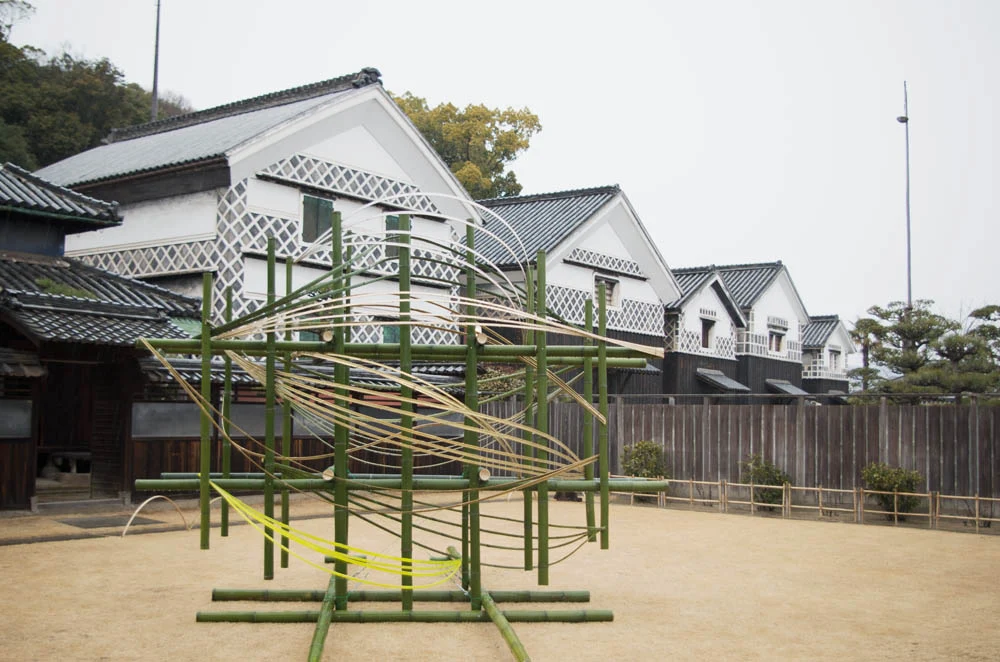
Upon passing through the Nagaya Gate, you are welcomed by five storehouses that hint at the prosperity of the Nozaki family and a large bamboo craft.
Following the path from here, you will reach the Omote Shoin on your left.
In the Omote Shoin, two types of displays are shown: hina dolls and standing hina.
The first is the Kokin Hina (古今雛) made by Heizo Oki, which was created in 1890.
Heizo Oki is a renowned name from the Maruhira Oki Doll Store in Kyoto.
He was a doll maker who won a gold medal at the 1890 Exposition Universelle in Paris and received an award at the 3rd National Industrial Exhibition the following year.
The second is three hanging pictures.
▼ From the left, they are Cherry Blossom Picture, Standing Hina Picture, and Peach Willow Picture, created by Mitsutake Tosa for the first Hina Matsuri of the daughter of Takeyoshi Nozaki, Yuki.
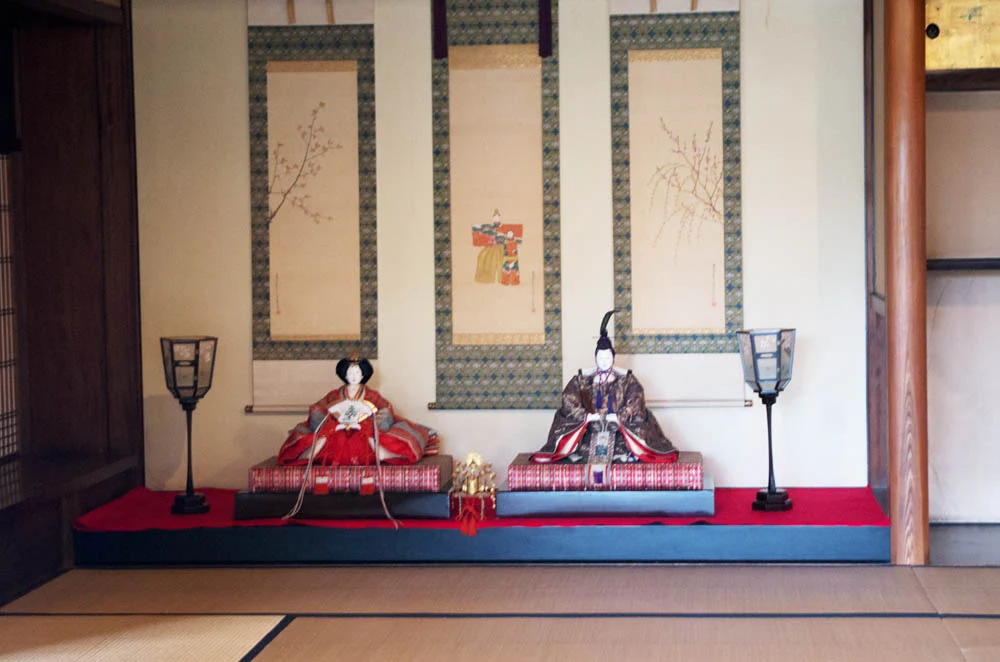
The three pictures, which are not hina dolls, evoke a modern sensibility that is hard to believe is from the Meiji era.
▼ Next are the hina dolls displayed in the Nakazashiki.
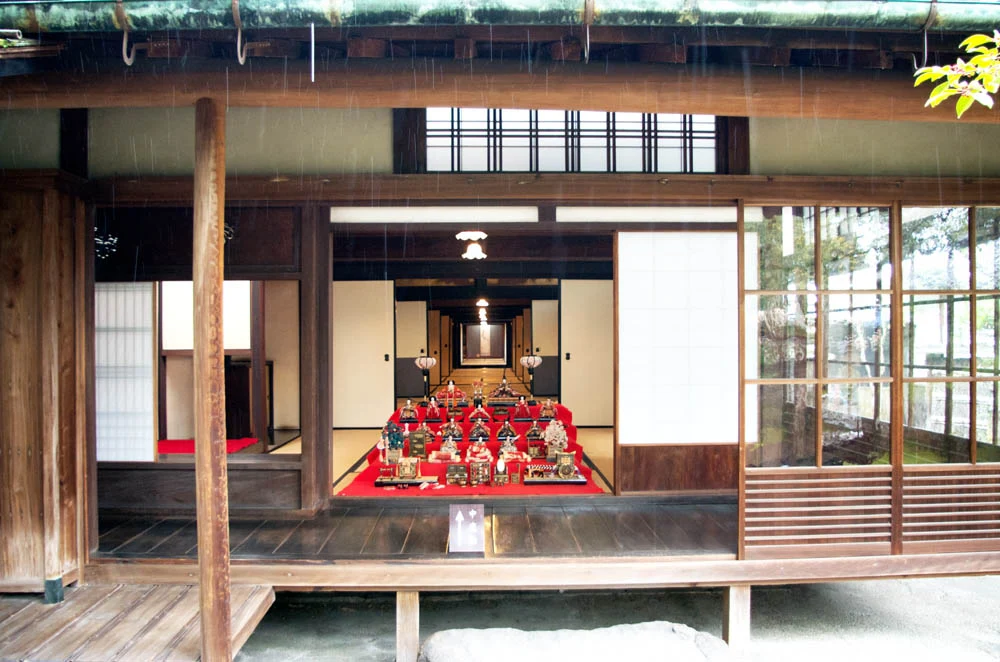
In this space, in addition to the hina dolls, I was amazed by the depth of the Nakazashiki, which is a surprisingly luxurious space that makes you want to smile.
▼ This is an exhibition space located in one of the previously mentioned storehouses.
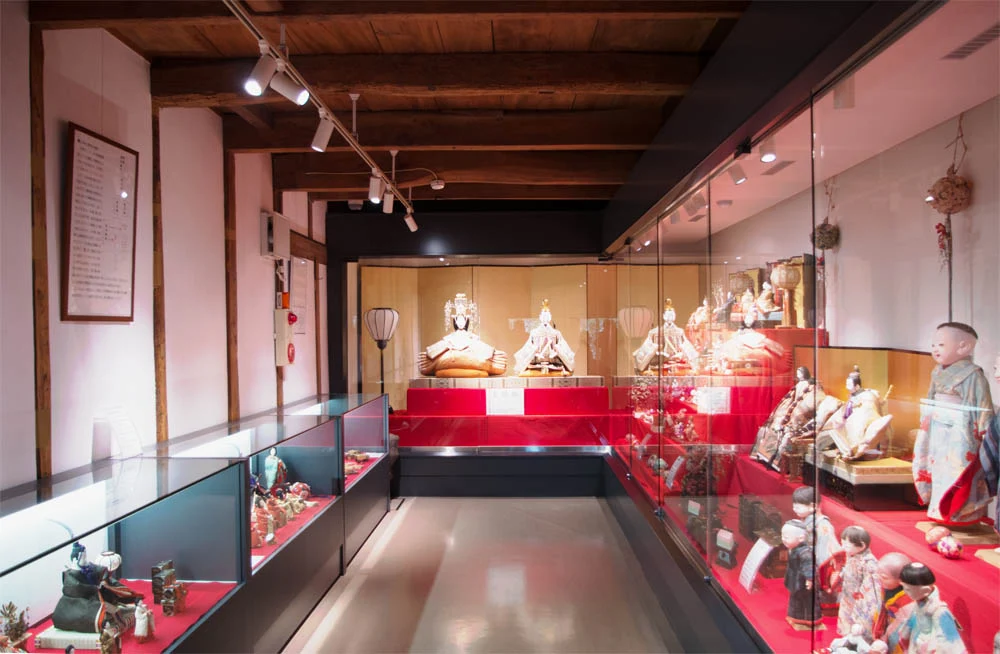
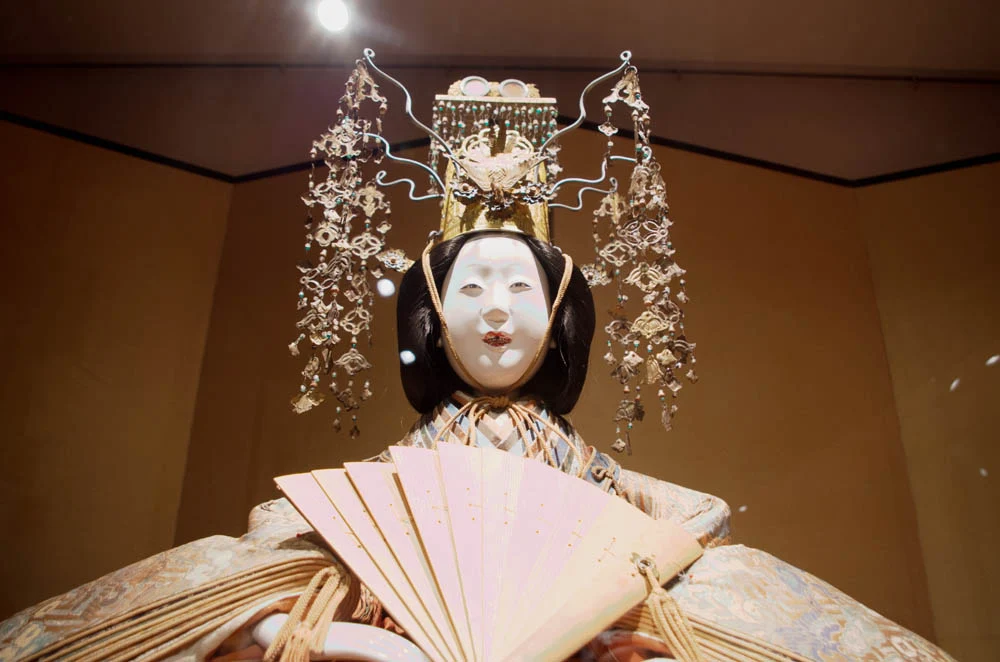
In the back is the Kyoho Hina (享保雛) that the Nozaki family received from the Ikeda family, the lords of Okayama Domain, in 1872.
There is an explanation that says, "When you look up at the face from below, it appears to be smiling."
▼ What do you think? It certainly appears to be smiling. Perhaps due to its size, it has quite a presence.
▼ The Meiji Emperor Hina (明治天皇雛) was also created in 1890 and made by Heizo Oki. It is a piece associated with Shotaro Tokunaga, who served as the head clerk of the Nozaki family.
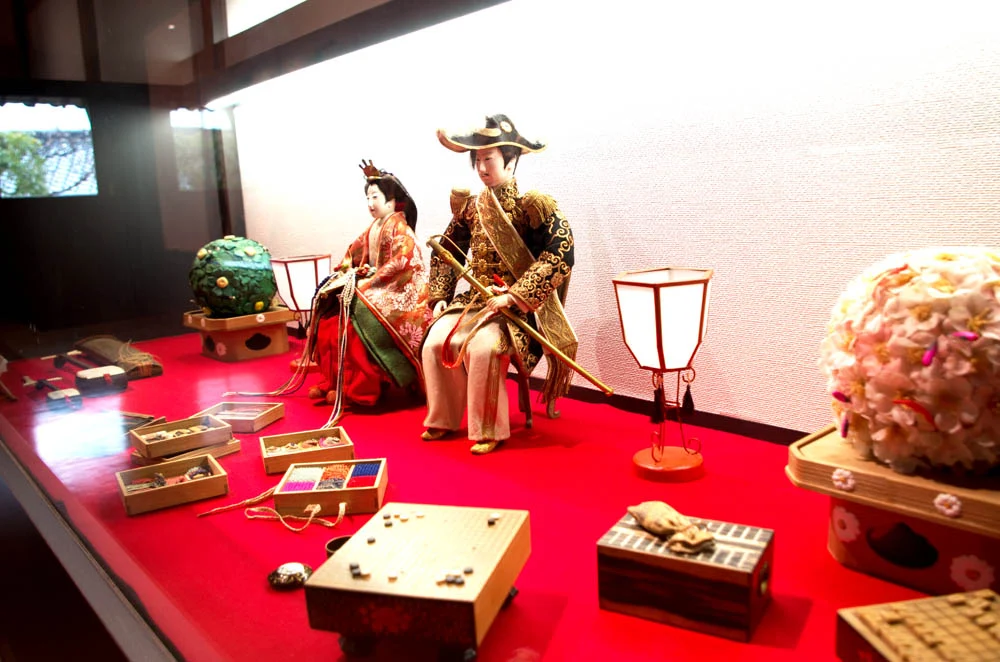
This hina doll depicts the Meiji Emperor and Empress Shoken seated in formal attire.
It was the first time I saw a hina doll sitting on a chair.
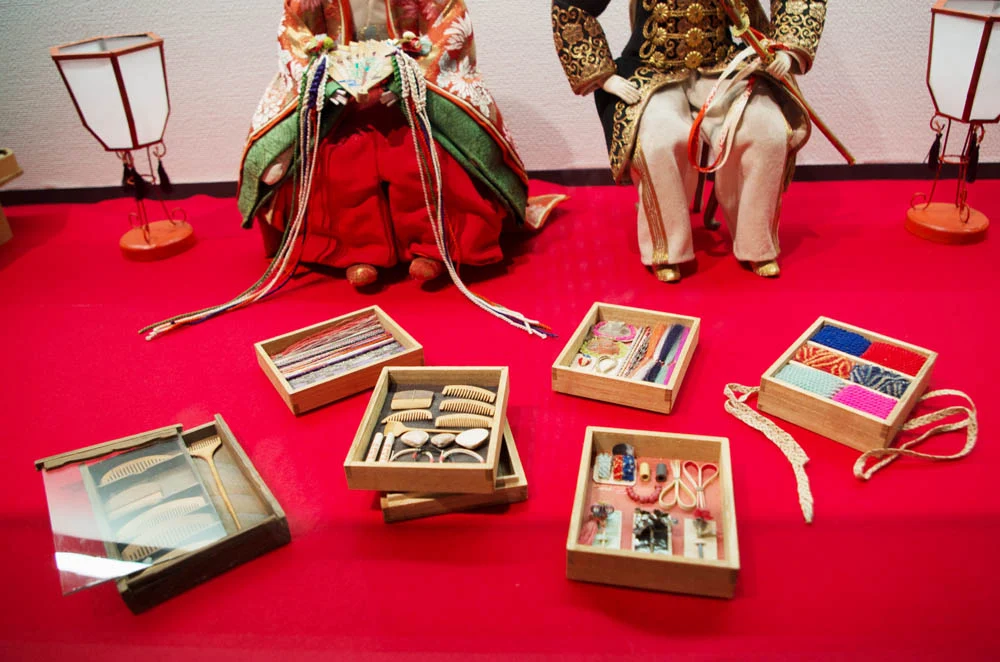
The intricate furnishings surrounding it, such as shogi (Japanese chess) and sewing tools, are also beautifully crafted.
The colorful furnishings, including combs, scissors, and fabrics, showcase meticulous and careful craftsmanship.
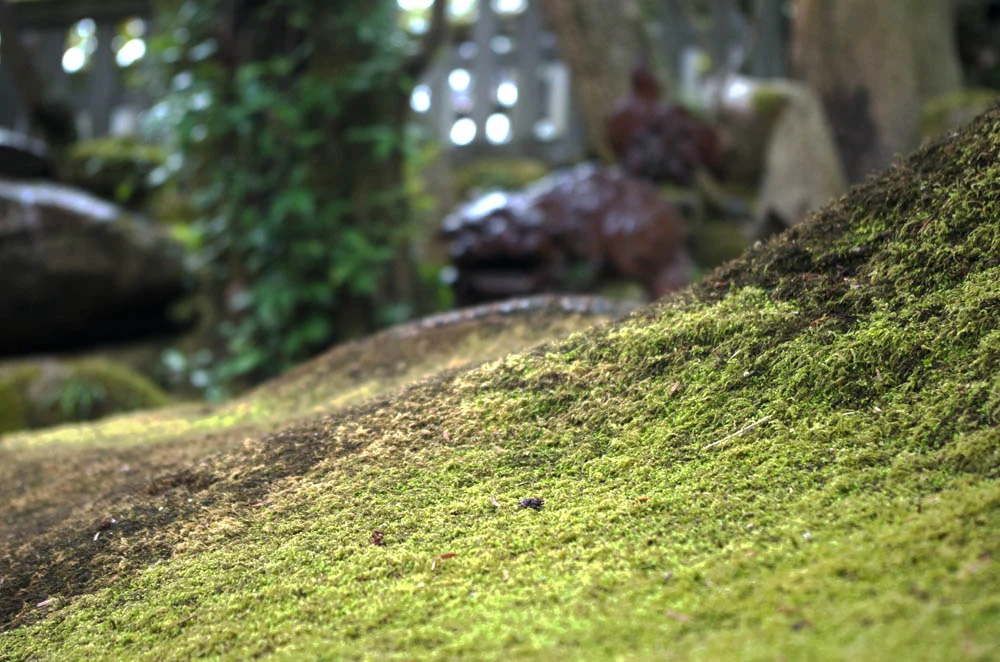
▼ At Nozaki's Historical Residence, it is also recommended to stroll through the Karesansui Garden (枯山水の庭園) created in the late Edo period.
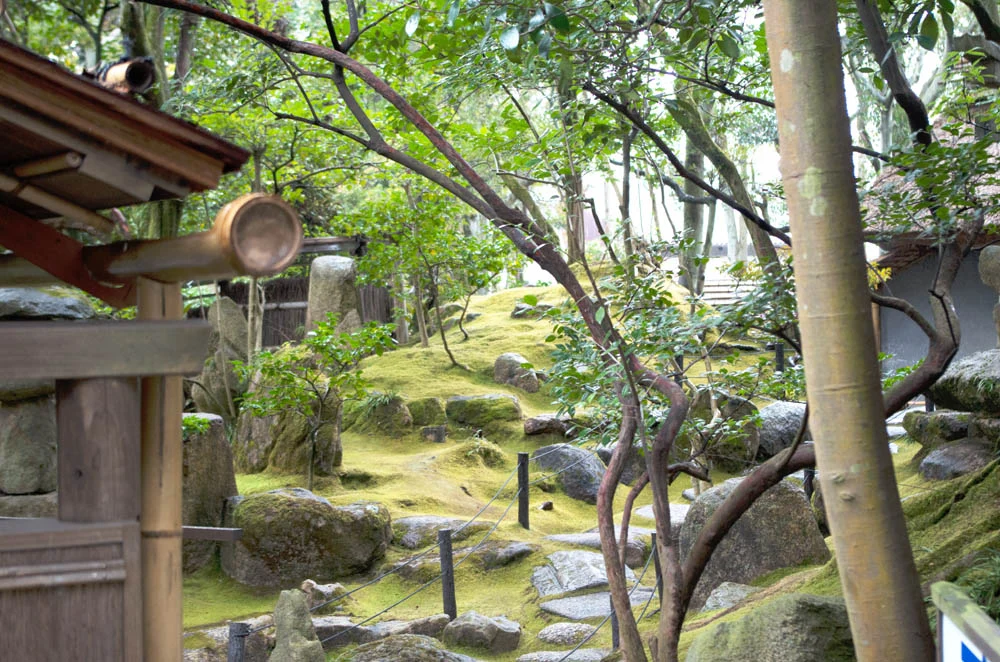
Please take your time to explore while resting in the waiting area in the garden.
You will be particularly captivated by the lush green moss that is well-maintained.
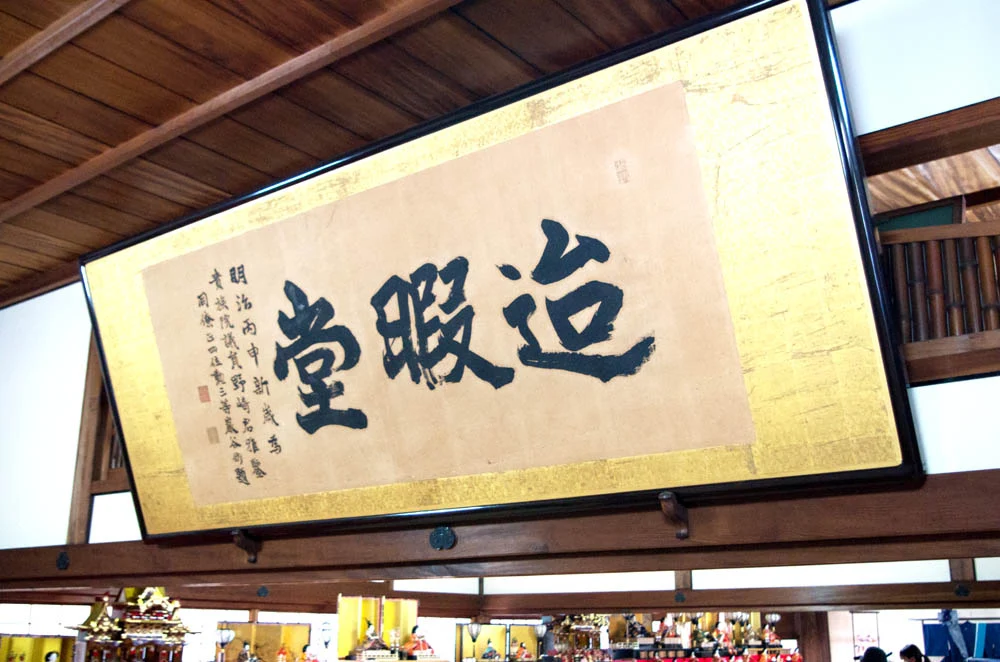
Nozaki's Historical Residence, Taikado
The name "Taikado" means "to capture leisure" or "to enjoy leisure."
It was built in 1896 by Takeyoshi Nozaki as a place for hospitality, accommodation, and gatherings.
In February 2000, it was registered as a cultural property of the country.
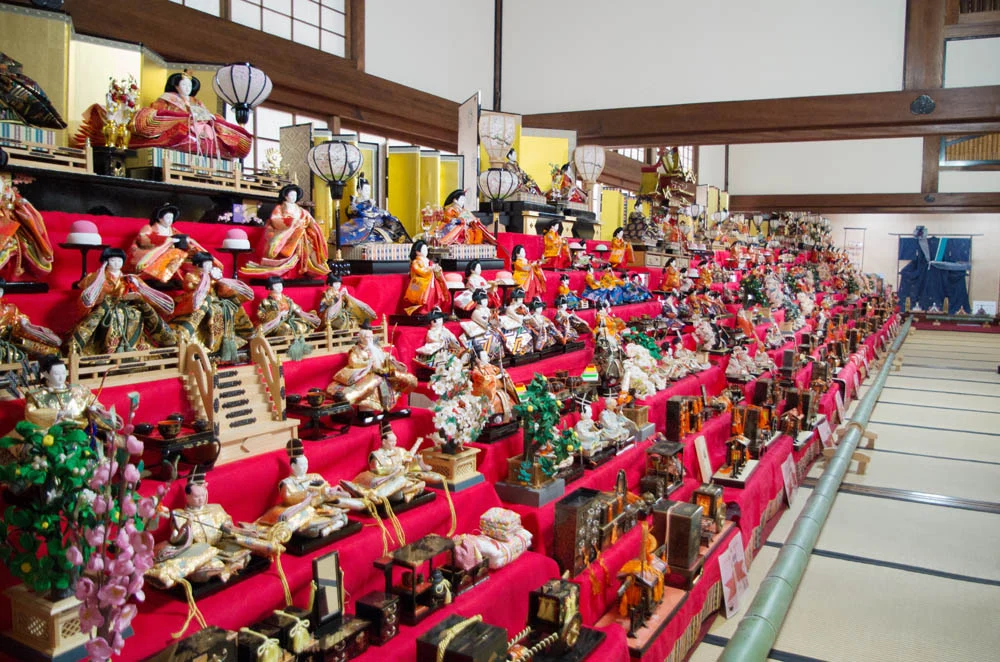
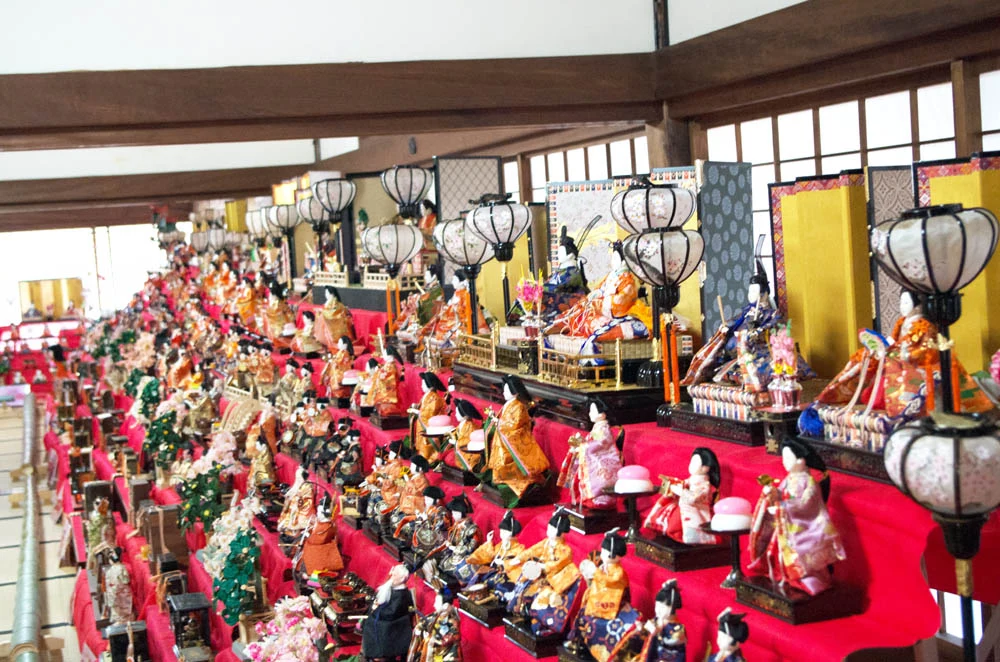
Among the authors, "When it comes to Kojima Hina Meguri, Taikado is the first thing that comes to mind."
The spacious hall with 100 tatami mats is truly impressive with the numerous hina dolls on display.
At the very back, there is also a costume that Okayama City Mayor Ito was scheduled to wear at the opening ceremony of the 23rd Kojima Hina Meguri.
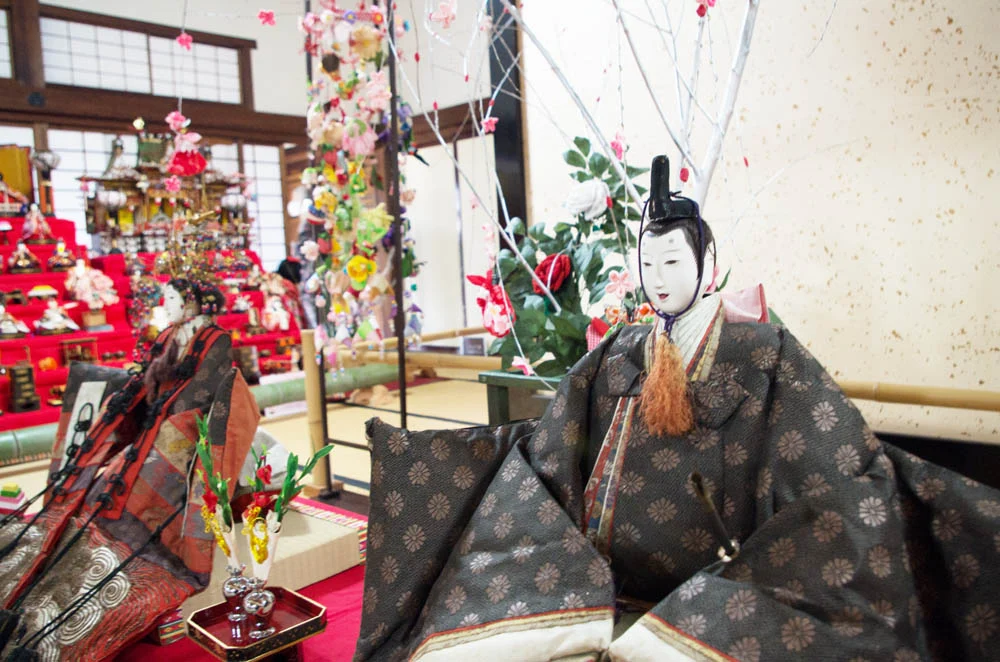
▼ This is the costume that Okayama City Mayor Ito was scheduled to wear.
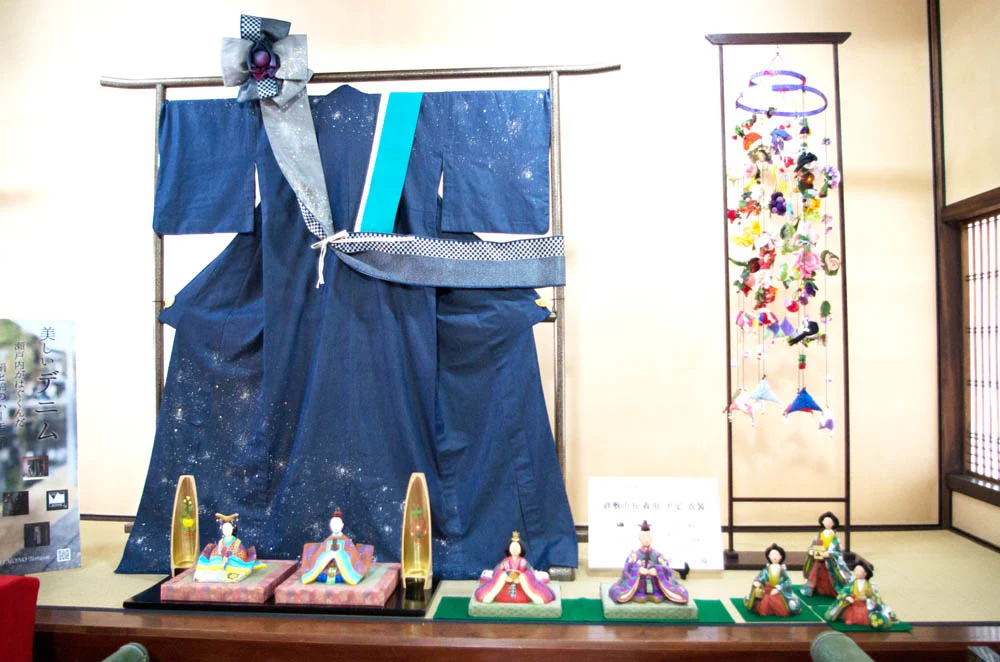
Silk-blend denim kimono and a "Kojima obi" made from three types of materials (tatami edge, denim, and Sanada cord) are used to create this costume.
Unfortunately, due to the impact of the COVID-19 pandemic, the opening ceremony was canceled.
I can only hope that a day will come soon when such events can be held as a matter of course.
▼ At the entrance of Taikado, colorful tsurushi hina (吊るし雛) are displayed on both sides.
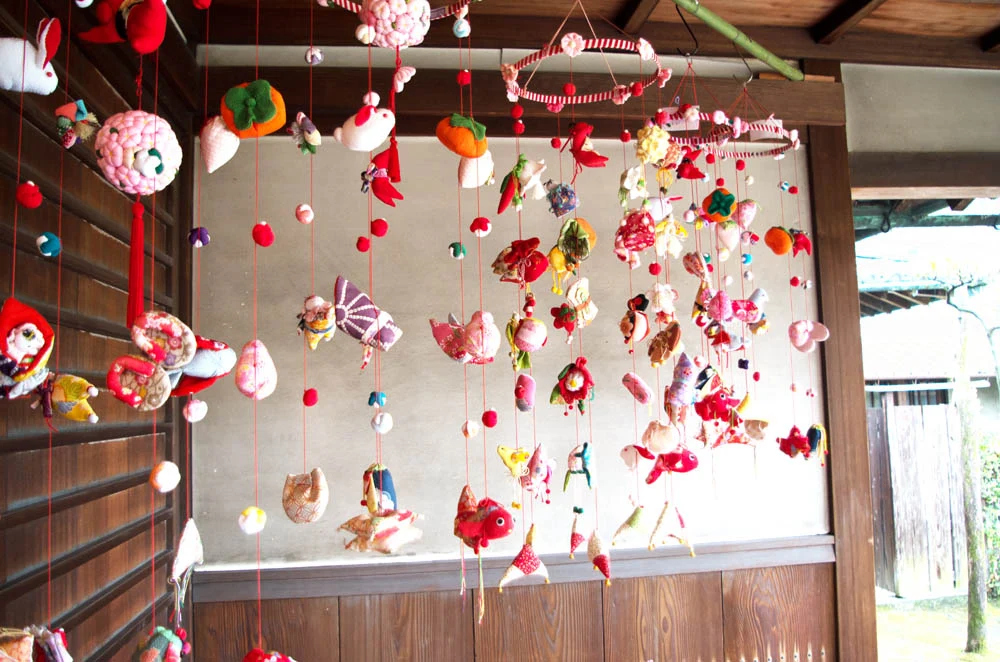
In the past, general households that were not wealthy could not afford to buy hina dolls due to their high cost.
For that reason, everyone made small dolls little by little and brought them together to create the hanging hina dolls.
Each doll is colorful, and various items that children would likely enjoy are hung up.
Even adults won't get bored looking at them.
To enter the Kaimado, you need a ticket for Nozaki's Historical Residence, so be careful.
Instead of heading directly to Kaimado, please stop by Nozaki's Historical Residence first.
Ajino Shopping Street "Kojima Jeans Street" Kojima Station Area - Area A
In Area A, head to the Kojima Community Center.
I visited the 7th Industrial Hina Doll Exhibition by local schools and businesses in the exhibition space, and the 9th Kojimakko Kindergarten Works Exhibition on the second floor.
▼ Here are the hina dolls in the exhibition space on the first floor.
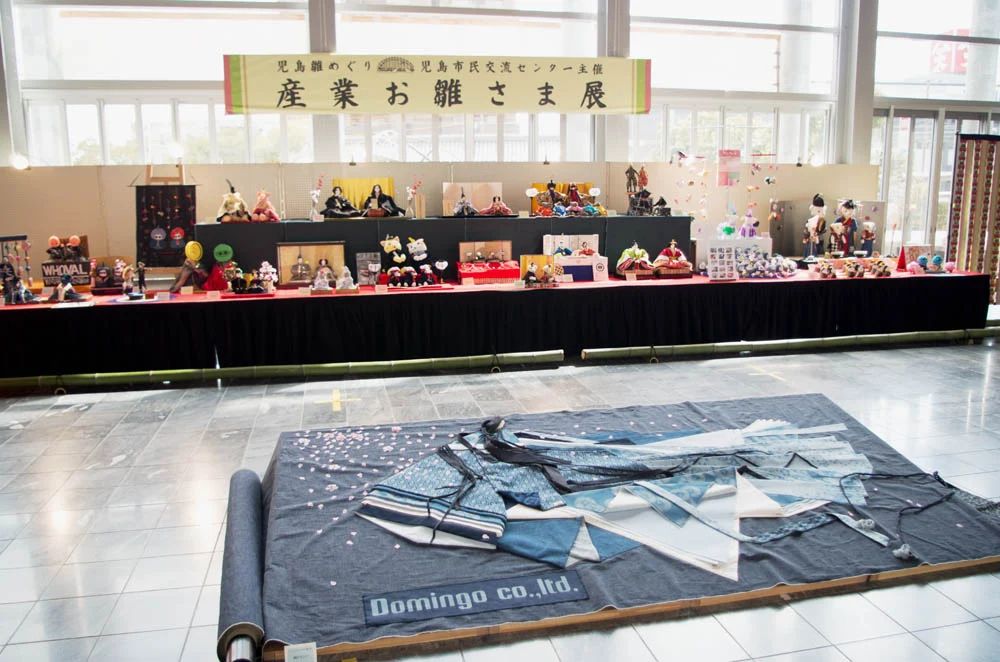
The hina dolls made from jeans fabric on the floor catch the eye. They are worth seeing.
▼ No explanation is needed. They are unique hina dolls.
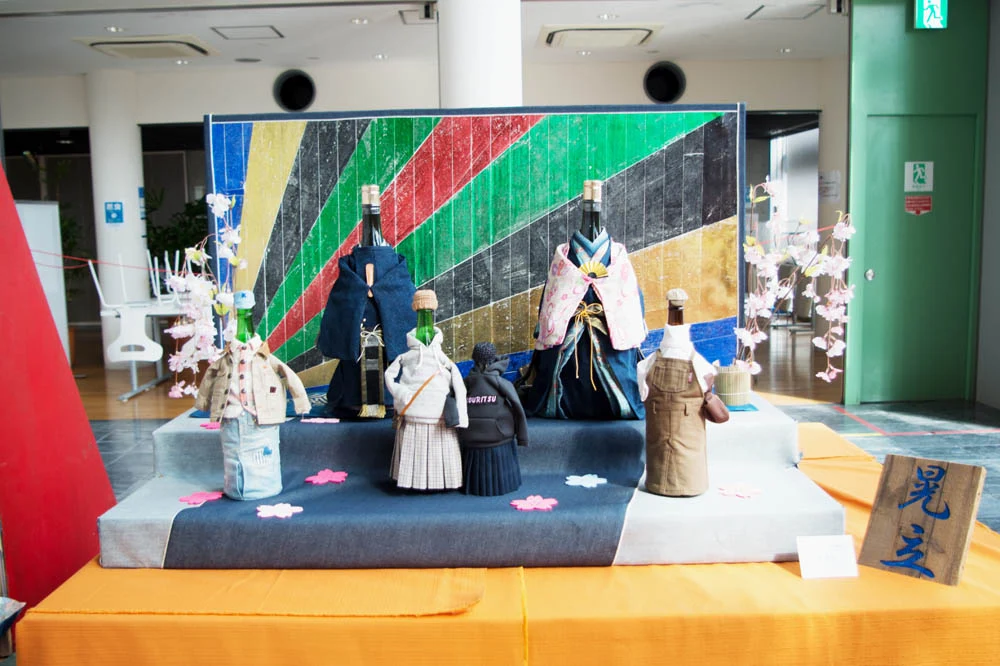
▼ At first glance, you might not realize they are hina dolls, as they have a very masculine and unique appearance.

The three male figures sitting on a pipe are also new and make you smile.
▼ Going up to the second floor, I discovered some wonderful hina dolls in a corner of the kindergarten works exhibition.
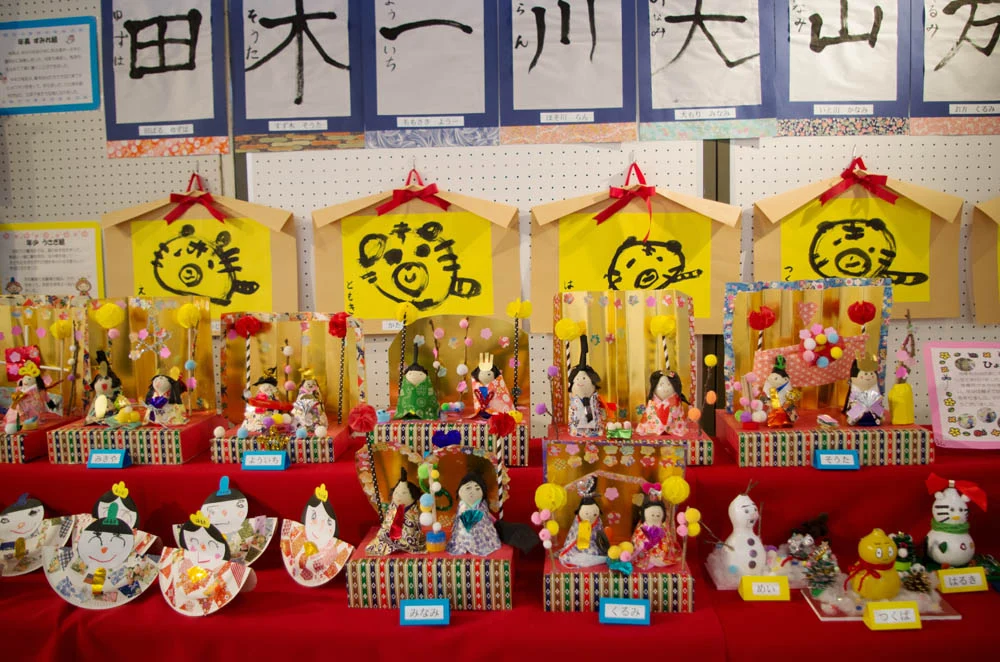
From a parent's perspective, it simply brings happiness.
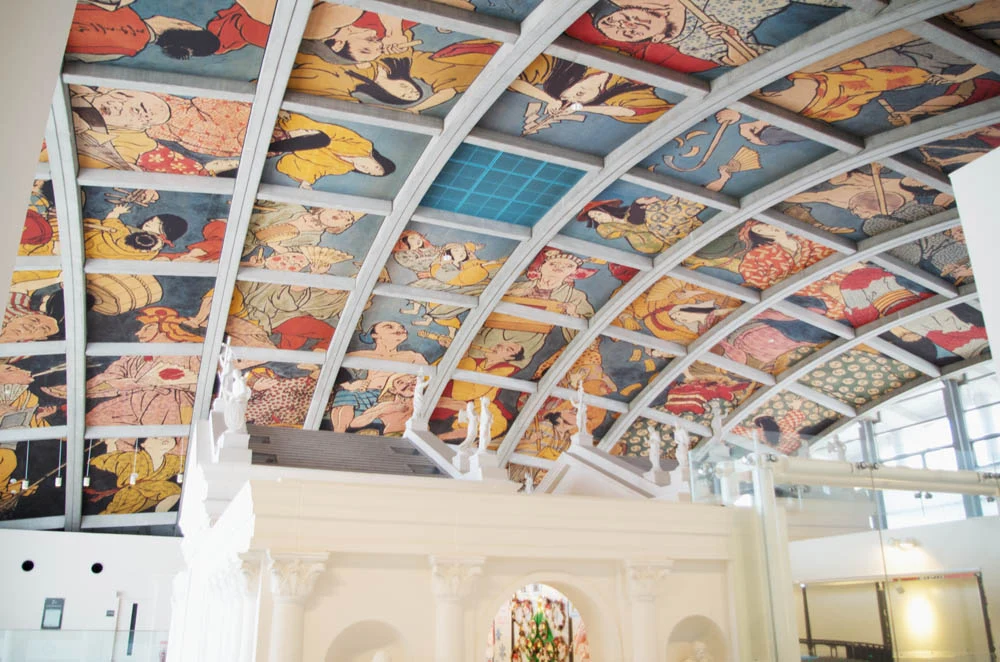
When you visit the Kojima Community Center, be sure to check out the ceiling paintings as well.
▼ Depicted are people such as medieval shamans, dancing women, and carpenters, all related to the keyword of the bridge. It is a valuable painting that gives a glimpse into the professions of people at that time.
Jeans Museum Area - Area B
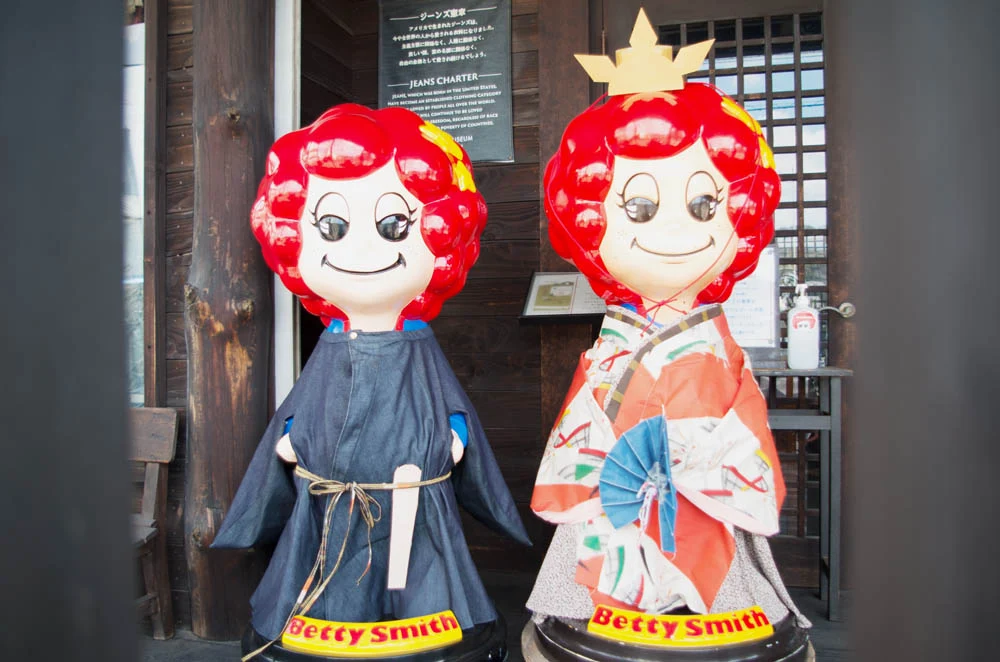
In Area B, I headed to the Betty Smith Jeans Museum to see the large Betty jeans hina doll at the entrance.
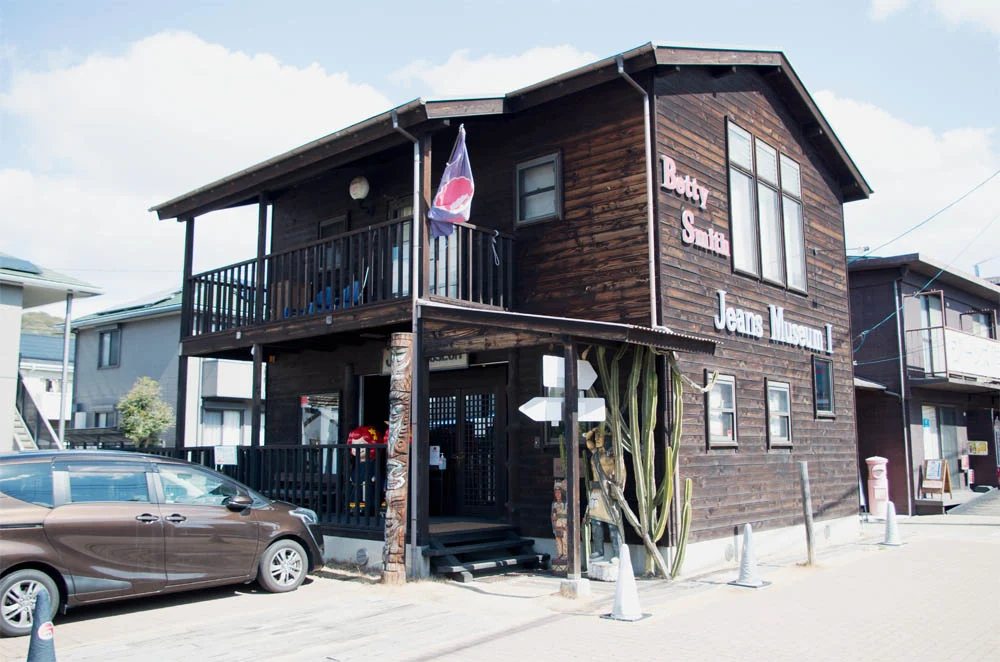
For some reason, I had the impression that hina dolls were small and cute displays, and it took me a while to finally find them after walking around.
Shimotsui and Washuzan Hill Area - Area C
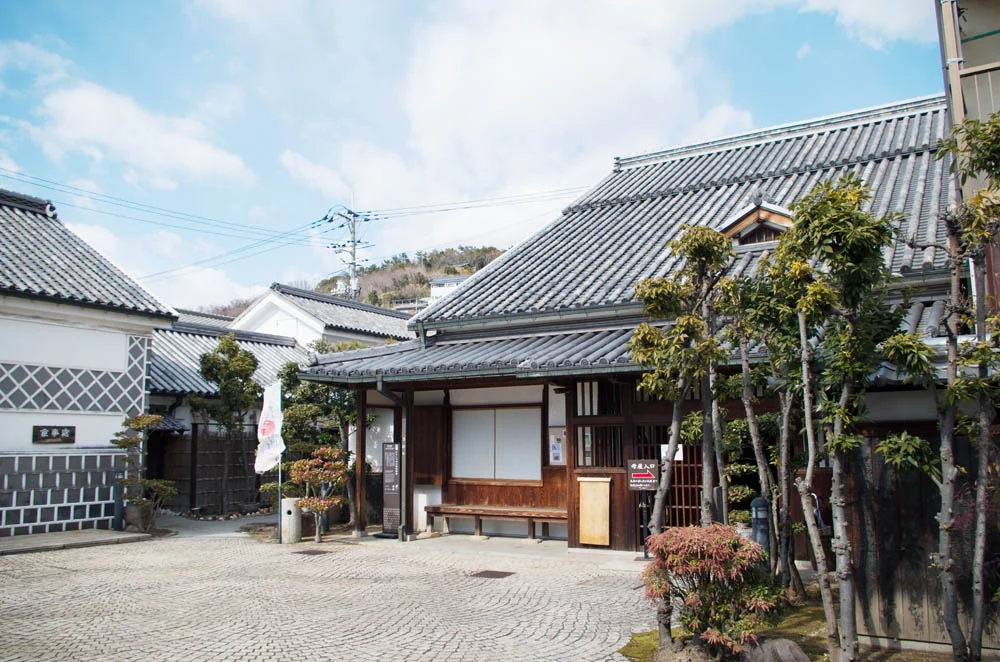
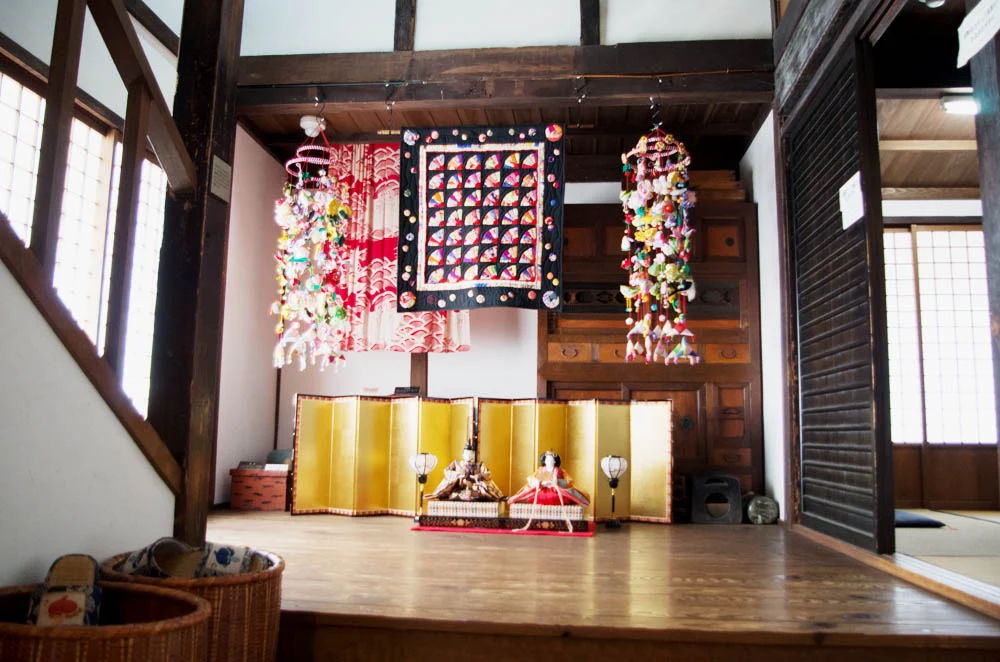
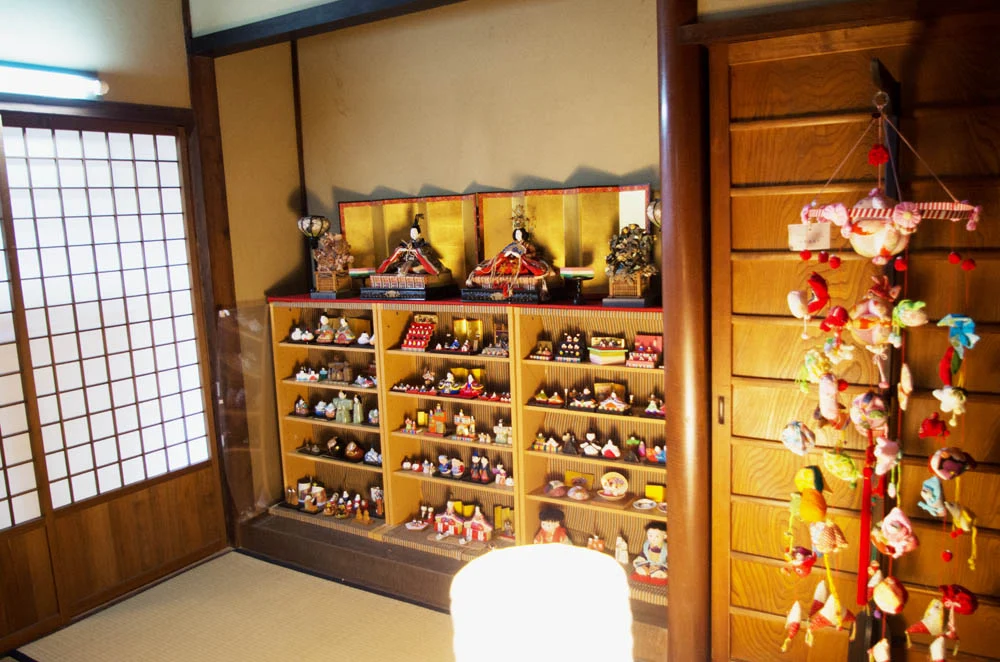
In Area C, I viewed the hina dolls of the Shimotsui local residents displayed at the Shimotsui Shipping Agent Museum.
You can calmly explore the homely hina dolls that blend into the building of the shipping agent from the Meiji era.
Koto and Tatami Edge Area - Area D
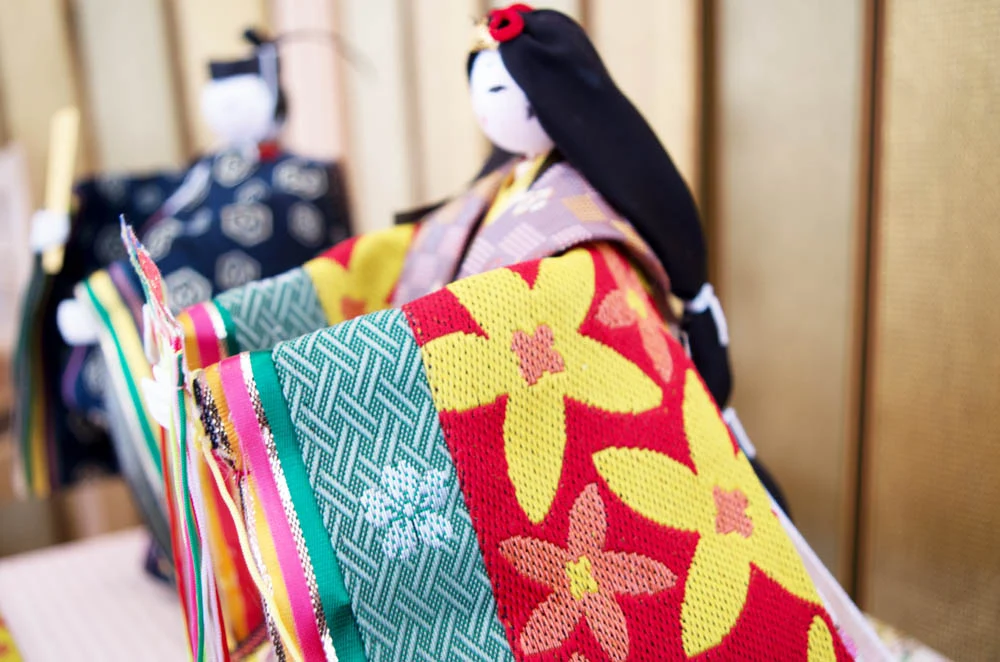
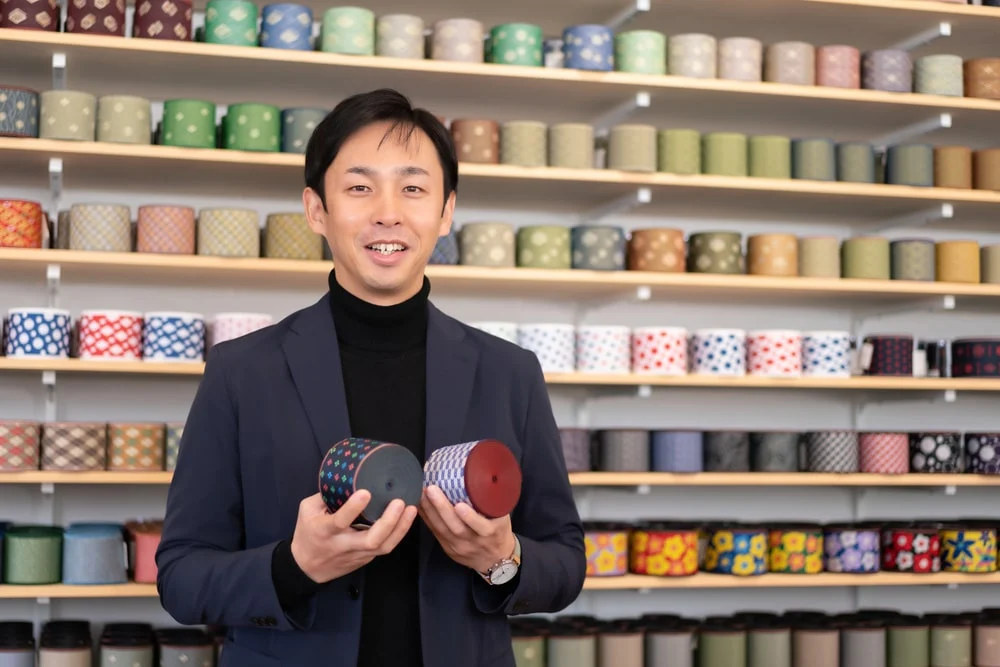
In Area D, I explored the hina dolls made from tatami edges and Sanada cords at FLAT Kojima Main Store.
At first glance, the kimono looks so elaborate that you wouldn't think it was made from tatami edges.
It reminds me that this company is expanding the possibilities of tatami edges and taking on challenges.
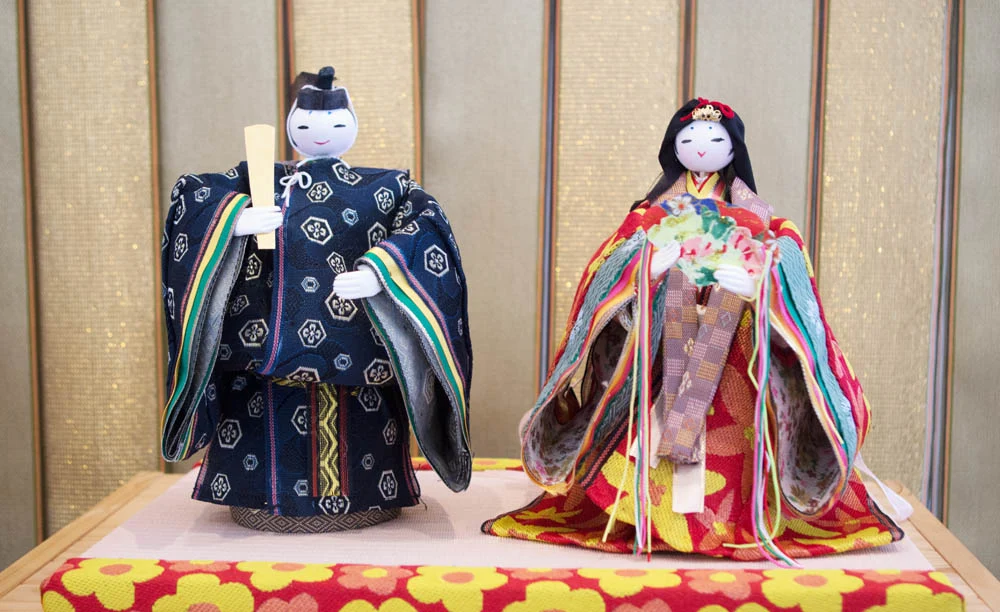
▼ This is a beautiful jūnihitoe (twelve-layered kimono) that doesn't look like it's made from tatami edges.
Canvas Area (Kurashiki City Sohara) - Area E
In the final Area E, I explored the hina dolls made from canvas at Kurashiki Canvas Main Store.
According to what I heard, they commissioned the creation from "Tokunaga Koinobori" located in Waki District, Okayama Prefecture.
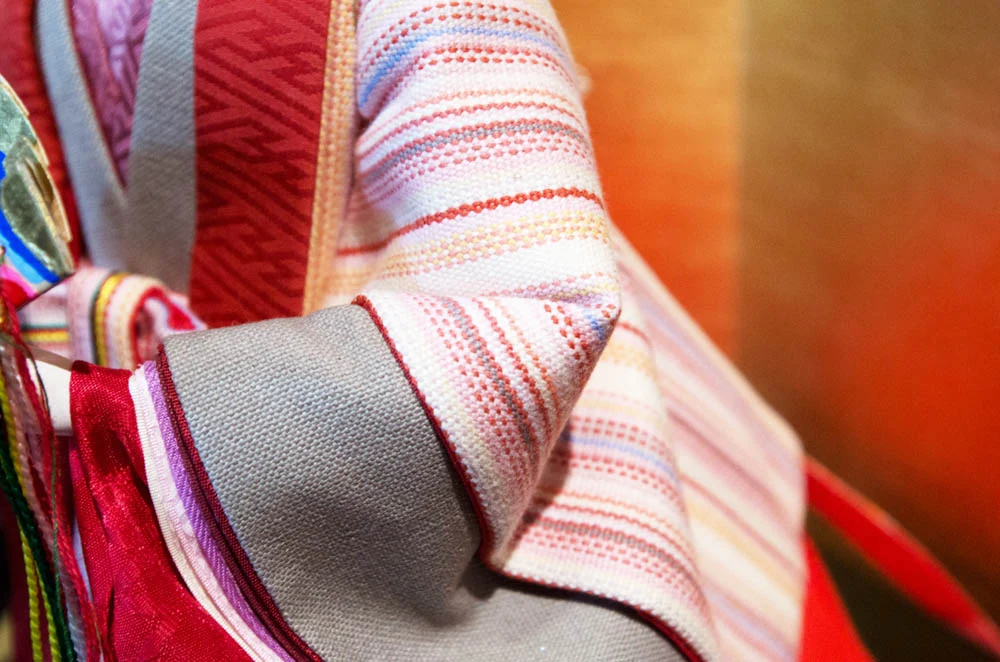
The kimono is made by dyeing each thread that forms the canvas.
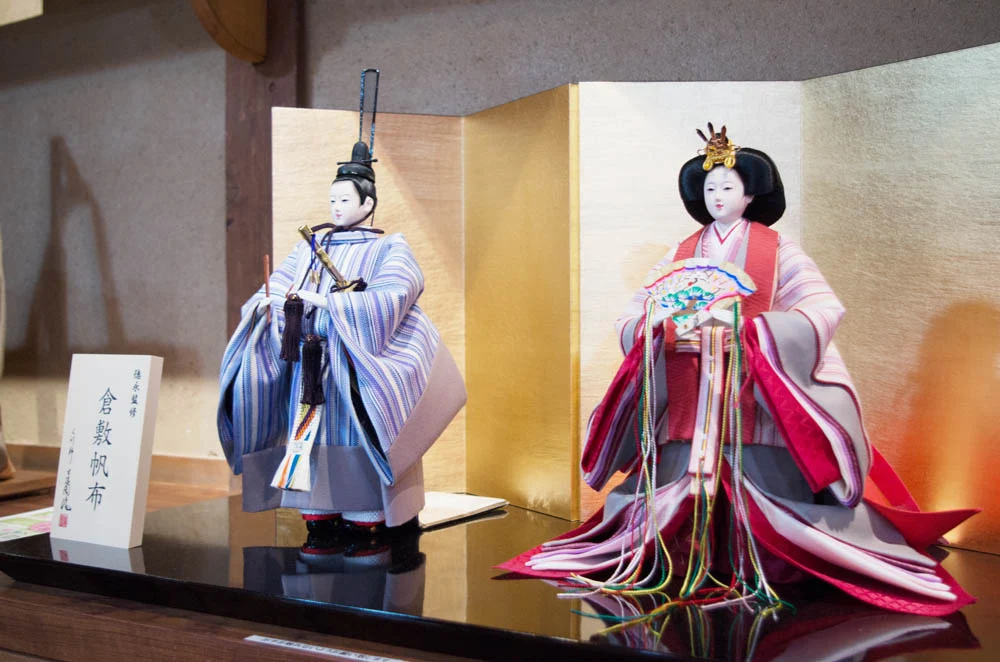
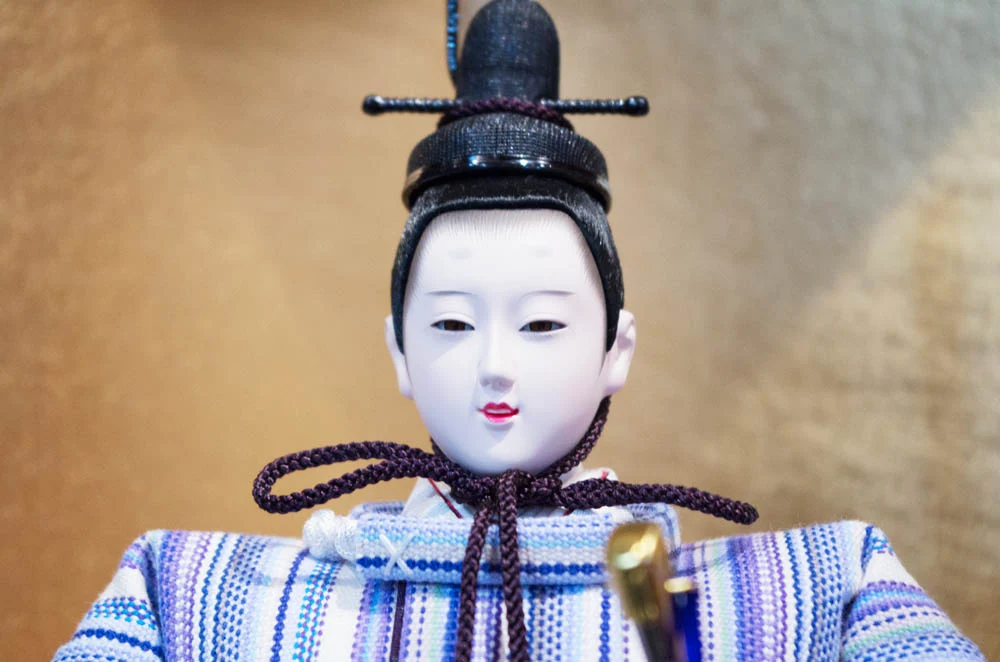
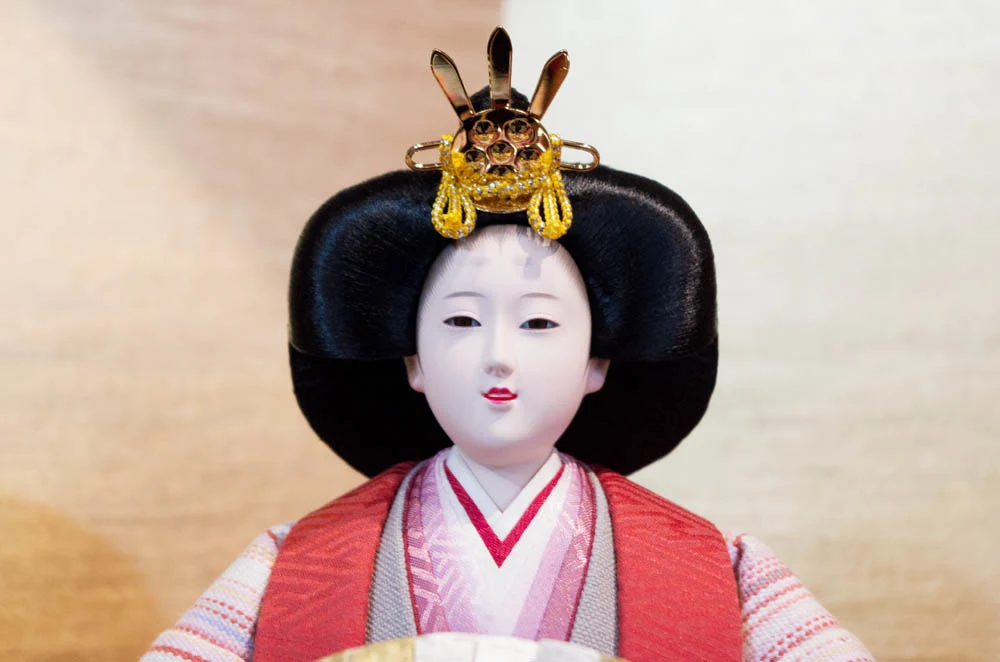
In addition to the beauty of the light blue and red kimonos, I was amazed by the craftsmanship that expresses intricate patterns stitch by stitch!
The elegant and gentle faces of the male and female hina dolls are charming.
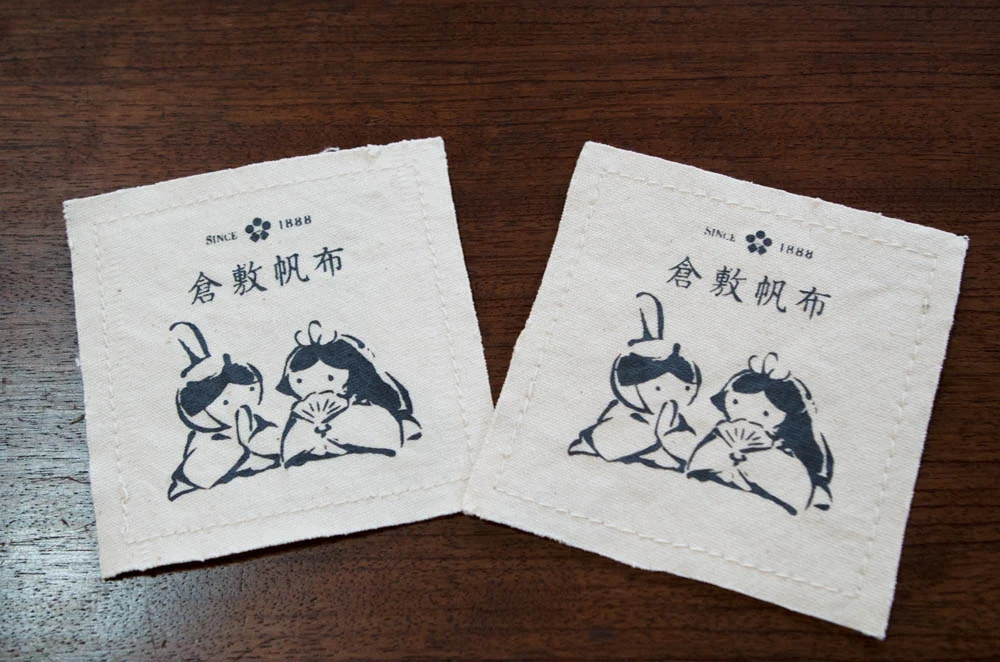
At Kurashiki Canvas Main Store, there was also a limited number of coasters made from Kurashiki canvas as a gift, and I received a cute coaster.
▼ A simple canvas with a cute hina doll printed on it. My daughter was very happy with it.
Conclusion
I enjoyed the Kojima Hina Doll Tour with my daughter in my hometown of Kojima.
It was an event in my hometown that I had been curious about for a long time.
While it has aspects of wishing for my daughter's growth and creating memories, I also wanted to introduce a little about the Kojima area, which is why I wrote this.
I don't think it's possible to visit all the venues, so I hope you can find something you like from the photos introduced and visit at least one.
I imagine that each hina doll has a story of a parent and daughter wishing for the healthy growth of their child.
While gazing at the various expressions and costumes of the displayed hina dolls, I was able to enjoy the hina doll tour with a peaceful feeling.
Given the uncertainty surrounding the spread of the novel coronavirus, it's hard to say "please go visit."
However, this is a popular event that has continued for 23 times.
I would be happy if you think about visiting next year (2023) or the year after (2024).
When that time comes, please enjoy the tourism in the Kojima area as well.
When the author visited, unfortunately, some venues were closed (Kojima Student Uniform Museum, Sankanshu Brewery).
If you plan to go, it is recommended to contact the relevant parties in the area of interest to confirm the opening status and other details.