"Let's Learn About the History of the Bikan Historical Area" is based on the reports and slide materials presented by Taro Yamamoto from the Kurashiki City Historical Materials Division and Noriyoshi Fujiwara from the Kurashiki City Board of Education during a study session held by the voluntary organization "This Town Time Travel Club" in the fiscal year 2025, and it has been summarized by Kengo Toi, the representative director of the Haretoco General Incorporated Association, taking into account the discussions of the club members.
This article introduces "Part 2: Edo Period."
Please check the following article for "Part 1: Ice Age to the 16th Century".
Edo Period (Early)
Until the 16th century, Kurashiki was a port, and there seems to have been very little agricultural land.
Later, during the Edo period, agriculture became active, and the area south of the Bikan Historical Area was reclaimed from the sea, leading to the development of Kurashiki as a distribution center for goods.
By this time, the place name "Kurashiki" was also recorded in local documents.
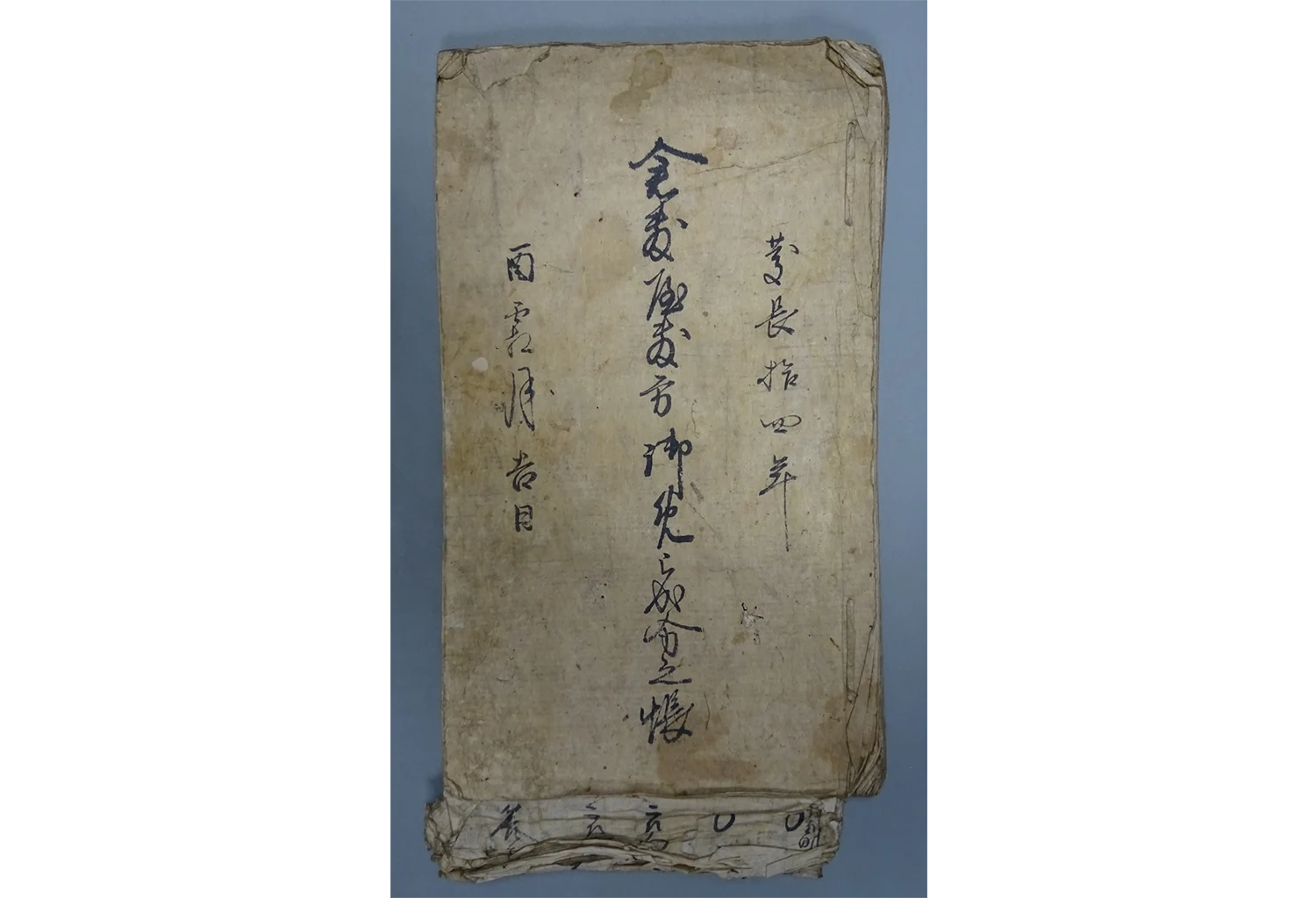
(Image provided by Kurashiki City Historical Materials Division)
After the decisive battle of Sekigahara, the Mori and Ukita clans, which had controlled most of Bitchu, including Kurashiki, were expelled from Bitchu. Then, Tokugawa Ieyasu, who won the battle of Sekigahara and established hegemony, appointed "Kuni Bugyo" in 11 provinces, including Bitchu (mainly in the Kinai region).
The "Kuni Bugyo" was a position established by Tokugawa Ieyasu to manage the territories of the Toyotomi clan during the Edo period. Immediately after the battle of Sekigahara, the Toyotomi clan still existed, and the Edo shogunate had not yet been established, which seems to have led to this arrangement.
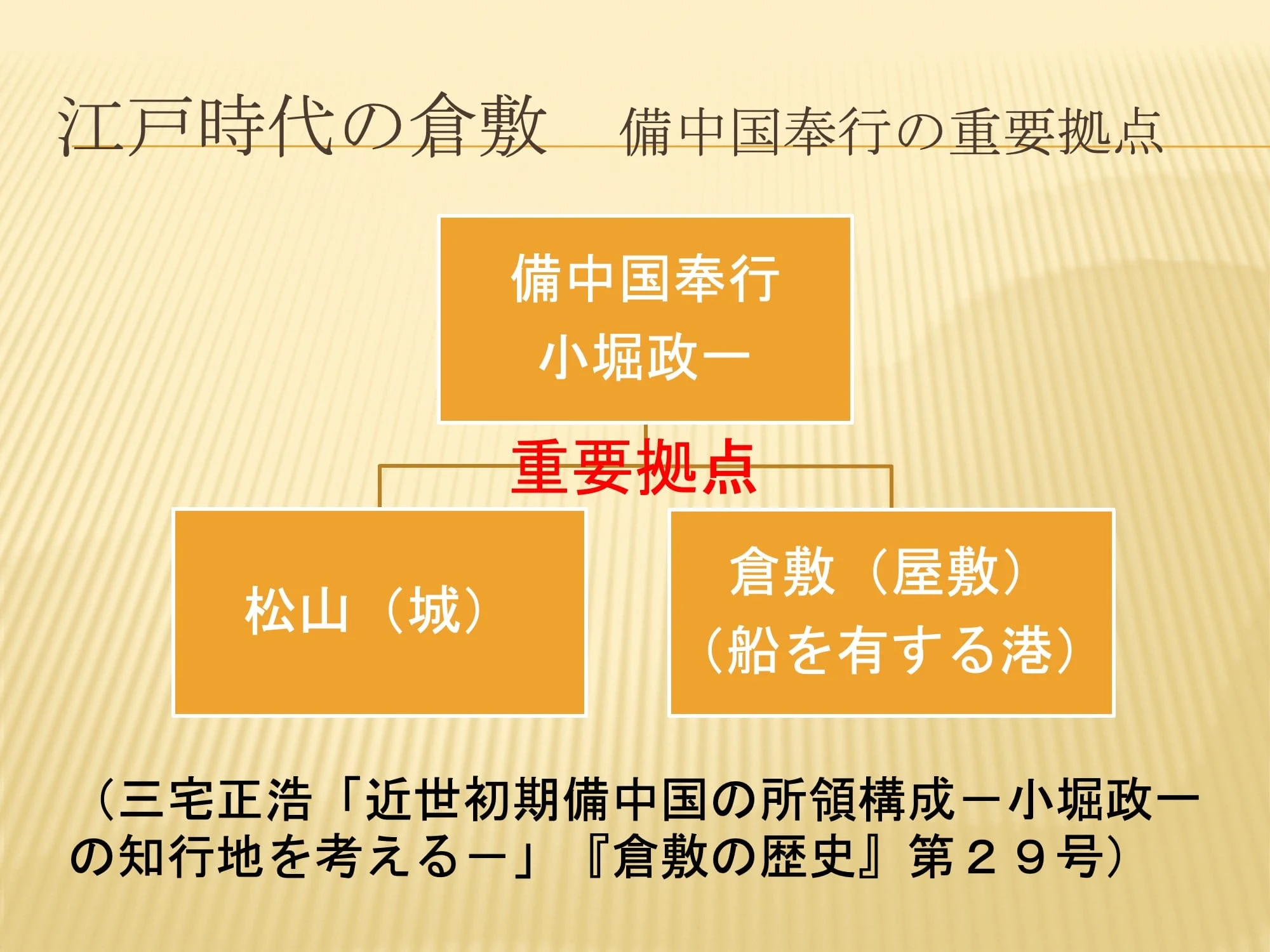
The person dispatched as the Bitchu Kuni Bugyo was Masatsugu Kobori, and after his sudden death in 1604, Masakazu Kobori succeeded the family and defended Bitchu Matsuyama Castle. The important bases of the Bitchu Kuni Bugyo were Matsuyama, where the castle was located, and Kurashiki, which had a port.
It should be noted that Masakazu Kobori is generally known as Enshu Kobori and is historically recognized as a garden designer and tea master, including the creation of the Katsura Imperial Villa.
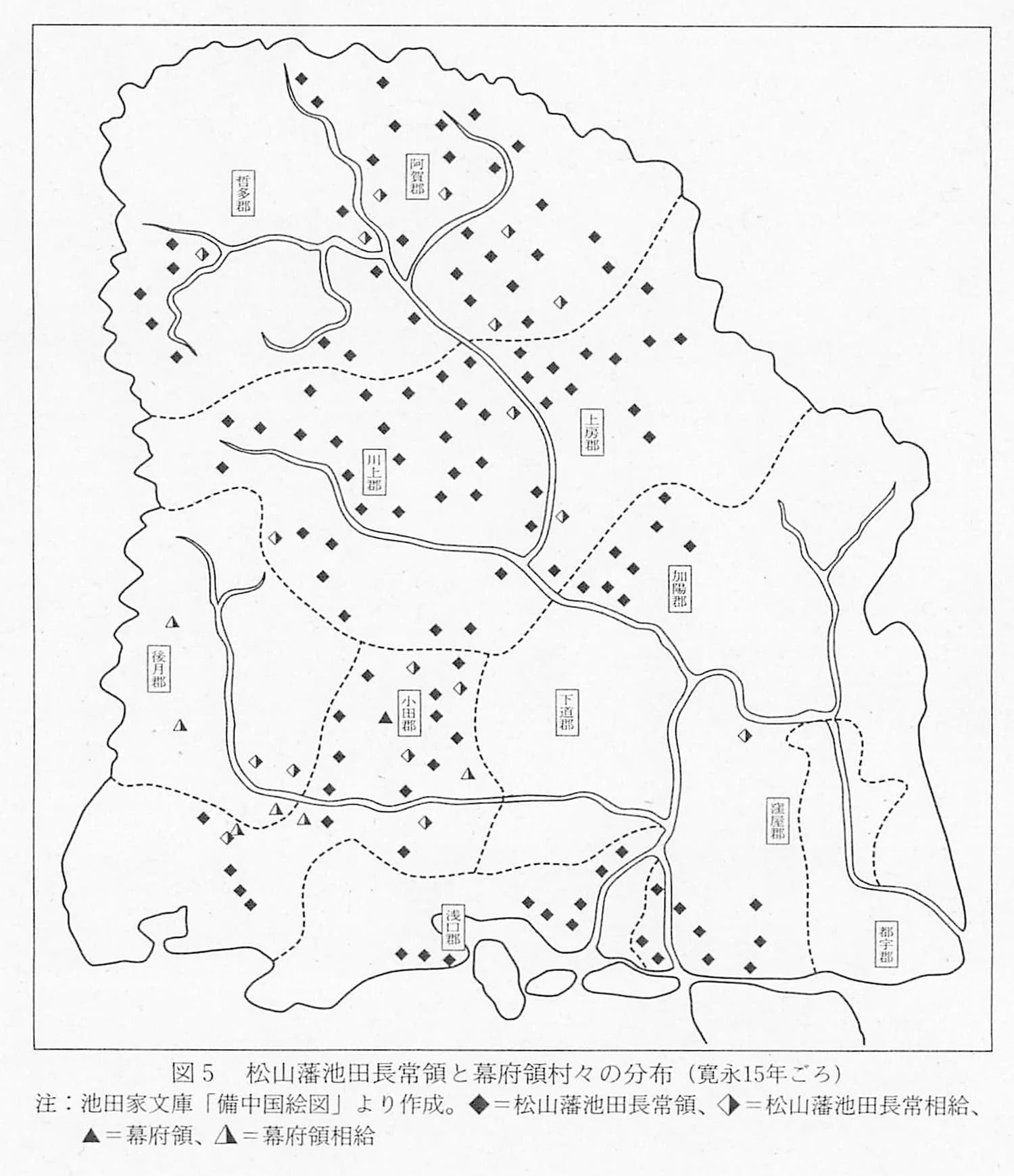
(Quoted from "Newly Compiled Kurashiki City History," Volume 3, page 38, written by Taro Yamamoto)
Subsequently, during the era of Nagayuki and Nagatsune Ikeda, the Bitchu Matsuyama Domain continued, but after Nagatsune Ikeda died in 1641 without an heir (the family was extinguished without a successor), Kurashiki Village became a directly governed territory of the shogunate.
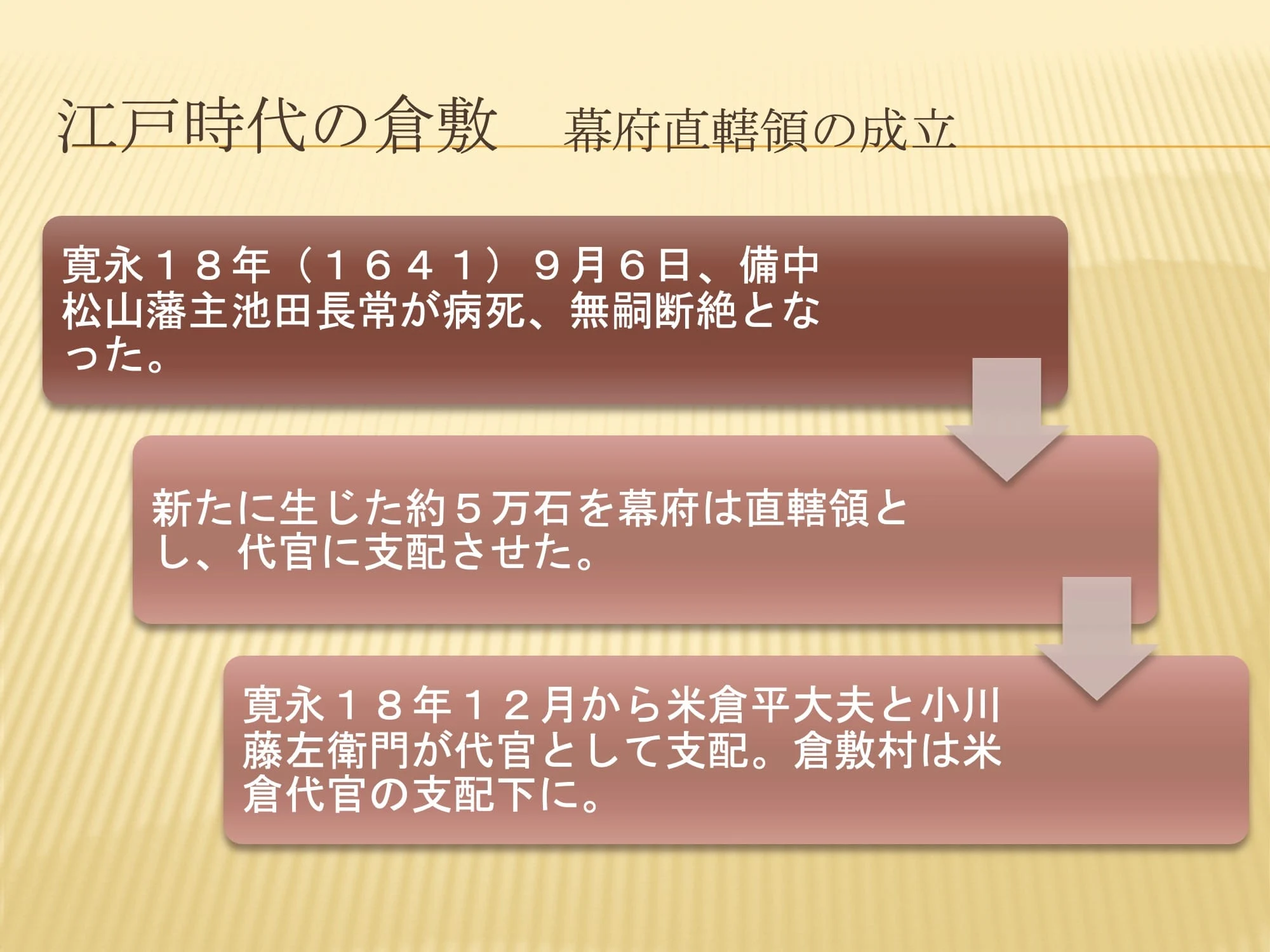
Directly Governed by the Shogunate
From December 1641, Heidayu Yonekura and Tozaemon Ogawa were dispatched as officials, and Kurashiki Village became a town governed by the directly appointed officials of the shogunate. The so-called "Tenryo Town Kurashiki" began here.
The term "Tenryo" is often introduced in modern times as something special, but it became a directly governed territory of the shogunate due to these circumstances, not because it was specially chosen. The term "Tenryo" is also a colloquial term for directly governed territories.
It is believed that the shogunate had the intention of increasing directly governed territories, but since there were also daimyos, they could not act forcefully, so it seems they increased directly governed territories in this manner when the timing was right.
Therefore, at that time, the common people's perception was likely that there was no sense of being "chosen" or that "Tenryo is amazing." The idea that Tenryo was something special is a story that emerged after the Showa era, when it became associated with tourism keywords.
However, compared to "castle towns" ruled by daimyos, it can be imagined that there was a freer atmosphere. This is because there were no samurai or "buke-yashiki" (samurai residences) in the town, and it was not a town serving samurai.
Management of Kurashiki Village
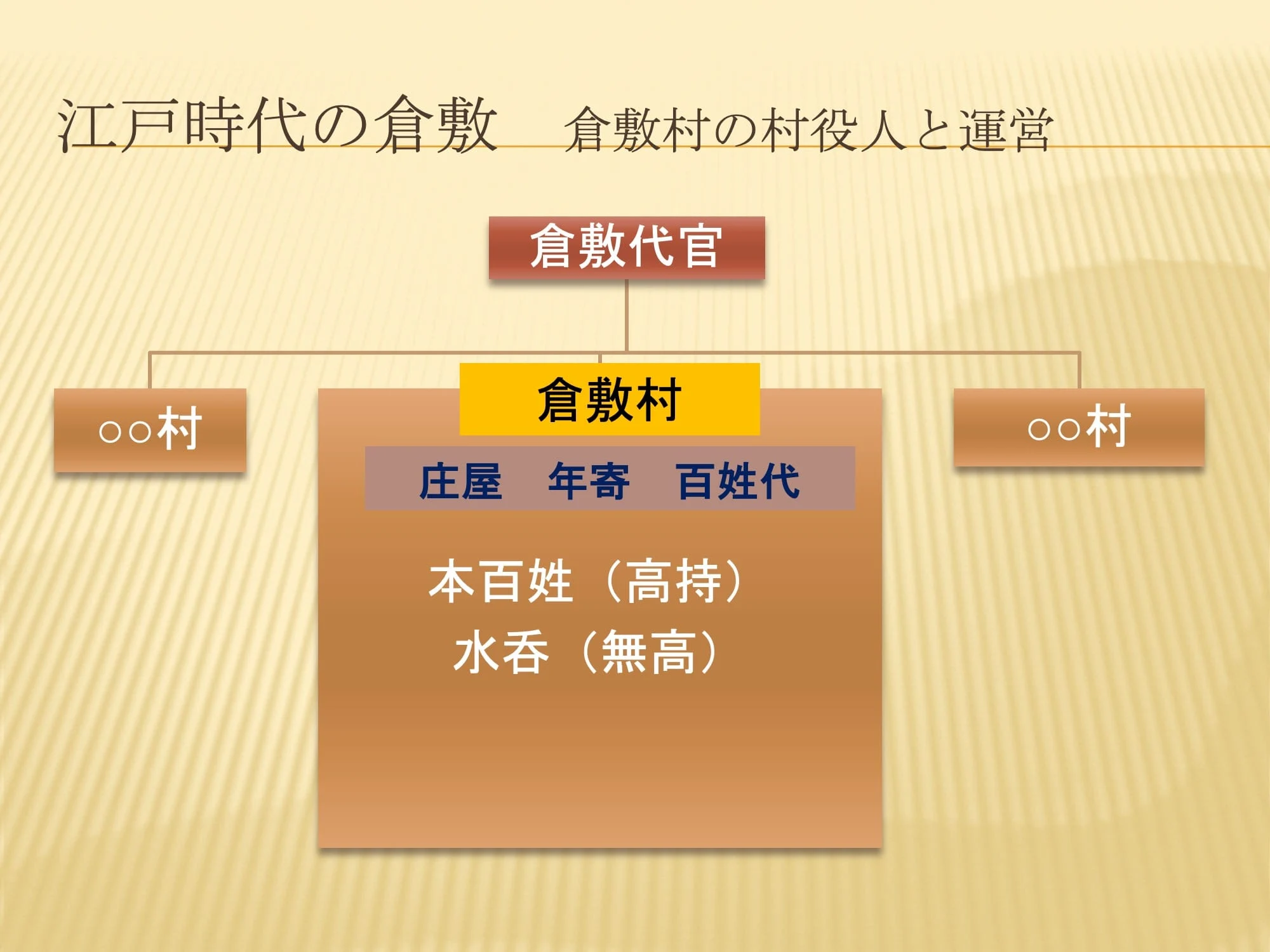
As a directly governed territory, Kurashiki Village was managed by village officials.
The Kurashiki daikan (district magistrate) was a samurai, but in modern terms, he was like a "bureaucrat dispatched from Tokyo." It seems they had no choice but to have local influential figures share the governance of the shogunate's territory.
From the early Edo period, the management of the village was undertaken by old families known as "Koroku." In the early Edo period, Koroku owned many rental lands and houses and became influential merchants engaged in wholesale and brewing industries.
When hearing that merchants managed Kurashiki Village as village officials, some may associate it with the Edo period's class system of "samurai, farmers, artisans, and merchants" and have doubts. While the discourse of "samurai, farmers, artisans, and merchants" exists, the reality was not so simple.
Currently, there is a perspective that distinguishes ruling classes (samurai, imperial family, nobles, upper-level priests, and shrine priests) from the ruled classes (peasants, artisans, and townspeople), and each group was organized by their respective organizations, such as samurai's vassal system, peasants' villages, townspeople's towns, and artisans' guilds, with individuals positioned through their households or groups.
For example, people living in castle towns were townspeople, while those living in villages were peasants. Among peasants, there were various types, such as those engaged in agriculture and those in trade. It is necessary to consider class and occupation separately.
Kurashiki Village is a village.
Therefore, its members were classified as peasants regardless of their actual occupations, and Kurashiki Village became "a village of peasants, not a village of merchants or townspeople."
Furthermore, Kurashiki Village was an area extending from the current JR Kurashiki Station to around Kurashiki City Nitta (Nitta Junior High School), but the area around the current Bikan Historical Area was called "Suihoyashiki" (waterman residences). It seems that almost all the residents of Suihoyashiki were engaged in trade.
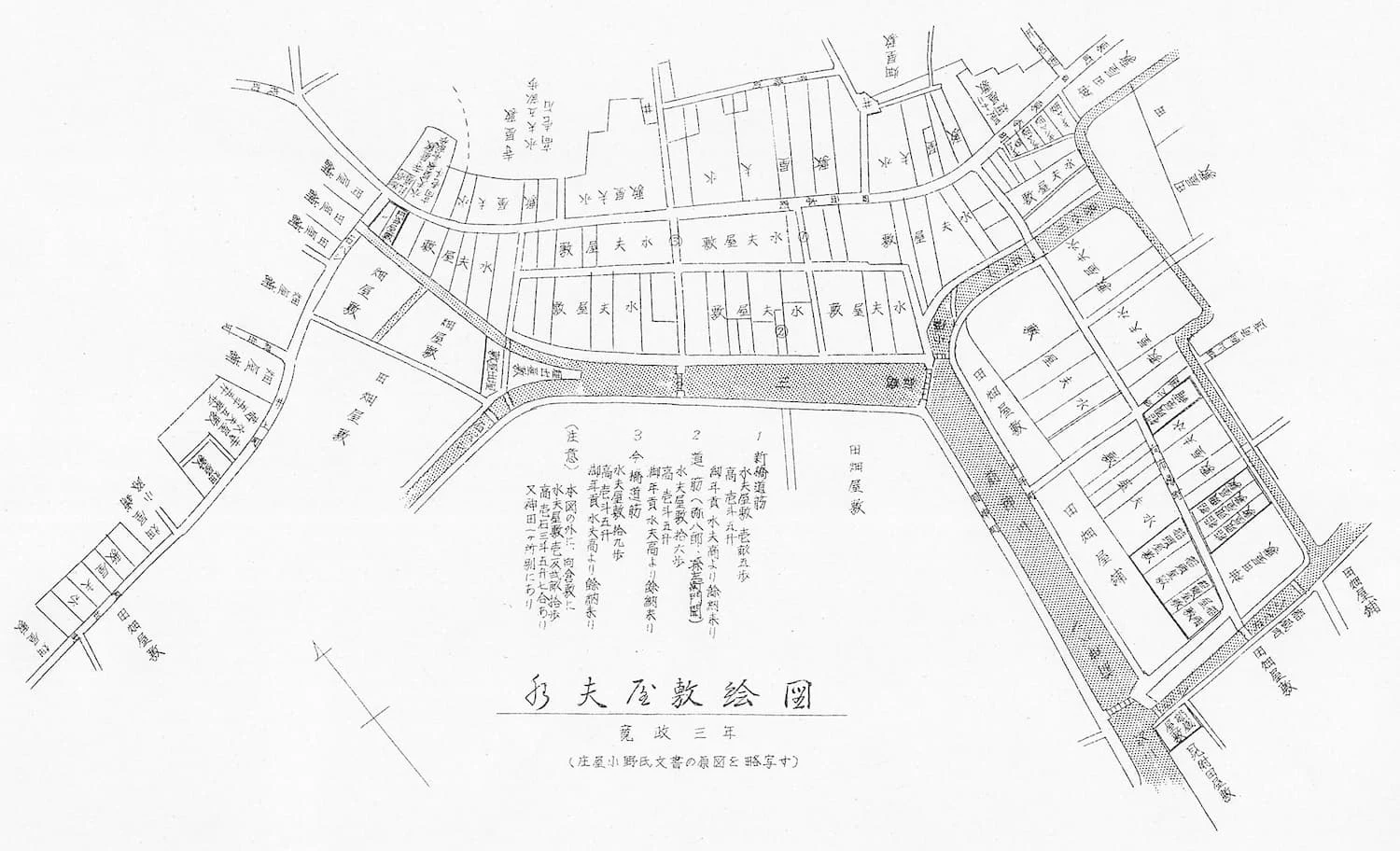
Life in the Edo Period
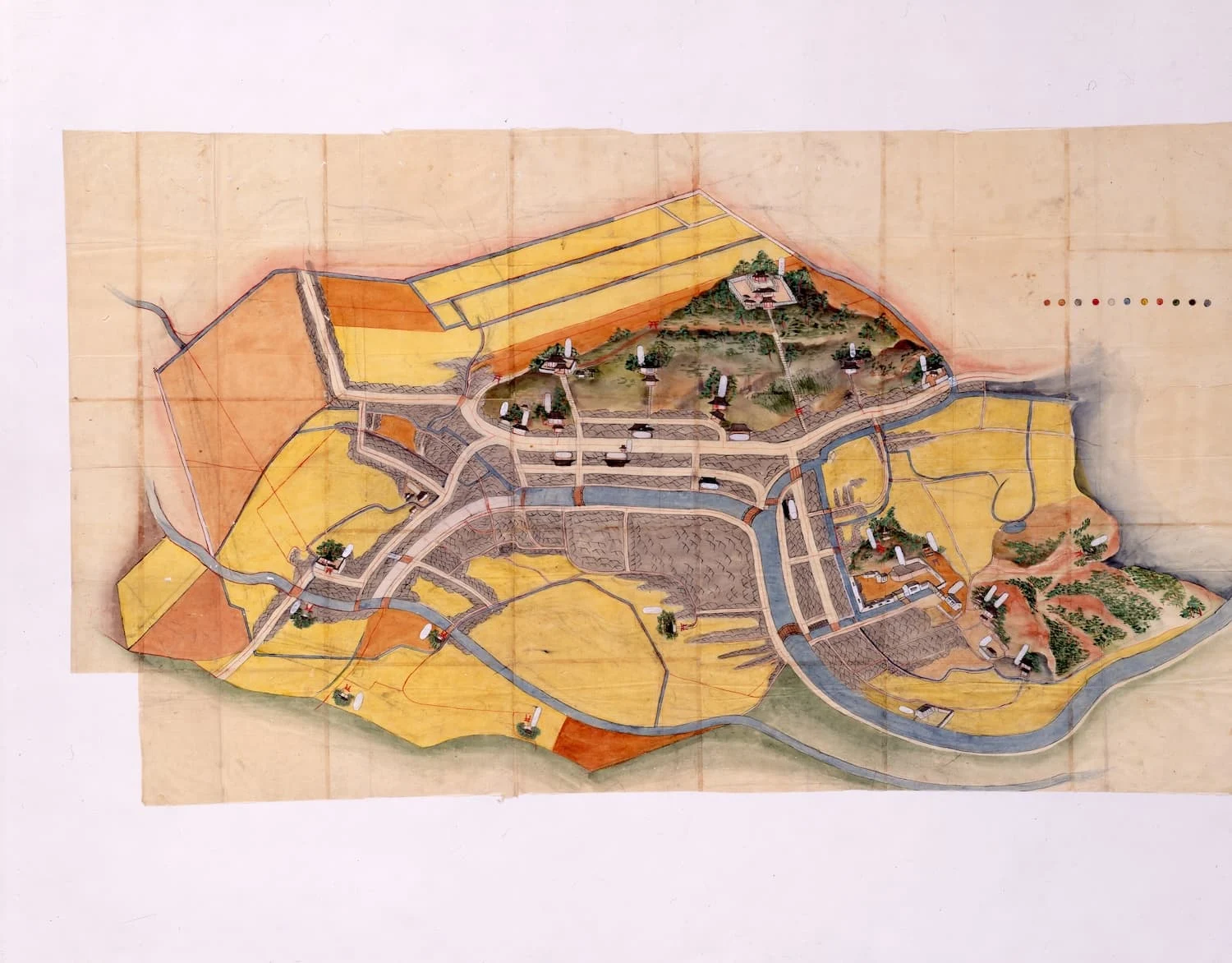
(Image provided by Kurashiki City Historical Materials Division)
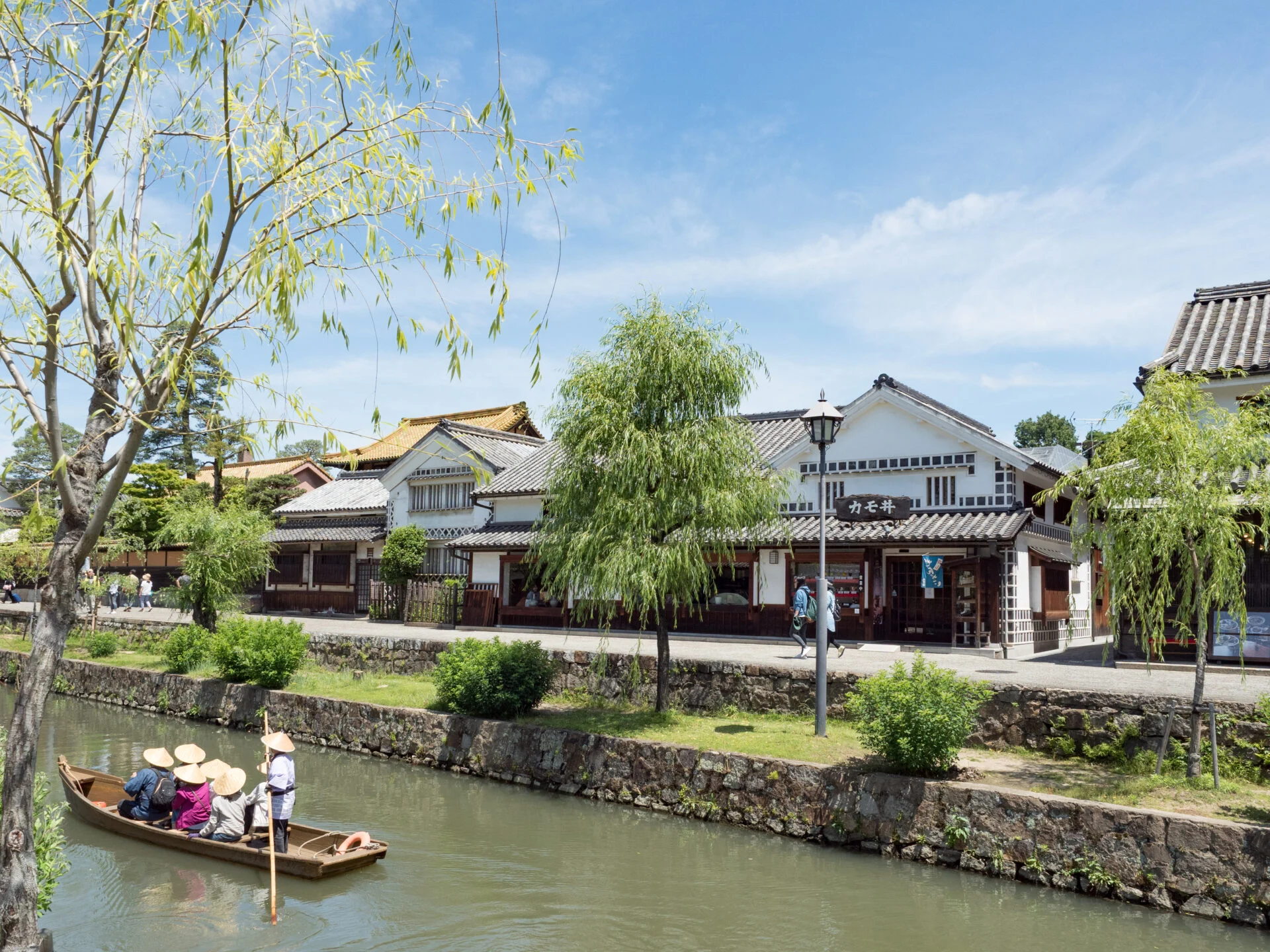
During the Edo period, Kurashiki Village had the Kurashiki daikan's residence (completed in 1746) within the current Kurashiki Ivy Square, and many houses lined the current Bikan Historical Area.
In the early Edo period, Koroku was the center of village management, but new merchants known as "Shinroku" also emerged. Because the management of the village was centered on the common people rather than the ruling class, unique initiatives began to take place.
| Koroku | Ono Family, Mizusawa Family, Inoue Family, Oka Family, etc. |
| Shinroku | Ueda Family, Ohashi Family, Ohara Family, Hara Family, Koyama Family, etc. |
The emergence of Shinroku led to the "Shinroku-Koroku Disturbance."
Eventually, it escalated into a village disturbance involving the peasants under them, and there was a long period during which they would not even speak to each other when they met.
In the Bunsen era (1818-1830), six members of Shinroku opposed the Koroku, who had monopolized the village officials, and it ultimately led to a lawsuit in Edo. As a result, village officials were elected for the first time, but initially, the Ueda Family from Shinroku and the Mizusawa Family from Koroku became the village heads, leading to a division in the village based on which side they supported.
This village disturbance was quite intense, and it can be said that there were many conflicts in Kurashiki Village during the Edo period.
On the other hand, in a world ruled by samurai, the fact that there were few samurai due to it being a directly governed territory of the shogunate and that peasants played a central role in the village suggests that it was economically prosperous.
It should be noted that the term "Shinroku" referred to the group of six who sued the village head, but the terms "Koroku" and "Shinroku" were not used at that time and were likely named in later periods.
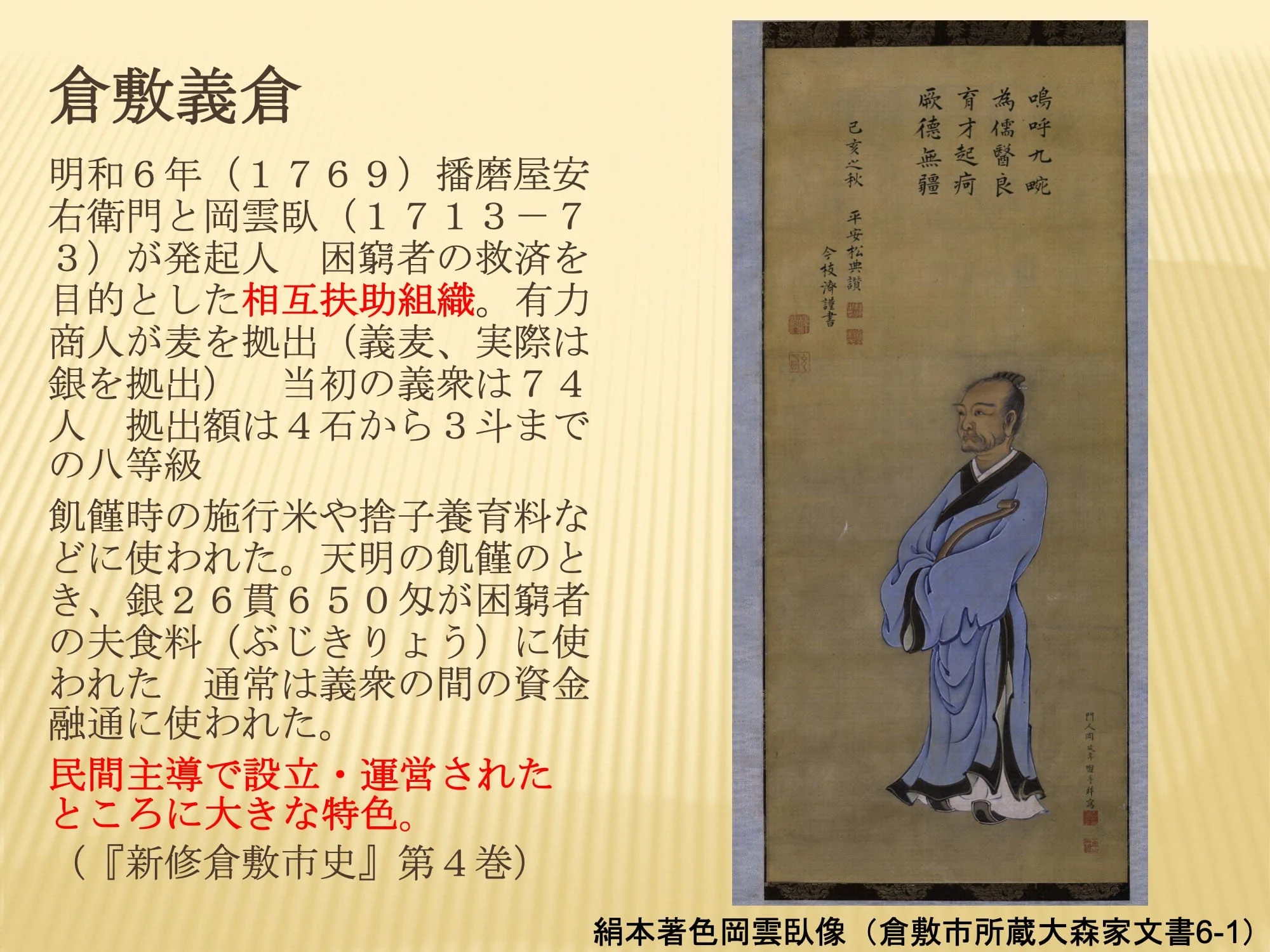
The Kurashiki Giso, a mutual aid organization, symbolizes the uniqueness of Kurashiki Village.
The Kurashiki Giso is a welfare system that provides relief to those in need, which was established and operated by the private sector rather than the ruling class, reflecting the common people's "feelings towards the town" in Kurashiki Village at that time.
Occupational Structure in Edo Period Kurashiki
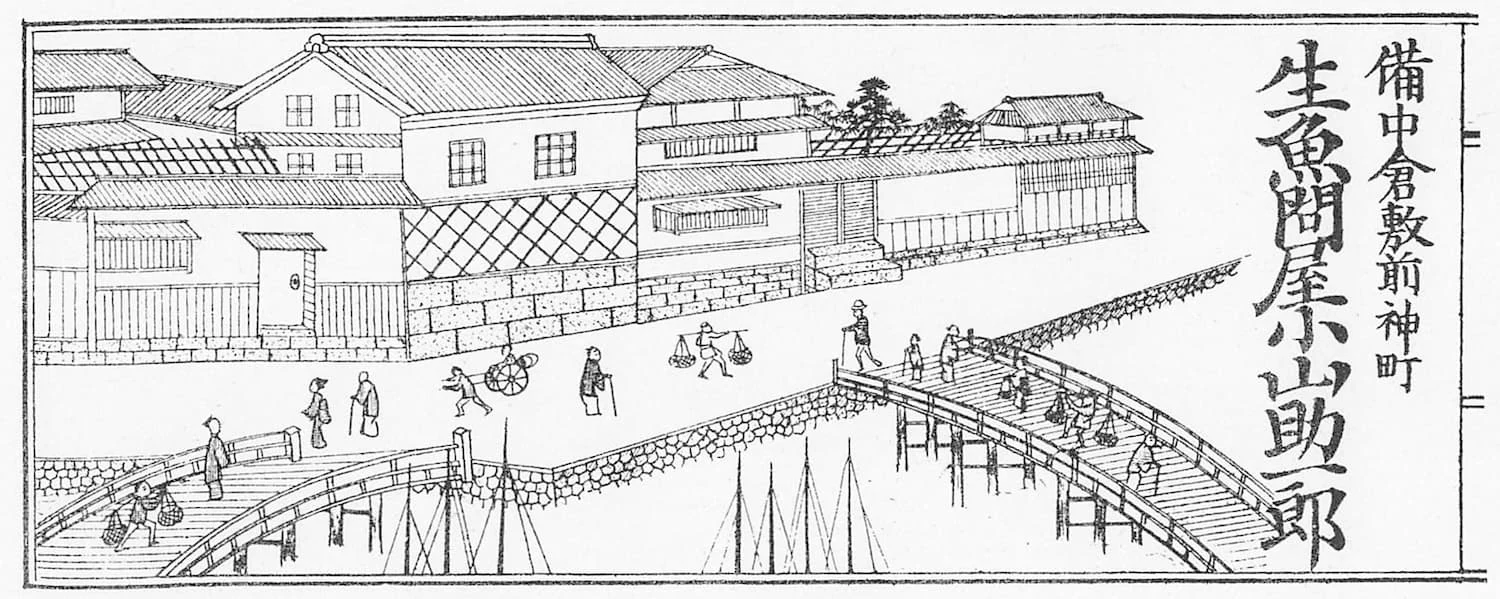
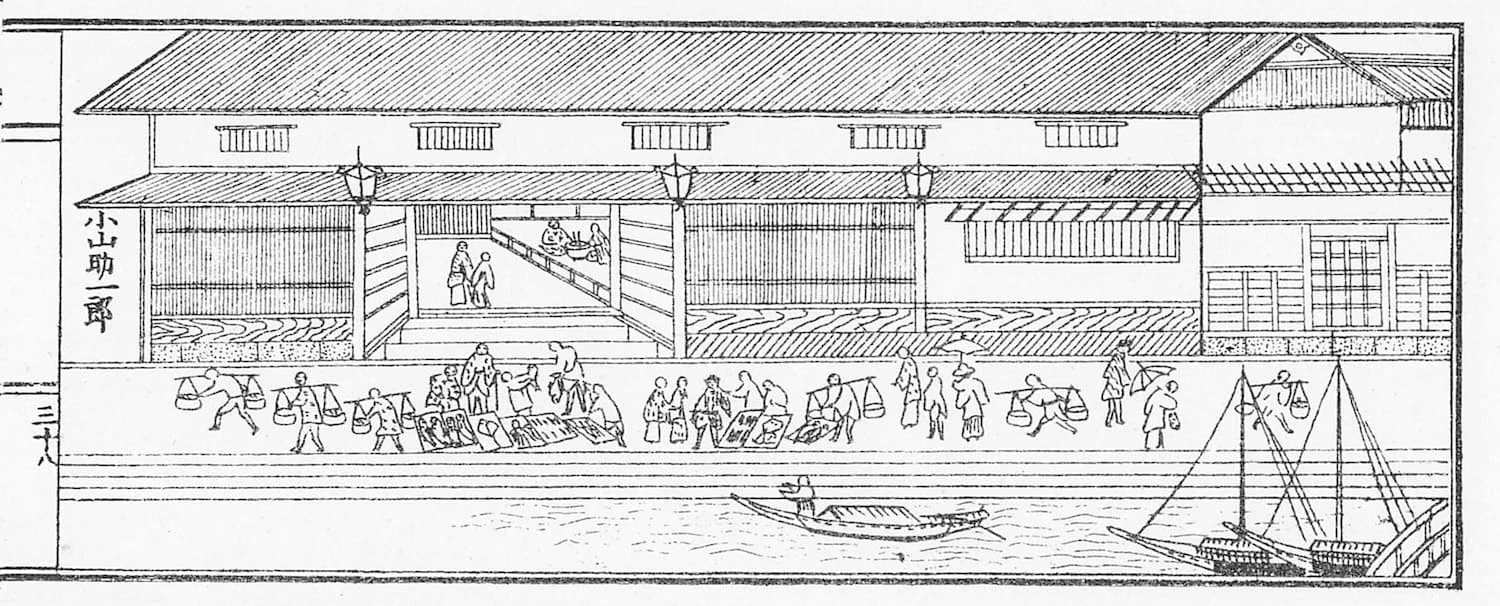
According to the "Kurashiki Village Town Small Business Ledger," in 1772, out of 1,838 heads of households in Kurashiki Village, there were 893 engaged in agriculture and 945 in other occupations.
Looking at those engaged in agriculture, there were only 60 farmers, while the number of tenants reached 828, indicating that land ownership was concentrated among a few individuals. Therefore, being a "farmer" did not guarantee equality.
The difference between those who owned land and those who did not was significant. Those without land had no choice but to engage in small businesses or mobile sales while living in rented houses, but the opportunity to rise through their own efforts may have been a characteristic of Kurashiki. The existence of new wealth gained through commerce can be seen as a symbol of this.
In fact, a variety of commercial and industrial activities were developed outside of agriculture. Among these, 134 fish sellers and 45 cotton seed buyers stood out, highlighting Kurashiki's role as a hub for the distribution of fish and cotton seeds. The presence of 10 wholesalers, 6 intermediaries, 10 inns, and 19 pawnshops indicates that Kurashiki was a regional distribution and financial center. Additionally, many women were engaged in sewing as a profession.
During the Edo period, society was based on the kokudaka system (a system that expressed the productivity of rice fields and residential land in terms of the amount of unpolished rice). In an era where agriculture was predominant, the presence of diverse professions in a rural village may have influenced later periods.
"Part 3: Meiji Era to Modern Times" will follow.
The full article can also be viewed from the feature page below.
This Town Time Travel Club Members
- Ohara Akane
Vice President, Sanraku Co., Ltd. - Kado Toshiiko
Director, Ohara House Katalyzer - Inagaki Toshihiko
First-Class Architect, Trim Design - Oga Tamako
President, Japanese Folk Toy Museum - Akiba Yuichi
President, Kurabiz Co., Ltd. - Takaishi Mariko
Kurashiki City Regional Revitalization Cooperation Team - Toi Kengo
Representative Director, Haretoco General Incorporated Association
Advisors and Article Supervisors
- Yamamoto Taro
Chief, Historical Materials Maintenance Office, General Affairs Division, Kurashiki City - Fujiwara Noriyoshi
Cultural Curator, Kurashiki City Board of Education - Nishimura Masanori
Advisor, Cultural Industry Bureau, Kurashiki City