Interview
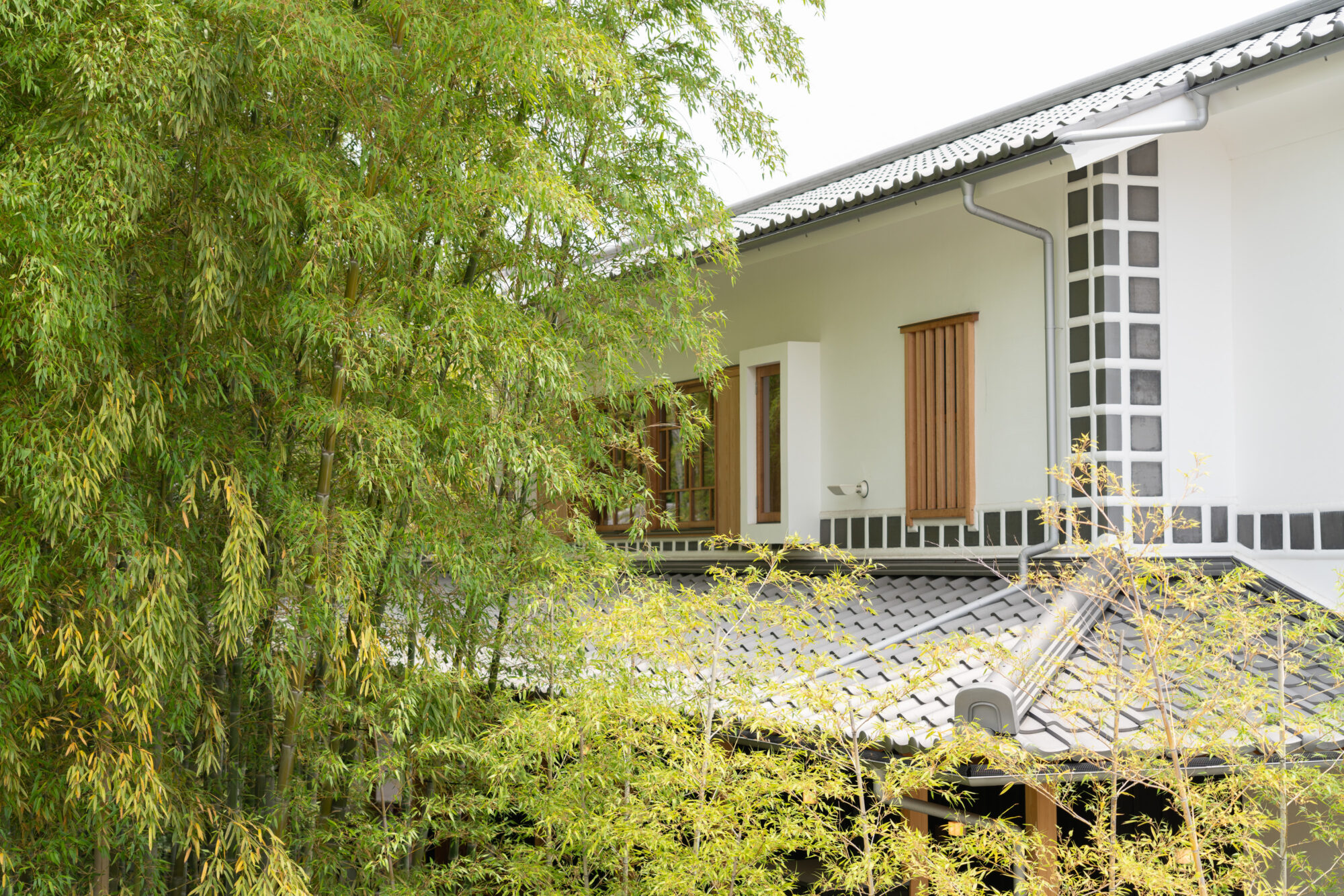
At Kurashiki Yoimachi GARDEN, you can discover Okayama’s art and food culture.
We spoke with the public relations representative of Kurashijo Cultural Salon Co., Ltd. about how it came to be and the ideas behind it.
The story behind Kurashiki Yoimachi GARDEN
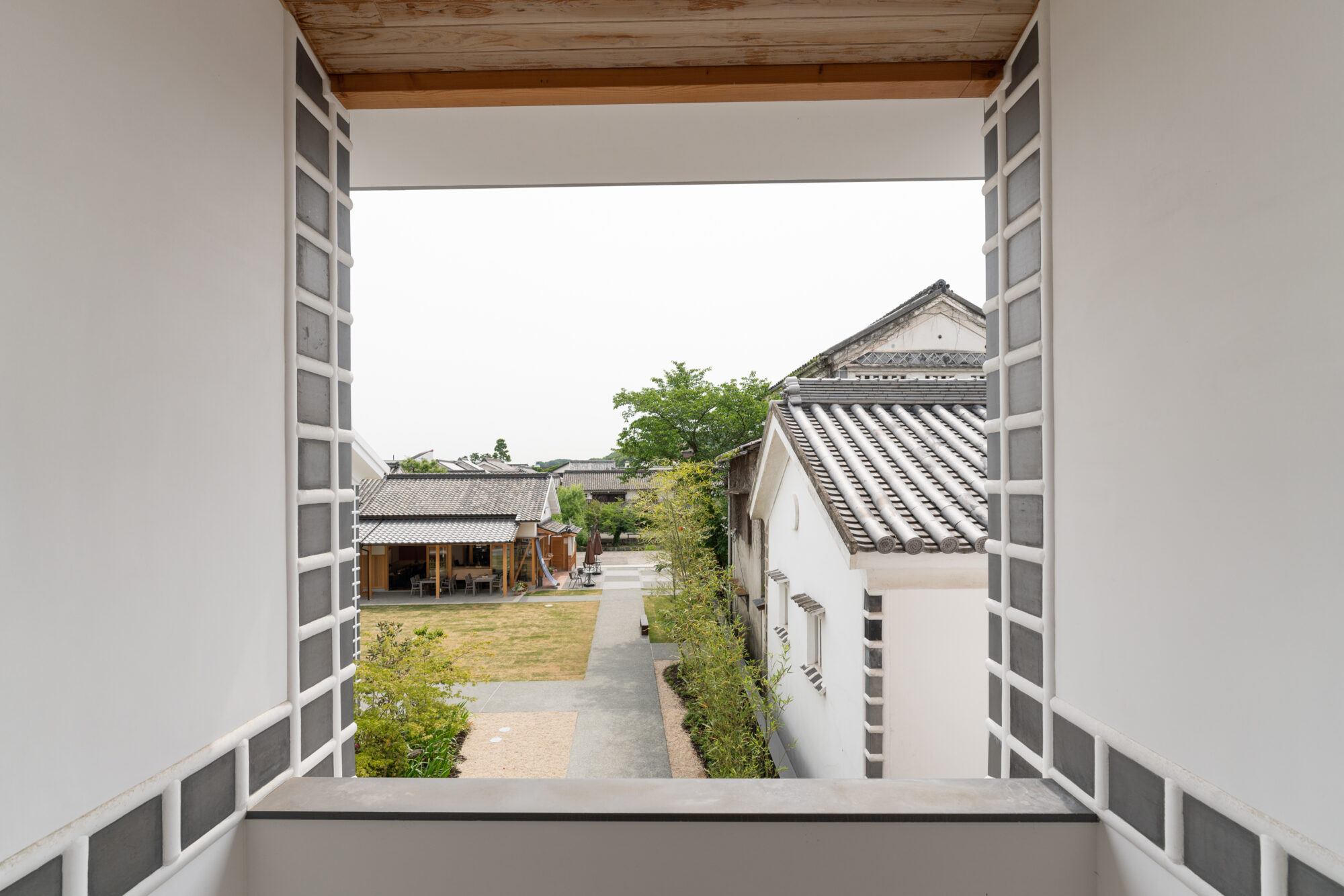
Could you tell us how Kurashiki Yoimachi GARDEN came to be?
Public Relations Representative
The father of the owner of Kurashijo Cultural Salon bought this land about 40 years ago.
It was left untouched for a while, but nearly 20 years ago, the owner began thinking about building a museum where people could experience the beauty of the region.
A foundation was established for the museum, and the decision was made to create Kurashiki Yoimachi GARDEN to bring people to this location.
So the plans for Kibibi Museum came first?
Public Relations Representative
That’s right.
The “Phase 1 construction,” completed in 2015, involved building a two-story wooden structure housing a parlor and restaurant, and developing the bamboo grove. Kibibi Museum was completed as part of “Phase 2 construction.”
But the Phase 2 work had been planned from the beginning, too.
Land and buildings in the Bikan Historical Area cannot be freely developed by their owners.
Kurashiki City has drawn up a central urban area revitalization plan, and development follows the order set out in that plan.
Both Kurashiki Yoimachi GARDEN and Kurashiki SOLA are part of a major project incorporated into that plan.
About the bamboo grove
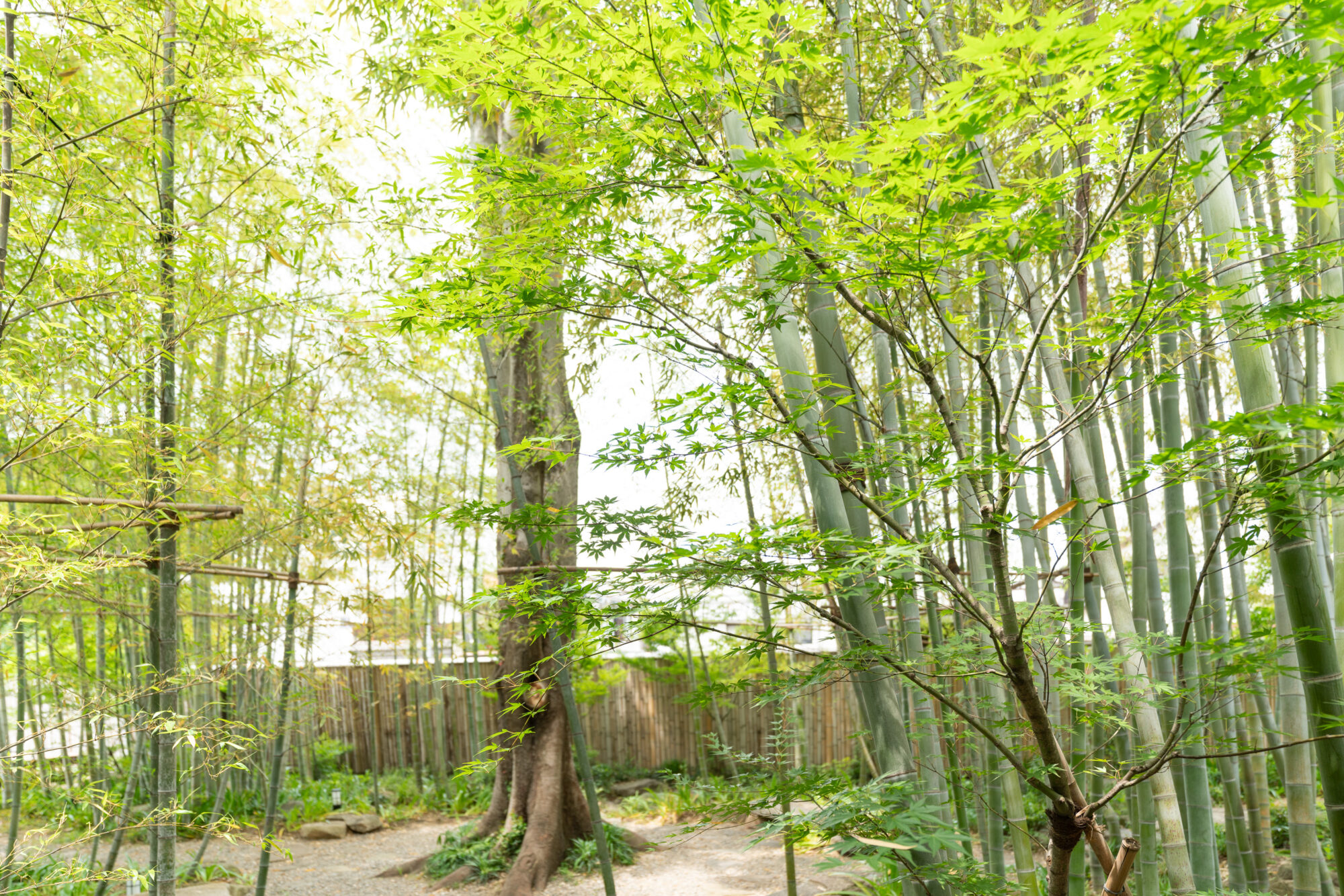
Was the bamboo grove on this land part of the plan?
Public Relations Representative
It wasn’t planted to create a bamboo garden.
Perhaps roots spread here from nearby bamboo, but bamboo had grown on this land naturally.
The tree in the middle wasn’t deliberately planted either; it grew from a seed dropped by a bird.
There used to be about 1,500 bamboo plants growing here, so thickly that people couldn’t enter, like a jungle.
Apparently, it was a little-known spot for digging up bamboo shoots.
There’s surprisingly little green space in the Bikan Historical Area.
Since the bamboo was growing so lushly, the garden was designed with the idea of making use of it to create a garden everyone could enjoy.
Even so, when the project was first planned, the idea was to clear the entire bamboo grove during Phase 2 construction.
However, visitors were delighted by the grove, so the plan was changed: the bamboo was kept, and the museum was built in a corner.
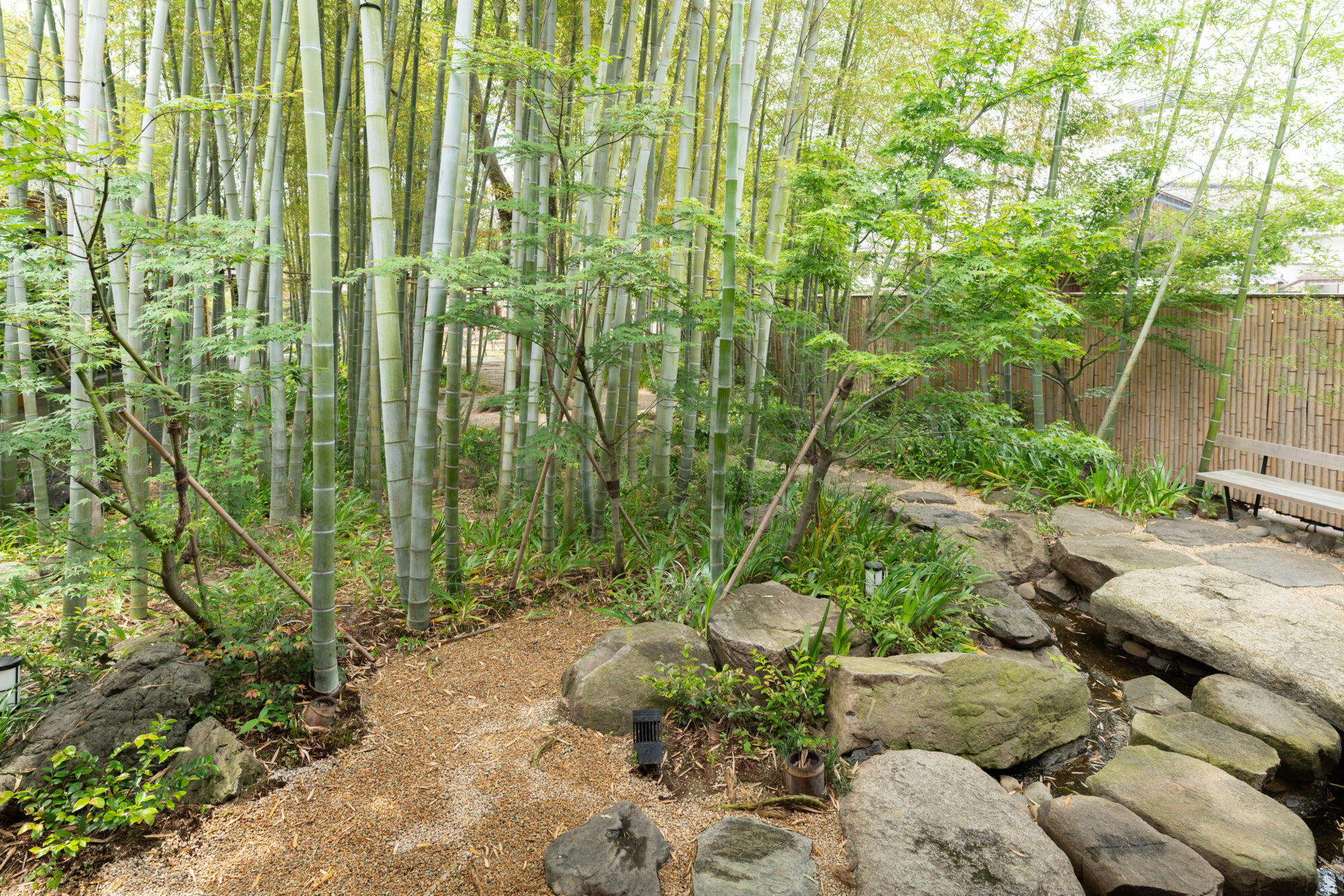
What do you do to maintain the bamboo grove?
Public Relations Representative
The roots keep spreading, so bamboo shoots that emerge along paths and other areas have to be removed.
In spring, leaves fall at an incredible rate, so we have gardeners and cleaning staff come in about four times a month.
We also cut down old and damaged bamboo regularly, since it will rot if the air doesn’t circulate well.
The roots do spread, but they form a net-like pattern, like the skin of a melon, so they’re shallow.
As a result, several stalks fall or break every time there’s a typhoon. They also need to be cleared away and tended to then.
We’d rather avoid using insecticides, so we apply only the minimum amount of insect repellent to make it harder for mosquitoes to land on the leaves.
We’ve replanted the lawn many times, but it doesn’t grow well because people walk on it so often.
Kibibi Museum and the tea room
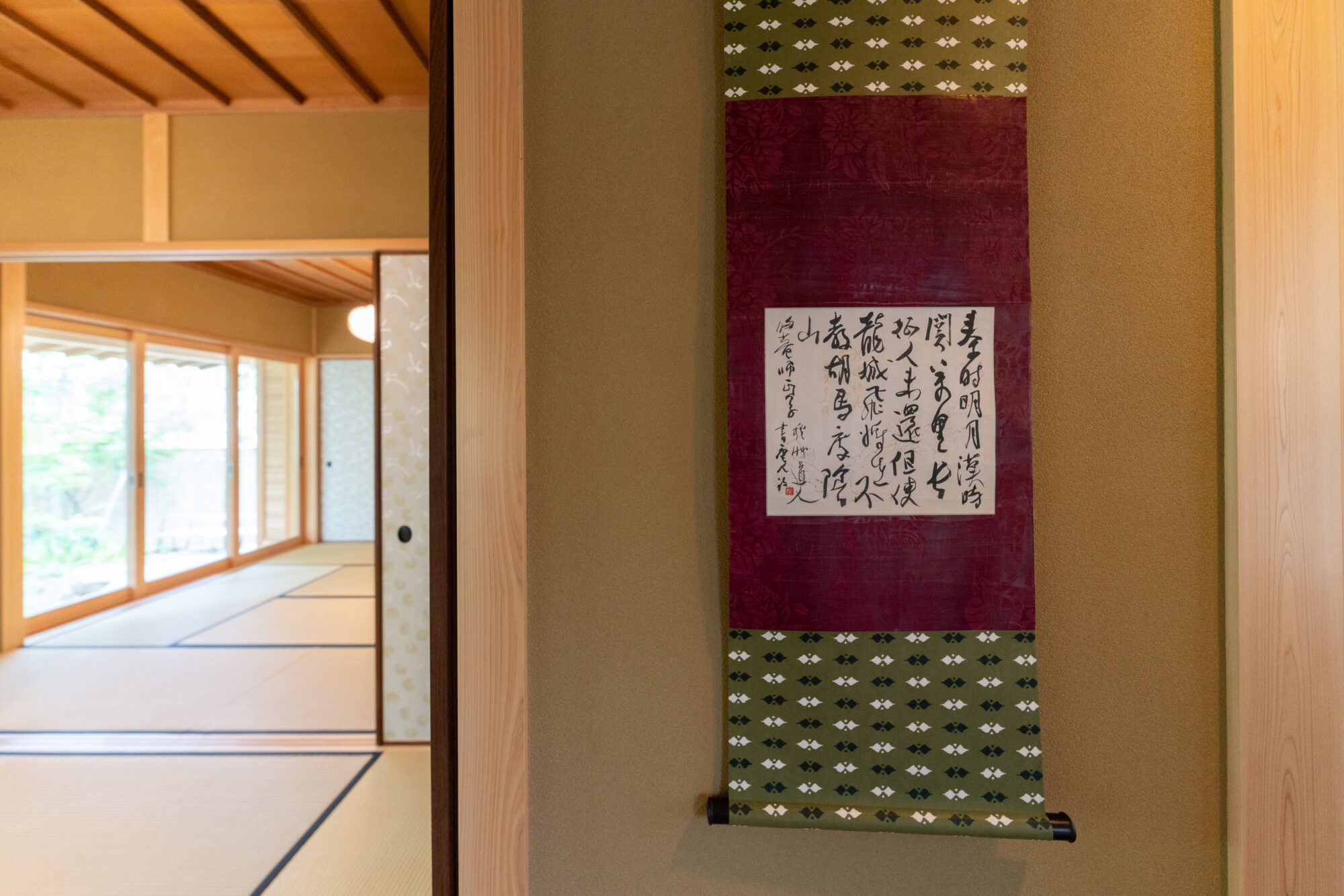
How was the collection at Kibibi Museum assembled?
Public Relations Representative
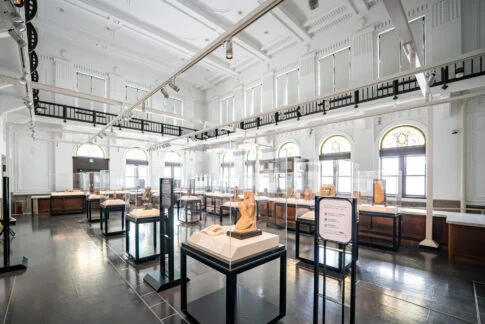
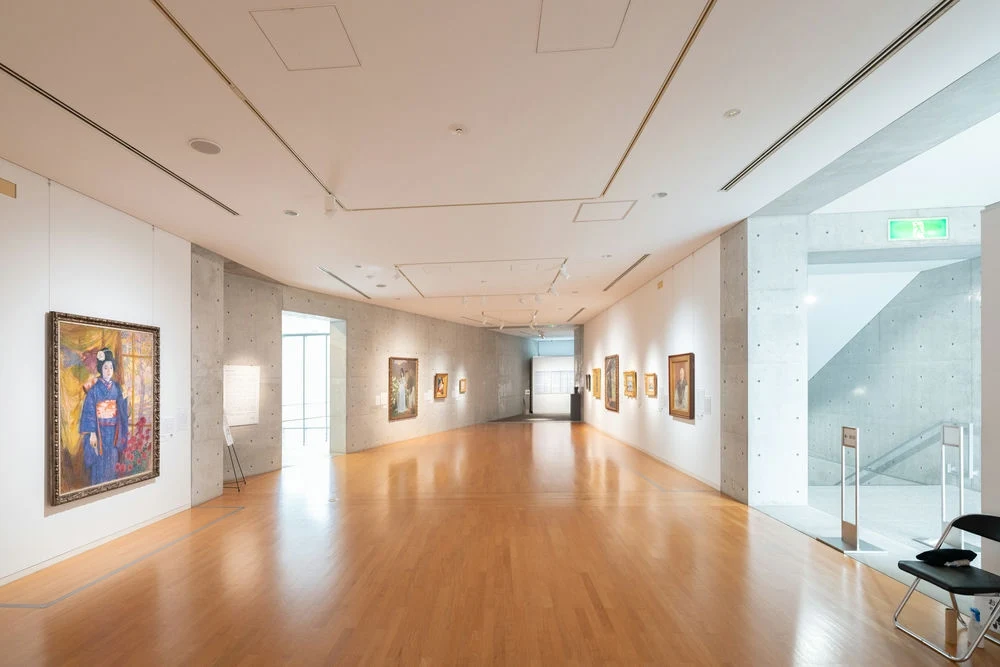
The owner’s father collected the works because he wanted to “preserve works by local artists in their home region.”
The current owner then wanted to make the collection available to the public, and Kibibi Museum was established.
Why was the tea room built?
Public Relations Representative
The owner had many tea utensils that are cultural treasures.
All tea utensils are works of art.
We wanted to hold tea gatherings where people could hang calligraphy, admire it together, learn about its history and the artist, and then take their time enjoying tea.
We do hold tea gatherings. We prepare something like a menu listing the works of art on display. Everyone enjoys the experience while learning about them.
We also have tables and chairs for people who have difficulty sitting on the floor.
Parlor Kudamono Komachi, born from hospitality

Why did you decide to open a parlor?
Public Relations Representative
It began with the spirit of hospitality of the owner of Kurashijo Cultural Salon.
Visitors who come to Okayama as tourists sometimes visit in winter and ask, “Do you have white peaches?”
To let those visitors enjoy seasonal white peaches, our chef spent two years developing white peach soft-serve ice cream.
It contains more than 45 percent juice from locally grown white peaches at their peak season.
In fact, many “ordinary” soft-serve ice creams on the market contain not a single drop of fruit juice.
The soft-serve ice cream at Parlor Kudamono Komachi uses no coloring or flavoring, and retains the aroma and taste that rise through your nose, as if you had bitten into a whole piece of fruit.
There are aspects that are trade secrets, so it’s frustrating that we can’t talk about everything we’d like to promote.
We started this because we want people who visit Kurashiki outside the season to know just how delicious Shimizu white peaches are.
The hopes behind the name “Kurashiki Yoimachi GARDEN”
Could you tell us where the name “Kurashiki Yoimachi GARDEN” comes from?
Public Relations Representative
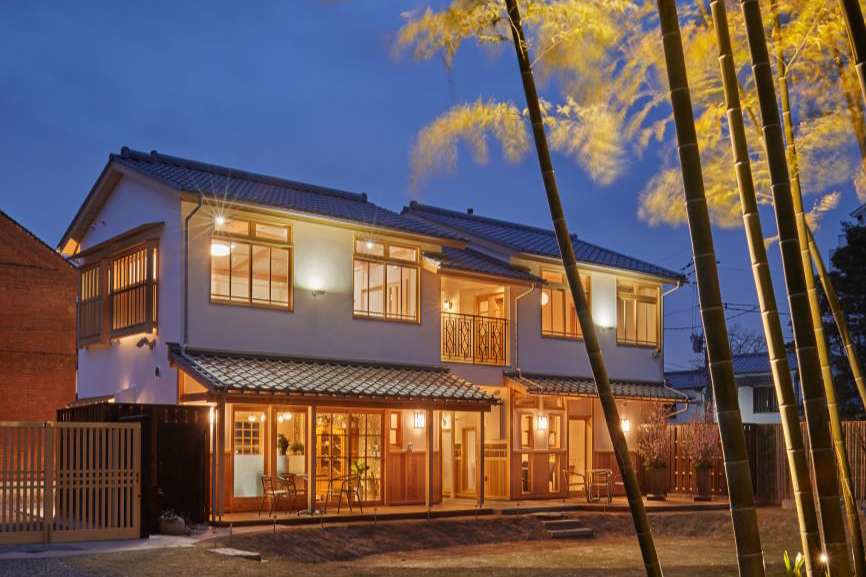
We chose it because we want to encourage longer stays in Kurashiki and create a place where adults can go out and enjoy the evening.
We haven’t quite achieved that yet, but we’re working on things like lighting up the grounds so people can enjoy the evening.
We created this place with the hope that it would be a lovely spot for both tourists and local residents to take a stroll after dinner.
We’d be happy if visitors experience refined enjoyment, relaxation, and a sense of respite here.
Enjoy a refined moment at Kurashiki Yoimachi GARDEN
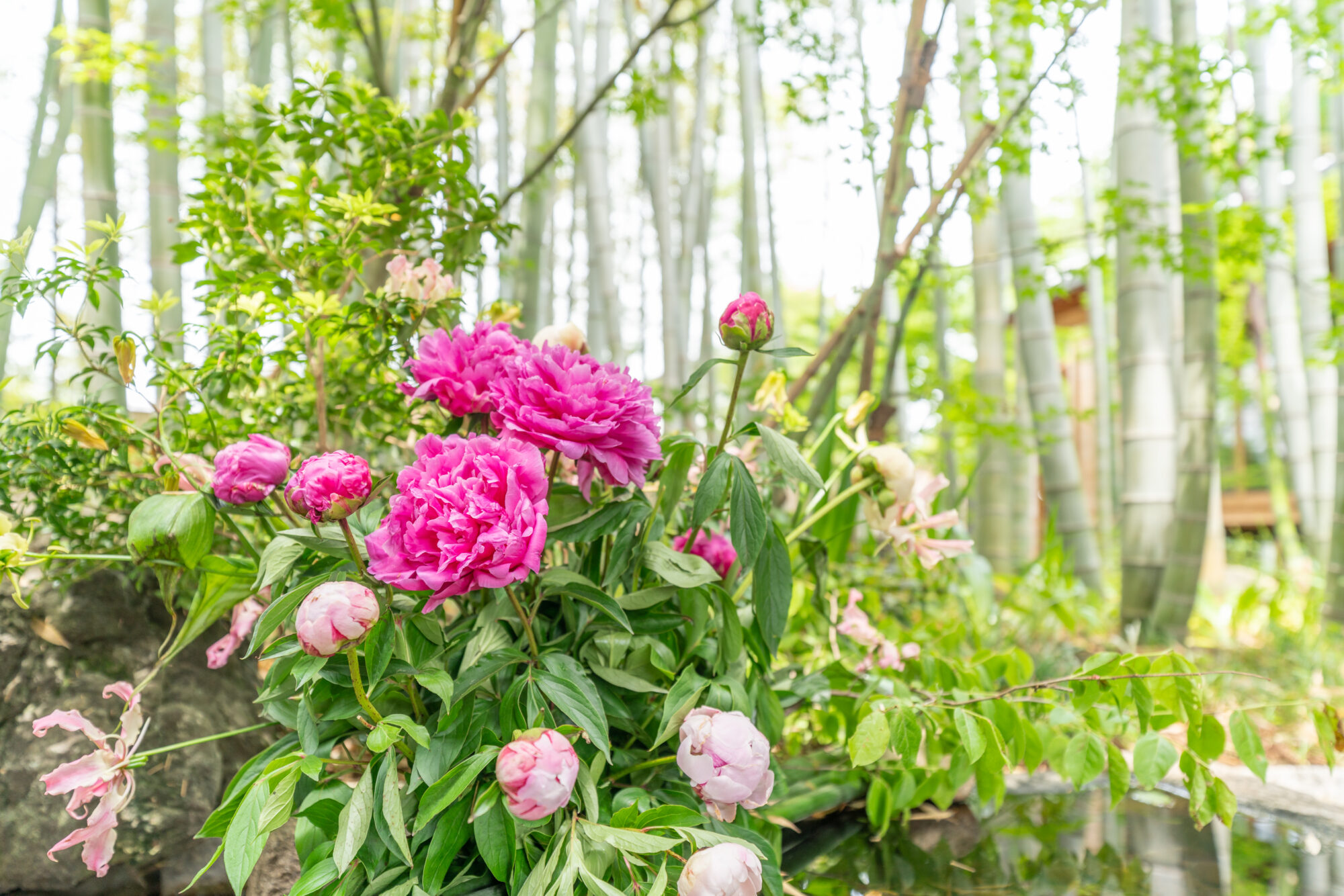
There’s soft-serve ice cream created from a spirit of hospitality, Italian cuisine featuring local ingredients, art collected with the region in mind, and a beautiful bamboo grove garden.
This is a welcoming place that cares about the region and its people, with an appealing atmosphere both day and night where adults can relax and unwind.
Be sure to check for updates on upcoming music events, tea gatherings, lectures in the hall, and more.
You’re sure to enjoy a fulfilling experience immersed in the culture and beauty of Kibi.
Kurashiki Yoimachi GARDEN details

| Name | Kurashiki Yoimachi GARDEN |
|---|---|
| Address | 1-4-22 Chuo, Kurashiki City, Okayama Prefecture |
| Contact | 086-425-7733 |
| Parking | None |
| Opening hours | Varies by establishment |
| Closing days | Varies by establishment |
| Smoking | Entirely non-smoking |
| Restrooms | Western-style toilets |
| Website | Kurashiki Yoimachi GARDEN |


What would you like to know about Kurashiki?
Enter a word to search articles on this site