
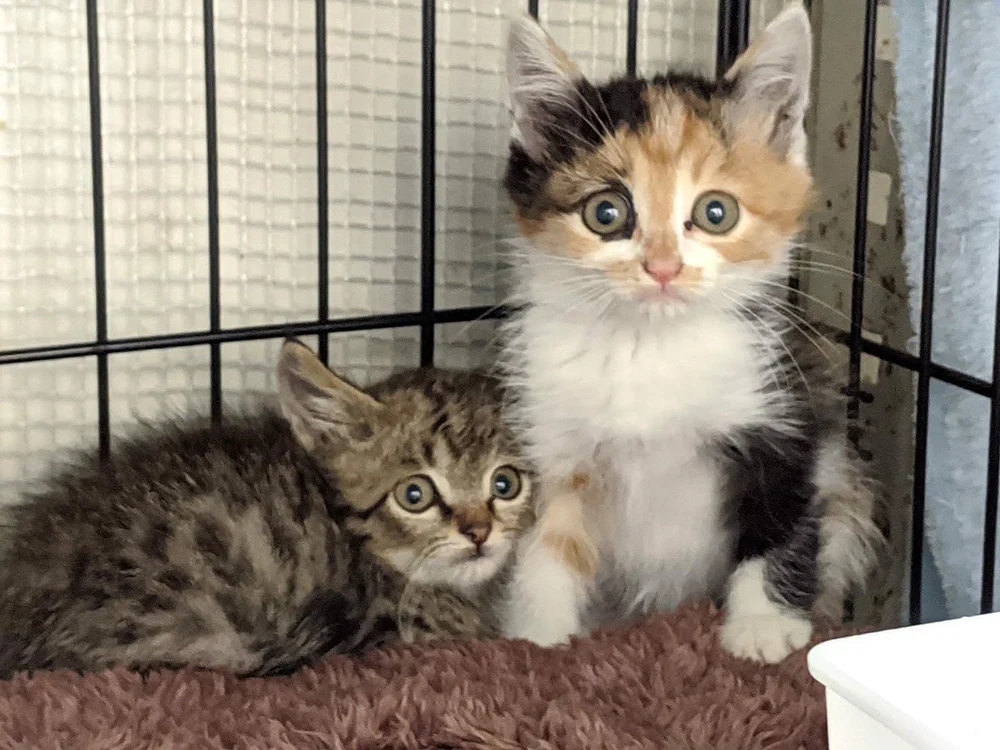
Cats are charming for their adorable eyes and innocent, carefree personalities.
They bring us great comfort, but life is very hard for stray cats living outdoors.
Many cats suffer from the cold and hunger, traffic accidents, and abuse.
Working in Kurashiki to reduce the number of cats suffering such misfortunes is Kurashiki Neko Mamori no Kai.
The group mainly rescues cats taken in by the Kurashiki City Health Center and connects them with people who want to adopt a cat.
We spoke with Yoko Shiota, representative of Kurashiki Neko Mamori no Kai, about the group’s activities and what motivates her.
The information presented here was accurate when this article was published in February 2022. Please note that it may differ from current information.
The situation facing cats brought to the Kurashiki City Health Center
Euthanasia means ending the lives of animals that may pose a danger to people or animals that are no longer wanted.
The cases of stray dogs and cats being taken in by health centers and animal welfare centers and then euthanized are one of the serious social problems facing society.
In Japan, 238,929 cats were euthanized in fiscal 2004. The number has fallen, reaching 19,705 in fiscal 2020.
▼ In Kurashiki City, 1,829 cats were euthanized in fiscal 2002.
| Fiscal year | Returned | Adopted | Euthanized |
|---|---|---|---|
| Fiscal 2002 | 1 | – | 1,829 |
| Fiscal 2003 | 1 | – | 1,524 |
| Fiscal 2004 | 0 | – | 1,428 |
| Fiscal 2005 | 0 | – | 1,220 |
| Fiscal 2006 | 1 | – | 1,249 |
| Fiscal 2007 | 0 | – | 1,017 |
| Fiscal 2008 | 0 | – | 1,153 |
| Fiscal 2009 | 2 | 33 | 1,000 |
| Fiscal 2010 | 0 | 66 | 1,034 |
| Fiscal 2011 | 1 | 58 | 850 |
| Fiscal 2012 | 1 | 58 | 830 |
| Fiscal 2013 | 1 | 139 | 606 |
| Fiscal 2014 | 0 | 284 | 412 |
| Fiscal 2015 | 1 | 271 | 223 |
| Fiscal 2016 | 1 | 251 | 147 |
| Fiscal 2017 | 0 | 323 | 77 |
| Fiscal 2018 | 2 | 300 | 66 |
| Fiscal 2019 | 2 | 214 | 35 |
The numbers continued to fall. In fiscal 2019, 35 cats died after being taken in, due to accidents or illness, but cats are no longer euthanized in Kurashiki City.
The Kurashiki City Health Center takes in injured cats and kittens less than about one month old.
A major factor in achieving zero euthanasia is the system of cooperation with Kurashiki Neko Mamori no Kai.
The group takes in most of the cats brought to the Kurashiki City Health Center and looks for adoptive homes for them.
In 2020, Kurashiki Neko Mamori no Kai rescued 153 cats from the Kurashiki City Health Center and found homes for 207 cats, including those taken in from local residents.
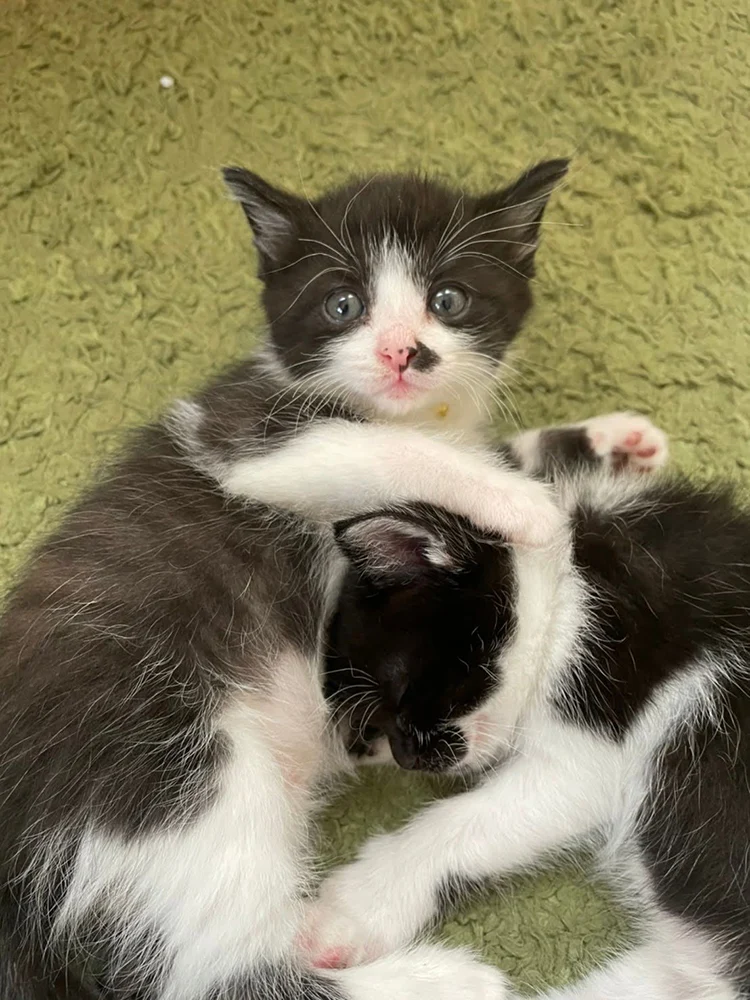
Activities of Kurashiki Neko Mamori no Kai
Kurashiki Neko Mamori no Kai takes in cats with nowhere else to go, mainly those brought to the Kurashiki City Health Center, finds them homes with people who want to adopt, and works to eliminate cat euthanasia in Kurashiki City.
In 2013, Yoko Shiota and Yumi Hiraga began volunteering together. From the outset, they took in cats from the Kurashiki City Health Center and looked for adoptive homes.
In 2018, they established the voluntary organization “Kurashiki Neko Mamori no Kai” to help more cats.
After being selected for Kurashiki City’s fiscal 2019 Citizen-Designed Project, they began working to recruit more milk-feeding volunteers to care for nursing kittens. As of December 2021, around 20 milk-feeding volunteers are active.
The group’s main activities are as follows:
- Temporary foster care and finding homes for rescued cats
- Holding adoption events and other events
- Training milk-feeding and foster volunteers
- Soliciting donations
Here is a closer look at each activity.
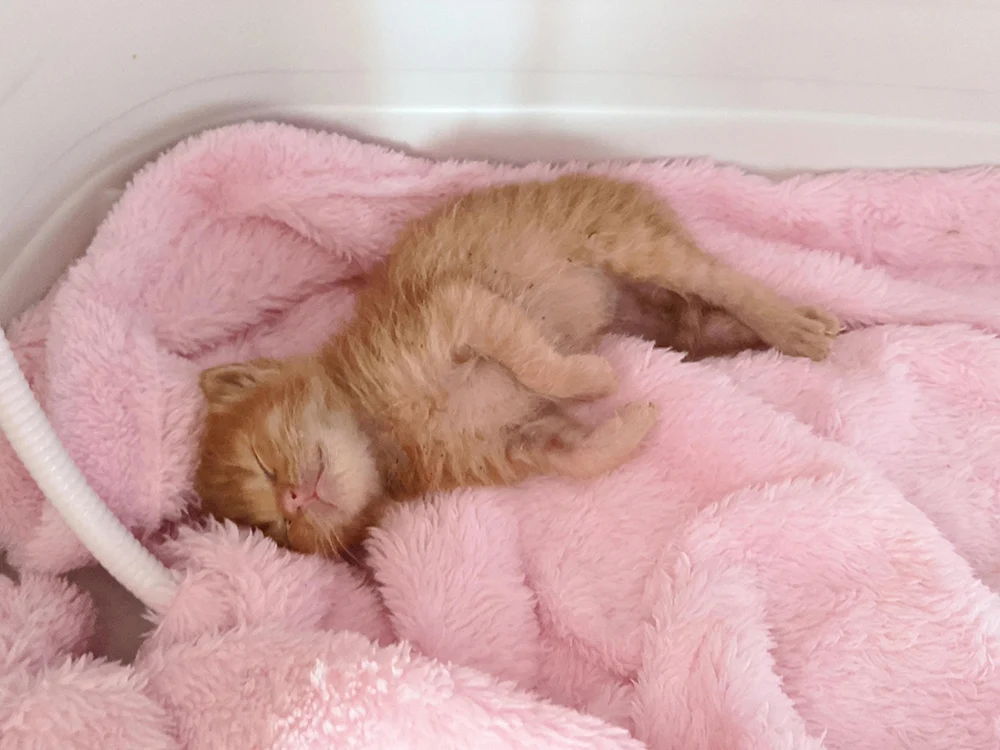
Temporary foster care and finding homes for rescued cats
When kittens are brought to the Kurashiki City Health Center, Kurashiki Neko Mamori no Kai generally follows the steps below to find them adoptive homes.
- A call comes in from the Kurashiki City Health Center
- The group decides which available member will foster the cat
- If the cat is not healthy, it receives initial treatment at a veterinary clinic
- Since most are nursing kittens, a designated milk-feeding volunteer cares for them at home for one to two months
- They begin looking for adoptive homes online (official website and adoption websites, blog, Instagram)
- Two months after fostering begins, the cat is vaccinated
- The cat makes its debut at an “adoption event” attended by prospective adopters
Since most cats taken in by the Kurashiki City Health Center are kittens less than about one month old, they are carefully raised with milk feedings several times a day.
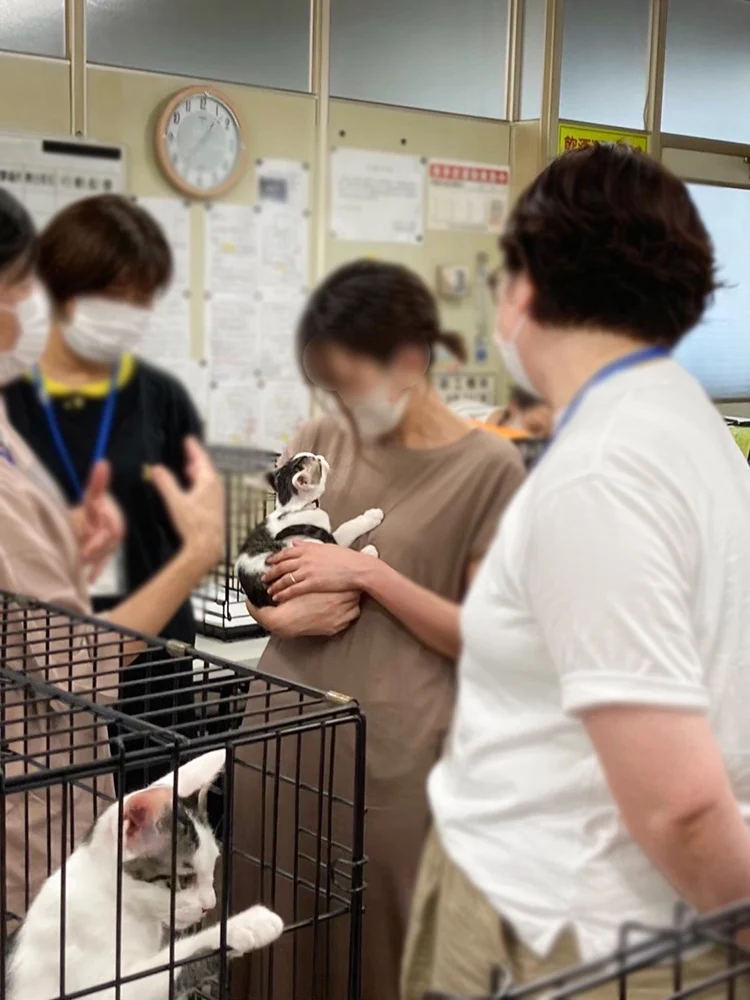
When someone applies to adopt after seeing a cat online or at an adoption event, saying, “I’d like to welcome this cat into my home,” the adoption process begins.
The process from application to adoption is generally as follows:
- A prospective adopter gets in touch
- They complete a questionnaire, and the group checks whether they meet the adoption requirements
- A meeting is held at the prospective new home to check that it is suitable for the cat; the milk-feeding volunteer also visits
- The prospective adopter prepares to care for the cat using the “Things to Prepare Before Bringing Your Cat Home” list, then sends photos once ready
- An adoption agreement is signed
- After a two-week trial period, the adoption is finalized if all goes well
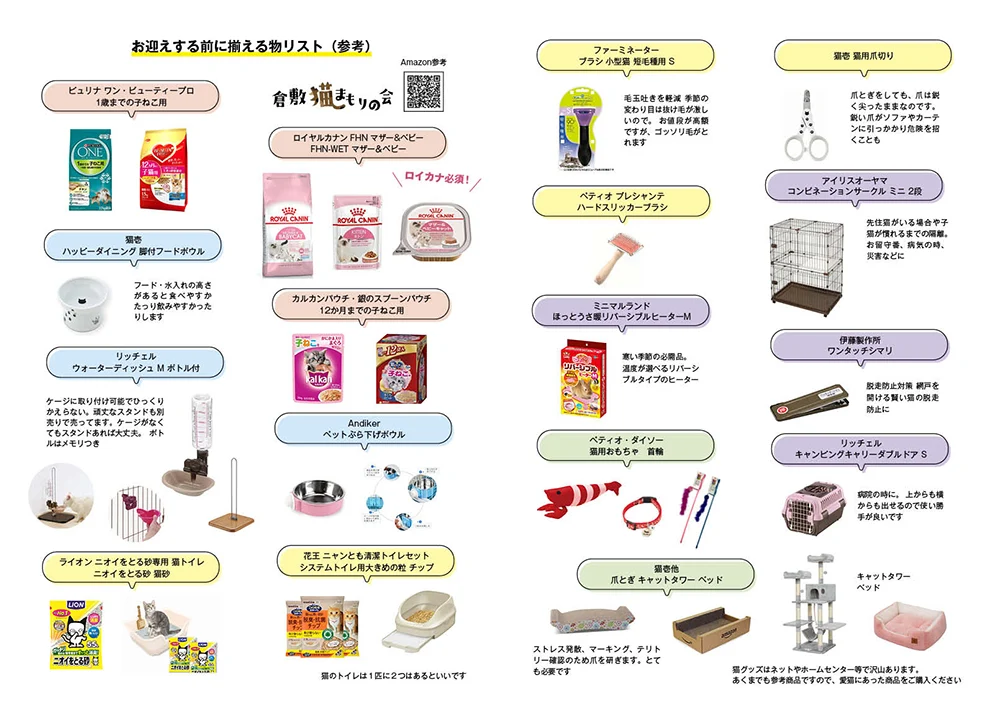
If, during the two-week trial period, a family member is found to have allergies or the cat does not get along with another animal already in the family, the adoption will not go ahead.
Adopters do not have to live in Kurashiki City; applications also come from other prefectures.
Other adoption requirements include the following (excerpt):
- The cat must be kept indoors at all times
- Annual vaccinations and spaying or neutering are required
- All family members must agree
- No family members may have allergies
- The adopter must be physically and mentally able to care for a kitten
- The adopter must have a stable income to care for a cat
- Any dogs or cats already in the home must be spayed or neutered
- The cat must not be kept in a cage for long periods
- People living alone, unmarried couples living together, and minors are not eligible
- Households consisting only of seniors are not eligible (unless there is a designated guardian), etc.
In addition to kittens taken in by the Kurashiki City Health Center, the group is increasingly rescuing and finding homes for adult cats injured in accidents and cats taken in from local residents.
Adoption events and other events
The group holds adoption events once or twice a month to find homes for cats.
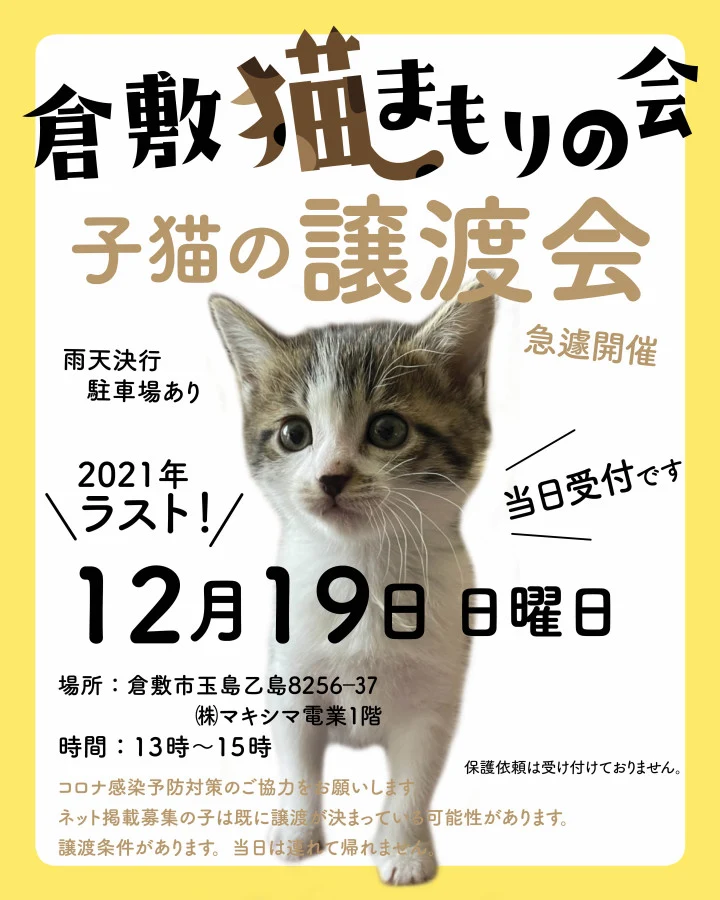
Prospective adopters can visit, see the cats in person, learn about their personalities, and consider whether to welcome one into their family.
Cats cannot be taken home on the day. The group checks whether prospective adopters meet the requirements and then proceeds with preparations for adoption.
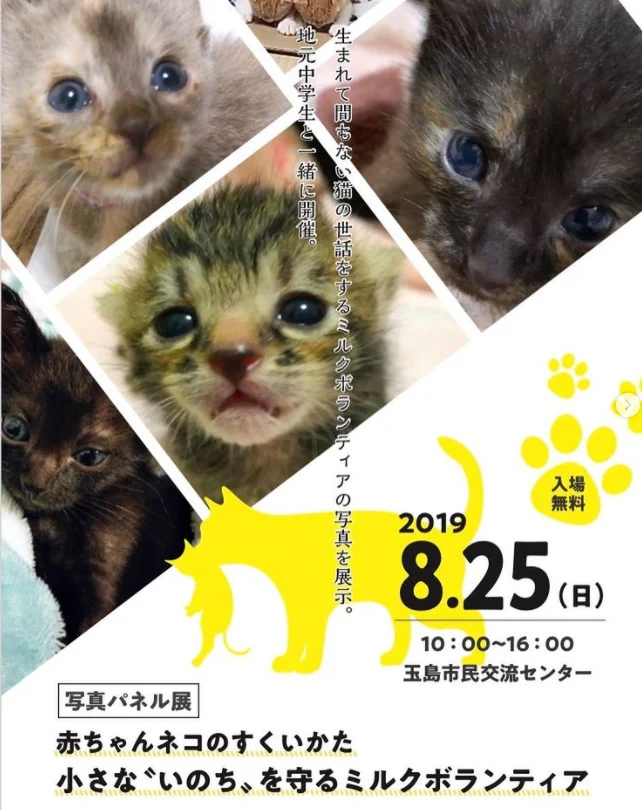
In addition to adoption events, the group has also held photo exhibitions during summer vacation to encourage children in particular to think about living alongside animals.
Training milk-feeding and foster volunteers
To eliminate cat euthanasia, the group trains milk-feeding volunteers who can foster kittens.
After being selected for Kurashiki City’s fiscal 2019 Citizen-Designed Project, the group has continued the work in collaboration with the city as a joint project with the Kurashiki City Health Center.
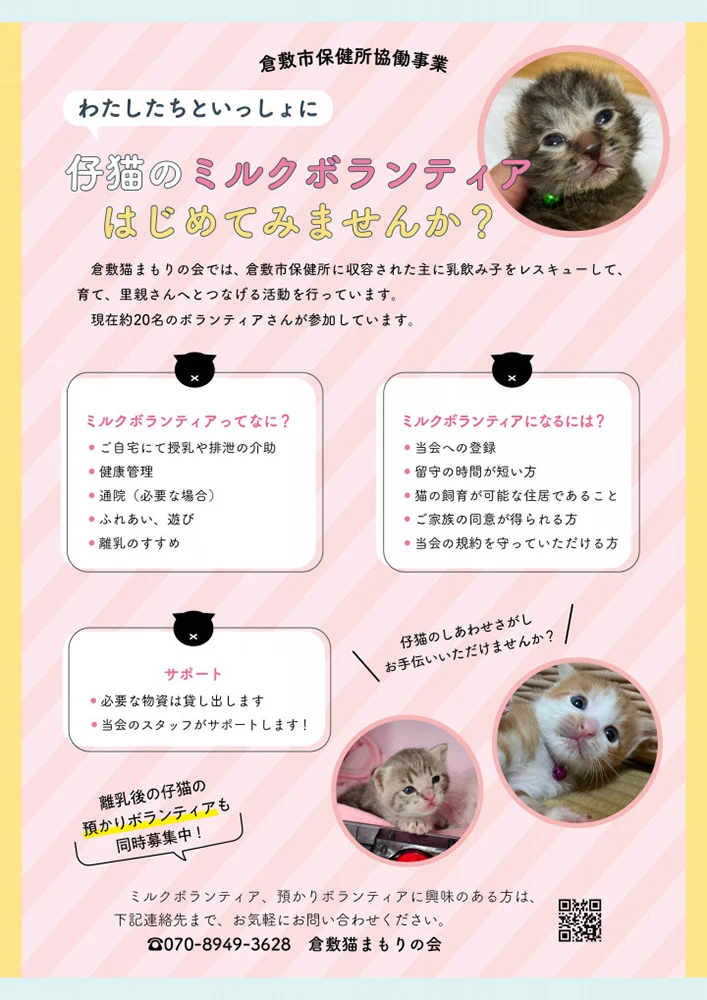
The group is also recruiting volunteers to foster cats after they have been weaned.
As part of its joint project with Kurashiki City, the group also accepts consultations about cat-related problems.
Soliciting donations
Raising kittens born outdoors requires medical care and supplies. Kurashiki Neko Mamori no Kai is soliciting donations.
The group’s Amazon Wish List includes cat food and cat litter, and you can donate by purchasing items within your budget.
Monetary donations are also accepted through a Japan Post Bank account.
| Deposits from Japan Post Bank | |
|---|---|
| Symbol | 15450 |
| Account number | 38295551 |
| Account name | Kurashiki Neko Mamori no Kai |
| Deposits from banks other than Japan Post Bank | |
|---|---|
| Branch name | 548 Branch |
| Account number | Ordinary deposit 3829555 |
| Account name | Kurashiki Neko Mamori no Kai |
In addition to its activity updates account, the group has a dedicated donation-reporting account on Instagram, “Kurashiki Neko Mamo Support”, where it reports on donated supplies and funds.
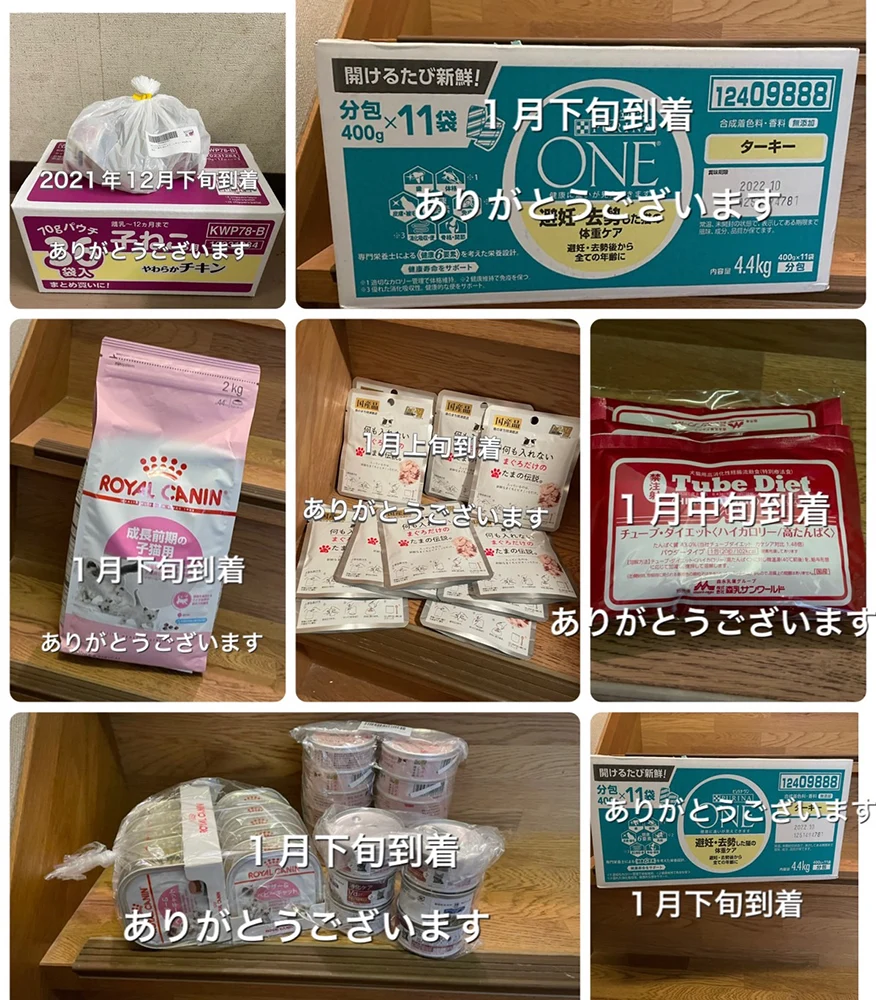
Through training milk-feeding volunteers and sharing information about finding adoptive homes and soliciting donations, Kurashiki Neko Mamori no Kai has steadily increased the number of cats it can help.
We spoke with representative Yoko Shiota about how support for the group has grown and what motivates its work.


What would you like to know about Kurashiki?
Enter a word to search articles on this site








Ministry of the Environment statistics: “The Status of the Acceptance and Handling of Dogs and Cats, and the Acceptance and Disposal of Injured Animals”