The Bikan Historical Area in Kurashiki has many buildings referred to as "cultural properties."
Among them, the Kusudo House located in Higashimachi, Kurashiki City, was registered as the first national registered tangible cultural property (building) in Okayama Prefecture in 1996 (Heisei 8), and in 2002 (Heisei 14), the main building was designated as an important cultural property of Kurashiki City.
We will introduce the characteristics of the Kusudo House building, which has remained since the Meiji era under the name "Hashimaya," and its recent utilization status.
What is a registered tangible cultural property (building)?
Among tangible cultural properties such as buildings, crafts, sculptures, calligraphy, classic texts, ancient documents, archaeological materials, and historical materials, those with high historical, artistic, or academic value are collectively referred to as "tangible cultural properties."
The registered tangible cultural property (building) system was established for the purpose of registering cultural property buildings that particularly require measures for preservation and utilization.
The "Cultural Property Registration System" was introduced by a law partially amending the Cultural Property Protection Act, which came into effect on October 1, 1996, to register cultural property buildings that require special measures for preservation and utilization in the cultural property registration ledger by the Minister of Education, Culture, Sports, Science and Technology.
This registration system was created to broadly inherit a diverse and large number of modern cultural property buildings that are at risk of disappearing without receiving social evaluation due to recent national land development, urban planning advancements, and changes in lifestyle. It implements a loose protection measure based on a notification system and guidance and advice, complementing the traditional designation system (which selects important properties and provides strong regulations and substantial protection).
The "Cultural Property Registration System" began with the amendment of the Cultural Property Protection Act in 1996 (Heisei 8), and as of September 2025 (Reiwa 7), over 10,000 buildings have been registered.
What is the Kusudo House?
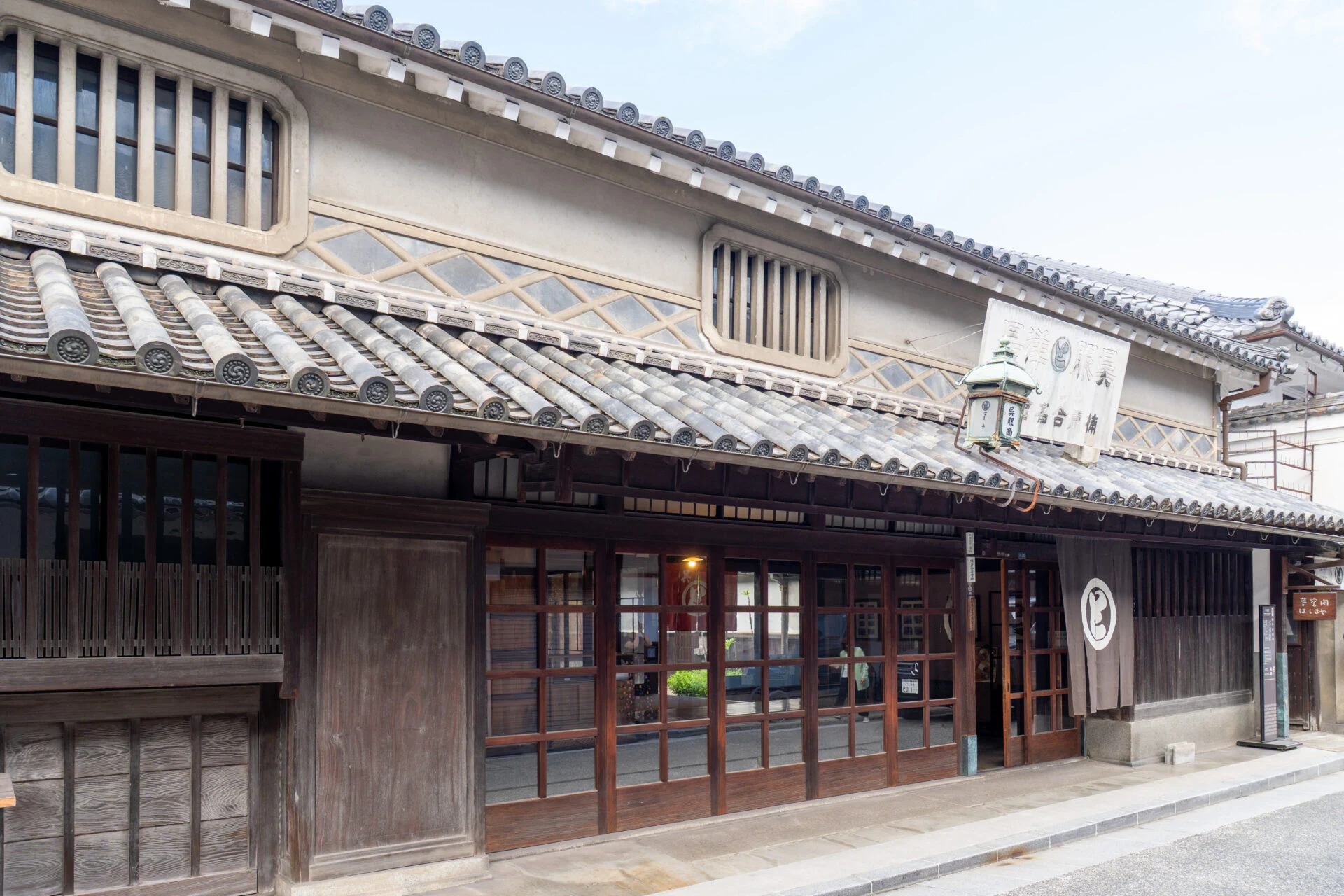
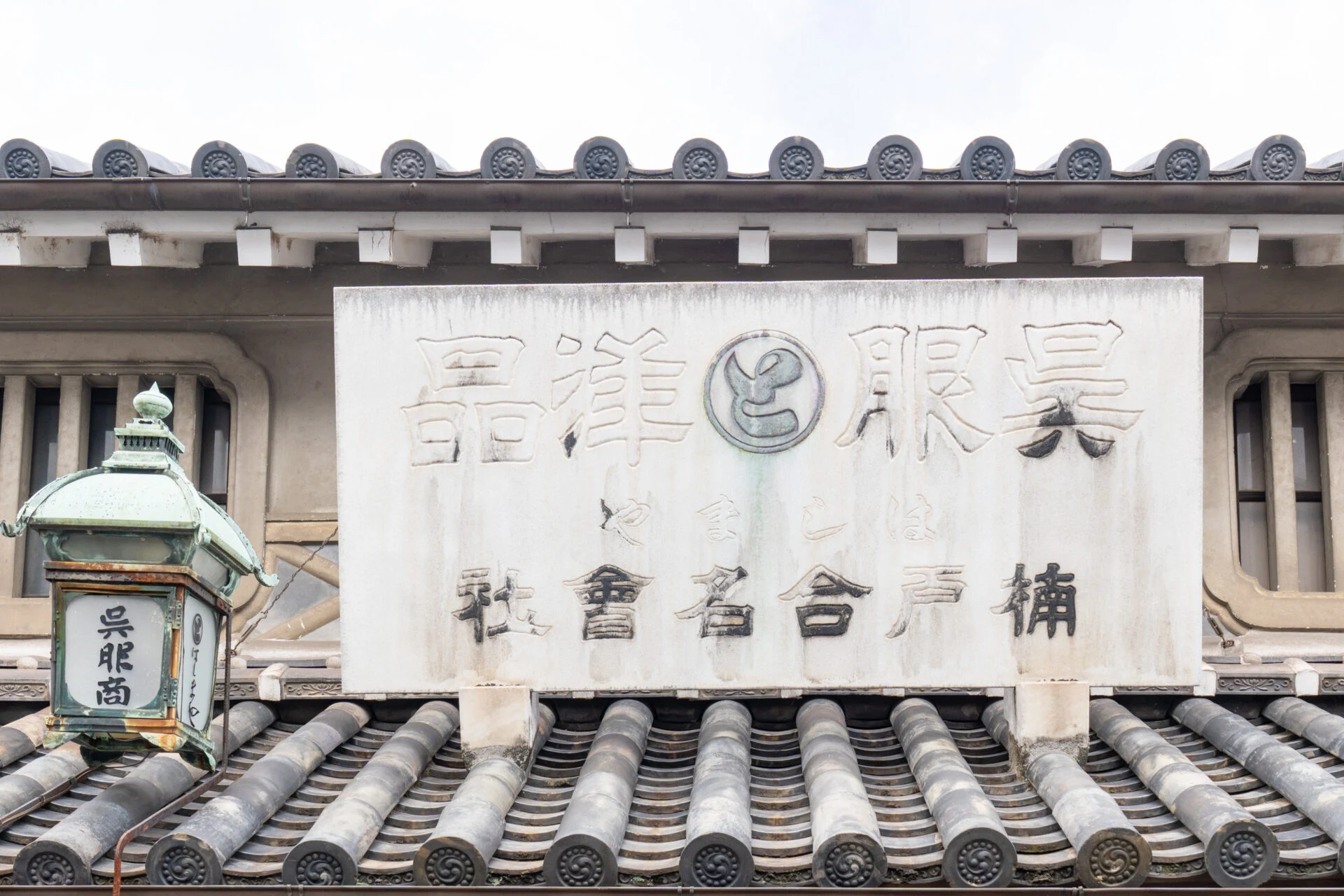
The Kusudo House is located in Higashimachi, Kurashiki City, and is a kimono shop established in 1869 (Meiji 2) under the name "Hashimaya."
The founder, Kusudo Tokukichi, used the character "to" from his name as a trademark, and in 1906 (Meiji 39), it became the first joint-stock company among kimono shops in Kurashiki City.
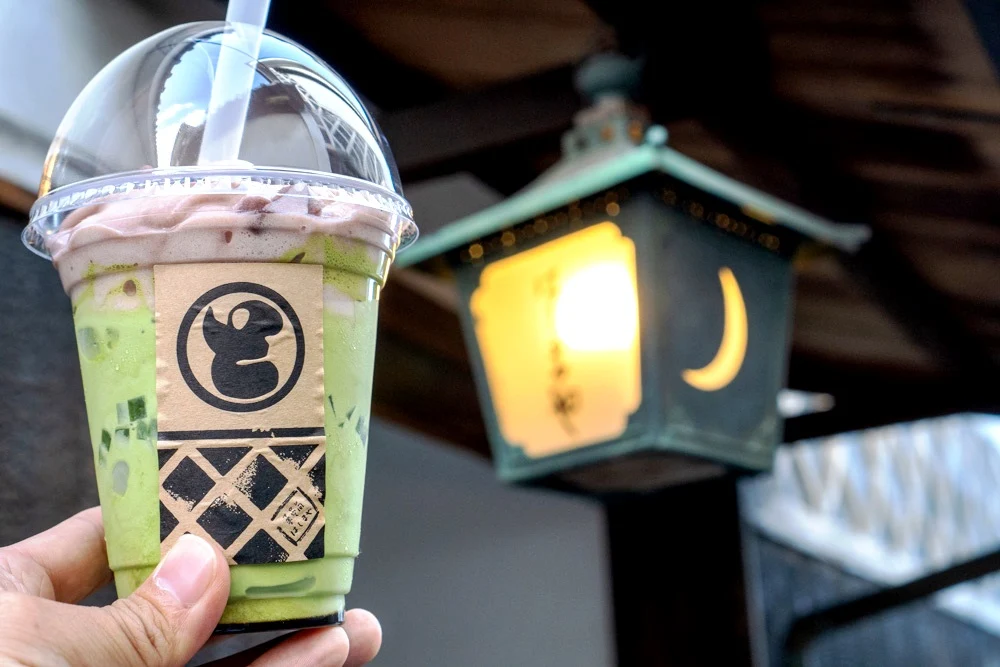
The street in front of the store, Higashimachi Street, was an old highway, and it was a lively street where bonnet buses traveled from 1933 (Showa 8) to the 1950s, as can be inferred from the streetlight facing inward at the store.
This streetlight originally faced the old highway but was turned inward to allow bonnet buses to pass more easily.
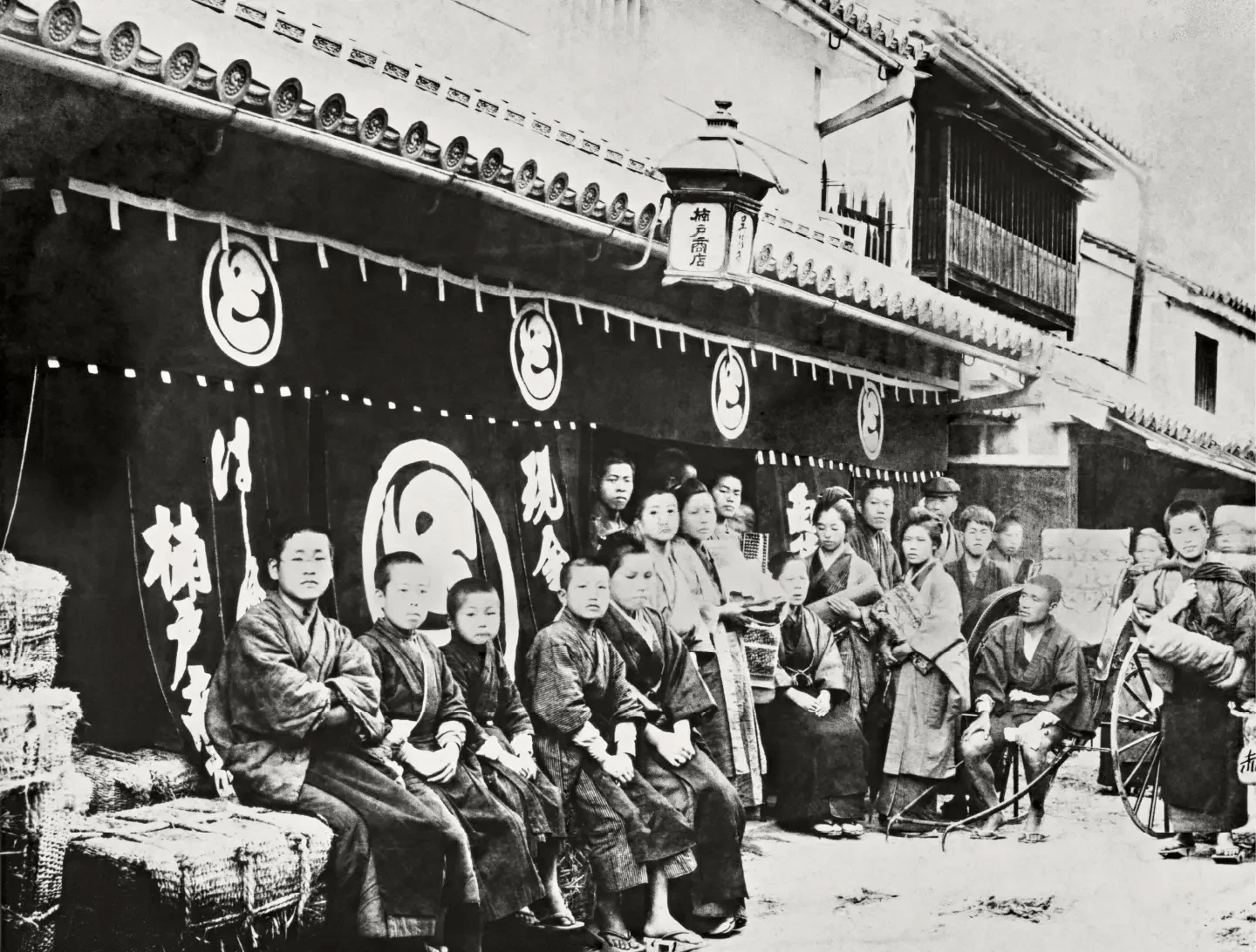
(Image provided by Hashimaya)
The first registered tangible cultural property (building) in Okayama Prefecture
The cultural property registration system started in 1996, and the Kusudo House became the first registered tangible cultural property (building) in Okayama Prefecture.
The main building and storehouses, which tell the story of the transition of townhouses in modern times, have been well preserved, and the following were registered at the same time.
- Main building (back room)
- Rice storehouse
- Charcoal storehouse
- Tool storehouse
- Roofed wooden fence
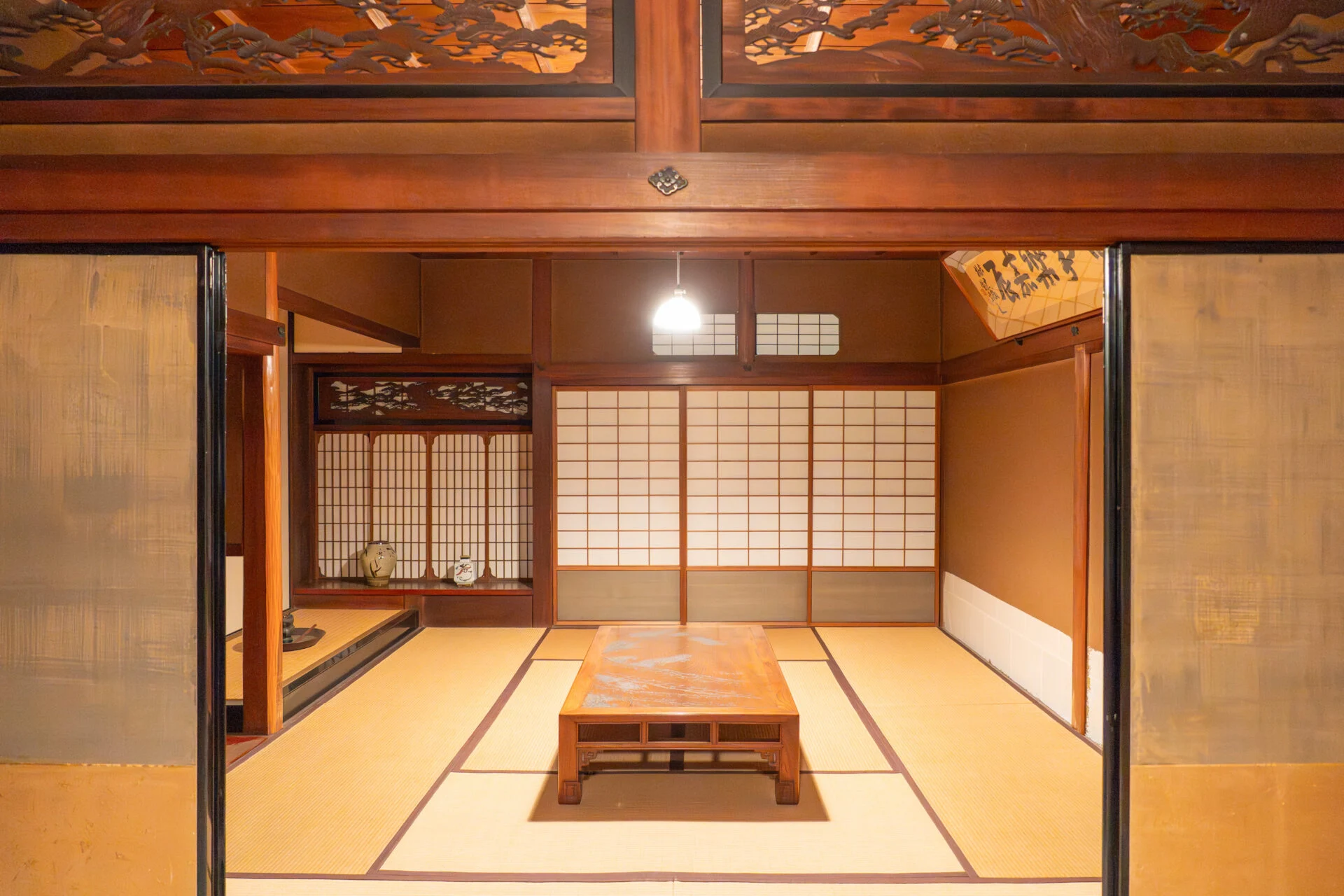
Furthermore, in 2002 (Heisei 14), the main building was designated as an important cultural property of Kurashiki City.
Many distinguished visitors
The third head of the family, Kusudo Yohei, had a close relationship with Ohara Soichiro, the chairman of the Ohara Museum of Art, and cooperated in the establishment of Okayama Prefecture's Folkcraft Promotion Corporation, which promoted the folkcraft movement. Many people related to the folkcraft movement visited the Kusudo House.
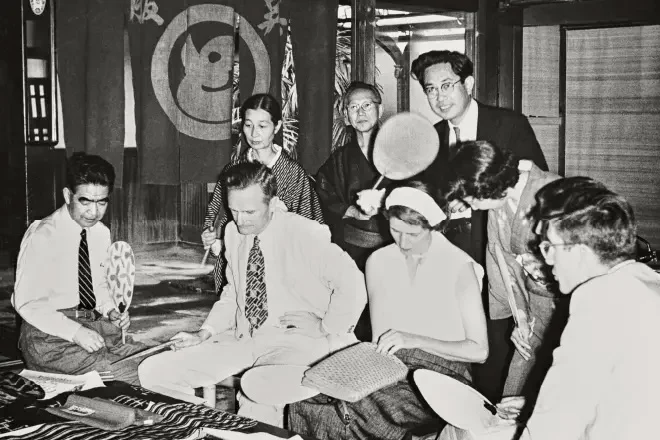
(Image provided by Hashimaya)
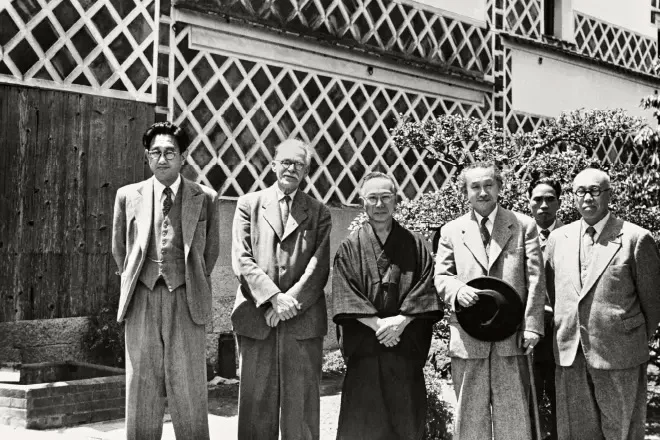
(Image provided by Hashimaya)
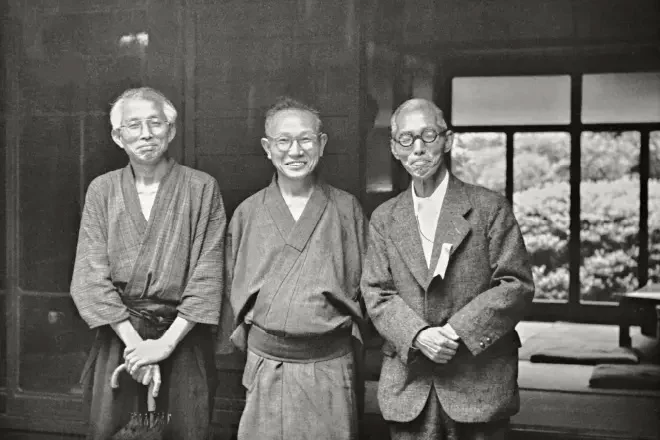
(Image provided by Hashimaya)
Visitors included not only those related to the folkcraft movement.
Records also remain of visitors from abroad, such as the French philosopher Jean-Paul Sartre, Simone de Beauvoir, and the German architects Walter Gropius and Alma.
Current status of the Kusudo House
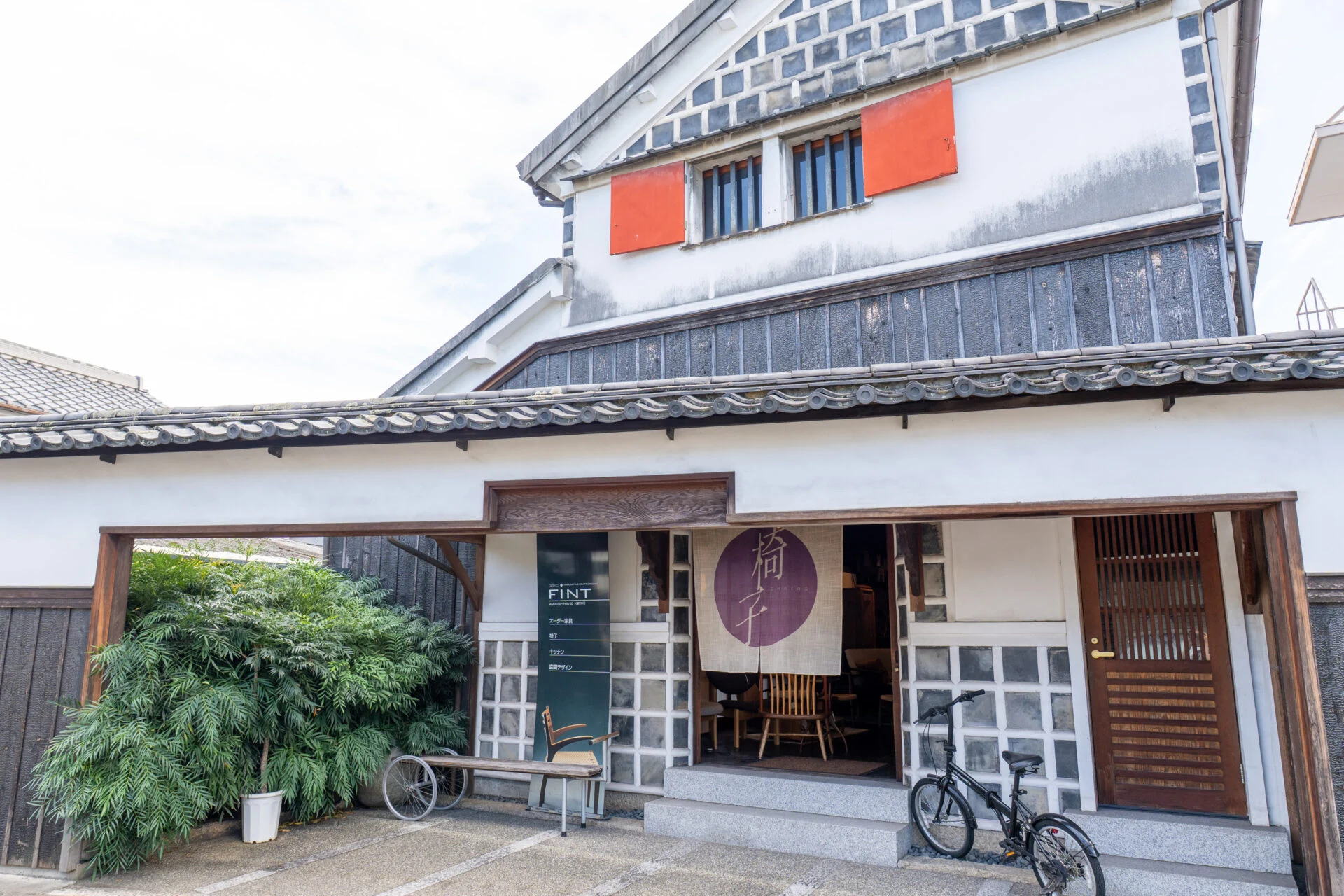
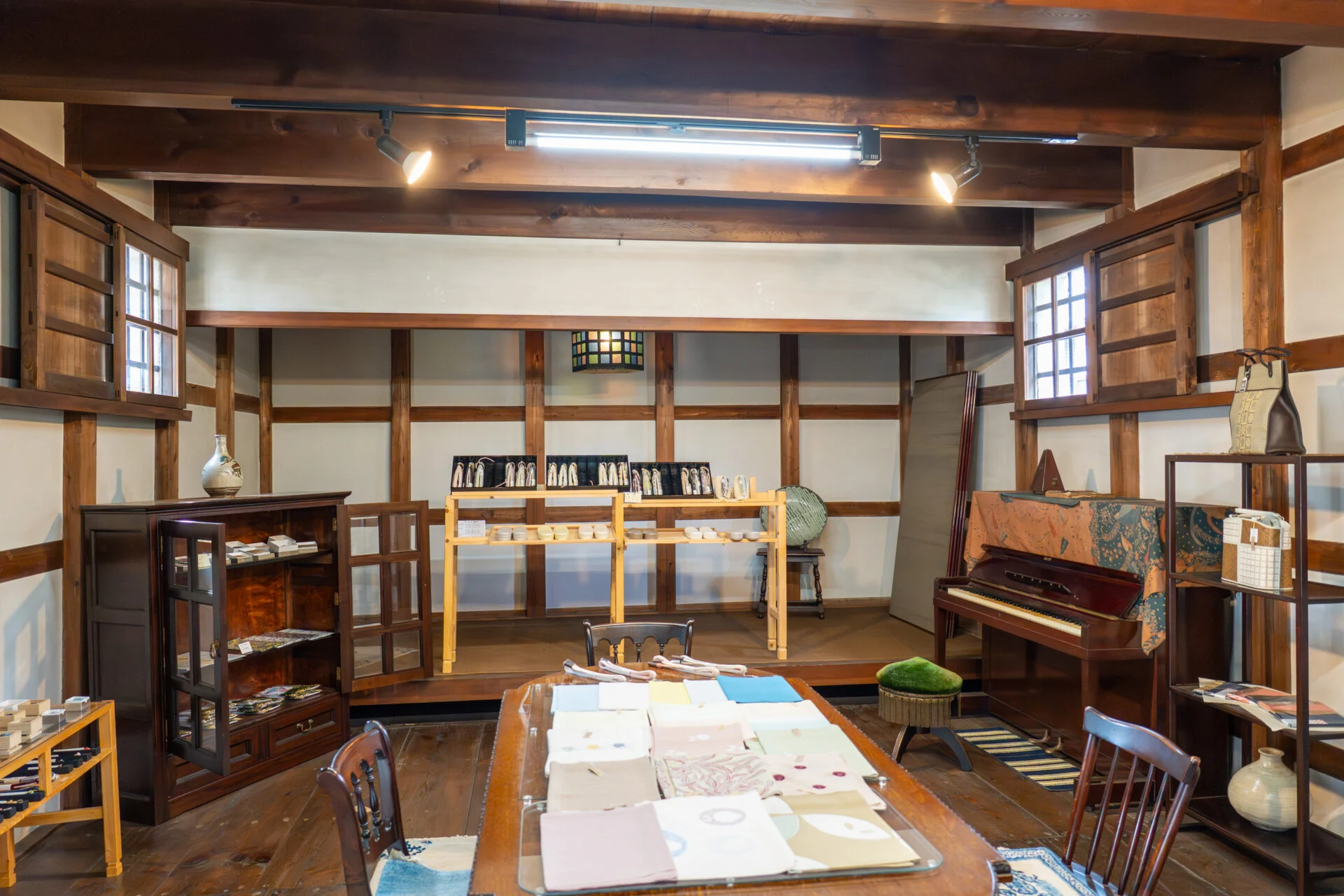
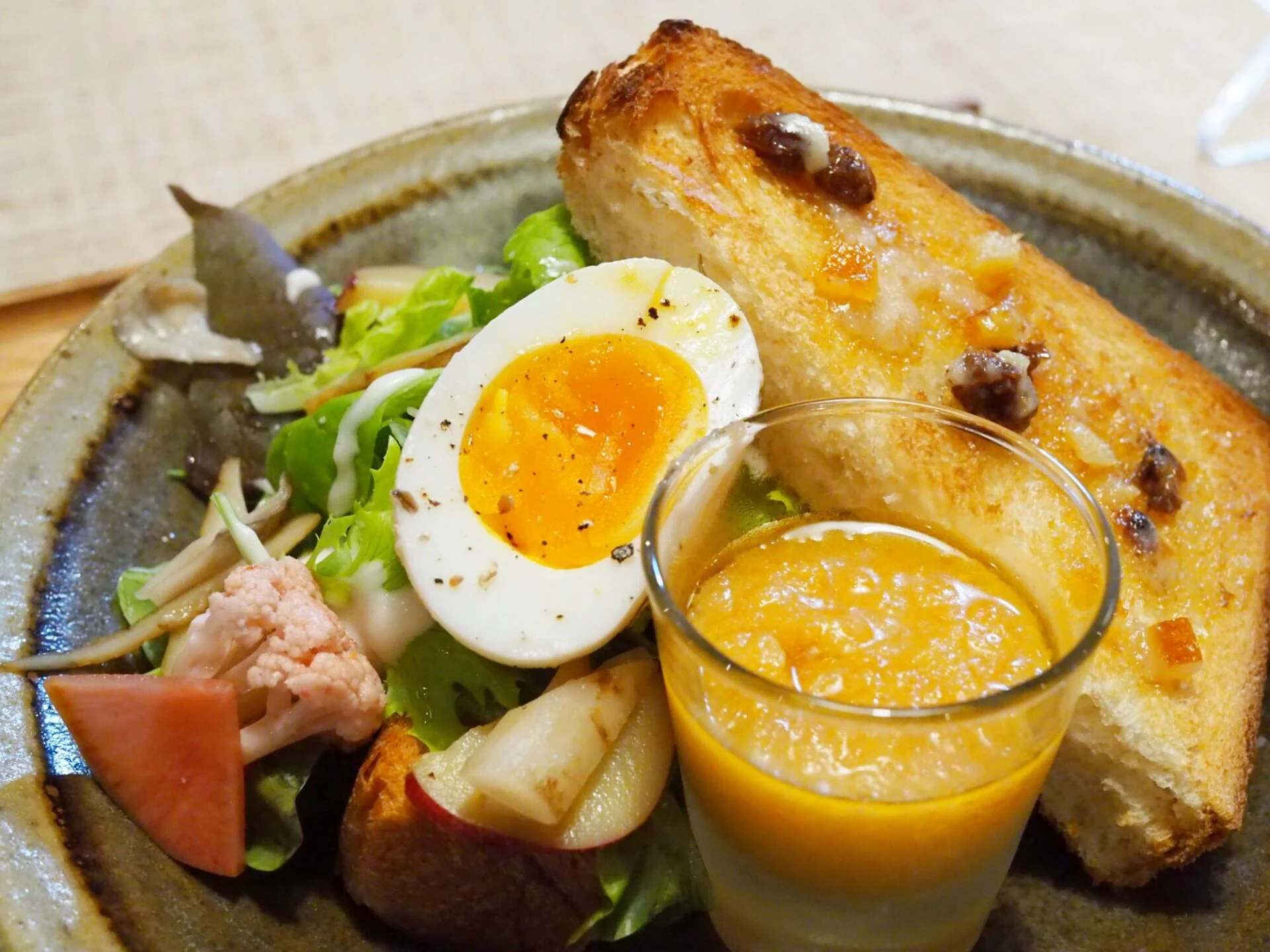
The interior of the Kusudo House is not usually open to the public, but currently, six spaces are being repurposed.
- Rice storehouse
atelier & salon Hashimaya - Tool storehouse
The kitchen of "atelier & salon Hashimaya" - Indigo storehouse
Kurashiki Architecture Workshop Narimura Tetsu Design Office - North storehouse
Kurashiki Fint - Storehouse
Seijudo - A separate store of a kimono shop that handled meisen before the war
Kurashiki Kiln and Southern Italian Cuisine Hashimaya
Highlights of the Kusudo House
The Kusudo House, which has been carefully passed down as a registered tangible cultural property and an important cultural property designated by Kurashiki City, was guided by Keiko Kusudo, who showed us around the main building, which is not usually open to the public.
An exterior that inherits the characteristics of Edo's Kurashiki townhouses while also showing a modern aspect
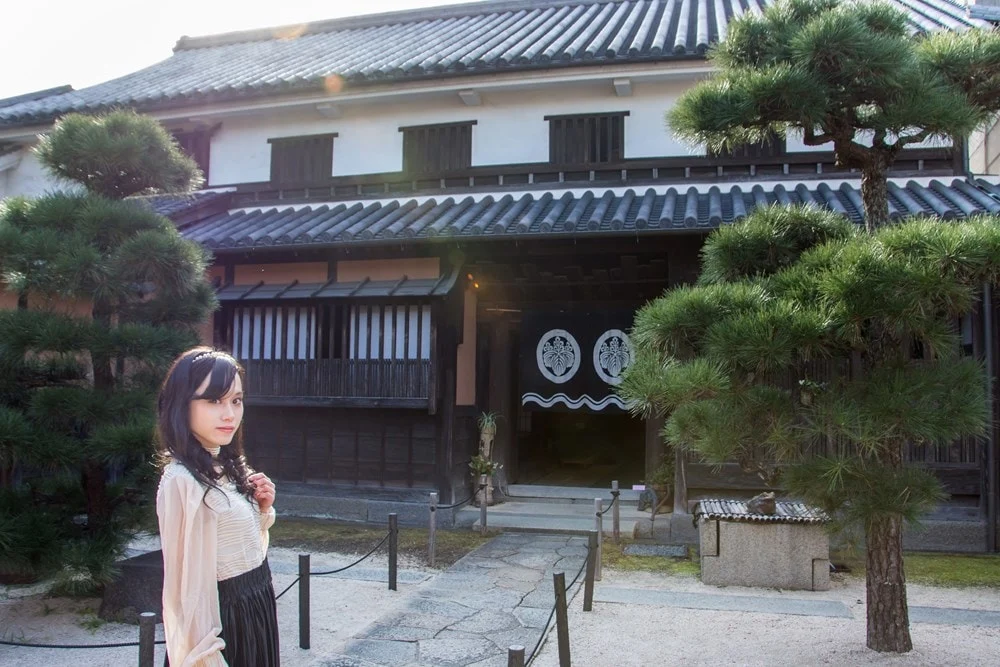
When it comes to "Hashimaya," the wooden building with a tiled roof facing the street is characterized by its two-story zushi (a type of store).
The zushi second floor is treated like a modern mezzanine, and during the time when kimono merchants flourished, it was used for people who helped in the store to sleep or as a storage space.
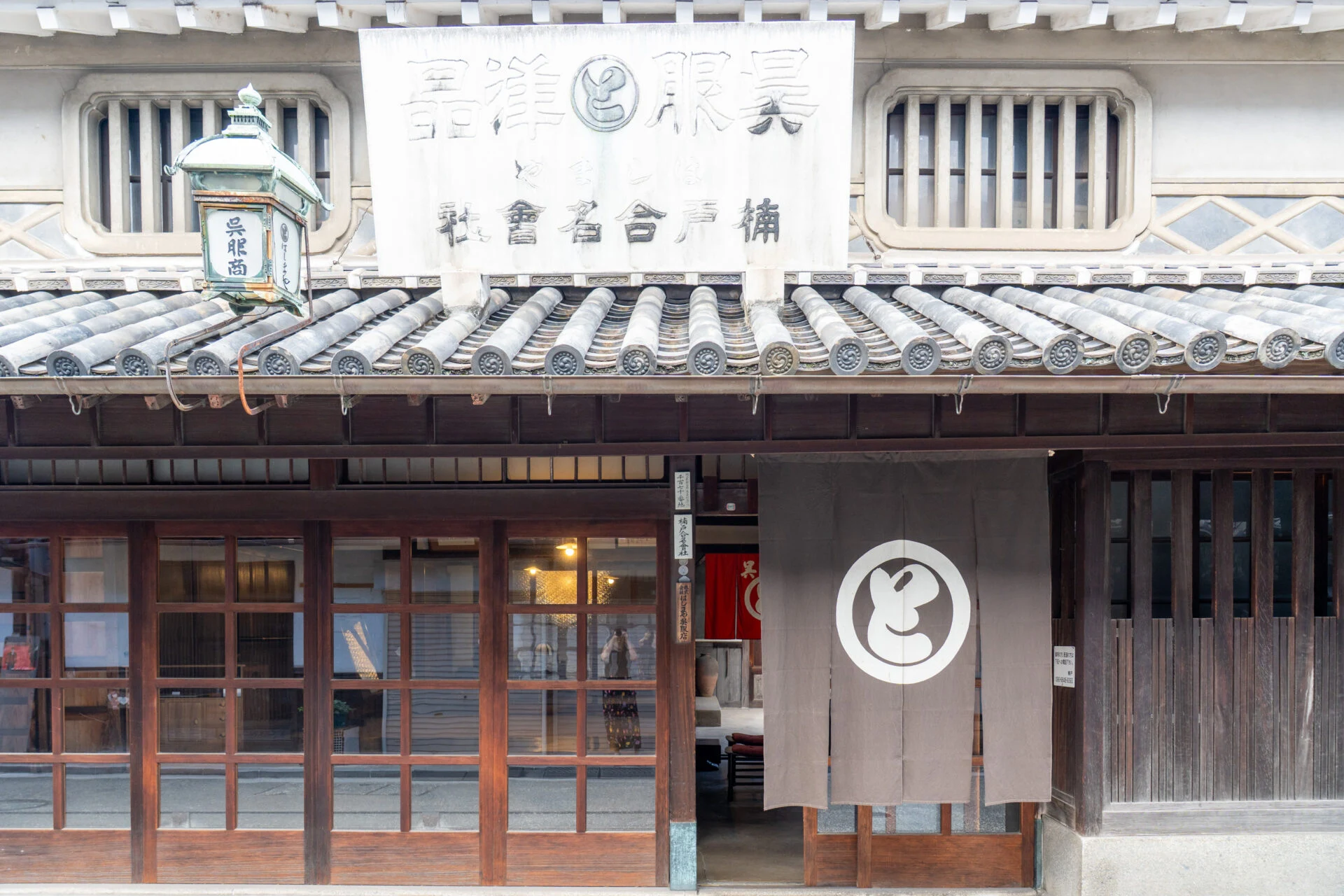
The design of the Kusudo House includes the representative architectural feature of Kurashiki, the "Kurashiki lattice."
The exterior walls of the second floor are coated with plaster, and the surrounding walls are made of namako wall, with three "mushikago (insect cage) windows" that are also plastered around the window frames and bars.
The mushikago window is a window shape seen in townhouses in Kyoto and Osaka since the early Edo period, and it was introduced to Kurashiki during the Meiji period.
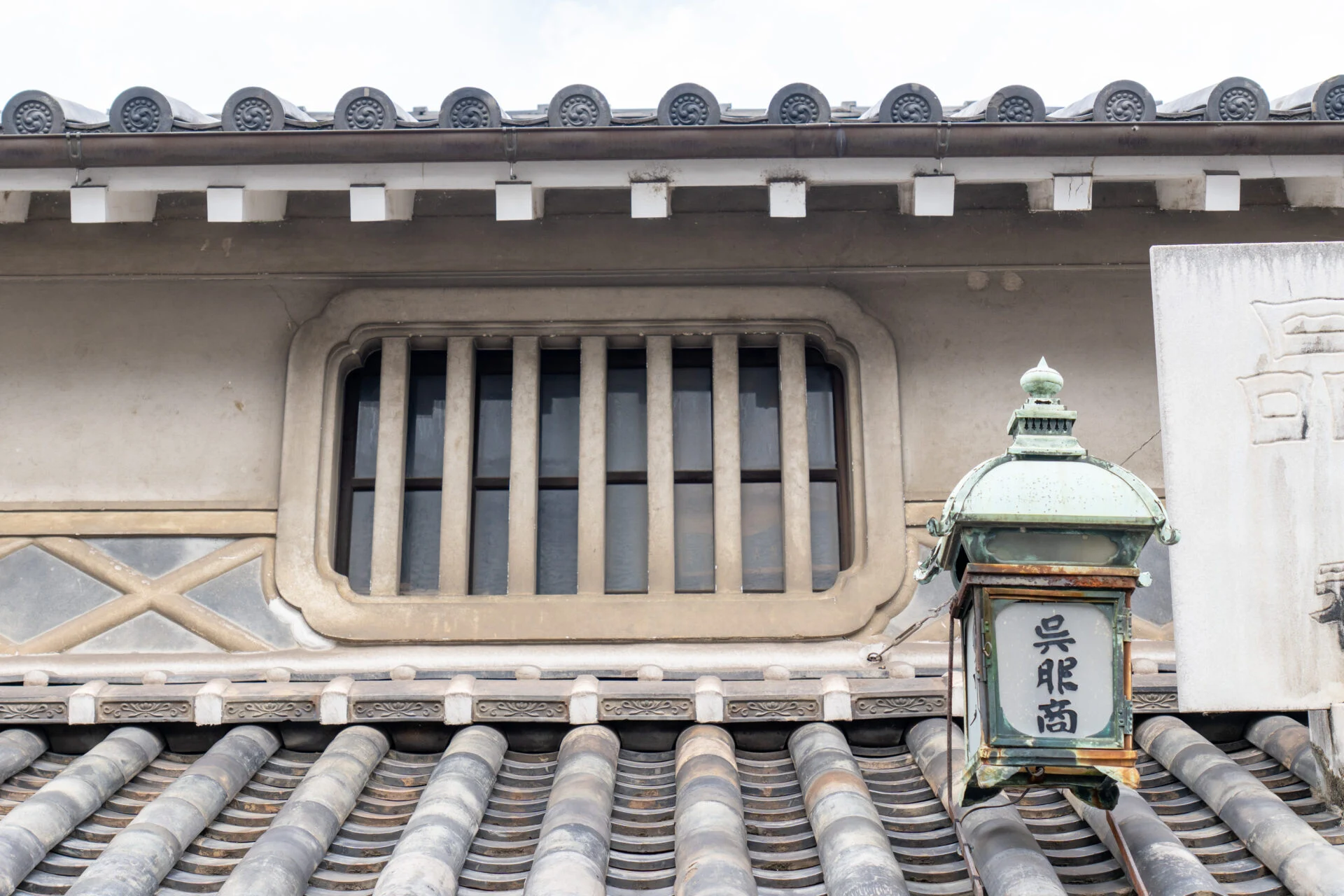
In this way, the Kusudo House inherits the characteristics of Edo period Kurashiki townhouses while also displaying distinctive features influenced by modern styles.
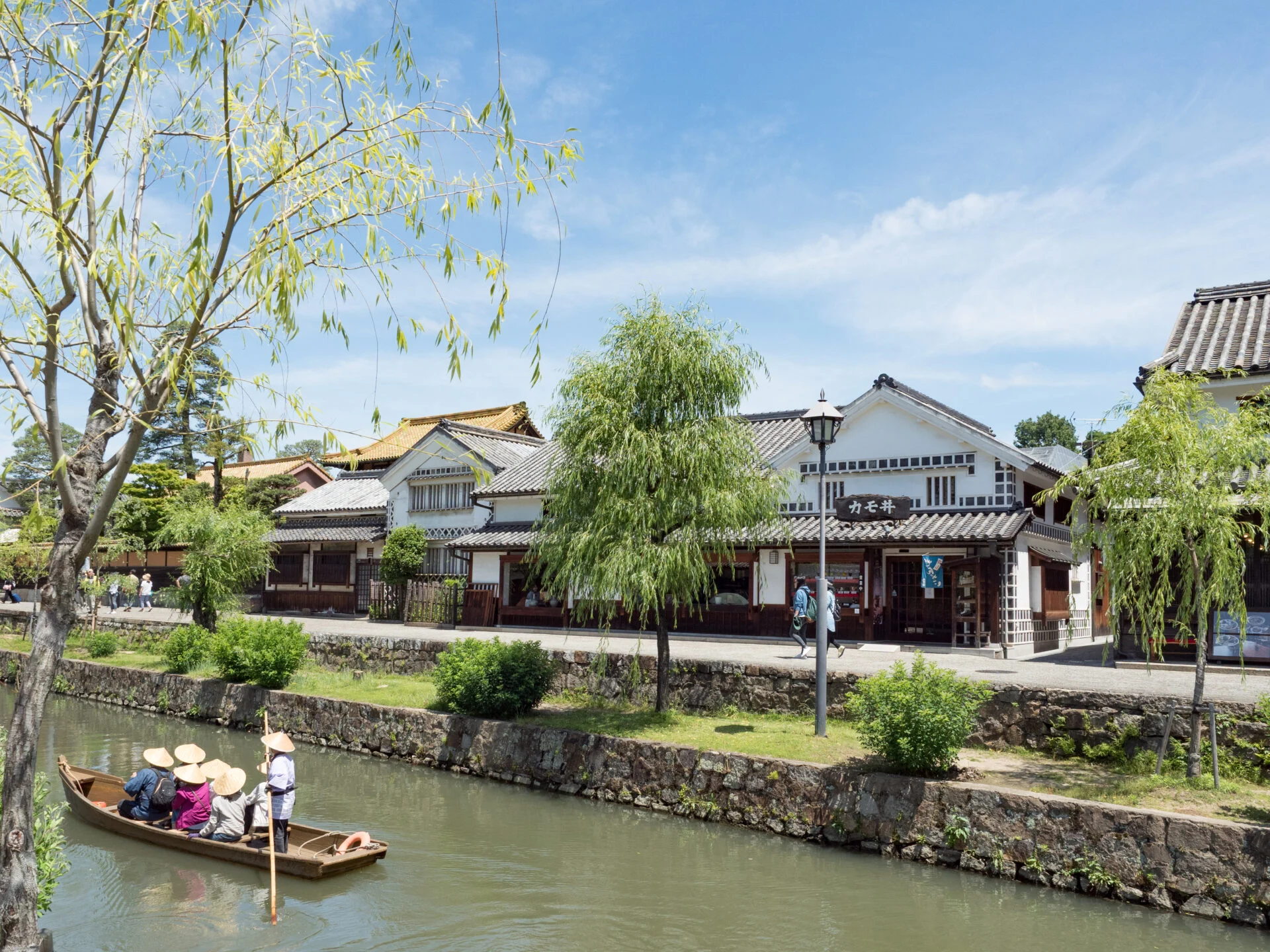
A Store with Beautiful Custom Glass
As you pass through the noren (traditional shop curtain) depicting the character "to" (read as "maruto"), you can see the counter through a large glass.
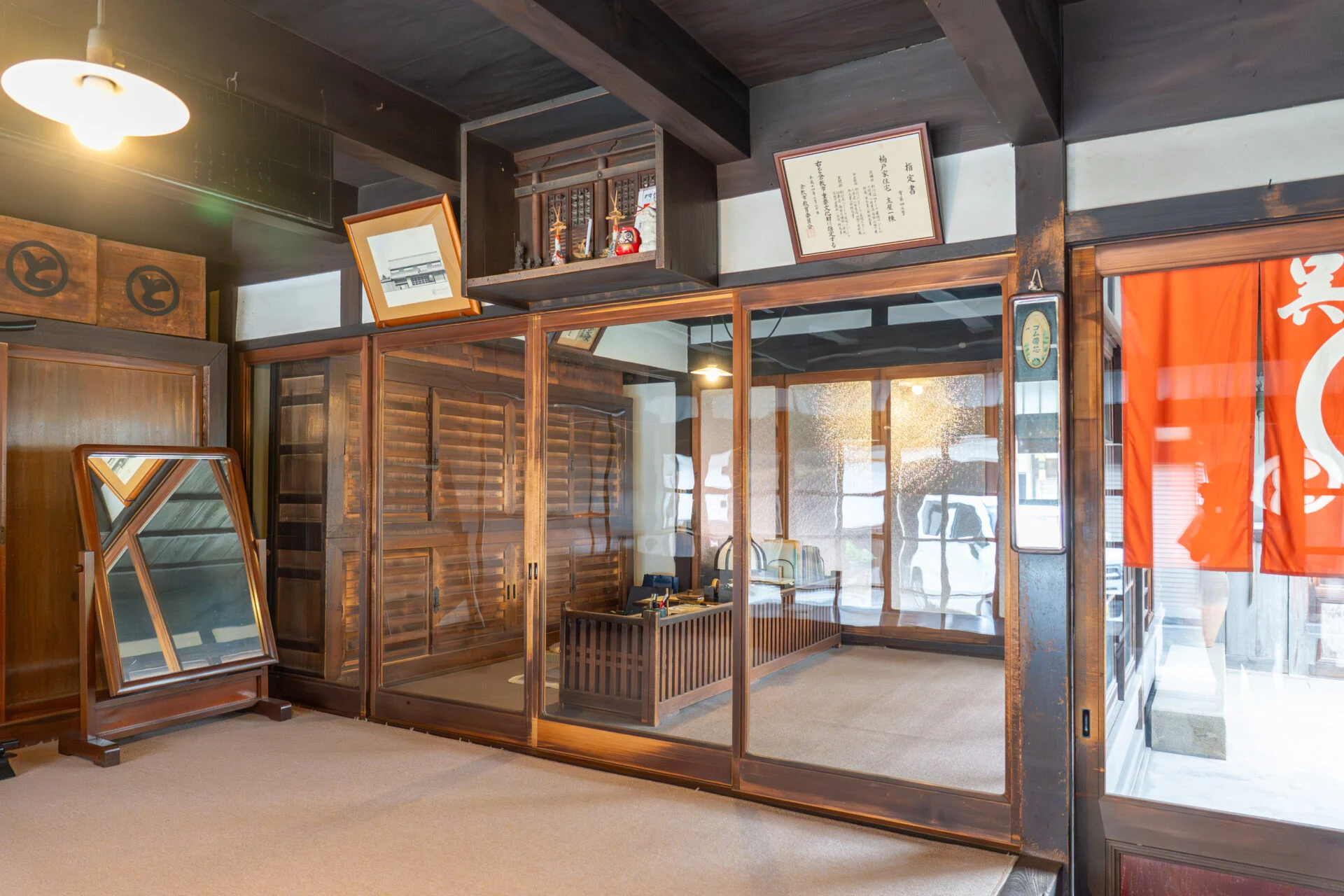
In the Meiji era, it was difficult to produce such large glass in Japan, and it is said to have been transported from Germany.
The counter is adorned with materials that are actually in use.
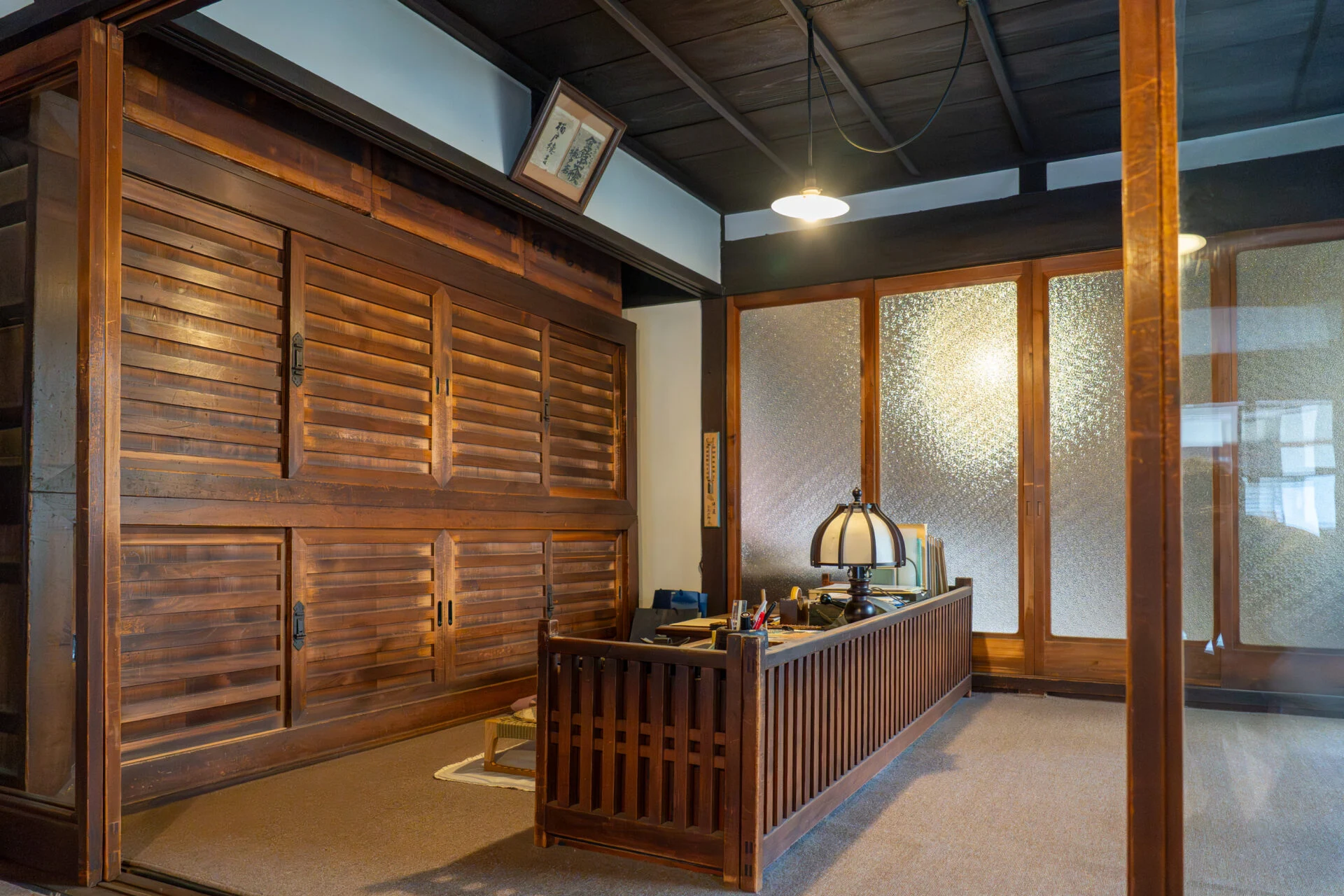
A Courtyard with a 250-Year-Old Satsuki
Between the store and the living space, there is a satsuki tree said to be 250 years old.
From 1993 until the onset of the COVID-19 pandemic, the "Hashimaya Satsuki Exhibition" was held in conjunction with the public opening of the main house, allowing citizens to enjoy the satsuki.
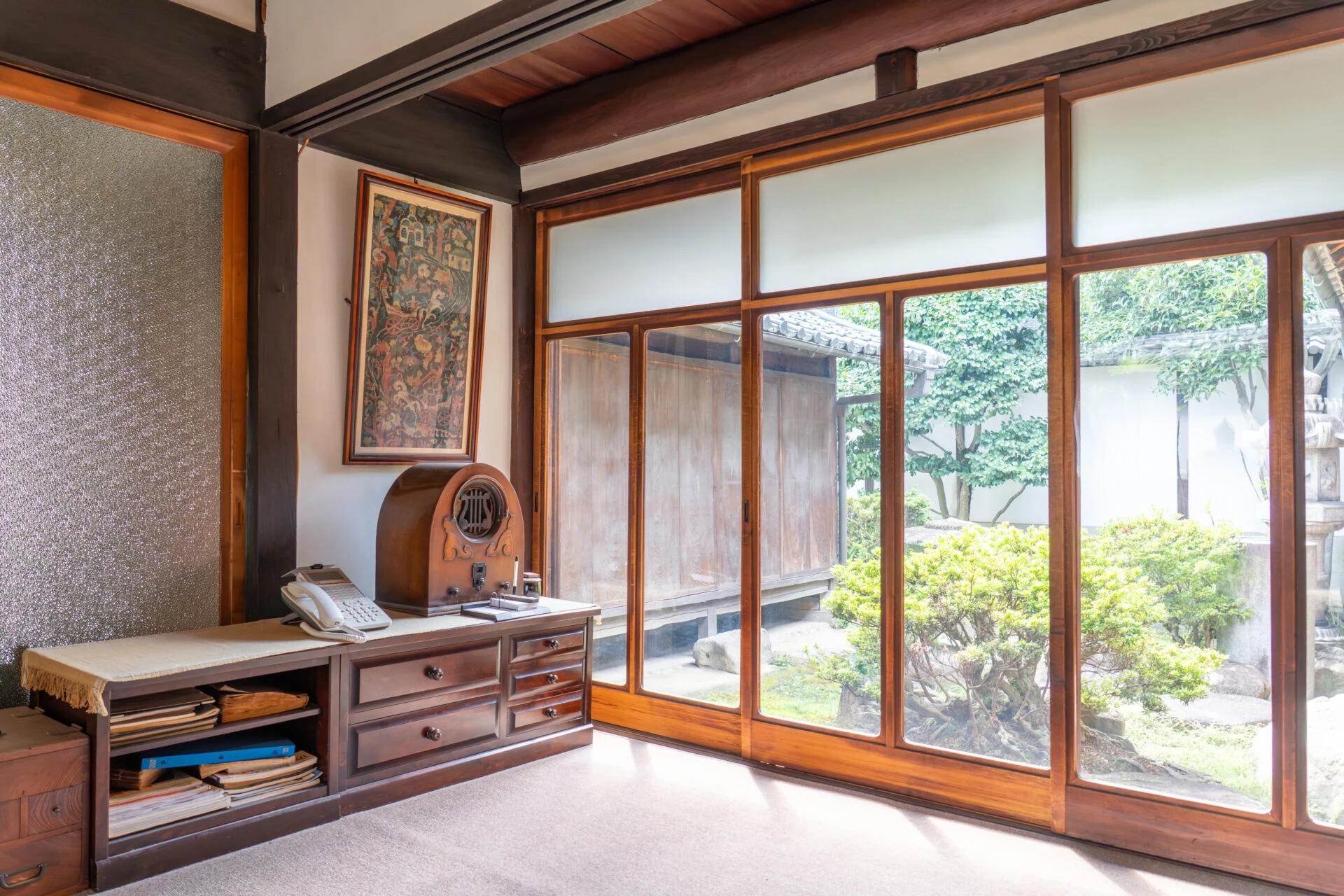
In front of the courtyard, there is a radio said to have been used to listen to the announcement of the end of the war, and a piece of fabric that painter Kojima Torajiro received as a souvenir when he traveled abroad, both of which blend into the interior of the space.
A Back Room with Exquisite Design
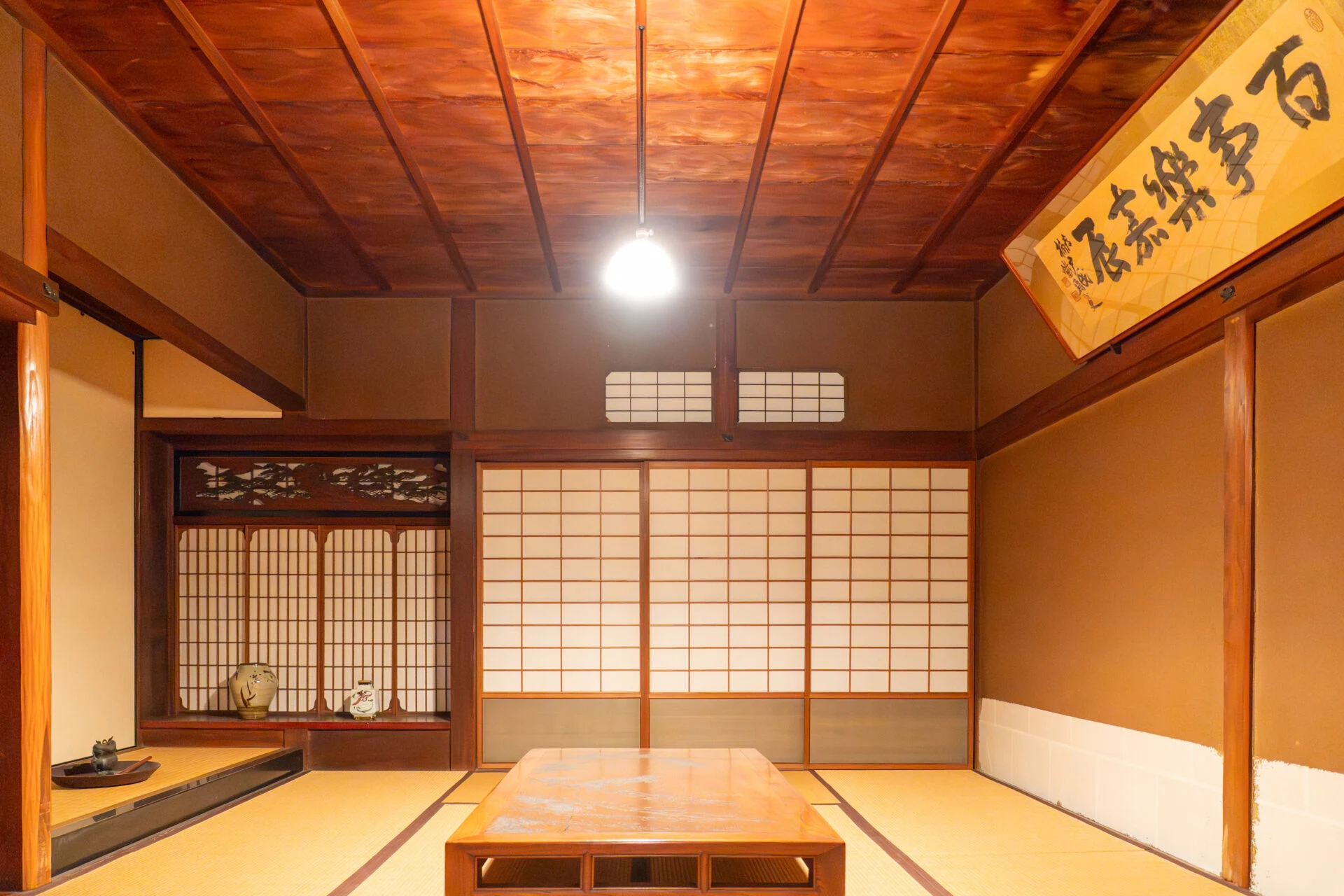
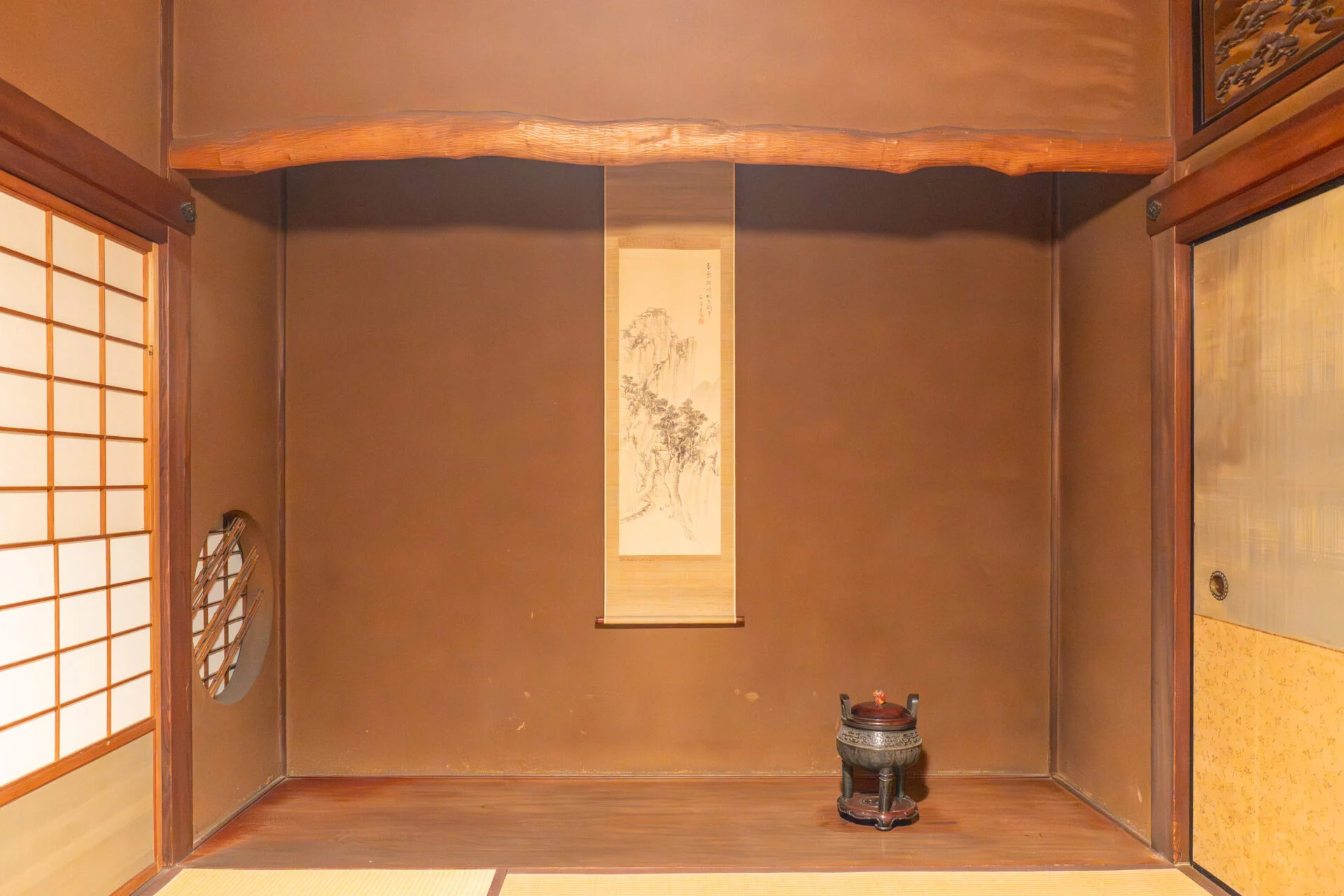
The back room is laid with high-quality tatami mats made from carefully selected rush grass that has a thick skin and a beautiful silvery sheen with a hint of blue, known as "Bingo-omote", and features a magnificent main floor, a different shelf, and a side alcove.
The floor pillars are made of smooth cedar, and the pillars touching the tatami are adorned with takenoko-men (bamboo shoot surface), while the flat floor is made of a single board of lacquered keyaki (zelkova), and the ceiling board is made of yakusugi (Japanese cedar) that is over a thousand years old. The fusuma (sliding doors) are decorated with gold and silver, making the back room truly impressive.
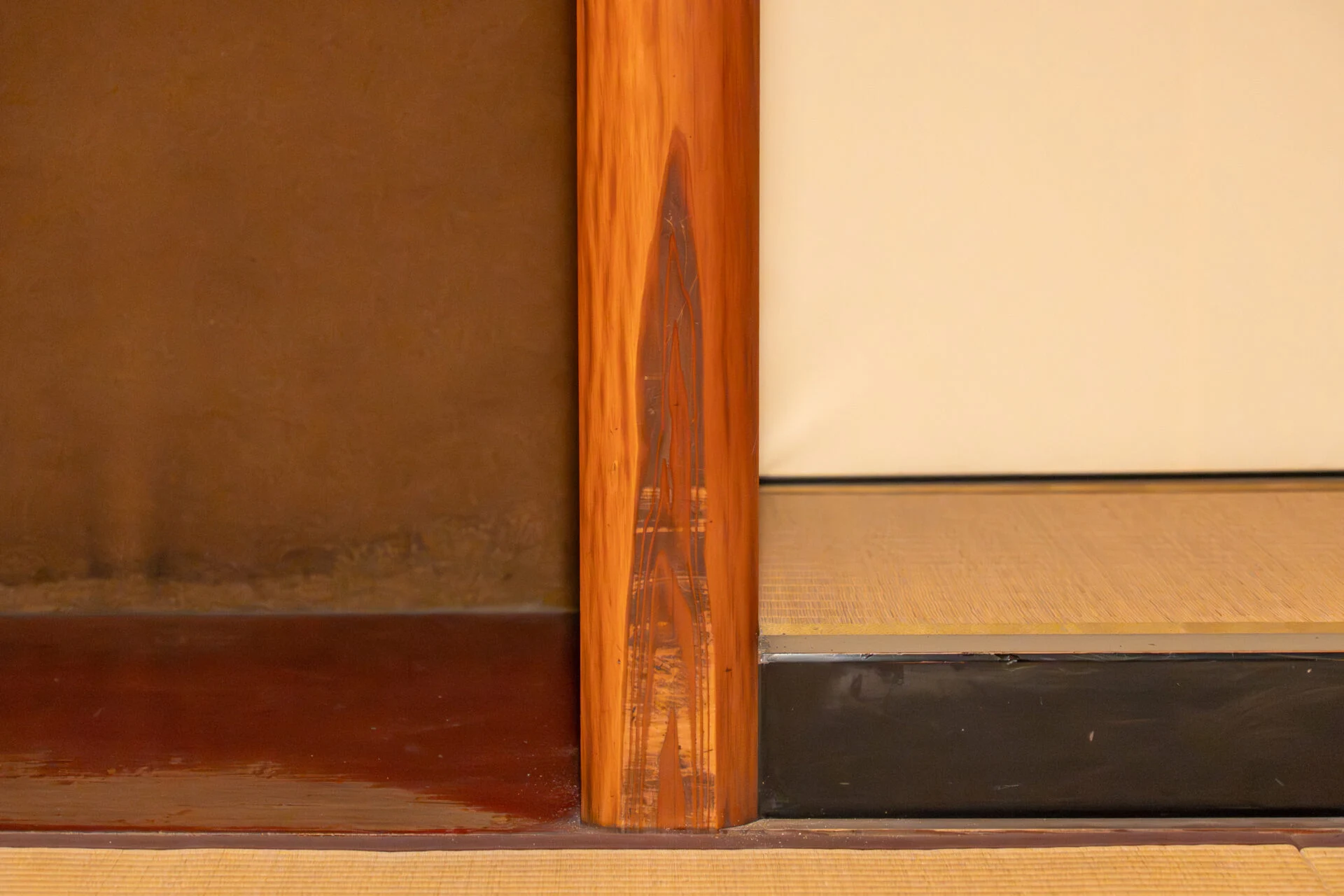
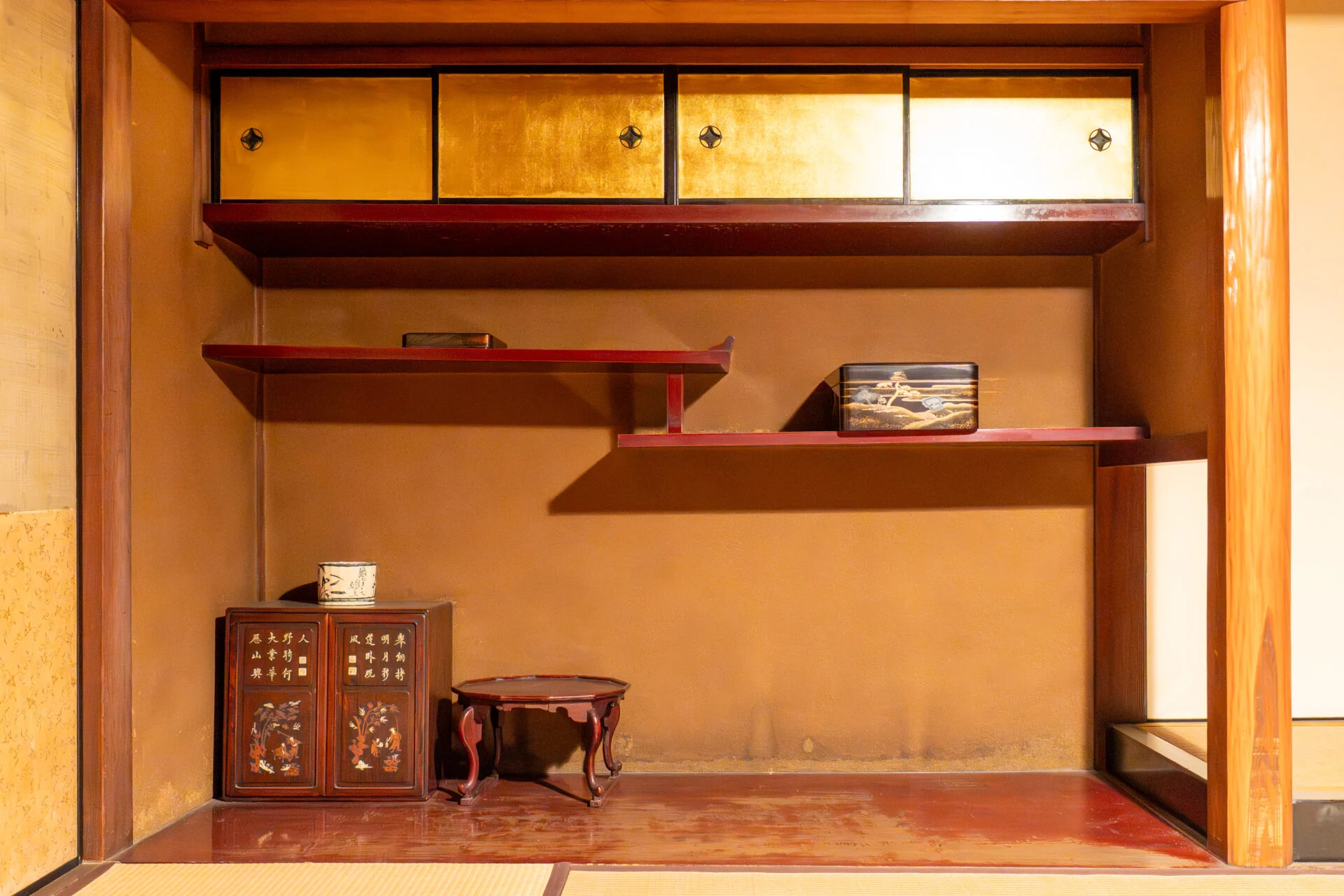
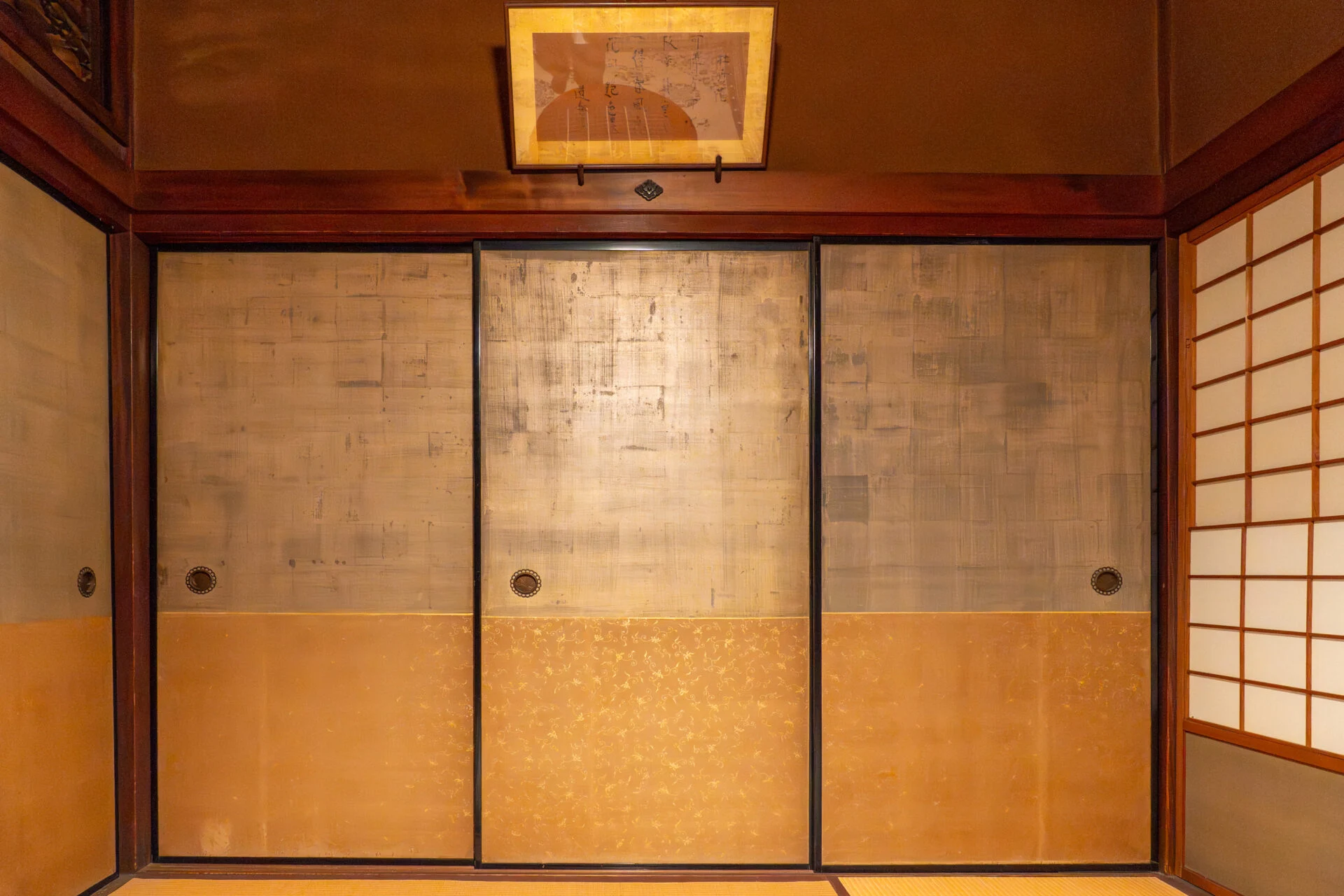
The horizontal beam attached to the lower part of the wall above the waki-doko (side alcove) is called "otoshikake" and is made of precious wood.
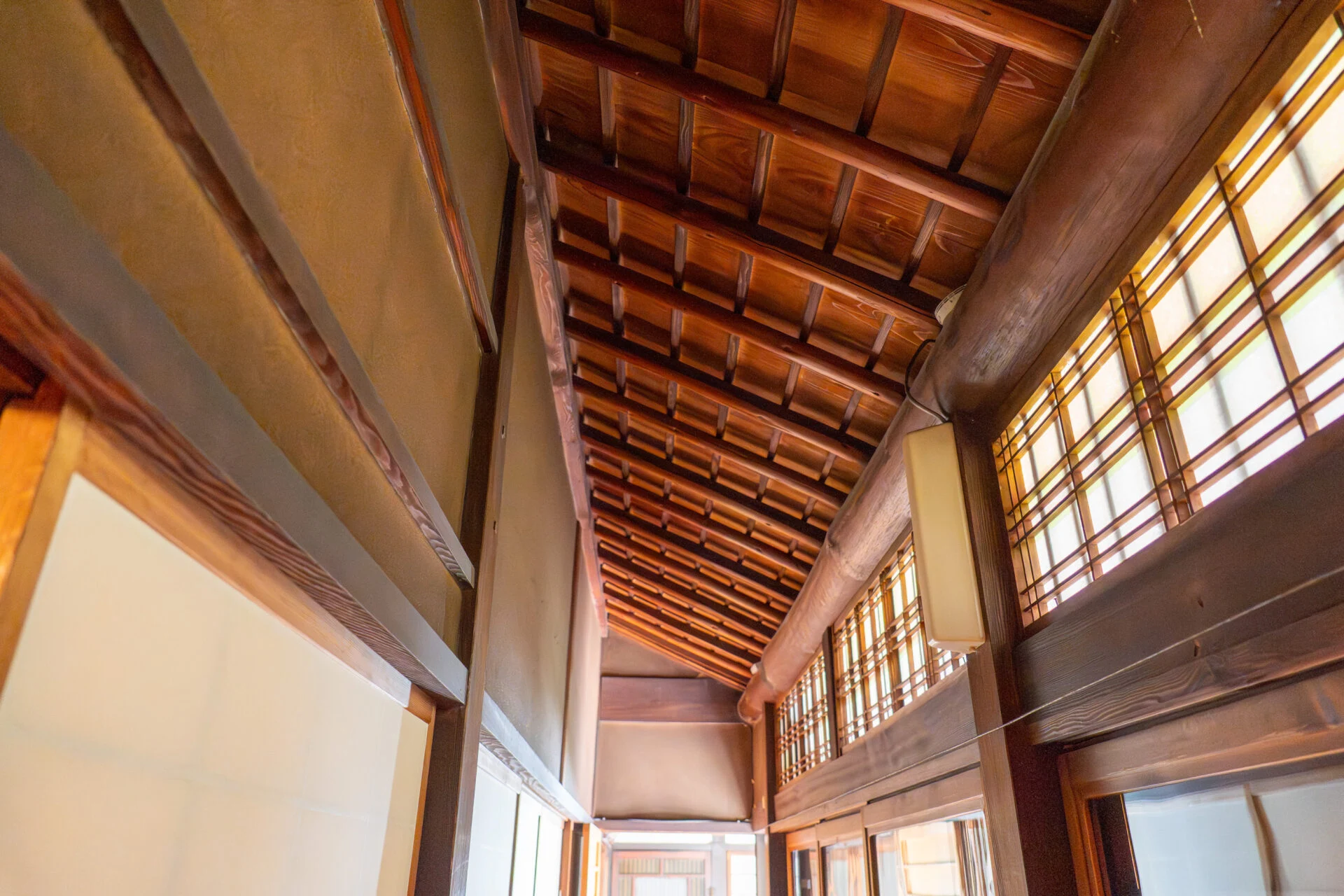
Moreover, not only the tatami room but also the engawa (veranda) is filled with creativity, with the eaves beam made from a single piece of cedar.
The Alley "Hiyasa" in the Bikan Historical Area
Have you heard the term "Hiyasa"?
This is a local dialect of Kurashiki, referring to an alley that stands behind the main street of the old town where tourists pass, shaded by eaves (the sun is shallow).
There is also an alley leading to the current "atelier & salon Hashimaya" at Kusudo House.
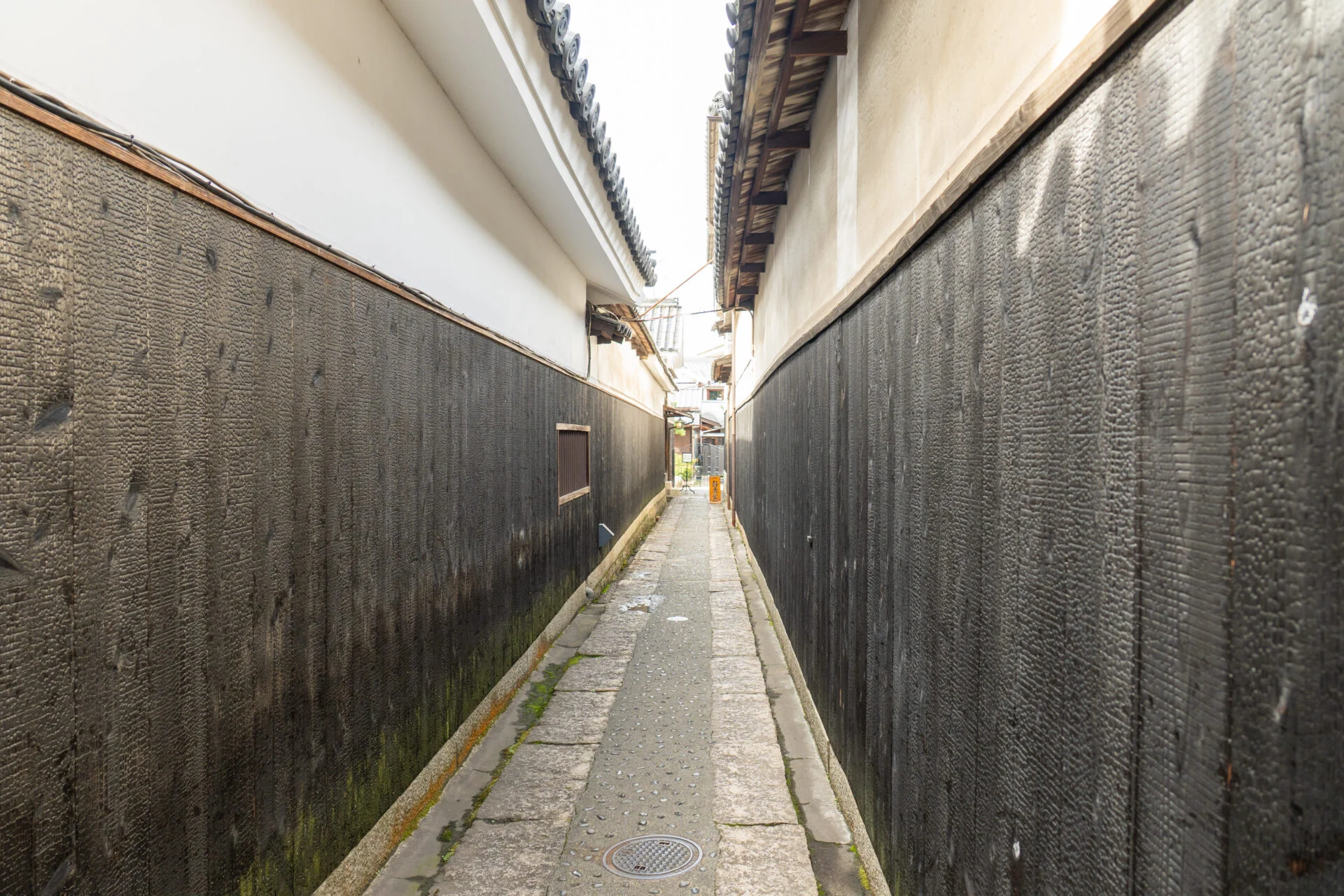
The remnants of the time when landlords transported a large amount of tenant rice by large carts still remain as cobblestone alleys today.
I spoke with Keiko Kusudo about the recent efforts to repurpose the cultural heritage building at Kusudo House.
Data on Kusudo House
| Name | Kusudo House |
|---|---|
| Address | 1-20 Higashimachi, Kurashiki City, Okayama Prefecture |
| Website | Hashimaya |