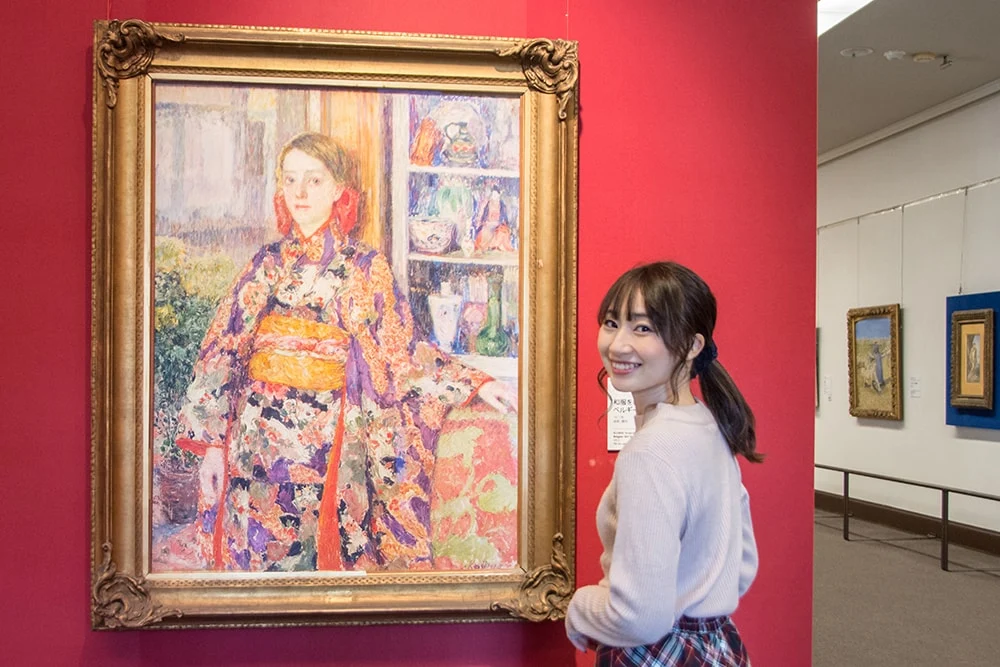
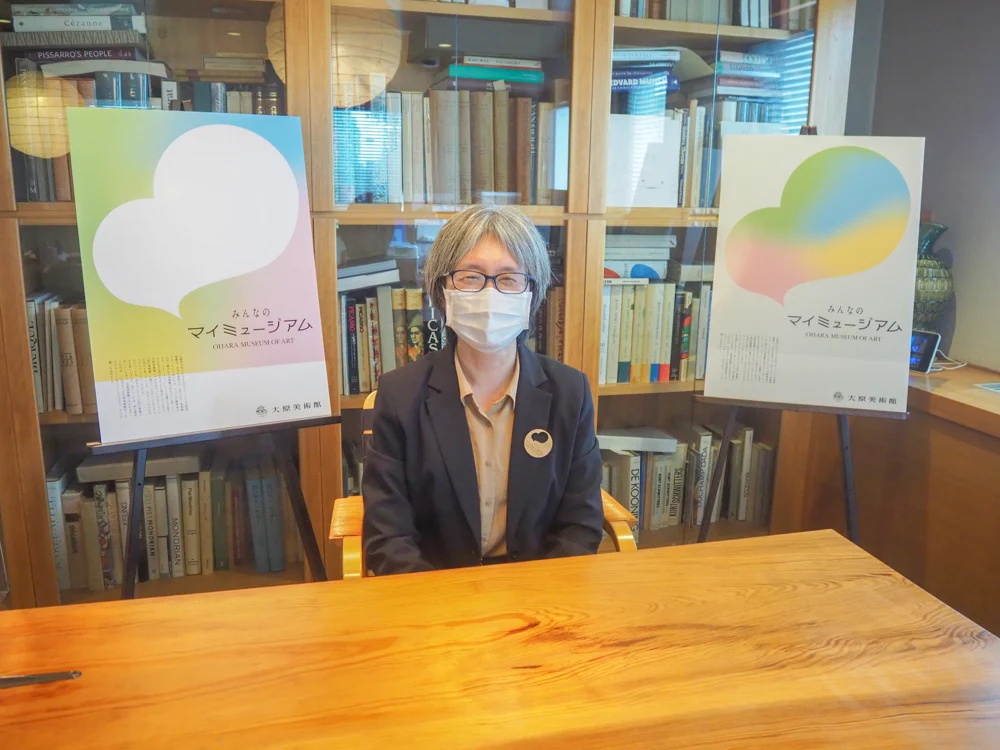
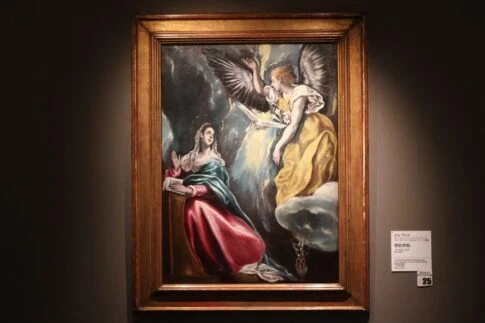
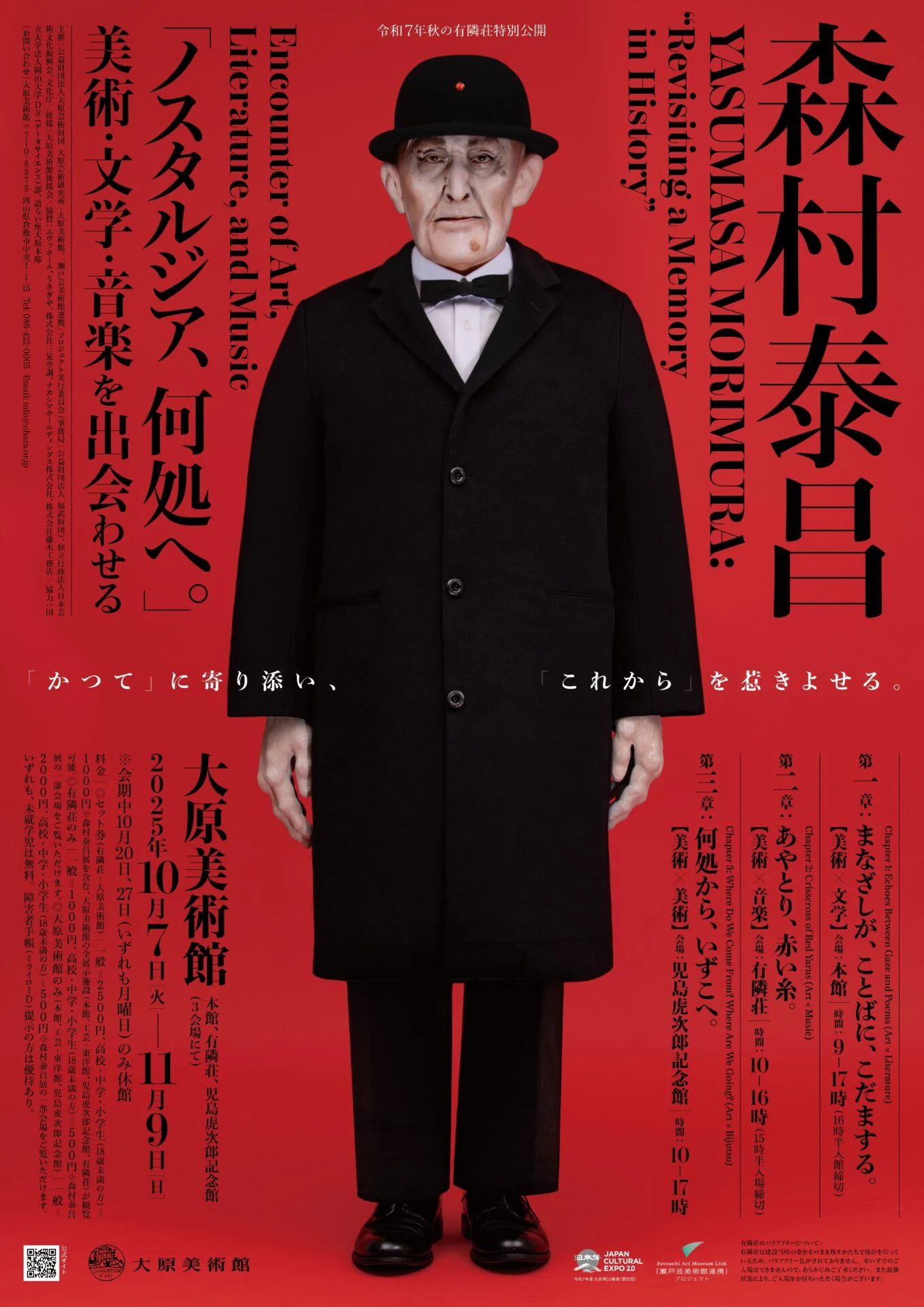
From October 7, 2025 (Tuesday), at Ohara Museum of Art, Yurin-so Villa, and Kojima Torajiro Memorial Gallery, an exhibition titled “Nostalgia, Where to?” — A Meeting of Art, Literature, and Music by artist Moriura Yasumasa is being held.
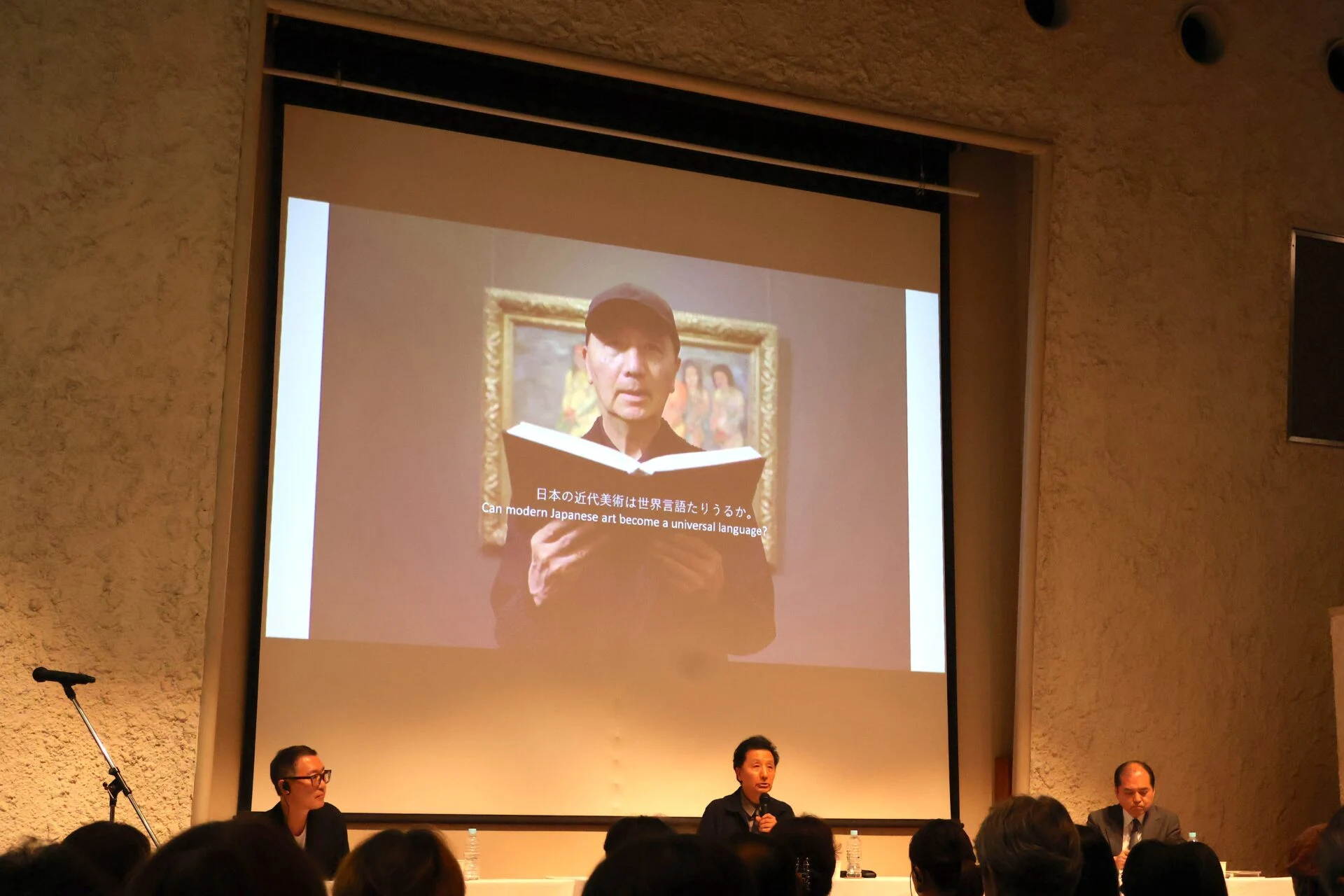
To commemorate this exhibition, a symposium titled “Thinking About the Intersection of Perspectives — The West, Japan, and Asia” was held on October 11, 2025 (Saturday).
The speakers included artist Moriura Yasumasa, Dorian Chung, Artistic Director and Chief Curator of the contemporary art museum “M+” in Hong Kong, and Miura Atsushi, Director of the Ohara Museum of Art, a public interest incorporated foundation.
We introduce the symposium that felt the potential of art.
Why Ask About the “Intersection of Perspectives” Now
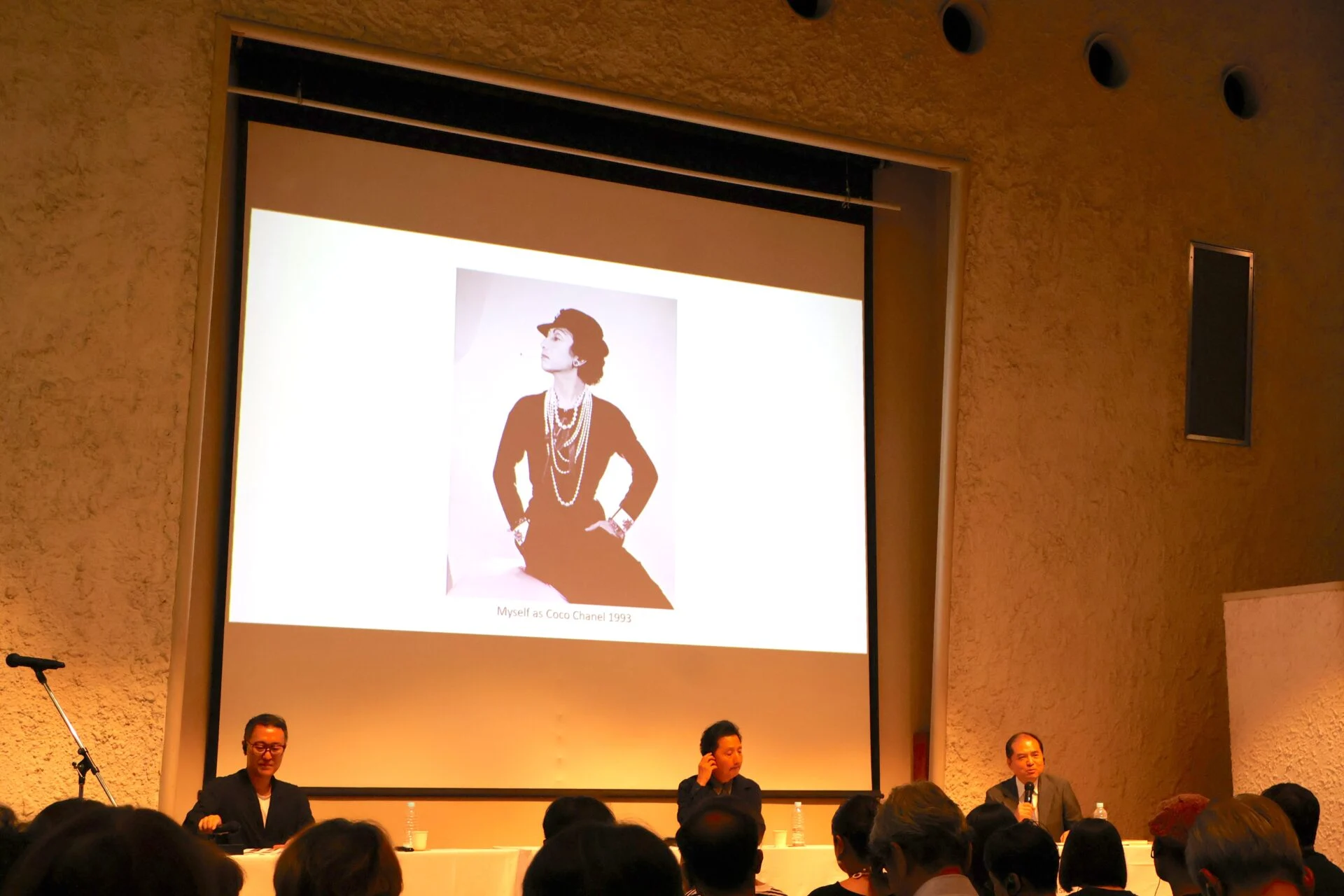
First, Director Miura Atsushi stated that this exhibition is not just a solo exhibition, but a groundbreaking attempt to intersect the contemporary “perspective” of artist Moriura Yasumasa with the historical “perspective” of the Ohara Museum of Art collection.
Miura Atsushi
The purpose of this exhibition is to create a unique exhibition space that can only be born by facing and resonating the art of Moriura Yasumasa with the history and collection of the Ohara Museum of Art.
Furthermore, we tend to perceive culture through a binary lens of “the West” and “Japan.” In this symposium, we believe that adding Dorian Chung’s “Perspective from Asia” will create a chemical reaction.
A Map of Creation — Understanding Moriura Yasumasa’s Current Position Through the Theory of Oe Kenzaburo
(Image provided by the Ohara Museum of Art, a public interest incorporated foundation)
Next, Moriura Yasumasa clarified his current position in creation by introducing Oe Kenzaburo’s classification of Japanese contemporary literature into discussions within art history.
Moriura Yasumasa
Oe Kenzaburo divided Japanese writers into three groups.
The first group consists of writers like Tanizaki Junichiro and Kawabata Yasunari, who established unique expressions precisely because they were somewhat isolated from the world. This may be akin to the world of ukiyo-e that flourished during Japan's isolation.
The second group includes Oe himself and Abe Kobo, who struggled to acquire a “world language” that could engage in dialogue with the world, learning from Western culture and values.
The third group consists of writers like Murakami Haruki, who have been connected to the world through subculture since birth, making it a common language. This corresponds to the generation of Takashi Murakami and Yoshitomo Nara in the art world.
I identify myself with the second group. At the foundation of my creation has always been a thirst for this “world language.”
However, I also harbored a strong admiration for the West, along with a sense of resistance asking “why.” This was indeed an emotion that could be called “love and hate.”
Moreover, there exists a realm that does not belong to any of these three classifications. That is Japan’s “modern Western painting.” They were neither completely isolated nor sufficiently connected to the world with ample information.
The works of those who have struggled with the West within limited information exist in a cultural gap and may feel somewhat distant to us today, like an ancient word.
My attempt in this exhibition is to retranslate that ancient word in a modern context and to re-examine the universal value of their struggles and passions.
A Perspective from Asia — The Art of Moriura Yasumasa as a Critical Strategy
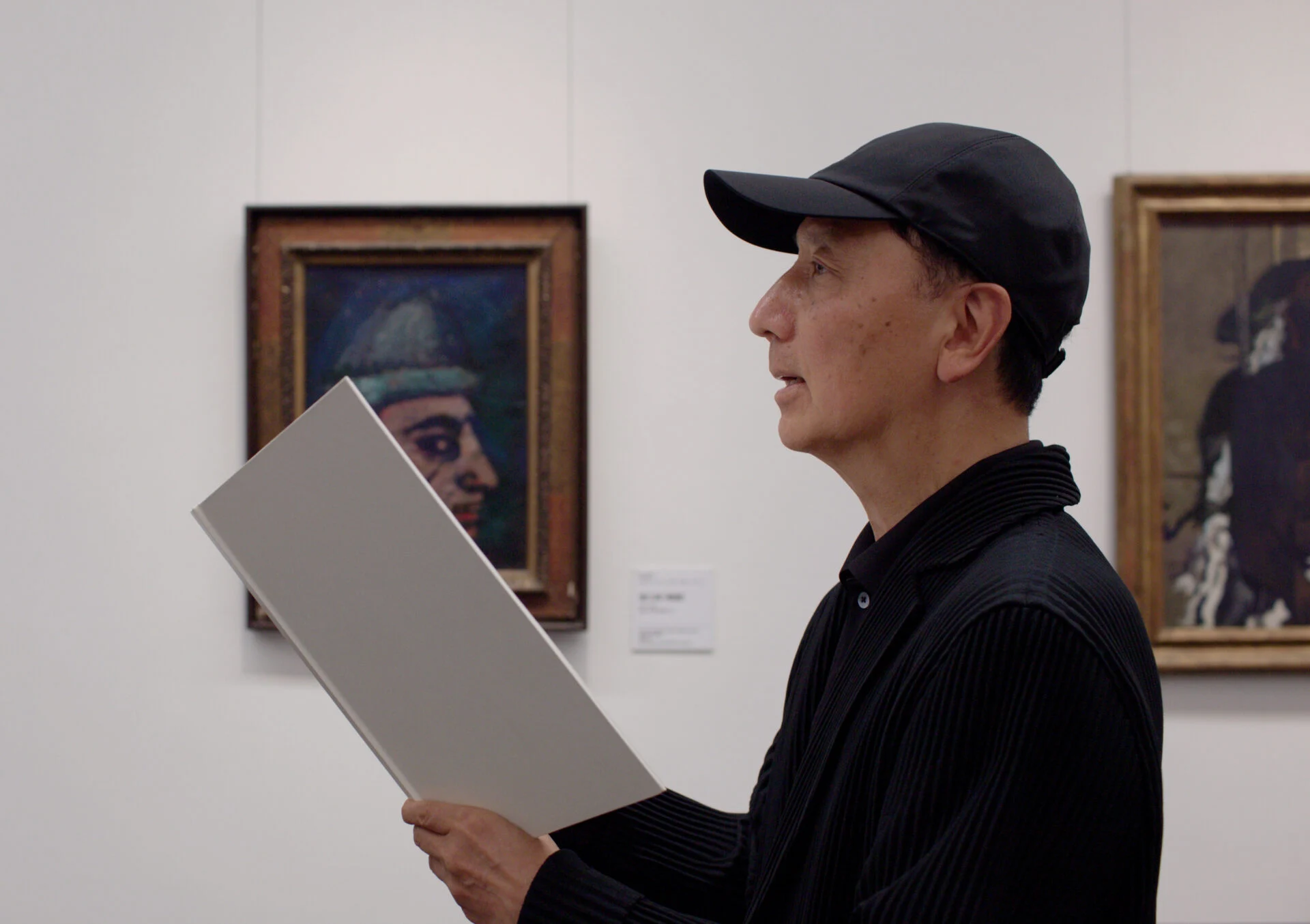
Next, Dorian Chung discussed the criticality and importance of Moriura Yasumasa’s art from an international perspective in Asia.
Dorian Chung
Moriura confronts giants like Picasso and Duchamp, who form the core of Western modern art. This embodies the extremely important question of how non-Western artists face the West.
A term used to interpret Moriura’s art is “Anthropophagy.” This refers to the attitude of not merely imitating external cultures, but actively consuming Western culture and transforming it into one’s own flesh and blood, thus becoming the nourishment for entirely new creation.
Moriura’s practice is a sophisticated and intellectual strategy that respectfully accepts Western art history while critically deconstructing it and reconstructing it as his own expression.
Regarding Japanese modern Western painting, he does not view it as “imitation of the West.”
They sought to participate in a global art project using the most universal language of their time, “modern.” The passion and will behind that itself holds art historical value.
Intersecting Perspectives
In the subsequent discussion, the perspectives of the three speakers intersected, deepening the conversation.
Moriura analyzed himself as having a “Picasso-like” desire to create works that exist as objects, like paintings and sculptures, and a “Duchamp-like” critical spirit that deconstructs established concepts, coexisting with contradictions. He stated that this conflict is the source of creation.
Additionally, Chung described modern Western painting as a testament to the passion to connect with the world. They may have viewed their country’s art as imitation of the West. However, from a global perspective, it represents a courageous challenge and shows the potential to be positively reinterpreted as part of global history.
Understanding the Thoughts of Art in the West, Japan, and Asia
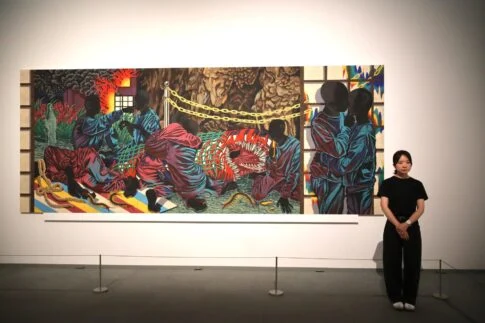
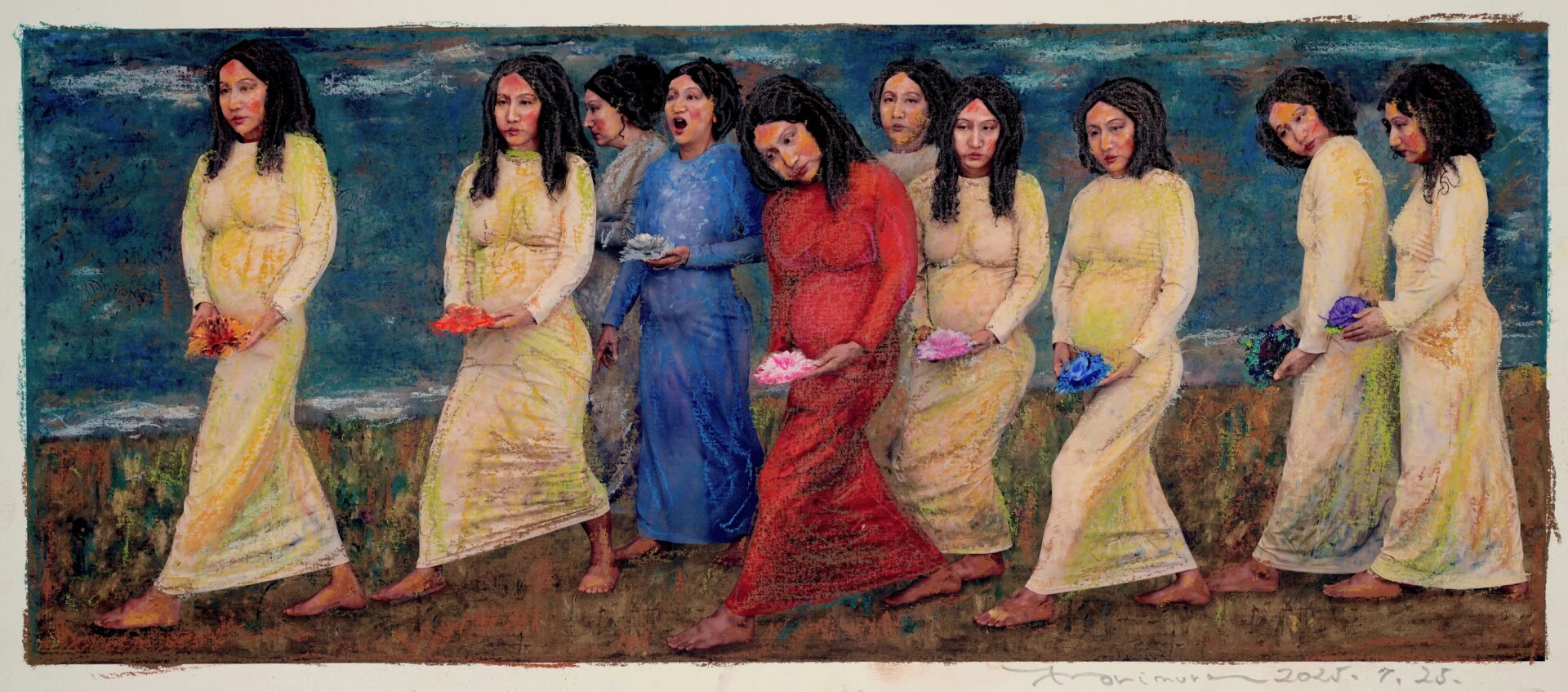
“Where From, Where To. (Study)”
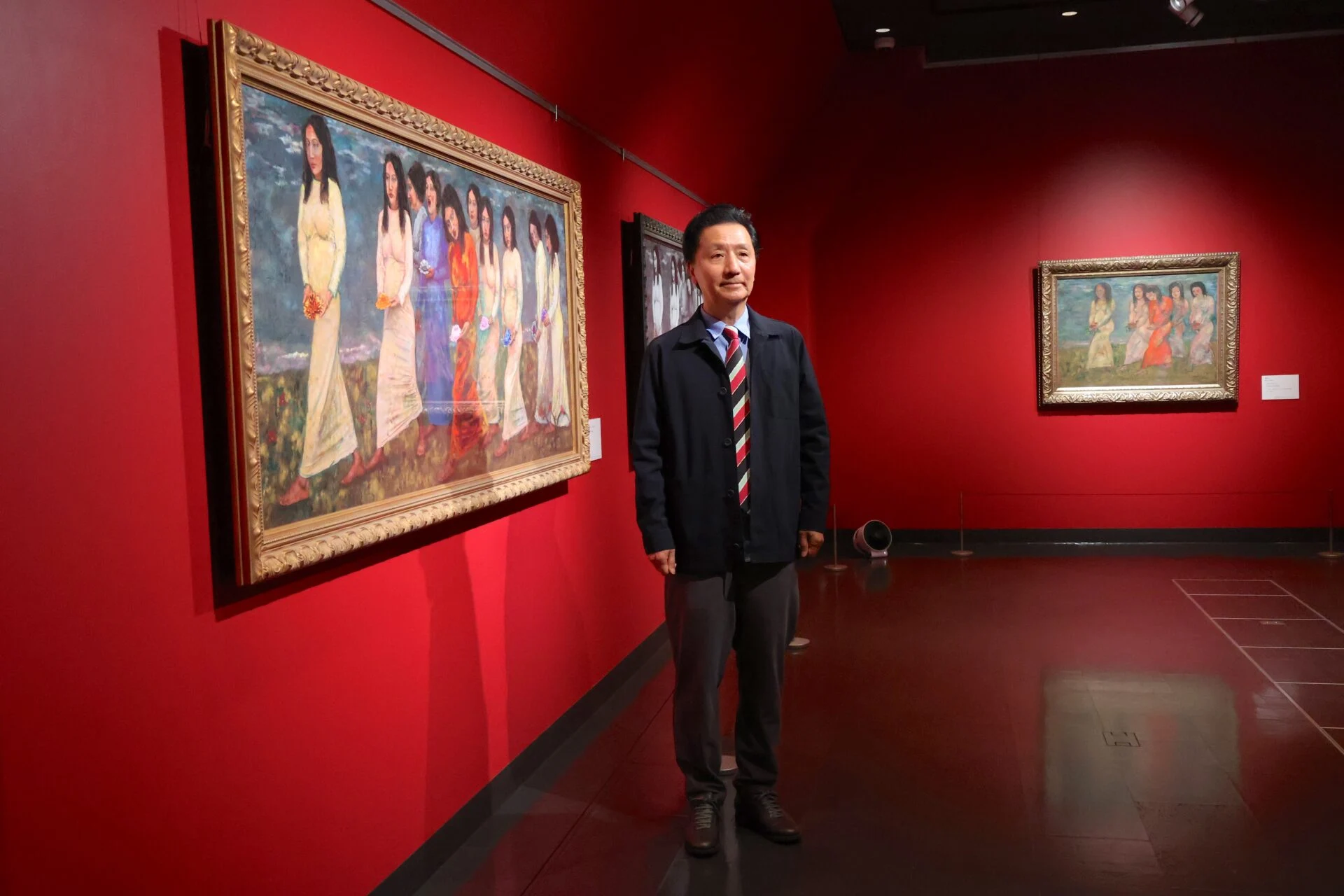
The auditorium of the Kurashiki City Art Museum, where the symposium was held, was filled to capacity, indicating the high level of interest from attendees. The content allowed for a renewed appreciation of the richness of art in the West, Japan, and Asia.
Based on this discussion, when standing in the exhibition rooms of the Ohara Museum of Art, Yurin-so Villa, and Kojima Torajiro Memorial Gallery, it seems likely that we can appreciate Moriura Yasumasa’s works and the paintings of the Ohara Museum of Art from a new perspective.
Moriura Yasumasa “Nostalgia, Where to?” — A Meeting of Art, Literature, and Music is scheduled to be held until November 9, 2025 (Sunday).
Please take this opportunity to enjoy the wonderful works on display.
Data on Moriura Yasumasa “Nostalgia, Where to?” — A Meeting of Art, Literature, and Music
| Name | Moriura Yasumasa “Nostalgia, Where to?” — A Meeting of Art, Literature, and Music |
|---|---|
| Dates | October 7, 2025 (Tuesday) – November 9, 2025 (Sunday) 10:00 AM – 4:00 PM (Last entry at 3:30 PM) |
| Location | 1-1-15 Chuo, Kurashiki City, Okayama Prefecture |
| Admission Fee (including tax) | Ohara Museum Set Ticket Allows viewing at all venues of the Moriura Yasumasa exhibition (Main building, Yurin-so Villa, Kojima Torajiro Memorial Gallery). 【Set Ticket】 Yurin-so Villa + Ohara Museum General 2,500 yen 【Set Ticket】 Yurin-so Villa + Ohara Museum High school, middle school, and elementary school students (under 18) 1,000 yen Yurin-so Villa only *Allows viewing at some venues of the Moriura exhibition. General 1,000 yen High school, middle school, and elementary school students (under 18) 500 yen *Please present a disability certificate (Mirairo ID) for discounts. *Free for preschool children. |
| Website | Official Website of Ohara Museum of Art |