

It’s the autumn sightseeing season. The Bikan Historical Area is bustling with many tourists every day.
Of course, there are Japanese tourists, but recently we’ve also been seeing many visitors from overseas, especially Europe. We hear that English-language guided tours have begun as well.
The Bikan Historical Area is a historic town, so it seems increasingly important to share specialist terms used in historical daily life in a language visitors can understand.
In September 2024, the “Sign Language Act” came into force in every municipality in Okayama Prefecture, and sign-language sightseeing tours seem to be gradually starting at various locations.
In November 2024, a sign-language tour will be held at Ohashi House in the Bikan Historical Area. What will it involve?
The information provided was current when this article was published in November 2024. Please note that it may differ from current information.
About Ohashi House
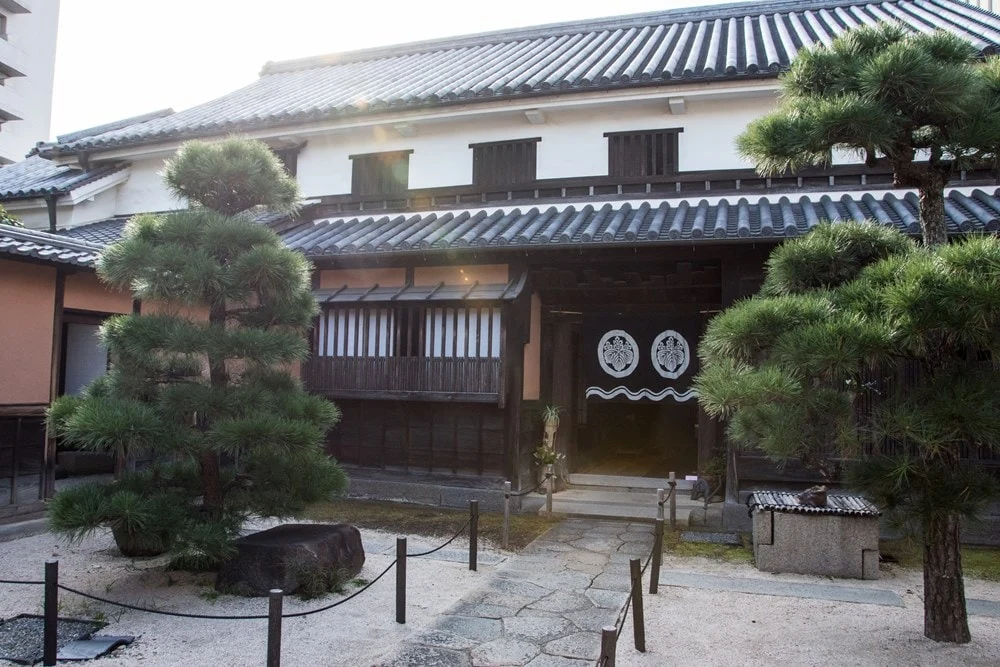
Together with the Ohara family, the Ohashi family formed an emerging group known as the “Shinroku.” They developed rice paddies and salt fields, became major landowners, and amassed great wealth through their financial business.
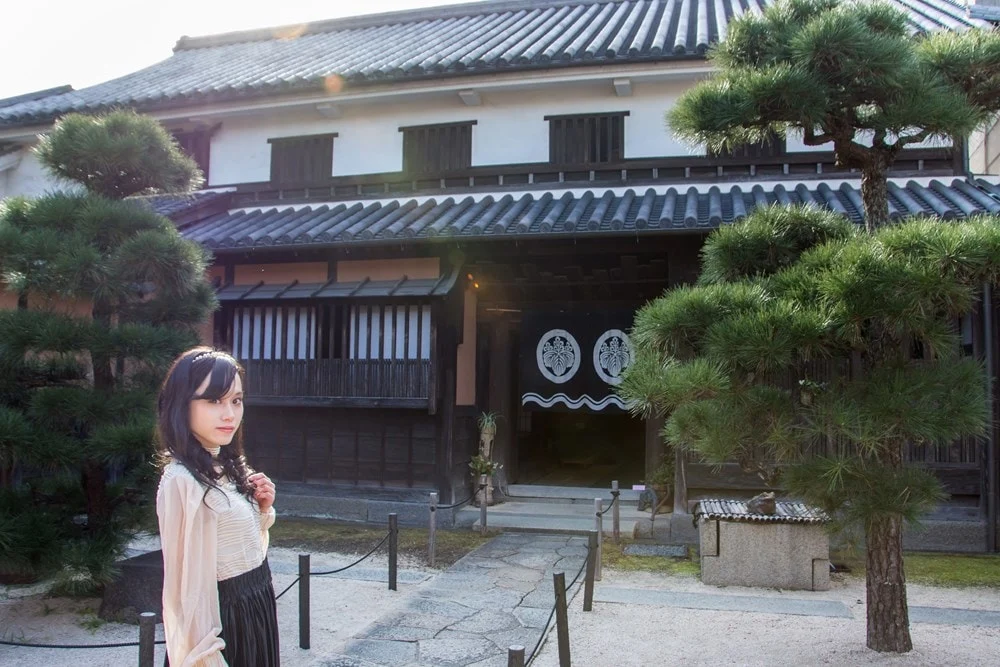
Ohashi House is a stately residence showcasing a typical Kurashiki machiya, or traditional townhouse, and is a townhouse building designated as a National Important Cultural Property. One of its distinctive features is its use of architectural styles unique to Kurashiki, such as “Kurashiki windows,” “Kurashiki latticework,” and namako-kabe (sea-cucumber walls).
What is sign language?
According to the website of the Japanese Federation of the Deaf, sign language is defined as follows:
Kurashiki City enacted its Sign Language Ordinance in December 2021, and Okayama Prefecture enacted its Ordinance on the Promotion of Sign Language and the Use of Communication Methods Suited to the Characteristics of Hearing, Visual, and Other Disabilities in March 2023.
With Hayashima Town enacting a sign language ordinance in September 2024, Okayama became the first prefecture in Japan to have a sign language ordinance enacted in every municipality. Going forward, the provision of services in sign language is expected to be considered in a variety of fields.
About the “Another Side of the Ohashi Family” Sign-Language Guided Tour
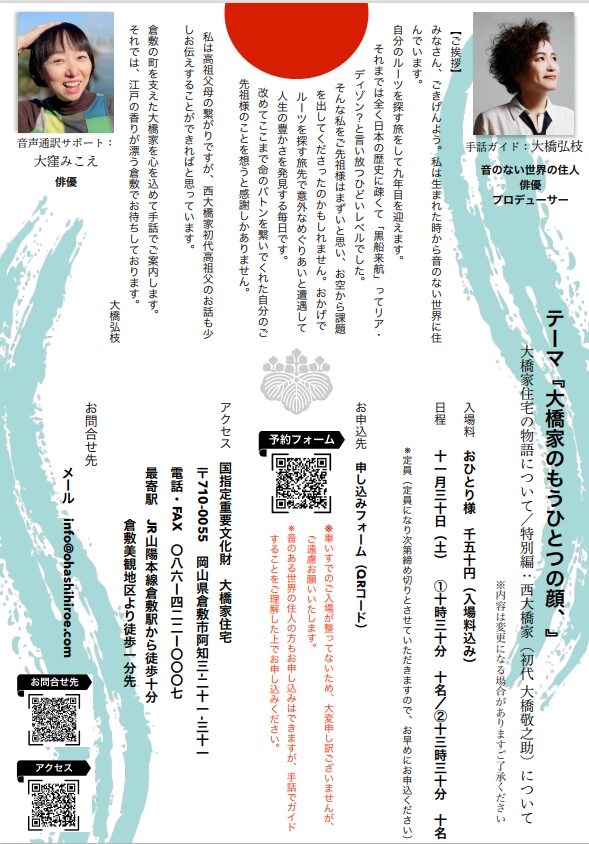
The “Another Side of the Ohashi Family” Sign-Language Guided Tour will be held on November 30, 2024, at Ohashi House in the Bikan Historical Area.
The organizer, Ohashi Hiroe, is deaf and uses sign language in daily life. The tour has one session starting at 10:30 a.m. and another at 1:30 p.m. Both are approximately 40-minute programs conducted in sign language. There will be no spoken-language interpretation, but actor Okubo Mikoe will provide spoken-language interpretation support.
If you would like to participate, make a reservation using the registration form.
For details, see the images below.

Interview with the organizer, Ohashi Hiroe
We spoke with Ohashi Hiroe, the initiator of the “Another Side of the Ohashi Family” Sign-Language Guided Tour, about her connection to the Ohashi family and Ohashi House, and what inspired her to plan the sign-language tour.
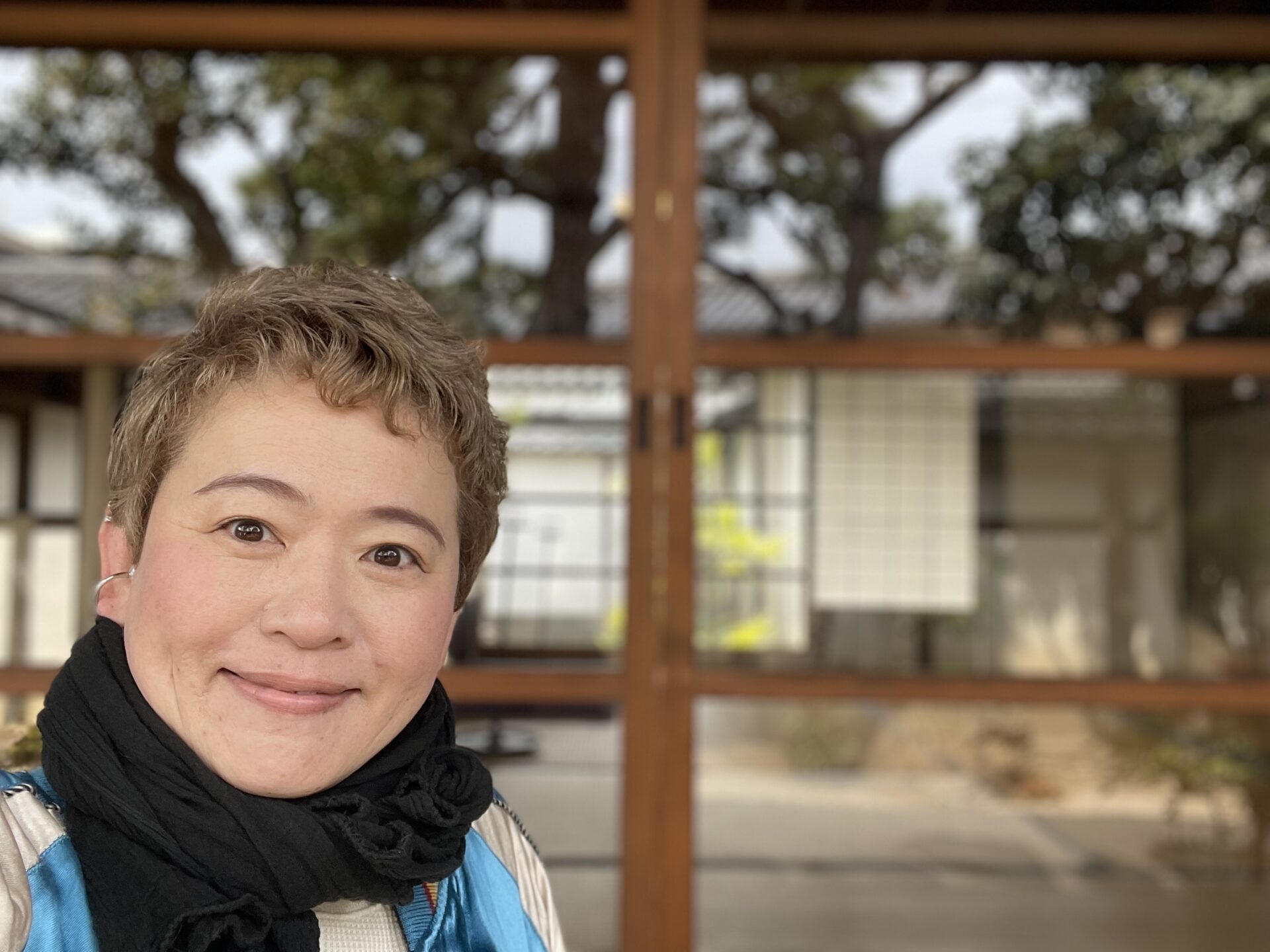
This interview was conducted in sign language. Ohashi reviewed the Japanese translation herself, and it is published with her approval.
Ohashi currently lives in Tokyo. What inspired you to hold a guided tour at the Ohashi family home in Kurashiki?
Ohashi (surname only)
About eight years ago (2016), I was looking at my family tree with relatives, hoping to trace my roots, when the Ohashi family in Kurashiki City came to light. My parents and I live in the Kanto region, so I thought it was strange that my roots were in Kurashiki City, Okayama Prefecture, and I went to visit the Bikan Historical Area in person.
I was captivated by the atmosphere—the old streets of the Bikan Historical Area and the river flowing through the middle of town—and took a guided tour with my family. The guide told us all sorts of things about the history of Kurashiki’s streets, but the Ohashi family was never mentioned.
As I researched the history of the Ohashi family myself, I came across many fascinating stories. That gave me the idea to use the Ohashi family home as a starting point and guide people myself through the achievements of my great-great-great-grandfather, Ohashi Keinosuke. That’s how I launched this project.
Have you led sign-language tours anywhere besides Ohashi House?
Ohashi
Yes. I held a sign-language guided tour in Asakusa, Tokyo, in 2015. Leading a tour means you need to learn the history in depth yourself, so it was a very educational experience.
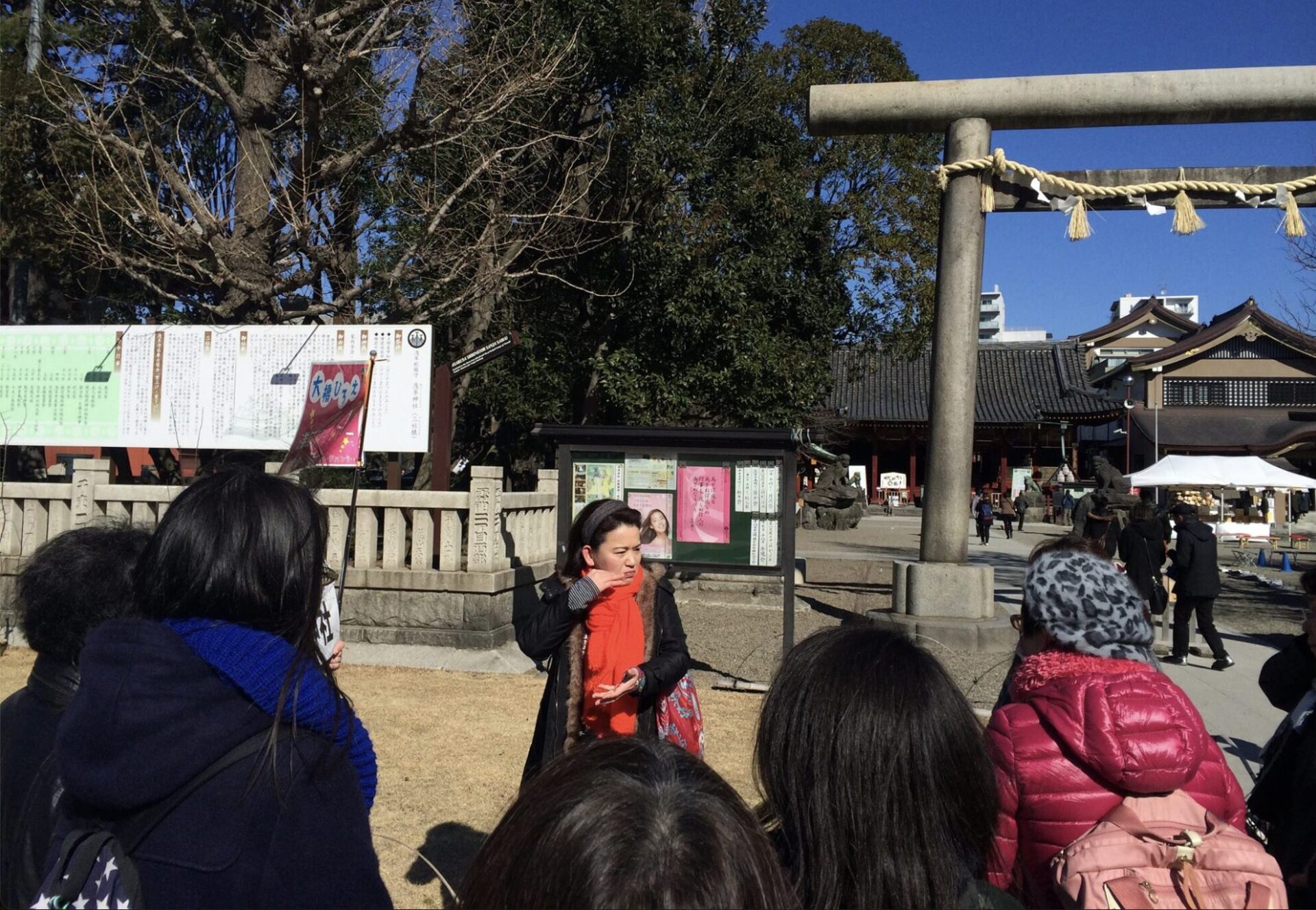
This tour at Ohashi House will be my second sign-language guided tour.
What kind of work do you usually do?
Ohashi
I usually work as an actor and producer. At the moment, I’m particularly focused on my work as a facilitator for Dialogue in Silence, an entertainment experience that explores ways to communicate with one another without sound or speech, using body language and other methods.
All the facilitators, including me, have sign language as their first language.
I understand that this sign-language guided tour will include spoken-language interpretation support, rather than spoken-language interpretation. Could you explain the difference?
Ohashi
Spoken-language interpretation means interpreting all the content of the sign-language tour into spoken language. The spoken-language interpretation support we’re providing this time, on the other hand, doesn’t interpret the sign language word for word. Instead, the interpreter reads from a script prepared for the support. Therefore, interpretation during the tour, such as for questions and answers, is not guaranteed.
This is the first sign-language guided tour to be held at Ohashi House, so it is intended for people who can communicate to some extent in sign language.
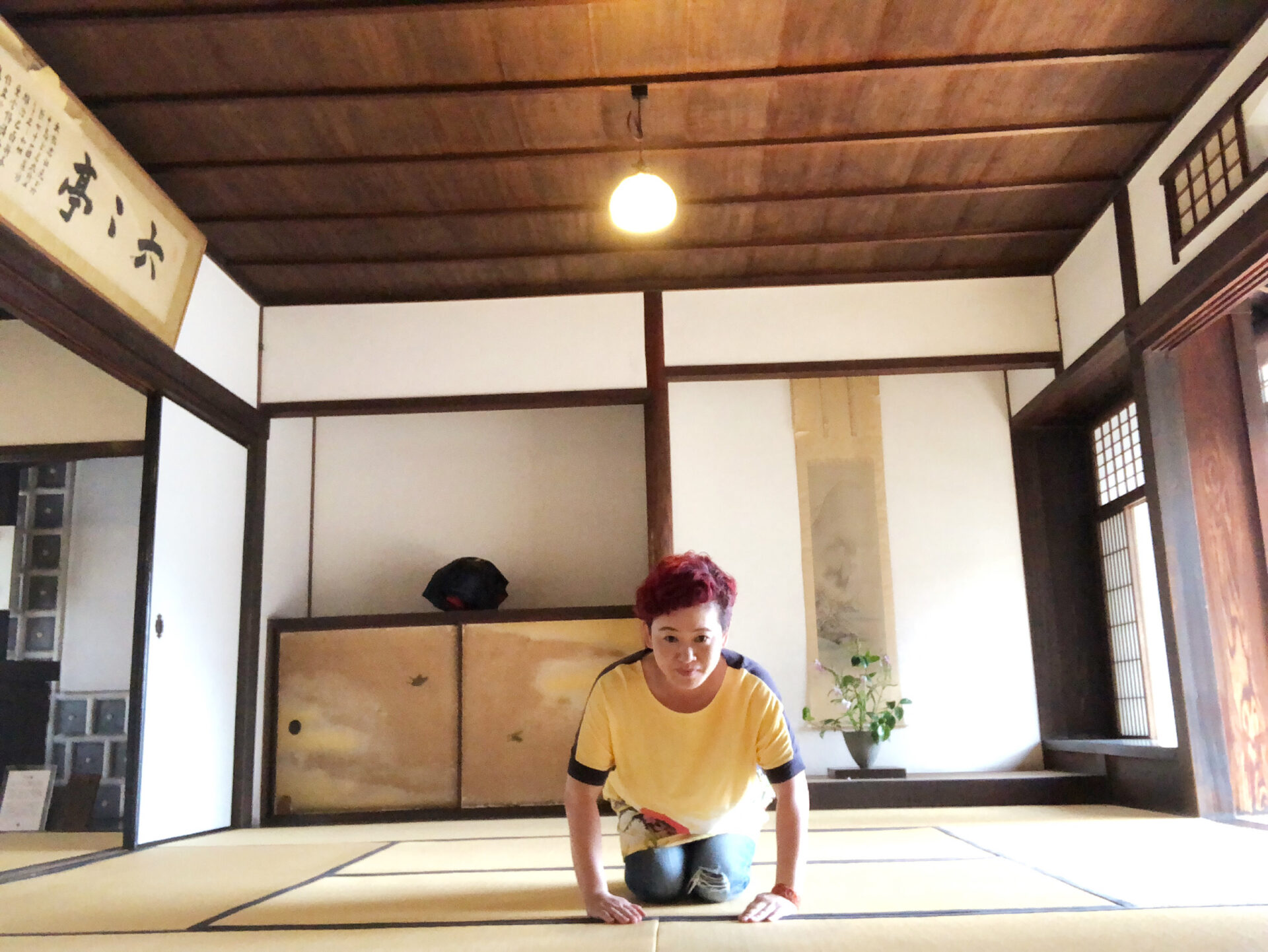
What is the significance of conducting a guided tour in sign language?
Ohashi
At the beginning, I mentioned taking a guided tour in the Bikan Historical Area. It was conducted in spoken language, so as a deaf person, I had to rely on my companion to summarize and interpret it for me. As I walked around the Bikan Historical Area, I saw several groups of tourists using sign language, and I thought it was a shame that no sign-language interpretation was available.
When giving an English-language tour to English speakers, you don’t bring along a Japanese interpreter each time. Likewise, tours for Chinese visitors are conducted in Chinese alone. English-language tours are experiences for people who understand English, and Chinese-language tours are experiences for people who understand Chinese.
In the same way, if you’re giving a tour in sign language, you should conduct it entirely in sign language. I hope we can create a society where everyone takes for granted that there are programs that deaf people (people with hearing disabilities) can participate in precisely because they are deaf.
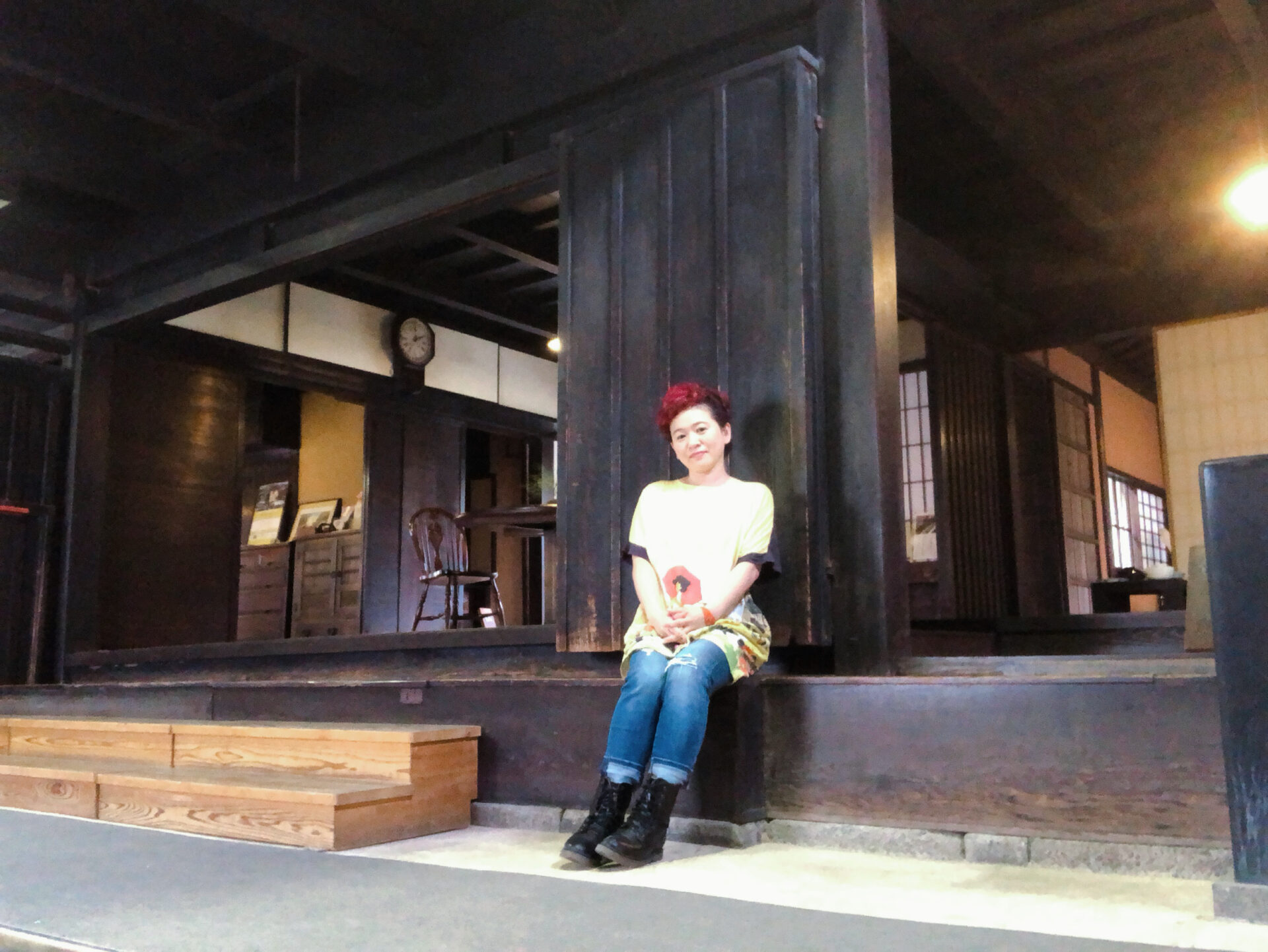
This time, the sign-language tour is for deaf people and sign-language learners, but eventually I’d also like to try tours for people with visual disabilities and older adults. Dialogue in Silence, which I work with in Tokyo, also offers programs designed from the perspective of people with visual disabilities and older adults.
Dialogue in Silence has only recently started in Japan, but it has been running in Germany for more than 20 years. I hope experiences that take the perspective of people with disabilities themselves will become much more widespread in Japan, too. I see this “Another Side of the Ohashi Family” Sign-Language Guided Tour as the first step toward that goal.
What do you plan to talk about during the sign-language guided tour?
Ohashi
Ohashi House is a historic building, so I plan to focus on daily life—how the house was built, what people ate there, and how they lived.
There are also many fascinating stories about my great-great-great-grandfather, Ohashi Keinosuke, and I’d like to share what made him so compelling with everyone who takes part.
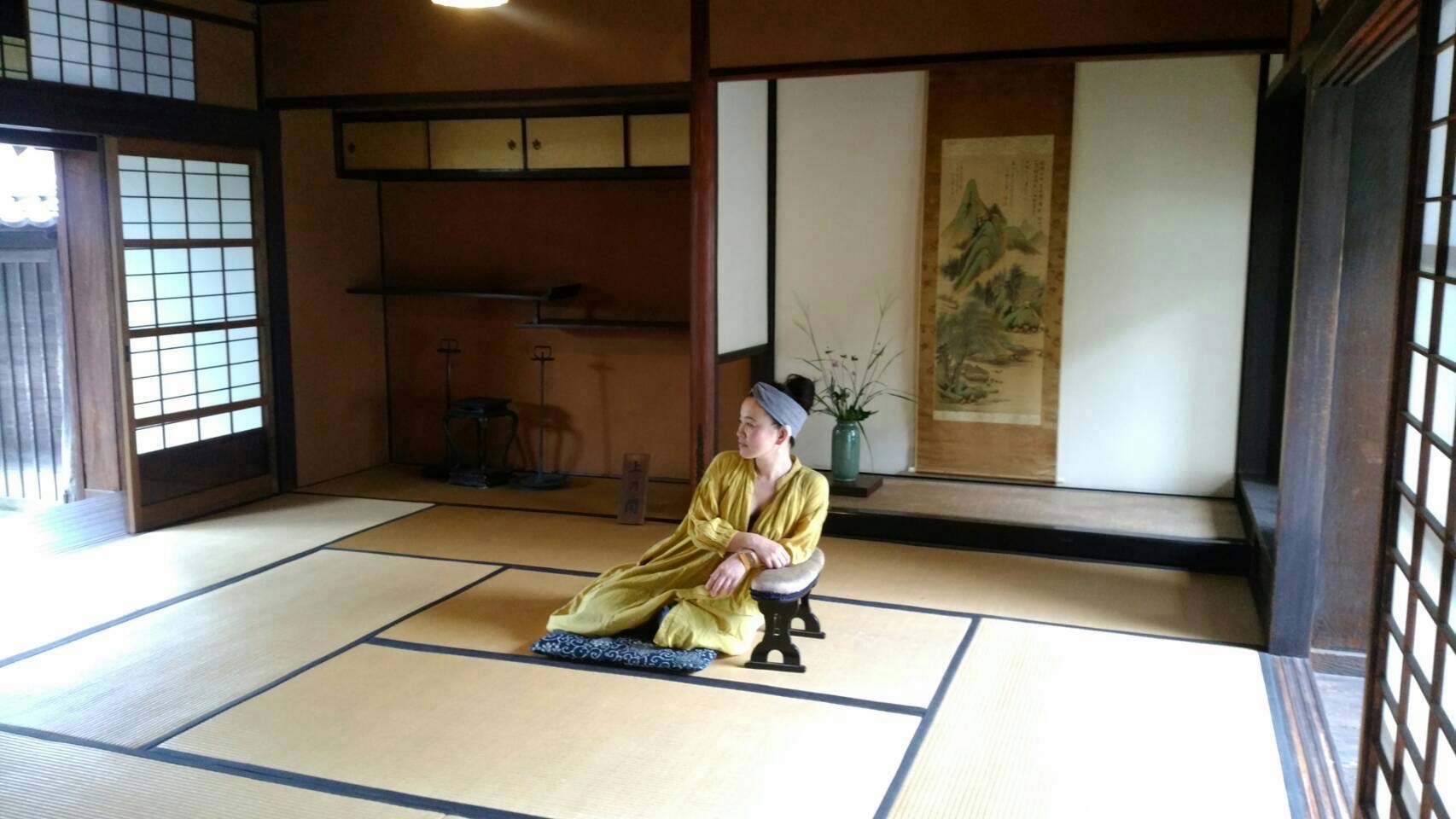
Finally, do you have a message for our readers?
Ohashi
People may usually learn about history from books, but this time, participants will visit Ohashi House in person, where history dating back to the Edo period remains, and experience that history. I hope to offer an opportunity to take in the atmosphere with all five senses, so I hope you’ll look forward to it.
I’m really looking forward to exchanging with everyone who lives in Kurashiki.
From the Writer
I also have a hearing disability, so I had given up on guided tours for hearing people, thinking I wouldn’t be able to get the same information as they did. That’s why I was struck by the question raised in my conversation with Ohashi: “Couldn’t there be guided tours that deaf people can participate in precisely because they are deaf?”
Why not go and experience the first step in Ohashi’s effort to create “guided tours that anyone can participate in,” led by someone with roots in Kurashiki?
“Another Side of the Ohashi Family Home” Sign Language Guided Tour Information
| Name | “Another Side of the Ohashi Family Home” Sign Language Guided Tour |
|---|---|
| Date | Saturday, November 30, 2024 10:30 a.m. / 1:30 p.m. |
| Location | 3-21-31 Achi, Kurashiki City |
| Participation fee (tax included) | 1,500 yen |
| Website | Ohashi Hiroe's Instagram |

What would you like to know about Kurashiki?
Enter a search term to find articles on this site






































“Sign language” is a language on an equal footing with spoken languages. It has its own grammatical system based on hand shape, position, and movement, and also makes use of facial expressions. The Convention on the Rights of Persons with Disabilities defines sign language as a “language,” and in Japan, sign language was legally recognized as a language when the revised Basic Act for Persons with Disabilities first explicitly referred to “language (including sign language).”