When I was a high school student, the basic style of classes was to copy what the teacher wrote on the board and listen to explanations.
Some of you may have dozed off during class and been scolded by the teacher.
In modern educational settings, the Ministry of Education, Culture, Sports, Science and Technology is promoting a learning method called Active Learning. It seems that classes are shifting from passive listening to the teacher's talk to participatory and active classes.
The "Okayama Version Project Based Learning (PBL) Training" to be held on November 22 (Friday) is an event to practice "PBL," which is one form of Active Learning. High school teachers and local businesses will discuss local issues and seek solutions, allowing participants to experience a series of PBL processes.
We interviewed about the thoughts behind the holding of the "Okayama Version Project Based Learning Training."
What is the "Okayama Version Project Based Learning Training"?
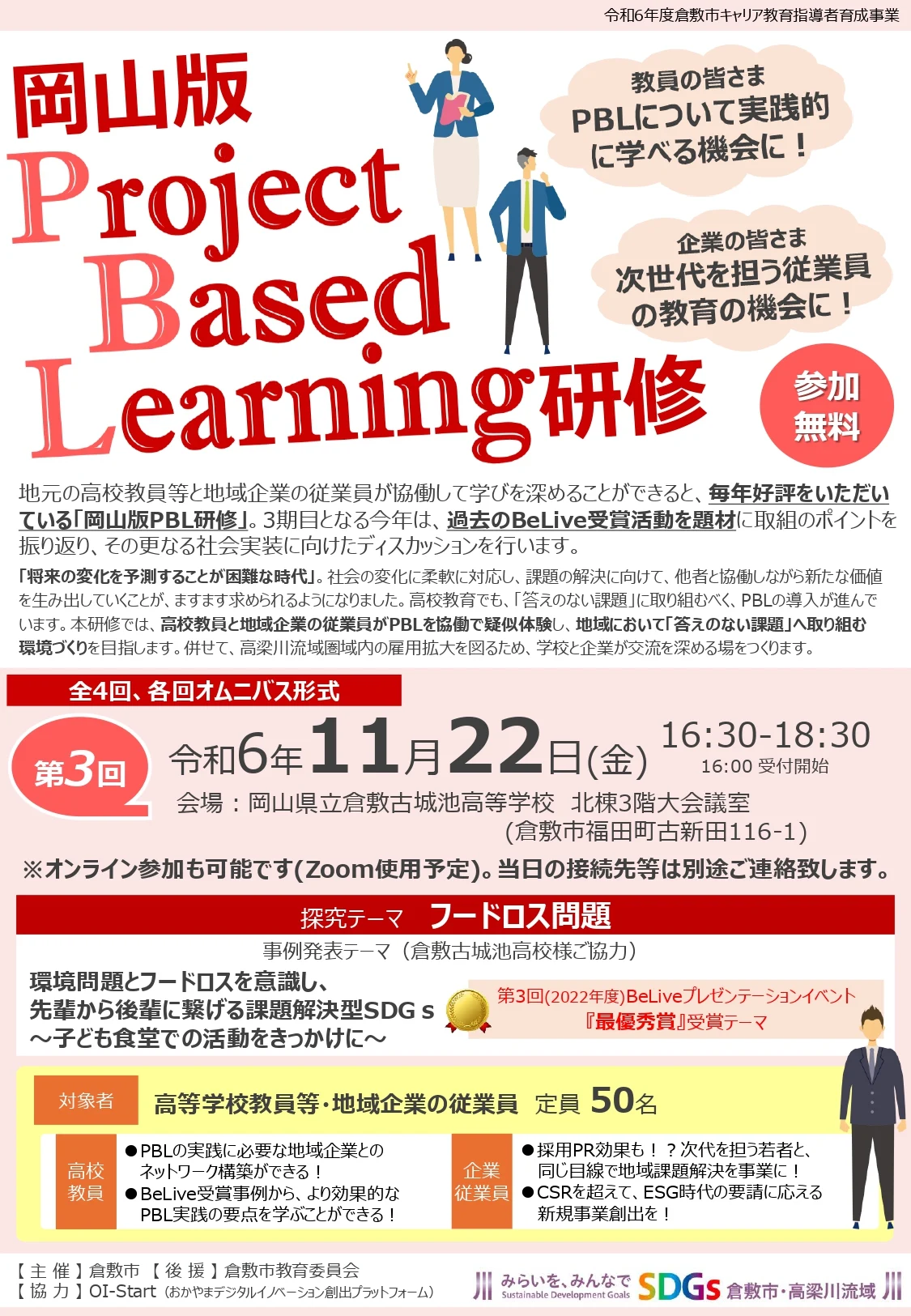
The "Okayama Version Project Based Learning Training" is an exchange event between local businesses and school officials to be held on November 22, 2024 (Friday).
As part of the 2024 Kurashiki City Career Education Instructor Development Project, it is organized by Kurashiki City.
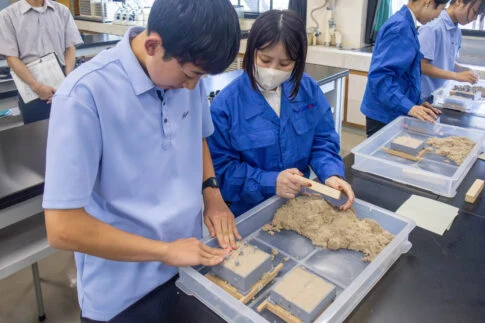
The title includes "Project Based Learning" (hereinafter referred to as "PBL"), which is known as problem-solving learning. Students discuss the issues they discover in groups and seek solutions, but the goal is not to find the correct answer. The process of thinking about solutions allows them to gain knowledge and ideas, and the characteristics of PBL include enhancing cooperation and initiative through group discussions.
In the "Okayama Version Project Based Learning Training," high school teachers and employees of local businesses will practice PBL.
They will discuss the same inquiry theme, using the example of Okayama Prefectural Kurashiki Kojoike High School, which won the grand prize at the BeLive Presentation Event. The third inquiry theme will be about the food loss problem.
This training provides tips on how to think and hints for teaching PBL through a series of PBL processes.
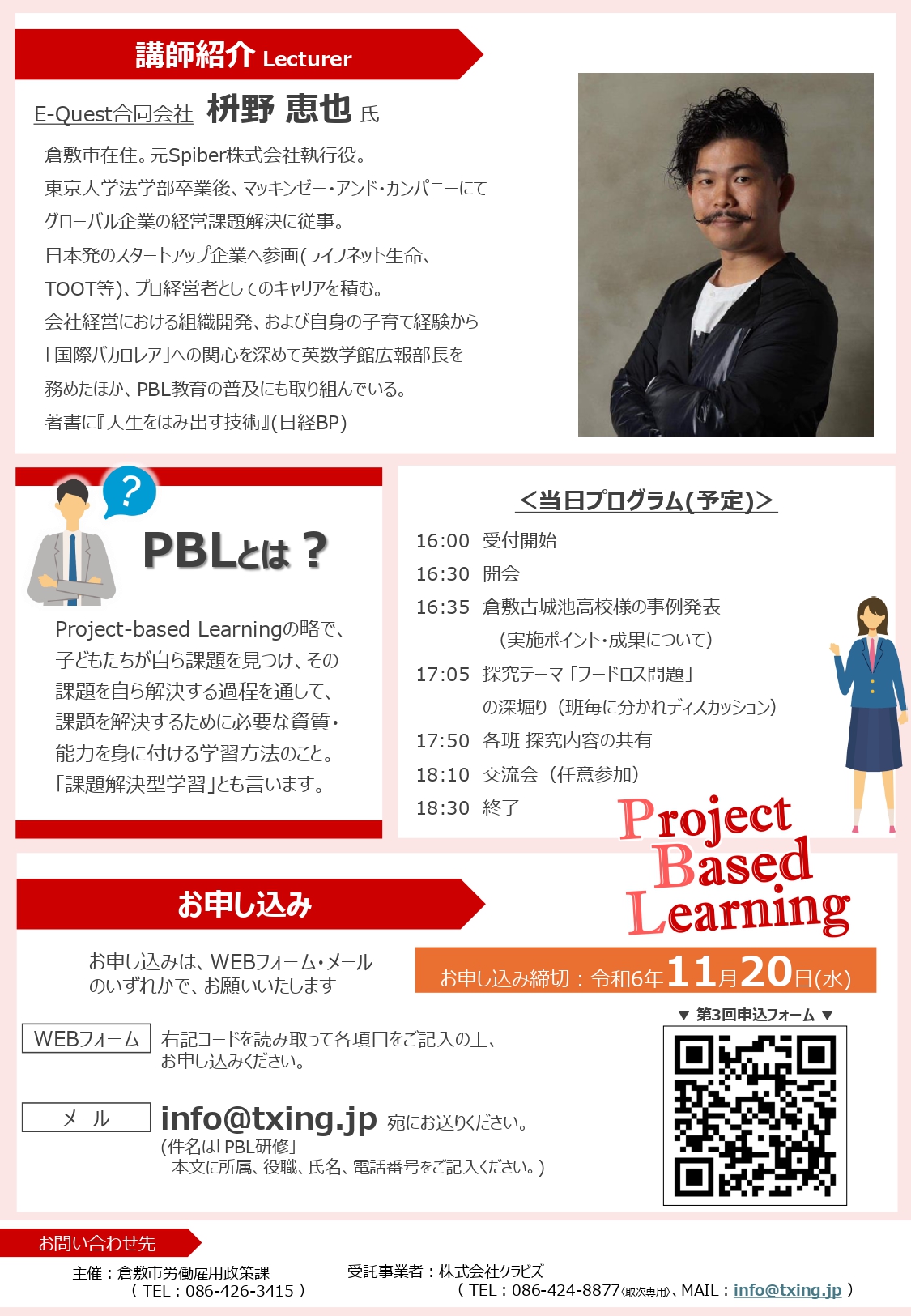
This content is recommended for teachers who are struggling with how to teach PBL and schools that want to collaborate with local businesses.
Interview with the person in charge
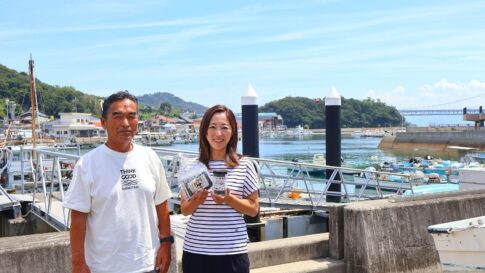
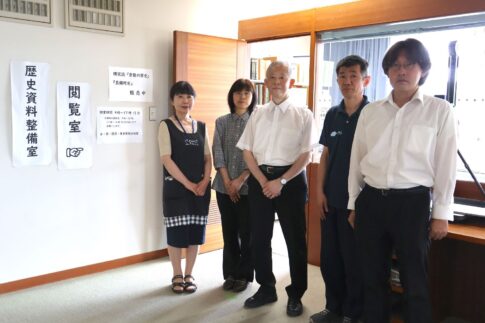
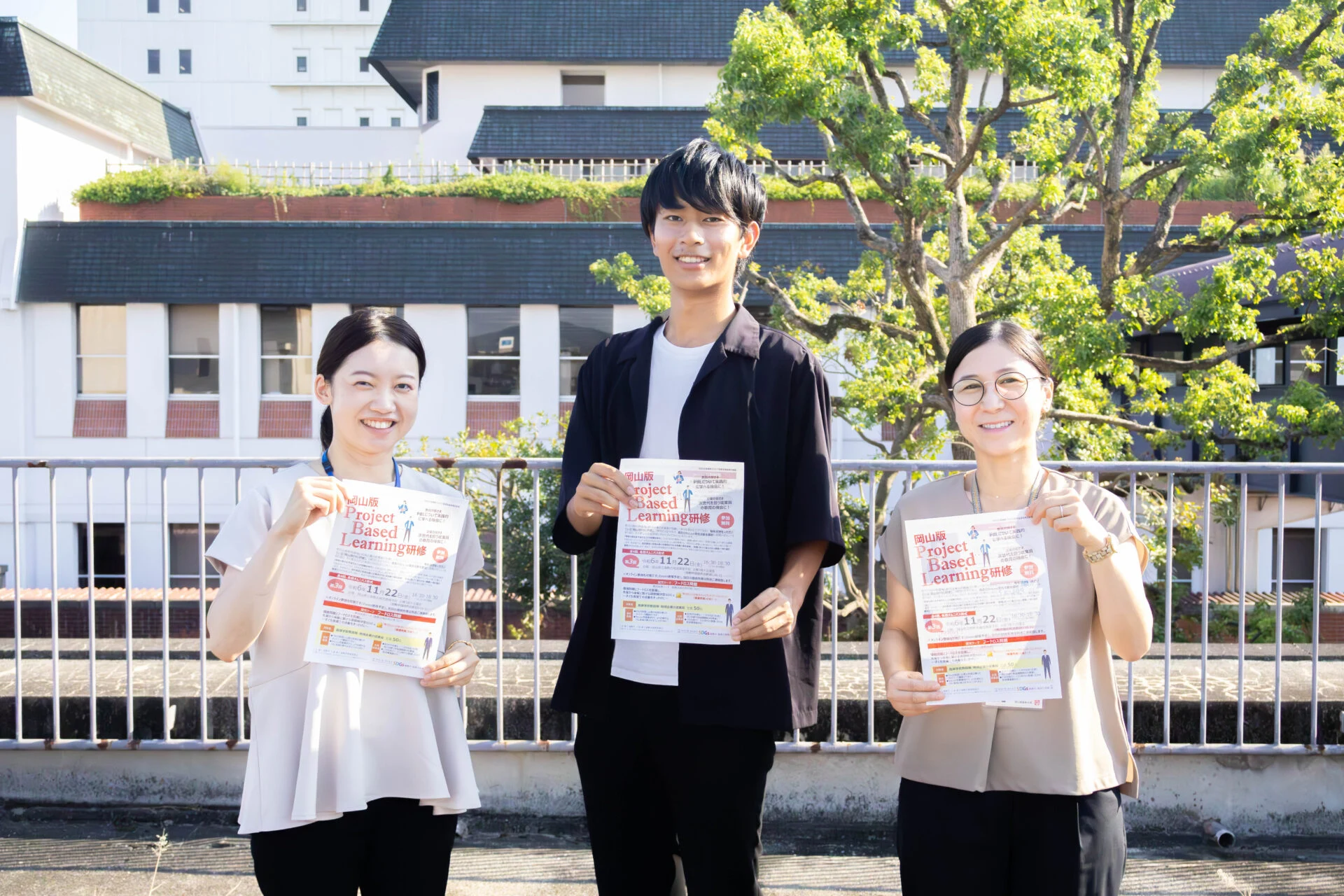
The interview was conducted with Okamoto Kana from the Labor Employment Policy Division of Kurashiki City, who was in charge of planning and operation, and Tanabe Kumiko.
We also heard from Hongo Kenta, a third-year student at Okayama University, who participated in the second PBL training, about his perspective as a participant.
Could you tell us about the purpose and background of this event?
Okamoto (no honorifics)
Currently, high schools across the country are incorporating a class called Comprehensive Inquiry Learning Time. The content of the class involves students discovering local issues and social problems, researching them, and presenting solutions.
Through such classes, when students think, "I want to do this project" or "I want to solve this problem", it would be ideal if they could collaborate with companies that can support them. However, in reality, it is difficult to create connections between local businesses and schools.
Therefore, the Okayama Version Project Based Learning Training was established to create a space for interaction between local businesses and school teachers.
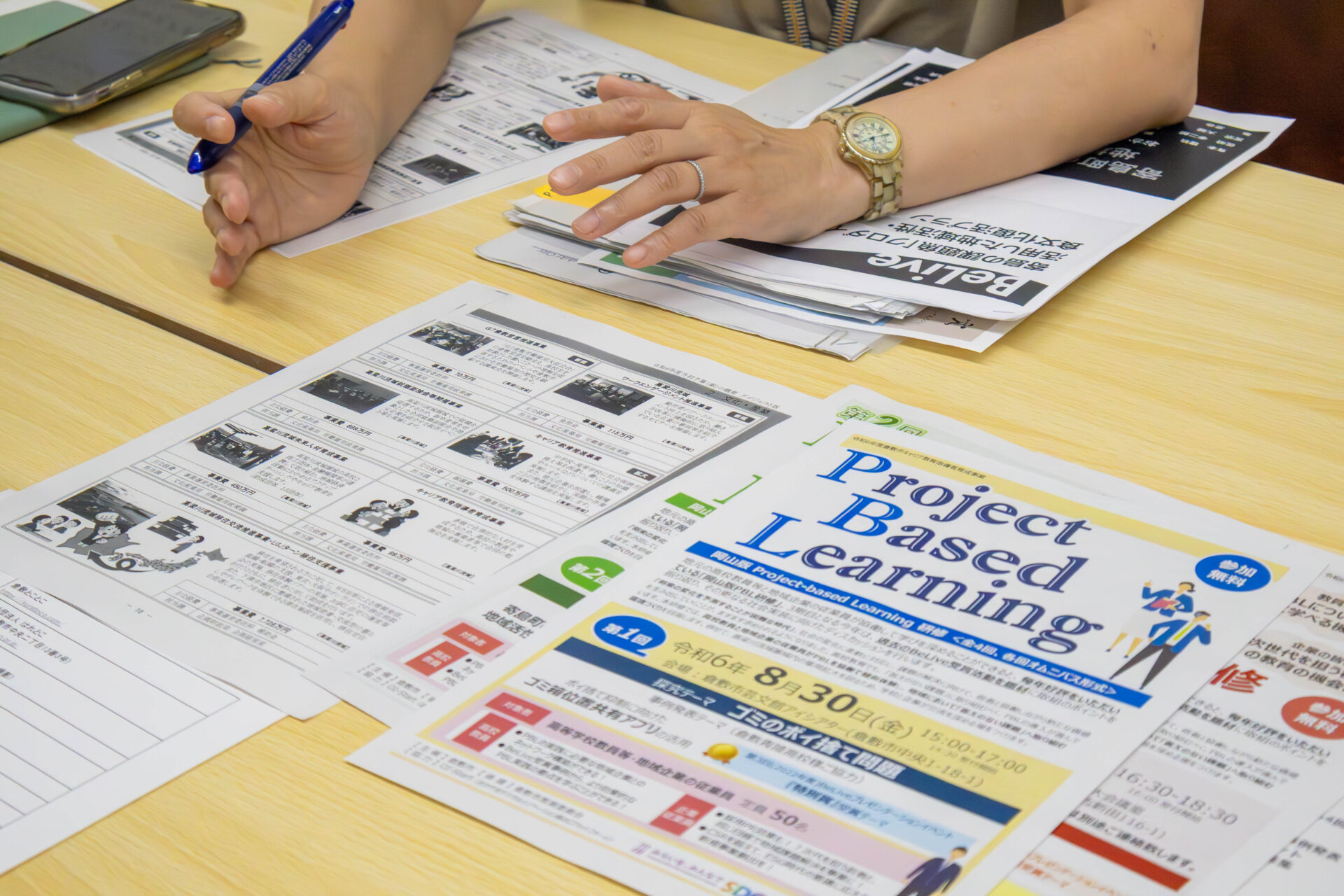
The Okayama Version Project Based Learning Training is one of the projects for the 2024 Kurashiki City Career Education Instructor Development Project. The purpose of the project is to support high school students' proactive learning and career education. Kurashiki City also wants to back up a system that makes it easier for high school students to engage in activities.
I understand that you also participated in the second PBL training. What were your impressions?
Hongo (no honorifics)
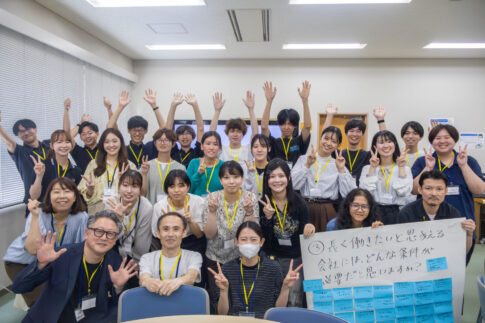
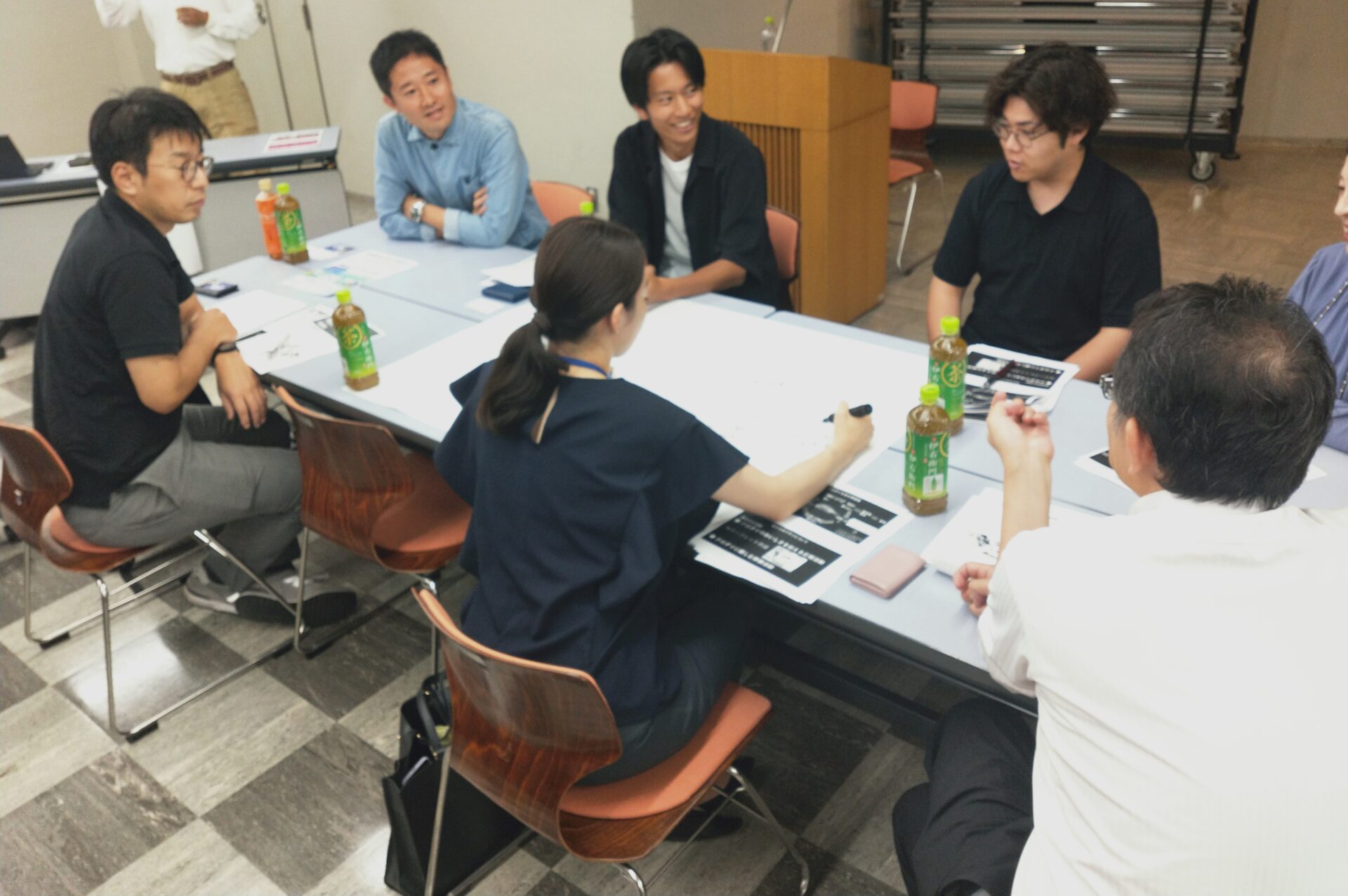
In the second PBL training, we discussed the local revitalization and food culture revival plan using black sea bream.
The ideas that came up in my group were many that seemed to be unique to working adults. Instead of finding product value in the black sea bream itself, we discussed ideas surrounding it, such as "using waste generated from black sea bream for power generation" and "utilizing black sea bream as a tourism resource."
It was interesting to hear ideas from various perspectives since there were participants from different professions and industries.
Tanabe (no honorifics)
In my group, rather than brainstorming ideas about the inquiry theme, we discussed "how to give instructions to high school students so that they can engage proactively."
For example, some schools have juniors take over the same inquiry theme as their seniors.
To encourage students to take an active interest in a predetermined inquiry theme, it is important for teachers to provide advice and guidance, such as visiting fishing industry professionals or going to places where black sea bream is used.
Although we are not directly involved in the education field, it was a training session from which we learned a lot. Personally, I also learned about how to facilitate group work.
Okamoto
Experiencing PBL for the first time, I was shocked to see that "today's high school students are doing such high-level work." Imagining that people who have received this education will enter society in a few years makes me feel that we adults also need to work harder with a positive mindset.
It seems like a high-level training session, but what was the atmosphere like?
Tanabe
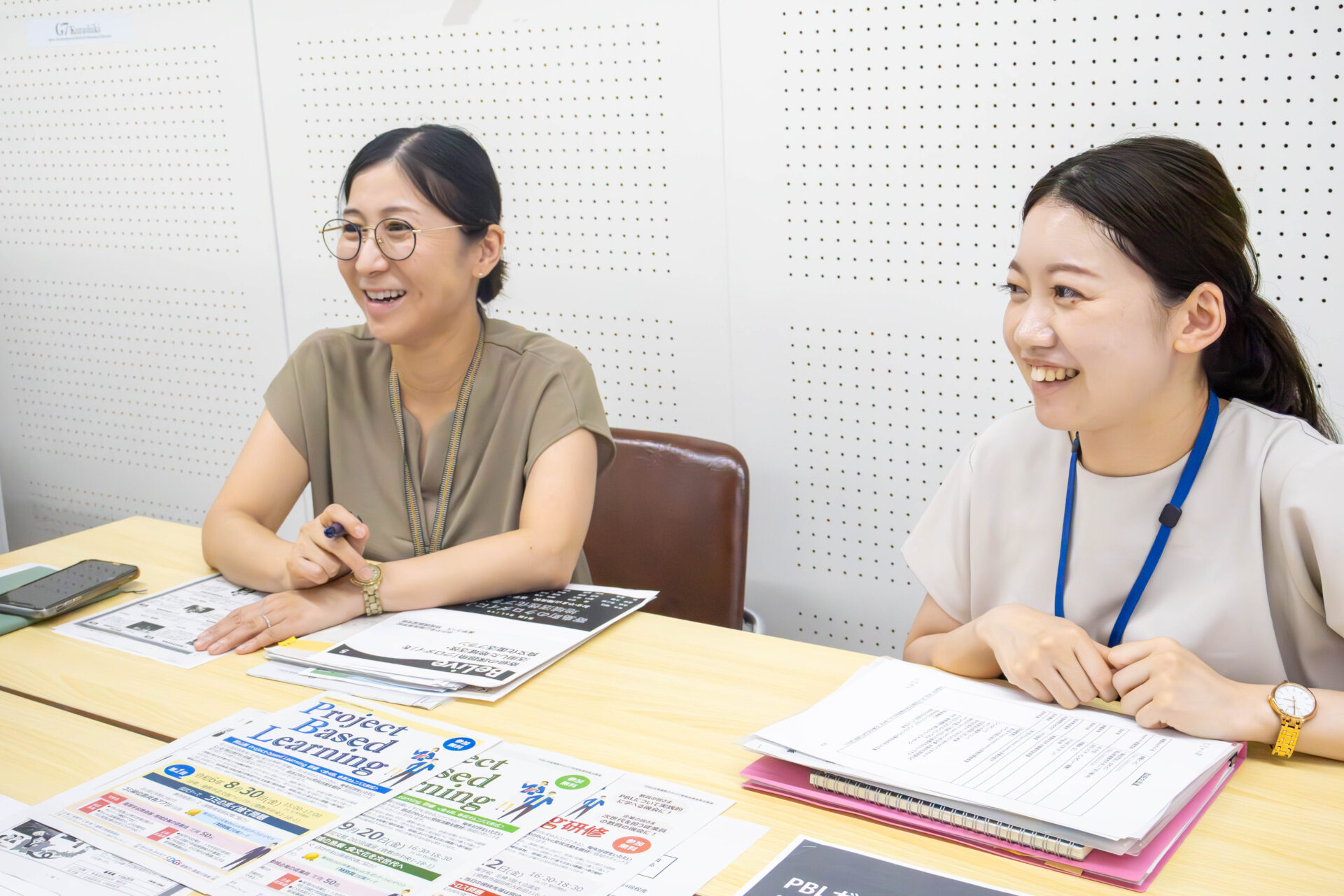
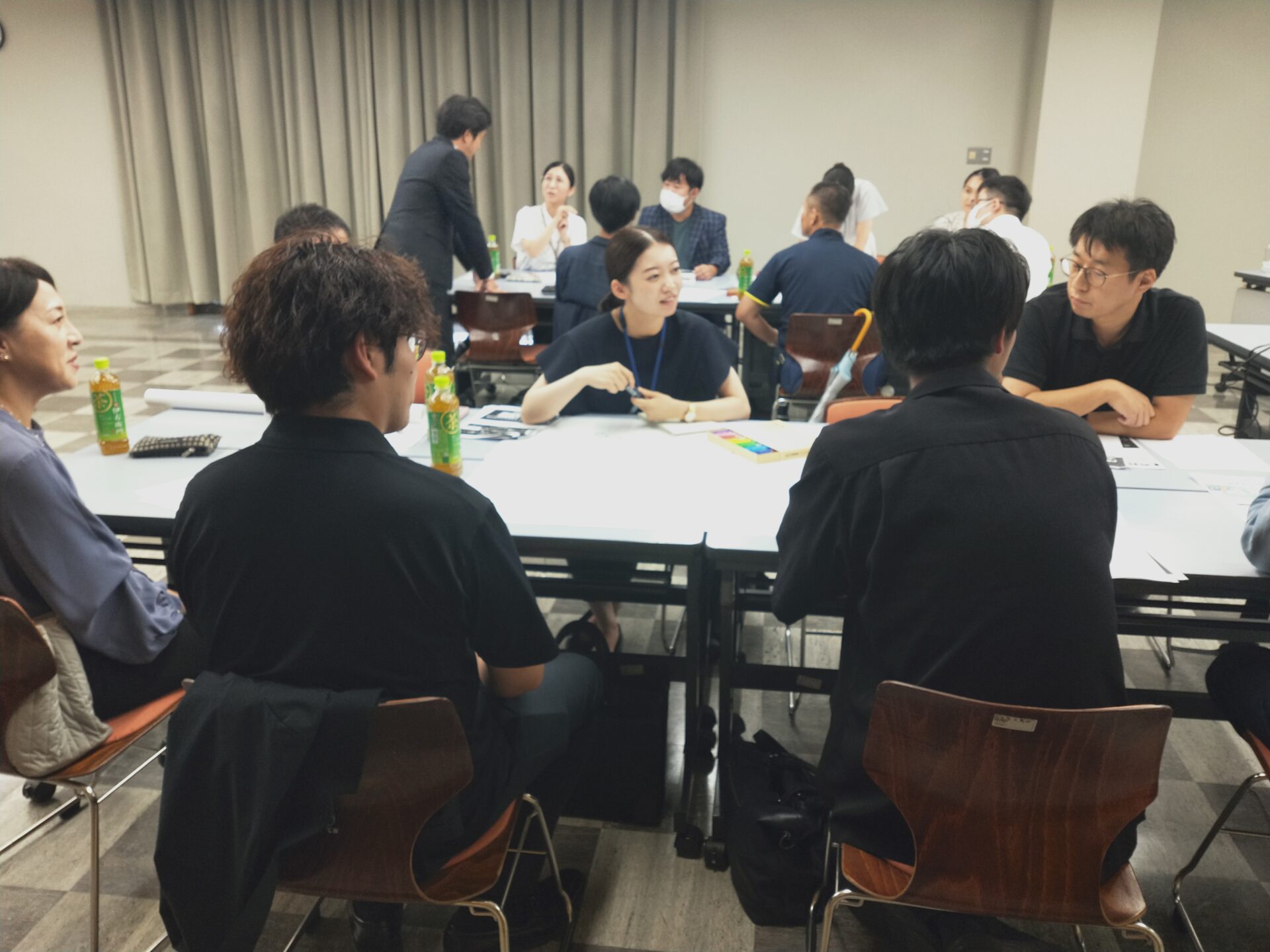
Since the last session was small in scale, it was a comfortable atmosphere for participants to talk and exchange opinions. Each group had only a few members, so I think we could discuss while somewhat understanding each other's characteristics.
With the support of the teachers and instructors facilitating the session, it was very easy to talk.
Okamoto
There was not a strict atmosphere where everyone had to come up with ideas individually, so I was listening to everyone's opinions. Even if I couldn't think of something myself, just hearing the ideas that came up was educational.
What benefits can participants gain from this?
Tanabe
For teachers who are unsure about how to proceed with PBL classes, I think this will be an opportunity to learn about how other schools conduct PBL.
During the second training, it was mentioned that "teachers need techniques to guide ideas and solutions." I hope that by actually experiencing PBL, participants can discover new insights and techniques.
What kind of impact do you want to have on Kurashiki City and the Takahashi River basin through this event?
Okamoto
I would be happy if connecting schools and local businesses could provide high school students with an opportunity to learn about the appeal of local businesses.
In today's world, young people are increasingly moving to urban areas, but I hope that through PBL classes, high school students can have the option of "working in the area where they were born and raised."
Tanabe
Engaging in inquiry activities like PBL will allow students to consider local issues as their own.
It is common for young people from rural areas to go to urban universities and then get jobs there. While that can be one option, I feel it is a bit of a waste to leave without knowing much about their hometown.
Therefore, I would be happy if, at least while they are in their hometown, they have more opportunities to focus on their community through PBL.
Who would you recommend this to?
Okamoto
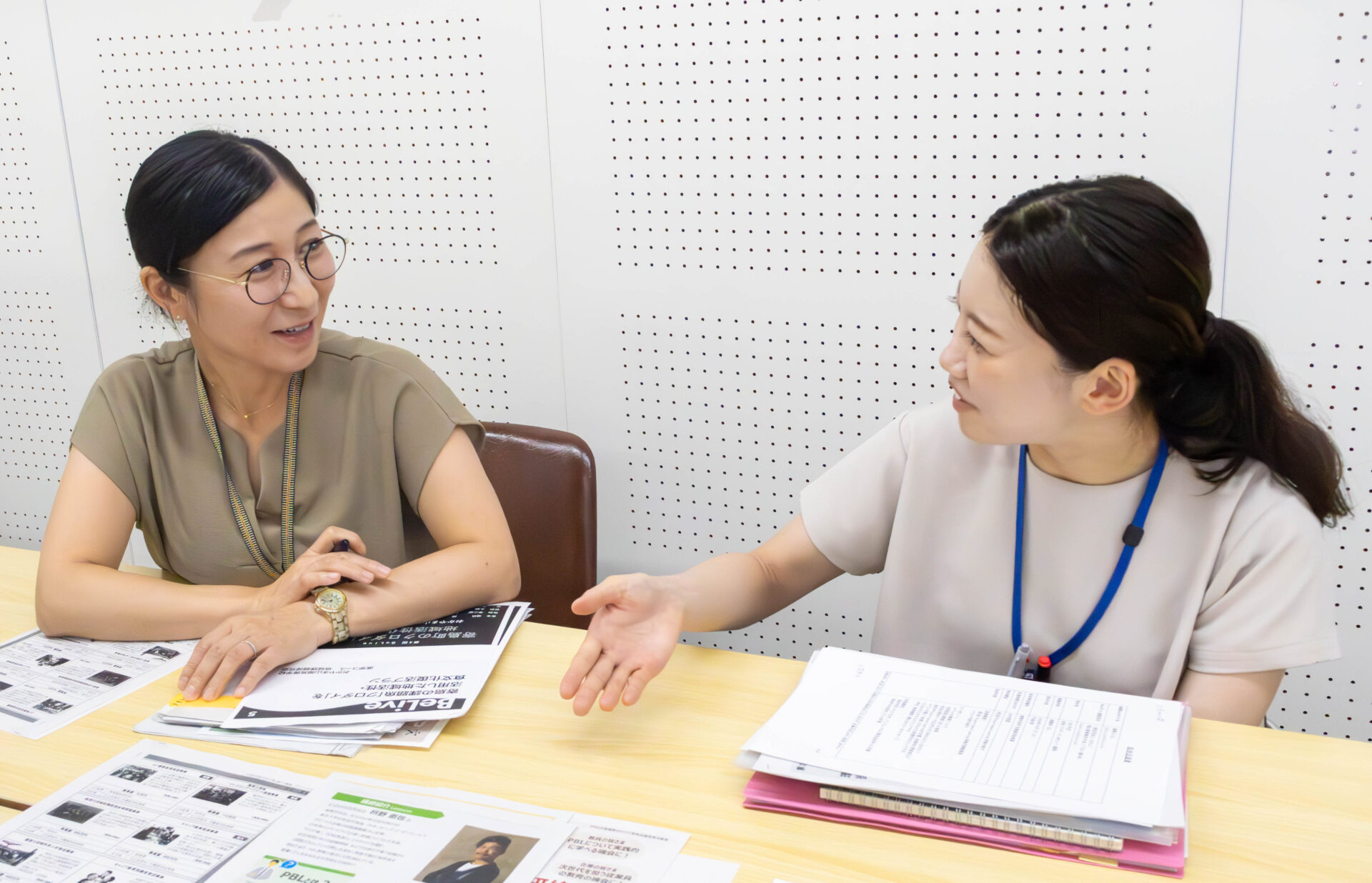
I would like to invite teachers who are struggling with how to proceed with PBL and those interested in building networks with local businesses to participate. Additionally, I would like local business representatives who want to support such teachers to come as well.
For local business representatives, I believe that connections may arise that could be beneficial for future hiring and other opportunities.
Tanabe
I would also recommend this to anyone interested in local issues. Even those who are not directly involved in education can gain new perspectives from this event.
Moreover, I think the teachers from Okayama Prefectural Kurashiki Kojoike High School, which will be the venue, will find it easy to participate, so I would be happy if any available teachers could join this opportunity.
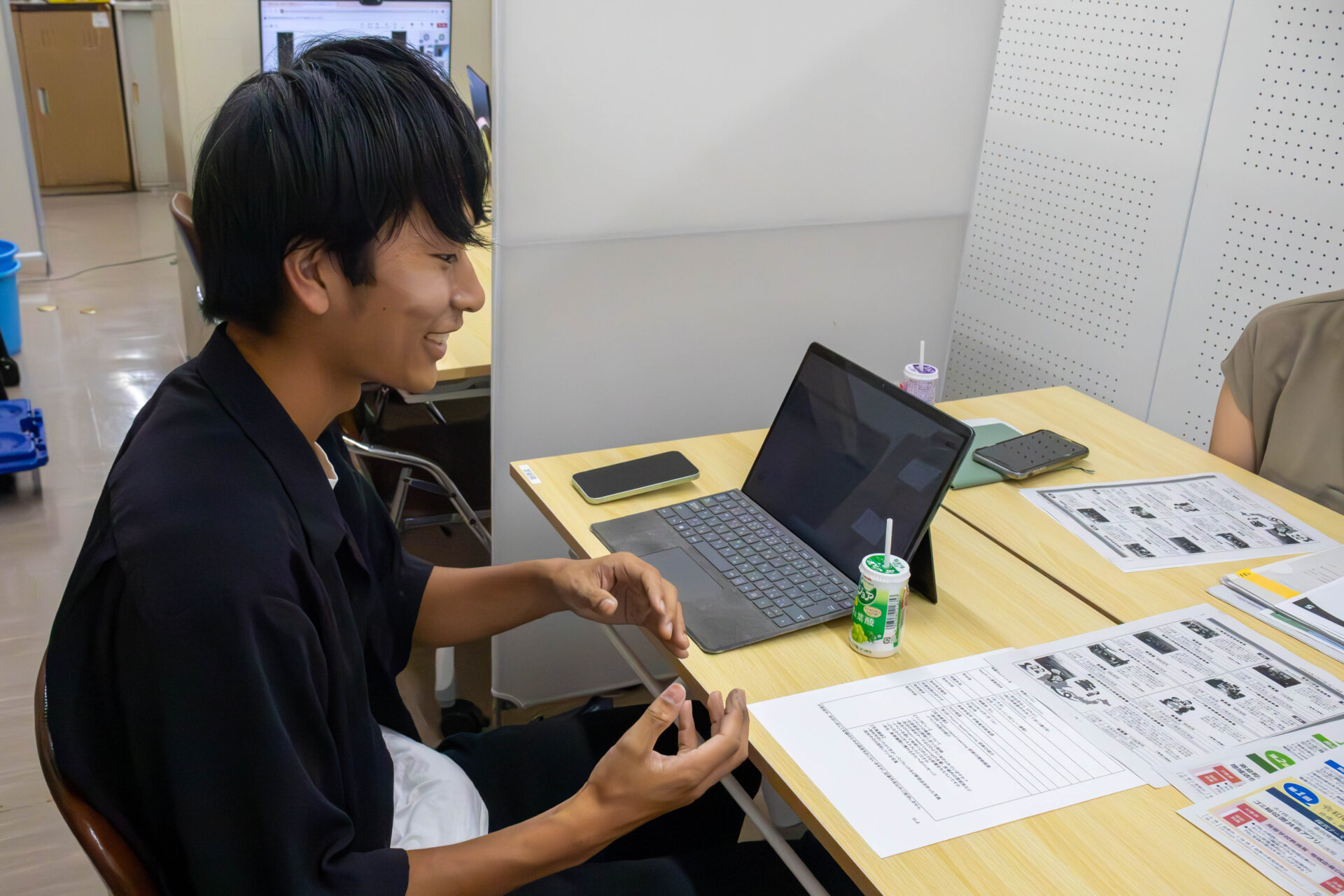
Hongo
I believe this will be a valuable experience for students in the Faculty of Education.
Opportunities to discuss solutions to problems with people you meet for the first time in a short time are surprisingly rare, so it was a precious chance to encounter diverse perspectives.
Absorbing someone else's ideas and proposing even better solutions is challenging to verbalize on the spot, but I think it is a great learning opportunity.
Please send a message to the readers.
Okamoto
I feel that the school environment is a very busy one. Not only daily classes but also new educational methods like Project-Based Learning must be implemented based on manuals, so I think there are challenging moments.
I want to support the educational field as a community so that we can reduce the burdens and anxieties of teachers, even just a little.
I believe it can also serve as a place for consultation and interaction, so if you are interested, please come and visit.
Tanabe
When solving a problem, I think solutions can arise from connections with people and the community.
In the future, there may be unexpected encounters that will be helpful, so if you want to create connections with local people, please come and join us.
Conclusion
Embarrassingly, until this interview, I did not know much about the details of Project-Based Learning.
I had the impression that the Okayama version of Project-Based Learning training required high-level discussions, but since there are no right answers, it seemed that participants could freely express their ideas. It looks like an interesting experience to learn actively.
Since various industries and professions participate, I think it will be educational just to hear ideas from diverse perspectives.
Local companies that want to support high school students' learning through interaction with schools are also encouraged to come and visit.
I hope that the Okayama version of Project-Based Learning training will provide even a little hint for the teachers at schools.
Data on Okayama Version Project-Based Learning Training
| Name | Okayama Version Project-Based Learning Training |
|---|---|
| Date | November 22, 2024 (Friday) From 4:30 PM to 6:30 PM *Reception starts at 4:00 PM |
| Location | 116-1 Koshinden, Fukuda-cho, Kurashiki City |
| Participation Fee (including tax) | Free |
| Website | Kurashiki City Labor and Employment Policy Division |